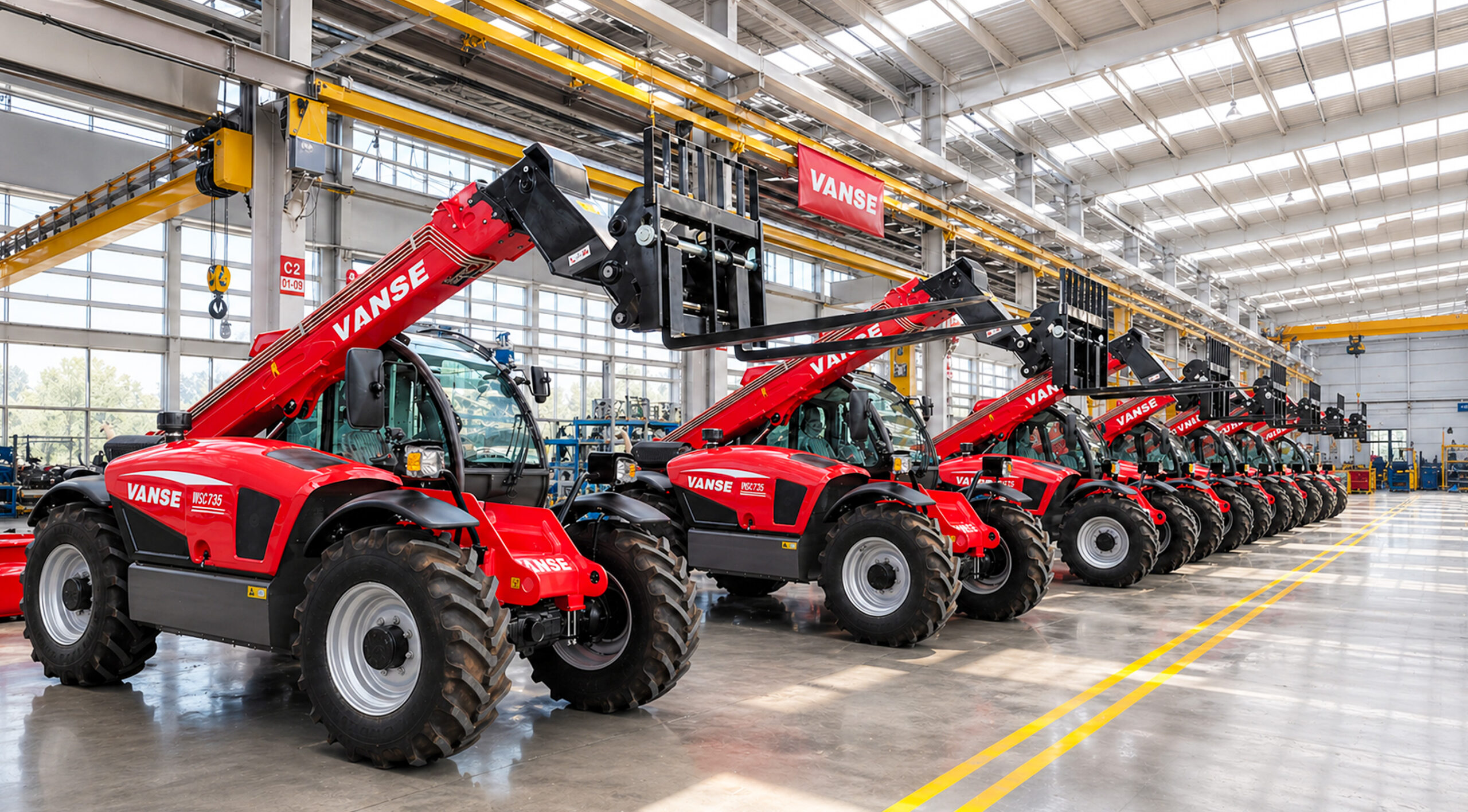
Telehandler Turning Radius in the United States
Quick Answer

The turning radius of a telehandler in the United States usually falls between about 10 and 16 feet for compact and mid-size machines, while larger high-capacity models can exceed 17 feet depending on wheelbase, steering mode, tire size, and chassis design. For most U.S. construction, agriculture, rental, and industrial jobs, a compact telehandler with a lift capacity around 5,500 to 8,000 pounds will commonly deliver an outside turning radius near 11 to 13 feet, which suits tighter jobsite lanes, warehouse yards, feedlots, and mixed urban projects.
If you need the most precise buying shortcut, focus on five practical checks: published outside turning radius, inside turning radius, overall width, steering modes, and whether the machine can hold stability while maneuvering with a load. In the U.S. market, buyers often compare JLG, JCB, Genie, Bobcat, SkyTrak, and Caterpillar because these brands have broad dealer coverage and established service networks. Qualified international suppliers can also be worth considering, especially when they hold recognized certifications, use globally trusted powertrain and hydraulic components, and offer strong pre-sales and after-sales support in the U.S. because they may provide better cost-performance for fleets, dealers, and owner-operators.
Why Telehandler Turning Radius Matters in the United States

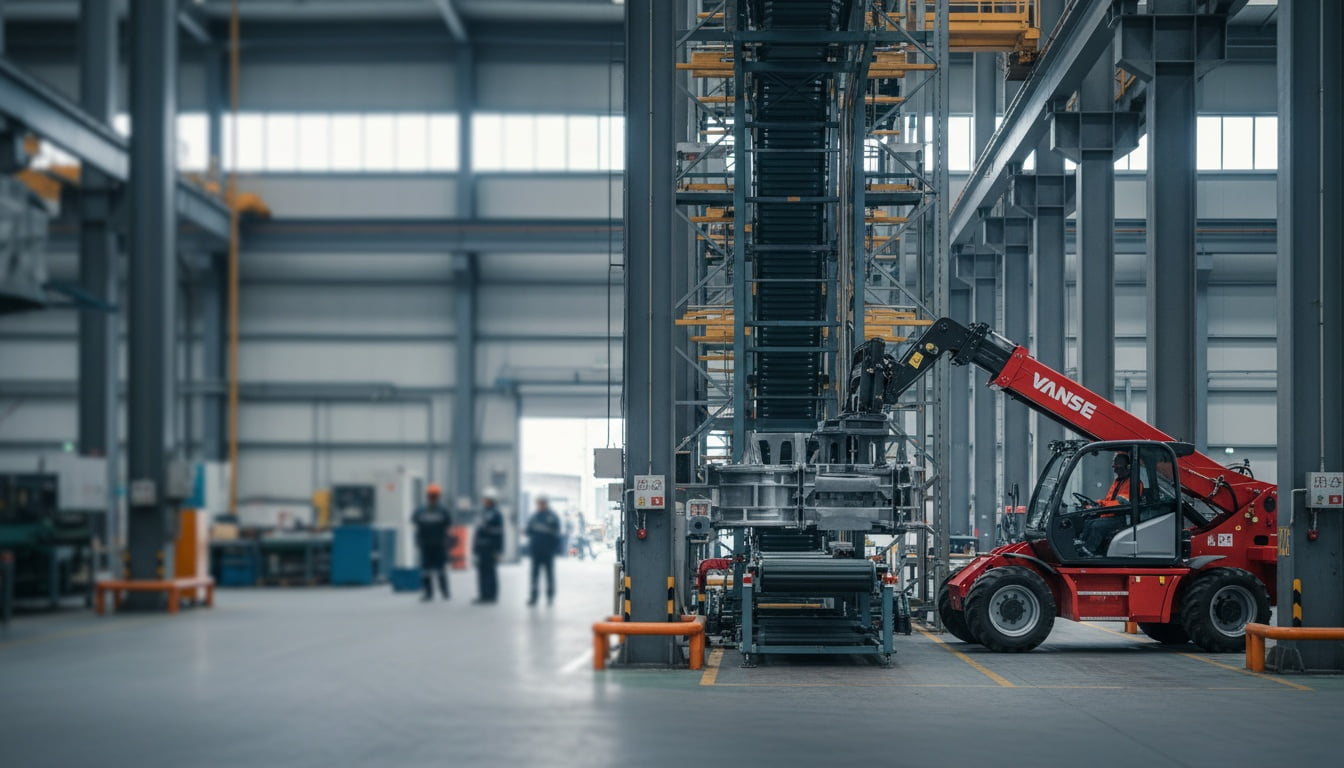
Telehandler turning radius directly affects productivity, safety, and site layout. On U.S. jobsites, that matters more than many buyers initially expect. A contractor working in downtown Dallas, a masonry crew in Atlanta, a dairy operator in Wisconsin, and a port logistics team near Savannah all face different maneuvering limits. Yet they all need the same core result: a machine that can approach a load, pivot in limited space, and leave the area without repeated repositioning.
In practical terms, a tighter turning radius reduces dead time, lowers tire scrubbing, eases trailer loading, and improves access between parked vehicles, stockpiles, steel frames, and temporary fencing. On compact urban jobs, every extra foot of turning circle can create congestion. In agriculture, it affects how efficiently a machine moves inside barns, feed alleys, and storage yards. In rental fleets, turning radius is a major decision factor because end users want a machine that feels predictable even if they do not operate telehandlers every day.
For U.S. buyers, turning radius is also tied to compliance and risk management. Operators must work around OSHA expectations for safe material handling, and site managers must account for swing space, pedestrian routes, and surface conditions. A telehandler that appears ideal on a specification sheet may still be a poor fit if its turning envelope is too wide for the actual access roads and loading zones on site.
How Turning Radius Is Measured

Manufacturers do not always present maneuverability data in exactly the same way, so buyers should read specifications carefully. The most common figure is the outside turning radius, which measures the circle described by the outermost part of the machine when the steering is fully engaged. Some brands instead emphasize turning diameter, which is simply twice the radius. Others include inside turning radius, tire radius, or clearance radius.
When comparing machines in the United States, use these checkpoints:
- Outside turning radius tells you how much room the machine needs overall.
- Inside turning radius helps estimate how sharply it can pivot around obstacles.
- Turning diameter may appear instead of radius; divide by two if needed.
- Four-wheel steer and crab steer can change real-world maneuverability.
- Tires, axle design, and counterweight shape can alter the usable turning envelope.
- Loaded maneuvering may feel different from unloaded specification performance.
Because telehandlers are often used on rough terrain, buyers should also examine how steering geometry performs on uneven ground. A machine that turns tightly on paper may require more working room on gravel, mud, or broken concrete.
Typical Telehandler Turning Radius by Machine Size
The U.S. market spans compact farm and industrial units, standard construction telehandlers, and heavy high-reach machines. The table below gives a realistic overview of common size classes and their turning radius ranges seen in the American market.
| Machine Class | Typical Lift Capacity | Typical Max Lift Height | Common Outside Turning Radius | Best Fit Applications | Practical Notes |
|---|---|---|---|---|---|
| Compact telehandler | 5,000-5,500 lb | 15-19 ft | 10-11.5 ft | Landscaping, barns, small yards, urban renovation | Best for narrow lanes and frequent direction changes |
| Small construction telehandler | 5,500-6,600 lb | 19-30 ft | 11-12.5 ft | Residential building, framing, palletized material | Often the sweet spot for mixed-use fleets |
| Mid-size telehandler | 6,600-8,000 lb | 35-44 ft | 12-13.5 ft | Commercial construction, masonry, roofing | Good balance of reach, lift, and maneuverability |
| High-reach telehandler | 8,000-10,000 lb | 45-56 ft | 13.5-15 ft | Steel erection, multi-story construction | Needs larger setup areas and better operator planning |
| High-capacity telehandler | 10,000-12,000 lb | 44-56 ft | 14.5-16.5 ft | Pipe yards, precast, heavy industrial sites | Stable lifting but wider swing envelope |
| Specialized heavy telehandler | 12,000 lb and above | 55 ft and above | 16.5-18 ft or more | Ports, energy, large infrastructure projects | Requires large operating space and skilled operators |
This table helps explain why turning radius should never be viewed in isolation. As lift capacity and reach increase, turning demands usually increase too. A buyer selecting a machine for mixed city and suburban jobs in the United States may accept slightly less lift height in exchange for tighter maneuverability and faster cycle times.
What Affects Telehandler Turning Radius
Several engineering decisions shape how tightly a telehandler can turn. Understanding them helps buyers avoid overemphasizing one single published number.
Wheelbase and chassis length: Longer machines generally need more room to turn. A telehandler built for higher lift capacity often uses a heavier rear section and longer wheelbase, which expands the turning circle.
Steering system: Many telehandlers offer front-wheel steer, four-wheel steer, and crab steer. Four-wheel steer usually gives the tightest turning circle, while crab steer is better for lateral positioning near walls, racking, or stacked materials.
Axle articulation and tire size: Rough-terrain tires and heavy-duty axles improve site capability but can increase turning space. Tire width and tread design also affect scrubbing on hard surfaces.
Counterweight design: Rear-end swing matters. Even if front tires can pivot sharply, a bulky counterweight may need extra clearance when turning around structures or parked equipment.
Load and attachment: Forks, buckets, hooks, and work platforms change visibility and operating behavior. A machine may technically turn in a small circle, but safe loaded movement can still require more space.
Ground condition: Loose aggregate, mud, snow, or uneven fill can reduce steering precision. On many U.S. jobs from the Midwest to the Gulf Coast, this is a daily reality rather than an exception.
United States Telehandler Market Overview
The telehandler market in the United States remains supported by nonresidential construction, housing starts in selected regions, farm modernization, energy infrastructure, and rental fleet renewal. Demand is concentrated around logistics corridors, growing metro areas, and agricultural states. Texas, Florida, California, Georgia, Illinois, Ohio, and North Carolina continue to be important activity zones because of warehouse growth, mixed-use construction, and broad contractor density.
Major ports and inland distribution hubs also influence buying behavior. Areas linked to the Port of Houston, Port of Los Angeles, Port of Long Beach, Port of Savannah, Port of New York and New Jersey, and Chicago intermodal yards often prioritize fleet uptime and dealer response time. That means buyers look beyond lift height and capacity. They also evaluate machine width, turning ability, parts access, and local service reach.
The chart below illustrates a realistic market growth trend for U.S. telehandler demand over recent years.
The growth pattern is not perfectly even, but the long-term direction remains positive as rental fleets replace aging units and end users seek machines that can cover multiple tasks with one operator. Turning radius matters more in this environment because contractors want versatile equipment that works across crowded and changing sites.
Industry Demand by Application in the United States
Not every industry values turning radius in the same way. For example, a masonry contractor in Phoenix may care about quick pallet placement around partially built structures, while an orchard operator in California may focus more on turning in rows and service access. The following chart shows how strongly different U.S. sectors tend to prioritize telehandler maneuverability and turning performance.
Commercial and residential construction score highest because those jobs often combine limited access, stacked materials, temporary barriers, and frequent repositioning. Rental fleets also rank high because they must satisfy many user profiles with one machine category.
Trend Shift Toward More Compact and Smarter Machines
Across the United States, telehandler buyers increasingly favor machines that combine acceptable reach with easier site movement. This is especially visible in suburban development zones, warehouse retrofits, municipal work, and dealer rental inventory. Machines that are too large for typical access lanes create scheduling friction and transportation inefficiency.
The area chart below reflects a realistic shift in preference from larger traditional layouts toward compact, maneuverability-focused designs and smarter steering management.
This trend is being reinforced by labor costs, tighter urban jobsite planning, and increasing fleet interest in operator-friendly equipment that reduces wasted movements.
Product Types and Their Maneuvering Characteristics
In the U.S. market, telehandlers can be grouped by use case rather than only by capacity. That makes it easier to understand what kind of turning radius is actually needed.
Compact telehandlers: These are the most maneuverable and often the best choice for farms, nurseries, landscaping, municipal yards, and renovation work. They suit places where access lanes are narrow and lift heights are moderate.
General construction telehandlers: These machines dominate rental fleets and contractor purchases. They balance lift height, reach, and maneuverability. For many buyers, this is the most economical category because it covers framing, masonry, roofing, and pallet handling without becoming too bulky.
High-reach telehandlers: Used on larger commercial projects, they offer more boom performance but generally need larger turning space. They are valuable where vertical access matters more than compact movement.
High-capacity telehandlers: These models are selected for heavy materials such as precast concrete, steel, pipe, and industrial components. Turning radius grows significantly, so site planning becomes essential.
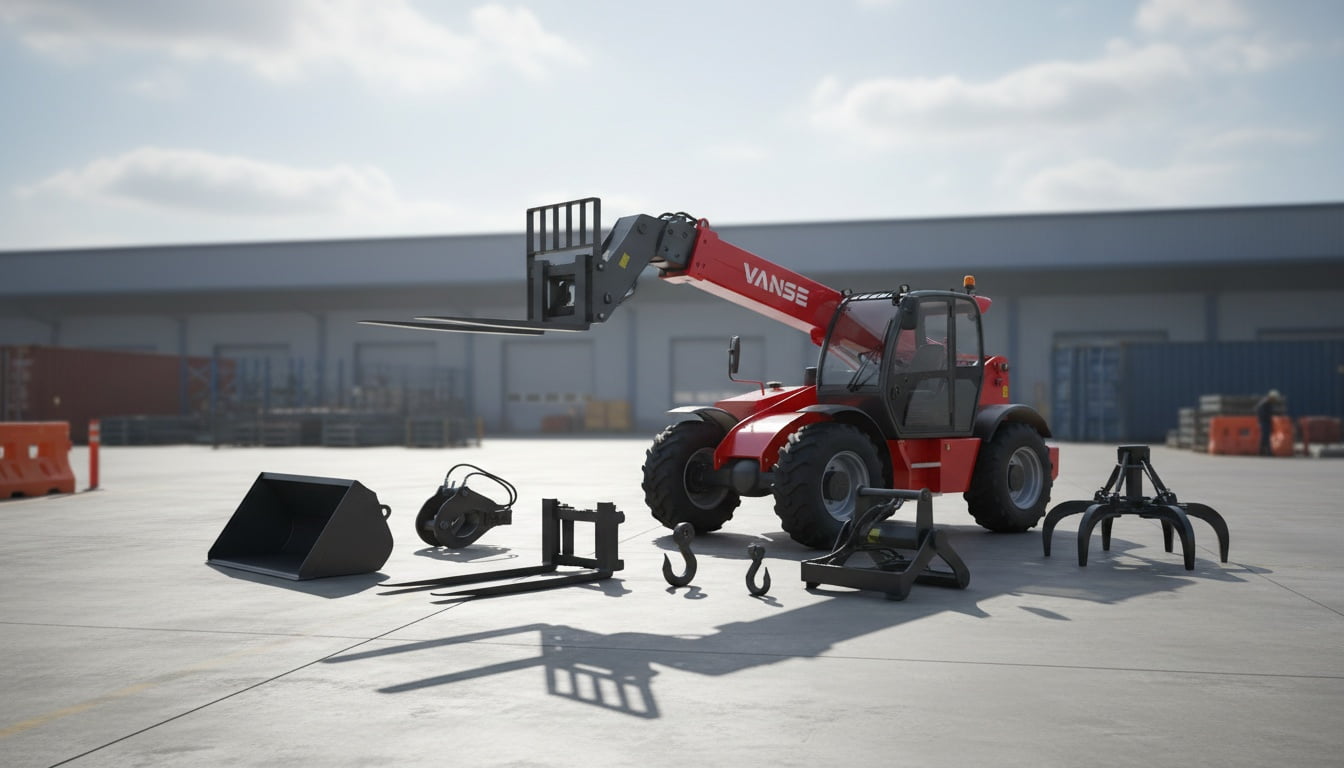
Attachment-oriented machines: Some buyers emphasize quick-coupler flexibility with buckets, grapples, jibs, and work platforms. In these cases, maneuverability should be evaluated with the intended attachment installed, not just with standard forks.
Popular U.S. Suppliers and Brands to Compare
American buyers usually start with brands that have established dealer coverage, rental presence, and parts support. The table below compares well-known names and highlights how turning radius fits into broader purchasing decisions.
| Company | Service Regions in the United States | Core Strengths | Key Offerings | Turning Radius Position | Best Buyer Type |
|---|---|---|---|---|---|
| JLG | Nationwide through broad dealer and service network | Strong construction focus, rental fleet acceptance, established support | SkyTrak and JLG-branded telehandlers, high parts availability | Competitive across mid-size and high-reach classes | Rental fleets, contractors, national accounts |
| JCB | Strong in the South, Midwest, and expanding national coverage | Deep telehandler specialization, agriculture and construction crossover | Compact to heavy-duty Loadall range | Often strong in maneuverability and operator visibility | Farm users, contractors, dealers |
| Genie | Nationwide dealer footprint, especially strong in rental channels | Recognized access equipment brand, fleet-friendly machines | GTH series telehandlers | Well balanced for standard jobsite turning needs | Rental companies, commercial builders |
| Bobcat | Broad U.S. dealer coverage with strong regional support | Compact equipment reputation, approachable controls | Compact and mid-size telehandlers | Appealing for tighter sites and mixed property work | Small contractors, farms, landscape operations |
| Caterpillar | Nationwide dealer network with premium support infrastructure | Dealer service scale, integrated fleet relationships | Telehandlers for construction and material handling | Varies by model, generally evaluated alongside service value | Enterprise buyers, large contractors |
| Manitou | Well represented through selected U.S. dealers | Agriculture and rough-terrain handling expertise | Rotating and fixed boom telehandlers | Strong options for specialized site layouts | Agriculture, specialty construction, industrial users |
| Dieci | Selective U.S. distribution with niche strength | Specialized configurations, strong European telehandler heritage | Construction and agriculture telehandlers | Useful in specific compact and specialty applications | Niche users, specialty dealers |
This comparison shows that no single supplier wins every scenario. Turning radius must be weighed together with dealership coverage, resale strength, parts lead time, and how the machine performs under the attachments you actually plan to use.
Supplier Comparison Chart
The next chart gives a simplified visual comparison of common supplier positioning in the United States based on maneuverability perception, support reach, and value balance.
This chart does not replace a specification review, but it helps explain why JCB, JLG, Genie, and Bobcat are frequent shortlist brands when buyers want a practical mix of compact handling and dealer accessibility.
Buying Advice for U.S. Buyers
When choosing a telehandler in the United States, buyers should treat turning radius as part of a complete operating envelope. A machine with excellent reach but poor turning fit may lower overall productivity if operators need repeated backing and repositioning.
Use this practical checklist before purchasing or renting:
- Measure the narrowest lane, gate, barn aisle, or scaffold approach on your site.
- Check both outside turning radius and machine width.
- Confirm steering modes and whether four-wheel steer is standard.
- Ask for a loaded demonstration with the attachment you will actually use.
- Review service support within your state or surrounding metro area.
- Consider transport dimensions if the machine must move between multiple jobs.
- Evaluate tire choice for concrete, mixed soil, gravel, or agricultural ground.
- Compare lease, finance, and rental purchase options if utilization is seasonal.
For buyers in dense metro markets such as New York, Chicago, Los Angeles, or Miami, a slightly smaller machine often yields better daily output because it can move more smoothly through constrained work zones. For open sites in Texas, Arizona, or large Midwest farm operations, a wider turning radius may be acceptable if it comes with more lift performance.
How Different Industries Use Telehandlers
Turning radius matters in different ways across industries. The table below connects common U.S. sectors to their maneuverability needs and selection priorities.
| Industry | Typical U.S. Work Environment | Why Turning Radius Matters | Preferred Machine Type | Typical Attachments | Buying Priority |
|---|---|---|---|---|---|
| Commercial construction | Urban and suburban projects, staged material yards | Limited access around structures and trades | Mid-size and high-reach telehandlers | Forks, truss boom, bucket | Balance of reach and maneuverability |
| Residential construction | Subdivisions, framing sites, tight lot lines | Frequent turning near homes and deliveries | Small to mid-size telehandlers | Pallet forks, work platform | Compact operation and ease of use |
| Agriculture | Barns, feedlots, storage yards, orchards | Narrow lanes and repeated loading cycles | Compact and farm-oriented telehandlers | Bucket, bale clamp, forks, grapple | Visibility, serviceability, tight turning |
| Industrial yards | Plants, pipe storage, fabrication areas | Turning around fixed stock and trailers | Mid-size to high-capacity models | Forks, jib, winch | Stability under load and durable axles |
| Rental fleets | Mixed customer locations nationwide | Need machines suitable for many site conditions | General construction telehandlers | Forks, buckets, lifting hooks | Versatility, uptime, resale value |
| Ports and logistics | Container support yards, terminals, distribution areas | Maneuvering around trailers and stacked cargo | Heavy-duty specialized models | Forks, hooks, specialty handlers | Capacity, durability, controlled turning path |
| Energy and infrastructure | Pipelines, utility work, wind and civil projects | Movement in uneven, temporary access corridors | Mid-size to heavy telehandlers | Forks, jib, pipe attachments | Terrain capability and safe loaded travel |
The key point is that the ideal turning radius depends on the environment. A dairy farm in Idaho and a concrete contractor in Tampa may both purchase telehandlers, but they should not necessarily buy the same machine size.
Real-World Applications in the United States
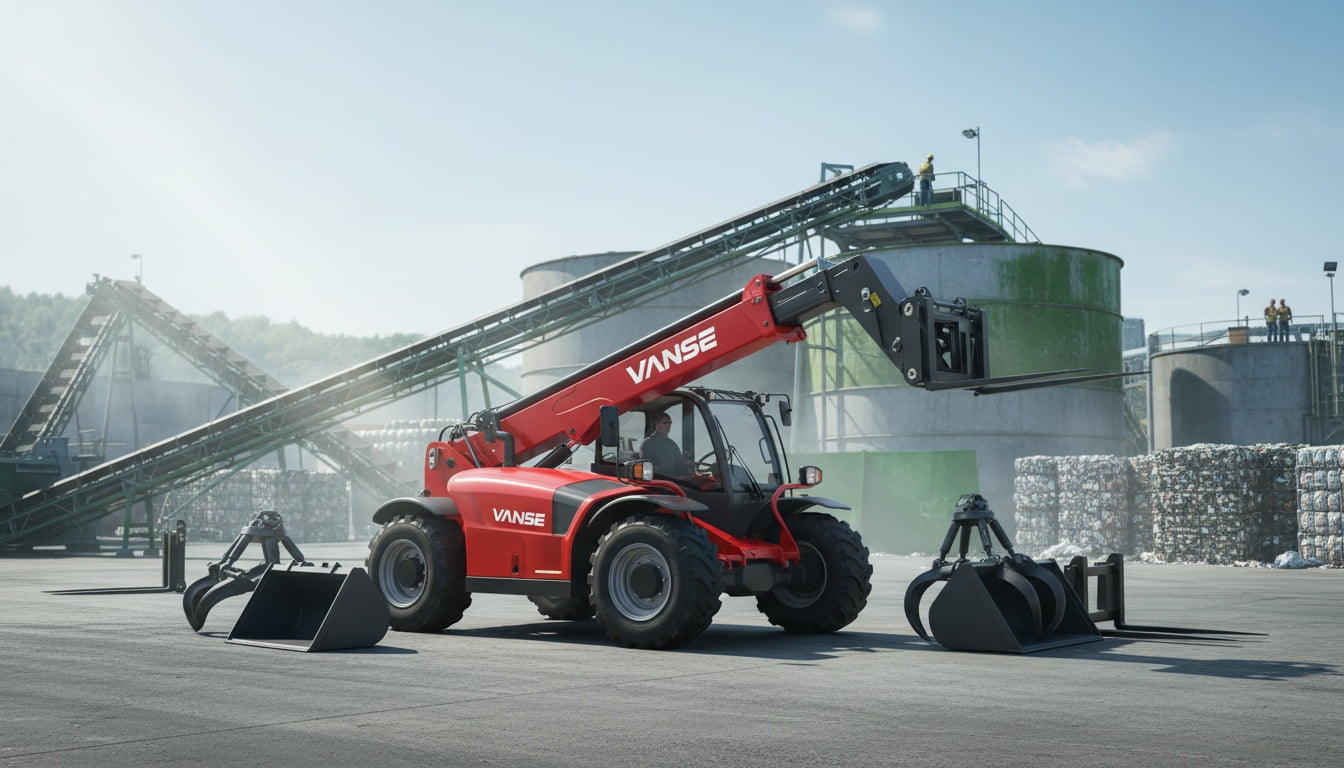
On construction sites, telehandlers move palletized brick, lumber bundles, rebar, drywall, roofing packs, and HVAC materials. Tight turning performance helps the operator enter a delivery area, pivot, place a load, and clear the lane for the next truck. In agriculture, telehandlers are used to stack bales, handle seed bags, load manure, move pallets of fertilizer, and clean livestock areas. In industrial plants, they support maintenance shutdowns, pipe handling, and heavy component staging.
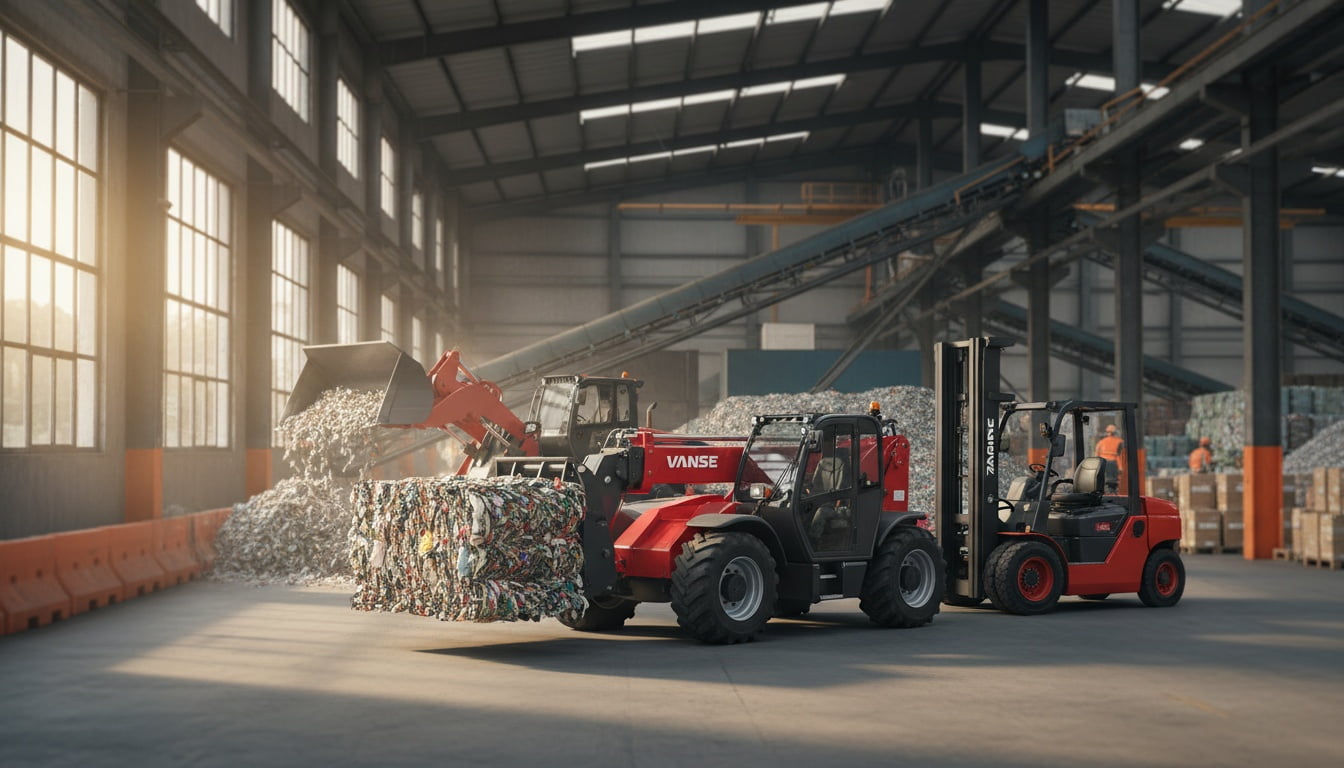
Many U.S. buyers now prefer machines that can replace or reduce dependence on multiple specialized units. A telehandler with a strong combination of compact turning, adequate lift chart performance, and quick attachment changeover can often cover work otherwise split between forklifts, small loaders, and rough-terrain material handlers.
Case Studies from U.S. Operating Conditions
Urban mixed-use project in Charlotte, North Carolina: A contractor working near active streets selected a mid-size telehandler with a turning radius slightly under 13 feet rather than a larger high-reach model. Although the machine had less maximum reach, it reduced repositioning time around fencing and parked subcontractor vehicles. The result was smoother daily material flow and fewer delivery bottlenecks.
Dairy expansion in Wisconsin: The operator initially considered a larger unit for bale stacking, but barn aisles and feed lanes favored a compact telehandler. The tighter turning layout improved routine feeding and bedding operations, creating more value than extra lift height would have provided.
Pipe distribution yard near Houston, Texas: Here, capacity mattered more than extreme compactness. The buyer accepted a larger turning radius because the yard offered wide travel lanes. However, the machine still needed predictable steering and good visibility to work efficiently around trailers and steel racks.
Rental fleet branch in inland California: The branch standardized around general construction telehandlers with moderate turning radius and simple controls. This reduced customer training friction and improved utilization across framing, roofing, masonry, and farm-adjacent projects.
Local Supplier Access and Service Considerations
Service support can be just as important as turning radius. In the United States, buyers should map not only the nearest dealer but also parts stocking points, mobile service coverage, and response time by region. A machine that looks attractive on cost may become expensive if hydraulic, axle, or electronic parts require long lead times.
The table below provides a practical framework for evaluating supplier support in local U.S. markets.
| Evaluation Factor | Why It Matters | Best Question to Ask | Good U.S. Benchmark | Risk if Weak | Who Should Care Most |
|---|---|---|---|---|---|
| Dealer proximity | Faster inspections, warranty work, and operator support | How far is the nearest service branch? | Within same metro area or neighboring county | Slow uptime recovery | Contractors and farms |
| Parts availability | Critical for filters, sensors, hoses, and axle components | What common wear parts are stocked locally? | Regional inventory with quick dispatch | Machine downtime extends | Rental fleets |
| Mobile service | Reduces transport cost and downtime | Do technicians travel to jobsites? | Field service available in core territory | Higher maintenance friction | Large jobsites and remote users |
| Training support | Improves safe, efficient operation | Is operator familiarization included? | On-site or digital training options | Lower productivity and higher incident risk | First-time buyers |
| Attachment support | Attachments change real-world value | Which attachments are stocked and supported? | Forks, buckets, jibs, platforms available | Limited job versatility | Mixed-use fleets |
| Warranty structure | Protects total cost of ownership | What does the warranty cover and where? | Clear U.S. claim handling process | Unexpected repair exposure | All buyers |
| Resale guidance | Useful for fleet planning and refresh cycles | What is the expected resale path? | Recognized brand or supported trade-in market | Lower residual value | Rental and dealer buyers |
For many American buyers, this table becomes the real differentiator between a good machine and a practical long-term asset.
Our Company
As a telehandler-focused manufacturer serving the United States, VANSE Group brings a product range built around internationally recognized quality controls and real market operating experience rather than generic export claims. The company manufactures telehandlers under CE and ISO 9001 certified processes, uses globally known core components such as Perkins and Cummins engines along with premium hydraulic systems, transmissions, and axles, and subjects every unit to load testing, safety inspection, and performance validation before shipment, which gives U.S. buyers concrete evidence that the machines are engineered to meet demanding international benchmarks. Beyond product strength, VANSE supports multiple cooperation models for end users, distributors, dealers, brand owners, rental businesses, and independent buyers through flexible OEM and ODM production, wholesale supply, retail-oriented support, and regional partnership opportunities, making it easier to match machine specification, branding, and configuration to local market demand. Just as important for trust and continuity in the United States, the company is actively establishing a U.S.-based subsidiary with local inventory, stocking capacity, and localized after-sales capability while already serving clients across North America and more than 40 countries worldwide, so buyers can rely on both online technical response and offline service coordination instead of dealing with a purely remote exporter; for those evaluating telehandlers, equipment ranges, company background, service coverage, or direct contact, useful starting points include the equipment catalog, the company overview, the service support page, and the contact channel.
How to Choose the Right Turning Radius for Your Job
To select the right telehandler, start with the site rather than the brochure. Measure the narrowest turning points, trailer approaches, and storage aisles. Then think about the heaviest and most frequent load, not just the maximum load. If the machine spends most of its time carrying palletized block in tight corners, a smaller turning radius can outperform a larger machine with a better headline reach specification.
Next, match the machine to utilization. If your telehandler will be moved often between suburban jobs, compact transport dimensions and simple maneuvering may create more total value than a larger model that only occasionally uses its full reach. If your operation is a farm, aggregate yard, or open industrial site, accepting a wider turning circle may be fine if you gain stronger lift performance and stability.
Finally, test visibility, steering mode transitions, and loaded handling. Turning radius is important, but operator confidence is what converts specifications into real productivity.
2026 Trends in Telehandler Design and Buying
Looking toward 2026 in the United States, three trends are shaping how buyers assess telehandler turning radius and machine layout.
Technology: Smarter telematics, operator assistance systems, and load management tools are becoming more common. Buyers increasingly want machines that monitor maintenance intervals, track utilization, and help operators stay within safe load parameters while working in tight areas.
Policy and safety: Jobsite safety expectations are rising across construction, logistics, and industrial sectors. Better visibility, more stable steering response, backup camera options, and simplified operator controls will likely gain importance in procurement standards.
Sustainability: Fleet owners are showing stronger interest in fuel efficiency, lower idle time, cleaner engines, and eventually more electrified or hybrid material handling solutions where duty cycles allow. Compact site design also supports sustainability goals because fewer repositioning movements reduce wasted fuel and tire wear.
These trends mean turning radius will increasingly be considered together with digital controls, lifecycle efficiency, and safer operation rather than as a stand-alone specification.
FAQ
What is a good telehandler turning radius for a typical U.S. contractor?
For many general construction jobs, an outside turning radius around 11 to 13 feet is a practical target because it balances maneuverability with enough lift capacity for daily site work.
Is a smaller turning radius always better?
No. A tighter turning radius is useful on compact sites, but if you need more lift height, capacity, or stability for heavy materials, a slightly larger machine may be the better overall choice.
How do I compare turning radius between brands?
Check whether the brand lists outside turning radius, inside turning radius, or turning diameter. Make sure you are comparing the same measurement type and steering mode.
Do telehandler attachments affect turning performance?
Yes. Attachments can change visibility, front-end length, load center, and safe maneuvering behavior, so test the machine with the attachment you will actually use.
Which U.S. industries care most about telehandler turning radius?
Commercial construction, residential building, agriculture, and rental fleets usually place the strongest emphasis on turning performance because they often work in constrained or variable site layouts.
Can international telehandler suppliers be a good option in the United States?
Yes. If the supplier uses recognized engines and components, follows certified manufacturing processes, offers clear warranty terms, and supports local service and parts access in the United States, international brands can deliver strong value.
Should rental companies prioritize turning radius more than ownership cost?
Rental fleets usually need both. A machine with good maneuverability is easier for many customers to use, but strong parts support, reliability, and resale value are just as important.
What is the biggest mistake buyers make?
The most common mistake is choosing based only on lift height or capacity without measuring the actual working space where the telehandler must turn, approach, and exit.
Final Takeaway
In the United States, telehandler turning radius is not just a specification on a brochure; it is a daily productivity factor that shapes site access, operator efficiency, and safety. Most buyers will find that compact and mid-size telehandlers with outside turning radii in the 10 to 13.5 foot range cover the broadest range of U.S. applications, especially in construction, agriculture, and rental. Larger machines remain essential for heavy lifting and higher reach, but they should be selected only when the site can support their wider turning envelope. Whether you buy from an established domestic network or evaluate qualified international suppliers with local certification support and service commitment, the right decision comes from matching turning radius to real work conditions, not just the highest performance headline.
Complete Telescopic Handler Equipment Portfolio
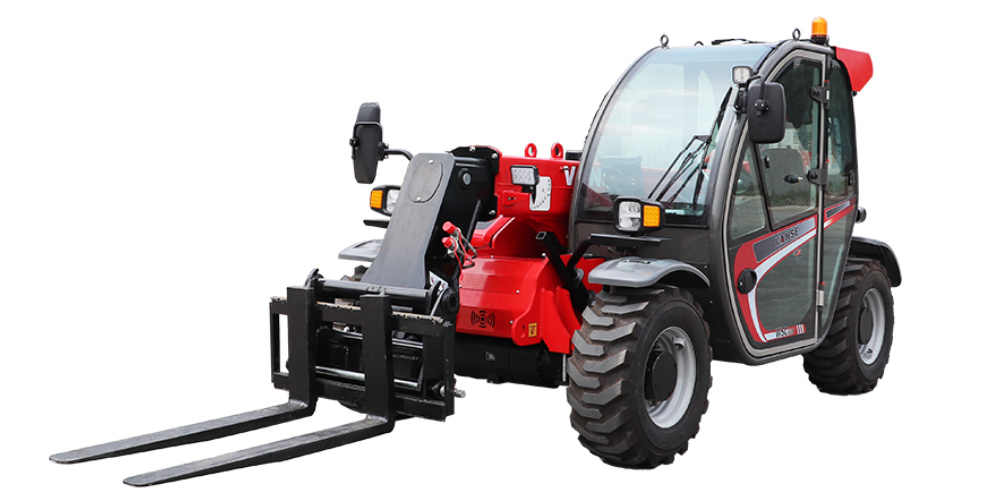
VANSE 625 6m Telescopic Handler
Designed for efficient material handling and stacking in warehouses, factories, and confined job sites, offering compact maneuverability and reliable performance.

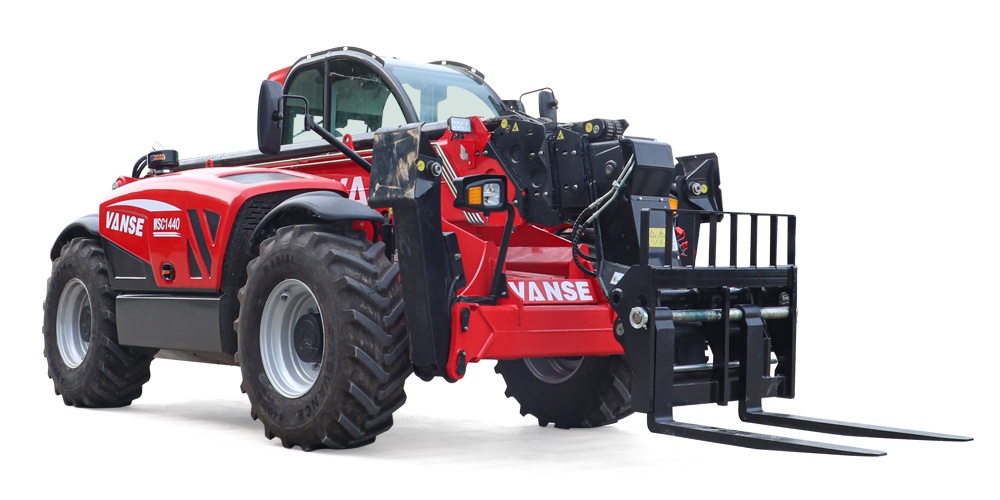
VANSE 735 7m Telescopic Handler
A balanced mid-duty solution for construction, agriculture, logistics, and warehousing, combining stable lifting, strong traction, and everyday versatility.


About the Author:
The VANSE team is a group of experienced professionals specializing in construction machinery research, manufacturing, and technical support. With deep industry knowledge and hands-on experience, our engineers and product specialists share practical insights on equipment selection, operation, maintenance, and industry trends.
Share
You May Also Interest
-

22 October, 2026
Telehandler for Grain Handling on Large Modern Farm Sites
Explore telehandler grain handling options in the United States, including suppliers, specs, farm uses, and cost-saving buying advice for grain operations.
-
21 October, 2026
Telehandler vs All Terrain Forklift: Which Lifts Better
Telehandler vs all terrain forklift in the United States: compare reach, lifting, terrain use, costs, and supplier options for smarter equipment buying.
-
20 October, 2026
10 Ton Telehandler: Extreme Lifting for Major Industrial
Explore 10-ton telehandler options in the United States, top suppliers, buying tips, applications, and service support for major lifting projects.
-
19 October, 2026
Telehandler for Demolition: Safe Structural Dismantling
Explore telehandler demolition options in the United States, including suppliers, attachments, safety, market trends, and cost-effective sourcing advice.