Telehandler Fuel Consumption Costs in the United States
Quick Answer

In the United States, telehandler fuel consumption typically ranges from about 1.5 to 4.5 gallons per hour, depending on lift capacity, engine size, terrain, attachment use, idling time, and operator habits. For many construction and rental applications, a mid-size diesel telehandler in the 8,000 to 12,000 lb class often averages around 2.5 to 3.5 gallons per hour. At diesel prices common across major logistics and construction markets such as Houston, Chicago, Los Angeles, Savannah, and Dallas, that usually puts fuel cost in a practical range of roughly $10 to $18 per operating hour, with heavier high-reach units running higher.
For buyers who need actionable benchmarks, JLG, Genie, JCB, SkyTrak, Manitou, and Bobcat are among the most recognized names used across the United States rental and contractor market. Their machines cover compact farm telehandlers, standard construction units, and high-capacity models for industrial yards, ports, and energy projects. Buyers comparing ownership cost should focus not only on sticker price, but also on gallons per hour at working load, DEF use, parts availability, resale value, and dealer response time.
It is also practical to consider qualified international suppliers, including Chinese manufacturers, when they can document CE and ISO quality systems, use globally recognized engines such as Perkins or Cummins, and provide strong pre-sales and after-sales support in the United States. In many cases, that combination delivers a favorable cost-performance ratio for fleets, dealers, and private-label programs that need competitive acquisition cost without sacrificing core powertrain reliability.
How Telehandler Fuel Consumption Is Measured in the United States

When contractors or equipment fleet managers ask about telehandler fuel consumption, they usually mean one of three things: gallons per hour at idle-heavy site conditions, gallons per hour in productive handling cycles, or total fuel cost per shift. The difference matters. A machine unloading pallets at a distribution center in Atlanta or Kansas City behaves very differently from a telehandler lifting trusses on uneven ground in Phoenix or moving pipe on an oil and gas project near Midland, Texas.
Fuel burn depends on engine displacement, emissions package, machine weight, tire rolling resistance, boom extension, hydraulic demand, and duty cycle. A telehandler that spends much of the day idling while waiting for signalers or materials may report poor fuel efficiency even if its engine is technically efficient. On the other hand, a machine moving continuously but carrying light loads over short distances may post lower fuel cost per ton moved than a larger unit used below its designed capacity.
Most United States buyers should evaluate telehandler fuel use in four layers: fuel burn at idle, fuel burn under average working load, cost per productive hour, and cost per completed task. This is the approach commonly used by rental houses, general contractors, farm operators, and industrial maintenance teams because it aligns machine choice with job economics rather than brochure numbers alone.
Average Fuel Consumption by Telehandler Class

The table below gives realistic operating ranges for telehandlers commonly found in the United States market. These figures are practical planning estimates rather than universal manufacturer specifications, because actual fuel burn changes with operator behavior, weather, altitude, and attachment choice.
| Telehandler Class | Typical Lift Capacity | Typical Reach | Estimated Fuel Use | Estimated Hourly Fuel Cost | Common United States Use |
|---|---|---|---|---|---|
| Compact telehandler | 5,000 to 6,000 lb | 18 to 25 ft | 1.5 to 2.2 gal/hr | $6 to $9 | Farms, landscaping, feed yards, small jobsites |
| Mid-size jobsite telehandler | 8,000 to 10,000 lb | 42 to 44 ft | 2.3 to 3.2 gal/hr | $9 to $13 | Commercial construction, roofing, framing |
| Large construction telehandler | 10,000 to 12,000 lb | 50 to 56 ft | 2.8 to 3.8 gal/hr | $11 to $15 | Multi-story construction, precast, steel support |
| High-reach telehandler | 12,000 to 15,000 lb | 56 to 74 ft | 3.5 to 4.5 gal/hr | $14 to $18 | Bridge work, industrial projects, ports |
| Rotating telehandler | 10,000 to 13,000 lb | 65 to 100 ft | 3.8 to 5.5 gal/hr | $15 to $22 | Specialty lifting, dense urban jobsites |
| Heavy industrial unit | 15,000 lb and above | 45 to 70 ft | 4.5 to 6.5 gal/hr | $18 to $26 | Shipyards, refineries, mining support |
This table is useful because it helps buyers compare expected fuel spend by machine class before they request quotes. A rental fleet in Florida may prefer mid-size units with lower hourly burn and higher utilization, while a refinery shutdown contractor in Louisiana may accept heavier fuel use because lift safety, reach, and duty capacity are more important than diesel economy.
United States Market Conditions Affecting Fuel Cost
Fuel cost is not only about machine design. It is also shaped by regional diesel pricing, climate, labor practices, transport distance, and project mix. In the United States, telehandlers are heavily used in construction corridors such as Texas, California, Florida, Georgia, Arizona, and the Midwest. Regional demand affects both ownership patterns and service expectations.
For example, contractors working around the Port of Houston, the Port of Savannah, or inland freight hubs in Memphis and Columbus often need telehandlers for logistics support, warehouse construction, and industrial expansion. These users tend to track total operating cost closely because fleet size is large and machine utilization is high. By contrast, smaller agriculture operations in Iowa, Nebraska, and California’s Central Valley may judge fuel use against seasonal labor savings and attachment flexibility rather than against strict hourly rental benchmarks.
In recent years, Tier 4 Final engines, telematics, better hydraulic tuning, and automatic idle management have made measurable differences in operating efficiency. That trend is expected to continue into 2026 as buyers demand lower lifecycle cost, clearer emissions compliance, and better fleet data.
The line chart shows a realistic demand growth index for the United States telehandler market. As fleet demand rises, total national fuel consumption from this equipment class also grows, increasing the importance of efficient machine selection, operator training, and route planning.
Main Factors That Change Fuel Consumption
Several practical variables have greater impact on fuel consumption than many buyers expect. Capacity and reach are obvious, but site management often matters just as much. A poorly scheduled site with long waiting periods can burn thousands of dollars in diesel annually through unnecessary idling alone.
Load weight is the first major variable. As load approaches rated capacity, engine load and hydraulic demand rise. Boom extension also matters because the machine needs more power and greater hydraulic precision when working farther from the chassis. Soft ground, mud, gravel climbs, and repeated travel over rough surfaces increase rolling resistance and fuel use. Attachment selection can add hydraulic demand, especially when using buckets, work platforms, sweeper attachments, or specialty forks.
Climate is another overlooked factor in the United States. In colder states such as Minnesota or upstate New York, warm-up periods and winter diesel considerations can raise average fuel burn. In hotter states such as Nevada, Arizona, and parts of Texas, prolonged cooling system demand and dusty air filtration conditions can reduce efficiency if maintenance is weak.
Telehandler Types and Their Fuel Profiles
Not all telehandlers are built for the same duty cycle. Buyers should match machine design to job type rather than assume every telescopic handler will perform similarly. The next table compares broad telehandler categories used in the United States.
| Product Type | Typical Fuel Profile | Best Fit Industries | Main Advantages | Main Limitation | Typical Buyer |
|---|---|---|---|---|---|
| Compact fixed telehandler | Lowest fuel burn in diesel class | Agriculture, nurseries, small contractors | Easy transport, lower cost, good maneuverability | Limited reach and lift height | Farm owner, landscaper, small rental yard |
| Standard construction telehandler | Balanced gallons per hour | Commercial construction, roofing, masonry | Strong all-round performance | Higher burn than compact units | General contractor, rental company |
| High-capacity telehandler | Moderate to high fuel burn | Industrial yards, precast, infrastructure | Handles heavier loads safely | Larger transport and access footprint | Industrial contractor, port operator |
| High-reach telehandler | High fuel burn under full cycle use | Steel erection support, bridge work | Greater vertical reach | Higher acquisition and running cost | Large contractor, specialty rental fleet |
| Rotating telehandler | Highest fuel use in many fleets | Urban projects, complex lifting zones | Versatile upper rotation, crane-like utility | More expensive maintenance and training | Specialty access provider |
| Electric or hybrid niche models | Very low direct diesel use | Indoor facilities, low-emission sites | Reduced fuel and noise | Limited availability and higher upfront cost | Industrial plant, sustainability-led buyer |
This comparison helps buyers understand why fuel data must be read in context. A compact agricultural telehandler may show attractive hourly economy, but it cannot replace a high-reach model on a hotel tower build in Miami. The lowest fuel number is not always the lowest cost per task.
Fuel Cost by Industry in the United States
Different industries use telehandlers differently. Construction may generate high travel and lifting cycles, agriculture may depend on seasonal but intense handling, and industrial plants may require predictable but lower-speed material movement. The following chart compares relative demand across major sectors.
The chart shows that commercial and residential construction remain the largest fuel-consuming telehandler sectors in the United States because of the sheer number of units deployed daily. Agriculture, industrial production, energy projects, and logistics hubs also represent important demand centers, especially in states with large land area and active material handling requirements.
Typical Use Cases and Application Patterns
Telehandlers are among the most flexible machines in the American equipment market because they bridge the gap between forklifts, loaders, and rough-terrain lifting equipment. On construction jobsites, they move pallets of block, drywall, rebar, lumber, HVAC materials, and rooftop equipment. In agriculture, they stack hay, handle feed, clean barns with bucket attachments, and support seed and fertilizer operations. In industrial settings, they move oversized components around fabrication yards, refineries, and manufacturing expansions.
Fuel consumption changes based on whether the machine spends more time traveling, lifting, or powering hydraulic attachments. A telehandler loading aggregate with a bucket may burn more fuel than the same machine using pallet forks. A machine supporting glazing or steel crews may idle longer but still be essential because it acts as a staging platform and just-in-time delivery tool. Understanding the application pattern is the only reliable way to estimate real fuel cost.
Buying Advice for Lower Fuel Cost
The most cost-effective telehandler is not automatically the smallest or cheapest model. It is the machine that completes the required work without being oversized, underpowered, or constantly waiting. United States buyers should start with actual lift height, maximum forward reach, average load weight, and travel surface. Then they should compare fuel burn, service intervals, and dealer support.
Ask suppliers for engine brand, torque curve, hydraulic pump type, cooling package design, and idle control features. If the fleet operates across multiple states, also ask whether filters, sensors, DEF system parts, and wear items are stocked regionally. A machine with slightly higher gallon-per-hour use may still produce lower total cost if it has better uptime and lower parts delays.
Rental fleets should look at utilization and resale. End users should look at duty fit and maintenance simplicity. Dealers and distributors should look at product line depth, training, parts commitment, and private-label options.
| Buying Criterion | Why It Affects Fuel Cost | What to Ask the Supplier | Best for Contractors | Best for Rental Fleets | Best for Farms and Industry |
|---|---|---|---|---|---|
| Engine brand and power rating | Power reserve influences efficiency under load | Is it Perkins, Cummins, or another established brand? | Yes | Yes | Yes |
| Machine sizing | Oversized units waste fuel | What model fits my typical lift, not peak rare lift? | Yes | Yes | Yes |
| Idle management | Reduces burn during waiting time | Is auto idle or shutdown available? | Yes | Yes | Yes |
| Hydraulic efficiency | Better tuning lowers demand during boom work | How is hydraulic flow matched to attachment use? | Yes | Yes | Yes |
| Parts support | Delays increase substitute machine cost | Where are filters, hoses, and sensors stocked? | Yes | Yes | Yes |
| Operator training | Poor driving and idle habits waste fuel | Do you provide onsite or remote training? | Yes | Yes | Yes |
The table above is practical because it connects fuel expense to buying questions that can be asked before the order is placed. This is especially important in large markets such as Texas, California, and Florida where fleets may deploy multiple units across several branches.
Case Studies from United States Applications
A framing contractor in Dallas using a 10,000 lb telehandler on suburban multifamily projects may see average fuel burn near 2.8 to 3.2 gallons per hour if the machine is actively cycling materials and not left idling all day. A roofing materials supplier near Atlanta may record lower effective burn per delivery task because the telehandler works in short intense bursts. Meanwhile, a precast installer around Chicago handling larger loads at greater boom extension may run closer to 3.5 to 4.2 gallons per hour.
On a produce handling operation in California’s Central Valley, a compact or mid-size telehandler often replaces multiple single-purpose machines. Even if fuel use is not minimal in every hour, the machine’s flexibility reduces total fleet count, which lowers overall operating cost. At a Gulf Coast industrial shutdown, telehandlers often support pipe, valves, tools, and platforms across sprawling facilities. Here, reliability and on-site service matter more than the lowest fuel figure because downtime can be far more expensive than diesel.
Top Telehandler Suppliers Serving the United States
The United States market includes both established domestic-facing brands and globally competitive import suppliers. The following supplier table focuses on practical buyer considerations rather than promotional claims.
| Company | Service Region in the United States | Core Strengths | Key Offerings | Typical Buyer Type | Fuel Cost Position |
|---|---|---|---|---|---|
| JLG Industries | Nationwide through dealer and rental networks | Strong jobsite acceptance, broad model range | Construction telehandlers, high-capacity units | Contractors, rental fleets | Balanced efficiency with strong resale |
| Genie | Nationwide, especially strong in rental channels | Widely recognized in rental market | Rough-terrain telehandlers for construction | Rental companies, general contractors | Competitive operating cost in standard classes |
| JCB | Strong in construction and agriculture regions | Deep telehandler specialization | Agricultural and construction telehandlers | Farms, dealers, contractors | Good fuel profile in versatile applications |
| SkyTrak | Widely used across North America | Familiarity on jobsites, easy operator adoption | Common mid-size construction models | Rental fleets, builders | Stable cost in mainstream use |
| Manitou | Nationwide with strength in ag and specialty use | Broad agricultural and rotating lineup | Fixed and rotating telehandlers | Agriculture, specialty lifting users | Varies by model, often efficient in ag cycles |
| Bobcat | Growing national footprint | Dealer visibility and compact equipment crossover | Telehandlers for construction and farms | Mixed fleets, owner-operators | Competitive for small to mid-size buyers |
| Shandong VANSE Group | Expanding support for the U.S. market | Cost-performance, OEM/ODM flexibility | Telehandlers with recognized core components | Dealers, distributors, end users, brand owners | Strong value where acquisition cost matters |
This table helps buyers shortlist suppliers based on service region and application fit. For example, rental houses may prioritize brands with broad acceptance and predictable resale, while importers and private-label distributors may focus more on factory flexibility and landed-cost advantage.
Supplier Comparison by Product and Cost Position
The comparison chart does not rank overall brand quality. Instead, it illustrates a practical value score combining likely acquisition cost and fuel-cost positioning for budget-conscious fleet buyers. This is useful for dealers and contractors evaluating total ownership economics rather than brand familiarity alone.
Fuel Trend Shift Toward 2026
The industry is moving toward lower fuel burn through better controls, telematics, and sustainability pressure. Buyers in the United States are increasingly interested in jobsite emissions reporting, idle tracking, and mixed-fleet strategies that combine diesel rough-terrain capability with electric niche equipment where practical.
The area chart reflects a real market shift: more buyers now consider fuel monitoring, emissions compliance, and lifecycle data as part of procurement. By 2026, this trend is likely to accelerate because of ESG reporting expectations, urban jobsite restrictions, and tighter internal cost control from rental and construction groups.
Our Company
Shandong VANSE Group, which you can explore through its official website, brings more than a decade of focused construction machinery manufacturing experience to the United States telehandler market and has produced over 8,000 machines for customers in more than 40 countries, including North America. For buyers evaluating fuel-conscious telehandlers, the company’s strength comes from using internationally trusted core components such as Perkins and Cummins engines together with premium hydraulic systems, transmissions, and axles, while operating under CE and ISO 9001 certified manufacturing processes with comprehensive load testing, safety inspection, and performance validation before shipment. VANSE serves end users, distributors, dealers, brand owners, fleet buyers, and private purchasers through flexible wholesale, retail, OEM, ODM, and regional partnership models, supported by a broad equipment portfolio centered on telehandlers and tailored configuration options for branding, specifications, and application needs. Just as important for United States buyers, VANSE is actively building local commitment through a planned U.S. subsidiary, local inventory, stronger after-sales capability, and both online and offline support channels, which complements its established export experience in North America and gives customers concrete assurance that service, parts, and long-term cooperation are backed by real regional investment rather than remote-only supply. Buyers can review the company background on the about page, evaluate support scope via the service section, and request specifications or dealer discussions through the contact page.
How Different Industries Manage Fuel Consumption
Construction companies usually focus on operator discipline, staging efficiency, and machine sizing. The most common waste comes from idling while crews prepare loads. Agriculture users often lower fuel cost by running one telehandler with several attachments instead of multiple dedicated machines. Industrial users reduce waste through planned routes, maintenance discipline, and telematics.
Ports and logistics yards near Los Angeles, Long Beach, Houston, Newark, and Savannah frequently evaluate telehandlers against wheel loaders and forklifts for specific tasks. If the job needs rough-terrain capability plus vertical reach, the telehandler remains an efficient hybrid solution. Oil and gas operations in Texas, New Mexico, and Oklahoma often prioritize field service support because remote downtime can multiply operating cost much faster than hourly fuel differences.
Practical Steps to Reduce Fuel Burn
Start with idling control. Many telehandlers in the United States burn significant fuel while stationary. Shut down during long waits when site safety permits. Keep tires inflated to the recommended pressure for the application. Use the correct attachment and avoid carrying excess weight. Match engine speed to the task instead of operating at unnecessary high rpm.
Maintenance is equally important. Dirty air filters, worn injectors, contaminated hydraulic oil, and underperforming cooling systems can all push fuel use upward. Track gallons per hour by machine and by operator if telematics is available. This creates measurable accountability and often reveals that site process issues, not machine design, are the biggest fuel problem.
Regional Considerations for United States Buyers
In the Southeast, humidity, long work seasons, and strong residential construction create steady demand for mainstream telehandlers. In the Southwest, dust, heat, and long travel distances make cooling efficiency and maintenance support critical. In the Midwest, buyers often split between agricultural handling and commercial construction, while coastal logistics corridors emphasize uptime and fast service because downtime around ports and freight hubs creates immediate scheduling pressure.
States with growing warehouse and infrastructure development such as Texas, Georgia, Tennessee, Arizona, and Nevada are especially active telehandler markets. Buyers in these areas should compare not only machine cost, but also freight lead time, branch support, service truck response, and parts stocking depth.
Detailed Cost Planning Example
Consider a contractor operating a 10,000 lb telehandler for 1,200 hours per year in the United States. If average fuel burn is 3.0 gallons per hour and diesel averages $4.10 per gallon, annual fuel cost is about $14,760. If idle reduction, route planning, and better operator practice cut fuel use by just 0.4 gallons per hour, annual savings rise to nearly $2,000 per machine. Across a 15-unit fleet, the savings approach $30,000 before considering lower engine wear and reduced service interruptions.
This is why procurement teams increasingly ask for telematics, engine brand transparency, and lifecycle support rather than just comparing purchase price. A modest efficiency gain becomes meaningful at fleet scale.
Frequently Asked Questions
What is normal telehandler fuel consumption in the United States?
For many diesel telehandlers used on American jobsites, normal fuel consumption falls around 1.5 to 4.5 gallons per hour. Compact units are lower, while high-reach and rotating models are higher.
How much does telehandler fuel cost per hour?
At common diesel prices in the United States, fuel cost is often around $6 to $18 per hour for mainstream machines, with larger specialty models exceeding that range.
Do larger telehandlers always cost more to run?
Usually yes on a per-hour basis, but not always on a per-task basis. A larger machine can be more economical if it completes heavy lifts faster and avoids double handling.
Is idling a major cause of high fuel consumption?
Yes. On many jobsites, unnecessary idling is one of the biggest reasons actual fuel spend exceeds expectations. Idle management is one of the fastest ways to lower cost.
Are telehandlers more fuel efficient than wheel loaders or rough-terrain forklifts?
That depends on the task. Telehandlers are often more efficient when the job requires both reach and rough-terrain mobility. For simple repeated loading, another machine may be more efficient.
Do Tier 4 Final engines reduce fuel use?
In many applications they can, especially when paired with improved engine controls and telematics. However, results depend on duty cycle and maintenance quality.
Can international suppliers be a good option for United States buyers?
Yes, especially when the supplier uses established engines, documents certified manufacturing systems, and supports the market with local inventory, parts planning, and after-sales coverage.
What should I compare besides gallons per hour?
Compare uptime, service coverage, filter and sensor availability, DEF use, resale potential, attachment compatibility, and machine productivity under your actual load profile.
Conclusion
Telehandler fuel consumption in the United States is best understood as a total operating-cost issue rather than a single headline number. Most buyers will see real-world diesel use between 1.5 and 4.5 gallons per hour, but the final cost depends heavily on machine class, site organization, operator behavior, and service support. Construction, agriculture, logistics, manufacturing, and energy users all benefit from choosing the right telehandler size, reducing idling, maintaining the machine correctly, and buying from suppliers that can support parts and service in their region.
As the market moves toward 2026, telematics, emissions compliance, sustainability reporting, and better powertrain optimization will become more important in procurement decisions. For United States buyers, the strongest purchasing approach is to compare fuel efficiency together with productivity, reliability, and local support. That is how fleets lower true ownership cost while keeping machines productive in real-world conditions from Houston to Chicago, Los Angeles to Savannah, and beyond.
Complete Telescopic Handler Equipment Portfolio
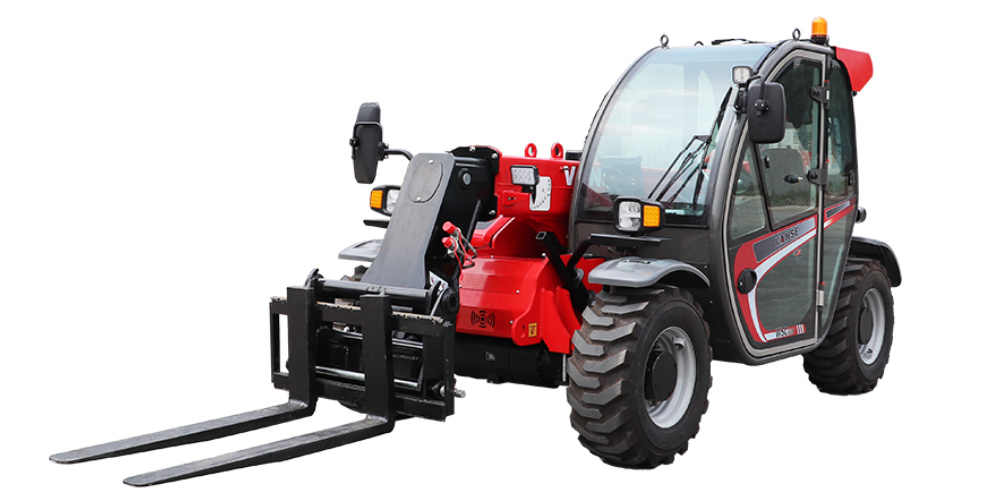
VANSE 625 6m Telescopic Handler
Designed for efficient material handling and stacking in warehouses, factories, and confined job sites, offering compact maneuverability and reliable performance.

VANSE 735 7m Telescopic Handler
A balanced mid-duty solution for construction, agriculture, logistics, and warehousing, combining stable lifting, strong traction, and everyday versatility.


About the Author:
The VANSE team is a group of experienced professionals specializing in construction machinery research, manufacturing, and technical support. With deep industry knowledge and hands-on experience, our engineers and product specialists share practical insights on equipment selection, operation, maintenance, and industry trends.
Share
You May Also Interest
-

22 October, 2026
Telehandler for Grain Handling on Large Modern Farm Sites
Explore telehandler grain handling options in the United States, including suppliers, specs, farm uses, and cost-saving buying advice for grain operations.
-
21 October, 2026
Telehandler vs All Terrain Forklift: Which Lifts Better
Telehandler vs all terrain forklift in the United States: compare reach, lifting, terrain use, costs, and supplier options for smarter equipment buying.
-
20 October, 2026
10 Ton Telehandler: Extreme Lifting for Major Industrial
Explore 10-ton telehandler options in the United States, top suppliers, buying tips, applications, and service support for major lifting projects.
-
19 October, 2026
Telehandler for Demolition: Safe Structural Dismantling
Explore telehandler demolition options in the United States, including suppliers, attachments, safety, market trends, and cost-effective sourcing advice.