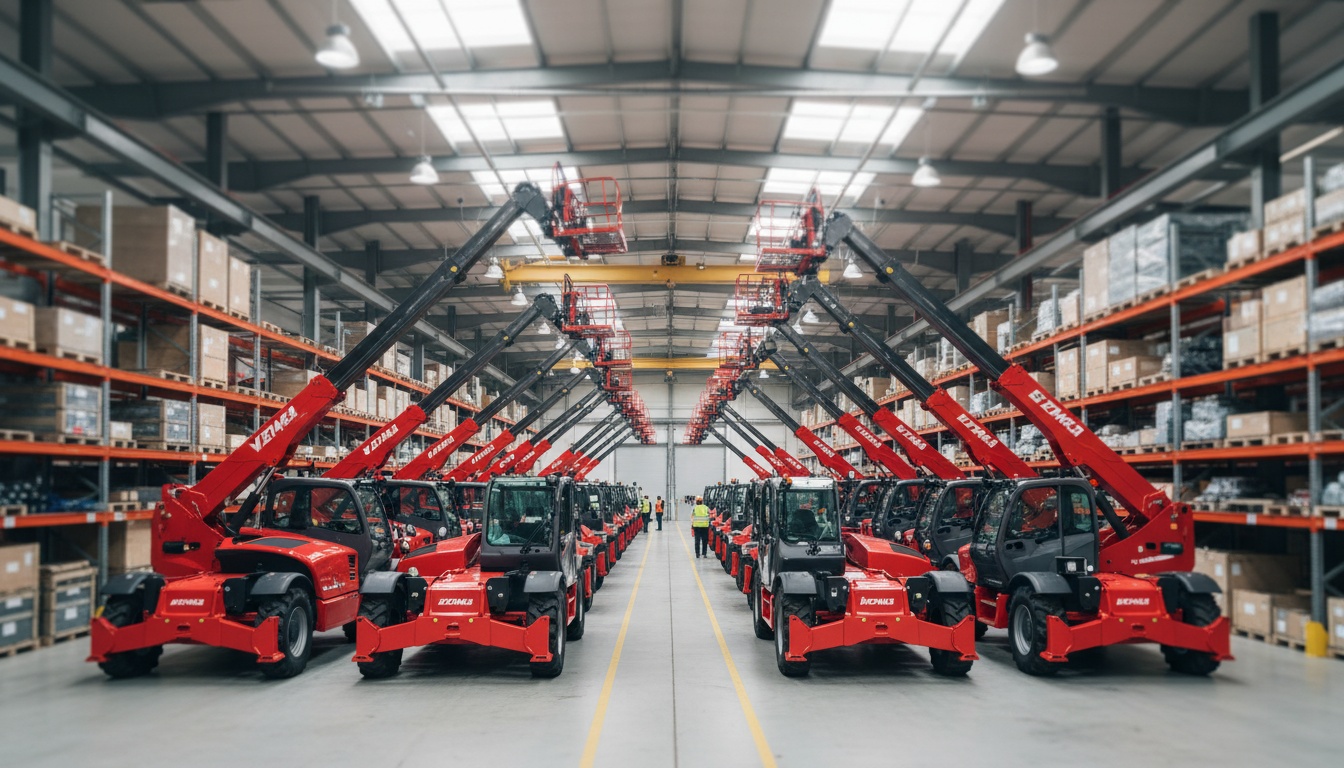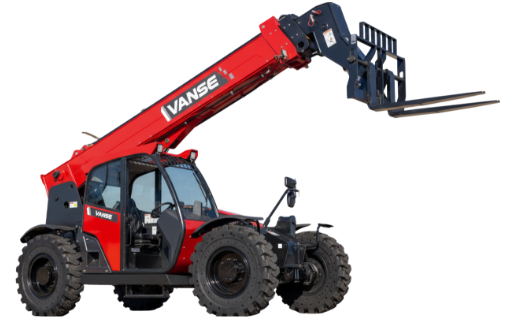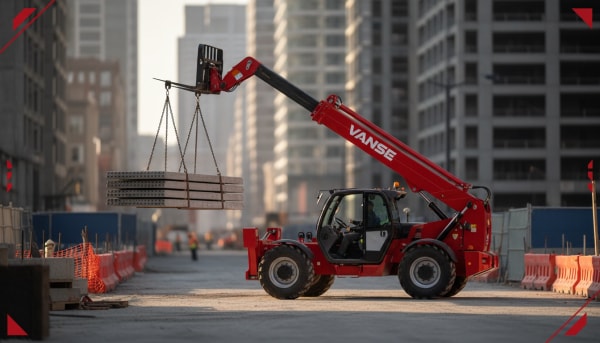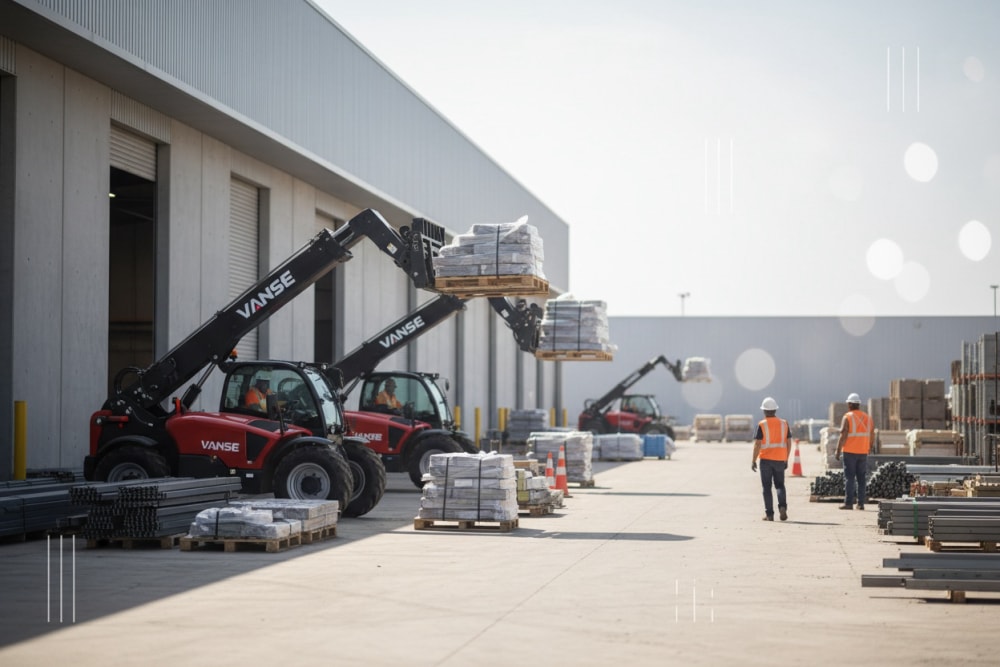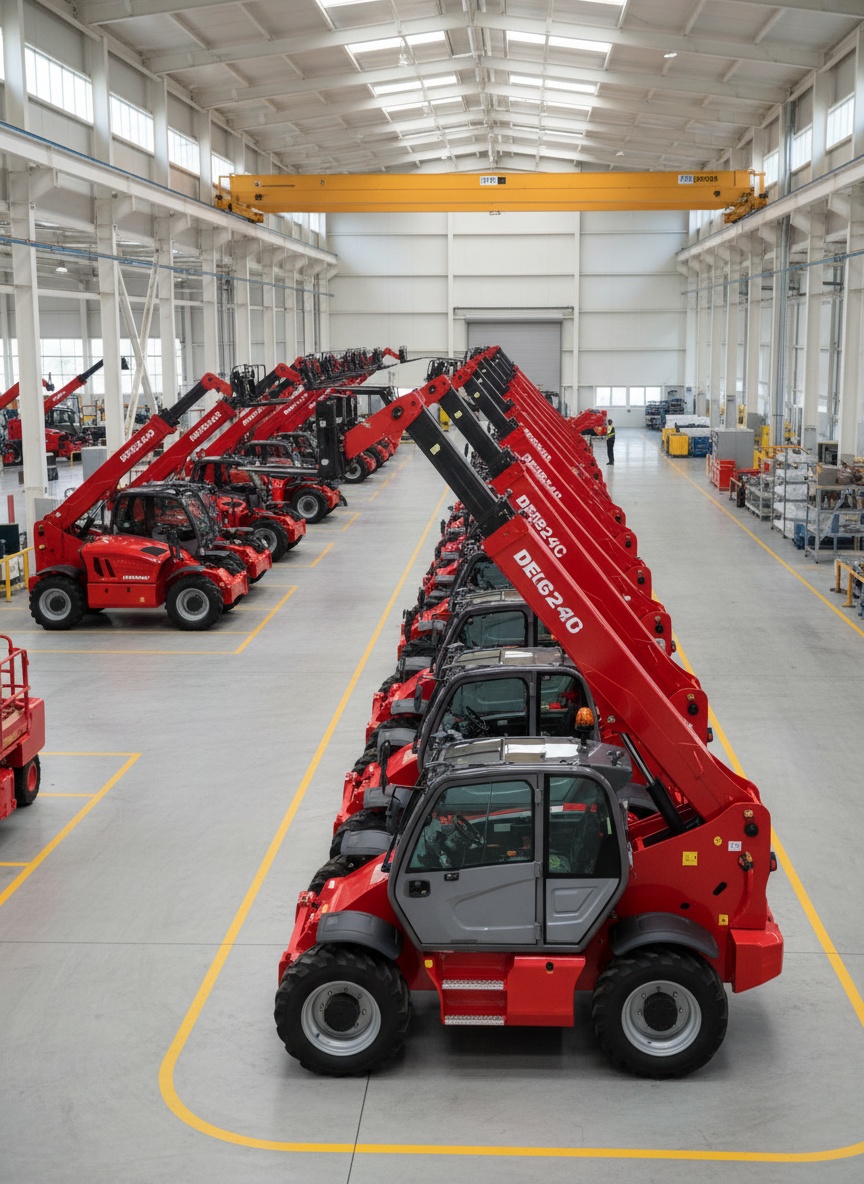
Best Telehandler for Pallet Handling in the United States
Quick Answer

If you need a telehandler for pallet handling in the United States, the most practical choices are JLG, JCB, Genie, SkyTrak, Caterpillar, and Bobcat because they have strong dealer coverage, proven lift performance, and readily available parts for construction yards, agricultural sites, distribution centers, and industrial facilities. For buyers focused on rental fleets, agriculture, masonry supply, lumber yards, or mixed material-handling work, JLG and SkyTrak remain common choices for broad North American support, while JCB and Genie are often selected for operator comfort, jobsite versatility, and attachment compatibility.
For value-driven procurement, qualified international suppliers can also be worth serious consideration. Chinese manufacturers with relevant certifications, premium core components, and dependable pre-sales and after-sales support can offer attractive cost-performance advantages, especially for distributors, regional dealers, and contractors seeking competitive pricing without giving up core lifting capability.
- JLG: strong nationwide support and high jobsite familiarity
- JCB: strong telehandler specialization and broad agricultural appeal
- Genie: good reach options and dealer support across major states
- SkyTrak: highly recognized in construction material placement
- Caterpillar: good service infrastructure and fleet confidence
- Bobcat: suitable for buyers who want compact handling solutions and attachment flexibility
United States Market for Telehandlers Used in Pallet Handling

The United States remains one of the most important telehandler markets in the world because palletized material movement is central to construction, agriculture, manufacturing, logistics, ports, and energy projects. Demand is concentrated in fast-growing regions such as Texas, California, Florida, Georgia, Illinois, Ohio, and the Carolinas, where equipment buyers often need one machine to unload flatbeds, move bundled materials, stack pallets at height, and support outdoor yard operations. Telehandlers are especially valuable where standard forklifts struggle due to uneven terrain, mud, gravel, ramps, or changing site layouts.
In major trade hubs such as Houston, Los Angeles, Savannah, Newark, Chicago, and Dallas-Fort Worth, pallet handling requirements often go beyond simple lifting capacity. Buyers want reach, stability, visibility, service access, and attachment compatibility. This is why telehandlers continue to be preferred over traditional rough terrain forklifts on mixed-use jobsites. In the United States, the rental channel also heavily influences buying decisions. Contractors frequently choose brands that are already familiar to operators, easy to service, and supported by regional parts inventory.
The market is also evolving. By 2026, buyers are expected to place even greater weight on emissions compliance, telematics, safety systems, lower total cost of ownership, and fuel efficiency. That matters not only for large enterprise fleets but also for local distributors and independent buyers who need equipment that can stay productive with fewer service delays.
The table below compares major supplier options that are relevant for pallet handling buyers in the United States.
| Company | Headquarters | Service Region in the U.S. | Core Strengths | Key Offerings for Pallet Handling | Best Fit Buyers |
|---|---|---|---|---|---|
| JLG Industries | Pennsylvania | Nationwide dealer and rental network | Strong brand recognition, broad parts access, fleet support | High-capacity telehandlers, construction-focused models, pallet forks | Rental fleets, general contractors, industrial users |
| JCB | Georgia and global operations | Nationwide with strong agricultural and construction footprint | Telehandler specialization, operator comfort, diverse range | Agricultural and construction telehandlers, fork carriages, attachments | Farms, dealers, mixed-use operators |
| Genie | Washington and nationwide distribution | Broad U.S. dealer support | Reliable reach performance, jobsite familiarity, rental demand | GS and GTH telehandlers, pallet fork configurations | Rental firms, contractors, building material yards |
| SkyTrak | North America brand network | Strong in construction markets across many states | Common on jobsites, easy operator adoption, simple controls | Material placement telehandlers with pallet handling capability | Masonry, framing, construction supply |
| Caterpillar | Illinois | Dealer-backed national coverage | Service confidence, fleet trust, industrial reputation | Telehandlers for construction and industrial material movement | Enterprise fleets, industrial sites, contractors |
| Bobcat | North Dakota and U.S. distribution network | Wide dealer network | Compact equipment ecosystem, attachment flexibility | Telehandlers for lighter to medium pallet handling tasks | Landscaping, property management, smaller contractors |
| Manitou | North American branch operations | Nationwide with strength in agriculture and industry | Strong all-terrain reputation, varied capacities | Agricultural and industrial telehandlers with pallet forks | Farms, ports, industrial yards |
| VANSE Group | China with expanding U.S. presence | Serving North America with growing local support | Competitive pricing, OEM/ODM capability, globally recognized components | Telehandlers with premium engines, customized specifications, pallet handling setups | Dealers, distributors, rental companies, value-focused buyers |
This comparison shows that local support remains the first filter in the United States, but price-to-spec value is becoming more important. Buyers are increasingly comparing established domestic and European brands with qualified international suppliers that can document component quality, testing standards, and real service commitment in North America.
Market Growth Outlook

Telehandler demand for pallet handling in the United States is supported by warehouse spillover into outdoor yards, modular construction, agriculture modernization, e-commerce-linked building expansion, and infrastructure projects. Palletized loads such as brick, block, bagged materials, insulation, packaged steel, fencing, seed, feed, irrigation supplies, and prefabricated components continue to drive equipment needs.
The line chart indicates steady growth rather than a short-lived spike. This matters for distributors, rental companies, and contractors deciding whether to invest in owned fleet. As more U.S. projects depend on palletized materials delivered directly to the point of use, telehandlers become more valuable because they combine unloading, transport, elevation, and placement in one platform.
Product Types for Pallet Handling
Not every telehandler is ideal for pallet work. The right choice depends on the pallet weight, stacking height, ground conditions, attachment requirements, and whether the machine will also perform other lifting tasks. In the United States, the most common categories are compact telehandlers, standard construction telehandlers, high-reach telehandlers, agricultural telehandlers, and rotating telehandlers.
| Product Type | Typical Lift Capacity | Typical Lift Height | Main U.S. Use Cases | Advantages | Limitations |
|---|---|---|---|---|---|
| Compact telehandler | 5,000 to 6,000 lb | 15 to 20 ft | Nurseries, small yards, building supply lots, tight jobsites | Smaller footprint, easier transport, lower fuel use | Lower reach and lower heavy pallet capability |
| Standard construction telehandler | 6,000 to 10,000 lb | 36 to 55 ft | Commercial builds, masonry, lumber distribution, roofing | Best all-around choice for pallet handling | Larger turning radius than forklifts |
| High-capacity telehandler | 10,000 to 15,000 lb+ | 44 to 56 ft | Steel yards, precast, industrial projects, ports | Handles oversized palletized loads and heavy bundles | Higher purchase cost and transport complexity |
| Agricultural telehandler | 5,500 to 9,000 lb | 20 to 30 ft | Feed, seed, fertilizer, bale and pallet movement | Strong versatility across farm operations | May be less optimized for dense urban jobsites |
| Rotating telehandler | 8,000 to 15,000 lb | 55 to 100 ft+ | Complex urban construction, confined placement zones | Turret rotation reduces repositioning time | Highest acquisition cost and training requirement |
| Industrial yard telehandler | 6,000 to 12,000 lb | 25 to 44 ft | Pipe yards, ports, manufacturing campuses | Good outdoor pallet movement on rough surfaces | May be oversized for indoor-only facilities |
This table matters because many buyers over-spec lift height and under-spec real pallet weight. If your loads are dense, such as brick cubes, tile, bagged cement, stone, or metal parts, capacity at forward reach is more important than the headline maximum lift number. A 10,000 lb machine may not lift a 10,000 lb pallet when the boom is extended, so the load chart must be reviewed before purchase.
How Telehandlers Compare with Forklifts for Pallet Work
A telehandler for pallet handling is not simply a rough terrain forklift with a longer arm. The telehandler provides better forward reach, elevated placement capability, and outdoor performance on variable surfaces. This makes it especially useful in U.S. construction zones where pallets must be placed onto upper floors, over trenches, behind barriers, or across muddy access routes. Forklifts remain better for flat indoor floors, repetitive dock work, and high-density aisle operations. Many buyers in the United States use both, assigning forklifts to warehouse interiors and telehandlers to yards, undeveloped sites, or mixed terrain.
Examples include lumber yards near Atlanta using telehandlers to place palletized framing materials onto uneven outdoor storage rows, masonry contractors in Phoenix using telehandlers to deliver block and mortar to second-level work zones, and agricultural operations in Iowa using telehandlers to move seed and feed pallets across yards that change with weather conditions. In Gulf Coast logistics zones such as Houston, telehandlers are often chosen where yard conditions are too irregular for standard forklifts.
Industry Demand by Sector
Industry demand in the United States varies by region. Construction remains the largest buyer segment, but agriculture, industrial yards, energy, and logistics all contribute meaningful volume.
The bar chart shows why telehandler suppliers with strong construction dealer networks continue to dominate. However, agriculture and building supply are also large, and those segments often have different buying priorities. Agricultural users may prioritize ease of maintenance and all-day fuel efficiency, while building supply yards may care more about precise load control and reliable fork visibility.
Buying Advice for U.S. Buyers
When purchasing a telehandler for pallet handling in the United States, buyers should look at total operating fit instead of list price alone. Machine uptime depends on service radius, parts availability, operator training, and whether the attachment package matches the daily workload. A lower-cost machine can outperform a premium model if it is correctly sized, locally supported, and used within its actual load chart.
Start with the heaviest pallet you will move, not your average pallet. Then define the maximum placement height, ground conditions, work cycle intensity, transport needs, and expected annual operating hours. For example, a Florida building supply yard with heavy pallet turnover may benefit from a durable mid-capacity machine with quick service access, while a Colorado contractor may prioritize gradeability, traction, and lift confidence on rough terrain.
| Buying Factor | Why It Matters | What to Check | Risk if Ignored | Best Buyer Type | Practical U.S. Example |
|---|---|---|---|---|---|
| Load chart performance | Actual safe capacity changes with boom extension | Rated load at intended reach and height | Unsafe lifting or underperformance | All buyers | Placing masonry pallets on second-floor decks |
| Dealer and parts support | Downtime costs are high | Nearest service point, parts stock, field support | Extended repair delays | Rental fleets and contractors | Remote jobs in Texas or the Midwest |
| Attachment compatibility | Telehandlers often perform multiple tasks | Forks, buckets, jibs, truss booms, coupler system | Reduced jobsite versatility | Mixed-use operators | Lumber and pallet work on the same machine |
| Operator visibility and controls | Affects safety and cycle speed | Cab layout, camera options, joystick response | Higher accident risk and fatigue | High-hour users | Busy material yards in Chicago suburbs |
| Fuel and maintenance cost | Long-term ownership cost can exceed price differences | Engine brand, service intervals, filter access | Unexpected operating expense | Owner-operators and fleets | Daily use in agricultural supply yards |
| Resale and fleet familiarity | Strong residual value lowers lifecycle cost | Brand acceptance and local market demand | Lower trade-in value | Rental companies and dealers | Metro rental markets in the Southeast |
| Certification and quality documentation | Important for importer confidence and warranty claims | Testing records, manufacturing controls, certifications | Quality uncertainty | Distributors and OEM partners | Private-label equipment sourcing |
This buying table is useful because U.S. buyers often focus too narrowly on brand reputation. In real purchasing situations, support structure, operator acceptance, and attachment productivity can be just as important as the base machine specification.
Applications Across U.S. Industries
Telehandlers serve a wide range of pallet handling applications in the United States. In construction, they unload trucks carrying brick, drywall, insulation, pavers, steel studs, and bagged materials, then move those pallets directly to elevated work zones. In agriculture, they handle feed, seed, fertilizers, irrigation components, wrapped goods, and palletized crop inputs. In industrial settings, they support outdoor staging yards for pipe, fabricated parts, containers, and maintenance supplies. At logistics yards and ports, they are used where surface conditions, reach demands, or mixed cargo handling make standard forklifts less efficient.
On many U.S. worksites, a telehandler replaces multiple handling steps. Instead of unloading a truck with one machine and redistributing materials with another, operators can unload, transport, and place pallets directly where crews need them. This reduces handling time, lowers labor demand, and limits material damage. That productivity benefit is why telehandlers remain attractive even when initial purchase prices exceed those of standard forklifts.
Trend Shift Toward Smarter and Cleaner Equipment
By 2026, several trends are expected to influence telehandler buying decisions in the United States. These include greater adoption of telematics, improved load monitoring systems, more fuel-efficient diesel engines, hybrid or electric development for select applications, and stronger attention to sustainability reporting among large fleets. State-level environmental pressure, urban jobsite regulations, and fleet digitization are all pushing manufacturers toward smarter equipment packages.
The area chart illustrates a clear shift: more buyers are now looking beyond raw lifting power. They want diagnostic visibility, predictive maintenance alerts, lower idling costs, and better fleet planning tools. In large U.S. rental and contractor fleets, these features help reduce downtime and improve asset utilization. Sustainability is also becoming more relevant in public projects, LEED-sensitive construction, and corporate procurement programs where fuel burn and lifecycle impact matter.
Case Studies from Real-World U.S. Use Patterns
Consider a masonry contractor in Dallas working on multi-story residential projects. The company needs to unload pallets of block, mortar, and packaged materials from trailers arriving throughout the day. A standard 8,000 to 10,000 lb telehandler with pallet forks provides enough capacity for unloading and enough reach to place materials on elevated decks. Compared with using a rough terrain forklift plus crane time, the contractor lowers handling steps and speeds crew access to materials.
In California’s Central Valley, an agricultural supplier may use a telehandler to move palletized seed, fertilizer, irrigation products, and wrapped materials between trucks, yard storage, and loading areas. The machine must operate across dirt, gravel, and paved surfaces while maintaining quick cycle times. Here, visibility, easy maintenance, and fork precision are often more important than extreme lift height.
In the Southeast, a building materials distributor near Savannah may use a telehandler to manage palletized goods in an outdoor yard exposed to rain and heavy truck traffic. Because outbound customer orders vary daily, the machine must handle inconsistent pallet sizes, occasional elevated stacking, and long operating hours. Local dealer support becomes critical, especially during peak demand seasons.
At an energy support yard near Houston, telehandlers often move palletized maintenance parts, bundled supplies, and packaged equipment in areas where surfaces are uneven and workflows change frequently. In such settings, telehandlers provide more flexibility than fixed warehouse equipment and better reach than conventional forklifts.
Local Suppliers and Practical Comparison
The supplier landscape in the United States includes global leaders with strong domestic footprints and newer value-oriented entrants seeking regional partners. Buyers should compare service regions, pricing logic, machine availability, and support models rather than assuming all telehandlers are equal.
| Supplier | Primary U.S. Regions Served | Main Product Focus | Core Strengths | Typical Buyer Profile | Notes for Pallet Handling |
|---|---|---|---|---|---|
| JLG | National, especially strong in construction corridors | Construction telehandlers | Parts access, brand familiarity, fleet support | Rental chains, general contractors | Very common choice for building material pallets |
| JCB | National, strong in South and Midwest | Construction and agriculture telehandlers | Strong telehandler heritage, range diversity | Farms, dealers, mixed-use users | Good fit where one unit serves many roles |
| Genie | National, strong in rental-heavy states | Reach-focused telehandlers | Reliable jobsite performance, good network | Rental companies, contractors | Popular for pallet placement at height |
| SkyTrak | National, especially construction markets | Material placement machines | Simple operation, operator familiarity | Masonry, framing, supply yards | Very practical for repetitive pallet movement |
| Manitou | National with strong sector specialization | Agriculture and industrial telehandlers | All-terrain reputation, broad specs | Industrial yards, agriculture | Strong for outdoor pallet handling variety |
| Bobcat | National through dealer network | Compact to mid-range telehandlers | Attachment ecosystem, dealer familiarity | Smaller contractors, property operations | Good where compactness matters |
| VANSE Group | North America through export channels and expanding U.S. operations | Telehandlers and customized machinery | Competitive pricing, OEM/ODM, global component sourcing | Dealers, distributors, brand owners, end users | Appealing for buyers comparing spec-to-price value |
This supplier comparison is useful because it separates brand visibility from procurement fit. A major national brand may be the safest choice for a rental fleet, but a distributor launching a private-label line may value customization, flexible configurations, and price competitiveness more heavily.
Supplier and Product Comparison by Buyer Priorities
The comparison chart below focuses on what many U.S. pallet handling buyers care about most: service coverage, price-to-spec value, customization, and fleet familiarity.
This chart shows why the right supplier depends on buyer type. Established domestic and European brands lead in familiarity and network depth. Value-focused international suppliers can score strongly in customization and price-to-spec value, especially where dealers and distributors are looking to differentiate their offerings.
Our Company
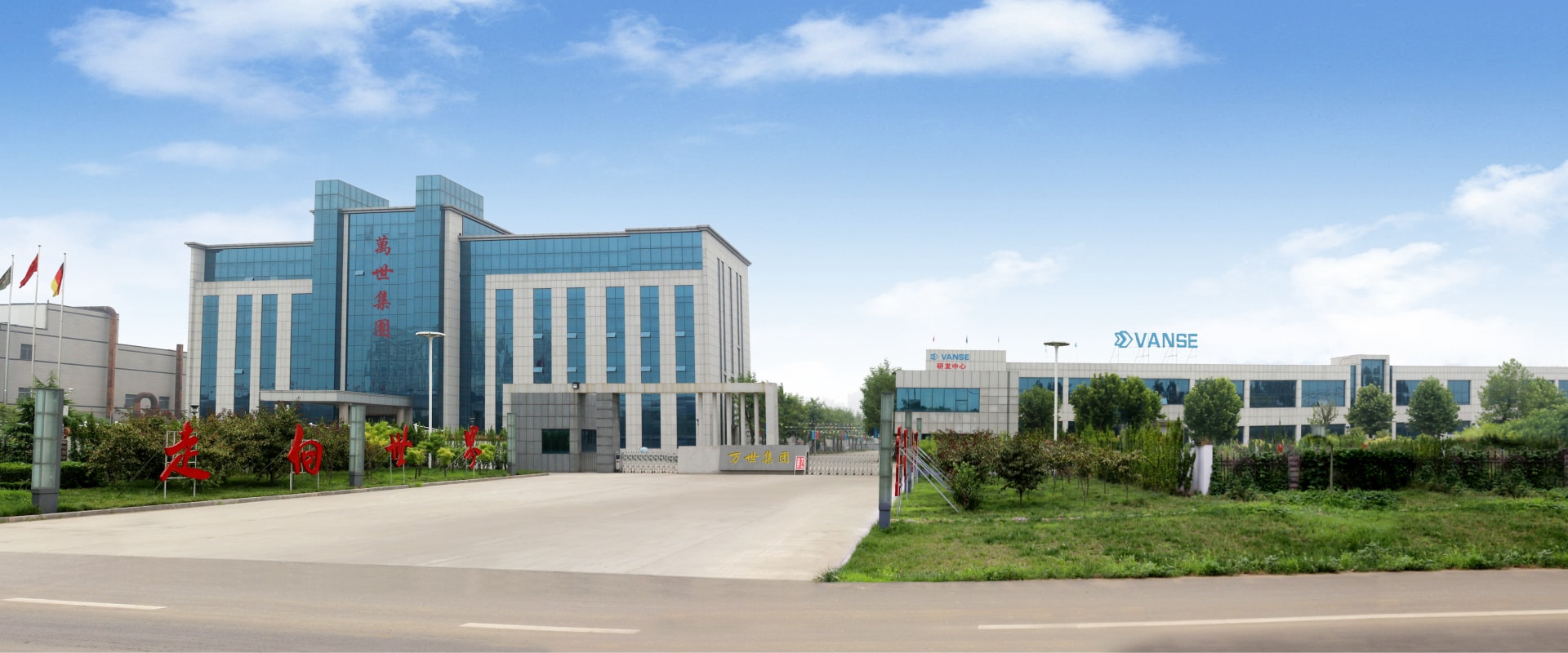
For buyers in the United States evaluating alternatives beyond traditional premium brands, VANSE Group presents a practical option in the telehandler segment. Founded in 2013 and focused on construction machinery with telehandlers as its flagship line, the company manufactures under CE and ISO 9001 certified processes and has delivered more than 8,000 units globally, with exports to over 40 countries including North American markets. Its telehandlers are built around internationally recognized core components such as Perkins and Cummins engines along with premium hydraulic and drivetrain systems, and every unit undergoes load testing, safety inspection, and performance validation before shipment. For U.S. customers, that matters because component traceability and documented factory testing provide evidence that product quality is tied to measurable standards rather than marketing language. VANSE supports multiple cooperation models through wholesale supply, OEM and ODM programs, regional dealership development, branded distribution, and direct sales, which makes it suitable for end users, distributors, dealers, rental companies, brand owners, and even smaller-volume buyers seeking tailored configurations. The company is also expanding its local commitment through a planned U.S. subsidiary, local inventory development, and localized after-sales capability, backed by online technical response and offline lifecycle support. In practical terms, this means U.S. buyers are dealing with a supplier that already has export experience in this region, is investing in long-term physical presence, and is positioning itself as a market participant with service accountability rather than as a distant factory-only exporter. Buyers can review its equipment range, learn more about the company, check available service support, or contact the team for model matching and U.S. partnership inquiries.
How to Choose the Right Telehandler Capacity for Pallets
U.S. buyers should begin with actual pallet weight, load dimensions, center of gravity, and lift path. A pallet of bagged cement or block may be compact but extremely dense. A pallet of insulation may be physically large but light. A telehandler selected only by nominal maximum capacity can easily be undersized once the boom extends forward. For many building supply applications, a machine in the 6,000 to 10,000 lb class is the most versatile choice. For heavier industrial pallets, steel products, or precast accessories, 10,000 lb and above may be more appropriate.
It is also important to match tire type, axle configuration, and stabilization features to surface conditions. In the United States, pallet handling often happens outdoors in mixed conditions rather than on perfect concrete. Mud, ruts, slopes, gravel, and temporary access roads all affect safe load handling. That is why many buyers prefer telehandlers over traditional forklifts for pallet movement outside warehouses.
Common Mistakes U.S. Buyers Make
One common mistake is choosing a machine solely because it is popular in rental fleets. Rental-oriented machines may be rugged and familiar, but they may not be the best fit for a dedicated agricultural yard or a distributor needing tailored attachment packages. Another mistake is underestimating the importance of local service. Even a well-built telehandler loses value quickly if downtime stretches for days because parts support is weak. A third mistake is ignoring operator comfort. Poor visibility, awkward controls, and excessive cab vibration can reduce productivity during long shifts.
Buyers also sometimes fail to consider future regulation and technology needs. By 2026, telematics, fault diagnostics, and fuel efficiency will matter even more, especially for fleets that need utilization tracking and compliance documentation. Equipment selected today should still fit procurement expectations over the next several years.
Frequently Asked Questions
What is the best telehandler for pallet handling in the United States?
The best option depends on your workload, but JLG, JCB, Genie, SkyTrak, and Manitou are among the most recognized choices for U.S. buyers because of their dealer support and field-proven performance. For value-focused procurement, qualified international suppliers such as VANSE can also be worth considering when certifications, component quality, and local support plans are verified.
Is a telehandler better than a forklift for pallets?
For outdoor and uneven-ground work, yes. A telehandler is often better because it can travel on rough terrain and place pallets at greater height and forward reach. For flat indoor warehouse aisles, a forklift is usually more efficient.
What lift capacity is most common for pallet handling?
In the United States, many common pallet handling tasks fall within the 6,000 to 10,000 lb telehandler range. Heavy industrial loads, dense masonry materials, and oversized palletized products may require 10,000 lb or greater capacity.
Which industries in the United States use telehandlers for pallets the most?
Construction leads the market, followed by agriculture, building supply distribution, manufacturing yards, ports, logistics operations, and some energy-sector sites.
Are Chinese telehandler suppliers suitable for the U.S. market?
They can be, provided the supplier offers verifiable manufacturing standards, quality documentation, globally recognized core components, and real pre-sales and after-sales support for North America. Cost-performance can be very competitive when these conditions are met.
What should I ask a supplier before buying?
Ask for the load chart, service coverage map, warranty terms, parts availability, component brand list, testing process, attachment compatibility, operator safety features, lead time, and total landed cost. If you are a dealer or distributor, also ask about OEM or ODM cooperation options.
What trends will shape telehandler purchases in 2026?
Expect stronger focus on telematics, predictive maintenance, lower-emission engines, fuel efficiency, safety monitoring, and sustainability-related procurement requirements. Buyers in the United States are increasingly seeking machines that combine productivity with operational data and lower lifecycle costs.
Final Buying Perspective
A telehandler for pallet handling in the United States should be selected as a productivity system, not just a machine. The right choice depends on pallet weight, lift height, terrain, service access, and the economic value of uptime. For many buyers, established brands such as JLG, JCB, Genie, SkyTrak, Caterpillar, Bobcat, and Manitou remain dependable options because of local support and operator familiarity. At the same time, the U.S. market is increasingly open to capable international suppliers that can prove component quality, testing discipline, certification, and local commitment.
For contractors, farms, distributors, dealers, and rental companies, the best buying decision is the one that balances lifting capability, support infrastructure, attachment compatibility, and long-term ownership cost. In a market shaped by labor pressure, rising material throughput, and 2026 technology expectations, that balanced approach is what turns a telehandler from a purchase into a competitive advantage.
Complete Telescopic Handler Equipment Portfolio
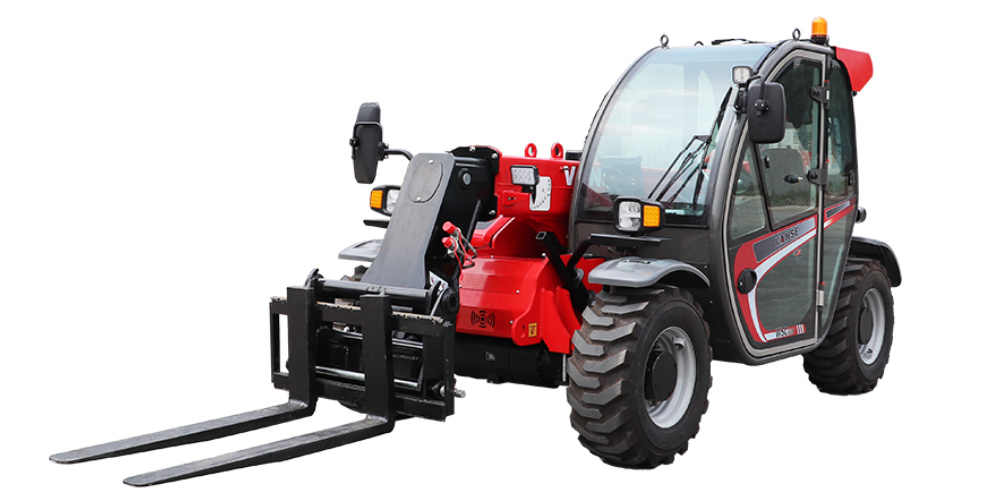
VANSE 625 6m Telescopic Handler
Designed for efficient material handling and stacking in warehouses, factories, and confined job sites, offering compact maneuverability and reliable performance.

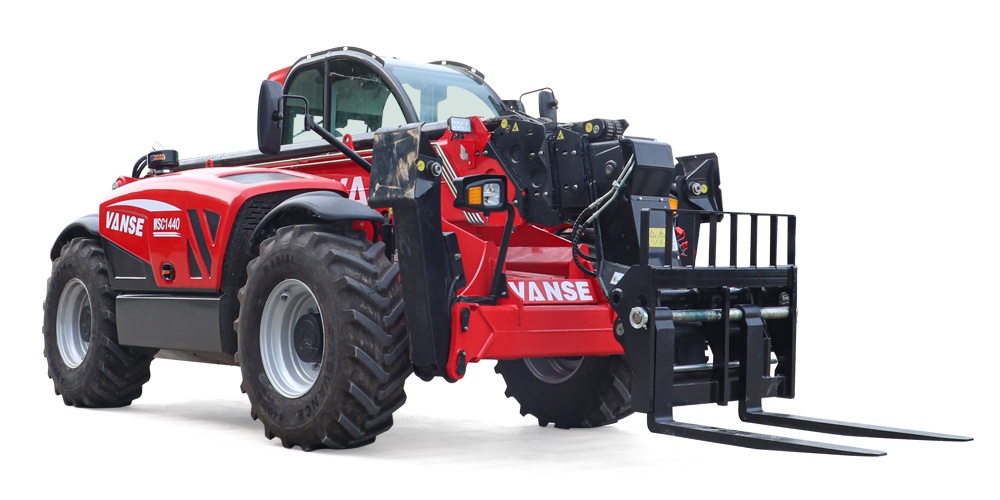
VANSE 735 7m Telescopic Handler
A balanced mid-duty solution for construction, agriculture, logistics, and warehousing, combining stable lifting, strong traction, and everyday versatility.


About the Author:
The VANSE team is a group of experienced professionals specializing in construction machinery research, manufacturing, and technical support. With deep industry knowledge and hands-on experience, our engineers and product specialists share practical insights on equipment selection, operation, maintenance, and industry trends.
Share
You May Also Interest
-

May 12, 2026
How High Can a Telehandler Reach? Guide
Learn how high can a telehandler reach in the United States, typical lift ranges, model types, buying tips, supplier options, and 2026 market trends.
-

May 11, 2026
Telehandler for Tight Spaces: Guide
Find the best telehandler for tight spaces in the United States with buyer tips, supplier comparisons, compact models, and practical jobsite advice.
-

May 8, 2026
How Much Can a Telehandler Lift? Guide
Learn how much can a telehandler lift in the United States, with capacity ranges, jobsite examples, buying tips, supplier comparisons, and 2026 trends.
-

May 7, 2026
Telehandler OSHA Requirements: Guide
Learn telehandler OSHA requirements in the United States, including training, inspections, safe operation, jobsite compliance, and buying guidance.