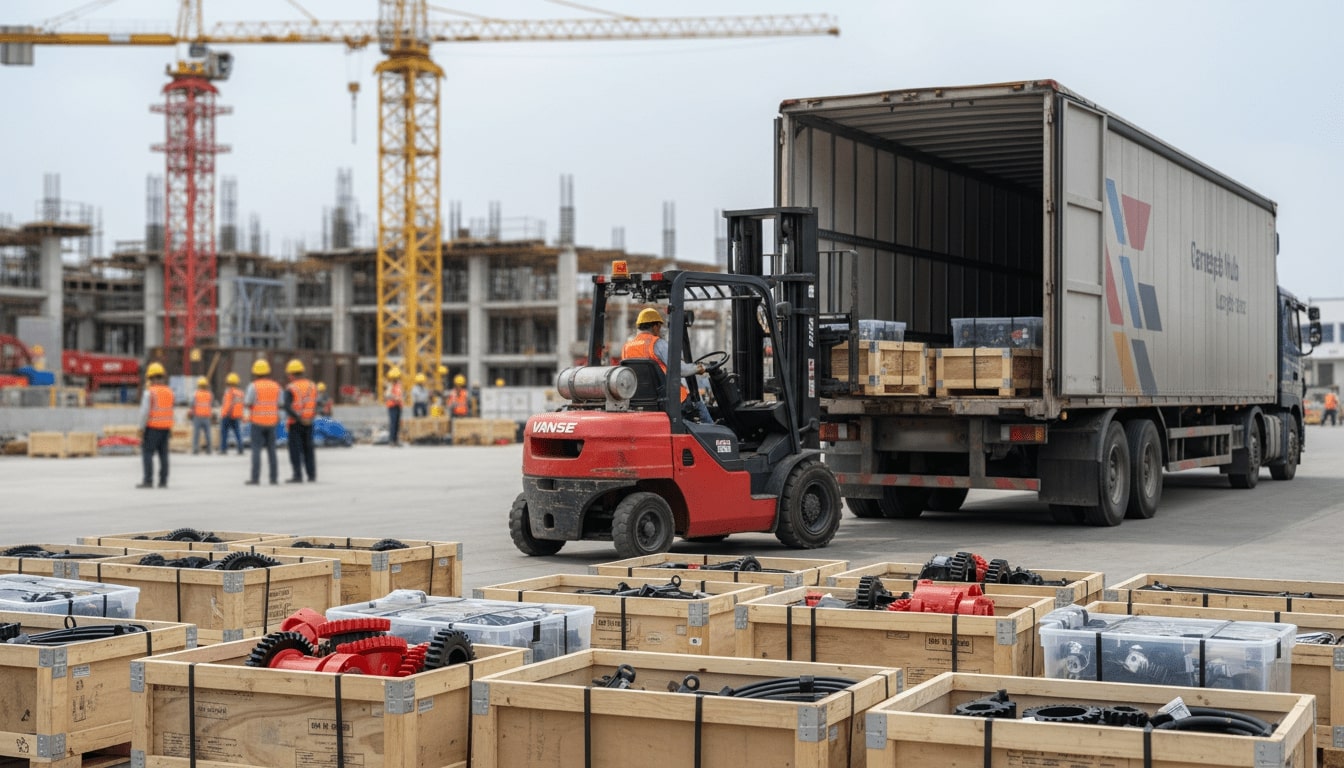
Where to Buy a Telehandler in the United States
Quick Answer

If you need to know where to buy telehandler equipment in the United States, the most practical options are established national dealer networks, large auction marketplaces, regional equipment houses, rental fleets selling used units, and qualified direct-import manufacturers with U.S. support plans. For buyers who want broad dealer coverage and fast parts access, JLG, Genie, Bobcat, JCB, SkyTrak, and Manitou are the most common starting points across states such as Texas, Florida, California, Georgia, Illinois, and Pennsylvania. For used machines, Ritchie Bros., IronPlanet, MachineryTrader listings, and local dealer trade-ins can provide faster deals, especially near major logistics corridors like Houston, Savannah, Los Angeles, Chicago, and Newark. If you need value for fleet purchasing, qualified international suppliers can also be worth considering, especially manufacturers that use globally recognized engines and hydraulics, hold international certifications, and provide responsive pre-sale and after-sale support for U.S. buyers.
The U.S. Telehandler Market at a Glance

The United States is one of the most active telehandler markets in the world because telescopic handlers serve multiple industries at once: commercial construction, homebuilding, warehousing, agriculture, ports, manufacturing, oil and gas support, and infrastructure maintenance. Demand is especially strong in growth corridors such as Texas, the Southeast, the Midwest logistics belt, and the Mountain West, where jobsite flexibility matters. Buyers in the U.S. are not just asking where to buy telehandler units; they are also comparing service reach, financing, operator familiarity, attachment compatibility, EPA engine compliance, and resale strength.
In many states, buyers prefer local dealerships because uptime matters more than headline price. However, the market has become more price-sensitive as fleet owners seek lower total cost per hour. This is why many buyers now compare domestic dealer brands with import options that can support local stocking and service. The best purchasing decision depends on whether you need one machine fast, a rental-ready fleet, a farm unit, or a customized spec for industrial handling.
U.S. Telehandler Market Growth Trend

The chart below illustrates a realistic view of steady U.S. telehandler market expansion driven by construction starts, warehouse development, agriculture modernization, and replacement demand. Growth is not perfectly linear, but the overall direction remains positive as buyers replace aging fleets with safer and more efficient machines.
Where Buyers in the United States Usually Purchase Telehandlers
In the U.S., telehandlers are bought through several channels, and each channel fits a different buying profile. New machines are commonly sourced through authorized dealers that cover a city, state, or regional territory. Used machines often come from rental fleet disposals, auction platforms, or machinery marketplaces. Large contractors may buy directly from manufacturers through national account teams, while distributors and private-label sellers may prefer OEM or ODM supply relationships. Buyers near major freight and equipment hubs such as Houston, Jacksonville, Long Beach, Oakland, Charleston, and Newark can also benefit from stronger inventory flow and lower inland transport complexity.
| Buying Channel | Best For | Typical Condition | Lead Time | Main Advantage | Main Risk |
|---|---|---|---|---|---|
| Authorized dealer network | End users wanting warranty and service | New or dealer-certified used | Fast to medium | Parts access and trained technicians | Higher purchase price |
| Rental fleet resale | Budget-focused contractors | Used | Fast | Known service history in many cases | Higher operating hours |
| Auction platforms | Experienced buyers | Used, as-is | Fast | Broad national selection | Inspection limitations |
| Online machinery marketplaces | Price comparison shoppers | New and used | Varies | Easy supplier comparison | Quality varies by seller |
| Direct manufacturer procurement | Fleet buyers and distributors | New | Medium | Custom configurations and volume pricing | Requires due diligence on service support |
| Regional import partner | Dealers and cost-sensitive fleets | New | Medium | Lower acquisition cost | Support quality depends on local setup |
This table matters because it shows there is no single best place to buy a telehandler in the United States. The correct channel depends on how much downtime risk you can tolerate, whether you need financing, and whether local service is more important than initial purchase savings.
Top Telehandler Suppliers and Marketplaces in the United States
The following suppliers and platforms are among the most practical names for U.S. buyers. Some are manufacturers with strong dealer presence, while others are marketplaces where buyers can compare inventory across states. The list is useful because it combines local support, product availability, and purchasing flexibility rather than focusing only on brand recognition.
| Company | Service Region | Core Strength | Key Offerings | Typical Buyer | Notes |
|---|---|---|---|---|---|
| JLG Industries | Nationwide United States | Large dealer network and fleet familiarity | Construction telehandlers, parts, financing | Contractors, rental fleets | Strong support in major metro areas |
| Genie | Nationwide United States | Established access equipment ecosystem | Telehandlers, service support, dealer sales | Commercial builders, rental firms | Often chosen by mixed access fleets |
| JCB North America | Nationwide with broad dealer footprint | Recognized construction and agricultural reach | Telehandlers, agriculture models, dealer service | Farms, contractors, industrial users | Useful for mixed jobsite and farm demand |
| Manitou | Nationwide through dealers | Material handling specialization | Rotating and fixed telehandlers | Industrial and specialty lifting users | Good fit for high-reach applications |
| Bobcat | Nationwide United States | Brand visibility and dealership convenience | Compact telehandlers and support programs | General contractors, farms | Appeals to buyers already using Bobcat equipment |
| SkyTrak | Strong national presence | Common jobsite familiarity | Construction telehandlers and replacement parts | Building contractors and rental fleets | Widely recognized on U.S. sites |
| Ritchie Bros. | Nationwide auction coverage | High-volume used equipment sales | Auction telehandlers, inspection reports | Value-focused buyers | Best for buyers comfortable with used machines |
| IronPlanet | Nationwide online marketplace | Digital auction convenience | Used telehandlers with listing data | Remote buyers and fleet managers | Useful for cross-state sourcing |
This supplier table is practical because it separates brand manufacturers from transaction platforms. A buyer who needs warranty-backed uptime may choose JLG, Genie, JCB, Manitou, Bobcat, or SkyTrak. A buyer chasing low upfront cost may focus on Ritchie Bros. or IronPlanet but should invest more in inspection and service planning before purchase.
Telehandler Types Commonly Purchased in the U.S.
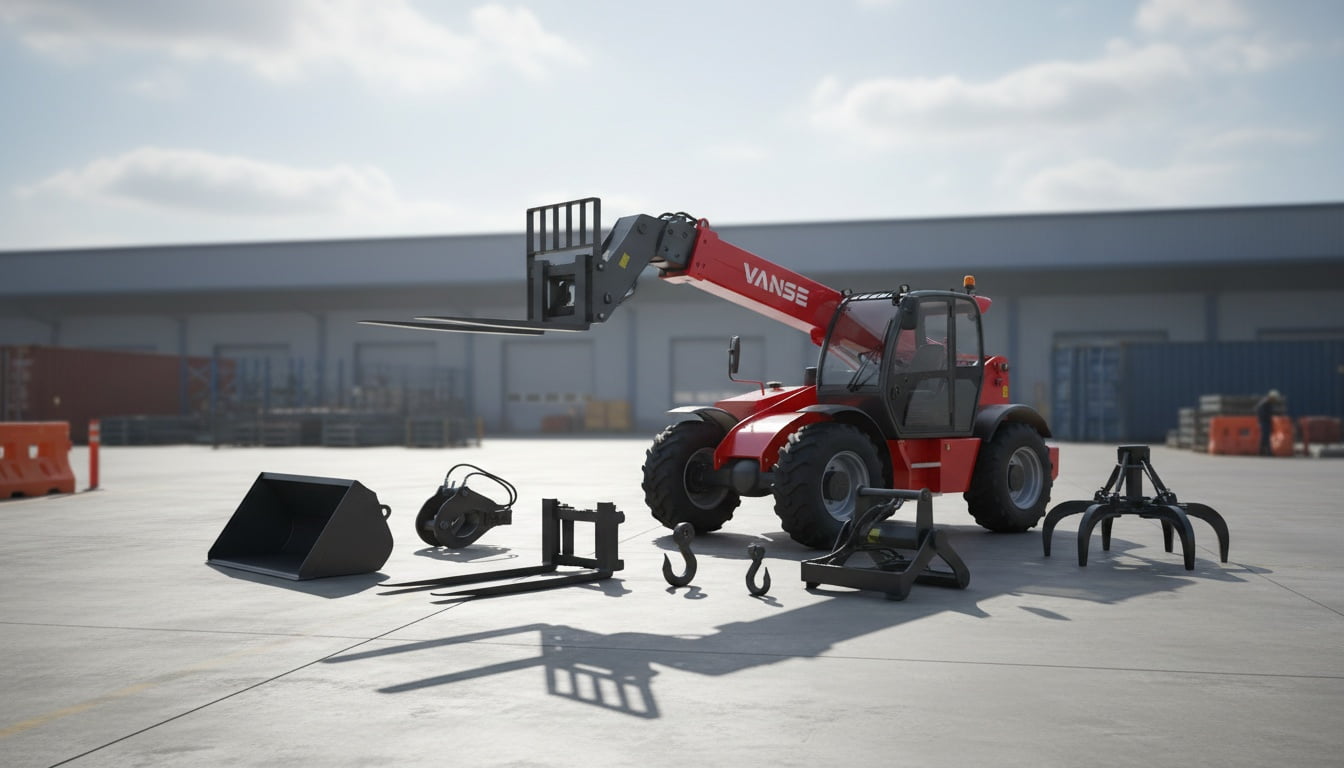
Not every telehandler is built for the same job. In the United States, the most common categories are compact jobsite machines, standard construction telehandlers, high-lift units, heavy-capacity models, and agriculture-focused handlers. Attachments such as pallet forks, buckets, truss booms, jibs, and work platforms strongly influence final productivity, so buyers should treat attachment compatibility as part of the purchasing decision, not an afterthought.
| Type | Typical Lift Capacity | Typical Reach | Common U.S. Use | Main Advantage | Buyer Consideration |
|---|---|---|---|---|---|
| Compact telehandler | 5,000 to 6,000 lb | 15 to 20 ft | Residential building, landscaping | Fits tighter sites | Lower maximum reach |
| Standard construction telehandler | 6,000 to 10,000 lb | 35 to 55 ft | Commercial construction | Versatile all-around performance | Most common fleet category |
| High-reach telehandler | 8,000 to 12,000 lb | 55 to 70 ft | Steel erection, large projects | Extended placement height | Requires skilled operators |
| Heavy-capacity telehandler | 10,000 lb and above | 40 to 56 ft | Industrial yards, ports, energy support | Handles heavier loads | Higher transport and operating cost |
| Agricultural telehandler | 5,500 to 9,000 lb | 20 to 35 ft | Feed handling, bale moving, grain support | Farm-friendly versatility | May differ in tire and cab setup |
| Rotating telehandler | 10,000 lb and above | 60 ft and above | Specialty lifting, urban projects | 360-degree work flexibility | Higher purchase price |
This table helps U.S. buyers match machine class to actual site conditions. Oversizing increases cost, transport complexity, and fuel use, while undersizing causes unsafe workarounds and slower cycles. Many buyers save money by first defining maximum load, maximum placement height, ground conditions, and attachment needs.
Industry Demand by Sector
Telehandler demand in the U.S. is spread across several industries, but the strongest pull still comes from building activity, logistics expansion, and agriculture. The bar chart shows a realistic demand comparison based on national buying patterns and fleet utilization trends.
How to Choose the Right Place to Buy
When comparing suppliers, most U.S. buyers should start with five filters: machine specification, service territory, parts lead time, resale confidence, and total cost of ownership. If a dealer is two hours away but carries common service parts and can dispatch a field technician, it may be stronger than a lower-priced seller with no regional support. Buyers in fast-moving markets such as Dallas-Fort Worth, Phoenix, Atlanta, Orlando, Charlotte, and Nashville often prioritize immediate availability because waiting for a machine can cost more than the price difference between quotes.
Financing and warranty terms matter as much as engine power. A used telehandler with unclear hydraulic service history can become expensive quickly, especially if boom wear, axle play, frame cracking, or attachment locking systems are not inspected properly. New buyers should request machine serial information, maintenance records, load charts, emission details, and a clear parts support plan before closing the purchase.
Buying Advice for New Telehandlers
If you are buying a new telehandler in the United States, focus on dealer responsiveness, parts stocking, and the exact machine specification rather than generic brochure language. Verify whether the quoted machine includes forks, carriage, tires, quick coupler, lighting package, backup camera, enclosed cab, and state-specific features needed for your sites. For fleet buyers, ask whether the supplier can maintain commonality across controls, attachments, and service intervals because standardization lowers training and spare parts complexity.
New-machine buyers should also consider whether the supplier can support future scaling. If you expect to add ten units over two years, a supplier with wholesale terms, fleet discounts, and structured maintenance support can be more valuable than the cheapest initial quote.
Buying Advice for Used Telehandlers
Used telehandlers can be excellent purchases if inspected carefully. In the U.S., many attractive used units come from rental fleets or larger contractors rotating assets after a defined number of hours. Look closely at boom wear pads, cylinder leakage, articulation points, tire condition, transmission behavior under load, axle seals, chassis weld areas, and the condition of forks and carriage. A smooth paint finish means little if there is hidden slack in the boom or electronic fault history.
Whenever possible, buyers should inspect cold-start behavior, lift under rated load, steering modes, and brake response. In markets with winter exposure such as the Midwest and Northeast, corrosion on undercarriage and pins can be more significant than cosmetic wear. In coastal environments like Florida, Savannah, or Southern California, salt exposure can also affect condition. Buyers using auction channels should include transport, repairs, fluids, tires, and lost uptime in the true purchase equation.
Applications Across U.S. Industries
Telehandlers are used because they can do work that normally requires several machines. On construction sites, they move palletized brick, drywall bundles, trusses, rebar, and roofing materials. In agriculture, they handle hay, feed, seed, fertilizer, and bulk materials. In industrial yards, they support maintenance, equipment handling, and plant turnaround work. In ports and logistics parks, they help with specialized handling where forklifts or cranes are less flexible. For municipalities and utilities, they are useful for maintenance support, storm cleanup logistics, and material placement in constrained areas.
The best supplier for a concrete subcontractor in Houston may not be the best supplier for a farm in Iowa or a manufacturing site in Ohio. That is why purchase decisions should begin with application mapping rather than brand preference alone.
Trend Shift in Buyer Preferences
U.S. buying behavior is shifting from simple purchase price comparisons to lifecycle value, operator safety, and support reliability. Buyers increasingly evaluate telematics readiness, attachment flexibility, maintenance intervals, and local stocking. The area chart below shows how the market is gradually moving toward higher-value purchasing criteria.
Case Studies from Typical U.S. Buying Scenarios
A contractor in Dallas buying for tilt-wall and general commercial work usually prefers a standard construction telehandler with fast service response and compatibility with common forks and work platforms. In this case, a local dealer-supported brand often wins because the machine must stay active across multiple sites with minimal downtime.
A dairy operation in Wisconsin may value maneuverability, enclosed cab comfort, and attachment versatility over maximum reach. Here, an agriculture-focused telehandler from a dealer familiar with farm cycles is often the better fit than a purely construction-oriented spec.
A regional equipment rental company in Georgia or the Carolinas may take a different approach. Instead of buying the highest-priced mainstream fleet units, it may compare established brands with cost-competitive direct-supply manufacturers that can support private branding, bulk purchasing, and replacement parts planning. For these buyers, consistency of components and predictable after-sales support matter as much as logo recognition.
A distributor in California looking to expand into telehandlers may seek OEM or ODM cooperation with a manufacturer capable of meeting U.S. expectations on engine brand, hydraulics, documentation, and service support. This is where supplier partnership models become especially important.
Local Supplier Comparison Factors
When choosing between local and imported supply paths, buyers should compare not only sticker price but also regional stocking, lead time, technician access, customization options, and long-term support. The following chart compares realistic purchasing criteria that often shape final decisions.
Regional Considerations Across the United States
Regional context changes the buying decision significantly. In Texas and the Gulf Coast, buyers often prioritize availability, heavy-duty cooling performance, and support for construction, energy-adjacent work, and large site logistics. In the Southeast, growth in distribution centers and residential development supports steady telehandler demand. In the Midwest, agriculture and industrial maintenance keep mixed-use models attractive. On the West Coast, dense urban building sites and port-linked logistics may increase interest in compact and specialty configurations. In the Northeast, transport access, used inventory turnover, and seasonal planning become more important.
Proximity to logistics gateways can affect total landed cost. Buyers importing machines or large attachments may benefit from routes through Los Angeles/Long Beach, Houston, Savannah, Charleston, or Newark, especially when inland transport is planned efficiently. Domestic buyers sourcing from cross-country inventory should also budget for freight, machine prep, and delivery timing before assuming one quote is cheaper than another.
What to Ask a Telehandler Supplier Before You Buy
Ask whether the supplier has parts stocked in your region, whether field service is available, and how quickly common wear items can be delivered. Ask for the exact engine make, emission compliance details, hydraulic component origin, axle source, and maintenance interval chart. If you are buying multiple units, ask whether operator controls, filters, service tools, and attachments are standardized across the lineup. If you are buying imported equipment, ask where warranty work is handled in the U.S., which warehouse supplies spares, and how technical support is delivered after commissioning.
It is also smart to ask for references within your industry. A supplier that performs well for a farm customer may not necessarily perform well for a high-utilization rental fleet. The best evidence is always application-specific.
Recommended Checklist for U.S. Buyers
| Checkpoint | Why It Matters | What to Verify | Best for New | Best for Used | Priority Level |
|---|---|---|---|---|---|
| Service coverage | Reduces downtime risk | Dealer radius, field technician access | Yes | Yes | Very high |
| Parts availability | Affects uptime and repair speed | Warehouse location, lead times | Yes | Yes | Very high |
| Machine history | Prevents hidden failures | Service logs, hours, previous owner | No | Yes | Very high |
| Attachment compatibility | Improves utilization | Forks, couplers, bucket, platform options | Yes | Yes | High |
| Operator safety features | Supports compliance and control | Load chart, cameras, alarms, visibility | Yes | Yes | High |
| Total cost of ownership | Shows true value beyond purchase price | Fuel, maintenance, tires, resale | Yes | Yes | High |
This checklist simplifies vendor comparison. Buyers often focus too heavily on purchase price and overlook factors such as parts lead time and attachment fit, which have a much bigger effect on actual operating cost over several years.
Our Company for U.S. Telehandler Buyers
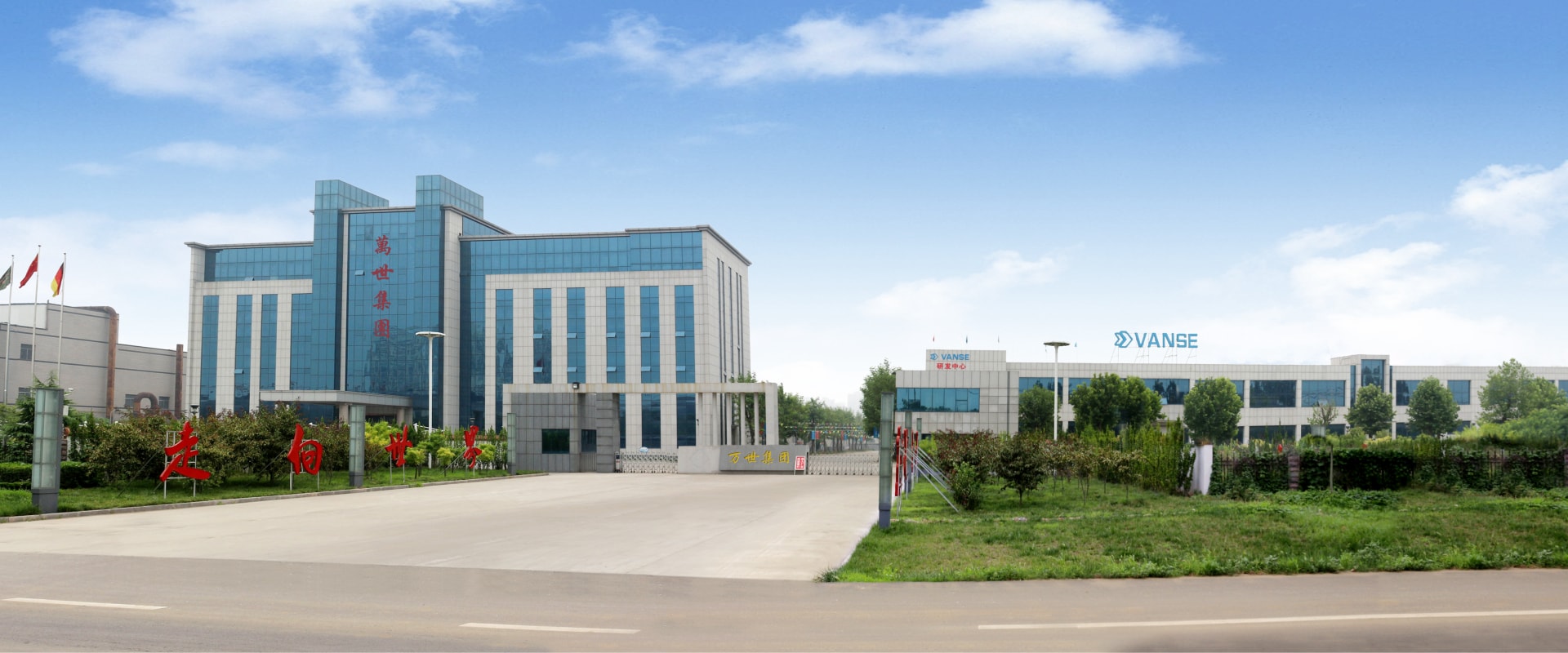
For U.S. buyers evaluating alternatives beyond traditional domestic dealer brands, VANSE is positioned as a telehandler-focused manufacturer with measurable production and export credentials rather than a generic trading source. Founded in 2013, the company has produced more than 8,000 machines and serves customers in over 40 countries, including North America, while manufacturing under CE and ISO 9001 certified processes with comprehensive load testing, safety inspection, and performance validation before shipment. Its telehandlers are built around globally recognized core components such as Perkins and Cummins engines together with premium hydraulic, transmission, and axle systems, which gives U.S. buyers concrete evidence of component reliability and serviceability rather than vague quality claims. Through its equipment manufacturing model, VANSE supports end users, distributors, dealers, brand owners, rental companies, and independent buyers with flexible wholesale, retail, OEM, ODM, and regional distribution cooperation, allowing machine specifications, branding, colors, and configurations to be adapted for local applications. Importantly for the United States, the company is actively establishing a U.S.-based subsidiary with local inventory, stocking, and after-sales capability to strengthen on-the-ground support, while combining online technical response with offline service planning so buyers have a clearer path for pre-sale consultation, commissioning, parts coordination, and lifecycle support. U.S. customers looking for a value-driven option can explore the wider equipment range, review the manufacturer background on the company page, understand support coverage through the service section, or discuss local purchasing needs directly through the contact page.
Why Some U.S. Buyers Consider International Manufacturers
The main reason is cost-performance. A qualified international supplier can sometimes deliver a telehandler with recognized engine brands, competitive hydraulic systems, customized specification options, and lower capital cost than a comparable domestic or European machine. This is especially relevant for rental fleets, distributors, enterprise users, and agricultural buyers who need several machines and must keep fleet payback periods under control.
However, international sourcing only makes sense when the supplier can demonstrate certifications, stable production, documented testing, spare parts planning, and real local commitment. Without those factors, a lower purchase price can become an expensive mistake. This is why buyers should separate serious manufacturers from simple exporters. Evidence such as certified production systems, export history, installed base, and local inventory planning matters more than sales promises.
Future Trends for 2026 and Beyond
Looking toward 2026, the U.S. telehandler market is expected to evolve in three important directions. First, technology adoption will increase. Buyers will place greater value on telematics, remote diagnostics, operator assistance systems, and simpler preventive maintenance tracking. Second, policy and compliance pressures will keep pushing manufacturers toward cleaner engines, better fuel efficiency, improved safety documentation, and more transparent machine data. Third, sustainability will move from a marketing theme to a purchasing factor. Rental fleets and enterprise contractors are already asking about lower-emission operation, longer service life, rebuild potential, and more efficient hydraulics.
Another emerging trend is supplier diversification. Instead of depending only on one long-established brand, U.S. buyers are increasingly building dual-source strategies that combine a mainstream dealer-supported fleet with selected cost-competitive imports for targeted applications. This approach helps control capital cost while preserving uptime in critical categories. Regional warehousing, aftermarket speed, and component standardization will become even more important than brand image alone.
Frequently Asked Questions
Where is the best place to buy a telehandler in the United States?
The best place depends on your priorities. Authorized dealers are usually best for warranty, service, and financing. Auctions and marketplaces are useful for lower-cost used units. Fleet buyers and distributors may benefit from direct manufacturer relationships if local support is clearly established.
Should I buy new or used?
Buy new if uptime, warranty, and standardized fleet management are most important. Buy used if budget matters more and you have the technical ability to inspect the machine properly or access to trusted service support.
Which brands are most common in the U.S.?
JLG, Genie, JCB, Manitou, Bobcat, and SkyTrak are among the most visible names in the U.S. market. Used units are widely traded through auction platforms and dealer networks.
Can I buy a telehandler directly from a manufacturer?
Yes. This is common for larger fleets, distributors, dealers, and buyers seeking customization or private-label opportunities. The key issue is whether the manufacturer can support parts, warranty, and technical response in the United States.
Are imported telehandlers a good option for U.S. buyers?
They can be, especially when the supplier uses globally recognized components, manufactures under certified systems, provides clear testing records, and has U.S.-oriented inventory and after-sales planning. They are particularly attractive when cost-performance matters.
What documents should I request before buying?
Request the machine specification sheet, load chart, serial number, service records for used units, engine information, warranty terms, parts support details, and a written description of what attachments and options are included.
What matters most besides price?
Local service coverage, spare parts availability, machine specification accuracy, attachment compatibility, resale potential, and total cost of ownership matter more than headline price for most commercial buyers.
Final Buying Perspective
If you are asking where to buy telehandler equipment in the United States, the strongest answer is to start with your application, then compare local dealer brands, used-market channels, and qualified direct-supply manufacturers against the same checklist. For immediate support and broad familiarity, national dealer-backed brands remain the easiest route. For value-focused fleet expansion, disciplined used purchases and credible international manufacturers can offer strong returns. The smartest buyers are the ones who look beyond the sales quote and verify service reach, component quality, logistics, and long-term support before making the purchase.
Complete Telescopic Handler Equipment Portfolio
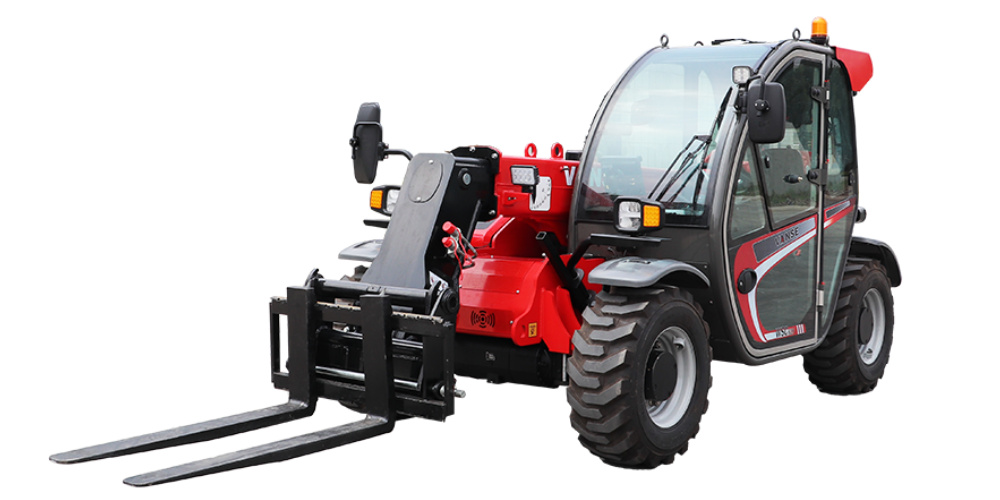
VANSE 625 6m Telescopic Handler
Designed for efficient material handling and stacking in warehouses, factories, and confined job sites, offering compact maneuverability and reliable performance.

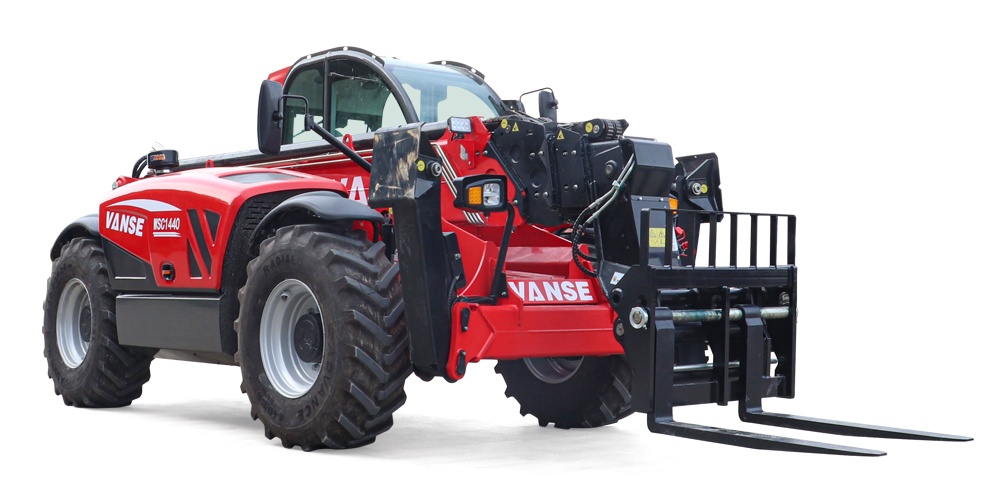
VANSE 735 7m Telescopic Handler
A balanced mid-duty solution for construction, agriculture, logistics, and warehousing, combining stable lifting, strong traction, and everyday versatility.


About the Author:
The VANSE team is a group of experienced professionals specializing in construction machinery research, manufacturing, and technical support. With deep industry knowledge and hands-on experience, our engineers and product specialists share practical insights on equipment selection, operation, maintenance, and industry trends.
Share
You May Also Interest
-

22 October, 2026
Telehandler for Grain Handling on Large Modern Farm Sites
Explore telehandler grain handling options in the United States, including suppliers, specs, farm uses, and cost-saving buying advice for grain operations.
-
21 October, 2026
Telehandler vs All Terrain Forklift: Which Lifts Better
Telehandler vs all terrain forklift in the United States: compare reach, lifting, terrain use, costs, and supplier options for smarter equipment buying.
-
20 October, 2026
10 Ton Telehandler: Extreme Lifting for Major Industrial
Explore 10-ton telehandler options in the United States, top suppliers, buying tips, applications, and service support for major lifting projects.
-
19 October, 2026
Telehandler for Demolition: Safe Structural Dismantling
Explore telehandler demolition options in the United States, including suppliers, attachments, safety, market trends, and cost-effective sourcing advice.