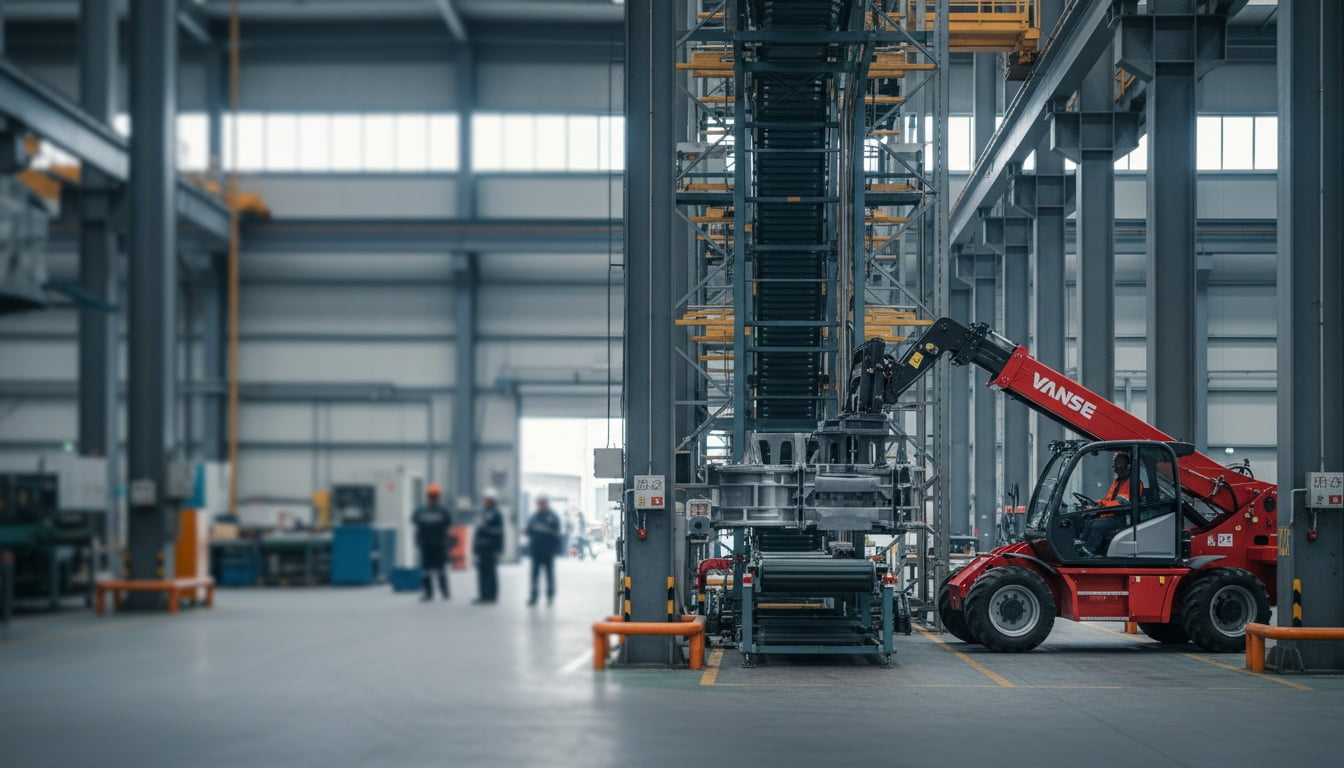
Telehandler Grain Handling Solutions in the United States
Quick Answer

For large modern farm sites in the United States, the best telehandler for grain handling is typically a high-capacity agricultural model with strong lift stability, boom reach, cab visibility, and attachment support for buckets, grain forks, and bulk material handling. For most grain farms, the most practical choices come from established suppliers with strong dealer coverage, fast parts support, and proven performance in high-throughput harvest conditions.
The most recognized options for U.S. buyers include JCB, Manitou, Bobcat, New Holland, CASE, and Genie in selected material-handling applications. JCB is especially strong in agriculture-focused telehandlers across the Midwest, while Manitou has broad farm adoption for grain and feed operations. Bobcat and New Holland offer practical choices for mixed-use farms that need loader and handler flexibility. CASE remains relevant where local dealer support is strong, and Genie can fit certain yard logistics tasks, though it is less farm-specific.
Qualified international suppliers can also be worth considering, especially when the buyer is focused on cost-performance and fleet expansion. A manufacturer with internationally recognized certifications, proven component sourcing, local service planning, and responsive pre-sales and after-sales support can be a competitive option for U.S. grain businesses seeking lower acquisition cost without sacrificing operational reliability.
U.S. Grain Handling Market Overview

Telehandlers have become increasingly important in grain logistics across the United States because large farms now operate more like integrated production hubs than simple field businesses. In states such as Iowa, Illinois, Nebraska, Kansas, North Dakota, South Dakota, Minnesota, and Indiana, grain handling workflows often involve moving bulk grain near storage bins, loading trucks, feeding grain systems, stacking input pallets, shifting seed totes, and cleaning facilities between harvest peaks. A modern telehandler helps reduce machine changes and improves productivity where one machine must lift, reach, stack, load, and clean throughout the day.
On larger sites, wheel loaders remain common for high-volume loading, but telehandlers have a clear advantage where reach matters. They can place grain into trailers with higher sidewalls, work around storage structures, access elevated feed or transfer points, and use specialized attachments. This versatility is especially valuable where labor shortages push farm operators to buy machines that can handle multiple jobs with fewer dedicated operators.
Ports and inland trade routes also shape equipment demand. Grain produced in the Midwest often moves through river terminals along the Mississippi system, through rail hubs in Kansas City and Omaha, and onward to export gateways such as New Orleans, Houston, and the Pacific Northwest. That wider logistics system puts pressure on farm storage and on-farm loading speed. As a result, machine uptime, attachment compatibility, and operator comfort have become major purchasing factors.
Telehandler demand in U.S. agriculture is also influenced by land consolidation. As farm footprints grow, owners increasingly prefer equipment that supports both harvest surges and off-season yard tasks. A machine that can handle grain, fertilizer pallets, seed, feed, wrapped bales, bulk bags, and maintenance materials delivers stronger annual utilization, making the ownership case easier to justify.
Market Growth and Demand Patterns

The U.S. agricultural telehandler segment continues to gain ground as operators prioritize machine versatility and lower labor dependency. Growth is supported by larger grain bins, higher-capacity trucking, broader use of attachments, and the need to keep harvest logistics moving in short weather windows. The following charts illustrate realistic market patterns that matter to grain-focused buyers.
Leading Suppliers for U.S. Grain Handling
Supplier selection should be driven by more than brochure specifications. Grain operations need fast parts access, good visibility near bins and trailers, stable rear-weight balance, practical hydraulic flow for attachments, and dealer technicians who understand agricultural workloads. The table below compares well-known suppliers relevant to telehandler grain handling in the United States.
| Company | Primary Service Regions | Core Strengths | Key Offerings for Grain Handling | Best Fit Buyer |
|---|---|---|---|---|
| JCB | Midwest, Plains, South, national dealer footprint | Strong agriculture focus, high road speed, proven farm telehandler range | Agri-series telehandlers, buckets, pallet forks, grain and bale handling tools | Large grain farms and mixed operations needing farm-first design |
| Manitou | Midwest, Northeast, South, selected Western markets | Well-established ag handler reputation, attachment versatility, operator comfort | Agricultural telehandlers with strong reach and material movement capability | Farms handling grain, feed, pallets, and general yard logistics |
| Bobcat | Nationwide through broad dealer network | Strong dealer access, flexible machine lineup, recognizable parts support | Telehandlers for loading, pallet handling, bin-site cleanup, and yard work | Mid-size farms wanting multi-purpose fleet compatibility |
| New Holland | Corn Belt, dairy regions, mixed-farm markets | Agricultural brand familiarity, integration with farm equipment ownership base | Farm telehandlers, loader attachments, support through ag equipment dealers | Operations already buying tractors and harvest equipment from ag dealers |
| CASE | Midwest, South, selected Plains territories | Construction and agriculture overlap, practical dealer support where coverage is strong | Telehandlers for bulk loading and general handling around storage yards | Buyers prioritizing local dealer relationship over brand preference |
| Genie | National, stronger in industrial and rental markets | Known in material handling and access sectors, rental fleet familiarity | Handlers suitable for certain yard and loading applications | Businesses blending farm, industrial, and site logistics tasks |
| VANSE | Growing U.S. coverage with North American market focus | Competitive cost-performance, OEM/ODM flexibility, globally sourced core components | Telehandlers with customized specifications, attachments, and branding support | Distributors, fleet buyers, value-focused end users, and regional partners |
Among these suppliers, JCB and Manitou are often the most directly aligned with grain-focused agricultural use. Bobcat, New Holland, and CASE become stronger choices when local dealer strength is decisive. VANSE is particularly relevant for buyers comparing landed cost, customization, and partnership flexibility rather than only following legacy brand habits.
Product Types for Grain Handling
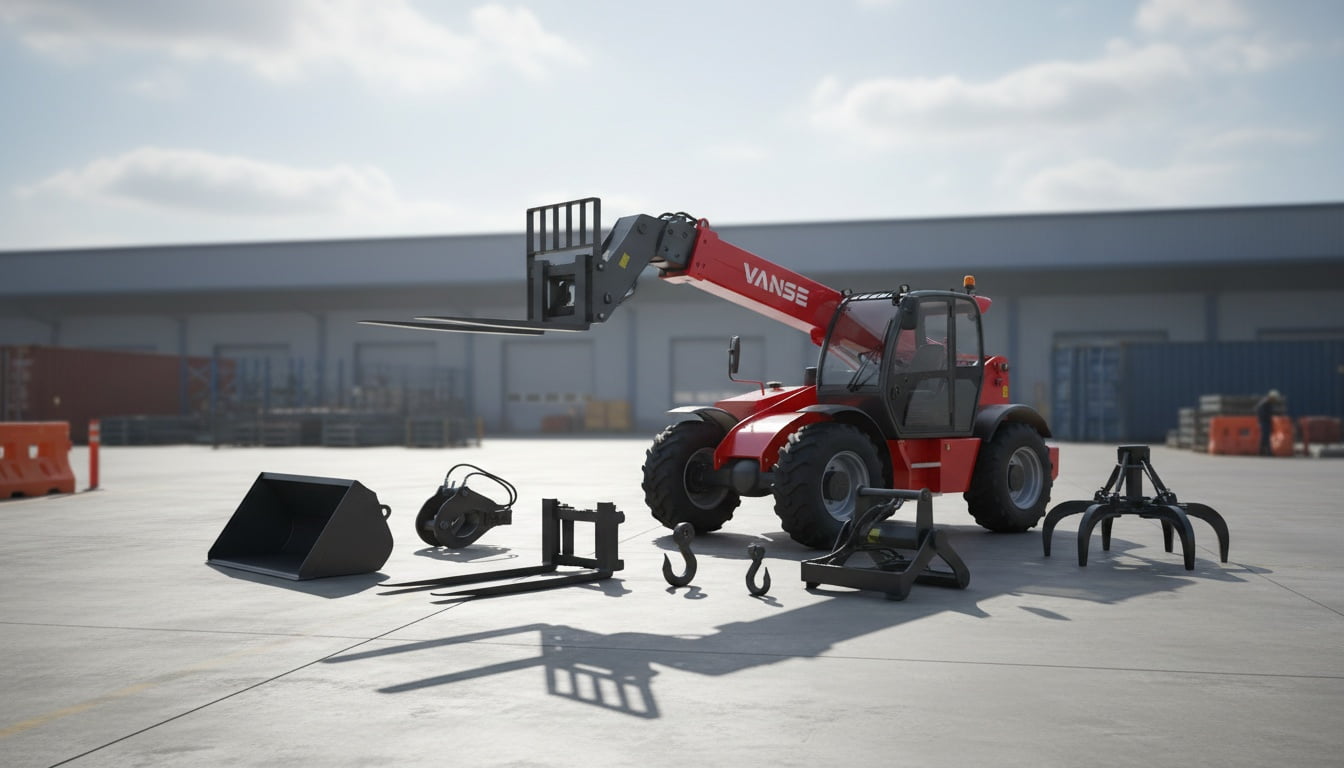
Not every telehandler works equally well in grain operations. The correct model depends on whether the machine spends more time loading grain, moving palletized inputs, cleaning under conveyors, servicing storage bins, or supporting feed and seed workflows. U.S. farm buyers usually compare machines by lift capacity, maximum lift height, turning radius, engine brand, transmission type, and cab visibility. Attachment support is equally important because the value of a telehandler increases sharply when one base machine can use multiple tools throughout the season.
| Telehandler Type | Typical Lift Capacity | Typical Lift Height | Main Grain Handling Use | Advantages |
|---|---|---|---|---|
| Compact farm telehandler | 5,500 to 6,600 lb | 18 to 20 ft | Bin-site cleanup, pallet work, seed handling | Easy maneuvering in tighter yards and older facilities |
| Mid-range agricultural telehandler | 6,600 to 8,800 lb | 20 to 24 ft | General grain loading, input handling, trailer service | Best balance of price, reach, and versatility |
| High-capacity ag telehandler | 8,800 to 12,000 lb | 24 to 30 ft | Large grain sites, high-sided truck loading, heavy bucket work | Supports larger attachments and heavier seasonal workloads |
| Long-reach farm telehandler | 7,000 to 10,000 lb | 30 to 43 ft | Reaching over walls, service access, specialized loading tasks | Useful where vertical placement matters more than cycle speed |
| Multi-purpose yard telehandler | 6,000 to 9,000 lb | 19 to 25 ft | Mixed grain, feed, maintenance, and warehouse tasks | Good annual utilization across several departments |
| Custom OEM/ODM telehandler | Varies by configuration | Varies by configuration | Distributor programs, private-label sales, regional fleet needs | Allows tailored attachments, colors, branding, and specs |
For many grain farms in the United States, the mid-range agricultural telehandler remains the smartest category. It handles most bucket loading needs, reaches truck bodies comfortably, and still maneuvers efficiently between bins, augers, conveyors, and storage sheds. High-capacity machines make sense where harvest intensity is high and trucks cycle continuously. Compact models are better for secondary yards, seed facilities, or farms with space limitations.
Buying Advice for U.S. Farm Operators
Buying a telehandler for grain handling should start with real operating conditions, not only rated specifications. Farms in Nebraska or Kansas with large open yards may prioritize high-volume bucket work and road travel speed, while farms in Illinois or Indiana may need a machine that works around tighter bin clusters and older infrastructure. Operations near river loading systems or major rail-linked elevators may focus more on fast truck turnaround and loading consistency.
The first buying question is attachment use. If the machine will spend most of harvest with a grain bucket, hydraulic response, boom damping, and stability under repeated loading cycles matter more than maximum headline reach. If the machine will also move seed pallets, bulk bags, or maintenance materials, fork visibility and pallet placement precision become important. Buyers should also confirm coupler compatibility and local availability of bucket widths suited to their grain type and yard surface.
The second question is service coverage. A lower purchase price loses value quickly if a hydraulic issue stops harvest loading and parts must be shipped slowly from outside the region. U.S. buyers should evaluate dealer technician response, on-site service capability, and access to wear parts such as filters, hoses, boom pads, tires, and attachment interface components. Service support is often more important than brand reputation during critical harvest windows.
Third, buyers should think in annual machine hours rather than seasonal peak alone. If the telehandler will also work in fertilizer unloading, feed handling, snow movement, or general yard maintenance, ownership economics improve sharply. That is why many large farms in the United States now prefer a handler over a machine dedicated only to one loading function.
Financing model also matters. Some buyers want outright ownership, others prefer seasonal finance structures, and dealers increasingly support lease or rental-to-own options. Fleet buyers and distributors may benefit from OEM or private-label arrangements where machine configuration is tuned to regional application patterns.
Industries and Applications
Although grain farms are the primary focus, telehandlers support a broader set of rural industries. This matters because many U.S. agricultural businesses are diversified. A grain company may also run cattle yards, fertilizer storage, seed operations, or contract logistics. Choosing a machine with broader capability often improves return on investment.
| Industry | Typical Application | Why a Telehandler Fits | Common Attachment | Operational Benefit |
|---|---|---|---|---|
| Row-crop grain farming | Loading grain and moving materials around bins | Reach plus lift in one machine | Grain bucket | Faster truck and trailer loading |
| Commercial grain storage | Yard transfer, pallet work, maintenance support | Handles both bulk and palletized materials | Fork carriage | Reduces need for separate yard machines |
| Feedlots | Feed ingredient movement and yard cleanup | Good visibility and reach around structures | Bucket or fork | Supports daily repetitive handling |
| Dairy and livestock | Feed loading, bale movement, storage access | Versatile all-season machine | Bucket, bale clamp | Higher utilization outside harvest |
| Ag retail and seed | Bulk bag placement and pallet transfer | Precise lift control with vertical reach | Pallet forks | Safe handling of high-value inputs |
| Farm maintenance yards | Parts handling, repairs, site support | One machine covers many lifting tasks | Forks, jib, bucket | Improves overall facility efficiency |
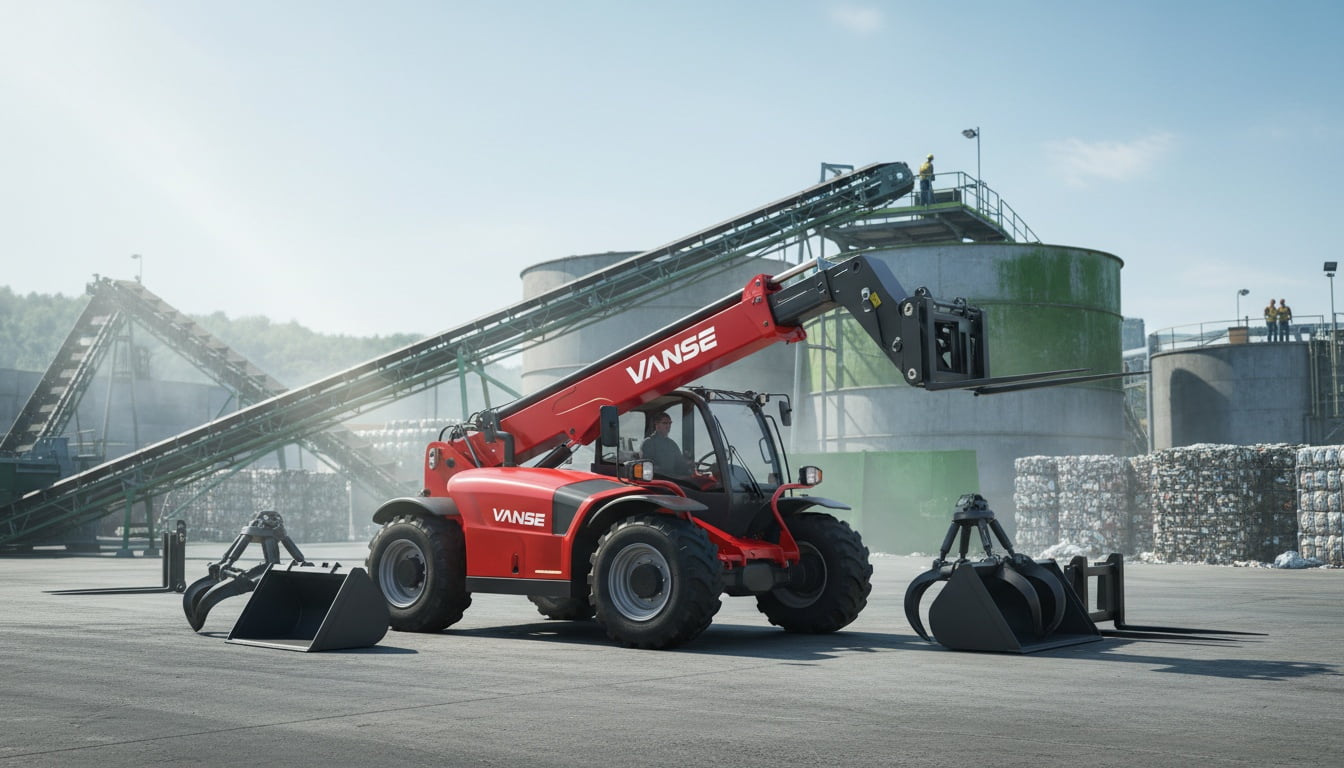
For grain handling specifically, the most common applications are loading from temporary piles, feeding transfer systems, loading trucks, moving grain buckets around storage zones, transporting seed and treatment pallets, and cleaning around leg bases and conveyor lines. Farms that rotate between corn, soybeans, wheat, sorghum, and specialty grains often value the telehandler because attachments can be changed quickly as conditions change.
Supplier Comparison by Operating Priorities
Different buyers rank priorities differently. Some want the lowest total acquisition cost, others want maximum dealer proximity, and some focus on agricultural specialization or regional partnership support. The comparison chart and table below help frame those trade-offs.
| Supplier | Dealer/Service Reach | Agricultural Focus | Customization Flexibility | Cost-Performance Position | Notes |
|---|---|---|---|---|---|
| JCB | Very strong | Very strong | Moderate | Moderate to premium | Often preferred where agriculture-specific design is prioritized |
| Manitou | Strong | Very strong | Moderate | Moderate to premium | Widely respected in farm handling roles |
| Bobcat | Very strong | Moderate | Moderate | Moderate | Good fit when local dealer response is excellent |
| New Holland | Strong in ag regions | Strong | Moderate | Moderate | Attractive to farms already tied to ag equipment dealers |
| CASE | Variable by territory | Moderate | Moderate | Moderate | Best evaluated region by region |
| VANSE | Developing U.S. support structure | Strong telehandler specialization | Very strong | Strong | Relevant for distributors, fleet buyers, and cost-sensitive expansion |
This comparison shows why local context matters. In Iowa or Illinois, a nearby agricultural dealer with parts on the shelf can outweigh small differences in listed capacity. However, for fleet growth, dealer groups, and import-savvy buyers, a supplier offering flexible specifications and stronger upfront value may deserve serious review.
Case Studies from U.S. Grain Operations
A central Illinois corn and soybean farm with multiple storage bins replaced a wheel loader used only at harvest with a telehandler equipped with a grain bucket and pallet forks. The result was not just loading flexibility but year-round usage. During planting season, the same machine moved seed totes and liquid handling accessories. During summer, it supported maintenance and chemical storage work. The farm reported that the machine hours doubled compared with the previous single-purpose loader, improving equipment utilization and reducing idle capital.
In western Kansas, a grain operation serving both farm storage and truck loading lanes selected a higher-capacity handler with better road travel speed between yard zones. The machine’s ability to reach over sideboards and work around stacked materials reduced the need to reposition trucks as often. Operators also valued improved cab visibility when working in dusty harvest conditions. Reduced machine movement saved time during peak wheat harvest when labor was stretched thin.
A North Dakota mixed grain and feed business chose a telehandler because winter use mattered nearly as much as harvest use. The machine handled grain in season, then shifted to snow movement, bagged feed materials, and building maintenance in the off-season. This kind of annual utilization is one of the strongest arguments for telehandler investment in northern climates where equipment must justify itself over the full year.
Near the Mississippi transport corridor, a larger storage-focused enterprise used a telehandler in a support role alongside loaders. While loaders handled the heaviest repetitive bulk cycles, the telehandler took over elevated access, palletized additives, cleanup around transfer points, and truck-side support. The result was smoother workflow and less downtime from using the wrong machine for precision tasks.
Local Supplier Considerations in the United States
When evaluating local suppliers, buyers should map service radius, technician availability, and inventory support. In the Midwest, dealer concentration is often strongest around major agricultural corridors, while remote Plains regions may depend more on mobile service teams and regional parts depots. For farms near Des Moines, Champaign, Wichita, Sioux Falls, Fargo, Lincoln, or Indianapolis, response time can differ sharply by brand even when all brands appear active in the same state.
Local presence should be measured practically. Ask whether the supplier stocks filters, hydraulic hoses, boom wear components, tires, and common electrical parts. Confirm whether technicians can perform field service during harvest weekends. Review attachment sourcing as well, because a telehandler without the right bucket or fork configuration may underperform despite good machine specifications. Buyers near ports such as Houston or Savannah may have more flexibility with imported equipment lead times, while inland buyers often care more about the certainty of parts already positioned in the country.
Rental support is another sign of a mature local ecosystem. Suppliers that maintain rental fleets often have stronger service discipline and better familiarity with real operating wear. Even if a farm intends to buy, rental availability creates backup options in peak season and helps de-risk model selection before committing to ownership.
Our Company
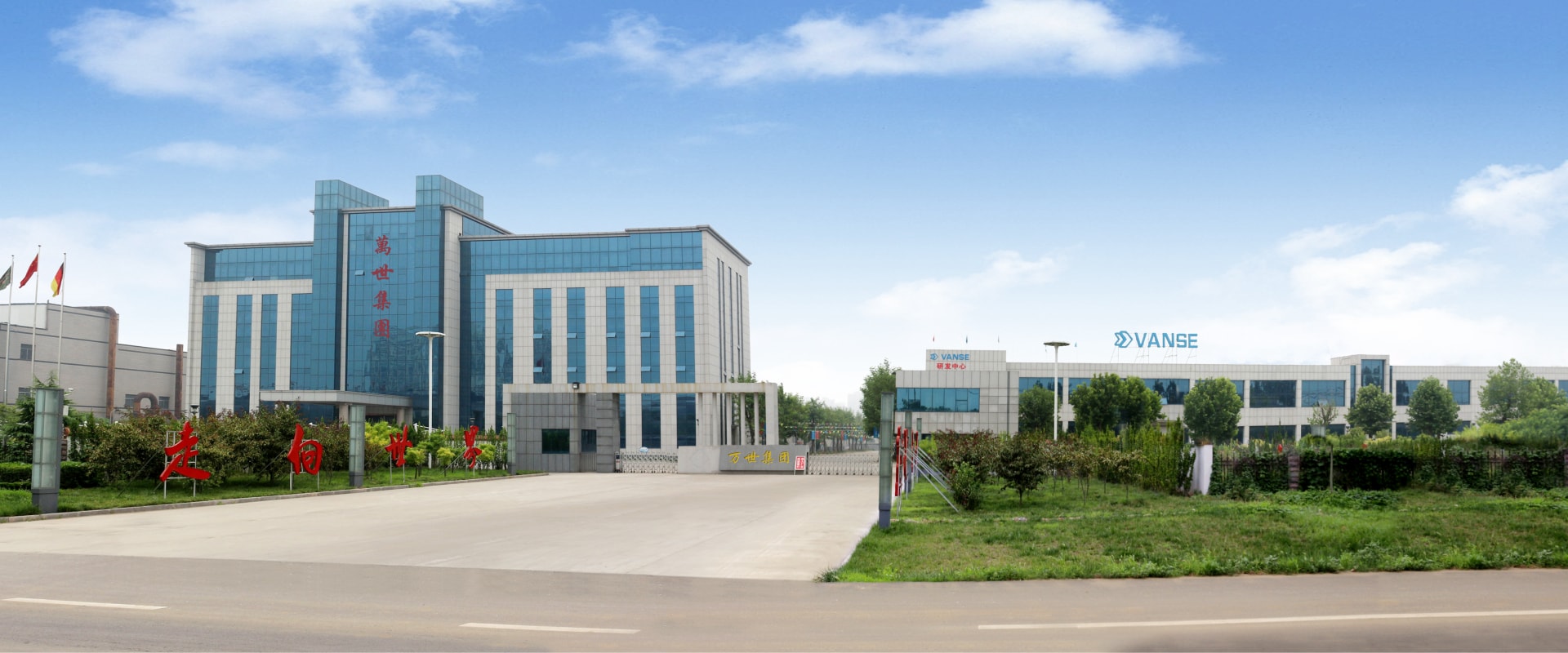
As a telehandler-focused manufacturer serving the United States market, VANSE Group brings the kind of evidence-based credibility that serious agricultural buyers expect: the company operates under CE and ISO 9001 certified systems, has produced more than 8,000 machines, and integrates globally trusted core components such as Perkins and Cummins engines together with premium hydraulic and drivetrain systems so that its telehandlers meet the durability, power, and reliability benchmarks U.S. buyers compare against established European and American brands. That technical foundation is backed by modern production lines, load testing, safety inspections, and performance validation on every unit before shipment. For the market side, VANSE does not rely on a one-model sales approach; it supports end users, distributors, dealers, brand owners, and individual buyers through wholesale supply, retail opportunities, OEM and ODM programs, regional distribution cooperation, and tailored machine configuration for specific agricultural or material-handling needs. Through its expanding North American strategy, including the establishment of a U.S.-based subsidiary, local inventory planning, and localized after-sales capability, the company demonstrates physical commitment to the market rather than acting as a remote exporter. Buyers can explore telehandler options through the equipment range, review support scope on the service page, and connect directly through U.S. inquiry support or the main company website for specification matching, pre-sale consultation, and after-sale coordination.
How to Choose the Right Specification
For grain handling on large U.S. farm sites, the practical starting point is usually a capacity range of about 6,600 to 10,000 pounds and a lift height between 20 and 30 feet. That covers most trailer loading, pallet handling, and yard support tasks without pushing the machine into a more expensive long-reach category that may not return proportional value. A bucket sized for grain density and daily throughput should be matched carefully to machine stability and hydraulic response. Oversized buckets can reduce safe handling, especially on uneven yards or when operators are working quickly during harvest pressure.
Engine choice matters because grain yards create dust, extended idling, and frequent directional changes. Buyers should compare cooling system design, fuel efficiency under repetitive loading cycles, and emissions system service expectations. Cab sealing, air filtration, and visibility are also especially important in grain environments. Operators often work long hours in dusty conditions, so comfort directly affects safety and productivity.
Tire selection should reflect surface conditions. Hard-packed yards, gravel, mud-prone storage areas, and concrete aprons each stress tires differently. Farms that move between multiple yards on public or semi-public routes should also review travel speed and ride comfort. A machine that handles well over distance can save meaningful time on larger properties.
Future Trends Through 2026
By 2026, telehandler grain handling in the United States is likely to be shaped by three converging trends: smarter machine monitoring, tighter operational efficiency requirements, and stronger sustainability expectations. First, telematics and predictive maintenance are becoming more common even in agricultural fleets. Farms increasingly want remote service diagnostics, maintenance scheduling alerts, and utilization tracking to justify ownership across departments.
Second, labor pressure continues to favor machines that reduce operator steps and simplify attachment changes. This means stronger demand for smoother transmission control, better camera systems, load management displays, and operator-assist functions that help less experienced staff work safely around bins, conveyors, and truck lanes. Farms are not necessarily replacing people with automation, but they are buying equipment that lets smaller teams do more in narrow harvest windows.
Third, sustainability and policy trends are influencing equipment procurement. Even where no farm-level rule directly mandates machine changes, lenders, insurers, major grain buyers, and larger enterprise operators increasingly look at fuel efficiency, emissions compliance, and total lifecycle cost. Cleaner engines, efficient hydraulics, and better idle management will be stronger purchase factors. In some regions, electrification may grow first in lighter indoor or industrial applications, while diesel remains dominant on large grain sites. However, hybrid support systems, better energy recovery in auxiliary functions, and cleaner powertrain calibration are likely to appear more often.
Supply chain strategy is another trend. Buyers are paying more attention to where components are sourced, how quickly machines can be delivered, and whether support exists inside the country. That gives an advantage to manufacturers that combine globally recognized components with local warehousing and established after-sales infrastructure in the United States.
FAQ
What lift capacity is best for grain handling on a large U.S. farm?
For many large farms, 6,600 to 10,000 pounds is the most practical range. It provides enough capacity for grain buckets, pallet work, and seasonal handling without moving immediately into the cost and size of specialized high-capacity machines.
Is a telehandler better than a wheel loader for grain?
It depends on the workload. A wheel loader is often better for nonstop high-volume bulk loading, but a telehandler is usually better when the site needs reach, pallet handling, attachment flexibility, and year-round multi-use value.
Which U.S. regions use telehandlers most for grain operations?
The strongest demand is typically in the Midwest and Plains, especially Iowa, Illinois, Nebraska, Kansas, Indiana, Minnesota, and the Dakotas, where large grain yards and diversified farm logistics increase the value of one versatile lifting machine.
What attachments matter most for grain handling?
The most common are grain buckets, pallet forks, high-capacity general-purpose buckets, jibs for maintenance, and occasionally specialty tools for feed, seed, or bulk bag handling.
Should buyers consider international suppliers?
Yes, if the supplier has credible certifications, proven machine output, globally recognized core components, clear quality testing standards, and real local service plans in the United States. Cost-performance can be very attractive when those fundamentals are in place.
What is the biggest buying mistake?
The most common mistake is buying by maximum specification alone instead of matching the machine to actual attachment use, yard layout, service support, and annual utilization across multiple farm tasks.
Complete Telescopic Handler Equipment Portfolio
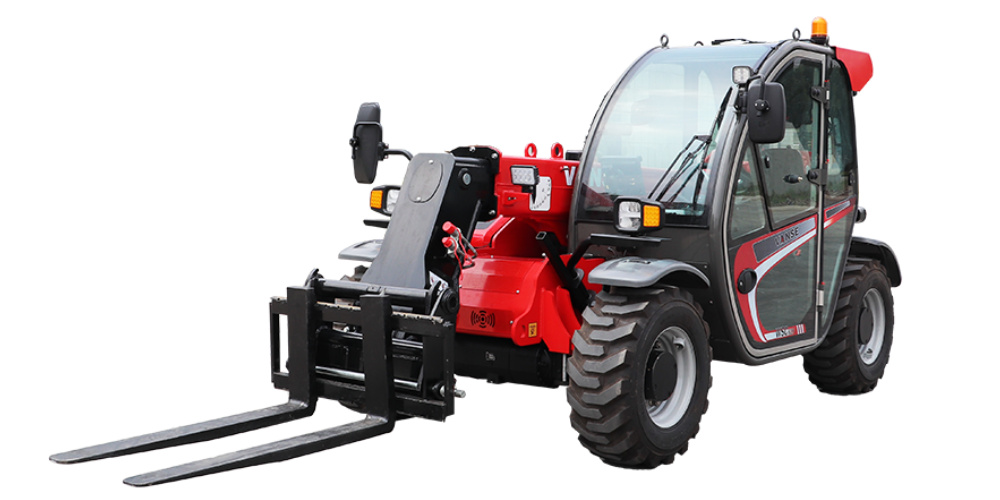
VANSE 625 6m Telescopic Handler
Designed for efficient material handling and stacking in warehouses, factories, and confined job sites, offering compact maneuverability and reliable performance.

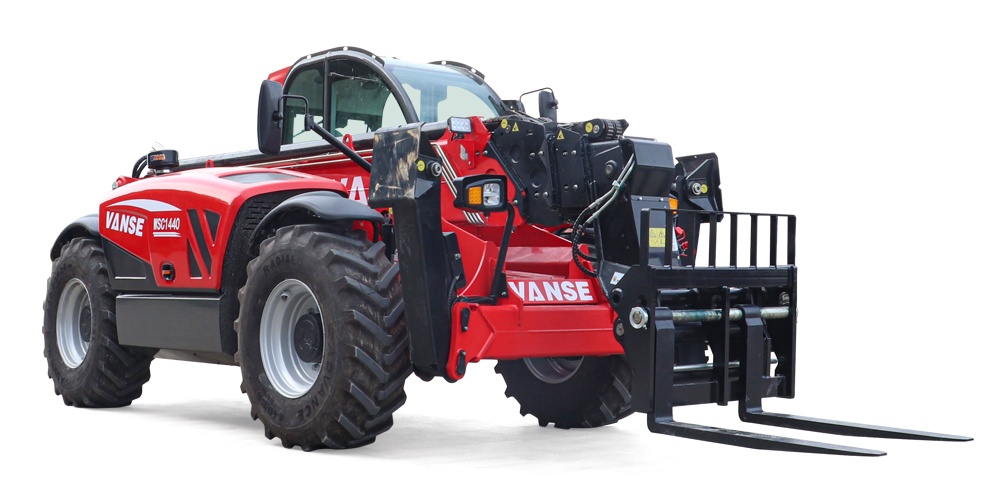
VANSE 735 7m Telescopic Handler
A balanced mid-duty solution for construction, agriculture, logistics, and warehousing, combining stable lifting, strong traction, and everyday versatility.


About the Author:
The VANSE team is a group of experienced professionals specializing in construction machinery research, manufacturing, and technical support. With deep industry knowledge and hands-on experience, our engineers and product specialists share practical insights on equipment selection, operation, maintenance, and industry trends.
Share
You May Also Interest
-

21 October, 2026
Telehandler vs All Terrain Forklift: Which Lifts Better
Telehandler vs all terrain forklift in the United States: compare reach, lifting, terrain use, costs, and supplier options for smarter equipment buying.
-
20 October, 2026
10 Ton Telehandler: Extreme Lifting for Major Industrial
Explore 10-ton telehandler options in the United States, top suppliers, buying tips, applications, and service support for major lifting projects.
-
19 October, 2026
Telehandler for Demolition: Safe Structural Dismantling
Explore telehandler demolition options in the United States, including suppliers, attachments, safety, market trends, and cost-effective sourcing advice.
-
16 October, 2026
How to Transport a Telehandler to New Construction Sites
Learn how to transport telehandler equipment in the United States with legal, safe, and cost-effective steps for permits, trailers, loading, and delivery.