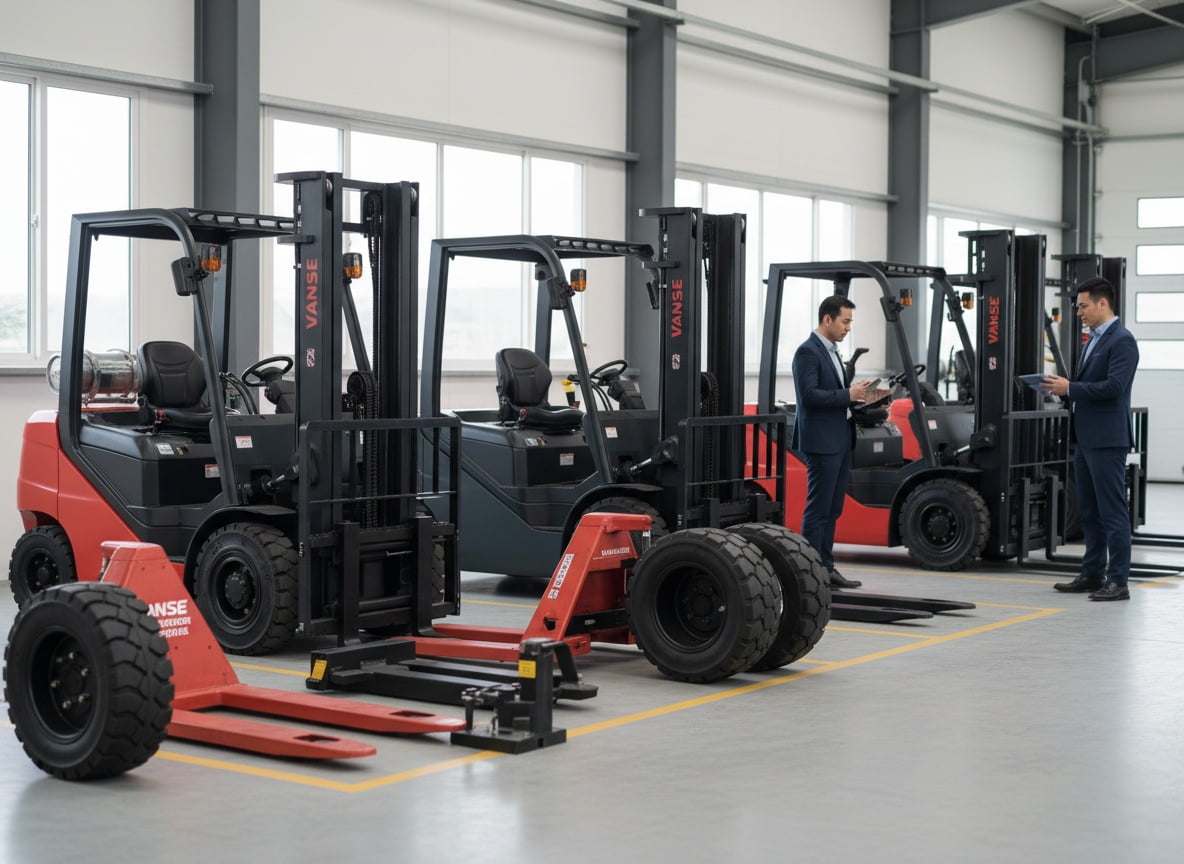
When to Use a Telehandler in the United States
Quick Answer

Use a telehandler instead of a standard forklift in the United States when the job requires more reach, more lift height, better rough-terrain mobility, or the flexibility to use multiple attachments on one machine. A telehandler is usually the better choice on construction sites, farms, industrial yards, infrastructure projects, energy jobs, and material staging areas where loads must be placed above ground level, over obstacles, or on uneven surfaces. A standard forklift remains the better option for smooth warehouse floors, narrow aisles, and repetitive pallet handling at low lift heights.
In practical U.S. jobsite terms, choose a telehandler when you need to place roofing bundles on a second or third story in Dallas, move trusses across muddy residential developments in Florida, unload pipe on uneven oil and gas yards in Texas, stack hay or feed in large agricultural operations across Iowa and Nebraska, or place materials over barriers on infrastructure projects near ports such as Houston, Savannah, Long Beach, and Newark. In these conditions, a telehandler saves time by reaching farther and working where standard forklifts lose traction or run out of vertical lift.
For buyers needing immediate direction, the clearest rule is simple: if the work involves rough ground, outdoor lifting, high placement, forward reach, or changing attachments, use a telehandler; if the work is indoors, low-height, high-cycle, and pallet-based, use a forklift. U.S. buyers should compare local dealer support, parts availability, ANSI and OSHA compliance expectations, operator familiarity, and total cost of ownership. Qualified international suppliers, including Chinese manufacturers with relevant certifications, strong component sourcing, and dependable pre-sale and after-sale support, can also be worth considering because they often provide strong cost-performance value for contractors, rental fleets, dealers, and growing owner-operators.
The U.S. Market for Telehandlers

The U.S. telehandler market continues to expand because contractors, farmers, industrial operators, and rental companies need lifting equipment that can do more than a conventional forklift. Across states such as Texas, California, Florida, Georgia, Ohio, and North Carolina, demand is driven by nonresidential construction, housing starts, logistics yard activity, utility upgrades, road and bridge work, and large-scale agricultural operations. Telehandlers have become especially valuable where one machine must cover multiple tasks during labor shortages or tight project schedules.
Rental penetration is particularly high in the United States. Many contractors rent telehandlers in fast-moving metro areas such as Phoenix, Atlanta, Charlotte, Nashville, Houston, and Las Vegas because projects need flexible capacity without the capital commitment of owning a fleet. National rental chains and regional independent houses keep telehandlers in strong circulation, especially 6,000 to 12,000 lb classes used for framing, masonry, steel erection support, concrete formwork, site preparation, and material staging.
Another U.S. market driver is geography. Telehandlers are a fit for mixed terrain, suburban expansion zones, industrial corridors, and agricultural regions where surface conditions change daily. A warehouse forklift works well on flat concrete in distribution centers near Inland Empire logistics hubs or Chicago intermodal facilities, but it is not designed for muddy subdivisions, crushed stone surfaces, or undeveloped lots. Telehandlers bridge that gap by bringing forklift-style lifting to rough-terrain environments.
Telehandlers also benefit from attachment versatility. In the United States, contractors increasingly evaluate machines by utilization rate, not just by lift capacity. A telehandler that handles pallets in the morning, lifts trusses at noon, and moves bulk material with a bucket in the afternoon can replace multiple specialized machines. That versatility is especially attractive in regions with labor pressure and tighter equipment budgets.
| U.S. Region | Main Demand Drivers | Typical Telehandler Uses | Common Job Types | Why Forklifts Fall Short | Key Buying Pattern |
|---|---|---|---|---|---|
| Texas Gulf Coast | Energy, ports, industrial construction | Pipe handling, yard loading, elevated placement | Refineries, terminals, warehouses | Uneven ground and longer reach needs | Rental and fleet ownership |
| Southeast U.S. | Residential growth, warehousing, agriculture | Framing support, material staging, farm handling | Housing, poultry, mixed-use development | Mud, slopes, and outdoor lifting heights | Dealer-led purchases |
| Midwest | Large farms, manufacturing, infrastructure | Feed handling, pallet loading, maintenance work | Grain, dairy, municipal projects | Seasonal ground conditions and attachment needs | Owner-operator focus |
| West Coast | Ports, commercial builds, solar projects | Panel staging, container-side unloading, site lifts | Renewables, logistics, urban construction | Need to reach over obstacles and rough lots | High rental usage |
| Northeast | Urban redevelopment, municipal upgrades | Facade materials, renovation support, utility work | Dense city projects, bridge maintenance | Jobsite congestion and elevated placement needs | Compact model demand |
| Mountain States | Terrain-heavy construction, energy, ranching | Remote material handling, rough-site loading | Mining support, ranch operations | Traction limits for standard forklifts | High-spec rough-terrain units |
This regional view matters because telehandler selection in the United States is heavily shaped by terrain, attachment needs, project speed, and local support coverage. Buyers in Houston, Kansas City, Fresno, and Tampa may all need rough-terrain lifting, but their preferred machine size, attachment mix, and dealer expectations can differ significantly.
How Telehandlers Differ from Standard Forklifts

A standard forklift is designed primarily to lift and transport palletized loads at relatively low heights on firm, level surfaces. Its strength is efficiency in repetitive loading and unloading cycles, especially inside warehouses and distribution centers. A telehandler, by contrast, combines forklift capability with the boom reach of a lifting machine. Its telescopic boom allows the operator to place loads higher and farther away from the machine, including onto roofs, upper floors, mezzanines, and hard-to-access zones.
That boom function changes the entire job capability. When you extend a telehandler forward, you can place a load over trenches, barriers, stacks of materials, or fencing. On many U.S. jobsites, this reduces the need to reposition the machine repeatedly or add a crane for smaller lifting tasks. Telehandlers also usually have larger tires, more ground clearance, and rough-terrain drivetrains, making them more useful on gravel, dirt, and unfinished surfaces.
However, that flexibility comes with considerations. Telehandlers require careful attention to load charts because capacity changes with boom extension and lift height. Forklifts generally offer more straightforward load handling within their rated capacity envelope. For operators moving pallet after pallet inside a facility in Columbus or Memphis, a standard forklift is often faster, cheaper, and easier to manage. But for material placement across a mixed outdoor site in Austin or Orlando, a telehandler is often far more productive.
| Factor | Telehandler | Standard Forklift | Best Use Case | Main Limitation | Typical U.S. Setting |
|---|---|---|---|---|---|
| Lift Height | High, often for multi-story placement | Lower, optimized for racks and trailers | Telehandler for elevated outdoor work | Forklift cannot reach upper structures | Construction sites |
| Forward Reach | Strong telescopic reach | Minimal forward reach | Telehandler for over-obstacle placement | Forklift requires close approach | Masonry and framing |
| Terrain | Rough-terrain capable | Best on smooth surfaces | Telehandler for dirt and gravel | Forklift traction is limited outdoors | Sites and farms |
| Attachments | Forks, buckets, jibs, platforms, clamps | Mostly forks and select accessories | Telehandler for multi-task utilization | Forklift is task-specific | Mixed operations |
| Indoor Efficiency | Less ideal in tight aisles | Excellent in warehouses | Forklift for indoor pallet cycles | Telehandler may be oversized | Distribution centers |
| Load Behavior | Capacity changes with boom position | More predictable within rating | Forklift for repetitive pallet work | Telehandler needs more chart awareness | Industrial handling |
This comparison helps buyers avoid a common mistake in the U.S. market: selecting a forklift based only on rated capacity without considering terrain, elevation, and access limitations. In many cases, the cheaper machine on paper becomes the more expensive choice on the job because it cannot complete the actual work efficiently.
When a Telehandler Is the Better Choice
A telehandler is the better choice whenever the worksite demands reach, adaptability, and mobility beyond what a conventional forklift can provide. The decision usually becomes clear in several recurring U.S. jobsite scenarios.
The first scenario is elevated placement. If materials must be placed onto upper floors, roof decks, steel platforms, scaffold landings, or high stacks, a telehandler is usually the correct machine. Framing crews in fast-growing suburbs around Dallas, Tampa, and Charlotte often rely on telehandlers to raise lumber packs, trusses, drywall, and pallets of sheathing where a regular forklift cannot safely place them.
The second scenario is rough terrain. New developments, road expansions, utility corridors, and agricultural yards often involve mud, loose stone, or uneven grading. In those conditions, a telehandler’s larger tires and rough-terrain design make it more reliable than a standard forklift. This is especially relevant after rain events or during early project phases before pavement is installed.
The third scenario is forward reach over obstacles. On congested U.S. jobsites, the machine may not be able to drive directly to the set point. The telehandler can place loads over curbs, trenches, material piles, or perimeter barriers. This is valuable on infrastructure upgrades around rail hubs, airport construction zones, and utility maintenance projects.
The fourth scenario is attachment-driven productivity. A telehandler can move from pallet handling to bucket work, suspended loads, and maintenance access with the right approved attachments. This matters for contractors and farms trying to reduce fleet size while maintaining high utilization.
The fifth scenario is seasonal or mixed-use ownership. In many parts of the United States, one company uses the same machine for construction in one quarter, site cleanup in another, and yard loading or seasonal agricultural work at other times. A telehandler often delivers better year-round value than a single-purpose forklift.
Common Product Types in the U.S. Telehandler Segment
The U.S. market includes several telehandler categories. Compact models are popular for urban infill projects, landscaping suppliers, and lower-clearance applications. Mid-size construction telehandlers are the volume segment and commonly handle framing packs, pallets of block, roofing materials, and general site logistics. High-capacity and high-reach models serve steel erection support, precast work, port-adjacent yards, and specialty industrial handling. Agricultural telehandlers emphasize visibility, attachment flexibility, and maneuverability in barns, feedlots, and field support operations.
Rotating telehandlers occupy a more specialized niche. These machines offer a revolving upper structure and can act as a flexible lifting platform in dense urban projects or industrial maintenance shutdowns. They are more expensive and generally chosen where access constraints justify the premium.
| Telehandler Type | Typical Lift Capacity | Typical Lift Height | Best U.S. Applications | Key Advantage | Buyer Profile |
|---|---|---|---|---|---|
| Compact Telehandler | 5,000 to 6,000 lb | 15 to 25 ft | Landscaping, small sites, urban access | Tight-space maneuverability | Contractors and supply yards |
| Standard Construction Telehandler | 6,000 to 10,000 lb | 30 to 45 ft | Residential and commercial construction | Balanced reach and cost | Rental fleets and builders |
| High-Reach Telehandler | 8,000 to 12,000 lb | 50 to 70 ft | Steel, facade, large commercial projects | Upper-floor access | Large contractors |
| High-Capacity Telehandler | 12,000 lb and above | 35 to 56 ft | Industrial yards, precast, oil and gas | Heavy material handling | Industrial operators |
| Agricultural Telehandler | 5,500 to 9,000 lb | 20 to 35 ft | Feed, bales, barns, fertilizer handling | Attachment versatility | Farms and ag dealers |
| Rotating Telehandler | 8,000 to 13,000 lb | 55 to 100 ft | Dense urban sites, shutdown maintenance | 360-degree positioning flexibility | Specialty rental and complex projects |
The best type depends on where and how the machine works. A buyer serving suburban housing in Raleigh or San Antonio rarely needs the same configuration as a contractor supporting petrochemical maintenance near Corpus Christi or Baton Rouge.
Industry Demand Across the United States
Demand for telehandlers is not equally distributed by industry. Construction remains the largest segment, but agriculture, industrial manufacturing, logistics yards, mining support, and energy projects all contribute meaningfully. In the United States, the strongest use cases are often tied to outdoor material movement under variable site conditions.
The bar chart shows why telehandlers have become standard equipment in U.S. construction fleets while also gaining ground in agriculture and infrastructure. As contractors seek one machine that can work across delivery zones, unfinished surfaces, and elevated placements, telehandlers remain one of the most practical options.
Applications by Industry
In construction, telehandlers commonly unload flatbed trucks, move palletized materials around the site, place loads onto upper floors, and support framing, masonry, and roofing crews. They are especially common on apartment projects, school expansions, warehouses, hotels, and suburban subdivision builds.
In agriculture, telehandlers handle hay, seed, feed, fertilizer, pallets, totes, and general maintenance work. Their lifting height is useful in barns and storage buildings, while their attachment capability supports bucket work, bale handling, and loading tasks. This makes them attractive to dairy, cattle, grain, and mixed farming operations throughout states such as Wisconsin, Kansas, Nebraska, and California.
In industrial settings, telehandlers support maintenance, shutdown work, yard logistics, and awkward load placement. On energy sites, they often move pipe, valves, tools, and packaged equipment around rough yards. At port-adjacent facilities near Savannah, Houston, Oakland, and Newark, they help bridge the gap between indoor forklift work and outdoor heavy material movement.
In infrastructure and public works, telehandlers serve bridge repair, utility corridor installation, airport expansion, and rail maintenance. Their ability to reach into work zones from a safer machine position can reduce congestion and improve efficiency.
Trend Shift Toward Versatile Material Handling
One of the clearest U.S. equipment trends is the shift away from single-purpose machines toward flexible platforms with multiple attachments and broader task coverage. This shift is visible in rental procurement, contractor fleet planning, and farm equipment replacement cycles.
The area chart highlights a realistic trend shift: more U.S. buyers are prioritizing machines that can combine lifting, loading, placement, and seasonal support work. This is one reason telehandlers are winning applications once handled by a mix of forklift, loader, and occasional crane support.
Buying Advice for U.S. Buyers
Before buying a telehandler in the United States, start with the real load and placement requirements rather than the advertised maximum capacity. Ask what materials you handle most often, how high they must go, how far forward they must be placed, and what the ground conditions look like in the worst week of the year. Also identify whether the machine will spend more time in construction, agriculture, industrial yards, or mixed applications.
Then review operating environment details. If your work occurs in urban or suburban space-constrained jobsites, a compact or mid-size machine may deliver better productivity than a larger unit. If the machine must support heavy masonry packs, trusses, or steel-related materials, pay close attention to the derated capacity at reach. If winter weather, mud, or rutted surfaces are common, tire choice and drivetrain configuration become more important.
Dealer support is critical in the United States. A lower purchase price can be quickly offset by poor parts access or long service delays. Buyers should assess branch coverage, field service response, parts inventory, training support, warranty terms, and the availability of approved attachments. This matters especially for rental fleets and multi-state contractors who cannot afford downtime.
For imported equipment, compliance confidence and service commitment matter just as much as price. U.S. buyers should verify technical documentation, safety labeling, parts planning, and local support arrangements. Strong suppliers provide not only machine specifications but also application guidance, operator support, and a reliable response path when service is needed.
Case Studies from Real U.S.-Style Use Scenarios
A framing contractor in suburban Atlanta used a 10,000 lb telehandler on a three-building apartment project. The machine unloaded lumber and sheathing from trailers, carried materials over uneven ground between building pads, and placed truss bundles near upper-level work zones. A standard forklift could have handled unloading near the staging area, but it would not have safely reached the upper placement points or moved as effectively across the unfinished site.
An Iowa livestock operation replaced an aging forklift with an agricultural telehandler. The machine handled feed totes, seed pallets, bale movement, maintenance supplies, and bucket-based cleanup tasks. The owner reported fewer machine bottlenecks because one platform could cover both storage handling and general yard work. The value came from attachment flexibility, not just lifting capacity.
A Gulf Coast industrial contractor working near Houston selected a heavy-duty telehandler for maintenance shutdown support. The machine moved valves, piping components, packaged equipment, and scaffolding material on uneven yard surfaces. Its ability to place materials into constrained work areas reduced the need for additional support equipment during staging operations.
A solar subcontractor in California used telehandlers to unload and distribute panel racking and palletized supplies across large sites with partially prepared ground. While forklifts were useful at warehouse staging points, telehandlers proved more productive once materials had to move across open fields and be positioned near installation crews.
Leading Suppliers Relevant to U.S. Buyers
The U.S. telehandler market includes established domestic and international brands with strong dealer networks, rental penetration, and application-specific product lines. The table below compares notable suppliers often considered by U.S. buyers. This is useful because brand choice in the United States is rarely just about machine specs; it also reflects service footprint, attachment ecosystem, resale confidence, and operator familiarity.
| Company | Service Regions in the U.S. | Core Strengths | Key Offerings | Typical Buyer Fit | Practical Notes |
|---|---|---|---|---|---|
| JLG | Nationwide through dealer and rental networks | Strong construction telehandler range, broad support | Construction telehandlers, high-capacity units | Rental fleets, commercial contractors | Very common on U.S. jobsites |
| Genie | Nationwide | High rental market visibility, user familiarity | Rough-terrain telehandlers | General contractors, rental houses | Widely recognized operator platform |
| Manitou | Broad U.S. coverage with ag and construction reach | Strong agricultural and rotating telehandler expertise | Ag telehandlers, rotating models, construction units | Farms, specialty projects, dealers | Good fit for attachment-heavy use |
| JCB | Nationwide with strong construction presence | Deep telehandler heritage and broad model range | Construction and agricultural telehandlers | Mixed fleets, farms, builders | Popular in both ag and site work |
| SkyTrak | Strong in North America | Construction market recognition and simple positioning | Site telehandlers | Residential and commercial contractors | Often specified for framing and masonry support |
| Merlo | Selective but growing U.S. distribution | Advanced features, operator comfort, specialty options | Construction, ag, and rotating telehandlers | Premium buyers and specialized users | Appeals where feature depth matters |
| Bobcat | Extensive U.S. dealer network | Compact equipment customer overlap, broad access | Telehandlers for construction and farms | Existing Bobcat users, regional contractors | Convenient for mixed compact fleets |
| VANSE | Growing U.S. presence with expanding local support plans | Cost-performance focus, telehandler specialization, OEM/ODM flexibility | Telehandlers, attachments, customized configurations | Dealers, fleet buyers, distributors, value-focused users | Relevant for buyers comparing import value options |
For U.S. buyers, this supplier comparison is most useful when matched to actual operating conditions. National brands often offer familiarity and dense service networks, while emerging suppliers can offer attractive pricing, specification flexibility, and private-label opportunities for dealers and distributors.
Our Company and Why U.S. Buyers Consider VANSE
For U.S. buyers evaluating alternatives to traditional premium brands, VANSE is relevant because it is not a general machinery trader but a specialist manufacturer with telehandlers as its flagship product line, backed by more than a decade of engineering and manufacturing experience and cumulative production exceeding 8,000 units supplied to customers in over 40 countries, including North America. Its machines are produced under CE and ISO 9001 certified processes, use globally recognized core components such as Perkins and Cummins engines together with premium hydraulic systems, transmissions, and axles, and every unit undergoes load testing, safety inspection, and performance validation before shipment, giving U.S. buyers concrete evidence of manufacturing discipline rather than unsupported quality claims. Commercially, the company supports end users, distributors, dealers, rental operators, brand owners, and individual buyers through flexible models that include OEM, ODM, wholesale supply, retail-ready configurations, and regional distribution cooperation, which is useful for the diverse way equipment is sold in the United States. Just as important, VANSE is actively building a U.S.-based subsidiary with local inventory, stocking, and after-sales capability to strengthen service responsiveness in the American market, while also providing structured pre-sale consultation, technical support, and lifecycle service through both online and offline channels; that combination shows an ongoing physical commitment to the U.S. market rather than a remote export-only approach. Buyers interested in equipment categories beyond telehandlers can also review available machinery lines, learn more about the company, review service support, or contact the team for application matching and partnership discussions.
How to Decide Between Renting and Buying
In the United States, renting makes sense when the project duration is short, utilization is uncertain, or machine requirements vary from one project to the next. This is common for general contractors, subcontractors, and seasonal businesses. Renting also reduces the burden of maintenance planning and can provide access to larger or more specialized models only when needed.
Buying makes more sense when the machine will be used consistently across multiple jobs, when attachments will be part of daily operations, or when downtime control is strategically important. Farms, large contractors, industrial facilities, and companies with recurring site work often benefit from ownership. The decision becomes even stronger if the machine replaces multiple separate assets or reduces outside rental dependency.
For dealerships and regional equipment businesses, buying from a manufacturer with OEM or ODM capability can also create margin opportunities through private branding, attachment packages, and market-specific configurations.
2026 Outlook: Technology, Policy, and Sustainability
Looking toward 2026, telehandler demand in the United States is likely to remain healthy, but buyers will pay closer attention to machine intelligence, safety systems, emissions pathways, and lifecycle cost. Contractors increasingly want load management aids, operator visibility improvements, telematics, and maintenance planning tools that reduce downtime and misuse. Rental fleets are especially interested in connected machines that improve fleet visibility and utilization.
Policy and regulatory trends will also matter. U.S. buyers continue to work within OSHA safety expectations, ANSI-aligned operating practices, and, in some states or metro regions, growing pressure to reduce emissions or improve jobsite sustainability. While diesel telehandlers will remain central in heavy outdoor work, there is increasing market interest in lower-emission designs, fuel efficiency improvements, idle reduction features, and eventually more alternative-power options for selected applications.
Sustainability in this market is not just about electrification. It also includes machine durability, longer service intervals, parts support, rebuild potential, and using one versatile machine to replace several less efficient assets. In practical terms, the telehandler of 2026 in the United States will be judged not only by reach and lift, but also by data visibility, safety confidence, and total operating efficiency.
FAQ
Is a telehandler safer than a forklift?
Neither machine is automatically safer in every situation. A telehandler is safer for tasks involving reach, height, and rough terrain when it is correctly selected and operated according to the load chart. A forklift is safer and more efficient for stable, low-height, indoor pallet work on smooth floors. The safest choice is the one designed for the task and supported by trained operators.
Can a telehandler replace a forklift completely?
Not always. A telehandler can replace a forklift in many outdoor and mixed-use environments, especially on construction sites and farms. But in warehouses, narrow aisles, and repetitive dock work, a standard forklift is usually faster, more compact, and more economical.
What lift capacity should I choose?
Choose based on actual loads at actual reach, not just the maximum rated number. Many U.S. buyers focus first on headline capacity, but the correct decision depends on what the machine must lift when the boom is extended and elevated in real operating conditions.
Are telehandlers common in U.S. rental fleets?
Yes. Telehandlers are standard fleet items across the United States, especially in construction-heavy regions. Rental is often the fastest route for short-term projects or for testing the right size before purchase.
Do agricultural users in the United States benefit from telehandlers?
Yes. Farms and livestock operations benefit from lift height, visibility, rough-terrain capability, and attachment options. Telehandlers are often more versatile than forklifts for feed, bales, pallets, and barn maintenance.
Can imported telehandlers be a practical option for U.S. buyers?
Yes, if the supplier provides documented manufacturing standards, recognized core components, dependable parts planning, clear support channels, and a real commitment to U.S. service. For cost-conscious buyers, a qualified international supplier can be a practical and competitive option.
Final Takeaway
If you are deciding when to use a telehandler instead of a standard forklift in the United States, the answer comes down to jobsite reality: choose a telehandler when you need height, forward reach, rough-terrain travel, or attachment flexibility. Choose a forklift when the work is repetitive, indoors, low-height, and centered on pallets. For contractors, farms, industrial yards, and infrastructure crews operating in real U.S. conditions, a telehandler often delivers better productivity because it reaches places a forklift cannot and works in environments where a forklift is limited. The smartest purchase is the one matched to your terrain, your loads, your attachment needs, and the quality of service support behind the machine.
Complete Telescopic Handler Equipment Portfolio
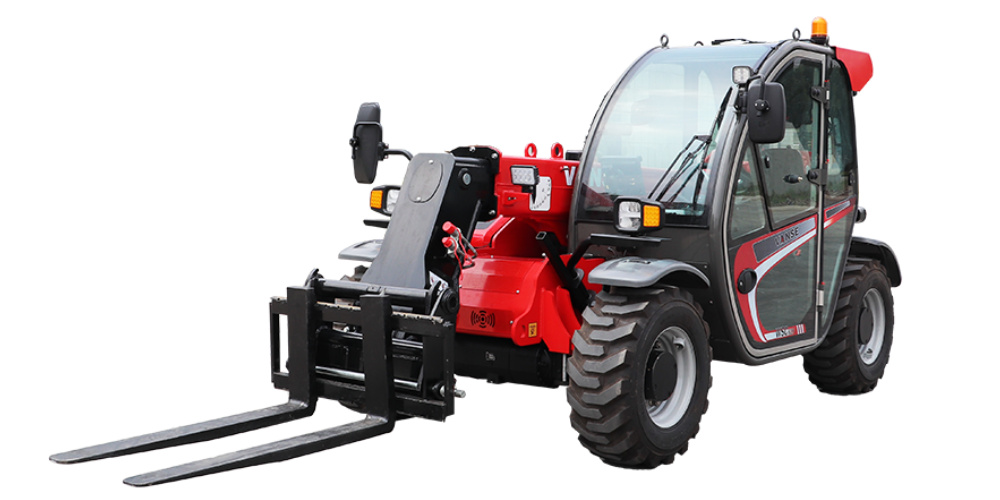
VANSE 625 6m Telescopic Handler
Designed for efficient material handling and stacking in warehouses, factories, and confined job sites, offering compact maneuverability and reliable performance.

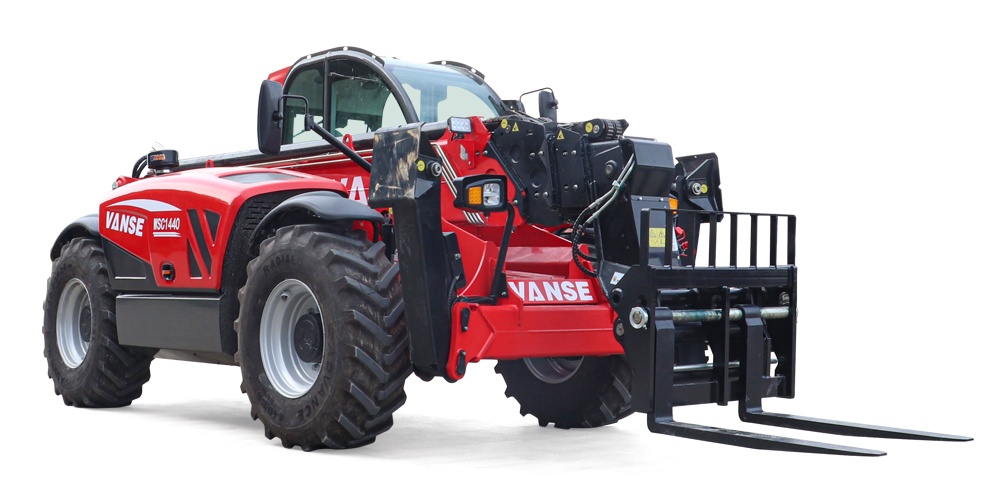
VANSE 735 7m Telescopic Handler
A balanced mid-duty solution for construction, agriculture, logistics, and warehousing, combining stable lifting, strong traction, and everyday versatility.


About the Author:
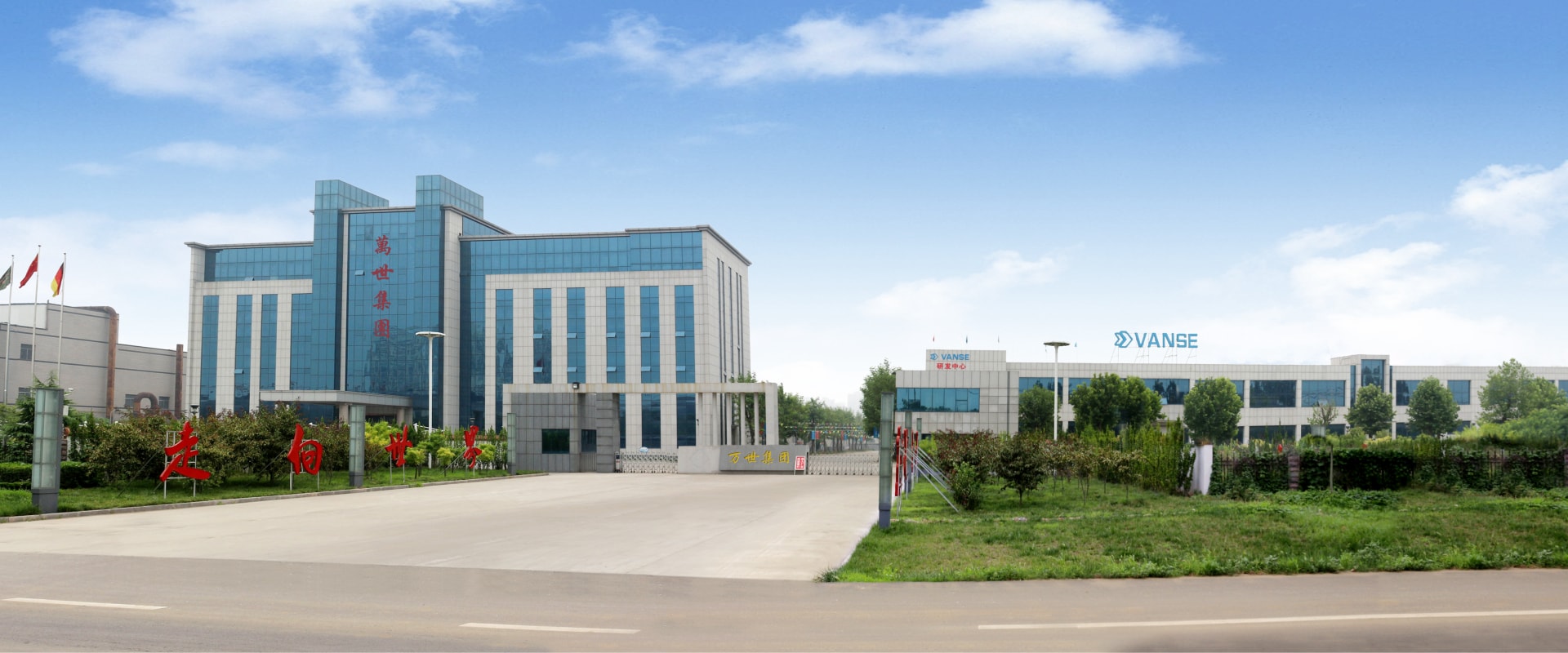
The VANSE team is a group of experienced professionals specializing in construction machinery research, manufacturing, and technical support. With deep industry knowledge and hands-on experience, our engineers and product specialists share practical insights on equipment selection, operation, maintenance, and industry trends.
Share
You May Also Interest
-

6 November, 2026
Telehandler Transmission Types: Powershift vs Hydrostatic
Learn telehandler transmission types in the United States, compare powershift and hydrostatic systems, and choose the best fit for jobs, fleets, and budgets.
-
4 November, 2026
Telehandler for Precast Concrete Panel Lifting on Sites
Find telehandler precast concrete solutions in the United States, compare suppliers, applications, costs, and buying tips for safer panel lifting on jobsites.
-
3 November, 2026
Compact vs Standard Telehandler: Size Comparison Guide
Compact vs standard telehandler in the United States: compare size, lift capacity, jobsite fit, costs, and supplier options for smarter equipment buying.
-

2 November, 2026
Telehandler vs Rough Terrain Crane: Lifting Comparison
Telehandler vs rough terrain crane in the United States: compare lifting range, mobility, cost, rental fit, and supplier options for U.S. jobsites.