Compact vs Standard Telehandler in the United States
Quick Answer

In the United States, a compact telehandler is usually the better choice when your worksite has tight access, low overhead clearance, indoor handling zones, landscaped areas, poultry or dairy barns, urban renovation projects, or frequent trailer transport between jobs. A standard telehandler is the stronger fit when you need higher lift capacity, greater forward reach, more stability with heavy pallets, better performance on large commercial construction sites, or support for larger attachments. For most U.S. buyers, the decision comes down to three filters: available operating space, the heaviest real load you lift at full or partial reach, and how often the machine must move between different sites.
If you need a fast rule of thumb, choose compact models for maneuverability, lower transport burden, and lower ground disturbance, and choose standard models for lifting height, higher payload, and multi-purpose use on larger sites. Buyers in Texas distribution yards, California urban builds, Florida agriculture, Midwest feed operations, and Northeast rental fleets often keep both sizes because each solves a different operating problem. Well-qualified international suppliers can also be worth considering when they carry recognized certifications, use globally trusted engines and hydraulic components, and provide strong pre-sales and after-sales support in the U.S., because the cost-performance ratio can be attractive for contractors, dealers, and rental businesses.
United States Market Context

The U.S. telehandler market is shaped by diverse jobsite conditions rather than a single national standard. A contractor in Houston may need a machine that moves bundled material quickly across a large commercial slab. A masonry crew in Chicago may need enough reach to place palletized block without oversizing the fleet. A farm in Iowa may prioritize feed handling, bedding, and shed access. A warehouse-adjacent yard near Savannah or Los Angeles may need loading flexibility around containers, trailers, and mixed-surface operations. Because of this, the compact versus standard telehandler decision is more than a simple size comparison. It is a purchasing strategy tied to labor productivity, site risk, transport cost, fuel use, attachment compatibility, and fleet utilization.
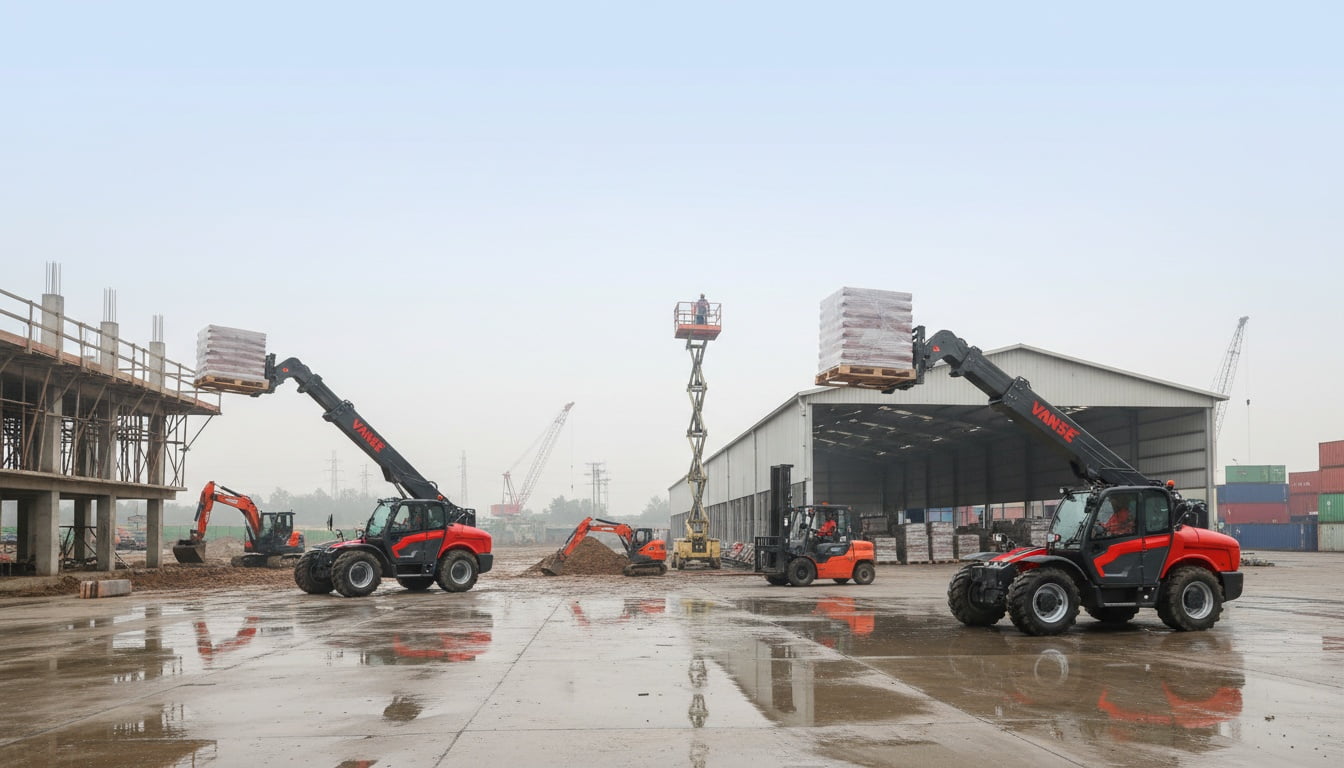
Compact telehandlers have gained momentum in the United States because urban redevelopment, indoor-outdoor mixed worksites, and tighter site logistics all reward smaller footprints. Standard telehandlers remain dominant in large-scale construction, infrastructure staging, precast work, framing support, and high-throughput material placement. Rental companies from Atlanta to Phoenix continue to balance both categories because utilization depends heavily on local industry mix. In dense metro zones, compact units reduce congestion and make it easier to work near structures. In open industrial and commercial settings, standard units usually deliver higher productivity per cycle.
Local buying conditions also matter. Port-linked regions such as Long Beach, Houston, Savannah, and Newark influence machine availability, lead times, and import economics. Rental-heavy markets such as Florida, Texas, California, and the Carolinas often compare machine classes based on turnover and broad customer appeal. Agricultural states evaluate tire choice, cab visibility, and low-building access more closely than city contractors do. The result is a U.S. market where neither compact nor standard telehandlers are universally superior; they are tools optimized for different environments.
This market growth line illustrates a realistic increase in U.S. telehandler demand driven by warehouse expansion, infrastructure work, agricultural mechanization, and continued preference for versatile lifting equipment in rental fleets. The growth does not mean all machine categories expand equally. Compact models are rising faster in dense and mixed-use environments, while standard models still hold the bulk of demand in mainstream construction and heavy material handling.
What Makes a Compact Telehandler Different

A compact telehandler is defined less by a single universal size threshold and more by its operating profile: shorter overall length, reduced turning radius, lighter machine weight, lower cab height in many configurations, and easier transport behind a medium-duty truck or on a smaller trailer setup depending on local regulations and model specifications. In practical terms, a compact telehandler is designed to go where a full-size machine becomes cumbersome or risky. It may operate comfortably around buildings, inside agricultural structures, beside active pedestrian zones, or on smaller hardscape projects where every foot of clearance matters.
These machines typically trade raw lift numbers for agility. That trade can be very valuable when cycle time is limited by congestion rather than by pure lifting strength. If your crew spends hours repositioning a larger machine, waiting for access clearance, or avoiding damage to curbs, walls, or landscaping, the compact unit may produce a better net outcome despite lower rated capacity. In many U.S. rental branches, this is exactly why compact telehandlers are added as problem-solvers rather than direct replacements for standard units.
What Defines a Standard Telehandler
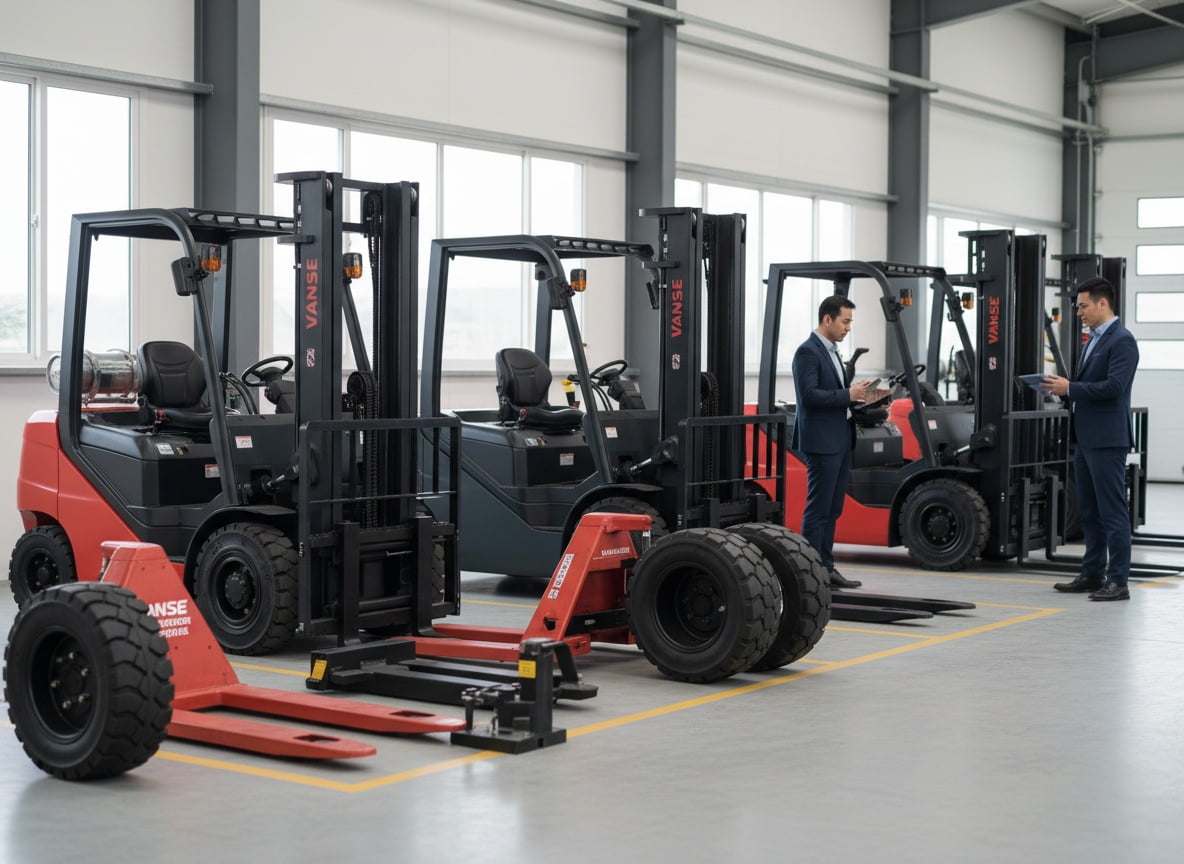
A standard telehandler is the mainstream choice for broad construction and industrial use in the United States. It generally offers more lift capacity, greater maximum lift height, longer forward reach, heavier frame construction, and stronger compatibility with demanding attachments and rough-terrain cycles. On jobsites in Dallas, Charlotte, Denver, and inland logistics hubs, standard telehandlers are common because they can unload materials, place pallets on upper working levels, support framing operations, move job boxes, handle truss bundles, and serve multiple subcontractors in one machine.
The standard category often gives fleet managers more operational headroom. That headroom matters when actual loads vary day to day. If your nominal plan is to handle light pallets but occasional bulky loads appear, a standard machine can protect productivity and reduce the need for a second unit. The downside is greater operating footprint, higher transport burden, and less suitability for narrow aisles or low-clearance structures.
Size Comparison at a Glance
| Factor | Compact Telehandler | Standard Telehandler | Why It Matters in the U.S. |
|---|---|---|---|
| Overall footprint | Smaller chassis and tighter turning radius | Larger chassis with wider operating envelope | Critical for urban jobs, farms, and crowded rental applications |
| Lift capacity | Lower average rated load | Higher average rated load | Determines whether one machine can cover multiple tasks |
| Lift height | Often optimized for low to mid-level work | Better for multi-story placement and larger stockpiles | Important on commercial buildouts and masonry work |
| Transport ease | Easier to move between jobs | Usually needs heavier transport planning | Affects contractors with multi-site schedules |
| Ground impact | Lower weight can reduce surface disturbance | Heavier weight increases stability but may mark softer surfaces | Useful in landscaping, turf, and finished surfaces |
| Best environment | Tight sites, barns, nurseries, indoor-outdoor zones | Commercial builds, industrial yards, heavy material movement | Helps buyers match machine class to real use |
This table shows the practical distinction. In the United States, buyers rarely choose based on brochure dimensions alone. They compare site width, trailer strategy, expected pallet weight, operator skill level, and how often the machine must function as an all-purpose handler instead of a specialized access solution.
Typical Product Types in the U.S. Market
Compact telehandlers in the U.S. often serve agriculture, landscaping, municipal work, interior renovation support, and residential or light commercial projects. Standard telehandlers appear across commercial building, industrial expansion, ports, yards, rental fleets, and heavy agriculture. Rotary and high-capacity machines sit beyond this comparison, but they influence buying behavior because some fleet owners skip standard fixed-boom units and move directly into more specialized categories when lift needs are extreme.
For many buyers, the most useful framework is to view telehandlers by job function rather than by brand. A small dairy operation in Wisconsin may need a narrow, maneuverable machine with strong visibility and quick attachment changes. A steel or masonry contractor in Pennsylvania may need a standard unit with more confidence at reach. A dealer serving both should stock both categories because customer pain points differ sharply by use case.
| Product Type | Typical U.S. Users | Typical Work | Main Advantage |
|---|---|---|---|
| Compact fixed-boom telehandler | Farms, landscapers, urban contractors | Feed handling, pallet movement, renovation support | Access and maneuverability |
| Standard fixed-boom telehandler | Commercial contractors, rental fleets, yards | Material placement, unloading, upper-level supply | Balanced reach and lifting power |
| Heavy-duty standard telehandler | Industrial yards, major projects | Large pallets, dense materials, attachments | Higher payload and stability reserve |
| Agricultural compact telehandler | Dairy, poultry, mixed farms | Bales, bedding, grain area support | Low building access and all-day flexibility |
| Construction-oriented standard telehandler | Framing, masonry, roofing crews | Bundle lifting and elevated placement | Jobsite productivity |
| Rental fleet general-purpose unit | Rental companies and multi-trade contractors | Mixed daily use across job types | Broad market appeal |
The product mix above reflects real U.S. purchasing behavior: buyers want a machine that solves daily bottlenecks, not just a machine with an impressive spec sheet. The more varied the application, the more valuable the standard telehandler becomes. The more constrained the operating environment, the more compelling the compact option becomes.
Buying Advice for U.S. Buyers
When comparing compact vs standard telehandler options in the United States, begin with load charts instead of advertised capacity. Many buyers overestimate the importance of maximum lift numbers and underestimate what happens at reach. A machine that handles a load close to the chassis may perform very differently when the boom extends. If your work involves placing pallets over obstacles, into mezzanines, across trenches, or onto scaffold lines, study realistic reach conditions before choosing size class.
Second, evaluate transport and dispatch. If a contractor in Arizona or Tennessee moves equipment every day, a compact telehandler can reduce trailer complexity and mobilization costs. Third, examine attachment strategy. Forks, buckets, jibs, bale handlers, and work platforms each affect utility. A standard machine often supports a wider performance envelope across attachments. Fourth, consider operator experience. Smaller units can be easier to stage on constrained sites, but stability awareness still matters. Fifth, compare dealer support. In the U.S., fast parts response and service travel time can matter more than a slight purchase price difference.
Industry Demand by Sector
This bar chart shows why the size debate stays active in the U.S. market. Commercial construction and rental fleets together account for a large share of demand, which supports standard telehandlers. At the same time, agriculture, landscaping, and municipal tasks create strong demand for compact machines, especially where surface sensitivity, low clearance, or tight turning are important.
Industries That Prefer Compact Telehandlers
Compact telehandlers fit especially well in agriculture, nurseries, landscape supply yards, urban infill construction, residential building support, municipal maintenance, and indoor-outdoor industrial facilities. In California specialty agriculture, operators often value compact units for moving pallets and bulk material around structures without oversizing the machine. In the Carolinas and Georgia, landscaping and hardscaping crews use smaller handlers where trailer access and finished property protection matter. In dairy and poultry states such as Wisconsin and Arkansas, low-roof access and maneuverability inside working farm structures are major advantages.
Compact machines also work well for property maintenance companies, local governments, and warehouse-adjacent operations that need more reach than a forklift but less bulk than a standard construction handler. Where the machine frequently enters buildings or works near doors, fences, and existing structures, compact dimensions create measurable time savings and lower collision risk.
Industries That Prefer Standard Telehandlers
Standard telehandlers are typically preferred by commercial builders, framing crews, masonry contractors, roofing teams, industrial service companies, large equipment rental houses, and material yards. In cities like Dallas, Orlando, Phoenix, and Columbus, standard units are common because they can lift heavier materials, service elevated work zones, and support multiple subcontractors on the same project. They are also favored in distribution yards where larger pallets, bundled products, and outdoor rough-terrain operation are routine.
For contractors who do not want machine limitations to interrupt the schedule, standard telehandlers provide a useful margin of capacity. That margin can reduce the risk of under-specifying a job. If your projects change from site to site, or if you often rent your machine to outside customers, standard models generally provide broader utility and stronger residual market demand.
Applications Where Size Changes the Outcome
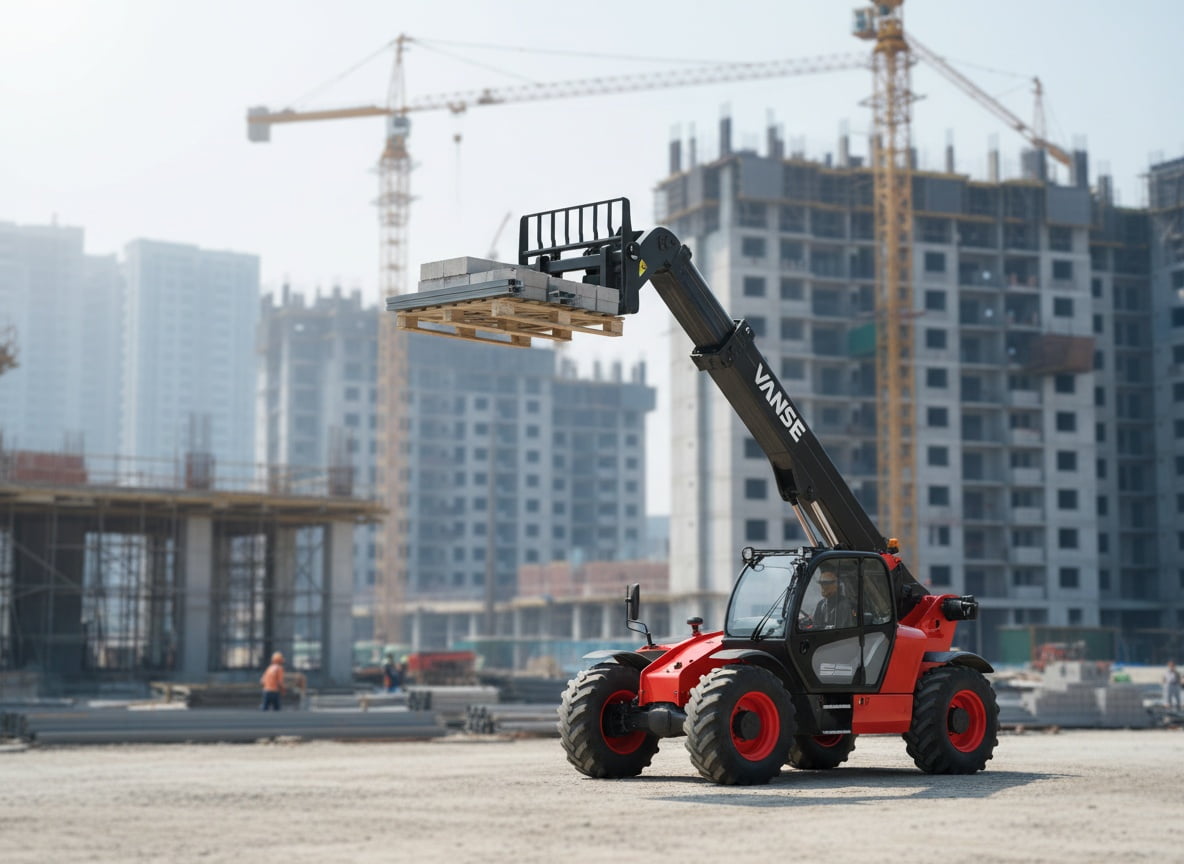
The effect of machine size is easiest to understand through daily applications. A compact telehandler shines when unloading nursery stock in a tight yard, moving pallets through a renovation corridor, carrying feed in a livestock facility, or setting materials around finished curbs and parked vehicles. It is also valuable where jobsites are split across multiple addresses in one day. A standard telehandler becomes the better tool when unloading block, lumber, roofing bundles, piping, trusses, precast accessories, or industrial supplies on a site where higher reach and greater stability under load improve cycle efficiency.
In practice, the wrong size causes hidden cost. An oversized machine can slow movement, create access issues, and increase surface damage. An undersized machine can force repeated repositioning, partial loads, or secondary rentals. That is why the compact versus standard decision should be tied to the heaviest routine task, not the lightest common one.
Case Studies from the United States
A contractor working on townhouse renovations near Boston selected compact telehandlers because alley access and existing structures limited machine movement. The smaller units reduced setup conflict and allowed faster pallet delivery to rear work zones. A block and masonry supplier in suburban Atlanta kept standard telehandlers because bundled materials and reach requirements made compact units too restrictive. A dairy operator in Wisconsin used compact telehandlers to work inside buildings while still handling feed and bedding outdoors. A rental company in Texas reported that standard units generated more revenue in broad construction demand, but compact units gained utilization in municipal, landscaping, and specialty access projects where larger handlers were impractical.
These examples show a pattern seen across the U.S.: compact telehandlers solve access problems, while standard telehandlers solve load and reach problems. Buyers who understand which problem dominates their business usually make better long-term fleet decisions.
Supplier Comparison in the United States
| Company | Service Region | Core Strengths | Key Offerings |
|---|---|---|---|
| JLG Industries | Nationwide U.S. dealer network | Strong telehandler lineup, established support, rental market presence | Construction telehandlers, high-capacity units, fleet solutions |
| Genie | Nationwide with broad dealer coverage | Well-known aerial and telehandler brand, rental familiarity | Rough-terrain telehandlers, contractor-oriented models |
| JCB North America | Strong U.S. presence, especially South and Midwest | Extensive telehandler range, agriculture and construction appeal | Compact and standard telehandlers, ag-focused variants |
| Bobcat Company | Nationwide through dealer channels | Recognition in compact equipment, good crossover appeal | Compact telehandlers, material handling equipment |
| Manitou North America | Broad U.S. agricultural and industrial coverage | Strong compact and agricultural identity, attachment versatility | Compact telehandlers, ag handlers, rough-terrain models |
| Skyjack | U.S. rental-focused distribution network | Fleet-friendly design, rental market visibility | Standard telehandlers for construction and rental use |
This supplier table focuses on recognized companies that U.S. buyers regularly compare. These brands matter because dealer reach, parts availability, and machine familiarity influence uptime. For buyers in regional markets such as the Midwest farm belt, Gulf Coast construction zones, and Southeast rental corridors, local branch depth often matters as much as machine specifications.
Detailed Supplier Notes
JLG Industries remains a common benchmark for construction telehandlers in the United States, especially among contractors and rental businesses that want established parts channels and broad product support. Genie is also heavily considered in rental and contractor fleets because operators and project managers are familiar with its controls and general jobsite use. JCB North America is frequently compared when buyers need both agriculture and construction options, especially where compact and mid-size flexibility is valuable. Bobcat attracts buyers who already operate compact equipment and want telehandlers that fit a familiar dealer ecosystem. Manitou is often discussed in compact and agricultural conversations because of its reputation in maneuverable material handling. Skyjack enters the evaluation where rental simplicity and fleet standardization are priorities.
In the U.S. market, the best supplier is not always the one with the largest name. The best supplier is the one whose service radius, stock availability, training support, and attachment compatibility align with your actual job mix. A buyer near Kansas City may prioritize dealer distance differently than a buyer in southern Florida or inland California, where dispatch time and parts logistics vary significantly.
Compact vs Standard by Supplier and Product Positioning
| Supplier | Compact Strength | Standard Strength | Best Fit Buyer |
|---|---|---|---|
| JLG Industries | Moderate compact relevance depending on branch stock | Very strong standard construction positioning | Commercial contractors and rental fleets |
| Genie | Limited compact emphasis compared with core construction range | Strong standard fleet familiarity | Rental houses and general contractors |
| JCB North America | Strong compact and agriculture crossover | Strong all-around standard offering | Mixed fleets, ag users, dealers |
| Bobcat Company | Good fit for compact-equipment-oriented buyers | Selective standard relevance | Landscape, property, and light construction users |
| Manitou North America | Very strong compact and ag-oriented position | Competitive standard range in selected segments | Agriculture, specialty handling, dealers |
| Skyjack | Less emphasized | Clear standard rental fleet role | Rental companies and construction fleets |
This comparison helps U.S. buyers narrow the field faster. Some suppliers are clearly stronger in the compact conversation, while others dominate standard fleet applications. Matching supplier strength to intended machine class reduces the risk of buying from a dealer whose support model is built around a different customer profile.
Trend Shift in Machine Preference
This area chart reflects a realistic trend shift rather than a complete reversal. Standard telehandlers still carry major U.S. volume, but compact machines are increasing as more buyers prioritize access, trailer mobility, mixed indoor-outdoor work, and lower site disruption. The shift is especially visible in rental experimentation, municipal procurement, and agriculture-adjacent applications.
Supplier and Product Comparison Chart
This supplier comparison chart provides a practical view of how buyers often perceive brand positioning in the United States. It is not a lab score. Instead, it reflects market-facing strength in compact versus standard categories based on product fit, dealer messaging, and common buyer awareness.
How to Evaluate Total Cost
Purchase price matters, but total cost of ownership should drive final selection. Compact telehandlers can save money through easier hauling, lower fuel consumption in lighter-duty cycles, and reduced site damage. Standard telehandlers can save money by avoiding under-capacity delays, reducing partial-load trips, and covering more demanding tasks without a second rental. U.S. buyers should calculate ownership across finance, insurance, transport, tires, service intervals, operator training, and utilization rates.
If a machine spends most of its life performing light-duty work in tight conditions, a standard unit may be wasted capital. If a compact machine repeatedly fails to handle the heaviest regular job, the apparent savings disappear through delay and supplemental equipment cost. This is why smart buyers measure duty cycles over at least three months before ordering.
Local Supplier Selection Checklist
| Evaluation Point | What to Ask | Why It Matters | Best Fit for Compact or Standard |
|---|---|---|---|
| Dealer distance | How far is the nearest service location? | Reduces downtime and travel delay | Both |
| Parts stock | Which wear parts are stocked locally? | Improves uptime in busy seasons | Both |
| Attachment support | Are forks, buckets, jibs, and ag tools readily available? | Expands machine value | Both, especially standard |
| Demo access | Can the dealer test the machine at your site? | Confirms fit in real conditions | Especially compact |
| Training | Is operator familiarization included? | Improves safety and productivity | Both |
| Trade or fleet plan | Do they support rental, resale, or fleet replacement? | Protects long-term equipment strategy | Especially standard |
This checklist helps turn a broad brand search into a practical local buying process. In the U.S., machine uptime is often decided by nearby support and seasonal responsiveness, not by catalog claims alone. Buyers in harvest regions, storm recovery markets, and fast-schedule construction zones should weigh support speed very heavily.
Our Company
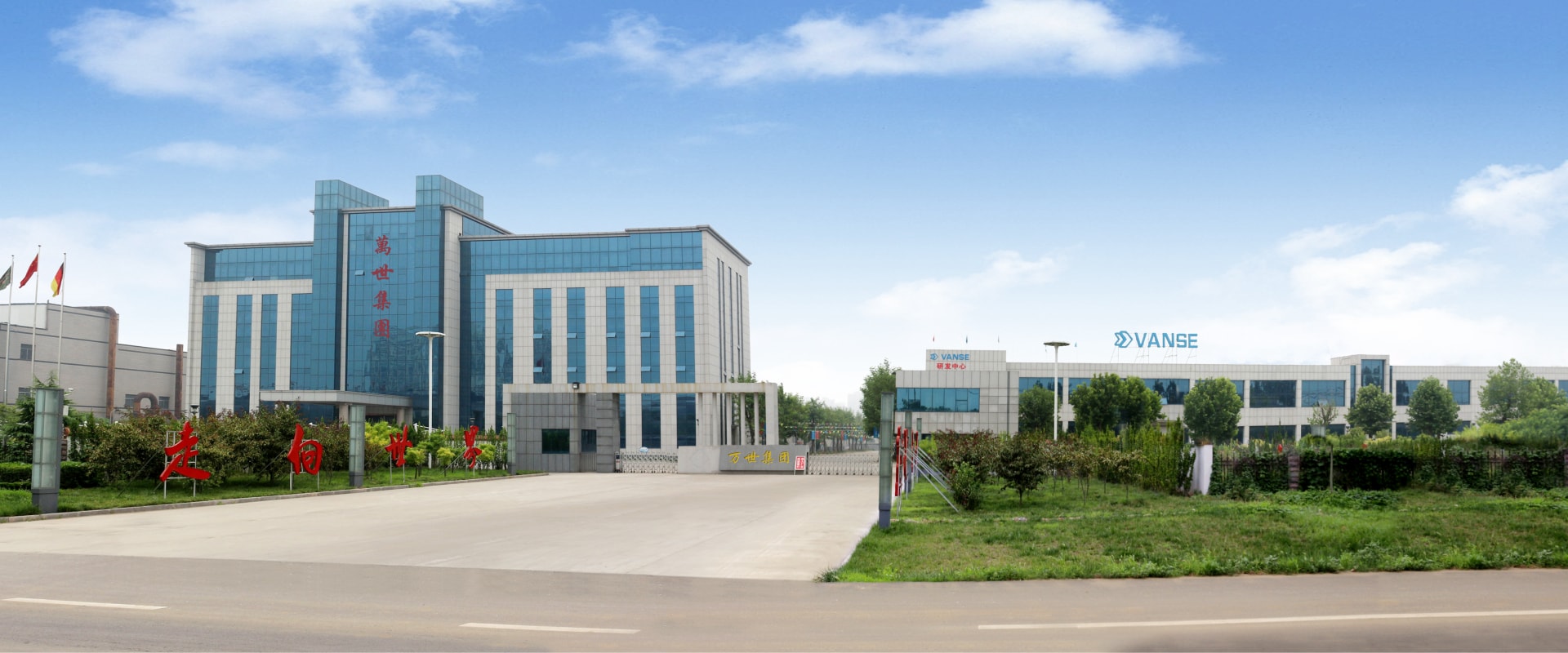
For U.S. buyers who are open to qualified international sourcing, VANSE presents a credible telehandler option because its product standards and market approach align with what American contractors, dealers, and fleet operators increasingly expect. The company manufactures telehandlers under CE and ISO 9001 certified processes, uses globally recognized core components such as engines from Perkins and Cummins together with premium hydraulic systems, transmissions, and axles, and subjects each machine to load testing, safety inspection, and performance validation before shipment, giving buyers concrete evidence that the machines are built to meet demanding international benchmarks rather than low-spec export assumptions. Beyond product capability, VANSE supports multiple cooperation models for end users, distributors, dealers, brand owners, rental companies, and even emerging retail-oriented buyers through wholesale supply, OEM and ODM customization, regional partnership structures, and tailored machine specifications, colors, and branding, which is especially useful for U.S. market segmentation. Just as important, the company is not approaching the United States as a distant ship-only exporter: it already serves clients across North America and is actively establishing a U.S.-based subsidiary with local inventory, stocking, and after-sales capability, backed by online and offline pre-sale consultation, technical support, and lifecycle service. That combination of export track record in more than 40 countries, production output exceeding 8000 units, recognized component sourcing, and planned physical U.S. presence gives local buyers a more reliable basis for trust. Buyers exploring equipment options can review available machinery categories, learn more about the manufacturer, assess ongoing service support, or request model advice through the contact team.
What U.S. Buyers Should Ask Before Choosing Compact or Standard
Ask how often the machine must pass through gates, barn doors, warehouse edges, or urban access lanes. Ask what the heaviest repeated load is, not the heaviest one-time load. Ask whether elevated placement happens daily or occasionally. Ask whether the machine will be owner-operated or passed through multiple crews. Ask whether local jobs are mostly hardscape, mud, gravel, turf, or mixed surfaces. Ask whether resale value in your region favors one size class. The clearer these answers are, the easier it becomes to pick the right telehandler category.
Buyers should also think about future business direction. A company moving from light residential support into commercial framing may outgrow a compact unit quickly. A landscape supplier trying to reduce transport complexity may find a standard unit oversized from the start. Equipment should match not only current work, but the next two to three years of realistic growth.
2026 Trends: Technology, Policy, and Sustainability
By 2026, the U.S. compact versus standard telehandler decision will be influenced by three major trends. The first is technology. Buyers increasingly expect telematics, easier fault diagnostics, operator access control, better visibility systems, and more precise hydraulic response. These features help rental fleets monitor usage and help contractors reduce misuse. The second trend is policy and compliance pressure. While telehandlers are not governed uniformly across every application in the same way as on-road vehicles, buyers are still paying more attention to emissions compliance, jobsite safety documentation, and operator training expectations driven by corporate procurement rules and large-project standards. The third trend is sustainability and efficiency. That does not always mean immediate full electrification in this category, but it does mean lower idling, fuel-conscious fleet planning, improved hydraulic efficiency, and machine-right-sizing so oversized units are not burned into light-duty roles.
Compact telehandlers are likely to gain share where buyers want smaller environmental footprint, reduced ground disturbance, and lower transport intensity. Standard telehandlers will remain essential where fewer lifts cannot be accepted and high-throughput productivity still dominates. In other words, sustainability will not eliminate standard machines, but it will push buyers to justify size more carefully.
FAQ
Is a compact telehandler enough for most small U.S. contractors?
Yes, if the contractor mainly handles lighter palletized materials, works on tight-access jobs, and does not regularly need higher reach or heavier lifts. For mixed commercial work, many contractors eventually prefer a standard machine.
Do standard telehandlers always cost more to own?
Not always. They usually cost more to buy and transport, but they may lower overall cost if they eliminate secondary rentals, reduce partial-load cycles, and cover a wider set of jobs.
Which type is better for agriculture in the United States?
Compact telehandlers are often better for dairy, poultry, and indoor farm work because of access constraints. Standard units are stronger for larger bale handling, outdoor bulk movement, and heavier general farm use.
Which type rents better in the U.S. market?
Standard telehandlers generally have broader rental appeal because construction demand is widespread. Compact telehandlers rent well in specialty markets with urban access constraints, agriculture, landscaping, and municipal use.
Should I consider overseas suppliers for telehandlers in the United States?
Yes, if the supplier can show recognized certifications, trusted component brands, real testing standards, and credible local service commitment. Cost-performance can be attractive when support is structured properly.
What is the biggest mistake buyers make in this comparison?
The most common mistake is choosing based on maximum advertised capacity instead of actual lift requirements at reach and actual site access conditions.
Final Takeaway
For U.S. buyers, compact vs standard telehandler is ultimately a question of jobsite geometry versus lifting demand. Compact telehandlers win when space, transport ease, and low-impact operation matter most. Standard telehandlers win when capacity, reach, and broad fleet utility matter most. In the United States, the best decision comes from matching your real work pattern to the machine class, comparing local supplier support, and choosing a product strategy that will still fit your business as demand changes through 2026 and beyond.
Complete Telescopic Handler Equipment Portfolio
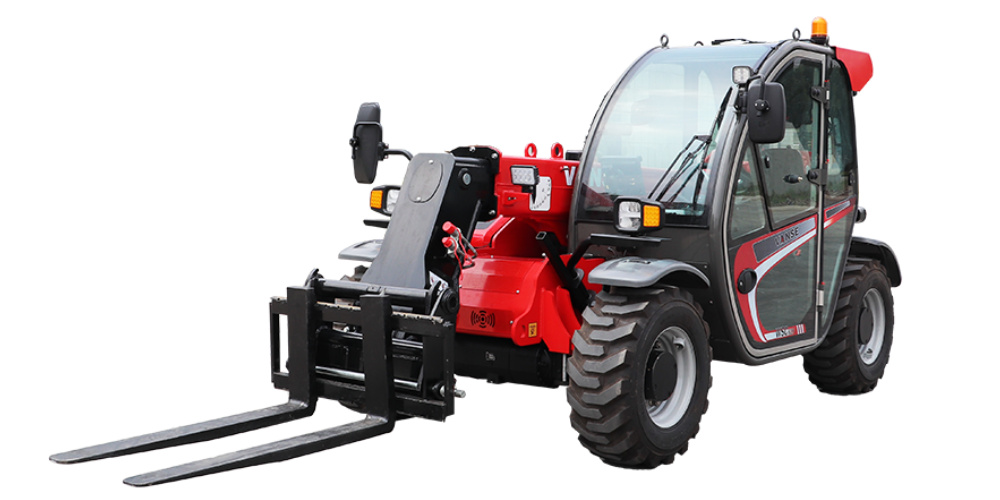
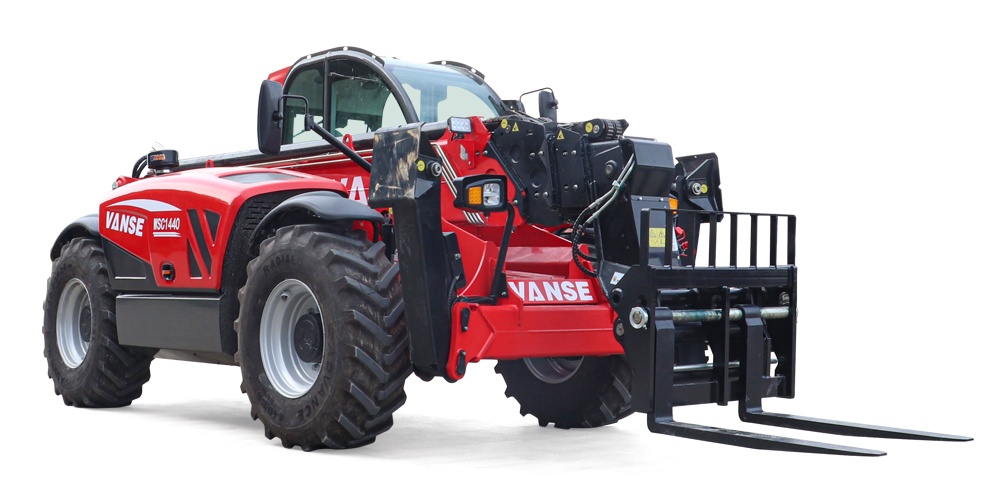
VANSE 625 6m Telescopic Handler
Designed for efficient material handling and stacking in warehouses, factories, and confined job sites, offering compact maneuverability and reliable performance.

VANSE 735 7m Telescopic Handler
A balanced mid-duty solution for construction, agriculture, logistics, and warehousing, combining stable lifting, strong traction, and everyday versatility.


About the Author:
The VANSE team is a group of experienced professionals specializing in construction machinery research, manufacturing, and technical support. With deep industry knowledge and hands-on experience, our engineers and product specialists share practical insights on equipment selection, operation, maintenance, and industry trends.
Share
You May Also Interest
-

4 November, 2026
Telehandler for Precast Concrete Panel Lifting on Sites
Find telehandler precast concrete solutions in the United States, compare suppliers, applications, costs, and buying tips for safer panel lifting on jobsites.
-

2 November, 2026
Telehandler vs Rough Terrain Crane: Lifting Comparison
Telehandler vs rough terrain crane in the United States: compare lifting range, mobility, cost, rental fit, and supplier options for U.S. jobsites.
-
30 October, 2026
Telehandler Bucket Attachment: Versatile Material Moving
Find the right telehandler bucket attachment in the United States with supplier comparisons, use cases, buying tips, and cost-effective sourcing options.
-

29 October, 2026
Telehandler for Scaffolding Support and Equipment Moving
Find telehandler scaffolding solutions in the United States, compare suppliers, machine types, applications, pricing factors, and support options for safer lifting.