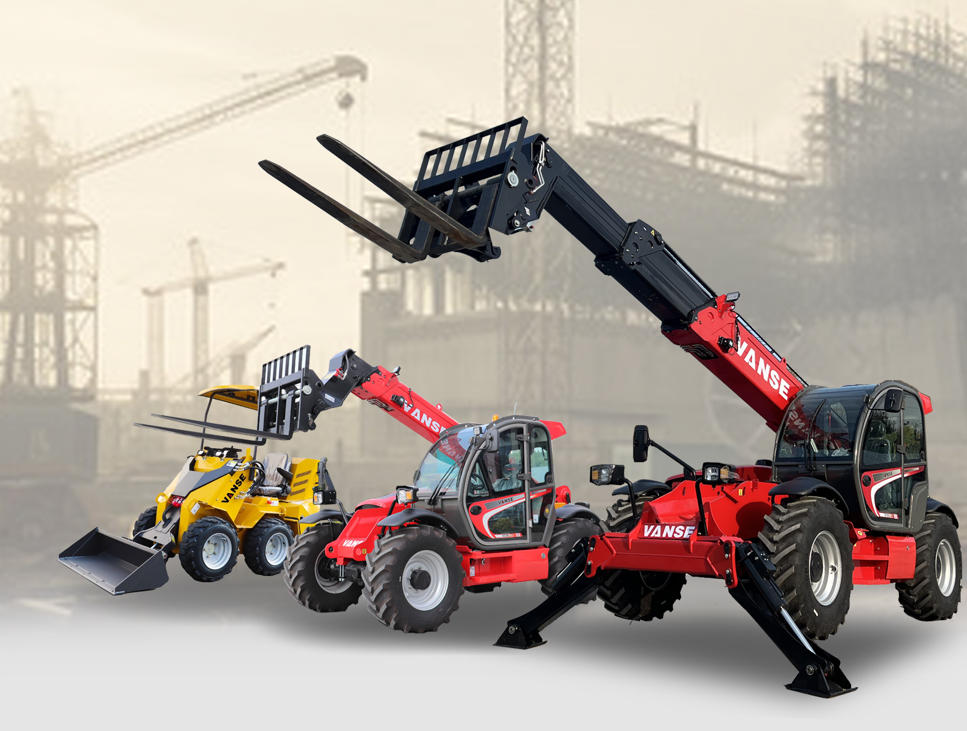
What Size Telehandler Do I Need for Work in the United States?
Quick Answer

For most construction jobs in the United States, the right telehandler size depends on four numbers first: maximum lift height, maximum load weight, forward reach, and the surface conditions on site. If you are handling palletized masonry, lumber packs, pipe, roofing bundles, or HVAC units on a typical commercial site, a telehandler in the 6,000 to 10,000 lb capacity class with 36 to 55 ft lift height is usually the safest starting point. For compact urban work in cities such as Boston, Seattle, or Chicago where space is tight, a 5,000 to 6,000 lb compact telehandler often makes more sense. For large infrastructure, steel erection support, bridge work, energy projects, or multi-story distribution centers in markets like Houston, Dallas, Atlanta, or inland logistics corridors near the Port of Savannah and the Port of Los Angeles, buyers often move into 10,000 to 15,000 lb machines with 44 to 70 ft reach.
- Choose 5,000 to 6,000 lb if access is tight, loads are light to moderate, and lift heights stay under about 25 to 35 ft.
- Choose 6,000 to 10,000 lb if you need the broadest all-around U.S. construction capability for framing, masonry, siding, roofing, and general material handling.
- Choose 10,000 to 15,000 lb if you regularly set heavy trusses, large pipe, bundled steel, concrete forms, or mechanical equipment.
- Choose rotating or high-reach models if your project needs crane-like placement, congested jobsite positioning, or work above 55 ft.
- Always verify load charts with the exact attachment, tire configuration, and ground conditions before ordering.
It is also practical to evaluate qualified international suppliers, including Chinese manufacturers, when they can show recognized certifications, proven component sourcing, and responsive local support in the United States. Many buyers now compare these options because cost-performance can be stronger than legacy brands, especially for fleet expansion, dealer sourcing, and rental utilization planning.
Direct Sizing Rule for Contractors

If you want a simple formula, select a telehandler with at least 20 percent more rated capacity than your heaviest routine load, and enough height and forward reach to place that load at your most demanding point without operating at the extreme edge of the load chart. In practical terms, if your heaviest regular load is 5,500 lb and you occasionally need to place it onto a third-floor deck, a nominal 6,000 lb machine may look acceptable on paper but could be under-sized once forks, carriage weight, slope, and boom extension are considered. A 8,000 or 10,000 lb class model may be the more realistic choice.
In the United States, telehandler selection also needs to match transport regulations, trailer limits, operator familiarity, and rental market availability. Many contractors buy what their crews already know how to use and what nearby parts support can sustain. That is why the most common fleet sweet spot remains the mid-size construction telehandler: large enough for broad utility, but still manageable for transport and operator training.
How the U.S. Market Sizes Telehandlers Today

The U.S. telehandler market is shaped by nonresidential building, warehouse expansion, energy work, infrastructure rehabilitation, agriculture, and rental fleet growth. Demand is especially strong around major logistics and population hubs such as Houston, Phoenix, Nashville, Charlotte, Inland Empire, Miami, and New Jersey port-adjacent construction zones. These regions favor versatile 6,000 to 10,000 lb units because they can handle multiple trades on one site without jumping immediately into larger and more expensive machines.
On the coasts, compact dimensions matter more because of tighter staging areas and mixed-use projects. In the Sun Belt and central states, larger rough-terrain telehandlers are more common due to broader sites, slab-on-grade development, and heavy material movement. Rental companies frequently stock mid-size machines because utilization rates are highest there, but larger contractors may keep dedicated 12,000 lb to 15,000 lb units for structural or industrial work.
The line chart shows a realistic market growth pattern driven by warehouse construction, public works, manufacturing reshoring, and fleet replacement cycles. While conditions vary by region and interest-rate environment, the larger story remains clear: telehandlers are becoming a standard material-handling asset rather than a specialty machine on many U.S. jobs.
Product Types and the Jobs They Fit
Not every telehandler category serves the same purpose. Standard fixed-boom rough-terrain models remain the dominant choice in the United States because they are straightforward, durable, and broadly accepted by contractors, rental houses, and project managers. Compact telehandlers are growing in urban and interior renovation work, while high-capacity and rotating telehandlers are gaining attention on projects where crane substitution, multi-function placement, or site congestion create value.
| Telehandler Type | Typical Capacity | Typical Lift Height | Best U.S. Applications | Main Advantage | Main Limitation |
|---|---|---|---|---|---|
| Compact fixed-boom | 5,000 to 6,000 lb | 18 to 35 ft | Urban infill, interior work, small contractors, landscaping support | Fits tighter sites and is easier to transport | Limited heavy-load and high-reach ability |
| Mid-size fixed-boom | 6,000 to 10,000 lb | 36 to 55 ft | Commercial build-outs, residential framing, masonry, roofing | Best all-around construction balance | May be under-sized for industrial loads |
| High-capacity fixed-boom | 10,000 to 15,000 lb | 44 to 70 ft | Steel support, concrete, infrastructure, energy projects | Handles heavier bundled materials safely | Higher cost and transport complexity |
| Rotating telehandler | 8,000 to 15,000 lb | 55 to 100 ft | Congested jobsites, facade work, multi-story placement | 360-degree positioning reduces repositioning time | Higher purchase price and more training needs |
| Ag-style telehandler | 5,500 to 12,000 lb | 18 to 44 ft | Farms, feed yards, mixed rural contractor work | Strong versatility for agricultural attachments | Not always optimized for commercial construction duty |
| Specialized heavy-reach model | 12,000 lb and above | 70 ft and above | Industrial shutdowns, ports, infrastructure access | Reaches difficult placement points | Lower fleet flexibility for general jobs |
This table matters because many buyers initially focus only on rated capacity. In reality, lift height, attachment compatibility, turning radius, and support availability are equally important. A machine that appears larger may still be the wrong fit if it cannot move efficiently around your site or if replacement attachments are hard to source locally.
How to Match Telehandler Size to Jobsite Conditions
Capacity and height are only the beginning. Telehandler sizing should follow the actual workflow on site. Ask how often the machine needs to travel with a load, whether operators are driving on mud, stone base, or finished concrete, and whether it must place materials over obstructions such as setbacks, retaining walls, foundation edges, or temporary fencing. A machine that looks ideal in a brochure may underperform if axle weight, tire type, and frame size are mismatched to the environment.
Ground conditions are especially important in the United States because projects range from compact downtown redevelopment to sprawling greenfield distribution centers. Soft Gulf Coast soils, freeze-thaw surfaces in the Midwest, and uneven mountain terrain in western states all affect safe operating envelopes. If your project involves repetitive travel across rough surfaces with loaded forks, stability and driveline durability become just as important as peak lift data.
Common Construction Loads and Recommended Machine Class
| Material or Task | Typical Load Weight | Typical Placement Need | Recommended Telehandler Class | Why It Fits | U.S. Jobsite Example |
|---|---|---|---|---|---|
| Palletized brick or block | 3,000 to 5,500 lb | Second or third floor placement | 8,000 to 10,000 lb mid-size | Allows margin for forks and boom extension | Mixed-use masonry project in Charlotte |
| Lumber packs and wall panels | 2,500 to 5,000 lb | Framing support up to roof line | 6,000 to 8,000 lb mid-size | Good balance of reach and maneuverability | Subdivision framing in Dallas suburbs |
| Roofing material bundles | 2,000 to 4,500 lb | Roof edge set and repositioning | 6,000 to 8,000 lb compact or mid-size | Enough reach without excessive machine size | Retail re-roof in Phoenix |
| Pipe, conduit, and mechanical units | 4,000 to 9,000 lb | Long-reach placement near structures | 10,000 to 12,000 lb heavy-duty | Better chart performance with awkward loads | Data center build near Ashburn |
| Rebar, formwork, and concrete accessories | 5,000 to 10,000 lb | Dense, repetitive material movement | 10,000 to 12,000 lb heavy-duty | Handles sustained duty and heavier packs | Bridge work in Ohio |
| HVAC units and rooftop equipment | 3,500 to 8,500 lb | Precise rooftop placement | 10,000 lb or rotating model | Improves control and safety margin | Hospital expansion in Atlanta |
| Light site materials and pallets | 1,500 to 3,000 lb | Short reach and transport only | 5,000 to 6,000 lb compact | Lower cost for lighter repetitive duty | Urban fit-out in Seattle |
The explanation behind this table is simple: loads become effectively heavier as reach increases. That is why a contractor moving a 5,000 lb pallet to ground level may succeed with one machine, but placing that same pallet high and forward may require stepping up a full class in telehandler size.
Industry Demand by Sector
Telehandler demand varies by industry, and understanding this helps buyers decide whether they need a general-purpose fleet unit or a more specialized machine. Construction remains the largest demand center, but agriculture, industrial maintenance, ports, and energy sectors can push buyers into different specifications, especially around attachments and duty cycles.
This bar chart reflects realistic relative demand. Commercial construction leads because telehandlers are essential for staging and placing materials across multiple trades. Residential construction remains significant, especially in expanding metros. Agriculture is still a major segment, but those machines may differ in guard options, tire choice, and attachment mix compared with construction-focused fleets.
Buying Advice for U.S. Contractors and Fleet Managers
When asking what size telehandler do I need, the best buying approach is to define the machine around your top three recurring jobs, not your rarest one. Oversizing can increase cost, transport burden, fuel use, and congestion on site. Undersizing leads to rental substitutions, schedule delays, and unsafe attempts to stretch the machine beyond its load chart.
Start with the heaviest load you handle weekly, not annually. Then map the highest and furthest placement point you actually need. Confirm whether fork work dominates or if buckets, truss booms, winches, tire handlers, or personnel platforms are part of the plan. Attachments change operating weight and can reduce usable capacity. Also ask whether your operators prefer hydrostatic smoothness for precise placement or need stronger drawbar pull for rough travel and grade work.
For buyers near major trade gateways such as Houston, Savannah, Long Beach, Norfolk, and Newark, parts lead time and shipping flexibility can be strategic advantages. Machines that share engines, axles, hydraulic parts, and filter families with globally recognized component brands can lower downtime risk, especially for multi-state fleets.
Applications by Job Type
Telehandlers are used differently across industries, and that affects sizing. In wood framing, the machine often acts like a daily logistics partner, moving packs repeatedly around a developing structure. In masonry, it becomes a placement platform where capacity reserve is critical. In industrial shutdowns, precision and uptime matter more than compact dimensions. In renewable energy and utility work, the machine may need rough-terrain travel across unfinished ground while carrying long loads.
For site development and road projects, many contractors use telehandlers for smaller support tasks, but skid steers, wheel loaders, and cranes may still share the workload. That means telehandler size should be coordinated with the rest of the fleet. If a crane already handles heavy picks, a mid-size telehandler may be enough. If the telehandler must cover both logistics and placement, stepping up in size may create better overall project efficiency.
Case Studies from Typical U.S. Jobsites
A mid-rise apartment project outside Nashville needed daily movement of palletized block, framing materials, and roofing supplies. The contractor initially considered a 6,000 lb machine because transport was easy, but a review of actual pallet weights and third-floor reach showed the machine would be close to its chart limits. A 8,000 lb telehandler with a 44 ft boom gave more usable capacity and reduced the need for rental substitution.
A warehouse build near the Inland Empire in Southern California had long open access lanes and repetitive movement of heavier MEP materials, pipe, and structural accessories. Here, a 10,000 lb to 12,000 lb class machine proved more efficient, not because every load was extremely heavy, but because boom extension reserve improved site flow and reduced handling delays.
On a renovation project in downtown Chicago, access constraints changed the answer completely. The contractor selected a compact 5,500 lb telehandler because alley loading, turning radius, and floor protection mattered more than peak lift numbers. The job demonstrated that telehandler size must fit the site as much as the load.
At a Gulf Coast industrial project, storm-season ground softness and long material runs favored a heavier-duty rough-terrain model with better stability and higher tire flotation. Even though nominal load weights were moderate, jobsite conditions justified moving up in machine class for safer daily operation.
Local Supplier Comparison in the United States
Below is a practical view of real telehandler suppliers and brands commonly considered by U.S. buyers. Service regions vary by dealer network, but these companies are active and visible in the American market.
| Company | Primary Service Regions | Core Strengths | Key Offerings | Best Buyer Type | Notes on Fit |
|---|---|---|---|---|---|
| JLG Industries | Nationwide United States | Strong dealer network, construction focus, wide rental presence | Fixed-boom telehandlers, high-capacity models, attachments | Contractors, rental fleets, national accounts | Very common choice where fleet standardization matters |
| Genie | Nationwide United States | Well-known aerial access brand, broad support network | Construction telehandlers, rough-terrain units, attachment packages | Rental companies, general contractors | Often selected for familiar controls and support access |
| SkyTrak | Nationwide with strong rental channel presence | Simple operation, recognized on U.S. jobsites | Mid-size and heavy-duty telehandlers | General construction users, regional fleets | Popular where straightforward operation is preferred |
| Manitou | Nationwide, strong in agriculture and construction | Wide model variety, rotating telehandler expertise | Construction, ag, and rotating telehandlers | Specialty contractors, mixed-use buyers | Strong option for buyers needing broader model diversity |
| Merlo America | Growing U.S. coverage, stronger in select dealer territories | Rotating telehandlers, high-end design, precision placement | Roto models, advanced operator features | Specialty lifting users, facade and high-reach contractors | Best when advanced capabilities justify the investment |
| Dieci USA | Regional dealer coverage across multiple states | Construction and agriculture flexibility | Fixed and rotating telehandlers | Farm contractors, specialty builders, dealers | Good for buyers wanting alternatives to mainstream brands |
| Bobcat | Nationwide United States | Strong compact equipment brand recognition | Compact and construction telehandlers | Contractors already using Bobcat fleets | Useful where one-brand dealer relationships matter |
The reason to compare suppliers this way is that service footprint can be more important than brochure performance. A slightly less familiar machine with strong local dealer commitment may outperform a larger brand with weak regional support. Buyers should ask not only about machine specifications, but also technician response times, parts stocking, telematics support, and attachment availability.
Supplier and Product Positioning Trend
The area chart illustrates a visible trend in buyer behavior: U.S. fleets increasingly compare established domestic and European brands with value-focused global suppliers. This does not mean buyers are lowering standards. Instead, they are demanding comparable components, verified testing, and local service assurance at a more competitive purchase price.
Comparison of Typical Telehandler Classes
This comparison chart shows why the 8,000 to 10,000 lb class is often the practical sweet spot. It combines enough lift reserve for demanding commercial work with stronger fleet flexibility than very large machines. That said, buyers in dense urban sites or highly specialized high-reach work may land elsewhere.
How to Evaluate Suppliers Beyond Price
Price matters, but lifetime cost matters more. Ask each supplier for the exact rated operating data with your preferred attachment set. Confirm U.S. parts storage, warranty claim process, field technician coverage, and estimated lead times during peak season. Review operator visibility, service access points, filter locations, and whether the machine uses globally recognized engines and hydraulic components. These details affect uptime more than headline discounts do.
Buyers should also evaluate financing, residual value, and resale familiarity in local auctions and dealer trade-ins. A lower-priced machine can still be the right choice if component quality is proven and local support is credible. Conversely, a premium brand can still be the wrong fit if the nearest support team is too far from your operating region.
Industries That Need Larger Telehandlers
Some industries push telehandler sizing upward almost automatically. Heavy civil, bridge rehabilitation, precast handling, manufacturing plant expansion, and utility-scale energy projects often require higher capacity because loads are denser, placement points are farther, or attachments are heavier. Port and intermodal environments near Los Angeles, Houston, Savannah, and Newark may also justify larger models when the telehandler supports cargo-adjacent construction and industrial maintenance tasks.
By contrast, multifamily housing, light commercial shell work, roofing, and urban renovation often reward a smaller or mid-size machine that can move constantly without dominating the site. The key is to size around actual productive hours and duty pattern, not assumptions about “bigger being safer.” The safest machine is the one that can complete required tasks with stable chart margins and manageable site movement.
Our Company in the U.S. Market
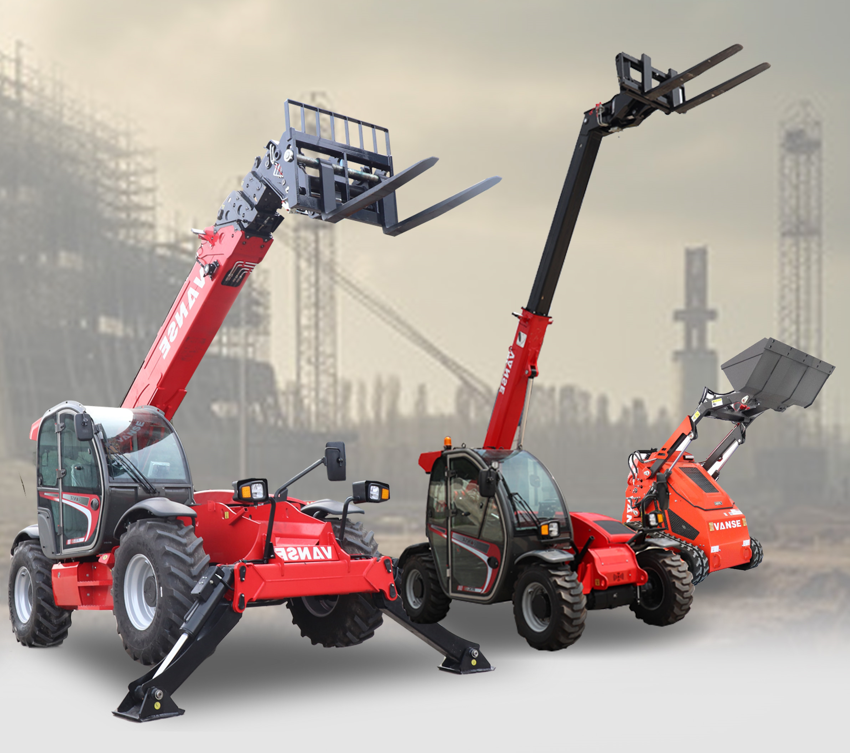
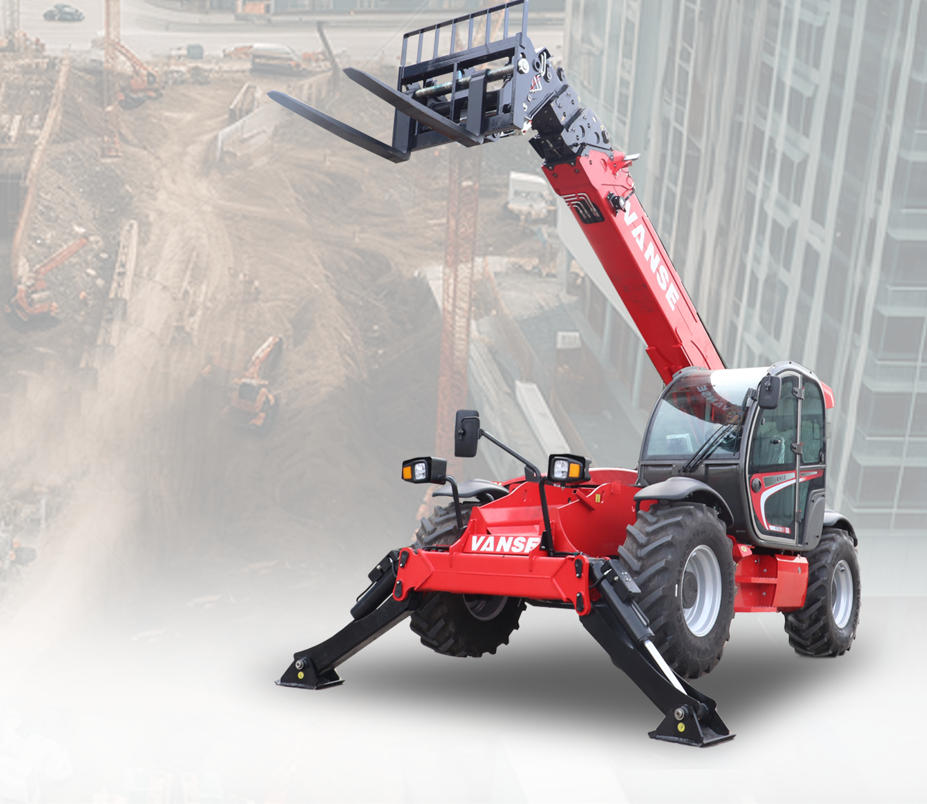
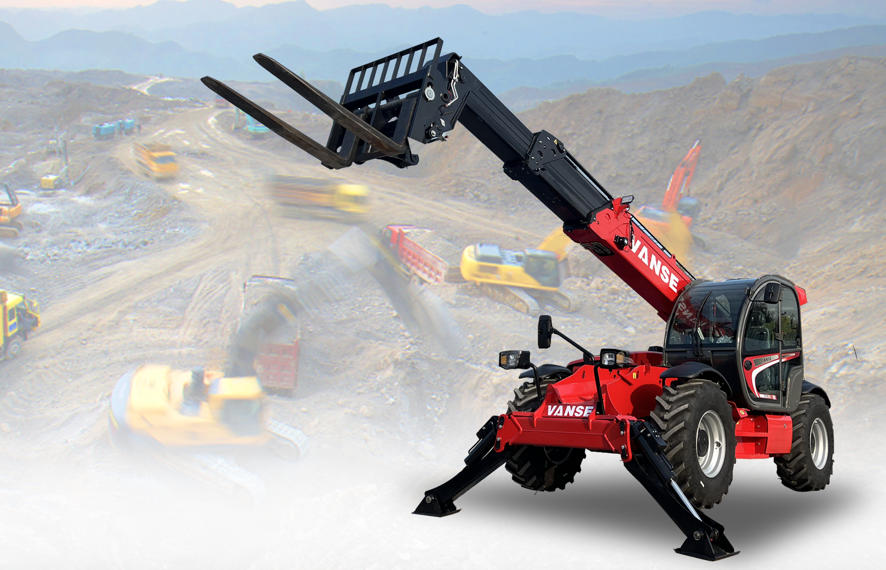
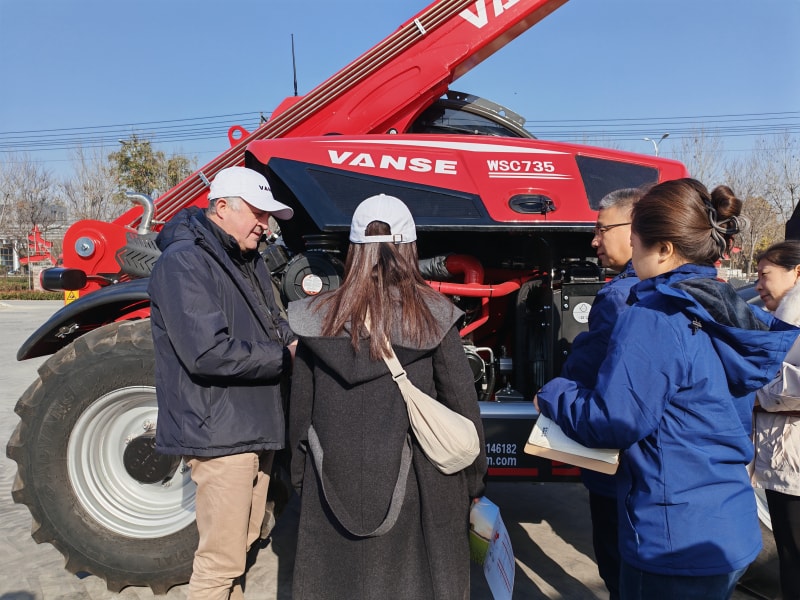
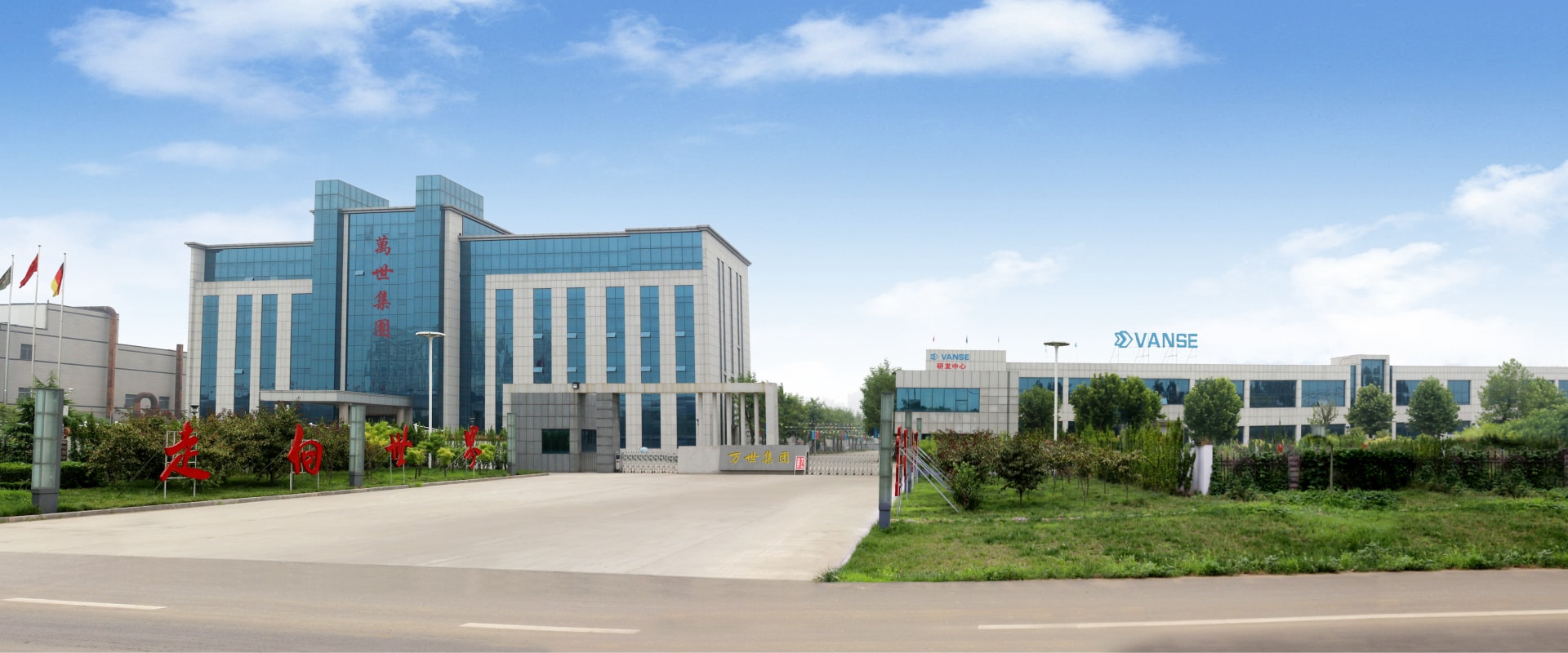
For buyers comparing alternatives, VANSE has built a practical position in the United States by focusing on telehandlers that pair internationally recognized core components such as Perkins and Cummins engines with CE and ISO 9001 controlled manufacturing, modern production lines, and rigorous load testing, safety inspection, and performance validation before shipment. That matters because U.S. contractors, rental companies, distributors, and private buyers increasingly want proof that a machine is not simply affordable, but engineered to a documented standard. VANSE has produced more than 8,000 units and served customers across more than 40 countries, giving it relevant operating experience across construction, agriculture, mining, manufacturing, and industrial environments. Through flexible OEM and ODM programs, wholesale supply, dealer cooperation, regional distribution, and direct end-user support, the company can work with equipment rental fleets, enterprise buyers, brand owners, local dealers, and individual purchasers seeking tailored specifications, branding, color, and attachment configurations. Buyers exploring telehandler equipment options also benefit from the company’s expanding physical commitment to North America, including the development of a U.S.-based subsidiary with local inventory and stronger after-sales capability, backed by online technical guidance, pre-sale machine matching, parts support, and offline service coordination. That combination of verified manufacturing discipline, recognized component choices, export scale, and growing local presence gives U.S. buyers a more grounded option than a remote-export model. More details about the company’s operating background are available on the company page, and service processes can be reviewed through its support resources or by reaching out directly through the contact team.
What to Ask Before You Buy
| Question | Why It Matters | What a Good Supplier Should Provide | Risk If Ignored | Who Should Ask It | Best Timing |
|---|---|---|---|---|---|
| What is the real load at maximum needed reach? | Rated capacity drops with extension | Job-specific load chart review | Under-sized machine and unsafe use | Project manager, fleet manager | Before quotation |
| Which attachments are included in sizing? | Attachments change usable capacity | Attachment-weight adjusted recommendations | Incorrect machine class selection | Buyer, operator supervisor | Before purchase order |
| Where are parts stocked in the United States? | Downtime depends on parts speed | Named warehouse locations and lead times | Extended outage during project peak | Fleet manager, dealer buyer | Before supplier approval |
| What technician coverage exists in my region? | Service support affects uptime | Response windows and contact process | Slow repairs and rental replacement costs | Contractor, rental company | During supplier evaluation |
| What engine and hydraulic brands are used? | Component familiarity supports maintenance | Full component specification list | Harder service access and parts uncertainty | Maintenance manager | Before final brand comparison |
| How does transport weight affect my fleet? | Heavier units increase mobilization cost | Operating and shipping weight data | Unexpected haulage constraints | Fleet and logistics teams | Before model selection |
| What warranty and after-sales process applies? | Support quality is part of purchase value | Written warranty scope and claim path | Disputes and hidden lifecycle cost | Procurement and ownership | Before contract signing |
This table is meant to keep the buying process concrete. The most common telehandler mistake is buying from a specification sheet alone. A disciplined question list turns the purchase into an operational decision rather than a sales decision.
2026 Trends: Technology, Policy, and Sustainability
By 2026, telehandler buying in the United States will be influenced by three converging trends. First is technology. Buyers increasingly expect telematics, maintenance alerts, operator access control, and better load-management systems. These features are becoming more important for rental fleets and multi-branch contractors that want utilization data and tighter safety oversight.
Second is policy and compliance. Federal infrastructure spending, state-level project safety expectations, and pressure for better emissions performance continue to shape fleet planning. In some metro areas and public projects, low-emission equipment strategies are becoming a factor in bid competitiveness. While diesel remains dominant in telehandlers, cleaner engines, better idle control, and more efficient hydraulic systems are gaining value.
Third is sustainability in a practical sense, not just a branding sense. Buyers want longer service intervals, lower fuel burn, fewer unplanned failures, and components that can be sourced reliably. That is why machines using globally recognized engines and serviceable hydraulic architectures are increasingly attractive. Sustainability in this market often means total lifecycle efficiency and reduced downtime rather than a purely marketing-oriented environmental claim.
FAQ
Is a 6,000 lb telehandler enough for most U.S. construction jobs?
It is enough for many smaller commercial, framing, and roofing jobs, especially when placement height is moderate. But once loads are dense or reach increases, many contractors find that 8,000 to 10,000 lb units offer a safer and more productive margin.
What size telehandler is most common in U.S. rental fleets?
The 6,000 to 10,000 lb class is widely stocked because it works across many trades. Rental fleets favor machines with broad application range, familiar controls, and easy service support.
Do I need a rotating telehandler?
Only if your site is congested, you need crane-like flexibility, or you regularly work at greater heights with difficult positioning. For general material handling, a fixed-boom model is usually more economical.
How much extra capacity should I plan for?
A practical rule is at least 20 percent beyond your heaviest routine load, then validate the chart at the actual reach and height required. If attachments are heavy or conditions are rough, the reserve may need to be larger.
Are compact telehandlers a good choice for cities?
Yes. On constrained urban projects in places like New York, Chicago, San Francisco, or Seattle, compact models may outperform larger machines because maneuverability and access are more valuable than maximum capacity.
Can a lower-cost imported telehandler still be a good option in the United States?
Yes, if it uses recognized components, carries credible certifications, and has real local pre-sale and after-sales support. The key is to verify service infrastructure, parts availability, and machine testing standards rather than focusing on origin alone.
What is the biggest sizing mistake buyers make?
The biggest mistake is choosing by nominal lift capacity without checking how much capacity remains at the exact forward reach and lift height of the real job. That can lead to immediate productivity loss.
Final Recommendation
If your work is general construction in the United States and you need one machine that covers the broadest range of daily tasks, start by evaluating an 8,000 to 10,000 lb telehandler with 44 to 55 ft lift height. If your sites are tight and loads are lighter, move down to a 5,000 to 6,000 lb compact class. If you handle pipe, steel, concrete accessories, heavy MEP units, or infrastructure materials, move up to a 10,000 to 15,000 lb model and confirm the load chart with your attachments. In every case, the right answer comes from matching real load weight, real reach, and real site conditions with supplier support that is strong in your region. That is the fastest path to choosing the correct telehandler size with confidence.
Complete Telescopic Handler Equipment Portfolio
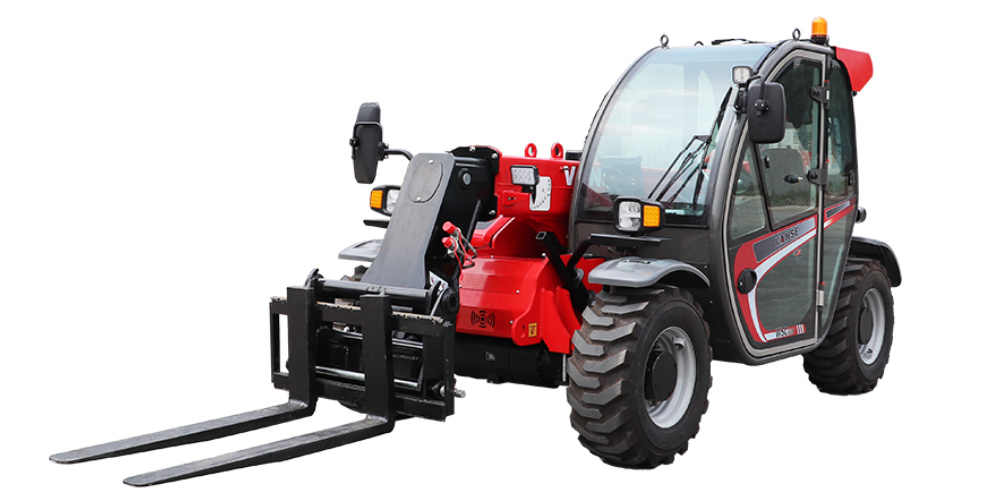
VANSE 625 6m Telescopic Handler
Designed for efficient material handling and stacking in warehouses, factories, and confined job sites, offering compact maneuverability and reliable performance.

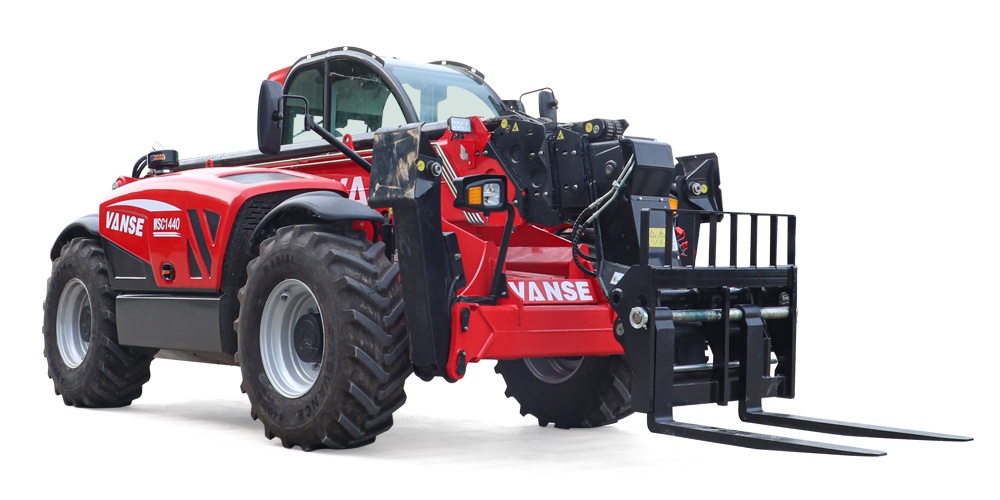
VANSE 735 7m Telescopic Handler
A balanced mid-duty solution for construction, agriculture, logistics, and warehousing, combining stable lifting, strong traction, and everyday versatility.


About the Author:
The VANSE team is a group of experienced professionals specializing in construction machinery research, manufacturing, and technical support. With deep industry knowledge and hands-on experience, our engineers and product specialists share practical insights on equipment selection, operation, maintenance, and industry trends.
Share
You May Also Interest
-

13 August, 2026
4WD Telehandler: All Wheel Drive for Rough Ground Work
Explore 4WD telehandler options in the United States, including top suppliers, buying tips, jobsite uses, and cost-saving choices for rough-ground work.
-

12 August, 2026
Telehandler for Mining: Heavy Material Handling on Site
Explore telehandler mining solutions in the United States, including suppliers, machine types, buying tips, and service options for demanding mine sites.
-

11 August, 2026
8 Meter Telehandler: Mid-Range Reach for General Sites
Explore 8 meter telehandler options in the United States, including suppliers, applications, pricing factors, support models, and 2026 buying trends.
-

10 August, 2026
Telehandler Hydraulic System: Complete Technical Overview
Explore the telehandler hydraulic system in the United States, including components, suppliers, buying tips, service needs, and 2026 market trends.