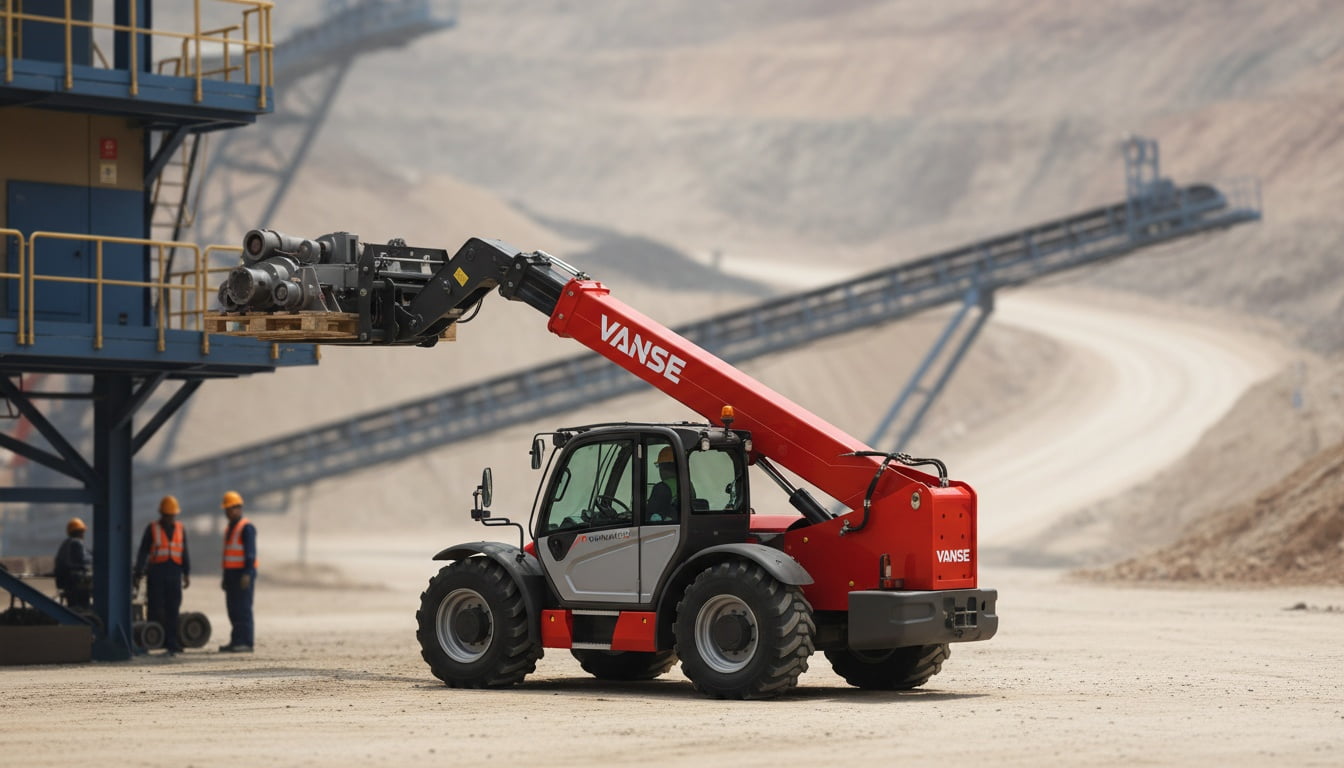
Telehandler Work Platform Suppliers in the United States
Quick Answer

A telehandler work platform is a practical aerial access solution for United States jobsites that need reach, mobility, and multi-use equipment without dedicating a separate machine only to elevated work. For buyers, renters, and contractors in the United States, the most recognized suppliers and brands to evaluate first are JLG, Genie, Skyjack, JCB, Caterpillar, and Magni dealers that support construction, industrial maintenance, agriculture, and material handling fleets across major markets such as Houston, Dallas, Atlanta, Chicago, Los Angeles, Miami, and the Inland Empire.
For immediate action, prioritize suppliers that can document ANSI compliance, operator guidance, platform capacity, telehandler compatibility, parts access, and field service coverage. In the United States, local dealer support often matters as much as platform price because downtime on framing, steel, glazing, roofing, refinery shutdown, port, or warehouse projects is expensive.
Leading choices commonly include JLG for broad rental and contractor support, Genie for national dealer coverage, JCB for integrated telehandler and attachment packages, Caterpillar dealers for fleet service infrastructure, Skyjack for rental-focused simplicity, and Magni for specialized high-reach applications. Qualified international suppliers can also be considered when they provide the right certifications, strong pre-sales and after-sales support, and a clear local market commitment. That matters because cost-performance can be attractive, especially for distributors, rental fleets, and private-label equipment programs seeking competitive alternatives.
United States Market Overview

The United States market for telehandler work platform equipment is shaped by a mix of commercial construction, industrial shutdown work, warehousing expansion, agricultural infrastructure, energy projects, airport modernization, and municipal maintenance. While scissor lifts and boom lifts remain common for dedicated aerial access, telehandlers equipped with work platforms continue to hold a valuable niche because they can switch from lifting pallets to supporting elevated personnel access when regulations, attachment approvals, and site procedures allow.
This flexibility is especially useful on jobsites in Texas, Florida, California, Georgia, Arizona, Ohio, and the Carolinas, where contractors balance schedule pressure, labor shortages, and tight equipment budgets. In dense logistics corridors near the Port of Los Angeles, Port of Houston, Port of Savannah, Port Newark, and the Chicago intermodal region, fleet managers increasingly prefer machines that can perform several tasks across the same site footprint. A telehandler paired with an approved personnel platform can reduce idle assets on projects where access needs are intermittent rather than continuous.
However, United States buyers also face stricter expectations around operator training, jobsite safety planning, and documented equipment suitability. That means selection is not only about lift height and price. It also depends on dealer capability, engineering documentation, attachment interoperability, replacement parts, and how clearly the supplier communicates use limitations. Companies that serve national contractors or regional rental chains usually win because they can support inspection intervals, operator familiarization, replacement wear items, and emergency service.
Demand is also tied to urban redevelopment, data center construction, renewable energy facilities, and the expansion of advanced manufacturing plants. These projects often require high material throughput, uneven ground travel, and occasional elevated access around structural steel, mechanical systems, facade installation, and external maintenance zones. In these conditions, telehandlers with work platforms are attractive because they bring off-road capability that many slab-focused access machines do not match.
Market Growth Trend

The chart below shows a realistic view of estimated United States demand growth for telehandler work platform related purchases, rentals, and fleet upgrades. Growth is not linear, but the medium-term direction remains positive as contractors continue to favor versatile equipment on mixed-use jobsites.
Leading Suppliers and Service Regions
The supplier landscape in the United States includes original equipment manufacturers, national dealer networks, rental specialists, and importer-distributors. The table below focuses on practical buying relevance: where each supplier is strongest, what they typically offer, and why different customer types choose them.
| Company | Primary Service Regions | Core Strengths | Key Offerings | Best Fit Buyers |
|---|---|---|---|---|
| JLG Industries | Nationwide through dealer and rental channels | Strong aerial access reputation, broad support network, contractor familiarity | Telehandlers, compatible personnel platforms, parts, training resources | General contractors, rental fleets, industrial maintenance firms |
| Genie | Nationwide with deep presence in metro construction markets | Dealer reach, rental acceptance, predictable fleet support | Telehandlers, approved attachments, service programs | Rental houses, commercial builders, facility service contractors |
| JCB | South, Midwest, East Coast, and growing national dealer footprint | Integrated telehandler product family, strong construction and agriculture overlap | Telehandlers, work platforms, forks, buckets, support packages | Agriculture, mixed fleets, owner-operators, dealers |
| Caterpillar Dealers | Nationwide through local Cat dealer territories | Major field service capacity, enterprise fleet support, financing options | Telehandlers, attachments, maintenance plans, parts logistics | Enterprise users, industrial plants, infrastructure contractors |
| Skyjack | Nationwide, especially strong in rental channels | Simple fleet management, uptime focus, rental familiarity | Telehandlers, attachment options, maintenance support | Rental companies, price-sensitive contractors |
| Magni America | Selective United States coverage, especially specialty lifting segments | High reach specialization, complex applications, rotating telehandler expertise | Telehandlers, personnel baskets, advanced lift applications | Specialty contractors, steel, heavy industrial projects |
| United Rentals | Nationwide branch network | Rental availability, short-term access, fleet turnover | Rental telehandlers with approved work platforms where available | Project-based users, shutdown work, emergency access needs |
| Sunbelt Rentals | Nationwide with strong urban and industrial branch presence | Rental flexibility, broad contractor access, quick mobilization | Rental telehandlers, aerial access alternatives, jobsite delivery | Regional contractors, subcontractors, facility maintenance teams |
This supplier table shows that the United States market does not operate through a single model. Some buyers want a factory-backed OEM with long-term parts planning, while others care more about short-term rental availability near a jobsite in Phoenix, Tampa, Charlotte, Denver, or Newark. Buyers should match supplier type to actual operating pattern rather than assuming the biggest brand is always the best fit.
Product Types and Platform Configurations
A telehandler work platform is not a single universal attachment. Configurations vary by machine size, rated capacity, intended personnel count, guardrail design, entry gate style, tool tray options, and telehandler compatibility. In the United States, the most practical selection process starts with the machine already in fleet or the model family planned for purchase, because attachment approval and load chart compatibility are central to safe use.
Common product choices include standard fixed personnel platforms for basic elevated tasks, wider jobsite platforms for two workers plus tools, high-visibility platforms for facade or MEP work, and heavy-duty industrial cages designed for refineries, plants, and shutdown environments. Some suppliers also package anti-slip floors, tie-off points, mesh side protection, integrated control provisions, and weather-resistant finishes for Gulf Coast or coastal applications.
Another key distinction is whether the buyer needs a rough-terrain telehandler for open construction sites or a more compact unit for industrial and warehouse-adjacent access. Not every platform is ideal for every task. Buyers working near distribution centers in Southern California or around port maintenance projects in New Jersey may need a different attachment and machine balance than growers or feed facility operators in the Midwest.
| Platform Type | Typical Use | Common Capacity Range | Jobsite Environment | Main Benefit |
|---|---|---|---|---|
| Standard Personnel Platform | General elevated maintenance and inspection | 500 to 1,000 lb | Commercial construction, warehouse exterior work | Simple setup for routine access tasks |
| Two-Person Work Platform | Installation and finishing work with tools | 700 to 1,200 lb | Steel, glazing, mechanical installation | Extra working room for crew efficiency |
| Heavy-Duty Industrial Cage | Plant turnaround and industrial service | 1,000 to 1,500 lb | Refineries, factories, energy facilities | Stronger build for demanding environments |
| High-Reach Specialty Platform | Complex facade and structural tasks | Varies by telehandler model | Large infrastructure and specialty construction | Supports challenging reach requirements |
| Compact Access Platform | Tighter work zones and mixed facilities | 400 to 800 lb | Industrial yards, compact sites, municipal use | Easier maneuvering in constrained spaces |
| Custom OEM or ODM Platform | Distributor branding or application-specific projects | Application dependent | Regional fleets, niche sectors, private label channels | Tailored fit for market and fleet requirements |
This table helps buyers narrow down platform categories before comparing individual suppliers. It is often more cost-effective to define the actual application first and only then compare brands, because the wrong platform type can create avoidable restrictions, lower productivity, or require another machine on site.
Industry Demand Comparison
Demand for telehandler work platform solutions in the United States is strongest where buyers need both rough-terrain mobility and periodic elevated access. The bar chart below shows a realistic comparison across major end-use sectors.
Buying Advice for United States Buyers
When evaluating a telehandler work platform in the United States, the first question should be whether the intended use case is frequent enough to justify ownership or occasional enough to favor rental. Contractors with recurring steel erection support, facade work, framing assistance, agricultural facility maintenance, or plant shutdown activity may benefit from owning the platform as part of a telehandler attachment package. Buyers with short-duration access needs may do better through local rental providers.
The second question is service geography. A low purchase price means little if field support is far away. Buyers in high-activity corridors such as Dallas-Fort Worth, Houston, Atlanta, Orlando, Nashville, Columbus, Las Vegas, and Riverside should verify branch proximity, technician dispatch times, and parts stocking. If the telehandler will be used on highway, bridge, airport, data center, or utility projects, fleet managers should also confirm replacement availability to avoid project delays.
Third, review machine-platform compatibility in writing. Not every telehandler model accepts every work platform, and not every attachment setup is appropriate for personnel lifting. United States buyers should insist on manufacturer guidance, rated capacity documentation, inspection requirements, and training support. Strong suppliers make these items easy to understand rather than leaving buyers to piece together compliance details themselves.
Fourth, think in terms of total cost of ownership. The lowest upfront quote is often offset by weaker paint durability, lower corrosion resistance, slower parts supply, or thin dealer support. Conversely, some international suppliers now offer very competitive value when they combine certified manufacturing, recognized engines and hydraulic components, strong attachment engineering, and established support in the United States market.
Key Evaluation Checklist
| Evaluation Factor | Why It Matters | What to Verify | Risk If Ignored |
|---|---|---|---|
| Platform Compatibility | Ensures safe and approved use with the telehandler model | Model list, load chart, factory approval | Unsafe setup or unusable attachment |
| Service Coverage | Reduces downtime and emergency repair delays | Branch map, field technicians, parts stock | Long idle periods on active jobsites |
| Documentation | Supports operator training and site compliance | Manuals, inspection guidance, labeling | Operational mistakes and audit exposure |
| Build Quality | Affects durability in harsh site conditions | Steel finish, weld quality, floor grip, guardrails | Higher maintenance and early replacement |
| Lead Time | Impacts project mobilization | Stock status, port transit, dealer inventory | Schedule slippage and rental overrun |
| Support Model | Determines long-term ownership confidence | Warranty terms, online support, onsite service | Unexpected operating cost and weak accountability |
| Customization Options | Important for dealers and private-label channels | OEM, ODM, branding, specification flexibility | Missed market fit or lost reseller margin |
The evaluation checklist above is useful because many buying problems do not come from the platform itself. They come from gaps in support, documentation, and compatibility planning. For United States fleet buyers, these support details usually determine whether the attachment performs as expected over several years.
Industries That Commonly Use Telehandler Work Platforms
Construction remains the largest user segment. On commercial building projects, telehandlers already support material placement for framing packages, masonry, roofing bundles, and facade systems. Adding a work platform can help with light installation, punch-list work, inspections, or coordinated tasks that do not justify a dedicated boom lift on every phase of the project.
Industrial maintenance is another strong segment. Facilities in petrochemicals, food processing, advanced manufacturing, aggregates, and utilities often require short-duration elevated access in outdoor or semi-rough conditions. In these environments, the telehandler work platform becomes a support tool that complements other access equipment rather than replacing it.
Agriculture also remains important in the United States, especially for grain facilities, dairy operations, equipment sheds, greenhouse structures, and farm maintenance work. Telehandlers are already common in agricultural fleets, so approved personnel platforms can provide an efficient way to handle maintenance and repair tasks on rural properties where equipment versatility is highly valued.
Infrastructure, port operations, airport expansions, and municipal maintenance also contribute steady demand. In coastal trade hubs and inland logistics clusters, supervisors often need a machine that can move through uneven or partially finished terrain while still supporting periodic elevation needs.
Trend Shift in Product Expectations
The area chart below reflects how buyer expectations in the United States are shifting from basic price-led decisions toward a broader mix of safety, service, lifecycle cost, and customization. This trend is shaping purchasing behavior heading into 2026.
Applications on Real Jobsites
On a mixed-use commercial project in Dallas, a telehandler work platform may support exterior inspection, framing coordination, and short-duration finish corrections while the same machine handles materials earlier in the day. On a warehouse expansion near the Port of Savannah, the platform may be used for cladding adjustments, lighting preparation, and access around loading infrastructure where rough ground limits the practicality of some slab-oriented aerial machines.
In Houston and along the Gulf Coast, refinery and plant contractors often value robust cages with corrosion-resistant finishes and dependable guardrail construction. In the Midwest, agricultural buyers may use telehandlers with personnel platforms for maintaining barns, grain systems, and elevated utility fixtures. In Southern California and Arizona, fast-moving logistics and industrial developments often favor attachment packages that reduce fleet complexity while preserving productivity.
The best application fit is usually where a telehandler is already justified for material handling. In that situation, the work platform becomes a productivity multiplier rather than a standalone fleet burden. That is why telehandler-based access continues to attract attention despite strong competition from dedicated aerial platforms.
Case Examples from the United States Market
A regional framing contractor in Atlanta reduced equipment shuffling by pairing telehandlers with approved work platforms during peak installation stages. Instead of mobilizing a separate lift for every short elevation task, crews handled limited access work with the same machine family already onsite, cutting coordination delays and simplifying operator scheduling.
An industrial service company in Louisiana used heavy-duty telehandler platforms during a planned maintenance outage where outdoor access conditions changed daily. The rough-terrain capability of the base machine was more valuable than relying only on conventional aerial equipment, especially in muddy and partially obstructed zones around process units.
A produce and packing operation in California’s Central Valley used a telehandler work platform for facility maintenance across multiple buildings. Because the telehandler already supported pallet, bin, and material movement, the added access function improved fleet utilization and reduced the need for a separate specialty machine on a property with varied surfaces.
These examples show that the strongest business case typically comes from versatility. The attachment is most attractive when it supports an existing telehandler fleet and a recurring need for elevated access.
Supplier and Product Comparison
The comparison chart below gives a realistic scoring model across supplier categories based on service support, customization, cost-performance, and availability in the United States market.
Local and Regional Supplier Considerations
United States buyers often divide into three practical groups. The first group wants a nationwide brand with dealer support in almost every state. The second group prefers a local rental or regional dealer partner that can move fast in one operating corridor. The third group includes distributors, importers, and private-label businesses seeking better cost-performance through international sourcing backed by reliable local support.
For buyers in states with frequent weather swings, coastal exposure, or long travel distances between branches, service planning becomes more important than brochure specifications. That is especially true in the Gulf Coast, Mountain West, and rural Midwest. A machine that is easy to inspect, repair, and support locally usually delivers better real-world value than a nominally cheaper option with weak field backing.
Rental-first markets such as Las Vegas, Orlando, Phoenix, and major Texas metros often reward brands with strong fleet commonality and quick replacement access. By contrast, owner-operated agriculture and industrial maintenance users may care more about attachment durability, engine brand confidence, and the availability of factory support over several years.
Our Company in the United States Market
For buyers evaluating new supplier relationships, VANSE offers a telehandler-focused option with evidence that matters in the United States market. The company has operated since 2013, has produced more than 8,000 units, and exports to over 40 countries, which demonstrates real manufacturing scale rather than a trading-only model. Its telehandlers are built under CE and ISO 9001 certified processes, and each unit goes through load testing, safety inspection, and performance validation before shipment. Product credibility is further supported by the use of globally recognized core components, including engines from brands such as Perkins and Cummins together with premium hydraulic systems, transmissions, and axles, giving United States buyers the component familiarity they expect from established equipment categories. For cooperation, VANSE serves end users, distributors, dealers, brand owners, and individual buyers through flexible wholesale, retail, OEM, ODM, and regional partnership models, making it practical for fleet expansion, private-label programs, and market-specific configurations. Just as important for trust, the company is actively establishing a United States subsidiary to provide local inventory, stocking, stronger after-sales capability, and closer customer relationships, complementing its online and offline pre-sale guidance, technical support, maintenance assistance, and lifecycle service. That means the company is building a physical and long-term commitment to North America rather than operating only as a remote exporter. Buyers can review its broader equipment range, learn more about the company, check available service support, or contact the team for telehandler work platform and dealer cooperation discussions.
What Different Buyer Types Should Prioritize
| Buyer Type | Main Priority | Recommended Supplier Model | Key Buying Focus |
|---|---|---|---|
| General Contractor | Uptime across multiple projects | National OEM or rental-backed dealer | Service speed, availability, operator familiarity |
| Rental Company | Fleet standardization and utilization | OEM with simple maintenance or qualified importer | Durability, resale value, parts consistency |
| Industrial Maintenance Firm | Reliable access in harsh environments | Heavy-duty supplier with documented support | Platform design, field service, corrosion protection |
| Agricultural Operator | Multi-use machine flexibility | Telehandler specialist with local parts access | Ease of use, attachment range, cost-performance |
| Distributor or Dealer | Margin and market differentiation | OEM or ODM capable manufacturer | Customization, pricing, branding options |
| Private End User | Value and service confidence | Local dealer or supported direct supplier | Training, warranty, technical guidance |
| Municipal Buyer | Compliance and predictable support | Established dealer network | Documentation, procurement fit, local response |
This table matters because the best telehandler work platform choice depends heavily on who is buying. A rental company and a farm operator may both need the same category of attachment, but their service, resale, financing, and specification priorities can be very different.
2026 Trends in Technology, Policy, and Sustainability
Looking toward 2026, the United States telehandler work platform market will likely be influenced by three major forces. The first is technology integration. Buyers increasingly expect telematics, fleet diagnostics, preventive maintenance alerts, and digital parts support. Even attachment-driven purchases are being affected by the wider move toward connected fleets because managers want clearer visibility into asset utilization and service timing.
The second force is policy and jobsite procedure. Safety oversight will remain a major purchasing factor, especially on larger commercial, infrastructure, and industrial projects. Contractors will continue to prefer suppliers that make documentation straightforward and support training from pre-sale through field operation. In practice, this means the winners will be companies that combine equipment supply with usable support systems.
The third force is sustainability and lifecycle efficiency. While telehandler work platforms are not usually marketed as a green product category, buyers are increasingly measuring lifecycle durability, fuel efficiency of the carrier machine, replacement interval, paint and steel longevity, and the fleet reduction benefits of multipurpose equipment. In many cases, one versatile telehandler attachment package can reduce transport events and redundant machine deployment across a project. That logic fits both cost control and sustainability reporting goals.
By 2026, United States buyers may also see stronger demand for supplier localization. Import-based brands that build local inventory, regional warehousing, and faster technical support will become more competitive against legacy names. This is especially true when they can show known component brands, formal certifications, and a real footprint in North America.
FAQ
Is a telehandler work platform a good alternative to a boom lift in the United States?
It can be a good alternative for certain jobs, especially when the telehandler is already needed for material handling and elevated access is occasional. It is not a universal replacement for dedicated aerial equipment, so buyers should match the attachment to the specific application and operating procedure.
Which brands are most recognized in the United States?
JLG, Genie, JCB, Caterpillar dealers, Skyjack, and Magni are among the best-known names. Rental companies such as United Rentals and Sunbelt Rentals also matter when short-term access is the priority.
What should I verify before buying a personnel platform for a telehandler?
Check telehandler compatibility, rated capacity, platform dimensions, service coverage, documentation, parts support, and the supplier’s ability to provide training and technical response.
Are international suppliers worth considering?
Yes, if they can demonstrate certified manufacturing, proven export experience, recognizable core components, and real United States service commitment through local inventory, after-sales support, or regional partnerships. Cost-performance can be very competitive for distributors, rental fleets, and value-focused buyers.
Which industries benefit most from telehandler work platforms?
Commercial construction, industrial maintenance, agriculture, energy, logistics-related facility work, and some municipal operations are the most common sectors.
What matters most besides price?
In the United States, service response, compatibility documentation, parts availability, and lifecycle support often matter more than the initial quote because downtime is costly and jobsite schedules are tight.
Complete Telescopic Handler Equipment Portfolio
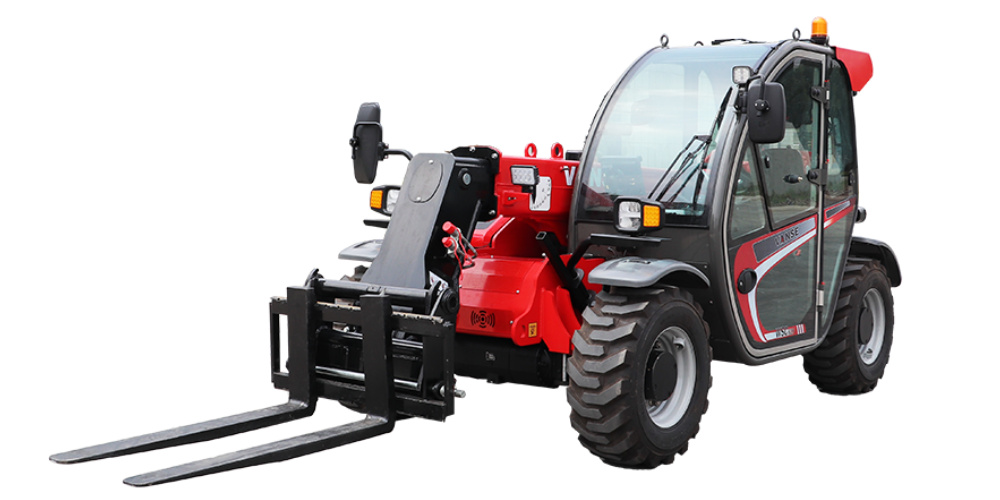
VANSE 625 6m Telescopic Handler
Designed for efficient material handling and stacking in warehouses, factories, and confined job sites, offering compact maneuverability and reliable performance.

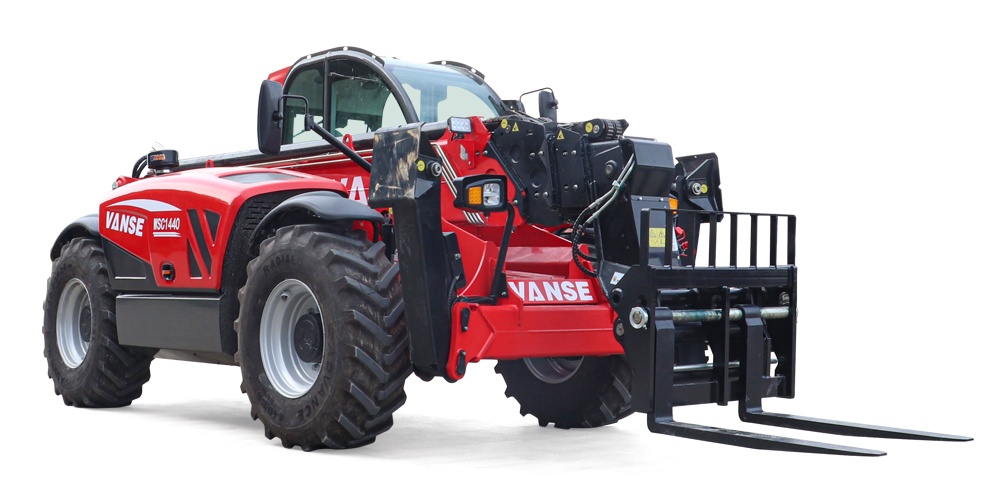
VANSE 735 7m Telescopic Handler
A balanced mid-duty solution for construction, agriculture, logistics, and warehousing, combining stable lifting, strong traction, and everyday versatility.


About the Author:
The VANSE team is a group of experienced professionals specializing in construction machinery research, manufacturing, and technical support. With deep industry knowledge and hands-on experience, our engineers and product specialists share practical insights on equipment selection, operation, maintenance, and industry trends.
Share
You May Also Interest
-

22 October, 2026
Telehandler for Grain Handling on Large Modern Farm Sites
Explore telehandler grain handling options in the United States, including suppliers, specs, farm uses, and cost-saving buying advice for grain operations.
-
21 October, 2026
Telehandler vs All Terrain Forklift: Which Lifts Better
Telehandler vs all terrain forklift in the United States: compare reach, lifting, terrain use, costs, and supplier options for smarter equipment buying.
-
20 October, 2026
10 Ton Telehandler: Extreme Lifting for Major Industrial
Explore 10-ton telehandler options in the United States, top suppliers, buying tips, applications, and service support for major lifting projects.
-
19 October, 2026
Telehandler for Demolition: Safe Structural Dismantling
Explore telehandler demolition options in the United States, including suppliers, attachments, safety, market trends, and cost-effective sourcing advice.