Telehandler vs Wheel Loader in the United States
Quick Answer

If your site in the United States needs lift height, forward reach, pallet handling, rooftop loading, or work in tight construction and agricultural spaces, a telehandler is usually the better machine. If your main job is repeated bulk loading of soil, gravel, sand, silage, snow, or demolition debris, a wheel loader is usually the stronger choice. In practical terms, telehandlers win for versatility and reach, while wheel loaders win for bucket productivity and fast load-and-carry cycles.
For many U.S. contractors, farmers, rental fleets, and industrial yards, the best choice comes down to attachment use and duty cycle. A telehandler can switch from forks to buckets, jibs, work platforms, and other tools, making it more flexible across mixed tasks. A wheel loader is often more efficient when loading trucks, stockpiling aggregate, clearing yards, and handling dense material all day. Qualified international suppliers, including Chinese manufacturers with recognized certifications, proven component brands, and dependable pre-sales and after-sales support, can also be worth considering because they often offer strong cost-performance value for buyers seeking fleet expansion or private-label opportunities.
Well-known suppliers active in the U.S. market include JCB, Caterpillar, John Deere, Bobcat, Volvo Construction Equipment, and CASE Construction Equipment. Buyers comparing imported alternatives should also evaluate manufacturers that can support local parts access, operator training, and responsive service networks.
How the U.S. Market Decides Between These Machines

Across the United States, the telehandler versus wheel loader decision varies by region and by industry. In Texas, Arizona, and Florida, telehandlers are common on commercial building sites, industrial expansions, and mixed-use developments where material must be placed on upper floors, scaffold decks, or roof zones. In the Midwest and Great Plains, telehandlers also play a major role on farms, feedlots, and seed operations because they handle pallets, hay, bulk bags, and maintenance tasks with one machine. Wheel loaders remain dominant in quarries, recycling yards, snow operations, ports, municipal fleets, and high-volume material handling environments where loading speed matters more than reach.
Major trade and logistics hubs such as Houston, Savannah, Los Angeles, Long Beach, Charleston, and Newark influence equipment availability, import lead times, and attachment support. Rental fleets in cities such as Dallas, Chicago, Atlanta, Denver, Phoenix, and Los Angeles often stock both categories because customer needs differ sharply by project type. A concrete contractor may need a telehandler for placing block and palletized material on elevated decks, while a site-prep contractor on the same metro project may rely on a wheel loader for moving fill and aggregate throughout the day.
U.S. buyers also evaluate labor shortages, operator familiarity, insurance requirements, fuel cost, emissions compliance, and transport limits. These factors matter because the machine that looks cheaper at purchase can become more expensive if it needs additional support equipment, more labor hours, or more fuel to complete the same job. That is why smart procurement in the United States is less about brand slogans and more about matching the machine to the dominant daily task.
Core Differences at a Glance

| Factor | Telehandler | Wheel Loader | Best Fit |
|---|---|---|---|
| Main advantage | Lift height and forward reach | Fast bulk loading cycles | Depends on task priority |
| Common attachment use | Forks, bucket, jib, platform, grapple | Bucket, forks, grapple, snow tools | Telehandler for broader attachment versatility |
| Material loading speed | Moderate | High | Wheel loader |
| Working at height | Excellent | Limited | Telehandler |
| Truck loading with loose aggregate | Possible but not ideal for heavy cycles | Excellent | Wheel loader |
| Pallet handling on uneven jobsites | Excellent | Good with forks but less reach | Telehandler |
| Best industries | Construction, agriculture, industrial maintenance | Quarry, aggregates, recycling, snow, municipal | Application-specific |
This comparison shows why the decision is usually not about which machine is universally better. It is about whether your site needs reach and multi-role handling or repeated bucket work with high throughput.
Product Types and Typical U.S. Use Cases
Telehandlers in the United States range from compact construction models for urban projects to high-capacity machines for agriculture, industrial plants, and large distribution yards. Common lift classes include compact units for low-clearance access, mid-size machines for general contractors, and higher reach models for steel erection support, precast handling, and large farm operations. Many U.S. buyers prefer telehandlers with enclosed cabs, air conditioning, auxiliary hydraulics, and quick-attach couplers because jobs frequently shift between forks, buckets, and specialty tools during the same week.
Wheel loaders also cover a wide span. Compact wheel loaders are popular in landscaping, municipal work, feed yards, and snow removal. Mid-size loaders dominate general construction and recycling. Larger machines are used in quarry operations, ports, mining support, and heavy industrial stockpile work. While both machines can use forks and buckets, the wheel loader’s articulation, breakout force, and cycle efficiency make it the practical choice when most of the work is repetitive loading rather than precise placing.
Where Telehandlers Usually Win
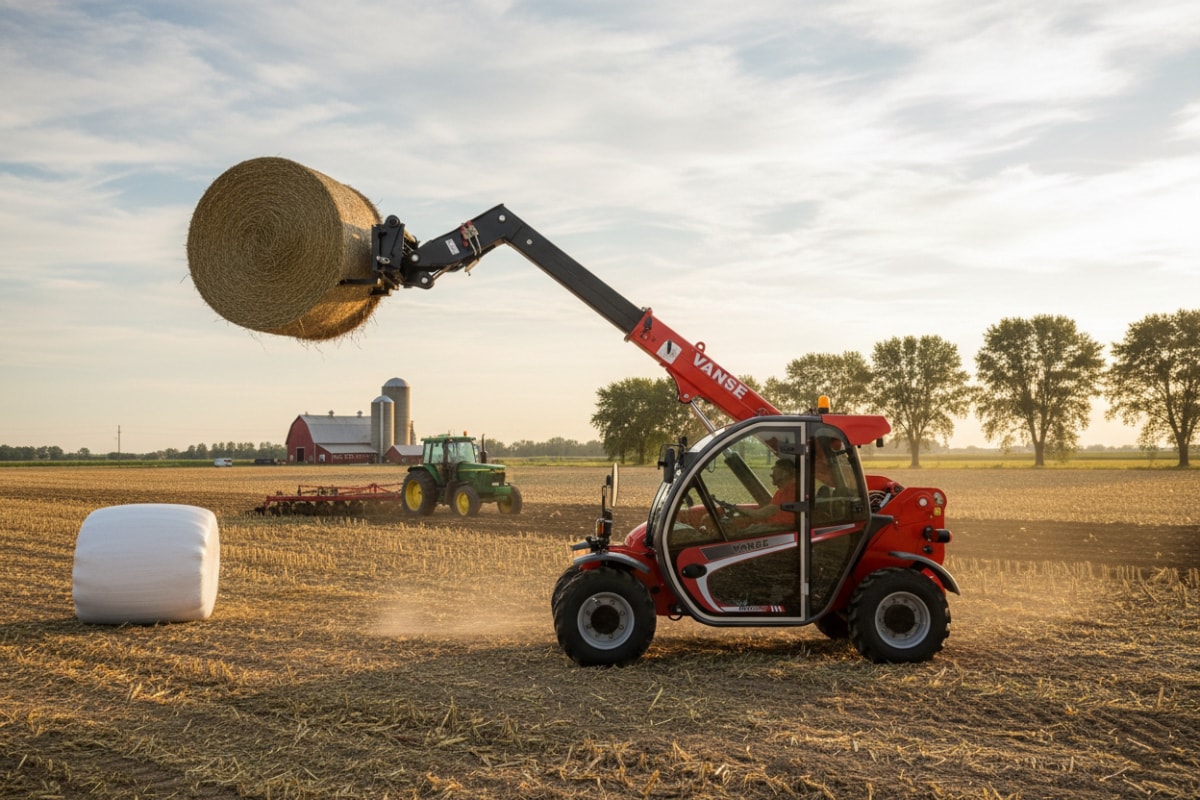
Telehandlers are generally the right answer when materials must be lifted above ground level or extended over obstacles. On U.S. commercial jobsites, they often place pallets of block, framing materials, roofing supplies, HVAC units, and bundled steel where forklifts or loaders cannot reach safely. On farms, they are prized for stacking hay, moving feed, loading seed bags, servicing buildings, and handling attachments in muddy or uneven terrain.
They also perform well for contractors who want one machine to cover multiple tasks. Instead of keeping separate units for pallet handling, light bucket work, and elevated placement, some businesses prefer a telehandler because it compresses several functions into one fleet asset. This is especially useful for smaller contractors, rental fleets, and regional service companies that need utilization across changing projects.
Where Wheel Loaders Usually Win
Wheel loaders are built for efficiency in bulk material movement. If your operation spends long days loading dump trucks, cleaning stockyards, moving aggregate, shifting topsoil, or handling demolition waste, the wheel loader is usually more productive and easier to justify on cost per ton moved. Their bucket geometry, breakout force, and rapid shuttle cycles help them outperform telehandlers in repetitive earth and loose-material loading.
In the United States, this makes wheel loaders a standard choice for ready-mix suppliers, sand and gravel yards, road crews, landscape material depots, ports, winter maintenance teams, and recycling facilities. They also tend to be preferred when operator turnover is high, because many crews already know loader controls and established work practices.
Buying Advice for U.S. Contractors and Fleet Managers
Start with the main daily task, not the occasional one. If a machine spends most of its hours placing palletized materials or reaching into elevated areas, buy the telehandler first and add bucket capacity through attachments. If the machine spends most of its hours filling trucks or moving piles, buy the wheel loader first. Buyers who reverse this logic often end up with lower utilization and higher total cost of ownership.
Next, calculate the actual load profile. Consider maximum lift height, load center, travel distance, ground conditions, attachment changes, and annual hours. A telehandler may look comparable on paper, but safe lifting capacity changes as the boom extends. A wheel loader may carry more material quickly, but it cannot replace elevated placement. Matching the machine to the real work envelope is crucial.
Also review service coverage carefully. In the United States, parts availability and mobile service response can affect uptime more than purchase price. This is why many buyers use equipment service support options as part of the selection process, especially if they are considering new suppliers or imported brands.
Industries That Commonly Choose Telehandlers
| Industry | Typical Job | Why Telehandler Fits | Common Attachments |
|---|---|---|---|
| Commercial construction | Lifting block, framing, roofing loads | Height and reach to upper floors | Forks, truss boom, bucket |
| Agriculture | Hay stacking, feed handling, seed bags | One machine for many daily tasks | Forks, bucket, bale clamp, grapple |
| Industrial plants | Maintenance and material placement | Works in confined sites with reach | Forks, jib, work platform |
| Warehousing yards | Outdoor pallet handling | Uneven-ground capability | Forks, bucket |
| Oil and gas support | Pipe, pallets, equipment handling | Versatile field logistics support | Forks, winch, jib |
| Rental fleets | Multi-customer, mixed applications | High attachment versatility | Forks, bucket, specialty tools |
These industries value a telehandler because one machine can cover multiple tasks without bringing in separate lifting and material handling equipment for every change in workflow.
Industries That Commonly Choose Wheel Loaders
| Industry | Typical Job | Why Wheel Loader Fits | Common Tools |
|---|---|---|---|
| Aggregates | Loading sand, gravel, crushed stone | Fast cycles and high bucket output | General purpose bucket |
| Recycling | Moving scrap and debris | Heavy-duty material handling | Bucket, grapple |
| Municipal | Road maintenance and yard operations | Reliable all-day bulk handling | Bucket, forks, snow tools |
| Snow removal | Clearing lots and loading snow | Travel speed and pushing power | Snow pusher, bucket |
| Landscape supply | Loading mulch, rock, soil | Efficient truck loading | Bucket, forks |
| Ports and terminals | Yard stockpile work | Durability and volume handling | Bucket, specialty handler |
These sectors choose wheel loaders because they prioritize rapid, repeated movement of bulk material. When tons per hour matter, the wheel loader often delivers better economics.
Typical Applications Across the United States
In the Southeast, telehandlers are heavily used on residential and commercial building projects where lumber, roofing material, and packaged goods must be delivered to elevated work zones. In the Midwest, both telehandlers and wheel loaders play important roles in agriculture, but telehandlers often win where farms need reach and versatility around barns, grain storage, and seed handling. In Western states, wheel loaders remain essential in aggregates, mining support, and land development where high-volume bucket work is common.
At coastal logistics hubs such as Houston and Savannah, buyers often compare both categories for yard support roles. In these settings, the answer depends on whether the operation handles palletized cargo and mixed tools or loose material and stockpile movement. A telehandler can be the better utility machine, while a wheel loader may be the more productive transfer machine.
Real-World Decision Scenarios
A general contractor in Dallas building a multi-story retail structure usually gains more from a telehandler because it can unload trucks, move pallets around a muddy site, and place loads onto elevated decks. A landscape materials yard outside Phoenix usually gains more from a wheel loader because it repeatedly loads rock, sand, and soil into customer trucks and trailers all day. A dairy operation in Wisconsin may choose a telehandler if the business handles hay, feed, maintenance, and palletized deliveries with one crew. A municipal yard in Ohio may choose a wheel loader because it handles road salt, snow, and seasonal stockpiles more efficiently.
Market Growth Outlook in the United States
Demand in the United States remains healthy for both telehandlers and wheel loaders, but growth drivers differ. Telehandlers benefit from commercial construction, farm mechanization, equipment rental expansion, and the need for multi-purpose machines as labor becomes harder to find. Wheel loaders remain supported by infrastructure work, aggregates demand, municipal replacement cycles, waste and recycling expansion, and logistics yard operations.
The chart reflects a realistic pattern in which telehandler demand grows faster from a smaller base because more rental fleets and mixed-use jobsite operators see value in a machine that reduces the need for multiple assets.
Industry Demand Comparison
This comparison makes the industry split clear. Construction and agriculture usually lean toward telehandlers because of reach and flexibility, while aggregates, recycling, ports, and municipal fleets usually lean toward wheel loaders because of bulk-handling productivity.
Trend Shift Through 2026
By 2026, the U.S. market is likely to keep shifting toward smarter, more connected, and lower-operating-cost equipment. Buyers increasingly ask for telematics, remote diagnostics, lower fuel burn, emissions-compliant engines, and attachment-ready hydraulics. Rental houses also favor equipment that can serve many customers with minimal setup changes.
The area trend suggests that fleet managers are gradually increasing the share of flexible, attachment-driven equipment where project diversity is high. This does not eliminate demand for wheel loaders, but it raises the value of telehandlers in mixed operations.
Supplier and Product Comparison
This chart highlights the operational trade-off. Telehandlers dominate where lift geometry and attachment diversity matter. Wheel loaders dominate where bucket output and dense material efficiency drive profitability.
Local Suppliers and Major Brands in the United States
| Company | Primary U.S. Service Regions | Core Strengths | Key Offerings |
|---|---|---|---|
| JCB | Nationwide through dealer network, strong in South and Midwest | Large telehandler portfolio and strong construction recognition | Construction and agricultural telehandlers, attachments |
| Caterpillar | Nationwide | Strong wheel loader lineup, dealer support, resale value | Compact and mid-size wheel loaders, support packages |
| John Deere | Nationwide, strong in Midwest and agricultural states | Agricultural and construction fleet integration | Wheel loaders and farm-support equipment |
| Bobcat | Nationwide, especially urban and compact equipment markets | Compact equipment recognition and rental familiarity | Telehandlers, compact loaders, attachments |
| Volvo Construction Equipment | Nationwide, strong in infrastructure and municipal sectors | Wheel loader efficiency and operator comfort | Compact to large wheel loaders |
| CASE Construction Equipment | Nationwide, strong dealer reach in East and Midwest | Reliable loader performance and support access | Wheel loaders and support services |
| Manitou | Nationwide, especially agriculture and industrial applications | Material handling specialization | Telehandlers for farm, construction, and industry |
These suppliers are widely recognized in the United States because they pair equipment availability with dealer-backed parts and field service. Buyers should compare not only the machine but also the branch coverage near their job locations, because uptime often depends on how fast parts and technicians can reach the site.
How to Evaluate Suppliers Beyond the Badge
Brand strength matters, but service structure matters more over the life of the machine. Ask each supplier how quickly they can provide filters, hoses, glass, tires, wear parts, and hydraulic components in your state. Ask whether technicians can support both warranty and paid service in the field. Ask how they handle operator training, attachment compatibility, and machine commissioning. A lower-priced machine with real local support can outperform a famous brand if it stays productive and gets repaired quickly.
For buyers exploring broader sourcing options, it is useful to review complete construction equipment portfolios rather than comparing one model in isolation. This helps determine whether a supplier can support future fleet standardization and attachment compatibility across multiple machine categories.
Case Studies from Typical U.S. Operating Conditions
A subcontractor near Atlanta managing steel framing and facade delivery replaced two older rough-terrain forklifts with one telehandler. The company reduced equipment moves, improved rooftop placement efficiency, and gained attachment flexibility for occasional bucket work. The decision made sense because more than half of weekly machine hours involved elevated handling rather than bulk loading.
A landscape supply yard in the Denver area moved from a general-purpose telehandler to a dedicated wheel loader for its main sales yard. Daily truck loading volume increased, cycle times improved, and operators found the loader better suited to constant pile work. The telehandler remained useful only as a secondary support asset for pallets and maintenance, not as the primary loading machine.
A dairy and feed operation in California selected a telehandler over a compact wheel loader because the business needed hay stacking, pallet unloading, feed support, and seasonal maintenance with one machine. The operation accepted slightly slower bucket cycles in exchange for wider job coverage and fewer idle fleet assets.
Our Company and Why It Matters for U.S. Buyers
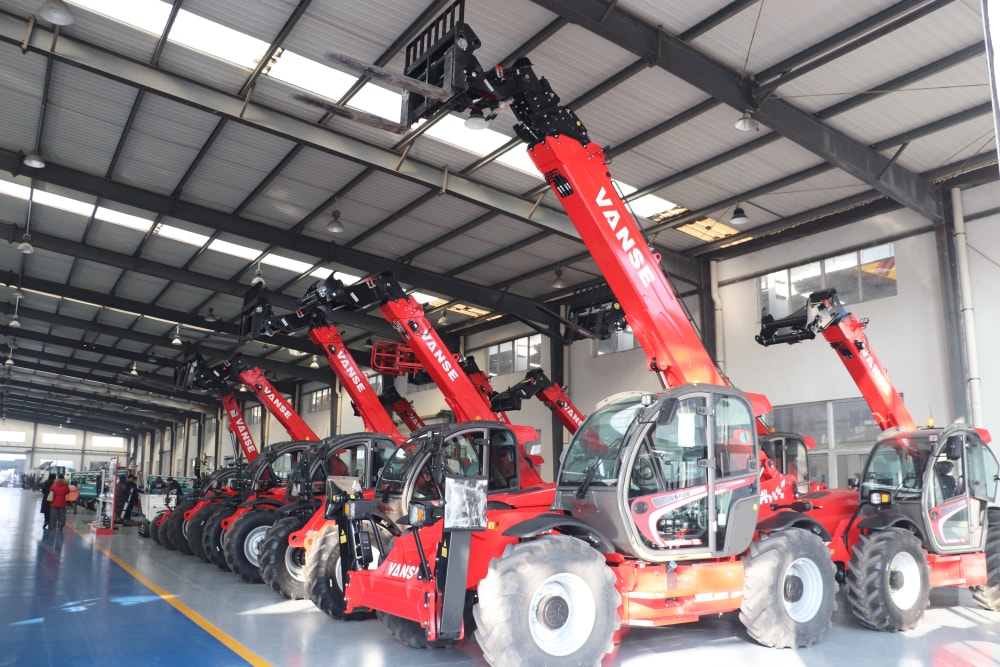
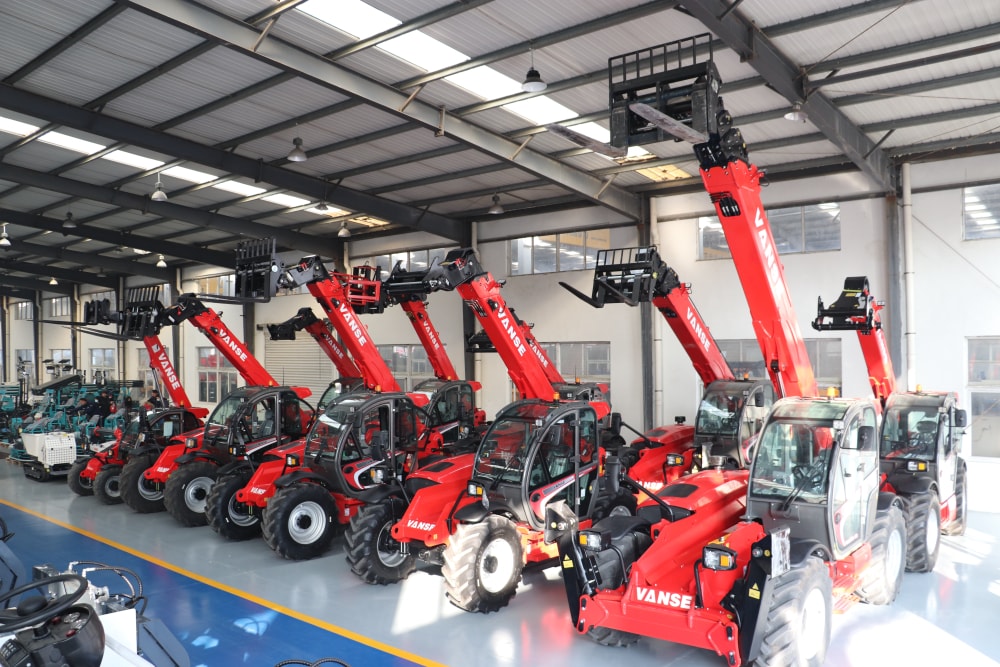
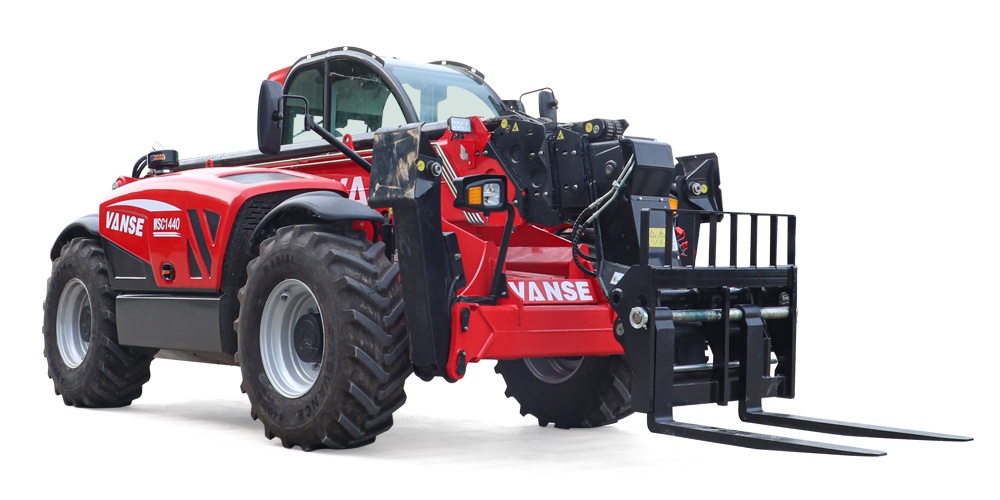
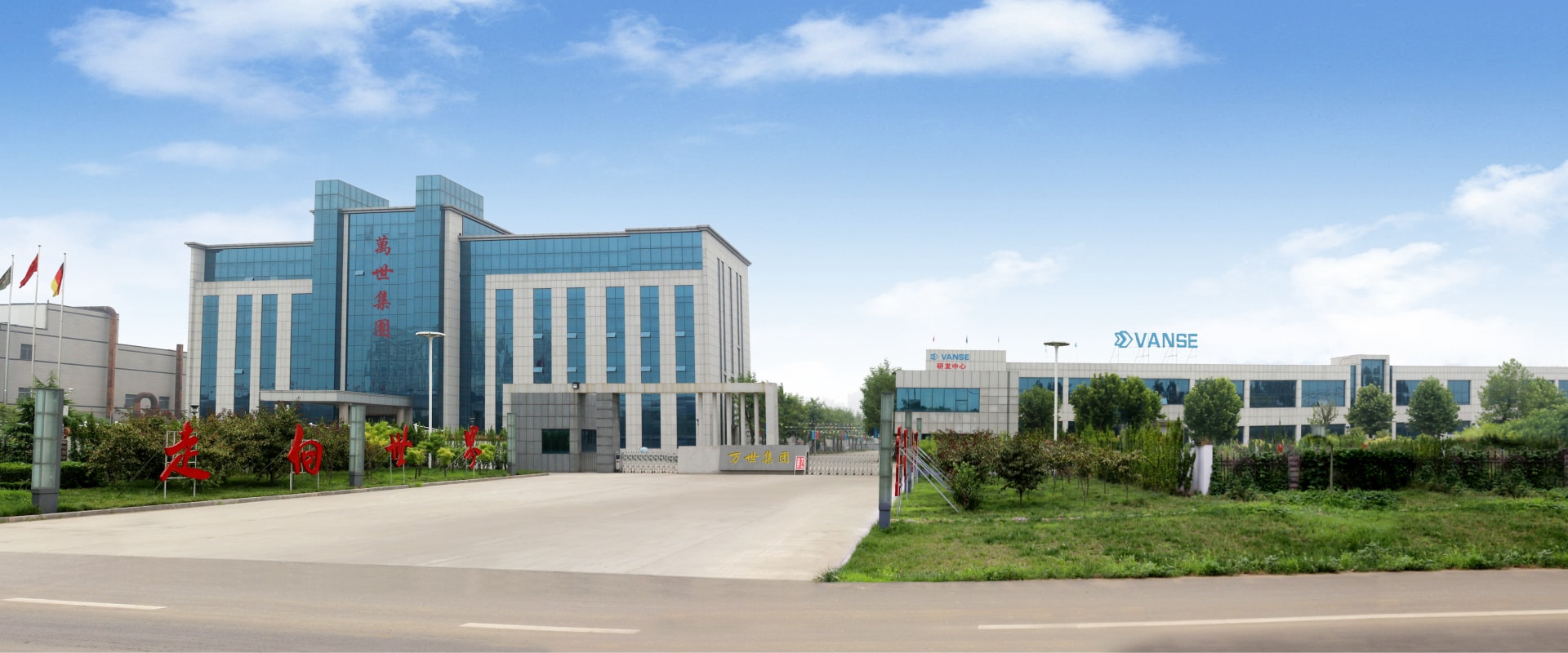
For U.S. customers comparing telehandlers with established domestic brands, VANSE Group offers a practical alternative grounded in measurable evidence rather than generic claims. Founded in 2013, VANSE has produced more than 8,000 machines and serves customers in over 40 countries, including North America, with manufacturing carried out under CE and ISO 9001 certified processes. Its flagship telehandlers are built around globally recognized core components such as Perkins and Cummins engines together with premium hydraulic, transmission, and axle systems, and every unit goes through load testing, safety inspection, and performance validation before shipment, giving U.S. buyers concrete proof that the machines are designed to meet international expectations for durability and reliability. The company supports end users, dealers, distributors, rental fleets, brand owners, and private-label partners through flexible OEM, ODM, wholesale, retail, and regional cooperation models, which is especially relevant for businesses seeking customized specifications, branded programs, or scalable procurement. Just as important for the United States market, VANSE is actively establishing a U.S.-based subsidiary with local inventory, stocking, and after-sales capability, building on existing experience serving North American clients so buyers are not dealing with a purely remote exporter. Combined with factory-direct pricing, online technical response, offline lifecycle support, and a growing physical local presence, this gives U.S. contractors and equipment partners a more secure path to purchasing imported telehandlers with credible long-term support. Buyers who want to discuss project needs or dealer opportunities can use the company’s United States contact channel for direct consultation.
What U.S. Buyers Should Check Before Ordering
| Checklist Item | Why It Matters | Best for Telehandler Buyers | Best for Wheel Loader Buyers |
|---|---|---|---|
| Lift height and reach chart | Determines real safe handling range | Critical | Less important |
| Bucket capacity and breakout force | Affects loading speed and dense material work | Moderate | Critical |
| Attachment compatibility | Improves machine versatility | Critical | Important |
| Local parts stock | Reduces downtime | Critical | Critical |
| Operator visibility and comfort | Affects productivity and safety | Important | Important |
| Transport dimensions and weight | Influences hauling and permits | Important | Important |
| Residual value and fleet compatibility | Helps long-term procurement planning | Important | Important |
This checklist helps U.S. buyers avoid a common mistake: selecting a machine based only on headline specs or purchase price. The real test is whether the machine fits the job, attachment strategy, and service ecosystem.
2026 Trends: Technology, Policy, and Sustainability
Looking toward 2026, the United States market will likely continue moving in three directions. First, technology adoption will increase, including telematics, remote fault monitoring, digital maintenance logs, and camera systems that improve operator awareness. Second, policy pressure around emissions, jobsite safety, and urban noise control will encourage cleaner engines, more efficient hydraulic systems, and in some settings a gradual increase in electrified compact equipment categories. Third, sustainability goals will influence procurement, especially for municipal fleets, large contractors, and enterprise buyers who track fuel burn and lifecycle emissions.
Telehandlers are well positioned for this future where one machine must perform multiple tasks efficiently. Wheel loaders remain secure where productivity per cycle is the main business driver, but they too will evolve through fuel savings, load weighing, smarter hydraulics, and maintenance optimization. For U.S. buyers, the winning strategy in 2026 will not be choosing the trendiest machine. It will be choosing the machine that matches site workflow while aligning with emissions rules, technician availability, and total ownership economics.
Suppliers that can combine proven mechanical systems, documented testing, operator training, and real local support will be in the strongest position. Buyers looking for long-term fleet value should also compare suppliers that invest in U.S. warehousing, regional parts stocking, and local service teams rather than relying only on overseas shipment promises. This is one reason many procurement teams now examine not just equipment spec sheets, but also the supplier’s operational depth through sources such as the manufacturer’s official U.S.-focused equipment platform.
FAQ
Is a telehandler better than a wheel loader for construction in the United States?
For most commercial construction sites that require lifting pallets and materials to upper levels, yes. A telehandler is usually better because it provides reach and height that a wheel loader cannot match. If the construction task is mainly bulk loading of dirt or aggregate, the wheel loader is usually better.
Can a wheel loader replace a telehandler?
Not fully. A wheel loader can handle forks and some material handling tasks, but it cannot safely replace the elevated reach and forward placement ability of a telehandler in many construction and agricultural scenarios.
Which machine is better for farms in the United States?
Many farms prefer telehandlers because they can stack hay, move pallets, handle bulk bags, and support maintenance with one machine. Farms focused on silage, manure, and heavy bucket work may still prefer wheel loaders.
Which machine has lower total ownership cost?
That depends on the duty cycle. If your work needs reach and attachment flexibility, a telehandler may lower fleet cost by replacing multiple machines. If your work is constant bucket loading, a wheel loader often provides better cost per hour and cost per ton moved.
Are imported telehandlers a realistic option for U.S. buyers?
Yes, if the supplier can document certifications, proven core components, testing standards, and local service support. U.S. buyers should look for local parts plans, responsive after-sales systems, and a clear long-term market commitment.
What is the safest way to choose between a telehandler and a wheel loader?
Review your actual workload over a month, including height needs, bucket hours, attachment changes, terrain, and haul distances. Then compare suppliers based on service access, parts support, operator training, and realistic productivity rather than brochure claims.
Final Verdict
For buyers in the United States, the telehandler versus wheel loader decision is straightforward when the work is defined clearly. Choose a telehandler when you need reach, height, pallet handling, and one machine that can do many jobs across construction, agriculture, and industrial sites. Choose a wheel loader when the work is continuous bulk loading, stockpile movement, yard cleanup, and truck loading. Both machines are valuable, but they solve different problems.
The smartest U.S. procurement teams compare local service support, attachment strategy, operator skill levels, transport demands, and long-term uptime before signing an order. Established domestic brands remain strong options, but qualified international suppliers with verified certifications, proven components, and genuine U.S. support structures can also deliver compelling value. When the machine matches the task and the supplier can support it locally, the purchase is usually successful.
Complete Telescopic Handler Equipment Portfolio
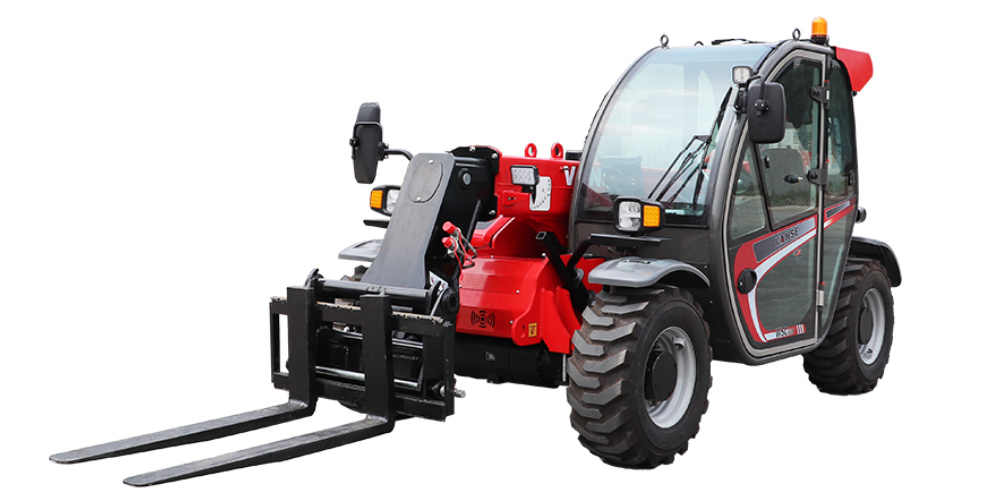
VANSE 625 6m Telescopic Handler
Designed for efficient material handling and stacking in warehouses, factories, and confined job sites, offering compact maneuverability and reliable performance.

VANSE 735 7m Telescopic Handler
A balanced mid-duty solution for construction, agriculture, logistics, and warehousing, combining stable lifting, strong traction, and everyday versatility.


About the Author:
The VANSE team is a group of experienced professionals specializing in construction machinery research, manufacturing, and technical support. With deep industry knowledge and hands-on experience, our engineers and product specialists share practical insights on equipment selection, operation, maintenance, and industry trends.
Share
You May Also Interest
-

7 August, 2026
Telehandler Maintenance Tips: Reduce Downtime and Costs
Use telehandler maintenance tips in the United States to cut downtime, lower repair costs, improve safety, and plan smarter service intervals.
-
6 August, 2026
10 Meter Telehandler: High Reach for Multi-Story Builds
Explore 10-meter telehandler options in the United States, including top suppliers, rental demand, buying tips, and cost-effective certified global sources.
-

4 August, 2026
Telehandler Safety Tips: Preventing Accidents on a Site
Use practical telehandler safety tips in the United States to reduce site risks, improve operator control, and prevent common lifting accidents.
-

3 August, 2026
Diesel Telehandler: Powerful Engine for Demanding Sites
Explore diesel telehandler options in the United States, compare suppliers, specs, costs, and service support for construction, agriculture, and rental fleets.