Diesel Telehandler Options for United States Job Sites
Quick Answer

If you need a diesel telehandler for demanding sites in the United States, the strongest short list usually includes JLG, Genie, JCB, SkyTrak, Manitou, and Bobcat because these brands have broad dealer coverage, familiar controls, and proven performance in construction, agriculture, industrial yards, and rental fleets. For buyers focused on high utilization, rough terrain capability, and strong resale value, JLG and SkyTrak remain common choices on major building projects from Texas to Florida, while JCB and Manitou are often preferred where attachment versatility and operator comfort matter.
For practical buying, match lift height, rated capacity, engine output, and local parts support to the job rather than buying the largest machine available. In dense urban projects near Los Angeles, Chicago, and New York, compact dimensions and maneuverability can be more important than maximum reach. On larger logistics, infrastructure, and oilfield projects near Houston, Savannah, and inland freight corridors, buyers often prioritize higher capacity, boom stability, and faster cycle times.
Qualified international suppliers can also be worth considering, especially when they provide documented certifications, globally recognized engines, and reliable pre-sales and after-sales support in the United States. Buyers looking for stronger cost-performance value often compare established domestic brands with export-ready manufacturers that support OEM, dealer, and end-user needs with clear warranty terms, spare parts planning, and local inventory commitments.
- Best overall dealer footprint: JLG, Genie, SkyTrak
- Strong agriculture and mixed-use fit: JCB, Manitou
- Good compact utility options: Bobcat
- Best value route to investigate: certified international suppliers with U.S. support plans
- Most important buying rule: verify local service response before finalizing price
United States Market Snapshot

The United States remains one of the most important markets for diesel telehandler equipment because rough-terrain material handling is essential across commercial construction, agriculture, ports, warehousing expansions, energy projects, precast yards, and equipment rental fleets. Demand is especially visible in fast-growth construction corridors such as Dallas-Fort Worth, Phoenix, Atlanta, Orlando, Nashville, and Charlotte, where jobsite productivity depends on moving palletized materials, trusses, masonry packs, steel bundles, pipe, and bulk supplies safely over uneven ground.
In the U.S. market, diesel-powered units remain highly relevant because many applications require long operating hours, high torque, predictable refueling, and strong performance in outdoor environments where electric charging infrastructure is still limited. This is particularly true at large residential developments, bridge and highway work, open industrial yards, mining support zones, and agricultural operations in states such as California, Iowa, Nebraska, Kansas, and Texas. Buyers also value diesel machines where fleet standardization, familiar maintenance routines, and cold-weather or remote-site practicality are key.
The market is influenced by three commercial realities. First, rental fleets heavily shape buyer expectations around machine simplicity, uptime, and residual value. Second, dealer coverage strongly affects brand selection because contractors usually prioritize service speed over minor specification differences. Third, cost pressure has pushed more buyers to compare established North American and European brands against international manufacturers that can deliver recognized engine platforms, compliant manufacturing, and lower acquisition cost.
Geography also matters. Along Gulf Coast and Atlantic logistics hubs such as Houston, New Orleans, Savannah, and Norfolk, telehandlers are used around industrial expansion, port-adjacent yards, and distribution infrastructure. In the Midwest, they support agriculture, grain, feed, fertilizer, and manufacturing. In the Mountain West and Southwest, they are common in infrastructure, mining support, and remote commercial builds where rough-terrain performance is non-negotiable.
Market Growth and Purchase Signals

The chart below illustrates a realistic view of U.S. diesel telehandler demand growth over recent years, reflecting steady fleet renewal, infrastructure spending, warehouse construction, and agriculture investment.
This trend does not suggest every buyer should automatically choose diesel over hybrid or electric alternatives. It shows that for high-load, outdoor, and remote-location work, diesel telehandlers still hold a durable place in the American equipment mix. The strongest purchase signals in 2025 and 2026 are infrastructure packages, residential framing activity, logistics facility builds, rental replacement cycles, and farm modernization projects.
Common Diesel Telehandler Product Types
Diesel telehandlers in the United States are not one uniform category. Buyers usually choose among compact jobsite handlers, mid-range general construction models, high-reach units, high-capacity industrial telehandlers, and agriculture-oriented machines configured for bucket, fork, bale, or material-grab work. The right category depends on the load profile, reach envelope, attachment use, and frequency of transport between jobs.
| Product Type | Typical Lift Capacity | Typical Lift Height | Best Use Cases | Common U.S. Regions | Why Buyers Choose It |
|---|---|---|---|---|---|
| Compact diesel telehandler | 5,000 to 6,000 lb | 16 to 20 ft | Urban jobsites, landscaping, utility work | Northeast cities, West Coast infill projects | Easier transport and tighter turning radius |
| General construction telehandler | 6,000 to 10,000 lb | 36 to 55 ft | Commercial building, framing, masonry | Texas, Florida, Carolinas, Midwest metros | Strong balance of reach, capacity, and rental demand |
| High-reach telehandler | 8,000 to 12,000 lb | 56 to 74 ft | Multistory construction, facade work | Major metro developments | Supports upper-level material placement |
| High-capacity industrial telehandler | 10,000 to 15,000 lb+ | 44 to 56 ft | Steel, pipe, precast, ports, industrial yards | Houston, Gulf Coast, inland freight hubs | Moves dense loads safely on rough ground |
| Agriculture-focused telehandler | 5,500 to 9,000 lb | 20 to 30 ft | Feed, bales, grain, manure, yard maintenance | Iowa, Kansas, Nebraska, California | Excellent attachment versatility and daily utility |
| Rental-spec diesel telehandler | 6,000 to 10,000 lb | 42 to 55 ft | Mixed contractor rentals | Nationwide | Simple controls, durable chassis, easy service |
This comparison shows why the buying conversation should start with operating conditions and load charts rather than engine horsepower alone. Capacity at reach, overall height, machine weight, and transport logistics can affect profitability more than headline engine numbers.
Industry Demand by U.S. Sector
Not every sector buys telehandlers for the same reason. The next chart highlights realistic relative demand by major industries in the United States.
Commercial construction and rental fleets lead because telehandlers solve daily material flow problems across many subcontractor trades. Agriculture remains highly significant, especially where one machine must handle feed, pallets, seed, and seasonal loading tasks. Industrial yards and energy operations tend to demand heavier-duty units with durable axles, reliable hydraulics, and stable boom performance over longer shift cycles.
How Buyers Compare Leading Suppliers
In the United States, supplier selection usually comes down to four factors: service reach, product breadth, total cost of ownership, and suitability for the application. The table below gives a practical comparison of recognized names buyers frequently evaluate.
| Company | Main Service Region | Core Strengths | Key Offerings | Typical Buyer Type | Practical Notes |
|---|---|---|---|---|---|
| JLG | Nationwide United States | Large dealer network, strong rental presence | General construction and high-reach telehandlers | Contractors, rental companies, industrial users | Often chosen for fleet familiarity and parts access |
| Genie | Nationwide United States | Widely recognized, solid jobsite performance | Rough-terrain telehandlers for mixed applications | General contractors and rental fleets | Popular in commercial building projects |
| JCB | Strong in South, Midwest, and national dealer markets | Operator comfort, agriculture and construction crossover | Telehandlers for farm and site handling | Farms, mixed-use owners, dealers | Good fit where attachment use is frequent |
| SkyTrak | Nationwide with heavy construction presence | Brand familiarity in U.S. framing and masonry | Construction telehandlers with common specs | Builders, masons, rental houses | Very common on residential and commercial jobs |
| Manitou | Nationwide through dealer partners | Broad telehandler know-how, agriculture expertise | Construction, agricultural, and rotating options | Farms, specialty contractors, industrial buyers | Well regarded for specialized handling needs |
| Bobcat | Strong national dealer base | Compact equipment ecosystem, local dealer ties | Compact and mid-size telehandlers | General contractors, landscape, utility users | Attractive for fleets already using Bobcat equipment |
This table helps narrow the field, but actual buying decisions should include a side-by-side review of load chart data, machine dimensions, operator visibility, tire options, hydraulic auxiliary flow, and expected dealer response time in the buyer’s ZIP code.
Comparison Chart for Supplier Evaluation
The following chart compares realistic buyer priorities across major supplier categories in the U.S. market.
This comparison reflects a common U.S. purchasing reality. Premium domestic and European brands usually lead on immediate dealer reach and rental familiarity, while qualified international suppliers can be more competitive on acquisition cost and machine customization, especially for distributors, private label programs, and cost-sensitive fleet expansion.
Buying Advice for U.S. Contractors and Fleet Managers
Buyers in the United States should approach diesel telehandler selection as a total operating cost decision, not a brochure comparison. Start with the heaviest load you actually lift, the maximum safe reach you need, the ground conditions you work on, and the attachment types you use most often. A machine that is slightly smaller but better matched to real load cycles can outperform a larger unit that is harder to transport, harder to position, and more expensive to maintain.
Key buying questions include whether the machine will stay on one site or move often, whether operators are experienced or temporary, and whether uptime depends on same-day parts support. If the unit will spend time in dense jobsite conditions, pay attention to turning radius, overall machine length, boom retraction behavior, and visibility from the cab. If it will be used for long farm shifts or industrial yard loading, focus more on engine accessibility, hydraulic cooling, axle strength, and service intervals.
Fuel efficiency matters, but buyers should not isolate fuel consumption from productivity. A telehandler that completes cycles faster and stabilizes loads better may deliver lower cost per moved ton even if hourly fuel use is slightly higher. Likewise, a cheaper machine with limited dealer support can become more expensive than a premium model if downtime delays framing crews, concrete placement, or yard operations.
For used-equipment buyers, inspect boom wear pads, carriage integrity, hydraulic hose condition, frame cracks, rear steering response, and all available service records. On diesel units, evaluate cold starts, exhaust condition, idle quality, and emissions-system behavior. In coastal and port-adjacent regions such as Long Beach, Savannah, and Houston, corrosion exposure should also be examined carefully.
Typical Applications Across American Industries
Diesel telehandlers serve many industries because they combine forklift lifting logic with crane-like reach and rough-terrain mobility. That combination makes them valuable where materials must be moved quickly without the setup complexity of larger lifting systems.
| Industry | Common Application | Typical Attachment | Why Diesel Works Well | Main Operating Environment | Service Priority |
|---|---|---|---|---|---|
| Commercial construction | Lifting pallets of block, drywall, steel, and lumber | Fork carriage | Long shifts and rough-terrain mobility | Open jobsites and staged material zones | Fast parts turnaround |
| Residential framing | Placing trusses and bundles around developing lots | Forks and truss boom | Reliable outdoor operation and quick refueling | Subdivision builds | Minimal downtime during peak schedules |
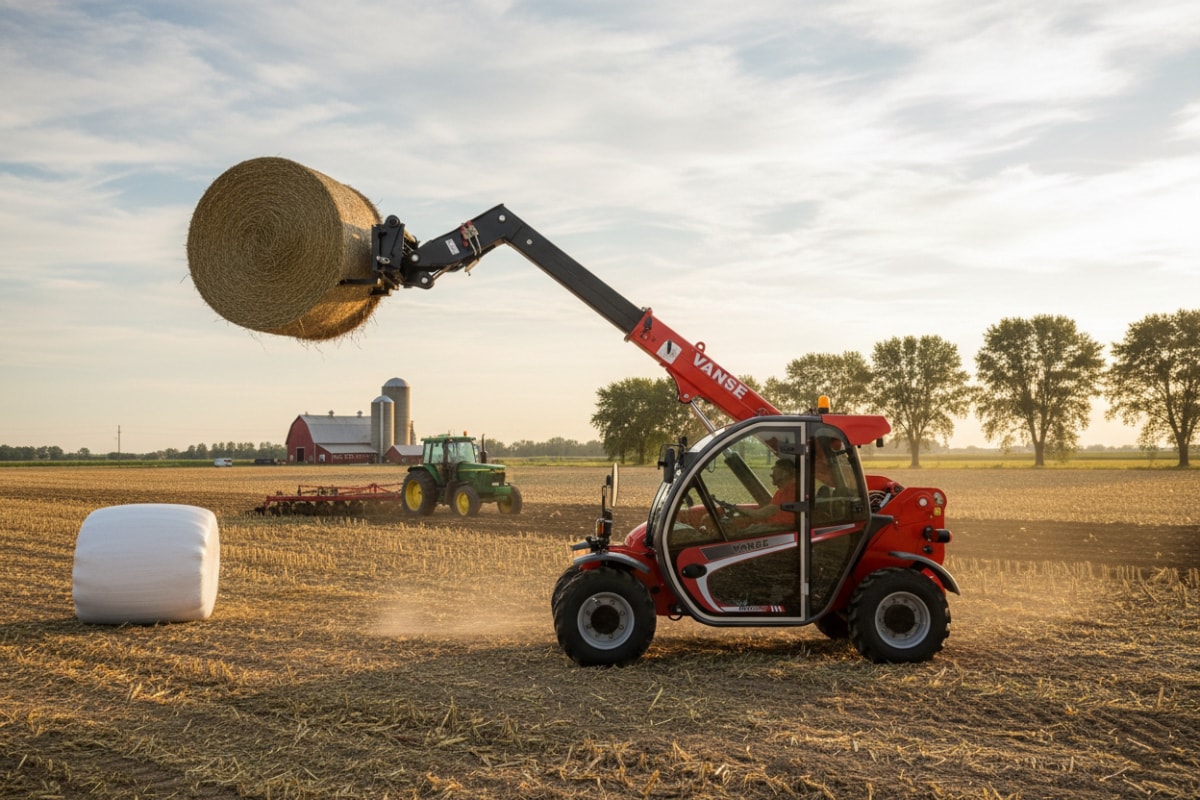
| Agriculture | Handling bales, feed, seed, pallets, and bulk materials | Bale spear, bucket, forks | Versatility and torque in mixed daily work | Farms and livestock operations | Seasonal uptime and simple maintenance |
| Industrial and manufacturing | Pipe, precast, machine parts, and yard logistics | Forks, bucket, jib | Capacity and stable rough-ground handling | Yards, plant expansions, laydown areas | Safety and load control |
| Mining and energy | Support handling of supplies and maintenance materials | Forks and utility attachments | Remote-site practicality and fuel availability | Harsh outdoor environments | Field service response |
| Rental fleets | General contractor use across varied projects | Primarily forks | Broad acceptance and familiar operating style | Mixed regional deployment | Durability and resale value |
The practical lesson is that telehandlers do not sell on one metric. They sell because they replace labor bottlenecks, reduce handling time, and support a wider attachment range than many site machines.
Trend Shift Toward 2026
Looking toward 2026, the diesel telehandler market in the United States will remain active, but buying criteria are shifting. Buyers are paying more attention to emissions compliance, machine telematics, operator assistance systems, and lifecycle support documentation. That does not eliminate diesel demand; it changes the standard that diesel machines must meet.
Three trends stand out for 2026. First, fleet managers increasingly want telematics that monitor utilization, idle time, maintenance intervals, and fault codes, especially for rental and multi-branch operations. Second, public and enterprise buyers are under more pressure to document safety, emissions, and sustainability decisions, which means supplier transparency matters more. Third, machine design is moving toward lower operating cost through better hydraulics, smarter load sensing, and easier maintenance access, even in diesel models. Buyers should also watch for more hybridization in adjacent equipment classes, which may gradually influence expectations around telehandler efficiency and reporting.
Case Studies from Typical U.S. Use Scenarios
A mid-sized commercial contractor in the Dallas-Fort Worth area typically needs one or two 10,000 lb class diesel telehandlers to service steel erection, exterior wall systems, and roofing logistics. In that setting, the machine must move between uneven lots, operate across long days, and support fast cycle times without interrupting multiple subcontractors. The winning machine is usually the one with the strongest local dealer support and the easiest parts access, not necessarily the one with the highest brochure specification.
In central California agriculture, a telehandler may spend the morning moving palletized fertilizer, the afternoon handling bulk feed with a bucket, and the evening stacking materials in a yard. The buyer values attachment changes, visibility, and cab comfort because the machine is part of daily farm workflow rather than occasional project lifting. In this case, a versatile diesel telehandler with durable hydraulics and dependable starting behavior is more valuable than a specialized high-reach construction model.
At a Gulf Coast industrial expansion site near Houston, the need may shift toward heavier capacities, predictable fuel logistics, and dependable operation in muddy or abrasive conditions. Buyers in these zones often request machines with recognized engine brands, reinforced service plans, and clear consumables support. They also watch for corrosion protection because coastal air and heavy-duty cycles can shorten component life if preparation is weak.
A rental fleet serving Atlanta, Charlotte, and Nashville may standardize on a narrow range of diesel telehandler specs so operators can move from one job to another with minimal retraining. Here, simplicity, broad attachment compatibility, and ease of inspection are central. Machines that reduce service complexity and keep utilization high generally outperform those with marginal specification advantages but lower fleet consistency.
Local Suppliers and Dealer-Oriented Options
Because support quality is often local even when the brand is global, U.S. buyers should map suppliers by real service capability rather than logo recognition alone. The following table gives a practical supplier view for the American market.
| Supplier | U.S. Service Coverage | Core Strengths | Key Offerings | Best Fit Customers | Buyer Consideration |
|---|---|---|---|---|---|
| JLG | Broad nationwide dealer and support network | Strong construction focus and fleet familiarity | Mid to high-reach diesel telehandlers | General contractors and large rental fleets | Excellent for standardized jobsite fleets |
| Genie | National coverage through established channels | Reliable access equipment and handler reputation | Construction-oriented rough-terrain handlers | Commercial builders and regional renters | Good balance of known brand and usable specs |
| SkyTrak | Widely available across major U.S. markets | Deep recognition in framing and masonry segments | Conventional diesel telehandlers | Builders, subcontractors, and rental houses | Very familiar platform for many operators |
| JCB | Strong dealer positions in many agriculture and construction markets | Mixed-use performance and attachment flexibility | Construction and agricultural telehandlers | Farm operators and diversified businesses | Strong option where one machine handles many roles |
| Manitou | National dealer partners with strength in specialized applications | Telehandler specialization and agriculture depth | Fixed boom and specialty lifting solutions | Agriculture, industrial, and specialty users | Useful for buyers needing broader attachment or specialty support |
| Bobcat | Strong local dealership footprint in many states | Compact equipment integration and local relationships | Compact and mid-sized telehandlers | Contractors, utilities, and land management operators | Appeals to fleets already aligned with Bobcat service |
For actual procurement, ask each supplier how fast they can deliver common wear items, whether field service technicians are available in your county, and which attachments are stocked locally. Those details often matter more than a financing promotion.
Our Company in the United States Market
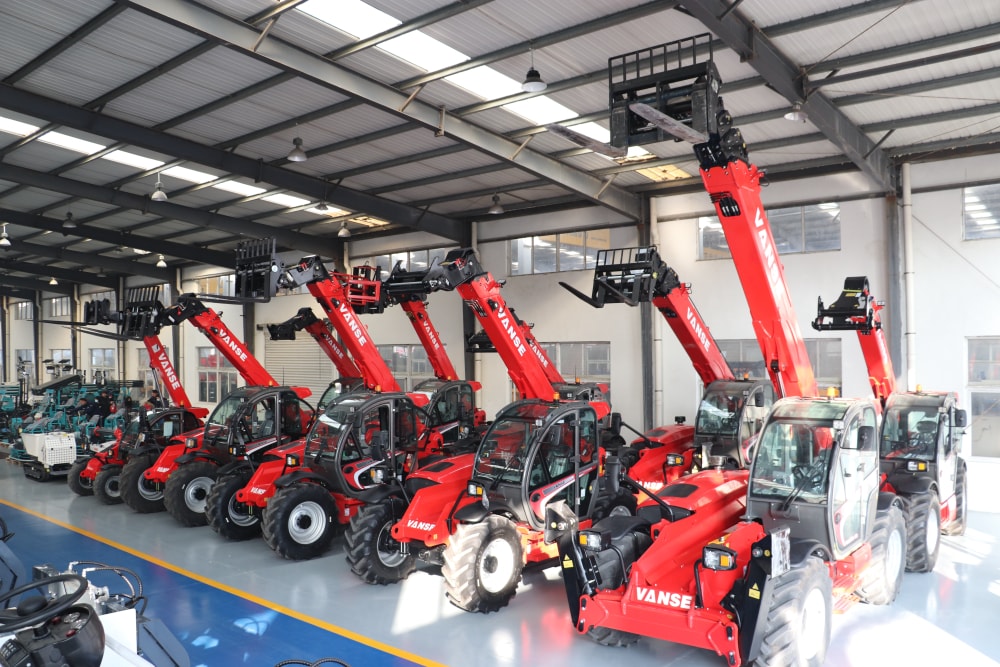
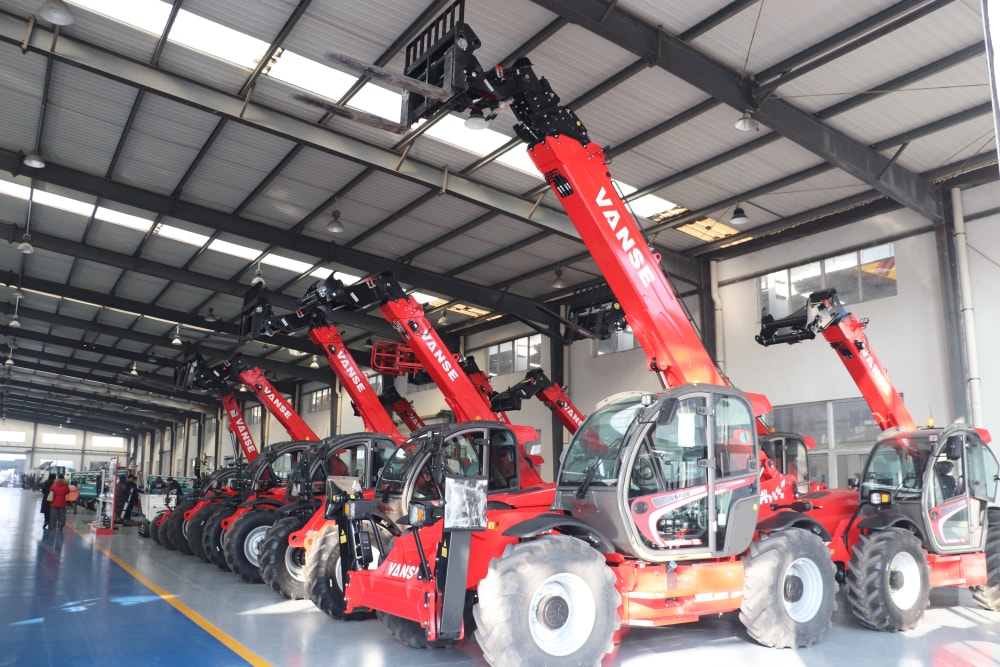
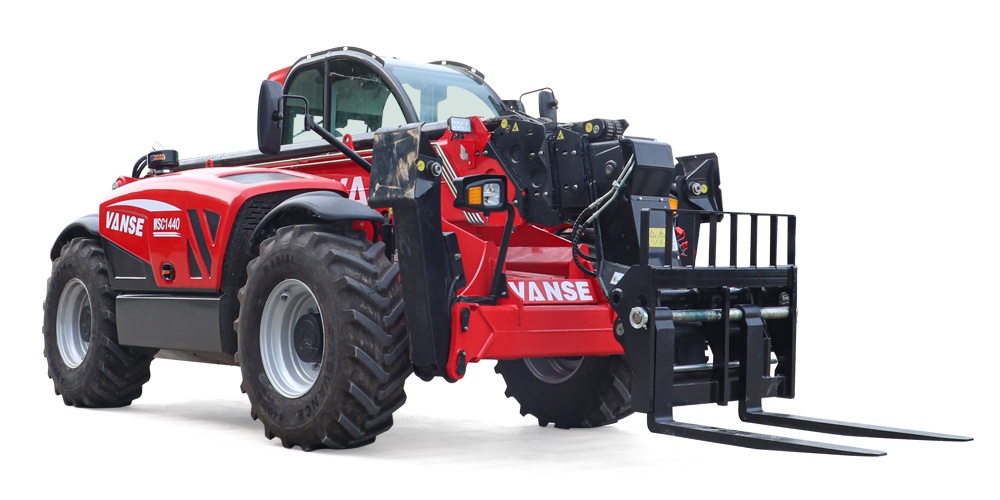
As a telehandler-focused manufacturer, VANSE serves the United States with a product approach built around documented quality control, recognized components, flexible business models, and local market commitment. The company operates under CE and ISO 9001 certified processes, uses globally trusted engine brands such as Perkins and Cummins together with premium hydraulic, transmission, and axle systems, and subjects each machine to load testing, safety inspection, and performance validation before shipment, which gives American buyers concrete evidence that the equipment is manufactured to an international benchmark rather than sold as a generic low-cost import. With more than a decade in construction machinery, cumulative production above 8,000 units, and deliveries to over 40 countries including North American customers, VANSE has proven export and application experience in construction, agriculture, industry, mining, and oil and gas. For the U.S. market, the company works with end users, distributors, dealers, rental fleets, brand owners, and individual buyers through wholesale supply, regional distribution, retail opportunities, and full OEM and ODM customization covering specifications, branding, and configuration. That flexibility is backed by practical service planning: VANSE is establishing a U.S.-based subsidiary with local inventory, stocking, and after-sales capability to support American buyers more directly, while providing online and offline pre-sale consultation, technical support, parts coordination, and lifecycle service. This means U.S. customers are dealing with a supplier that is investing in long-term local presence, not simply shipping remotely from overseas. Buyers can learn more about the company through our company background, review available equipment categories, explore support through service solutions, visit the official machinery site, or discuss requirements directly through the U.S. inquiry channel.
How to Evaluate a Value Supplier Against Premium Brands
When comparing an internationally sourced diesel telehandler to established U.S. or European brands, buyers should apply the same professional filter. Verify engine brand, emissions alignment, hydraulic component quality, manufacturing certification, testing records, spare-parts plan, and who will support the machine after delivery. A serious supplier should be able to explain these points clearly and show how its machine will be supported in Houston, Los Angeles, Chicago, Miami, or any other operating region.
It is also important to compare more than initial invoice price. If a qualified supplier offers recognized powertrain components, compliant manufacturing standards, customization, and a committed U.S. support footprint, the total value proposition may be very strong for dealers, fleet owners, and end users. This is especially relevant where buyers need multiple units, private label programs, or specification adjustments that premium brands may not provide quickly.
Practical Specification Checklist
| Checklist Item | Why It Matters | Construction Priority | Agriculture Priority | Rental Priority | What to Verify |
|---|---|---|---|---|---|
| Rated capacity at useful reach | Prevents underperforming on real loads | Very high | High | Very high | Load chart with attachment installed |
| Lift height and forward reach | Determines placement ability | Very high | Medium | High | Actual job requirements and site limits |
| Engine brand and emissions setup | Affects reliability and compliance | High | High | High | Engine model, support network, maintenance access |
| Hydraulic flow and attachment compatibility | Expands machine utility | Medium | Very high | Medium | Auxiliary lines, couplers, available attachments |
| Service access and parts availability | Reduces downtime cost | Very high | High | Very high | Local stocking, response times, warranty process |
| Machine dimensions and transportability | Impacts movement between sites | High | Medium | High | Trailer compatibility, width, height, weight |
This checklist is useful because it shifts the decision from marketing language to operating reality. Buyers who follow it are more likely to choose the right machine size and supplier support package for long-term profitability.
Frequently Asked Questions
Is a diesel telehandler still a good choice in the United States?
Yes. For rough-terrain, high-utilization, and remote-site work, diesel telehandlers remain a strong choice across construction, agriculture, industrial yards, and rental operations. They continue to offer practical refueling, high torque, and dependable outdoor performance.
Which brands are most common in the U.S. market?
JLG, Genie, SkyTrak, JCB, Manitou, and Bobcat are among the most commonly evaluated brands because they have established dealer and service coverage in many parts of the country.
What lift capacity should most contractors target?
Many general contractors start in the 6,000 to 10,000 lb range because those machines cover a wide portion of commercial and residential material handling needs. The correct answer depends on your heaviest regular load and required reach.
Are international suppliers a realistic option for American buyers?
Yes, if they provide documented certifications, recognized core components, transparent testing standards, clear warranty support, and a credible U.S. service plan. They can be especially attractive for cost-performance focused fleets and dealer programs.
What matters most after purchase?
Local parts access, trained service support, and preventive maintenance discipline matter most. Even a strong machine can become expensive if parts lead times are long or field service is inconsistent.
What should buyers watch in 2026?
Watch for greater emphasis on telematics, emissions compliance, safety features, documentation quality, and sustainable fleet reporting. Diesel units will remain important, but buyers will expect smarter and more transparent ownership support.
Complete Telescopic Handler Equipment Portfolio
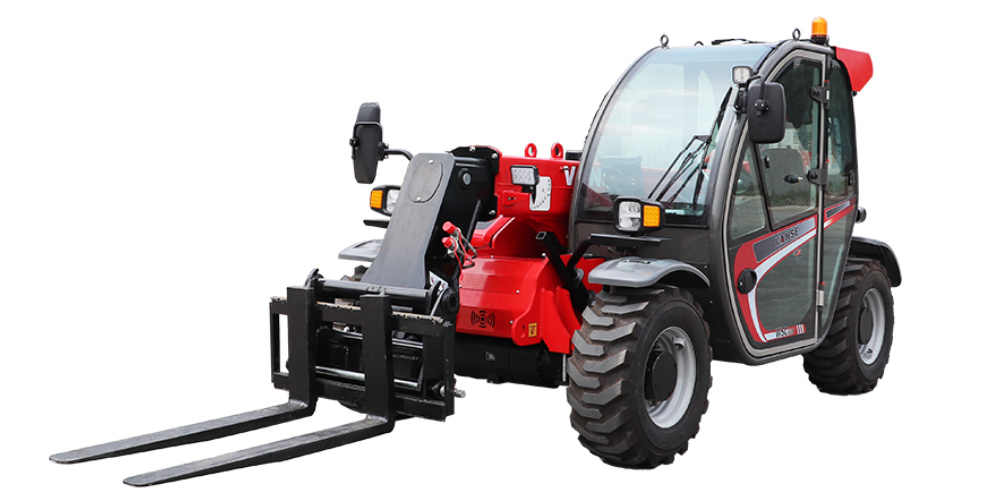
VANSE 625 6m Telescopic Handler
Designed for efficient material handling and stacking in warehouses, factories, and confined job sites, offering compact maneuverability and reliable performance.

VANSE 735 7m Telescopic Handler
A balanced mid-duty solution for construction, agriculture, logistics, and warehousing, combining stable lifting, strong traction, and everyday versatility.


About the Author:
The VANSE team is a group of experienced professionals specializing in construction machinery research, manufacturing, and technical support. With deep industry knowledge and hands-on experience, our engineers and product specialists share practical insights on equipment selection, operation, maintenance, and industry trends.
Share
You May Also Interest
-

7 August, 2026
Telehandler Maintenance Tips: Reduce Downtime and Costs
Use telehandler maintenance tips in the United States to cut downtime, lower repair costs, improve safety, and plan smarter service intervals.
-
6 August, 2026
10 Meter Telehandler: High Reach for Multi-Story Builds
Explore 10-meter telehandler options in the United States, including top suppliers, rental demand, buying tips, and cost-effective certified global sources.
-

5 August, 2026
Telehandler vs Wheel Loader: Best Machine for Your Site
Compare telehandler vs wheel loader in the United States with buying tips, supplier options, industry demand, and cost-focused equipment guidance.
-
4 August, 2026
Telehandler Safety Tips: Preventing Accidents on a Site
Use practical telehandler safety tips in the United States to reduce site risks, improve operator control, and prevent common lifting accidents.