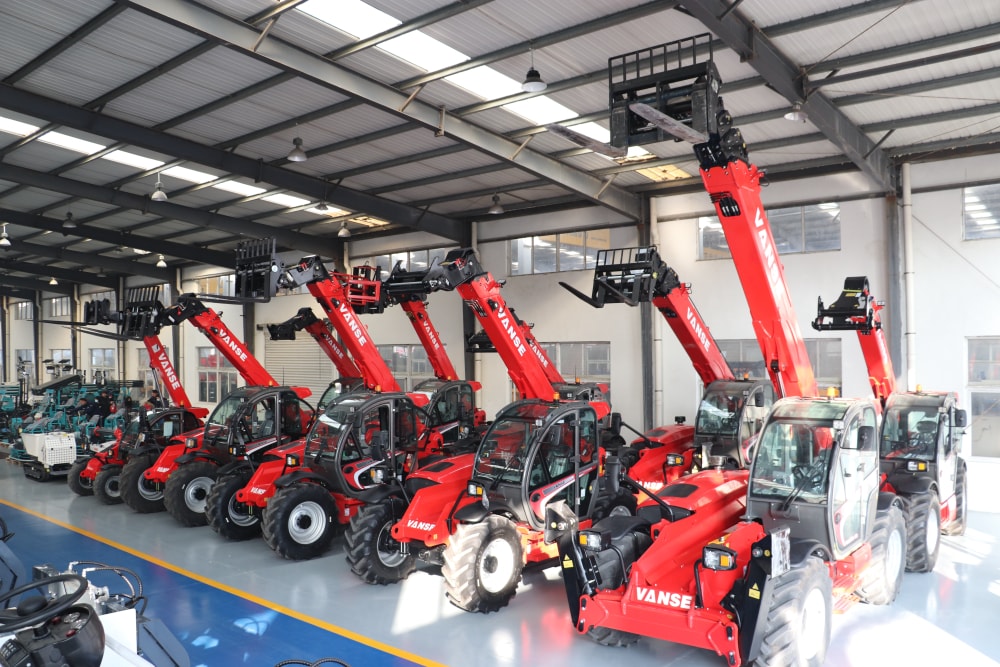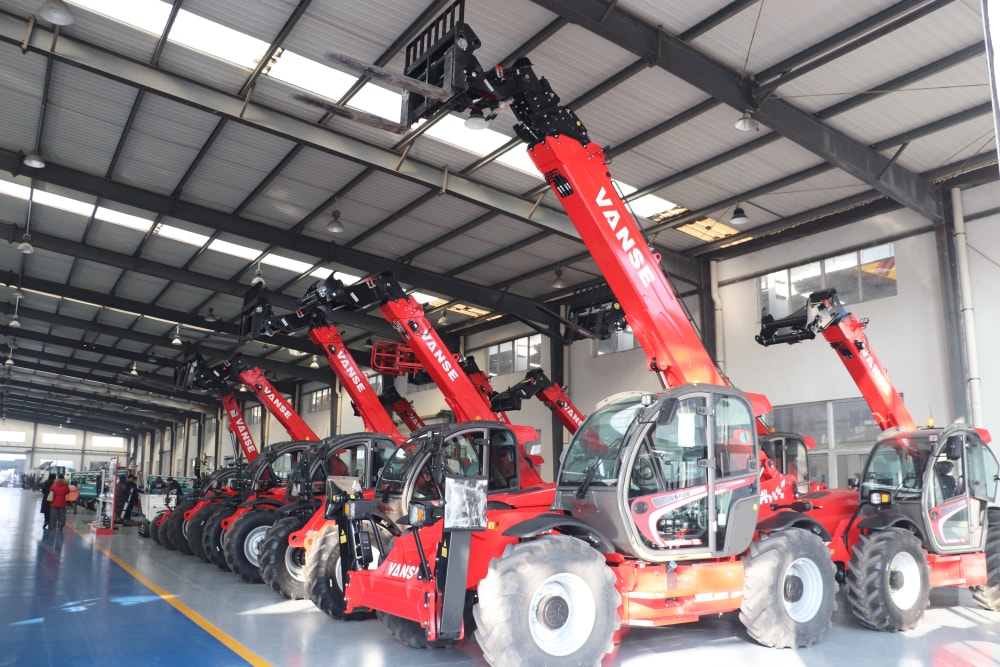
Telehandler Safety Tips for Safer U.S. Job Sites
Quick Answer

The most effective telehandler safety tips for jobsites in the United States are straightforward: train only qualified operators, inspect the machine before every shift, confirm ground stability and overhead clearance, use the correct attachment and load chart for every lift, and keep all workers outside the danger zone during travel and placement. On busy projects in Houston, Dallas, Atlanta, Chicago, Los Angeles, and inland logistics corridors near Savannah and Long Beach, most serious telehandler incidents happen when crews rush setup, exceed rated capacity, drive with elevated loads, or work on uneven ground without a clear lift plan.
For contractors, rental fleets, farms, industrial plants, and material yards, the safest buying and operating approach is to choose equipment backed by operator training resources, documented maintenance support, parts availability, and responsive service coverage. Leading U.S. suppliers and rental networks such as JLG, Genie, Skyjack, Caterpillar dealers, United Rentals, and Sunbelt Rentals are commonly used because they support compliance, inspections, and field service across multiple states. Qualified international suppliers can also be worth considering when they provide recognized certifications, proven components, and strong pre-sale and after-sale support in the United States, especially when buyers are balancing safety requirements with cost-performance.
Why Telehandler Safety Matters in the United States

Telehandlers are widely used across the United States because they combine reach, lifting capacity, and jobsite flexibility in a way that forklifts and cranes often cannot. They are common on commercial building projects in Phoenix, road and bridge work in Texas, distribution developments near Columbus, agricultural operations in California’s Central Valley, and oil and gas support yards in the Gulf Coast region. Their versatility is exactly why they demand strict operating discipline. A single machine may move pallets, place trusses, lift pipe, stack feed, unload containers, or support maintenance tasks within the same week. Every task changes the machine’s stability profile.
The key risk with telehandlers is that capacity is not fixed. As the boom extends or the lift height changes, the safe load changes too. Operators who understand only the headline capacity and not the actual load chart can put the machine at risk of tipping forward or sideways. In the United States, where worksites often combine subcontractors, rental units, compressed schedules, and changing weather, telehandler safety depends on planning, communication, and equipment condition as much as operator skill.
Common accident patterns include overloading, traveling too fast on rough terrain, lifting workers without approved work platforms and procedures, striking overhead power lines, losing stability on slopes, and crushing incidents involving spotters or nearby laborers. Many of these incidents are preventable when crews use a disciplined checklist, understand the machine’s limits, and align work practices with site-specific hazards.
Core Telehandler Safety Tips Every Crew Should Follow

Safe telehandler operation starts before the engine is turned on. Every shift should begin with a walk-around inspection covering tires, forks or attachments, hydraulic hoses, steering response, brakes, lights, alarms, mirrors, fluid levels, boom wear points, and visible structural damage. Operators should verify the load chart, seat belt, stabilizers if equipped, and any onboard safety systems. If the machine is rented, the receiving crew should still do its own acceptance check instead of assuming the unit is ready.
Ground conditions deserve special attention. Telehandlers are often sent into unfinished areas where fill material is loose, muddy, sloped, or broken by trenches and utility cuts. Before lifting, supervisors should identify traffic routes, drop-off points, buried hazards, and weather-related soft spots. The machine should be level whenever possible, and the operator should avoid turning with a raised load or boom unless the manufacturer specifically allows the maneuver and conditions are stable.
Load handling is where discipline matters most. The operator should know the load weight, the center of gravity, the pick point, the landing point, and the required attachment. Long loads such as trusses, pipe bundles, rebar cages, and framed wall sections can create instability even when their weight seems to be within nominal capacity. The attachment itself changes the chart, which means a jib, bucket, truss boom, or work platform must never be treated like standard forks. If there is any uncertainty, the safest choice is to pause and recalculate.
Travel safety is another major control point. Loads should be carried low enough to maintain stability and visibility while still clearing obstacles. Speed should be reduced on rough terrain, near pedestrian routes, and at blind corners. Spotters should use agreed signals and stand clear of the machine’s path. Operators should never rely only on backup alarms in noisy urban sites or industrial yards where multiple machines are moving at once.
Finally, exclusion zones save lives. No one should stand under suspended loads, near a leaning load stack, between the telehandler and a fixed object, or beneath elevated attachments. On high-traffic jobsites, barriers and brief toolbox talks are often more effective than assumptions. The safest crew is usually the one that makes lift planning visible to everyone nearby.
Common Hazards and Prevention Measures
The table below translates frequent telehandler hazards into practical prevention steps for U.S. jobsites. These controls are useful on commercial construction, industrial shutdowns, agricultural yards, port-adjacent warehouses, and rental fleet deployments.
| Hazard | Typical Cause | Likely Consequence | Prevention Measure | Best Use Area |
|---|---|---|---|---|
| Machine tip-over | Overloading or boom extended too far | Operator injury, dropped load, site shutdown | Use the exact load chart and verify attachment-specific capacity | Construction and industrial lifting |
| Side instability | Uneven ground or turning with raised load | Roll-over or loss of load control | Level the machine, reduce speed, keep loads low while traveling | Rough terrain sites |
| Struck-by incident | Workers inside travel or swing path | Serious injury to ground personnel | Create exclusion zones and use trained spotters | Busy multi-trade jobsites |
| Power line contact | Poor boom clearance awareness | Electrocution, fire, equipment damage | Identify overhead utilities and maintain safe clearance distances | Urban and utility work |
| Load fall | Incorrect attachment or unstable load placement | Crushing injury and material damage | Match attachment to task and secure balanced picks | Material handling and agriculture |
| Mechanical failure | Skipped maintenance or damaged hydraulics | Unexpected stoppage or unsafe lift condition | Perform daily inspections and scheduled maintenance | Rental fleets and long shifts |
| Visibility loss | Blind spots with bulky loads | Collision with people, trucks, or structures | Travel in reverse when permitted and use spotter guidance | Warehouses and exterior yards |
This table shows that the same telehandler can be safe or dangerous depending on planning quality. The machine rarely creates the hazard alone; the combination of attachment choice, load position, site condition, and human behavior does.
United States Market Conditions and Safety Pressure
The U.S. telehandler market remains active because of steady demand from nonresidential construction, warehousing, infrastructure, energy, agriculture, and rental fleets. Demand tends to rise around major logistics and development corridors such as Dallas-Fort Worth, Atlanta, Inland Empire, Nashville, Tampa, and the port ecosystems around Houston, Savannah, and Long Beach. In these regions, telehandlers support fast-moving projects where material handling speed is important, but tighter schedules can also increase safety pressure.
Another U.S. market factor is the dominance of rental. Many contractors use rented telehandlers for short-duration phases, which can create variation in controls, visibility, machine age, and onboard systems across jobsites. That means site safety leaders should not assume operators are equally familiar with every machine model. Orientation at delivery remains a practical risk control.
This line chart illustrates a realistic market growth pattern rather than a fixed sales count. As utilization rises, exposure hours rise as well, which makes operator qualification, machine familiarity, and preventive maintenance even more important.
Telehandler Types and How Safety Changes by Machine Class
Not all telehandlers are used the same way. Compact units for landscaping or small building work face different risks than high-capacity machines used for steel, precast, or industrial turnaround projects. Rotating telehandlers add flexibility but also complexity, requiring stronger lift planning and more disciplined setup. Buyers in the United States should align machine type with actual job demands rather than buying maximum reach by default.
| Telehandler Type | Typical Capacity Range | Typical Application | Main Safety Concern | Best Buyer Profile |
|---|---|---|---|---|
| Compact telehandler | 5,000 to 6,000 lb | Small construction, landscaping, feed yards | Tight access and visibility near pedestrians | Small contractors and farms |
| Mid-range rough terrain telehandler | 6,000 to 10,000 lb | General construction and rental fleets | Overloading during mixed-duty use | General contractors and rental firms |
| High-reach telehandler | 10,000 to 12,000 lb | Multi-story construction and framing | Reduced capacity at maximum reach | Commercial construction teams |
| High-capacity telehandler | 12,000 lb and above | Industrial, energy, heavy material movement | Ground bearing and load planning complexity | Industrial and infrastructure users |
| Rotating telehandler | Varies by model | Confined urban sites and specialty lifting | Set-up errors and advanced operating demands | Specialty contractors |
| Ag telehandler | 5,500 to 9,000 lb | Feed, hay, seed, barn, and yard handling | Dust, uneven terrain, attachment misuse | Large farms and ag distributors |
| Electric or low-emission telehandler | Emerging segment | Indoor, municipal, sustainability-focused sites | Range planning and operator adaptation | Urban contractors and facility operators |
The comparison above helps buyers understand that “best” is task-specific. A machine with more reach than needed may add cost and encourage risky loading assumptions. A machine with too little capacity may push crews toward repeated overload situations. Good safety starts with correct specification.
Industry Demand by Application in the United States
Demand patterns matter because they influence the kind of telehandler risks buyers face. Construction often involves rapid cycle lifting and changing ground conditions. Agriculture faces seasonal surges, attachment changes, and long working hours. Industrial plants prioritize precision, maintenance history, and site access. Rental fleets need broad machine versatility and excellent uptime support.
The bar chart highlights why rental fleets and general construction influence best practices so strongly in the U.S. market. Machines frequently move between users and sites, so training consistency and documented inspection processes are critical.
Buying Advice for Safer Telehandler Ownership
When evaluating telehandlers in the United States, buyers should think beyond price and peak lift numbers. The most important safety-related buying questions are practical. Is the load chart easy to interpret in field conditions? Are replacement parts available domestically? Can the supplier provide startup training, maintenance documentation, and quick technical response? Are attachments approved and matched correctly? How quickly can service reach projects in states where the machine will actually work?
For contractors working across Texas, Florida, Georgia, California, and the Midwest, regional support often matters more than brochure claims. Machines that are technically capable but difficult to service can drift into unsafe condition when inspections are delayed or hydraulic issues are ignored. Fleet managers should also compare cab visibility, stability aids, telematics, service intervals, boom design, and the availability of operator manuals in accessible digital and printed formats.
Attachment planning deserves equal weight. Many incidents happen because buyers focus on forks but later add buckets, jibs, truss booms, or work platforms without building a proper attachment management process. Each attachment should be approved, labeled, inspected, and associated with the correct operating instructions and chart. For companies with multiple jobsites, keeping attachment records centralized is a simple but powerful control.
Supplier Comparison for U.S. Buyers
The table below compares well-known telehandler suppliers and channels relevant to U.S. buyers. It is not a ranking by brand prestige alone. Instead, it emphasizes service region, strengths, and practical fit for safety-conscious ownership and rental decisions.
| Company | Service Region | Core Strengths | Key Offerings | Best Fit |
|---|---|---|---|---|
| JLG Industries | Nationwide United States | Strong dealer network, broad model range, training familiarity | Construction telehandlers, support materials, parts access | Contractors and fleet owners |
| Genie | Nationwide United States | Widely recognized in rental channels, good uptime support | Rough terrain telehandlers and fleet-friendly models | Rental fleets and commercial sites |
| Skyjack | Nationwide with dealer support | Simple service approach and rental market acceptance | Telehandlers focused on fleet efficiency | Rental and mixed-use buyers |
| Caterpillar dealers | Regional dealer territories across the U.S. | Heavy equipment support infrastructure and parts depth | Telehandler sales, field service, maintenance support | Industrial and large contractors |
| United Rentals | Nationwide branches | Large rental availability and replacement flexibility | Short-term and long-term telehandler rental | Project-based users |
| Sunbelt Rentals | Broad U.S. branch network | Convenient rental access and jobsite support | General construction telehandler rental | Regional contractors |
| VANSE Group | Growing U.S. market presence with planned local subsidiary support | Competitive cost-performance, OEM/ODM flexibility, global export experience | Telehandlers, customized configurations, lifecycle support | Dealers, brand owners, end users, distributors |
This comparison is useful because the right supplier depends on buying model. A rental-heavy contractor may value branch proximity and swap-out capability. A dealer may prioritize branding flexibility and margin structure. An enterprise buyer may need specification customization and multi-unit supply consistency.
How Application Changes Safety Priorities
Applications determine risk. On framing projects, telehandlers often place bundled materials at height, increasing the need for drop-zone control and chart awareness. In agriculture, the priority may shift toward attachment security, dust control, operator visibility, and repetitive cycle fatigue. In industrial plants, maintenance access, hydraulic condition, and precision handling can be more important than top travel speed. In distribution and building-products yards, pedestrian interaction and traffic route separation are often the major concerns.
Buyers should match training topics to actual use. A company that handles bagged materials with forks does not need the same emphasis as a site that regularly uses truss booms or suspended loads. Practical safety programs are application-specific, not generic.
Trend Shift in Safer Telehandler Buying
U.S. buying behavior is slowly shifting from basic acquisition toward lifecycle safety value. Buyers now pay more attention to telematics, service response, operator support, visibility features, and low-emission options for regulated urban jobsites and indoor-adjacent work. This shift is expected to continue into 2026 as contractors face tighter reporting expectations, insurance pressure, and sustainability targets.
The area chart suggests a realistic trend: more U.S. buyers are choosing machines not only for lift performance but also for risk reduction, downtime control, and environmental compliance. This is especially relevant in metropolitan projects where emissions, noise, and digital fleet oversight are becoming decision factors.
Case-Based Safety Lessons from U.S. Work Environments
Consider a commercial building project in Dallas where a telehandler is used to place pallets of block around the perimeter. The safest approach is to establish a single travel route, inspect for soft fill after rain, use a spotter at blind corners, and prohibit travel with the boom raised higher than necessary. A common error in these situations is allowing multiple trades to walk through the telehandler route because schedule pressure makes separation seem inconvenient. In reality, route control often prevents the most severe incidents.
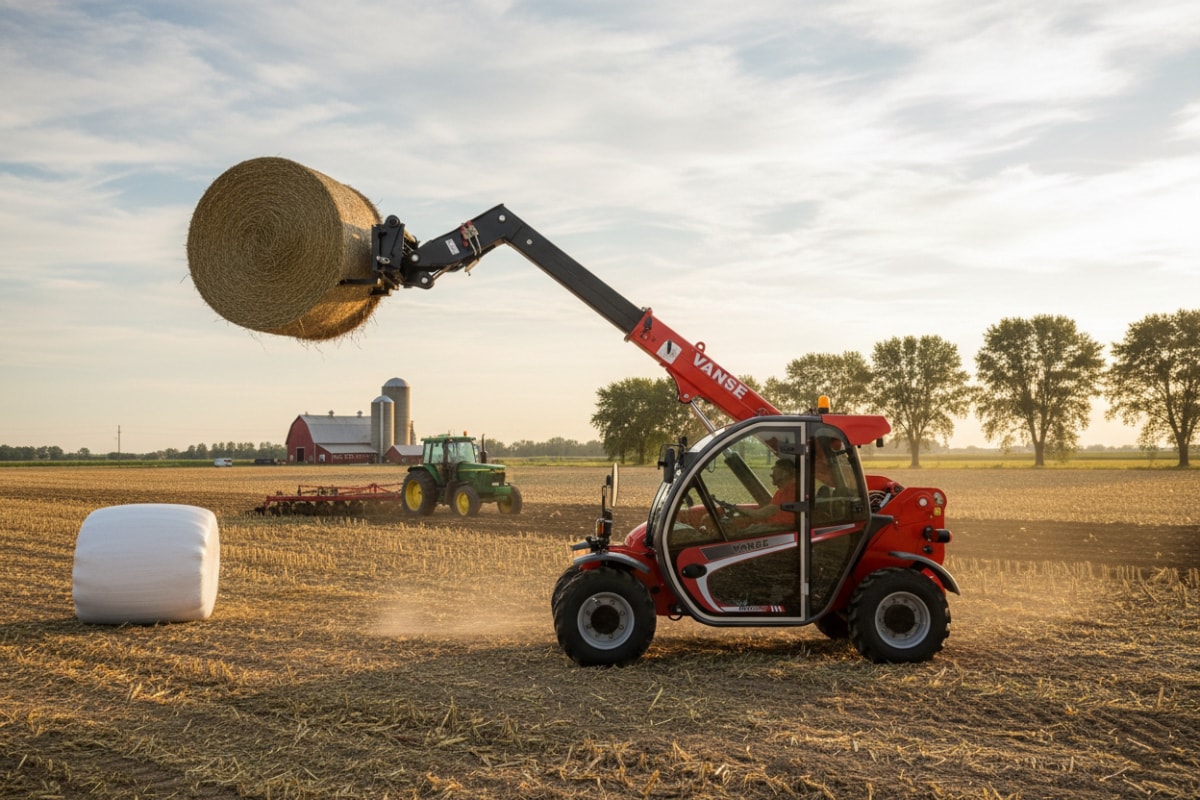
On a farm in California’s Central Valley, a telehandler may switch between forks, buckets, and bale handling attachments over the course of a season. The main risk is treating each attachment as if machine behavior stays the same. Practical controls include visible attachment logs, quick operator refreshers, tire checks before long yard travel, and periodic review of hydraulic coupler condition. Agricultural operations also benefit from strict rules about riders, which are still a recurring source of preventable injury.
At an industrial site outside Houston, the telehandler may support turnaround work, equipment maintenance, and material staging in congested zones. Here, permit coordination, exclusion barriers, and communication with crane and scaffold crews become essential. The machine may be capable, but the site demands precision. The safest operators in these environments are often the ones who slow the job down enough to maintain control.
Detailed Supplier and Product Support Analysis
The next table compares practical support factors that affect safety performance after purchase or rental. These issues directly influence uptime, operator confidence, and the likelihood that machines stay within safe operating condition.
| Supplier Channel | Training Support | Parts Availability | Customization | Service Response | Safety Value |
|---|---|---|---|---|---|
| OEM dealer network | Usually structured and model-specific | Strong for stocked models | Moderate | Good in assigned territory | Consistent support for owned fleets |
| National rental chain | Basic handover support | High through replacement units | Low | Fast swap-out in metro markets | Good for short-term projects |
| Regional independent dealer | Can be highly responsive | Varies by inventory depth | Moderate to high | Strong local relationships | Useful for relationship-based support |
| Direct international supplier with U.S. plan | Can include remote and onsite support | Improves when local stocking is established | High through OEM/ODM | Depends on local infrastructure maturity | Strong value if service backing is real |
| Used equipment broker | Limited | Variable | Low | Often reactive | Lower purchase price but more safety diligence needed |
| Enterprise fleet agreement | Standardized and scalable | Planned inventory and support | High at volume | Contract-defined | Good for multi-site control and compliance |
This table shows why procurement teams should evaluate total support structure, not just equipment cost. Safety is stronger when training, spare parts, service process, and documentation are built into the purchase model.
Our Company in the U.S. Telehandler Market
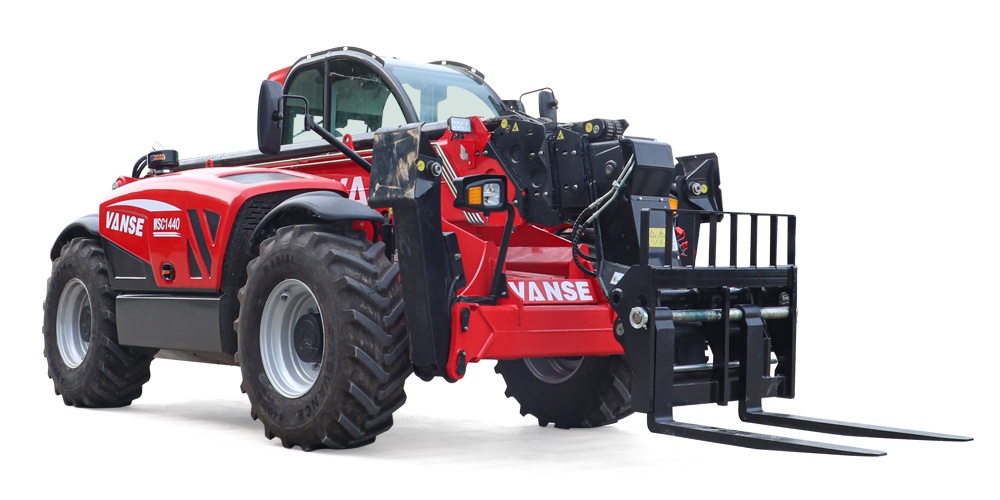
For buyers evaluating alternatives beyond traditional domestic channels, VANSE Group presents a practical option for the United States market because its telehandler line is built around internationally recognized manufacturing controls and field-proven components rather than low-spec shortcuts. Founded in 2013, the company has produced more than 8,000 machines and exports to over 40 countries, giving it real operating experience across construction, agriculture, industry, mining, and energy applications. Its telehandlers are manufactured under CE and ISO 9001 certified processes, use globally trusted engine brands such as Perkins and Cummins together with premium hydraulic systems, transmissions, and axles, and every unit goes through load testing, safety inspection, and performance validation before shipment. For U.S. customers, that matters because product strength can be traced to specific evidence: controlled production, known component sourcing, and documented testing standards aligned with international expectations. On the cooperation side, VANSE supports end users, distributors, dealers, brand owners, rental businesses, and individual buyers through flexible models that include wholesale supply, retail sales, OEM/ODM customization, regional distribution partnerships, and specification changes for local market needs; buyers can review available machinery through the company’s equipment range. Just as important, the company is not positioning itself as a distant exporter only. It is actively establishing a U.S.-based subsidiary to provide local inventory, stronger after-sales capability, and closer customer relationships in North America, backed by online and offline pre-sale guidance, technical support, maintenance assistance, and lifecycle service accessible through its support resources. That combination of export scale, component transparency, customization flexibility, and local service commitment gives U.S. buyers a clearer level of trust than generic offshore sourcing, especially when they want cost-performance without giving up accountability. More background on the business and its manufacturing focus is available on the company’s about page, and U.S. buyers seeking dealer or project discussions can use the contact channel.
Practical Checklist Before Each Shift
A useful daily safety routine does not need to be long, but it must be consistent. Operators should inspect tires for damage and inflation issues, check forks and locking points, verify hydraulic hose condition, confirm steering and brake function, test alarms and lights, inspect fluid levels, and review the correct attachment and load chart. Supervisors should also confirm site conditions, weather effects, route separation, spotter assignments, and overhead hazards. If any issue affects stability, visibility, or braking, the machine should be removed from service until corrected.
Documentation is part of safety. A logged inspection helps fleet managers identify repeat faults and gives supervisors a basis for scheduling service before a failure creates an incident. On larger U.S. sites, this can also support broader compliance and insurance expectations.
Supplier Feature Comparison
The final table and chart focus on how buyers can compare telehandler options beyond headline reach and capacity. Features tied to serviceability and control often matter most over the life of the machine.
| Comparison Factor | Why It Matters | Basic Fleet Need | Advanced Buyer Need | Safety Impact |
|---|---|---|---|---|
| Load chart clarity | Reduces operator error | Readable cab decals | Attachment-specific digital guidance | High |
| Visibility design | Improves travel and placement awareness | Good mirror layout | Enhanced camera or cab design | High |
| Service access | Speeds maintenance and inspection | Simple daily checks | Fast component access for fleets | Medium to high |
| Parts support | Prevents unsafe deferred repairs | Regional stock access | Contract inventory planning | High |
| Attachment management | Aligns chart and task correctly | Clearly labeled attachments | Centralized fleet controls | High |
| Operator support | Improves consistent machine use | Manuals and startup guidance | Structured refreshers and telematics | High |
The comparison chart reinforces a simple point: the safest buying decisions are not based only on lift numbers. Buyers in the United States increasingly value support systems that help keep machines in safe, predictable service.
2026 Trends Affecting Telehandler Safety
Looking toward 2026, three forces are likely to shape telehandler safety in the United States. The first is technology. More machines will include telematics, fault reporting, usage tracking, and service reminders that help fleet managers catch unsafe patterns early. The second is policy and project governance. Large contractors, municipalities, and industrial owners are tightening expectations around training records, emissions, documentation, and subcontractor equipment accountability. The third is sustainability. As low-emission and electric equipment gains traction in city projects, healthcare campuses, enclosed facilities, and public-sector work, operators will need updated planning around charging, shift cycles, and application fit.
These trends do not replace fundamentals. The safest telehandler in 2026 will still depend on stable ground, trained operators, correct attachments, disciplined lift planning, and a supplier that can keep the machine maintained and supported. Technology can improve consistency, but it cannot overcome poor judgment or weak site control.
FAQ
What is the most important telehandler safety rule?
The most important rule is to operate within the correct load chart for the exact attachment, lift height, and reach. Many serious incidents start when crews rely on approximate capacity instead of the actual chart.
Can a telehandler be used on uneven ground?
It can, but only within the manufacturer’s limits and with strong caution. Uneven or soft ground greatly increases tip-over risk, especially when the boom is elevated or extended.
Who should operate a telehandler on a U.S. jobsite?
Only trained and authorized personnel who understand the specific model, attachment, load chart, inspection routine, and site hazards should operate the machine.
Are rental telehandlers less safe than owned units?
Not inherently. Rental telehandlers can be very safe when inspected at delivery, matched to the task, and supported by proper orientation. The risk comes from unfamiliarity, rushed handover, or poor site controls.
What should buyers ask suppliers before purchasing?
Ask about local parts stock, field service coverage, training support, attachment approval, machine testing standards, warranty process, and whether the supplier can support your operating region consistently.
Is a lower-cost international telehandler a realistic option in the United States?
Yes, if the supplier offers credible certifications, known component brands, documented testing, strong technical support, and real U.S. service commitment. Cost savings should never come at the expense of safety support or parts access.
Complete Telescopic Handler Equipment Portfolio
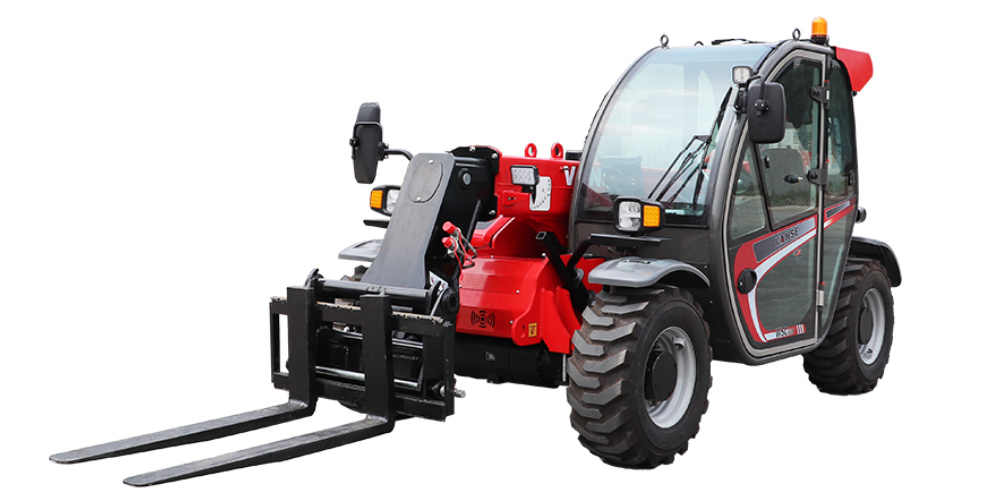
VANSE 625 6m Telescopic Handler
Designed for efficient material handling and stacking in warehouses, factories, and confined job sites, offering compact maneuverability and reliable performance.

VANSE 735 7m Telescopic Handler
A balanced mid-duty solution for construction, agriculture, logistics, and warehousing, combining stable lifting, strong traction, and everyday versatility.


About the Author:
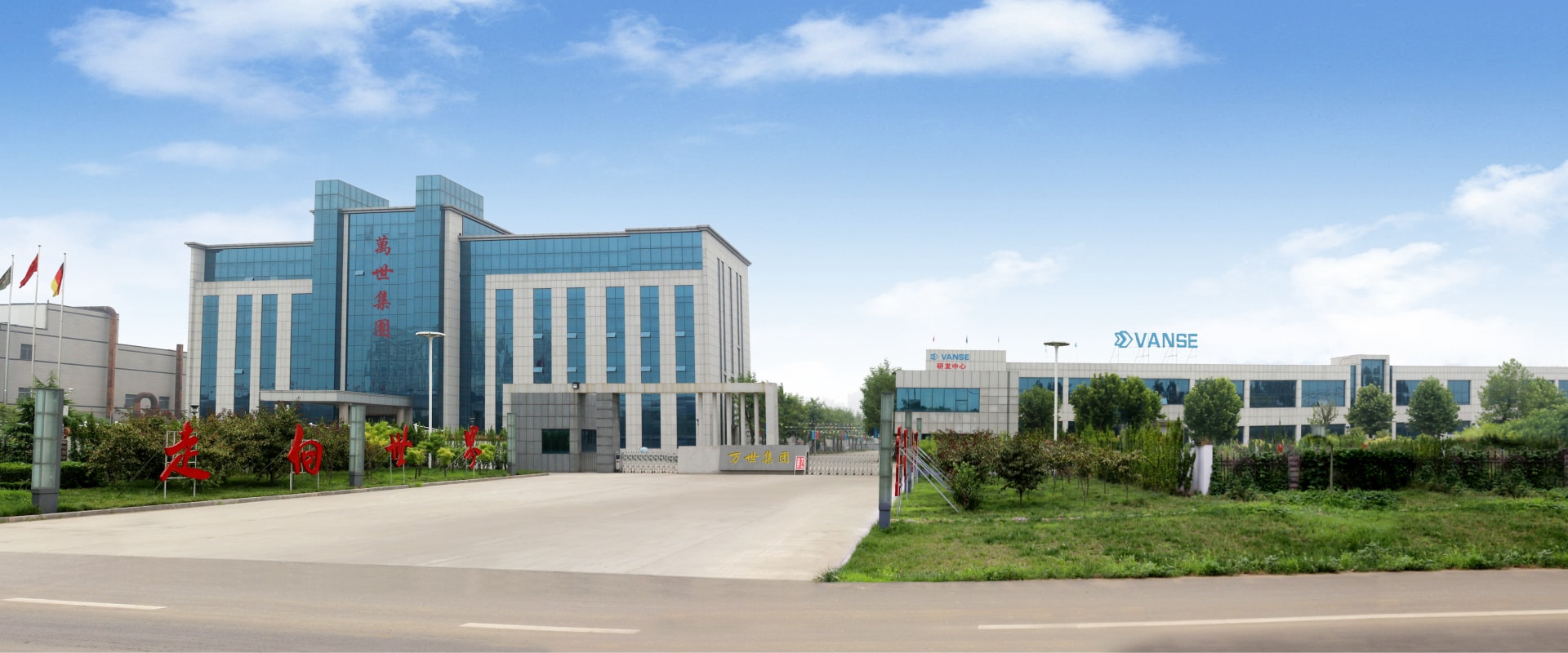
The VANSE team is a group of experienced professionals specializing in construction machinery research, manufacturing, and technical support. With deep industry knowledge and hands-on experience, our engineers and product specialists share practical insights on equipment selection, operation, maintenance, and industry trends.
Share
You May Also Interest
-

7 August, 2026
Telehandler Maintenance Tips: Reduce Downtime and Costs
Use telehandler maintenance tips in the United States to cut downtime, lower repair costs, improve safety, and plan smarter service intervals.
-
6 August, 2026
10 Meter Telehandler: High Reach for Multi-Story Builds
Explore 10-meter telehandler options in the United States, including top suppliers, rental demand, buying tips, and cost-effective certified global sources.
-

5 August, 2026
Telehandler vs Wheel Loader: Best Machine for Your Site
Compare telehandler vs wheel loader in the United States with buying tips, supplier options, industry demand, and cost-focused equipment guidance.
-

3 August, 2026
Diesel Telehandler: Powerful Engine for Demanding Sites
Explore diesel telehandler options in the United States, compare suppliers, specs, costs, and service support for construction, agriculture, and rental fleets.