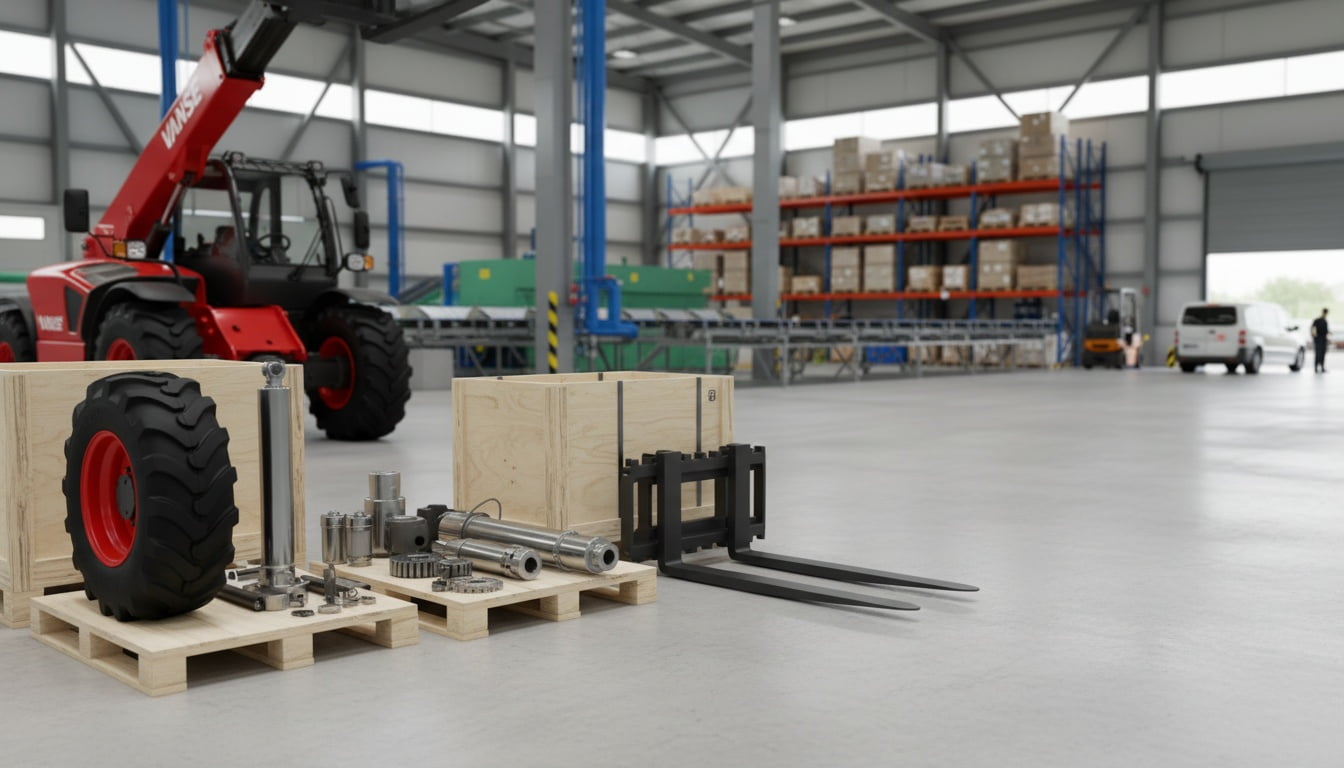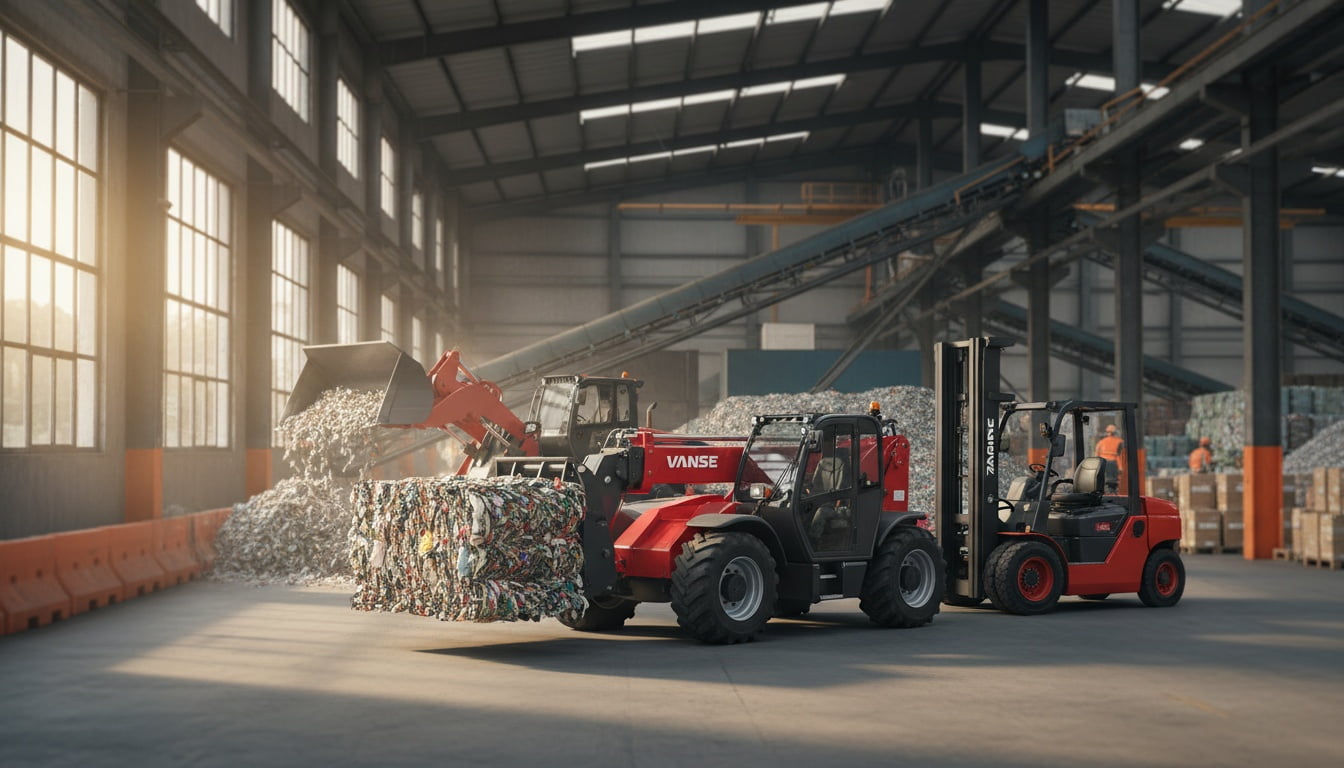
Telehandler vs mast forklift in the United States
Quick Answer

If your work is mainly indoors on smooth warehouse floors, a mast forklift is usually the better choice because it is compact, efficient, and easier to maneuver in tight aisles. If your work is outdoors on uneven ground, construction sites, farms, ports, yards, or mixed indoor-outdoor environments, a telehandler is usually the stronger choice because it offers more reach, better ground clearance, and attachment flexibility.
For buyers in the United States, the practical rule is simple: choose a mast forklift for pallets, docks, and repetitive indoor loading; choose a telehandler for high reach, rough terrain, and jobsite versatility. In markets such as Houston, Dallas, Chicago, Atlanta, Los Angeles, Miami, and inland logistics hubs near Kansas City and Memphis, this distinction often decides operating cost, jobsite speed, and safety performance.
- Choose a mast forklift when you need low operating height, fast indoor cycles, and predictable warehouse traffic.
- Choose a telehandler when you need to lift over obstacles, place materials at height, or move across gravel, mud, and unfinished ground.
- Rental fleets and contractors often keep both because each machine solves a different handling problem.
- Food, retail, and manufacturing users usually prefer mast forklifts; construction, agriculture, lumber, and energy users often prefer telehandlers.
- Qualified international suppliers, including Chinese manufacturers with recognized certifications, proven export history, and strong pre-sales and after-sales support in the United States, can also be worth considering because they may offer better cost-performance for fleet buyers.
How the United States market views this choice

In the United States, the telehandler versus mast forklift decision is not just about lifting height. It is closely tied to where the machine works, who operates it, and how often the application changes during a normal week. A distribution center outside Columbus, Ohio may prioritize aisle maneuverability and pallet throughput. A masonry contractor in Phoenix may care more about forward reach and rough-terrain mobility. A dairy operation in Wisconsin may need a machine that handles feed, bales, bulk bags, and general yard duties year-round. These are very different environments, which is why buyers should begin with the operating surface, load geometry, and attachment needs rather than looking at lift capacity alone.
Across the United States, telehandler demand remains closely tied to housing starts, infrastructure work, energy projects, agricultural modernization, and rental fleet turnover. Mast forklift demand, on the other hand, tracks warehouse leasing, manufacturing output, retail inventory movement, and port activity through gateways such as Los Angeles, Long Beach, Savannah, Houston, and New York-New Jersey. Because the country has both mature indoor logistics networks and large outdoor jobsite economies, both product categories remain essential.
Many buyers now operate in mixed environments. A building materials dealer may unload inbound pallets at a warehouse but also place product outside in an open yard. A precast contractor may need indoor staging and outdoor installation support. In these cases, the machine that seems cheaper at purchase can become more expensive if it cannot handle real operating conditions. That is why experienced fleet managers in the United States often compare visibility, turning radius, travel speed, fuel type, attachment options, operator training requirements, and transport logistics before making a final decision.
Core differences between telehandlers and mast forklifts

A mast forklift uses a vertical mast to raise and lower loads. It is ideal when loads are palletized, aisles are defined, and the floor is level. Most indoor warehouses, loading docks, and manufacturing plants rely on mast forklifts because they are stable, compact, and optimized for repeat handling cycles. Their limitations appear when the ground gets rough, obstacles block direct access, or the load must be placed beyond the front wheels or at greater heights.
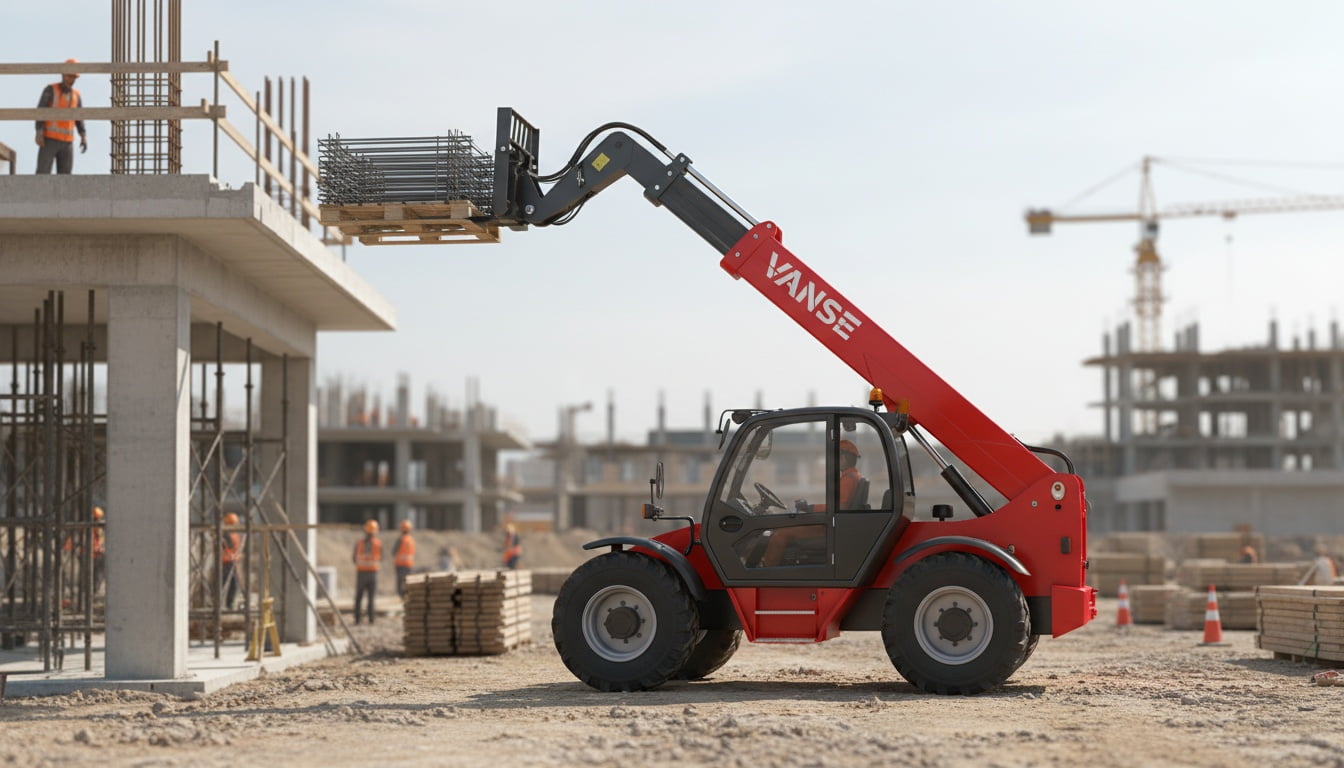
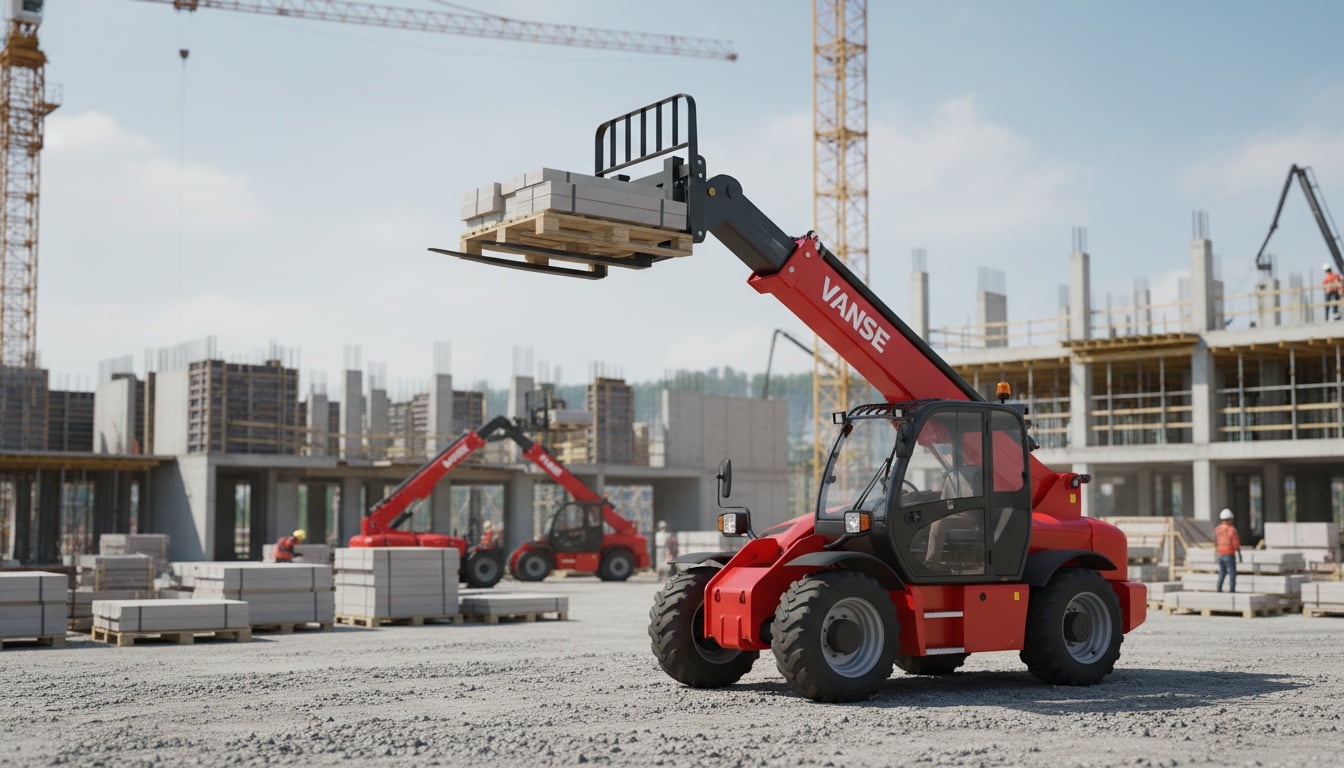
A telehandler uses a telescopic boom rather than a fixed mast. That boom allows the machine to move loads forward and upward, making it useful for placing materials on elevated floors, rooftops, scaffolding lines, and stacked storage areas. Telehandlers also offer higher clearance and stronger rough-terrain performance. However, they are generally larger, often require more operating space, and may not be as efficient as mast forklifts for repetitive indoor pallet movement.
The telehandler becomes more valuable when the job changes frequently. Forks can be swapped for buckets, jibs, work platforms, truss booms, or bale handlers depending on the model and local regulations. That level of adaptability matters in sectors where one machine is expected to support multiple tasks in one shift. A mast forklift can also use attachments, but its flexibility is more limited by mast geometry, indoor design priorities, and operating environment.
Comparison table for U.S. buyers
The table below gives a practical side-by-side view for buyers evaluating indoor and outdoor lifting needs in the United States. It highlights where each machine category creates the most value.
| Factor | Telehandler | Mast Forklift | Best Fit in the United States |
|---|---|---|---|
| Primary environment | Outdoor, rough terrain, mixed sites | Indoor, smooth floors, warehouses | Telehandler for jobsites and yards; mast forklift for distribution centers |
| Lift geometry | Vertical and forward reach | Mainly vertical lift | Telehandler for placing loads over obstacles |
| Maneuverability in tight aisles | Moderate to limited depending on size | Strong | Mast forklift |
| Terrain capability | Strong on gravel, dirt, mud | Limited on uneven surfaces | Telehandler |
| Attachment flexibility | High | Moderate | Telehandler for multi-task applications |
| Typical industries | Construction, agriculture, lumber, energy | Warehousing, retail, manufacturing, food logistics | Depends on business model and site conditions |
| Indoor productivity | Lower in narrow indoor spaces | High for repetitive pallet handling | Mast forklift |
| Outdoor placement at height | Excellent | Limited | Telehandler |
Market growth and demand outlook
The United States lifting equipment market continues to reflect a split economy: advanced indoor logistics keeps mast forklift demand resilient, while telehandlers benefit from construction, rural operations, and infrastructure investment. Rental companies are especially influential because they purchase machines based on utilization across many customer types. That tends to favor telehandlers in construction-heavy regions such as Texas, Florida, Arizona, Georgia, and the Carolinas, while mast forklifts stay dominant in major logistics corridors around Southern California, Illinois, New Jersey, and Tennessee.
This line chart shows a realistic market pattern: mast forklifts remain a larger and more stable installed base, but telehandlers are gaining faster in sectors tied to flexible outdoor work and rental fleet upgrades. By 2026, buyers should expect smarter load management systems, wider adoption of low-emission powertrains in certain metro areas, and stronger interest in total cost of ownership rather than initial purchase price alone.
Product types and where they fit
Not all telehandlers or mast forklifts are the same. In the United States, equipment selection is increasingly segmented by site type, fuel preference, lift envelope, and compliance needs. Choosing the wrong subtype can reduce productivity even if headline capacity looks correct.
| Product Type | Typical Capacity Range | Typical Environment | Main Advantage | Main Limitation |
|---|---|---|---|---|
| Compact telehandler | 5,000 to 7,000 lb | Residential construction, landscaping, farms | Better access on tighter sites | Less reach and capacity than larger units |
| Heavy telehandler | 8,000 to 12,000+ lb | Commercial construction, industrial yards | Higher reach and heavier placement work | Larger footprint and transport demands |
| Rotating telehandler | Specialized applications | Urban construction, complex placement work | Exceptional placement flexibility | Higher purchase price and operator requirements |
| Electric mast forklift | 3,000 to 8,000 lb | Indoor warehousing, food, retail | Low emissions and strong indoor suitability | Less ideal for rough terrain |
| LPG mast forklift | 4,000 to 10,000 lb | Mixed indoor-outdoor use | Fast refueling and broad versatility | Ventilation and emissions considerations indoors |
| Diesel mast forklift | 6,000 lb and above | Outdoor yards, ports, heavy industry | Strong durability and outdoor power | Less suitable for enclosed spaces |
For most indoor logistics operations in the United States, electric mast forklifts continue to gain share because of lower noise, reduced local emissions, and compatibility with modern warehouse environments. For outdoor construction and agriculture, diesel telehandlers remain very common because they provide strong torque, dependable uptime, and the ability to travel across rough surfaces where standard forklifts struggle.
Industry demand by sector
Industry demand can help buyers decide which machine class is more likely to deliver high utilization. The bar chart below reflects typical U.S. patterns by sector.
The chart illustrates a common real-world pattern. Warehousing and manufacturing strongly favor mast forklifts because aisle efficiency, dock movement, and pallet repeatability matter most. Construction, agriculture, and lumber yards usually favor telehandlers because loading conditions change constantly and the machine often needs to move across rough or unfinished terrain. Ports and marine terminals can use both, depending on cargo profile, pavement quality, and stack layout.
Buying advice for different U.S. applications
Before selecting between a telehandler and a mast forklift, buyers should define the application with measurable criteria. Start with the heaviest typical load, not the occasional maximum. Then calculate maximum lift height, horizontal reach, surface condition, turning space, daily duty cycle, attachment needs, and operator skill level. Once these factors are clear, the right equipment category often becomes obvious.
For a warehouse operator in New Jersey or Illinois, a mast forklift may offer the fastest return because it reduces travel time in loading zones and fits tighter indoor layouts. For a contractor in Texas or Florida, a telehandler may create more value because one machine can unload trucks, place materials onto elevated work zones, and serve changing site conditions throughout the project. For a grower or agricultural supply business in California’s Central Valley or Iowa, the telehandler often wins on versatility because it can handle feed, seed, fertilizer, pallets, and attachment-driven tasks.
Buyers should also compare support networks. In the United States, downtime costs can easily exceed the savings from a lower purchase price if parts, field service, and technical diagnostics are not available quickly. That is especially important for rental fleets, multi-site contractors, and seasonal agricultural operations. Machines that are competitively priced but poorly supported often perform badly in total ownership cost.
Application-focused decision table
The following table helps match machine type to actual work scenarios commonly seen across the United States.
| Application | Typical Location | Recommended Machine | Why It Fits | Watch Out For |
|---|---|---|---|---|
| Pallet movement in racked warehouse | Chicago, Inland Empire, New Jersey | Mast forklift | Better aisle maneuverability and repeat cycle efficiency | Choose battery, LPG, or diesel based on ventilation and duty cycle |
| Placing roofing materials | Texas, Florida, Georgia | Telehandler | Needs reach, height, and rough-terrain mobility | Confirm lift chart at required forward reach |
| Lumber yard loading | Pacific Northwest, Southeast | Telehandler or heavy mast forklift | Depends on yard surface and stacking pattern | Attachment choice affects productivity |
| Dock loading and trailer unloading | Nationwide distribution centers | Mast forklift | Fast, compact, and ideal for palletized freight | Ensure tire type suits dock plates and pavements |
| Farm material handling | Iowa, Kansas, California Central Valley | Telehandler | Useful for bulk bags, bales, and uneven surfaces | Operator training and maintenance discipline matter |
| Plant or factory handling | Ohio, Michigan, Tennessee | Mast forklift | Works well on flat indoor floors and repetitive routes | Consider electric units for low indoor emissions |
| Masonry and framing support | Arizona, Nevada, Carolinas | Telehandler | Excellent for outdoor placement at height | Load center and slope handling must be reviewed carefully |
Industries that depend on telehandlers
Construction is the clearest telehandler market in the United States. General contractors, framing crews, concrete specialists, roofing teams, and building material suppliers all rely on the ability to lift and place loads at height. This matters in expanding metro areas such as Dallas-Fort Worth, Austin, Nashville, Raleigh, Tampa, and Phoenix, where rapid project cycles reward equipment that can unload, move, and place materials with minimal repositioning.
Agriculture is another strong telehandler sector. Farms, feedlots, dairy sites, orchards, and ag-service providers often need one machine to handle many different tasks. A telehandler with the right attachment package can load feed, stack bales, move palletized inputs, and support maintenance work around the property. In large open environments, the telehandler’s ground clearance and reach become major advantages over standard mast forklifts.
Energy, mining support, and industrial yards also use telehandlers where site surfaces are unpredictable. In such settings, the ability to travel across uneven ground and place loads beyond obstacles can improve both safety and productivity. This is especially relevant around oil and gas activity, utility projects, and heavy-equipment yards in regions such as Texas, Oklahoma, and parts of the Mountain West.
Industries that depend on mast forklifts
Mast forklifts remain the backbone of warehouse logistics in the United States. Retail distribution, e-commerce fulfillment, food and beverage operations, third-party logistics providers, and manufacturing plants all depend on repeatable indoor material flow. In those settings, compact dimensions, precise handling, and fast loading cycles matter far more than boom reach or terrain capability.
Ports and intermodal terminals also rely on mast-based equipment for many cargo movements, especially on paved surfaces where stability and speed are critical. Facilities near Savannah, Houston, Los Angeles, Long Beach, Newark, and Charleston often use a range of forklift capacities depending on the cargo profile. Even where telehandlers are present, mast forklifts remain central for container-adjacent warehousing, export handling, and pallet-based transfer work.
Manufacturing plants across the Midwest and Southeast frequently choose electric mast forklifts to support lean production layouts, lower indoor emissions, and quieter operations. In automotive, packaging, consumer goods, and industrial component plants, the mast forklift is often the most efficient tool because the environment is controlled and the process is standardized.
Trend shift in U.S. lifting equipment
The area chart below shows how preference shifts across the United States as users move from traditional single-environment operations to more flexible mixed-site workflows. Telehandlers are gaining share in operations that need outdoor agility and multi-purpose use, while mast forklifts retain dominance where indoor process efficiency is the priority.
This does not mean mast forklifts are losing relevance. It means more U.S. businesses now have hybrid handling needs, especially in construction supply, building products, rental, and regional distribution. Buyers are increasingly evaluating machine fleets as integrated systems rather than isolated purchases.
Case studies from common U.S. scenarios
A building materials supplier in Houston serving residential and light commercial construction may receive palletized goods in a covered warehouse but dispatch them to open yard storage and construction sites. In this case, a mast forklift can unload inbound trailers quickly, but a telehandler often creates greater overall value because it can also place drywall, trusses, brick packs, and roofing materials at the point of use. Many such businesses operate both machine types to maximize throughput.
A regional food distributor near Atlanta handling packaged products in racked storage will usually gain little from a telehandler. The mast forklift is the clear fit because the work involves repetitive dock movement, narrow travel lanes, and smooth concrete floors. Reach, attachment range, and rough-terrain tires offer little operational return in that environment.
A dairy operation in Wisconsin may use a telehandler every day for feed handling, bale stacking, bagged material movement, and yard maintenance. The machine’s telescopic boom allows operators to reach deeper into stacks, load mixers more effectively, and work across ground conditions that would quickly limit a conventional mast forklift. Here, a telehandler often replaces several narrower-purpose machines.
A contractor in Denver working on a multi-story commercial build typically relies on a telehandler because height, forward placement, and site mobility are essential. In contrast, the contractor’s prefabrication warehouse may still rely on mast forklifts for indoor staging. This split-use model is increasingly common across the United States.
Local suppliers and major brands in the United States
When selecting equipment, buyers should consider both national support networks and regional dealer strength. The table below includes well-known brands and supplier channels active in the United States, along with practical distinctions relevant to telehandler and mast forklift buyers.
| Company | Primary Presence in the United States | Strongest Category | Core Strengths | Typical Buyer Fit |
|---|---|---|---|---|
| JLG | Nationwide, strong construction and rental channels | Telehandlers | Well-known jobsite models, rental familiarity, broad support | Contractors, rental fleets, construction suppliers |
| Genie | Nationwide dealer network | Telehandlers | Strong access-equipment ecosystem and established service | General construction and fleet buyers |
| Manitou | Wide U.S. coverage through dealers | Telehandlers | Agriculture and construction versatility, broad attachment focus | Farms, mixed-use fleets, material handlers |
| JCB | Strong in many construction regions | Telehandlers | High market recognition in rough-terrain handling | Builders, industrial yards, rental houses |
| Toyota Material Handling | Extensive nationwide network | Mast forklifts | Excellent warehouse reputation and support depth | Warehousing, manufacturing, logistics |
| Hyster-Yale | Nationwide industrial and port presence | Mast forklifts | Broad capacity range and industrial durability | Ports, manufacturing, distribution |
| Crown Equipment | Strong in logistics and warehouse markets | Mast forklifts and warehouse trucks | Indoor efficiency, operator ergonomics, fleet systems | Distribution centers and e-commerce |
These are all practical options, but the best supplier is not always the biggest brand. The right choice depends on whether the local dealer can support your exact machine, attachment package, parts timeline, and field service expectations. Buyers in fast-growing markets such as Dallas, Orlando, Charlotte, and Salt Lake City should ask how many service technicians and common parts are stocked within driving distance.
Supplier and product comparison view
The chart below compares broad buyer priorities across supplier types in the United States. It is not a brand ranking; it is a practical snapshot of how buyers often evaluate value, support, and flexibility.
This comparison reflects a trend many U.S. buyers are already seeing: established dealer brands often lead on service familiarity and resale confidence, while qualified international suppliers may offer stronger upfront value, customization, and lead-time advantages for fleet orders. The best result often comes from matching procurement strategy to fleet goals rather than assuming every application requires the same brand structure.
What to ask before you buy
For telehandlers, ask for a full load chart at your actual lift height and forward reach, not just the maximum rated capacity. Confirm whether the attachment you plan to use changes effective capacity. Check tire specification, axle configuration, cab comfort, visibility, and whether your operators will regularly work on slopes or in congested areas. If the machine will move between sites, review transport dimensions and trailer compatibility.
For mast forklifts, verify turning radius, overhead clearance, battery or fuel strategy, tire type, mast collapsed height, and compatibility with your dock environment. If you work inside food, beverage, pharmaceutical, or enclosed manufacturing spaces, ventilation and cleanliness requirements may favor electric units. For outdoor yards, heavy-duty pneumatic tires and weather-resistant components may matter more.
In both categories, ask for service response times, warranty terms, consumables cost, diagnostic support, and the location of stocked parts. A machine that fits the job technically but lacks timely parts access can create expensive downtime, especially in seasonal work or multi-shift operations.
Our company
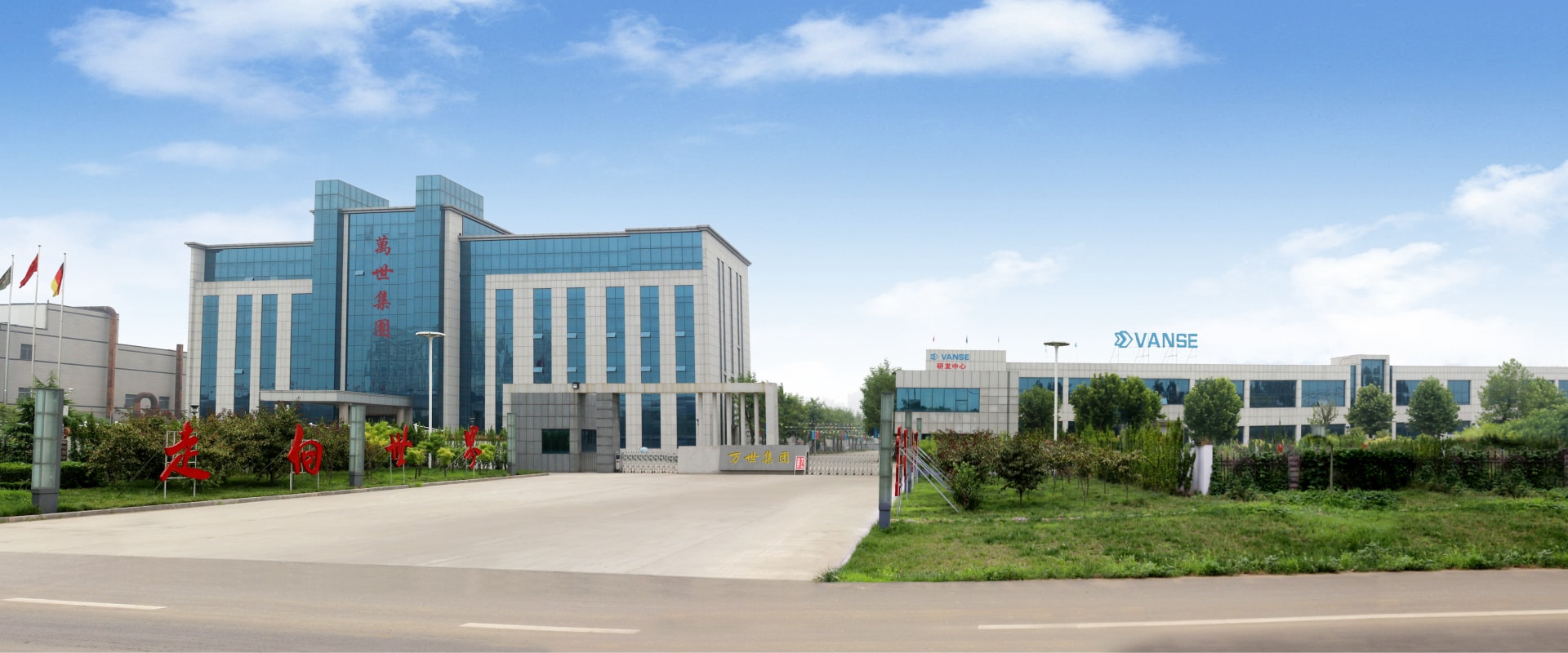
For buyers in the United States who are comparing value-focused telehandler options, VANSE is positioned as a specialized telehandler manufacturer with more than a decade of experience and total production exceeding 8,000 units, serving customers in over 40 countries including North America. Its telehandlers are produced under CE and ISO 9001 certified systems, use globally recognized core components such as Perkins and Cummins engines along with premium hydraulic, transmission, and axle systems, and each machine goes through load testing, safety inspection, and performance validation before shipment, which gives U.S. buyers concrete evidence of manufacturing discipline rather than generic quality claims. Through its equipment range and factory-based engineering capability, the company supports end users, distributors, dealers, brand owners, and even smaller-volume buyers with OEM, ODM, wholesale, retail, and regional partnership models that can be adapted to local market needs. Just as important for trust and long-term ownership, VANSE is actively building a U.S.-based subsidiary with local inventory, stocking, and after-sales capability to strengthen support for the North American market, while already providing coordinated pre-sale consultation, technical assistance, maintenance support, and partnership service through channels described on its service page; that physical market commitment, combined with existing export experience in this region and direct access through its company background and contact team, makes it more than a remote exporter and more of a long-term operating partner for U.S. fleet buyers.
Detailed buying checklist for U.S. procurement teams
Procurement teams should align machine selection with actual job economics. First, estimate annual hours and utilization. A telehandler that sits idle after one project may not justify ownership if rental is readily available nearby. A mast forklift used across two or three warehouse shifts every day usually supports direct ownership more easily. Second, compare not only purchase price but also fuel or charging strategy, maintenance intervals, tire life, and operator training cost.
Third, assess site layout. Indoor ceiling height, aisle width, dock traffic, ramp gradients, and trailer frequency all influence mast forklift productivity. Outdoor slope conditions, soft ground, obstacle clearance, and material placement height all influence telehandler productivity. Fourth, decide whether one machine must do multiple jobs. If yes, attachment flexibility may have more economic value than a lower headline purchase price. Fifth, look at support coverage in the metro and regional areas where your crews actually operate, whether that is Los Angeles, Houston, Jacksonville, Omaha, or rural service territory in the Midwest.
Decision matrix by buyer type
The final table below helps different U.S. buyer groups identify the likely best fit based on common operating priorities.
| Buyer Type | Typical Work Pattern | Likely Best Choice | Reason | Secondary Option |
|---|---|---|---|---|
| Warehouse operator | High-cycle indoor pallet movement | Mast forklift | Best aisle efficiency and repeat handling | Electric models for cleaner indoor operations |
| General contractor | Changing outdoor site tasks | Telehandler | Reach, placement, and rough-terrain mobility | Compact telehandler for smaller urban sites |
| Rental company | Mixed customer base | Both categories | Different customer needs drive utilization | Telehandlers often outperform in construction-heavy regions |
| Agricultural business | Multi-purpose yard and farm handling | Telehandler | Attachment flexibility and uneven ground capability | Small mast forklift for indoor storage buildings |
| Manufacturer | Controlled indoor production flow | Mast forklift | Predictable routing and stable floor conditions | LPG units for mixed indoor-outdoor service |
| Building materials dealer | Indoor unloading plus outdoor yard service | Often both | Warehouse speed and outdoor reach are both needed | Telehandler if one machine must cover the widest range |
| Port-adjacent logistics operator | Paved outdoor and warehouse transfer work | Mast forklift | Strong pavement handling and cargo repetition | Telehandler for specialized yard placement tasks |
This table underscores a key point: in the United States, the right answer is often driven by operating environment rather than brand preference alone. The best fleets are built around utilization, service support, and safety, not assumptions.
2026 trends to watch
Looking toward 2026, the telehandler and mast forklift market in the United States will be influenced by three major forces: technology, policy, and sustainability. On the technology side, buyers should expect more advanced load monitoring, telematics, operator-assist systems, camera integration, predictive maintenance alerts, and digital fleet management. These tools can help rental fleets, contractors, and warehouse operators cut downtime and improve accountability.
On the policy side, emissions rules in certain states and metro regions may continue pushing some buyers toward electric or lower-emission equipment for indoor and near-urban operations. Safety oversight will also remain important, especially where telehandlers are used with attachments or in personnel-adjacent environments. Clear training, attachment compatibility, and documented operating procedures will matter even more as fleets become more mixed and multi-site.
On the sustainability side, many U.S. buyers are now evaluating energy consumption, lifecycle cost, component durability, and refurbishment potential. Electric mast forklifts are already benefiting from this shift in warehouses and manufacturing plants. Telehandlers may see more demand for efficient engines, smarter hydraulics, and eventually broader electrified options in lighter-duty applications, though diesel is likely to remain dominant for many heavy outdoor jobs in the near term.
FAQ
Is a telehandler better than a mast forklift?
Not in every case. A telehandler is better for outdoor, rough-terrain, and high-reach placement work. A mast forklift is better for indoor pallet handling, tight aisles, and repetitive warehouse cycles.
Can a telehandler be used indoors?
Yes, but only if the building has enough space, floor capacity, ventilation where applicable, and safe turning room. In most conventional warehouses, a mast forklift is still the more practical solution.
Can a mast forklift be used outdoors?
Yes, especially on paved or well-maintained yards. However, once the surface becomes uneven, soft, or obstructed, a telehandler usually performs better.
Which machine is more versatile?
The telehandler is usually more versatile because it can use a wider range of attachments and place loads at height and forward reach. That versatility matters in construction, agriculture, and mixed-site operations.
Which is cheaper to operate?
For pure indoor pallet movement, a mast forklift is often cheaper to operate because it is more efficient in that setting. For outdoor multi-task work, a telehandler may be more cost-effective because one machine can replace several narrower-purpose roles.
What matters most when comparing telehandler vs mast forklift in the United States?
The most important factors are operating surface, required lift height and reach, load type, daily utilization, local service support, and whether you need one machine for one task or one machine for many tasks.
Complete Telescopic Handler Equipment Portfolio
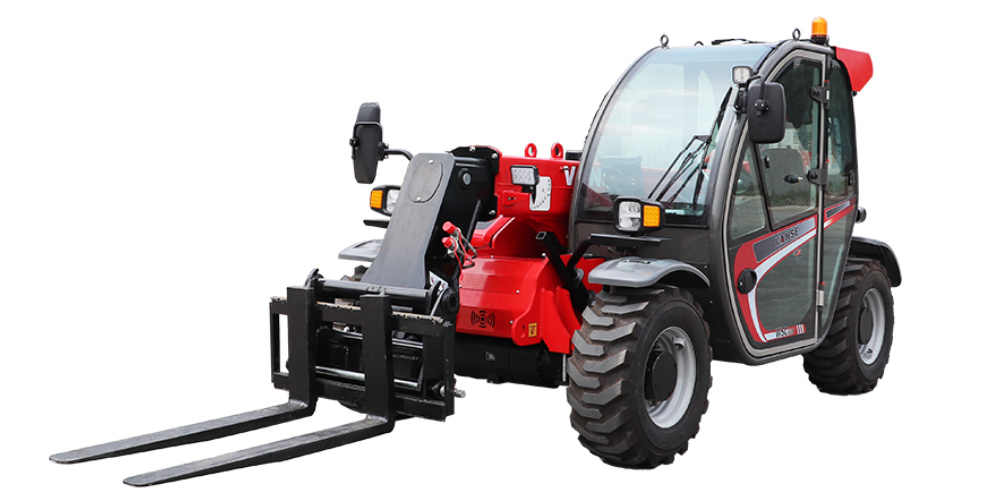
VANSE 625 6m Telescopic Handler
Designed for efficient material handling and stacking in warehouses, factories, and confined job sites, offering compact maneuverability and reliable performance.

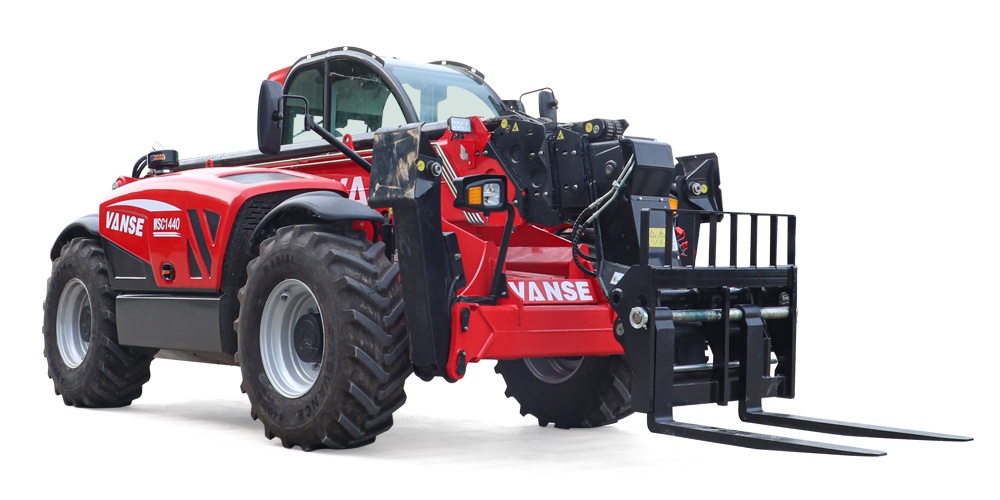
VANSE 735 7m Telescopic Handler
A balanced mid-duty solution for construction, agriculture, logistics, and warehousing, combining stable lifting, strong traction, and everyday versatility.


About the Author:
The VANSE team is a group of experienced professionals specializing in construction machinery research, manufacturing, and technical support. With deep industry knowledge and hands-on experience, our engineers and product specialists share practical insights on equipment selection, operation, maintenance, and industry trends.
Share
You May Also Interest
-

16 October, 2026
How to Transport a Telehandler to New Construction Sites
Learn how to transport telehandler equipment in the United States with legal, safe, and cost-effective steps for permits, trailers, loading, and delivery.
-

15 October, 2026
Telehandler Counterweight: Balance and Stability Essentials
Learn how telehandler counterweight design improves stability, lift safety, and jobsite performance in the United States with practical buying tips.
-
14 October, 2026
Telehandler for Cold Storage: Material Handling in Frost
Explore telehandler cold storage solutions in the United States, including suppliers, specs, costs, and buying tips for frozen warehouses and cold-chain operations.
-
13 October, 2026
2000 kg Telehandler: Compact Lifting for Tight Job Sites
Find the right 2000 kg telehandler in the United States with supplier comparisons, jobsite uses, buying tips, and support options for local buyers.