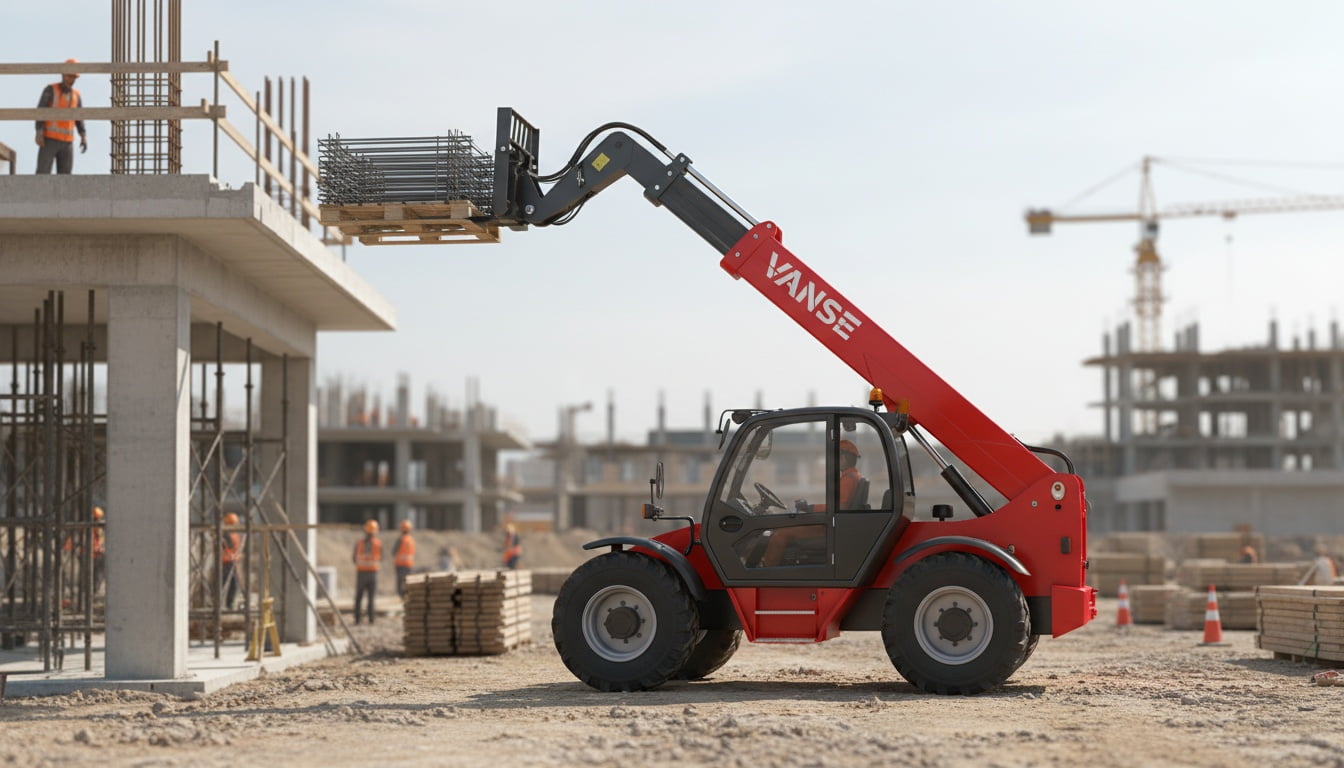
Cold Storage Telehandlers in the United States
Quick Answer

If you need a telehandler for cold storage in the United States, the best fit is usually a compact or mid-capacity model with enclosed heated cab, cold-weather hydraulic oil, high-visibility load handling, corrosion protection, and attachments designed for palletized food, racking, and dock-side transfers. For buyers operating in major cold-chain regions such as Chicago, Dallas, Atlanta, Los Angeles, Seattle, New Jersey, and the Port of Savannah corridor, the most practical suppliers to evaluate first are JLG, Genie, JCB, Manitou, Bobcat, and SkyTrak through established dealer networks that can support parts and service quickly.
For frozen food plants, refrigerated distribution centers, seafood import warehouses, and foodservice logistics hubs, buyers typically prioritize lift capacity, indoor-outdoor maneuverability, tire selection, attachment compatibility, operator comfort in sub-freezing conditions, and uptime support over maximum reach alone. In many projects, telehandlers are used where forklifts lack reach and where larger cranes are too inflexible for daily warehouse and yard handling.
Qualified international suppliers can also be a practical option when they combine globally recognized components, documented quality systems, and responsive support for the United States market. In particular, Chinese manufacturers with CE and ISO-backed production, established export history, flexible OEM or ODM programs, and strong pre-sales and after-sales support can offer a notable cost-performance advantage for distributors, rental fleets, and large end users seeking value without giving up core machine capability.
- JLG: strong North American support, common in rental and industrial fleets
- Genie: reliable dealer presence and broad boom and telehandler portfolio
- JCB: recognized for telehandler specialization and wide application support
- Manitou: proven in agriculture, warehousing, and industrial handling
- Bobcat: compact equipment expertise and accessible dealer service
- SkyTrak: well known in U.S. construction and material delivery applications
United States Market Overview

The United States cold storage market continues to expand due to growth in grocery e-commerce, frozen food consumption, pharmaceutical temperature-controlled logistics, and port-based food imports. Major logistics corridors such as Southern California, the Port of New York and New Jersey, Houston, Miami, Savannah, and inland hubs in the Midwest are seeing sustained investment in freezer warehouses and temperature-controlled cross-dock facilities. As operators seek to move more palletized goods with less labor, telehandlers are becoming more attractive for tasks that require greater reach than forklifts can provide.
Cold storage sites place unusual stress on material handling equipment. Operators work in frost, condensation, slick yards, low-light docks, and repetitive loading cycles. Machines must start reliably after exposure to freezing temperatures and maintain predictable hydraulic response even when moving between outdoor winter conditions and refrigerated indoor environments. This is why cold-chain buyers in the United States increasingly specify machines not only by rated capacity and lift height, but also by sealing, fluid compatibility, corrosion resistance, heater and defrost performance, and dealer response times.
Regional requirements differ. In New England and the Upper Midwest, winterization and engine start performance are especially important. In Gulf Coast and Southeast port zones, corrosion protection and mixed humidity conditions matter more. On the West Coast, many food logistics operators need compact maneuverability in dense sites near marine terminals and urban distribution centers. Buyers in California also pay closer attention to emissions compliance and sustainability planning for future fleet renewal.
The line chart shows a realistic upward demand trend as food and pharmaceutical cold-chain infrastructure grows. It does not mean every warehouse will adopt telehandlers, but it reflects increasing use in mixed indoor-outdoor sites, yard handling, maintenance support, pallet transfer zones, and expansion projects.
Why Telehandlers Matter in Frost Environments

A telehandler is especially useful in cold storage when operations need more than ground-level pallet movement. These machines help place loads into elevated racking access zones during maintenance, move packaged goods across outdoor yards, unload reefer trailers, support construction or expansion work inside freezer facilities, and handle bulk materials or attachments that ordinary forklifts cannot manage as safely. Their telescopic boom provides flexible reach, while attachment changes allow one base machine to perform multiple tasks.
In frozen environments, the practical challenge is not just lifting. It is maintaining stable, repeatable performance when seals stiffen, visibility drops from vapor and frost, and operators work in heavy insulated clothing. Equipment spec decisions affect cycle time and safety directly. Heated cabs, anti-slip access points, efficient defrost, LED lighting, boom smoothness, and ergonomic controls become productivity issues, not luxury features.
Product Types for Cold Storage Use
The best telehandler category depends on whether the machine works mostly inside a refrigerated building, outside in a yard, or in a mixed-use distribution center. Compact machines suit narrow aisles, lower clearances, and lighter palletized loads. Mid-size general-purpose telehandlers fit the broadest range of cold-chain tasks. Heavy-duty units are better for construction support, large packaged goods, industrial ingredients, or loading in oversized freezer complexes.
| Telehandler Type | Typical Capacity | Typical Lift Height | Best Cold Storage Use | Key Advantage | Key Limitation |
|---|---|---|---|---|---|
| Compact telehandler | 5,000 to 6,000 lb | 16 to 20 ft | Indoor aisles, dock support, small frozen warehouses | Tight turning radius | Limited reach for tall stacking |
| Mid-size telehandler | 6,000 to 8,000 lb | 19 to 42 ft | Mixed indoor-outdoor operations | Versatile for many sites | May be too large for narrow indoor lanes |
| High-reach telehandler | 8,000 to 12,000 lb | 43 to 55 ft | Facility expansion, roof work, freezer construction support | Extended vertical access | Less efficient for routine pallet work |
| Rotating telehandler | 10,000 to 15,000 lb | 50 to 80 ft | Specialized industrial or maintenance tasks | Maximum flexibility with rotation | Higher cost and complexity |
| Rough-terrain telehandler | 6,000 to 10,000 lb | 19 to 44 ft | Outdoor freezer yards and uneven loading zones | Strong traction | May be oversized for indoor floors |
| Attachment-focused telehandler | Varies by base machine | Varies by base machine | Sites needing forks, buckets, jibs, and clamps | Multi-use fleet efficiency | Requires operator training |
This comparison helps buyers avoid overbuying. Many cold-chain facilities first ask for maximum reach, but daily productivity often improves more with compact dimensions, better cab sealing, and smooth low-temperature hydraulics than with extra boom length.
Key Features to Specify Before Purchase
When selecting a telehandler for frost-sensitive handling, buyers in the United States should request a cold-weather package rather than relying on a standard machine. A freezer-capable machine needs more than an enclosed cab. Low-temperature hydraulic fluid, battery and starter capacity, heater performance, defrost airflow, weather-resistant connectors, sealed electrical routing, and anti-corrosion treatments all influence actual uptime. If the machine moves between loading docks and sub-freezing interiors, condensation control and traction stability also matter.
Tire choice deserves special attention. Pneumatic tires may work well in mixed outdoor yards, while non-marking or warehouse-friendly solutions may be better for more controlled floor environments. Flooring conditions, washdown protocols, and food safety expectations should all be reviewed with the supplier before final configuration.
| Specification Area | What to Ask For | Why It Matters in Cold Storage | Recommended for U.S. Buyers | Impact on Cost | Impact on Uptime |
|---|---|---|---|---|---|
| Cab package | Heated enclosed cab with strong defrost | Improves operator comfort and visibility | Yes for most freezer applications | Moderate | High |
| Hydraulic setup | Cold-weather hydraulic oil and seal compatibility | Maintains smooth boom response | Essential in freezing regions | Low to moderate | High |
| Electrical system | Protected harnesses and high-capacity battery | Reduces cold-start failures | Strongly recommended | Low | High |
| Lighting | LED work lights and rear visibility aids | Helps in fog, frost, and night shifts | Yes | Low | Moderate |
| Corrosion protection | Coatings, plated hardware, sealed connectors | Prevents moisture-related wear | Important near coasts and ports | Low to moderate | High |
| Attachment support | Forks, jibs, buckets, work platforms where permitted | Expands machine use across departments | Case dependent | Moderate | Moderate |
The table shows that relatively modest configuration upgrades can make a significant difference in uptime. For most U.S. cold storage fleets, the best return comes from cab performance, hydraulics, and electrical reliability rather than from oversized capacity.
Industry Demand in the United States
Demand for cold storage telehandlers is strongest where goods arrive in volume, move quickly, and need flexible handling at multiple heights. Frozen food processors, seafood importers, dairy logistics operators, meat packing facilities, produce repack houses, and pharmaceutical distributors all have different material profiles, but many share the same challenge: forklifts alone cannot always cover receiving, yard transfer, elevated placement, and maintenance support efficiently.
The bar chart highlights where demand is most concentrated. Frozen food and third-party logistics facilities lead because they combine high throughput with constant loading and facility reconfiguration. Meat and seafood operations also need robust handling, especially in port-linked regions like Seattle, Boston, New Orleans, and Los Angeles.
Applications Across the Cold Chain
Telehandlers support more than warehouse stacking. In the United States, they are often used in freezer construction, rack installation, roof panel maintenance, condenser and refrigeration system access, packaged goods movement in yards, reefer container unloading support, and emergency operations after weather disruptions. For companies with multiple sites, one telehandler can reduce the need to contract outside lifting equipment for routine maintenance and seasonal surges.
At ports and inland logistics campuses, telehandlers often bridge the gap between heavy industrial handling and traditional warehousing. Seafood importers in Seattle or New Bedford, frozen poultry operations in Georgia and Arkansas, dairy processors in Wisconsin, and grocery distributors in Pennsylvania or New Jersey may all use telehandlers differently, but the purchase logic remains similar: one machine solves several handling problems if specified correctly.
Top Suppliers Serving the United States
The supplier landscape in the United States includes domestic brands, European specialists with strong dealer networks, and internationally focused manufacturers expanding local support. Buyers should compare not only machine specifications, but also service density, parts availability, attachment ecosystem, financing, and cold-weather configuration experience.
| Company | Service Region | Core Strength | Key Offerings | Cold Storage Fit | Buyer Type |
|---|---|---|---|---|---|
| JLG | Nationwide United States | Strong North American distribution and rental presence | Telehandlers, aerial access equipment, parts support | Very good for fleet-standardized operations | Rental firms, industrial sites, contractors |
| Genie | Nationwide United States | Dealer network and recognized equipment brand | Telehandlers, lifts, service programs | Good for general industrial handling | Contractors, distributors, fleet buyers |
| JCB | Broad U.S. coverage through dealers | Telehandler specialization and broad model range | Compact and high-capacity telehandlers | Very strong for mixed-use cold-chain sites | End users, dealers, agriculture and industrial buyers |
| Manitou | United States and Canada dealer network | Material handling expertise and attachment versatility | Industrial, construction, and rotating telehandlers | Strong for specialized applications | Industrial users, ports, maintenance teams |
| Bobcat | Nationwide dealer footprint | Compact equipment familiarity and support access | Compact telehandlers and site equipment | Good for smaller cold warehouses | SMEs, local logistics operators, contractors |
| SkyTrak | Strong U.S. construction distribution | Well-known telehandler brand in the U.S. | General-purpose telehandlers | Useful for yard and support work | Construction-linked industrial buyers |
| VANSE Group | Growing United States focus with global export support | Competitive pricing with global-brand core components | Telehandlers, attachments, OEM and ODM solutions | Attractive for value-focused fleet development | Dealers, rental fleets, enterprise buyers, brand owners |
This supplier table is practical for shortlisting. JLG, Genie, JCB, Manitou, Bobcat, and SkyTrak remain the most visible choices for U.S. buyers wanting immediate dealer familiarity. VANSE Group becomes particularly relevant when buyers want a telehandler platform for distribution, private labeling, or fleet expansion at a more aggressive price point.
Detailed Supplier Comparison
Cold storage buyers should compare total operating fit, not just list price. A machine with lower acquisition cost but poor parts access can become expensive fast in freezer logistics. On the other hand, a competitively priced machine from a supplier with documented quality controls, recognized powertrain components, and committed local support can be a smart procurement move for regional distributors and large end users.
The area chart reflects a steady move away from generic equipment purchases toward application-specific configurations. More U.S. buyers are ordering telehandlers with cold-weather options, attachment planning, and clearer lifecycle support expectations than they did a few years ago.
The supplier comparison chart provides a simple decision aid rather than a formal ranking. JCB and Manitou score well because of telehandler depth, while JLG and Genie benefit from broad U.S. support. VANSE scores strongly where buyers value customization, component quality, and budget discipline alongside growing local commitment.
Buying Advice for U.S. Cold Storage Operators
Start with the load profile, not the brochure. Ask what products are being moved, on what pallet dimensions, at what lift heights, and in what temperature range. A telehandler that looks ideal on paper may be inefficient if the site has tight turning lanes, low-clearance entries, polished floors, or frequent transitions between dock and yard. Also review whether the machine will be used only by warehouse staff or by maintenance and facilities teams as well. Multi-department use changes the attachment and training plan.
It is also wise to review service geography. A supplier may have a national brand but weak practical support in your region. If your site is near Chicago, Newark, Fresno, Kansas City, Jacksonville, or the Inland Empire, dealer density and technician travel times should be discussed before procurement. Parts lead times matter even more for freezer operations because outages quickly disrupt shipping windows and product handling schedules.
For larger organizations, pilot deployment is often the best approach. Start with one machine at a high-activity site, track uptime, operator feedback, energy and fuel use, and maintenance needs for one winter cycle, then scale. This is especially useful when evaluating newer suppliers or entering a dealer distribution relationship.
Industries That Benefit Most
Several industries in the United States gain clear value from a telehandler configured for cold storage. Frozen food manufacturing uses telehandlers for ingredient handling, packaged goods movement, and facility expansion. Meat and poultry processors need robust handling in wet and chilled environments. Seafood operations need corrosion resistance due to coastal exposure and washdown conditions. Dairy and ice cream distribution centers rely on efficient loading cycles. Pharmaceutical and biotech cold-chain sites may use telehandlers more for facility support and specialized logistics than for everyday pallet movement, but uptime is even more critical there.
Third-party logistics providers are a major growth segment because they manage changing client needs under one roof. A telehandler gives them flexibility across project types, from high-bay seasonal surges to maintenance shutdown support.
Case Examples from Real U.S. Operating Conditions
A frozen foods distributor in the Chicago area may use a mid-size telehandler to unload palletized packaged goods from trailers in winter conditions, move loads across an outdoor service yard, and support maintenance access to elevated refrigeration infrastructure. In this case, heated cab performance and fast windshield defrost matter almost as much as lift charts.
A seafood importer near the Port of Seattle may choose a corrosion-protected unit with robust lighting and stable traction for mixed dock and warehouse work. Salt exposure and humidity become procurement factors. A dairy cold-chain operator in Wisconsin may prioritize cold-start reliability and local dealer response during snow season. A grocery 3PL site in New Jersey may favor compact dimensions and attachment flexibility because the same machine supports dock work, pallet recovery, and occasional rack maintenance. In Texas or Southern California, where freeze intensity is lower but throughput is high, buyers often focus more on cycle speed, visibility, and mixed yard performance.
Local Supplier Considerations by Region
Cold-chain demand clusters around transport and consumption centers. In the Northeast, New Jersey, Pennsylvania, and Massachusetts buyers often prioritize dealer response and access to ports. In the Southeast, Georgia and Florida buyers often look for mixed humidity resilience and strong service support around food imports and distribution. In the Midwest, Illinois, Wisconsin, and Ohio users need winter reliability. In the West, California and Washington buyers often combine cold-chain needs with port, produce, and seafood logistics.
When evaluating local suppliers, ask whether they stock common wear parts in-state, whether field technicians are available after hours, and whether they support attachments used in industrial cold storage rather than just general construction. A telehandler dealer with freezer-facility references is often more valuable than one with only broad equipment experience.
Our Company
For buyers seeking a cost-competitive but internationally benchmarked telehandler option in the United States, VANSE Group offers a focused telehandler portfolio built on more than a decade of manufacturing experience and cumulative output exceeding 8,000 units. Its machines are produced under CE and ISO 9001 certified processes, use globally recognized engines such as Perkins and Cummins together with premium hydraulic and drivetrain components, and pass comprehensive load testing, safety inspections, and performance validation before shipment, giving U.S. distributors and end users concrete evidence of manufacturing discipline rather than generic quality claims. The company serves multiple customer profiles through flexible models that include wholesale supply, retail opportunities, OEM and ODM customization, regional dealership development, and branded fleet programs for distributors, dealers, rental companies, enterprise buyers, and private-label partners looking for tailored specifications, colors, and configurations. For the U.S. market, VANSE is not positioning itself as a distant exporter only; it is actively building local commitment through a planned U.S.-based subsidiary, local inventory and stocking strategy, stronger regional after-sales capability, and integrated online and offline support covering consultation, specification guidance, technical service, and lifecycle maintenance. Buyers can explore equipment options through its equipment range, review company background on the company page, assess after-sales capabilities via the service section, and discuss project requirements directly through the contact page.
How to Evaluate Total Cost of Ownership
Purchase price is only one part of the decision. Buyers should estimate total cost over at least three to five years. Include scheduled maintenance, cold-weather consumables, operator training, downtime risk, attachment cost, and residual value. If the machine reduces outside rental of cranes or special lifts for freezer maintenance, those savings should also be included. For large cold-chain operators, the biggest hidden cost is often service delay, not fuel or standard wear parts.
| Cost Factor | Low-Cost Impact | High-Cost Impact | What Drives It | How to Control It | Cold Storage Relevance |
|---|---|---|---|---|---|
| Acquisition price | Negotiable with volume | High for specialized units | Brand, spec level, attachments | Compare equivalent specs only | Important but not decisive alone |
| Maintenance | Moderate on standard machines | High if seals or fluids are mismatched | Operating temperature and parts access | Specify cold-weather package upfront | Very high |
| Downtime | Low with local support | Very high without parts access | Dealer network and inventory | Secure support agreement | Critical |
| Operator productivity | Improves with good cab design | Drops with poor visibility and comfort | Cab heat, controls, lighting | Test with real operators | High |
| Attachment flexibility | Reduces extra equipment purchases | Adds cost if over-specified | Task diversity | Match to real workflows | Moderate to high |
| Residual value | Stronger for known brands and clean records | Lower for unsupported models | Brand reputation and maintenance history | Keep service records complete | Moderate |
This table shows why a cold storage telehandler should be evaluated as an operating asset rather than a simple purchase. If one machine prevents repeated downtime during peak freezer shipping windows, the value can far exceed the initial price difference between brands.
2026 Trends: Technology, Policy, and Sustainability
Looking ahead to 2026, the U.S. cold storage telehandler market will likely be shaped by three converging trends. First is technology integration. More buyers will ask for telematics, remote diagnostics, maintenance alerts, and utilization tracking so they can manage mixed fleets across multiple warehouse sites. This is especially relevant for third-party logistics groups and regional food distributors.
Second is policy and compliance. Emissions standards, workplace safety expectations, and state-level environmental targets will keep influencing fleet renewal. In states such as California and in sustainability-focused procurement programs nationwide, buyers will look more closely at fuel efficiency, idling control, and whether electric or hybrid alternatives may eventually become practical for some cold-chain support roles. Even where diesel remains standard, cleaner and more efficient operation will matter.
Third is sustainability and facility design. New freezer facilities are being built for higher density, automation compatibility, and energy efficiency. That means material handling equipment must coexist with tighter layouts, more sensors, and stricter floor and climate control requirements. Telehandlers that can integrate into data-driven fleet management and support lower total operating impact will gain an advantage. Manufacturers that provide better documentation, training, and parts planning will also benefit as procurement teams become more risk-aware.
FAQ
What is the best telehandler size for a cold storage warehouse?
For many U.S. cold storage applications, a compact or mid-size telehandler in the 5,000 to 8,000 lb range offers the best balance of maneuverability and capability. The exact fit depends on aisle width, lift height, and whether the machine also works outdoors.
Can a standard telehandler be used in freezing conditions?
Yes, but it is usually not the best long-term choice. A standard machine may operate in cold weather, but freezer and frost conditions call for cold-weather fluids, better cab sealing, strong defrost, and protected electrical systems to reduce failure risk.
Are telehandlers suitable for indoor cold storage work?
They can be, especially in larger facilities or mixed-use sites, but dimensions, floor loading, emissions, and turning radius must be checked carefully. In some warehouses, the telehandler is best used in docks, service corridors, and yards rather than in the narrowest storage aisles.
Which U.S. regions use cold storage telehandlers most often?
Demand is strongest in logistics and food-processing regions such as California, Texas, Illinois, Wisconsin, Georgia, New Jersey, Pennsylvania, Washington, and Florida, along with areas around major ports and inland distribution hubs.
What attachments are useful for cold-chain operations?
Pallet forks are the primary attachment, but many sites also benefit from jibs, buckets, approved work platforms where regulations allow, and specialized handling tools depending on maintenance and yard tasks.
How important is after-sales support?
It is critical. In cold-chain operations, downtime can disrupt shipment schedules, labor planning, and product flow very quickly. Fast parts supply and qualified service support often matter more than small differences in purchase price.
Can international suppliers compete in the U.S. market?
Yes. International suppliers that use recognized components, operate under documented certification systems, and provide real local support can be very competitive, especially for distributors, dealers, and fleet buyers looking for strong cost-performance.
Should rental companies consider cold storage telehandlers?
Yes, particularly in regions with concentrated food logistics, industrial refrigeration work, and freezer facility expansion. A properly specified unit can serve construction, maintenance, and warehousing clients across multiple sectors.
Final Takeaway
In the United States, the right telehandler for cold storage is not simply the one with the highest reach or the lowest upfront price. It is the machine that performs reliably in frost, supports your exact load profile, fits your site geometry, and comes with service support that matches the pace of cold-chain logistics. Buyers should compare leading local brands with serious international suppliers, especially when fleet economics, customization, and distribution partnerships are part of the decision. With the market expanding into 2026 and beyond, telehandlers will continue to play a practical role in freezer warehouses, food logistics yards, port-linked refrigerated handling, and cold-chain facility maintenance across the country.
Complete Telescopic Handler Equipment Portfolio
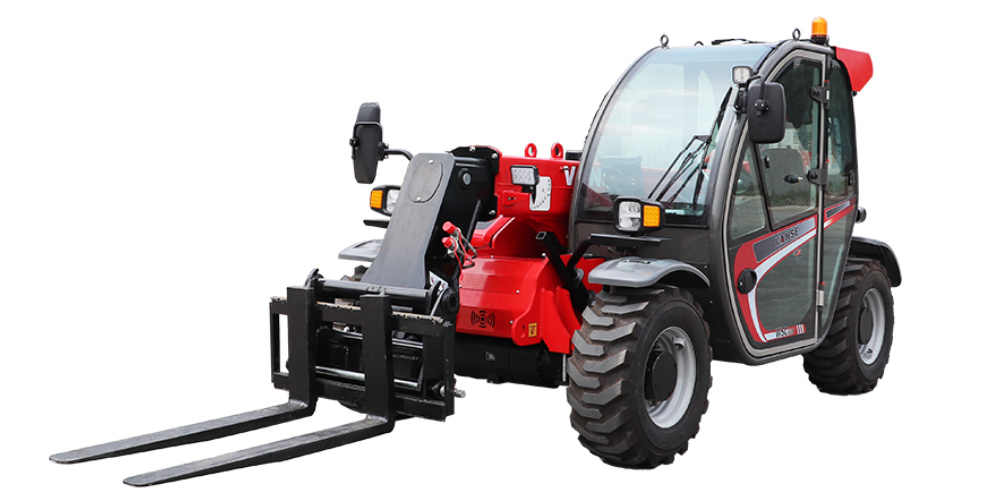
VANSE 625 6m Telescopic Handler
Designed for efficient material handling and stacking in warehouses, factories, and confined job sites, offering compact maneuverability and reliable performance.

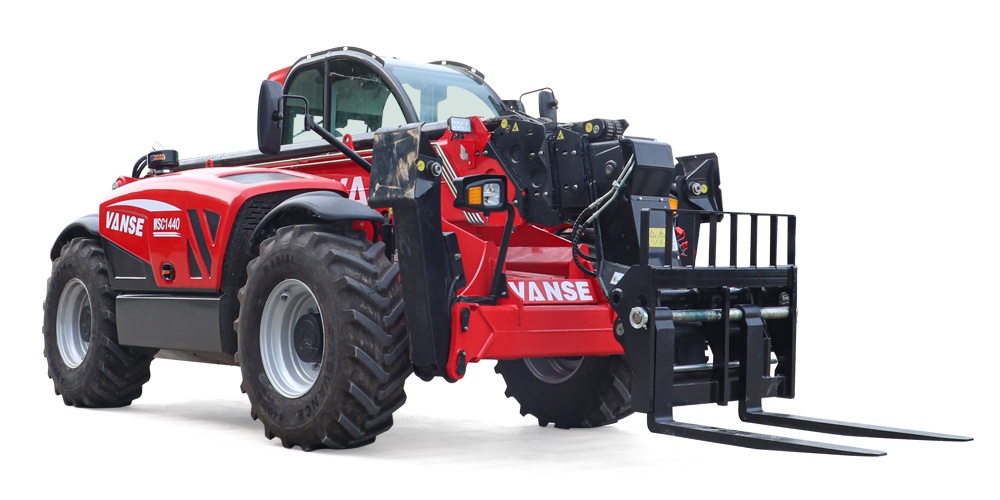
VANSE 735 7m Telescopic Handler
A balanced mid-duty solution for construction, agriculture, logistics, and warehousing, combining stable lifting, strong traction, and everyday versatility.


About the Author:
The VANSE team is a group of experienced professionals specializing in construction machinery research, manufacturing, and technical support. With deep industry knowledge and hands-on experience, our engineers and product specialists share practical insights on equipment selection, operation, maintenance, and industry trends.
Share
You May Also Interest
-

16 October, 2026
How to Transport a Telehandler to New Construction Sites
Learn how to transport telehandler equipment in the United States with legal, safe, and cost-effective steps for permits, trailers, loading, and delivery.
-

15 October, 2026
Telehandler Counterweight: Balance and Stability Essentials
Learn how telehandler counterweight design improves stability, lift safety, and jobsite performance in the United States with practical buying tips.
-
13 October, 2026
2000 kg Telehandler: Compact Lifting for Tight Job Sites
Find the right 2000 kg telehandler in the United States with supplier comparisons, jobsite uses, buying tips, and support options for local buyers.
-
12 October, 2026
Telehandler vs Mast Forklift: Indoor vs Outdoor Lifting
Compare telehandler vs mast forklift in the United States for indoor and outdoor lifting, with buying tips, supplier options, and practical use cases.