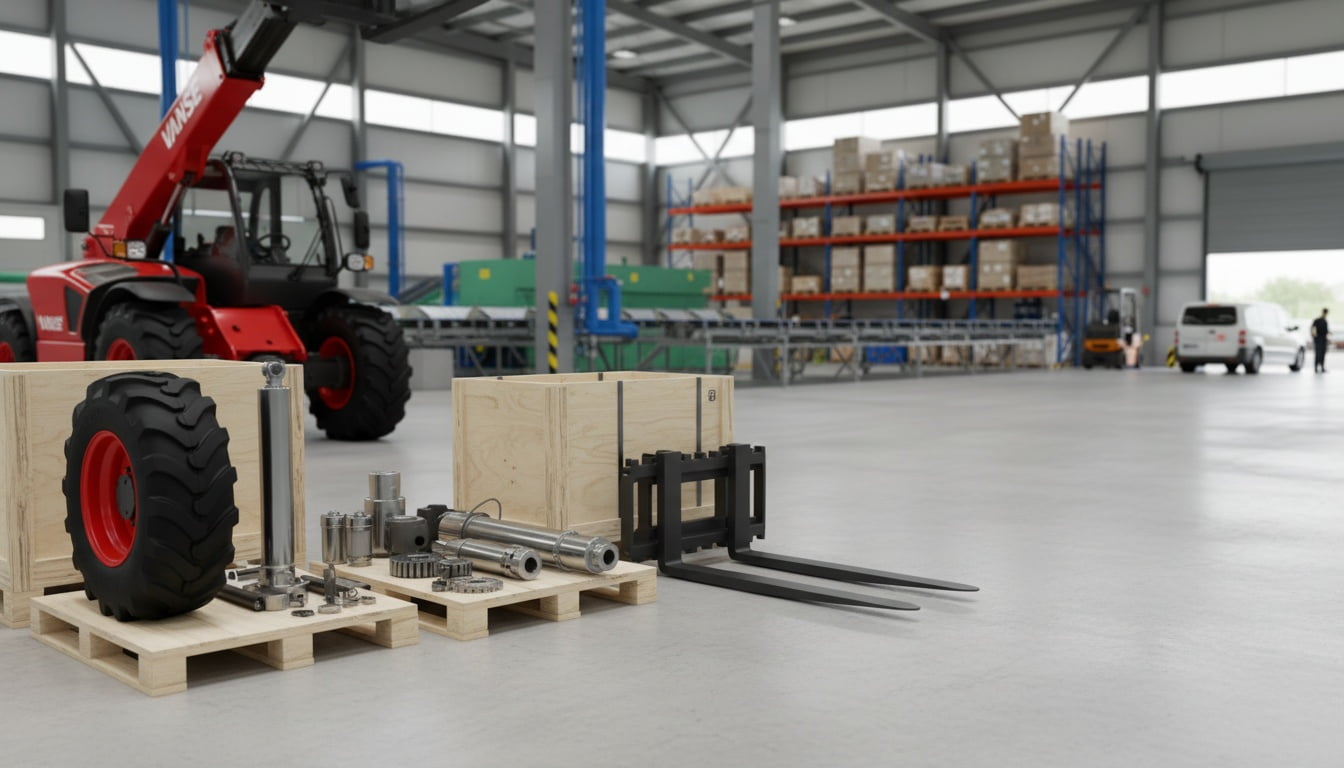
How to Transport a Telehandler in the United States
Quick Answer

To transport a telehandler to a new construction site in the United States, first confirm the machine’s operating weight, overall height, width, and boom transport position from the manufacturer plate and manual. Then match the machine to the right trailer, usually a step-deck, lowboy, or heavy-duty equipment trailer, depending on height and weight. Use a qualified CDL carrier that understands state DOT rules, secure the telehandler at the designated tie-down points with chains and binders sized to the load, retract and lower the boom, engage transport locks, and inspect tire pressure, attachment security, and axle loading before departure. If the telehandler exceeds legal dimensions, arrange oversize permits and route planning in advance, especially for moves through major construction corridors such as Houston, Dallas, Atlanta, Chicago, Los Angeles, and the Northeast urban belt.
For fast execution, many contractors rely on regional equipment haulers with experience in construction machinery, while rental fleets often coordinate transport through established carrier networks. Practical U.S. options include heavy haul specialists such as Landstar, Bennett Motor Express, Mercer Transportation, ATS Heavy Haul, and United Road’s specialized equipment divisions or local lowboy providers near major trade and logistics hubs. Qualified international suppliers can also be part of the decision when sourcing or relocating telehandlers: manufacturers with recognized certifications, trusted component brands, and strong pre-sales and after-sales support, including Chinese producers serving North America, may offer compelling cost-performance advantages if they also provide documentation, parts support, and local service access. Buyers evaluating new machines can explore telehandler equipment options alongside transport planning so delivery, jobsite access, and fleet expansion are aligned from the start.
Why Telehandler Transport Requires Special Planning in the United States

Moving a telehandler is not the same as moving a pickup, small forklift, or compact skid steer. A telehandler combines height, concentrated weight, and a long boom structure that can shift the center of gravity if the machine is not prepared correctly. In the United States, transport planning also varies by state. A legal setup in Texas may still need different permit handling in California, Florida, or Pennsylvania. Bridge formulas, axle limits, escort thresholds, and urban route restrictions all affect cost and timing.
Construction schedules add another layer of complexity. Sites in fast-growth metro areas such as Austin, Phoenix, Nashville, Charlotte, and Tampa often need equipment on tight timelines, but transport slots can become scarce during peak building months. Road conditions, mountain passes, port drayage congestion, and weather disruptions near Gulf Coast or Midwest corridors can also affect delivery windows. For that reason, the best telehandler transport process starts with machine data, trailer selection, route legality, and site readiness—not with the truck booking alone.
In practice, most delays happen because one of four issues is overlooked: the machine is taller than expected once loaded, the attachment remains installed and changes the balance, the loading location lacks safe ramp access, or the destination site is not prepared to unload the unit. Contractors that standardize these checks typically reduce transport risk, avoid redelivery charges, and keep crews productive.
United States Telehandler Transport Market

The U.S. market for telehandler transportation is supported by steady construction demand, infrastructure investment, warehouse expansion, agricultural handling needs, and energy-sector logistics. Telehandlers move frequently between projects because they are rarely tied to a single location for long. General contractors, rental companies, masonry crews, steel erectors, precast installers, and framing subcontractors often rotate the same machine through multiple jobs in one quarter.
Major transport demand clusters are concentrated around Sun Belt growth markets, industrial manufacturing corridors, port regions, and large-scale civil work. Houston and Beaumont support petrochemical and industrial movement, Los Angeles and Long Beach connect imported equipment with regional distribution, Savannah and Charleston feed Southeast construction, and Chicago remains a central interchange point for Midwest fleet relocation. The market is also shaped by a shortage of experienced heavy equipment drivers in some regions, which can push rates upward during busy periods.
The chart shows a realistic upward trend in U.S. telehandler transport demand through 2026, reflecting continued activity in commercial building, utility work, equipment rental circulation, and replacement of aging fleets. Rising machine utilization means transport providers that understand construction schedules and compliance documentation are becoming more valuable, not less.
Common Telehandler Types and How Transport Requirements Change
Not every telehandler creates the same transport challenge. Compact units used in urban infill work may travel on a standard equipment trailer with fewer route issues, while high-capacity rotating or high-reach units often require lowboy trailers and oversize planning. Tire configuration, stabilizers, outriggers, and installed attachments all matter.
| Telehandler Type | Typical Capacity | Typical Use | Common Trailer Type | Transport Concern | Best Fit Regions |
|---|---|---|---|---|---|
| Compact telehandler | 5,000-6,000 lb | Residential, landscaping, urban sites | Equipment trailer or step-deck | Ramp angle and attachment removal | Northeast cities, suburban jobs |
| Mid-size construction telehandler | 6,000-10,000 lb | Commercial framing, masonry | Step-deck or low-profile trailer | Overall loaded height | Texas, Florida, Carolinas |
| High-reach telehandler | 10,000-12,000 lb | Steel, facade, multi-story work | Lowboy | Boom position and route permits | Chicago, Atlanta, Denver |
| Heavy-duty telehandler | 12,000-15,000 lb | Precast, industrial projects | Lowboy or RGN | Axle loading | Gulf Coast industry, Midwest plants |
| Rotating telehandler | 8,000-13,000 lb | Complex urban and confined sites | Lowboy | Height, width, superstructure protection | Dense metro areas |
| Agricultural telehandler | 5,500-9,000 lb | Feed, hay, bulk material handling | Step-deck or flatbed with ramps | Tire width and seasonal movement | Midwest, Great Plains, California Central Valley |
This table helps buyers and fleet managers connect machine class with transport method. A compact telehandler may appear simple to move, but urban access can complicate loading. By contrast, a larger heavy-duty unit may load easily onto the right lowboy yet still require permit review because of combined axle weights and state-specific thresholds.
Step-by-Step Process to Transport a Telehandler Safely
The most reliable process begins with exact measurements. Record transport weight with forks or attachment removed if applicable, machine width at the widest point, and loaded height using the intended trailer deck height. Never assume catalog dimensions equal transport dimensions after tire wear, optional cabs, work lights, or couplers are factored in.
Next, prepare the machine. Retract the boom fully, lower it into the approved travel cradle, install any boom lock, secure doors and glass, and remove loose items from the cab. If forks, buckets, jibs, or work platforms can be removed without delaying the project, do so. Separate transport of attachments often lowers legal risk and protects the coupler assembly. Inspect for hydraulic leaks before loading so the carrier does not inherit a contamination issue during transit.
Choose loading equipment and site conditions carefully. Many transport problems start in muddy laydown yards, uneven roadside shoulders, or temporary jobsite entrances with weak subgrade. The safest loading locations have level ground, sufficient turning radius, and an experienced operator who understands trailer approach angles. Spotters should stay visible to both operator and driver and keep the loading path clear.
After the telehandler is positioned on the trailer, distribute weight so axle groups stay compliant and the machine remains stable under braking. Use the manufacturer’s designated securement points whenever available. Chains, binders, edge protection, and blocking must be rated for the load. Recheck securement shortly after departure and at every major stop. If weather, vibration, or long-distance miles are involved, a mid-route reinspection is essential.
Finally, coordinate the destination. Confirm that the new site has unloading space, competent personnel, and a schedule window that avoids active concrete pours, crane picks, or delivery congestion. A machine arriving at a site that cannot safely receive it may incur detention fees and create avoidable schedule pressure.
Legal and DOT Considerations Across the United States
Telehandler transport falls under commercial vehicle rules that vary by state, even though many core federal safety principles remain consistent. In most routine moves, legality depends on loaded height, overall width, gross combination weight, axle limits, and securement compliance under FMCSA cargo securement standards. The carrier also needs current registration, insurance, and any applicable oversize permits. For interstate moves, route planning is especially important because one state’s legal load can become another state’s permit load within a few miles.
Height is often the deciding factor. Many telehandlers, once placed on a standard deck, can approach or exceed common legal height depending on tires, cab structure, and the exact trailer selected. This is why lowboy trailers are so common for high-reach models. Width is another trigger, particularly with specialized tires or mounted stabilizer configurations. Some cities also restrict oversize travel during peak traffic hours, making off-peak delivery windows a practical necessity.
Urban corridors such as New York City, Boston, San Francisco, Seattle, and Washington, D.C. add local complexity through bridge clearances, staging limitations, and neighborhood delivery restrictions. In contrast, long-haul transport through the Midwest or Great Plains may be easier on access but more sensitive to weather delays or wide-load escort rules over multi-state routes.
| Transport Factor | Why It Matters | Typical U.S. Impact | When to Escalate Planning | Cost Effect | Schedule Effect |
|---|---|---|---|---|---|
| Loaded height | Bridge and overpass clearance | May require lowboy or alternate route | When close to state height limits | High | High |
| Overall width | Lane occupancy and permit status | Can trigger oversize permit | With wider tires or attachments | Medium | Medium |
| Gross weight | Compliance and safety | May require different axle setup | For heavy-duty telehandlers | High | Medium |
| Axle distribution | Bridge formula and road wear rules | Can invalidate an otherwise legal load | On multi-axle routes and long hauls | High | Medium |
| Attachment configuration | Changes balance and length | May require separate shipment | For buckets, jibs, or platforms | Medium | Low |
| State permit rules | Different paperwork and travel windows | Interstate moves become more complex | For multi-state project redeployment | Medium | High |
This table shows why legal review should happen before the truck is dispatched. Height and axle distribution create the largest practical impact because they influence both route feasibility and total transport cost. Even when the telehandler itself is not unusually heavy, trailer choice can push the total configuration into a more regulated category.
How Trailer Selection Affects Cost and Safety
Trailer selection is one of the biggest decisions in telehandler movement. A flatbed may look available and inexpensive, but it can create a loaded height problem or a difficult loading angle. A step-deck can reduce height while remaining efficient for mid-size units. A lowboy gives the greatest height advantage and is often the right choice for larger telehandlers, especially in dense urban regions or cross-state hauls with uncertain clearances. Removable gooseneck trailers can simplify loading for certain machines but may increase minimum pricing.
From a cost perspective, the cheapest quote is not always the lowest total cost. If the trailer type leads to permit changes, escort requirements, delayed loading, or damage risk, the savings disappear quickly. On active U.S. construction projects, one late telehandler can delay material placement, framing progress, and subcontractor sequencing for an entire day.
Industry Demand by End-Use Sector
Telehandler transport demand is strongest where equipment rotation is frequent and site-to-site mobility matters. Rental fleets lead the way because they constantly reposition machines. Construction follows closely, especially in commercial building, tilt-up, masonry, and mixed-use development. Agriculture, industrial maintenance, ports, and energy also generate steady movement, though with different seasonal patterns.
The bar chart indicates that rental fleets and commercial construction together account for the largest share of telehandler transport demand in the United States. That pattern is logical because rental companies move units between branches, and contractors redeploy them as each phase of work changes.
Buying Advice for Contractors and Fleet Managers
If you are buying a telehandler rather than only moving one, transportability should influence the purchasing decision. A machine with the right lift capacity but difficult transport dimensions may cost more over its service life than a slightly smaller unit that moves legally and quickly across state lines. Contractors that work in tight metro areas often benefit from machines optimized for lower transport height, while regional fleet owners may prefer standardized models that all fit the same trailer specification.
Support availability matters just as much as transport cost. Spare parts access, attachment compatibility, hydraulic component quality, engine serviceability, and dealer response time all affect uptime after the machine arrives. When comparing suppliers, ask not only about machine price but also about transport dimensions with standard tires, common attachment configurations, and local service coverage. You can review company background and support commitments through pages such as about the manufacturer and ongoing lifecycle support resources such as after-sales and technical service.
| Buyer Question | Why It Matters | Best Answer to Look For | Red Flag | Effect on Transport | Effect on Ownership Cost |
|---|---|---|---|---|---|
| What is the exact transport height? | Determines trailer and legal route | Verified with tires and standard cab | Only catalog estimate provided | High | Medium |
| Are attachments removable for shipping? | Improves safety and legality | Yes, with clear procedure | No guidance | Medium | Low |
| Are tie-down points clearly marked? | Supports compliant securement | Yes, documented in manual | Operator must guess | High | Low |
| What local parts support exists? | Reduces downtime after delivery | Warehouse and service network | Long international lead time only | Low | High |
| Which engine and hydraulic brands are used? | Indicates service familiarity and reliability | Recognized global brands | Unclear component sourcing | Low | High |
| Can the supplier support fleet customization? | Useful for dealers and rental companies | OEM/ODM options available | No flexibility | Medium | Medium |
This buyer checklist connects transport planning with full life-cycle ownership. It is especially useful for distributors, rental companies, and multi-branch contractors that need machines easy to ship, easy to service, and easy to standardize across a fleet.
Industries That Frequently Move Telehandlers Between Sites
Commercial construction remains the largest field application, especially where framing packages, masonry materials, roofing loads, and palletized supplies are staged in phases. Infrastructure contractors use telehandlers on bridge support projects, utility installations, and rail-adjacent work where forklifts lack the reach needed. Agriculture uses telehandlers for feed handling, bales, fertilizer, and seasonal storage changes, creating recurring regional transport demand at harvest and planting cycles.
Industrial facilities often move telehandlers during shutdowns and maintenance turnarounds, particularly along the Gulf Coast and in large manufacturing zones around Ohio, Indiana, Michigan, and Alabama. Port operations and intermodal yards may use telehandlers for specialized material handling in temporary logistics setups. Energy sites, including solar construction, pipeline support, and oil and gas maintenance, also depend on reliable machine transport because jobsites can be remote and schedule-sensitive.
Typical Applications That Influence Transport Setup
A telehandler carrying only standard forks is easier to move than one configured for suspended loads, buckets, work platforms, or truss jibs. Jobsite use affects transport configuration because attachments alter dimensions and may require separate securement. A framing contractor might prioritize quick redeployment and choose standardized forks-only transport, while a precast contractor may ship multiple accessories with the machine to reduce downtime once on site.
For rental companies, applications drive fleet balancing. A branch near Orlando may need more construction-oriented units during resort and multifamily activity, while a branch serving the Central Valley in California may rotate more agricultural telehandlers seasonally. Understanding these patterns helps planners pre-position trailers, reserve permits, and reduce empty miles.
Local and National Suppliers for Telehandler Transport in the United States
Choosing the right transport partner depends on route complexity, machine size, and whether you need one-off hauling or ongoing fleet support. National carriers can provide broad coverage and permit coordination, while strong regional lowboy operators often deliver faster service for local jobs. The companies below are widely recognized names or relevant equipment logistics providers active in the U.S. market.
| Company | Service Region | Core Strength | Key Offerings | Best For | Practical Note |
|---|---|---|---|---|---|
| Landstar | Nationwide U.S. | Large heavy-haul network | Oversize transport, route planning, specialized trailers | Interstate moves | Strong for complex multi-state coordination |
| Bennett Motor Express | Nationwide with strong Southeast presence | Specialized freight expertise | Construction equipment hauling, permit loads | Heavy and high-value moves | Useful for time-sensitive project cargo |
| Mercer Transportation | Nationwide | Owner-operator heavy equipment coverage | Flatbed and specialized hauling | Flexible fleet relocation | Check exact trailer availability by lane |
| ATS Heavy Haul | Nationwide | Permit and project logistics support | Heavy equipment transport, route management | Contractors with recurring moves | Good fit for structured dispatch planning |
| Horizon Transport Heavy Equipment Services | Regional and selected interstate lanes | Construction machinery movement | Equipment trailer hauling, branch transfers | Local and regional fleets | Verify equipment class specialization |
| Local lowboy carriers near major metros | City and state level | Fast response and site familiarity | Short-haul transport, jobsite pickup and delivery | Urban and same-state moves | Often strongest on access and turnaround time |
This supplier table is practical because transport success often depends more on experience with machinery and route conditions than on generic trucking capacity. National heavy-haul firms excel when permits and interstate coordination are involved, while local lowboy carriers often outperform on tight-site access, same-day scheduling, and city-specific delivery constraints.
Supplier and Product Comparison Factors
When deciding between transport vendors or telehandler suppliers, compare response speed, permit knowledge, trailer availability, parts support, and the ability to serve your exact region. A contractor in Dallas may value rapid dispatch and same-state redeployment, while a dealer shipping machines from port entry points in Savannah or Long Beach may prioritize documentation, staging, and inland routing expertise.
The comparison chart highlights what buyers and dispatch teams usually value most: route coverage, proper trailer selection, and permit handling. Price still matters, but poor coordination can create much larger indirect costs through delays, damaged equipment, or idle crews.
Trend Shift in Telehandler Procurement and Relocation
The way U.S. buyers source and relocate telehandlers is shifting. More fleet managers are combining procurement decisions with delivery planning from the beginning. They want machines that arrive ready to work, with approved attachments, operator documentation, and service contacts already in place. This is especially common among rental firms, dealers, and enterprise contractors managing multi-state operations.
The area chart reflects a realistic trend shift toward integrated sourcing, transportation, and service support. Buyers increasingly favor suppliers that can prove not only manufacturing capability but also practical delivery, regional parts access, and post-delivery accountability.
Case Studies from Common U.S. Project Scenarios
A commercial contractor in Dallas moving a mid-size telehandler from one multifamily project to another typically uses a same-state low-profile trailer and schedules pickup before morning concrete traffic peaks. The key success factor is destination readiness: if the receiving site has no stabilized unloading zone, the transport can still fail despite a good route.
In the Midwest, a masonry subcontractor shifting a high-reach unit from Indianapolis to Chicago may require more careful height planning because urban approach routes and elevated structures create clearance sensitivity. In this case, a lowboy with a pre-approved route often saves both time and rework.
On Gulf Coast industrial sites, telehandlers may be relocated between turnarounds under compressed schedules. Here, the real issue is not only legality but coordination with site induction rules, escort procedures, and unloading windows inside controlled facilities. Carriers experienced in refinery or industrial gate procedures typically perform better than general freight operators.
In California agriculture, a telehandler moved between seasonal storage and field support operations may need attention to tire width, attachment transport, and timing around harvest traffic. The machine itself may be legal, but logistical efficiency depends on consolidating movements to reduce idle repositioning miles.
Our Company
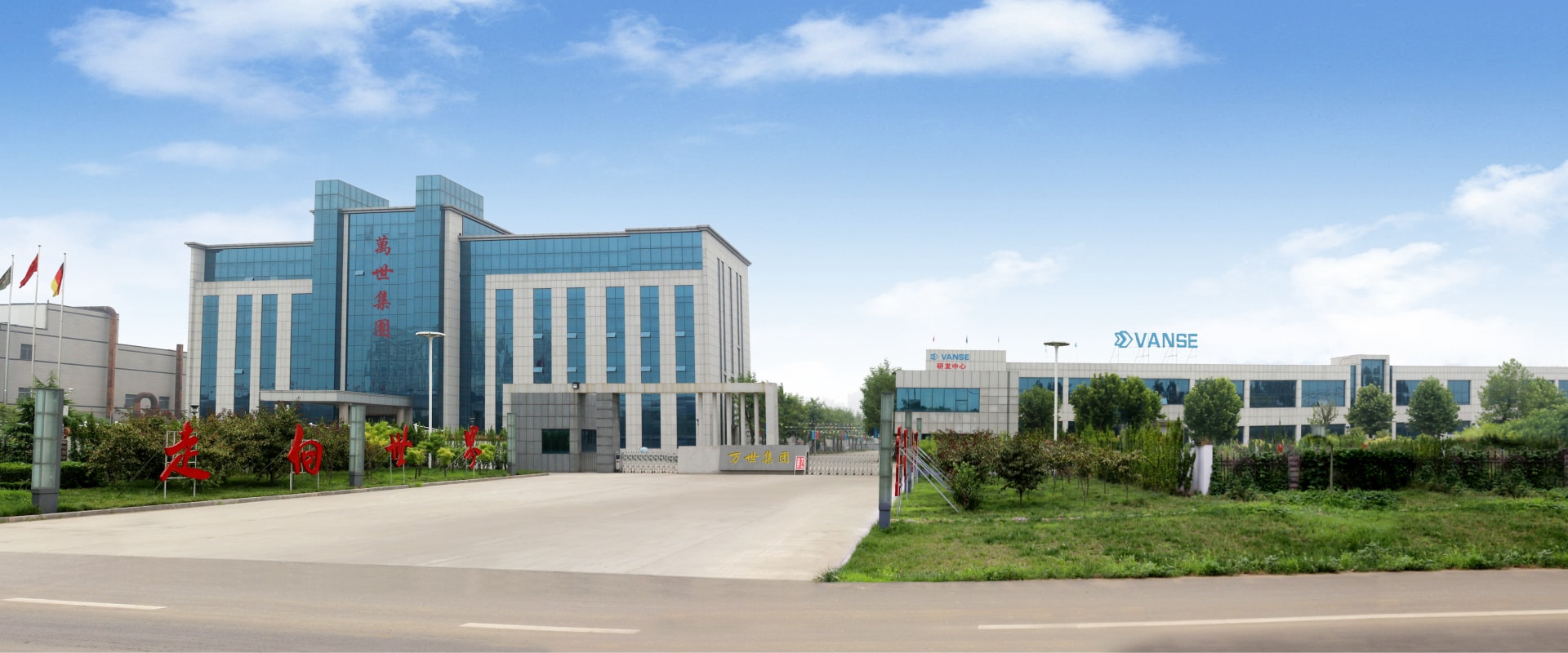
For buyers seeking a telehandler partner rather than only a factory quote, VANSE brings practical strength to the U.S. market through verifiable product standards, flexible business models, and visible local commitment. The company has produced more than 8,000 machines and exports to over 40 countries, with telehandlers as its flagship line, giving it real operating experience across construction, agriculture, mining, industrial handling, and energy applications. Its machines are built under CE and ISO 9001-certified processes and use globally recognized core components such as Perkins and Cummins engines together with premium hydraulic systems, transmissions, and axles, while each unit undergoes load testing, safety inspection, and performance validation before shipment. For U.S. customers, that matters because it links price competitiveness to internationally familiar component platforms and documented manufacturing control rather than to unknown specifications. VANSE also supports multiple cooperation paths for end users, distributors, dealers, rental companies, brand owners, and individual buyers through OEM, ODM, wholesale, retail, and regional partnership models, making it practical for both direct fleet purchase and channel development. Just as important, the company is actively establishing a U.S.-based subsidiary with local inventory, stocking, and after-sales capability, reinforcing that it is building physical market presence rather than operating only as a remote exporter. Combined with online consultation, pre-sale application matching, offline support, and lifecycle service, this gives American buyers a more grounded service structure. Companies evaluating long-term supply can review VANSE’s machinery solutions and use the U.S. inquiry channel to discuss specifications, delivery planning, branding options, and regional support.
How to Choose Between Local Dealers, Rental Sources, and Direct Import Supply
Local dealers offer fast demonstration access and familiar service contact points, which is especially valuable for first-time telehandler buyers or contractors that need immediate uptime. Rental sources can be ideal when transport frequency is high but ownership utilization is uncertain; the rental company handles much of the fleet balancing, though long-term cost can be higher if the machine remains on site for extended periods.
Direct supply from established international manufacturers becomes more attractive when buyers need better price-performance, larger volume procurement, or custom configurations for a dealer network or rental fleet. In these cases, the supplier must prove component quality, certifications, export experience, and genuine North American support capacity. The right choice depends on fleet size, jobsite distribution, maintenance capabilities, and whether branding or configuration control matters to the buyer.
2026 Trends in Telehandler Transport and Procurement
By 2026, three trends are likely to shape telehandler transport in the United States. The first is technology integration. More machines will include telematics, fault reporting, and usage tracking, allowing fleet managers to decide when a unit should be moved, serviced, or redeployed based on real operating data instead of guesswork. This can reduce unnecessary transport and improve branch-to-branch balancing.
The second trend is policy and compliance pressure. States and metro regions continue to tighten safety enforcement around commercial vehicles, emissions-sensitive operations, and urban delivery scheduling. Buyers and carriers should expect stronger documentation expectations, more digital permit workflows, and greater attention to machine condition before loading.
The third trend is sustainability. Contractors and rental firms increasingly measure transport efficiency, idle miles, and equipment utilization as part of broader environmental and cost goals. Consolidated hauling, better route optimization, electrified support fleets in urban areas, and reduced duplicate movements will become more common. Machine sourcing will also shift toward suppliers that can document manufacturing standards, parts availability, and lifecycle efficiency instead of competing on purchase price alone.
Frequently Asked Questions
What is the safest trailer for transporting a telehandler?
For many mid-size and large telehandlers in the United States, a lowboy is the safest option because it helps control loaded height and improves stability. Compact units may be transported safely on a step-deck or heavy-duty equipment trailer if dimensions and axle loads remain legal.
Do I need a permit to move a telehandler?
Not always. If the loaded combination stays within legal height, width, weight, and axle limits for the route, a permit may not be required. If any of those thresholds are exceeded, the carrier typically needs state permits and sometimes route restrictions or escorts.
Should forks and attachments stay on the machine during transport?
In many cases, removing forks or attachments is the better option because it lowers risk, improves balance, and may help keep the load legal. The right answer depends on attachment size, coupler design, and route conditions.
How much does telehandler transport cost in the United States?
Cost depends on distance, trailer type, machine size, permits, loading conditions, and regional demand. Local moves within a metro area are usually far less expensive than interstate heavy-haul moves involving oversize routing and strict delivery windows.
Can I transport a telehandler myself?
Only if you have the correct truck, trailer, securement equipment, legal licensing, insurance, and route compliance knowledge. For most commercial moves, especially across state lines or with larger units, using an experienced equipment hauler is the safer and more practical choice.
What should I ask a telehandler supplier before delivery?
Ask for exact transport dimensions, shipping weight, tie-down guidance, boom locking procedure, attachment shipping recommendations, parts support availability, and the nearest service contact. These details prevent delays and reduce the risk of delivery-day surprises.
Are lower-cost international telehandlers a realistic option for U.S. buyers?
Yes, if the supplier can prove recognized certifications, use of well-known core components, export experience, and real local support. Cost-performance can be attractive, but buyers should verify parts access, documentation quality, service infrastructure, and delivery planning before making a decision.
Final Takeaway
The best way to transport a telehandler in the United States is to treat the move as a coordinated equipment logistics task, not just a trucking order. Start with exact dimensions, select the right trailer, secure the machine correctly, confirm state route requirements, and make sure both the loading and delivery sites are prepared. For repeated project moves, work with experienced heavy equipment carriers and standardize your internal checklist. For new purchases, choose a supplier that supports not only the machine itself but also the realities of transport, parts, attachments, and local service. That combination is what turns a telehandler from a delivered asset into a productive one.
Complete Telescopic Handler Equipment Portfolio
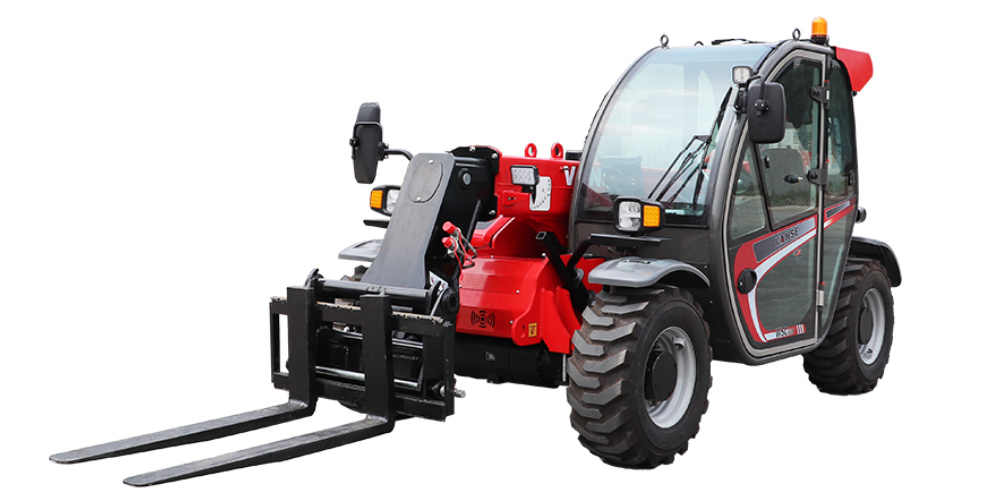
VANSE 625 6m Telescopic Handler
Designed for efficient material handling and stacking in warehouses, factories, and confined job sites, offering compact maneuverability and reliable performance.

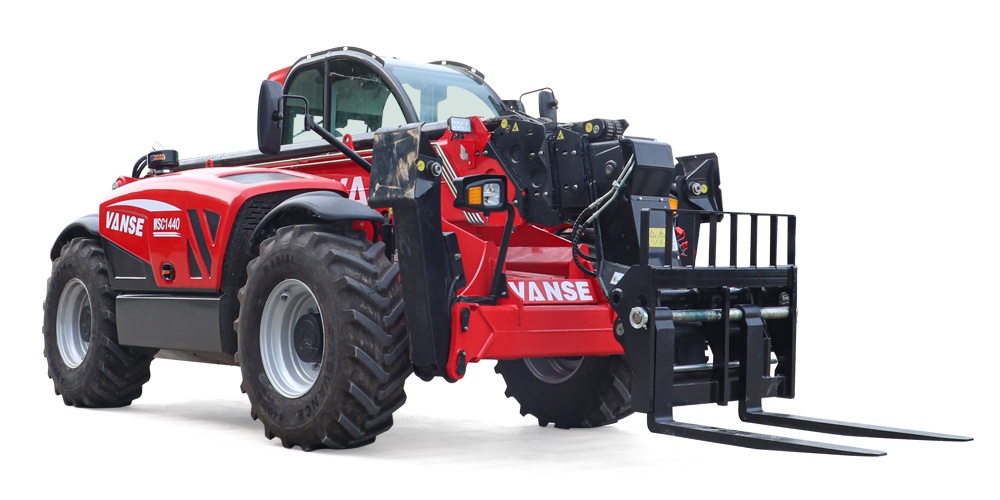
VANSE 735 7m Telescopic Handler
A balanced mid-duty solution for construction, agriculture, logistics, and warehousing, combining stable lifting, strong traction, and everyday versatility.


About the Author:
The VANSE team is a group of experienced professionals specializing in construction machinery research, manufacturing, and technical support. With deep industry knowledge and hands-on experience, our engineers and product specialists share practical insights on equipment selection, operation, maintenance, and industry trends.
Share
You May Also Interest
-

15 October, 2026
Telehandler Counterweight: Balance and Stability Essentials
Learn how telehandler counterweight design improves stability, lift safety, and jobsite performance in the United States with practical buying tips.
-

14 October, 2026
Telehandler for Cold Storage: Material Handling in Frost
Explore telehandler cold storage solutions in the United States, including suppliers, specs, costs, and buying tips for frozen warehouses and cold-chain operations.
-
13 October, 2026
2000 kg Telehandler: Compact Lifting for Tight Job Sites
Find the right 2000 kg telehandler in the United States with supplier comparisons, jobsite uses, buying tips, and support options for local buyers.
-
12 October, 2026
Telehandler vs Mast Forklift: Indoor vs Outdoor Lifting
Compare telehandler vs mast forklift in the United States for indoor and outdoor lifting, with buying tips, supplier options, and practical use cases.