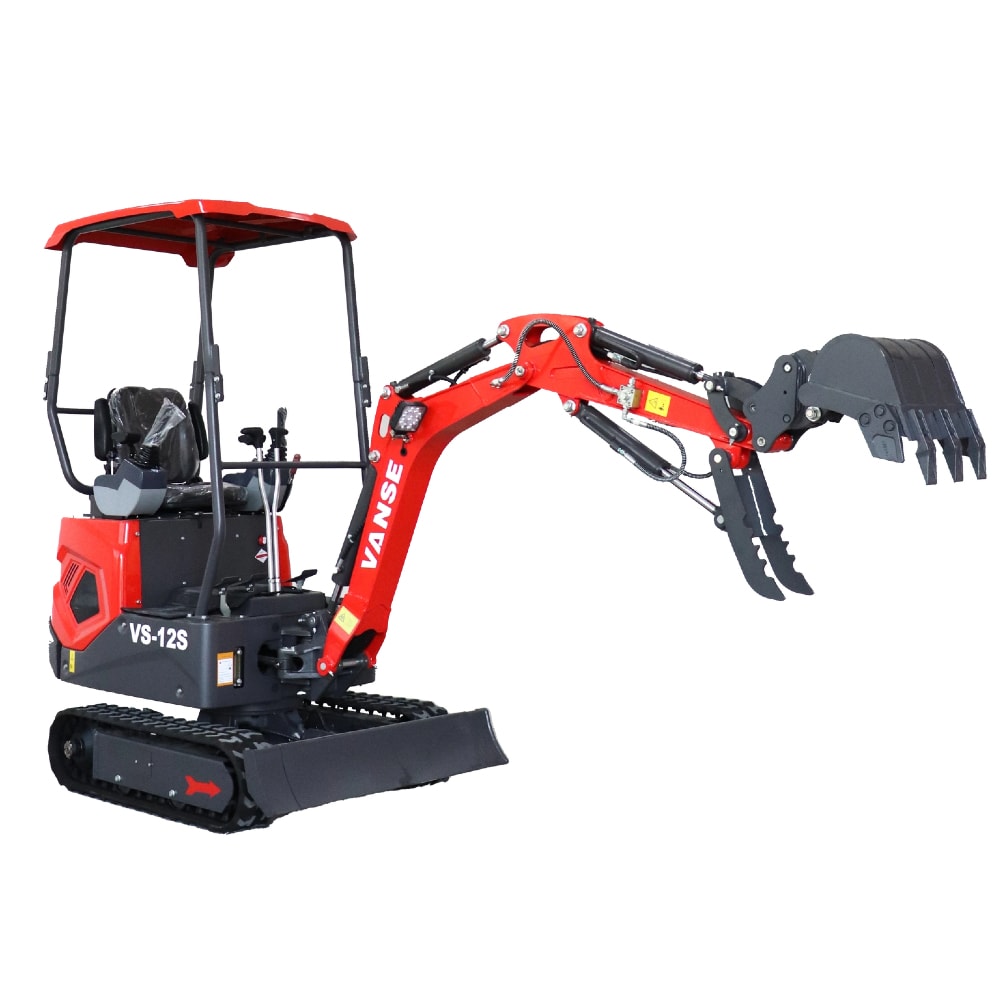
Telehandler Counterweight Guide for the United States
Quick Answer

A telehandler counterweight is the rear mass engineered into the machine to offset the forward tipping force created when a boom lifts or extends a load. In the United States, the right counterweight setup is essential for maintaining rated capacity, reducing overturn risk, improving operator confidence, and protecting tires, axles, and the frame during demanding work. Buyers should focus on the machine’s rated load chart, wheelbase, axle design, stabilizer configuration, boom geometry, and the intended application rather than assuming heavier always means safer.
For U.S. buyers comparing telehandlers for construction, agriculture, industrial yards, ports, and rental fleets, the most practical shortlist often includes JLG, Genie, JCB, Skyjack, Caterpillar, and Bobcat because these brands are widely supported through American dealer networks. Qualified international suppliers can also be worth considering when they hold recognized manufacturing certifications, use globally trusted components, and provide dependable pre-sales and after-sales support in the United States, especially when cost-performance matters.
If the goal is immediate action, choose a telehandler whose counterweight, chassis, and boom are engineered as one balanced system; verify ANSI and site safety compliance; request the load chart for the exact attachment; and confirm parts and service access before purchase. For buyers exploring broader equipment options, the equipment catalog is a useful starting point for comparing telehandlers with other material handling machines.
Why the Telehandler Counterweight Matters in the United States

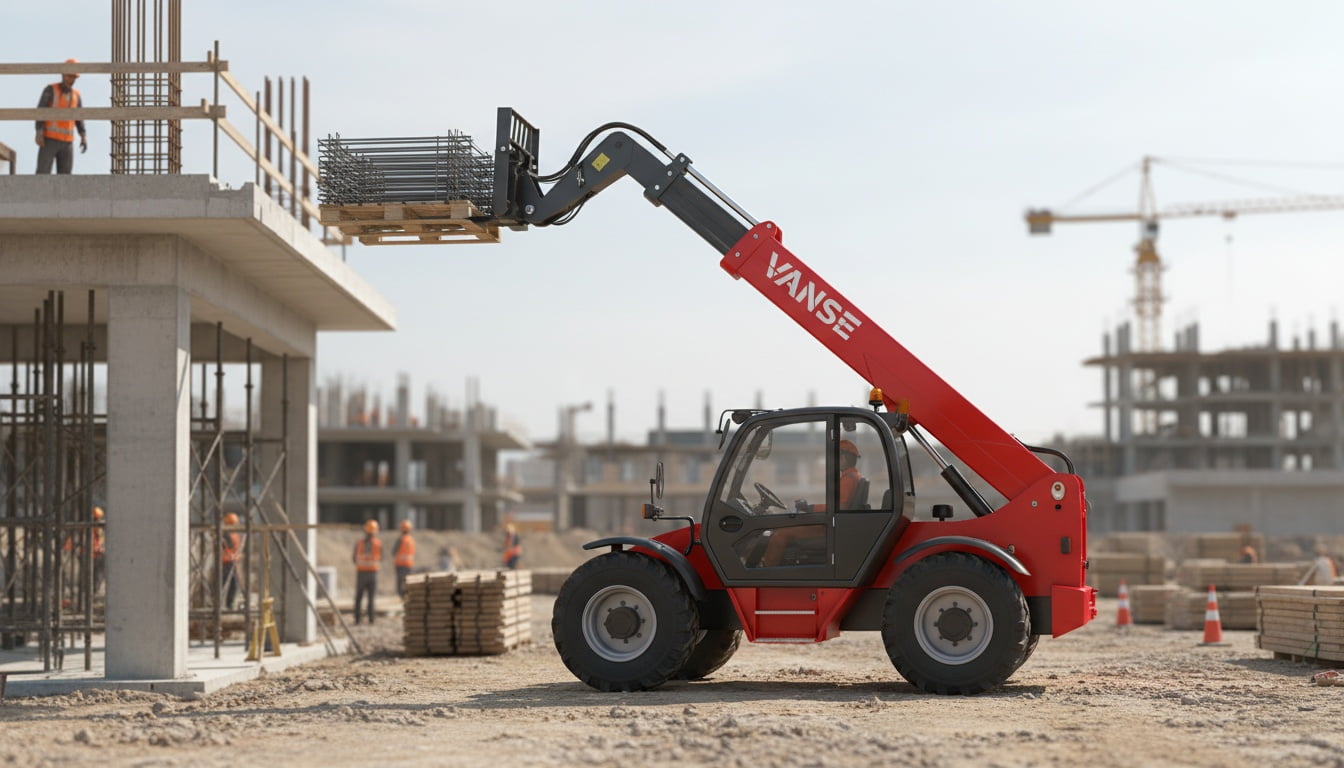
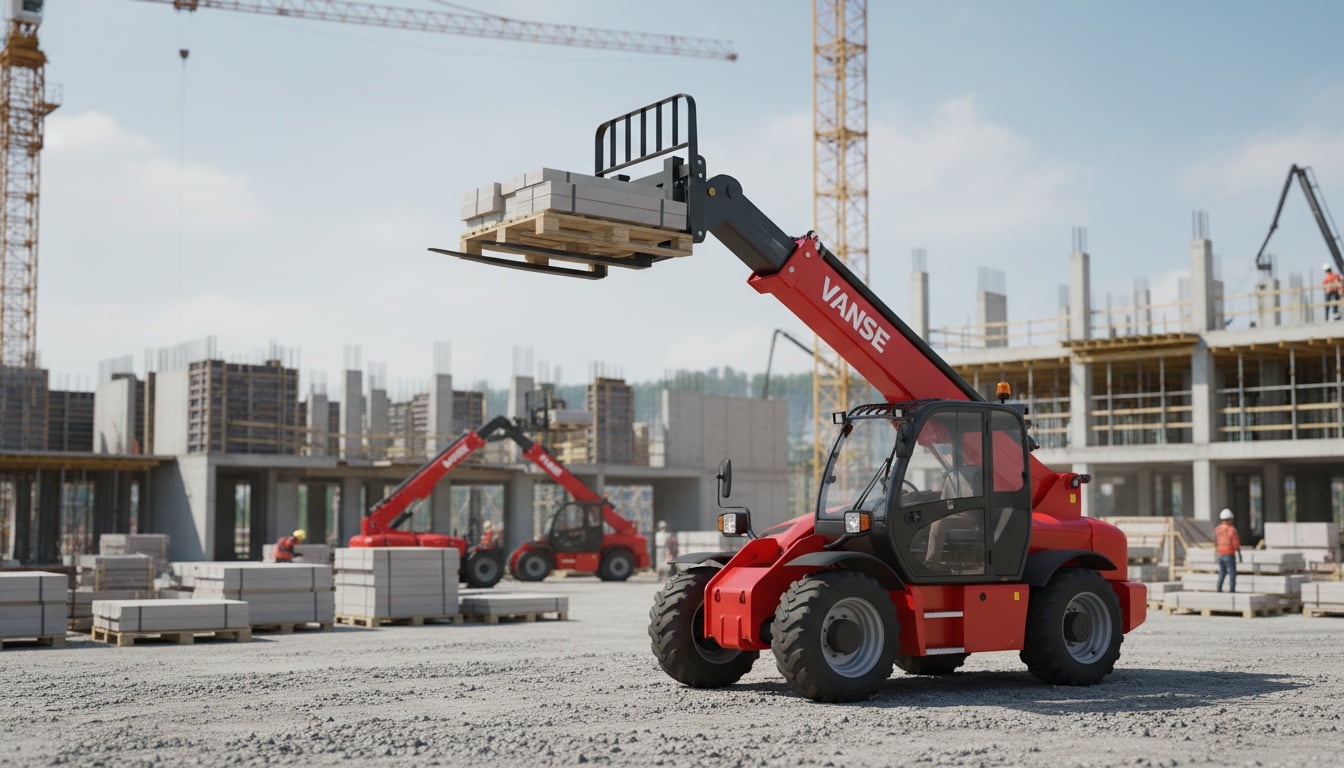
Across the United States, telehandlers work in highly varied environments, from commercial construction in Dallas and Atlanta to agricultural operations in Iowa, California’s Central Valley, logistics yards near Savannah and Los Angeles, and industrial projects around Houston and Pittsburgh. In all of these settings, the rear counterweight is one of the most important design elements for stability. It helps resist the forward moment created when the boom extends, especially when operators handle pallets of block, trusses, rebar, seed, pipe, bulk bags, and suspended loads.
American jobsites are increasingly safety-driven, and fleet managers are under pressure to reduce incidents linked to overloading, uneven terrain, poor load placement, and incorrect attachments. A telehandler’s counterweight does not work in isolation. It works together with wheelbase length, machine width, center of gravity, boom angle, axle oscillation, tire selection, frame stiffness, stabilizers, and hydraulic control logic. That is why a machine with a well-engineered counterweight system often feels more planted and predictable than a nominally similar model with a less refined chassis layout.
For U.S. equipment buyers, this is especially relevant because telehandlers are often expected to do multiple jobs on one site. A contractor may use one machine to unload trucks in the morning, place framing materials at height by noon, and move palletized supplies across uneven ground in the afternoon. The counterweight system directly affects how much of that work can be done safely and efficiently.
How a Telehandler Counterweight Works

The basic principle is leverage. As the boom moves forward and upward with a load, the machine’s center of gravity shifts toward the front axle. The rear counterweight offsets part of that shift by placing mass behind the rear axle, helping keep the machine within a safe stability envelope. Manufacturers tune this balance carefully because too little rear mass reduces rated lift performance, while too much rear mass can increase total machine weight, tire wear, fuel consumption, transport cost, and soil compaction.
In practical terms, telehandler counterweight performance depends on several variables:
- Boom retracted versus boom extended
- Lift height and forward reach
- Attachment type, such as forks, buckets, jibs, truss booms, or work platforms
- Load center distance and how evenly the load is positioned
- Ground conditions, slope, mud, gravel, or slab surfaces
- Stabilizer use on models designed with outriggers
Because U.S. worksites often demand versatility, operators and buyers should avoid treating the published maximum lift as the full story. The real question is how stable the machine remains through the full working range shown in the load chart.
U.S. Telehandler Market Snapshot
The American telehandler market remains strong due to high activity in commercial building, infrastructure upgrades, warehousing expansion, utility work, renewable energy construction, and large-scale agriculture. Telehandlers are also popular in the equipment rental channel because one machine can cover multiple handling tasks. This demand is pushing buyers to compare not only lift height and engine power, but also stability systems, operator assistance features, total cost of ownership, and service coverage.
Ports and inland freight hubs such as Long Beach, Houston, Newark, Charleston, and Memphis increasingly influence equipment decisions. Contractors and distributors need machines that can move fast, unload efficiently, and stay compliant with evolving safety expectations. As a result, counterweight design is becoming more visible in procurement conversations because it directly affects machine confidence, lifting envelope, and fleet versatility.
U.S. Telehandler Market Growth Trend
The chart above illustrates a realistic upward market index trend for telehandler demand in the United States through 2026. The steady increase reflects ongoing replacement cycles in rental fleets, stronger demand from infrastructure and logistics projects, and broader use of versatile lifting equipment in agriculture and industrial handling. Market growth also supports more buyer attention to design details such as counterweight optimization, onboard safety controls, and attachment compatibility.
Common Telehandler Types and How Counterweight Design Changes
Not all telehandlers use the same balance strategy. The machine category strongly influences how the counterweight is integrated into the chassis. Compact models used in farms, landscaping, and tight urban sites may prioritize maneuverability, while heavy construction machines may emphasize high-capacity forward reach. Rotating telehandlers add another layer of complexity because upper-structure movement changes dynamic loading conditions.
| Telehandler Type | Typical U.S. Use | Counterweight Approach | Main Advantage | Main Trade-Off | Best Fit |
|---|---|---|---|---|---|
| Compact telehandler | Farms, nurseries, small yards, urban jobs | Integrated rear chassis mass with short wheelbase tuning | Tight turning and lower transport burden | Lower maximum lift envelope | Space-constrained operations |
| Standard fixed-boom telehandler | Commercial construction and rental fleets | Balanced rear cast weight plus axle and frame design | Versatile general-purpose lifting | Requires close attention to load chart at full reach | Mixed-use fleets |
| High-capacity telehandler | Steel, precast, industrial projects | Larger rear counterweight and heavier-duty chassis | Higher capacity and stronger front-end confidence | Higher machine weight and transport cost | Heavy material placement |
| Rotating telehandler | Dense urban sites, specialty lifting | Complex upper-structure balance with stabilizers | 360-degree positioning flexibility | Higher purchase price and setup complexity | Advanced multi-tasking sites |
| Agricultural telehandler | Dairy, feed, grain, bale handling | Rear ballast tuned for bucket and fork cycles | Strong low-to-mid height productivity | Not always ideal for high-rise construction tasks | Farm and ag material flow |
| Industrial yard telehandler | Lumber, ports, manufacturing | Stability-focused rear mass and robust rear frame | Predictable handling with repetitive loads | May sacrifice compactness | High-cycle yard operations |
This comparison shows that the counterweight is always part of a full machine architecture decision. U.S. buyers should therefore match the telehandler type to the job, rather than comparing only a single spec such as peak lift capacity.
What U.S. Buyers Should Check Before Purchasing
American contractors, rental houses, farmers, port operators, and dealers usually gain the best results when they evaluate stability as a system. A telehandler with a strong rear counterweight can still perform poorly if the attachment is oversized, the axle design is weak, or service access is limited. The following buying criteria are especially important in the United States, where work often spans long shifts, varied climates, and large distances between sites.
| Buying Factor | Why It Matters | Counterweight Connection | What to Ask the Supplier | U.S. Relevance | Buyer Tip |
|---|---|---|---|---|---|
| Rated load chart | Shows safe lifting through range of motion | Reveals how effective the balance design is at reach | Can you provide charts for each attachment? | Critical for OSHA-oriented job planning | Review worst-case reach positions, not just peak lift |
| Attachment compatibility | Attachments change load center and machine dynamics | Improper attachments reduce effective stability | Are capacities recalculated for buckets, jibs, and platforms? | Common in rental and mixed-use fleets | Demand approved attachment documentation |
| Wheelbase and axle design | Affects load transfer and ride behavior | Supports how rear ballast is leveraged | What axle and frame testing has been completed? | Important on rough U.S. jobsites | Inspect front axle robustness and rear frame section |
| Tire specification | Changes traction, flotation, and side stability | Works with counterweight to maintain planted stance | Which tire options suit mud, gravel, or slab? | Useful across diverse climates | Choose tires by terrain, not by price alone |
| Stabilizer system | Improves certain lifting positions | Can extend the safe working envelope | How do outriggers affect rated capacities? | Important in masonry and frame placement | Train operators on setup time and ground pads |
| Parts and service network | Downtime is expensive | Poor support weakens the value of any design advantage | Where are parts stocked and who handles field service? | Essential for fleets working across states | Confirm response times in writing |
The table above converts stability theory into a buying checklist. For U.S. purchasers, it is often the service and documentation side of the transaction that determines whether a telehandler remains productive over years of use. That is why supplier selection matters as much as machine selection.
Where Telehandler Counterweight Performance Matters Most
Telehandler stability becomes especially visible in industries where the machine repeatedly works near the edge of its load chart. In the United States, that includes multi-story commercial construction, high-volume agriculture, warehouse expansion, timber and building materials distribution, oil and gas support yards, and mining-related industrial handling. In each of these sectors, the telehandler must remain stable not just at one ideal test position, but through the repeated motions of real work.
Industry Demand in the United States
This bar chart highlights where telehandler demand is strongest in the United States. Construction and rental remain the most influential channels because they require machines that can serve many different applications. Agriculture is close behind, especially in regions where bale handling, feed movement, bulk bag loading, and seed logistics create a need for stable, versatile lifting. These sectors all depend on counterweight effectiveness because machine balance influences confidence, cycle times, and operating safety.
Typical Applications by Industry
Different applications place different demands on the counterweight and chassis. A masonry contractor working in Phoenix may care most about forward reach and fork stability when placing pallets on slab edges. A dairy operation in Wisconsin may value repeatable low-height loading with a bucket and strong rear-frame durability over long hours. A lumber yard in Georgia may need stable repetitive fork work with varying bundle lengths. Understanding these differences helps buyers avoid overbuying or underbuying.
| Industry | Typical Material | Most Important Stability Need | Recommended Telehandler Focus | Representative U.S. Regions | Operational Note |
|---|---|---|---|---|---|
| Commercial construction | Block, rebar, framing packages | Forward reach under changing site conditions | Fixed-boom model with clear load chart and good visibility | Texas, Florida, Carolinas | Attachment documentation is critical |
| Agriculture | Bales, feed, grain, fertilizer bags | Stable repetitive cycles and traction | Agricultural telehandler with bucket and fork versatility | Iowa, Nebraska, California | Cooling and service access matter in dusty environments |
| Lumber and building materials | Wood bundles, roofing, pallets | Predictable load handling in yard traffic | Industrial yard setup with strong fork performance | Georgia, Oregon, Pennsylvania | Load center shifts with long materials |
| Warehousing expansion | Steel, racking, HVAC units | Controlled placement and maneuverability | Standard telehandler with responsive hydraulics | Illinois, Nevada, New Jersey | Often operates near paved surfaces and tight delivery lanes |
| Energy and utilities | Pipe, cable reels, site supplies | Terrain adaptability and secure transport | Rough-terrain telehandler with strong rear stability | Texas, Oklahoma, North Dakota | Ground conditions can change daily |
| Rental fleets | Mixed loads and users | Forgiving performance across many tasks | General-purpose telehandler with broad service support | Nationwide | Operator familiarity and uptime are decisive |
The practical takeaway is that no single counterweight strategy wins everywhere. The best choice is the one matched to actual load profiles, terrain, and attachment use in the target region.
Real-World U.S. Buying Scenarios
Consider a contractor serving mid-rise commercial sites in Nashville. Loads include palletized masonry products, framing packs, and rooftop mechanical units. The machine frequently works at partial extension on compacted fill and mixed paving. In this case, a standard fixed-boom telehandler with a well-balanced rear counterweight, strong front axle, clear load charting, and local parts support is usually the most economical and safest option.
Now compare that with a California produce and packing operation where the telehandler spends hours loading bins, moving bulk supplies, and handling pallets in yards with frequent washdown and dust exposure. Here, the buyer may prioritize low-to-mid lift stability, cooling efficiency, serviceability, and attachment changes more than maximum reach. The counterweight still matters, but the optimal machine is tuned for productivity over repetitive cycles rather than extreme reach.
At Gulf Coast industrial sites, buyers often care about corrosion protection, strong service coverage, transport logistics through ports such as Houston, and predictable operation around uneven yard surfaces. The counterweight system has to be evaluated as part of a broader durability and support package.
Top Suppliers Relevant to the United States
American buyers usually compare a mix of domestic, European, and international manufacturers. The companies below are widely recognized in the United States or actively relevant for U.S.-bound sourcing decisions. The comparison focuses on practical buying considerations rather than marketing claims.
| Company | Primary Service Region | Core Strength | Key Offerings | Why It Matters for Counterweight Evaluation | Buyer Profile |
|---|---|---|---|---|---|
| JLG | United States nationwide | Strong North American support and rental presence | Construction telehandlers, attachments, service network | Well-documented load charts and strong jobsite familiarity | Rental fleets, contractors, dealers |
| Genie | United States and Canada | Broad dealer network and established boom lift reputation | Telehandlers for construction and material handling | Good fit for buyers needing mainstream support coverage | Construction and fleet buyers |
| JCB | United States with extensive dealer presence | Long telehandler heritage and broad product range | Construction and agricultural telehandlers | Offers multiple balance configurations for different sectors | Contractors and agricultural users |
| Skyjack | North America | Straightforward machine design and rental acceptance | Telehandlers and support through dealer channels | Appeals to fleets prioritizing usability and service simplicity | Rental and general contractors |
| Caterpillar | United States and global industrial markets | Strong dealer support and industrial credibility | Material handling equipment through Cat channels | Service depth helps support uptime on heavy-duty applications | Industrial and infrastructure buyers |
| Bobcat | United States with broad local presence | Compact equipment brand recognition and dealer access | Telehandlers and related jobsite equipment | Attractive for buyers integrating telehandlers into mixed fleets | Contractors, farms, local dealers |
| VANSE | United States-focused expansion with global supply base | Cost-performance with certified manufacturing and customization | Telehandlers, OEM/ODM options, direct supply support | Relevant for buyers comparing value, flexibility, and component sourcing | Distributors, dealers, end users, brand owners |
This supplier table helps narrow the field. Buyers who prioritize immediate North American dealer density often look first at established brands such as JLG, Genie, JCB, and Bobcat. Buyers who need stronger pricing flexibility, tailored specifications, or private-label opportunities may also evaluate internationally manufactured telehandlers if local service commitments are credible.
Detailed Supplier Comparison for U.S. Buyers
Counterweight design can only be judged fairly when paired with support capability, attachment approval, and the ability to keep the machine productive. For that reason, a supplier comparison should include both engineering and commercial factors.
This supplier comparison chart presents a realistic composite view that blends service coverage, documentation quality, application versatility, and purchasing flexibility. It is not a universal ranking, but it reflects how many U.S. buyers actually compare suppliers. Established North American names tend to score highly on service access and resale confidence, while flexible global manufacturers can become competitive when they combine strong specifications with proven local support plans and pricing advantages.
Our Company
For buyers considering an alternative to traditional high-cost brands, VANSE Group brings more than a decade of construction machinery manufacturing experience and a cumulative production output exceeding 8,000 units, with telehandlers as its flagship product line. Its telehandlers are built under CE and ISO 9001 certified processes, use globally recognized powertrain and core system suppliers such as Perkins and Cummins together with premium hydraulic and axle components, and every unit is subjected to load testing, safety inspection, and performance validation before shipment, which gives U.S. buyers measurable evidence of manufacturing discipline rather than vague claims. The company works with end users, distributors, dealers, rental-oriented buyers, brand owners, and individual purchasers through factory-direct sales, wholesale supply, retail opportunities, OEM/ODM customization, and regional partnership models, allowing equipment specifications, branding, and configurations to be adapted to local market needs. Just as important for the United States, VANSE already serves North America as part of its export network spanning more than 40 countries and is actively establishing a U.S.-based subsidiary with local inventory, local stocking, and stronger after-sales capability; combined with online consultation, technical guidance, parts coordination, and offline service support, that physical market commitment shows the company is investing in a long-term American presence rather than operating only as a remote exporter. Buyers who want to discuss application fit, pricing, or support coverage can review service information or reach out through the U.S. inquiry channel.
How to Evaluate Stability Beyond the Counterweight
Even though the telehandler counterweight is central to machine balance, American buyers should also evaluate the technologies that support it. Modern telehandlers increasingly include load management systems, boom angle sensors, operator alerts, reverse cameras, and more refined hydraulic control mapping. These tools do not replace sound machine design, but they make it easier for operators to stay within the intended stability range.
For fleet owners in the United States, stability should therefore be treated as a package with five layers: engineered rear ballast, chassis geometry, approved attachments, operator information systems, and service-backed maintenance. A telehandler that performs well in all five areas is more likely to deliver safe uptime than one that appears impressive on a single headline spec.
Trend Shift Toward Smarter and More Efficient Telehandlers
The area chart shows a realistic shift in buying behavior. By 2026, more U.S. customers are expected to prioritize smart stability systems, telematics, fuel efficiency, emissions compliance, and operating cost visibility alongside raw lifting performance. This trend will shape how manufacturers design and market counterweight systems in the next generation of telehandlers.
2026 Trends for Telehandler Counterweight Design
Looking ahead to 2026, three trends are likely to influence telehandler balance and stability decisions in the United States.
The first is technology integration. More machines are expected to use real-time load monitoring, better operator displays, and telematics that help fleet managers identify overload events, attachment mismatches, and maintenance conditions affecting stability. These features can make the practical benefits of a good counterweight design more visible in day-to-day operations.
The second is policy and compliance. U.S. buyers continue to pay close attention to safety rules, emissions requirements, and jobsite documentation. Machines with clearly documented capacities, approved attachment packages, and strong training support will become easier to place on demanding projects. This means suppliers that pair balance engineering with better compliance materials may gain market share.
The third is sustainability and total operating efficiency. Heavier machines are not automatically better. Designers are increasingly challenged to deliver sufficient rear ballast and safe lifting behavior while minimizing unnecessary mass, reducing fuel burn, and improving transport efficiency. This is especially important for fleets moving machines between jobs across large states such as Texas, California, and Florida. The most competitive telehandlers in 2026 are likely to combine optimized counterweight design with efficient powertrains, durable materials, and lower lifecycle cost.
Case Studies from U.S.-Style Applications
A Southeast contractor handling concrete forms and palletized masonry on suburban commercial sites selected a telehandler with a moderate lift height, balanced rear frame, and wide service network rather than the tallest machine in its budget. The result was better daily utilization because the machine matched real load profiles and the operator team found it easier to use safely. The lesson was simple: counterweight design matters most when it aligns with the most common work, not the rarest extreme lift.
An agricultural operator in the Midwest replaced an older loader with a telehandler to improve stacking reach and yard flexibility. After comparing options, the buyer prioritized rear stability during repetitive fork and bucket cycles, cooling package durability, and service access. The telehandler increased handling efficiency while also reducing ground disturbance in yard areas because it was correctly matched to the farm’s actual workflow.
A regional distributor evaluating private-label opportunities considered internationally sourced telehandlers for dealer channels in the United States. The decision criteria included certified manufacturing, globally known engines, pre-delivery inspection standards, and confirmation of local support plans. This type of buyer increasingly evaluates not just the machine but also the supplier’s seriousness about stocking, service, and long-term American market presence.
Local Purchasing Advice for Major U.S. Regions
In the Northeast, buyers should pay extra attention to cold-weather starts, corrosion protection, tire selection for mixed surfaces, and dealership travel distance. Around logistics centers near Newark and Philadelphia, uptime and parts speed often matter more than a small upfront discount.
In the Southeast, rapid construction growth and humid climates make service access, cooling, and attachment flexibility especially important. Cities like Charlotte, Tampa, and Nashville often need machines that work across both slab jobs and rough temporary access routes.
In the Midwest, agriculture and manufacturing users typically emphasize durability, low-end torque, repetitive handling stability, and easy maintenance. Buyers near Chicago, Kansas City, Omaha, and Des Moines often compare telehandlers across both industrial and farm use cases.
In the West, land distance, transport cost, and dust-heavy conditions frequently shape decisions. Operations in California, Arizona, Nevada, and Washington may prioritize machine efficiency, cooling resilience, and supplier responsiveness across larger geographic service areas.
Along the Gulf Coast, from Houston to Mobile, industrial, energy, and port activity raises the importance of rugged frames, corrosion management, and stable handling on mixed yard surfaces. In these environments, counterweight effectiveness is a practical daily issue, not a theoretical design detail.
Frequently Asked Questions
Does a heavier telehandler counterweight always mean a safer machine?
No. A heavier rear ballast can improve resistance to forward tipping, but overall safety depends on the full machine design, including wheelbase, axle capacity, boom geometry, tire setup, attachment approval, and operator behavior. A properly engineered balance package is more important than weight alone.
Why do load charts matter so much when discussing counterweight?
The load chart shows how the machine behaves across different boom positions and attachments. It is the clearest practical expression of how counterweight, chassis, and boom geometry work together. U.S. buyers should always review the chart for the exact intended attachment.
Can the same telehandler perform equally well in construction and agriculture?
Sometimes, but not always. Many general-purpose telehandlers can handle both sectors, especially for mixed fleets. However, repeated bucket loading, bale handling, or feed yard work may favor a machine tuned for agricultural cycles, while higher-reach framing and masonry placement may call for a construction-oriented design.
How important is local support in the United States?
It is extremely important. Telehandlers are productivity machines, and downtime quickly becomes expensive. Parts availability, technician response, and proper operator support often matter as much as purchase price. This is why buyers should confirm supplier service commitments before signing.
Are international telehandler suppliers realistic options for U.S. buyers?
Yes, if they can prove certified manufacturing, reliable core components, tested machine quality, clear documentation, and real U.S. support commitment. Strong value pricing alone is not enough; buyers should verify inventory plans, technical assistance, and after-sales coverage.
What should rental companies prioritize when assessing counterweight performance?
Rental fleets should prioritize forgiving stability behavior, attachment clarity, operator familiarity, and service simplicity. Because machines will be used by many different customers, practical usability and support often outweigh niche maximum-spec advantages.
Final Takeaway
In the United States, a telehandler counterweight is not just a block of rear mass. It is a critical part of the machine’s full stability architecture and one of the clearest indicators of how safely and productively the telehandler will perform in real work. The best buying decision comes from matching the counterweight system to the load chart, job conditions, attachment mix, and support network. Whether the buyer chooses an established domestic brand or evaluates a qualified international supplier, the key is to prioritize verified engineering, documented capacity, and dependable local service. For companies reviewing options across telehandlers and related material handling solutions, the main VANSE machinery website provides a practical entry point for further comparison.
Complete Telescopic Handler Equipment Portfolio
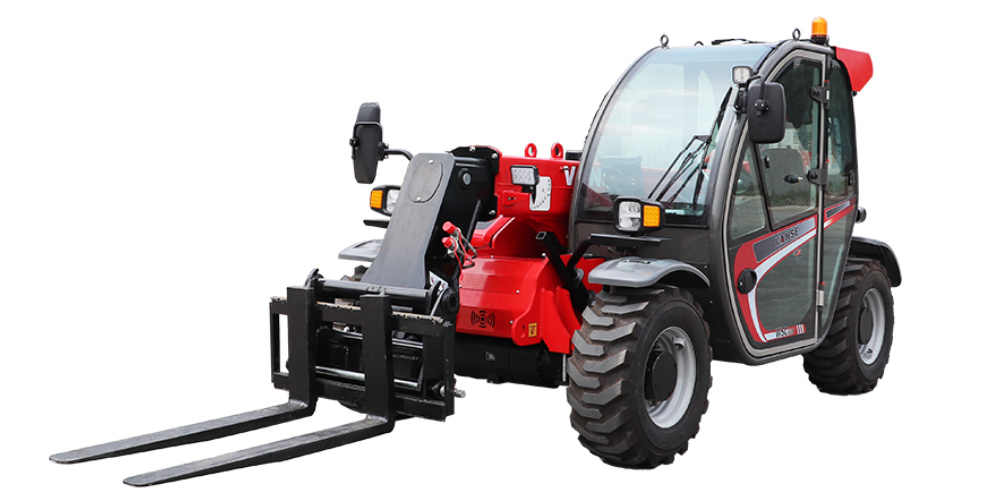
VANSE 625 6m Telescopic Handler
Designed for efficient material handling and stacking in warehouses, factories, and confined job sites, offering compact maneuverability and reliable performance.

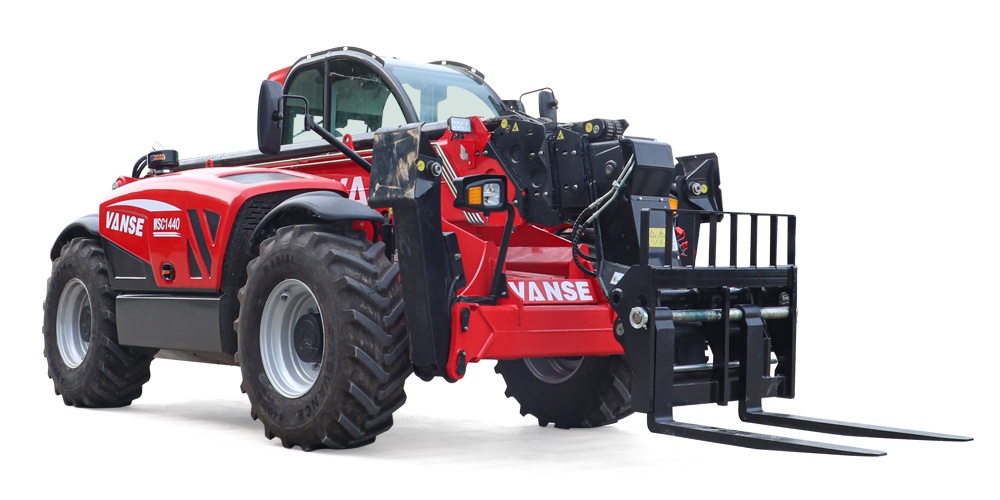
VANSE 735 7m Telescopic Handler
A balanced mid-duty solution for construction, agriculture, logistics, and warehousing, combining stable lifting, strong traction, and everyday versatility.


About the Author:
The VANSE team is a group of experienced professionals specializing in construction machinery research, manufacturing, and technical support. With deep industry knowledge and hands-on experience, our engineers and product specialists share practical insights on equipment selection, operation, maintenance, and industry trends.
Share
You May Also Interest
-

16 October, 2026
How to Transport a Telehandler to New Construction Sites
Learn how to transport telehandler equipment in the United States with legal, safe, and cost-effective steps for permits, trailers, loading, and delivery.
-
14 October, 2026
Telehandler for Cold Storage: Material Handling in Frost
Explore telehandler cold storage solutions in the United States, including suppliers, specs, costs, and buying tips for frozen warehouses and cold-chain operations.
-
13 October, 2026
2000 kg Telehandler: Compact Lifting for Tight Job Sites
Find the right 2000 kg telehandler in the United States with supplier comparisons, jobsite uses, buying tips, and support options for local buyers.
-
12 October, 2026
Telehandler vs Mast Forklift: Indoor vs Outdoor Lifting
Compare telehandler vs mast forklift in the United States for indoor and outdoor lifting, with buying tips, supplier options, and practical use cases.