Telehandler vs Cherry Picker in the United States
Quick Answer

If your team in the United States needs to lift palletized materials, place loads on roofs, move feed, stack supplies, or handle attachments such as forks, buckets, or jibs, a telehandler is usually the better choice. If your job mainly requires raising workers safely to elevated work areas for maintenance, facade access, electrical work, signage, or indoor facility service, a cherry picker is usually the better fit. In practical terms, telehandlers are material handlers first, while cherry pickers are personnel access machines first.
For many U.S. contractors, rental fleets, and farms, the fastest rule of thumb is simple: choose a telehandler when load capacity, forward reach, and multifunction use matter most; choose a cherry picker when platform access, worker positioning, and repeated elevation tasks matter most. Leading U.S. suppliers commonly considered include JLG, Genie, Skyjack, JCB, Manitou, and Caterpillar dealers in major markets such as Houston, Chicago, Los Angeles, Atlanta, and Dallas. Qualified international suppliers can also be worth evaluating, especially when they offer CE and ISO-certified manufacturing, recognizable engine and hydraulic components, local stocking plans, and strong pre-sale and after-sales support in the United States, since the cost-performance ratio can be very competitive.
Understanding the U.S. Market

The comparison between telehandlers and cherry pickers matters more than ever in the United States because equipment buyers are under pressure from labor costs, project deadlines, and tighter safety expectations. Contractors working around Houston ports, warehouse operators near Chicago intermodal hubs, agricultural businesses across California’s Central Valley, and energy service firms around Texas often need to decide whether one machine can cover multiple tasks or whether a specialized access platform will reduce downtime and risk.
In the U.S. market, telehandlers are especially common on construction, agriculture, industrial storage, and infrastructure projects where operators must move materials over uneven ground. Cherry pickers, a broad term often used by buyers to describe boom lifts or aerial work platforms, are more common where elevated worker access is the primary purpose. This includes municipal maintenance, commercial building service, airport operations, telecommunications, warehouse lighting replacement, and steel erection support.
American buyers also care about resale value, parts availability, OSHA compliance, operator familiarity, and the breadth of dealer support. In states with large rental activity, such as Texas, Florida, California, and Georgia, fleet managers often favor equipment with predictable utilization across multiple customer types. That is one reason telehandlers remain attractive: they serve construction crews, farms, distribution sites, and industrial plants with one core machine. Yet cherry pickers continue to dominate in access-focused fleets because they are specifically designed to raise people, tools, and light materials with strong guardrail and platform control systems.
How the Two Machines Differ

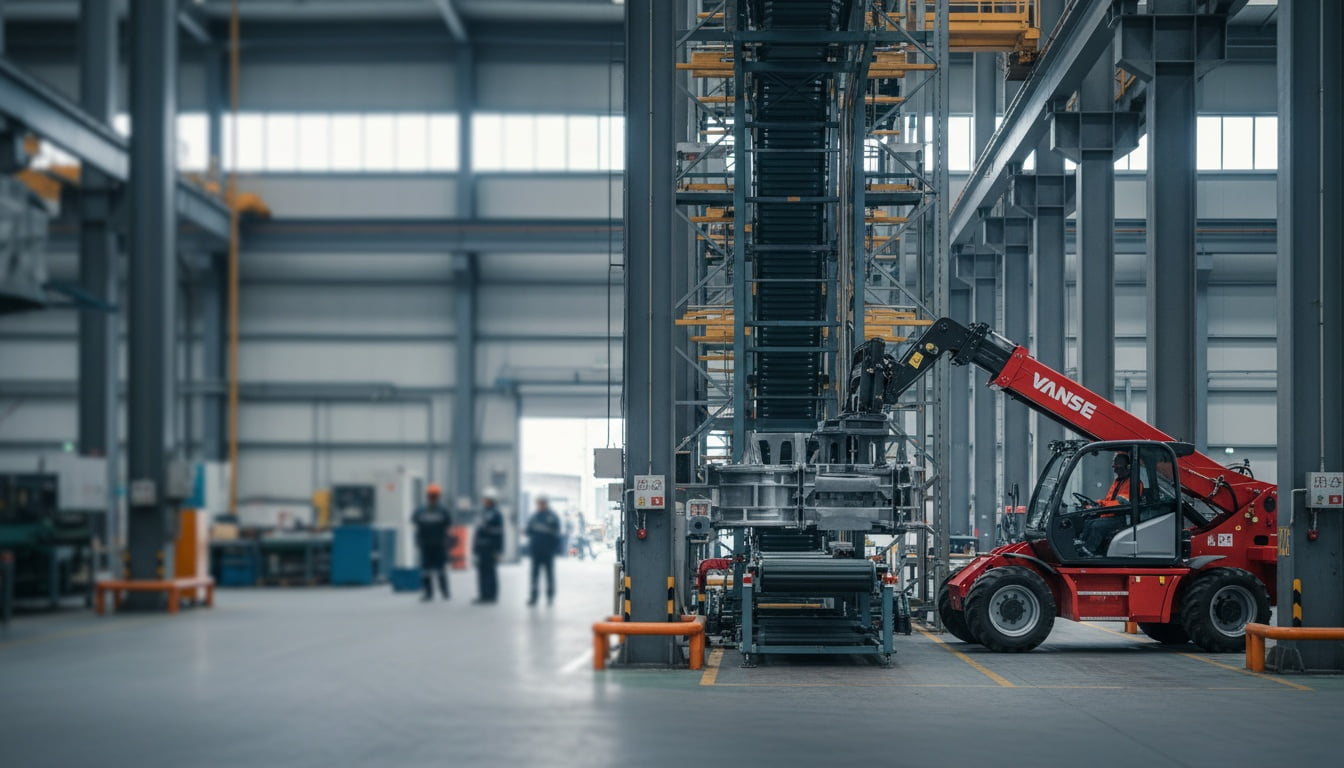
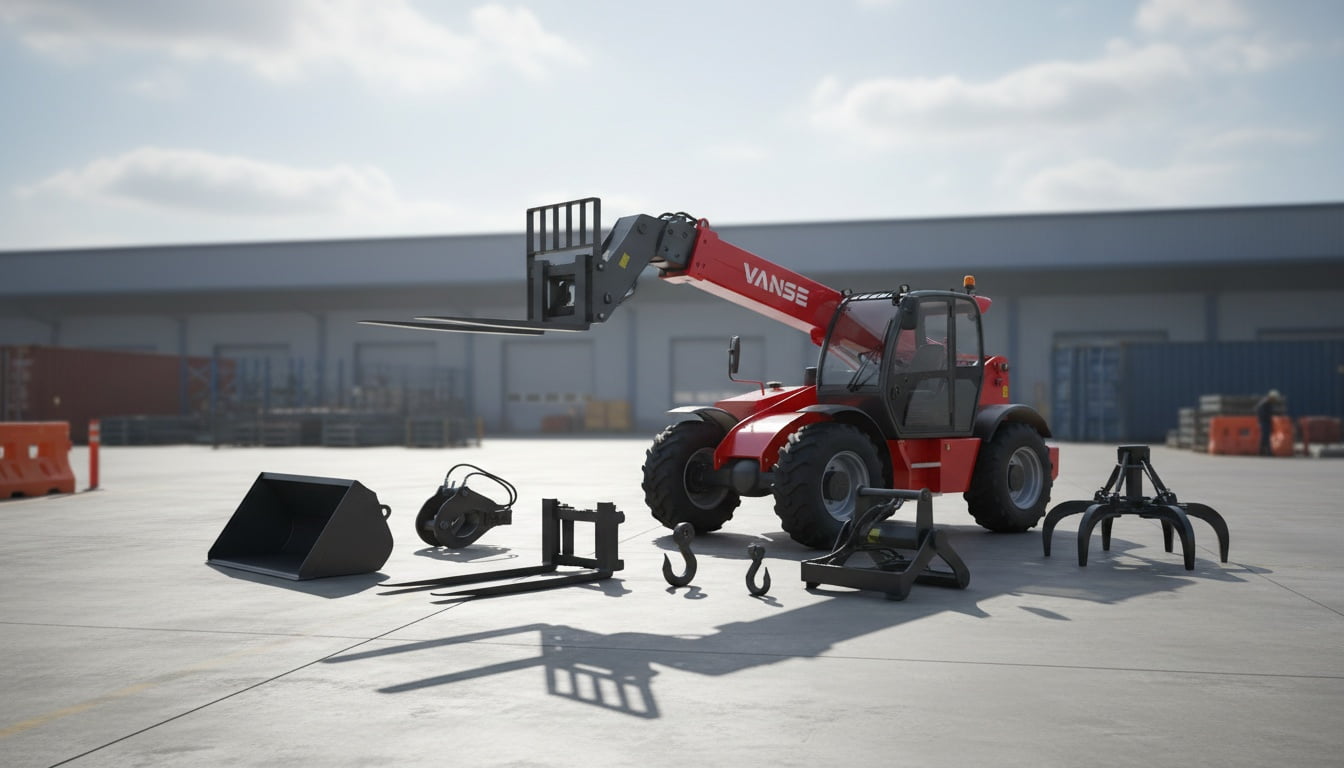
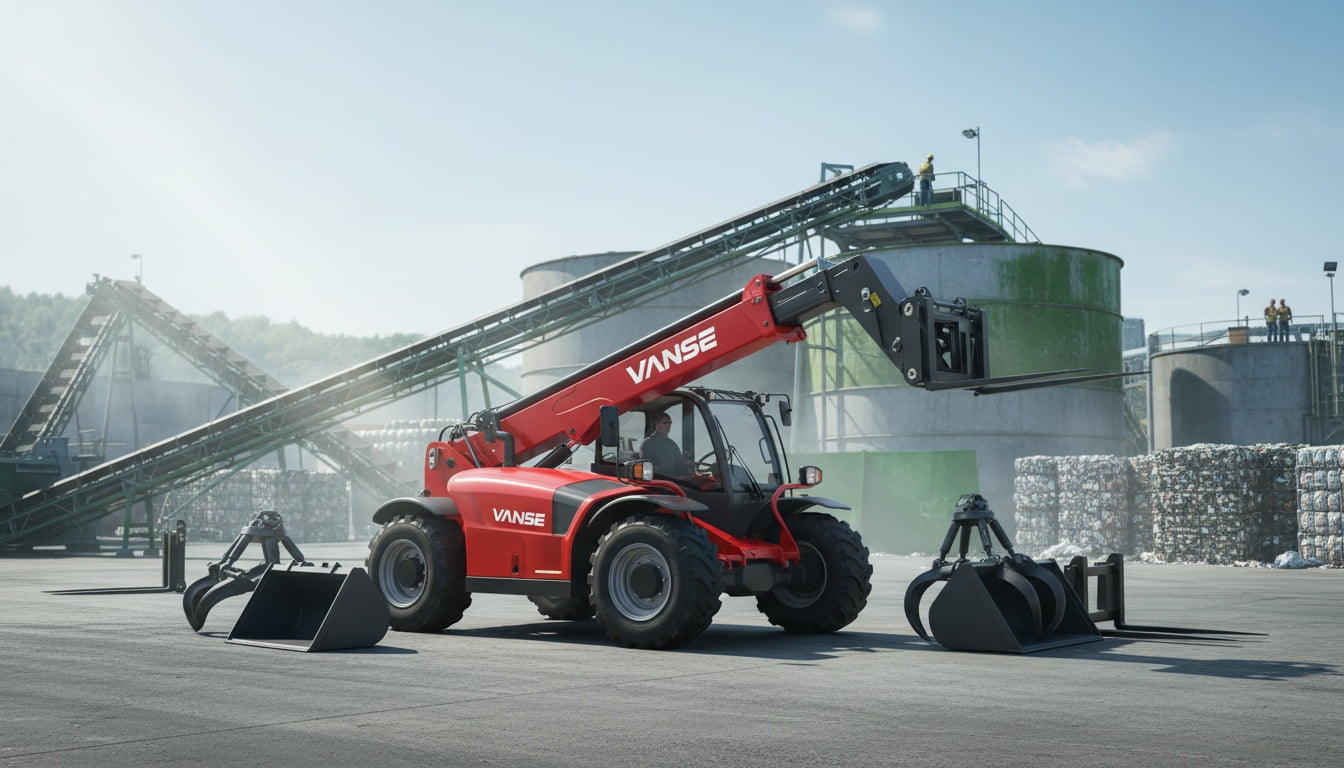
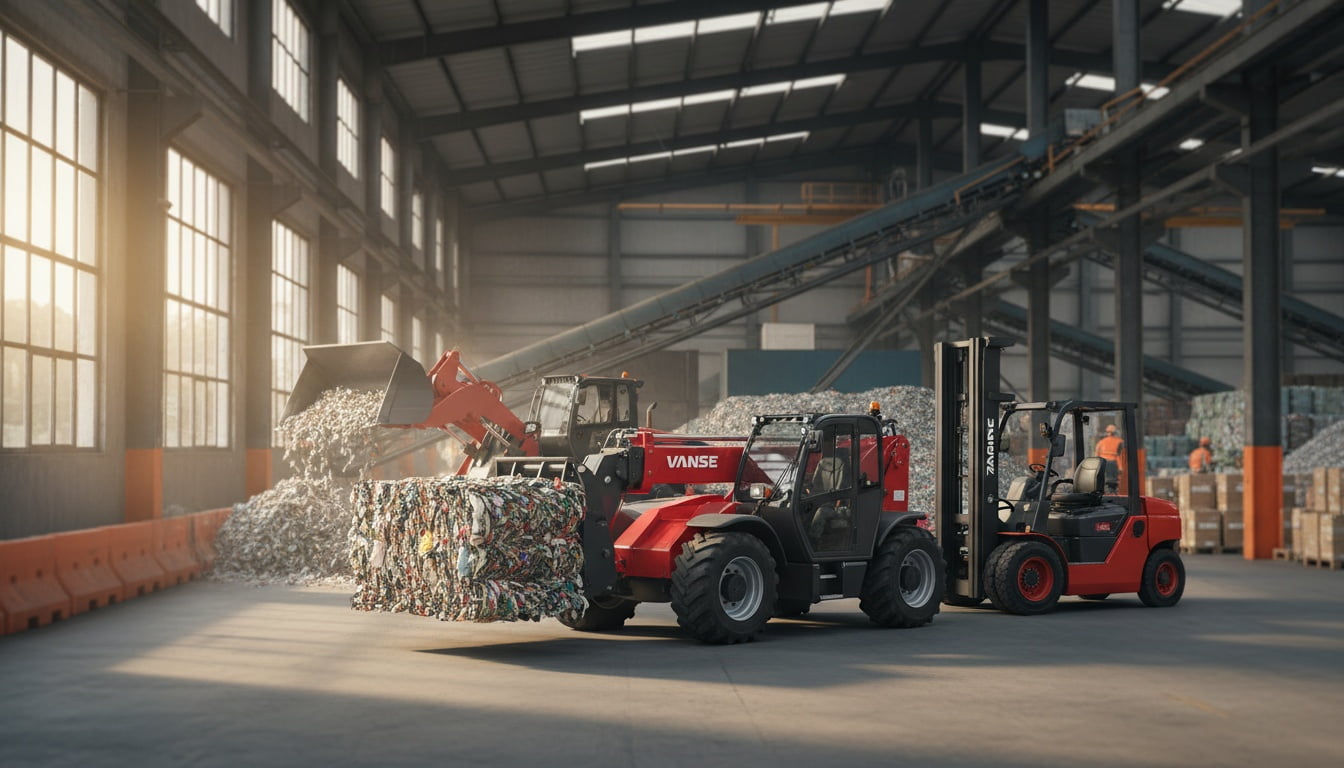
A telehandler uses a telescopic boom and is usually equipped with forks as its baseline attachment. It can lift and place loads at height and at forward reach, making it useful for moving brick packs, trusses, bagged material, pipe bundles, and agricultural supplies. Many models can also run buckets, hooks, work platforms, tire handlers, and other attachments, although attachment compatibility and rated capacity must always be verified.
A cherry picker is designed to elevate workers in a platform. Depending on the specific machine, the boom may articulate, telescope, or combine both motions. The core advantage is worker positioning. Instead of lifting a pallet onto a slab edge, the machine lifts technicians to a sign face, maintenance team to warehouse racking lights, or painters to the exterior of a mid-rise building.
The biggest operational distinction is this: telehandlers are optimized for lifting materials, while cherry pickers are optimized for lifting people. Some telehandlers can be used with approved work platforms, but that does not turn every telehandler into a substitute for a dedicated aerial access machine. U.S. buyers need to follow OSHA guidance, manufacturer instructions, and site-specific safety rules before using any telehandler-mounted platform.
Feature Comparison Table
The table below gives a practical side-by-side comparison for U.S. buyers who need to decide between a telehandler and a cherry picker based on everyday jobsite requirements.
| Factor | Telehandler | Cherry Picker | Best Fit in the United States |
|---|---|---|---|
| Primary purpose | Lift and place materials | Elevate workers | Choose based on whether the main task is material handling or personnel access |
| Typical load profile | Heavy pallets, bundled goods, construction materials | Workers, tools, light parts | Telehandlers suit masonry, framing, agriculture, and yard work |
| Reach type | Forward and upward reach with load chart limits | Precise worker positioning at height | Cherry pickers suit maintenance, glazing, electrical, and signage |
| Ground conditions | Often stronger on rough terrain | Model dependent; some RT booms handle uneven ground well | Telehandlers often perform better on muddy or undeveloped sites |
| Attachments | Wide range, including forks, buckets, jibs | Usually fixed platform purpose | Telehandlers offer greater versatility for mixed-use fleets |
| Worker access compliance | Limited to approved platforms and procedures | Built specifically for elevated personnel | Cherry pickers are the standard choice for frequent worker-at-height tasks |
| Common U.S. users | Contractors, farms, rental fleets, industrial yards | Facility managers, service contractors, utilities, rental fleets | Both are widely rented, but for different daily applications |
Market Growth in the United States
Demand for lifting and access equipment in the United States is influenced by warehouse expansion, public infrastructure spending, logistics construction, renewable energy projects, and ongoing renovation of commercial buildings. Telehandler demand has been supported by mixed-use utility on job sites, while cherry picker demand has remained strong due to facility maintenance, safety-driven access practices, and increasing use in distribution centers.
Common Product Types
Within the telehandler category, U.S. buyers typically evaluate compact telehandlers for urban jobsites, standard construction telehandlers for framing and masonry, high-capacity units for industrial yards, and rotating telehandlers for projects where flexibility and crane-like positioning are important. In agriculture-heavy states, telehandlers are also used for bale handling, feed movement, and bulk material placement.
Within the cherry picker category, buyers usually compare telescopic boom lifts, articulating boom lifts, towable cherry pickers, and rough-terrain boom lifts. For indoor maintenance at distribution centers around Inland Empire, New Jersey logistics corridors, or Atlanta warehouse clusters, electric boom models often become attractive due to lower emissions and quieter operation. For rough outdoor sites, diesel booms remain common.
Industry Demand by Application
The following chart shows realistic relative demand across U.S. industries. It highlights why telehandlers often lead in agriculture and materials-driven construction, while cherry pickers remain strong in maintenance and utilities.
Buying Advice for U.S. Contractors and Fleets
The right buying decision starts with your main revenue task. If your crews spend most of the day moving pallets, bundles, or bulk supplies, then buying a cherry picker will not solve the productivity bottleneck. If your crews spend most of the day installing ducting, replacing signs, or servicing lighting, then a telehandler may add risk and complexity rather than efficiency.
Buyers should also examine site surface conditions. New construction outside Phoenix, Austin, or Tampa may involve uneven, muddy, or partly prepared terrain where a rough-terrain telehandler outperforms a standard access machine. On the other hand, facility work inside a finished warehouse near Columbus or Memphis may favor a cherry picker or electric boom because floor loading, turning radius, and indoor emissions become major issues.
Another U.S.-specific factor is transport and fleet standardization. Rental branches often prefer machines that technicians already know, that parts networks already support, and that can be delivered quickly on existing trailers. If the machine will be shared among branches, consider training burden, replacement lead times, telematics integration, and how often customers ask for the equipment by name.
Cost Comparison Table
Costs vary by capacity, engine tier, attachment package, and dealer region, but the table below shows realistic budgeting ranges often used by U.S. buyers as an initial planning reference.
| Cost Element | Telehandler Range | Cherry Picker Range | Buyer Note |
|---|---|---|---|
| Typical purchase price | $85,000 to $180,000+ | $55,000 to $165,000+ | Large rotating telehandlers and high-reach booms can exceed these bands |
| Monthly rental estimate | $3,500 to $9,000 | $2,500 to $8,500 | Rates move by season, region, and transport distance |
| Transport complexity | Moderate to high | Moderate | Heavier telehandlers may increase trailer and permit considerations |
| Attachment costs | Often significant | Usually limited | Telehandler versatility may require forks, bucket, jib, or work platform purchase |
| Maintenance profile | Boom wear, tires, hydraulics, attachment interfaces | Platform controls, booms, sensors, drive systems | Lifecycle cost depends heavily on utilization and operator discipline |
| Resale sensitivity | Strong where versatile fleets are needed | Strong where access fleets are active | Dealer brand strength influences remarketing value in each region |
| Insurance and risk | Depends on load handling exposure | Depends on personnel lift exposure | Safety records and application type can influence total ownership cost |
Industries That Prefer Telehandlers
Construction contractors across the United States often prefer telehandlers when framing, roofing, masonry, and site material flow must happen quickly. A telehandler can unload trucks, move pallets near building edges, feed elevated work crews, and support general yard logistics with one machine. This is especially valuable on suburban developments where multiple trades share a changing work zone.
Agriculture is another major telehandler market. Dairies, poultry operations, feedlots, nurseries, and large crop businesses value forward reach and fork-based handling. In parts of California, Idaho, Wisconsin, and Texas, telehandlers often support all-season operations in ways that cherry pickers simply cannot. Industrial yards and ports also use telehandlers for material staging, though larger handlers or reach stacker categories may take over in container-heavy environments.
Industries That Prefer Cherry Pickers
Cherry pickers are favored where safe elevated access is the core requirement. Commercial building maintenance companies, sign installers, airport service contractors, electrical teams, telecom providers, and municipal departments use them to reach work zones that ladders or scaffolds handle less efficiently. In urban U.S. settings such as New York, Seattle, and San Diego, cherry pickers can reduce setup time for recurring maintenance work on facades, canopies, lighting poles, and utility interfaces.
In distribution hubs, a cherry picker or boom lift is also preferred when technicians need stable access to high racks, ventilation systems, sprinkler lines, or overhead doors. The machine is designed around the worker platform, which generally makes it the safer and more accepted option for routine elevated tasks.
Trend Shift in Fleet Preferences
Fleet behavior in the United States is changing. More buyers want one machine category to serve more applications, which benefits telehandlers, but safety and regulation continue to keep dedicated access equipment important. The chart below illustrates a realistic trend shift from single-purpose fleets toward more balanced acquisition strategies through 2026.
Applications in the Field
On a hospital expansion in Dallas, a telehandler may deliver palletized block, move HVAC components, and place roofing materials in phases. The same machine can support multiple subcontractors if the site manager plans traffic well and maintains attachment discipline. On a retail sign replacement job in Orlando, the better answer is usually a cherry picker because the crew needs repeated, stable worker access rather than pallet handling.
On a Midwest manufacturing site, a telehandler can support shutdown work by moving heavy spares and rigging materials around the plant perimeter. Yet once technicians need to service pipe racks or install overhead conduits, a cherry picker becomes the more direct tool. In many U.S. fleets, the real answer is not telehandler or cherry picker in absolute terms, but which machine performs the most billable or mission-critical work on that site.
Case Examples from the United States
A general contractor in Phoenix selecting equipment for a low-rise commercial build will often lean toward a telehandler because solar shading structures, packaged materials, and rough terrain movement all benefit from lifting capacity and reach. A facility maintenance contractor in Chicago working inside a distribution center is likely to choose a cherry picker because aisle access, overhead repairs, and worker positioning are the daily priority.
Rental fleets around Houston often keep both categories in strong rotation. Telehandlers rent well into industrial construction, agriculture-adjacent markets, and site logistics work. Cherry pickers rent well into refinery maintenance support, municipal utility work, and commercial property service. The difference is that telehandlers usually compete on versatility, while cherry pickers compete on access safety and efficiency.
Local Supplier Comparison
For buyers in the United States, supplier choice matters almost as much as machine choice. The table below compares recognizable market players and what they are best known for across U.S. regions.
| Company | Service Regions | Core Strengths | Key Offerings |
|---|---|---|---|
| JLG Industries | Nationwide through dealer and rental networks | Strong aerial platform reputation, telematics, parts reach | Boom lifts, telehandlers, service support |
| Genie | Nationwide, strong in rental channels | Broad access equipment lineup, recognized operator familiarity | Articulating booms, telescopic booms, telehandlers |
| Skyjack | Major metro and rental markets across the U.S. | Simple fleet-focused design, easy maintenance | Boom lifts and aerial equipment |
| JCB | Strong in construction and agriculture states | Telehandler brand recognition, rough-terrain capability | Construction telehandlers, agriculture handlers |
| Manitou | Nationwide with strong agricultural and industrial presence | Telehandler specialization, rotating models, attachment versatility | Telehandlers, rotating telehandlers, rough-terrain handling |
| Caterpillar dealers | Extensive U.S. regional dealer coverage | Dealer footprint, financing, support infrastructure | Telehandlers and allied equipment through dealer channels |
| United Rentals | Nationwide rental footprint | Rental access, fleet availability, short-term flexibility | Telehandlers, boom lifts, project rental support |
Supplier and Product Positioning
The next chart compares realistic perceptions of supplier positioning across key buying criteria often used by U.S. fleet managers. This is not a formal ranking, but it helps show how buyers may weigh support breadth, versatility, and access specialization.
How to Evaluate Suppliers in the United States
When comparing suppliers, U.S. buyers should not look only at advertised capacity or headline price. Check where parts are stocked, how quickly field technicians can reach your city, whether financing is available, and how the supplier handles warranty claims. A machine that looks cheaper on paper can become more expensive if downtime stretches over multiple days during peak season.
Ask suppliers about service in your specific trade corridor. Support expectations in Los Angeles are different from those in rural Kansas, and equipment used in Gulf Coast humidity faces different maintenance realities than equipment running in Nevada dust. For contractors and dealers researching options online, it is also useful to review the broader equipment range at construction equipment solutions and compare how manufacturers position telehandlers within their total portfolio.
What to Look for in a Telehandler
If the purchase direction is leaning toward a telehandler, focus on rated capacity at required height, not just maximum capacity at ground level. Many U.S. buyers discover too late that the published top number does not reflect their actual loading radius. Also compare boom visibility, auxiliary hydraulics, attachment change speed, frame stability, tire options, and emissions compliance for the state in which the machine will operate.
For fleet buyers, the best telehandler is often the one with dependable component sourcing rather than the one with the flashiest brochure. Engines from recognized suppliers, stable transmission support, and tested hydraulic architecture matter because they reduce uncertainty. This is especially important for rental companies that must turn equipment around quickly between customers.
What to Look for in a Cherry Picker
If the machine will be used mainly for personnel access, compare working height, horizontal outreach, platform capacity, up-and-over clearance, and controls smoothness. U.S. maintenance teams often value machine compactness, indoor suitability, and charging strategy for electric units just as much as headline height. For outdoor work, wind rating, slope performance, and service access for field repairs become key.
It is also smart to examine familiar controls and training burden. Machines that are intuitive for operators can reduce onboarding time and lower incident risk. Buyers with mixed crews should factor in how quickly substitute operators can use the equipment safely.
Detailed Supplier Table for Practical Buying
This table gives a more concrete view of how selected suppliers fit different American buyer profiles, from rental fleets to farms and large contractors.
| Company | Best For | Main Machine Focus | U.S. Service Value |
|---|---|---|---|
| JLG Industries | Rental fleets, facility service contractors | Cherry pickers, booms, telehandlers | Strong national service familiarity and access specialization |
| Genie | Rental branches, contractors needing broad AWP choices | Boom lifts and telehandlers | Good fleet compatibility and wide market recognition |
| Skyjack | Cost-aware rental fleets | Aerial work platforms | Maintenance simplicity and established rental presence |
| JCB | Construction firms and farms | Telehandlers | Good fit where rough terrain and material movement dominate |
| Manitou | Agriculture, industrial yards, specialty lifting users | Telehandlers and rotating telehandlers | Strong telehandler identity and application breadth |
| United Rentals | Short-term projects and trial use before purchase | Rental mix of telehandlers and cherry pickers | Fast access across many cities and metro corridors |
| Regional CAT dealers | Large contractors preferring dealer-backed support | Telehandlers and related equipment | Financing and regional technician coverage |
Our Company in the U.S. Context
For U.S. buyers evaluating telehandler suppliers beyond the traditional domestic and European names, VANSE Group presents a practical option because its telehandler business is built on measurable manufacturing evidence rather than generic claims: the company has produced more than 8,000 units, exports to over 40 countries, and manufactures under CE and ISO 9001-certified processes with comprehensive load testing, safety inspection, and performance validation before shipment. Its telehandlers use globally recognized core components such as Perkins and Cummins engines together with premium hydraulic, transmission, and axle systems, which matters for American fleet managers focused on reliability, serviceability, and internationally benchmarked performance. From a cooperation standpoint, VANSE serves end users, distributors, dealers, brand owners, rental companies, and individual buyers through flexible wholesale, retail, OEM, ODM, and regional partnership models, making it suitable for private-label programs, dealer expansion, and direct fleet purchases. Just as important for the United States, the company is actively establishing a U.S.-based subsidiary with local inventory, stocking, and after-sales capability, backed by online and offline pre-sale guidance, technical support, and lifecycle service; that signals a long-term local commitment rather than a remote export-only model. Buyers who want to discuss specifications, service planning, or partnership structure can review equipment support services or contact the U.S.-focused team directly.
Applications Where a Telehandler Beats a Cherry Picker
A telehandler is the better option when the job requires unloading trucks at a busy site entrance, moving materials between staging zones, lifting loads onto upper floors, handling attachments for changing tasks, and traveling over rough or partially prepared ground. This is why telehandlers are especially strong on housing developments, agricultural facilities, industrial yards, and mixed-trade commercial construction.
In the United States, these machines also fit the reality of labor shortages. One operator with a telehandler can often support several crews by feeding material where it is needed. That labor leverage is part of the reason telehandler demand continues to rise in high-growth construction markets from the Sun Belt to the Mountain West.
Applications Where a Cherry Picker Beats a Telehandler
A cherry picker is the stronger choice when workers need secure access to elevated points repeatedly through the day. Examples include changing exterior lighting at a retail center, installing security cameras on poles, painting steel members, servicing utility lines, inspecting roofs, and cleaning building facades. In each of these tasks, worker positioning and platform safety matter more than lifting heavy materials.
For indoor work, the gap can become even more obvious. A compact electric cherry picker or boom lift may move efficiently in finished facilities where a telehandler is oversized or less suitable. This is common in major logistics regions such as Southern California, central Pennsylvania, and the I-85 corridor.
Operational Risks and Safety Considerations
Safety should never be treated as a minor buying factor. Telehandlers carry load chart limitations that change with boom angle and extension, while cherry pickers carry platform and wind restrictions tied to worker safety. In the United States, buyers should align equipment choice with OSHA expectations, site rules, operator certification requirements, and the machine’s intended design purpose.
One of the most common mistakes is trying to substitute one category for another without understanding those limits. A telehandler may appear flexible, but improper personnel lifting practices can create avoidable exposure. Likewise, a cherry picker may offer excellent worker access, but it should not be treated like a high-capacity material handler. The safest fleet decision is usually the one that matches machine design to the dominant daily task.
Future Trends Through 2026
By 2026, U.S. buyers will likely see three major trends shaping the telehandler versus cherry picker decision. The first is technology. Telematics, remote diagnostics, geofencing, load monitoring, and predictive maintenance are becoming more important as fleets try to reduce idle time and unplanned service calls. Equipment that feeds usage data into fleet software will gain favor among multi-branch rental operators and enterprise contractors.
The second trend is policy and safety. Public projects and major private developers are pushing for tighter documentation, more formal operator training, and cleaner machine deployment in urban areas. This supports electrified access platforms in indoor and low-emission zones, while also encouraging telehandler buyers to focus more closely on machine monitoring, stability systems, and application-specific attachments.
The third trend is sustainability and total lifecycle value. Buyers increasingly want machines that balance durability, fuel efficiency, service intervals, and resale prospects. Telehandlers with efficient powertrains and flexible attachments can reduce the need for multiple machines on one site. Cherry pickers, especially electric models, can help meet indoor emission goals and lower noise in dense commercial settings. In short, the U.S. market is moving toward smarter fleet composition rather than one-size-fits-all purchasing.
How to Make the Final Decision
Ask four direct questions. Are you lifting materials or workers most of the time? Is the ground rough or the floor finished? Do you need one machine for many tasks or one machine for a specialized access function? How strong is the support network in your city or state? Your answers usually make the decision clear.
If the machine must generate value across construction, agriculture, yard handling, and material placement, buy a telehandler. If the machine must safely and efficiently place technicians at height for recurring work, buy a cherry picker. If your business handles both workloads and utilization is strong enough, many U.S. fleets justify keeping both categories because each solves a different productivity problem.
FAQ
Is a telehandler safer than a cherry picker for lifting people?
Not as a general rule. A cherry picker is designed for personnel access. A telehandler should only lift people when the machine, platform, and procedures are specifically approved for that use.
Which machine is better for construction in the United States?
For material movement on rough terrain, telehandlers are usually better. For worker access to elevated installation or repair points, cherry pickers are usually better.
Can a telehandler replace a cherry picker?
Only in limited situations, and not as a full replacement. If elevated worker access is frequent and central to the task, a dedicated cherry picker remains the more appropriate machine.
Which is more versatile for rental fleets?
Telehandlers are often more versatile across industries because attachments expand their use. Cherry pickers are highly valuable but more specialized around access tasks.
What matters most when buying in the United States?
Local parts support, technician availability, transport practicality, operator familiarity, and whether the machine fits your primary revenue application matter more than brochure claims alone.
Should U.S. buyers consider international telehandler suppliers?
Yes, if the supplier can show recognized certifications, quality-controlled manufacturing, proven export experience, transparent component sourcing, and real local service commitments such as U.S. inventory and after-sales support.
Where can buyers start comparing options?
Buyers can begin with broader product and company information at VANSE machinery solutions and then compare dealer support, specifications, and service plans against their local U.S. operating needs.
Complete Telescopic Handler Equipment Portfolio
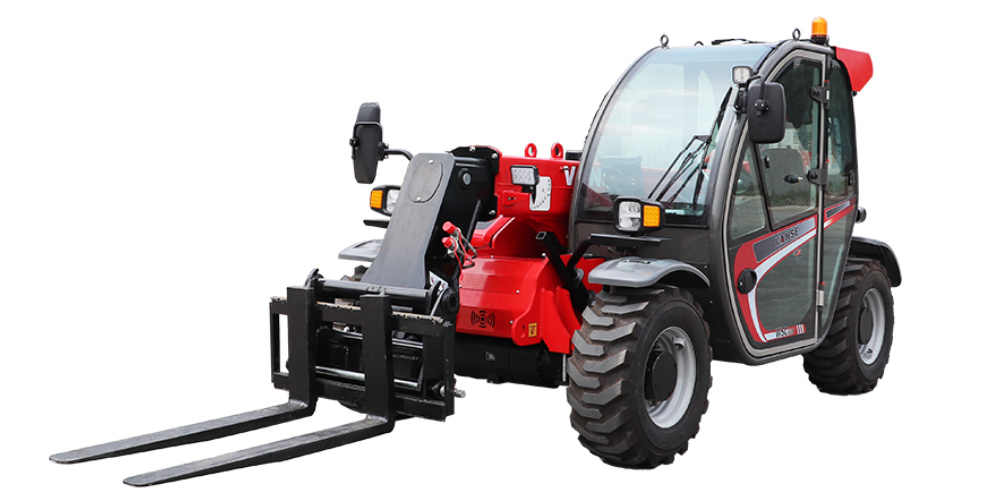
VANSE 625 6m Telescopic Handler
Designed for efficient material handling and stacking in warehouses, factories, and confined job sites, offering compact maneuverability and reliable performance.

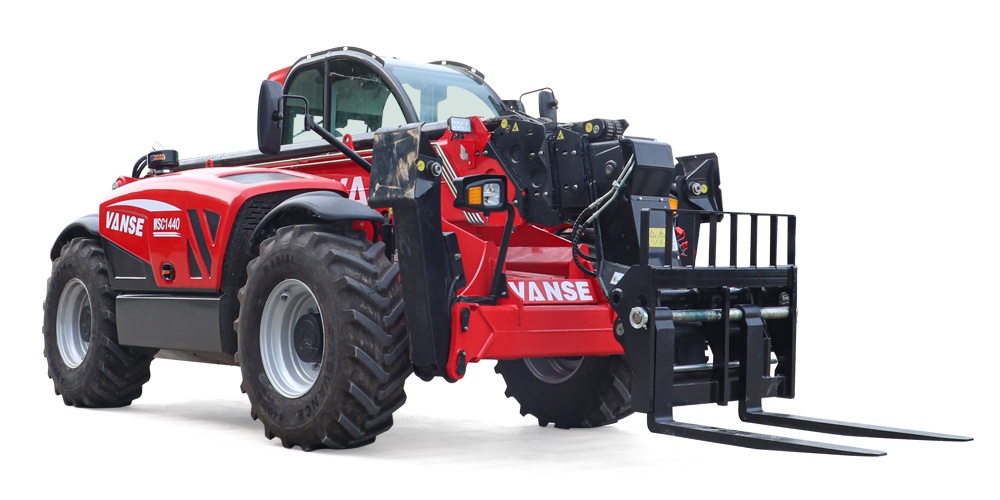
VANSE 735 7m Telescopic Handler
A balanced mid-duty solution for construction, agriculture, logistics, and warehousing, combining stable lifting, strong traction, and everyday versatility.


About the Author:
The VANSE team is a group of experienced professionals specializing in construction machinery research, manufacturing, and technical support. With deep industry knowledge and hands-on experience, our engineers and product specialists share practical insights on equipment selection, operation, maintenance, and industry trends.
Share
You May Also Interest
-

22 October, 2026
Telehandler for Grain Handling on Large Modern Farm Sites
Explore telehandler grain handling options in the United States, including suppliers, specs, farm uses, and cost-saving buying advice for grain operations.
-
21 October, 2026
Telehandler vs All Terrain Forklift: Which Lifts Better
Telehandler vs all terrain forklift in the United States: compare reach, lifting, terrain use, costs, and supplier options for smarter equipment buying.
-
20 October, 2026
10 Ton Telehandler: Extreme Lifting for Major Industrial
Explore 10-ton telehandler options in the United States, top suppliers, buying tips, applications, and service support for major lifting projects.
-
19 October, 2026
Telehandler for Demolition: Safe Structural Dismantling
Explore telehandler demolition options in the United States, including suppliers, attachments, safety, market trends, and cost-effective sourcing advice.