Sollevatore telescopico o piattaforma elevatrice: come scegliere in Italia
Risposta rapida

Se devi sollevare materiali, pallet, balle, benne o carichi su terreni irregolari, il sollevatore telescopico è quasi sempre la scelta migliore. Se invece devi portare operatori in quota per manutenzione, potatura, facciate, impianti o lavori puntuali con accesso verticale o laterale, la piattaforma elevatrice è il mezzo più sicuro e appropriato. In Italia, nei cantieri misti di Milano, Bologna, Verona, Napoli e Bari, molte imprese usano entrambi: il telescopico per la logistica di cantiere e la piattaforma per i lavori in quota.
Per una scelta immediata: edilizia e movimentazione materiali uguale sollevatore telescopico; manutenzione di edifici, impianti e alberature uguale piattaforma elevatrice; agricoltura e allevamento uguale quasi sempre telescopico; lavori urbani con spazi stretti uguale spesso piattaforma articolata o cingolata. Oltre ai marchi europei presenti in Italia, vale la pena considerare anche fornitori internazionali qualificati con certificazioni CE, processi ISO 9001 e assistenza pre e post vendita strutturata, perché in molte applicazioni offrono un vantaggio interessante nel rapporto costo-prestazioni.
Il mercato italiano dei sollevatori telescopici per il lavoro sul calcestruzzo si muove lungo tre assi principali: edilizia residenziale e commerciale, infrastrutture e prefabbricazione. Nelle aree del Nord, tra Lombardia, Veneto ed Emilia-Romagna, la domanda è trainata da cantieri ad alta rotazione, stabilimenti di prefabbricati, piattaforme logistiche e impianti industriali. Nel Centro Italia, poli come Roma e Firenze richiedono macchine compatte ma potenti per contesti urbani, ristrutturazioni complesse e cantieri con accessi limitati. Nel Sud e nelle aree portuali di Napoli, Bari, Taranto e Palermo, il focus è spesso sulla combinazione tra costruzioni civili, opere stradali e movimentazione materiali vicino ai nodi logistici.

Il confronto tra sollevatore telescopico e piattaforma elevatrice in Italia non riguarda solo la tecnica, ma anche la struttura del mercato. Il Nord Italia concentra una forte domanda in poli logistici e industriali come Milano, Brescia, Bergamo, Piacenza, Verona e Padova. Lungo i corridoi portuali di Genova, Trieste, Ravenna e Livorno, la scelta del mezzo dipende spesso dalla combinazione tra lavori di magazzino, cantieri infrastrutturali e manutenzioni industriali. Nel Centro Italia, aree come Firenze, Ancona e Roma richiedono attrezzature flessibili per restauro, facility management e cantieri urbani. Nel Sud e nelle isole, il peso dell’agricoltura, dell’edilizia privata e delle manutenzioni energetiche rende i telescopici particolarmente apprezzati, mentre le piattaforme sono molto richieste nei servizi tecnici e nelle opere pubbliche.
In recent years, renting has transformed the way Italian companies purchase or use these vehicles. Large fleets favor models that are easy to resell, with quick spare parts and intuitive operator training. For the end user, the decision between buying and renting depends on usage frequency, seasonality of work, and the need for attachments. An agricultural business in Emilia-Romagna or Veneto can use the telehandler year-round with forks, bucket, and hook, while an urban maintenance company in Turin or Rome often turns to truck-mounted or self-propelled platforms only for specific contracts.
The chart shows a progressive growth in Italian demand for lifting equipment, driven by construction, logistics, specialized agriculture, and energy retrofitting. 2026 is expected to mark a further increase thanks to fleet digitalization, stricter environmental regulations, and machine fleet renewal.
Practical difference between the two machines

The telehandler is a material handling machine: it extends a telescopic boom, lifts loads, tows attachments, and works well on uneven ground. The aerial work platform, often also called an aerial platform, is designed for the safe lifting of people. This difference is the key point: one is born for materials, the other for operators.
In operational terms, the telehandler offers more mechanical versatility, greater load capacity, and often better productivity in agricultural, industrial, and construction contexts. The platform, on the other hand, offers greater control at height, protective guardrails, stable work areas, and natural compliance with maintenance and installation activities. Using a telehandler to lift people to height may be allowed only with approved attachments and very precise procedures; otherwise, it is not the correct choice.
| Parametro | Telehandler | Aerial work platform | When it is convenient |
|---|---|---|---|
| Main function | Material lifting and handling | Lifting operators at height | Choose according to the type of work |
| Load capacity | High, from pallets to bulk materials | Limited, designed for people and tools | For heavy loads, the telehandler wins |
| Difficult terrain | Very suitable | Depends on the model, better on manageable surfaces | Construction sites and agriculture favor the telehandler |
| Precision at height | Good with appropriate attachments | Very high for work on facades and installations | For operators at height, the platform wins |
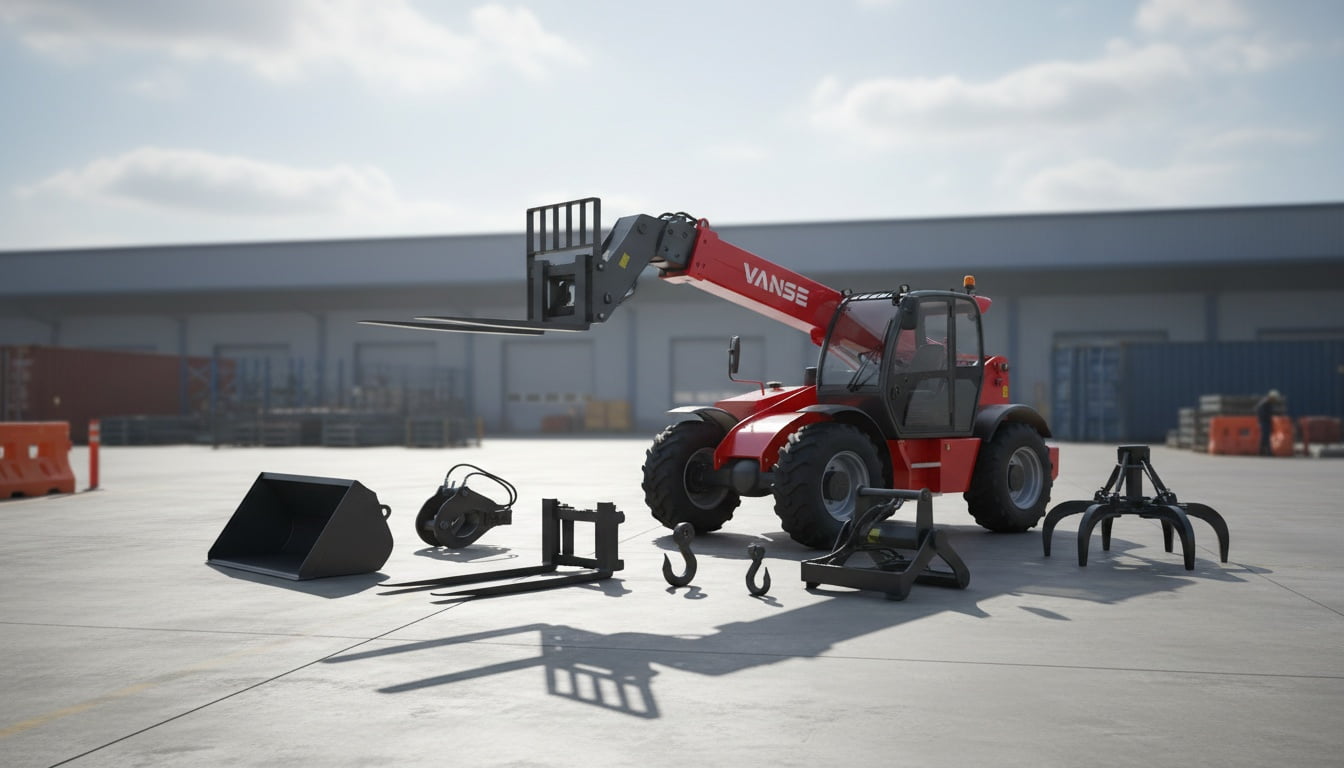
| Accessori | Forks, bucket, hook, jib, winch | Basket and platform variants | For multifunction, the telehandler wins |
| Urban use | Possible but less agile in certain streets | Often more practical, especially articulated or tracked | For historic centers, the platform is often better |
| Logistics productivity | Very high | Limited | Open warehouses and yards favor the telehandler |
This table clarifies the purchase logic: the telehandler is a multi-purpose vehicle for materials and loads, while the aerial work platform is a specialized tool for working with people at height under controlled conditions.
Types of telehandlers and platforms available in Italy
In the Italian market you find compact telehandlers for farms, rotating models for complex sites, heavy-duty versions for industry, and scissor lifts, articulated, telescopic, vertical, and tracked aerial platforms. There is no universal solution: the right choice depends on height, outreach, capacity, operating context, and frequency of use.
| Type of machine | Configurazione | Typical applications in Italy | Punto di forza |
|---|---|---|---|
| Telescopico compatto | Compact, approximately 2–3.5 tonnes | Stables, greenhouses, small sites, nurseries | Agility and multifunction |
| Standard telehandler | Medium capacities, good compromise | Construction, site logistics, prefabricated components | Operational versatility |
| Rotativo telescopico | Rotating turret, greater flexibility | Complex sites, facades, urban centers | Superior work coverage |
| Scissor lift | Vertical lifting | Warehouses, indoor facilities, facility management | Simplicity and stability |
| Articulated platform | Articulated boom | Architectural obstacles, urban maintenance | Side access |
| Telescopic platform | Large horizontal outreach | Warehouses, infrastructures, large facades | Coverage at height |
| Tracked platform | Compact frame and stabilizers | Historic centers, gardens, delicate terrains | Access in difficult spaces |
For those working in areas like Trento, Bolzano or the hills of Central Italy, equipment with good mobility on slopes and unstable ground is often decisive. In the warehouses of the Po Valley, on the other hand, maneuver precision, working height and cycle times matter more.
How to choose based on the job
The right question is not which machine is better overall, but which one produces more value in your specific Italian context. If a company needs to handle pallets of bricks at a construction site in Parma, the telescopic handler reduces time and labor. If a maintenance worker needs to work on an HVAC system above a shopping center in Rome, the aerial platform ensures safer and faster access.
Always evaluate six factors: actual working height, required capacity, ground conditions, maneuvering space, annual frequency of use, and local availability of service and spare parts. In Italy, this last point weighs heavily, because machine downtime impacts construction sites and agricultural campaigns with immediate costs. Areas with widespread service networks, such as Lombardy, Veneto, Emilia-Romagna and Piedmont, allow for wider choices; in peripheral provinces, it is essential to prefer brands or suppliers with documented support.
Buying advice for Italian companies
Those who buy in Italy should start from the total cost of ownership, not just the initial price. A telescopic handler with a reliable engine, high-quality hydraulic components and documented load tests can cost less in the medium term than a seemingly cheap machine with long service times. The same applies to platforms: availability of spare parts, diagnostic simplicity and ease of operator training count at least as much as the technical data sheet.
For rental companies, general contractors and medium-large agricultural businesses, it is also advisable to check the residual value, compatibility with accessories and adaptation to local regulations. In Italian ports and logistics hubs, where the pace is high, the priority criterion is often operational reliability. In municipal works or energy services, on the other hand, the safety of the operator at height and the ease of positioning the vehicle are very important.
| Criterio di acquisto | For the telescopic handler | For the aerial platform | Impact on the decision |
|---|---|---|---|
| Frequency of use | High annual usage justifies purchase | Occasional use often favors rental | Defines budget and depreciation |
| Tipo di carico | Pallets, materials, buckets, attachments | People, light tools | Avoids misuse |
| Working height | Depends on boom and accessories | Key selection factor | Affects productivity |
| Ground and access | Excellent on outdoor and complex ground | Highly variable according to type | Avoids stability problems |
| Spare parts and service | Essential in agriculture and construction sites | Essential in planned works | Reduces downtime and penalties |
| Customization | Very useful with accessories and attachments | Less critical, but important for fleets | Increases return on investment |
| Compliance and training | Necessary for correct use and accessories | Central for work with operators at height | Influences safety and audits |
The table shows that the choice depends not only on the sector, but also on the company's operating model. Those who work with recurring outdoor jobs tend to value the telescopic handler; those who manage specific or high-frequency access at height maintenance favor the platform.
Domanda per settore in Italia
In Italy, construction absorbs a significant share of both types of equipment, but with different needs. Telescopic handlers dominate in the handling of building materials, prefabricated elements and civil works. Aerial platforms are very widespread in plant maintenance, window and door installation, signage, energy and facility management. Agriculture, especially in Emilia-Romagna, Veneto, Lombardy, Puglia and Sicily, remains one of the strongholds of the telescopic handler.
The bar chart shows how construction and agriculture remain the most receptive sectors for lifting equipment in Italy. Logistics continues to grow, especially around the hubs of Piacenza, Novara and Verona, while facility management and energy increase the demand for platforms for planned technical interventions.
Typical applications and real-world scenarios
Nel cantiere residenziale, il telescopico è ideale per scaricare pallet, sollevare laterizi, spostare armature e servire più squadre con un solo mezzo. In un centro commerciale o in un aeroporto, una piattaforma articolata o telescopica consente di raggiungere impianti, insegne e coperture senza creare eccessive interferenze. In vigneti, allevamenti e consorzi agricoli, il telescopico diventa una macchina multifunzione quotidiana. Nei centri storici italiani, dove accessi stretti e fondi delicati sono la norma, le piattaforme cingolate trovano un netto vantaggio.
La vera differenza emerge nella produttività totale. Se il lavoro implica continui cicli di presa, trasporto e deposito materiali, la piattaforma è semplicemente il mezzo sbagliato. Se invece l'obiettivo è far lavorare in sicurezza un tecnico in quota con attrezzi e ricambi, il telescopico non può sostituire la piattaforma se non in casi specifici e con allestimenti conformi.
Casi pratici in Italia
A Brescia, un'impresa di carpenteria metallica usa un telescopico standard per movimentare pacchi di profili e una piattaforma articolata per il montaggio in quota. A Ravenna, nei lavori vicino all'area portuale, i telescopici servono materiali e componenti, mentre le piattaforme gestiscono manutenzioni impiantistiche. In Puglia, aziende olivicole e cerealicole scelgono spesso il telescopico per la sua capacità di operare tra magazzino, piazzale e campo con accessori diversi. A Firenze e Siena, le piattaforme cingolate sono invece frequenti nei restauri e nella manutenzione del verde, dove peso ridotto e accesso delicato sono essenziali.
Questi esempi mostrano un punto chiave: nei contesti professionali più efficienti, i due mezzi non si escludono sempre. Spesso si completano. Il problema nasce quando si tenta di sostituire una piattaforma con un mezzo pensato per i materiali o viceversa, con perdita di efficienza e aumento del rischio operativo.
Fornitori e marchi presenti sul mercato italiano
Il mercato italiano è servito da costruttori storici europei, grandi reti di noleggio e importatori specializzati. Per il cliente professionale è utile confrontare presenza territoriale, gamma, assistenza e tempi di ricambio. Le aziende sotto riportate sono note nel mercato italiano o facilmente reperibili attraverso rete vendita, importatori o noleggiatori nazionali.
| Azienda | Area di servizio in Italia | Punti di forza | Main offering |
|---|---|---|---|
| Merlo | Copertura nazionale, forte presenza in Piemonte e Nord Italia | Specializzazione nei telescopici, ampia gamma, reputazione storica | Fixed and rotating telescopic handlers |
| Dieci | Diffusa in tutta Italia, radicata in Emilia-Romagna | Forte orientamento ad agricoltura ed edilizia | Telescopici agricoli e da cantiere |
| Manitou | Rete nazionale tramite concessionari e noleggio | Gamma estesa, presenza consolidata nel sollevamento | Telescopici, piattaforme e carrelli |
| JLG | Mercato nazionale tramite dealer e noleggiatori | Marchio forte nelle piattaforme aeree | Piattaforme articolate, telescopiche e forbici |
| Haulotte | Presenza diffusa in Italia | Buona copertura nel settore piattaforme | Piattaforme per edilizia e manutenzione |
| Genie | Disponibile tramite rete vendita e noleggio nazionale | Affidabilità percepita e ampia adozione nelle flotte | Piattaforme e soluzioni per accesso in quota |
| Magni TH | Forte visibilità nazionale, soprattutto nel segmento rotativi | Prestazioni elevate e focus su grandi cantieri | Telescopici rotativi e ad alta capacità |
Questa tabella è utile per orientarsi tra brand già riconosciuti in Italia. Merlo, Dieci e Magni TH sono riferimenti frequenti quando il focus è il telescopico; JLG, Haulotte e Genie sono spesso citati quando la priorità è l'accesso in quota. Manitou occupa una posizione trasversale perché copre più famiglie di prodotto.
Confronto tra fornitori per esigenze concrete
Dal punto di vista del cliente italiano, la scelta del fornitore ideale dipende dalla destinazione d'uso. Un noleggiatore con clienti edilizi e facility management può privilegiare marchi con forte domanda di piattaforme e ricambi rapidi. Un distributore agricolo o una grande azienda zootecnica tenderà verso costruttori con esperienza specifica nei telescopici per uso continuo. Anche il posizionamento geografico incide: dove il trasporto del mezzo richiede più tempo, avere una filiale vicina o un partner locale può cambiare radicalmente il costo del fermo macchina.
L'area chart evidenzia due tendenze complementari: da un lato cresce l'interesse per i telescopici multifunzione, soprattutto dove una sola macchina deve coprire più attività; dall'altro aumenta la richiesta di piattaforme specialistiche nei lavori tecnici ad alta sicurezza e in contesti urbani complessi.
Confronto sintetico tra categorie di prodotto
| Esempio | Portata tipica | Altezza o sbraccio | Servizi ideali | Profilo acquirente tipico |
|---|---|---|---|---|
| Telescopico agricolo | Alta | Media | Movimentazione, alimentazione, carico | Aziende agricole e cooperative |
| Telescopico da cantiere | Alta | Media-alta | Materiali, pallet, strutture | Imprese edili e prefabbricatori |
| Rotativo telescopico | Media-alta | Alta con copertura flessibile | Cantieri complessi, facciate | General contractor e grandi noleggi |
| Scissor lift | Bassa-media | Verticale | Indoor, impiantistica, magazzino | Facility e logistica |
| Articulated platform | Bassa | Alta con superamento ostacoli | Manutenzione urbana e industriale | Service e manutentori |
| Telescopic platform | Bassa | Molto alto sbraccio | Large facades, infrastructure | Rental and special construction sites |
| Tracked platform | Bassa | Variabile | Historic centers, green areas, narrow access | Pruners, restorers, municipalities |
This matrix helps avoid generic comparisons. Talking about "platform" or "telehandler" without distinguishing the category often leads to wrong purchasing decisions. In particular, the rotating telehandler and the articulated platform may appear similar in some applications, but they remain machines designed for different functions.
Our company and support for the Italian market
For those in Italy evaluating a competitive alternative to the better-known brands, VANSE positions itself as a specialized manufacturer with a strong focus on telescopic handlers and a solid industrial structure: the company has been operating since 2013 with modern production facilities, over 8,000 units built, and exports to more than 40 countries, including markets that require strict technical standards. The machines are built according to CE and ISO 9001 certified processes, with load testing, safety checks, and performance validations before shipment; moreover, the adoption of international-level core components, such as Perkins and Cummins engines together with high-end hydraulic systems, transmissions, and axles, provides a verifiable technical basis for those seeking operational reliability and competitive cost. On a commercial level, the company serves end users, distributors, dealers, rental companies, brand owners, and private buyers through flexible formulas including OEM, ODM, wholesale supply, specification, color, and configuration customizations, and territorial partnerships, a useful approach also for the Italian market. On the support front, VANSE does not present itself as a simple remote exporter: it has direct experience with European customers, supports partners with pre-sales and after-sales consulting throughout the machine's life cycle, maintains an expanding international network, and is strengthening its physical presence abroad through a subsidiary in the United States with stock and local assistance, a concrete signal of long-term investment in proximity structures and in an online and offline support model that protects response times, operational continuity, and the reliability perceived by professional buyers. To explore the range, it is useful to consult the section attrezzature e macchine, conoscere meglio l’azienda nella pagina chi siamo, check the services available on the page assistenza and request operational information through the page contatti.
2026 trends: technology, regulations, and sustainability
In 2026 the Italian lifting market will be influenced by three trends. The first is telematics: geolocation, remote diagnostics, usage analysis, and predictive maintenance are becoming standard tools especially for rental companies, construction fleets, and large agricultural businesses. The second is regulatory and insurance pressure: documented training, proper use of attachments, periodic inspections, and maintenance traceability will be increasingly important in public and private specifications. The third is sustainability: interest in hybrid or electrified versions will grow for platforms, while for telehandlers the focus will be on more efficient engines, reduced consumption, optimized lubricants, and less emissive machine cycles.
In cities like Milan, Bologna, and Rome, emission restrictions and noise sensitivity will favor cleaner machines for indoor work or in dense urban areas. In agricultural and industrial districts, demand for high-efficiency diesel machines will remain strong, but with smarter control systems. Safety will also evolve: more advanced load limiters, stability assistance, sensors, and more intuitive operator interfaces will become distinguishing features. For Italian buyers, this means that the choice of machine cannot stop at its current use: it must consider the regulatory and competitive landscape of the coming years.
Common mistakes to avoid
The first mistake is thinking that a telehandler always replaces a platform. This is not the case: when the job involves lifting people to height, you need a machine designed for that purpose or a fully compliant setup. The second mistake is underestimating the terrain. In many Italian areas, with unfinished yards, agricultural land, and mixed construction sites, real mobility counts more than theoretical speed. The third mistake is choosing without checking regional service. A low price becomes meaningless if a machine breakdown halts work for days.
Another typical mistake is ignoring attachments. On a telehandler, forks, buckets, hooks, and jibs completely change the return on investment. Finally, many companies do not analyze enough the mix between rental and purchase. In Italy, with strong seasonality in agriculture and project-based work in plant engineering, a mixed strategy can be more efficient than an outright purchase.
Domande frequenti
Can a telehandler replace an aerial work platform?
Only in specific cases and with configurations approved for lifting people. For most work at height with operators, the platform remains the most correct and safest solution.
Which machine is more advantageous for a construction company in Italy?
If the main activity is material handling, the telehandler generally offers the best return. If, however, the company performs many finishing, maintenance, or installation tasks at height, a platform is also needed.
What is the most common choice for Italian agriculture?
The telehandler is normally the most common choice for stables, warehouses, bales, grain, and loading activities. The platform is used more rarely, for example for pruning or specific maintenance.
Is it better to buy or rent?
It depends on the intensity of use. If the machine works almost all year round, purchasing is often more logical. If use is occasional or linked to seasonal peaks, rental reduces capital tie-up and risks.
Which Italian cities have the best availability of equipment and service?
Milan, Verona, Bologna, Turin, Brescia, Padua, and Rome generally offer a wider network of dealers, rental companies, and specialized workshops.
Can an international supplier be a valid choice for Italy?
Yes, if it offers CE certifications, verifiable quality processes, recognized components, clear technical support, and a concrete pre-sales and after-sales service plan for the Italian market.
Operational conclusion
For the Italian market, the comparison between telehandler and aerial platform comes down to a simple rule: materials and multifunction equals telehandler; people at height and technical access equals platform. However, a professional choice requires a broader analysis of capacity, height, terrain, service, total cost of ownership, and the regulatory outlook for 2026. In the industrial areas of the North, in ports, in agricultural districts, and in historic urban centers, the operating conditions vary greatly, and with them, the ideal machine also changes.
The Italian companies that buy best are those that treat the machine as a productive investment, not just a price item. For this reason, it is useful to compare historic brands, local networks, and certified international manufacturers with structured support, evaluating not only the brand name but also the tangibility of service, the quality of components, configuration flexibility, and service continuity over time.
Gamma completa di attrezzature per carrelli telescopici
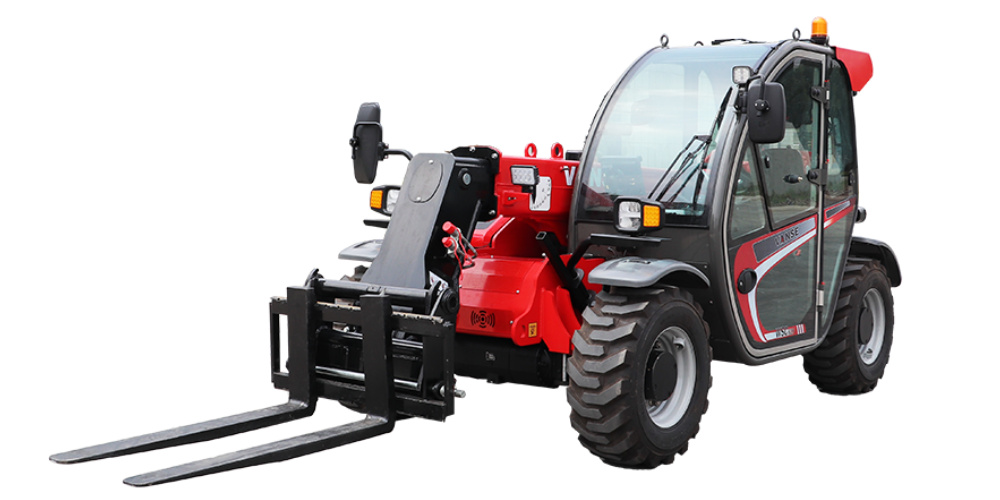
Carrello telescopico VANSE 625 6m
Progettato per una gestione efficiente dei materiali e lo stoccaggio in magazzini, fabbriche e cantieri ristretti, con manovrabilità compatta e prestazioni affidabili.

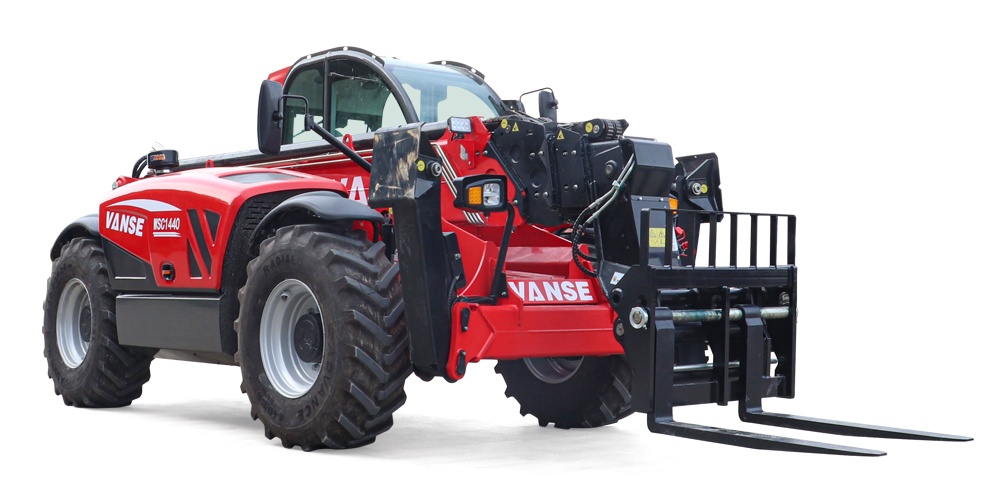
Carrello telescopico VANSE 735 7m
Soluzione equilibrata per impieghi medi in costruzioni, agricoltura, logistica e magazzinaggio, che unisce sollevamento stabile, trazione potente e versatilità quotidiana.


L'autore:
Il team VANSE è composto da professionisti esperti specializzati in ricerca, produzione e supporto tecnico per macchinari da costruzione. Con profonda conoscenza del settore e esperienza pratica, i nostri ingegneri e specialisti di prodotto condividono consigli pratici su selezione attrezzature, operazioni, manutenzione e tendenze del settore.
Condividi
Potresti essere interessato anche a
-

Ottobre 22, 2026
Telehandler for Grain Handling on Large Modern Farm Sites
Explore telehandler grain handling options in the United States, including suppliers, specs, farm uses, and cost-saving buying advice for grain operations.
-
Ottobre 21, 2026
Telehandler vs All Terrain Forklift: Which Lifts Better
Telehandler vs all terrain forklift in the United States: compare reach, lifting, terrain use, costs, and supplier options for smarter equipment buying.
-
Ottobre 20, 2026
10 Ton Telehandler: Extreme Lifting for Major Industrial
Explore 10-ton telehandler options in the United States, top suppliers, buying tips, applications, and service support for major lifting projects.
-
Ottobre 19, 2026
Telehandler for Demolition: Safe Structural Dismantling
Explore telehandler demolition options in the United States, including suppliers, attachments, safety, market trends, and cost-effective sourcing advice.