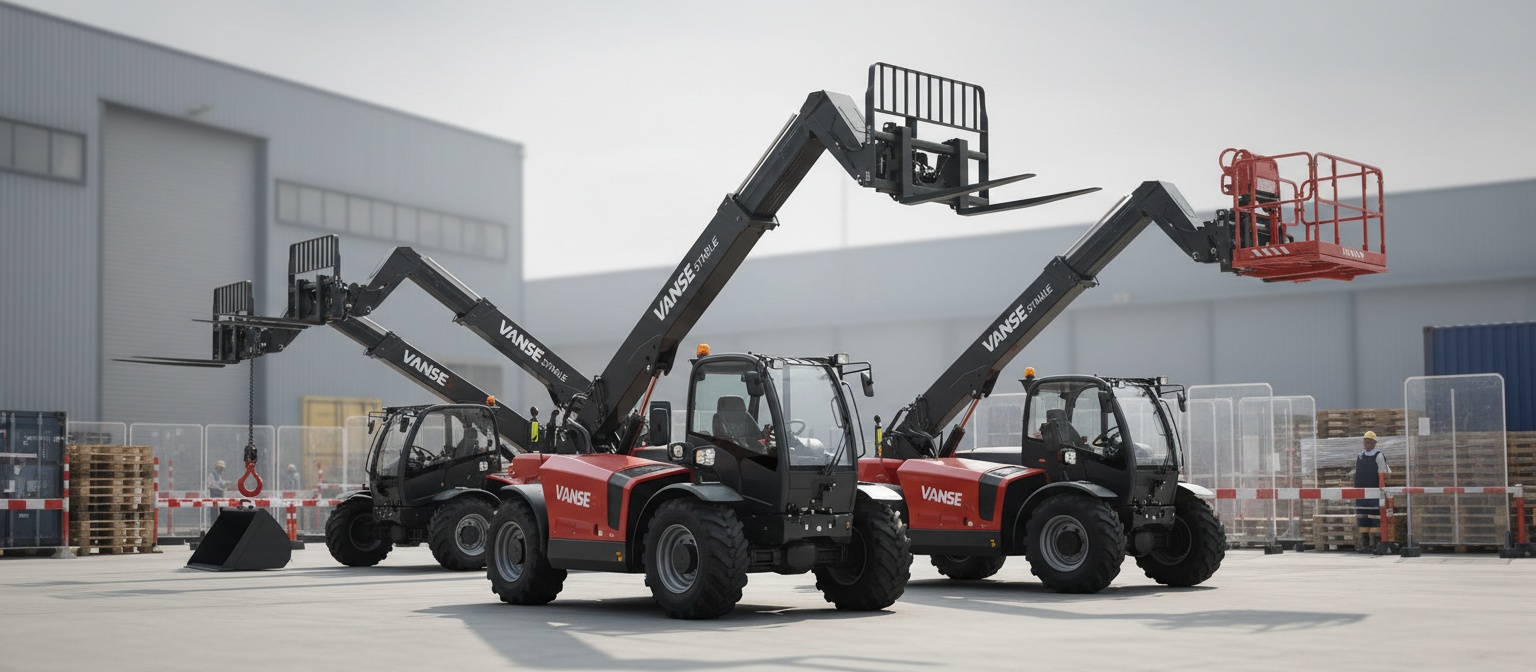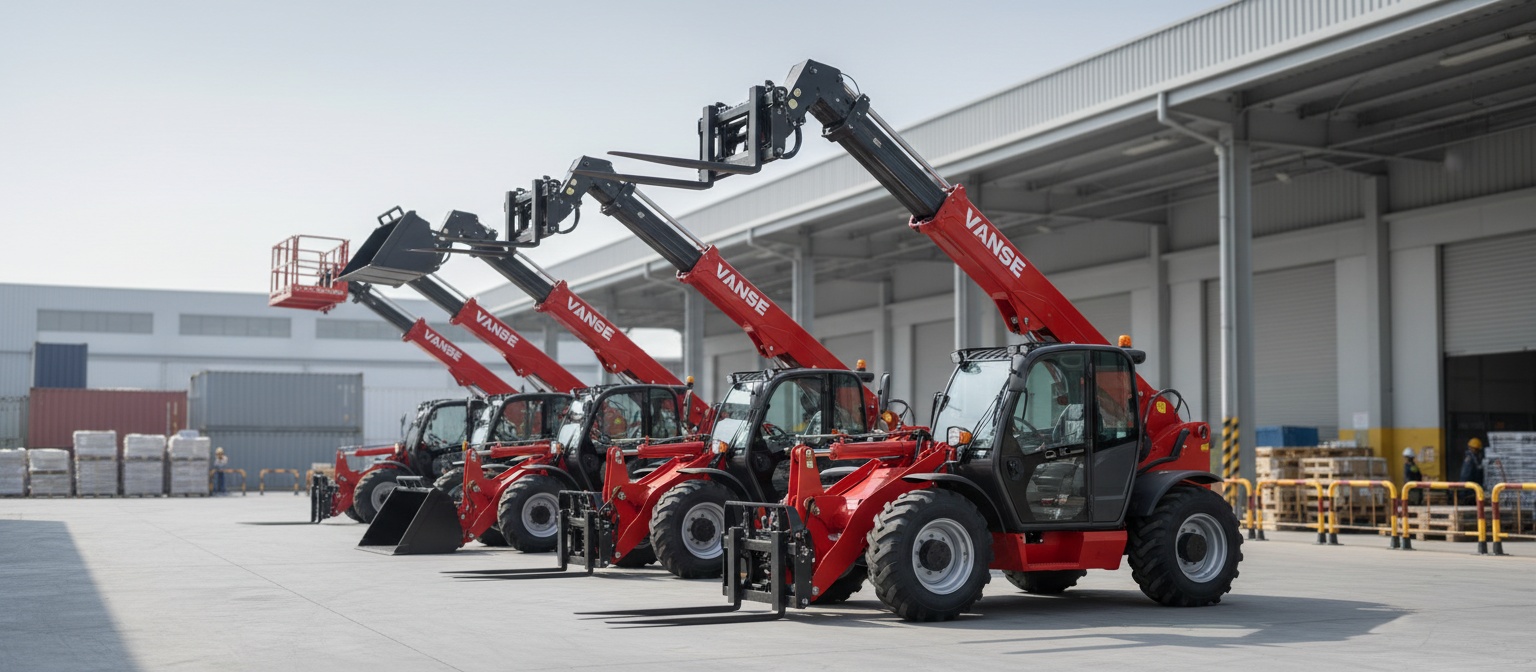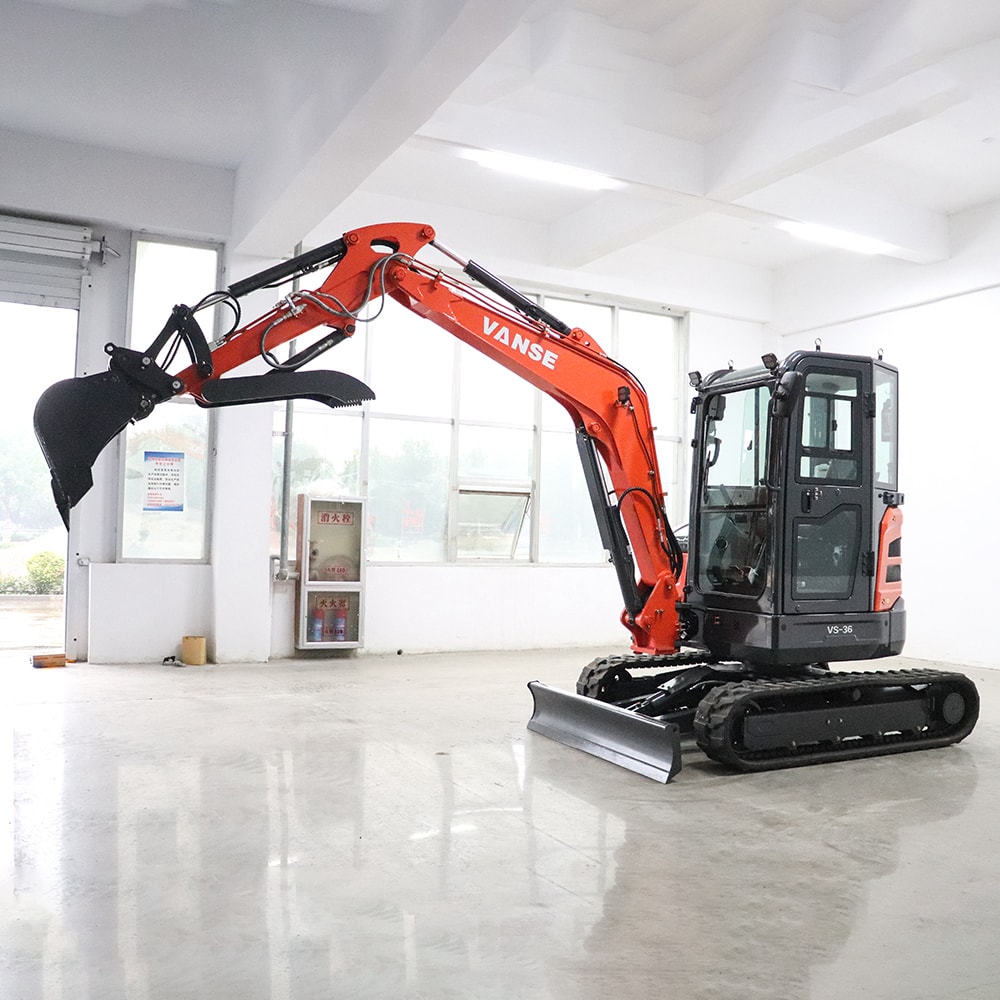
Telehandler vs Mast Forklift: What Fits U.S. Jobsites Best?
Quick Answer

For most outdoor, uneven-ground, and multi-height lifting work in the United States, a telehandler is the better choice because it offers longer forward reach, higher lift height, and better versatility with forks, buckets, jibs, and work platforms. For indoor warehouses, loading docks, manufacturing plants, and narrow aisle material movement on smooth concrete, a mast forklift is usually the better option because it is more compact, easier to maneuver, and often less expensive to buy and maintain.
If your job involves construction sites in Texas, Florida, California, Arizona, or large agricultural yards in the Midwest, telehandlers typically outperform mast forklifts. If your work is centered on pallet transport in distribution hubs around Chicago, Atlanta, Dallas, Los Angeles, or New Jersey, mast forklifts usually deliver the best return. Leading U.S. market names include JLG, Genie, JCB, Bobcat, Caterpillar, and Hyster-Yale dealers, while qualified international suppliers can also be worth evaluating when they provide CE or ISO-based manufacturing controls, globally recognized engine and hydraulic components, and dependable pre-sales and after-sales support in the United States. That cost-performance balance matters for rental fleets, dealers, contractors, and private buyers trying to control capital expense without sacrificing reliability.
Direct Comparison for U.S. Buyers

The real difference between a telehandler and a mast forklift is not simply reach versus compactness. It is about where the machine works, what it lifts, and how much flexibility the operator needs over the life of the machine. A mast forklift uses a vertical mast and is designed primarily for straight up-and-down pallet handling. A telehandler uses a telescopic boom, allowing the load to move upward and outward. That extra forward reach changes how materials are placed on rooftops, over obstacles, inside framed buildings, and across rough terrain.
In the United States, buyers often make the wrong choice when they focus only on rated capacity. A 10,000-pound telehandler and a 10,000-pound mast forklift do not perform the same way in practice. The forklift may carry pallets efficiently on flat, finished surfaces, but it usually cannot place materials onto elevated decks, across trenches, or behind barriers. The telehandler can perform those tasks, but it usually needs more operating space and has a more complex load chart that the operator must understand.
That is why the best equipment decision starts with three questions: Is the ground smooth or rough? Do you need horizontal reach as well as vertical lift? Will the machine stay in a warehouse or move between yard, road, structure, and open site? In many U.S. applications, the answer to those questions determines the machine class faster than the purchase price does.
Key Specification Comparison

The table below gives a practical operating comparison for buyers in the United States. The values represent common market ranges rather than a single brand or model.
| Factor | Telehandler | Mast Forklift | Why It Matters in the United States |
|---|---|---|---|
| Typical lift height | 19 to 56 feet or more | 10 to 24 feet common | Telehandlers suit framing, roofing, and multi-story placement |
| Forward reach | Strong forward reach with telescopic boom | Very limited forward reach | Important on construction and agricultural sites |
| Surface compatibility | Rough terrain capable | Best on smooth concrete or paved surfaces | Critical for mixed indoor-outdoor operations |
| Turning and aisle use | Larger footprint | Better in tight indoor spaces | Warehouse buyers usually favor mast forklifts |
| Attachment flexibility | High, including bucket, jib, winch, platform | Moderate, mostly fork-based handling | Telehandlers can replace multiple site machines |
| Operator training complexity | Higher due to load charts and boom dynamics | Lower for standard pallet handling | Affects compliance and fleet onboarding time |
| Purchase price | Usually higher | Usually lower | Key for small contractors and local yards |
| Best-fit environment | Construction, farms, yards, infrastructure | Warehouses, factories, docks, retail distribution | Application fit drives long-term operating cost |
This comparison shows why many U.S. fleets operate both machine types. They are not direct substitutes in every scenario. A telehandler can perform jobs a mast forklift cannot, but a mast forklift often handles repetitive pallet movement faster and at lower cost where floor conditions are controlled.
United States Market Context
The U.S. equipment market supports both categories strongly, but demand patterns differ by region. Telehandlers are especially common in Sun Belt construction markets, energy projects, roadwork, utility installation, and large agricultural operations. Mast forklifts dominate logistics corridors, port warehouses, food distribution, e-commerce fulfillment, packaging plants, and retail support centers. In California, Texas, Florida, Georgia, and the Carolinas, growth in building activity and distribution facilities keeps both categories relevant, though for very different reasons.
Ports and inland trade hubs also influence equipment choice. Around Los Angeles and Long Beach, Savannah, Houston, Newark, and Charleston, mast forklifts remain essential for warehouse-side loading and pallet flow. By contrast, telehandlers are more visible on adjacent construction sites expanding industrial parks, cold storage buildings, and manufacturing campuses. In inland logistics centers such as Dallas-Fort Worth, Memphis, Columbus, and Kansas City, contractors often deploy telehandlers during buildout and then hand over ongoing material movement to mast forklift fleets once operations begin.
Rental companies in the United States have reinforced this division. Telehandlers are often rented for project-based use with strong seasonal peaks, while mast forklifts are frequently part of long-term operations with predictable utilization. That matters if you are buying rather than renting because residual values, service intervals, attachment demand, and operator availability differ by category.
U.S. Market Growth Trend
The line chart below illustrates a realistic view of how telehandler demand has expanded with construction, industrial development, and agricultural modernization in the United States.
Product Types and Use Cases
Not all telehandlers or mast forklifts are built for the same jobs. In the U.S. market, telehandlers range from compact models for homebuilding and landscaping to heavy units for infrastructure, mining support, and oilfield service. Mast forklifts range from electric warehouse trucks to large diesel pneumatic-tire forklifts for lumber yards and outdoor loading zones.
Compact telehandlers are increasingly popular in urban infill construction and smaller contractor fleets because they can enter tighter sites while still delivering more reach than a conventional forklift. Rotating telehandlers are gaining attention in specialty rental and high-rise support applications, although they remain a niche compared with standard fixed-boom telehandlers. On the mast forklift side, electric units are becoming standard in indoor logistics and food-grade environments, while LPG and diesel models remain common in outdoor yards, building materials distribution, and mixed-use facilities.
Common Machine Types in the U.S. Market
The following table helps buyers map machine types to practical applications across the United States.
| Machine Type | Typical Capacity | Best Environment | Typical U.S. Users |
|---|---|---|---|
| Compact telehandler | 5,000 to 6,600 lb | Residential sites, nurseries, small farms | General contractors, landscapers, small rental houses |
| Standard rough-terrain telehandler | 8,000 to 12,000 lb | Commercial construction, industrial projects | Steel erectors, concrete crews, rental companies |
| High-capacity telehandler | 12,000 to 20,000 lb+ | Infrastructure, energy, mining support | Large contractors, plant maintenance teams |
| Rotating telehandler | 10,000 to 15,000 lb | Specialized urban and vertical jobsites | Specialty access providers, advanced rental fleets |
| Electric warehouse mast forklift | 3,000 to 8,000 lb | Indoor warehouses and manufacturing plants | 3PLs, retail distribution centers, food processors |
| IC cushion-tire mast forklift | 4,000 to 15,000 lb | Smooth indoor-outdoor transitional areas | Factory logistics, packaging plants |
| Pneumatic-tire mast forklift | 5,000 to 20,000 lb+ | Lumber yards, ports, outdoor loading areas | Building material dealers, port operators |
This table makes one point clear: a mast forklift is not just a warehouse machine, and a telehandler is not only for construction. Both can cross into other sectors, but each still has a primary operating zone where it creates the strongest return.
Industry Demand in the United States
Industry demand differs sharply by sector. The bar chart shows how telehandlers and mast forklifts tend to align with different U.S. industries.
Buying Advice for U.S. Contractors and Fleet Managers
When comparing a telehandler vs mast forklift, the most expensive mistake is buying for the occasional job instead of the dominant workload. If your crew spends most of the month handling pallets in aisles, a telehandler is too much machine. If your team regularly places loads onto second-story slabs, over concrete forms, or across rough exterior grades, a mast forklift will quickly become a limitation.
Buyers in the United States should evaluate six decision factors. First, surface conditions: rough terrain strongly favors telehandlers. Second, lift path: if the load must move both up and out, telehandlers lead. Third, space constraints: tight aisles favor mast forklifts. Fourth, attachment strategy: if one machine must sweep, lift, place, and support multiple tasks, telehandlers become more valuable. Fifth, service network: local dealer and parts support often matters more than sticker price. Sixth, training and safety compliance: telehandlers need disciplined load chart use and site supervision.
Rental economics also matter. Some U.S. buyers find it more efficient to own mast forklifts for everyday facility work and rent telehandlers only when projects require reach. Others, especially contractors and agricultural businesses, find telehandlers justify ownership because one unit can reduce reliance on cranes, skid steer attachments, and multiple loading machines.
Cost, Ownership, and Productivity Comparison
Below is a practical comparison of ownership considerations. Actual values vary by brand, capacity, dealer support, and financing terms, but the trend is consistent across the U.S. market.
| Ownership Factor | Telehandler | Mast Forklift | Buyer Takeaway |
|---|---|---|---|
| Initial acquisition cost | Higher for equivalent lifting class | Lower in many standard configurations | Mast forklifts win where budget is tight and tasks are simple |
| Attachment value | High multi-function value | Limited compared with telehandlers | Telehandlers may replace more than one asset |
| Fuel and power use | Higher in heavy outdoor cycles | Lower for electric indoor models | Warehouses often save with electric mast forklifts |
| Maintenance complexity | More hydraulic and boom-related systems | Simpler in standard warehouse models | Service planning matters for remote jobsites |
| Labor productivity per machine | High on complex outdoor sites | High in repetitive pallet flow | Choose based on work pattern, not broad assumptions |
| Resale and rental appeal | Strong in construction-heavy regions | Strong in broad logistics and industrial sectors | Both can retain value if specification matches market demand |
| Training requirement | Higher operator discipline needed | Lower for routine applications | Factor certification and supervision into total cost |
This table is important because it reframes cost as a productivity issue. A telehandler may cost more upfront, but if it prevents crane dependency, cuts material rehandling, or improves placement speed, total job cost may fall. A mast forklift may look less versatile, yet in a warehouse moving hundreds of pallets daily, it often creates faster cycle times and lower cost per move.
Industries Where Telehandlers Lead
Telehandlers are the dominant choice in U.S. construction because they handle framing lumber, trusses, scaffolding, roofing materials, masonry packs, pipe bundles, and palletized supplies on unfinished terrain. On commercial jobs in Houston, Phoenix, Tampa, Las Vegas, and Charlotte, rough-terrain capability and reach are often non-negotiable. In agriculture, telehandlers also support feed movement, bale stacking, seed handling, and barn maintenance. In energy and industrial maintenance, they help position components where straight vertical mast movement is not enough.
Another reason telehandlers lead in these sectors is attachment adaptability. A contractor can switch from pallet forks to a bucket, hook, or lifting jib, making the machine valuable across multiple crews. This is especially useful in rural or spread-out U.S. work environments where sending additional support machines to site is costly.
Industries Where Mast Forklifts Lead
Mast forklifts remain the standard in warehousing, distribution, packaging, and manufacturing because their strengths align with repetitive material flow. In fulfillment centers around Inland Empire, Dallas, central Pennsylvania, and northern New Jersey, forklifts are optimized for loading trailers, moving palletized inventory, feeding production lines, and working in controlled aisles. Electric mast forklifts are especially important in facilities with emissions, noise, or food safety considerations.
Even outdoors, pneumatic-tire mast forklifts remain strong in lumber yards, masonry supply lots, and port-adjacent staging areas where surfaces are relatively stable and the work mainly involves loading, unloading, and stacking. In these cases, the operator benefits more from low-profile maneuverability and predictable mast handling than from telescopic boom reach.
Application Scenarios
To make the choice concrete, consider common U.S. applications. Placing roof trusses on a suburban housing development in Nashville strongly favors a telehandler. Loading packaged goods in a Chicago warehouse favors a mast forklift. Moving feed and bales around a Nebraska farmyard often favors a telehandler. Handling pallets in a pharmaceutical facility in New Jersey favors an electric mast forklift. Unloading building materials at a rough outdoor site in Colorado often favors a telehandler. Loading palletized tile at a paved dealer yard in California may work well with either, but if stacking heights are modest and space is tight, a mast forklift usually wins.
The critical point is application density. If your business needs reach occasionally, renting a telehandler and owning forklifts can be ideal. If you need reach every week, buying a telehandler becomes easier to justify. If your loads remain on pallets and your site never demands outreach, a mast forklift is nearly always the more efficient purchase.
Trend Shift in Equipment Preferences
The area chart reflects a realistic shift in the United States as mixed-use jobsites and multi-function fleet strategies push more buyers toward telehandlers, while forklifts remain indispensable in indoor logistics.
Case Studies from Typical U.S. Operating Conditions
A contractor in Dallas building a mid-rise shell often needs to unload trucks, carry framing bundles over mud, and place material on elevated decks. A telehandler reduces material touches and improves site logistics. A regional food distributor near Atlanta, by contrast, moves palletized stock between dock doors, racking zones, and staging lanes on sealed floors. An electric mast forklift offers lower emissions, lower noise, and better maneuverability. A California masonry supplier operating in a paved yard may choose pneumatic-tire mast forklifts for fast loading but keep one telehandler on the fleet for oversized placement tasks where reach is needed over stored inventory.
On a large Midwest farm, a telehandler often becomes the preferred choice because it can load mixers, stack bales higher, and handle maintenance tasks around barns and grain support areas. In a Gulf Coast petrochemical turnaround project, telehandlers are frequently favored for positioning tools, materials, and components in uneven work zones where forklifts would struggle. These examples show that the best choice depends on workflow geometry, not just capacity labels.
Leading Suppliers and Brands Serving the United States
The supplier landscape matters because support, parts, and fleet familiarity often outweigh headline specifications. The table below highlights recognizable companies active in the U.S. market and relevant to telehandler or mast forklift buying decisions.
| Company | Main Product Focus | Service Region in the United States | Core Strengths | Key Offerings |
|---|---|---|---|---|
| JLG | Telehandlers and access equipment | Nationwide dealer and rental coverage | Strong construction presence, broad model range | Compact to high-capacity telehandlers, rental fleet support |
| Genie | Telehandlers and aerial equipment | Nationwide, strong rental channels | Well known in access and site equipment markets | Construction telehandlers, support through equipment dealers |
| JCB | Telehandlers and construction machinery | Broad U.S. distribution, strong in agriculture and construction | Global telehandler expertise, versatile product lineup | Agricultural and construction telehandlers |
| Bobcat | Telehandlers and compact equipment | Strong North American dealer network | Brand familiarity among contractors and rental users | Compact and mid-size telehandlers |
| Caterpillar | Mast forklifts and industrial equipment through dealer channels | Nationwide dealer support | Parts infrastructure and fleet confidence | Forklifts, industrial support solutions, service packages |
| Hyster-Yale | Mast forklifts | Nationwide, strong industrial footprint | Warehouse and manufacturing specialization | Electric, LPG, diesel, and heavy-duty forklifts |
| Toyota Material Handling | Mast forklifts | Nationwide, dense dealer network | Reliability reputation and warehouse leadership | Electric and internal-combustion forklifts |
| Manitou | Telehandlers and rough-terrain handling | National coverage with specialty strength | Strong rough-terrain handling heritage | Construction and agricultural telehandlers |
For U.S. buyers, the meaning of this table is practical. If uptime and same-day support are critical, established dealer coverage is essential. If your business is price-sensitive or planning regional distribution, it also makes sense to compare emerging suppliers that combine internationally recognized components with growing local support in the United States.
How to Evaluate Local and International Suppliers
When evaluating suppliers, U.S. buyers should look beyond brochure specifications and ask four direct questions. What parts inventory is stocked in the country? What technician response time is offered in your region? Are engines, transmissions, hydraulics, and axles sourced from recognized brands with proven serviceability? Can the supplier support dealer, distributor, fleet, or private-label business models if you need more than a one-time purchase?
This is particularly important when considering international suppliers. The right international manufacturer is not simply a low-price exporter. The right one demonstrates documented production controls, recognized certifications, tested components, export experience, and an actual service strategy for North America. That is the threshold where cost-performance becomes a real advantage rather than a risk.
About Our Company in the U.S. Market
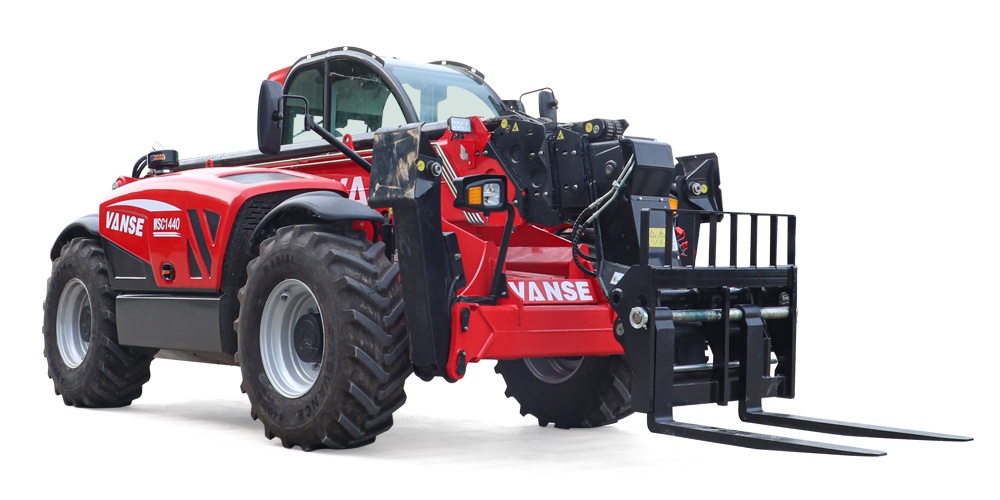
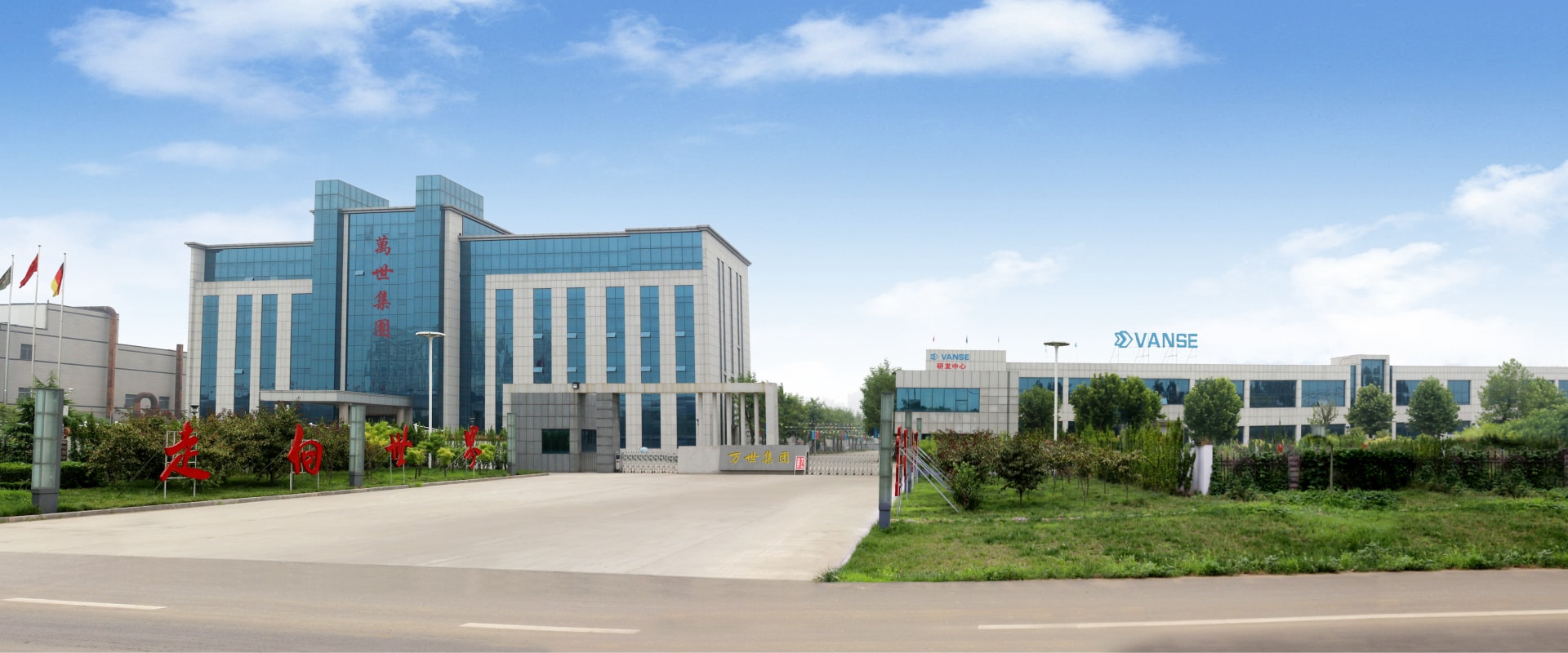
VANSE has built its position around telehandlers and related construction machinery with more than a decade of manufacturing experience, cumulative production exceeding 8,000 units, and exports to over 40 countries, including active business across North America. For U.S. buyers comparing telehandlers with mast forklifts, that matters because the company’s telehandlers are produced under CE and ISO 9001 controlled processes, each unit goes through load testing, safety inspections, and performance validation before shipment, and core systems are built around globally recognized brands such as Perkins and Cummins engines alongside premium hydraulic, transmission, and axle components that align with international reliability expectations. VANSE works with end users, distributors, dealers, brand owners, rental fleets, and individual buyers through flexible OEM, ODM, wholesale, retail, and regional partnership models, making it suitable for direct procurement as well as private-label or territory development strategies. The company is also moving beyond remote export by establishing a U.S.-based subsidiary to support the American market with local inventory, stocking, stronger after-sales coordination, and closer customer relationships, while online technical guidance and offline service support extend from pre-sale machine selection to ongoing maintenance. Buyers can explore the company through the official VANSE website, review available equipment categories, learn more about the company, examine its service capabilities, or contact the team for model selection and partnership discussions in the United States.
Supplier and Product Comparison Focus
The comparison chart below gives a practical scoring view for common U.S. buying criteria. It compares machine categories rather than individual SKUs.
What Different U.S. Buyer Types Should Choose
General contractors usually benefit most from telehandlers because materials need to move over dirt, forms, trenches, and unfinished grades. Warehouse operators should usually choose mast forklifts because turning radius, battery options, and rack access matter more than boom reach. Agricultural operators should compare telehandlers seriously because bale stacking, feed loading, and all-terrain work create a strong case for telescopic machines. Equipment rental companies often need both, but telehandlers can command strong rental demand in active construction regions. Dealers and distributors should consider whether their local customers need simple pallet handling or multi-function site capability before building inventory.
For individual buyers and smaller businesses in the United States, financing and service support are often the deciding factors. A lower purchase price does not help if parts lead times are long or if the machine is poorly matched to the actual work cycle. That is why the best supplier is usually the one that can specify the machine correctly, not just quote it quickly.
Buying Checklist Before You Decide
Before purchasing, verify rated capacity at the actual lift height and reach you need, not only the headline number. Confirm whether loads will be palletized, bagged, irregular, or suspended. Check site width, door height, and turning space. Review OSHA training requirements and local site rules. Confirm whether attachment availability is standard or special order. Ask the supplier for service intervals, stocked wear parts, and expected response times in your city or state. For used machines, request maintenance records, boom wear inspection for telehandlers, and mast chain or carriage inspection for forklifts.
If you operate near Houston, Miami, Los Angeles, Chicago, or New York metro logistics zones, parts support may be easier to secure through larger dealer networks. If you work in rural states or remote project corridors, the durability of core components and the availability of field support become even more important. In those conditions, a supplier with practical North American service commitment is worth prioritizing.
2026 Trends in the United States
Looking toward 2026, the telehandler vs mast forklift discussion in the United States will be shaped by technology, policy, and sustainability. Electrification will continue growing fastest in mast forklifts because indoor logistics environments are already aligned with battery systems and emissions rules. Telehandlers will also move toward low-emission powertrains, but adoption will progress more gradually because outdoor duty cycles, runtime demands, and charging infrastructure remain tougher challenges on jobsites.
Policy will matter as state and local procurement standards increasingly reward lower emissions, lower noise, and safer equipment operation. Construction technology will push telehandlers toward smarter load management, camera systems, telematics, fleet geofencing, and predictive maintenance. On the forklift side, automation, lithium battery adoption, and warehouse management integration will accelerate, especially in large e-commerce and food distribution facilities. Sustainability pressure will also shift purchasing decisions toward machines that reduce idle time, improve load efficiency, and support longer service life through better component quality and rebuildability.
For buyers in the United States, the result is clear: telehandlers will gain further importance in flexible outdoor material handling, while mast forklifts will remain essential in controlled logistics environments and benefit more quickly from electrification and automation. The strongest fleets will not treat these machines as rivals in every case. They will deploy each where it creates the highest operational advantage.
FAQ
Is a telehandler safer than a mast forklift?
Both can be safe when matched correctly to the task and operated by trained personnel. Telehandlers require careful attention to load charts, boom extension, and site conditions. Mast forklifts require disciplined load handling, visibility management, and stable floor conditions.
Can a telehandler replace a forklift?
Sometimes, but not always. A telehandler can replace a forklift in many outdoor or mixed-terrain applications. It does not usually replace a warehouse forklift in narrow aisles or high-frequency pallet handling.
Which machine is better for construction in the United States?
In most construction settings, especially on rough terrain or where forward reach is needed, a telehandler is the better option.
Which is cheaper to own?
A mast forklift is often cheaper to buy and maintain in standard indoor applications. A telehandler may deliver better total value if it replaces multiple machines or prevents expensive rehandling on site.
Are telehandlers common in U.S. rental fleets?
Yes. Telehandlers are widely stocked by rental companies across the United States because demand is strong in commercial construction, homebuilding, infrastructure, and agriculture.
Should I consider an international telehandler supplier for the U.S. market?
Yes, if the supplier demonstrates proven export experience, recognized certifications, quality-controlled manufacturing, dependable component brands, and tangible local support such as U.S. inventory, service coordination, and responsive pre-sales and after-sales assistance.
Final Takeaway
If your work in the United States is mostly indoors, pallet-based, and space-constrained, choose a mast forklift. If your work is outdoors, uneven, multi-level, or requires both lift height and forward reach, choose a telehandler. For many businesses, the right answer is not telehandler or mast forklift in absolute terms. It is selecting the machine that matches your dominant operating environment, then choosing a supplier with the right support structure, component quality, and long-term service commitment in the U.S. market.
Complete Telescopic Handler Equipment Portfolio
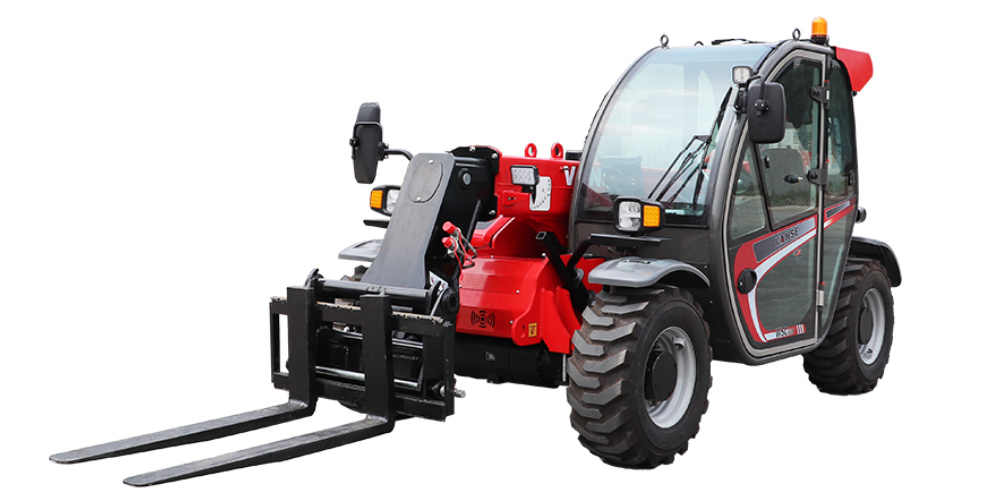
VANSE 625 6m Telescopic Handler
Designed for efficient material handling and stacking in warehouses, factories, and confined job sites, offering compact maneuverability and reliable performance.

VANSE 735 7m Telescopic Handler
A balanced mid-duty solution for construction, agriculture, logistics, and warehousing, combining stable lifting, strong traction, and everyday versatility.


About the Author:
The VANSE team is a group of experienced professionals specializing in construction machinery research, manufacturing, and technical support. With deep industry knowledge and hands-on experience, our engineers and product specialists share practical insights on equipment selection, operation, maintenance, and industry trends.
Share
You May Also Interest
-

2 October, 2026
Telehandler for Recycling Plants: Waste Handling on Site
Find the right telehandler recycling plant solution in the United States with supplier comparisons, buying tips, applications, and cost-smart sourcing options.
-
1 October, 2026
Diesel vs Electric Telehandler: Power Source Comparison
Compare diesel vs electric telehandler options in the United States with costs, jobsite fit, suppliers, market trends, and practical buying advice.
-

30 September, 2026
How to Inspect a Telehandler Before Daily Operation Work
Use this telehandler daily inspection guide for the United States to check tires, forks, hydraulics, safety systems, and documents before each shift.
-

29 September, 2026
Telehandler for Solar Panel Installation on Large Sites
Explore telehandler solar installation solutions in the United States, including suppliers, machine types, buying tips, and service options for large solar sites.