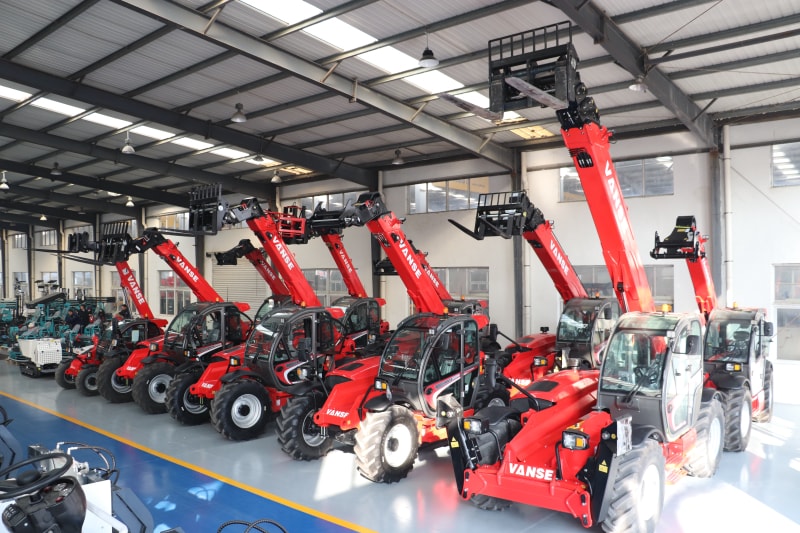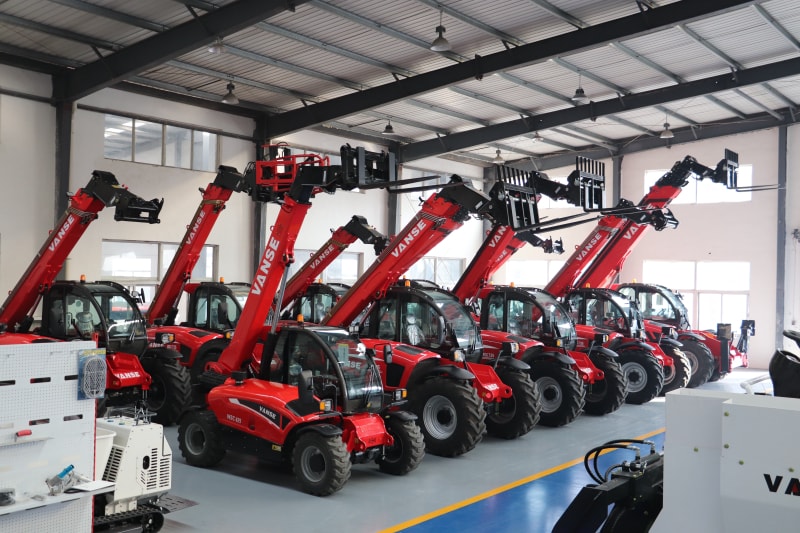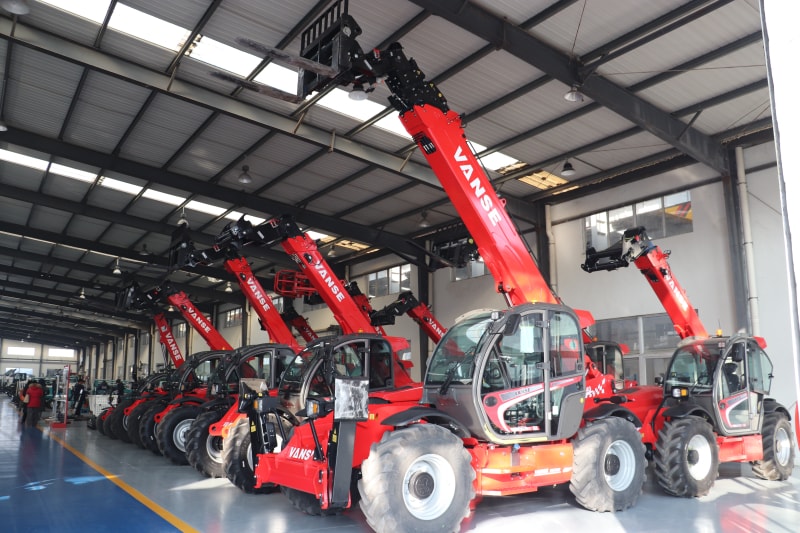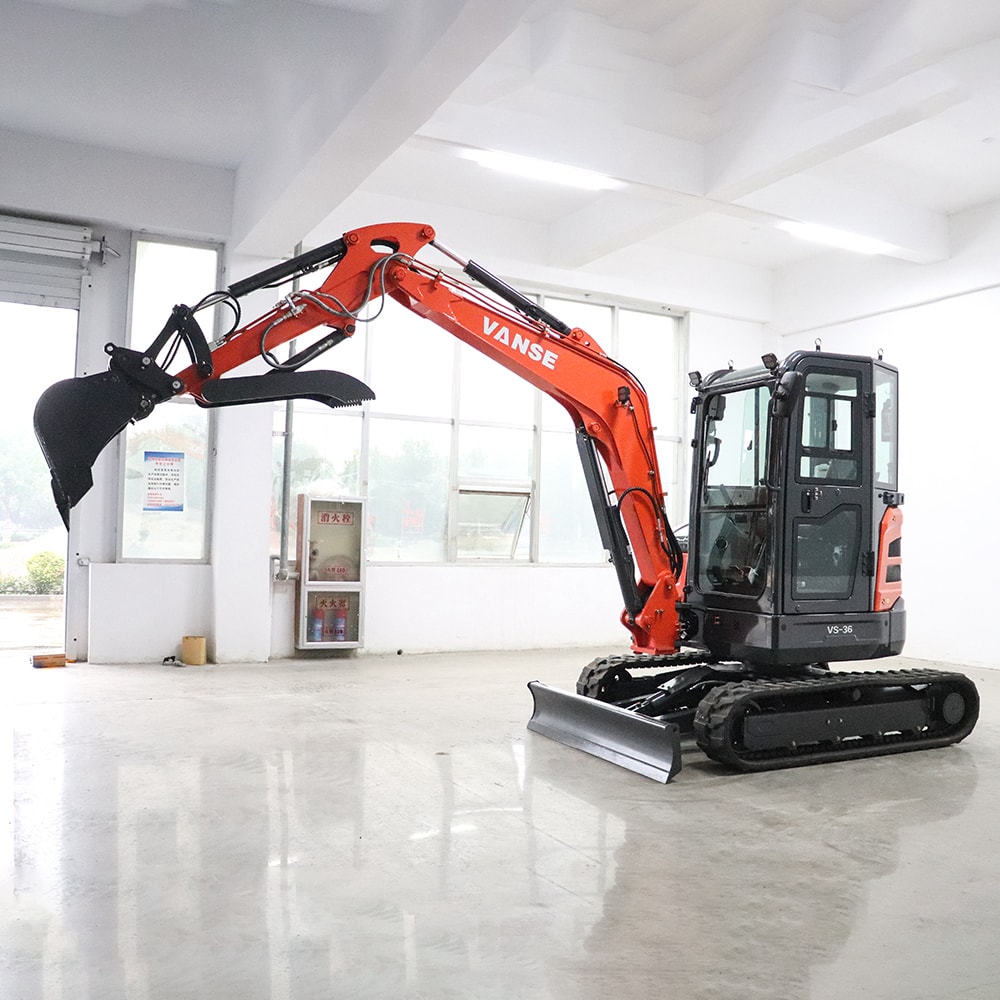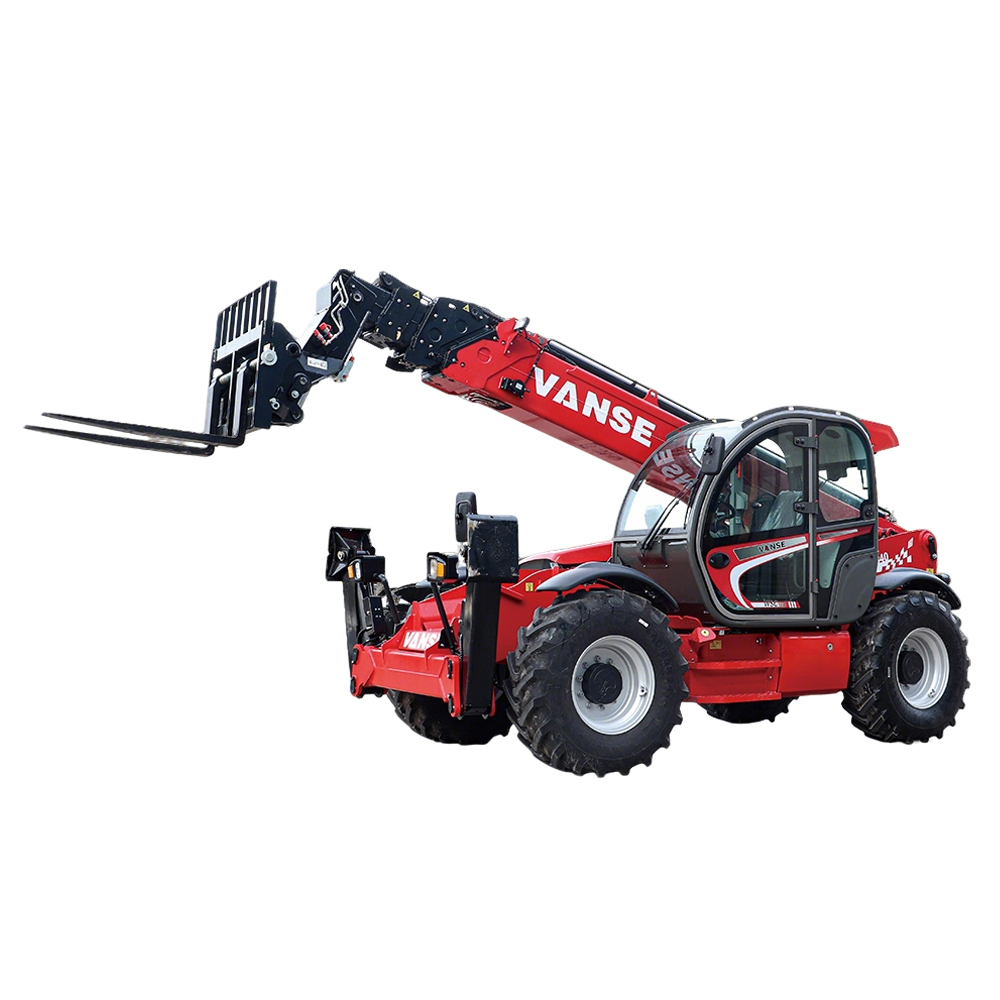
Telehandler vs Mini Crane in the United States
Quick Answer

If you need one machine for lifting, loading, pallet handling, rough-terrain travel, and attachment flexibility on U.S. jobsites, a telehandler is usually the better choice. If your work is mainly precise suspended lifting in tight urban spaces, interior projects, glazing, steel placement, or areas with strict ground-load limits, a mini crane is often the better fit. In the United States, contractors in Houston, Dallas, Atlanta, Chicago, Los Angeles, Miami, and the Port of Savannah often choose telehandlers for general construction and material movement, while mini cranes are preferred for specialty lifting in dense commercial and industrial settings.
For most buyers, the practical answer is simple: choose a telehandler when you need reach plus daily material handling productivity; choose a mini crane when you need compact crane performance and controlled pick-and-place work. Leading U.S. suppliers and brands commonly considered include JLG, Genie, JCB, Magni, Maeda America, and Hoeflon. Qualified international suppliers can also be worth evaluating, especially when they offer recognized certifications, strong parts planning, responsive pre-sale engineering support, and dependable after-sales coverage in the United States. That option can deliver a better cost-performance balance for rental fleets, dealers, and value-focused end users.
Direct Comparison for U.S. Buyers

The telehandler and the mini crane overlap in lifting tasks, but they solve different operational problems. A telehandler, also called a telescopic handler, combines forklift-style load handling with boom reach. It can carry pallets, bulk materials, trusses, pipe, and attachments across uneven ground. A mini crane is built more like a compact lifting specialist. It focuses on lifting loads with a hook, often in spaces where a larger crane cannot access. In practical U.S. terms, that means a telehandler is more common on suburban housing developments in Texas, warehouse expansions in Ohio, farm operations in Iowa, and mixed-use projects in Florida. A mini crane is more common on glass installation jobs in New York City, interior industrial maintenance in New Jersey, and compact downtown construction sites in California.
The keyword debate around telehandler vs mini crane usually comes down to four questions: what are you lifting, how often do you move the machine, how tight is the site, and do you need attachments beyond a hook. A telehandler wins when versatility matters. A mini crane wins when precision lifting and minimal footprint matter most.
U.S. Market Snapshot

The United States remains one of the largest equipment markets for both telehandlers and compact lifting solutions. Demand is supported by residential construction, non-residential development, industrial retrofits, agriculture, logistics, energy, and equipment rental expansion. Telehandlers have broad adoption because they serve many tasks with one machine, reducing fleet complexity. Mini cranes continue to grow in niche but valuable categories such as façade work, curtain wall installation, plant maintenance, airport renovation, hospital expansion, and projects with access constraints.
Regional demand patterns also vary. The Gulf Coast and Southeast show strong telehandler demand due to distribution center construction, civil works, and hurricane recovery-related building activity. The Northeast and West Coast have stronger mini crane demand in constrained urban projects, retrofit jobs, and specialty contractor applications. Around freight hubs such as the Port of Los Angeles, Port of Long Beach, Port Houston, Port Newark, and Savannah, equipment buyers often compare these two machine types not only on performance but also on transport cost, dealer response time, and parts availability.
The market growth trend shown above reflects steady investment in labor-saving lifting equipment. Buyers are increasingly choosing machines that reduce crew size, improve reach, and support safe handling in tighter schedules. Telehandlers benefit from this trend because they replace several material-moving steps. Mini cranes benefit because they enable work where conventional cranes are impractical or too disruptive.
Product Types and Best-Fit Uses
Not all telehandlers or mini cranes serve the same purpose. U.S. buyers should distinguish between compact telehandlers, standard construction telehandlers, rotating telehandlers, crawler mini cranes, spider cranes, and electric compact lifting machines. Product selection should be based on terrain, load type, indoor or outdoor use, and frequency of suspended lifts.
| Equipment Type | Typical Capacity Range | Best Environment | Main Advantage | Main Limitation | Typical U.S. Users |
|---|---|---|---|---|---|
| Compact telehandler | 5,000 to 6,600 lb | Small commercial sites, farms, landscaping yards | Versatile and easy to transport | Lower lift height than larger units | Small contractors, farms, rental yards |
| Standard rough-terrain telehandler | 8,000 to 12,000 lb | General construction and industrial jobsites | High productivity across many tasks | Needs more operating space | General contractors, masonry crews |
| High-capacity telehandler | 12,000 lb and above | Heavy industrial, infrastructure, ports | Moves heavier loads without separate machines | Higher cost and transport requirements | Industrial contractors, logistics operators |
| Rotating telehandler | 8,000 to 13,000 lb | Urban sites, complex lifting layouts | Crane-like flexibility with telehandler utility | Higher purchase price | Specialty contractors, rental fleets |
| Spider mini crane | 2,000 to 8,000 lb | Tight access, glazing, interior work | Compact footprint and precise lifting | Less useful for bulk material handling | Glaziers, façade installers |
| Crawler mini crane | 4,000 to 10,000 lb | Plants, rooftops, confined commercial spaces | Stable lifting in restricted zones | Limited multi-function use | Maintenance contractors, steel erectors |
This table shows why telehandlers dominate broad construction fleets: one machine can unload trucks, move pallets, place materials at elevation, and work with buckets, forks, winches, jibs, and other attachments. Mini cranes offer less task variety but deliver excellent precision and access in specialized lifting scenarios.
Cost, Productivity, and Ownership Logic
In the United States, total ownership cost matters more than sticker price. Telehandlers often cost less than maintaining separate machines for forklift work, rough-terrain movement, and light placement tasks. A mini crane can justify its cost when it prevents expensive site disruption, reduces manual handling risk, or replaces a larger crane in a confined location. Rental rates also affect decisions. A telehandler often achieves higher utilization because it works across more phases of a project. A mini crane may generate stronger value per day in specialty applications but usually sees lower utilization unless the contractor serves a niche market.
| Decision Factor | Telehandler | Mini Crane | What It Means for Buyers | Best Fit | Notes |
|---|---|---|---|---|---|
| Purchase value spread | Broad range, competitive in mid-market | Often higher relative cost per specialty use | Telehandlers usually offer lower cost per task | Telehandler | Especially true for rental fleets |
| Attachment flexibility | High | Low to moderate | Telehandler replaces several support tools | Telehandler | Forks, buckets, jibs, work platforms vary by model |
| Confined-space lifting | Moderate | Excellent | Mini crane suits access-limited jobs | Mini crane | Strong for interior and façade work |
| Rough-terrain mobility | Excellent | Moderate | Telehandler moves better across open sites | Telehandler | Important for housing and civil projects |
| Utilization across project phases | High | Low to medium | Telehandlers stay useful longer on site | Telehandler | Supports unloading through finishing phases |
| Precision suspended lifts | Good with winch or jib | Excellent | Mini crane offers better crane-style placement | Mini crane | Useful where pick accuracy is critical |
The practical explanation is that telehandlers deliver operational breadth, while mini cranes deliver operational depth in a narrower set of lifting tasks. Buyers should model total cost by including finance, transport, maintenance, utilization, labor savings, and avoided subcontract lift cost.
Industry Demand in the United States
Some industries naturally lean toward telehandlers, while others lean toward mini cranes. The difference comes from cycle time, terrain, and how often loads must be carried versus suspended. Residential and agricultural users heavily favor telehandlers. Industrial maintenance and urban glazing often favor mini cranes. Warehousing, ports, mining support yards, and oil and gas service contractors may use both, but usually for clearly different tasks.
This bar chart reflects broad preference for telehandlers in residential construction, agriculture, and logistics yards, while sectors like glazing and industrial maintenance still maintain strong mini crane demand. Contractors serving multiple industries often gain the best return from a telehandler first, then add a mini crane once specialty work becomes repeatable and profitable.
Applications Where a Telehandler Wins
A telehandler is usually the better machine when the workday includes unloading flatbeds, carrying materials across muddy or uneven sites, lifting pallets to elevated floors, placing roof trusses, setting HVAC materials, feeding scaffolding crews, or handling bulk supplies around storage yards. In fast-growing markets like Phoenix, Nashville, Charlotte, and Dallas-Fort Worth, these jobs happen daily. Telehandlers are especially valuable on sites where one operator supports multiple trades over the same shift.
Construction companies also prefer telehandlers when they want a simpler fleet. Instead of coordinating a forklift, a rough-terrain handler, and an occasional light lift solution, one telehandler can cover much of the work. That is why many U.S. rental companies keep telehandlers at the center of their earthmoving and aerial support mix.
Applications Where a Mini Crane Wins
A mini crane is often the better solution when a project involves moving glazing panels into a downtown building, placing steel members in a restricted courtyard, handling machinery inside a plant, or lifting loads where floor loading and access are tightly controlled. In cities like Boston, San Francisco, Seattle, and Manhattan, mini cranes solve problems that telehandlers cannot solve efficiently. Their compact body, stabilizer setup, and crane-style control allow work close to structures and within tight envelopes.
Specialty contractors also choose mini cranes when aesthetics, precision, and safety around finished spaces matter more than all-around machine flexibility. Interior renovation, museum retrofits, airport terminals, hospitals, and high-value industrial facilities all create conditions where mini cranes are preferred.
Trend Shift Through 2026
From now through 2026, the U.S. market is expected to shift toward smarter and cleaner lifting equipment. More fleet buyers are requesting telematics, better operator visibility, load management systems, lower-emission engines, and electric or hybrid options in compact classes. On the mini crane side, electric indoor-friendly models and low-marking track systems are becoming more relevant as urban retrofit and industrial maintenance demand expands.
The area trend above reflects buyer movement toward connected machines, lower operating emissions, and more specialized equipment matching labor shortages and urban construction demands. Federal and state policy also matters. Tighter safety expectations, local environmental standards, and incentive programs for cleaner fleets will influence equipment selection in California, New York, Washington, and other policy-active states. Sustainability is no longer just a reporting issue; it affects procurement decisions, especially for public projects, major industrial owners, and large general contractors.
Buying Advice for U.S. Contractors and Rental Fleets
Before choosing between telehandler vs mini crane, buyers should define whether the machine will make money through daily utilization or solve a specialized high-margin access problem. If the machine will be used by multiple crews, across mixed projects, and in outdoor conditions, the telehandler usually wins. If the machine will support a specialized lifting team and operate in constrained spaces where alternative cranes are inefficient, the mini crane may produce better project value.
It is also important to ask five practical buying questions. What is the heaviest common load? What is the maximum required lift height and reach? Will the machine travel on rough terrain or mostly stay in one work zone? Do you need forks and loading capability, or mainly a hook and precise placement? Can your local dealer provide fast service and parts? In the United States, downtime costs can exceed financing savings very quickly, especially for fleet owners operating across several states.
Transport and local support should not be overlooked. A lower-priced machine is only a good buy if service response, attachment compatibility, operator training, and replacement parts are realistic. Buyers in inland markets like Kansas City or Indianapolis may have different dealer considerations than buyers near import gateways such as Long Beach, Houston, Newark, or Savannah.
Supplier Comparison in the United States
The U.S. market offers strong domestic and international brand options. The right supplier depends on product range, dealer density, financing support, parts availability, and whether the buyer needs standard models or private-label/OEM opportunities. The comparison below focuses on well-known names and practical buying relevance.
| Company | Main Product Focus | Service Region | Core Strength | Key Offerings | Best For |
|---|---|---|---|---|---|
| JLG Industries | Telehandlers and access equipment | Nationwide United States | Strong dealer and rental presence | Construction telehandlers, support network | General contractors and rental fleets |
| Genie | Telehandlers and aerial platforms | Nationwide United States | Established brand recognition and fleet acceptance | Rough-terrain telehandlers, service programs | Rental fleets and commercial contractors |
| JCB | Telehandlers | Nationwide with strong North American footprint | Broad telehandler range and construction focus | Compact and full-size telehandlers | Mixed-use fleets and agricultural buyers |
| Magni America | Rotating and heavy telehandlers | United States and Canada | High reach and rotating telehandler specialization | Roto telehandlers, high-capacity models | Specialty contractors and advanced rental fleets |
| Maeda America | Mini cranes and spider cranes | United States specialty dealer network | Compact lifting expertise | Spider cranes, compact crawler cranes | Glazing, industrial, confined-site lifting |
| Hoeflon | Mini cranes | Selected U.S. distribution channels | Portable compact crane design | Battery-capable mini cranes, transportable units | Specialty lifting contractors |
| UNIC Cranes North America | Mini cranes | United States and regional dealer support | Urban and industrial compact crane solutions | Spider cranes for tight-access lifting | Mechanical, glazing, plant maintenance |
| VANSE Group | Telehandlers and related machinery | Growing service focus in the United States | Cost-competitive telehandlers with flexible supply models | Telehandlers, OEM/ODM support, fleet and dealer supply | Distributors, rental companies, value-driven buyers |
This comparison shows that the telehandler side of the market is broader and more fleet-oriented, while the mini crane side is more specialized. Buyers should compare not just product reputation, but how quickly each supplier can support parts, field troubleshooting, operator onboarding, and application advice for local jobs.
Supplier and Product Comparison Chart
This comparison chart is not a universal ranking; it reflects a practical blend of versatility, support reach, and value relevance for U.S. buyers. Telehandler leaders score strongly because they fit more job types. Mini crane specialists score strongly in niche applications, but their narrower use case affects broad fleet value scoring.
Local Supplier Strategy and Regional Considerations
In the United States, supplier selection often changes by region. In Texas and the Southeast, telehandler demand is high enough that buyers usually prioritize dealer inventory, rental compatibility, and service truck response. In the Northeast, compact access and urban schedule pressures may make mini crane support more important. West Coast buyers often weigh emissions compliance and indoor-capable equipment more heavily. Near trade gateways like Port Houston, Savannah, Los Angeles, and Newark, import-oriented procurement can be attractive if the supplier has a serious local support plan rather than operating only as an overseas exporter.
A good local supplier strategy also includes application support. Buyers should ask whether the seller can recommend attachments, review lift plans, advise on transport, and assist with maintenance scheduling. That level of support often makes the difference between a machine that performs well on paper and one that works profitably in real jobs.
Case Studies from U.S.-Style Operating Scenarios
Consider a framing contractor in suburban Atlanta building multi-building residential projects. The crew needs to unload lumber packs, move pallets of block, place trusses, and support roofing materials. A telehandler clearly delivers the better return because it touches the workflow every day. In another case, a glazing contractor in downtown Chicago needs to lift curtain wall panels through a narrow access lane and position them close to the structure without a large mobile crane permit. A mini crane is the more efficient and lower-disruption choice.
Another example comes from an industrial plant shutdown near Baton Rouge. Maintenance teams must replace equipment in a process area with limited aisle width and strict floor conditions. A mini crane or compact crawler crane makes sense there. By contrast, a warehouse expansion near Columbus, Ohio, usually favors a telehandler because unloading, carrying, staging, and elevated material delivery happen repeatedly throughout the project.
| Scenario | Location Type | Main Task | Preferred Machine | Why It Fits | Expected Benefit |
|---|---|---|---|---|---|
| Suburban housing development | Dallas-Fort Worth outskirts | Truss and pallet placement | Telehandler | Moves materials and lifts repeatedly across open terrain | Higher daily utilization |
| Downtown glazing installation | Chicago core | Panel lifting near façade | Mini crane | Compact setup and precise suspended handling | Reduced street disruption |
| Industrial maintenance outage | Gulf Coast plant | Equipment replacement indoors | Mini crane | Access-limited indoor lift work | Safer placement in confined space |
| Warehouse expansion | Ohio logistics corridor | Unload and elevate materials | Telehandler | Handles truck unloading and on-site movement | Fewer support machines needed |
| Farm material handling | Iowa agricultural site | Feed, pallets, bale movement | Telehandler | Year-round multi-purpose use | Strong utilization beyond construction |
| Hospital renovation | Northeast metro area | Restricted access lifting | Mini crane | Works where larger cranes cannot enter | Lower disruption to active facility |
These scenarios make the decision process more tangible. A telehandler thrives where loads need to be moved and lifted throughout the day. A mini crane thrives where the main challenge is precise lifting in a place that larger equipment cannot serve efficiently.
Our Company in the United States Market
For buyers evaluating telehandler supply options, VANSE Group presents a practical value proposition for the United States because its core focus is the telehandler rather than a side category within a broader product range. Founded in 2013, the company has produced more than 8,000 machines and serves customers in over 40 countries, including North America, giving it real export and application experience rather than a purely domestic manufacturing profile. Its telehandlers are built under CE and ISO 9001 certified processes and use globally recognized components such as Perkins and Cummins engines together with premium hydraulic and drivetrain systems, while each unit goes through load testing, safety inspection, and performance validation before shipment. That evidence matters to U.S. buyers comparing international alternatives with established brands. On the commercial side, the company works with end users, distributors, dealers, rental businesses, brand owners, and individual buyers through flexible OEM, ODM, wholesale, retail, and regional partnership models, which is especially relevant for companies wanting private-label opportunities or market-specific configurations. Just as important, VANSE is actively building a U.S.-based subsidiary with local inventory, stocking capability, and stronger after-sales coverage, reinforcing that it is investing in a physical American presence rather than operating only as a remote exporter. Buyers can review its broader equipment range, learn more about the company, explore available service support, or contact the team for specification matching, dealer discussions, and project-based consultation.
How to Choose Between Telehandler and Mini Crane
A useful rule for the United States market is this: if more than half of your work involves moving loads around the site before lifting them, buy a telehandler. If more than half of your work involves controlled suspended lifting in restricted spaces, buy a mini crane. If your projects require both, calculate utilization carefully before buying both categories at once. Many contractors start with a telehandler and rent mini cranes as needed until specialty work volume grows enough to justify ownership.
Fleet managers should also think about operators. Telehandlers are generally more familiar to broad construction crews. Mini cranes require more specialized planning and are often best managed by trained lifting teams. Insurance, jobsite safety documentation, and operator availability may therefore influence the purchase decision as much as technical specifications do.
2026 Outlook: Technology, Policy, and Sustainability
Looking ahead to 2026, three trends will shape telehandler vs mini crane decisions in the United States. The first is technology integration. Buyers increasingly want load monitoring, fleet telematics, predictive maintenance alerts, geofencing, and remote diagnostics. The second is policy and compliance. Public projects and large private developers are raising safety, documentation, and emissions expectations, especially in states and cities with aggressive environmental rules. The third is sustainability. Electric compact lifting equipment, lower-emission engines, and reduced idle strategies are moving from optional features toward procurement advantages.
Telehandlers will likely continue gaining share in general construction because labor shortages favor machines that reduce manual movement and support multiple trades. Mini cranes will keep growing in specialized segments because urban densification, retrofit activity, and tighter access conditions create lifting problems that only compact crane solutions can solve efficiently. For many buyers, the future is not about declaring one category better than the other. It is about understanding where each machine creates the most value in a modern project environment.
FAQ
Is a telehandler cheaper than a mini crane in the United States?
In many common construction classes, a telehandler often offers lower cost per task because it handles more types of work and tends to achieve higher utilization. A mini crane may still deliver better project economics in specialty lifting work.
Can a telehandler replace a mini crane?
Sometimes, but not always. A telehandler with the right jib or winch can cover light suspended lifts, yet it usually cannot match the compact setup, precision, and access capability of a dedicated mini crane in confined environments.
Which machine is better for rental companies?
For broad utilization, telehandlers are usually the stronger fleet asset. For niche high-margin rental to glazing, industrial, and specialty access contractors, mini cranes can also perform well if the rental company has the right customer base and support knowledge.
Are imported telehandlers a good option for U.S. buyers?
They can be, especially when the supplier offers documented testing, recognized quality systems, known component brands, parts planning, and local after-sales commitment in the United States. Cost-performance can be very attractive when support is credible.
What industries most often buy telehandlers?
Construction, agriculture, logistics, industrial yards, mining support, and energy projects are major telehandler users in the United States because the machine combines movement, loading, and elevated placement functions.
What industries most often buy mini cranes?
Glazing, façade installation, steel work in restricted sites, industrial maintenance, interior renovation, and high-access urban projects most often invest in mini cranes due to their compact lifting capability.
What should I check before buying from any supplier?
Check rated capacity, reach chart, transport dimensions, attachment options, operator training support, parts availability, warranty terms, local service response, and whether the machine matches your most frequent job rather than your rarest job.
Final Takeaway
For most United States buyers comparing telehandler vs mini crane, the telehandler is the best all-around investment when versatility, site mobility, and daily material handling matter. The mini crane is the better specialist tool when precision lifting in restricted spaces is the core requirement. The smartest purchase is not based on category popularity; it is based on your actual workflow, your local support network, and the type of revenue your projects generate. If your company works across varied jobsites and wants one machine to stay productive every day, a telehandler usually leads. If your reputation depends on solving tight-access lifting problems that others cannot handle efficiently, a mini crane may be the right answer.
Complete Telescopic Handler Equipment Portfolio
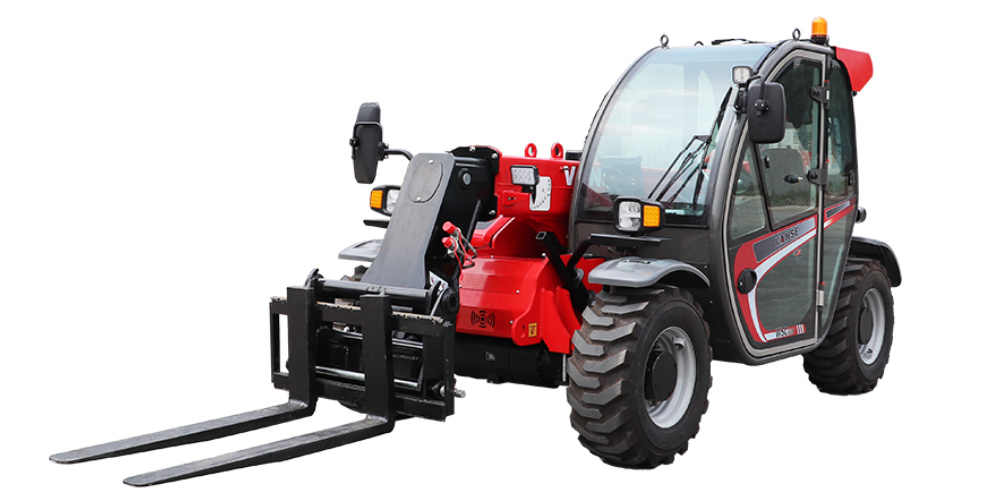
VANSE 625 6m Telescopic Handler
Designed for efficient material handling and stacking in warehouses, factories, and confined job sites, offering compact maneuverability and reliable performance.

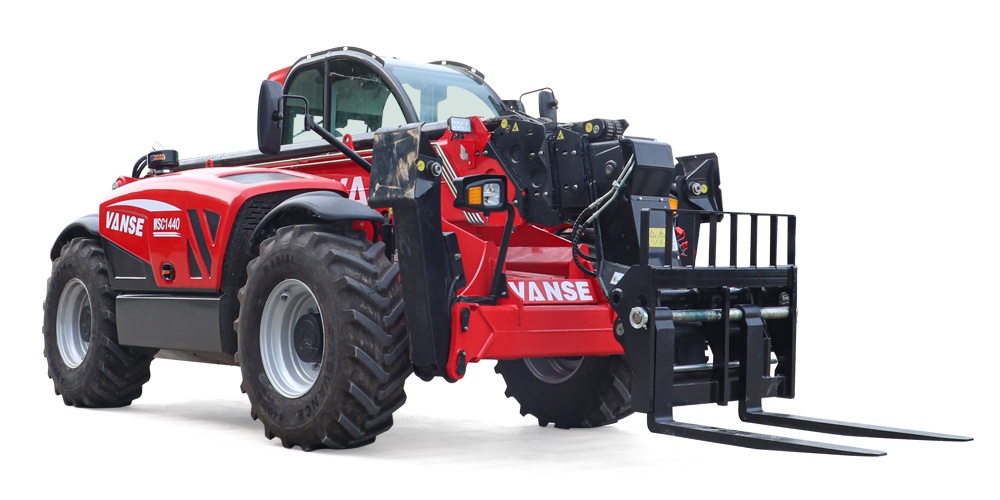
VANSE 735 7m Telescopic Handler
A balanced mid-duty solution for construction, agriculture, logistics, and warehousing, combining stable lifting, strong traction, and everyday versatility.


About the Author:
The VANSE team is a group of experienced professionals specializing in construction machinery research, manufacturing, and technical support. With deep industry knowledge and hands-on experience, our engineers and product specialists share practical insights on equipment selection, operation, maintenance, and industry trends.
Share
You May Also Interest
-

26 May, 2026
Electric Telehandler vs Diesel Telehandler
Compare electric telehandler vs diesel telehandler in the United States with costs, suppliers, use cases, and buying tips for construction and agriculture.
-
25 May, 2026
Telehandler for Bridge Construction Guide
Find the right telehandler for bridge construction in the United States with supplier insights, machine types, buying tips, and local support options.
-
22 May, 2026
Telehandler for Demolition: Full Guide
Find the best telehandler for demolition in the United States with supplier comparisons, buying tips, safety advice, and practical jobsite guidance.
-

21 May, 2026
Telehandler for Loading Trucks: Guide
Find the best telehandler for loading trucks in the United States with supplier comparisons, buying tips, applications, and cost-smart sourcing options.