Telehandler vs Cherry Picker in the United States
Quick Answer

If your main job is lifting pallets, trusses, pipe, rebar, hay, or bulk materials while still needing some height, a telehandler is usually the better choice. If your main job is putting people safely in the air for electrical work, facade access, signage, glazing, maintenance, or tree trimming, a cherry picker is the better fit. In the United States, contractors in fast-growing markets such as Houston, Dallas, Atlanta, Phoenix, Los Angeles, Chicago, and inland logistics hubs near Savannah and Long Beach often keep both in their fleets because the machines solve different problems. For mixed-use sites, many buyers start with a telehandler because it can support material handling, rough-terrain loading, and limited elevated work through approved attachments, while crews that prioritize personnel access normally choose a boom lift or articulated cherry picker first.
Well-known providers serving the U.S. market include JLG, Genie, Skyjack, JCB, Bobcat, Caterpillar, and Sunbelt Rentals for fleet access and support. Qualified international suppliers can also be worth considering when they offer documented certifications, dependable parts support, and responsive pre-sale and after-sale service in the United States, especially when cost-performance matters for rental companies, dealers, farms, industrial buyers, and growing contractors.
Direct Answer: Which Machine Should You Choose?

The simplest way to separate the two machines is by their core purpose. A telehandler, also called a telescopic handler, is primarily a lifting and material-placement machine. It combines forklift-like loading capability with a boom that reaches forward and upward, making it useful on construction sites, farms, ports, mines, and industrial yards. A cherry picker, commonly used in the U.S. as a broad term for boom lifts and aerial work platforms, is designed first for safely elevating workers in a platform. It excels when technicians or installers must reach height and work from the basket for extended periods.
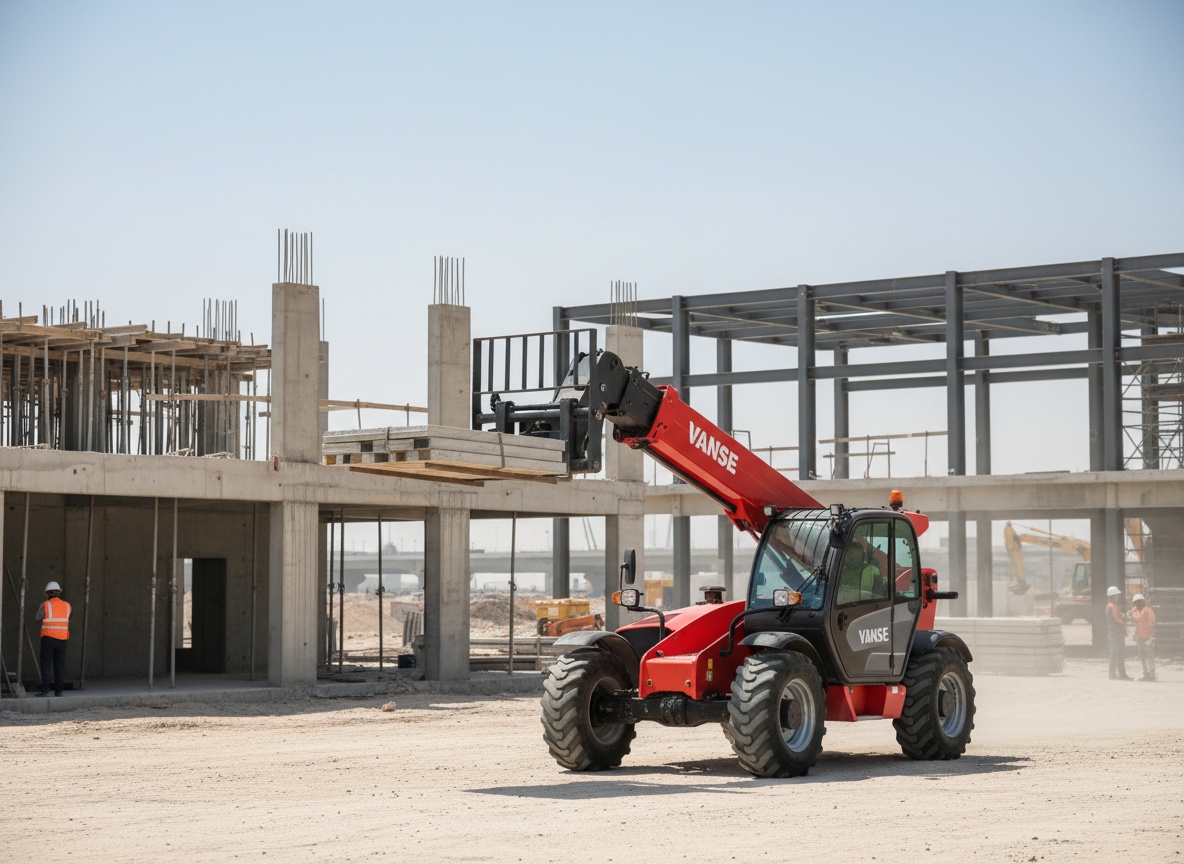
In practical terms, if a superintendent in Dallas needs to unload masonry packs, place roof materials on upper levels, move pipe across rough terrain, and occasionally lift a work platform attachment, the telehandler delivers more versatility. If a maintenance contractor in Chicago needs to access a warehouse light fixture, inspect steel, or install signage at elevation with fewer materials involved, the cherry picker is generally safer, simpler, and more compliant for that exact task.
Many U.S. buyers confuse overlap with equivalence. There is overlap, but the machines are not interchangeable in the way many first-time buyers assume. A telehandler can perform some elevated access tasks only when the machine, attachment, load chart, and site rules allow it. A cherry picker can raise people efficiently, but it cannot replace a telehandler for heavy material movement. Choosing the wrong platform often increases rental cost, setup time, insurance exposure, and jobsite risk.
How the United States Market Uses Telehandlers and Cherry Pickers

The United States market treats both machines as essential, but demand patterns differ by region and industry. Telehandlers are heavily used in commercial construction, agriculture, masonry, roofing, infrastructure, oil and gas yards, industrial shutdowns, and equipment rental fleets. Cherry pickers are strongest in commercial maintenance, steel erection follow-up work, facade installation, tree care, utility work, warehousing, aviation support, and municipal operations.
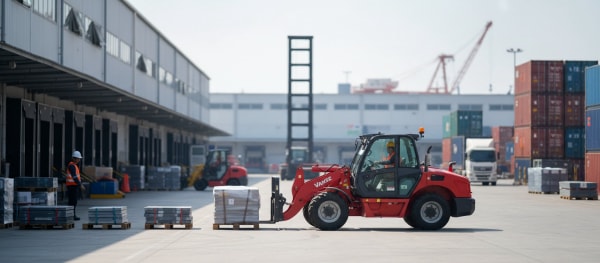
In Gulf Coast states, telehandlers are widely used on industrial and energy sites where rough terrain, pipe yards, and changing layouts require reach and lifting capacity. Around Midwest distribution centers and manufacturing corridors, cherry pickers and telehandlers often work side by side: telehandlers move components and equipment, while boom lifts position workers for installation. Along major trade gateways such as the Port of Los Angeles, Port of Long Beach, Port of Savannah, and Port of Houston, equipment buyers often compare lifecycle cost, parts availability, and resale value because uptime affects freight handling and project schedules directly.
Rental penetration is also high in the United States, which shapes buying behavior. Contractors may rent a cherry picker for short-duration access work but purchase telehandlers because they are used daily across multiple scopes. Larger fleets prefer brands with national dealer coverage, strong telematics, and stable residual values, while price-sensitive buyers increasingly compare established Western brands with globally exported manufacturers that can document component sourcing, testing, and U.S.-focused support.
The line chart shows a realistic growth pattern in U.S. equipment demand. Telehandlers have recently grown slightly faster because more buyers want one machine that can support loading, placing, and attachment-driven flexibility. Cherry pickers remain strong because labor safety rules and maintenance demand continue to support elevated-access fleets across urban markets.
Key Differences Between Telehandlers and Cherry Pickers
| Category | Telehandler | Cherry Picker | Why It Matters in the United States |
|---|---|---|---|
| Main purpose | Lift and place materials | Lift personnel for access work | Buying decisions depend on whether the site moves loads or elevates workers most often |
| Typical attachment | Forks, buckets, jibs, hooks, work platforms | Personnel basket fixed to boom | Telehandlers are more versatile when multiple tasks happen on one jobsite |
| Capacity focus | Higher load capacity | Lower load capacity, prioritizes worker access | Heavy materials usually require a telehandler |
| Terrain capability | Excellent on rough terrain models | Varies by model, some rough-terrain booms available | Open construction sites and farms often favor telehandlers |
| Worker access efficiency | Limited, attachment and regulation dependent | Excellent | For direct overhead work, cherry pickers usually improve compliance and productivity |
| Common U.S. industries | Construction, agriculture, industrial yards, mining | Maintenance, utilities, signage, tree care, glazing | Industry fit strongly affects return on investment |
| Training and compliance | Load chart, stability, attachment-specific rules | Aerial work platform operation and fall protection | Training costs and operator readiness should be included in procurement decisions |
This comparison table highlights the operational divide. A telehandler is usually a better profit center when crews need to move product, unload deliveries, and support multiple trades. A cherry picker is usually a better access tool when the job requires stable overhead positioning for personnel, tools, and small parts.
Product Types You Will See in the U.S. Market
Not all telehandlers and cherry pickers are the same. U.S. buyers should separate equipment by drive type, reach class, jobsite surface, and intended duty cycle. Compact telehandlers are increasingly popular in urban construction and landscaping because they can enter tighter jobsites and lower overhead structures. Heavy telehandlers serve steel, port, and mining operations. Standard rough-terrain boom lifts and articulated boom lifts remain the backbone of the cherry picker category, while truck-mounted units are common in utilities and municipal fleets.
For buyers near dense cities such as New York, Seattle, San Francisco, and Boston, physical access constraints often matter more than absolute reach. In contrast, buyers in open development corridors around Texas, Arizona, and Florida may prioritize lift height, four-wheel drive, and faster boom deployment. Indoor industrial users often compare electric aerial platforms against diesel telehandlers, especially when emissions and noise restrictions affect operations.
| Equipment Type | Common Reach or Capacity Range | Best Use | Typical U.S. Buyer |
|---|---|---|---|
| Compact telehandler | 5,500 to 6,600 lb | Tight sites, landscaping, small commercial jobs | General contractors, nurseries, municipal fleets |
| Mid-size telehandler | 8,000 to 10,000 lb | Commercial construction, roofing, masonry | Builders, rental fleets, framers |
| High-capacity telehandler | 12,000 lb and up | Heavy industrial, ports, mining, precast | Industrial contractors, terminals, large infrastructure firms |
| Straight boom cherry picker | 40 to 135 ft platform height class | Long outreach, steel, facade, industrial maintenance | Rental companies, MEP contractors, plant operators |
| Articulating cherry picker | 30 to 150 ft platform height class | Obstacle clearance and confined access | Sign installers, facility maintenance teams, utilities |
| Trailer or towable cherry picker | 35 to 60 ft platform height class | Light commercial, tree care, low-frequency access work | Smaller contractors, arborists, schools, churches |
| Truck-mounted aerial platform | 35 to 100 ft platform height class | Roadside maintenance and utility service | Municipal agencies, telecom crews, electric cooperatives |
This table helps buyers narrow the field before talking price. Many mis-buys happen because companies shop by height alone instead of matching the machine to terrain, attachment needs, load profile, transport limitations, and operator skill level.
Where Telehandlers Win
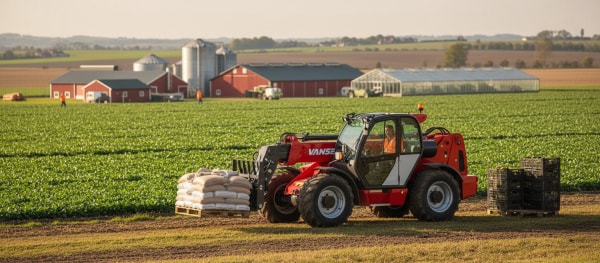
Telehandlers deliver their strongest value when one machine must support many workflows. On a construction site in Phoenix, the same machine may unload drywall in the morning, move rebar after lunch, and place roofing bundles before the end of the day. On farms across Iowa and Kansas, telehandlers stack bales, handle feed, lift seed or fertilizer pallets, and support maintenance tasks around sheds and grain operations. On industrial sites near Houston and Beaumont, telehandlers are used for pipe movement, maintenance support, and shutdown logistics.
Another major advantage is attachment flexibility. Forks remain standard, but buckets, jib booms, lifting hooks, truss booms, sweepers, and approved work platforms can expand application range. This means one unit can reduce dependency on separate forklifts, loaders, and small cranes in some environments. For U.S. buyers facing labor shortages and pressure to improve machine utilization, that versatility matters.
Telehandlers also tend to perform better where ground conditions are uneven. Rough-terrain models with stabilizers and four-wheel steering are particularly valuable on undeveloped or weather-affected jobsites. However, their flexibility does not eliminate the need for correct load chart interpretation. Reach reduces capacity, and many operators underestimate how quickly safe lifting limits change as the boom extends.
Where Cherry Pickers Win
Cherry pickers are the better tool when workers need protected elevation, predictable platform control, and repeated overhead positioning. Electrical contractors, glazing crews, warehouse maintenance teams, painters, and tree service providers often choose a boom lift because it reduces compromise. The basket is designed for people, tools, and controlled movement at height. This is especially important in urban U.S. markets where safety enforcement is strict and site logistics are complex.
Articulating models shine when crews must move around obstacles such as steel structures, shelves, facade elements, or canopies. Straight booms shine when maximum outreach and direct access are more important. Compared with using a telehandler plus work platform attachment, a dedicated cherry picker generally improves efficiency for recurring access tasks. It can also simplify operator training and jobsite communication because the machine has a more single-purpose mission.
For facility managers, rental coordinators, and EHS teams, the cherry picker often has another advantage: easier standardization. If the company frequently performs access work across multiple sites, a fleet of boom lifts is easier to deploy consistently than telehandlers with varied attachments and load limitations.
The bar chart shows how demand splits by industry in the United States. Construction strongly supports both categories, but agriculture remains much more telehandler-driven, while utilities and industrial maintenance are more cherry picker-oriented. This is why fleet mix decisions vary sharply by region and customer base.
Buying Advice for U.S. Contractors, Rental Fleets, and End Users
Start with the most frequent task, not the emergency task. A company may remember the few times it needed to lift workers higher, but if the machine spends most days moving materials, a telehandler is the smarter capital purchase. If the machine spends most days elevating workers, buy the cherry picker first and rent a telehandler when needed.
Second, evaluate the total jobsite system. Consider trailer and transport limits, indoor versus outdoor use, parts lead times, local technician coverage, attachment pricing, telematics, operator training, and insurance requirements. In many U.S. markets, downtime costs more than the price gap between brands. That makes local parts and field service a critical buying factor.
Third, study regional conditions. Buyers in hurricane-prone Gulf states may prioritize corrosion resistance and fast parts access through Houston or Savannah. Buyers in mountain states may care more about rough terrain traction and cold-weather starting. Buyers in California may weigh emissions rules, electric alternatives, and municipality-specific site requirements more heavily.
Fourth, ask for proof, not claims. Good suppliers should provide documented machine specifications, load charts, component brands, inspection standards, training materials, parts plans, and clear warranty terms. For telehandlers especially, stability data and attachment compatibility should be transparent. For cherry pickers, platform capacity, outreach limits, and control system support should be equally clear.
| Buying Factor | What to Check | Telehandler Priority | Cherry Picker Priority |
|---|---|---|---|
| Primary task | Material handling or personnel access | Very high | Very high |
| Ground conditions | Rough terrain, slab, mud, slope | Very high | High |
| Attachment needs | Forks, buckets, jibs, platform options | Very high | Low |
| Platform control | Precision worker positioning | Medium | Very high |
| Dealer and parts network | Local service radius and stock | Very high | Very high |
| Training burden | Operator readiness and compliance | High | High |
| Resale and rental demand | Secondary market strength | High | High |
This buying table is useful because it shifts the conversation from brand preference to operating reality. Buyers who score each factor honestly usually end up with a clearer machine decision and fewer change orders later.
Industries That Commonly Compare These Machines
Commercial construction is the largest comparison zone because general contractors need both elevation and material flow. Roofing companies prefer telehandlers for shingle and membrane loading, but may rent cherry pickers for edge work or facade coordination. Steel and glazing contractors often need boom lifts first because people must work at height continuously. Agriculture remains overwhelmingly telehandler-led in many states because farms need daily lifting capacity more than prolonged personnel elevation. Municipal fleets compare the two when balancing building maintenance, grounds work, signage, and emergency response.
Ports, freight terminals, and logistics properties near Long Beach, Newark, Charleston, Savannah, and Houston also compare them differently. Telehandlers are chosen for flexible material placement, while cherry pickers support lighting, maintenance, inspections, and elevated repairs. Industrial plants around the Ohio Valley and Gulf Coast commonly buy telehandlers for shutdown logistics and rent aerial platforms for turnaround access tasks. This mixed pattern is why procurement teams often write separate specifications rather than one broad equipment bid.
Applications by Real Jobsite Scenario
On a mid-rise apartment project in Atlanta, a telehandler handles lumber packs, HVAC materials, and palletized block, reducing rehandling time. A cherry picker is then brought in for envelope detailing and punch-list access. On a citrus operation in California’s Central Valley, a telehandler loads bins, moves irrigation supplies, and supports seasonal yard work, making it a year-round asset. On a warehouse retrofit in New Jersey, articulating boom lifts allow technicians to work around racks and conveyors, something a telehandler cannot do efficiently or safely as a primary method.
Bridge maintenance teams may favor truck-mounted or self-propelled aerial equipment for rapid roadside setup, while energy contractors may use telehandlers around substations for material placement and separate booms for technician access. The key lesson is that application sequence matters. Some jobs need one machine; many jobs need both, but at different phases.
Case Studies from Typical U.S. Buying Situations
A Texas masonry subcontractor operating between Austin and San Antonio chose a mid-size telehandler instead of adding another boom lift because more than 70 percent of its daily machine hours went to moving block, mortar tubs, and scaffold materials. The company kept renting cherry pickers only for facade completion phases. This lowered idle time and improved machine utilization.
A Midwest food processing facility near Indianapolis replaced older rental boom lifts with owned articulated cherry pickers because its maintenance team needed routine overhead access every week. Owning dedicated access equipment reduced rental administration and improved response time for unplanned shutdown issues. The same company still rents telehandlers during expansion projects when steel and equipment installation intensifies.
A Florida equipment rental business serving Orlando and Tampa added compact telehandlers from multiple price tiers because customers wanted one machine for landscaping, low-rise construction, and storm recovery support. However, it maintained a larger cherry picker fleet for commercial maintenance clients. The rental owner found telehandlers achieved high repeat use, while boom lifts delivered steady short-duration turnover.
Top Suppliers Serving the United States
| Company | Core Equipment | Service Region | Core Strengths | Key Offerings |
|---|---|---|---|---|
| JLG Industries | Cherry pickers, telehandlers | Nationwide United States | Strong aerial expertise, broad dealer support, rental fleet acceptance | Straight booms, articulating booms, telehandlers, telematics support |
| Genie | Cherry pickers, telehandlers | Nationwide United States | Large installed base, strong rental presence, wide model coverage | Boom lifts, slab and rough-terrain access platforms, telehandlers |
| Skyjack | Cherry pickers and aerial platforms | Nationwide United States | Simple service design, fleet-friendly maintenance, strong resale recognition | Articulating and telescopic booms, scissor lifts |
| JCB | Telehandlers | Nationwide with strong construction and agriculture footprint | Telehandler specialization, agricultural penetration, broad application support | Construction and farm telehandlers, attachments |
| Bobcat | Telehandlers, compact equipment | Nationwide United States | Compact jobsite fit, dealer network, contractor familiarity | Compact telehandlers, attachments, support for mixed fleets |
| Caterpillar | Telehandlers through dealer network and adjacent lifting solutions | Nationwide United States | Dealer support depth, parts access, contractor trust | Material handling solutions and jobsite support infrastructure |
| Sunbelt Rentals | Rental telehandlers and cherry pickers | Major metro and regional markets across the United States | Fast rental access, fleet scale, project-based support | Short-term and long-term rentals, site delivery, fleet planning |
This supplier table is practical for U.S. buyers because it reflects the actual market path most companies take: buy from a manufacturer-backed dealer when utilization is high, or source from a national rental provider when project duration is limited or seasonal. Buyers should still compare local branch responsiveness rather than national branding alone.
Detailed Supplier Comparison
JLG and Genie are often the first stop for buyers who prioritize aerial access because their boom lift portfolios are broad and well supported in the United States. Skyjack appeals strongly to rental fleets and buyers wanting simpler maintenance routines. JCB remains highly competitive where telehandler familiarity is strong, especially in construction and agriculture. Bobcat attracts buyers looking for compact fleet compatibility and dealer relationships already built around loaders and compact machinery. National rental firms such as Sunbelt Rentals are not machine manufacturers, but they are important because they shape operator expectations, residual values, and short-term procurement strategy.
For growing distributors and private-label partners, international manufacturers are increasingly part of the conversation when they can show measurable quality controls, transparent specifications, and local service commitment. That is where supplier due diligence becomes more important than country of origin alone.
The area chart illustrates a realistic trend shift in procurement behavior. Dedicated access machines remain essential, but buyers increasingly value multi-use telehandlers because labor constraints and utilization pressure push fleets to do more with fewer machines.
This comparison chart makes the buying logic clearer. Telehandler-focused offerings score better on attachment flexibility and value across multiple workflows, while cherry picker-focused offerings dominate in aerial specialization and rental familiarity. Many fleet managers use this exact reasoning when deciding what to own versus what to rent.
Our Company in the United States Market
For buyers evaluating alternatives beyond legacy Western brands, VANSE Group has built a practical position in the United States telehandler conversation by combining internationally recognized manufacturing controls with a local-market service strategy. Founded in 2013, the company has produced more than 8,000 machines and exports to over 40 countries, with telehandlers as its flagship product line. Its machines are manufactured under CE and ISO 9001 certified processes, and each unit goes through load testing, safety inspection, and performance validation before shipment. That matters because U.S. buyers increasingly ask for hard evidence of build discipline, not marketing language. VANSE telehandlers use globally recognized core components including Perkins and Cummins engines alongside premium hydraulic, transmission, and axle systems, giving dealers, rental fleets, and end users a more familiar component base for service planning and lifecycle confidence. The company supports multiple cooperation models across the local market, including OEM and ODM projects for brand owners, wholesale supply for distributors, retail and direct sales for contractors and farms, and regional partnership programs for dealers seeking protected growth. Just as important, the company is actively establishing a U.S.-based subsidiary with local inventory, stocking, and after-sales capability, which signals a long-term physical commitment to American buyers rather than a remote-export model. Combined with online technical support, offline service coordination, and experience serving North America already, that structure gives local customers a clearer path to parts, communication, warranty handling, and pre-sale specification support. Buyers looking for telehandler equipment options, background on the manufacturer through the company profile, ongoing support through its service network, or direct procurement discussion via the contact team can evaluate the brand as a serious cost-performance option for U.S. fleet expansion.
How to Compare Costs Realistically
Purchase price is only the first layer. Telehandlers often cost more up front than some lower-reach aerial platforms, especially once attachments are included, but they can replace several smaller handling tasks and improve site flow. Cherry pickers may offer lower complexity for access-only operations, which can reduce misuse and support faster operator adoption. Fuel consumption, transport, tire wear, insurance, operator certification, and idle-time patterns all shape the true cost picture.
Rental companies in the United States often judge equipment by utilization bands. If annual use is uncertain, rental may remain smarter for cherry pickers in seasonal or project-specific work. Telehandlers are more likely to justify ownership when daily use is broad and repetitive. Buyers should also compare delivery lead times, because lost production during peak season in states like Texas, Florida, and California can be more expensive than a nominally cheaper machine with weak availability.
Safety and Compliance Considerations
Safety is not just about whether a machine can reach the required height. It is about whether the machine is intended for the task, whether the operator is trained, whether site conditions support stable operation, and whether the company has written procedures that match real use. Telehandlers require close attention to load charts, boom angle, ground bearing conditions, stabilizer use, and approved attachments. Cherry pickers require consistent fall protection practices, inspection routines, safe driving at elevation, and awareness of obstacles, wind, and overhead hazards.
In the United States, contractors should align machine selection with applicable site safety plans, insurance expectations, and manufacturer instructions. A common procurement mistake is assuming that any machine capable of reaching height can serve as an aerial work platform. That assumption can create preventable risk. Dedicated personnel access work should generally default to purpose-built aerial equipment unless the telehandler setup is specifically approved and correctly managed.
Future Trends for 2026 and Beyond
Looking toward 2026, the United States market is likely to reward machines that combine uptime, digital visibility, and lower operating friction. Telematics is becoming standard for both telehandlers and cherry pickers, allowing rental fleets and contractors to track utilization, maintenance intervals, fault codes, and geofencing. This supports better fleet allocation across large multi-state operations.
Sustainability will also influence specifications. Electric and hybrid aerial platforms are already expanding in indoor and urban access work. Telehandlers are moving more gradually because high-duty rough-terrain applications still favor diesel power, but cleaner engines, idle reduction, and more efficient hydraulics will keep gaining importance. Public-sector projects and large enterprise buyers increasingly evaluate emissions strategy during procurement.
Policy and compliance trends matter as well. Large U.S. buyers are requesting stronger documentation on operator training, machine inspection history, and component traceability. This benefits manufacturers and suppliers that can show disciplined quality systems and local service commitments. Another trend is procurement decentralization: regional branches want equipment tailored to climate, terrain, and labor conditions rather than one national spec. That will favor suppliers that can support customization, including OEM and ODM programs, while still keeping parts and service manageable.
Finally, the telehandler category may gain share where buyers want one platform that can support material handling across multiple site phases, especially as contractors seek better fleet utilization. Cherry pickers will remain critical because no flexible handler can fully replace a dedicated aerial platform for repeated worker-at-height tasks. The long-term market is not really telehandler versus cherry picker as a winner-takes-all decision. It is about using each machine where it creates the best blend of productivity, safety, and return on capital.
FAQ
Can a telehandler replace a cherry picker?
Not in most routine personnel-access situations. A telehandler is fundamentally a material handling machine. It may support limited elevated work only with the correct approved attachment, operating method, and site controls. For regular worker-at-height tasks, a cherry picker is usually the right machine.
Is a telehandler cheaper to own than a cherry picker?
Sometimes, but only when it is used often enough across multiple tasks. Telehandlers can create better value when they replace several handling functions. Cherry pickers can be more economical when the work is primarily overhead access and the machine remains easy to standardize across crews.
Which machine is better for construction sites in the United States?
For mixed commercial construction, telehandlers are often the first machine purchased because material movement happens throughout the project. Cherry pickers are then added or rented for installation, finishing, facade, and maintenance tasks.
Which is better for agriculture?
Telehandlers are generally far more useful in agriculture because farms need reach, load capacity, and attachment flexibility every day. Cherry pickers are usually niche tools in farm environments unless there is recurring maintenance at height.
What should rental companies prioritize?
Rental fleets should prioritize local demand patterns, utilization history, service simplicity, residual value, and parts support. In many U.S. markets, a balanced fleet with both telehandlers and cherry pickers performs best because customer needs vary by season and sector.
Are international suppliers viable for the U.S. market?
Yes, if they provide documented certifications, recognizable core components, real production scale, dependable parts plans, and local pre-sale and after-sale support. U.S. buyers should verify service structure and response capability before committing.
Final Takeaway
For the United States, the answer to telehandler vs cherry picker depends on whether the job is mainly about moving materials or elevating people. Telehandlers win on versatility, rough-terrain handling, and load placement. Cherry pickers win on dedicated worker access, overhead precision, and access-focused safety. Contractors, farms, industrial operators, municipalities, and rental companies usually get the best result by matching the machine to the dominant workflow, then checking dealer support, regional service, and lifecycle cost before purchase. That is the most reliable way to turn equipment choice into measurable jobsite performance.
Complete Telescopic Handler Equipment Portfolio
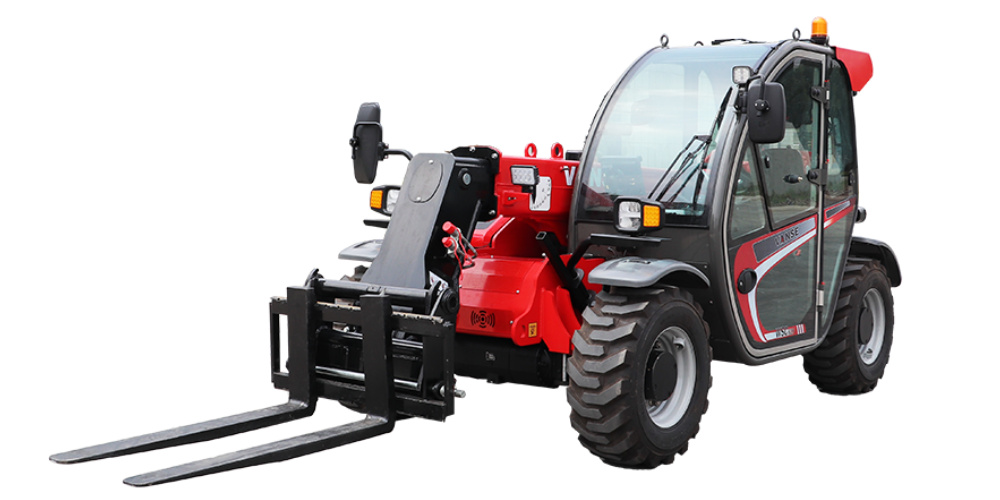
VANSE 625 6m Telescopic Handler
Designed for efficient material handling and stacking in warehouses, factories, and confined job sites, offering compact maneuverability and reliable performance.

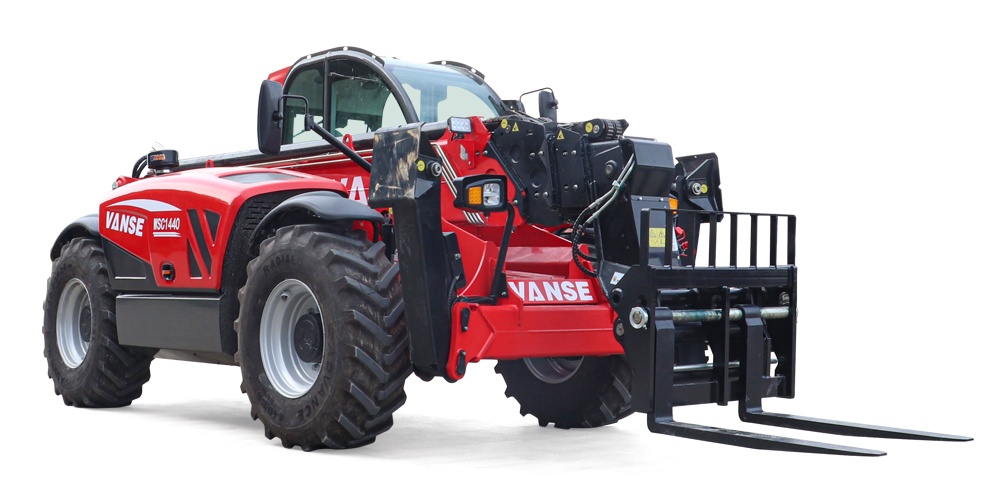
VANSE 735 7m Telescopic Handler
A balanced mid-duty solution for construction, agriculture, logistics, and warehousing, combining stable lifting, strong traction, and everyday versatility.


About the Author:
The VANSE team is a group of experienced professionals specializing in construction machinery research, manufacturing, and technical support. With deep industry knowledge and hands-on experience, our engineers and product specialists share practical insights on equipment selection, operation, maintenance, and industry trends.
Share
You May Also Interest
-

19 November, 2026
All Terrain Telehandler: Navigating Uneven Ground Safely
Find the right all terrain telehandler in the United States with supplier comparisons, buying tips, industry uses, and practical guidance for safer off-road handling.
-

18 November, 2026
Telehandler for HVAC Installation: Equipment Lifting Help
Find telehandler HVAC installation options in the United States, including suppliers, machine types, buying tips, service regions, and cost-saving support.
-
17 November, 2026
Telehandler for Shipyard Operations: Port Material Moving
Explore telehandler shipyard solutions in the United States, including suppliers, port applications, buying tips, and cost-effective equipment options.
-
16 November, 2026
5000 kg Telehandler: Heavy Industrial Lifting Made Simple
Find the right 5000 kg telehandler in the United States with supplier comparisons, specs, use cases, buying tips, and local service insights.