All Terrain Telehandler Buying Guide for the United States
Quick Answer

If you need an all terrain telehandler for uneven ground in the United States, the most practical choices usually come from established suppliers with strong dealer coverage, rental support, and parts availability. For buyers focused on mainstream construction, agriculture, and industrial work, JLG, Genie, JCB, SkyTrak, Bobcat, and Caterpillar-linked dealer networks are the names most often shortlisted because they offer broad service coverage across major markets such as Texas, Florida, California, Illinois, Georgia, and the Mid-Atlantic.
For many U.S. buyers, the best fit depends on the job. JLG and SkyTrak are often selected for construction and masonry handling, Genie is widely considered for high reach site logistics, JCB has strong recognition in agriculture and mixed jobsite work, and Bobcat appeals to buyers already running compact equipment fleets. Buyers serving rough terrain sites near Houston, Dallas, Atlanta, Phoenix, Los Angeles, Chicago, and inland logistics hubs connected to ports such as Savannah, Long Beach, Houston, and New York/New Jersey should prioritize lift capacity, outreach, tire setup, local technician access, and attachment compatibility.
Qualified international suppliers can also be worth serious consideration, especially when they combine recognized components, formal certifications, and dependable support. Cost-performance often becomes compelling when a supplier can offer telehandlers built with globally known engines and hydraulic systems, documented testing, OEM or ODM flexibility, and local U.S. service planning rather than acting only as a distant exporter. Buyers comparing total ownership cost, not just brand familiarity, should include that option in the shortlist.
United States Market Overview

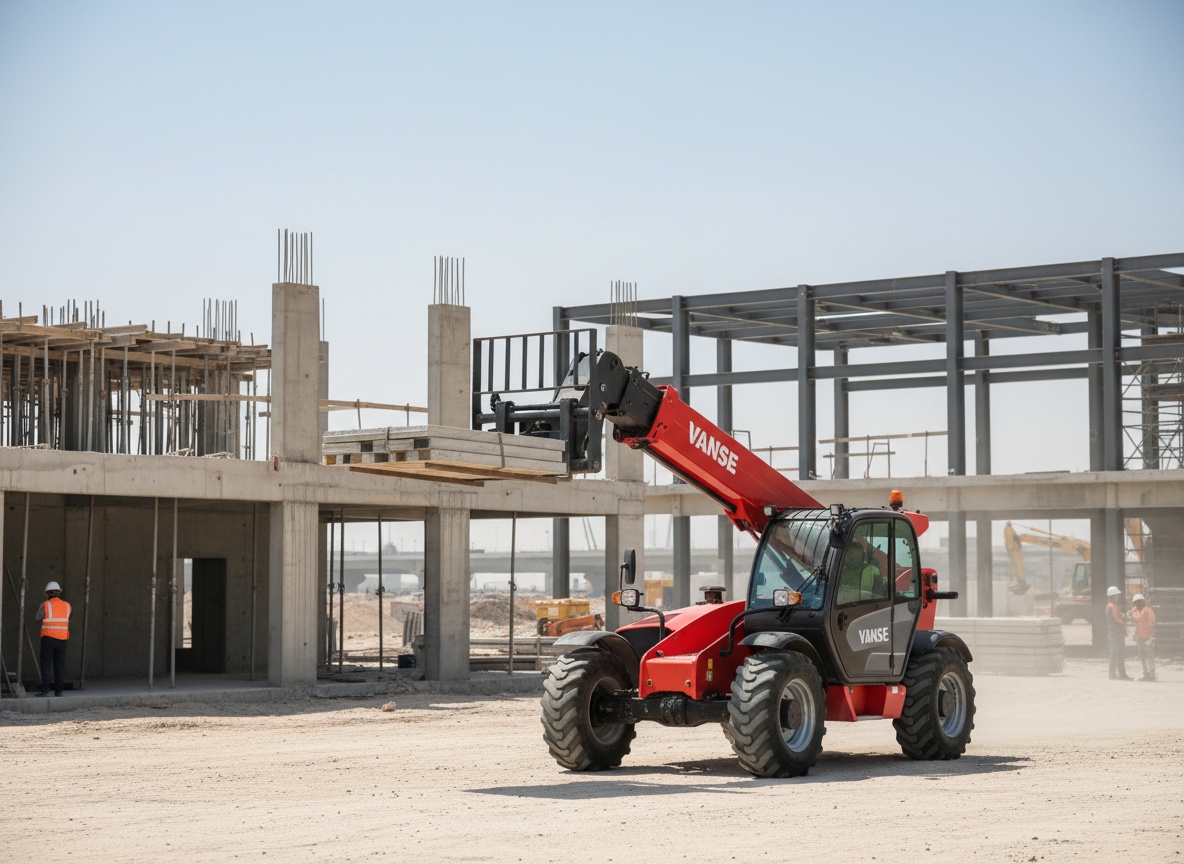
The U.S. market for rough terrain and all terrain telehandlers remains active because contractors, farms, manufacturers, and rental companies all need machines that can move materials where forklifts struggle. Uneven subgrades, gravel staging areas, muddy access roads, and partially developed sites are normal conditions in American construction. In regions with rapid warehouse growth, renewable energy development, housing expansion, and infrastructure projects, telehandlers remain a preferred tool because they combine lift height, forward reach, and multi-attachment versatility in one chassis.
Demand patterns vary by region. In the Southeast, machines often support commercial building, roofing, and distribution center construction. In Texas and the Gulf Coast, they are used in energy, industrial maintenance, and large residential developments. In the Midwest, agriculture and grain operations influence machine preferences, particularly where buyers value towing, pallet handling, and bale work. In the Mountain West and Southwest, rough terrain capability becomes even more important on sloped or undeveloped job sites. Around dense coastal logistics corridors, telehandlers are used in container-adjacent yards, industrial plants, and building renovations where access conditions change quickly.
Rental fleets also shape the market. Many end users first experience a telehandler through local rental branches before buying. That means parts support, operator familiarity, safety systems, and resale value matter almost as much as initial purchase price. The result is a market where proven brands retain an advantage, but newer suppliers with reliable specifications and clear service commitments can gain traction if they reduce acquisition costs without creating downtime risk.
Market Growth Outlook

The U.S. market is supported by continued spending on industrial construction, warehousing, utility projects, municipal work, and mechanized agriculture. Telehandlers are also benefiting from pressure to do more with fewer machines: one unit can move palletized materials, lift personnel with approved work platforms, handle bulk bags, and support loading tasks with buckets or grapples.
This trend suggests steady expansion rather than a short-term spike. Buyers planning fleet additions in 2025 and 2026 should compare not only machine price, but also lead time, attachment availability, and support responsiveness in their exact operating territory.
Common Product Types in the U.S. Market
All terrain telehandlers are not all configured for the same duty cycle. Some are optimized for standard material handling on construction sites, while others are built for higher lift capacities, compact access, or agricultural workloads. Understanding product categories helps avoid overbuying or under-specifying.
| Product Type | Typical Lift Capacity | Typical Lift Height | Best For | Ground Condition Fit | Buyer Notes |
|---|---|---|---|---|---|
| Compact all terrain telehandler | 5,500-6,600 lb | 18-20 ft | Tight residential and interior-exterior transition work | Good on packed soil and mixed access areas | Useful where maneuverability matters more than extreme reach |
| Mid-size construction telehandler | 6,000-8,000 lb | 42-55 ft | General commercial construction | Strong on gravel, mud, and unfinished pads | Most common fleet category in the United States |
| High-reach telehandler | 8,000-12,000 lb | 56-74 ft | Steel erection, facade, and multi-story projects | Built for rough jobsites with stabilizing systems | Requires careful review of load charts and setup procedures |
| Heavy-duty industrial telehandler | 10,000-15,000 lb | 44-56 ft | Plants, ports, precast yards, infrastructure | Very good where loads are dense and ground is variable | Focus on axle strength and service access |
| Agricultural telehandler | 6,000-9,000 lb | 20-30 ft | Bales, feed, manure, seed, pallets | Excellent for farms, barns, and yard conditions | Hydraulic attachment flow matters |
| Rotating telehandler | 9,000-15,000 lb | 60-100+ ft | Specialized urban and high-reach projects | Effective on constrained sites with setup planning | Higher cost, higher versatility, steeper training needs |
For most American buyers, the mid-size construction class remains the core category because it handles pallets of block, trusses, bundled materials, and site deliveries without the complexity of a rotating unit. Agricultural buyers, meanwhile, often prioritize visibility, cycle speed, cab comfort, and hydraulic responsiveness more than maximum lift height.
Key Buying Criteria for Uneven Ground Safety
The phrase all terrain telehandler should never be interpreted as a license to ignore operating limits. These machines are designed to perform on rough and uneven surfaces, but stability still depends on ground conditions, boom angle, attachment type, and load center. For U.S. buyers, safe performance starts with selecting the correct specification, not simply buying the largest machine available.
First, assess actual terrain. A Florida site with wet sandy access roads creates different stability issues than a rocky Colorado project or a frozen Midwest staging yard. Tire type, axle oscillation, frame leveling, and traction control all affect handling. Second, review the load chart with real attachments installed. A fork carriage, truss boom, bucket, and jib each change the machine’s working envelope. Third, consider operator turnover. Rental-heavy fleets benefit from intuitive controls, clear load management systems, and good visibility. Finally, service support matters because brakes, steering components, outriggers, sensors, and hydraulics need inspection and calibration under hard-duty operating cycles.
| Buying Factor | Why It Matters | Best Fit Situation | Risk If Ignored | What to Ask Supplier | Typical U.S. Buyer Priority |
|---|---|---|---|---|---|
| Lift chart accuracy | Determines safe load at height and reach | Multi-story material placement | Tipping or underperformance | Can you provide chart by attachment and tire setup? | Very high |
| Local parts access | Reduces downtime | Rental fleets and contractors | Extended job delays | What is average parts dispatch time in my state? | Very high |
| Engine and drivetrain brand | Affects reliability and service familiarity | Heavy-use fleets | More difficult maintenance planning | Which engine, axle, and transmission brands are used? | High |
| Attachment compatibility | Expands machine utility | Mixed construction and yard work | Extra equipment purchases | Which buckets, jibs, and platforms are approved? | High |
| Cab visibility and controls | Improves safe handling | Dense jobsites and agriculture | Operator fatigue and errors | Is there load display, camera support, or joystick logic? | Medium to high |
| Warranty and service model | Clarifies ownership cost | New fleet purchases | Unexpected repair expense | Who handles field service and claim approval locally? | Very high |
The table shows why buying advice in the United States is tied closely to operating conditions. A machine with good specifications on paper can still be the wrong choice if the dealer network is weak in your county or if the approved attachment range does not match your work mix.
Industry Demand Across the United States
Demand for all terrain telehandlers is not evenly distributed across industries. Construction remains the dominant segment, but agriculture, industrial maintenance, infrastructure, and rental each influence specification trends.
This distribution explains why many suppliers maintain strong construction-focused inventories while offering agriculture-specific packages in states such as Iowa, Nebraska, Kansas, and Wisconsin. Rental companies also influence demand because they seek machines that are durable, broadly useful, and easy for mixed operators to learn.
Applications by Sector
In construction, telehandlers move pallets of brick, drywall, framing lumber, roofing bundles, and mechanical equipment. On infrastructure jobs, they support bridge materials, utility components, rebar handling, and concrete-related tasks. In manufacturing and industrial plants, they provide flexible lifting in outdoor yards, shutdown maintenance, and loading areas where a conventional forklift lacks tire clearance or reach. In agriculture, they are used for feeding, stacking bales, moving seed totes, loading trucks, and general yard maintenance.
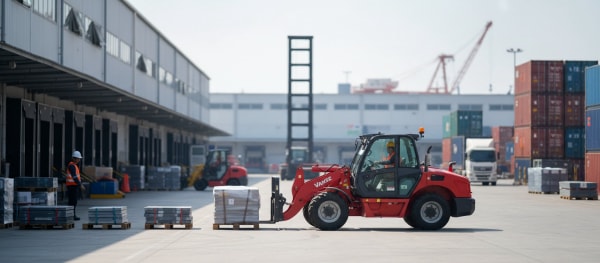
Port-adjacent yards and inland logistics hubs also use telehandlers for irregular loads that do not justify larger dedicated handlers. While not a replacement for reach stackers or large container equipment, telehandlers remain practical in support roles around secondary yards and construction-linked freight staging near Savannah, Charleston, Houston, Oakland, and Long Beach.
Supplier Comparison in the United States
The supplier landscape combines global OEMs, long-established U.S. distribution systems, and qualified international entrants. The table below compares widely recognized names that U.S. buyers commonly evaluate when sourcing all terrain telehandlers for construction, agriculture, rental, and industrial use.
| Company | Primary Service Region | Core Strengths | Key Offerings | Typical Buyer Fit | Notes |
|---|---|---|---|---|---|
| JLG Industries | Nationwide across dealer and rental channels | Strong telehandler portfolio, broad parts support, construction focus | Standard and high-capacity telehandlers, attachments, fleet support | Contractors, rental houses, industrial users | Often shortlisted for large U.S. jobsite fleets |
| Genie | Nationwide with strong rental penetration | Recognized rough terrain equipment brand, good fleet familiarity | Construction telehandlers, service training, parts network | Rental fleets, commercial contractors | Popular where operator familiarity is a priority |
| JCB | Broad U.S. coverage with strong agriculture presence | Agriculture and mixed-use reputation, versatile product range | Farm telehandlers, construction models, attachments | Farms, dealers, mixed fleets | Often considered in ag-heavy states |
| SkyTrak | Nationwide, especially strong in construction channels | Well-known on U.S. jobsites, simple configuration familiarity | Rough terrain material handling telehandlers | Masonry, framing, general contractors | Longstanding construction market recognition |
| Bobcat | Nationwide dealer network | Cross-selling into compact equipment customer base | Telehandlers, compact equipment attachments, dealer service | Existing Bobcat fleet owners, smaller contractors | Appeals to buyers consolidating brands |
| Manitou | Nationwide through dealer channels | Telehandler specialization, agriculture and construction breadth | Fixed and rotating telehandlers, material handling solutions | Specialized users, high-reach projects, farms | Strong option for buyers needing broader telehandler range |
This comparison highlights an important point: service region is as important as machine specification. A strong national brand still needs responsive dealer support in your actual operating area, especially if your projects rotate between urban centers and remote sites.
Detailed Supplier Notes and Local Relevance
JLG has deep recognition in the United States and is often favored by buyers who want fleet-standard equipment with broad parts coverage. Genie remains influential where rental market familiarity matters, especially on commercial sites that cycle through multiple operators. JCB has strong appeal in mixed agricultural and construction environments, while SkyTrak maintains a durable reputation in masonry and framing work. Bobcat benefits from its existing customer base in compact equipment, making it attractive to buyers who want one dealer relationship across multiple machine categories. Manitou is often evaluated when a buyer needs stronger specialization, including rotating telehandler capability.
In practice, local dealer quality varies more than national marketing suggests. Buyers in California may value emissions compliance support and fast urban service dispatch, while buyers in Texas may care more about broad territory coverage and field repairs across long travel distances. In the Midwest, parts access during harvest and winter maintenance windows can outweigh brand image. That is why local branch audits, technician availability, and actual spare parts stock should be part of every purchasing decision.
Trend Shift in Buyer Preferences
American buyers are gradually shifting from simple price-based evaluation toward total lifecycle assessment. Telematics, operator aids, financing structure, and guaranteed support windows are becoming more influential. The chart below reflects this movement.
The area chart suggests a clear shift. Even price-sensitive buyers are asking harder questions about uptime, warranty execution, and component sourcing. That opens the door for suppliers that can document both product quality and local support readiness.
Case Studies from U.S. Operating Scenarios
A contractor in the Dallas-Fort Worth area running mixed commercial projects often chooses a 6,000 to 8,000 lb telehandler with 42 to 55 ft lift height because it can unload trucks, place roof materials, and support steel-related handling without moving into a higher operating-cost class. A large Florida roofing and distribution center subcontractor may favor a fleet package with quick service turnaround and common attachments to reduce downtime during storm-season rebuild windows.
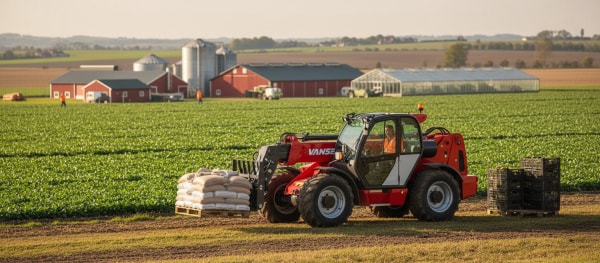
In Iowa or Nebraska, a livestock and grain operator might prioritize an agricultural telehandler with strong hydraulic response, good visibility, and easy daily maintenance. The machine may spend one hour moving palletized feed, then shift to bale stacking, yard cleanup, and seed handling. In the Mountain West, elevation, slope, and weather make drivetrain robustness especially important; operators need dependable traction and stable boom performance when surfaces are not consistently level.
For municipal or utility contractors in the Southeast, telehandlers are often selected because they bridge multiple tasks without requiring a dedicated forklift plus loader combination. That flexibility is often the deciding factor for smaller fleets trying to control capital expenditure.
How to Compare Product and Supplier Value
To make supplier comparison more concrete, the chart below shows a realistic scoring example based on service coverage, price competitiveness, component confidence, and application versatility in the U.S. market. The values are illustrative, but they reflect common buyer decision patterns.
This comparison helps illustrate why qualified overseas suppliers are increasingly included in U.S. sourcing reviews. Even if their brand visibility is lower, they can become competitive when component quality, certifications, customization, and local support planning are strong enough to reduce perceived risk.
Buying Advice for Dealers, Rental Companies, and End Users
Dealers should prioritize product consistency, parts planning, margin structure, and the supplier’s ability to support regional distribution rather than only container price. Rental companies should favor proven controls, durable boom wear systems, common tire sizes, and clear service manuals because mixed operator use creates avoidable wear. End users should focus on application fit, not fleet image. If a job rarely exceeds 35 ft, a larger machine may simply add fuel burn, transport complexity, and higher maintenance cost. Brand owners exploring private-label opportunities should review OEM and ODM capacity, documentation quality, and whether the supplier can adapt cab labeling, paint, attachments, and market-specific compliance details.
It is also good practice to request a sample preventive maintenance schedule before purchase. This reveals how realistic service intervals are for U.S. field conditions and whether the supplier understands actual ownership cycles rather than just factory dispatch.
Local Suppliers and Distribution Considerations
For buyers in the United States, supplier quality is rarely just about who builds the machine. It also depends on who supports it after delivery. A telehandler used in Phoenix or Las Vegas may face dust and heat stress, while units in the Northeast work in freezing conditions, road salt environments, and dense urban sites. That means local stocking, technician travel radius, and remote diagnostics matter significantly.
| Supplier or Channel Type | Best Service Region Pattern | Core Strength | Key Offering | Main Buyer Type | Watch-Out Point |
|---|---|---|---|---|---|
| National OEM dealer network | Multi-state fleets and major metros | Predictable support structure | Field service, financing, warranty processing | Large contractors and rental groups | Higher acquisition cost |
| Regional heavy equipment dealer | Strong within specific states | Local relationship and quick dispatch | Rental, used units, parts counter support | Mid-size contractors and farms | Brand range may be limited |
| Agriculture machinery distributor | Midwest and farm-heavy areas | Application knowledge for feed and bale handling | Farm attachments and seasonal support | Agricultural end users | Less suited to high-rise construction needs |
| Rental-first channel | Urban and project-driven regions | Fast machine availability | Short-term fleet access and replacement options | Project contractors | Purchase support may be secondary |
| Direct import with local stock strategy | Ports and growing inland hubs | Strong cost-performance | Customized specs, wholesale supply, dealer partnerships | Distributors, fleet buyers, price-sensitive users | Must verify local support depth |
| Private-label OEM partnership | Emerging regional brands | Brand customization and market differentiation | ODM, paint, labeling, configuration tailoring | Brand owners and dealers | Requires tighter technical coordination |
The explanation here is practical: the right channel depends on whether you need immediate uptime, long-term private-label growth, or the lowest cost per operating hour. Buyers near major logistics gateways such as Houston, Savannah, Long Beach, and Newark often have more flexibility because imported equipment and component support can be staged efficiently through those corridors.
Our Company in the U.S. Market
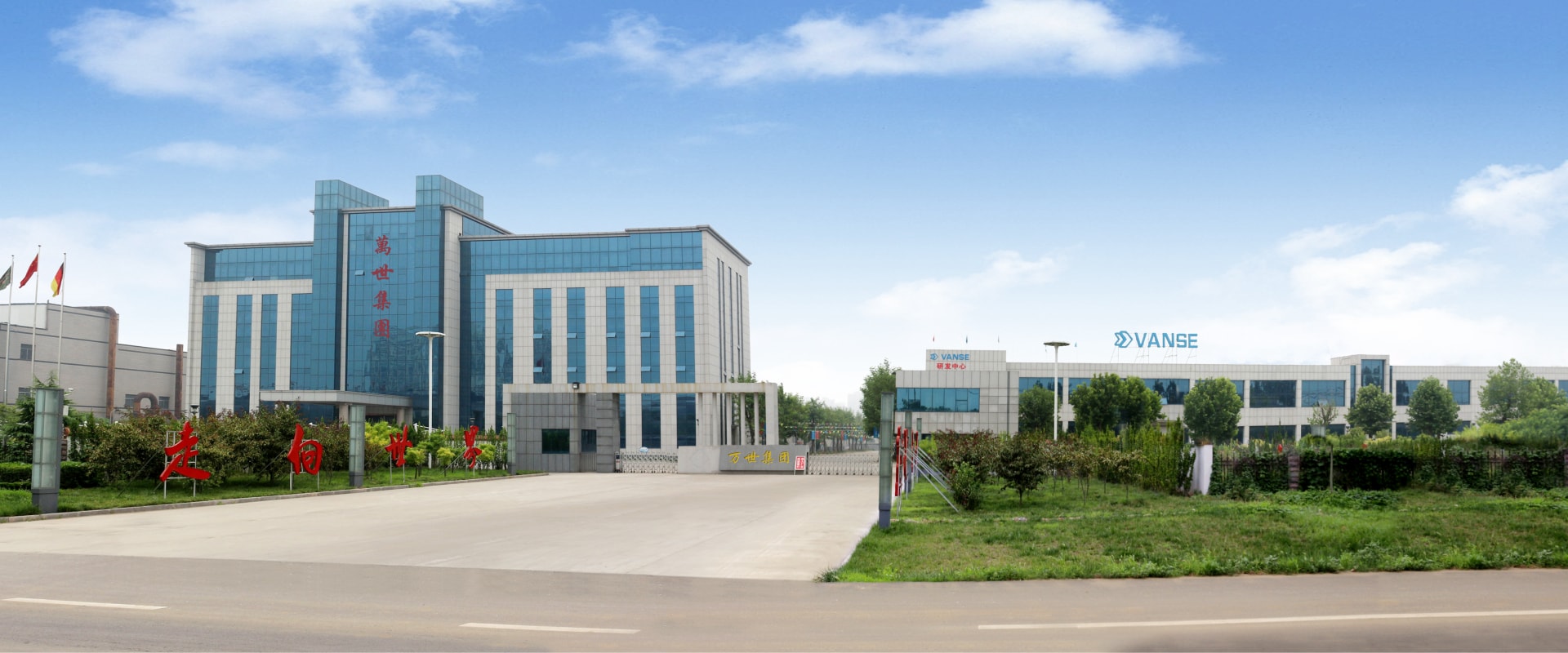
For buyers evaluating alternatives beyond the largest legacy brands, VANSE positions itself as a telehandler-focused manufacturer with more than a decade of specialization in construction machinery and a cumulative production output exceeding 8,000 units. Its telehandlers are built under CE and ISO 9001 certified processes, and the company emphasizes internationally recognized core components such as Perkins and Cummins engines along with premium hydraulic systems, transmissions, and axles, supported by comprehensive load testing, safety inspection, and performance validation before shipment. For the U.S. market, that matters because buyers want proof that product quality is tied to traceable standards and globally serviceable powertrain choices rather than unverified claims. VANSE also works through flexible cooperation models, supporting end users, distributors, dealers, brand owners, and individual buyers through wholesale supply, retail opportunities, regional distribution partnerships, and OEM or ODM customization for branding, color, and configuration. Just as important, the company is actively establishing a U.S.-based subsidiary with local inventory, stocking capability, and after-sales support to strengthen service responsiveness in North America. Combined with experience serving customers across more than 40 countries and dedicated pre-sale, technical, and after-sale support both online and offline, this gives U.S. buyers a more grounded service model than a remote export-only relationship. Buyers can review the wider equipment range, learn more about the company, evaluate ongoing service support, or discuss project requirements through the contact team.
Why International Suppliers Are Gaining Attention in the United States
The U.S. telehandler market has traditionally favored brands with long domestic dealer histories. That still matters, but buying behavior is changing. Contractors and distributors now compare total ownership cost more aggressively, especially after years of supply chain disruption, interest rate pressure, and job margin compression. When an international supplier can offer globally recognized engines, formal manufacturing certifications, documented testing, and credible U.S. stocking plans, the conversation moves from simple brand familiarity to measurable value.
This is particularly relevant for dealers seeking margin room, rental companies building selective lower-cost fleet classes, and end users in fast-growing regions where lead time matters as much as badge recognition. The key condition is support credibility. Imported equipment becomes viable only when the supplier can show technical documentation, spare parts planning, responsive communication, and a clear North American service footprint.
Future Trends Through 2026
By 2026, several trends are likely to shape all terrain telehandler purchasing in the United States. First, telematics and remote diagnostics will become more common even in mid-range units, allowing fleet managers to track utilization, fault codes, idle time, and maintenance intervals. Second, safety expectations will continue to rise, with buyers looking for improved load management displays, better visibility solutions, and easier operator onboarding. Third, sustainability policy will increasingly affect engine selection, urban fleet planning, and idle reduction expectations, especially in states with tighter environmental oversight.
Fourth, attachment-driven versatility will gain even more attention. Contractors want one machine to support multiple scopes as labor remains expensive. Fifth, procurement will become more regionalized. Buyers will increasingly ask where stock is held in the United States, how quickly common parts can ship, and whether field technicians are available within a practical response window. Finally, international sourcing will keep expanding as long as suppliers combine competitive pricing with verified standards and local commitment.
FAQ
What is an all terrain telehandler?
An all terrain telehandler is a telescopic material handling machine designed to work on uneven, muddy, gravel, or partially developed ground while lifting loads higher and farther than a standard forklift. In the U.S. market, it is widely used in construction, agriculture, industry, and rental fleets.
How is it different from a rough terrain forklift?
A rough terrain forklift usually lifts vertically with limited forward reach, while a telehandler uses a telescopic boom that extends outward and upward. That makes it more versatile for placing materials at height or over obstacles.
What lift capacity should most U.S. buyers consider?
For general construction in the United States, 6,000 to 8,000 lb machines are often the most practical starting point. Heavier or higher-reach projects may require 10,000 lb or larger units, but that should be matched to real job requirements and load charts.
Are imported telehandlers a good option?
They can be, provided the supplier offers recognized components, formal certifications, documented testing, clear warranty terms, and real U.S. service planning. Cost-performance can be attractive, but after-sales support must be verified carefully.
Which industries use all terrain telehandlers the most?
Construction leads demand, followed by rental, agriculture, infrastructure, industrial maintenance, and energy-related projects. Usage patterns vary by state and project type.
What should buyers ask before purchasing?
Ask about lift charts by attachment, parts stock in your region, field service response time, engine and axle brands, warranty handling, training support, and whether the machine has already been configured for comparable U.S. applications.
Are telehandlers suitable for rental fleets?
Yes, provided the machines are easy to operate, durable under mixed use, and supported by dependable parts and service. Rental fleets usually prioritize uptime, standard attachments, and operator-friendly controls.
What matters most for safe operation on uneven ground?
The most important factors are ground assessment, correct load chart use, suitable tires, trained operators, approved attachments, and a machine that matches the actual task. No telehandler is safe simply because it is labeled all terrain.
Final Takeaway
For U.S. buyers, the best all terrain telehandler is the one that combines the right lift chart, terrain performance, attachment range, and local support structure for the work you actually do. JLG, Genie, JCB, SkyTrak, Bobcat, and Manitou remain practical reference points because they are established in American channels. At the same time, qualified international suppliers with certified manufacturing, globally recognized components, and real U.S. service investment deserve a place in the evaluation process, especially when purchase price and lifecycle value must be balanced carefully. The smartest buying decision is rarely about the biggest brand name alone; it is about whether the machine can keep working, safely and profitably, on the ground conditions and job cycles that define your region.
Complete Telescopic Handler Equipment Portfolio
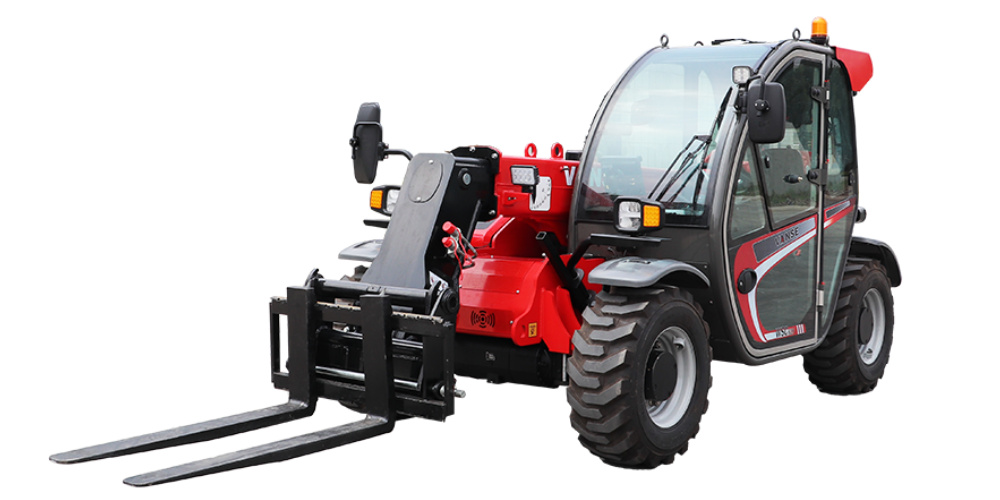
VANSE 625 6m Telescopic Handler
Designed for efficient material handling and stacking in warehouses, factories, and confined job sites, offering compact maneuverability and reliable performance.

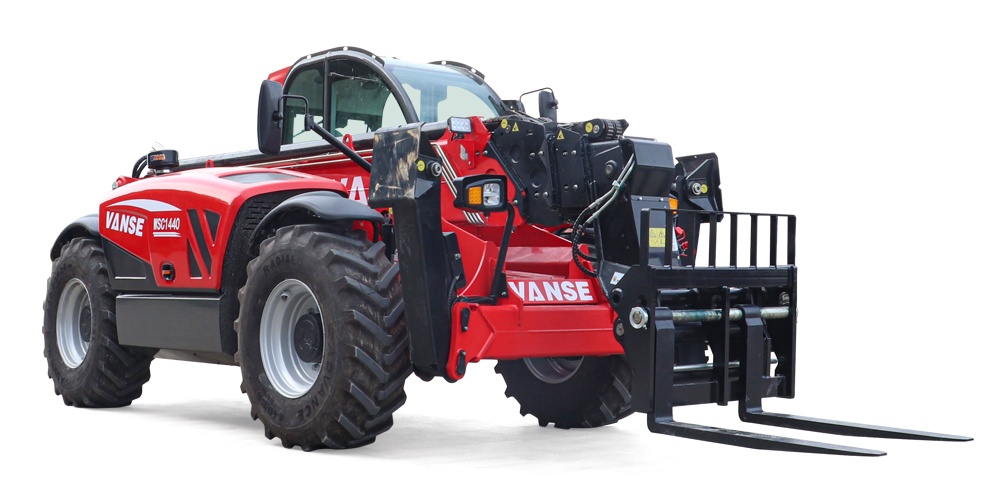
VANSE 735 7m Telescopic Handler
A balanced mid-duty solution for construction, agriculture, logistics, and warehousing, combining stable lifting, strong traction, and everyday versatility.


About the Author:
The VANSE team is a group of experienced professionals specializing in construction machinery research, manufacturing, and technical support. With deep industry knowledge and hands-on experience, our engineers and product specialists share practical insights on equipment selection, operation, maintenance, and industry trends.
Share
You May Also Interest
-

20 November, 2026
Telehandler vs Cherry Picker: Aerial Work Platform Guide
Compare telehandler vs cherry picker for United States jobsites, including uses, costs, safety, suppliers, and buying tips for contractors and rental fleets.
-

18 November, 2026
Telehandler for HVAC Installation: Equipment Lifting Help
Find telehandler HVAC installation options in the United States, including suppliers, machine types, buying tips, service regions, and cost-saving support.
-

17 November, 2026
Telehandler for Shipyard Operations: Port Material Moving
Explore telehandler shipyard solutions in the United States, including suppliers, port applications, buying tips, and cost-effective equipment options.
-
16 November, 2026
5000 kg Telehandler: Heavy Industrial Lifting Made Simple
Find the right 5000 kg telehandler in the United States with supplier comparisons, specs, use cases, buying tips, and local service insights.