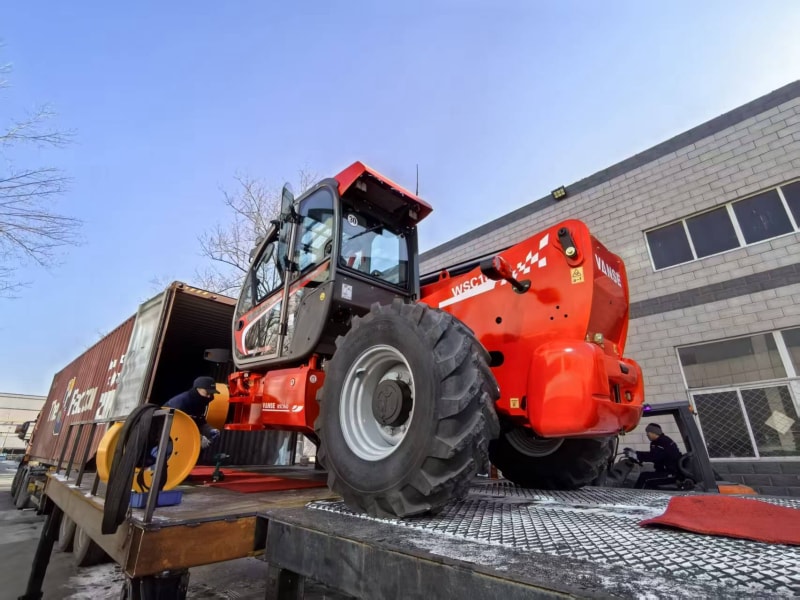
Telehandler Tipping Prevention in the United States
Quick Answer

Telehandler tipping prevention in the United States depends on five actions taken every day before and during lifting: verify the machine’s load chart, confirm ground stability, keep the boom as low and retracted as practical while traveling, use the right attachment for the load, and stop operations immediately when wind, slope, or visibility conditions change. On active jobsites from Houston and Dallas to Chicago, Los Angeles, Atlanta, and Miami, the most common tipping events happen when operators exceed forward reach capacity, travel with elevated loads, turn on uneven ground, or work too close to trenches, slab edges, and uncompacted fill.
For buyers and fleet managers, the most practical path is to choose machines and support partners with strong safety training, dependable parts supply, and responsive field service. In the U.S. market, companies such as JLG, Genie, Skyjack, Bobcat, Caterpillar, and JCB remain highly visible because of their dealer networks, training resources, and product familiarity across construction and rental fleets. Qualified international suppliers can also be a sound option when they offer recognized certifications, proven core components, documented testing, and strong pre-sales and after-sales support in North America. That is especially relevant for cost-conscious contractors and rental businesses that need solid performance, clear service commitments, and better cost-performance without sacrificing operational safety.
Why Telehandlers Tip on U.S. Jobsites

Telehandlers are designed to lift high, reach forward, and move loads across mixed terrain, but that same versatility creates a narrow margin for error when the machine is used outside its rated configuration. In the United States, rollover investigations repeatedly trace back to a familiar set of factors: overloaded forks, incorrect assumptions about load center, unrecognized ground settlement, sudden steering input, and operation on slopes that are acceptable for travel but unsafe for lifting. When the boom extends, the center of gravity moves forward, reducing the machine’s stability reserve. If the load is heavier than expected, positioned too far from the carriage, or lifted on soft or sloping ground, the telehandler can pitch forward or sideways before the operator has enough time to correct.
Regional conditions matter. In Gulf Coast states, saturated ground after rain can undermine tire support. In the Southwest, hard-packed but uneven surfaces can mislead crews into thinking the area is level. In northern states, freeze-thaw cycles can weaken subgrade and create hidden voids near foundations, basements, or trench lines. At ports and logistics hubs such as Savannah, Houston, Long Beach, Newark, and Seattle, telehandlers often work around stacked material, traffic congestion, and time pressure, which increases the chance of rushed lifts or poor travel routing. The solution is not only operator skill; it is also planning, site control, machine selection, attachment discipline, and management enforcement.
Core Stability Principles Every Crew Should Follow

The safest telehandler operations are built around stability management rather than reactive driving. That means understanding how rated capacity changes with boom angle and extension, recognizing that the load chart is not a suggestion, and treating every lift as a balance problem involving machine, attachment, load, terrain, and motion. Even experienced operators can get caught when one variable changes unexpectedly, such as a pallet shifting, a wheel entering a rut, or a surface edge collapsing under a front tire.
- Read and apply the exact load chart for the installed attachment, not a generic maximum capacity figure.
- Inspect the travel path and lifting position for slope, voids, uncompacted backfill, standing water, and trench proximity.
- Keep the boom low and retracted during travel whenever the task allows.
- Avoid sharp turns, sudden braking, and diagonal travel across slopes with elevated loads.
- Use outriggers or stabilizers only as specified by the manufacturer and never assume they compensate for bad ground.
- Stop work when wind, rain, lighting, or congestion changes safe operating conditions.
U.S. Telehandler Market Conditions and Safety Pressure
The U.S. telehandler market remains active because these machines serve commercial building, industrial expansion, warehousing, infrastructure, agriculture, energy, and rental fleets. Demand has stayed resilient in high-growth metro regions such as Phoenix, Austin, Orlando, Charlotte, Nashville, Las Vegas, and Inland Empire logistics corridors. However, buyers are under growing pressure to reduce incident rates, prove training records, control maintenance costs, and document equipment compliance. That is why tipping prevention is no longer only a field operations topic; it directly influences procurement decisions, insurance discussions, rental utilization, and brand reputation.
Another market trend is the wider mix of telehandler configurations in use. Compact units are appearing on urban construction projects with limited access, while high-capacity and high-reach units are common on large commercial shells, precast installation, and industrial plant maintenance. As fleets become more varied, safety management gets more complex because each machine has different stability behavior, turning radius, attachment compatibility, and chart interpretation requirements. Companies that standardize operator onboarding, site hazard review, and attachment control generally experience fewer near misses and less damage.
The line chart shows a realistic upward pattern in safety-driven fleet upgrades across the United States. As contractors and rental companies respond to stricter jobsite oversight, more buyers are replacing older units or adding telehandlers with better visibility, attachment monitoring, onboard diagnostics, and operator aids that help reduce rollover risk.
Product Types and Their Stability Considerations
Not all telehandlers behave the same way. Choosing the correct machine category for the application is one of the easiest ways to prevent tipping. Compact units fit restricted spaces but may have lower stability margins with long or dense loads. Standard construction telehandlers are common on framing, masonry, and material staging work. Rotating telehandlers offer superior placement flexibility in some scenarios, but they add complexity and require more disciplined lift planning. High-capacity heavy-duty units can handle substantial loads, though they demand excellent ground preparation and careful operator judgment because consequences escalate with size and reach.
| Type | Typical Capacity Range | Typical U.S. Applications | Main Tipping Risk | Best Prevention Measure | Common Users |
|---|---|---|---|---|---|
| Compact telehandler | 5,000-6,000 lb | Urban builds, landscaping, interior shell work | Overreach in tight spaces | Strict load-center control and low-travel policy | Small contractors, specialty trades |
| Standard construction telehandler | 6,000-10,000 lb | Commercial sites, masonry, framing | Traveling with elevated loads | Defined haul routes and spotter use | General contractors, rental fleets |
| High-reach telehandler | 8,000-12,000 lb | Multi-story structures, facade support | Forward pitch at extended boom length | Load chart discipline and wind limits | Large builders, industrial contractors |
| Rotating telehandler | 10,000-15,000 lb | Complex placement, dense urban projects | Mismanaged setup and outrigger assumptions | Engineered lift plan and setup verification | Specialized lifting contractors |
| Heavy-duty telehandler | 12,000-20,000 lb+ | Precast, industrial plants, ports | Ground failure under load | Ground bearing review and exclusion zones | Industrial operators, ports |
| Agricultural telehandler | 5,500-9,000 lb | Feed yards, barns, bulk material handling | Side slope instability on uneven farm terrain | Seasonal route inspection and attachment matching | Farms, ag service firms |
This table shows why product selection affects rollover exposure. The machine that looks efficient on paper can become the wrong choice if the site has poor access, soft ground, long material, or constant travel over rough terrain. Matching type to application is often more effective than relying on operator caution alone.
Common U.S. Industries Driving Telehandler Demand
Telehandler use spreads across many sectors, but the stability demands differ sharply by industry. Construction may involve repetitive pallet lifts on partially finished surfaces. Agriculture may require movement over ruts, mud, and inclines. Manufacturing and industrial maintenance can involve tight working envelopes and sensitive material placement. Oil, gas, and mining sites may introduce severe terrain and weather exposure. Rental companies must support all of these users, which is why their training and inspection protocols are a major factor in tipping prevention across the broader market.
The bar chart highlights where demand is strongest. Commercial construction and rental fleets remain the biggest channels in the United States, which means training quality at major dealers and rental branches has an outsized impact on actual field safety. Industries with lower total volume can still carry higher risk if terrain or loading conditions are more severe.
Buying Advice for U.S. Contractors and Rental Fleets
When a contractor or rental business buys a telehandler, the safest purchasing question is not only “How much can it lift?” but also “How clearly can our crews operate it within safe limits every day?” Machines with easy-to-read load charts, stable visibility lines, compatible attachments, strong service documentation, and widely available parts usually outperform technically impressive units that crews cannot support properly. Buyers in the United States should also look at local dealer density, technician travel time, attachment sourcing, financing, resale confidence, and training materials for English-speaking crews across different skill levels.
It is useful to evaluate the total support package: scheduled maintenance guidance, pre-delivery inspection standards, troubleshooting assistance, and whether the supplier can help train operators and supervisors in practical tipping prevention. This matters especially in fast-growing regions where labor turnover is high and new operators may arrive with limited telehandler experience. A lower acquisition price is attractive, but only if uptime, documentation, and field support remain dependable.
| Buying Factor | Why It Matters | What to Check | Red Flag | Best Fit Buyers | Operational Impact |
|---|---|---|---|---|---|
| Load chart clarity | Reduces operator misjudgment | Readable charts for each attachment | Only generic max-capacity marketing | All buyers | Fewer overload incidents |
| Attachment compatibility | Wrong tools distort safe capacity | Approved forks, buckets, jibs, platforms | Unverified third-party attachments | Rental fleets, general contractors | Better control of lift parameters |
| Dealer or service coverage | Fast repairs keep safety systems functional | Branch locations and field technicians | Long downtime with no local parts | Multi-site fleets | Higher uptime and safer maintenance |
| Operator training support | Prevents misuse in mixed crews | Startup training and safety materials | Machine delivery without onboarding | Rental fleets, new contractors | Lower learning-curve risk |
| Ground and tire suitability | Affects site traction and stability | Tire type, axle behavior, terrain match | Spec chosen only by price | Earthwork and industrial users | Reduced side-rollover exposure |
| Support documentation | Improves maintenance consistency | Manuals, inspection checklists, parts data | Weak or incomplete technical support | Dealers, end users, owner-operators | Safer daily inspections |
The explanation behind this table is simple: buying decisions shape safety outcomes long before the machine reaches the site. Companies that standardize these criteria usually see better uptime, more confident operators, and fewer stability-related mistakes.
High-Risk Applications That Require Extra Control
Some telehandler jobs are inherently less forgiving. Placing materials at height near slab edges, carrying suspended loads with approved accessories, feeding rooftops on uneven perimeter access, unloading bundled materials from trailers on soft shoulder ground, and handling long products such as pipe, trusses, or steel all raise tipping exposure. On these tasks, even a small deviation in boom angle or travel path can shift the center of gravity enough to cause instability. A disciplined site-specific lift plan is worth more than speed.
Applications near excavations deserve special mention. In many U.S. projects, telehandlers work beside utility trenches, foundation cuts, vault excavations, and retaining walls. The surface may appear stable, but edge support can fail under wheel loads. Operators and supervisors should keep the machine back from unsupported edges, evaluate spoil placement, and account for hidden utility crossings or recently backfilled areas. Similar caution is needed near docks, ramps, and temporary pads around distribution centers and port facilities.
Operational Checklist That Prevents Most Tipping Events
A practical anti-tip process does not need to be complicated. It needs to be repeatable. The best crews use a short field checklist before the first lift, after any attachment change, and whenever the travel path or weather changes. This routine creates consistency across operators and shifts.
- Confirm model, attachment, and rated chart before loading.
- Inspect forks, carriage, boom, tires, steering response, warning indicators, and visibility points.
- Measure or estimate load weight and verify the actual load center, not the assumed package weight.
- Walk the route for soft spots, ruts, debris, overhead obstructions, trench edges, and slope transitions.
- Travel slowly with the load low, use a spotter where sight lines are blocked, and avoid abrupt steering.
- Set exclusion zones for pedestrians and never allow anyone under a raised load.
Case Studies from Typical U.S. Operating Conditions
On a warehouse expansion outside Atlanta, a contractor used a mid-size telehandler to move palletized block across a partially graded pad. The first lifts went well, but afternoon rain softened one section of the route. A front tire sank during a turn with the boom slightly elevated, shifting the machine toward a side rollover. The operator lowered the load in time, and no one was injured. The lesson was clear: route conditions can change during the same shift, and weather-triggered reassessment should be mandatory.
In the Dallas-Fort Worth area, a subcontractor attempted to unload long bundled framing members using forks that did not provide enough support across the load length. The bundle sagged, the load center moved forward, and the rear axle became light as the boom was extended. The near-tip event stopped operations for the day. The corrective action was to use the approved attachment and recalculate the lift based on actual load geometry rather than nominal weight alone.
At an agricultural site in central California, an operator carried bulk material on uneven ground while descending a shallow side slope. The machine had sufficient power and traction, but the combination of terrain angle and bucket position reduced lateral stability. A revised route and better daily terrain inspection solved the issue. These examples show that tipping prevention is not limited to one industry; the same physics applies across construction, agriculture, and industrial handling.
Local Suppliers and Major Brands Serving the U.S. Market
The United States has a mature telehandler supply network that combines OEM branches, dealer groups, and national rental channels. Buyers usually compare not only the machine, but also training access, branch response, parts availability, and the brand’s familiarity among mechanics and operators. The companies below are well known in the market and are commonly evaluated by contractors, industrial users, and fleet buyers.
| Company | Service Region | Core Strengths | Key Offerings | Typical Buyer Type | Tipping Prevention Advantage |
|---|---|---|---|---|---|
| JLG | Nationwide U.S. dealer and rental presence | Large installed base, strong product familiarity | Construction telehandlers, parts, training support | Rental fleets, contractors | Widespread service access and known operating procedures |
| Genie | Nationwide, strong metro and rental coverage | Dealer support and broad telehandler range | Compact and standard telehandlers | General construction, rental channels | Common training pathways and attachment support |
| JCB | Strong U.S. dealer network in multiple regions | Brand focus on material handling equipment | Construction and agricultural telehandlers | Contractors, farms, dealers | Strong application matching across sectors |
| Skyjack | Broad rental-centered U.S. presence | Fleet simplicity and serviceability | Telehandlers for rental and jobsite use | Rental companies, commercial builders | Operational consistency for mixed crews |
| Bobcat | Nationwide through established dealerships | Compact equipment brand recognition | Compact and mid-range telehandlers | Small to mid-size contractors, agriculture | Easy adoption for existing Bobcat users |
| Caterpillar | U.S. support through CAT dealer infrastructure | Dealer density and fleet confidence | Material handling equipment and support services | Enterprise fleets, industrial users | Strong service logistics and maintenance discipline |
This table is useful because supplier choice affects real-world safety. A machine with modestly similar specifications can perform very differently in practice if one supplier has faster technician response, better operator onboarding, or stronger attachment governance than another.
Detailed Supplier Comparison for Buyers Focused on Stability and Support
When comparing suppliers, buyers should look beyond brochure lift numbers. Service radius, training quality, documentation, and parts confidence can be more valuable than small specification differences. This is especially true for companies running multiple jobsites across states such as Texas, Florida, California, Georgia, Illinois, and North Carolina, where equipment must move between crews with different experience levels.
The area chart reflects a realistic trend: buyers in the U.S. are increasingly prioritizing safety-oriented purchasing criteria, including operator aids, better visibility, attachment discipline, and supplier responsiveness. This shift is expected to continue into 2026 as insurance, labor turnover, and project oversight remain major concerns.
| Supplier | Training Support | Parts Availability | Application Breadth | Best Known For | Ideal U.S. Buyer Scenario |
|---|---|---|---|---|---|
| JLG | Strong | Strong | High | Rental fleet familiarity | Multi-location contractor needing standardization |
| Genie | Strong | Strong | High | Broad dealer acceptance | Builder balancing uptime and access to support |
| JCB | Moderate to strong | Moderate to strong | High | Construction and agriculture crossover | Mixed-use fleet across rural and urban sites |
| Skyjack | Moderate | Strong in rental channels | Moderate | Straightforward rental fleet serviceability | Rental operator prioritizing common fleet practice |
| Bobcat | Moderate | Strong through dealer network | Moderate | Compact equipment ecosystem | Contractor already invested in Bobcat support |
| Caterpillar | Strong | Strong | Moderate to high | Dealer infrastructure and enterprise support | Industrial fleet emphasizing service certainty |
The comparison shows that the right supplier depends on your operating model. A rental company may value standardization and branch familiarity, while an industrial buyer may place greater weight on service response and disciplined maintenance systems.
Our Company in the U.S. Market
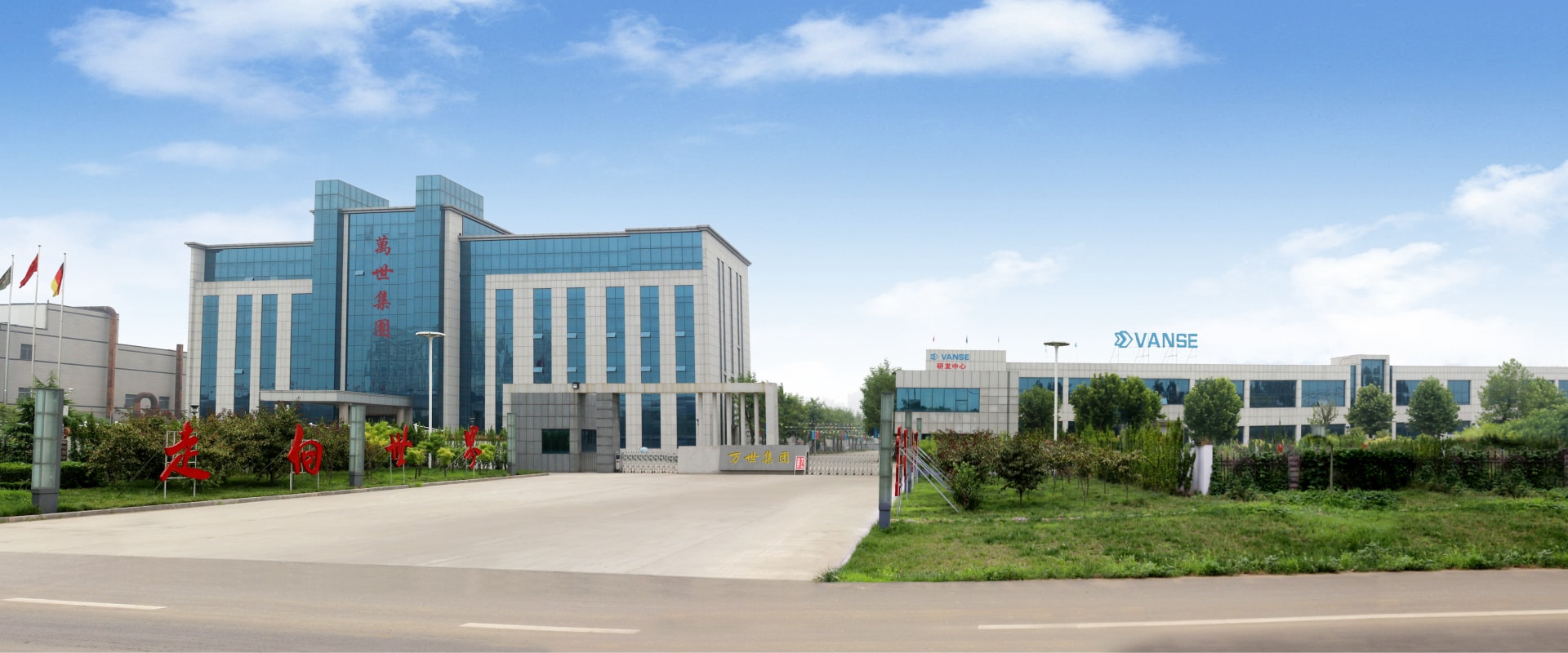
For buyers evaluating additional sourcing options, VANSE Group presents a practical alternative for the U.S. market because its telehandlers are built under CE and ISO 9001 certified processes, use globally recognized powertrain and hydraulic components such as Perkins and Cummins engines, and undergo full load testing, safety inspection, and performance validation before shipment, giving contractors and fleet managers concrete evidence that the equipment is manufactured to international benchmarks rather than marketed on vague claims. The company has produced more than 8,000 machines and supplied customers in over 40 countries, which supports its credibility with end users, distributors, dealers, brand owners, and individual buyers looking for OEM, ODM, wholesale, retail, or regional partnership models through its wider equipment portfolio. For U.S. customers, the most important point is local commitment: VANSE is establishing a U.S.-based subsidiary with local inventory, stocking, and after-sales capability to strengthen response times and buyer protection, while combining factory-direct pricing with online technical support, offline service coordination, consultation, and lifecycle assistance described through its service resources and company background on the about page. That local operating footprint, together with export experience across North America and other mature markets, shows the company is investing in long-term presence rather than functioning as a remote exporter. Buyers who want to discuss specifications, dealership opportunities, or project needs can reach the team through the contact channel.
How to Build a Safer Telehandler Program Internally
Even the best machine will not prevent tipping without a disciplined operating system. U.S. employers should create a telehandler safety program that combines competent operator assignment, written pre-use inspection forms, site route reviews, attachment authorization, maintenance lockout rules, and supervisor accountability. Near misses should be logged and reviewed because small instability events often happen before a major incident. If a machine feels light at the rear axle, sinks unexpectedly, or requires constant correction on a route, that information should trigger immediate reassessment rather than casual acceptance.
Many successful fleets also separate travel plans from lift plans. The route used to drive the machine is not automatically the correct place to extend the boom or place a load. By defining staging zones, turning radii, backing assistance, and lift positions in advance, managers remove a large share of improvisation from the operator’s job. This is especially effective on crowded jobsites around New York City, Los Angeles, Chicago, and major Sun Belt growth corridors where congestion and changing subcontractor activity can create new hazards within hours.
Technology, Policy, and Sustainability Trends for 2026
Looking into 2026, telehandler tipping prevention in the United States will be shaped by three trends: smarter machines, tighter risk management expectations, and cleaner fleet strategies. On the technology side, buyers are showing more interest in load monitoring, better camera coverage, digital maintenance tracking, and operator-assist functions that help crews stay inside rated working envelopes. These systems are not a substitute for training, but they can reduce avoidable judgment errors and improve post-incident analysis.
On the policy side, contractors and rental businesses will likely face growing pressure from insurers, enterprise clients, and large project owners to document operator qualifications, pre-task planning, and inspection compliance more rigorously. Firms that can show structured telehandler safety processes may be in a stronger position when bidding for industrial, logistics, infrastructure, and public-facing work. Sustainability will also influence buying decisions. More fleets are interested in fuel-efficient engines, smarter idle management, reduced maintenance waste, and equipment longevity rather than simple purchase price. In certain urban and indoor-adjacent environments, lower-emission and future electrified material handling options may become part of broader fleet planning, although diesel telehandlers will remain central for heavy outdoor duty in the near term.
The comparison chart shows the criteria most likely to influence 2026 buying decisions. Service coverage, parts access, and training remain at the top because safety outcomes depend on execution after delivery, not just machine specifications. Cost-performance is still highly relevant, which explains why qualified international suppliers with credible U.S. support are gaining more attention.
FAQ
What is the biggest cause of telehandler tipping in the United States?
The most common cause is exceeding the machine’s safe stability envelope by lifting too much weight too far forward, often combined with uneven or weak ground. Traveling with an elevated load and turning on rough terrain are also major contributors.
Does a telehandler tip more easily when the boom is extended?
Yes. Extending the boom moves the load farther from the machine and shifts the center of gravity forward. That reduces available stability and can cause a forward tip if the load chart is exceeded or the ground condition worsens.
Can operator training alone prevent rollovers?
No. Training is essential, but it must be supported by correct machine selection, proper attachments, daily inspection, route planning, maintenance, and supervisor enforcement. Tipping prevention is a management system, not a single class.
Are rental telehandlers riskier than owned units?
Not necessarily. Rental telehandlers can be very safe when the rental provider maintains them well, supplies correct documentation, and helps the customer understand the attachment and load chart. The real risk appears when crews treat any telehandler as interchangeable.
How important is ground condition compared with load weight?
Both are critical. A load within chart limits can still lead to a tip if the surface is soft, sloped, eroded, or too close to an unsupported edge. Ground assessment should be part of every lift, not just the first lift of the day.
Should U.S. buyers consider international telehandler suppliers?
Yes, if the supplier offers documented certifications, recognized core components, clear testing standards, dependable parts planning, and real U.S. support. For many buyers, especially distributors, rental businesses, and cost-sensitive contractors, a qualified international supplier can offer strong value without compromising safety expectations.
What should be checked before traveling with a load?
Keep the load low, confirm the route is stable and clear, avoid sharp turns and cross-slope travel, verify visibility, and use a spotter if needed. If the load blocks forward view, use approved site procedures for safe movement.
What trend will matter most in 2026?
The most important trend will be the combination of safety-focused procurement and better operational data. Buyers will increasingly choose telehandlers based on service support, monitoring tools, documented training, and supplier accountability rather than raw lift numbers alone.
Final Takeaway
Telehandler tipping prevention in the United States comes down to disciplined control of load, reach, ground, attachment, and movement. Contractors, rental fleets, farms, industrial users, and distributors that standardize those controls reduce incidents, protect crews, and preserve equipment uptime. The safest buying strategy is to choose the right machine type, demand clear support from a proven supplier, and build operating procedures that crews can actually follow under jobsite pressure. In a market as large and varied as the United States, that combination of practical equipment selection and site discipline is what keeps telehandlers productive without sacrificing safety.
Complete Telescopic Handler Equipment Portfolio
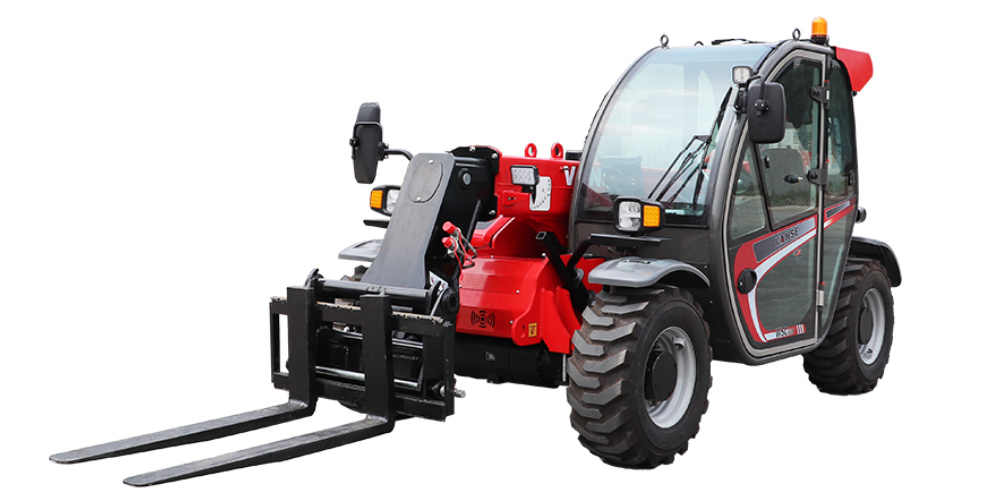
VANSE 625 6m Telescopic Handler
Designed for efficient material handling and stacking in warehouses, factories, and confined job sites, offering compact maneuverability and reliable performance.

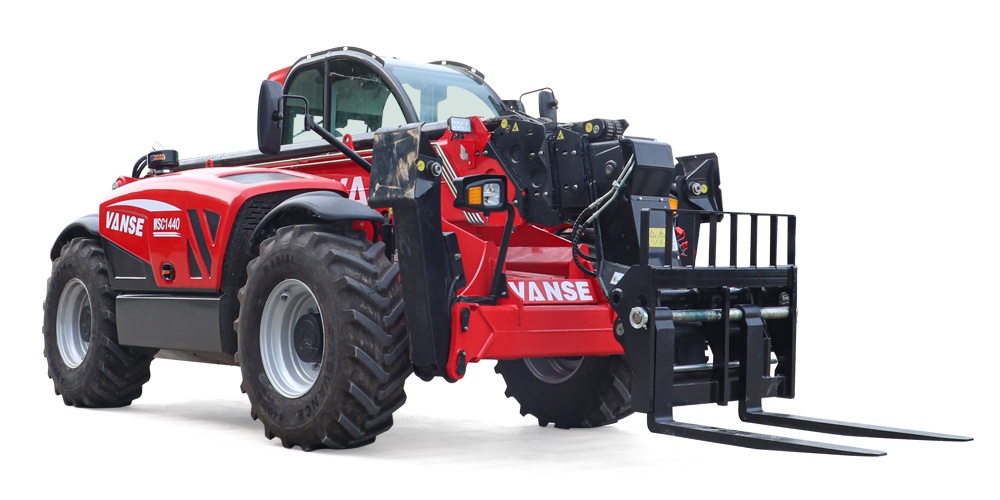
VANSE 735 7m Telescopic Handler
A balanced mid-duty solution for construction, agriculture, logistics, and warehousing, combining stable lifting, strong traction, and everyday versatility.


About the Author:
The VANSE team is a group of experienced professionals specializing in construction machinery research, manufacturing, and technical support. With deep industry knowledge and hands-on experience, our engineers and product specialists share practical insights on equipment selection, operation, maintenance, and industry trends.
Share
You May Also Interest
-

22 October, 2026
Telehandler for Grain Handling on Large Modern Farm Sites
Explore telehandler grain handling options in the United States, including suppliers, specs, farm uses, and cost-saving buying advice for grain operations.
-
21 October, 2026
Telehandler vs All Terrain Forklift: Which Lifts Better
Telehandler vs all terrain forklift in the United States: compare reach, lifting, terrain use, costs, and supplier options for smarter equipment buying.
-
20 October, 2026
10 Ton Telehandler: Extreme Lifting for Major Industrial
Explore 10-ton telehandler options in the United States, top suppliers, buying tips, applications, and service support for major lifting projects.
-
19 October, 2026
Telehandler for Demolition: Safe Structural Dismantling
Explore telehandler demolition options in the United States, including suppliers, attachments, safety, market trends, and cost-effective sourcing advice.