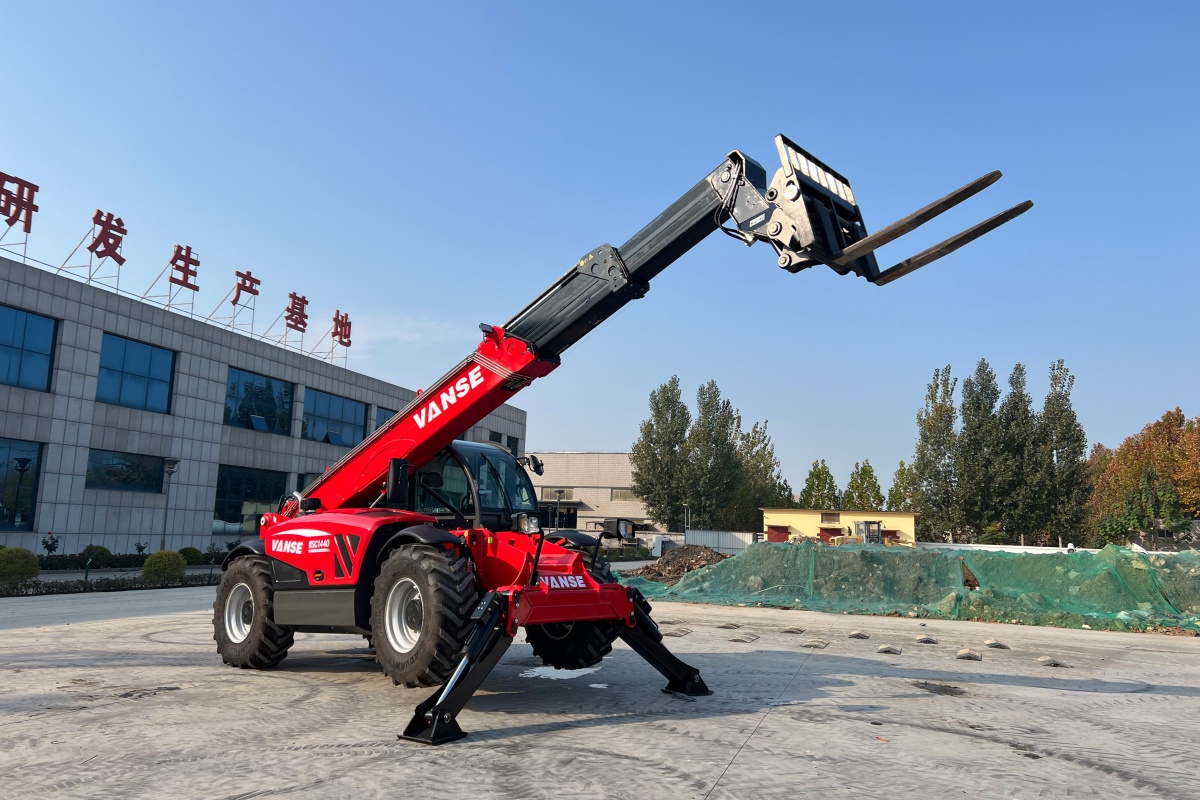
Telehandler Max Reach in the United States
Quick Answer

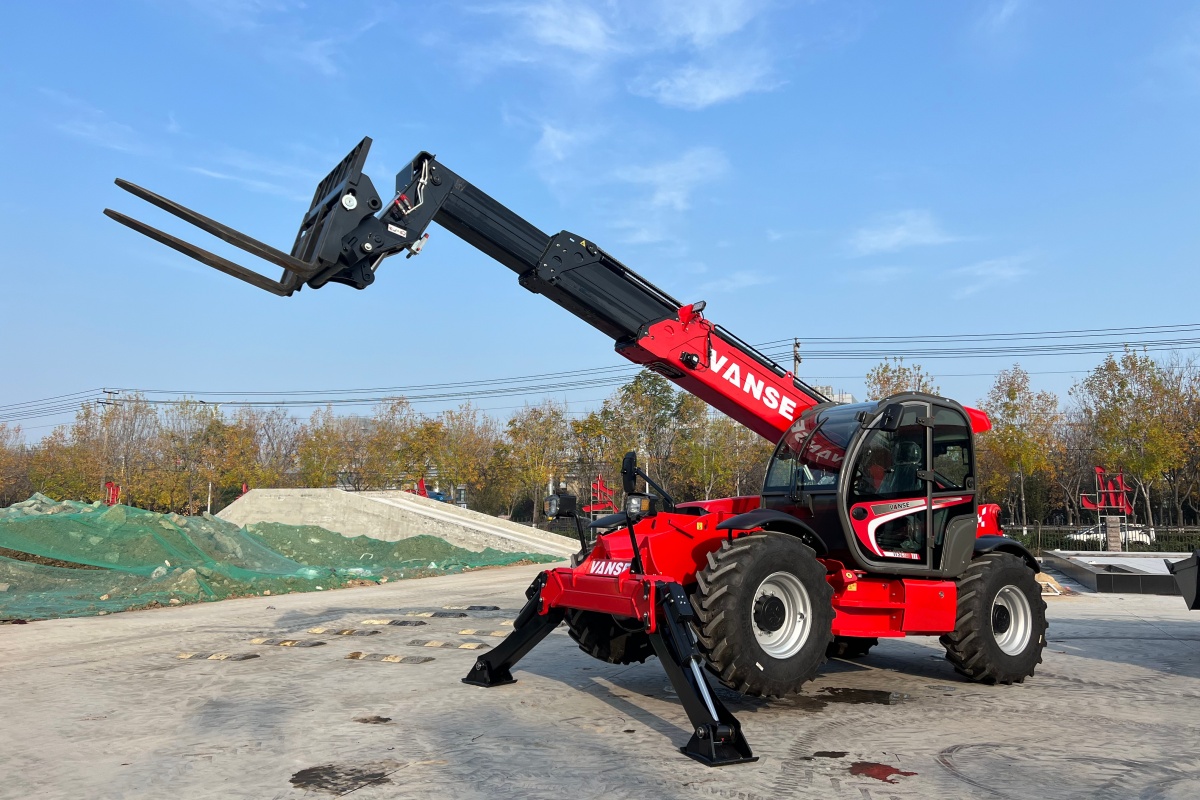
In the United States, telehandler max reach depends on the machine class, boom design, load chart, and whether you are measuring vertical lift height or forward reach. Most compact telehandlers used on farms and smaller jobsites reach about 18 to 25 feet, mainstream construction telehandlers commonly reach 42 to 56 feet, and high-reach models can extend to roughly 70 to 97 feet. The practical answer is that the right machine is not simply the one with the tallest boom, but the one that can safely place the required load at the exact height and distance your project needs.
For buyers who need a fast rule of thumb, 42-foot and 55-foot machines are the most common choices across American construction, rental, and industrial handling. If your work involves roofing, framing, masonry, elevated material staging, or multi-story commercial projects, these sizes usually deliver the best balance of capacity, transportability, and rental availability. If you need greater boom length for infrastructure, steel work, large distribution yards, ports, or oil and gas support, machines above 70 feet may be justified, but operating costs, stabilizer requirements, and site planning become much more important.
Leading suppliers active in the U.S. market include JLG, Genie, JCB, Caterpillar, SkyTrak, and Bobcat, with strong dealer coverage in major hubs such as Houston, Dallas-Fort Worth, Chicago, Atlanta, Los Angeles, and the Inland Empire. Buyers should also consider qualified international suppliers when comparing options. Manufacturers with recognized certifications, premium engines and hydraulics, clear load testing records, and dependable pre-sales and after-sales support can offer attractive cost-performance advantages, especially for fleet buyers, regional distributors, and contractors looking for value without giving up reliability or parts support.
What Telehandler Maximum Reach Really Means

Many buyers search for telehandler max reach expecting one single number, but there are several different measurements that matter in real operations. The first is maximum lift height, which tells you how high the boom can raise a load. The second is maximum forward reach, which matters when the machine must place materials over obstacles, into upper floors, or across trenches and barriers. The third is lift capacity at reach, which is where safety and productivity become critical. A machine may advertise a high boom figure, but the usable load at full extension is often far lower than the rated capacity near the ground.
On a United States jobsite, the difference between nominal reach and usable reach has direct cost implications. A contractor in Phoenix may need to place framing bundles onto a second-story deck from a narrow street access point. A masonry crew in Chicago may need to load block onto scaffolding while maintaining enough setback for trade traffic. A distribution facility near the Port of Savannah may need long-forward placement for palletized cargo around containers and trailers. In each case, the machine must not only reach but also keep the required load within the manufacturer load chart.
That is why experienced rental managers and fleet owners focus on the full duty cycle: how far, how high, how heavy, how often, and on what surface. Soil conditions, tire choice, outriggers, carriage type, and attachment selection all change the effective operating envelope. Reach on paper is useful, but reach under real field conditions is what determines whether a telehandler improves productivity or creates bottlenecks.
Typical Telehandler Reach Ranges in the U.S. Market

The U.S. telehandler market is broad because jobsite demands vary from residential construction in suburban growth corridors to heavy industrial work along the Gulf Coast. The table below shows realistic operating bands buyers commonly see when comparing available machine classes. These figures are representative market ranges rather than a substitute for an OEM load chart, but they help frame what telehandler maximum reach usually looks like in practice.
| Machine class | Typical max lift height | Typical forward reach | Common rated capacity | Best-fit applications | Typical U.S. users |
|---|---|---|---|---|---|
| Compact telehandler | 18 to 25 ft | 10 to 15 ft | 4,000 to 5,500 lb | Barn work, landscaping, small sites | Farm operators, small contractors |
| Mid-size telehandler | 26 to 37 ft | 15 to 22 ft | 5,500 to 8,000 lb | General construction, supply yards | Local builders, rental fleets |
| Mainstream construction telehandler | 42 to 56 ft | 26 to 42 ft | 8,000 to 12,000 lb | Roofing, framing, masonry, steel support | Commercial contractors, GC fleets |
| High-capacity telehandler | 44 to 56 ft | 25 to 35 ft | 12,000 to 20,000 lb | Heavy material staging, industrial sites | Industrial contractors, ports |
| High-reach telehandler | 70 to 74 ft | 45 to 55 ft | 8,000 to 12,000 lb | Infrastructure, large commercial work | Large contractors, specialty rentals |
| Ultra high-reach telehandler | 85 to 97 ft | 55 to 70 ft | 10,000 to 13,000 lb | Bridge support, stadium projects, energy | National fleets, specialized operators |
This table matters because it shows how buyers should balance height and capacity. A machine with more reach often carries less at full extension than a shorter, heavier-lift unit. For a precast yard outside Dallas or a modular building site in Tennessee, a 56-foot machine with stronger capacity at working radius may outperform a taller unit that spends too much time repositioning or operating near chart limits.
United States Market Conditions and Demand Outlook
The telehandler segment in the United States remains closely tied to nonresidential construction, agricultural mechanization, warehouse expansion, public infrastructure funding, and the continuing spread of large logistics campuses near ports and interstate corridors. Demand is strongest in Sun Belt growth markets such as Texas, Florida, Arizona, and the Carolinas, but Midwest distribution networks and energy-heavy regions also sustain steady fleet replacement.
Rental penetration remains high because many contractors prefer access flexibility over ownership, especially for 42-foot and 55-foot telehandlers. However, ownership demand is rising among agricultural businesses, concrete contractors, roofing specialists, and industrial facilities that need predictable machine availability. In port-adjacent markets including Houston, Long Beach, Newark, and Savannah, buyers often look for a combination of long reach, rugged powertrain, and easy serviceability because telehandlers work under dense cycle loads and demanding logistics schedules.
Inflation, labor shortages, and financing costs have changed purchasing behavior. Buyers now scrutinize fuel efficiency, maintenance intervals, residual value, parts lead times, and dealer responsiveness more closely than they did several years ago. That makes the telehandler max reach question part of a broader value analysis, not a standalone specification comparison.
The line chart above illustrates a realistic growth pattern for the U.S. telehandler market. The trend reflects steady gains from infrastructure spending, logistics expansion, and equipment replacement cycles. While economic slowdowns can affect quarterly demand, the medium-term direction remains positive because telehandlers continue to solve labor efficiency problems across multiple industries.
Industry Demand by Sector
Not every sector needs the same reach profile. General commercial construction usually drives volume demand for mid-range machines, while energy, mining support, and specialized infrastructure create demand for high-reach models. Agriculture often prefers compact and mid-size units that fit under storage structures yet still handle feed, pallets, seed, and maintenance tasks.
The bar chart shows why many U.S. dealers keep 42-foot to 56-foot telehandlers at the center of their fleets. Commercial construction and logistics deliver the broadest use cases, while ports and industrial yards create a strong secondary demand base. Residential demand is meaningful but often more price-sensitive and more likely to use smaller telehandlers or rentals.
How Reach Requirements Are Shifting
One of the most important trends in the U.S. market is the shift from simply chasing maximum boom length to selecting models with better load management systems, attachment compatibility, and lifecycle economics. Contractors increasingly want machines that can work across several projects rather than highly specialized units that sit idle between large jobs.
The area chart highlights how buyer preferences are moving toward versatile mid-range telehandlers. This is especially true in metro areas such as Atlanta, Nashville, and Denver, where contractors must balance transportation limits, urban site access, and the need to support multiple trades with one machine. Reach still matters, but flexibility matters more.
Product Types and Reach Categories
Understanding telehandler types helps buyers avoid overpaying for unused capability. In the United States, product types generally align with the work environment, attachment needs, and transport constraints. Agricultural telehandlers often prioritize compact dimensions, maneuverability, and visibility. Construction telehandlers focus on boom height, frame stability, rough-terrain traction, and attachment versatility. Rotating telehandlers, while less common, provide additional placement flexibility for specialty lifting and complex urban projects where repositioning room is limited.
Compact models fit feedlots, warehouses, and smaller municipal sites. Mid-size models serve mixed-use fleets. Standard construction telehandlers handle framing packs, palletized block, drywall bundles, and roof trusses. High-capacity units support pipe, forms, heavy pallets, and industrial components. High-reach and ultra high-reach units are more specialized and require stronger emphasis on operator training, setup planning, and jobsite supervision.
| Type | Reach profile | Main advantage | Main limitation | Typical attachments | Best U.S. environments |
|---|---|---|---|---|---|
| Agricultural telehandler | Low to mid reach | Excellent maneuverability | Less ideal for tall urban work | Buckets, bale handlers, pallet forks | Midwest farms, dairies, feed yards |
| Compact construction telehandler | Low to mid reach | Easier transport and site access | Lower lift height | Forks, light buckets, jibs | Residential sites, urban infill |
| Standard rough-terrain telehandler | Mid to high reach | Broadest versatility | May be oversized for small yards | Forks, truss booms, work platforms | Commercial jobsites nationwide |
| High-capacity telehandler | Mid reach with stronger load handling | Better heavy-load performance | Higher transport and fuel costs | Forks, pipe grapples, heavy jibs | Industrial plants, ports, precast yards |
| High-reach telehandler | Very high lift height | Supports tall placement tasks | More complex setup | Forks, winches, specialty carriages | Infrastructure, stadium and bridge work |
| Rotating telehandler | High reach with rotation | Greater placement precision | Higher acquisition cost | Winches, buckets, platforms, forks | Dense urban projects, specialty lifting |
The table shows that telehandler maximum reach should be matched to operating style. A landscaping contractor near Sacramento might gain far more value from a compact unit than from a taller model that adds transportation headaches. By contrast, a curtain wall contractor in Manhattan or a petrochemical contractor near Corpus Christi may prioritize every extra foot of reach because setup constraints are severe and downtime is costly.
Applications Across U.S. Industries
Telehandlers are now used in far more settings than many first-time buyers expect. In commercial construction, they move palletized materials, steel accessories, timber packs, and mechanical units. In agriculture, they handle hay, feed, seed, fertilizer totes, and maintenance tasks. In industrial facilities, they support shutdowns, maintenance turnarounds, and warehouse overflow handling. At ports and intermodal yards, they reposition materials, support container-adjacent loading, and move oversized project cargo.
Different applications reward different reach profiles. Roofing crews generally care about consistent second- and third-story material placement. Masonry operations care about heavy loads at moderate reach. Steel and mechanical trades often need forward reach around partially completed structures. Agriculture values all-day visibility, simpler controls, and fast attachment changes. Municipal users such as public works departments often want one versatile machine that can support storm response, yard handling, maintenance, and light lifting throughout the year.
Buying Advice for U.S. Buyers
If you are buying based on telehandler max reach, start by defining the heaviest load you must place at the farthest real working radius. Then work backward from that duty point. Many buyers make the mistake of choosing a machine based on maximum height alone, only to discover that the actual load at that height is below operational need. Always review the load chart for the exact attachment and tire configuration under consideration.
Next, examine transport realities. A machine that works perfectly on a large industrial site may be frustrating for a contractor moving daily between suburban projects. Trailer requirements, machine width, overall height, and state transport rules all affect cost. In states with frequent weather swings such as Colorado or Pennsylvania, traction, visibility, cold-start reliability, and enclosure comfort can materially affect productivity and operator retention.
Dealer support is another decisive factor. In the U.S. market, uptime often depends less on the machine brand alone and more on whether the local dealer can provide same-day diagnostics, common wear parts, and technician coverage. For fleet buyers, telematics access, warranty clarity, and preventive service planning deserve almost as much attention as reach figures. Finally, look at total cost of ownership. Fuel burn, maintenance access, axle durability, boom wear, chain service, and resale value all influence the real economics of ownership over three to seven years.
| Buying factor | Why it matters | What to verify | Risk if ignored | Best buyer type | Practical tip |
|---|---|---|---|---|---|
| Load chart accuracy | Confirms usable reach with real loads | Capacity at target height and radius | Unsafe lifts or project delays | All buyers | Match the chart to the attachment |
| Transport dimensions | Affects mobility and permitting | Width, height, trailer setup | Higher logistics cost | Contractors, rental fleets | Model the daily move pattern |
| Dealer coverage | Determines uptime support | Branch distance, parts stock, field service | Long repair delays | Owners with tight schedules | Ask for local service references |
| Powertrain components | Influences reliability and maintenance | Engine, axle, transmission brands | More unplanned downtime | Fleet and industrial users | Favor proven component supply chains |
| Attachment compatibility | Improves machine utilization | Forks, buckets, jibs, platforms | Lower versatility | Mixed-use operations | Budget for attachments early |
| Resale and lifecycle cost | Shapes long-term value | Used market demand, service history | Weak return on ownership | Fleet owners | Compare five-year ownership cost |
This framework helps buyers avoid the common trap of purchasing either too little machine or too much machine. The ideal choice is the one that safely covers your real workload while remaining economical to transport, maintain, and redeploy.
Case Studies from U.S. Work Environments
A roofing subcontractor in Orlando needed a machine for repeated material placement onto three-story apartment developments. The company first considered a 74-foot telehandler because of future growth plans. After reviewing actual load requirements, the contractor selected a 55-foot model instead. The shorter machine offered stronger capacity in the project’s primary working zone, lower transport cost between sites, and easier rental backup availability. Productivity improved because the crew spent less time repositioning and more time placing loads within the machine’s strongest chart area.
A farm equipment operator in central Iowa moved from a wheel loader and aging forklift combination to a compact telehandler. Even though the reach was only in the low-20-foot range, the machine transformed bale stacking, seed handling, and maintenance around sheds and grain facilities. The telehandler’s visibility and attachment flexibility mattered more than maximum height, and the lower overall machine size made daily use much easier.
An industrial contractor near the Houston Ship Channel required greater forward placement for shutdown support inside a constrained process area. In that environment, the team selected a high-capacity telehandler with strong component durability rather than chasing the highest boom number. The machine’s stability, service access, and heavy-load handling delivered more value than extra lift height that would have gone largely unused.
A national specialty contractor working on a stadium project in the western United States did justify a high-reach model above 70 feet. In that case, the site layout, steel package, and material staging distances made boom length a real productivity driver. The contractor also invested heavily in lift planning, trained operators, and close supervision because the margin for error becomes narrower as the working envelope expands.
Top Telehandler Suppliers Serving the United States
The U.S. market includes several established telehandler suppliers with strong product lines and dealer networks. The table below compares practical strengths rather than marketing slogans. Service region matters because telehandler ownership depends heavily on uptime support, technician access, and parts availability.
| Company | Service regions in the U.S. | Core strengths | Key offerings | Typical reach focus | Best-fit buyer |
|---|---|---|---|---|---|
| JLG | Nationwide through extensive dealer and rental networks | Strong construction reputation, broad fleet support | Construction telehandlers, high-reach units, attachments | Mid to high reach | Rental fleets, commercial contractors |
| Genie | Nationwide with strong urban and rental presence | Rental-friendly machines, broad market familiarity | Rough-terrain telehandlers, common fleet sizes | Mid reach | Rental houses, general contractors |
| JCB | Strong in agriculture and construction across many states | Versatility, agricultural crossover strength | Ag telehandlers, construction models, attachments | Low to high reach | Farms, mixed-use fleets, builders |
| Caterpillar | Wide dealer support through established Cat channels | Dealer depth, industrial customer confidence | Telehandlers integrated with heavy equipment support | Mid to high reach | Industrial users, large contractors |
| SkyTrak | Broad U.S. coverage, especially in rental and construction | Strong brand recognition in jobsite handling | Mainstream construction telehandlers | Mid reach | Construction fleets, rental centers |
| Bobcat | Wide dealer footprint with strong compact equipment crossover | Compact equipment customer base, local dealer access | Compact and mid-size telehandlers | Low to mid reach | Small contractors, farms, municipalities |
Each supplier brings a slightly different value proposition. JLG and SkyTrak are especially familiar in construction rental channels. Genie remains strong in fleet-oriented deployments where standardized service procedures matter. JCB is often considered by buyers who move between agriculture and construction use. Caterpillar benefits from a mature dealer ecosystem and customer trust in heavy industry. Bobcat appeals to buyers who already run compact loaders and want a telehandler from a familiar distribution channel.
Supplier Comparison by Practical Buying Criteria
This comparison chart represents typical market priorities in the United States rather than a ranking of one brand over another. Dealer coverage and rental presence carry the highest weight because machine uptime is often determined by support speed. Product range and attachment versatility follow closely, especially for buyers who want one telehandler model to cover multiple revenue-generating tasks.
Regional Considerations Across the United States
Reach requirements differ substantially by region. In Texas and the Gulf Coast, large commercial jobs, industrial maintenance, and energy-related handling often justify higher-capacity telehandlers. In California, transport rules, site access, and urban density can favor machines with a more balanced footprint-to-reach ratio. In the Midwest, agricultural users often prioritize compact dimensions, simple maintenance, and cold-weather dependability. In the Southeast, the pace of distribution center construction and multifamily development keeps mainstream 42-foot and 55-foot units in strong demand.
Port and trade hubs deserve special attention. Around the Port of Houston, Port of Los Angeles, Port of Long Beach, Port Newark, and Port of Savannah, telehandlers support cargo staging, project freight, and adjacent industrial construction. Buyers in these regions often require corrosion-conscious maintenance practices, dependable field service, and strong parts logistics because downtime can disrupt tightly scheduled operations tied to vessel, rail, or truck windows.
Our Company
For buyers seeking an additional sourcing option in the United States, VANSE brings a telehandler-focused manufacturing background supported by more than a decade of industry experience and cumulative production exceeding 8,000 units shipped to customers in over 40 countries, including North America. Its telehandlers are built under CE and ISO 9001 certified processes, use globally recognized core components such as Perkins and Cummins engines alongside premium hydraulic and drivetrain systems, and pass comprehensive load testing, safety inspection, and performance validation before shipment, giving U.S. buyers concrete evidence of manufacturing discipline rather than generic quality claims. The company works with end users, distributors, dealers, rental fleets, brand owners, and individual buyers through flexible OEM, ODM, wholesale, retail, and regional partnership models, which is especially useful for businesses seeking private labeling, customized specifications, or territory-based growth. VANSE is also strengthening its physical commitment to the American market through a planned U.S. subsidiary with local inventory, stocking capability, and after-sales support, backed by online technical service and offline lifecycle assistance, so customers evaluating telehandler equipment options are dealing with a supplier that already serves this region and is investing in long-term local presence rather than operating only as a remote exporter. Buyers can review the company background on the about us page, explore support programs through service resources, or discuss project requirements directly through the U.S. contact channel.
How to Evaluate International Suppliers for the U.S. Market
American buyers increasingly compare domestic brands with qualified international manufacturers, especially when building a fleet, opening a rental business, or sourcing machines for dealer distribution. The key is disciplined evaluation. Ask for certification details, component sourcing lists, test procedures, warranty terms, parts stocking plans, and the exact service model in the United States. A lower purchase price only becomes a real advantage if uptime, technical support, and parts fulfillment are dependable.
Well-prepared international suppliers can be highly competitive when they combine recognized engines and hydraulic components, rigorous factory testing, documented quality systems, and local market commitment. This is particularly true for buyers in price-sensitive growth markets who still need professional support. Regional distributors and brand owners may also benefit from OEM and ODM flexibility if they want to build a differentiated telehandler offering for local agriculture, construction, or industrial customers.
Industries Where Maximum Reach Matters Most
There are several industries in the United States where telehandler max reach has direct operational and financial impact. Commercial construction is the clearest example because elevated placement of palletized materials is a daily requirement. Roofing and framing crews use reach to reduce manual handling. Masonry contractors rely on stable material supply to scaffolding and upper decks. Infrastructure projects use longer reach to work around partial structures, traffic barriers, or uneven ground. Energy and industrial contractors may need forward placement into congested plants or large fabrication yards.
Still, maximum reach is not equally important everywhere. In a dairy or feed operation, visibility, turning radius, and attachment switching may matter more. In municipalities, year-round versatility often beats top-end boom figures. This is why the best U.S. telehandler buyers define the exact work sequence before selecting a machine size.
2026 Trends: Technology, Policy, and Sustainability
Looking toward 2026, several trends are shaping telehandler purchasing decisions in the United States. First, machine intelligence is becoming more important. Buyers increasingly expect better onboard load management, operator assistance features, telematics reporting, and preventive maintenance alerts. These systems reduce misuse, improve fleet visibility, and help contractors manage insurance and training responsibilities.
Second, policy and regulatory expectations are gradually raising the importance of emissions strategy, jobsite safety documentation, and fleet reporting. While diesel remains dominant in high-capacity and high-reach telehandlers, lower-emission designs, cleaner engine packages, and hybrid or electrified concepts will gain attention in municipal, indoor-adjacent, and environmentally sensitive applications. Buyers in states with stricter environmental expectations are likely to evaluate sustainability credentials earlier in the purchasing process.
Third, supply chain localization is becoming a competitive factor. U.S. buyers want proof of parts availability, regional inventory, and faster service response. That favors suppliers with local warehouses, stronger dealer networks, or direct stocking commitments. Finally, the market will continue shifting toward telehandlers that can serve multiple sectors with one chassis platform. Versatility, not just peak reach, is likely to define fleet decisions in 2026.
Frequently Asked Questions
How high can a telehandler really lift in the United States?
Common U.S. telehandlers typically lift from about 18 feet on compact machines to roughly 97 feet on ultra high-reach specialty units. The most widely used construction models generally fall in the 42-foot to 56-foot range.
Is telehandler max reach the same as lift height?
No. Lift height measures vertical elevation, while maximum reach can also refer to forward extension. On many jobsites, forward reach is more important because materials must be placed over obstacles or onto upper floors from a setback position.
What is the most popular reach class in the U.S. market?
The most popular classes are typically 42-foot and 55-foot telehandlers because they fit a large share of construction, rental, and industrial applications while remaining practical to transport and service.
Should I buy the tallest telehandler available?
Usually not. The best choice is the machine that can safely place your required load at the target working radius while matching your transport limits, site conditions, and support network. Extra boom length can increase cost without improving productivity.
Are compact telehandlers enough for many applications?
Yes. Compact telehandlers are often ideal for farms, landscaping, small contractors, municipalities, and yards where access is limited. They may not offer the highest boom figures, but they can be more efficient in tight daily operations.
Can international telehandler suppliers be a good option for U.S. buyers?
Yes, if they provide clear certification records, proven components, documented load testing, dependable warranty support, and visible U.S. service commitment. Cost-performance can be very attractive when those conditions are met.
Which U.S. regions have the strongest telehandler demand?
Texas, Florida, California, the Carolinas, Georgia, Tennessee, and key Midwest logistics corridors show especially strong demand, along with port-linked regions such as Houston, Savannah, Newark, and Southern California.
What attachments should I consider when evaluating reach?
Pallet forks are standard, but buyers should also consider buckets, truss booms, lifting jibs, work platforms where regulations permit, and specialty industrial tools. Attachments affect both versatility and the load chart, so they should be part of the purchase decision from the beginning.
Final Takeaway
The honest answer to the telehandler max reach question in the United States is that most buyers should not begin with the highest advertised number. They should begin with the real work point: the weight, distance, height, site condition, and frequency of the lift. For many U.S. contractors and fleet managers, a mainstream 42-foot or 55-foot telehandler is the sweet spot. Compact units are excellent for agriculture and constrained sites, while high-reach models above 70 feet are best reserved for projects that truly need them.
As the U.S. market moves into 2026, the best telehandler choices will increasingly be defined by support infrastructure, technology, lifecycle cost, and versatility across multiple industries. Whether you buy from an established domestic brand or a qualified international supplier with credible certifications and U.S. service commitment, the winning strategy is the same: choose the machine that can safely and repeatedly do the real job, not just impress on a specification sheet.
Complete Telescopic Handler Equipment Portfolio
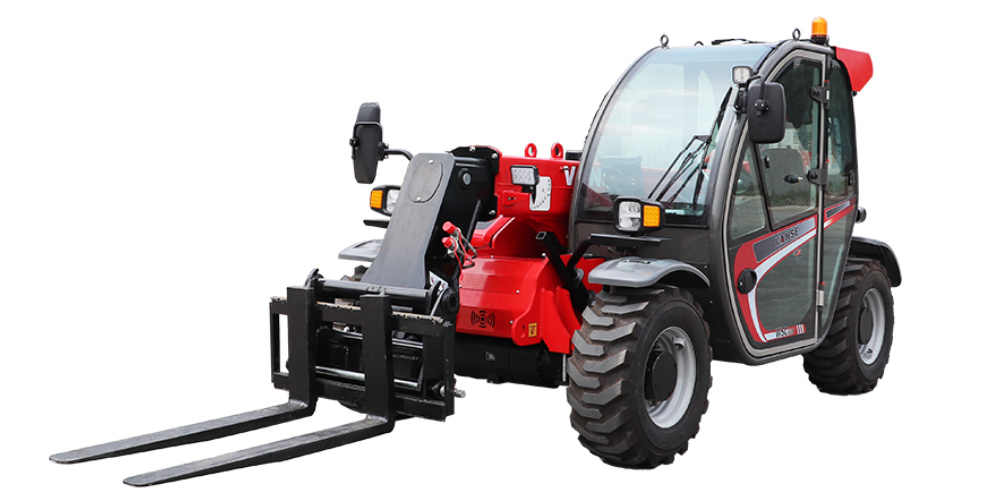
VANSE 625 6m Telescopic Handler
Designed for efficient material handling and stacking in warehouses, factories, and confined job sites, offering compact maneuverability and reliable performance.

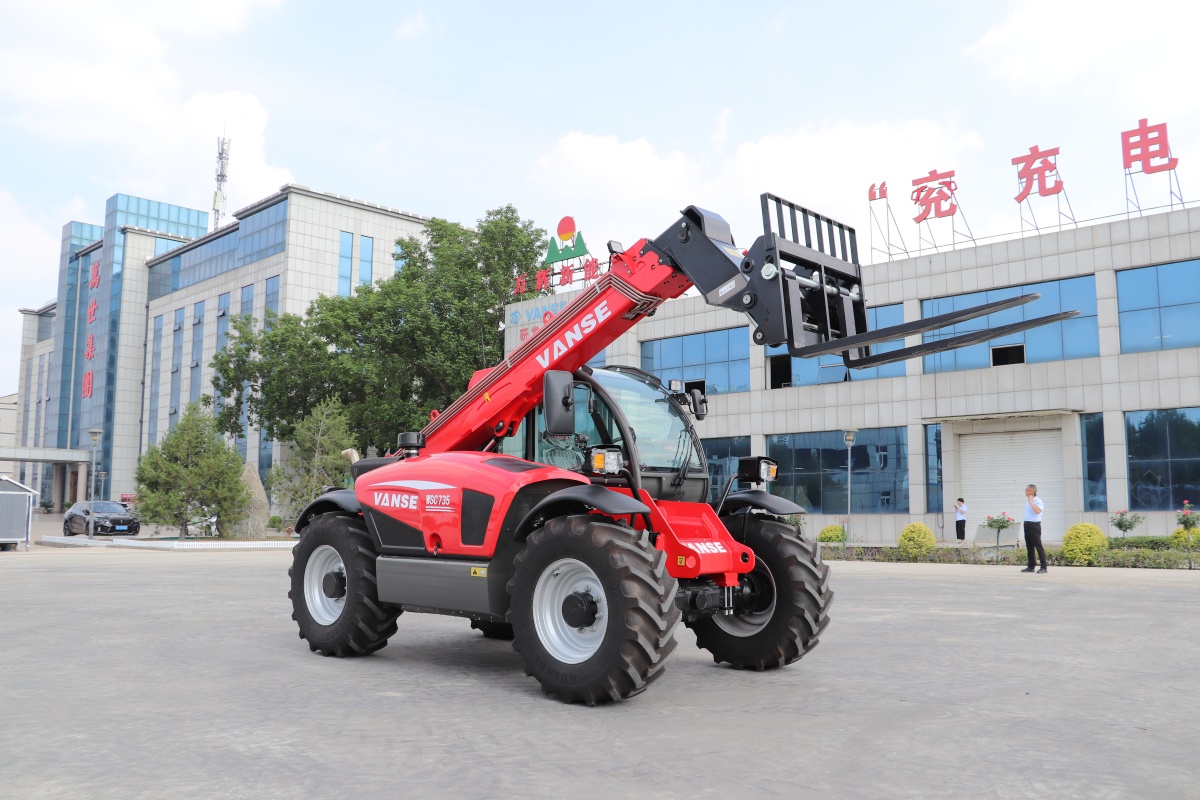
VANSE 735 7m Telescopic Handler
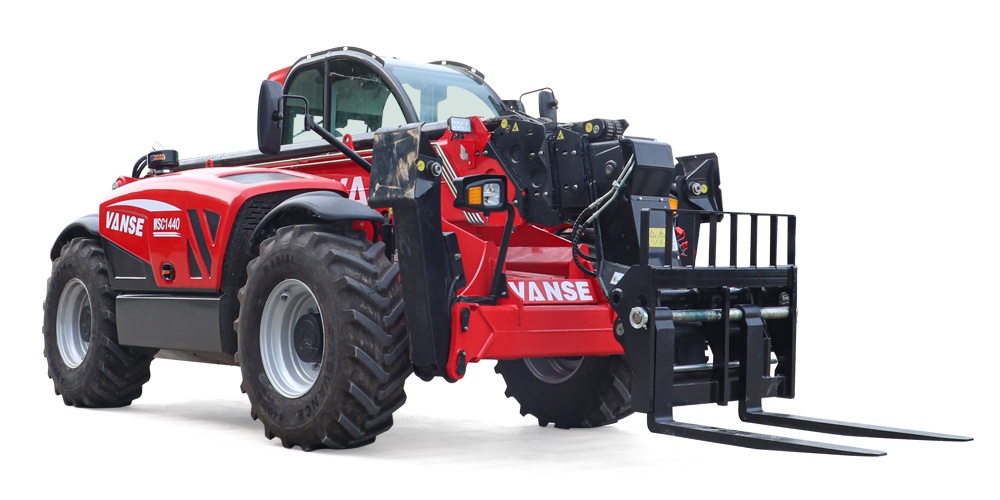
A balanced mid-duty solution for construction, agriculture, logistics, and warehousing, combining stable lifting, strong traction, and everyday versatility.


About the Author:
The VANSE team is a group of experienced professionals specializing in construction machinery research, manufacturing, and technical support. With deep industry knowledge and hands-on experience, our engineers and product specialists share practical insights on equipment selection, operation, maintenance, and industry trends.
Share
You May Also Interest
-

24 July, 2026
Telehandler for Landscaping: Outdoor Project Efficiency
Explore telehandler landscaping options in the United States, including suppliers, applications, costs, and buying advice for efficient outdoor projects.
-
23 July, 2026
6 Meter Telehandler: Ideal Mid-Rise Lift for All Sites
Explore 6 meter telehandler options in the United States, including top suppliers, key specs, applications, pricing factors, and buying tips for local buyers.
-
22 July, 2026
7 Meter Telehandler: Versatile Reach for Any Work Site
Find the right 7 meter telehandler for United States projects with supplier comparisons, use cases, pricing guidance, and local service insights.
-
21 July, 2026
Telehandler Operator Training: Certification Guide 2026
Telehandler operator training in the United States for 2026: certification steps, OSHA compliance, costs, providers, and practical buying guidance.