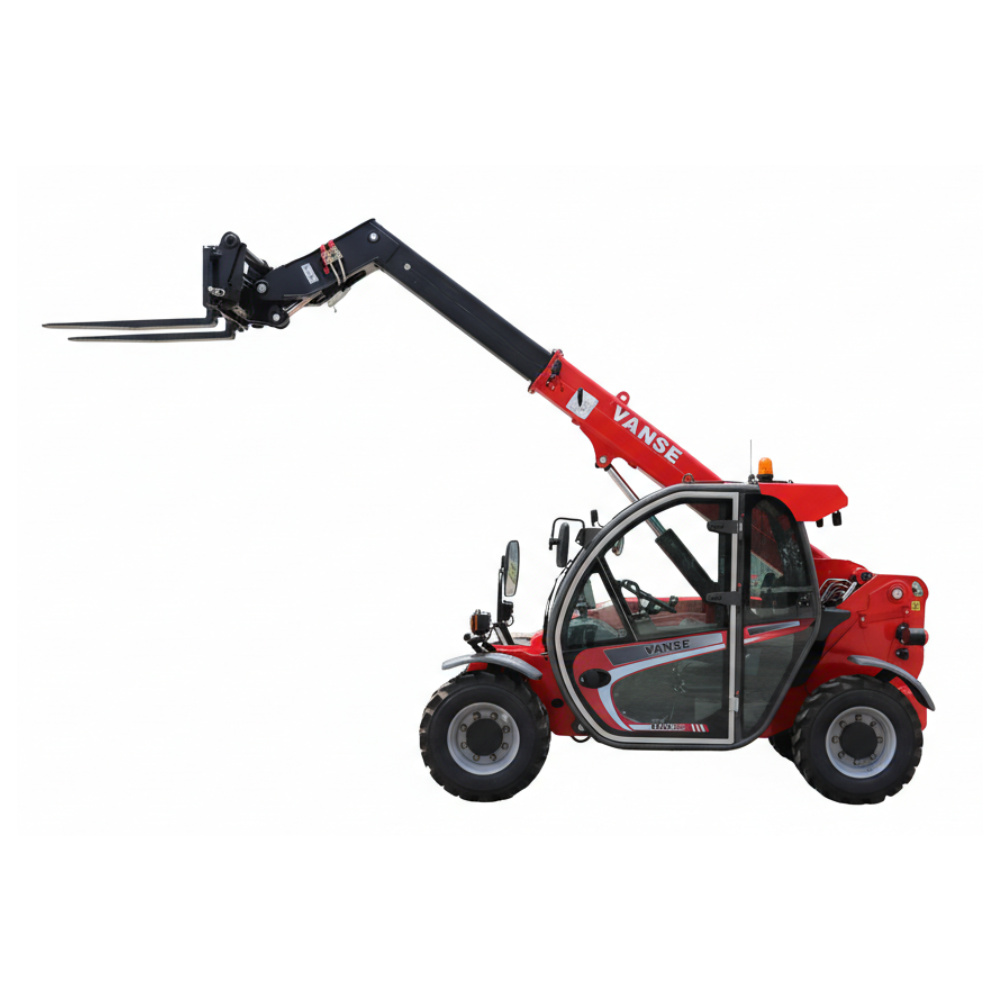
Telehandler Lift Capacity in the United States: Safe Load Limits, Ratings, and Buying Guidance
Quick Answer

Telehandler lift capacity in the United States usually ranges from about 5,000 lb for compact jobsite models to more than 26,000 lb for heavy-duty rotating or high-capacity machines. The correct safe load is never just the machine’s maximum rating on the brochure. It depends on lift height, forward reach, attachment type, ground conditions, tire setup, counterweight design, and whether the machine is operating on a frame-level or slope-compensated platform. For most U.S. buyers, a practical selection rule is to choose a telehandler with at least 15% to 25% more rated capacity than the heaviest routine load, then confirm the actual load chart for the exact lift height and reach used on site.
For fast decision-making, common U.S. buying categories are compact 5,000 to 6,000 lb units for residential and light commercial work, 8,000 to 10,000 lb units for general construction and rental fleets, 10,000 to 12,000 lb units for agriculture and masonry, and 12,000 lb-plus models for steel, precast, infrastructure, mining support, and oilfield logistics. Buyers in Houston, Dallas, Phoenix, Atlanta, Chicago, and the Inland Empire often prioritize parts support and transportability as much as maximum lifting force.
Well-known suppliers active in the U.S. market include JLG, Genie, JCB, Bobcat, SkyTrak, and Manitou, with each brand offering different strengths in boom reach, operator visibility, frame leveling, and rental fleet support. Qualified international suppliers can also be worth considering, especially Chinese manufacturers that combine recognized engines, compliant production standards, and strong pre-sale and after-sale support. When local inventory, parts access, and technician response are in place, these suppliers can offer a strong cost-performance advantage for contractors, dealers, rental companies, and end users.
Understanding Telehandler Lift Capacity

Telehandler lift capacity is the maximum weight a machine can safely raise under a defined operating condition. In the United States, buyers often focus on the headline rating, such as 6,000 lb or 10,000 lb, but this number only represents one point on the machine’s load chart. In real operation, a telehandler’s lifting ability changes as the boom extends and the load moves farther from the center of gravity. That is why a machine that can lift 10,000 lb near the ground may handle much less at maximum height or full forward reach.
The load chart is the most important document for determining safe capacity. It shows how much the machine can lift at specific combinations of boom angle, extension, and attachment. On U.S. jobsites, OSHA expectations, employer safety policies, and rental inspection practices all point back to these charts. A telehandler should never be treated like a fixed-capacity forklift, because telescopic geometry changes stability every time the boom moves.
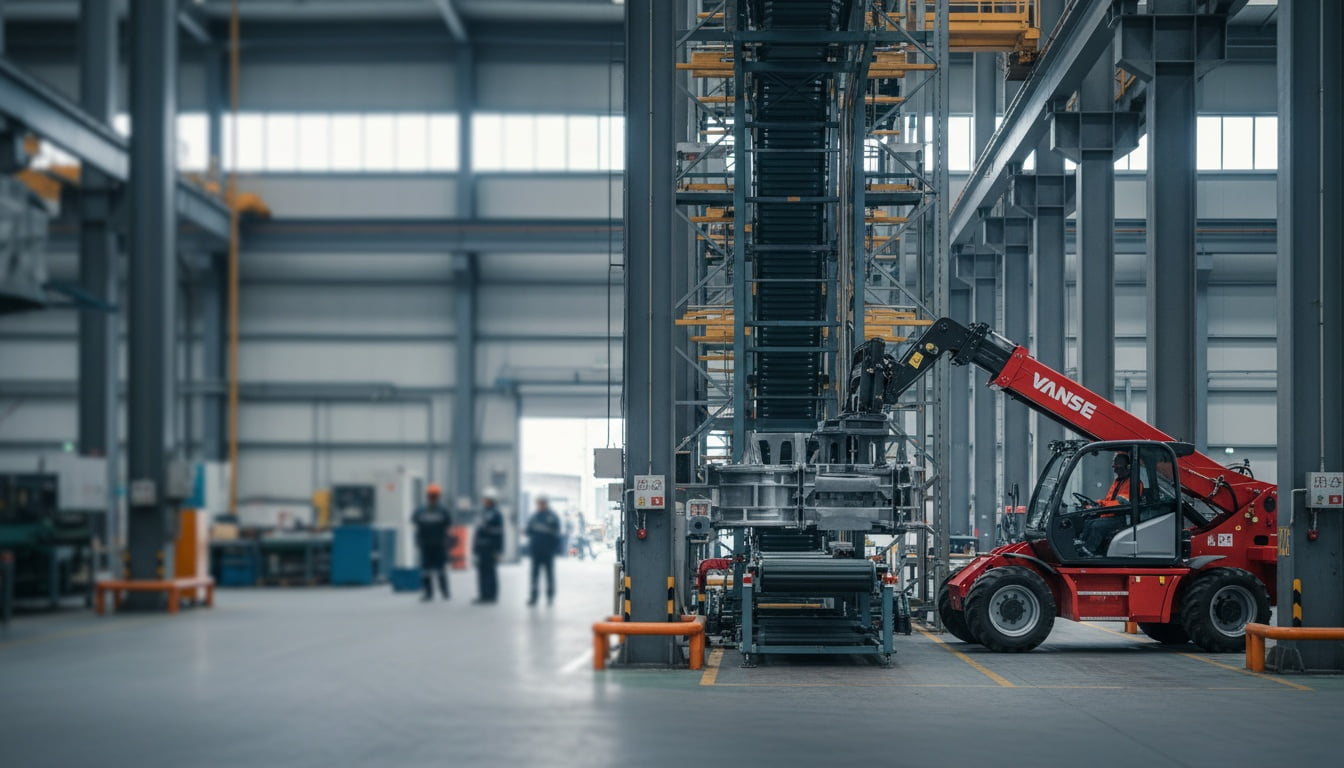
Capacity is also influenced by machine type. Fixed boom telehandlers are most common in American construction, agriculture, and industrial material handling. Rotating telehandlers offer more positioning flexibility, especially in dense urban projects in cities such as New York, Miami, and Seattle, but their capacity profiles differ and buyers must review charts carefully. High-capacity telehandlers for ports, infrastructure, energy, and mining can move large palletized materials, piping, precast elements, and bagged bulk goods, yet they demand stricter planning around outriggers, attachments, and ground bearing pressure.
In practical terms, the safest way to think about telehandler lift capacity is not “What is the biggest number?” but “What can this machine repeatedly and legally lift in my actual work cycle?” That distinction matters when moving brick packs in Dallas, trusses in Nashville, seed totes in Iowa, pipe in Midland, or palletized block in Southern California.
How the United States Market Uses Lift Capacity Ratings

The U.S. telehandler market is shaped by rental fleet economics, labor efficiency, and application diversity. Contractors often need one machine to unload trucks, place materials, support site logistics, and work across changing surfaces. As a result, the most popular capacity classes are those that balance versatility with transport convenience. In many regions, machines in the 6,000 to 10,000 lb range remain the backbone of the fleet because they can support framing, roofing, masonry, glazing, and general site supply duties without requiring the transport footprint of larger equipment.
Regional differences matter. In Texas and the Gulf Coast, oil and gas support yards, industrial plants, and broad construction sites often push buyers toward larger capacities and higher reach. In the Midwest, agriculture and manufacturing demand machines that handle feed, fertilizer, bulk bags, and industrial components with stable low-speed maneuvering. Along the East Coast, tighter urban sites increase interest in compact units and rotating telehandlers. In port-oriented trade hubs such as Savannah, Houston, Long Beach, and Newark, uptime and parts availability are often more important than initial purchase price alone.
Rental companies in the United States also influence what capacity classes dominate the market. A fleet manager usually wants machines that satisfy most customer needs while reducing overspecification. That is one reason 8,000 lb and 10,000 lb classes are so common. They cover many commercial applications while still fitting broad transportation and service models. End users with specialized workflows, however, often benefit from selecting a machine around their exact loading pattern instead of defaulting to the most common fleet size.
U.S. Market Growth and Capacity Demand
The market for telehandlers in the United States has been supported by steady investment in residential construction, warehouse expansion, road and bridge work, utility upgrades, energy infrastructure, and farm mechanization. As projects become more schedule-driven, the value of moving material quickly with fewer labor touches keeps growing. Machines with clear load chart displays, better operator aids, and easier maintenance access are becoming more competitive, especially when buyers compare total ownership cost instead of just purchase price.
The line chart shows a realistic upward market index trend. The strongest gains are tied to large construction programs, expansion in logistics hubs, and replacement demand from older fleets. For buyers, this means lead times, dealer support, and financing conditions can affect purchasing decisions almost as much as machine specifications.
Typical Telehandler Capacity Classes and Best Uses
The table below groups common U.S. telehandler classes by rated capacity and explains how they are usually deployed. This is not a substitute for load chart analysis, but it gives buyers a practical starting point.
| Rated Capacity Class | Typical Lift Range | Common U.S. Applications | Best Buyer Type | Strengths |
|---|---|---|---|---|
| 5,000 to 6,000 lb | 15 ft to 36 ft | Residential framing, landscaping supply, light roofing, compact sites | Small contractors, farms, rental branches | Easy transport, lower fuel use, maneuverable footprint |
| 6,000 to 8,000 lb | 36 ft to 44 ft | General commercial construction, palletized materials, siding, interior logistics | General contractors, rental fleets | Strong versatility and broad attachment support |
| 8,000 to 10,000 lb | 42 ft to 56 ft | Masonry, steel support, trusses, site unloading, industrial yards | Mid-size contractors, dealers, rental chains | Balanced power, reach, and fleet demand |
| 10,000 to 12,000 lb | 44 ft to 56 ft | Agriculture, block work, pipe yards, precast support | Large farms, infrastructure contractors | Higher daily productivity with heavier pallets |
| 12,000 to 15,000 lb | 44 ft to 70 ft | Steel erection support, bridge projects, heavy industrial work | Specialty contractors, plant operators | Handles dense loads and larger attachments |
| 15,000 lb and above | 50 ft to 100 ft+ | Mining support, oilfield logistics, ports, major infrastructure | Enterprise fleets, energy sector, specialized rental | Maximum material handling capability in demanding environments |
This table helps explain why there is no single “best” telehandler lift capacity. A roofing contractor in Tampa may gain more value from a light, transportable 6,000 lb machine than from a 12,000 lb model that costs more to buy and move. By contrast, a precast supplier near Houston or Kansas City may lose productivity every day if the machine is undersized.
What Reduces Safe Load in Real Operation
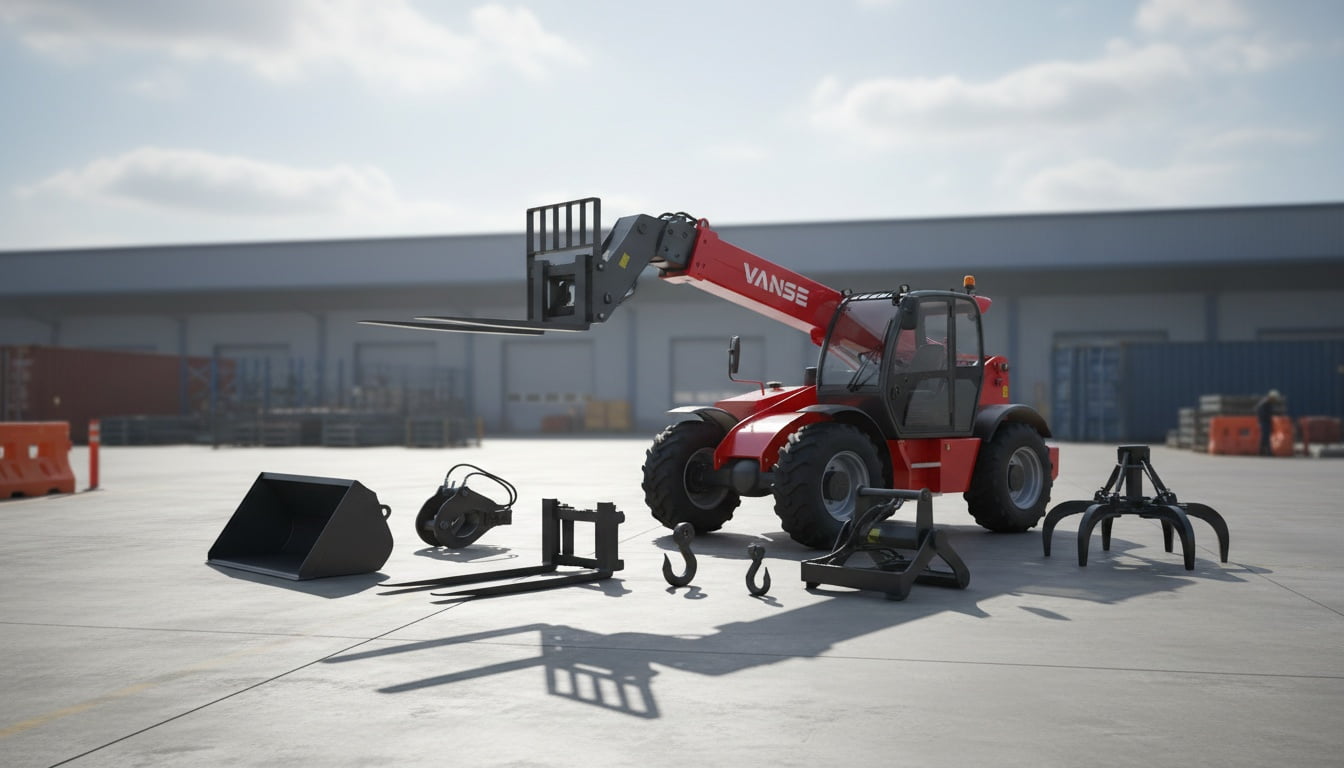
Several field conditions reduce usable capacity. The first is forward reach. Every inch of extra extension shifts the load away from the chassis and reduces stability. The second is attachment weight. A fork carriage, bucket, truss boom, pipe grapple, or work platform changes the effective load center and must be included in the calculation. The third is terrain. Soft ground, side slope, potholes, or uncompacted fill can make a load chart unusable even if the weight seems acceptable on paper.
Wind is another overlooked factor. On exposed jobsites in states such as Oklahoma, Colorado, and Wyoming, long suspended loads can behave unpredictably. Operators also need to consider dynamic movement. Stopping suddenly, turning while carrying, or raising the boom while the chassis is not level can create forces beyond static rating assumptions. That is why modern telehandlers often include load management systems, stability warnings, and boom position indicators.
For U.S. buyers, the main lesson is simple: rated capacity is only the entry point. Actual safe working load depends on how and where the machine is used. Training, planned travel paths, correct tires, and regular maintenance are all part of usable capacity.
Industry Demand by Sector in the United States
Different industries prioritize different capacity bands. The chart below shows a realistic comparison of demand by major sector. It reflects where telehandler buying and rental activity is strongest, not just where the machines can technically operate.
The chart shows why rental and construction shape the mainstream specification mix in the United States. Agriculture remains significant, especially in the Midwest and California’s Central Valley, but it often requires machine features that differ from urban jobsite fleets, such as specific tire choices, cab filtration, and attachment handling for bulk materials.
Product Types and Capacity Profiles
Telehandlers sold in the United States generally fall into a few product families. Compact fixed boom models are designed for access into smaller sites and easier transport. General construction fixed boom units provide balanced lifting and reach for daily jobsite use. High-capacity telehandlers are built for dense loads and larger attachments. Rotating telehandlers offer upper-structure rotation, allowing more precise placement in tight or multi-level sites. Agriculture-focused models may prioritize visibility, towing adaptability, and attachment flexibility for forks, buckets, and bale handling tools.
Each product type produces a different capacity curve. A compact machine may have an excellent ground-level lift relative to its size but a rapid reduction at extension. A larger construction machine may offer a more useful mid-range load chart for palletized materials at second- or third-story height. A rotating model may provide unmatched positioning efficiency but needs careful planning around stabilizer use and site setup. That is why product type and lift capacity must be evaluated together rather than separately.
| Product Type | Typical Capacity | Typical Reach | Primary U.S. Use Cases | Main Buying Consideration |
|---|---|---|---|---|
| Compact fixed boom | 5,000 to 6,000 lb | 19 ft to 36 ft | Residential construction, nurseries, urban service yards | Transport size and maneuverability |
| General construction fixed boom | 6,000 to 10,000 lb | 36 ft to 56 ft | Commercial building, roofing, masonry, rental | Versatility and fleet utilization |
| High-capacity fixed boom | 10,000 to 20,000 lb | 44 ft to 70 ft | Pipe yards, steel, infrastructure, industrial plants | Dense load handling and stability margin |
| Rotating telehandler | 8,000 to 17,000 lb | 60 ft to 100 ft+ | Urban construction, facade work, multi-trade sites | Placement precision and stabilizer planning |
| Agriculture telehandler | 6,000 to 12,000 lb | 20 ft to 44 ft | Feed handling, bale stacking, seed and fertilizer movement | Attachment flexibility and cab comfort |
| Heavy industrial specialty | 15,000 lb+ | 50 ft to 100 ft+ | Mining, energy, ports, heavy fabrication | Application-specific support and service response |
The table highlights how the same rated capacity may serve very different workflows depending on chassis design, boom geometry, and attachment support. Buyers should always match the machine to the work cycle, not just the spec sheet headline.
How to Choose the Right Capacity for Your Project
Start with the heaviest real load. Measure the actual pallet or component weight, including packaging and attachment weight. Then define the maximum height and furthest reach where that load must be placed. If materials are usually unloaded at ground level but occasionally placed on elevated decks, choose the machine based on the more demanding placement point, not the easiest one.
Next, review site conditions. A telehandler working in dry warehouse yards around Memphis faces different limits than one working on muddy utility corridors in Louisiana or sloped developments near Salt Lake City. Confirm whether frame leveling, outriggers, foam-filled tires, or rough-terrain axle design are needed. Check transport rules too. A machine that fits your load requirement may still create problems if it requires a larger trailer class, permits, or more expensive relocation between jobs.
Ownership model also matters. Rental companies often prefer broadly usable machines in the 6,000 to 10,000 lb range because utilization is easier to maintain. End users with repeat applications may save money by buying a machine tuned to their exact lift pattern. Dealers and distributors evaluating line additions should compare parts stocking complexity, operator familiarity, diagnostic access, and attachment compatibility.
Applications Across Major U.S. Industries
Construction remains the most visible telehandler market in the United States. Machines unload drywall, bundled lumber, trusses, block, rebar, glazing systems, and HVAC components. On masonry projects, lift capacity must support heavy cube loads at meaningful reach, which often pushes buyers into higher-capacity classes. In agriculture, telehandlers handle hay, feed, silage, bulk bags, fertilizer pallets, and seed totes. Their value comes from combining reach with off-road mobility and multi-attachment flexibility.
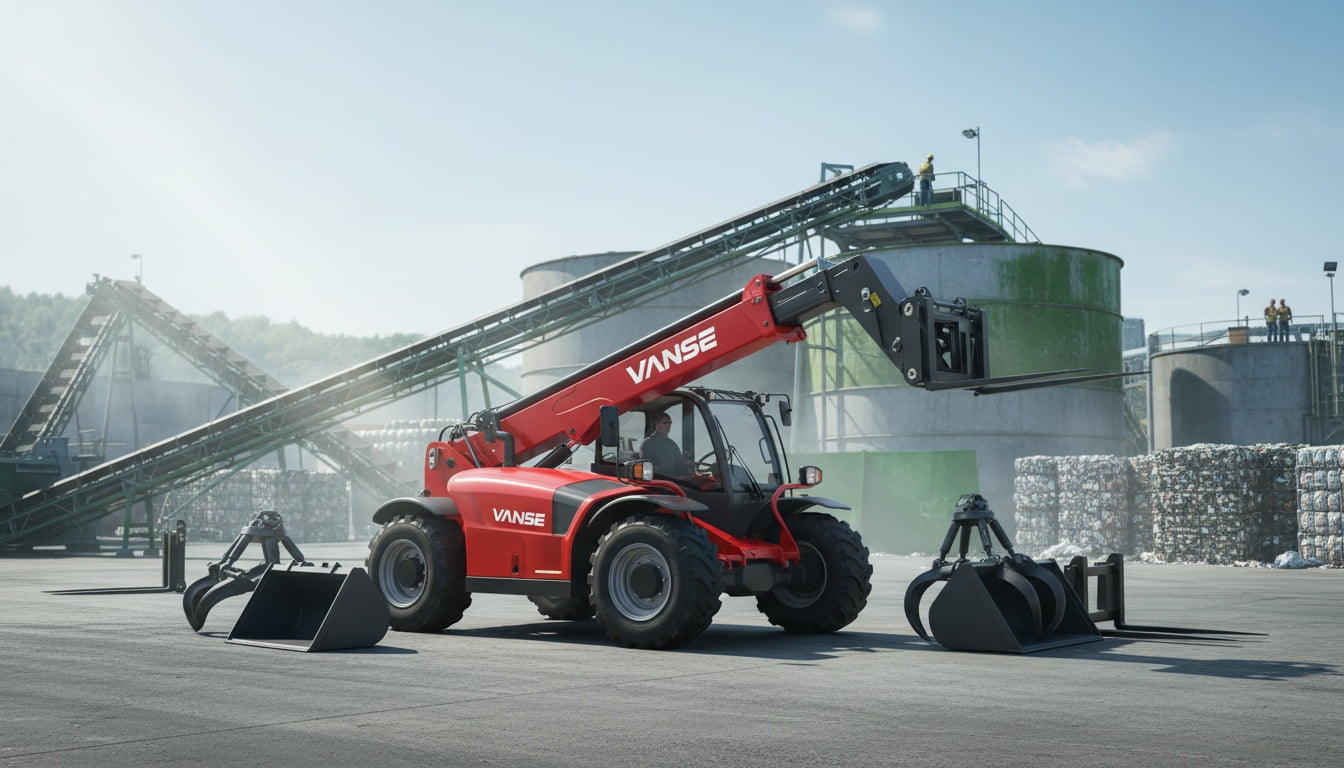
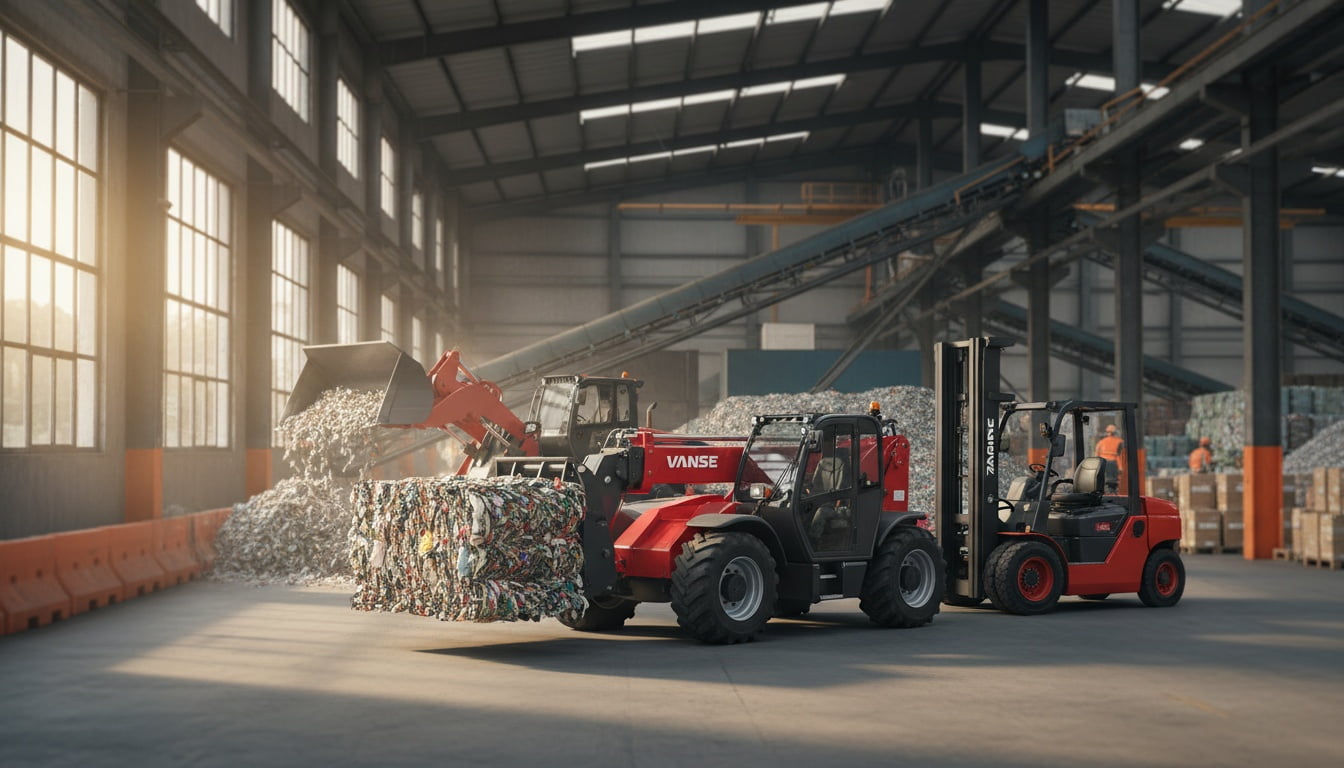
Industrial facilities use telehandlers for maintenance shutdowns, warehouse yard support, fabrication material handling, and plant construction. Energy-sector buyers often require machines for pipe, valves, power generation components, and containerized equipment. Mining support applications include parts handling, maintenance logistics, and service-yard loading. Environmental and municipal operations may use telehandlers for recycling, storm recovery, and infrastructure repair staging.
The strongest buying decisions are usually tied to one dominant application, with secondary tasks used as a tiebreaker. That is why a contractor in Charlotte focusing on roofing will judge capacity very differently from an industrial maintenance team in Beaumont or a dairy operator in Wisconsin.
Trend Shift Toward Smarter and More Efficient Machines
Capacity selection is increasingly influenced by digital monitoring, operator assistance, and sustainability expectations. Buyers are paying closer attention to uptime analytics, remote diagnostics, and fuel efficiency. In the next few years, machines that help operators stay inside the load chart with clearer in-cab guidance are likely to gain market share.
This area chart reflects a realistic shift in buyer priorities. As labor remains expensive and safety expectations rise, systems that improve predictable load handling are becoming more valuable than simple mechanical output alone.
Local Suppliers and Major Brands in the United States
The United States market includes established domestic and international telehandler suppliers with strong dealer networks. The table below gives practical, localized context for buyers comparing brands. Service coverage, attachment ecosystem, and parts support often matter as much as lifting performance.
| Company | Service Regions | Core Strengths | Key Offerings | Best Fit |
|---|---|---|---|---|
| JLG | Nationwide across major dealer and rental networks | Large installed base, broad parts access, strong construction focus | Fixed boom telehandlers across mainstream capacity classes | Contractors and rental fleets needing common support coverage |
| Genie | Strong presence in metropolitan and rental-heavy regions | Fleet familiarity, reliable dealer footprint, operator-friendly design | Construction telehandlers and material placement models | Rental companies and general commercial construction |
| JCB | Broad U.S. reach with strong agriculture and construction crossover | Versatility, brand recognition, mixed-sector application range | Agriculture and construction telehandlers, attachments | Mixed-use owners and farms |
| SkyTrak | Well known in North American jobsite and rental channels | Strong jobsite reputation, easy operator adoption | Fixed boom telehandlers for general construction | Building contractors and rental fleets |
| Bobcat | Good dealer access in construction and compact equipment markets | Compact equipment brand familiarity, growing telehandler visibility | Compact and mid-size telehandlers, attachment compatibility | Contractors already using compact equipment fleets |
| Manitou | Strong in agriculture, industrial, and rotating telehandler segments | Rotating expertise, broad application range, specialty handling | Fixed and rotating telehandlers, agriculture-focused models | Specialized placement work and farm operations |
This supplier table is useful because it connects brand presence with real buying logic. A company with excellent technical specifications may still be the wrong fit if local parts lead times are weak in markets such as Denver, Orlando, or Sacramento. Conversely, a supplier with slightly lower headline specs may generate better total value through faster technician response and stronger resale support.
Supplier and Product Comparison Snapshot
The chart below provides a practical comparison index based on four buying factors: service reach, capacity coverage, attachment ecosystem, and cost-performance. It is not a lab test; it is a realistic market comparison tool for screening options before deeper technical review.
This comparison helps buyers see where newer or expanding suppliers can fit into the market. For example, a company may not yet match the nationwide installed base of legacy brands but can still be attractive if it offers recognized components, competitive pricing, and credible local support development.
Case Studies From Common U.S. Workflows
Consider a masonry contractor in Phoenix placing cube loads on mid-rise developments. A nominal 8,000 lb machine may look sufficient, but if the pallets must be placed at extended reach over perimeter setbacks, the available chart capacity may fall below the real need. In that case, stepping to a 10,000 lb or 12,000 lb class can prevent delays and reduce risky workarounds.
Now consider a roofing contractor in Atlanta moving bundled materials across suburban commercial sites. A 6,000 lb or 8,000 lb machine often gives the right balance of payload, transport efficiency, and acquisition cost. Choosing a 12,000 lb machine may add expense without improving daily throughput if the jobs rarely use the extra chart capacity.
In the Central Valley of California, an agricultural operator may need a telehandler that handles seed pallets in spring, bulk bags in summer, and bale work after harvest. Here, attachment support, cab comfort, hydraulic response, and service access may matter just as much as maximum lift rating. A buyer in this position should compare the real operating cycle over a full year rather than selecting the highest number on paper.
At an industrial plant near Houston, maintenance crews may need a machine that supports shutdown periods with pipe, valves, skids, and maintenance platforms. In that environment, the safest choice is often a model with more reserve capacity than the average daily load requires, because plant layouts, clearances, and attachment changes reduce effective capacity in practice.
Buying Advice for U.S. Contractors, Rental Fleets, and Dealers
Before buying, ask for the load chart, not just the spec brochure. Confirm whether the rating is with forks, what attachment weights are approved, and what capacities remain at the actual lift heights and reaches used on your sites. Review service intervals and parts availability for wear items such as hoses, filters, tires, boom pads, and sensors. If the machine will be used in a mixed fleet, operator familiarity and training support can make a measurable difference in utilization and incident prevention.
For rental fleets, standardization matters. Common capacity classes reduce technician training complexity and speed up branch-to-branch fleet sharing. For end users, application fit usually matters more than brand familiarity. For distributors and dealers, margin is only one part of the picture. Long-term success depends on vendor responsiveness, parts support, training, and whether the line fills a genuine gap in local demand.
Financing and lead time should also be considered. A slightly cheaper machine can become expensive if it sits waiting for parts or arrives too late for the season. In trade hubs such as Los Angeles, Savannah, and Houston, import timing, inland freight, and local stocking strategy can materially affect total acquisition cost.
Our Company in the United States Market
As a telehandler-focused manufacturer serving customers across more than 40 countries, VANSE Group has built its position on evidence that matters to U.S. buyers: CE and ISO 9001 certified manufacturing systems, production output exceeding 8,000 units, modern testing stations, and full load testing, safety inspection, and performance validation before shipment. VANSE telehandlers are engineered around globally recognized core components such as Perkins and Cummins engines together with premium hydraulic systems, transmissions, and axles, which gives contractors, rental fleets, dealers, and enterprise users confidence that the machine is built to international benchmarks rather than low-spec export assumptions. The company supports multiple cooperation models, including OEM, ODM, wholesale supply, regional distribution, dealer partnerships, direct sales to end users, and tailored configurations for brand owners or specialized fleet operators looking for custom colors, specifications, and attachments. For the U.S. market, this is reinforced by an active expansion strategy that includes a U.S.-based subsidiary, local inventory planning, stronger after-sales capability, and online plus on-site support designed to protect buyers throughout the machine lifecycle. That combination of export experience, manufacturing scale, component transparency, and local service investment shows that VANSE is positioned as a long-term operating partner in America rather than a remote exporter. Buyers looking for telehandlers, attachments, or broader machine options can review the current equipment range, explore lifecycle support services, or contact the team for project-specific recommendations through the main company website.
How VANSE Fits Different Buyer Types
For dealers and distributors in the United States, the main appeal lies in line extension and price positioning. A supplier that uses globally trusted powertrain brands while maintaining a competitive factory-direct structure can help local partners cover price-sensitive market segments without moving too far downmarket in specification. For rental companies, the key questions are parts supply, operator simplicity, and machine durability across multiple users. For contractors and direct end users, the focus is usually on practical output, support response, and whether the machine’s load chart fits the actual job cycle.
VANSE is especially relevant where buyers want a cost-performance alternative to established European or American brands but still expect evidence of manufacturing discipline and serious market commitment. In local terms, that makes sense in price-competitive metro areas such as Dallas-Fort Worth, Houston, Miami, and Southern California, where fleet owners often balance utilization, financing, and resale risk very carefully.
Detailed Supplier Screening Table
The next table helps buyers compare supplier evaluation factors in a more operational way. It is designed for contractors, rental companies, and dealers who want a practical shortlist rather than marketing language.
| Supplier | Service Region Focus | Capacity Coverage | Support Model | Notable Advantage |
|---|---|---|---|---|
| JLG | Nationwide, especially strong in commercial construction markets | Mainstream to heavy-duty fixed boom classes | Dealer and rental network support | Large installed base and familiar service structure |
| Genie | Strong in major metro and rental-intensive regions | Mainstream construction capacities | Dealer-led service and rental channel depth | High fleet familiarity |
| JCB | Construction and agriculture across many states | Broad mid-range and farm-relevant classes | Mixed dealer support with strong multi-sector presence | Cross-over use between farm and jobsite |
| SkyTrak | North America-focused construction presence | Popular building and material placement classes | Construction-oriented service ecosystem | Strong jobsite reputation |
| Manitou | Urban, agriculture, and specialty lifting regions | Fixed and rotating segments | Dealer support with specialty machine experience | Rotation and specialty placement flexibility |
| VANSE | Expanding U.S. footprint with local service commitment | Telehandler-focused product line with customizable configurations | OEM, ODM, direct supply, distributor and dealer cooperation | Competitive cost-performance with recognized core components |
This table matters because supplier choice should align with business model. A national rental chain may prioritize installed base and branch interoperability, while a regional dealer may look for a brand that offers better market spacing, customization, and pricing flexibility. A direct buyer may care most about whether local inventory and support commitments are real and documented.
2026 Trends in Telehandler Lift Capacity and Safety
By 2026, the U.S. telehandler market is likely to keep moving toward smarter load management, lower-emission powertrains, and more transparent compliance support. Diesel machines will remain dominant in high-capacity classes, but electric and hybrid development will gain attention in lower and mid-range models for indoor, municipal, and sustainability-driven projects. Buyers in California and other policy-sensitive states may increasingly compare emissions impact and fleet reporting benefits alongside lifting performance.
Policy trends will also matter. Jobsite safety expectations are unlikely to loosen, and documentation around operator training, maintenance records, and approved attachments will become more important. Telematics and remote diagnostics will help fleet managers verify usage patterns, idle time, and overload risks. Sustainability will show up not only through electrification but also through longer service intervals, recyclable materials, fuel savings, and machine designs that reduce unplanned downtime.
For manufacturers, the future competitive edge will come from combining clear load handling intelligence with practical serviceability. For buyers, the winning machine will be the one that delivers repeatable safe capacity under real operating conditions, not just the largest number in the catalog.
FAQ
What does telehandler lift capacity actually mean?
It means the maximum weight a telehandler can safely raise under specified conditions. It is not a universal number for every boom position. Actual safe load changes with lift height, reach, and attachment.
Is a 10,000 lb telehandler always able to lift 10,000 lb?
No. It may lift 10,000 lb only in a specific position, usually with the boom retracted and the load close to the machine. At higher reach or height, the safe load is usually lower.
How much extra capacity should I build into my purchase decision?
A common practical approach is to choose at least 15% to 25% more rated capacity than your heaviest routine load, then verify the load chart for actual working height and reach.
Are attachments included in lift capacity calculations?
Yes. Fork carriages, buckets, hooks, truss booms, and work platforms all affect usable capacity. The attachment weight and load center must be included when reviewing the chart.
Which capacity class is most common in the United States?
The 6,000 lb to 10,000 lb range is very common because it fits many commercial construction and rental applications while remaining relatively versatile and transportable.
Do agriculture users need different telehandler capacity planning?
Often yes. Agriculture buyers may prioritize repetitive handling of bulk bags, bales, feed, and pallets, so attachment choice, cab comfort, and seasonal durability can be as important as maximum rated lift.
Can international suppliers compete in the U.S. telehandler market?
Yes, when they provide recognized components, documented manufacturing standards, real support infrastructure, and local inventory or service commitment. Cost-performance can be attractive when these conditions are met.
What should I ask a supplier before buying?
Ask for the full load chart, approved attachment list, service interval schedule, parts stocking plan, warranty terms, technician coverage, and expected lead time for delivery and support.
Complete Telescopic Handler Equipment Portfolio
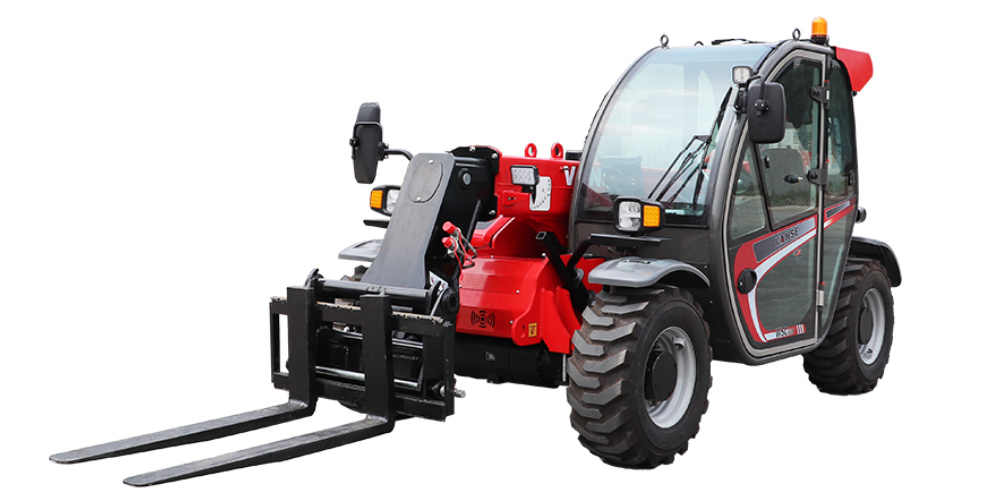
VANSE 625 6m Telescopic Handler
Designed for efficient material handling and stacking in warehouses, factories, and confined job sites, offering compact maneuverability and reliable performance.

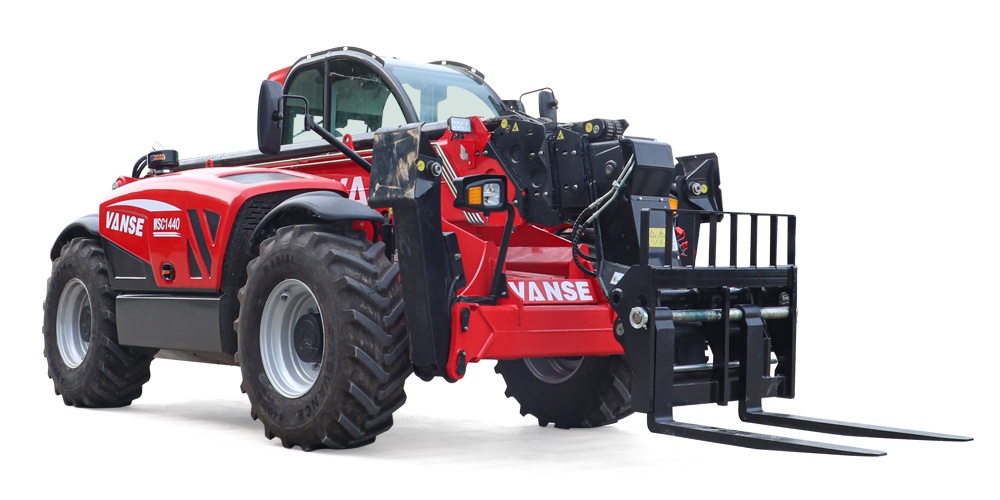
VANSE 735 7m Telescopic Handler
A balanced mid-duty solution for construction, agriculture, logistics, and warehousing, combining stable lifting, strong traction, and everyday versatility.


About the Author:
The VANSE team is a group of experienced professionals specializing in construction machinery research, manufacturing, and technical support. With deep industry knowledge and hands-on experience, our engineers and product specialists share practical insights on equipment selection, operation, maintenance, and industry trends.
Share
You May Also Interest
-

22 October, 2026
Telehandler for Grain Handling on Large Modern Farm Sites
Explore telehandler grain handling options in the United States, including suppliers, specs, farm uses, and cost-saving buying advice for grain operations.
-
21 October, 2026
Telehandler vs All Terrain Forklift: Which Lifts Better
Telehandler vs all terrain forklift in the United States: compare reach, lifting, terrain use, costs, and supplier options for smarter equipment buying.
-
20 October, 2026
10 Ton Telehandler: Extreme Lifting for Major Industrial
Explore 10-ton telehandler options in the United States, top suppliers, buying tips, applications, and service support for major lifting projects.
-
19 October, 2026
Telehandler for Demolition: Safe Structural Dismantling
Explore telehandler demolition options in the United States, including suppliers, attachments, safety, market trends, and cost-effective sourcing advice.