How to Read a Telehandler Load Chart in the United States
Quick Answer

A telehandler load chart is the machine’s safety map. It shows how much weight a telehandler can lift at specific boom angles, lift heights, and forward reach distances. In the United States, the safe lift rating always drops as the boom extends farther out or higher up. The correct way to use a load chart is to match the planned load, attachment, lift height, and horizontal reach to the exact configuration shown by the manufacturer before every lift.
If you need a practical buying benchmark in the U.S. market, strong reference brands include JLG, Genie, JCB, SkyTrak, Caterpillar, and Bobcat because their charts, operator support, and dealer networks are widely used on construction, agriculture, industrial, and rental jobs. Qualified international suppliers can also be worth evaluating when they provide recognized certifications, dependable component brands, and real pre-sales and after-sales support in the U.S. market, especially when cost-performance matters.
- Read the exact model-specific chart, not a generic telehandler rating.
- Account for attachment weight, pallet dimensions, and load center before lifting.
- Compare lift capacity at maximum reach, not only the headline maximum capacity.
- For U.S. jobsites, confirm OSHA-safe operation practices and operator training.
- When buying, prioritize local parts support, dealer response time, and chart clarity.
Why the Telehandler Load Chart Matters in the United States

In the United States, telehandlers are used daily on commercial construction sites in Houston, Dallas, Atlanta, Phoenix, Chicago, Los Angeles, and New York, as well as on farms across Iowa, Nebraska, Kansas, and California. Whether a contractor is unloading trusses near the Port of Houston, moving bagged material in a Chicago warehouse district, or placing pallets on a housing site outside Orlando, the load chart determines what the machine can safely do in that exact moment. It is not a marketing brochure figure. It is the limit that protects the operator, nearby workers, structures, and material.
The reason this matters is simple: telehandlers do not keep the same lifting ability in every position. A machine may be rated at 10,000 lb, but that full capacity often applies only when the boom is retracted and the load is close to the front axle. If the operator extends the boom to place material on a third-floor deck or pushes farther out to clear an obstacle, the usable capacity may fall sharply. That is why a telehandler load chart is one of the most important documents in the cab and in the buying process.
For U.S. fleet buyers and end users, reading load charts correctly also improves equipment selection. Many buyers compare only maximum lift height and maximum capacity, yet two telehandlers with similar headline ratings can perform very differently at 20 feet of forward reach. For rental companies and contractors, that difference affects utilization, safety margins, and the kinds of jobs the machine can actually complete profitably.
How a Telehandler Load Chart Works

A telehandler load chart usually plots safe lifting capacity against boom angle, lift height, or forward reach. The exact format varies by brand and machine class, but the principle is consistent: as lift height rises or forward reach increases, allowable load normally decreases. Charts also change depending on whether the machine uses forks, a bucket, a truss boom, a work platform, or another approved attachment.
The operator should first confirm the machine model and attachment. Next, identify the load weight including the pallet, rigging, or attachment interface. Then determine where the load must be placed. If the job requires lifting a 5,500 lb pallet to a roof edge 28 feet high and 14 feet in front of the machine, the operator must find that zone on the chart and confirm the machine remains within the approved limit. If the machine is on a slope, unstable ground, or in a configuration not covered by the rating chart, the lift may not be acceptable even if the basic numbers look close.
The load chart also helps explain why stabilizer-equipped rotational or heavy-reach telehandlers often have multiple charts. One chart may apply with outriggers deployed on firm level ground, and another may apply when operating on tires only. U.S. buyers working in dense urban jobsites or industrial shutdown projects should pay close attention to these differences because they directly affect usable site performance.
Main Elements You Will See on a Load Chart
Although layouts differ, most telehandler load charts in the United States include the same core information. Reading these elements correctly reduces mistakes during both machine selection and daily operation.
| Load Chart Element | What It Means | Why It Matters on U.S. Jobsites | Common Mistake |
|---|---|---|---|
| Maximum lift capacity | The highest rated load in the most favorable position | Useful for baseline comparison when buying | Assuming it applies at full reach |
| Maximum lift height | The highest vertical placement point | Important for multistory framing and roofing work | Ignoring reduced capacity at that height |
| Maximum forward reach | The farthest horizontal extension point | Critical when placing loads over obstacles or foundations | Not checking capacity at full reach |
| Attachment-specific rating | Capacity based on forks, bucket, jib, or other approved tools | Essential for rental fleets with mixed attachment use | Using fork chart for a different attachment |
| Load center | Distance from fork face to the load’s center of gravity | Changes real capacity when handling long or uneven loads | Estimating load center incorrectly |
| Stabilizer or frame position | Whether the machine is rated on tires or outriggers | Very important for rotating telehandlers and specialty lifts | Using the wrong operating mode |
| Operating envelope | The range where the boom can safely work | Helps plan lift paths in tight sites | Focusing only on one point, not full movement |
This table matters because many accidents come from confusion between maximum advertised capacity and actual capacity at the placement point. For buyers in the United States, comparing these chart elements line by line is often more useful than comparing brochure headlines.
Telehandler Market Context in the United States
The U.S. telehandler market stays active because it serves several sectors at once: general construction, commercial building, infrastructure, agriculture, aggregates, manufacturing, logistics, and energy. States with strong warehouse construction, suburban development, and agricultural output continue to support demand. Equipment movement also flows through major trade hubs such as the Ports of Los Angeles and Long Beach, the Port of Savannah, the Port of Houston, and inland distribution corridors around Dallas-Fort Worth, Memphis, and Columbus.
Rental companies remain a major channel because many contractors prefer access over ownership for shorter projects. At the same time, large farms, precast yards, industrial plants, and material-handling operations often buy telehandlers directly because they need regular daily use and application-specific attachments. In both channels, load chart transparency is a practical selection factor. Machines with clearer rated load information tend to be easier to train on, easier to rent, and easier to manage across mixed operator experience levels.
The line chart illustrates a realistic growth pattern for the U.S. telehandler market, reflecting sustained demand from construction, rental, and agricultural operators. Growth is not perfectly even, but the long-term direction remains positive as labor-saving lifting equipment becomes more central to site productivity and safety planning.
Common Telehandler Types and Their Chart Differences
Not every telehandler uses the same style of load chart because not every machine serves the same application. Compact units for interior or low-clearance work tend to emphasize maneuverability. Mid-size construction telehandlers focus on palletized material movement. High-capacity and high-reach models are used where placement distance matters more than compactness. Rotating telehandlers add 360-degree versatility but often rely on multiple stability charts.
| Telehandler Type | Typical U.S. Use | Typical Capacity Range | Chart Characteristics |
|---|---|---|---|
| Compact telehandler | Tight urban sites, landscaping, barns, industrial yards | 5,000 to 6,600 lb | Simpler chart, shorter reach, easier maneuvering focus |
| Mid-size construction telehandler | General contractors, framing, masonry, roofing | 6,000 to 10,000 lb | Balanced height-reach-capacity chart for daily site work |
| High-reach telehandler | Multistory builds, industrial maintenance, precast work | 8,000 to 12,000 lb | Capacity falls faster at long reach; reach data is crucial |
| Heavy-lift telehandler | Oil and gas, ports, mining support, large industrial plants | 12,000 lb and above | High close-in rating with strict reach limits |
| Rotating telehandler | Dense sites, facade work, utility and maintenance projects | 7,000 to 13,000 lb | Multiple charts for stabilizers, turret position, and attachments |
| Agricultural telehandler | Dairy, feed, grain, bale, manure, and general farm handling | 5,500 to 9,000 lb | Often optimized for repeated loading cycles and mixed attachments |
This product-type comparison helps buyers see why one load chart may be easier to use for repetitive farm loading while another is more suitable for vertical placement on construction projects. The best model is the one whose chart matches the real lift profile of the work, not just the highest brochure number.
How Buyers Should Compare Load Charts Before Purchasing
U.S. buyers should start by listing their real operating points. For example, if a masonry contractor in Charlotte usually places pallets 24 feet high and 12 feet out, those numbers should guide machine selection. If a roofing supplier in Denver needs to unload and place trusses at longer reach, maximum forward placement becomes more important than a high close-in rating. If a hay operation in Nebraska mostly loads feed or stacked bales, visibility, hydraulic speed, attachment compatibility, and mid-range capacity may matter more than extreme height.
One of the smartest ways to compare machines is to review at least four job scenarios and check the chart point for each. Buyers should also include the attachment weight, because a heavier carriage or specialty jib can materially reduce net capacity. Another useful step is to ask suppliers for the chart in advance and confirm whether the machine uses a full rated load management system, load moment indicator, or operating envelope limiter.
| Buying Checkpoint | What to Verify | Why It Affects Ownership Cost | Best Fit Buyer Type |
|---|---|---|---|
| Capacity at actual reach | Can it lift your real load at your real placement distance? | Avoids buying a machine that looks stronger than it is | Contractors, distributors, rental fleets |
| Attachment deduction | How much weight is lost when using bucket, jib, or platform? | Prevents underperformance in mixed-use fleets | Rental fleets, industrial users |
| Dealer and parts coverage | Where are parts stocked and how fast is field service? | Reduces downtime during project-critical periods | All buyer groups |
| Operator interface | Is the chart easy to read in the cab and in manuals? | Lowers training time and misuse risk | Rental fleets, farms, contractors |
| Ground and stability controls | Does the machine offer stabilizers, frame leveling, or alarms? | Improves safe use in varied site conditions | High-reach and specialty users |
| Resale and support reputation | How strong is market acceptance in your region? | Protects long-term asset value | Fleet owners, dealers |
This table works as a practical purchasing checklist. It shows that the load chart should be evaluated together with support infrastructure, attachment policy, and the actual work profile. That combination gives a more accurate ownership picture than capacity alone.
Industries That Depend on Accurate Telehandler Lift Ratings
Telehandler load charts are especially important in industries where loads are repetitive but site conditions change. Construction crews may move drywall packs one day and roof trusses the next. Agricultural users may switch from feed handling to bale stacking or manure loading. Industrial sites may need to lift motors, piping, containers, or maintenance materials within narrow access zones. The chart gives the operator a structured limit in all these environments.
The bar chart shows how telehandler demand is spread across major U.S. sectors. Construction remains the largest driver, but agriculture and rental fleets also account for a substantial share. That mix explains why both rugged site capability and easy operator understanding are so valuable in the American market.
Typical Applications Where the Load Chart Changes the Decision
On a real jobsite, the chart often decides whether a machine can complete the task or whether the fleet needs a different size. If a contractor in Tampa needs to place HVAC material over an existing wall, forward reach may be the limiting factor. If a precast yard near St. Louis handles dense heavy components, close-in capacity and machine stability become more important. If a dairy in Wisconsin uses a telehandler for feed loading in confined spaces, visibility and repetitive-cycle comfort may outweigh extreme lift height.
Applications where chart accuracy matters most include pallet placement on upper floors, framing material distribution, truss handling, unloading flatbeds from one side, placing pipe bundles, lifting seed and fertilizer bulk bags, loading silage or feed, and moving industrial equipment around maintenance shutdowns. In each case, the job requires a combination of weight, height, and horizontal placement. A strong machine on paper can still be the wrong fit if its working envelope does not align with these three dimensions.
Case-Based Examples from the U.S. Market
Consider a rental yard in the Dallas-Fort Worth area serving concrete, framing, and roofing contractors. The fleet manager may prefer mid-size 8,000 to 10,000 lb telehandlers because they cover the broadest range of everyday placements. The deciding factor is not just the top rating but how much load remains available at common roofline reaches.
Now consider a citrus and nut operation in California’s Central Valley. The owner may choose a machine with moderate lift height but strong hydraulic responsiveness and dependable attachment support because the tasks include daily loading, stacking, and movement in varied yard conditions. In that context, chart simplicity and service access can be more valuable than a complex high-reach machine.
A third example would be industrial maintenance near the Gulf Coast, where plants require material handling during shutdown windows. Here, a telehandler with stabilizers or specialty attachments may be useful, but only if the chart clearly defines safe lifting with those exact attachments. A misunderstood rating can delay an outage schedule or create significant site risk.
Local Suppliers and Major Brands in the United States
Below is a practical supplier comparison for the U.S. market. These are real brands commonly considered by contractors, agricultural users, and fleet managers. Service coverage can vary by dealer territory, so buyers should confirm local branch strength in their own state.
| Company | Primary Service Regions | Core Strengths | Key Offerings |
|---|---|---|---|
| JLG | Nationwide through broad dealer and rental channels | Strong construction focus, well-known operator support, fleet familiarity | Construction telehandlers, high-capacity models, attachment options |
| Genie | United States and Canada through established distribution | High rental market visibility, easy fleet integration, broad access equipment portfolio | Telehandlers for commercial jobsites and rental applications |
| JCB | Strong presence in the South, Midwest, and expanding national coverage | Construction and agriculture crossover, recognized brand identity | Agri and construction telehandlers, multiple size classes |
| SkyTrak | Widely known across North American construction fleets | Simple jobsite familiarity, common in contractor and rental use | Standard construction telehandlers and support parts network |
| Caterpillar | Supported through major dealer territories across the U.S. | Dealer depth, heavy equipment customer base, large account support | Material handling machines backed by broad service structure |
| Bobcat | Nationwide dealer coverage with strong compact equipment penetration | Brand recognition among owner-operators and mixed fleets | Compact and mid-size telehandlers for varied applications |
| Manitou | Good reach in agriculture and construction markets | Material handling specialization and rotating telehandler expertise | Fixed and rotating telehandlers, ag-focused options |
This supplier table is useful because it translates the market into a shortlist buyers can actually act on. Instead of vague statements, it identifies where each brand tends to fit best and what kind of support profile a buyer should investigate locally.
How to Evaluate Supplier Support Beyond the Machine
In the United States, supplier quality is often measured by what happens after delivery. A telehandler that is competitively priced but lacks fast parts support can become expensive during peak season. Buyers should ask where major components are stocked, whether field service technicians can travel to their county, how long common wear parts take to ship, and whether operators receive chart training or handover guidance.
This is also where local physical presence matters. For example, a contractor near Savannah or a distributor in New Jersey may prioritize suppliers who can support East Coast lead times. Buyers near Houston may care about Gulf access and spare parts movement. Midwest farm operators may prefer suppliers with regional service routes and practical maintenance support during harvest or feed cycles. The best supplier is not only the one with a good telehandler load chart, but the one that can keep that machine working when schedule pressure rises.
The area chart highlights an important market change: more buyers are shifting toward telehandlers with smart load management, telematics, and digital diagnostics. This trend affects both safety and ownership efficiency, especially in rental and multi-site fleet operations.
Our Company in the U.S. Telehandler Market
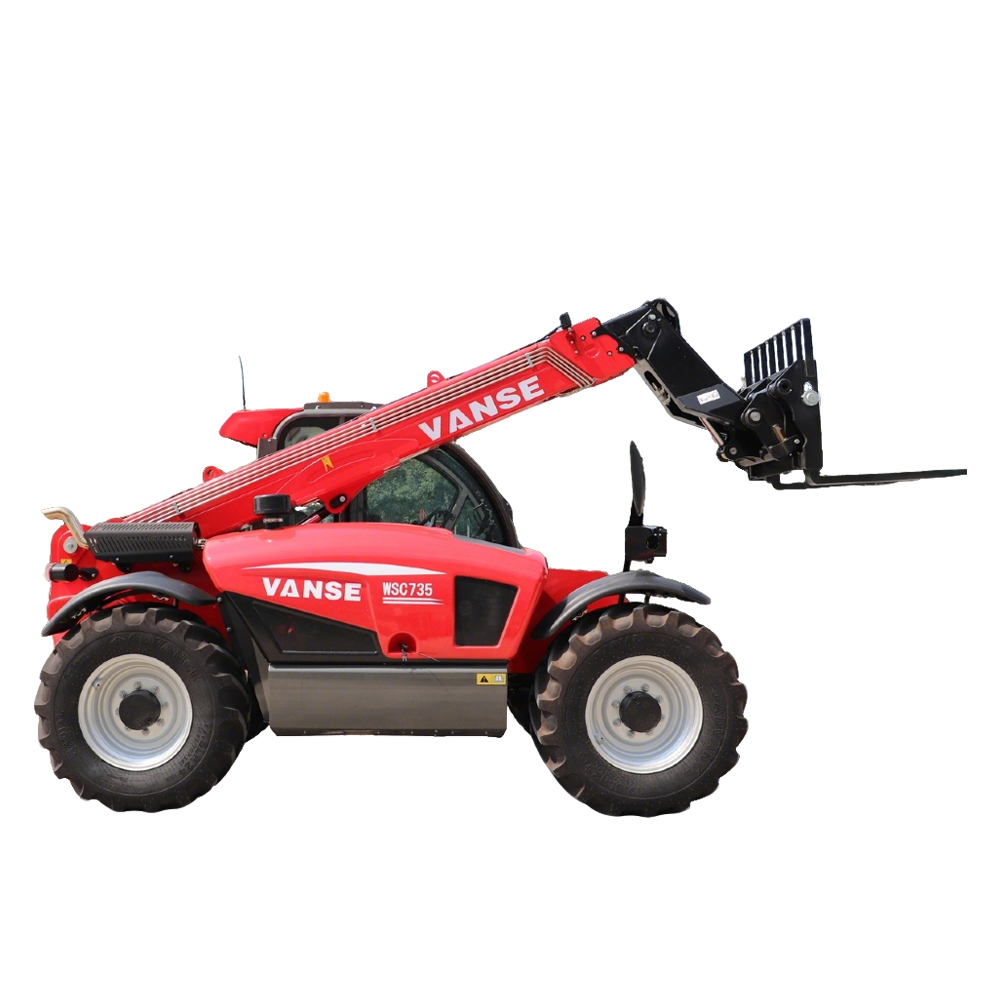
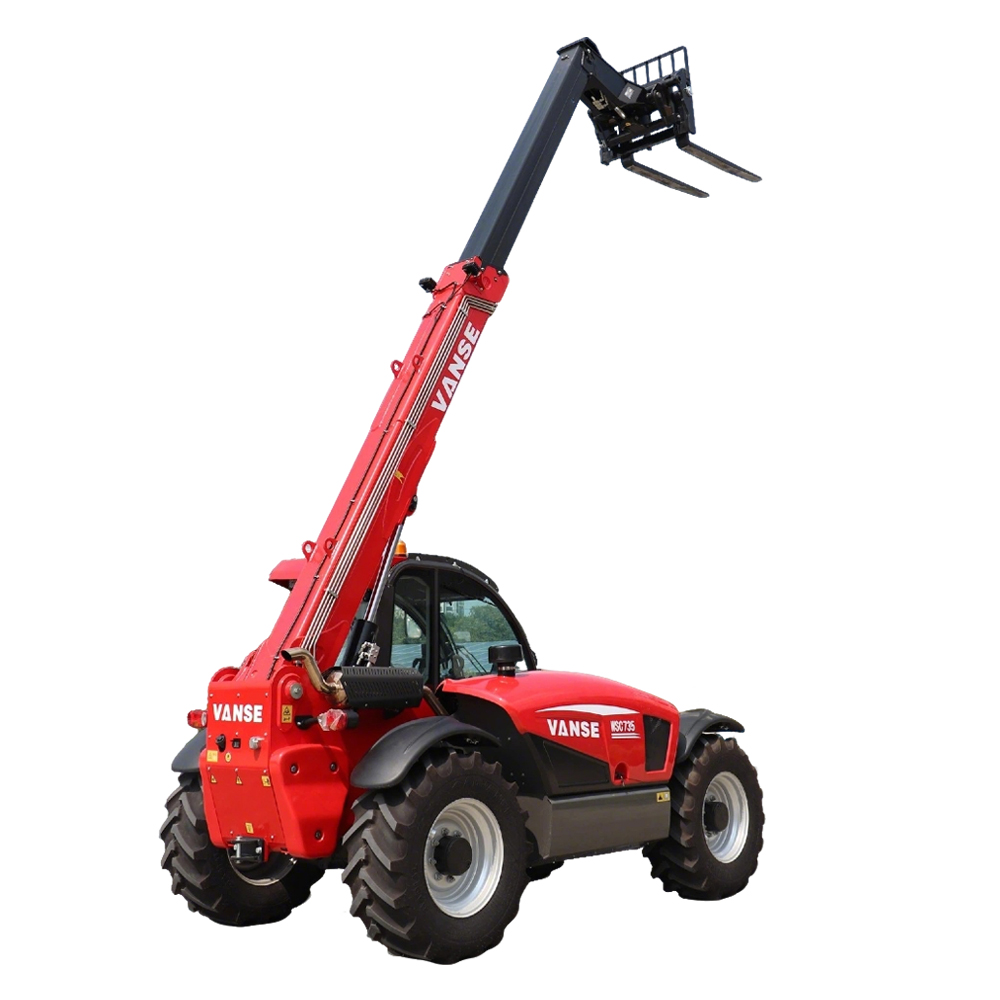
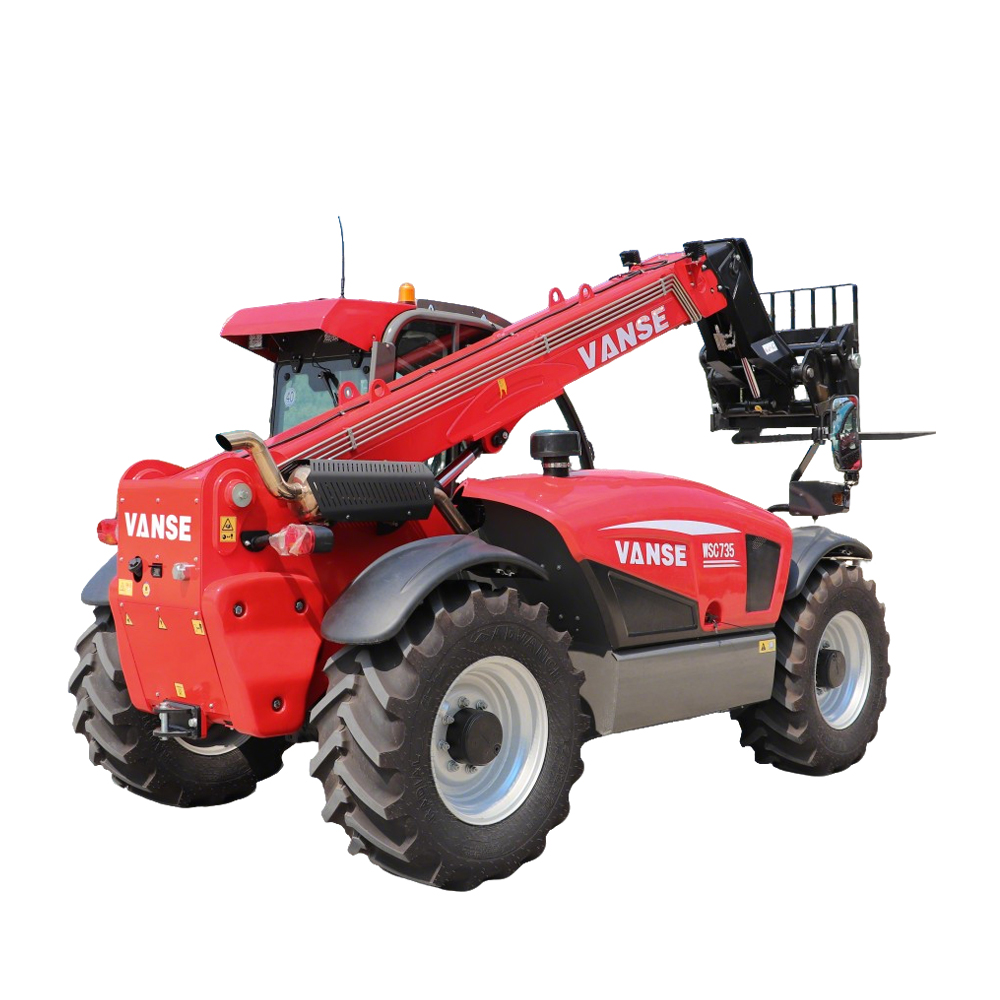
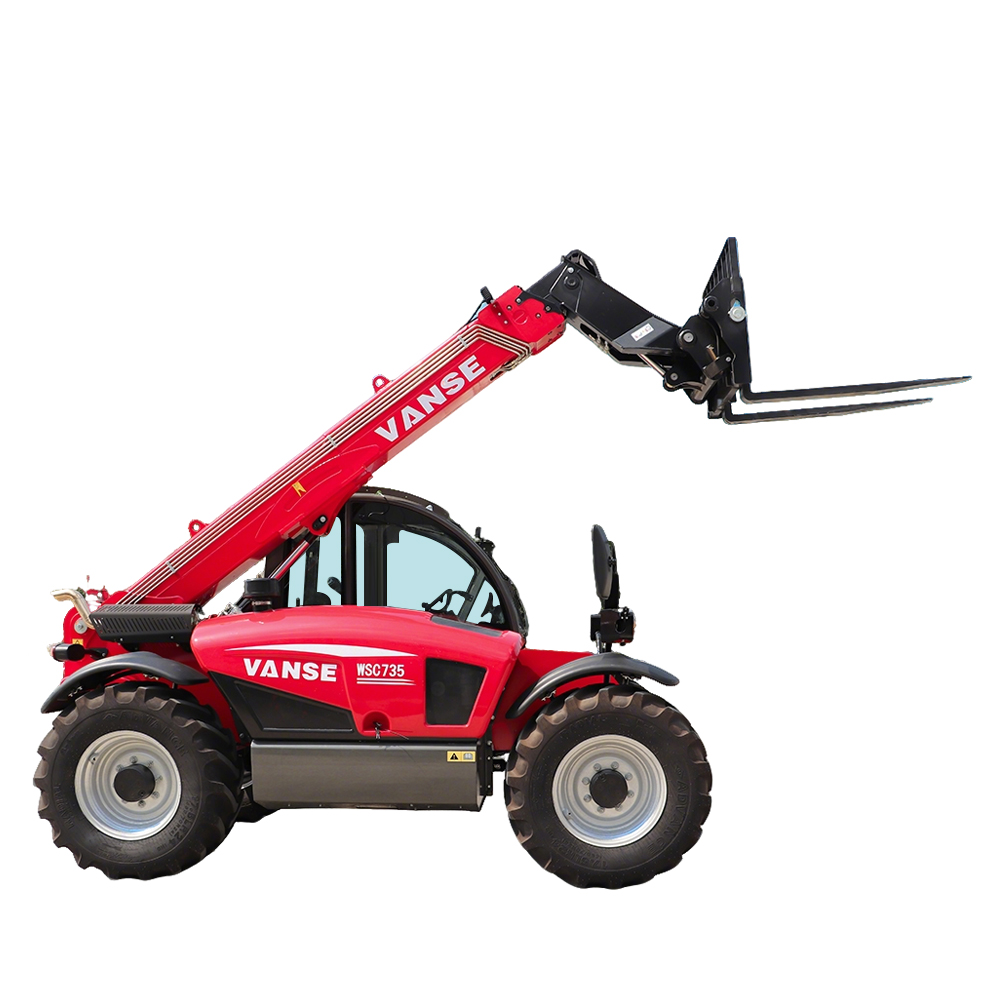
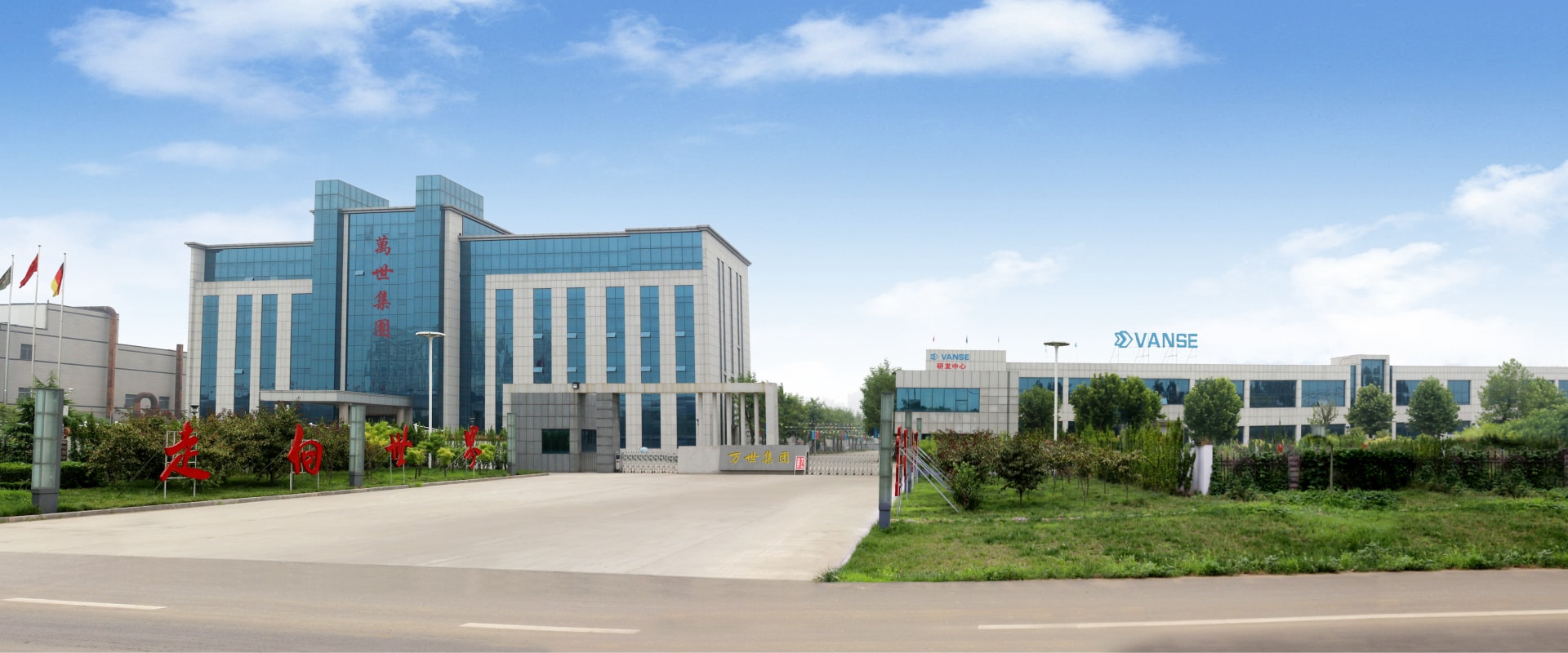
For buyers comparing alternatives beyond the traditional domestic and European names, VANSE is positioned as a telehandler-focused manufacturer with a practical value proposition for the United States. The company has produced more than 8,000 machines since its founding in 2013 and builds equipment under CE and ISO 9001-certified processes, with each unit undergoing load testing, safety inspection, and performance validation before shipment. Its telehandlers are built around globally recognized core components, including engines from brands such as Perkins and Cummins, together with premium hydraulic and drivetrain systems, which gives U.S. buyers concrete evidence on reliability rather than vague quality claims. For cooperation, VANSE serves end users, distributors, dealers, rental companies, brand owners, and individual buyers through flexible models that include OEM, ODM, wholesale supply, retail-style support, and regional distribution cooperation; buyers exploring machines and attachments can review the broader equipment range according to their application needs. Just as important for trust in the U.S. market, VANSE is actively establishing a U.S.-based subsidiary with local inventory, stronger local after-sales capability, and closer customer support, while also providing online and offline pre-sale consultation, technical support, and lifecycle service through its global operating experience across more than 40 countries. That physical market commitment, together with factory-backed service planning and detailed support information available through its service resources, makes the company relevant for U.S. buyers who want certified telehandler performance, customizable partnership models, and a supplier that is investing in long-term local presence rather than acting only as a remote exporter.
What U.S. Buyers Should Ask Before Ordering from Any Supplier
Before committing to any telehandler brand, it is wise to ask for the exact machine load chart, the net lifting capacity with the intended attachment, and the parts and service plan for your state or region. Buyers should also request operator documentation, estimated lead time, warranty structure, and information on whether local stocking or service partnerships are already in place. A supplier that answers those questions clearly is usually more prepared for long-term support.
| Supplier Evaluation Point | Question to Ask | Good Sign | Risk If Missing |
|---|---|---|---|
| Load chart clarity | Can you provide the exact chart for my model and attachment? | Supplier shares model-specific documentation quickly | Misapplied capacity in the field |
| U.S. parts access | Where are wear and critical parts stocked? | Domestic or regional inventory plan exists | Long downtime waiting for imports |
| Technical training | Do you offer operator and maintenance guidance? | Structured handover and support materials are available | Improper machine use and higher failure rates |
| Warranty process | Who handles claims and field diagnosis locally? | Named team and response path are defined | Unclear accountability after delivery |
| Customization support | Can the machine be configured for my market or application? | OEM or ODM options are documented | Poor fit for local job requirements |
| Long-term presence | Are you investing in local operations or service growth? | Subsidiary, warehouse, or regional partners are visible | Short-term sales focus without service depth |
This evaluation table helps buyers move from brand impressions to practical due diligence. It is especially useful when comparing established domestic suppliers with newer but increasingly competitive international manufacturers entering the U.S. market.
Supplier and Product Comparison by Buying Priority
Some buyers want broad rental familiarity, some want agricultural versatility, and some want cost-efficient fleet expansion with customization. The chart below illustrates how different buying priorities can shift the supplier shortlist.
This comparison does not replace brand-specific due diligence, but it shows a realistic pattern in the market. Established suppliers usually lead in dealer density and rental familiarity, while competitive international suppliers often stand out in customization and cost-performance. For many U.S. buyers, the best choice depends on whether immediate local network depth or long-term procurement efficiency is the higher priority.
Buying Advice for Contractors, Farms, Dealers, and Rental Fleets
Contractors should buy based on the lift points they repeat most often, not occasional peak jobs. Farms should look at visibility, hydraulic smoothness, serviceability, and attachment use throughout the year. Dealers should prioritize parts planning, product differentiation, and how easily customers understand the load chart. Rental fleets should prefer models with clear cab labeling, durable booms, broad jobsite acceptance, and simple maintenance procedures.
Another important point is that the safest and most productive telehandler is usually not the biggest one. Oversizing can increase purchase cost, transport burden, and fuel use without improving efficiency on the actual tasks. The goal is to match the machine’s working envelope to the operation’s real lifting pattern. When that match is correct, productivity goes up and the risk of unsafe lifting decisions goes down.
Future Trends in 2026: Technology, Policy, and Sustainability
Looking toward 2026 in the United States, telehandler buying decisions will increasingly be shaped by three forces: technology adoption, policy and safety pressure, and sustainability expectations. On the technology side, more machines are expected to feature digital load management, telematics, service alerts, and remote diagnostics. These systems help fleet owners monitor utilization, track faults early, and support operators with clearer safety feedback.
From a policy and safety perspective, customers are becoming more attentive to documented training, equipment inspection records, and machine-specific operating guidance. Rental houses and large contractors are likely to demand clearer onboard information and stronger compatibility between machine controls, warnings, and actual lift planning. That makes readable load charts and smart overload prevention more important than ever.
On sustainability, the shift will not be limited to emissions alone. Buyers will also value equipment durability, maintenance efficiency, component quality, and lifecycle support that keeps machines in productive service longer. In practical terms, telehandlers with well-supported engines, dependable hydraulics, and easier spare-parts planning may prove more sustainable for U.S. owners than machines that are cheaper upfront but harder to keep running. This trend creates opportunities for suppliers that combine strong component sourcing, measurable quality systems, and local service commitment.
Frequently Asked Questions
What is the difference between maximum lift capacity and rated load at reach?
Maximum lift capacity is usually the highest weight the telehandler can lift in its most stable, close-in position. Rated load at reach refers to what it can safely lift when the boom is extended outward. In real jobs, rated load at reach is often the more important number.
Can I use one telehandler load chart for different attachments?
No. The correct chart depends on the approved attachment and machine configuration. Forks, buckets, jibs, and work platforms can all change allowable capacity and operating limits.
Why does load capacity decrease when the boom extends?
As the boom extends, the load moves farther from the machine’s center of stability. That increases leverage and reduces the safe lifting limit. This is the core principle behind all telehandler load charts.
How should rental companies choose telehandlers using load charts?
Rental fleets should compare capacity at common construction placement points, ease of chart interpretation, support availability, and jobsite familiarity. A clear chart and simple operating logic reduce misuse across different renters.
Are international telehandler suppliers a realistic option in the United States?
Yes, provided they can document certifications, component quality, testing standards, and meaningful local support. Buyers should verify parts stocking, service response, warranty handling, and whether the supplier has real U.S. market commitment.
Where can I learn more about supplier background and support options?
Buyers can review company background through the company overview and discuss application needs or dealership cooperation through the contact page to confirm fit, service expectations, and support structure for the U.S. market.
Final Takeaway
In the United States, a telehandler load chart is the most reliable guide to safe and productive lifting. It tells you what the machine can actually do at the height and reach where the work happens. For contractors, farms, industrial users, dealers, and rental fleets, the smartest approach is to compare machines by real lift points, attachment-adjusted ratings, local service strength, and supplier credibility. Brands such as JLG, Genie, JCB, SkyTrak, Caterpillar, Bobcat, and Manitou remain practical references, while qualified value-focused international manufacturers with documented certifications, proven component choices, and expanding U.S. support can also be strong contenders. The best buying decision comes from matching the chart to the work, not the headline rating to the brochure.
Complete Telescopic Handler Equipment Portfolio
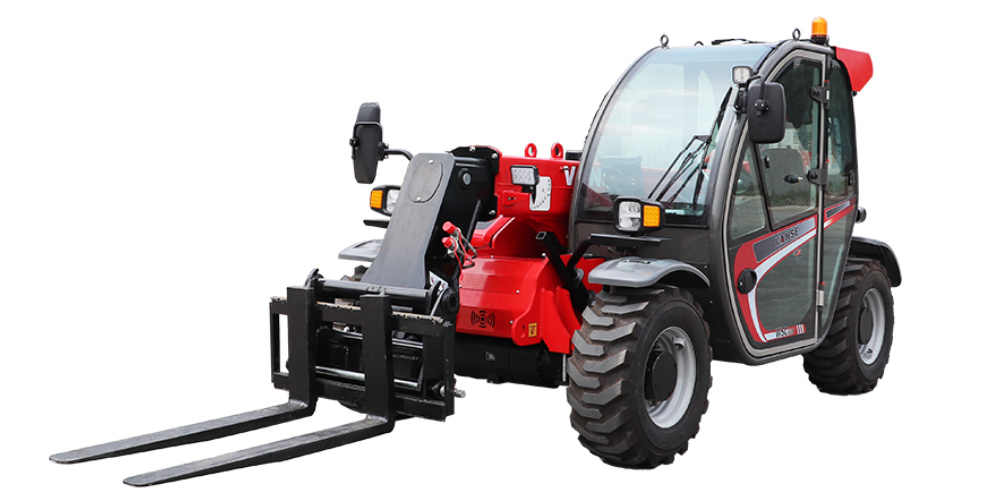
VANSE 625 6m Telescopic Handler
Designed for efficient material handling and stacking in warehouses, factories, and confined job sites, offering compact maneuverability and reliable performance.

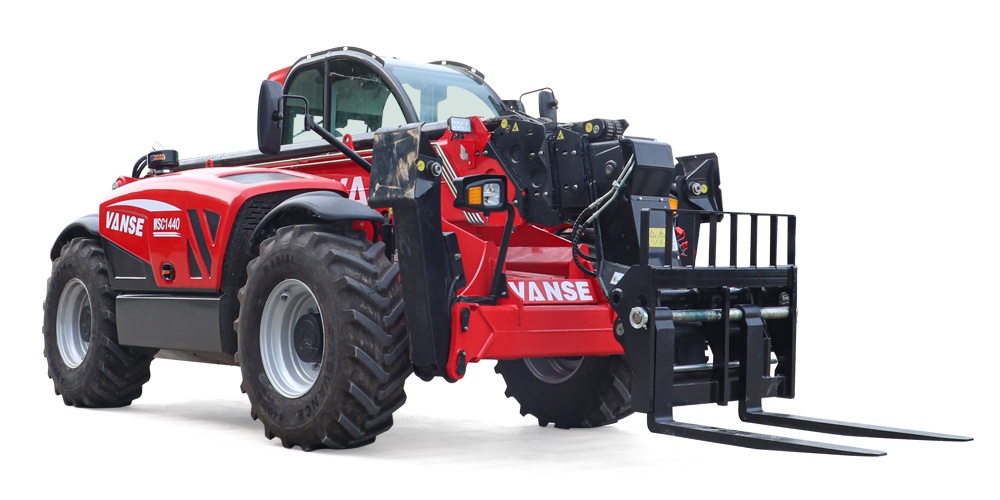
VANSE 735 7m Telescopic Handler
A balanced mid-duty solution for construction, agriculture, logistics, and warehousing, combining stable lifting, strong traction, and everyday versatility.


About the Author:
The VANSE team is a group of experienced professionals specializing in construction machinery research, manufacturing, and technical support. With deep industry knowledge and hands-on experience, our engineers and product specialists share practical insights on equipment selection, operation, maintenance, and industry trends.
Share
You May Also Interest
-

18 June, 2026
Telehandler vs Forklift: Which Machine Is Right for You
Compare telehandler vs forklift in the United States with costs, use cases, supplier options, and buying tips to choose the right machine for your job.
-
17 June, 2026
Telehandler Attachments: Forks Buckets and Platforms
Explore telehandler attachments in the United States, including forks, buckets, platforms, suppliers, buying tips, and 2026 market trends.
-
16 June, 2026
Best Telehandlers for Construction Projects Right Now
Explore the best telehandlers in the United States with top brands, buying tips, market trends, and cost-effective supplier options for 2026.
-
15 June, 2026
Telehandler Price Guide: Full Cost Breakdown for Buyers
Learn telehandler price ranges in the United States, compare brands, specs, ownership costs, and sourcing options for 2026 buyers.