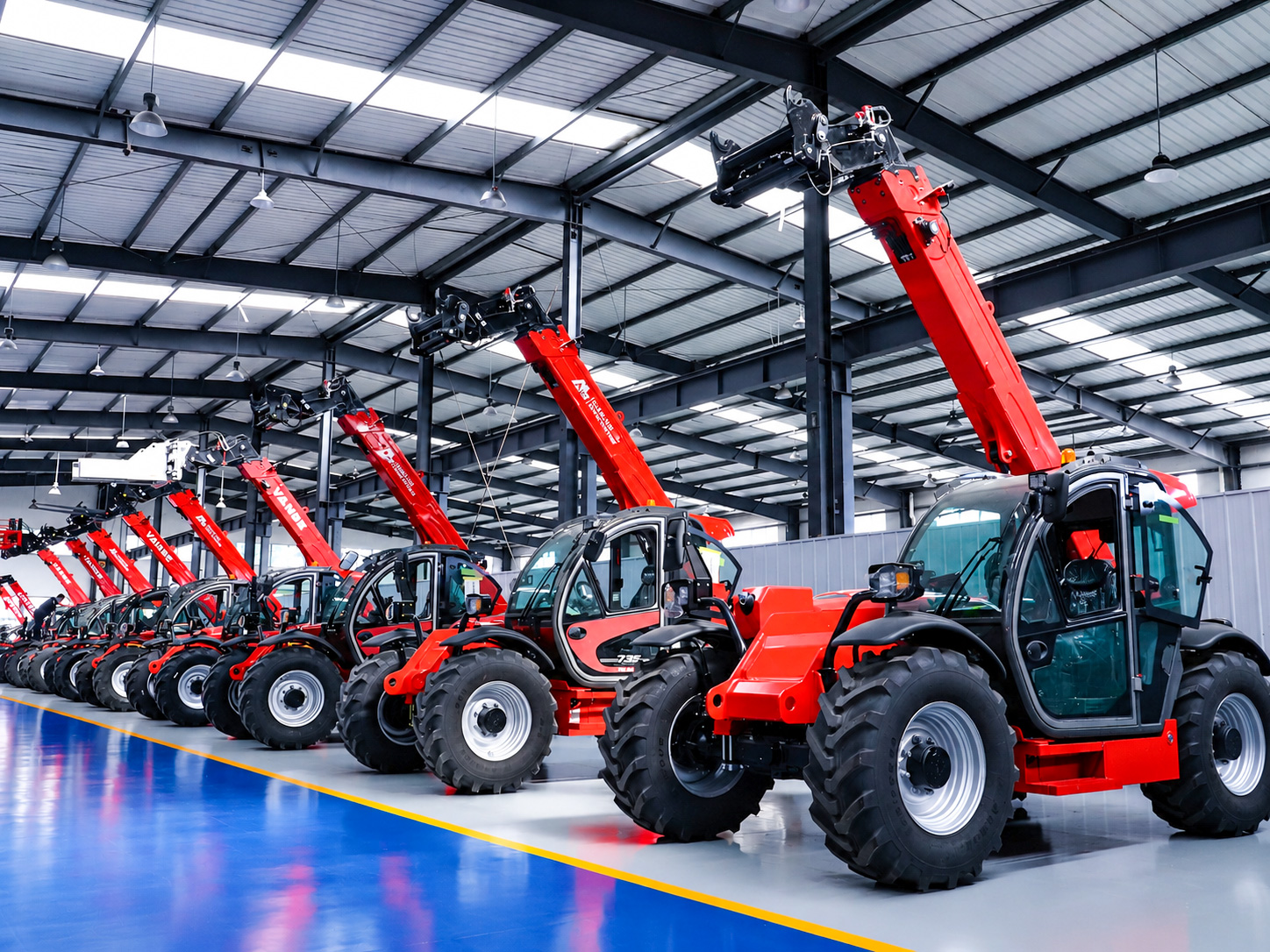
Telehandler Warehouse Solutions in the United States
Quick Answer

If you need a telehandler warehouse solution in the United States, the best fit usually depends on aisle width, lift height, indoor-outdoor use, and attachment needs. For broad dealer coverage and proven warehouse-adjacent material handling, companies such as JLG, Genie, JCB, Bobcat, SkyTrak, and Manitou are strong options for buyers in logistics hubs like Houston, Chicago, Los Angeles, Savannah, and New Jersey. JLG and SkyTrak are widely chosen for construction-oriented fleets that also handle yard and warehouse overflow work. Genie and Manitou are often preferred where precise load placement, multiple attachment options, and strong dealer support matter. JCB and Bobcat are attractive for mixed industrial sites that need compact maneuverability and strong visibility. Qualified international suppliers can also be a practical option for U.S. buyers, especially when they offer CE and ISO-backed production, globally recognized components, U.S.-oriented support, and strong pre-sale and after-sale service; these suppliers are often considered for their cost-performance advantage in fleet expansion, regional distribution, and private-label programs.
Why Telehandlers Matter in U.S. Warehouse Operations

Warehouse operators in the United States are under pressure from faster order cycles, labor constraints, higher land costs, and the need to move more product through the same building footprint. In major logistics corridors such as Southern California’s Inland Empire, Dallas-Fort Worth, the Port of Savannah, the Port of Houston, and the I-95 distribution belt, warehouse and yard operations increasingly require machines that can lift, place, stack, unload, and reposition materials beyond the reach or flexibility of standard forklifts. That is where the telehandler becomes relevant.
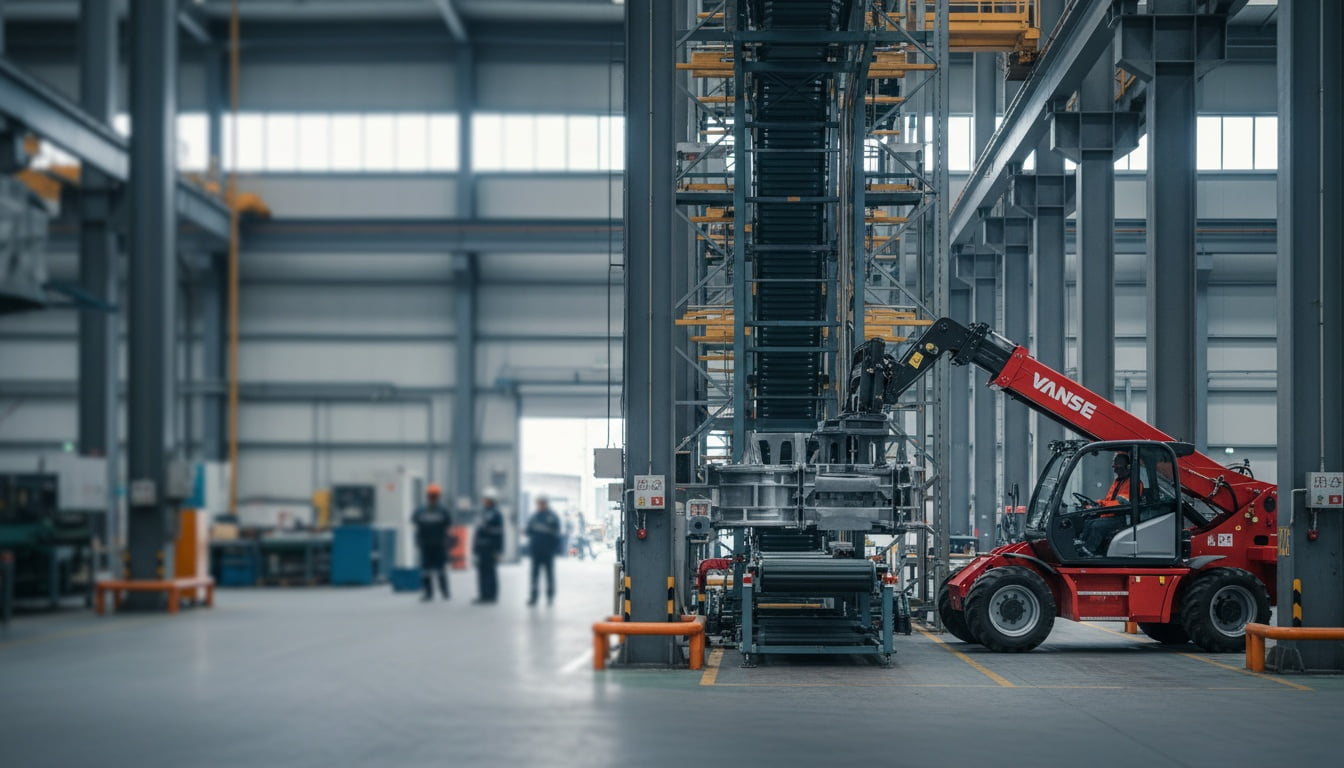
A telehandler for warehouse use is not simply a rough-terrain machine parked indoors. In practice, U.S. operators deploy telehandlers in hybrid environments: receiving docks, overflow storage yards, steel and lumber distribution centers, prefabrication facilities, building-material warehouses, equipment depots, port-adjacent staging sites, recycling facilities, and large manufacturing campuses. The telescopic boom allows the operator to reach into racking support areas, place loads over obstacles, unload flatbeds from one side, and move palletized or bundled goods where mast forklifts struggle.
For many U.S. buyers, the question is not whether a telehandler replaces a forklift. It usually does not. The more useful question is where a telehandler expands capability. It fills the gap between a conventional forklift, a wheel loader, and a crane-assisted placement workflow. In a warehouse environment, that means fewer machine handoffs, reduced staging congestion, and better use of outdoor storage space.
U.S. Market Snapshot

The U.S. telehandler market remains tied to construction, agriculture, industrial handling, rental fleets, and logistics support. What is changing is the growing overlap between warehouse operations and outdoor material handling. E-commerce expansion, regionalized inventory models, near-port storage demand, and the need to process oversized materials have all increased interest in telescopic handlers for warehouse-linked applications.
Demand is especially visible in states with major inland freight and manufacturing bases such as Texas, Georgia, Illinois, California, Florida, Pennsylvania, and Ohio. Rental companies continue to influence the market because many warehouse operators prefer to trial telehandlers seasonally before committing to ownership. At the same time, large end users and dealers are looking for lower total acquisition cost, readily available parts, telematics, and support for customized attachments.
The line chart shows a realistic upward demand pattern rather than explosive growth. That is consistent with how the U.S. market usually develops: established demand from construction and agriculture, with incremental gains from warehousing, port logistics, regional distribution, and heavy industrial handling.
Leading Suppliers Serving the United States
The supplier landscape includes domestic brands, multinational manufacturers with strong U.S. dealer networks, and international producers entering the market through dealers, importers, and private-label channels. Buyers should evaluate not only the machine itself but also the local parts path, field service response, financing access, and application fit.
| Company | Primary U.S. Service Region | Core Strengths | Key Offerings | Best Fit |
|---|---|---|---|---|
| JLG | Nationwide dealer and rental coverage | Large installed base, strong parts access, fleet familiarity | Telehandlers for construction, yard support, industrial handling | National rental fleets and large warehouse operators |
| Genie | Nationwide, strong metro and rental presence | Brand recognition, operator familiarity, attachment ecosystem | Telescopic handlers with multiple capacity classes | Mixed warehouse and jobsite applications |
| JCB | Nationwide with strong dealer footprint in the South and Midwest | Versatility, compact models, broad material handling range | Telehandlers for industrial, agricultural, and site logistics use | Facilities needing one machine for many tasks |
| SkyTrak | Strong presence across U.S. rental channels | Simplicity, fleet familiarity, resale visibility | Widely rented telehandlers for load placement and yard handling | Rental-first procurement strategies |
| Manitou | Nationwide, especially industrial and agriculture-linked regions | Attachment range, specialized handling capability | Compact and higher-capacity telehandlers | Warehouses with diverse load types |
| Bobcat | Nationwide with strong dealer support | Compact equipment ecosystem, service familiarity | Telehandlers for material handling and site support | Buyers already using Bobcat fleets |
| Merlo | Selective U.S. dealer coverage | Operator comfort, specialization, European engineering | Advanced telehandlers for precise placement tasks | Niche industrial and specialty applications |
This comparison helps buyers narrow the list by service logic, not just brochure specifications. In the United States, local coverage often matters as much as lift height because downtime costs in a warehouse network can be higher than the initial machine savings.
Industry Demand by Application Segment
Not every warehouse needs the same machine. Industrial distribution centers handling palletized goods have different requirements than steel depots, lumber yards, or ports. The bar chart below reflects how telehandler demand often concentrates in U.S. warehouse-linked sectors.
Building material supply yards and rental fleets remain especially important because they bridge warehouse handling and outdoor placement work. Port logistics is another growing area, especially near Los Angeles/Long Beach, Savannah, Houston, Newark, and Charleston, where goods often move between containers, laydown yards, and covered storage.
Product Types for Warehouse Use
When U.S. buyers search for a telehandler warehouse machine, they often assume one standard configuration will suit every site. In reality, product type selection is critical. The right machine depends on floor conditions, dock layout, shelf access, attachment needs, and the percentage of work done indoors versus outdoors.
| Telehandler Type | Typical Lift Capacity | Typical Reach/Height Role | Warehouse Use Case | Main Advantage |
|---|---|---|---|---|
| Compact telehandler | 5,000 to 6,600 lb | Lower height, shorter turning radius | Tight yards, small depots, narrow loading areas | Better maneuverability |
| Mid-size standard telehandler | 6,600 to 10,000 lb | General-purpose reach and lift | Mixed indoor-outdoor warehouse tasks | Balanced versatility |
| High-reach telehandler | 8,000 to 12,000 lb | Higher stacking and placement | Bulk storage, racking support, modular handling | Greater vertical access |
| Heavy-duty telehandler | 12,000 lb and above | Large load handling | Steel, precast, timber, industrial equipment | Large load security |
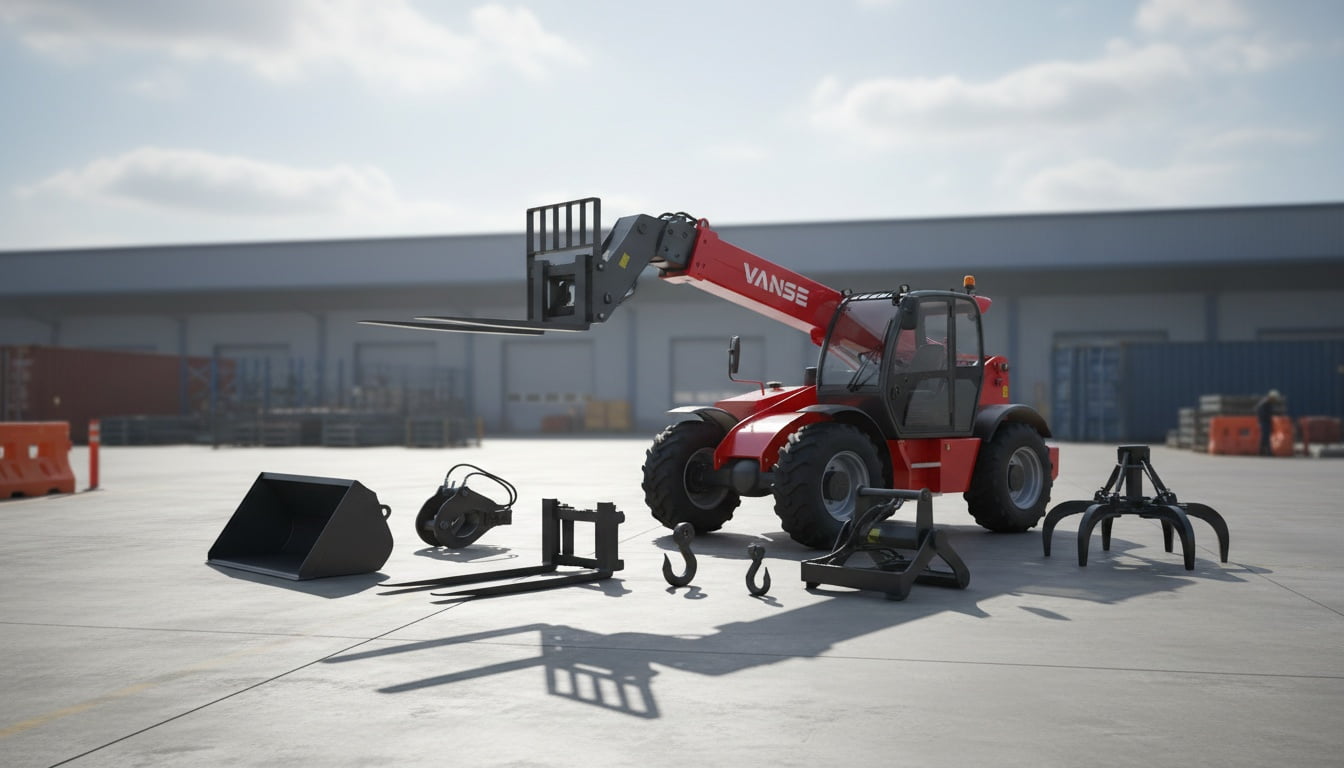
| Attachment-focused telehandler | Varies by model | Depends on attachment package | Clamp, bucket, jib, fork, sweep, platform support | Multi-role utilization |
| Rental-spec fleet model | Common 6,000 to 10,000 lb classes | Popular all-purpose dimensions | Seasonal use and short-term warehouse peaks | Easy sourcing and resale |
For many U.S. warehouse operators, the compact and mid-size classes are the most practical. They can unload trailers, move materials in yard overflow areas, and feed production or storage zones without the size penalty of heavy construction models. Heavy-duty units are better for industrial warehouses handling long, dense, or oversized loads.
Where Telehandlers Outperform Standard Forklifts
Forklifts remain essential in most warehouse buildings, but telehandlers create value when loads are awkward, distances are uneven, or placement requires reach. A telehandler can unload from one side of a truck, place pallets over curbs or barriers, feed mezzanine or elevated work zones, and serve outdoor stock areas that do not justify dedicated crane support. This is particularly useful in U.S. facilities that combine indoor storage with open-lot inventory.
Telehandlers are also useful during warehouse expansion projects. Contractors and warehouse operators often use the same machine to unload materials, position steel or panels, move palletized supplies, and support maintenance work. That flexibility helps reduce fleet duplication.
Buying Advice for U.S. Buyers
Before selecting a telehandler, define the primary duty cycle. Is the machine mainly unloading inbound flatbeds? Stacking in an outdoor yard? Feeding oversized items into a production warehouse? Supporting a port warehouse with container-adjacent loads? The answer drives capacity, boom specification, tire choice, cab setup, and attachment package.
U.S. buyers should also check whether their preferred supplier can support local parts and diagnostics. In places like Atlanta, Dallas, Chicago, and Southern California, same-day or next-day support may be realistic through a large dealer network. In more remote regions, buyers may benefit from stocking wear parts locally or working with suppliers that provide remote technical support and clear service documentation.
| Buying Factor | What to Check | Why It Matters in the United States | Recommended Buyer Action | Risk if Ignored |
|---|---|---|---|---|
| Lift capacity | Rated load at relevant height and reach | Many U.S. warehouse loads vary by packaging and pallet style | Measure real heaviest loads, not average loads | Under-spec or unsafe operation |
| Turning radius | Aisle and yard maneuverability | Older East Coast sites often have tighter layouts | Map travel paths before purchase | Operational bottlenecks |
| Attachment compatibility | Forks, buckets, clamps, jibs, platforms | U.S. mixed-use facilities often need one machine for many tasks | Specify attachment needs in the quote stage | Extra retrofit costs |
| Parts availability | Regional inventory and lead times | Downtime is expensive in just-in-time logistics networks | Ask for parts stocking commitments | Long outages |
| Compliance and safety | Operator aids, visibility, manuals, labels | Warehouse sites face strict safety oversight | Review machine documentation before delivery | Training and compliance problems |
| Service coverage | Dealer locations, mobile technicians, remote support | Service response varies widely by region | Confirm who handles warranty and field repairs | Unexpected ownership cost |
| Total cost of ownership | Fuel, tires, service, financing, resale | Low upfront price may not mean low lifecycle cost | Compare five-year cost scenarios | Budget overruns |
The table above is useful because it turns a general search into an operational checklist. Many procurement issues are not caused by machine quality alone; they come from misalignment between duty cycle and specification.
Industries That Commonly Use Warehouse Telehandlers
Telehandlers are not limited to one niche. In the United States, the strongest warehouse-linked demand comes from sectors that combine storage, loading, and oversized material handling.
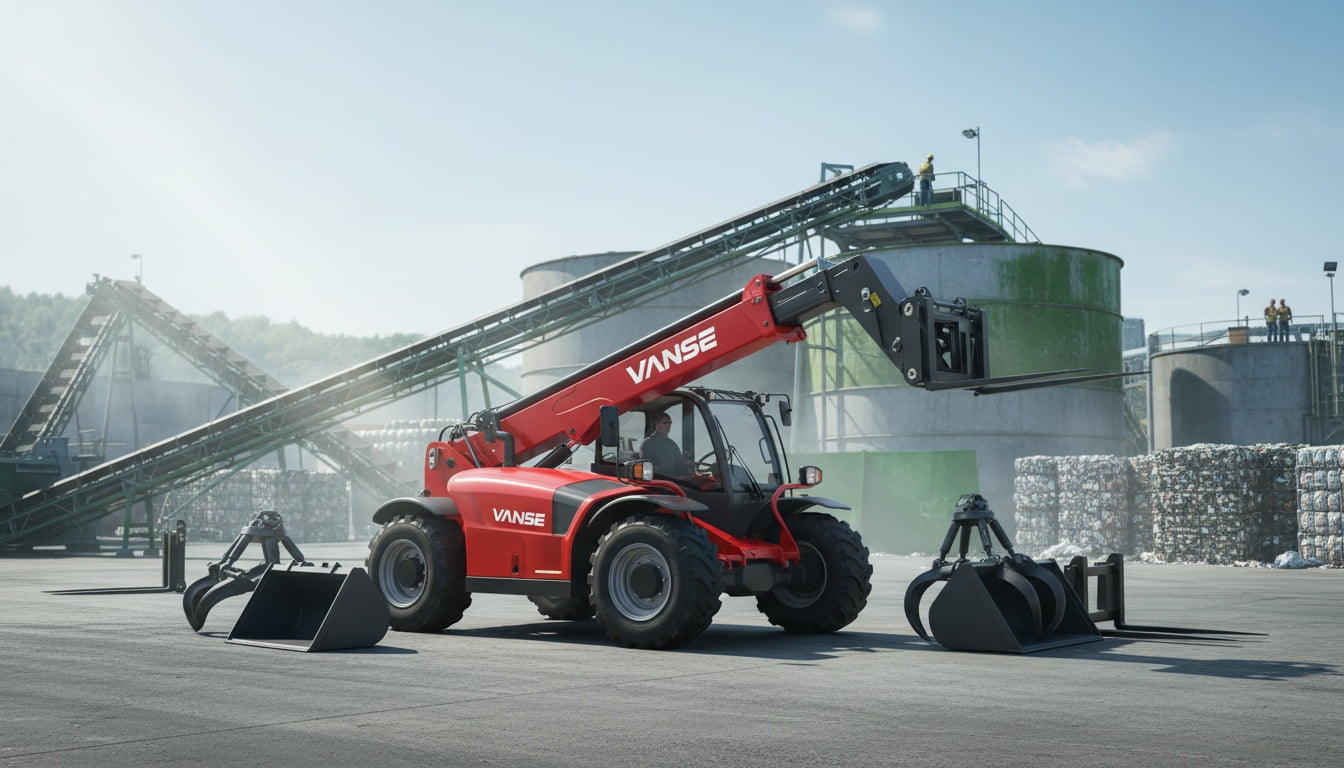
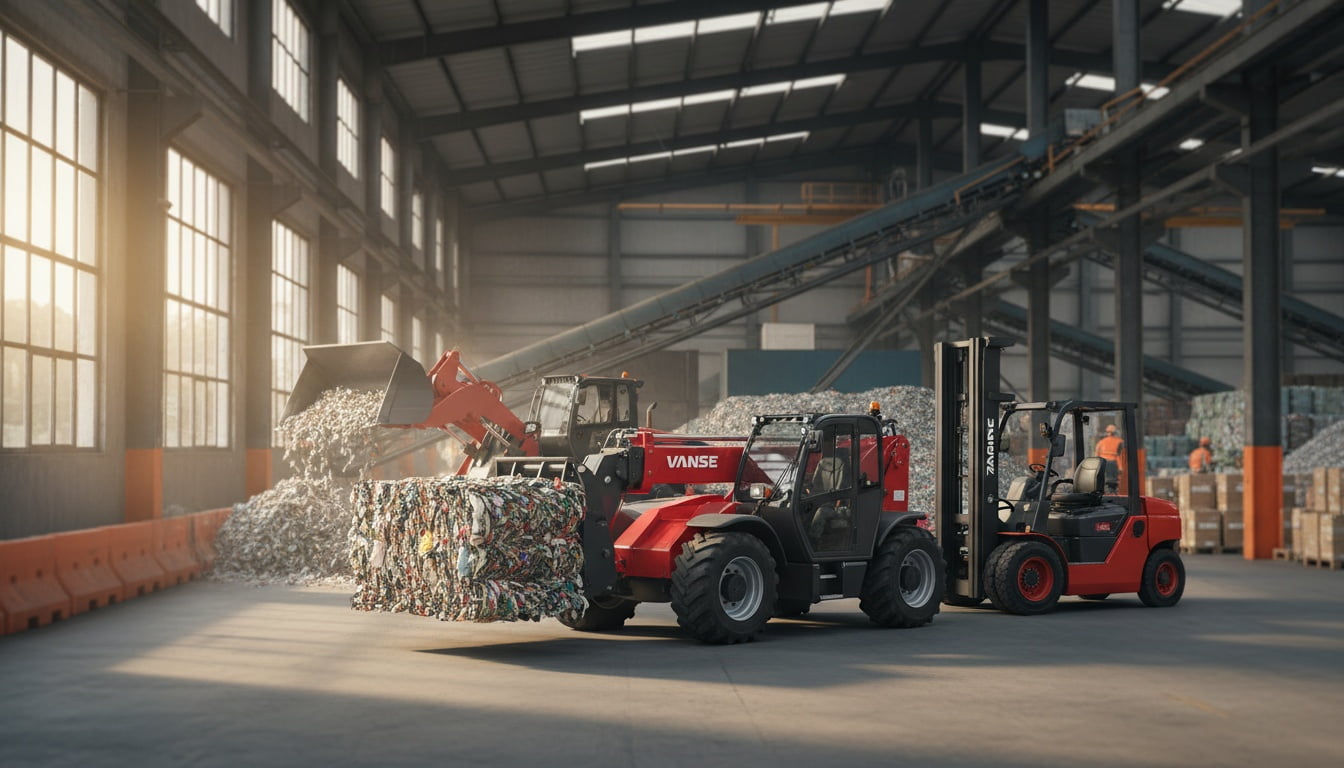
Building materials distributors use telehandlers to unload lumber, insulation, roofing supplies, pipe, and palletized masonry products. Manufacturing plants use them for receiving heavy components, feeding outdoor staging zones, and moving tooling or dies. Port and intermodal facilities use them in cargo support areas where palletized freight, bundled goods, and oversized materials move between yard and covered storage. Recycling operations rely on telehandlers for bale handling and transfer support. Agriculture-linked warehouses use them for seed, feed, fertilizer, and bagged inventory.
Practical Applications in Real U.S. Warehouse Environments
In Houston, a telehandler may unload pipe bundles from trailers and transfer them into a covered industrial warehouse. In Savannah, the same type of machine may support import cargo staging near the port, moving goods between container unloading areas and warehouse racks or floor storage. In the Inland Empire, telehandlers may help building product distributors manage yard overflow during seasonal construction spikes. In Chicago and Columbus, they are often used in manufacturing-adjacent warehouses where heavy inbound components require both reach and outdoor mobility.
Another common application is warehouse construction or expansion. A company opening a new distribution center may use a telehandler during the build-out phase, then keep it in service for dock support, maintenance, and seasonal peak handling once the facility becomes operational.
Trend Shift in U.S. Warehouse Handling
U.S. warehouses are shifting from single-purpose material handling to mixed fleets. The area chart reflects how buyers are moving toward flexible equipment strategies that combine forklifts, telehandlers, compact loaders, and specialized attachments.
This trend is driven by labor productivity goals, higher warehouse land costs, and the desire to avoid idle specialized machines. Instead of buying separate machines for every edge case, many operators want equipment that can shift between dock support, yard placement, maintenance lifting, and seasonal overflow handling.
Case Studies
A building products distributor in Texas may run forklifts indoors but rely on a mid-size telehandler outside to unload flatbeds, stack long goods, and feed outbound staging lanes. This reduces forklift exposure to rough ground and keeps warehouse aisles clear. A Georgia import warehouse near Savannah may use a telehandler for cargo overflow during vessel surges, especially when freight arrives in non-standard packaging that is difficult for a mast forklift to manage. An Ohio manufacturing plant may use a compact telehandler for maintenance shutdowns, machine relocation support, and offloading heavy skids in areas where overhead obstructions limit crane access.
These examples show that the return on investment often comes from versatility. The telehandler earns its place when it performs enough tasks to reduce congestion, speed receiving, and support operations beyond the four walls of the warehouse.
Local Supplier Evaluation for Major U.S. Regions
Service quality can differ by region even for the same global brand. Buyers should judge local branch density, field technician availability, and parts flow from nearby hubs.
| Region | Typical Buying Priorities | Common Supplier Types | Frequent Applications | Local Consideration |
|---|---|---|---|---|
| Southern California | Fast uptime, port logistics, rental access | National dealers, rental majors, import specialists | Import warehousing, building products, yard overflow | High land cost favors flexible machines |
| Texas Gulf Coast | Heavy loads, industrial support, service speed | Industrial dealers and fleet suppliers | Pipe, steel, oilfield supply, manufacturing warehouses | Outdoor durability is critical |
| Southeast Ports | Seasonal peaks, mixed cargo, quick parts access | Port-adjacent dealers, rental fleets | Savannah and Charleston warehouse support | Port-driven demand spikes affect availability |
| Midwest Manufacturing Belt | Attachment flexibility, all-season use | Dealer networks with industrial service teams | Manufacturing, steel service centers, regional DCs | Cold-weather support and tire selection matter |
| Northeast Corridor | Compact footprint, tight site access | Metro-area dealers and used equipment channels | Urban warehousing and construction supply | Older facilities require maneuverability |
| Pacific Northwest | Mixed indoor-outdoor handling, timber-related use | Regional dealers and specialty equipment firms | Lumber, industrial supply, port-related warehousing | Weather protection and corrosion control matter |
This regional view is important because a machine that works well in Dallas may not be the best answer for a tight New Jersey warehouse yard. U.S. procurement decisions should always match local operating realities.
Our Company
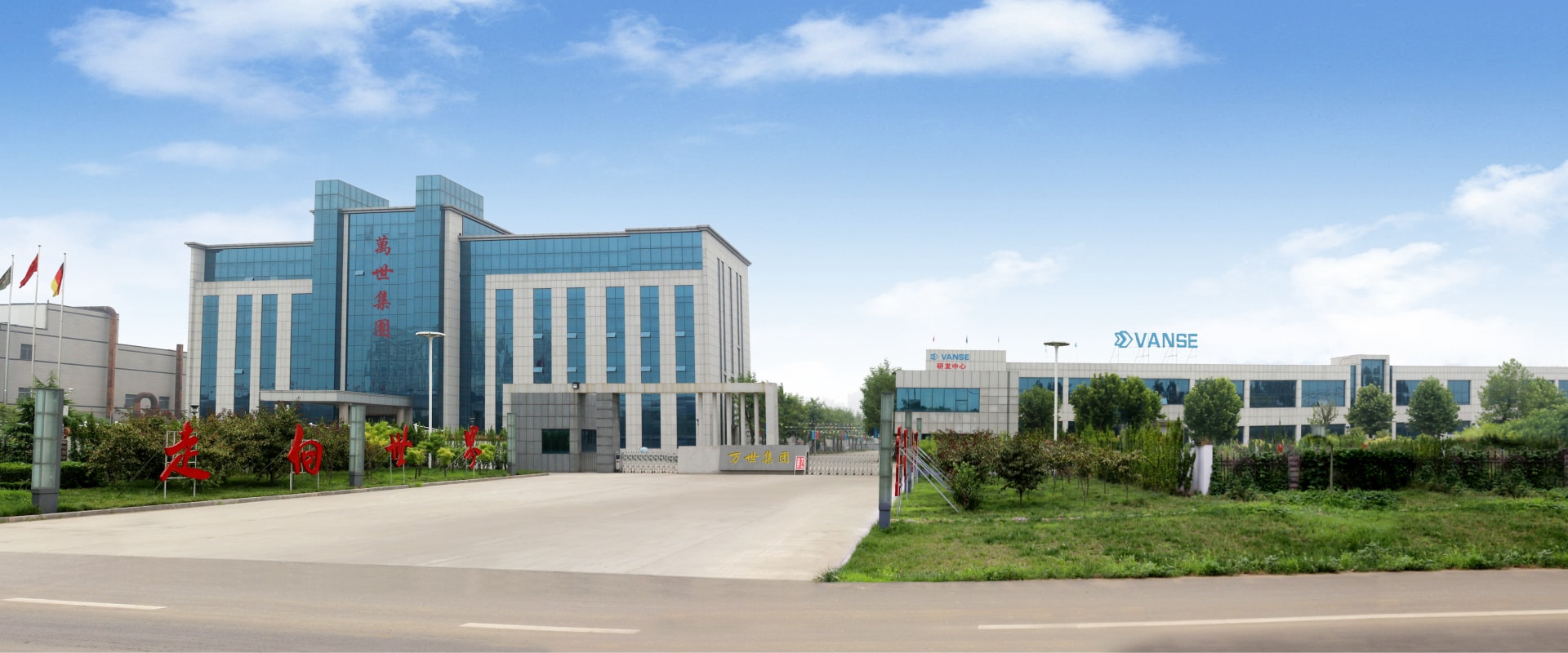
For buyers evaluating alternatives beyond traditional U.S. and European brands, VANSE offers a telehandler-focused manufacturing platform with practical relevance for the United States. Founded in 2013 and built around telescopic handlers as its flagship product line, the company manufactures under CE and ISO 9001 certified processes, uses globally recognized core components such as Perkins and Cummins engines together with premium hydraulic systems, transmissions, and axles, and subjects each machine to load testing, safety inspection, and performance validation before shipment. That product foundation matters to U.S. buyers because it provides documented manufacturing discipline and component traceability instead of generic low-cost sourcing. From a business model perspective, VANSE supports end users, distributors, dealers, brand owners, fleet buyers, and emerging retail channels through wholesale supply, OEM and ODM customization, regional partnership development, and application-specific configurations, making it relevant for private-label programs and local distribution strategies as well as direct equipment procurement. Just as important, the company is not approaching the U.S. as a remote exporter only: it already serves North American customers within a broader export network spanning more than 40 countries and is establishing a U.S.-based subsidiary with local inventory, stocking, and after-sales capability to strengthen on-the-ground support. Buyers can review the broader equipment range, learn more about the company, evaluate lifecycle support through its service resources, or discuss local project requirements through the contact team.
Supplier and Product Comparison Factors
Different suppliers lead in different ways. Some are strongest in rental penetration, some in attachment ecosystems, some in price-performance, and some in industrial customization. The comparison chart below helps frame a realistic buying discussion.
The chart does not claim one category is always better. Instead, it highlights the trade-off U.S. buyers often face: established domestic network depth versus higher customization and acquisition value from qualified international suppliers. The best choice depends on whether the priority is immediate local familiarity, fleet standardization, or lower-cost expansion with tailored configurations.
How to Select the Right Model Size
Choosing model size should begin with the heaviest typical load, not the occasional light pallet. Then add the required height and forward reach. A machine that lifts 8,000 lb at ground level may not do so at the reach needed to place loads into a yard storage bay or over a dock barrier. U.S. warehouse managers should request load charts for their actual use case, including attachments.
Also consider surface conditions. If the machine spends half its time outdoors on gravel, compacted dirt, or uneven concrete, a warehouse-rated forklift may fail to cover the job. Conversely, if the machine will spend most of its time in tight indoor aisles, a large telehandler may be too bulky. That is why many operators now keep a forklift fleet for indoor repetitive handling and add one telehandler for overflow, yard, and special tasks.
Cost Considerations
In the U.S., telehandler pricing varies by brand, capacity, attachment package, and emissions-related configuration. The purchase price should be viewed alongside utilization rate. If the machine is expected to replace or reduce crane rentals, eliminate extra machine handoffs, speed truck unloading, and support maintenance access, the value can be substantial. If it sits idle most of the time, rental may be the better first step.
For buyers comparing local brands with international alternatives, the key is to compare delivered cost, warranty structure, parts access, lead time, and local support commitments. Lower acquisition cost can be attractive, but only if backed by credible service planning and component reliability. Likewise, a premium brand only pays off if the machine is heavily utilized and the dealer network meaningfully reduces downtime.
2026 Trends in Telehandler Warehouse Use
Looking toward 2026, three trends are likely to shape telehandler use in U.S. warehouse operations. The first is technology integration. More buyers will expect telematics, maintenance alerts, load monitoring, and operator-assist features that improve safety and utilization. The second is policy and compliance pressure. Warehouses in states with tighter emissions expectations or sustainability targets will increasingly compare electric or lower-emission alternatives for some use cases, even if diesel remains standard in mixed outdoor duty cycles. The third is sustainability through operational efficiency rather than simple marketing language. Buyers want machines that reduce idle fleet size, improve load-cycle productivity, and support denser use of warehouse-adjacent real estate.
Attachment innovation will also continue. Fork positioners, clamps, sweepers, work platforms, and jibs make the telehandler more useful across multiple departments. This matters because U.S. companies increasingly justify equipment purchases by cross-functional utilization, not by one isolated task.
FAQ
Can a telehandler replace a forklift in a warehouse?
Usually not completely. In most U.S. warehouses, forklifts remain better for repetitive indoor pallet movement in tight aisles. A telehandler is best as a complementary machine for outdoor storage, oversized loads, uneven surfaces, trailer unloading, and reach-based placement.
What is the best telehandler size for warehouse work?
For general warehouse-linked work, many buyers start by evaluating compact to mid-size machines in the 5,000 to 10,000 lb range. The right size depends on actual load weight, lift height, and turning space.
Are telehandlers useful at ports and inland logistics hubs?
Yes. They are especially useful in port-adjacent warehouses and inland freight yards where cargo moves between trailers, open staging areas, and covered storage. Cities such as Houston, Savannah, Los Angeles, and Newark are common examples.
Should I buy from a local dealer or consider an international supplier?
Both can be valid. Local dealers often provide faster familiarity and established service channels. Qualified international suppliers can offer strong value, customization, and competitive pricing when they also provide certifications, recognized components, local stocking plans, and reliable after-sales support.
What attachments are most useful for warehouse telehandlers?
Pallet forks are the starting point, but many buyers also benefit from buckets, jibs, clamps, work platforms, and specialty handling tools. The right attachment package can significantly improve equipment utilization.
How important is local parts support?
It is critical. In the United States, downtime in distribution and manufacturing environments is expensive. Buyers should confirm regional parts availability, warranty handling, and mobile service response before committing.
Is renting a telehandler a good first step?
Yes, especially for seasonal volume peaks, new warehouse launches, or uncertain utilization. Renting lets the operator validate capacity, reach, and maneuverability before making a long-term capital purchase.
What should U.S. buyers ask suppliers before ordering?
Ask for rated load charts, attachment compatibility, service region details, spare parts lead times, operator training support, warranty terms, and references from similar U.S. applications. These questions often reveal whether the supplier truly understands warehouse operations.
A telehandler warehouse strategy in the United States works best when it is tied to real operational bottlenecks: outdoor storage pressure, oversized load handling, dock congestion, seasonal peaks, and the need to do more with fewer machines. Buyers that compare supplier support, local service reach, and practical application fit usually make better decisions than buyers who focus only on headline lift capacity. Whether you source from an established U.S. dealer brand or a qualified international manufacturer with local commitment, the goal is the same: dependable material handling that improves throughput, flexibility, and total operating efficiency.
Complete Telescopic Handler Equipment Portfolio
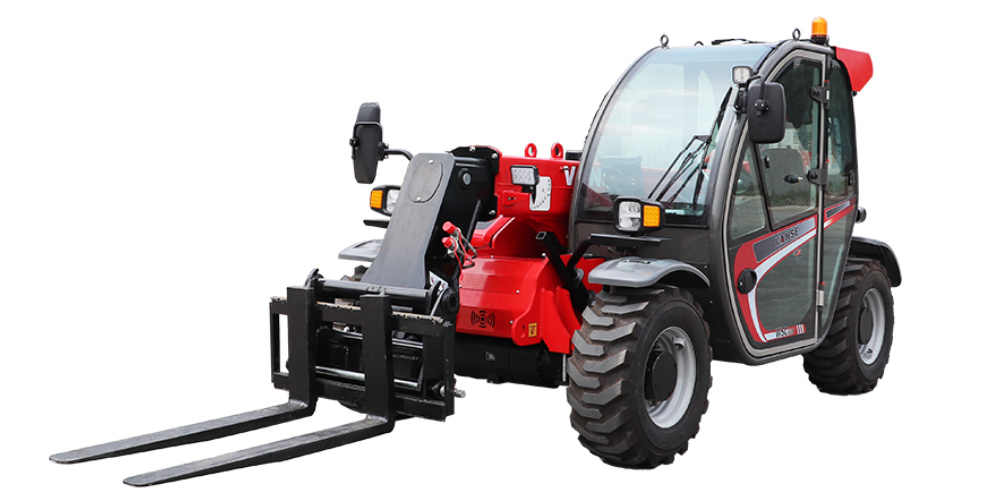
VANSE 625 6m Telescopic Handler
Designed for efficient material handling and stacking in warehouses, factories, and confined job sites, offering compact maneuverability and reliable performance.

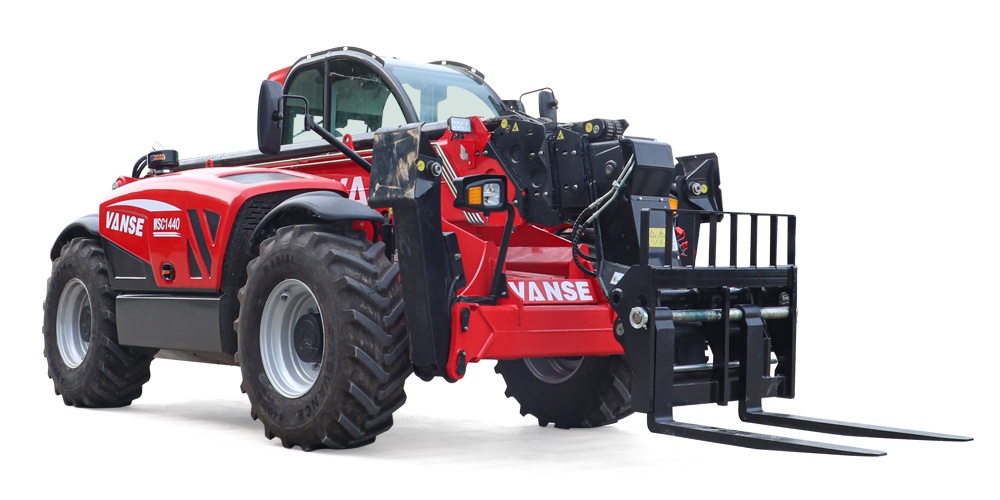
VANSE 735 7m Telescopic Handler
A balanced mid-duty solution for construction, agriculture, logistics, and warehousing, combining stable lifting, strong traction, and everyday versatility.


About the Author:
The VANSE team is a group of experienced professionals specializing in construction machinery research, manufacturing, and technical support. With deep industry knowledge and hands-on experience, our engineers and product specialists share practical insights on equipment selection, operation, maintenance, and industry trends.
Share
You May Also Interest
-

22 October, 2026
Telehandler for Grain Handling on Large Modern Farm Sites
Explore telehandler grain handling options in the United States, including suppliers, specs, farm uses, and cost-saving buying advice for grain operations.
-
21 October, 2026
Telehandler vs All Terrain Forklift: Which Lifts Better
Telehandler vs all terrain forklift in the United States: compare reach, lifting, terrain use, costs, and supplier options for smarter equipment buying.
-
20 October, 2026
10 Ton Telehandler: Extreme Lifting for Major Industrial
Explore 10-ton telehandler options in the United States, top suppliers, buying tips, applications, and service support for major lifting projects.
-
19 October, 2026
Telehandler for Demolition: Safe Structural Dismantling
Explore telehandler demolition options in the United States, including suppliers, attachments, safety, market trends, and cost-effective sourcing advice.