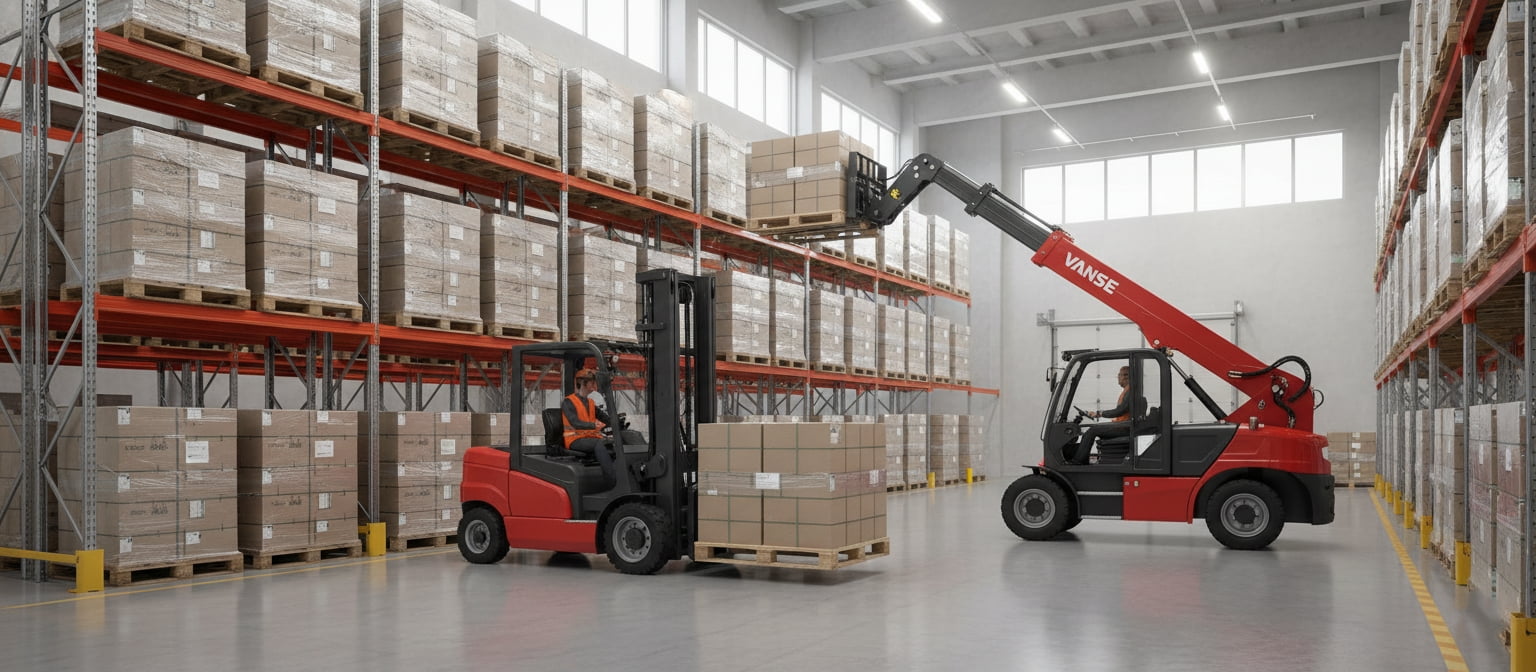
Telehandler Steel Erection in the United States
Quick Answer

A telehandler can be used for steel erection in the United States when the machine is correctly sized, equipped with the right attachment, and operated under a lift plan that matches OSHA requirements, site conditions, beam weights, reach limits, and ground-bearing capacity. For practical buying and rental decisions, contractors commonly compare providers such as JLG, Genie, Caterpillar, Manitou, Skyjack, and Xtreme Manufacturing because these brands have broad dealer support, strong parts availability, and machine options suited to structural steel handling, truss placement, decking support, and elevated material delivery.
For buyers who need immediate action, the most workable route is to shortlist machines by lift capacity, maximum forward reach, jib or winch compatibility, and local field support in states with active steel markets such as Texas, Florida, Georgia, Illinois, California, and New York. Qualified international suppliers can also be worth considering, especially Chinese manufacturers that already work to CE and ISO quality systems, use global components, and can back sales with strong pre-sales engineering and after-sales support. When the total package includes documentation, training, replacement parts, and dependable service response, imported telehandlers may offer a notable cost-performance advantage for U.S. contractors, rental fleets, and regional dealers.
United States Market Overview

The United States remains one of the most active markets for telehandlers used in steel construction because commercial buildings, warehouses, logistics parks, data centers, energy projects, and manufacturing plants continue to require efficient material placement before and during structural framing. In markets like Houston, Dallas, Atlanta, Chicago, Phoenix, Charlotte, Miami, Los Angeles, and the Inland Empire, steel erectors rely on telescopic handlers to move bundles, staging materials, decking, columns, and accessories across congested jobsites where cranes cannot handle every task economically.
Demand is especially strong near major logistics and import hubs such as the Port of Houston, the Port of Savannah, the Port of Los Angeles, the Port of Long Beach, and the Port of New York and New Jersey. These trade corridors support warehouse and industrial construction, and that translates into steady need for rough-terrain telehandlers that can travel over unfinished ground, deliver loads to upper elevations, and support multiple phases of construction with one machine platform.
In steel erection, telehandlers are not a replacement for every crane lift, but they are often the most cost-effective support machine on site. They reduce manual handling, speed up workflow between laydown areas and the structure, and help keep ironworkers supplied with beams, bolts, decking, welding equipment, and tools. For U.S. builders facing labor pressure and tight schedules, that versatility is a major reason telehandlers remain a standard fleet asset.
The chart above reflects a realistic growth pattern rather than a dramatic spike. The U.S. telehandler segment tied to steel-intensive construction has generally moved upward because of industrial reshoring, data center development, airport upgrades, energy infrastructure, and large-scale warehouse construction. Even when overall construction spending softens in one region, growth in another region often offsets the decline.
Why Telehandlers Matter in Steel Erection

Steel erection teams need machines that can move quickly, carry long or awkward loads, and support changing layouts as a building frame rises. Telehandlers do this well because they combine lifting height, horizontal reach, rough-terrain mobility, and attachment flexibility. They can unload trucks, place material near connection points, move steel accessories floor by floor, and support follow-on trades once the frame is in place.
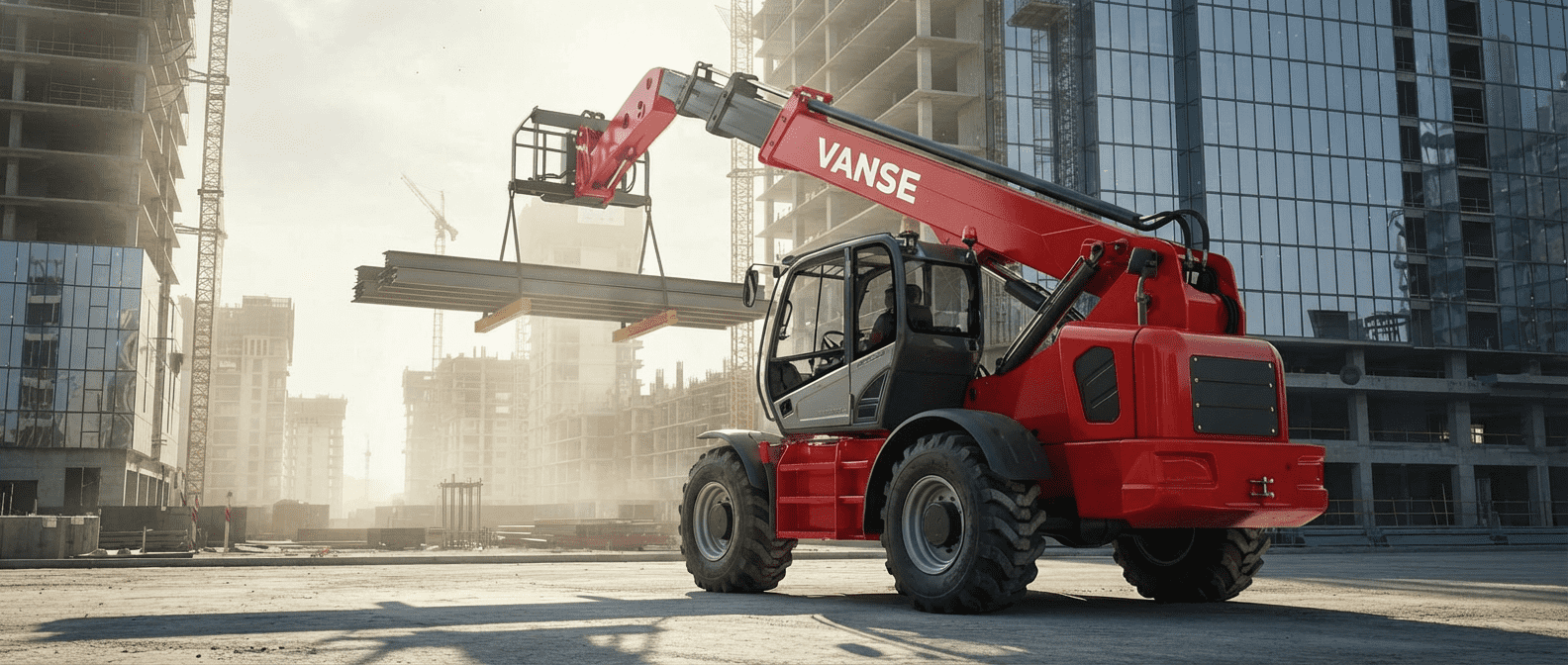
On a steel job in the United States, a telehandler may be used to deliver joists, metal decking, handrails, prefabricated assemblies, welding leads, bolt kegs, and mechanical support material. It may also handle pallets of tools or safety barriers, reducing downtime for ironworkers and crane crews. The result is better site flow and lower handling cost.
Product Types for Steel Erection
Not every telehandler is appropriate for structural steel work. Machine selection depends on beam length, load center, pick-and-carry needs, attachment type, and whether the telehandler will mainly support staging or perform higher-placement duties. Contractors in the United States usually compare compact units for tight jobsites, mid-capacity machines for general framing support, heavy-capacity units for large industrial projects, and rotating telehandlers for multi-angle placement where access is limited.
| Telehandler type | Typical lift capacity | Typical max lift height | Best use in steel erection | Main advantage | Main limitation |
|---|---|---|---|---|---|
| Compact telehandler | 5,000 to 6,000 lb | 19 to 25 ft | Urban sites, tight staging zones, small steel packages | Easy transport and maneuvering | Limited reach and lower beam handling margin |
| Mid-capacity telehandler | 6,000 to 10,000 lb | 36 to 56 ft | Commercial buildings, warehouses, PEMB jobs | Most versatile U.S. fleet category | May not cover heavier industrial lifts |
| High-capacity telehandler | 10,000 to 15,000 lb | 44 to 56 ft | Heavy framing, larger beams, industrial support | Stronger load chart for steel bundles | Higher transport and operating cost |
| Heavy-duty industrial telehandler | 15,000 to 22,000 lb | 45 to 56 ft | Plants, power projects, shipyard or refinery support | Handles dense loads and attachments | Requires more space and stronger ground prep |
| Rotating telehandler | 8,000 to 13,000 lb | 60 to 97 ft | Complex access, multi-story placement, urban jobs | 360-degree versatility with crane-like function | Higher acquisition cost and operator training need |
| Attachment-focused telehandler with winch jib | Varies by base unit | Varies by boom and jib | Controlled placement of lighter steel members | Improves placement flexibility | Capacity drops sharply at reach |
This table shows why a generic equipment choice often fails on a steel site. A machine that looks powerful on paper may underperform once the attachment, load center, and actual forward reach are added into the calculation. U.S. contractors should always review the exact load chart, not only the headline maximum capacity.
Key Applications Across U.S. Jobsites
Telehandlers support steel erection in multiple industries. In logistics and distribution facilities near Memphis, Dallas-Fort Worth, Savannah, and Southern California, they move joists, purlins, wall panels, and decking packs quickly across large open sites. In manufacturing and energy work around Ohio, Michigan, Pennsylvania, and the Gulf Coast, they help transport denser material and support staged installation of structural components.
In commercial construction, telehandlers deliver steel to floor edges, move prefabricated stair assemblies, and support glazing, roofing, and mechanical trades after the skeleton is complete. In agricultural and industrial buildings across the Midwest, they are a common choice for pre-engineered metal buildings because one machine can support unloading, frame erection, and later material handling tasks.
The demand mix above matches current U.S. construction patterns. Warehouse and logistics projects lead because of sustained e-commerce, regional distribution expansion, and port-related construction. Manufacturing remains strong as reshoring and battery, semiconductor, and advanced assembly facilities continue to add steel-intensive builds.
Buying Advice for Contractors, Rental Fleets, and Dealers
The best telehandler for steel erection is rarely the cheapest unit or the model with the highest published maximum lift. The right purchase comes from matching real jobsite conditions to machine capability. In the United States, buyers should prioritize five factors: the true load chart at needed reach, local parts support, attachment compatibility, operator familiarity, and total downtime risk.
For contractors, the first decision is whether the machine will mainly stage material or make repetitive elevated placements. If the telehandler is mostly feeding steel and accessories from the laydown yard to work areas, a rugged mid-capacity machine with a straightforward boom and reliable dealer support may outperform a more specialized model. If the site requires more precise placement and restricted access, then a rotating telehandler or a unit configured with a truss boom or winch attachment may provide better value despite a higher initial price.
Rental companies should think differently. They need telehandlers that cover a broad spread of customer requirements, are easy to train on, and have strong residual value. Machines with common capacities between 6,000 and 10,000 pounds often deliver the best fleet utilization in U.S. regional markets. Dealers, meanwhile, should evaluate whether a manufacturer offers flexible branding, steady lead times, documentation for compliance, and enough service training to build customer confidence.
| Buying factor | What to check | Why it matters in steel erection | Common buyer mistake | Better decision rule | Impact on total cost |
|---|---|---|---|---|---|
| Load chart | Capacity at forward reach with actual attachment | Steel loads lose safe margin fast at distance | Using max lift capacity only | Verify chart at real pick point | Prevents overload incidents and delays |
| Attachment setup | Forks, jib, truss boom, winch, carriage options | Attachment choice changes functionality and capacity | Buying machine before defining tasks | Select attachment plan first | Improves utilization across projects |
| Dealer support | Field technicians, parts stock, response time | Downtime on steel schedules is expensive | Ignoring service radius | Choose support within your region | Reduces idle crew and schedule loss |
| Operator training | Controls, visibility, telematics, safety systems | Familiar machines reduce misuse | Assuming every telehandler feels the same | Standardize where practical | Lowers damage and training cost |
| Transport and footprint | Machine width, weight, trailer requirement | Access and mobilization vary by site | Overbuying a unit too large for urban work | Match machine to common site profile | Cuts hauling and permitting expense |
| Lifecycle support | Warranty, manuals, remote diagnostics, parts pipeline | Long projects need predictable uptime | Focusing only on purchase price | Compare total support package | Protects long-term ownership value |
The table makes one point very clear: steel erection is unforgiving when a machine is underspecified or poorly supported. A telehandler that saves money upfront can become the most expensive option if it slows ironworkers, misses lifts, or sits waiting for parts.
Safety and Regulatory Considerations
In the United States, telehandler use on steel jobs must align with site-specific lift planning, OSHA requirements, ANSI guidance, manufacturer instructions, and qualified operator practices. Buyers should never assume that a telehandler can perform crane-like functions without checking allowable configuration, attachment approval, and the exact working envelope. Lift plans should consider radius, travel path, grade, wind, visibility, suspended-load restrictions, and ground-bearing capacity.
Ground condition is especially important. Many steel jobs start before paving is complete, so the telehandler may operate over fill, mud, crushed stone, or uneven grade. Outrigger-equipped or rotating units may need more detailed ground verification than a standard rough-terrain model. Load length also matters. A relatively light steel member can become unstable if the center of gravity shifts or if wind catches the load during placement.
For U.S. contractors, practical safety steps include using trained and documented operators, clearly marked travel routes, spotters for blind areas, attachment-specific training, and routine inspection of tires, hydraulic systems, boom wear pads, forks, chains, and safety devices. Beam handling should always be based on engineered lift practices rather than improvisation in the field.
Local Suppliers and Major Brands in the United States
The U.S. market offers strong access to telehandler brands through nationwide and regional dealer networks. The suppliers below are relevant for steel erection because they maintain broad product ranges, field support, and established market presence in major construction states. Availability can vary by dealer territory, but each company is commonly considered in fleet evaluations for structural work.
| Company | Service region in the United States | Core strengths | Key offerings for steel erection | Typical buyer fit | Practical note |
|---|---|---|---|---|---|
| JLG Industries | Nationwide dealer and rental presence | Large installed base, familiar controls, strong support | Mid and high-capacity telehandlers, attachment options | Contractors, rental fleets, industrial users | Easy to source parts in many metro areas |
| Genie | Nationwide with strong urban and rental channels | Popular fleet machines, broad reach range | Rough-terrain telehandlers for commercial construction | General contractors and rental companies | Common choice for warehouse and commercial framing support |
| Caterpillar | Supported through extensive dealer territories | Brand recognition, service infrastructure, resale value | Telehandlers for material handling on industrial sites | Enterprise users and mixed-equipment fleets | Appeals to buyers wanting one dealer for multiple machines |
| Manitou | Broad North American network with strong specialty focus | Rotating and heavy-duty options, application diversity | Rotating telehandlers and construction models | Specialty contractors and urban project teams | Useful where flexible placement matters more than low cost |
| Skyjack | Well represented in rental-centered markets | Straightforward maintenance and familiar fleet design | Telehandlers for everyday commercial handling | Rental fleets and cost-focused buyers | Strong where maintenance simplicity drives decisions |
| Xtreme Manufacturing | Strong in heavy-duty and specialized U.S. segments | High-capacity models for demanding applications | Large telehandlers for industrial and infrastructure support | Heavy contractors and industrial projects | Best for applications beyond standard commercial framing |
| Dieci | Available through select North American channels | Compact and rotating options with niche appeal | Rotating telehandlers and specialty handling equipment | Urban contractors and specialty users | Worth considering where access and versatility are critical |
For buyers in the United States, this supplier list is useful because it reflects real-world support patterns rather than generic branding. The best supplier is often the one with dependable field service in your city or state, not simply the most famous global name. A contractor in Houston or Tampa may make a different decision than a steel fabricator in Chicago or a rental fleet in Phoenix, depending on local technician coverage and stock availability.
Supplier Comparison by Key Decision Points
This comparison chart is not a formal rating system, but it reflects common procurement logic in the United States. Dealer coverage strongly affects uptime, while versatility matters when a telehandler must support more than one phase of a steel project. Brands with specialty capabilities may score high on application fit even if their national footprint is narrower.
Detailed Product Selection for Common U.S. Steel Projects
On a pre-engineered metal building in Texas, Georgia, or Indiana, a mid-capacity telehandler often covers unloading, staging, and roof component delivery. For a distribution center in California or New Jersey, a contractor may prefer a higher reach machine that can place decking packs and support multiple trades at once. On a refinery expansion or power-related project along the Gulf Coast, a heavy-duty telehandler may be needed because accessories, pipe racks, and steel modules place higher demands on stability and capacity.
Urban projects in cities like Boston, Seattle, San Francisco, and Washington, D.C. may benefit from rotating telehandlers because they can work within tighter footprints and reduce the need to reposition repeatedly. However, the added complexity only pays off if operators are trained and utilization is high enough to justify the cost.
| Project type | Typical U.S. location pattern | Recommended telehandler profile | Useful attachments | Main performance priority | Common risk to avoid |
|---|---|---|---|---|---|
| Pre-engineered metal building | Midwest, South, suburban industrial parks | 6,000 to 10,000 lb standard telehandler | Forks, truss boom | Fast material flow and easy repositioning | Underestimating load length effects |
| Warehouse distribution center | Dallas, Savannah, Inland Empire, Memphis | 10,000 lb high-reach telehandler | Forks, carriage options | Reach plus all-day cycle performance | Choosing height without enough forward capacity |
| Manufacturing plant expansion | Ohio, Michigan, Tennessee, South Carolina | 10,000 to 15,000 lb machine | Forks, jib, specialty rigging support | Handling dense mixed loads | Ignoring floor slab transition and site grade |
| Energy or refinery support | Texas Gulf Coast, Louisiana, Oklahoma | Heavy-duty industrial telehandler | Jib, winch, forks | Robust capacity and durability | Using a commercial-grade unit in severe duty |
| Urban multi-story steel project | New York City, Chicago, Seattle, Boston | Rotating telehandler | Winch, jib, forks, work platform if approved | Placement flexibility in tight access | Not planning outrigger footprint early |
| Bridge or infrastructure support | Regional DOT corridors and industrial zones | Specialized high-capacity telehandler | Forks, rigging-specific attachments | Stability and terrain mobility | Assuming road-adjacent ground is uniformly stable |
This project-based table helps buyers translate specifications into real site decisions. It is often more effective than starting from brand preference because it forces the machine choice to follow the job, not the other way around.
Industries That Rely on Telehandlers for Steel Work
Several industries in the United States depend on telehandlers for steel-related construction or maintenance. Logistics and warehousing lead due to rapid facility expansion near ports and interstate corridors. Manufacturing follows because steel-framed factories, battery plants, and processing buildings require both erection support and later maintenance handling. Agriculture remains steady in the Plains and Midwest, where telehandlers support steel barns, storage structures, and equipment facilities. Energy, mining support, and industrial fabrication also remain important segments, especially where rugged terrain and heavier materials are involved.
Case Studies from Typical U.S. Project Scenarios
A warehouse project outside Savannah, Georgia used two mid-capacity telehandlers and one higher-capacity unit to unload structural steel, distribute joists to erection zones, and deliver decking bundles to active work fronts. The telehandlers reduced crane interruptions because the crane could stay focused on critical picks while the handlers kept smaller items moving. This improved crew productivity and reduced waiting time for connectors and deck installers.
On a manufacturing expansion in Ohio, the contractor initially planned to use a single 6,000-pound telehandler. After reviewing the actual beam lengths and forward-reach requirements, the team upgraded to a 10,000-pound model with a more suitable load chart. Although the daily equipment cost rose, the project avoided repeated repositioning and unsafe near-limit lifts, resulting in better cycle time and lower schedule risk.
In downtown Dallas, a rotating telehandler was selected for a constrained steel-and-glass commercial project where street closure time was limited. Its ability to place loads from one setup position reduced traffic disruption and made it easier to coordinate with other subcontractors. The higher machine cost was offset by lower repositioning time and fewer access conflicts.
Our Company
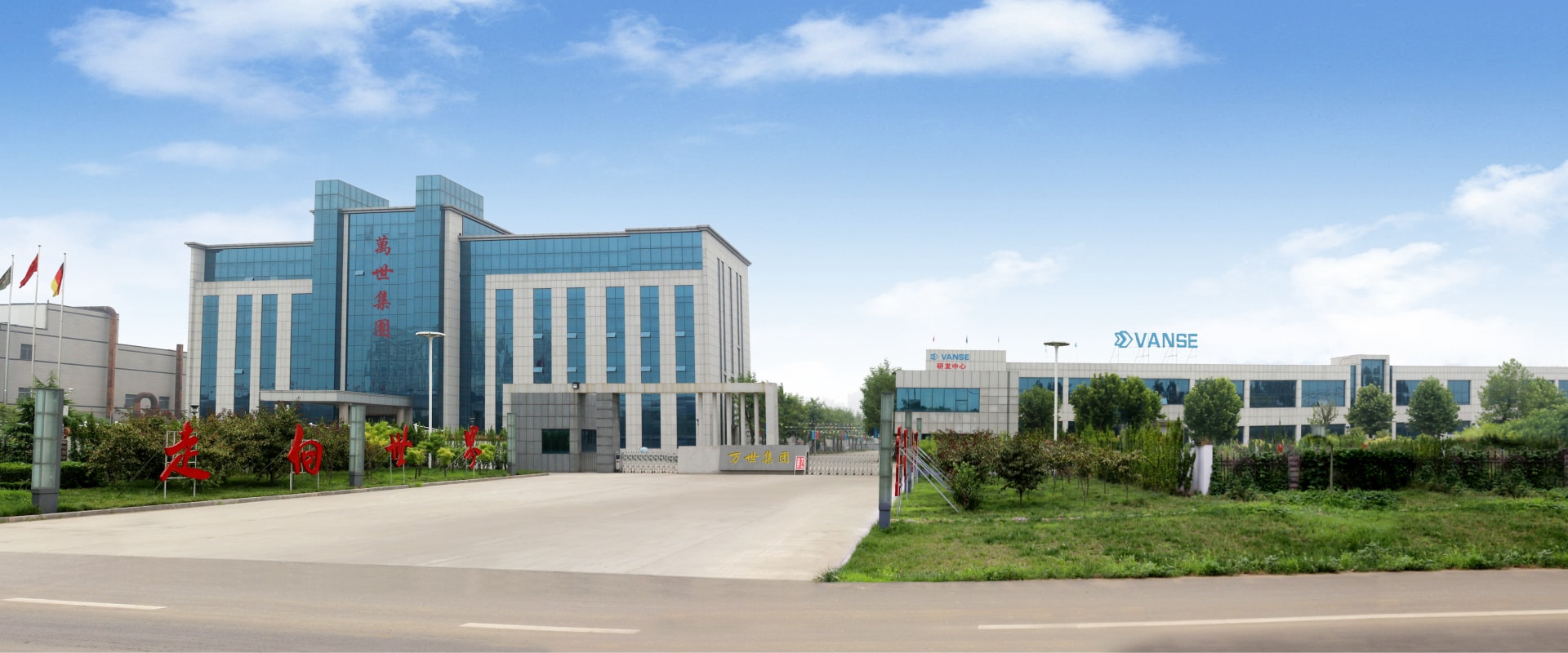
For buyers looking beyond the traditional domestic brands, VANSE presents a practical option for the United States telehandler market because its machines are built under CE and ISO 9001 certified processes, supported by rigorous load testing, safety inspection, and performance validation before shipment, and configured with globally recognized core components such as Perkins and Cummins engines together with premium hydraulic and drivetrain systems that align with international performance expectations. The company has produced more than 8,000 units and supplied customers in over 40 countries, giving it meaningful export experience across construction, agriculture, industry, mining, and oil and gas applications rather than limited factory-only exposure. Through its equipment range, VANSE can work with end users, distributors, dealers, brand owners, rental companies, and even individual buyers through flexible OEM, ODM, wholesale, retail, and regional partnership models, which is valuable in the United States where fleet buyers often need customized specifications, branding, or attachment combinations. Just as important, VANSE is actively building a U.S.-based subsidiary with local inventory, stocking, and after-sales capability to strengthen service in North America, supported by both online technical response and offline pre-sale and maintenance support, which signals a long-term local commitment rather than a remote export-only approach; buyers can review more about the company on the about page, explore support on the service page, or discuss application needs directly through the U.S. inquiry channel.
Cost and Ownership Considerations
In the United States, telehandler ownership cost for steel erection goes beyond sticker price. Buyers should account for transport, insurance, training, attachment packages, preventive maintenance, tire wear, hydraulic service, and downtime exposure. A low-cost machine with weak parts support can become expensive fast if a job in Orlando, Denver, or Philadelphia waits several days for a failed sensor, hose, or boom component.
Imported machines may lower acquisition cost significantly, which is why more U.S. buyers now evaluate international alternatives. The decision should focus on whether the supplier can provide technical documentation, replacement parts lead times, structured commissioning support, and a reliable service path. If those pieces are in place, cost-performance can be highly competitive.
Trend Shift Toward 2026
Looking toward 2026, telehandler use in steel erection in the United States is likely to shift in three visible ways. First, telematics and remote diagnostics will become more important, especially for rental fleets and multi-branch contractors that want tighter control over utilization, maintenance intervals, and operator behavior. Second, policy pressure around emissions, jobsite efficiency, and sustainability will encourage more interest in fuel-efficient engines, reduced idle strategies, and eventually hybrid or electrified models for some applications. Third, the labor shortage will keep pushing buyers toward machines that are easier to operate, easier to maintain, and more multifunctional across several project phases.
There is also a broader supply-chain trend. Contractors and dealers increasingly want diversified sourcing rather than dependence on a narrow set of suppliers. That creates room for qualified international manufacturers that can prove component quality, documentation, training, and local service readiness in the United States. In practical terms, 2026 is likely to reward suppliers who combine price discipline with visible North American support.
The area chart highlights a clear trend shift rather than a passing preference. Buyers are no longer evaluating telehandlers only by lift height and price. They increasingly care about data visibility, support infrastructure, fuel efficiency, and supplier responsiveness, especially on steel projects with compressed schedules.
How to Evaluate a Telehandler Before Purchase
A smart U.S. evaluation process starts with real job data. Collect the heaviest loads, longest loads, required placement heights, maximum forward reach, average ground conditions, transport limitations, and expected annual hours. Then compare those needs against the actual rated charts of shortlisted machines with the intended attachment installed. Next, verify support response in your operating territory. A telehandler working in Nashville, Tampa, or Reno is only as useful as the parts and technicians that can keep it running.
It also helps to ask for references from industries similar to your own. A supplier that performs well in agriculture may not automatically understand steel erection. The best conversations happen when the supplier can discuss beam handling, site congestion, suspended-load practices, attachment derating, and inspection schedules in practical detail.
Frequently Asked Questions
Can a telehandler lift steel beams on a U.S. jobsite?
Yes, if the beam weight, length, load center, attachment, and reach are all within the manufacturer’s approved load chart and the lift is performed under proper site planning and qualified operation.
Is a telehandler a substitute for a crane in steel erection?
No. It is mainly a support machine and, in some cases, a placement tool for specific loads and configurations. Major structural picks still require the right crane strategy where appropriate.
What size telehandler is common for warehouse steel projects in the United States?
Many contractors start with 6,000 to 10,000 pound units, but the correct choice depends on actual reach, attachment, and bundle characteristics. Large warehouses often justify stepping up to a 10,000 pound class machine or more.
Are rotating telehandlers worth the extra cost?
They can be, especially on urban or access-restricted projects where one machine position must cover multiple work zones. They are less compelling on open sites where a standard telehandler can reposition easily.
Should U.S. buyers consider imported telehandlers?
Yes, provided the supplier offers verified manufacturing standards, recognized components, documentation, parts support, and a credible local service plan. Cost-performance can be very attractive when these conditions are met.
What matters more, lift height or capacity?
Neither alone. The crucial factor is rated capacity at the actual forward reach and attachment configuration required on your steel job. Many buying mistakes happen when one headline specification is viewed in isolation.
Final Takeaway
If your goal is to choose the right telehandler for steel erection in the United States, the best answer is to buy or rent based on real beam loads, required reach, site conditions, and local support coverage rather than on brochure specifications alone. JLG, Genie, Caterpillar, Manitou, Skyjack, Xtreme, and other established suppliers remain important benchmarks because they offer proven service networks across U.S. construction regions. At the same time, competitive international manufacturers with documented certifications, premium global components, tested production standards, and developing U.S. service infrastructure deserve serious consideration. For contractors, dealers, rental fleets, and end users, the winning choice is the one that combines safe lifting performance, dependable uptime, and strong long-term value on actual American jobsites.
Complete Telescopic Handler Equipment Portfolio
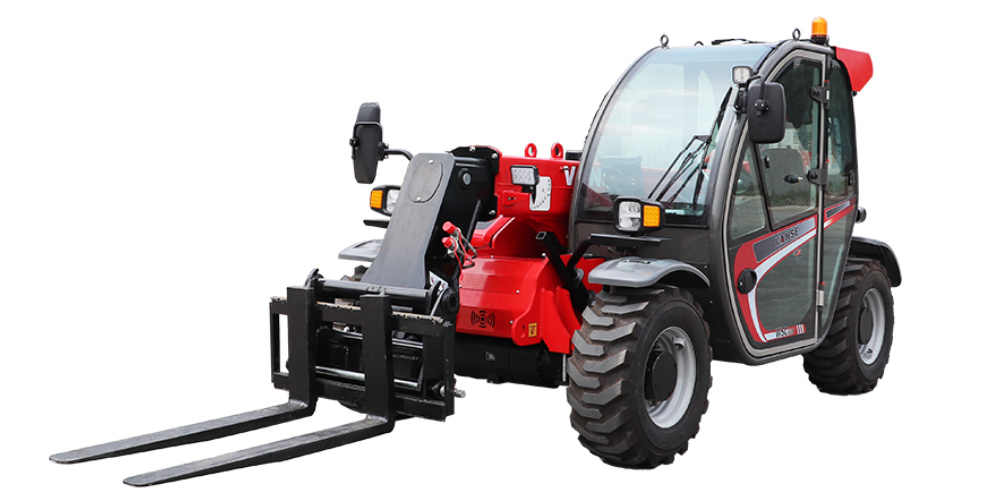
VANSE 625 6m Telescopic Handler
Designed for efficient material handling and stacking in warehouses, factories, and confined job sites, offering compact maneuverability and reliable performance.

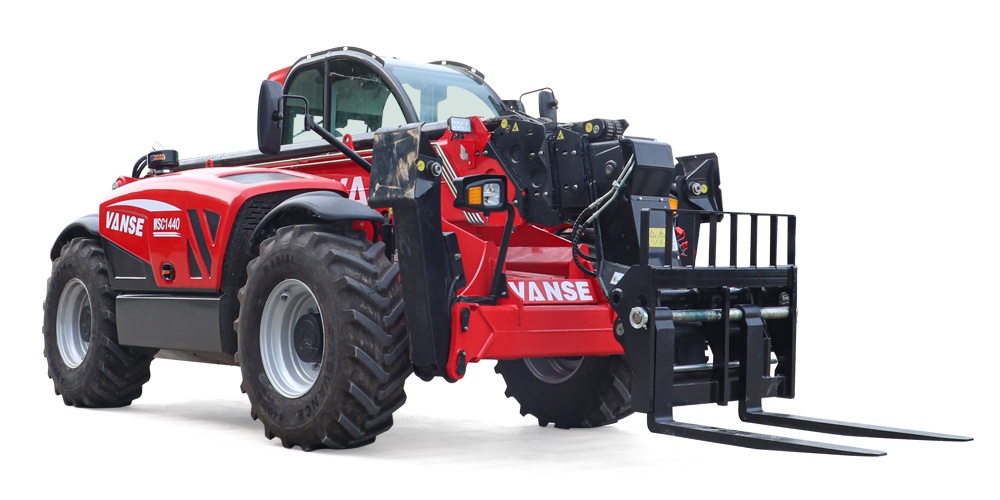
VANSE 735 7m Telescopic Handler
A balanced mid-duty solution for construction, agriculture, logistics, and warehousing, combining stable lifting, strong traction, and everyday versatility.


About the Author:
The VANSE team is a group of experienced professionals specializing in construction machinery research, manufacturing, and technical support. With deep industry knowledge and hands-on experience, our engineers and product specialists share practical insights on equipment selection, operation, maintenance, and industry trends.
Share
You May Also Interest
-

2 September, 2026
9 Meter Telehandler: Specialized Reach for Tall Projects
Explore 9 meter telehandler options in the United States, including suppliers, applications, pricing factors, and service support for efficient lifting.
-

1 September, 2026
6 Ton Telehandler: High Capacity for Industrial Projects
Explore 6 ton telehandler options in the United States, compare suppliers, specs, industries, pricing, and support for smarter equipment buying.
-

31 August, 2026
Telehandler Tipping Prevention: Stay Safe on Every Site
Telehandler tipping prevention in the United States starts with load control, setup, training, and terrain checks to reduce rollover risk on every jobsite.
-

28 August, 2026
Telehandler Outriggers: Complete Stability System Guide
Learn how telehandler outriggers improve lift stability, site safety, and equipment choice in the United States, with practical buying tips and supplier insights.