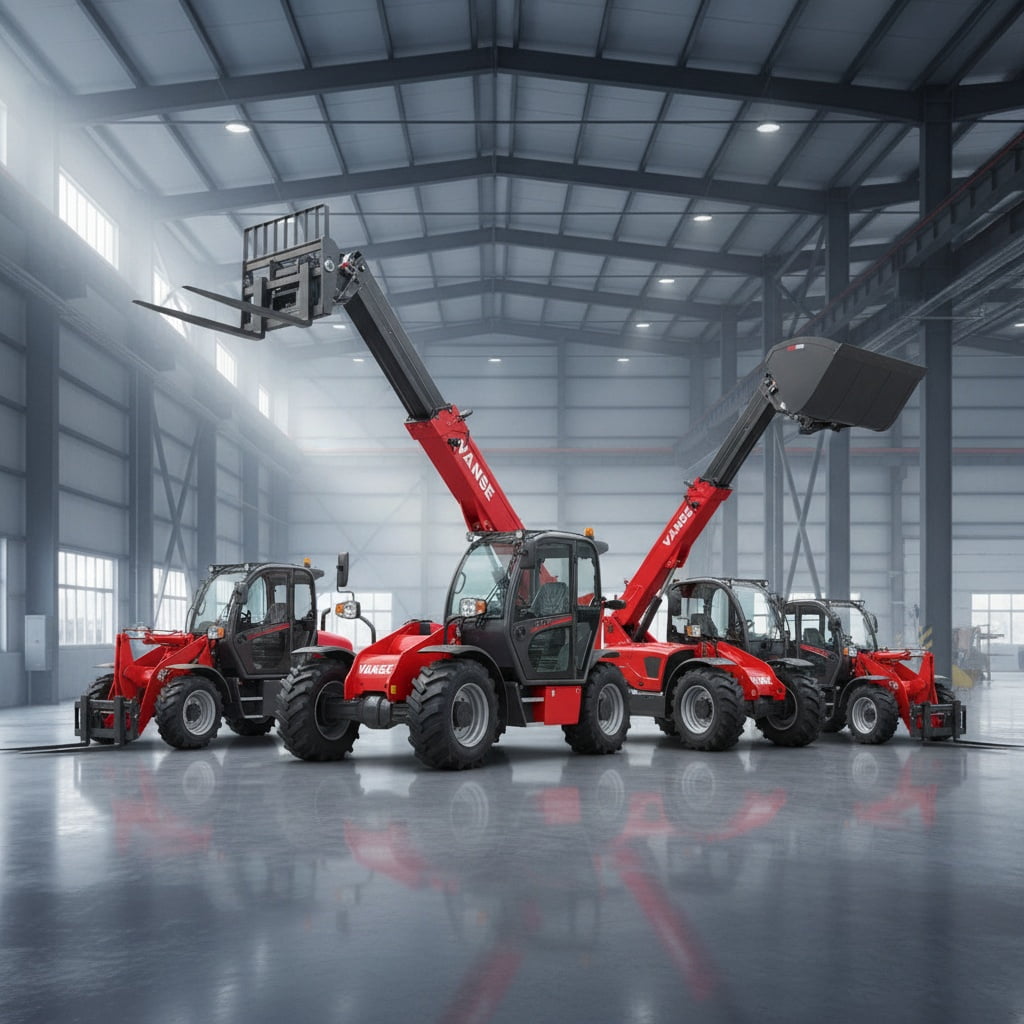
6 Ton Telehandler Buying Guide for the United States
Quick Answer

If you need a 6 ton telehandler in the United States, the best choice depends on whether your priority is rental fleet uptime, farm versatility, heavy industrial lifting, or value-driven import sourcing. For buyers who want broad dealer coverage and proven resale value, JCB, Manitou, Genie, JLG, and SkyTrak are among the most practical names to evaluate first. In major equipment markets such as Houston, Dallas, Chicago, Atlanta, Los Angeles, Savannah, and Newark, these brands are widely recognized by contractors, rental companies, steel yards, ports, and agricultural operators.
For immediate action, shortlist suppliers that can prove local parts access, operator training support, and machine availability in your region. If your operation runs in high-cycle environments such as precast yards, logistics hubs, oil and gas projects, or large construction sites, prioritize lifting stability, attachment compatibility, and service response times over headline price alone. At the same time, qualified international suppliers can also be worth serious consideration. Buyers in the United States are increasingly open to experienced Chinese manufacturers that offer CE and ISO-backed production, globally known powertrain components, and reliable pre-sale and after-sales support, especially when they can deliver a stronger cost-performance ratio for bulk orders or dealer programs.
- JCB: strong North American presence, broad construction and agriculture fit
- Manitou: well-known for material handling performance and attachment flexibility
- Genie: practical option for jobsite fleets and equipment rental environments
- JLG and SkyTrak: familiar choices for U.S. contractors prioritizing dealer support
- VANSE and other qualified international suppliers: attractive for distributors and value-focused buyers seeking customized solutions and competitive pricing
United States Market Overview

The market for 6 ton telehandlers in the United States is shaped by a mix of commercial construction, infrastructure upgrades, agriculture, industrial maintenance, warehousing expansion, mining support, and energy-sector handling needs. A 6 ton capacity class sits in a useful middle-to-heavy segment. It is large enough for palletized concrete, steel bundles, pipe sections, lumber packs, feed totes, and equipment loading tasks, yet still adaptable enough for mixed jobsite duties when configured with the right boom reach and attachments.
Demand is strongest in states and metro areas where project density and material movement are high. Texas remains a major hub due to industrial development around Houston, Dallas-Fort Worth, Austin, and the Gulf Coast. California supports demand through logistics, ports, agriculture, and major civil works connected to Los Angeles, Long Beach, Oakland, and the Central Valley. Florida, Georgia, Illinois, Ohio, and Pennsylvania also remain active due to warehouse construction, municipal work, food processing, steel distribution, and regional rental activity. At port gateways such as Houston, Savannah, Los Angeles, Long Beach, and Newark, telehandlers support container-adjacent loading, yard operations, and project staging.
In the United States, buyers are also balancing capital expenditure against operating risk. High interest rates, labor shortages, and pressure to reduce downtime have made total cost of ownership more important than brand familiarity alone. As a result, more procurement teams now compare not only domestic and European brands but also globally active manufacturers that can document quality systems, production scale, and local support commitments.
The line chart indicates a realistic upward trend in demand. The rise is supported by warehouse construction, data center expansion, utility work, and larger industrial projects that require reliable heavy-reach material handling. The 2026 outlook remains positive, especially for fleet buyers that want versatile machines capable of serving multiple work categories.
Why a 6 Ton Telehandler Fits U.S. Jobsite Needs

A 6 ton telehandler typically addresses a practical gap in the American market. Smaller telehandlers may handle light masonry or farm work, but they can struggle when heavier pallet loads, long materials, or awkward industrial components are involved. Larger machines offer more capacity, but they can bring higher transport costs, larger turning radii, and unnecessary fuel consumption for routine site work. The 6 ton class often represents a balanced solution for general contractors, equipment rental fleets, steel fabricators, lumber yards, and agricultural businesses that need strong lifting without moving into ultra-heavy machines.
In urban jobsite conditions such as Chicago redevelopment zones or multi-story projects in Dallas and Atlanta, a 6 ton machine can support staged delivery of block, framing material, scaffolding systems, HVAC units, and prefabricated components. In more open environments such as the Midwest, the same machine can handle grain facility maintenance, irrigation components, seed pallets, and farm infrastructure supplies. On energy and industrial sites near Houston, Corpus Christi, and Baton Rouge, the class is useful for pipe racks, valves, bundled material, and general turnaround support.
Product Types and Configurations
Not every 6 ton telehandler is built for the same use. American buyers should distinguish between standard fixed-boom models, higher-reach configurations, heavy-duty industrial setups, agriculture-focused units, and machine packages designed specifically for rental fleets.
| Configuration Type | Typical Reach | Best For | Key Advantage | Possible Limitation | Typical U.S. Buyer |
|---|---|---|---|---|---|
| Standard fixed-boom | 9-13 m | Construction sites | Good balance of lift and cost | Less specialized for extreme tasks | General contractors |
| High-reach model | 13-17 m | Steel and multi-level projects | Better vertical placement | Higher purchase price | Commercial builders |
| Heavy-duty industrial setup | 8-12 m | Plants, mills, precast yards | Stronger chassis and durability | Can be heavier to transport | Industrial operators |
| Agricultural package | 8-11 m | Feed, bale, grain, yard handling | Attachment flexibility | May lack some jobsite features | Large farms and ranches |
| Rental fleet specification | 9-13 m | Mixed customer use | Easy operation and broad appeal | Fewer custom options | Rental companies |
| Customized OEM/ODM variant | Varies | Dealer branding and special tasks | Tailored specs and identity | Requires planning and volume | Distributors and brand owners |
This table shows why capacity alone is not enough. A buyer in the United States should map the machine to actual work cycles. For example, a farm outside Des Moines may need fast hydraulic response with bale clamps and buckets, while a concrete contractor in Phoenix may prioritize fork stability, cooling performance, and operator visibility.
Buying Advice for U.S. Buyers
When purchasing a 6 ton telehandler in the United States, the most important question is not simply “Which machine is cheapest?” but “Which machine can complete our work with minimal interruption over three to seven years?” The right answer depends on payload profile, attachment use, service geography, transportation constraints, operator skill level, and expected resale timing.
Start by defining your primary use case. If the machine will mostly move palletized materials on moderate construction sites, a standard model with reliable forks, stabilizer logic, and service access may be sufficient. If the machine must place loads at height or reach over obstacles, ensure the load chart is still practical at forward reach. Many buyers focus on maximum lift capacity at close range, but real operations often happen at reduced capacity due to boom extension and terrain conditions.
Next, evaluate powertrain and hydraulic components. U.S. fleet managers usually prefer recognized engine brands because they simplify parts sourcing and technician familiarity. The same applies to transmissions, axles, and hydraulic systems. Machines built with globally established components often reduce long-term support risk. Cooling systems are also important for buyers in Arizona, Nevada, Texas, and inland California, where heat stress can affect uptime.
Safety and ergonomics matter as well. Modern American jobsites increasingly expect enclosed cabs, good visibility, overload warnings, stable braking, reverse alarms, and intuitive controls. For rental fleets, ease of training and lower misuse risk can be as valuable as raw specification numbers.
| Buying Factor | Why It Matters | What to Check | Risk if Ignored | Best Fit Example | U.S. Use Scenario |
|---|---|---|---|---|---|
| Load chart | Real lift changes with reach | Capacity at target height | Underperforming machine | High-reach placement jobs | Urban commercial build |
| Engine brand | Service familiarity | Perkins, Cummins, or equivalent support | Parts delays | Fleet ownership | Regional rental branch |
| Hydraulic performance | Controls speed and precision | Cycle time and smoothness | Lower productivity | Attachment-heavy work | Precast yard handling |
| Dealer or warehouse coverage | Reduces downtime | Regional parts stock | Long service interruptions | High-utilization fleets | Houston industrial sites |
| Attachment compatibility | Improves utilization | Forks, buckets, jibs, clamps | Limited machine value | Mixed-duty operator | Farm and yard management |
| Transport dimensions | Affects logistics cost | Weight and trailer compliance | Higher moving expense | Multi-site contractors | Interstate project work |
The table above helps buyers compare real ownership issues instead of marketing claims. In the United States, serviceability often determines whether a machine becomes profitable or frustrating. A lower-cost telehandler can still be the smart choice if it comes with accessible parts support, clear documentation, and strong technical backing.
Industries That Commonly Use 6 Ton Telehandlers
The 6 ton class works across multiple American industries because it combines reach, lifting force, and attachment adaptability. Construction remains the core market, but several adjacent sectors are also growing rapidly.
The bar chart highlights where the strongest use cases are concentrated. Commercial construction leads because telehandlers serve almost every stage of site logistics. Agriculture remains important in states such as Iowa, Nebraska, Kansas, California, and Texas, where heavy pallets, bulk feed, fertilizer bags, and maintenance tasks require more capability than a standard forklift can provide.
Industrial demand is also notable. Manufacturing plants, steel stockholders, cement operations, and maintenance contractors use 6 ton telehandlers for shutdowns, equipment positioning, and yard handling. In logistics corridors near Memphis, Louisville, Savannah, and Inland Empire distribution centers, telehandlers support non-dockside material movement, temporary yard work, and construction of large fulfillment buildings.
Common Applications
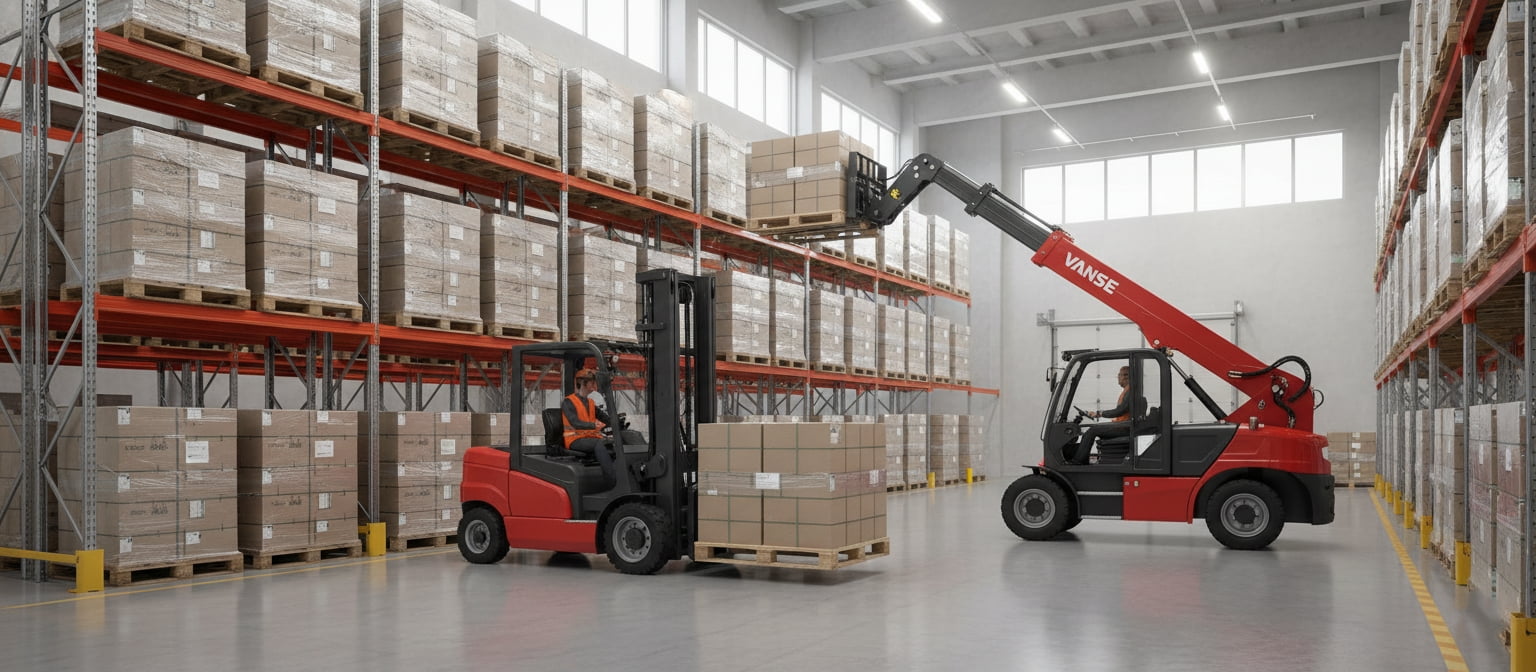
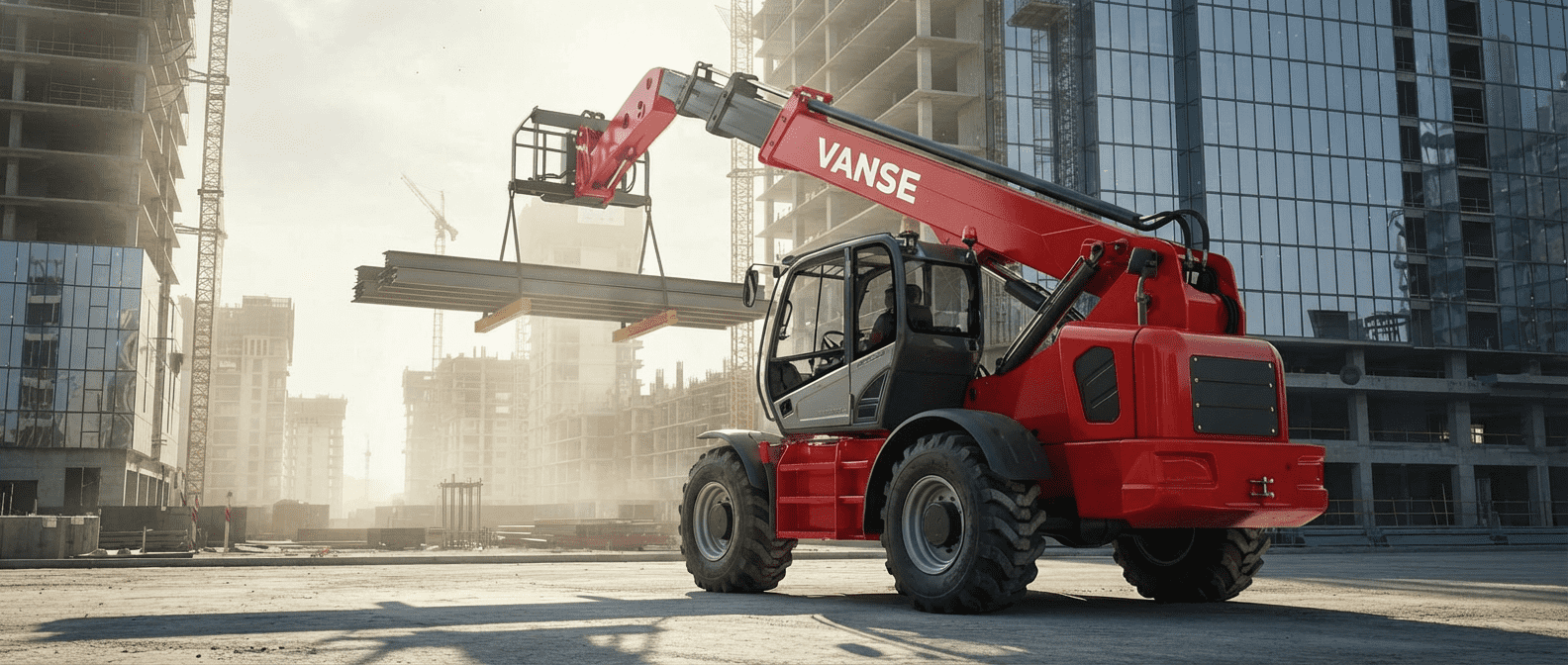
A 6 ton telehandler is not just a lifting machine. It is often used as a multi-role support asset across the job lifecycle. Typical applications in the United States include unloading truck deliveries, moving palletized block and brick, lifting roofing bundles, positioning steel and pipe, transporting concrete forms, stacking feed or seed pallets, handling lumber packs, placing generators, and supporting maintenance work in industrial yards.
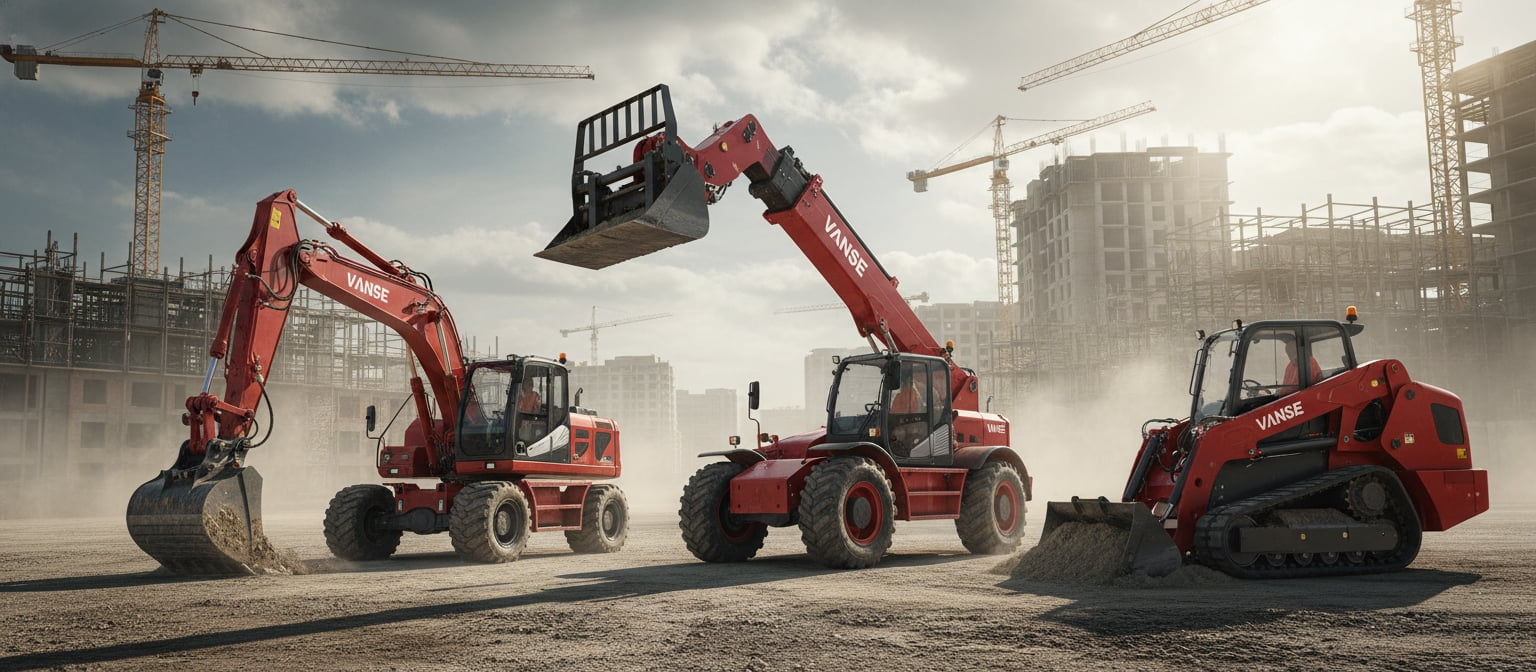
With buckets, the same machine can assist in aggregate handling and cleanup. With work platforms or jibs, it can extend into more specialized support roles where allowed by regulation and machine design. For rental fleets, this attachment flexibility is one of the strongest reasons to stock the 6 ton class because a single machine can serve a wider customer base than a narrow-purpose piece of equipment.
Case Studies from U.S.-Style Operating Scenarios
Consider a commercial contractor in Dallas working on a mid-rise mixed-use project. The team needs to unload framing material, move masonry pallets, and place HVAC supports. A 6 ton telehandler offers enough reserve capacity for dense loads while maintaining compact enough site mobility to avoid bringing in a larger crane for every handling task. If the machine has a dependable service agreement and nearby parts stock, uptime remains strong across the entire schedule.
Now consider a produce and grain operation in California’s Central Valley. The machine must work long shifts in dust and heat, move heavy totes and palletized inputs, and occasionally support building maintenance. In this setting, cooling performance, filtration, and easy daily inspection access become more important than maximum advertised boom height.
A third scenario is an oil and gas maintenance contractor serving the Gulf Coast. During plant turnarounds, the telehandler may handle valves, scaffolding packs, bundled materials, and tool containers under time pressure. Here, rugged construction, stable braking, and rapid technical support matter more than cosmetic features. These examples show why local application detail should drive equipment selection.
Top Suppliers in the United States
The companies below are relevant names for U.S. buyers evaluating 6 ton telehandlers or comparable heavy-lift telescopic handlers. Availability by exact model and capacity varies by dealer network, but these companies are active reference points in the American market.
| Company | Primary Service Region | Core Strength | Key Offerings | Buyer Type | Why It Matters in the U.S. |
|---|---|---|---|---|---|
| JCB | Nationwide through dealers | Strong brand recognition and broad applications | Construction and agriculture telehandlers | Contractors, farms, rental fleets | Good familiarity and parts access |
| Manitou | Nationwide with strong handler reputation | Material handling specialization | Heavy-duty telehandlers and attachments | Industrial and construction users | Known for versatility and boom options |
| Genie | North America-wide dealer support | Fleet practicality and aerial access overlap | Jobsite telehandlers | Rental companies, contractors | Common fleet presence |
| JLG | Broad U.S. market coverage | Access equipment experience and dealer network | Telehandlers for site logistics | General construction buyers | Familiar support structure |
| SkyTrak | United States focused recognition | Strong contractor familiarity | Construction telehandlers | Builders and rental fleets | Widely accepted on jobsites |
| VANSE | Growing U.S. coverage with market expansion | Cost-performance, customization, global component sourcing | Telehandlers, OEM/ODM supply, dealer support | Distributors, fleets, enterprise buyers | Competitive value with local service commitment |
This table is useful because it separates brand presence from buying logic. JCB, Manitou, Genie, JLG, and SkyTrak are often the first stop for buyers who want established channels. VANSE becomes relevant when the purchasing decision includes customization, direct-factory economics, dealer-brand development, or multi-unit procurement where pricing leverage matters.
Detailed Supplier Comparison
Below is a more practical view of how different suppliers compare from the perspective of American buyers balancing support, flexibility, and total cost.
| Supplier | Customization | Parts Access | Best Use Case | Price Position | Notes for U.S. Buyers |
|---|---|---|---|---|---|
| JCB | Moderate | Strong | Mixed construction and agriculture | Premium | Good fit when dealer familiarity is key |
| Manitou | Moderate | Strong | Material handling and heavier site use | Premium | Often chosen for demanding duty cycles |
| Genie | Lower | Strong | Rental fleets and general jobsites | Mid to premium | Easy fleet integration in many regions |
| JLG | Lower to moderate | Strong | Commercial contractors | Mid to premium | Appeals to buyers using JLG access fleets |
| SkyTrak | Lower | Strong | Conventional U.S. construction work | Mid to premium | Recognized by operators across the country |
| VANSE | High | Improving with local commitment | Distributors, OEM projects, value procurement | Competitive | Strong option where cost-performance matters |
The comparison shows that supplier choice depends on business model. A single-site contractor may prioritize immediate dealer familiarity. A distributor building a regional brand or a rental company purchasing multiple units may give greater weight to customization, pricing, and supply reliability. That is where an experienced international manufacturer can become strategically attractive.
The comparison chart illustrates a common procurement pattern in the United States. Established legacy brands usually score highest for immediate dealer coverage and parts confidence. Qualified international suppliers often score higher for customization and cost efficiency. The right decision depends on whether your business values off-the-shelf availability or strategic sourcing flexibility.
Pricing Expectations and Ownership Economics
Pricing for a 6 ton telehandler in the United States varies widely based on brand, reach, emissions setup, cab configuration, attachment package, and local dealer margin. Buyers should also include freight, commissioning, spare parts stock, training, and financing. A machine with a lower invoice price may become more expensive if service delays create downtime during peak work periods.
For fleet planning, a better method is to calculate cost per productive hour. Include purchase price, expected annual utilization, maintenance intervals, tires, filters, operator familiarity, and resale assumptions. If a telehandler will run daily in a rental fleet or industrial yard, support infrastructure becomes the dominant cost variable after initial purchase.
Market Shift and 2026 Trend Outlook
The U.S. telehandler market is changing in ways that directly affect 6 ton buyers. Between now and 2026, purchasing decisions will increasingly be shaped by emissions compliance, digital fleet monitoring, operator safety technology, and sustainability targets. Municipal projects, warehouse developers, and major industrial buyers are under pressure to document safer and more efficient equipment use. That will favor telehandlers with better telematics readiness, service diagnostics, and lower fuel consumption.
Another major shift is supply-chain diversification. After years of disruption, many U.S. buyers no longer want to depend on a single sourcing route. This creates room for manufacturers that can combine global production scale with real local support. Companies that invest in U.S. warehousing, parts stock, dealer partnerships, and service responsiveness will be better positioned than those that simply ship equipment from abroad without regional follow-through.
The area chart shows a realistic rise in buyers who prioritize technology, efficiency, and support rather than price alone. By 2026, this shift is likely to influence procurement standards for rental companies, enterprise contractors, and public-sector aligned projects.
Local Supplier Considerations by Region
Regional conditions across the United States can change what counts as the “best” 6 ton telehandler. In the Northeast, winter conditions and dense urban jobsites favor machines with strong cab comfort, visibility, and precise low-speed control. In the Southeast, rental turnover and fast service response matter due to rapid project activity around Atlanta, Charlotte, Orlando, and Nashville. In Texas and the Gulf Coast, buyers often emphasize cooling, durability, and industrial support because machines may work in hot, demanding conditions around ports, refineries, and infrastructure projects. In the Midwest, agriculture and manufacturing shape demand, making attachment flexibility and simple service access especially valuable.
This is why local supplier evaluation should include more than headquarters location. Buyers should ask where parts are stocked, where technicians are based, what the average response time is, whether phone support is available after hours, and how the supplier handles warranty diagnostics in remote jobsite conditions.
Our Company
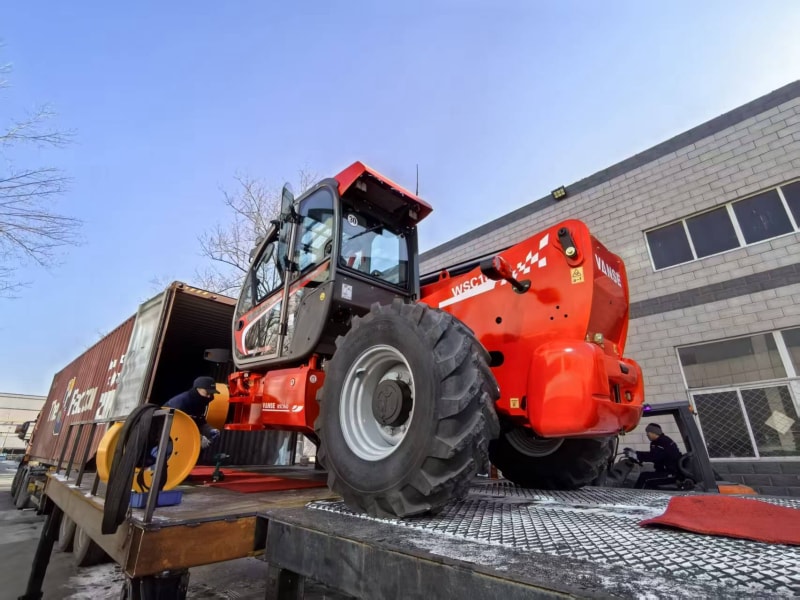
VANSE has built its telehandler business around product credibility, flexible cooperation, and on-the-ground market commitment that fits what United States buyers expect. The company manufactures under CE and ISO 9001 certified systems, has produced more than 8,000 machines, and uses globally recognized components such as Perkins and Cummins engines together with premium hydraulic and drivetrain systems so that its telehandlers are benchmarked against established international performance standards rather than low-spec export equipment. Every machine is subjected to load testing, safety inspection, and performance validation before shipment, which is especially relevant for U.S. buyers comparing durability and operating confidence. VANSE works with end users, distributors, dealers, rental companies, brand owners, and even smaller-volume buyers through wholesale supply, retail-oriented support, regional distribution cooperation, and full OEM/ODM customization covering specifications, branding, colors, and configuration details. For the American market, VANSE is not approaching customers as a distant exporter; it is actively establishing a U.S.-based subsidiary with local inventory, local after-sales capability, and stronger customer relationships so buyers can rely on both online technical response and offline support. With export experience across more than 40 countries and an expanding footprint in North America, the company offers U.S. customers a practical combination of certified manufacturing discipline, proven production scale, tailored business models, and local service assurance backed by a long-term commitment to the market. Buyers can learn more about the company on the about us page, explore available machinery through the equipment catalog, review support options in customer service, or connect directly through the contact page. The main company site is available at VANSE.
How to Evaluate a Supplier Before You Buy
For any 6 ton telehandler supplier in the United States, request a complete specification sheet, load chart, engine and hydraulic brand details, standard and optional attachments, warranty terms, lead time, spare parts policy, and support workflow. Ask whether technicians can diagnose issues remotely and whether common wear parts are stocked domestically. If you are a distributor or dealer, also ask about private labeling, marketing support, territory protection, and training for your sales and service teams.
Inspection should not stop at the brochure. Serious buyers should review weld quality, boom section alignment, hose protection, access points for service, cabin sealing, electrical routing, and overall chassis finish. A practical supplier will welcome these questions because they reflect professional procurement discipline.
FAQ
What is a 6 ton telehandler best used for in the United States?
It is best for medium-to-heavy material handling across construction, agriculture, industry, warehousing, mining support, and energy projects. It is especially useful when loads are too heavy or too awkward for smaller telehandlers or forklifts.
Is a 6 ton telehandler suitable for rental fleets?
Yes. It is a strong fleet category because it serves multiple customer types. The key is to choose a specification with easy controls, broad attachment compatibility, and dependable parts support.
How important is local service support?
It is one of the most important buying factors. In the United States, downtime can be more expensive than the price difference between two machines. A supplier with local parts, responsive technicians, and clear warranty handling often provides better long-term value.
Should U.S. buyers consider international suppliers?
Yes, if the supplier can prove certifications, production consistency, established export experience, recognized core components, and genuine local service commitment. Many American buyers now consider qualified overseas manufacturers when the value proposition and support model are strong.
What attachments are commonly used with a 6 ton telehandler?
Common attachments include pallet forks, buckets, lifting jibs, bale handlers, and other task-specific tools. Attachment choice should be matched to your daily workflow because it can greatly improve machine utilization.
What trends will matter most by 2026?
Telematics, fuel efficiency, stricter operating expectations, safety integration, and supplier localization will matter more. Buyers will increasingly prefer manufacturers that combine technology, service responsiveness, and stable parts availability.
Final Takeaway
For most buyers in the United States, a 6 ton telehandler is a highly practical solution when the work requires stronger lifting capacity, dependable reach, and versatile attachment use without stepping into a much larger machine class. JCB, Manitou, Genie, JLG, and SkyTrak remain important brands to assess for their established market presence, but the supplier landscape is evolving. Value-focused buyers, distributors, and enterprise fleets should also look closely at qualified international manufacturers that can document certifications, proven production scale, recognized components, and real local support plans. In that context, VANSE stands out as a company aligning factory-direct economics with U.S.-market service commitments, making it a relevant option for buyers who want competitive pricing without ignoring quality, customization, or after-sales protection.
Complete Telescopic Handler Equipment Portfolio
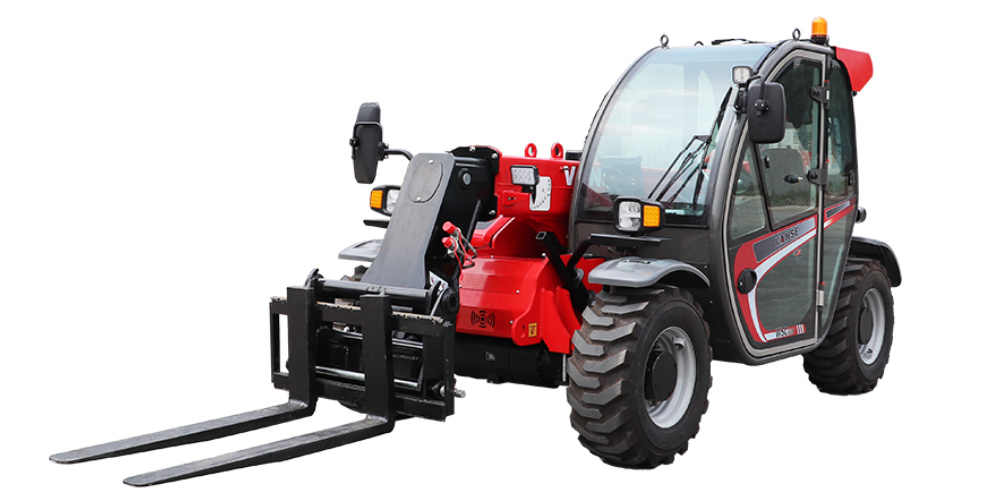
VANSE 625 6m Telescopic Handler
Designed for efficient material handling and stacking in warehouses, factories, and confined job sites, offering compact maneuverability and reliable performance.

VANSE 735 7m Telescopic Handler
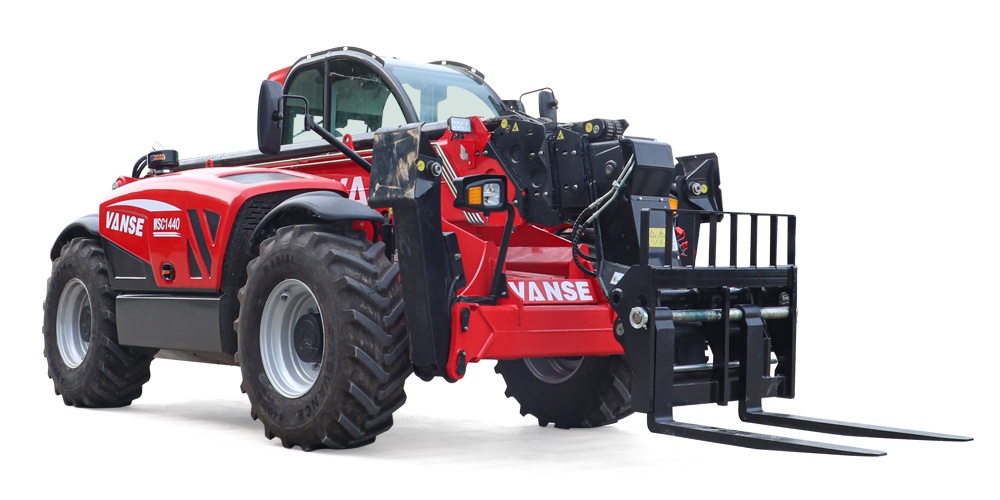
A balanced mid-duty solution for construction, agriculture, logistics, and warehousing, combining stable lifting, strong traction, and everyday versatility.


About the Author:
The VANSE team is a group of experienced professionals specializing in construction machinery research, manufacturing, and technical support. With deep industry knowledge and hands-on experience, our engineers and product specialists share practical insights on equipment selection, operation, maintenance, and industry trends.
Share
You May Also Interest
-

3 September, 2026
Telehandler for Steel Erection: Lifting Beams Safely Now
Learn telehandler steel erection best practices in the United States, including machine types, suppliers, safety tips, costs, and buyer guidance for jobsites.
-
2 September, 2026
9 Meter Telehandler: Specialized Reach for Tall Projects
Explore 9 meter telehandler options in the United States, including suppliers, applications, pricing factors, and service support for efficient lifting.
-

31 August, 2026
Telehandler Tipping Prevention: Stay Safe on Every Site
Telehandler tipping prevention in the United States starts with load control, setup, training, and terrain checks to reduce rollover risk on every jobsite.
-

28 August, 2026
Telehandler Outriggers: Complete Stability System Guide
Learn how telehandler outriggers improve lift stability, site safety, and equipment choice in the United States, with practical buying tips and supplier insights.