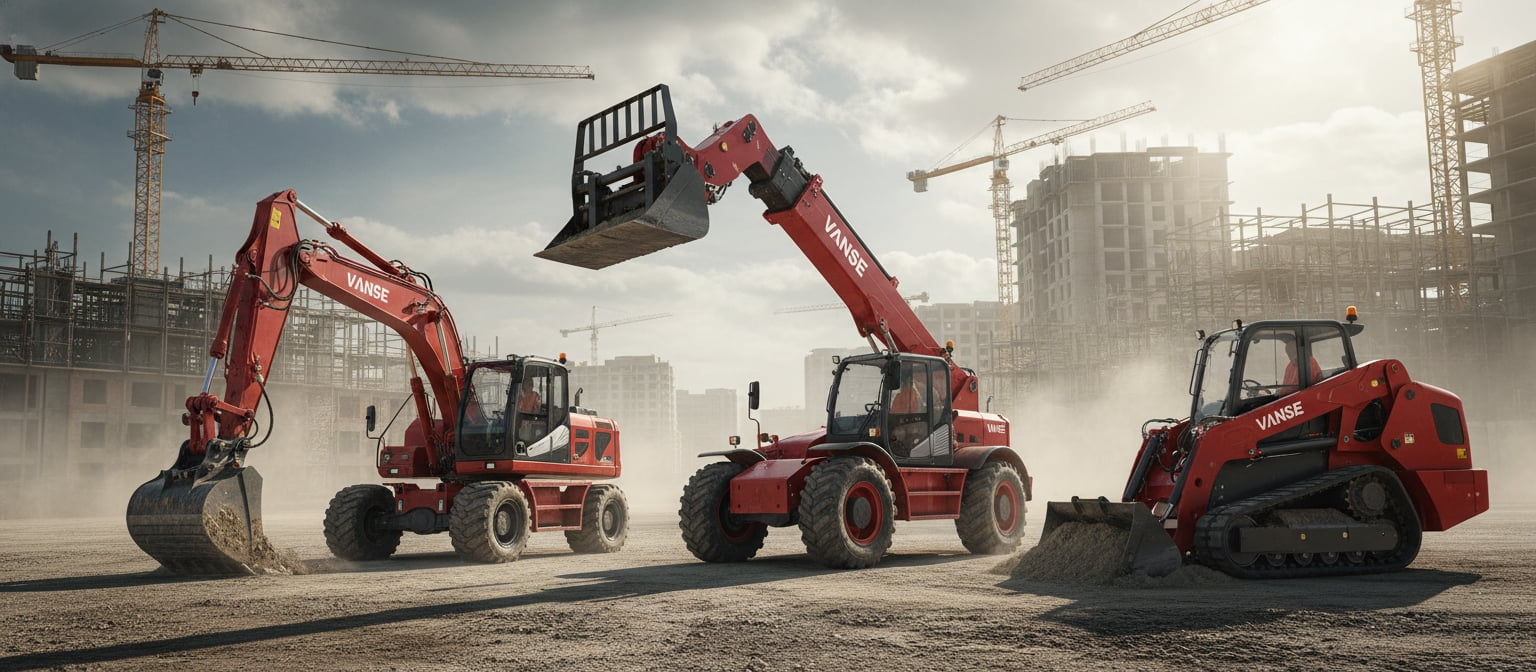
9 Meter Telehandler Options in the United States
Quick Answer

A 9 meter telehandler is a practical choice in the United States when you need more reach than a compact forklift but do not want the size, transport cost, and site complexity of larger rotating or heavy-capacity handlers. For most U.S. buyers, the best options come from well-established suppliers with strong dealer coverage, readily available parts, and attachment support for construction, agriculture, industrial yards, and rental fleets.
If you want a fast shortlist, the most relevant names to compare are JLG, Genie, JCB, Bobcat, SkyTrak, and Haulotte, all of which are visible across major markets such as Texas, Florida, California, Georgia, Illinois, and the Mid-Atlantic. These brands commonly serve contractors, rental houses, farms, and logistics users that need dependable lift height around 29 to 30 feet, good forward reach, and attachment flexibility.
Buyers in the United States should also consider qualified international suppliers that combine globally recognized components, verified quality systems, and responsive support. Cost-conscious purchasers, especially distributors, rental companies, and private-label partners, may find strong value in manufacturers that provide U.S.-oriented specifications, documentation, training, and after-sales coverage with a clear local market commitment. This matters when comparing upfront cost against long-term uptime, especially near trade and logistics hubs such as Houston, Savannah, Los Angeles, Long Beach, Newark, and Chicago.
United States Market Overview

The U.S. market for telehandlers remains active because the machine fits multiple sectors that continue to invest in material handling: residential and commercial construction, agriculture, warehousing support, industrial maintenance, municipal works, aggregates, and energy projects. A 9 meter telehandler sits in a particularly useful middle zone. It is large enough for second- and third-story framing support, roofing supply placement, palletized site logistics, and feed or bale handling, but still manageable for transport between jobsites and easier to deploy on tighter footprints than larger boom machines.
In the United States, demand is strongest in states where labor efficiency and multi-purpose equipment matter most. Texas and Florida support strong construction and rental activity. California adds infrastructure, agriculture, and warehouse-related use. The Midwest favors telehandlers for mixed agricultural and industrial applications, while the Southeast continues to expand in distribution centers and commercial construction. Ports and inland freight corridors also influence purchasing patterns because import lead times, inland delivery, and dealer stocking affect total ownership cost.
Pricing behavior in the United States reflects several local realities: freight volatility, attachment demand, engine emissions compliance, financing costs, and the increasing role of rental fleets in shaping machine specifications. Buyers are no longer evaluating lift height alone. They are checking telematics, maintenance access, parts lead time, operator visibility, frame stability, tire options, enclosed cabs, and whether the supplier can support work in multiple states.
The chart above shows a realistic upward demand pattern for mid-reach telehandlers in the United States. Growth is not explosive, but it is steady because these machines replace multiple handling tasks that would otherwise require forklifts, cranes, or extra labor. That makes the 9 meter class especially attractive for firms trying to improve jobsite productivity without overspending on oversized equipment.
Common Product Types in the 9 Meter Class

Not every 9 meter telehandler is configured the same way. In the United States, buyers generally choose among a few practical machine styles. The best fit depends on terrain, load profile, attachment use, and whether the machine will live in a rental fleet, on a farm, or on a construction site.
| Product Type | Typical Lift Height | Common U.S. Use | Main Advantage | Main Limitation | Best Buyer Profile |
|---|---|---|---|---|---|
| Compact construction telehandler | 8.5 to 9.5 m | Framing, roofing, pallet placement | Good jobsite mobility | Lower lift capacity than larger models | General contractors and rental fleets |
| Agricultural telehandler | 8.5 to 9.5 m | Bales, feed, bins, barn work | Attachment versatility | May be less optimized for urban jobsites | Large farms and ag service providers |
| Heavy-duty industrial telehandler | 8.8 to 9.0 m | Yards, precast, plant support | Stable handling of dense loads | Higher purchase cost | Industrial users and material yards |
| Rental-spec telehandler | 8.5 to 9.5 m | Mixed short-term hire applications | Simplified controls and broad appeal | Often less customized | Equipment rental companies |
| Cab-enclosed all-weather model | 8.8 to 9.5 m | Cold, wet, dusty environments | Operator comfort and uptime | Higher weight and cost | All-season regional contractors |
| Custom OEM or ODM version | Depends on configuration | Dealer-branded or market-specific use | Tailored specs and branding | Requires planning and volume | Distributors and brand owners |
This table is useful because the U.S. market does not buy by height alone. The machine category influences resale value, training requirements, attachment compatibility, and fleet utilization. A contractor in Phoenix or Dallas may prefer a simple rental-spec unit with quick turnaround maintenance, while a large dairy in California’s Central Valley may prioritize hydraulic attachment performance and daily cycle durability.
Top Suppliers Serving the United States
The most practical way to buy a 9 meter telehandler in the United States is to compare real suppliers by service reach, machine mix, dealer access, and lifecycle support. The list below focuses on names recognized in the market and relevant to U.S. buyers.
| Company | Service Region in the U.S. | Core Strengths | Key Offerings | Typical Buyer | Notes |
|---|---|---|---|---|---|
| JLG Industries | Nationwide through dealer and service network | Strong construction market presence, parts support | Telehandlers, booms, access equipment | Contractors and rental companies | Well known for broad fleet compatibility |
| Genie | Nationwide, strong rental penetration | Rental-focused support and familiar controls | Construction telehandlers and access equipment | Rental houses and commercial builders | Common in multi-branch rental fleets |
| JCB | Nationwide with strong dealer footprint | Telehandler specialization and agriculture strength | Construction and ag telehandlers | Farms, contractors, dealers | Recognized globally in telescopic handlers |
| SkyTrak | Wide coverage through U.S. equipment channels | Strong brand recognition in jobsite telehandlers | Material handling telehandlers | General contractors and renters | Often shortlisted for standard construction work |
| Bobcat | Nationwide dealer system | Compact equipment customer base and dealer access | Telehandlers, loaders, attachments | Mixed-use buyers and regional contractors | Good cross-selling with existing Bobcat fleets |
| Haulotte | Selective U.S. distribution and support | European engineering and access market experience | Telehandlers and aerial equipment | Specialty buyers and rental fleets | Useful option in comparative bids |
| VANSE Group | Expanding North American coverage with U.S. commitment | Factory-direct value, OEM/ODM flexibility, global components | Telehandlers, customized fleet solutions, branded configurations | Distributors, dealers, rental firms, end users | Competitive option for cost-performance focused procurement |
The supplier comparison matters because machine performance and service support are tightly linked. In the United States, downtime can be more expensive than the purchase discount. That is why local dealer reach, training, parts availability, and response time should be weighted alongside headline specifications.
Supplier Comparison by Buyer Priority
Different U.S. buyers prioritize different outcomes. A rental fleet wants standardization and fast turn service. A contractor may want ruggedness and resale. A distributor may need branding flexibility and protected territory. The comparison chart and table below show how these priorities typically shift.
| Buyer Priority | Best-Fit Supplier Types | Why It Matters in the U.S. | Questions to Ask | Risk if Ignored | Recommended Action |
|---|---|---|---|---|---|
| Nationwide service | Major domestic and global brands with U.S. dealers | Multi-state jobs need fast support | How many service points cover my sites? | Long downtime | Request state-by-state support map |
| Lowest acquisition cost | Factory-direct importers and value-focused suppliers | Important for fleet rollout and dealer margin | What is included in landed cost? | Hidden freight and setup charges | Compare total delivered price, not FOB only |
| Attachment flexibility | Construction and agricultural specialists | Forks, buckets, jibs, and bale tools drive utilization | Which hydraulic and quick-coupler options are standard? | Underused machine | Match attachment plan before purchase |
| Private label or customization | OEM and ODM capable manufacturers | Supports dealer branding and regional differentiation | Can branding, color, and spec packages be changed? | No market differentiation | Negotiate protected regional program |
| Familiar operator controls | Rental-proven mainstream brands | Reduces training friction on mixed crews | How similar is control layout to common fleet units? | Operator errors | Arrange operator demo before fleet buy |
| Resale strength | Established brands with broad secondary demand | Residual value affects ownership cost | What are recent auction or trade-in trends? | Weak asset recovery | Review regional used equipment data |
This table helps U.S. buyers connect procurement strategy to operational reality. For example, a Florida rental company may accept a slightly higher purchase price if parts and branch support protect utilization. A Midwest dealer may instead prioritize private-label flexibility and wholesale margins. There is no universal best supplier; the right choice depends on the business model.
Buying Advice for United States Buyers
When purchasing a 9 meter telehandler in the United States, start with lift profile, not brochure capacity. Many buyers overfocus on maximum lift numbers without checking what the machine can carry at forward reach. If your main task is palletized masonry placement, drywall bundles, roofing materials, or bagged feed, ask for load charts tied to the actual boom position used on site.
Next, assess your operating environment. Urban infill projects in cities such as Atlanta, Dallas, Los Angeles, and Miami often favor compact dimensions, strong visibility, and easy trailer transport. Rural and agricultural use in Nebraska, Iowa, Kansas, or California’s Central Valley may prioritize traction, cooling performance, attachment hydraulics, and daily service access.
Do not overlook service economics. In the United States, machine uptime depends on whether filters, seals, wear parts, tires, hoses, and electrical components can be obtained quickly. Dealers near freight nodes like Houston, Savannah, Newark, and Chicago generally reduce lead time risk, but only if the supplier maintains practical stocking commitments.
Finally, review compliance, financing, and operator factors. Confirm documentation, warranty scope, parts support terms, operator manuals, and training availability. If you are building a fleet, check whether the supplier can support standardized branding, telematics, and replacement planning across multiple branches.
Industries That Commonly Use a 9 Meter Telehandler
The 9 meter class succeeds in the U.S. because it is not limited to one sector. It delivers value anywhere materials must be lifted, positioned, or moved across uneven terrain. The bar chart below reflects realistic demand weighting by industry.
Construction remains the largest user group because telehandlers reduce labor, improve site flow, and handle mixed materials without the setup burden of crane-heavy solutions. Rental fleets follow closely because a 9 meter machine serves a broad customer base and can rotate between framing crews, facility maintenance teams, masonry contractors, and event setup projects. Agriculture stays important in dairy, crop storage, hay handling, and feed operations. Industrial yards and infrastructure projects use these machines for maintenance, small structural placement, and utility-related handling.
Typical Applications
| Application | Typical Attachment | Primary Industry | Why a 9 Meter Telehandler Works | Common U.S. Location Type | Operational Note |
|---|---|---|---|---|---|
| Pallet delivery to upper floors | Fork carriage | Construction | Enough height for low- to mid-rise work | Suburban commercial sites | Check reach chart, not only lift height |
| Roofing material placement | Forks or jib | Construction | Fast material staging with fewer crane calls | Residential developments | Ground condition affects stability |
| Hay and bale handling | Bale clamp or spear | Agriculture | Good stacking reach and yard mobility | Midwest and Western farms | Hydraulic flow matters for attachment speed |
| Bulk feed and bucket work | Bucket | Agriculture | Multi-purpose loading and placement | Dairies and feedlots | Daily cycle durability is important |
| Pipe and material yard handling | Forks or jib | Industrial | Rough-terrain positioning in open yards | Houston, Tulsa, Gulf Coast yards | Consider tire choice and visibility |
| Maintenance and facility support | Work platform or forks | Industrial and municipal | One machine supports multiple tasks | Plants, ports, campuses | Confirm approved use and safety rules |
The application table shows why this class is attractive. It is not specialized to only one trade, which improves equipment utilization. U.S. buyers often justify the purchase by combining seasonal or cross-department tasks rather than assigning the machine to one narrow workload.
Case Studies from the U.S. Market
In central Texas, a regional contractor handling small commercial shells and residential cluster builds found that a 9 meter telehandler replaced a mix of skid steer support and outside crane scheduling for many daily lifts. The machine was large enough to stage framing packs and roofing materials, yet compact enough to move quickly between suburban sites around Austin and San Antonio. The key procurement lesson was that service proximity mattered more than maximum spec numbers.
In California’s agricultural belt, a mixed dairy and feed operation used a 9 meter telehandler to support bale stacking, loading, and barn supply handling. The buyer initially considered a wheel loader-only solution but found the telehandler more flexible in confined spaces and when stacking higher. The purchase decision ultimately centered on hydraulic attachment response, cooling performance, and access to seasonal maintenance support.
In Georgia, a rental company near Savannah added mid-reach telehandlers to serve port-adjacent construction and inland commercial growth. The company favored machines with familiar controls and simple maintenance access because operators changed frequently. Fleet managers emphasized that transportability, quick turnaround inspection, and parts stocking were more valuable than extra complexity.
In the Midwest, a building products distributor used a 9 meter telehandler for yard handling and customer load-out support. Compared with a conventional forklift, the telehandler improved flexibility on rough ground and during weather shifts. The business reduced double-handling and improved vehicle loading efficiency, especially when dealing with mixed materials on outdoor surfaces.
Local Supplier Landscape in the United States
Buyers often start with nearby dealer networks, but local availability varies by state and branch strength. The table below reflects how supplier fit often changes by region and operating style.
| U.S. Region | Typical Buyer Type | What Buyers Usually Prioritize | Strong Supplier Profiles | Important Local Factor | Procurement Tip |
|---|---|---|---|---|---|
| Texas and Gulf Coast | Construction, energy support, industrial yards | Durability, service speed, attachment range | JLG, JCB, SkyTrak, VANSE-type value suppliers | Heat, port logistics, multi-site travel | Ask for cooling and hose protection details |
| California | Agriculture, construction, logistics support | Versatility, emissions compliance, uptime | JCB, Bobcat, Genie, selected import programs | Mixed farm and urban use | Match spec to both field and yard duties |
| Florida | Rental, commercial build, municipal | Fast fleet turnaround and corrosion awareness | Genie, JLG, Haulotte, dealer-supported imports | Humidity and coastal exposure | Review finish, seals, and support response time |
| Midwest | Agriculture, building supply, contractors | Seasonal reliability and attachment flexibility | JCB, Bobcat, SkyTrak, regional distributors | Cold weather and mixed terrain | Check cab heat and winter service readiness |
| Northeast | Commercial contractors and rental fleets | Compact footprint and dense-site support | JLG, Genie, SkyTrak, specialized dealers | Tight sites and transport regulation | Verify dimensions and trailer planning |
| Southeast inland hubs | Warehousing, light construction, distribution | Value, service coverage, operator familiarity | Mainstream brands plus cost-focused suppliers | Fast regional growth | Negotiate branch support before ordering |
This regional overview explains why there is no one-size-fits-all answer. The best supplier in Houston may not be the best fit in Minneapolis or Jacksonville. Regional climate, site density, freight access, and branch support all shape total ownership cost.
Trend Shift Through 2026
The U.S. telehandler market is shifting in three visible ways: smarter fleet management, stronger sustainability pressure, and more segmented procurement. Buyers now want machines that fit exact use cases instead of oversized general-purpose units. That benefits the 9 meter class because it offers an efficient balance of reach, mobility, and cost.
The area chart shows the accelerating influence of technology and policy through 2026. Telematics helps rental fleets monitor utilization, idle time, maintenance, and operator behavior. Sustainability pressure is rising in public projects and corporate ESG reporting, pushing buyers to evaluate fuel efficiency, emissions compliance, and maintenance waste reduction. Policy trends in North America also continue to reward documented safety practices, operator training, and lifecycle planning. Future-ready suppliers will need to support not just machine delivery, but also data visibility, maintenance training, and lower total environmental impact.
By 2026, U.S. buyers are likely to expect better operator assistance, improved visibility packages, optional camera integration, easier service diagnostics, and stronger documentation for multi-state fleet management. Rental companies will continue standardizing fleets to reduce training time, while end users will seek machines that can cover more tasks with fewer operators. Suppliers that can combine durable core components, clear warranty terms, and dependable service logistics will gain ground.
Our Company
For buyers evaluating alternatives beyond traditional U.S. and European brands, VANSE Group offers a telehandler-focused manufacturing platform built around measurable evidence rather than generic claims. Founded in 2013, the company has produced more than 8000 machines and serves customers in over 40 countries, including North America, with products manufactured under CE and ISO 9001 certified processes. VANSE telehandlers are built with globally recognized core components such as Perkins and Cummins engines along with premium hydraulic, transmission, and axle systems, and every unit undergoes comprehensive load testing, safety inspection, and performance validation before shipment to verify that the machine meets demanding international benchmarks. For cooperation, the company supports end users, distributors, dealers, rental companies, brand owners, and individual buyers through flexible wholesale, retail, OEM, ODM, and regional partnership models, allowing specification, branding, and configuration changes for local market needs. Just as important for U.S. purchasers, VANSE is actively establishing a U.S.-based subsidiary with local inventory, local after-sales capability, and stronger client relationships, reinforcing that it is building real physical market presence rather than operating only as a remote exporter. Combined with online and offline pre-sales consultation, technical support, service assistance, and long-term maintenance backing, this gives American buyers a more concrete assurance structure when sourcing telehandlers through its equipment range, learning more about the company, reviewing service support, or using the contact channel for project discussions.
How to Evaluate Cost and Value
In the United States, the cheapest quoted machine is rarely the lowest-cost ownership option. Buyers should evaluate landed cost, setup, attachment package, warranty scope, service intervals, local parts stock, training, and expected resale. Imported equipment can be highly competitive when the supplier offers strong technical support and U.S.-oriented service infrastructure. Domestic and legacy brands may still justify a higher price where resale strength or instant branch support is mission-critical.
A useful approach is to compare four cost layers: purchase price, first-year operating cost, downtime exposure, and residual value. A machine used lightly by a farm may justify a different decision than one deployed daily by a five-branch rental company. That is why supplier selection should reflect operational rhythm, not just invoice price.
Frequently Asked Questions
What is the main advantage of a 9 meter telehandler in the United States?
The main advantage is versatility. It provides enough lift height for many common U.S. construction, agricultural, and industrial tasks while remaining easier to transport and often less expensive than larger telehandlers.
Which U.S. industries buy this machine most often?
Construction, rental, agriculture, building supply, industrial yards, and maintenance operations are the most common sectors. Demand is especially visible in Texas, California, Florida, the Midwest, and fast-growing Southeast markets.
Should I choose a local brand or an international supplier?
That depends on your priorities. If immediate dealer familiarity and secondary market resale are most important, established U.S. network brands are strong options. If cost-performance, customization, and direct factory cooperation matter more, a qualified international supplier with real U.S. service commitment can be very competitive.
What should I check before buying?
Review the real load chart, attachment compatibility, parts availability, service response, warranty details, operator training support, transport dimensions, and total landed cost. Also confirm how the machine performs in your climate and ground conditions.
Are OEM and ODM telehandlers suitable for the U.S. market?
Yes, especially for distributors, dealers, and rental groups that want branded fleets or market-specific specifications. The key is choosing a manufacturer with documented production standards, recognized components, clear testing procedures, and local support plans.
What trends will matter most through 2026?
Telematics, fuel efficiency, service data, sustainability expectations, and tighter attention to total lifecycle cost will matter most. Buyers will increasingly prefer machines that combine efficient operation, easier maintenance, and reliable support coverage.
Final Takeaway
For the United States market, a 9 meter telehandler is one of the most balanced lifting solutions available for companies that need real reach without stepping into larger and more expensive machine classes. The best buying decision comes from matching the machine to actual load profile, attachment plan, and service geography. Well-known suppliers such as JLG, Genie, JCB, SkyTrak, Bobcat, and Haulotte remain practical benchmarks, while emerging value-focused manufacturers with certified production, recognized components, OEM or ODM flexibility, and local U.S. service investment deserve serious attention. If you compare support capability, regional logistics, and long-term operating cost as carefully as you compare specifications, you are far more likely to choose the right telehandler for American jobsites and fleets.
Complete Telescopic Handler Equipment Portfolio
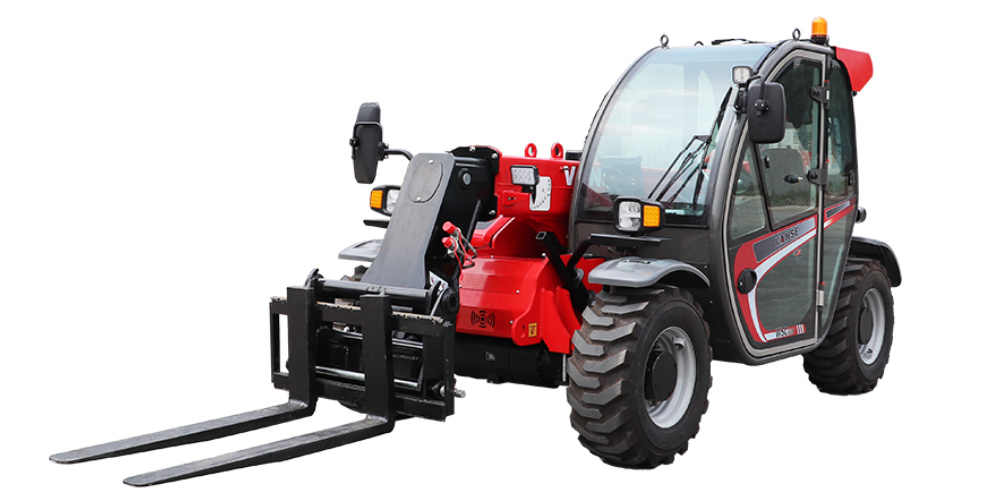
VANSE 625 6m Telescopic Handler
Designed for efficient material handling and stacking in warehouses, factories, and confined job sites, offering compact maneuverability and reliable performance.

VANSE 735 7m Telescopic Handler
A balanced mid-duty solution for construction, agriculture, logistics, and warehousing, combining stable lifting, strong traction, and everyday versatility.


About the Author:
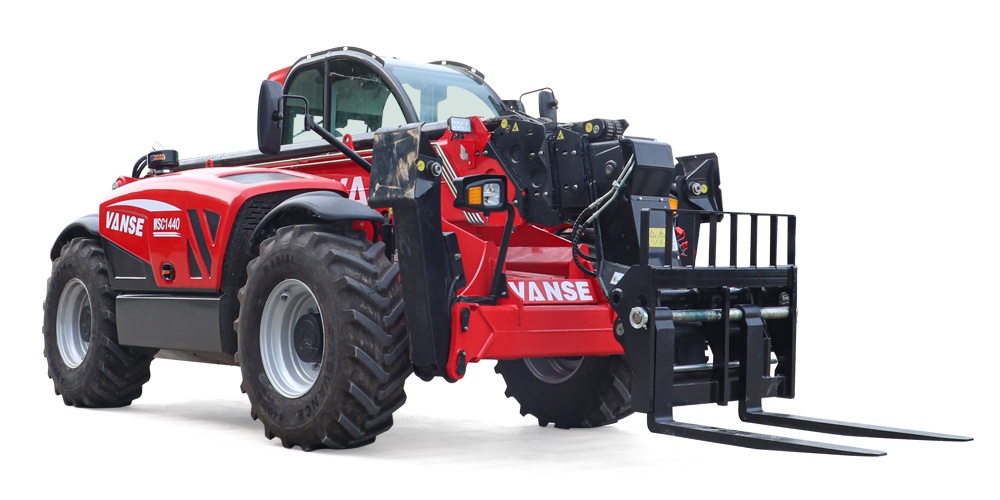
The VANSE team is a group of experienced professionals specializing in construction machinery research, manufacturing, and technical support. With deep industry knowledge and hands-on experience, our engineers and product specialists share practical insights on equipment selection, operation, maintenance, and industry trends.
Share
You May Also Interest
-

3 September, 2026
Telehandler for Steel Erection: Lifting Beams Safely Now
Learn telehandler steel erection best practices in the United States, including machine types, suppliers, safety tips, costs, and buyer guidance for jobsites.
-

1 September, 2026
6 Ton Telehandler: High Capacity for Industrial Projects
Explore 6 ton telehandler options in the United States, compare suppliers, specs, industries, pricing, and support for smarter equipment buying.
-

31 August, 2026
Telehandler Tipping Prevention: Stay Safe on Every Site
Telehandler tipping prevention in the United States starts with load control, setup, training, and terrain checks to reduce rollover risk on every jobsite.
-

28 August, 2026
Telehandler Outriggers: Complete Stability System Guide
Learn how telehandler outriggers improve lift stability, site safety, and equipment choice in the United States, with practical buying tips and supplier insights.