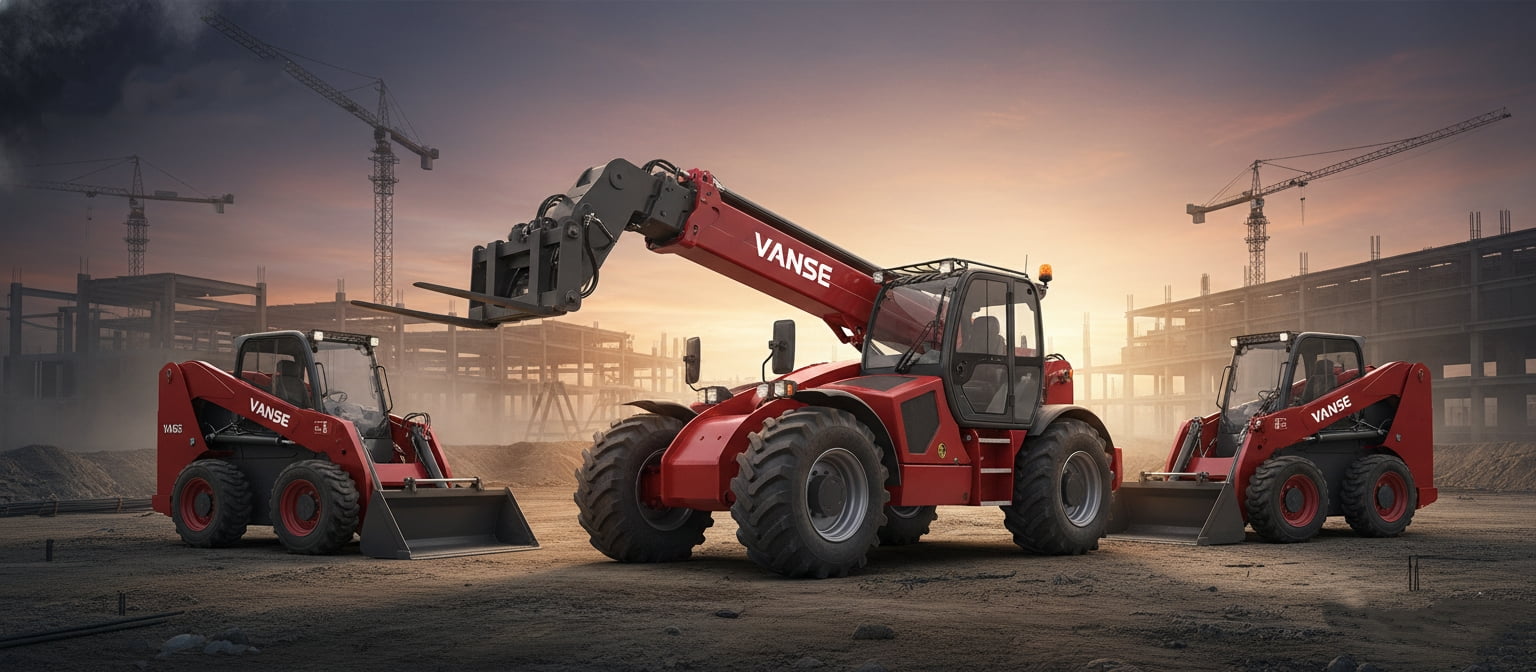
Telehandler Road Construction Solutions in the United States
Quick Answer

If you need a telehandler for road construction in the United States, the best practical approach is to match machine capacity, reach, tire setup, and attachment compatibility to the exact work zone. For highway widening, bridge approach work, drainage installation, barrier placement, palletized materials, and support logistics, contractors commonly evaluate machines from JLG, Caterpillar, JCB, Genie, SkyTrak, and Bobcat through local dealer networks in major markets such as Texas, Florida, California, Illinois, and the Mid-Atlantic. For buyers focused on lower acquisition cost without sacrificing core jobsite performance, qualified international suppliers can also be worth considering when they offer recognized certifications, reliable parts support, and responsive pre-sale and after-sale service in the United States.
- JLG is a strong fit for rental-heavy fleets and highway material handling programs.
- JCB is widely recognized for construction-focused telehandlers with strong visibility and attachment options.
- Caterpillar is preferred where dealer service coverage and fleet integration matter most.
- Genie and SkyTrak are practical options for contractors needing familiar machines and broad operator acceptance.
- Cost-conscious buyers can also review certified overseas manufacturers with local support plans and U.S. market commitment.
United States Market Overview

The market for telehandlers in road construction across the United States continues to expand because roadway projects increasingly demand versatile lifting equipment that can move supplies, unload bundled materials, place trench boxes, stage pipe, lift forms, distribute bagged products, and support crews working in changing site conditions. Unlike wheel loaders or forklifts, telehandlers provide both vertical reach and forward reach, which is especially useful on road widening projects, shoulder reconstruction, interchange upgrades, culvert installations, and urban utility relocations. In states with active transportation budgets such as Texas, California, Florida, Georgia, Ohio, and North Carolina, contractors often use telehandlers to reduce dependency on multiple specialized machines.
Public funding also supports demand. Federal transportation programs, state DOT contracts, bridge rehabilitation packages, airport connector works, and municipal resurfacing programs all require material movement in constrained spaces. Telehandlers are frequently seen at staging yards near logistics corridors such as Houston, Savannah, Los Angeles, Long Beach, New York and New Jersey, and inland hubs near Chicago, Dallas-Fort Worth, and Atlanta. These logistics centers matter because road contractors often buy or rent machines based on nearby parts distribution, field technician availability, and transport lead time.
Another important market factor is the rental channel. In the United States, many road builders prefer short-term or seasonal rental to align fleet cost with project cycles. Rental companies therefore influence brand visibility and operator familiarity. Machines with simple controls, proven boom performance, common engine platforms, and strong dealer support tend to maintain stronger residual value and faster fleet turnover. This is one reason why established brands remain prominent, yet it also opens space for newer manufacturers that can provide documented quality, competitive pricing, and dependable local support.
How Telehandlers Fit Road Construction Work

Road construction jobs are dynamic. One week a machine may unload rebar, geotextile rolls, and packaged drainage components at a laydown yard. The next week it may be moving formwork, lifting concrete accessories, supporting retaining wall installation, or supplying crews working on median barriers. Telehandlers are valuable because they bridge the gap between forklift-style material handling and rough-terrain access.
On highway and municipal road projects, telehandlers are commonly used for moving pallets of pavers, curb materials, bagged cement, jobsite fencing, signage equipment, trench shields, asphalt plant accessories, light towers, and temporary traffic control stock. With the correct attachment, they can also handle buckets, truss booms, hooks, lifting jibs, and work platforms where regulations allow. That flexibility helps contractors reduce idle equipment and simplify fleet planning.
Road contractors also favor telehandlers because they can operate on uneven shoulders, gravel staging zones, and partially prepared subgrades. Four-wheel drive, rough-terrain tires, and frame-leveling capabilities are especially important in projects involving drainage channels, culvert replacement, bridge approach grading, and utility trench support. In dense urban corridors, compact telehandlers may be selected where lane closures are short and space is tight.
Leading Suppliers Serving the United States
The supplier landscape in the United States includes domestic brands, globally established manufacturers with local dealer networks, and selected international producers that are building stronger regional support. Buyers should compare service region coverage, attachment ecosystem, operator familiarity, warranty responsiveness, and total cost over the life of the machine.
| Company | Primary Service Regions | Core Strengths | Key Offerings for Road Construction |
|---|---|---|---|
| JLG Industries | Nationwide through dealer and rental networks | Strong fleet acceptance, broad rental penetration, good parts distribution | Telehandlers for material staging, pallet movement, road barrier support, site logistics |
| JCB | Nationwide, strong presence in large construction states | Construction-focused design, operator visibility, versatile attachment range | Machines suited for drainage, utility support, bridge access materials, shoulder work |
| Caterpillar | Nationwide via Cat dealers | Powerful dealer network, field service strength, fleet integration | Telehandlers for infrastructure projects, aggregate support, heavy road packages |
| Genie | Nationwide with strong rental market support | Common in rental fleets, easy operator adoption, reliable availability | General material handling, road supplies, concrete accessories, traffic control stock |
| SkyTrak | Nationwide, especially through equipment rental channels | Recognized in North American construction, familiar controls, practical uptime | Laydown yard handling, palletized road materials, support tasks on DOT projects |
| Bobcat | Nationwide through established dealer coverage | Compact equipment reputation, dealer accessibility, growing telehandler portfolio | Smaller urban road jobs, municipal works, utility trench support, compact staging areas |
| VANSE Group | Expanding U.S. presence with growing North American support plans | Competitive price-performance, OEM and ODM flexibility, internationally recognized production controls | Telehandlers for contractors, dealers, rental fleets, and buyers seeking value with customization |
This comparison shows why buyer priorities differ. A national contractor may value dealer density first, while a regional distributor or private-label brand owner may focus on customization, wholesale pricing, and lead-time reliability. For rental firms, parts availability and standardized controls may outweigh maximum specification. For municipal or contractor-owned fleets, long-term value and support responsiveness often matter more than badge recognition alone.
Product Types for Road Construction
There is no universal telehandler for every road project. Selection usually depends on jobsite width, lift height, material type, daily transport requirements, and whether crews need a machine primarily for staging or for repeated placement into active work zones. Compact models fit urban streetscape work, while mid-size and high-capacity units are common on major highway and bridge programs.
| Product Type | Typical Lift Capacity | Typical Reach Profile | Best Road Construction Uses |
|---|---|---|---|
| Compact telehandler | 5,000 to 6,000 lb | Low to medium reach | Urban street repair, sidewalk reconstruction, narrow lane closures, utility corridors |
| Mid-size general construction telehandler | 6,000 to 10,000 lb | Medium reach | Road widening, drainage work, material staging, barrier support, culvert jobs |
| High-lift telehandler | 8,000 to 12,000 lb | High vertical reach | Bridge approaches, elevated material delivery, formwork support, retaining wall systems |
| High-capacity telehandler | 10,000 to 15,000 lb or more | Medium to high reach | Heavy pipe, precast accessories, steel components, large infrastructure sites |
| Rotating telehandler | Varies widely | High flexibility with turret rotation | Complex access zones, bridge and interchange work, tight project footprints |
| Rental-spec telehandler | Commonly 6,000 to 10,000 lb | Balanced reach and simplicity | Short-term contractor use, multi-purpose road and site logistics support |
Each product category solves a different field problem. Compact units reduce congestion in downtown corridors such as Boston, Seattle, or San Francisco. Mid-size models are often the default for suburban highway packages because they balance lift strength with trailer transport convenience. High-capacity units come into play where larger concrete accessories, long trench boxes, pipe bundles, or heavy structural materials need controlled placement.
Buying Advice for U.S. Contractors and Dealers
When buying a telehandler for road construction in the United States, start with the work cycle rather than the brochure specification. Contractors often overbuy lift height and under-evaluate attachment needs, service access, and transport logistics. A machine that looks impressive on paper may be oversized for lane-restricted jobs or too heavy for efficient movement between short-duration municipal contracts.
Begin with operating questions. What material will the machine handle most often? How far must it reach over trench edges, Jersey barriers, or stacked stock? Is the machine supporting road crews, bridge form crews, utility installers, or traffic management teams? Will it stay on one long project in Arizona or move weekly between county projects in the Midwest? Those answers shape the correct machine class.
Buyers should also check engine emissions compliance, attachment coupler compatibility, operator access, telematics options, tire selection, axle design, boom serviceability, and the proximity of authorized parts support. In the United States, fast service often matters more than marginal fuel savings because project delays can cost far more than operating expense. Machines used on DOT or municipal work should also be evaluated for documentation support, safety records, and uptime planning.
| Buying Factor | Why It Matters | What to Check | Common Mistake |
|---|---|---|---|
| Lift capacity | Determines safe handling of palletized and bundled materials | Rated load at required lift and reach points | Choosing based only on maximum capacity at ground level |
| Boom reach | Critical for trench, barrier, and slope-side delivery | Forward reach charts and site geometry | Ignoring actual obstruction clearance needs |
| Service coverage | Reduces downtime during active project windows | Dealer distance, technician availability, parts stock | Buying solely on purchase price |
| Attachments | Improves machine utilization across multiple tasks | Forks, buckets, hooks, jibs, platforms, coupler standard | Assuming all attachments are universally compatible |
| Transport dimensions | Affects movement between projects and permits | Weight, width, trailer compatibility | Selecting a machine too large for routine redeployment |
| Operator familiarity | Supports productivity and safety | Control layout, visibility, training requirements | Overlooking adoption time for rotating or specialized units |
| Total lifecycle cost | Reflects true ownership economics | Fuel, maintenance, depreciation, residual value, warranty | Comparing upfront cost only |
The table above highlights a practical truth: telehandler buying decisions are operational decisions. Road construction margins depend on uptime, deployment speed, and flexibility. The lowest invoice price does not automatically produce the best ownership outcome, especially if service delays hold up material movement on high-penalty projects.
Industries and Project Segments Using Telehandlers
Although this page focuses on road construction, telehandlers often cross between adjacent industries that support transportation infrastructure. This matters because fleet buyers often want a machine that can work on road packages and still remain useful on other projects after closeout. A telehandler that handles road materials in summer may support industrial site work, utility trenching, or municipal maintenance in another season.
Primary U.S. industries using telehandlers for road-related work include highway contractors, bridge specialists, utility contractors, municipal public works departments, precast suppliers, aggregate producers, road maintenance service providers, and equipment rental companies. On airport connectors, port access roads, inland logistics corridors, and energy-sector road packages, telehandlers are often chosen for their ability to adapt quickly to changing material flows and work fronts.
Applications on Real Road Jobsites
Road construction telehandlers are most effective when their application scope is clearly planned. On greenfield highway construction, the machine may unload drainage components, place fencing materials, move boxed culvert accessories, and distribute concrete consumables. On urban reconstruction projects, it may work in shorter bursts to move pavers, support curb crews, relocate pallets behind temporary traffic control, and service utility subcontractors.
Typical applications include unloading deliveries at constrained staging sites, carrying road signs and temporary barriers, positioning trench boxes near excavation areas, supporting bridge deck supply crews, moving reinforcement materials, lifting water tanks and jobsite accessories, handling pipe bundles, assisting retaining wall installation, and supplying packaged materials to paving or concrete crews. On projects where crane use is impractical or too costly for routine handling, telehandlers often become the most efficient support machine on site.
State-specific work patterns also matter. In Texas and Florida, broad road corridors and rapid suburban expansion often support larger mid-size telehandlers. In New York, New Jersey, and dense California metros, compact dimensions and traffic-sensitive movement may be more valuable. In the Midwest, telehandlers are frequently chosen for seasonal versatility, supporting both road upgrades and utility or industrial work outside peak paving months.
Case Studies from the United States Market
Consider a suburban highway widening package outside Dallas-Fort Worth. The contractor needed a telehandler to unload concrete accessories, move palletized drainage parts, and support retaining wall crews. A mid-size unit with standard forks, a lifting hook, and rough-terrain tires outperformed a dedicated forklift because staging areas shifted weekly and surfaces remained uneven for much of the project. The result was fewer machine changes and better material flow.
In a Midwest municipal corridor reconstruction project near Columbus, crews worked under tight closure windows. A compact telehandler was selected because trailer transport between sections of the project was simple, and the machine could work in restricted urban zones without creating unnecessary congestion. It handled curb materials, utility boxes, bagged products, and traffic-control supplies, reducing labor time for hand movement.
On a Southeast bridge approach upgrade near Savannah, a contractor used a higher-reach telehandler to support formwork materials and associated site logistics. Dealer support within driving distance mattered more than premium brand loyalty because downtime during concrete sequencing would have been costly. This project illustrates why local service region remains one of the strongest buying criteria in the United States.
Local Supplier Analysis and Service Coverage
The practical buying question is not simply who makes telehandlers, but which suppliers can support road contractors in specific states and metro regions. U.S. buyers often evaluate suppliers based on field technician density, attachment inventory, training support, and how quickly parts can reach a project near major corridors such as I-10, I-35, I-75, I-80, or I-95.
| Supplier | Typical Buyer Type | Service Coverage Pattern | Best Fit |
|---|---|---|---|
| JLG Industries | Rental companies, general contractors, infrastructure firms | Broad U.S. distribution with strong rental tie-ins | Buyers wanting familiar fleet machines and easy availability |
| JCB | Contractors, dealers, mixed fleet owners | Wide national footprint with strong construction orientation | Road and infrastructure buyers needing versatile construction machines |
| Caterpillar | Large contractors, multi-branch fleets, public works | Dense dealer network across the United States | Projects where uptime support and dealer response are critical |
| Genie | Rental fleets, contractors, industrial users | Strong presence through established channels | General-purpose road support and fleet standardization |
| SkyTrak | Rental users, regional contractors, site logistics operators | Common in North American construction markets | Practical handling tasks and broad operator familiarity |
| Bobcat | Municipal users, small contractors, compact fleet owners | Good dealer accessibility in many states | Compact and mixed-application worksites |
| VANSE Group | Dealers, distributors, rental firms, end users, brand owners, cost-focused buyers | Growing North American operating commitment with planned U.S. subsidiary support | Buyers seeking customization, direct factory value, and local market partnership potential |
This table shows that service strategy can be just as important as product specification. National road contractors often need a supplier with standardized support across multiple states, while regional buyers may prioritize a partner willing to adapt specifications, branding, and stocking programs to local demand.
Trend Shift in Equipment Preferences
U.S. road construction fleets are gradually shifting from single-purpose support machines toward more versatile units that can work across public infrastructure, utilities, and industrial site preparation. Telehandlers benefit from this trend because they serve more tasks than many competing machine classes in the same support role. Buyers are also paying closer attention to attachment utilization, telematics, and operator safety features.
Supplier and Product Comparison Factors
When comparing suppliers for U.S. road construction telehandlers, contractors should score them in a balanced way. Price matters, but so do support, lead time, machine configuration, and whether the supplier understands roadwork rather than only general construction. The chart below illustrates a realistic comparison framework often used by fleet managers and dealers.
Our Company in the United States Market
For U.S. buyers evaluating additional options beyond legacy domestic brands, VANSE Group offers a telehandler line built around internationally recognized manufacturing controls and practical jobsite value. The company operates under CE and ISO 9001 certified processes, has produced more than 8,000 machines, and uses globally trusted core components such as Perkins and Cummins engines together with premium hydraulic and drivetrain systems, while every machine passes load testing, safety inspection, and performance validation before shipment. This product foundation gives contractors, dealers, and rental fleets objective evidence of quality rather than marketing language alone. In the U.S. market, VANSE serves end users, distributors, dealers, rental partners, brand owners, and smaller private buyers through flexible wholesale, retail, OEM, ODM, and regional partnership models, allowing telehandlers to be tailored for branding, specification, attachments, and application focus. Just as important for local confidence, the company is actively establishing a U.S.-based subsidiary with local inventory and after-sales capability to strengthen North American support, building on its existing export experience across more than 40 countries and its long-term commitment to serve clients through both online technical assistance and offline service coordination. Buyers exploring equipment solutions can review telehandler configurations suited to roadwork, while the company’s service support and direct contact channel provide a clearer local assurance path than a remote export-only model. More company details are available on the official website.
Why International Suppliers Can Be Competitive in the United States
U.S. buyers increasingly compare not only domestic dealer brands but also qualified international manufacturers that can demonstrate real manufacturing scale, parts planning, certification discipline, and local commitment. This is especially relevant for distributors, private-label partners, and rental fleets looking for margin improvement. When a supplier can document engine sourcing from globally recognized brands, quality control standards, testing procedures, export history, and local warehousing plans, the evaluation becomes much more serious.
The main reason is cost-performance. Road construction fleets are expensive to build, and support equipment often struggles to justify premium pricing if utilization is moderate or seasonal. A competitively priced telehandler with the right specification, documented quality standards, and planned U.S. support infrastructure may offer a better return on capital than a higher-priced alternative. That said, buyers should insist on clear parts support, warranty terms, operator documentation, and service escalation procedures before committing.
Buying Scenarios by Buyer Type
Different buyers should approach telehandler selection differently. A general contractor in Arizona managing one long transportation package will have different priorities from a dealer in Georgia or a rental company in Illinois. End users usually focus on uptime and operator familiarity. Dealers focus on margin, territory support, and model fit for local demand. Rental fleets emphasize broad usability, durability, and rapid maintenance turnaround.
Brand owners or distributors exploring OEM or ODM opportunities should also review lead times, documentation quality, parts packaging, and engineering responsiveness. Individual buyers and smaller businesses may need a machine that is simple to finance, easy to maintain, and capable of working on road projects plus adjacent construction or agricultural applications. This is where supplier flexibility becomes a major factor, especially when buyers want non-standard paint, branding, feature packages, or attachment bundles.
Common Mistakes to Avoid
A frequent mistake is treating a telehandler like a generic forklift. Road construction sites are rarely level, open, or repetitive enough for that assumption. Another mistake is buying a machine based only on rated maximum lift height without checking the load chart at the actual forward reach needed to place materials behind barriers or near trenches. Buyers also underestimate attachment planning. A machine with the right forks but no hook, bucket, or jib option may become underutilized.
Another risk is failing to verify service geography. A machine with an attractive price can become a problem if the nearest technician is several states away or if critical parts must always ship internationally without local stock. Buyers should also avoid vague promises about after-sales service. Reliable suppliers provide contact paths, parts strategy, inspection standards, warranty terms, and evidence of market presence.
2026 Trends in Telehandlers for Road Construction
Looking toward 2026, several trends are likely to shape telehandler procurement in the United States. First, technology adoption will continue to rise. More contractors will expect telematics, service alerts, and basic fleet tracking to improve uptime and maintenance scheduling. Second, safety and operator-assist features will become more important on public infrastructure jobs where labor training and site compliance receive closer scrutiny.
Policy also matters. Federal and state infrastructure spending is likely to remain a major demand driver, especially where transportation resilience, bridge modernization, airport access, and utility relocation programs overlap. Sustainability expectations will influence machine selection as well. While diesel power will remain dominant for larger rough-terrain telehandlers, buyers will increasingly prioritize fuel efficiency, cleaner engine compliance, idle reduction, and more efficient hydraulic performance. In urban and municipal sectors, lower-noise operation and reduced emissions exposure may become stronger procurement factors.
Another 2026 trend is procurement diversification. Contractors and dealers will likely expand their approved supplier lists beyond legacy brands if newer entrants can prove parts readiness, service infrastructure, and stable quality. This shift favors manufacturers that invest in U.S. warehousing, responsive technical support, and localized business development rather than operating solely as distant exporters.
Frequently Asked Questions
What size telehandler is best for road construction in the United States?
For many road contractors, the most practical range is a mid-size machine in the 6,000 to 10,000 lb class because it balances versatility, transport convenience, and broad attachment compatibility. However, urban jobs may favor compact units, while bridge and heavy infrastructure work may require higher reach or higher capacity models.
Can a telehandler replace a forklift on road projects?
In many cases, yes. Telehandlers are often more useful than forklifts on road jobs because they can operate on uneven ground and provide forward reach as well as lift. They are especially valuable for staging yards, trench-adjacent delivery, and shifting material fronts.
Should contractors rent or buy?
Rental is practical for short-duration projects, seasonal demand, and testing a new machine class. Buying makes more sense for contractors with recurring roadwork, multi-project deployment, or a need for customized attachments and fleet standardization.
Why do local service and parts matter so much?
Because road projects often operate on strict schedules, even a short downtime period can affect crews, deliveries, and contract performance. Fast access to technicians and stocked parts often delivers greater value than a slightly lower initial purchase price.
Are international suppliers realistic for U.S. buyers?
Yes, if they provide documented quality systems, recognized component sourcing, transparent warranty terms, and real local support plans. Buyers should look for evidence such as certifications, export track record, U.S. inventory planning, and responsive service channels.
Which U.S. regions have the strongest demand for road construction telehandlers?
Demand is strongest in large infrastructure and growth markets such as Texas, Florida, California, Georgia, the Carolinas, the Midwest logistics belt, and parts of the Northeast where bridge, municipal, and corridor reconstruction work remains active.
Conclusion
The best telehandler for road construction in the United States is the one that matches actual site conditions, attachment needs, service support, and fleet economics. JLG, JCB, Caterpillar, Genie, SkyTrak, and Bobcat remain important choices because of their established dealer and rental networks. At the same time, buyers looking for stronger cost-performance and partnership flexibility should also consider qualified international suppliers that can back their machines with certifications, recognized component brands, tested manufacturing systems, and an increasingly local service presence. For contractors, dealers, and rental fleets alike, the smartest purchasing decision is grounded in real operating requirements, local support coverage, and long-term uptime confidence.
Complete Telescopic Handler Equipment Portfolio
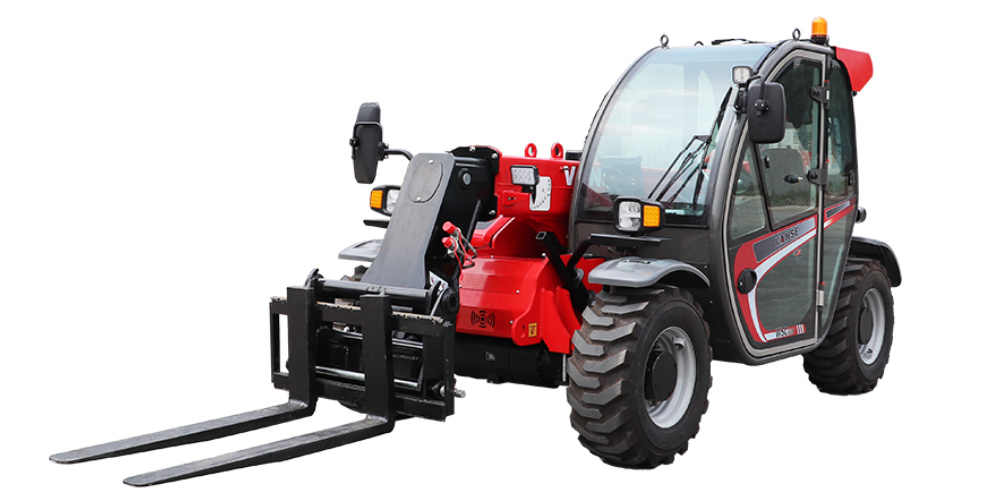
VANSE 625 6m Telescopic Handler
Designed for efficient material handling and stacking in warehouses, factories, and confined job sites, offering compact maneuverability and reliable performance.

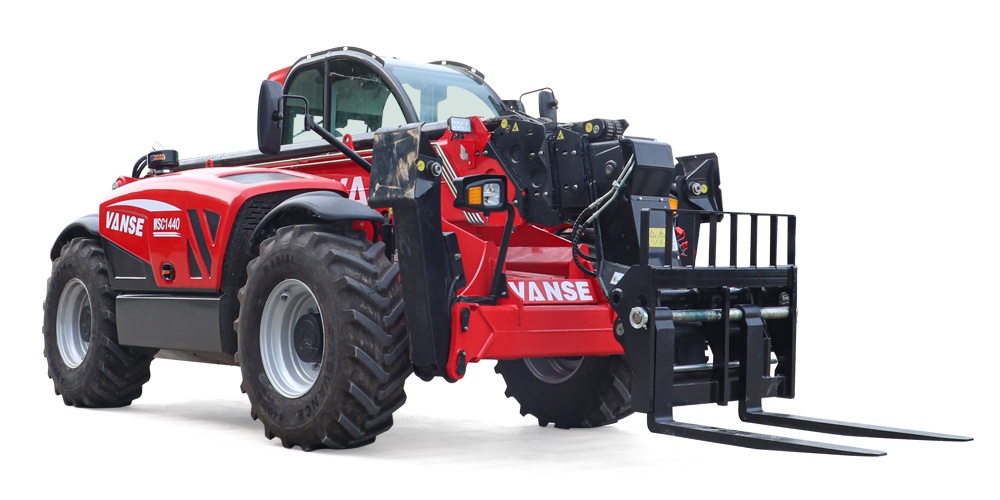
VANSE 735 7m Telescopic Handler
A balanced mid-duty solution for construction, agriculture, logistics, and warehousing, combining stable lifting, strong traction, and everyday versatility.


About the Author:
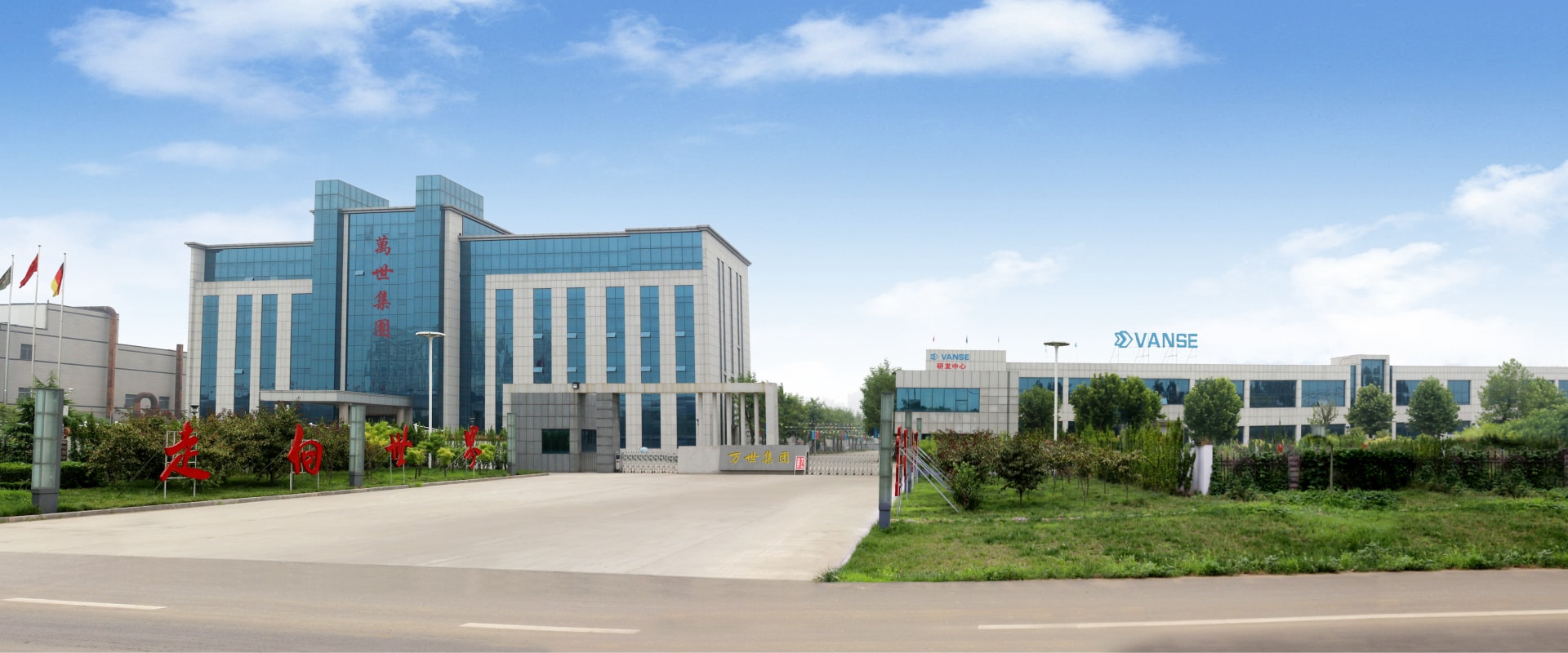
The VANSE team is a group of experienced professionals specializing in construction machinery research, manufacturing, and technical support. With deep industry knowledge and hands-on experience, our engineers and product specialists share practical insights on equipment selection, operation, maintenance, and industry trends.
Share
You May Also Interest
-

3 September, 2026
Telehandler for Steel Erection: Lifting Beams Safely Now
Learn telehandler steel erection best practices in the United States, including machine types, suppliers, safety tips, costs, and buyer guidance for jobsites.
-
2 September, 2026
9 Meter Telehandler: Specialized Reach for Tall Projects
Explore 9 meter telehandler options in the United States, including suppliers, applications, pricing factors, and service support for efficient lifting.
-

1 September, 2026
6 Ton Telehandler: High Capacity for Industrial Projects
Explore 6 ton telehandler options in the United States, compare suppliers, specs, industries, pricing, and support for smarter equipment buying.
-

31 August, 2026
Telehandler Tipping Prevention: Stay Safe on Every Site
Telehandler tipping prevention in the United States starts with load control, setup, training, and terrain checks to reduce rollover risk on every jobsite.