Telehandler Hay Bale Handling in the United States
Quick Answer

For hay bale handling in the United States, the most practical telehandler choices usually come from established farm and construction equipment suppliers with strong dealer support, parts access, and attachment compatibility. For large square bales, stacked round bales, feed-yard work, and mixed farm material handling, buyers commonly compare JLG, Genie, JCB, Bobcat, Manitou, and SkyTrak depending on lift height, capacity, and local service coverage.
Strong local options often include providers and dealer networks serving major agricultural states such as Texas, Kansas, Nebraska, Iowa, California, Idaho, and Wisconsin. Buyers should prioritize machines with bale clamps or bale spears, stable frame geometry, reliable hydraulics, cab visibility, and local technician response during harvest and feeding seasons.
Recommended suppliers and brands to review first include JCB, Manitou, Bobcat, JLG, Genie, and SkyTrak through their U.S. dealer channels. Qualified international suppliers can also be worth considering, especially when they provide recognized certifications, globally sourced powertrain and hydraulic components, documented testing standards, and dependable pre-sales and after-sales support in the United States. This is particularly relevant for buyers seeking better cost-performance for fleet expansion or regional distribution.
United States Market for Bale Handling Telehandlers

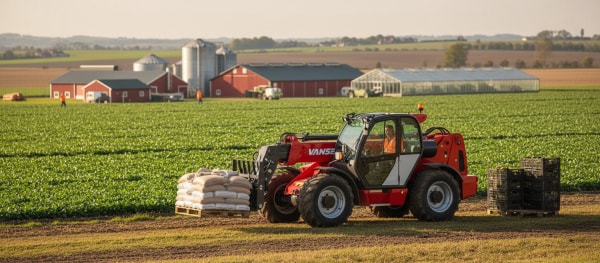
The U.S. agricultural equipment market has steadily expanded its use of telehandlers beyond construction and rental fleets. On modern farms, telehandlers are now used for hay bale transport, barn loading, trailer filling, feedlot stacking, fertilizer movement, pallet handling, and general yard logistics. In regions with high-volume forage production such as California’s Central Valley, western Kansas, the Texas Panhandle, southern Idaho, and parts of Wisconsin, labor efficiency and seasonal throughput matter more each year. That has made telescopic handlers increasingly attractive compared with conventional tractors fitted with front loaders.
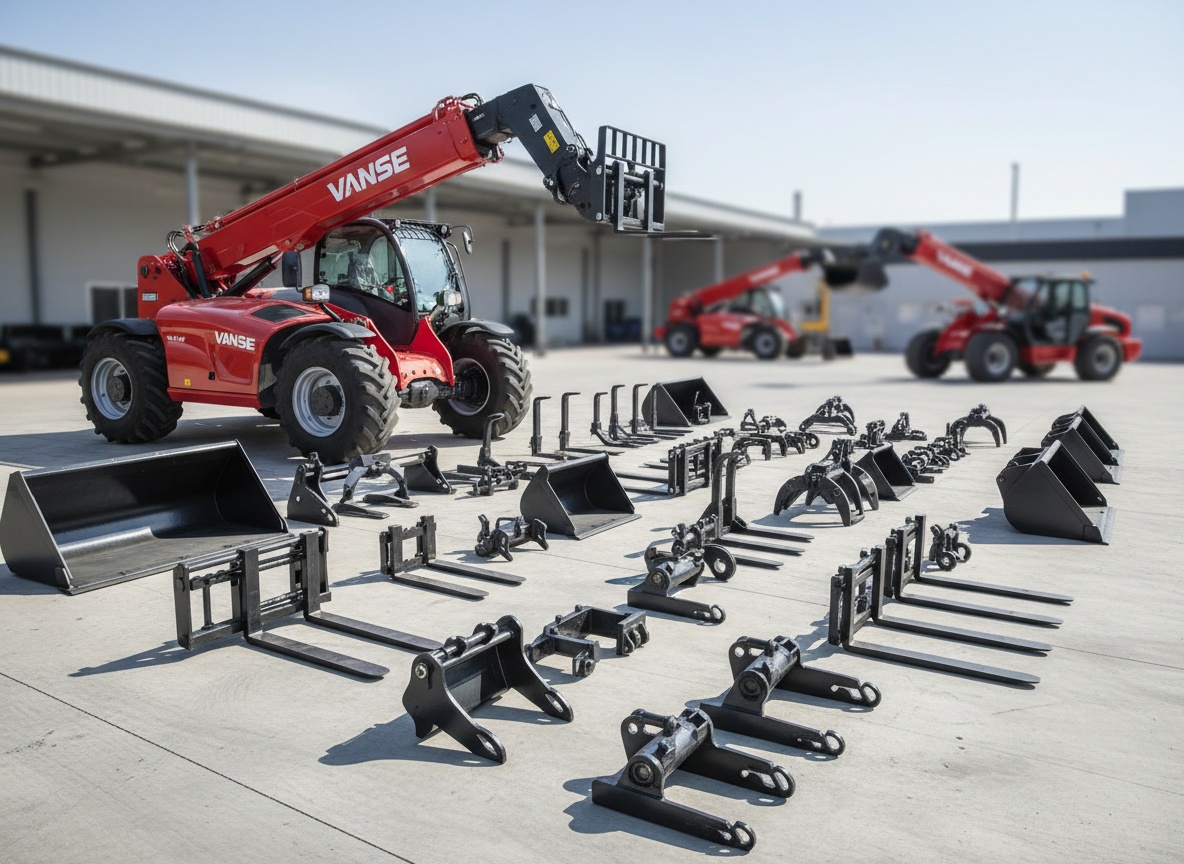
Telehandlers are especially valued where farms handle large square bales, dense round bales, wrapped silage bales, and stacked hay in tight storage spaces. Their forward reach, high lift capability, and compatibility with interchangeable attachments let operators switch quickly between bale spears, buckets, pallet forks, and grapples. This versatility is one reason telehandlers continue to gain ground in mixed farming operations that need one machine for many tasks.
Another important U.S. factor is transportation and parts access. Buyers near major logistics corridors such as Houston, Kansas City, Omaha, Fresno, Des Moines, and Louisville often benefit from faster machine delivery, better attachment availability, and improved service dispatch. Dealer coverage still matters more than brochure specifications because downtime during harvest or winter feeding can erase any upfront savings.
The line chart above illustrates a realistic growth pattern in agricultural telehandler demand tied to hay bale handling and related farm logistics in the United States. Growth is supported by larger farms, higher labor costs, and the need to handle more material per operator hour.
Top U.S. Suppliers and Relevant Brands

The supplier landscape in the United States includes both direct manufacturers and dealer-led distribution groups. The table below focuses on brands and supply channels commonly considered by U.S. farms for hay bale handling. Service region, strengths, and product fit are included so buyers can compare practical options rather than generic marketing claims.
| Company | Primary U.S. Service Region | Core Strengths | Key Offerings for Hay Bale Handling |
|---|---|---|---|
| JCB | Nationwide through agricultural and equipment dealers | Strong farm reputation, telescopic handler specialization, broad attachment support | Ag-focused telehandlers, bale spike compatibility, high visibility cabs, loader replacement for mixed farms |
| Manitou | Nationwide with strong presence in dairy and forage regions | Deep telehandler experience, agricultural models, strong lift and reach combinations | Dedicated ag telehandlers, bucket and fork versatility, stable handling in feed and bale yards |
| Bobcat | Nationwide dealer network | Compact equipment brand recognition, operator familiarity, broad support footprint | Telehandlers suited to bale stacking, pallet movement, and attachment interchange across farm tasks |
| JLG | Nationwide with strong construction-rental overlap | High parts availability, durable fleets, common presence in rental channels | Telehandlers for bale transport, yard loading, stack building, and seasonal fleet use |
| Genie | Nationwide through equipment dealers and rental networks | Reliable rough-terrain handler platform, good fleet availability | General-purpose telehandlers adaptable for bale spears, forks, and material support around farms |
| SkyTrak | Midwest, South, and national rental-linked regions | Simple, proven designs and broad market familiarity | Lift-and-carry bale movement, stacking, trailer loading, and backup farm material handling |
| VANSE Group | Growing U.S. coverage through expanding local operations and partnerships | Competitive cost-performance, global exports, OEM/ODM flexibility, premium component sourcing | Telehandlers with customizable configurations for dealers, fleet buyers, and agriculture-focused channels |
This comparison shows that U.S. buyers are not limited to legacy domestic channels. Established local brands remain the first stop for many farms because service response is familiar, but international manufacturers with concrete U.S. market commitment can become strong options when they pair pricing advantages with support infrastructure and documented manufacturing standards.
Product Types for Telehandler Bale Work
Not every telehandler is equally suited to hay bale handling. In U.S. farm conditions, the right machine depends on bale size, storage method, transport distance, barn clearance, and whether the machine will also support feed, seed, pallets, or bagged inputs. Telehandlers for bale work can be grouped into a few practical categories.
| Telehandler Type | Typical Lift Capacity | Typical Lift Height | Best Farm Use | Practical Notes |
|---|---|---|---|---|
| Compact farm telehandler | 5,500-6,600 lb | 18-20 ft | Small barns, horse farms, specialty crop operations | Good maneuverability, easier trailer transport, best where space is limited |
| Mid-size agricultural telehandler | 6,600-8,800 lb | 20-28 ft | General hay farms and mixed livestock operations | Balanced option for round bales, square bales, pallets, and feed handling |
| High-reach bale stacking telehandler | 8,800-12,000 lb | 28-35 ft | Commercial hay storage and large stack yards | Ideal for stacking high and loading semitrailers efficiently |
| Heavy-duty rough-terrain telehandler | 10,000-12,500 lb | 35-44 ft | Large ranches, feedlots, and heavy multipurpose sites | Useful where one machine also handles bulk materials and building supply tasks |
| Rental-oriented general telehandler | 6,000-10,000 lb | 19-42 ft | Seasonal or backup use | Can work well if attachment flow, visibility, and stability match farm needs |
| Customized OEM/ODM telehandler | Varies by spec | Varies by spec | Dealer programs, fleets, region-specific buyers | Best for buyers needing branding, component, attachment, or compliance customization |
This product segmentation helps buyers avoid overbuying. Many U.S. farms pay more for reach they rarely use, while others underestimate stack height and stability needs during peak season. The right fit is usually the machine that handles the farm’s heaviest and highest routine bale task with a healthy safety margin rather than the biggest machine available.
Applications Across U.S. Agriculture
Hay bale handling is not a single task. Telehandlers support different bale workflows across dairy, beef, equine, forage export, and custom farming operations. In western states, large square bales often move from field edge to storage and from storage to truck. In colder northern states, round bales may be moved daily during long feeding periods. In dairy regions, one telehandler often handles both forage bales and palletized feed inputs.
The bar chart highlights where bale-focused telehandler demand is strongest. Commercial hay producers and dairy farms often lead the category because they require both volume handling and regular loading cycles. Mixed farms also rate highly because telehandlers support more than hay alone.
| Industry Segment | Common Bale Type | Main Telehandler Tasks | Operational Benefit |
|---|---|---|---|
| Dairy | Large square, silage, wrapped bales | Stacking, feed prep, shed loading, pallet movement | One machine can handle forage and input logistics throughout the day |
| Beef cattle | Round bales and large squares | Daily feeding, winter yard movement, truck loading | Less tractor switching and faster bale placement in rough ground conditions |
| Commercial hay production | Large square and export-grade hay bales | Field collection support, stack building, trailer loading | Higher throughput and better stacking height for shipping efficiency |
| Equine facilities | Small squares, round bales, wrapped forage | Barn delivery, loft transfer, storage organization | Improved maneuvering and reduced labor for premium feed handling |
| Feedlots | Round bales, processed forage bundles | Feed yard transport, stack movement, daily issue points | Reliable repetitive handling in muddy, high-cycle environments |
| Mixed crop and livestock farms | Round and square bales | Bales, seed pallets, fertilizer bags, fencing materials | Better machine utilization across seasons and departments |
This table demonstrates why telehandlers often outcompete single-purpose loaders in U.S. agriculture. Their value increases when farms use them year-round across several tasks rather than only during hay season.
Buying Advice for U.S. Farms
When comparing telehandlers for hay bale handling, U.S. buyers should focus on real bale weight and reach, not brochure capacity measured at ideal geometry. A wet wrapped bale, uneven terrain, and an extended boom can quickly reduce safe usable lift. Buyers should request load charts with the actual attachment they intend to use.
Attachment choice matters almost as much as the machine. Single bale spears, double bale handlers, grapple systems, and pallet forks each change machine balance and productivity. Farms handling wrapped silage often need gentler clamping solutions, while dry hay operations may prefer faster spear-based handling. Hydraulic flow, quick coupler design, and visibility at the carriage all influence cycle time.
U.S. purchasers should also consider transportation width, road movement between fields, enclosed cab heating and cooling, camera systems for high stacking, and whether a local technician can reach the farm during harvest. In practical terms, a slightly lower-spec machine with same-day parts support usually creates less risk than a more powerful machine with weak service backing.
| Buying Factor | Why It Matters for Bale Handling | What to Check | Common U.S. Buyer Mistake |
|---|---|---|---|
| Lift chart at reach | Bale work often occurs with boom partially extended | Rated capacity with chosen attachment and target stack height | Comparing only maximum lift capacity at minimum reach |
| Attachment compatibility | Different bale types need different tools | Carriage standard, hydraulic aux lines, coupler design | Assuming all bale spears or clamps fit without modification |
| Dealer response time | Peak feeding or harvest downtime is costly | Parts inventory, field service radius, loaner support | Selecting by purchase price alone |
| Cab visibility | Safer stacking and trailer loading | Roof window, rear camera, sightline to carriage tips | Ignoring visibility during demo because yard conditions are easy |
| Tire and terrain setup | Farm lots vary from mud to gravel to field edges | Tread type, axle stability, flotation suitability | Accepting a generic setup meant for construction yards |
| Total cost of ownership | Operating cost matters more over years than purchase day | Fuel use, service intervals, resale, wear part availability | Overlooking maintenance and resale in favor of introductory discount |
This buying framework is especially useful for farms operating in states where weather and feed cycles create nonstop pressure. A telehandler that fits the farm’s workflow, dealer radius, and attachment mix usually delivers the strongest return.
Detailed Supplier Analysis
Below is a more practical supplier comparison focused on how each option fits hay bale handling in the United States. The goal is not to declare one universal winner, but to help buyers match operational priorities with supplier strengths.
| Supplier | Service Regions | Best Fit Buyer | Core Strength | Key Offering |
|---|---|---|---|---|
| JCB | Texas, Midwest, Southeast, West through dealer channels | Large farms and livestock operators wanting ag-focused telehandlers | Strong agricultural brand alignment and model range | Dedicated farm telehandlers with strong reach and attachment compatibility |
| Manitou | California, Wisconsin, Idaho, Northeast, national dealer footprint | Dairy, forage, and mixed operations needing premium ag handling | Long telehandler heritage and stable ag performance | Machines tailored for feed, bale stacking, and multi-attachment tasks |
| Bobcat | Nationwide, especially Midwest and Plains states | Buyers wanting broad dealer familiarity and compact fleet integration | Recognized support network and flexible equipment ecosystem | Telehandlers for bales, pallets, and general farm yard logistics |
| JLG | National footprint near rental hubs and metro trade corridors | Farms and contractors needing durable general telehandlers | High market presence and good used-unit availability | Reliable rough-terrain handlers often sourced new or from fleet rotation |
| Genie | National coverage with strong equipment dealer support | Seasonal users and operators wanting known fleet platforms | Simple operation and broad service familiarity | Multipurpose telehandlers suitable for bale movement and stacking |
| SkyTrak | Midwest, South, and rental-heavy U.S. regions | Value-focused buyers open to proven basic telehandler layouts | Common fleet experience and practical serviceability | General telehandlers adaptable to agriculture with the right attachment setup |
| VANSE Group | U.S. market through growing local presence, dealer partnerships, and planned domestic support expansion | Distributors, dealers, rental fleets, brand owners, and end users seeking value and customization | Competitive pricing with premium branded engines and scalable manufacturing capacity | Telehandlers configurable for agriculture, OEM branding, regional specs, and volume procurement |
For local U.S. buyers, this table makes one point clear: supplier choice should follow usage pattern. If a farm needs immediate same-brand fleet commonality, a major existing dealer line may win. If a distributor or large buyer needs margin, customization, and cost-performance for a regional telehandler program, a qualified international manufacturer becomes more attractive.
Operational Case Studies
In the Texas Panhandle, a beef and hay operation handling heavy round bales may prioritize a mid-size or heavy-duty telehandler with stable rough-terrain performance and fast service support. In central Kansas, a large square bale exporter may need higher reach for stacking and efficient semitrailer loading near major road links to Kansas City and inland freight terminals. In California’s Central Valley, a mixed forage business may value attachment changes and fast movement between hay, pallets, and shed materials.
A Wisconsin dairy may use a single telehandler every day for bale movement, silage support, palletized feed supplements, and barn cleaning attachments. In that case, comfort, visibility, and hydraulic reliability matter as much as maximum reach. In Idaho, where hay and dairy logistics often overlap, buyers frequently prioritize stack access, winter reliability, and machine versatility across feed and storage yards.
These case patterns show that the best bale handling telehandler is rarely selected by rated capacity alone. It is selected by how efficiently it integrates with the farm’s layout, labor model, seasonal demands, and dealer network.
Trend Shift in U.S. Bale Handling Equipment
The market is shifting from simple loader replacement toward year-round material handling systems. Farms want one telehandler to support hay, feed, pallets, bagged minerals, fencing supplies, and light maintenance work. That trend is increasing demand for attachment-ready models with better cabs, improved hydraulic response, and more efficient powertrains.
The area chart shows a realistic increase in the share of buyers choosing telehandlers as multi-use farm machines rather than narrow-purpose bale movers. This shift affects how suppliers position product packages and support contracts in the United States.
Supplier and Product Comparison
Because many U.S. farm buyers compare telehandlers based on several combined factors, the chart below shows a realistic weighted comparison. The values represent a practical blend of dealer reach, agricultural fit, customization flexibility, cost-performance, and likely support value for bale handling applications.
This comparison should not be read as a fixed ranking for every farm. It simply reflects how different suppliers may score under a U.S. bale-handling decision model where support, suitability, and value are all important.
Our Company
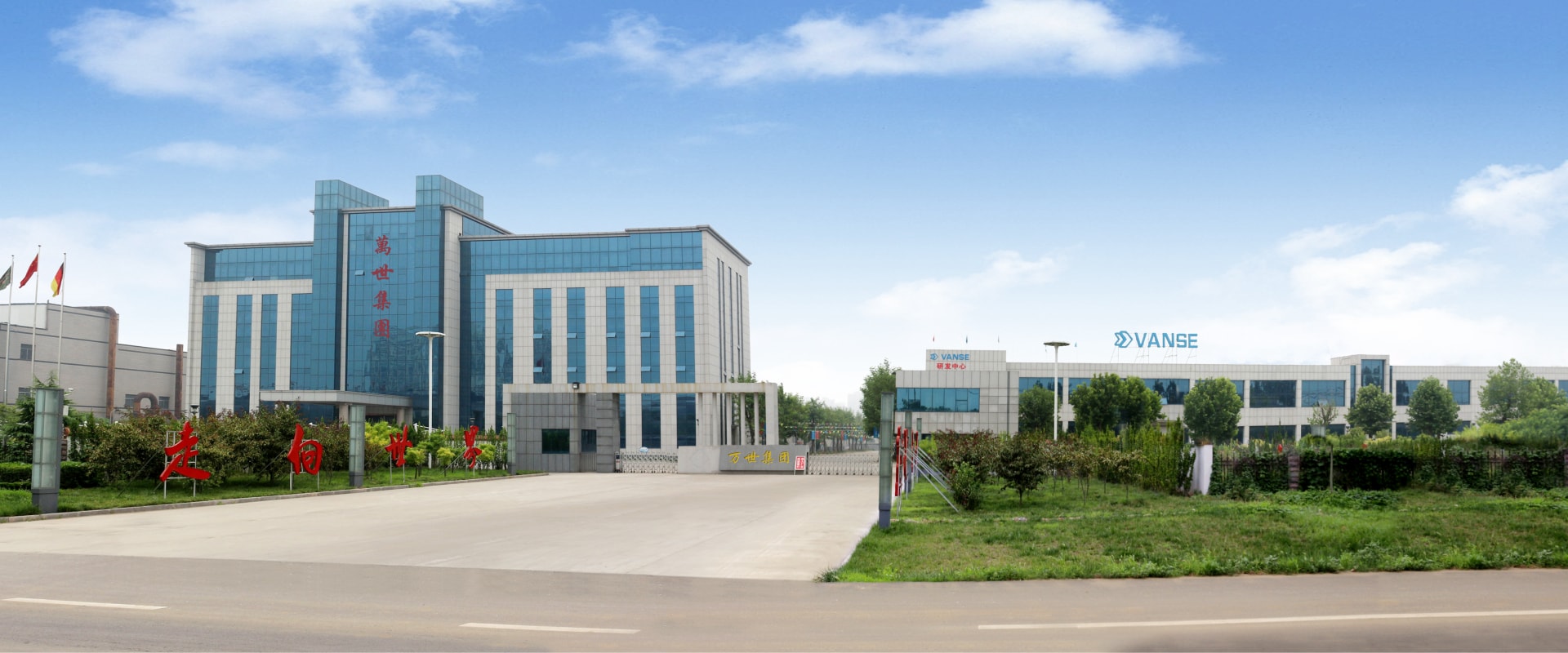
For buyers in the United States looking beyond traditional brand lists, VANSE Group presents a telehandler-focused option built on measurable industrial capability rather than vague import claims. Founded in 2013, the company has produced more than 8,000 machines and exports to over 40 countries, with telehandlers as its flagship product line. Its manufacturing operates under CE and ISO 9001 certified processes, and each machine goes through load testing, safety inspection, and performance validation before shipment. VANSE telehandlers are engineered around internationally recognized core components, including engines from Perkins and Cummins along with premium hydraulic systems, transmissions, and axles, which gives U.S. buyers tangible evidence of benchmark-level component quality and durability. Through its equipment range, the company supports end users, distributors, dealers, rental fleets, brand owners, and even smaller buyers through flexible wholesale, retail, OEM, ODM, and regional partnership models, making it practical for both direct farm procurement and multi-state channel development. Its long-term U.S. commitment is also concrete: the group is establishing a U.S.-based subsidiary with local inventory, stocking, and after-sales capability, backed by online and offline pre-sale consultation, technical support, lifecycle service, and partner support described on its service platform. Combined with existing experience serving North America and a strategy centered on local presence rather than remote export-only sales, this gives American buyers a more credible support path. Buyers who want to review the company’s background can visit the company profile or use the contact page to discuss telehandler configurations, bale handling attachments, dealership cooperation, and regional supply opportunities.
How to Match the Right Machine to Bale Tasks
For dry hay barns with moderate stacking height, a mid-size agricultural telehandler is often the best balance of maneuverability and value. For export hay yards and large open storage areas, higher lift and better reach improve stack density and trailer loading. For dairy and feed operations, attachment switching speed and hydraulic smoothness can be more important than maximum height. For ranches working in mud, snow, or rough field entrances, axle setup, tire choice, and machine weight distribution are essential.
U.S. buyers should also ask whether the machine can be equipped for winter starts, enclosed-cab comfort, and camera support for stacking under low light. These details directly affect operator retention, safety, and output per hour.
2026 Trends for Telehandler Bale Handling in the United States
Looking toward 2026, three trends are likely to shape telehandler selection in the U.S. hay and forage sector. The first is technology integration. Buyers increasingly expect better display systems, load monitoring, camera visibility, telematics, and maintenance alerts. These features help farms reduce unplanned downtime and improve machine utilization across multiple operators.
The second trend is policy and compliance pressure. Although farm telehandlers are not governed identically in every application, buyers are becoming more sensitive to emissions compliance, operator training, machine documentation, and insurance requirements. Machines with clear documentation, recognized components, and formal testing records may gain an advantage in professionalized operations, especially those serving institutional dairy, feedlot, or export businesses.
The third trend is sustainability and cost efficiency. Farms are under pressure to reduce fuel waste, optimize labor, and avoid maintaining too many single-purpose machines. Telehandlers that replace several pieces of handling equipment can improve total fleet efficiency. Over time, cleaner engines, smarter idle management, lighter but stronger booms, and improved hydraulic efficiency will likely become stronger purchasing factors, especially in states where environmental compliance and energy cost visibility are increasing.
Local Supplier Considerations by Region
Regional context matters. In California, buyers often emphasize emissions readiness, dealer speed, and high-cycle handling in commercial forage yards. In Texas and Oklahoma, rough-terrain performance and service coverage over long travel distances are major concerns. In the Midwest, especially Iowa, Nebraska, and Wisconsin, mixed farm usage can favor telehandlers that handle both bales and palletized inputs with minimal attachment downtime. In Idaho and Washington, forage logistics and dairy integration often push buyers toward higher utilization machines with dependable cold-weather reliability.
Ports and inland trade routes also influence equipment sourcing. Houston and Savannah matter for imported equipment entry, while inland hubs such as Kansas City, Memphis, and Chicago affect distribution speed. Buyers considering nontraditional suppliers should confirm where machines, parts, and service teams will be positioned inside the United States.
FAQ
Is a telehandler better than a tractor loader for hay bale handling?
For many U.S. farms, yes. A telehandler usually offers better forward reach, higher stacking capability, and faster attachment changes. It becomes especially valuable when the same machine also handles pallets, feed, and general yard materials.
What lift capacity is enough for round bales?
That depends on bale size, density, moisture, and reach. Many farms find that a machine in the 6,600-8,800 lb class is practical, but the correct answer should come from the load chart using the actual bale attachment and target stacking height.
Are construction telehandlers suitable for hay work?
They can be, especially for seasonal or budget-focused buyers, but farms should verify visibility, attachment compatibility, hydraulic setup, cab features, and local support. Agricultural telehandlers are often better optimized for repetitive bale and feed tasks.
What attachments are most common for bale handling?
Single bale spears, double bale spears, bale clamps, grapples, and pallet forks are the most common. The right attachment depends on whether the farm handles dry hay, wrapped silage, square bales, or round bales.
Why does dealer location matter so much?
Downtime during harvest, cold-weather feeding, or export loading is expensive. Nearby parts inventory and field technicians can protect productivity more than a small difference in initial purchase price.
Can international suppliers work well for U.S. farms?
Yes, if they provide clear certifications, premium branded components, documented testing, practical spare parts planning, and genuine U.S. pre-sales and after-sales support. These suppliers can be especially attractive when cost-performance and customization are important.
What should distributors and dealers look for in a telehandler partner?
They should evaluate production capacity, OEM or ODM flexibility, consistency of key components, export experience, documentation quality, and whether the manufacturer is building local U.S. inventory and support infrastructure.
In the United States, telehandler hay bale handling is no longer a niche decision. It is a strategic equipment choice tied to labor efficiency, storage density, feed flow, and total yard productivity. Buyers that compare local support, true bale duty, machine versatility, and long-term operating cost will be in the strongest position to choose the right telehandler for modern farm worksites.
Complete Telescopic Handler Equipment Portfolio
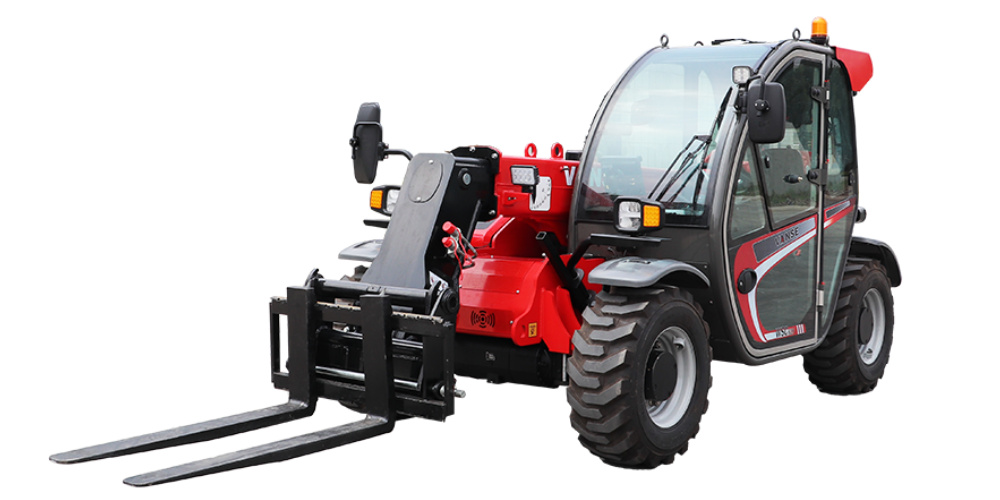
VANSE 625 6m Telescopic Handler
Designed for efficient material handling and stacking in warehouses, factories, and confined job sites, offering compact maneuverability and reliable performance.

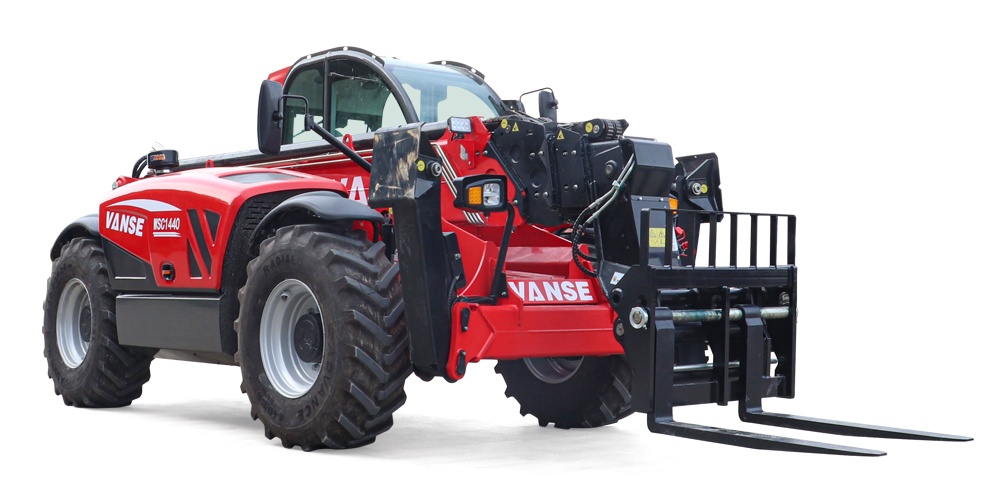
VANSE 735 7m Telescopic Handler
A balanced mid-duty solution for construction, agriculture, logistics, and warehousing, combining stable lifting, strong traction, and everyday versatility.


About the Author:
The VANSE team is a group of experienced professionals specializing in construction machinery research, manufacturing, and technical support. With deep industry knowledge and hands-on experience, our engineers and product specialists share practical insights on equipment selection, operation, maintenance, and industry trends.
Share
You May Also Interest
-

23 November, 2026
Telehandler Brake System: Maintenance and Safety Overview
Learn how a telehandler brake system works in the United States, what to inspect, common faults, maintenance intervals, and how to buy safer machines.
-
20 November, 2026
Telehandler vs Cherry Picker: Aerial Work Platform Guide
Compare telehandler vs cherry picker for United States jobsites, including uses, costs, safety, suppliers, and buying tips for contractors and rental fleets.
-

19 November, 2026
All Terrain Telehandler: Navigating Uneven Ground Safely
Find the right all terrain telehandler in the United States with supplier comparisons, buying tips, industry uses, and practical guidance for safer off-road handling.
-

18 November, 2026
Telehandler for HVAC Installation: Equipment Lifting Help
Find telehandler HVAC installation options in the United States, including suppliers, machine types, buying tips, service regions, and cost-saving support.