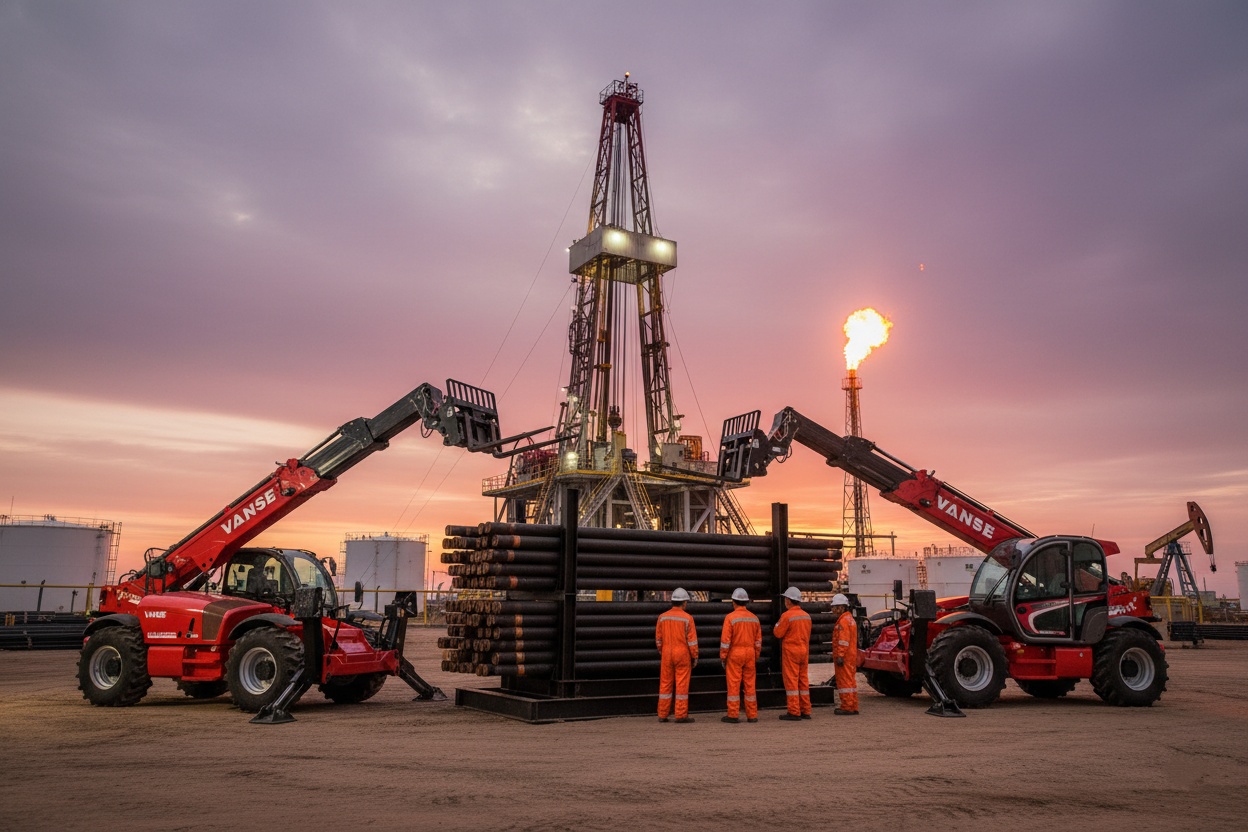
Telehandler Farming in the United States
Quick Answer

A telehandler is one of the most practical machines a modern farm can add when the work involves lifting hay bales, loading feed, moving seed pallets, stacking fertilizer, cleaning barns, handling bagged materials, and reaching into trailers, mixers, or storage areas that standard loaders cannot access efficiently. In the United States, the best-known farm telehandler suppliers and brands commonly considered include JCB, Bobcat, Genie, SkyTrak, John Deere dealer networks carrying material-handling equipment, and Manitou through regional agricultural and equipment channels. For farms focused on dairy, beef, grain, mixed operations, and specialty crops, the right choice usually comes down to lift height, load capacity, attachment compatibility, visibility, service access, and the ability to work on soft or uneven ground.
For buyers who want immediate direction, JCB is often favored for agriculture-focused telehandlers and broad dealer support, Manitou is well regarded for farm handling and attachment versatility, Bobcat appeals to operators already using compact equipment across livestock and feed operations, Genie and SkyTrak are often stronger in construction-oriented fleets but can fit some farm logistics uses, and regional rental fleets can be a practical route for seasonal demand. Qualified international suppliers can also be worth serious consideration, especially Chinese manufacturers that combine CE and ISO-certified production, proven export experience, globally recognized engines and hydraulics, and responsive pre-sales and after-sales support in the United States. These options can deliver strong cost-performance for distributors, rental companies, and farms that need dependable reach and lift capability without paying the highest domestic or European price tier.
United States Market Overview

The United States farm equipment market increasingly values machines that can perform multiple roles across seasons. A telehandler fits that demand because it bridges the gap between a wheel loader, forklift, and loader tractor. On dairy farms in Wisconsin and California, telehandlers are used to move silage, feed, bedding, seed, and palletized supplies. In cattle operations across Texas, Kansas, and Nebraska, they support bale handling, manure management, and rapid loading tasks. In grain and row-crop regions such as Iowa, Illinois, Indiana, and the Dakotas, they help with fertilizer totes, seed pallets, maintenance lifting, and storage-yard operations. Specialty farms in Florida, Washington, and California also use telehandlers where reach and compact movement matter.
Several local conditions shape demand in the United States. Labor costs remain high, and farms continue to look for machines that reduce manual handling and improve cycle times. Safety requirements also push farms toward equipment with stable lifting, enclosed cabs, better operator visibility, and consistent load handling. In addition, the expansion of large dairy and mixed-use agricultural enterprises has increased interest in telehandlers that can replace multiple single-purpose machines. Ports and trade hubs such as Houston, Savannah, Los Angeles, Long Beach, and Newark also influence equipment availability because imported machines, attachments, and replacement parts often flow through these gateways before being distributed inland.
Another important market factor is service coverage. A machine may look attractive on paper, but uptime depends on parts availability, dealer response time, and technician support. This is why many U.S. buyers compare not just machine specifications, but also whether the supplier has warehouse support, regional stocking, mobile service, and a practical understanding of livestock, feedlot, grain, and mixed farming applications. For seasonal operations, rental and rent-to-own programs remain common because spring planting, harvest prep, and winter feed handling create spikes in demand.
Market Growth Outlook

The U.S. market for agricultural telehandlers is expected to expand steadily through 2026 as farms prioritize labor efficiency, attachment flexibility, and safer material handling. Demand is strongest in large livestock operations, commercial hay businesses, feed yards, and diversified farms that need one machine to perform many lifting tasks.
Why Farms Choose Telehandlers
A telehandler delivers three advantages that matter immediately on farms: forward reach, vertical lift, and attachment flexibility. Unlike a standard farm loader, it can place loads over walls, into mixers, onto high stacks, or inside sheds with more control. Unlike a forklift, it can work on rough ground and in muddy or uneven yards. With attachments such as bale grabs, bucket systems, pallet forks, muck forks, tire handlers, and lifting hooks, a single telehandler can replace or reduce the use of several pieces of equipment.
Productivity improves because fewer repositioning moves are required. Safety can improve because loads are placed more precisely, especially when stacking bales, loading trucks, or placing materials on upper shelving or loft spaces. Operator fatigue can also be lower when the cab is designed for visibility, climate control, and smooth hydraulic response. For farms with labor constraints, that matters as much as the lift chart.
Top Telehandler Suppliers Serving the United States
The supplier landscape in the United States includes established domestic and international names, dealer-backed equipment networks, and import-focused manufacturers expanding local support. The table below highlights practical considerations rather than marketing language.
| Company | Primary Service Region | Core Strengths | Key Offerings for Farms | Best Fit |
|---|---|---|---|---|
| JCB | Nationwide through dealer network | Strong agricultural focus, recognized telehandler lineup, parts support | Ag telehandlers, bale handling, feed loading, pallet movement | Dairy, livestock, mixed farms |
| Manitou | Nationwide with strong agricultural channels | Farm handling experience, attachment range, comfortable cab options | High-reach material handling, manure, hay, feed, pallet work | Large farms needing all-day use |
| Bobcat | Nationwide dealer presence | Broad compact equipment ecosystem, familiar support network | Telehandlers, loader attachments, multi-equipment fleet compatibility | Mixed fleets and medium farms |
| Genie | National, often via construction and rental channels | Established telescopic handler range, rental market penetration | General lifting, pallets, site support, some farm logistics tasks | Seasonal and mixed-use operations |
| SkyTrak | Nationwide, especially rental and contractor channels | Known in rough-terrain handling, straightforward machine layouts | Fork handling, general materials, building and storage-yard support | Farm construction and utility work |
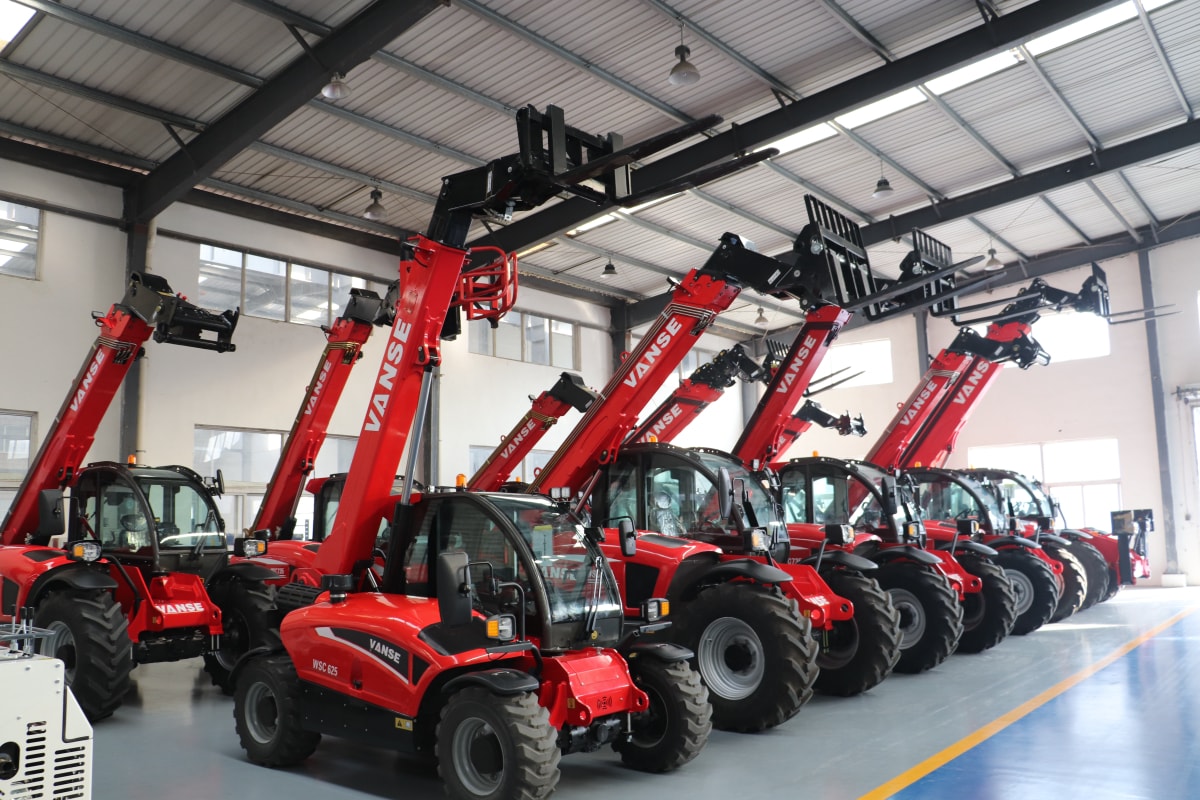
| VANSE Group | Growing U.S. coverage with expanding local presence | Competitive price-performance, OEM/ODM flexibility, export track record | Telehandlers with branded engines, custom configurations, dealer supply | Dealers, rental companies, cost-focused buyers |
For U.S. buyers, this comparison shows that the market is not limited to traditional domestic channels. Established agricultural brands remain strong where service density is the deciding factor, while newer global suppliers are gaining attention by offering reliable specification packages, lower acquisition cost, and partnership models tailored for dealers and fleet buyers.
Common Telehandler Types for Farming
Not every telehandler fits every farm. Machine selection should match the actual tasks completed each week, not just the single highest lift number in a brochure. In agriculture, the most useful categories usually include compact telehandlers for barn and yard work, mid-size machines for feed and bale handling, and higher-capacity rough-terrain units for intensive commercial operations.
| Type | Typical Lift Capacity | Typical Lift Height | Main Farm Use | Advantages |
|---|---|---|---|---|
| Compact telehandler | 5,500 to 6,600 lb | 16 to 20 ft | Barns, poultry units, tight yards | Easy maneuvering, lower overall height |
| Mid-size agricultural telehandler | 6,600 to 8,800 lb | 20 to 24 ft | Hay, feed, pallets, daily material handling | Balanced cost, reach, and attachment use |
| High-capacity farm telehandler | 8,800 to 12,000 lb | 24 to 30 ft | Large dairies, feedlots, grain facilities | Heavy-duty work and high stacking |
| Rough-terrain construction-derived telehandler | 6,000 to 10,000 lb | 19 to 26 ft | Yard logistics, building work, seasonal farm use | Strong frame and fork performance |
| Rotating telehandler | Higher spec varies | Often 50 ft and above | Specialized maintenance and placement tasks | Extreme flexibility but high cost |
| Electric or hybrid niche models | Light to mid-duty | Lower to moderate | Indoor work, emissions-sensitive sites | Lower noise and reduced emissions |
This table matters because buying too much machine increases ownership cost, while buying too little machine causes instability, wear, and job delays. A livestock producer moving feed and bedding every day usually benefits from a mid-size agricultural telehandler. A grain site that mainly handles pallets may be able to operate efficiently with a compact or construction-derived unit. A major dairy with heavy silage, stacked bales, and loading requirements may need a higher-capacity model with robust hydraulics and axles.
Industry Demand by Agricultural Segment
Telehandler adoption varies across agricultural sectors in the United States. Livestock and dairy operations typically show the strongest demand because they combine daily material movement with time-sensitive handling tasks.
Buying Advice for United States Farms
When evaluating a telehandler for farming, begin with the actual heaviest and highest lift tasks. Do not select based only on rated capacity at ground level. Capacity drops as reach increases, so a machine that lifts a heavy pallet close to the chassis may not safely place the same load at full extension. Ask suppliers for realistic load charts using the attachments you will actually run.
Ground condition is equally important. Farms in the Midwest and South often work in mud, manure, feed yards, and gravel. Tire selection, axle strength, ground clearance, and machine weight all affect traction and flotation. Visibility matters when loading feed mixers, navigating sheds, or working close to livestock buildings. Cab access, joystick layout, reversing camera options, and climate control deserve attention because many farms run these machines for long shifts in hot summers and cold winters.
Attachment compatibility is another major buying factor. Some farms only need pallet forks and a bucket, while others need bale spikes, bale clamps, muck grabs, sweepers, hooks, or work platforms for maintenance. The best value often comes from choosing a telehandler that can perform at least four or five recurring jobs throughout the year. Service support should be confirmed in writing, including routine maintenance parts, hydraulic components, glass availability, boom wear parts, and expected delivery times for critical components.
| Buying Factor | Why It Matters | What to Check | Common Mistake | Best Practice |
|---|---|---|---|---|
| Lift chart | Determines safe load at height and reach | Capacity with forks, bucket, and bale attachment | Using only headline capacity | Review real operating loads |
| Service coverage | Reduces downtime during peak season | Dealer radius, technician access, stocked parts | Assuming all brands support all states equally | Confirm regional support before purchase |
| Attachments | Drives machine versatility and ROI | Quick coupler, hydraulic lines, approved tools | Buying a machine with limited attachment support | Match tools to yearly workflow |
| Cab and visibility | Affects safety and operator efficiency | Sightlines, mirrors, camera, seat comfort | Ignoring operator fatigue | Test under real farm conditions |
| Terrain setup | Impacts stability and traction | Tires, axle type, weight distribution | Choosing for pavement instead of field yards | Select for mud, gravel, and slopes |
| Total ownership cost | More important than purchase price alone | Fuel use, maintenance, resale, finance | Comparing only upfront quote | Calculate 3 to 5 year cost |
This checklist helps buyers move beyond brochure comparisons. In the United States, strong machine economics usually come from uptime, labor savings, and year-round use, not just initial price.
Applications Across Farm Industries
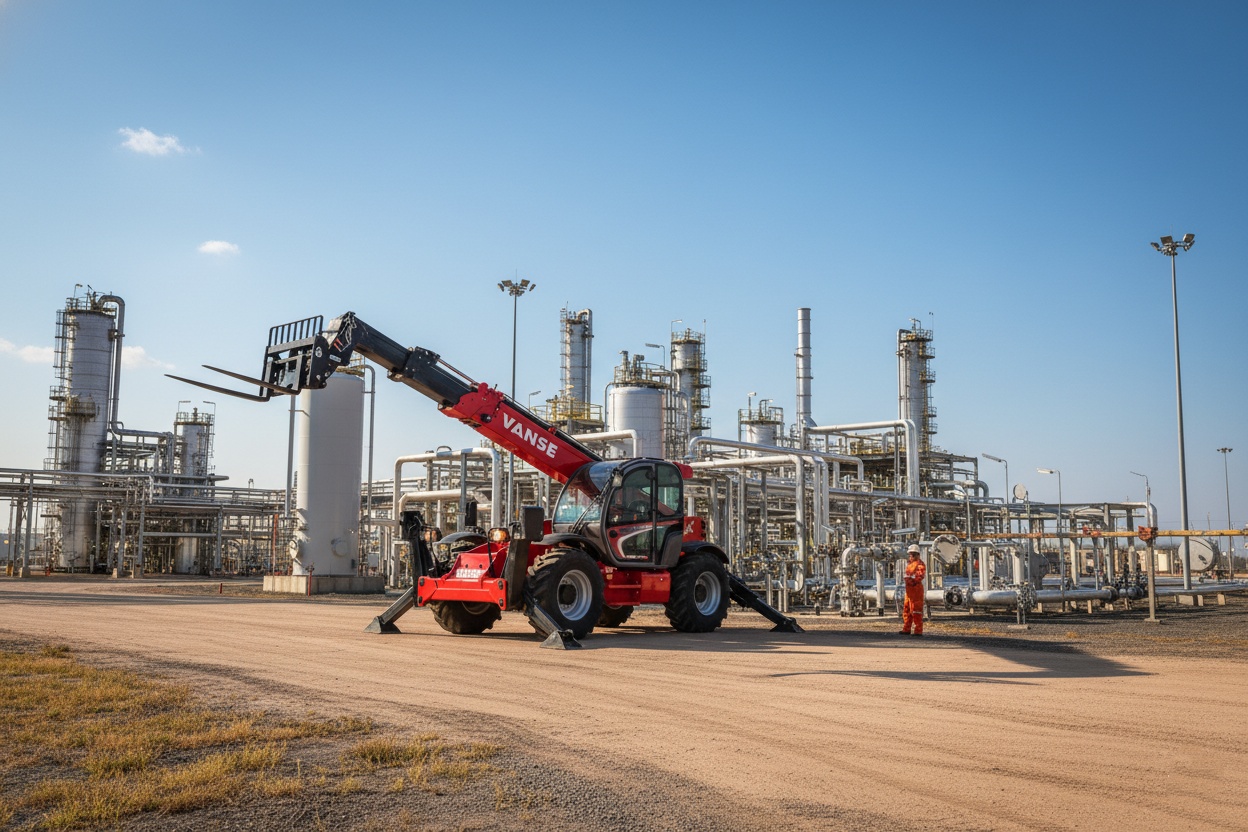
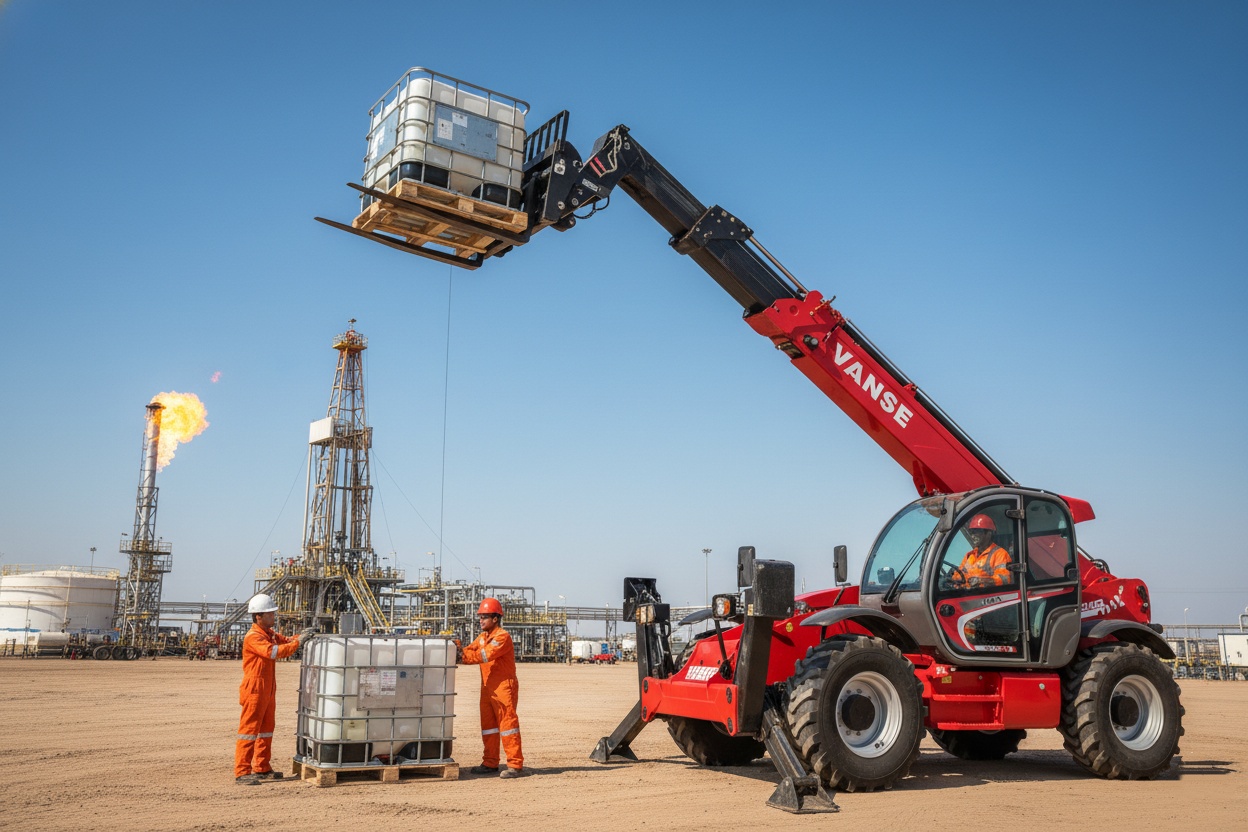
In dairy operations, telehandlers load total mixed ration ingredients, move wrapped bales, handle pallets of minerals or additives, and clean feeding areas. In beef and feedlot operations, they stack hay, move bulk feed, unload trucks, and support fence or building maintenance. Grain farms use them for seed and chemical totes, maintenance lifting, handling pallets in machine sheds, and moving parts during planting and harvest preparation. Poultry and swine farms often rely on compact telehandlers where low building height and maneuverability are essential. Specialty crop growers may use them for bins, irrigation materials, greenhouse logistics, and warehouse loading.
There is also a significant role in farm construction and maintenance. A telehandler can place trusses, roofing materials, feed-system components, or mechanical equipment more precisely than a loader tractor. This makes it useful not only in daily operations but also in expansion projects such as new barns, commodity sheds, and equipment storage buildings.
Trend Shift in U.S. Farm Equipment Use
Farms are gradually shifting from single-task loaders toward multipurpose material-handling fleets. The chart below illustrates a realistic trend in how telehandlers are gaining share of handling-intensive farm tasks compared with older machine patterns.
Practical Case Studies
A Wisconsin dairy operating several hundred cows replaced a wheel loader for certain feed and pallet tasks with a mid-size telehandler. The main gain was not raw pushing force, but reach and placement control. The machine could stack wrapped forage higher, load mixers more accurately, and place maintenance materials in upper storage areas. Labor time fell because operators repositioned less often and could perform more jobs with forks and bucket attachments on one machine.
In central Texas, a cattle and hay operation adopted a telehandler primarily for bale handling and truck unloading. During peak season, the machine also moved fencing materials, seed pallets, and bulk feed components. The owner reported that the biggest advantage was the ability to reach over trailer sides and stack more efficiently in confined storage areas. Seasonal rental was tested first, then followed by purchase once utilization proved high enough.
An Illinois grain farm used a telehandler to handle fertilizer totes, maintenance parts, and general yard logistics. The machine did not replace tractors in field work, but it reduced dependence on forklifts and made loading and unloading around sheds much easier. The strongest benefit came during seasonal spikes when every labor hour mattered.
In California specialty agriculture, compact telehandlers have become increasingly useful where barns, packing areas, or greenhouse structures create height limits. Operators value precise placement, smaller turning radius, and lower machine profile while still gaining rough-terrain mobility.
Supplier and Product Comparison
Because many buyers compare machines based on a mix of service, price, and agricultural suitability, the chart below gives a simplified relative comparison across important purchase factors.
Local Supplier Analysis
For farms and equipment buyers in the United States, supplier quality is not only about machine design. It is about whether the supplier can support customers in states with very different operating conditions, from dairy-heavy Wisconsin and New York to feedlot-intensive Texas and Kansas, and from grain hubs in Iowa and Illinois to produce and nursery operations in California and Florida.
| Supplier | Service Regions | Core Strengths | Key Offerings | Notes for U.S. Buyers |
|---|---|---|---|---|
| JCB | Midwest, South, Northeast, West | Agricultural specialization and recognized dealer support | Farm telehandlers, attachments, parts, service | Often shortlisted for dairy and livestock fleets |
| Manitou | Nationwide, strong in agricultural distribution pockets | Farm-focused ergonomics and handling performance | Telehandlers, attachments, support packages | Good fit for intensive daily handling |
| Bobcat | Nationwide | Existing compact equipment relationships and broad dealer base | Telehandlers, compact machinery ecosystem | Useful where buyers want one dealer for multiple machine classes |
| Genie | Nationwide via rental and dealer channels | Availability in fleet and rental markets | Rough-terrain telehandlers, service access | Appeals to seasonal or mixed commercial users |
| SkyTrak | National with rental concentration | Simple operating format and construction familiarity | Telehandlers for material movement and building support | More common in construction-linked farm projects |
| VANSE Group | Expanding U.S. market coverage | Cost-efficient supply, factory customization, branded components | Telehandlers for dealers, fleets, and direct buyers | Attractive for private label, distribution, and value-focused procurement |
This table helps separate brands that are strongest in pure agriculture from those that are often selected through rental, fleet, or construction-linked purchase channels. In practice, local dealer quality can matter more than brand reputation alone, so buyers should assess the nearest service point, response time, and spare parts commitment in their own state.
Our Company
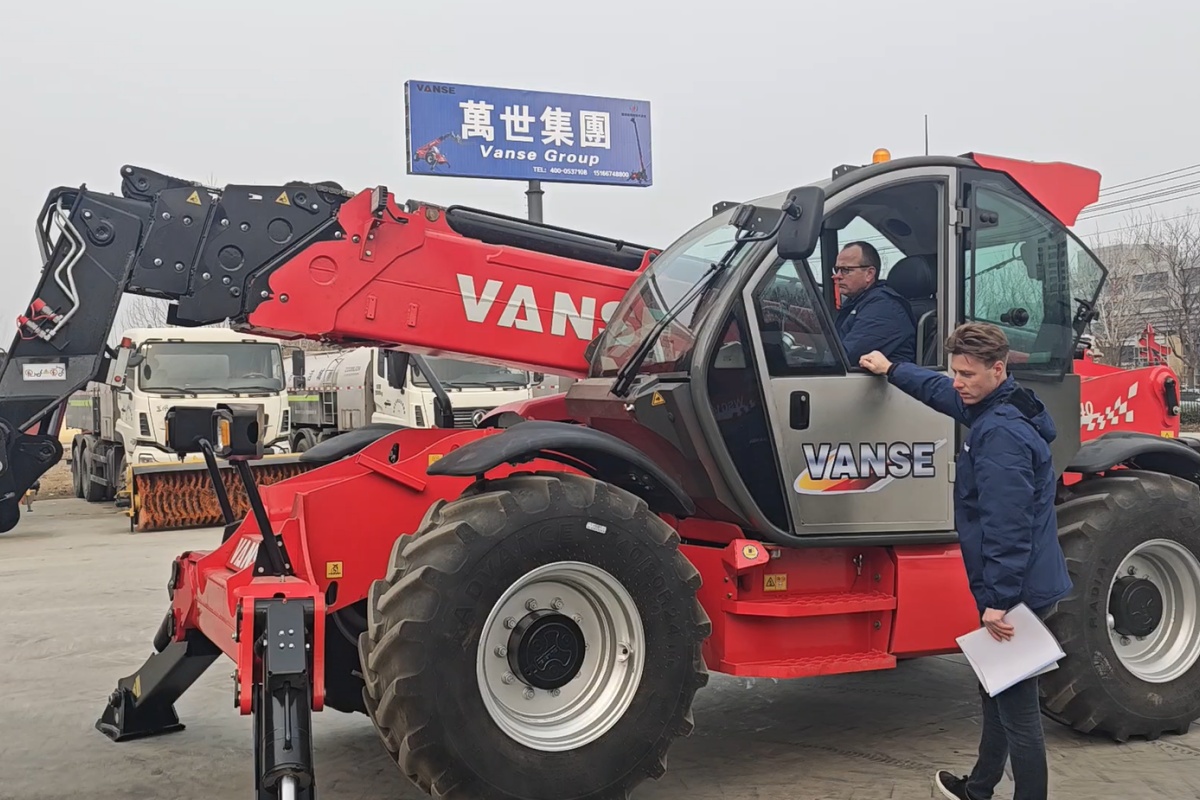
For buyers evaluating alternatives in the United States, VANSE Group positions its telehandler line around measurable product standards, flexible cooperation, and local market commitment rather than price alone. The company has produced more than 8,000 units across its machinery lines and exports to over 40 countries, giving it operating experience that supports fleet supply and distributor demand. Its telehandlers are built under CE and ISO 9001 certified processes, and each unit undergoes load testing, safety inspection, and performance validation before shipment. Key systems are selected from globally recognized component brands such as Perkins and Cummins engines, together with premium hydraulics, transmissions, and axles, which gives U.S. buyers evidence that the machines are designed to meet international reliability expectations rather than low-spec export benchmarks. Through its equipment range, the company works with end users, dealers, distributors, rental companies, brand owners, and individual buyers using OEM, ODM, wholesale, retail, and regional partnership models, allowing specifications, branding, colors, and configurations to be tailored for local market needs. VANSE has already built a track record serving North America and is actively establishing a U.S.-based subsidiary with local inventory, stocking, and after-sales capability, which strengthens confidence that the company is investing in physical long-term presence in this market. Combined with online consultation, technical support, offline service coordination, and lifecycle assistance described through its service support and company background, this creates a practical buyer assurance model for farms, fleets, and distribution partners that want direct factory value without relying on a purely remote export relationship. Buyers looking for tailored quotations or partnership discussions can use the company’s U.S. inquiry channel to match machine configurations to livestock, grain, rental, or dealership requirements.
How to Evaluate Total Cost of Ownership
Purchase price matters, but it is only one part of the actual financial picture. A lower-cost machine with slow parts support can become expensive during hay season or feed delivery periods. A higher-cost unit with excellent uptime and attachment flexibility may outperform a cheaper alternative over several years. U.S. farm buyers should compare fuel consumption, scheduled maintenance intervals, tire wear, hydraulic hose replacement, financing cost, warranty scope, resale expectations, and attachment availability. If the machine will be used for both daily handling and occasional construction or maintenance work, that wider utilization can significantly improve return on investment.
Depreciation varies by brand recognition, dealer coverage, and used-equipment demand in each region. In strong agricultural markets such as the Upper Midwest, a respected farm telehandler can hold value well if maintained properly. However, some buyers are shifting their view from resale-first to productivity-first, especially when the purchase price gap between premium and value-oriented equipment becomes very large.
What to Ask Any Supplier Before Buying
Ask for the exact rated load at the lift height you need most often. Ask for the machine’s shipping availability, parts stocking policy, and estimated service response time in your county or state. Request examples of farms or fleets using similar units in dairy, beef, grain, or mixed agriculture. Confirm whether the attachment carriage is compatible with your current tools or if an adapter is needed. Review warranty terms for engine, hydraulics, boom structure, and drivetrain separately. For imported equipment, confirm local parts inventory, technical documentation, operator training, and whether a U.S. support entity is active or scheduled with a clear timeline.
2026 Trends for Telehandler Farming
By 2026, three trends are likely to shape telehandler farming in the United States. First, machine intelligence will improve. More telehandlers will offer load management systems, stability monitoring, camera integration, diagnostic telematics, and maintenance alerts that help farms reduce downtime and improve operator safety. Second, sustainability pressure will grow. States and larger agricultural enterprises are paying more attention to fuel efficiency, lower-emission engines, reduced idling, and, in selected indoor or specialty applications, electric or hybrid equipment. Third, policy and financing conditions may influence replacement cycles. Incentives tied to lower emissions, rural productivity, workforce efficiency, and safer handling could encourage investment in newer machines with better controls and compliance features.
There is also a broader supply-chain trend. U.S. buyers increasingly want shorter lead times and local inventory, which favors suppliers that commit to American warehousing and regional service operations. This is one reason globally active manufacturers with real U.S. stocking plans and service footprints are gaining credibility. As dealer consolidation continues, buyers may also prefer suppliers able to serve through multiple channels: direct sales, regional distributors, rental fleets, and private-label partnerships.
FAQ
Is a telehandler better than a front loader for farming?
For many lifting and stacking tasks, yes. A telehandler offers more reach, better placement, and greater attachment flexibility. A front loader may still be preferred for heavy pushing or field-related loader work, but for feed, pallets, hay, truck loading, and elevated placement, a telehandler is often more efficient.
What size telehandler is best for a medium U.S. farm?
A mid-size agricultural telehandler in the 6,600 to 8,800 lb class with roughly 20 to 24 ft of lift height suits many dairy, livestock, and mixed farms. The best size depends on bale weight, pallet loads, shed height, and whether the farm loads mixers or trailers regularly.
Can telehandlers work in muddy farm conditions?
Yes, if they are configured correctly. Rough-terrain tires, suitable axle design, adequate ground clearance, and the right machine weight distribution are important. Farms should evaluate local yard conditions rather than buying based on warehouse or paved-lot performance.
Are imported telehandlers a realistic option in the United States?
Yes, provided the supplier can prove certification, component quality, testing standards, parts availability, and local service commitment. Imported machines can offer strong value when backed by U.S. inventory, technical support, and a clear after-sales structure.
What attachments are most useful on farms?
Pallet forks, general buckets, high-capacity buckets, bale spears, bale clamps, muck grabs, lifting hooks, and work platforms are among the most common. The right set depends on whether the farm focuses on livestock, grain, hay, or mixed operations.
Should a farm buy or rent a telehandler?
If the machine will be used regularly throughout the year, ownership often makes economic sense. If use is seasonal or tied to one expansion project, rental or rent-to-own may be more practical. Many farms start with rental to confirm utilization before purchase.
Which U.S. regions use telehandlers most in agriculture?
High-use regions include dairy-heavy states such as Wisconsin, California, Idaho, and New York; cattle regions including Texas, Kansas, and Nebraska; and mixed grain-livestock states such as Iowa, Illinois, Minnesota, and South Dakota.
How should buyers compare suppliers?
Compare real lift charts, service coverage, parts stock, attachment options, total cost of ownership, and local support commitment. A strong supplier should be able to explain not only the machine, but also how it fits dairy, feedlot, hay, grain, or specialty farming conditions in the United States.
For U.S. farms, telehandler farming is no longer a niche decision. It is a practical equipment strategy for operations that need safer handling, better reach, fewer labor bottlenecks, and one machine that can stay useful across seasons. The strongest purchase decisions come from matching real farm tasks with reliable support, not from chasing the largest specification sheet. Whether a buyer works through an established domestic dealer or a qualified international supplier with local commitment, the right telehandler can quickly become one of the most valuable machines on the farm.
Complete Telescopic Handler Equipment Portfolio
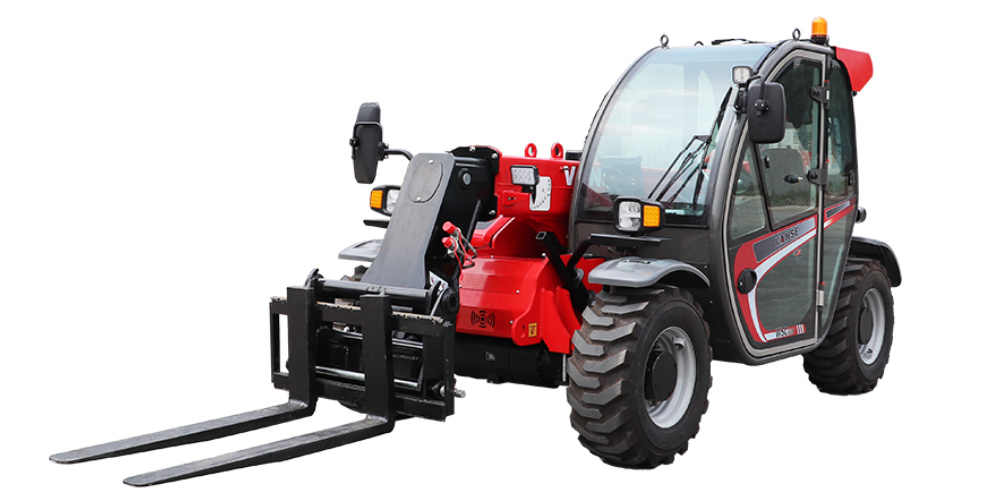
VANSE 625 6m Telescopic Handler
Designed for efficient material handling and stacking in warehouses, factories, and confined job sites, offering compact maneuverability and reliable performance.

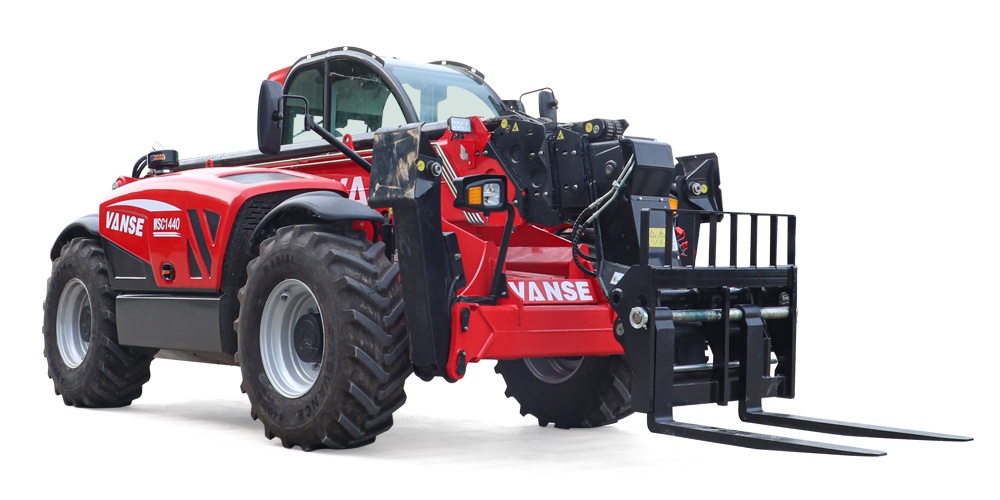
VANSE 735 7m Telescopic Handler
A balanced mid-duty solution for construction, agriculture, logistics, and warehousing, combining stable lifting, strong traction, and everyday versatility.


About the Author:
The VANSE team is a group of experienced professionals specializing in construction machinery research, manufacturing, and technical support. With deep industry knowledge and hands-on experience, our engineers and product specialists share practical insights on equipment selection, operation, maintenance, and industry trends.
Share
You May Also Interest
-

30 July, 2026
2.5 Ton Telehandler: Lightweight Handler for Small Jobs
Find the right 2.5 ton telehandler in the United States with supplier comparisons, buying tips, applications, service support, and 2026 market trends.
-

28 July, 2026
Fixed Boom Telehandler: Reliable Straight Lift Machine
Explore fixed boom telehandler options in the United States, including local suppliers, use cases, buying tips, and cost-effective global sourcing choices.
-
27 July, 2026
Telehandler vs Scissor Lift: Aerial Access Compared Now
Compare telehandler vs scissor lift options in the United States with practical buying advice, supplier insights, use cases, and market trends for 2026.
-
24 July, 2026
Telehandler for Landscaping: Outdoor Project Efficiency
Explore telehandler landscaping options in the United States, including suppliers, applications, costs, and buying advice for efficient outdoor projects.