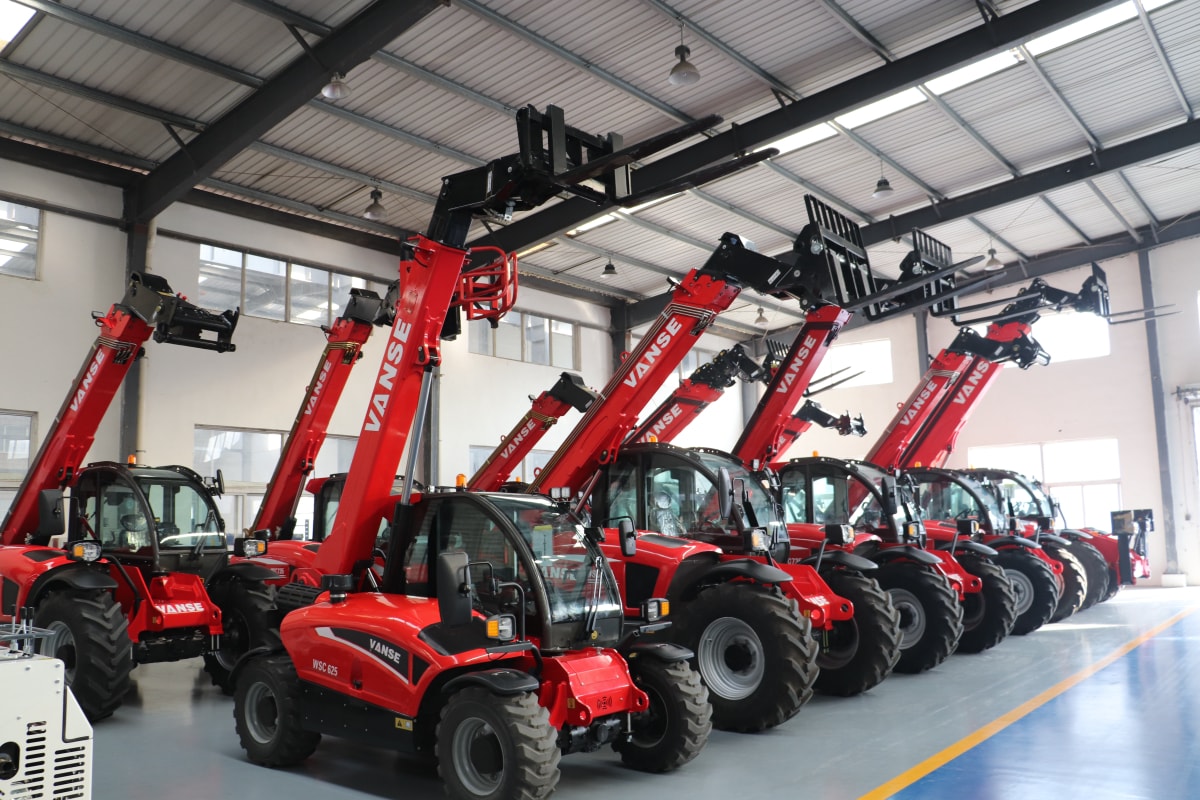
Best 2.5 Ton Telehandler Options for the United States
Quick Answer

If you need a 2.5 ton telehandler in the United States, the most practical options usually come from JCB, Bobcat, Genie, SkyTrak, Manitou, and Dieci, depending on whether your priority is compact size, dealer coverage, lift height, rental fleet support, or agricultural use. For urban jobsites, landscaping yards, masonry supply handling, and smaller commercial construction, a 2.5 ton telehandler is often the right fit because it offers enough lifting capacity for pallets, bundled materials, trusses, feed, fencing supplies, and general site support without the bulk and transport burden of a heavier machine. In most U.S. regions, buyers should first compare nearby dealer response time, parts stocking, attachment compatibility, and operator visibility before focusing on price alone. Qualified international suppliers can also be worth serious consideration, especially when they offer relevant certifications, dependable engines and hydraulic components, strong pre-sale guidance, and documented after-sales support in the United States, since that combination can create a better cost-to-performance ratio for contractors, farms, distributors, and equipment rental businesses.
- JCB: strong U.S. recognition, broad telehandler lineup, solid construction and agriculture support
- Bobcat: compact equipment reputation, good fit for mixed contractor and farm applications
- Genie: widely known in rental and access equipment channels, practical fleet support
- SkyTrak: familiar in North American construction lifting and rough-terrain material handling
- Manitou: strong agricultural and industrial presence with good attachment versatility
- Dieci: useful option for buyers needing agricultural and specialty telehandler configurations
United States Market Snapshot

The U.S. market for compact and mid-capacity telehandlers remains active across construction, agriculture, industrial yards, equipment rental, and municipal operations. A 2.5 ton telehandler occupies an especially useful position in this market because it bridges the gap between compact forklifts and larger rough-terrain machines. In states such as Texas, Florida, California, Georgia, Illinois, and North Carolina, demand is tied to warehouse expansion, residential building, light commercial work, and farm material handling. In port and logistics corridors such as Houston, Savannah, Los Angeles, Long Beach, and Newark, smaller telehandlers are also valued for support roles around container-adjacent warehousing, distribution yards, and equipment staging facilities.
One reason this segment remains resilient is transportation efficiency. A machine in the 2.5 ton class is often easier to trailer, easier to maneuver in tighter jobsites, and less intimidating for crews that do not need the extra size of a 3.5 ton or 4 ton unit. Buyers in the United States also care deeply about local parts support, emissions compliance, operator comfort, and finance options. Rental companies increasingly prefer models that can serve both construction and agriculture-adjacent customers, helping them achieve better fleet utilization. That pushes demand toward versatile telehandlers with quick couplers, fork carriages, buckets, and lifting accessories.
At the same time, more U.S. buyers are evaluating alternatives to legacy premium brands. This has created room for globally experienced manufacturers that can demonstrate certified production, reliable component sourcing, and a visible local service commitment. Buyers are not only comparing sticker price; they are comparing total ownership cost, uptime, lead time, and whether the supplier can support them in the field.
Market Growth Trend

The chart below illustrates a realistic estimate of U.S. market momentum for compact telehandlers and related demand in the 2.5 ton class. Growth is influenced by mixed-use construction equipment fleets, labor efficiency needs, and the spread of telehandler use beyond traditional large construction sites.
Supplier Comparison in the United States
The most useful way to compare suppliers is not by brochure claims alone, but by dealer density, support fit, target industries, and how well the machine matches your daily loads. The table below provides a practical overview of established names and one globally expanding supplier worth evaluating if local service and factory-direct value matter.
| Company | Primary Service Region | Core Strengths | Key Offerings | Typical Buyer Fit |
|---|---|---|---|---|
| JCB | Nationwide through dealer network | Brand recognition, broad telehandler range, strong resale value | Construction and agricultural telehandlers, attachments, financing support | Contractors, farms, rental companies |
| Bobcat | Nationwide, strong dealer presence in many states | Compact equipment expertise, operator familiarity, mixed-use versatility | Compact telehandlers, loaders, dealer service packages | Small contractors, landscapers, farms |
| Genie | Strong in rental-heavy urban and suburban markets | Rental fleet acceptance, telehandler practicality, support through equipment channels | Material lifting machines, rough-terrain handling solutions | Rental fleets, general construction |
| SkyTrak | Strong in North American construction regions | Construction site familiarity, rugged design, straightforward operation | Telehandlers for jobsite lifting and material placement | Framers, masons, general contractors |
| Manitou | Nationwide with notable agriculture and industrial reach | Attachment flexibility, farm utility, industrial handling capability | Agricultural and industrial telehandlers, handling systems | Farms, feed operations, industrial yards |
| Dieci | Selective U.S. distribution by region | Specialty agriculture focus, configuration variety | Telehandlers for farm, construction, and specialty use | Agricultural buyers, niche users |
| VANSE Group | Expanding U.S. presence with planned local subsidiary support | Factory-direct value, certified production, OEM/ODM flexibility | Telehandlers, attachments, customized branding and configuration options | Dealers, distributors, rental fleets, end users, brand owners |
For buyers in the United States, this comparison matters because support expectations vary by region. A contractor in Dallas or Atlanta may prioritize immediate parts dispatch and dealer mechanics, while a distributor near Houston or Savannah may focus more on container planning, private labeling, and price competitiveness. A farm in Iowa or Kansas may put visibility, simple maintenance, and attachment compatibility first. The best supplier is not automatically the biggest brand; it is the one whose support model fits your business reality.
Common 2.5 Ton Telehandler Product Types
Not every 2.5 ton telehandler is configured the same way. In the U.S. market, compact telehandlers in this class are generally selected based on lift height, machine width, engine package, cab type, and attachment ecosystem. Some buyers want a low-profile machine for barn and warehouse entry, while others want more boom reach for framing materials on residential or light commercial structures.
| Type | Typical Lift Height | Best Use Case | Main Advantage | Watchpoint |
|---|---|---|---|---|
| Compact construction telehandler | 13 to 18 ft | Urban infill, masonry, pallet movement | Tight turning and easy transport | May have lower reach for upper-floor work |
| Agricultural compact telehandler | 14 to 20 ft | Feed yards, barns, bale and pallet handling | Good visibility and attachment flexibility | Tire and ground setup must match terrain |
| Rental-focused standard unit | 15 to 19 ft | Mixed customer fleet deployment | Simple controls and broad demand | Needs robust abuse-resistant design |
| Low-height telehandler | 10 to 16 ft | Indoor, sheds, parking decks, confined access | Fits restricted clearance areas | Lower lift envelope |
| Attachment-ready universal model | 14 to 18 ft | Contractors with multiple tasks per day | Fast switching between forks, bucket, jib | Hydraulic flow and coupler standards matter |
| Dealer-customized OEM model | Varies by build | Regional distribution and private brand sales | Branding, spec tailoring, market adaptation | Requires dependable supplier coordination |
These types overlap, but categorizing them helps buyers avoid overspending. Many U.S. users buy too much machine for the work they actually do. If your daily jobs are unloading masonry packs, moving fencing supplies, placing pallets of shingles, and handling feed or seed bags, a compact 2.5 ton unit can be more efficient than a larger telehandler that costs more to transport, store, fuel, and service.
How U.S. Buyers Should Choose
Buying a 2.5 ton telehandler in the United States starts with workload honesty. First, define your heaviest routine load rather than your occasional peak load. Second, check the maximum lift height and forward reach you actually need. Third, examine the surfaces the machine will work on: compacted soil, muddy farm lanes, crushed gravel, warehouse approach aprons, or mixed concrete and dirt. Fourth, match attachment needs to hydraulic flow and carriage compatibility. Fifth, compare downtime risk. A lower purchase price means less if you wait too long for parts during peak season.
It also helps to decide whether you are buying for owner-operation, fleet rental, dealership resale, or a branded equipment line. Owner-operators often prioritize visibility, controls, and maintenance simplicity. Rental companies focus on durability, easy onboarding, and broad market appeal. Dealers and distributors care about repeatable build quality, margin structure, and spare parts planning. Brand owners and regional equipment marketers may need OEM or ODM options, custom paint, decals, and specification adjustments for local demand in states such as Texas, California, Arizona, or Florida.
Another major buying factor in the United States is transport logistics. A compact machine can reduce trailer requirements and improve movement between jobsites. In cities such as Phoenix, Charlotte, Nashville, and Orlando, where crews often bounce between active projects, compact size can materially reduce loading time and congestion issues. When a telehandler can enter tighter yards and staging areas, crews become more productive.
Industry Demand by Sector
The U.S. market does not rely on construction alone. Demand is spread across several industries, and that diversity is exactly why the 2.5 ton class stays relevant. The following chart shows how realistic demand can differ by sector.
Industries That Commonly Use a 2.5 Ton Telehandler
Construction remains the largest demand center. On residential and light commercial projects, a 2.5 ton telehandler handles pallets of block, cement bags, wood bundles, drywall deliveries, windows, and roofing materials. Masonry contractors value stable fork handling and the ability to place loads without bringing in a larger machine that overwhelms the site. Framing crews appreciate a machine that can keep up without damaging finished surfaces or crowding neighbors in suburban developments.
Agriculture is another strong use case. Farms use this machine class for pallets of feed, seed handling, general yard duties, fencing materials, tote movement, and occasional bale support depending on machine geometry and attachment choice. Dairy and livestock operators prefer a telehandler over some loaders when forward reach and higher stacking or loft access are needed. In states like Wisconsin, Nebraska, Kansas, Iowa, and California, versatility across daily chores makes compact telehandlers attractive.
Rental fleets appreciate the segment because customer demand is broad but operator learning is relatively manageable. A rental-ready 2.5 ton telehandler serves landscapers, fence installers, small builders, and maintenance contractors. Industrial yards and manufacturing facilities also use compact telehandlers for loading, unloading, maintenance lift support, and moving materials where forklift tires or mast height become limiting factors.
Municipal departments and utility contractors use them for parks work, storm response staging, and material movement in mixed-terrain environments. Landscaping and hardscaping firms increasingly adopt compact telehandlers to move stone, pavers, soil bags, and nursery stock while minimizing labor strain and reducing repeated skid-steer shuttle trips.
Applications Buyers Often Underestimate
A common mistake is treating a 2.5 ton telehandler as only a pallet machine. In practice, the application range is much wider. It can unload jobsite deliveries from flatbeds, support roofing and siding crews, move palletized bricks, place irrigation and drainage materials, stack seed or fertilizer bags, handle fencing and gate packages, support greenhouse operations, and assist in light industrial maintenance work. With the right attachment, it can also perform bucket loading, jib-assisted positioning, or specialty lifting tasks that would otherwise require multiple machines.
For U.S. buyers working in dense metro areas like Los Angeles, Chicago, Miami, or New York metro outer zones, compact dimensions can make a measurable difference in site access. On suburban tract developments in places such as Dallas-Fort Worth, Tampa, and Raleigh, the machine fits the pace of repetitive, moderate-load material movement. Near port logistics regions such as Savannah or Houston, smaller telehandlers are often used in warehouse overflow zones or equipment support functions rather than direct container handling, where larger reach stackers would be required.
Trend Shift in Buyer Preferences
Demand is also shifting toward machines that combine compact dimensions, stronger safety features, and easier maintenance. The chart below shows how the market is gradually moving from pure price-driven buying toward balanced evaluation that includes local support, emissions compliance, and attachment versatility.
Case Studies from the U.S. Market
A masonry subcontractor in suburban Atlanta typically works on schools, clinics, and retail pads. Their previous equipment mix included forklifts and rented larger telehandlers. After moving to a compact 2.5 ton class machine, they reduced repositioning time and trailer issues while keeping enough lift capacity for block and mortar deliveries. The key lesson was that matching machine size to actual daily loads improved operating cost and reduced congestion near active crews.
A family-run farm supply operation in central Iowa needed one machine to unload pallets, move fencing materials, and support feed storage. A compact telehandler proved more versatile than a standard forklift due to rough ground capability and higher reach into storage areas. Their purchase decision was influenced less by maximum capacity and more by visibility, attachment support, and easy service access.
A rental business serving the Tampa-Orlando corridor selected compact telehandlers because they could satisfy small builders, landscapers, and event logistics contractors with one fleet segment. Their main buying criteria were intuitive controls, durable covers and lights, common tire availability, and dependable parts turnaround. They found that the 2.5 ton class achieved better utilization than some larger specialty machines because the customer base was broader.
A distributor near Houston evaluating private-label opportunities compared premium European brands with factory-direct alternatives. Their conclusion was that locally committed international suppliers became viable only when they could document product testing, component brands, training materials, spare parts planning, and U.S.-oriented after-sales processes. Price attracted interest, but support discipline closed the deal.
Detailed Supplier and Product Positioning
| Supplier | Best Known For | Likely Strength in 2.5 Ton Class | Potential Limitation | Best Match Application |
|---|---|---|---|---|
| JCB | Well-known telehandler heritage | Strong all-around balance of support and application range | Higher acquisition cost in some configurations | General construction, agriculture |
| Bobcat | Compact equipment market familiarity | Appeal for mixed owner-operator use | Exact model fit may vary by region and dealer inventory | Small contractors, property operations |
| Genie | Rental market compatibility | Good fleet-oriented practicality | Some buyers may want more agriculture specialization | Rental, site support |
| SkyTrak | North American construction handling | Simple jobsite adoption | Less emphasis on niche customization | Builders, framers, material suppliers |
| Manitou | Agriculture and industrial flexibility | Strong attachment and farm relevance | Dealer strength can vary locally | Farms, feed, industrial yards |
| Dieci | Specialized telehandler variety | Useful for targeted agricultural needs | More selective market coverage | Niche agriculture and specialty use |
| VANSE Group | Cost-performance with customization | Good fit for dealers, rental, and private branding | Requires buyers to assess evolving local footprint carefully | Distribution, fleet buying, value-focused end users |
This table helps buyers compare not only machine quality but channel suitability. A national contractor may prefer a brand with dense U.S. dealer infrastructure, while a regional distributor may place more value on customization rights, territory development, and direct factory coordination. End users should also ask whether attachments, service manuals, and parts lists are standardized and easy to obtain.
What to Ask Before You Buy
Before signing a purchase order, ask for the load chart at the actual height and forward reach you expect to use. Ask what engine brand is installed and whether filters, seals, and wearable items are easy to source in the United States. Ask about axle and transmission support, not just the engine. Request the parts stocking plan and the lead time for common consumables. Ask whether the supplier can provide operator training materials, maintenance schedules, and troubleshooting assistance. If you are buying multiple units, ask about telematics, serial tracking, and consistency across builds.
If you are a dealer or distributor, also ask about branding rights, protected territories, private-label packaging, attachment matching, and what documentation will be supplied for your sales team. If you are a rental fleet, evaluate guard protection, cabin durability, hose routing, and operator misuse resistance. If you are a farm buyer, ask how the machine handles daily start-stop cycles, dusty yards, and seasonal storage.
Supplier and Product Comparison Chart
This comparison chart presents a realistic scoring view for a U.S. buyer balancing support, versatility, and cost-performance rather than looking only at headline lifting numbers.
Local Supplier Considerations Across Major U.S. Regions
Regional support makes a major difference in ownership experience. In the Southeast, fast-moving residential and commercial work in Atlanta, Orlando, Tampa, Charlotte, and Nashville rewards suppliers with responsive parts delivery and field service. In Texas, especially around Dallas-Fort Worth, Austin, San Antonio, and Houston, buyers often need a mix of construction and industrial support, plus quick trailer mobility between sites. In California, site access, emissions requirements, and congestion can make compact telehandlers more attractive than larger units. In the Midwest, farm and light industrial crossover use is common, so attachment flexibility matters. In the Northeast, compact dimensions and storage footprint can matter more because space is tighter and logistics are less forgiving.
That is why local supplier evaluation should include not just the nearest branch, but the supplier’s operating model. Some rely on deep dealer networks; others work through selective distributors; some are building direct regional presence. A buyer should verify who will answer service calls, where common parts are stored, and whether support is available both online and offline. Good suppliers now combine remote technical response with on-the-ground service capacity.
Our Company
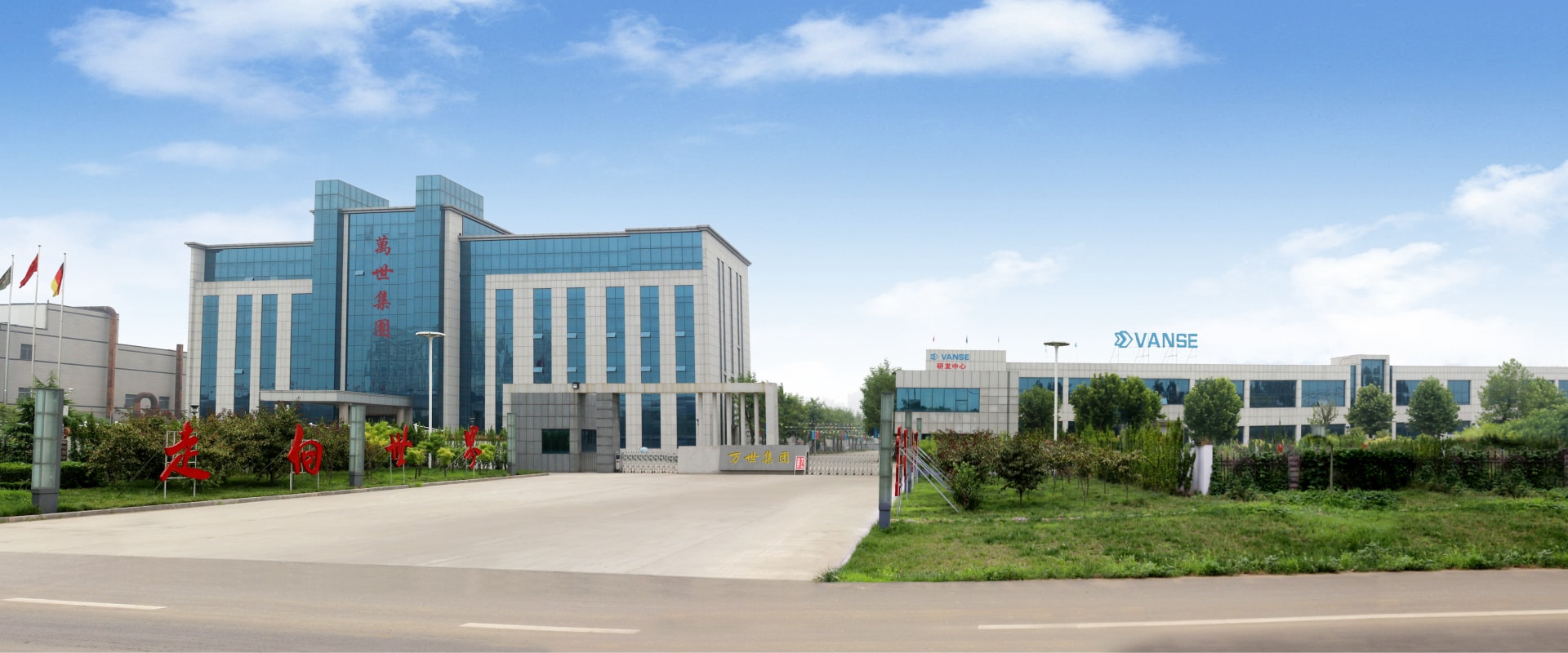
For U.S. buyers seeking a value-focused alternative with real technical substance, VANSE Group presents a practical option in the telehandler segment. Founded in 2013 and now exporting to more than 40 countries, the company builds telehandlers under CE and ISO 9001 certified processes and uses globally recognized core components such as Perkins and Cummins engines along with premium hydraulic systems, transmissions, and axles, while every machine is subjected to load testing, safety inspection, and performance validation before shipment. That matters in the United States because it shows the machine is not positioned as a low-spec substitute, but as a benchmark-aware product designed to meet serious international expectations. VANSE supports multiple cooperation models for the local market, including direct sales for end users, wholesale supply for fleet buyers, OEM and ODM production for brand owners, regional distribution for dealers, and flexible configurations for rental companies and individuals who need specific colors, attachments, or market-ready specifications. This flexibility is backed by a production base that has delivered more than 8000 units and by long experience serving North America alongside Europe, the Middle East, Southeast Asia, and Oceania. Just as important for trust and long-term buyer protection, VANSE is actively establishing a U.S.-based subsidiary to strengthen local inventory, stocking, after-sales capability, and customer relationships, showing that it is investing in a physical American service footprint rather than acting like a distant exporter. Buyers can learn more about available machine categories through the equipment range, review company background on the company page, explore lifecycle support through the service section, or discuss specifications and partnership opportunities through the contact page.
Why International Suppliers Are Gaining Traction in the United States
U.S. buyers have become more open to international telehandler suppliers for a simple reason: many now want better value without giving up core reliability. This shift is most visible among rental fleets, distributors, and cost-sensitive contractors who still require recognized components, proper testing, and dependable support. If an international supplier can show certified manufacturing, clear parts planning, operator documentation, and local stock or service expansion, it can compete effectively. This is especially true when machine pricing allows buyers to acquire more units, broaden their fleet mix, or protect margins in competitive bid environments.
However, serious buyers should remain disciplined. They should verify actual service commitments in the United States, not just promises. They should ask where parts will be warehoused, who performs warranty work, and how quickly technical issues are escalated. International sourcing works best when the supplier behaves like a long-term U.S. market participant with trained support channels, not just a shipment provider.
Buying Mistakes to Avoid
The first mistake is overbuying capacity and underestimating transport and operating cost. The second is focusing on brochure lift numbers without reading the load chart at reach. The third is ignoring attachment compatibility. The fourth is accepting weak after-sales detail because the upfront price looks attractive. The fifth is failing to match the machine to the operator profile. A rental fleet machine should be rugged and intuitive. An owner-operated farm machine should prioritize visibility and maintenance access. A dealership unit should have margin logic, spare parts predictability, and product consistency.
Another common mistake in the United States is choosing based only on brand familiarity. A familiar name can be a safe choice, but the best commercial choice often depends on your city, your workload, and your support expectations. In some counties and regions, the strongest value may come from a smaller local dealer or an international manufacturer that is building a serious U.S. presence.
2026 Outlook: Technology, Policy, and Sustainability
Looking toward 2026, the 2.5 ton telehandler segment in the United States is likely to evolve in three major ways. First, technology adoption will continue. Buyers will increasingly expect telematics, easier fault diagnostics, optional camera systems, load monitoring aids, and simplified maintenance alerts. These features are becoming more important to rental companies and multi-site contractors that need better fleet visibility and uptime control.
Second, policy and compliance pressure will keep shaping equipment decisions. Emissions requirements, jobsite safety rules, and procurement standards for public projects will encourage buyers to prefer machines with clearer documentation, better operator protection, and cleaner, more efficient powertrains. Even when a compact telehandler is not the most regulated machine on site, buyers want compliance confidence.
Third, sustainability will move from talking point to procurement factor. That does not only mean electrification. In this segment, sustainability will more often show up through fuel efficiency, longer service intervals, better parts standardization, reduced idle time, improved machine right-sizing, and lower lifecycle waste. Some urban and indoor-adjacent users will begin looking more seriously at electric or hybrid compact material handling options, but in the near term, efficient diesel-powered 2.5 ton telehandlers with better hydraulic performance and smarter controls will remain dominant in much of the U.S. market.
As these trends develop, suppliers that combine compact design, reliable global components, local support, and transparent documentation will be in the strongest position. Buyers should expect more emphasis on total cost of ownership, machine data, and application-specific configuration rather than one-size-fits-all selling.
Frequently Asked Questions
What is a 2.5 ton telehandler best used for in the United States?
It is best for lifting pallets, masonry materials, lumber bundles, feed, fencing supplies, and general site materials on construction sites, farms, industrial yards, and rental applications where compact size and rough-terrain ability matter.
Is a 2.5 ton telehandler enough for residential and light commercial construction?
Yes, in many cases it is. For framing support, masonry packs, roofing materials, and general pallet movement, this class is often sufficient and more maneuverable than larger units.
Should I choose a domestic brand or an international supplier?
Choose based on support quality, parts access, and machine fit. Domestic brands may have wider dealer networks, but international suppliers can offer strong value if they provide certified production, proven components, and real U.S. service commitment.
What matters more: lift capacity or lift height?
Neither should be considered alone. You need the load chart showing capacity at the height and forward reach you actually use. Many buyers discover their real limitation is reach, not headline capacity.
Are compact telehandlers good for rental fleets?
Yes. They serve a broad customer base, are easier to transport, and can be used in construction, landscaping, agriculture, and property maintenance, which improves utilization.
What should I ask about service before buying?
Ask where parts are stocked, who handles warranty work, average response times, engine and hydraulic component brands, and whether training and troubleshooting support are available both remotely and locally.
Can a 2.5 ton telehandler replace a forklift?
In rough-terrain or mixed-surface environments, often yes. It adds reach and off-pavement capability, though indoor warehouse use may still favor a conventional forklift depending on floor conditions and turning constraints.
Is OEM or private-label sourcing common in this segment?
Yes, especially for distributors, dealers, and brand owners looking to build a regional line with custom specifications, paint, decals, and attachment packages for local demand.
Final Takeaway
For the United States, the best 2.5 ton telehandler is the one that balances compact mobility, real lifting performance, local support, and ownership cost for your actual workload. JCB, Bobcat, Genie, SkyTrak, Manitou, and Dieci all deserve consideration depending on your region and use case. At the same time, globally experienced suppliers such as VANSE Group deserve a place in the comparison when they can document certified manufacturing, internationally recognized core components, OEM or ODM flexibility, and a real local service strategy in the American market. Whether you are a contractor in Dallas, a farm operator in Iowa, a rental company in Florida, or a distributor near Houston or Savannah, the smartest buying decision comes from matching the machine to the job, the supplier to the region, and the support model to the way your business actually runs.
Complete Telescopic Handler Equipment Portfolio
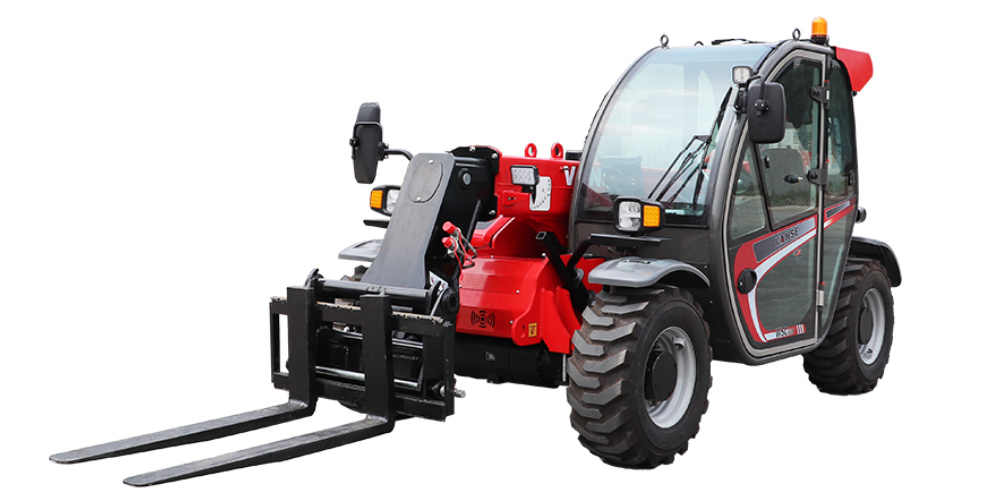
VANSE 625 6m Telescopic Handler
Designed for efficient material handling and stacking in warehouses, factories, and confined job sites, offering compact maneuverability and reliable performance.

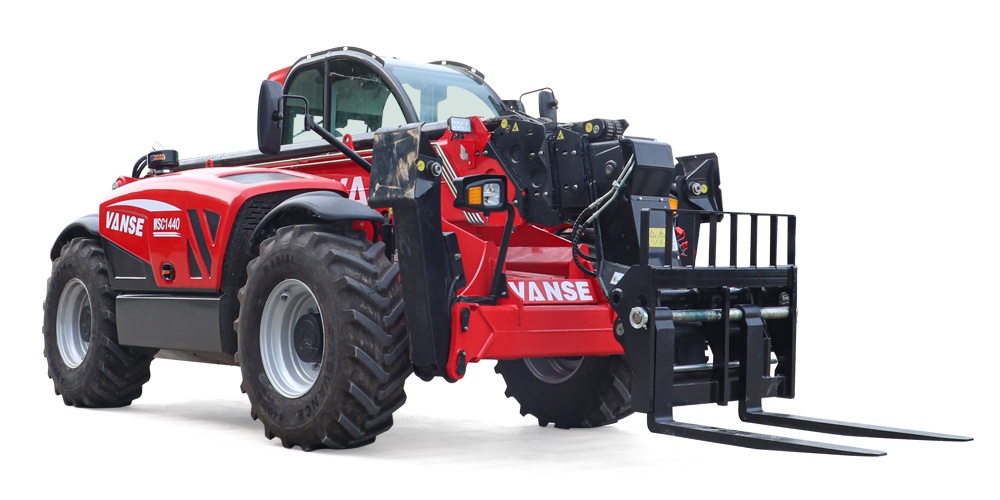
VANSE 735 7m Telescopic Handler
A balanced mid-duty solution for construction, agriculture, logistics, and warehousing, combining stable lifting, strong traction, and everyday versatility.


About the Author:
The VANSE team is a group of experienced professionals specializing in construction machinery research, manufacturing, and technical support. With deep industry knowledge and hands-on experience, our engineers and product specialists share practical insights on equipment selection, operation, maintenance, and industry trends.
Share
You May Also Interest
-

29 July, 2026
Telehandler for Farming: Essential Tool for Modern Farms
Telehandler farming in the United States helps farms handle feed, pallets, hay, and bulk materials with better reach, lift capacity, and year-round efficiency.
-
28 July, 2026
Fixed Boom Telehandler: Reliable Straight Lift Machine
Explore fixed boom telehandler options in the United States, including local suppliers, use cases, buying tips, and cost-effective global sourcing choices.
-
27 July, 2026
Telehandler vs Scissor Lift: Aerial Access Compared Now
Compare telehandler vs scissor lift options in the United States with practical buying advice, supplier insights, use cases, and market trends for 2026.
-

24 July, 2026
Telehandler for Landscaping: Outdoor Project Efficiency
Explore telehandler landscaping options in the United States, including suppliers, applications, costs, and buying advice for efficient outdoor projects.