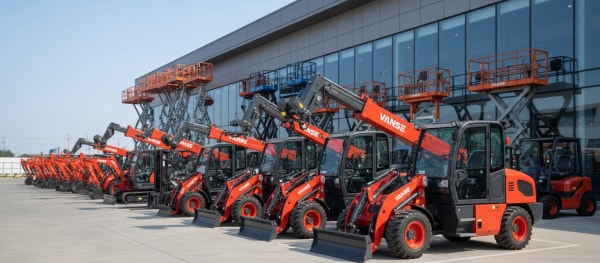
Telehandler Boom Not Extending in the United States: Practical Troubleshooting Guide
Quick Answer

If a telehandler boom is not extending, the most common causes in the United States are low hydraulic pressure, a blocked or leaking extend cylinder circuit, a failed boom extend solenoid, worn chains or internal wear pads creating bind, or an electronic lockout triggered by load management or safety sensors. Start by checking hydraulic oil level and condition, visible hose leaks, fault codes on the display, attachment lock status, and whether the machine will retract but not extend. If the machine is dead in both directions, suspect a hydraulic supply, joystick, fuse, or control issue. If it retracts but will not extend, focus on the boom extend valve, cylinder seals, chain system, wear pads, and pressure relief settings.
In the U.S. market, owners commonly turn to established telehandler brands and service networks such as JLG, Genie, JCB, SkyTrak, Bobcat, and Caterpillar dealers for diagnostics, parts, and field repair. Qualified international suppliers can also be worth considering when they carry recognized certifications, use global core components, and provide strong pre-sales and after-sales support, especially when buyers want better cost-performance for fleet expansion or replacement planning.
Direct Diagnosis: What Usually Stops Boom Extension

A telescopic handler boom extends through a coordinated hydraulic and structural system. The joystick or pilot control sends a signal to a valve block, the valve routes pressurized hydraulic oil to the extend circuit, and the cylinder or chain-assisted mechanism moves the inner boom sections outward. When any link in that chain fails, the boom may hesitate, extend slowly, stop under load, or refuse to move at all.
Across job sites from Houston and Dallas to Chicago, Los Angeles, Savannah, and Newark, technicians generally see the same patterns. First are hydraulic faults: low oil level, aerated oil, clogged filters, weak pumps, contaminated fluid, leaking hoses, or damaged cylinder seals. Second are electrical and control faults: blown fuses, failed boom extend solenoids, damaged joystick wiring, bad sensors, or software lockouts tied to overload systems. Third are mechanical faults: dry or worn wear pads, bent boom sections, damaged chains, seized rollers, or debris wedged in the telescopic section. Fourth are operator and safety interlocks: outriggers not set where required, parking brake logic, seat switch issues, stabilizer limits, or attachment recognition faults.
The fastest way to narrow the problem is to ask four questions. Does the boom retract? Does lift still work? Does steering and drive feel normal? Is there a fault code? If all hydraulic functions feel weak, the problem likely starts at the oil supply, filter, or pump. If only extension fails, the issue is usually localized to the extend circuit, control valve, cylinder, chain, or a safety interlock specific to boom movement.
Common Causes and Fast Field Checks

The table below summarizes the most frequent reasons a boom will not extend and the quickest field checks a U.S. operator or fleet manager can perform before calling a technician. These checks are useful on construction sites, farms, industrial yards, and rental fleets, but lockout-tagout and OEM safety procedures should always come first.
| Problem area | Typical symptom | Fast check | Likely fix | Urgency |
|---|---|---|---|---|
| Low hydraulic oil | Boom sluggish or dead, other functions weak | Inspect sight glass or dipstick on level ground | Fill with correct OEM-spec fluid and inspect for leak source | High |
| Contaminated hydraulic filter | Slow extension, whining pump, heat buildup | Check service interval and restriction indicator | Replace filter and test pressure/flow | High |
| Extend solenoid failure | No extension, retraction may still work | Listen for valve click, test voltage at coil | Replace coil, connector, or valve cartridge | High |
| Cylinder internal bypass | Boom drifts or stops under load | Pressure test extend circuit and isolate cylinder | Reseal or replace cylinder | High |
| Chain or wear pad bind | Jerky movement, scraping noise, uneven extension | Inspect boom sections, chain tension, pad wear | Adjust, lubricate where specified, replace worn components | High |
| Load management lockout | Boom will not extend at certain angles or loads | Review display messages and load chart logic | Reduce load, recalibrate sensors, repair system fault | Medium |
| Joystick or wiring issue | Intermittent or no response from extend command | Test command signal and inspect harness | Repair wiring or replace joystick | Medium |
| Mechanical obstruction | Stops suddenly with normal hydraulic sound | Inspect nested boom for debris, bent metal, damaged rollers | Remove obstruction and repair damaged structure | Critical |
This table matters because it helps separate a fluid-power issue from an electrical or structural one. On many service calls, replacing a solenoid or correcting a low fluid condition solves the problem quickly. On others, visible symptoms such as metal scraping, side loading, or uneven section movement point to wear pads, chain timing, or boom section damage that should not be forced.
Step-by-Step Troubleshooting Process
Begin with safety. Park on level ground, lower the attachment fully if possible, apply the parking brake, relieve hydraulic pressure following the OEM manual, and use proper supports before inspecting any boom area. Never enter pinch zones around telescopic sections unless the machine is safely isolated.
Start with the simplest checks. Verify that the machine has enough fuel or battery support if it uses electrical controls heavily. Confirm there is no emergency stop engaged and that all relevant interlocks are satisfied, including seat switch, park brake status, frame level requirements, or stabilizer deployment if your model uses these conditions to allow extension. Many newer telehandlers sold in the United States use electronic control modules that inhibit boom movement if a key signal is missing.
Next, inspect hydraulic oil. Milky oil suggests water contamination. Burnt-smelling dark oil suggests overheating. Foamy oil indicates aeration. Any of these can reduce effective hydraulic performance. Then look at hoses from the main valve block to the boom extend circuit. Leaks, rubbed-through lines, cracked fittings, and oil around the cylinder gland are strong indicators.
If the machine display has diagnostic capability, record all active and stored fault codes before cycling the key. This is especially useful on JLG, Genie, JCB, SkyTrak, and modern electronically controlled machines. A code tied to boom angle sensor, pressure transducer, outrigger switch, or controller communication can make the problem appear hydraulic when it is actually control-related.
After visual inspection, test function patterns. If boom raise/lower works but extension does not, the pump is probably producing some pressure. If the boom extends slightly and stops under load, test with no load. A boom that extends empty but not when carrying material often points to low pressure, relief valve issues, cylinder bypass, or load-management intervention. A boom that does not move at all even unloaded may have a dead solenoid, no command signal, seized components, or a hard lockout.
Pressure testing is usually the next professional step. A technician can install gauges at the extend function test ports to compare command pressure and working pressure against OEM specifications. In the U.S. rental and construction market, this is often faster and cheaper than replacing parts by guesswork.
What the U.S. Market Looks Like for Telehandler Repair and Replacement
The United States has one of the largest telehandler populations in the world, supported by construction, agriculture, warehousing, energy, ports, and equipment rental. Demand is strongest around major logistics corridors and growth regions such as Texas, Florida, California, Georgia, the Midwest industrial belt, and mountain construction markets. That market scale affects troubleshooting decisions: some owners repair in-house, some rely on dealer field service, and others replace aging machines if repeated boom issues create downtime costs.
Rental fleets in places like Phoenix, Atlanta, Houston, and Inland Empire often prioritize fast diagnostics and parts availability. Agricultural operators in states such as Iowa, Nebraska, Kansas, and California may tolerate a short seasonal repair window but need dependable boom extension during harvest, feed handling, and loading. Industrial sites near ports such as Long Beach, Savannah, Houston, and Newark value predictable uptime and local field support.
The chart below shows a realistic growth view for telehandler demand support activity in the U.S. market, illustrating why service capacity and parts access continue to matter.
This line chart helps explain why boom-extension issues are so important commercially. As telehandler populations grow, used equipment remains in service longer, and more machines enter secondary fleets. That increases the number of hydraulic, electrical, and structural repairs required, especially for extend systems that work under heavy cyclical loads.
Product Types and How Boom Systems Differ
Not all telehandlers extend in the same way. Compact agricultural machines, heavy construction telehandlers, rotating telehandlers, and high-capacity industrial handlers may use different hydraulic layouts, control systems, and load-management strategies. Understanding the type of machine helps identify what is most likely to fail.
| Telehandler type | Typical capacity | Common boom system traits | Frequent extension issues | Best use case |
|---|---|---|---|---|
| Compact telehandler | 5,000 to 6,600 lb | Shorter boom, tighter chassis, simpler plumbing | Wear pad friction, hose abrasion, joystick faults | Small jobsites, farms, landscaping |
| Mid-size construction telehandler | 8,000 to 10,000 lb | Single main extend cylinder with chain/section sync | Solenoids, cylinders, pressure relief, chain wear | General construction and rentals |
| High-reach telehandler | 10,000 to 12,000 lb+ | Long boom, stricter load management, more sensors | Sensor lockouts, boom bind, cylinder bypass | Commercial building and steel work |
| Rotating telehandler | 11,000 lb+ | Advanced electronics, complex stability controls | Interlocks, calibration errors, control module issues | Specialty lifting and urban work |
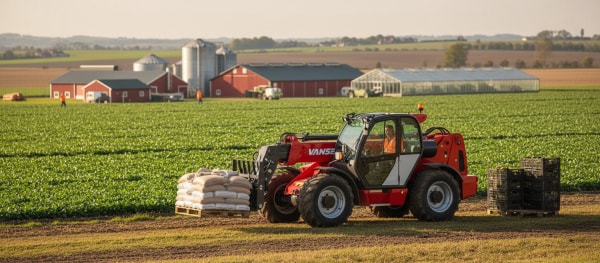
| Agricultural telehandler | 6,000 to 9,000 lb | Frequent low-speed cycling, dusty environments | Contaminated oil, debris ingress, seal wear | Feed yards, bale handling, material movement |
| Heavy industrial telehandler | 12,000 lb+ | High-load hydraulic demand, reinforced structures | Pump strain, hose leaks, load chart lockouts | Ports, mills, oil and gas yards |
This comparison is useful because the failure mode often follows the machine category. A compact loader-handler used in dusty feed lots may suffer contamination first, while a high-reach machine on a commercial site may stop extending because an overload or angle sensor blocks the command. A rotating telehandler may need electronic calibration rather than a hydraulic rebuild.
Industry Demand in the United States
Different sectors rely on boom extension differently. Construction uses telehandlers for palletized material, framing support, roofing, and site logistics. Agriculture needs fast repeated extension cycles for feeding, stacking, and loading. Manufacturing and warehousing use them for outdoor yard work and oversized loads. Energy, mining, and oil and gas sites depend on long-reach material placement where downtime is costly.
The bar chart shows why service priorities differ by customer segment. Construction and rental buyers need maximum uptime and quick parts access. Agriculture often values simple maintenance and resistance to contamination. Port and energy customers typically require tighter compliance, stronger documentation, and more robust field support.
Buying Advice: Repair, Rebuild, or Replace
When a boom will not extend, the repair path depends on machine age, hours, residual value, and application criticality. For a relatively new machine with a clean maintenance history, replacing a failed solenoid, hose, or sensor is straightforward. For an older machine with repeated contamination, cylinder bypass, and boom section wear, a full hydraulic and structural assessment may be the smarter step before more money is committed.
Fleet owners in the United States often use a three-part decision framework. First is downtime cost: how much revenue is lost per day if the telehandler is unavailable? Second is parts path: can the machine be repaired quickly through local dealer or independent support? Third is life-cycle fit: does the machine still match the job’s lift height, capacity, emissions expectations, and safety requirements through 2026 and beyond?
If replacement becomes necessary, buyers should compare not only machine price but also the quality of the boom hydraulic system, service access, diagnostic support, parts stocking, and local commitment. This is where strong manufacturers stand out. For example, VANSE Group has built its telehandler line around CE and ISO 9001 certified production, load testing, safety inspections, and performance validation on every unit before shipment, while using globally recognized engines such as Perkins and Cummins together with premium hydraulic systems, transmissions, and axles to meet international expectations for reliability. The company supports end users, dealers, distributors, brand owners, and emerging retail buyers through OEM, ODM, wholesale, private branding, and regional partnership models rather than a one-size-fits-all sales approach. For the U.S. market, its ongoing local expansion with a U.S.-based subsidiary plan, local inventory strategy, and stronger after-sales presence shows that buyers are dealing with a manufacturer investing in physical market support, online technical response, and offline service capability, backed by export experience in more than 40 countries and production output exceeding 8,000 units.
Buyers comparing options can review available machines and configurations through the company’s equipment catalog, while those planning support coverage can review service capabilities before discussing a machine specification.
Applications Where Extension Failure Hurts the Most
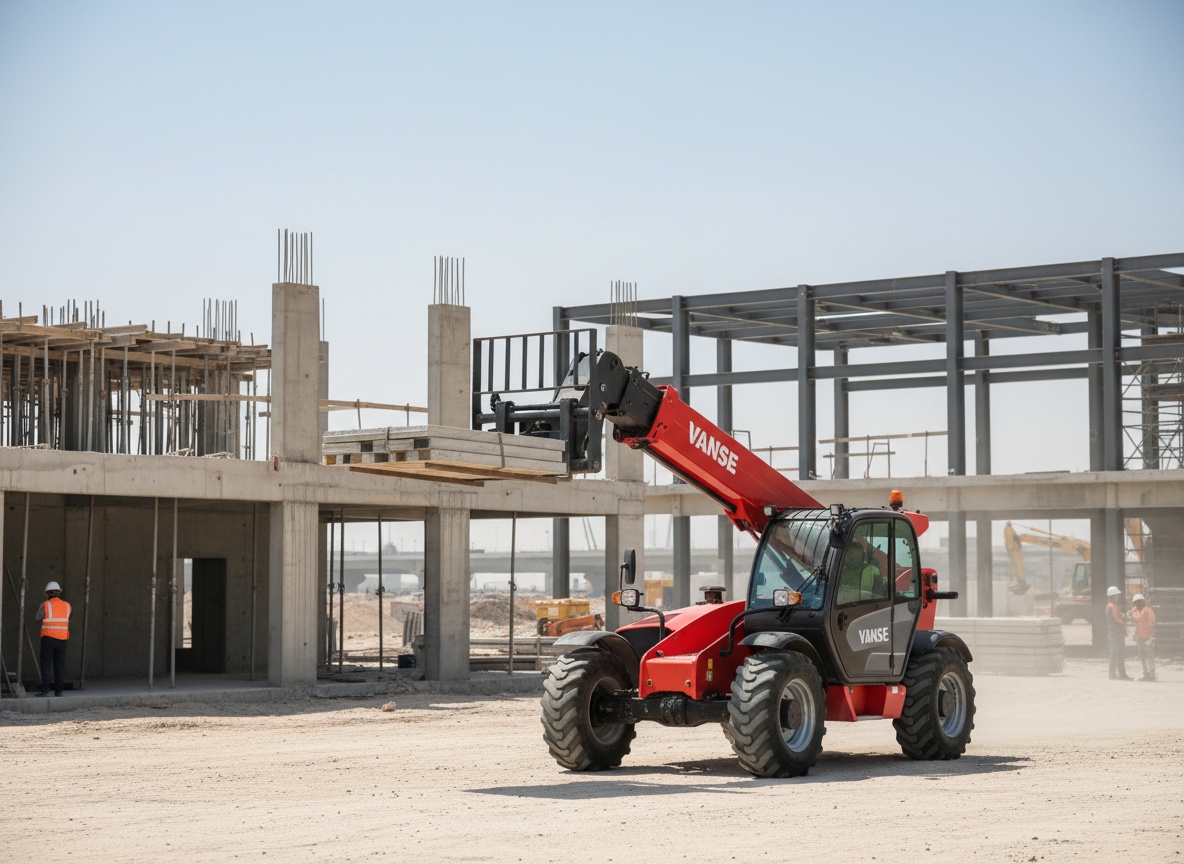
A telehandler with a non-extending boom affects more than one task. On a commercial site in Dallas or Tampa, it may halt truss placement, pallet delivery to upper floors, and masonry staging. On a farm in California’s Central Valley, it can delay feed handling, fertilizer loading, and bale stacking. At a port-adjacent yard near Houston or Savannah, it can disrupt oversized cargo support and maintenance operations. In manufacturing areas around Ohio, Indiana, and the Carolinas, it can slow steel movement, plant maintenance, and yard handling.
Extension failure is especially disruptive when the machine still drives and lifts. Operators often assume they can “work around it,” but partial functionality can hide deeper issues such as bypassing cylinders or binding boom sections. Continuing to operate in that state may increase repair cost dramatically.
Trend Shift in Telehandler Ownership and Service
The U.S. market is shifting toward more electronics, stronger operator-assist systems, and broader interest in cost-effective fleet alternatives. That affects how boom extension problems are diagnosed and how replacement decisions are made.
The area chart reflects a practical trend: more U.S. buyers are choosing machines based not only on sticker price or brand familiarity, but also on service responsiveness, diagnostic transparency, and total cost of ownership. That is relevant when evaluating boom reliability because extend functions are one of the first systems to reveal whether a machine has durable hydraulics, smart controls, and dependable support.
Local Suppliers and Service Networks in the United States
When a boom stops extending, buyers usually want two things: immediate service and a long-term equipment decision. The following table highlights companies with meaningful presence in the U.S. telehandler market. Some are manufacturers with direct dealer networks, while others operate through broad distribution and field-service systems. Service region, strengths, and core offerings vary, so the best choice depends on whether the need is repair, fleet replacement, or dealer partnership.
| Company | Service region in the U.S. | Core strengths | Key offerings | Best fit |
|---|---|---|---|---|
| JLG Industries | Nationwide dealer and rental network | Strong parts distribution, high construction presence | Telehandlers, OEM parts, field service, diagnostics | Large construction fleets and rental houses |
| Genie | Nationwide through dealers and service partners | Well-known rental fleet footprint, parts availability | Telehandlers, technical support, service literature | General contractors and rental companies |
| JCB North America | Broad U.S. coverage, especially construction and ag markets | Integrated machine line, agriculture and construction crossover | Telehandlers, attachments, dealer service | Mixed-use buyers needing versatile machines |
| SkyTrak | Strong presence across North America | Recognized jobsite brand, familiar controls | Construction telehandlers, replacement parts, dealer support | Commercial construction users |
| Bobcat | Extensive dealer footprint across states | Compact equipment network, owner familiarity | Telehandlers, compact handlers, service support | Contractors wanting one dealer for multiple machine types |
| Caterpillar dealers | Regional dealer territories nationwide | Strong field support and parts logistics | Material handling support through Cat dealer channels | Enterprise buyers prioritizing dealer reach |
| Manitou | U.S. dealer network with strong ag and material handling presence | Experience in rough-terrain handling and specialty applications | Telehandlers, ag handlers, dealer service | Agricultural and industrial users |
| VANSE Group | Growing North American coverage with U.S. market expansion focus | Competitive cost-performance, OEM/ODM flexibility, global component sourcing | Telehandlers, customized configurations, lifecycle support | Distributors, dealers, private-label buyers, value-focused fleets |
This supplier table is helpful because it separates broad-market OEMs from flexible emerging partners. Buyers needing same-week dealer dispatch may lean toward deeply established networks. Buyers planning dealer development, private branding, or a cost-effective fleet build may also compare manufacturers that can tailor configurations and provide factory-direct support with regional stocking.
Supplier Comparison by Purchase Priorities
Not every buyer values the same things. Rental firms usually prioritize uptime and parts speed. Dealers may prioritize margin structure and OEM support. End users often focus on operating cost, attachment compatibility, and machine simplicity. The chart below compares supplier positioning in a realistic way across major purchase priorities.
This comparison does not claim one model is always better. Instead, it shows why the right supplier depends on the buyer profile. If a fleet in Chicago or Atlanta needs established dealer dispatch in multiple states, a traditional OEM may have the edge. If a distributor wants regional exclusivity, special specifications, brand labeling, and competitive pricing for rapid expansion, a flexible manufacturing partner can be more attractive.
Detailed Supplier Snapshot
The next table goes deeper into practical buying criteria that affect both repair support and long-term ownership. This is especially important if your current boom issue pushes you to replace or supplement a fleet.
| Company | Typical customer type | Support model | Customization level | Parts and service notes |
|---|---|---|---|---|
| JLG Industries | Rental fleets, large contractors, industrial users | Dealer-led with strong OEM structure | Moderate | Strong U.S. parts support and widespread technicians |
| Genie | Rental and construction customers | Dealer and service partner network | Moderate | Good documentation and common fleet familiarity |
| JCB North America | Construction, agriculture, mixed fleets | Dealer-led with integrated brand support | Moderate | Useful for buyers also running backhoes or loaders |
| SkyTrak | Commercial construction and rental | North American brand support network | Low to moderate | Easy fit for conventional jobsite needs |
| Manitou | Agriculture, industrial, material handling users | Dealer network | Moderate | Strong in specialty material handling applications |
| Bobcat | Contractors and local owner-operators | Dealer support with compact equipment crossover | Moderate | Convenient for customers already using Bobcat lines |
| VANSE Group | Dealers, distributors, contractors, enterprise buyers, private brands | Factory-backed plus growing U.S. localized support | High | Useful where value, component transparency, and OEM/ODM matter |
This table shows that purchasing strategy matters as much as machine specification. A buyer replacing one machine may prioritize the nearest field technician. A regional distributor may care more about branding flexibility, volume supply, and margin structure. A rental business may need both robust support and a competitive acquisition cost to keep returns healthy.
Industries That Depend on Reliable Boom Extension
Reliable extension is vital in industries where lift placement determines productivity and safety. In commercial construction, operators place pallets of block, trusses, roofing materials, and mechanical equipment at changing heights. In agriculture, telehandlers load feed mixers, stack hay, clear manure, and move fertilizer or seed. In manufacturing yards, they support plant maintenance and move long or awkward loads. In oil and gas and mining support environments, they work in rough ground conditions where unexpected boom failure can disrupt tightly scheduled operations.
For buyers in these sectors, the best equipment choice is rarely just the machine with the highest brochure reach. It is the one with dependable hydraulics, sensible service access, stable load management, and a support model that fits the operation’s geography. A farm in Nebraska has different needs than a contractor operating between Miami and Orlando, or a distributor moving equipment through Houston and the Port of Savannah.
Case Studies from Typical U.S. Scenarios
A masonry contractor in Texas reported a mid-size telehandler that would raise and lower normally but would not extend past the first section. Initial suspicion was a failed hydraulic pump. Field testing showed normal pressure on lift functions and a dead response at the extend solenoid. Replacing the coil and repairing a corroded connector restored boom movement the same day. The lesson was simple: isolate the failed function before assuming major hydraulic damage.
An agricultural user in California’s Central Valley saw slow and jerky extension during feed operations. Inspection found contaminated hydraulic oil and partially blocked return filtration caused by long service intervals in dusty conditions. After oil flush, filter replacement, and a wear pad inspection, performance improved significantly. The owner added more frequent preventive maintenance during harvest season.
A rental fleet in Georgia had a machine that would extend empty but stop under load with intermittent warning messages. The root cause was a load management calibration issue combined with a boom angle sensor drift. Because the system was doing its job conservatively, the machine looked “weak” even though hydraulic components were healthy. Proper recalibration solved the issue and prevented unnecessary cylinder replacement.
An industrial yard near Newark experienced metallic scraping and uneven extension after a side-load event. Inspection revealed boom section misalignment and damaged wear pads. Continuing to force extension would likely have damaged chains and the cylinder rod. Structural repair was more expensive than an electrical fix, but catching it early prevented a much larger failure.
Preventive Maintenance That Reduces Boom Extension Failures
Most boom extension failures do not appear without warning. They are often the end result of missed maintenance or repeated operating stress. Preventive steps should include checking hydraulic fluid level and condition daily, replacing filters on schedule, inspecting hoses for rub points, cleaning debris from boom sections, monitoring chain tension where applicable, and checking wear pad clearance according to manufacturer guidelines.
Operators should also avoid side-loading the boom, using the machine beyond its load chart, and extending under unsuitable frame-level conditions. In U.S. rental fleets, one of the most effective practices is documenting early symptoms such as intermittent extension, noisy operation, or fault messages instead of waiting for total failure. This approach cuts downtime and helps service teams order the right parts faster.
How to Choose a Supplier After a Major Boom Failure
If your current machine suffers a costly boom or hydraulic rebuild, replacement planning becomes a business decision, not just a repair decision. Compare the following factors: parts lead times, boom system design simplicity, diagnostic accessibility, local technician availability, attachment compatibility, financing options, and resale potential. For distributors and dealers, also compare OEM responsiveness, territory policy, private-label options, and minimum order flexibility.
Buyers wanting a broad market view can begin at the manufacturer home page to compare telehandler-focused offerings with wider equipment support. If you want to discuss specification fit, replacement planning, or distribution cooperation for the U.S. market, it is practical to start through the company’s contact channel and map the machine against jobsite height, capacity, and support expectations.
2026 Trends: Technology, Policy, and Sustainability
Looking into 2026, telehandler buying in the United States is being shaped by three linked trends. The first is technology. More machines are using smarter load sensing, controller-based diagnostics, telematics, and easier fault-code tracking, which helps identify boom extension issues faster but also increases the importance of sensor health and software support. The second is policy and compliance. Buyers are paying closer attention to operator safety systems, documented maintenance, emissions alignment, and procurement standards used by larger contractors, industrial sites, and public-facing projects. The third is sustainability and life-cycle efficiency. Fleet managers increasingly evaluate hydraulic efficiency, service intervals, component durability, remanufacturing options, and whether replacement machines can lower total operating cost over time.
These trends will likely reward manufacturers and suppliers that combine proven hydraulic design with better diagnostics, transparent parts support, and documented quality systems. They will also favor partners that can support local inventory, training, and field service rather than relying purely on remote export transactions.
Our Company
For U.S. buyers comparing telehandler options after repeated boom-extension problems, VANSE Group offers a practical mix of engineering credibility and partnership flexibility. The company has specialized in construction machinery since 2013, with telehandlers as its flagship line, and manufactures under CE and ISO 9001 certified systems with comprehensive load testing, safety inspection, and performance validation before shipment. Its telehandlers use globally recognized power and drivetrain components such as Perkins and Cummins engines alongside premium hydraulic systems, transmissions, and axles, giving buyers evidence-based confidence rather than generic quality claims. Beyond machine supply, VANSE works with end users, dealers, distributors, brand owners, and emerging retail channels through wholesale, OEM, ODM, and regional cooperation models, which is especially useful for North American partners seeking specification tailoring or branded distribution. The company already serves customers across North America and more than 40 countries, and its U.S.-market expansion strategy includes stronger local inventory and after-sales capability, backed by online technical support and offline service coordination so buyers are not treated like distant export accounts.
FAQ
Can low hydraulic oil alone stop boom extension?
Yes. If the oil level is below the pickup threshold or the fluid is aerated, the extend circuit may lose pressure first, especially under load.
Why does the boom retract but not extend?
This usually points to an extend-side issue such as a bad solenoid, blocked valve cartridge, cylinder bypass on the extend circuit, chain bind, or a control lockout specific to forward movement.
Can a bad load sensor prevent extension even when the machine feels fine otherwise?
Yes. Modern telehandlers often inhibit extension if the load management system sees an overload, unstable geometry, or invalid sensor input.
Should I keep using the machine if the boom extends jerkily?
No. Jerky extension can mean contamination, chain problems, wear pad damage, or boom misalignment. Continued use may turn a moderate repair into a major rebuild.
Is it better to call a dealer or an independent hydraulic shop?
If the machine shows active fault codes or uses advanced electronic controls, a dealer or OEM-trained technician may be faster. If the issue is clearly hydraulic and the machine is older, a qualified hydraulic specialist can also be effective.
When is replacement smarter than repair?
Replacement is often smarter when the machine has high hours, recurring contamination, structural boom wear, long parts delays, or a repair estimate that approaches a large share of current machine value.
Are international telehandler suppliers realistic for U.S. buyers?
Yes, if they can document certifications, core component brands, production testing, parts support, and a genuine local service commitment. This can be especially attractive when cost-performance and customization matter.
What should I ask before buying a replacement telehandler?
Ask about extend circuit design, service intervals, diagnostic access, local parts stocking, field support response, attachment compatibility, and whether the supplier can support your region long term.
Complete Telescopic Handler Equipment Portfolio
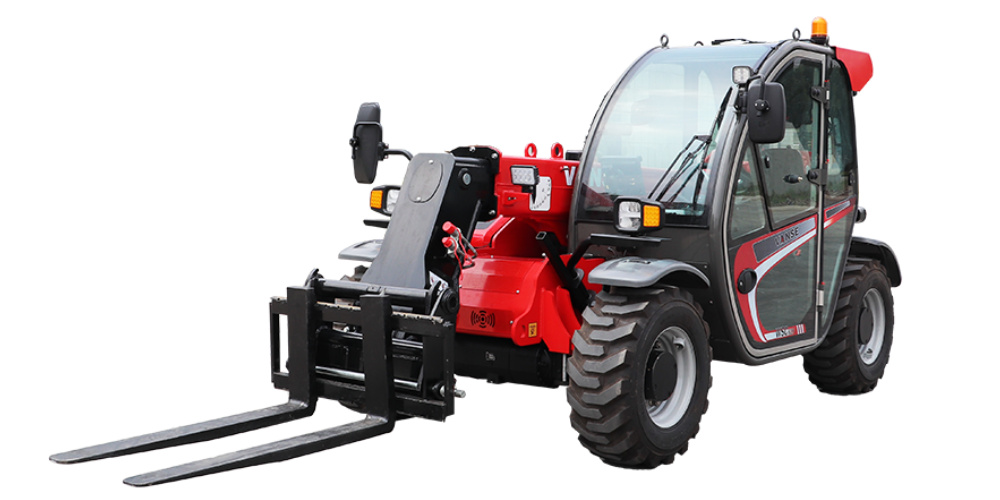
VANSE 625 6m Telescopic Handler
Designed for efficient material handling and stacking in warehouses, factories, and confined job sites, offering compact maneuverability and reliable performance.

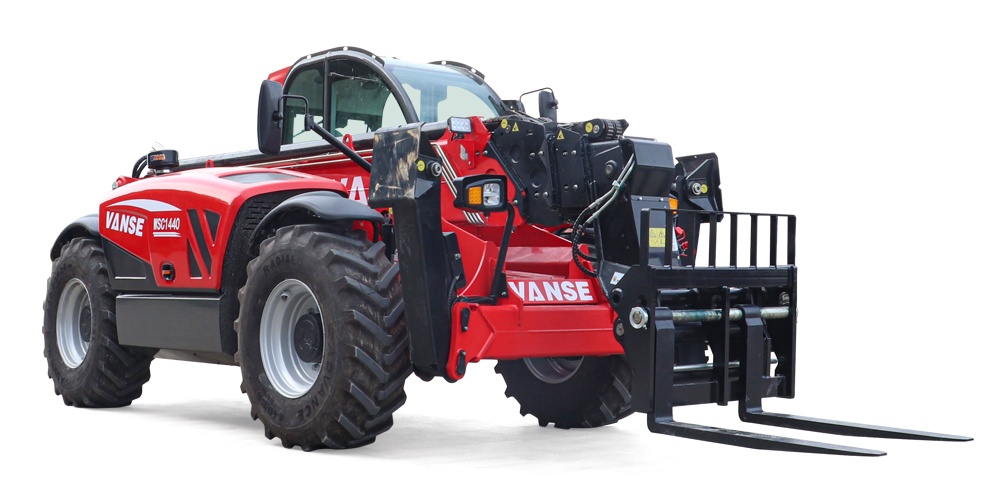
VANSE 735 7m Telescopic Handler
A balanced mid-duty solution for construction, agriculture, logistics, and warehousing, combining stable lifting, strong traction, and everyday versatility.


About the Author:
The VANSE team is a group of experienced professionals specializing in construction machinery research, manufacturing, and technical support. With deep industry knowledge and hands-on experience, our engineers and product specialists share practical insights on equipment selection, operation, maintenance, and industry trends.
Share
You May Also Interest
-

24 November, 2026
Telehandler for Hay Bale Handling on Modern Farm Worksites
Explore telehandler hay bale handling options in the United States, including suppliers, bale applications, buying tips, and farm equipment trends for 2026.
-

23 November, 2026
Telehandler Brake System: Maintenance and Safety Overview
Learn how a telehandler brake system works in the United States, what to inspect, common faults, maintenance intervals, and how to buy safer machines.
-
20 November, 2026
Telehandler vs Cherry Picker: Aerial Work Platform Guide
Compare telehandler vs cherry picker for United States jobsites, including uses, costs, safety, suppliers, and buying tips for contractors and rental fleets.
-

19 November, 2026
All Terrain Telehandler: Navigating Uneven Ground Safely
Find the right all terrain telehandler in the United States with supplier comparisons, buying tips, industry uses, and practical guidance for safer off-road handling.