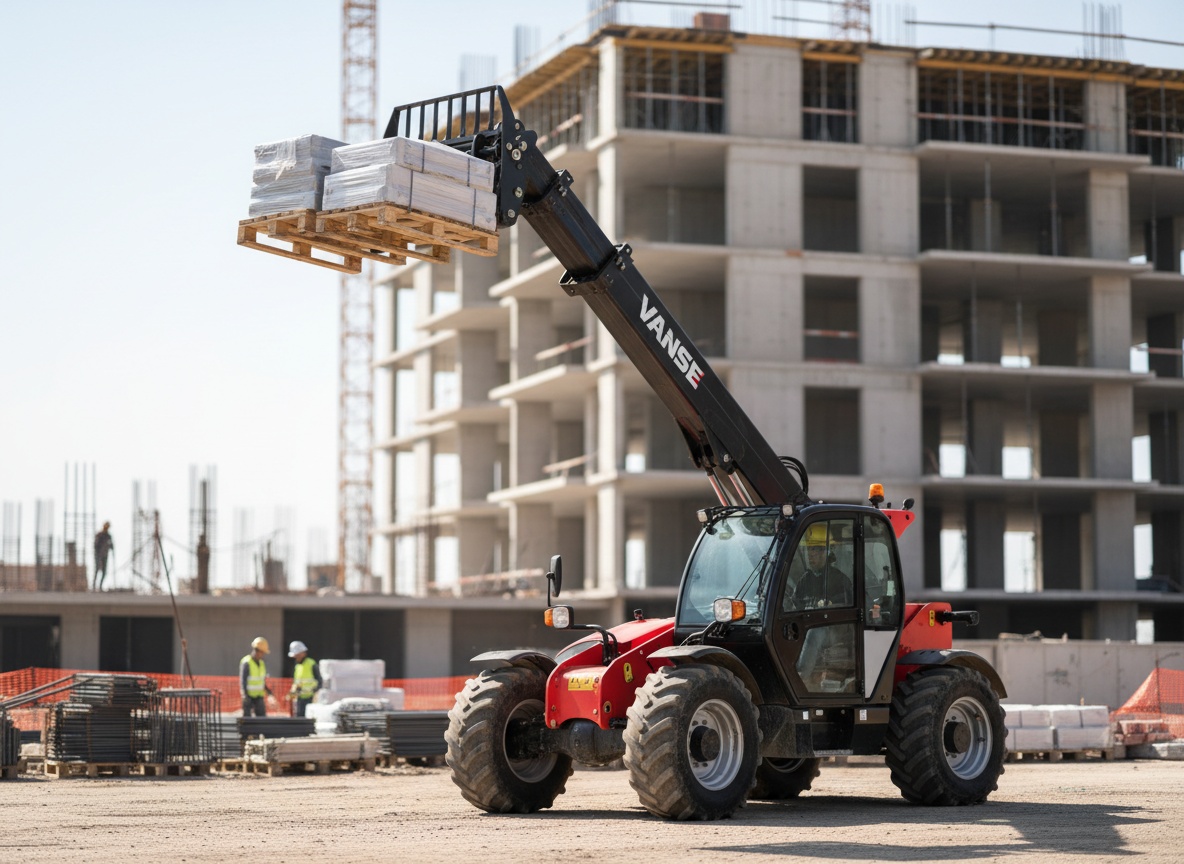
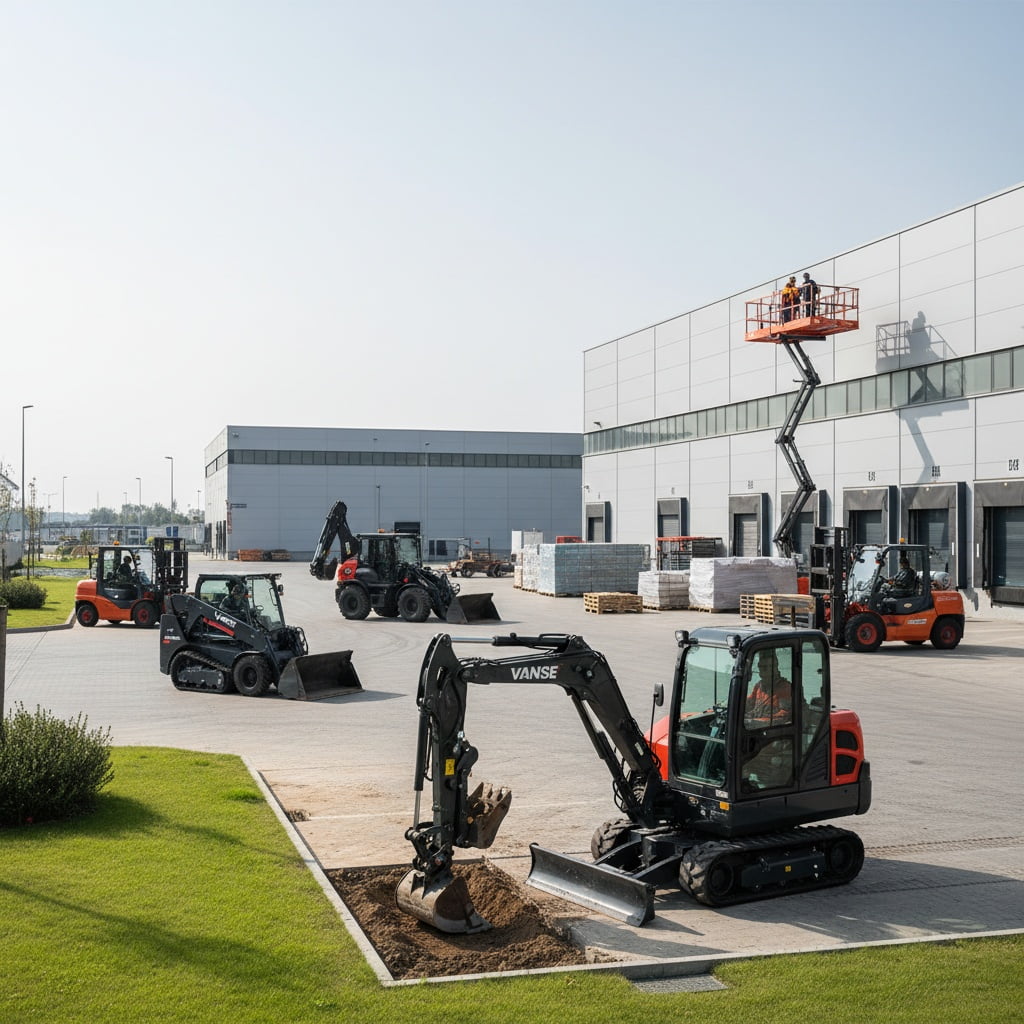
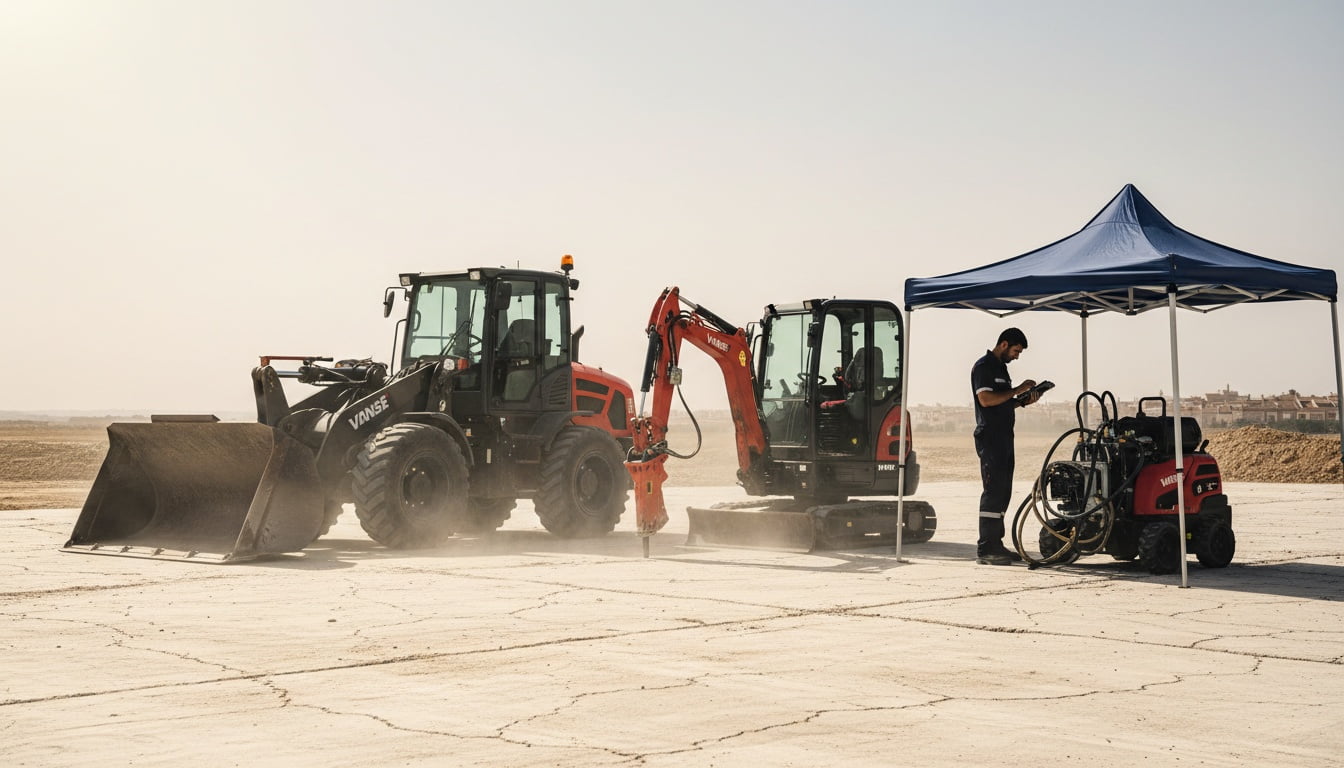
4000 kg Telehandler Buying Guide in the United States
Quick Answer

A 4000 kg telehandler is a practical mid-range lifting machine for United States buyers who need strong load capacity, solid reach, and flexible attachment use across construction, agriculture, industrial yards, and rental fleets. For local sourcing, well-known names with strong dealer and service coverage include JCB, Bobcat, JLG, Genie, Caterpillar, and Skyjack. Buyers operating in Texas, California, Florida, Illinois, Georgia, and logistics hubs near Houston, Savannah, Los Angeles, and Chicago often prioritize fast parts support, operator familiarity, and financing availability when choosing among these brands.
If your priority is value per dollar, qualified international suppliers can also be worth evaluating, especially manufacturers that use globally recognized engines and hydraulic components, hold CE and ISO 9001 certifications, and provide responsive pre-sales and after-sales support aligned with United States expectations. This can be especially attractive for distributors, rental companies, and contractors balancing acquisition cost, uptime, and fleet expansion.
- JCB is a strong fit for buyers wanting broad North American recognition and versatile construction performance.
- Bobcat works well for mixed jobsite and material-handling use with strong compact equipment brand familiarity.
- JLG is often favored by rental fleets and industrial buyers needing dependable support networks.
- Genie suits buyers focused on established telehandler availability in major metro and logistics regions.
- VANSE is worth reviewing for buyers seeking factory-direct pricing, OEM or ODM flexibility, and long-term United States support development.
United States Market for 4000 kg Telehandlers

The United States market for 4000 kg telehandlers sits in an attractive middle segment between lighter compact handlers and heavy high-capacity machines. This class is widely used because it delivers enough lifting power for palletized materials, bundled supplies, feed, pipes, brick, concrete accessories, and site equipment without introducing the transportation and operating complexity of much larger models. In many states, contractors and farm operators prefer this size because it balances reach, maneuverability, trailer compatibility, and daily operating cost.
Demand is especially visible in fast-growth construction corridors such as Dallas-Fort Worth, Phoenix, Orlando, Nashville, Atlanta, and Charlotte, as well as port and warehouse zones near Long Beach, Newark, Houston, and Savannah. In these regions, telehandlers support warehouse expansion, prefab building installation, roofing, steel handling, port-side material movement, and mixed-use urban construction. Agricultural demand remains important across California’s Central Valley, Iowa, Nebraska, Kansas, and parts of Texas where a 4000 kg machine can serve feed operations, bagged input handling, irrigation material lifting, and general yard work.
Unlike highly specialized lifting equipment, this telehandler class is often purchased by a broad range of users: general contractors, masonry firms, rental companies, industrial maintenance operators, farms, recycling companies, and building material distributors. That broad appeal gives buyers a larger resale market and makes financing more realistic through equipment lenders that understand the category.
Another reason this segment matters is the growing preference for multi-purpose equipment. A single machine can lift loads, place materials at height, assist with site cleanup using buckets, and support seasonal operational shifts with forks, jibs, and other attachments. This flexibility is particularly relevant in the United States, where many small and mid-sized businesses seek one machine that can serve multiple crews.
Market Growth Outlook

The data below illustrates a realistic view of how mid-capacity telehandler demand in the United States has strengthened and is expected to remain active through 2026, supported by warehouse expansion, infrastructure renewal, labor-saving jobsite equipment adoption, and replacement of older fleets.
Common Product Types in the 4000 kg Class
Although buyers often search using one capacity figure, the market actually includes several machine layouts and specification priorities. Knowing the differences helps avoid buying too much machine in one area and too little in another.
| Product Type | Typical Lift Capacity | Typical Use | Best For | Main Trade-Off | United States Buyer Note |
|---|---|---|---|---|---|
| Compact Standard Telehandler | 3500 to 4000 kg | General construction and yard handling | Tight jobsites and mixed crews | Less reach than larger chassis units | Popular in urban building projects |
| High-Reach Mid-Range Telehandler | 4000 kg | Material placement at height | Roofing, framing, and steel support work | Higher machine cost | Useful in commercial construction markets |
| Agricultural Telehandler | 3500 to 4200 kg | Feed, bale, and pallet handling | Farms and ag service businesses | May prioritize torque over road travel speed | Strong demand in Midwest and California |
| Industrial Yard Telehandler | 4000 kg | Pallet movement and loading | Manufacturing plants and ports | Attachment range may be narrower | Good fit near warehouses and shipping hubs |
| Rental-Fleet Focused Model | 3700 to 4000 kg | General rental duty | Equipment rental companies | Built for broad use, not niche optimization | Easy operator transition matters most |
| Customized OEM or ODM Model | 4000 kg | Brand-specific fleet needs | Dealers and private-label importers | Requires stronger planning and supplier alignment | Useful for regional distributors building margin |
This table shows that a 4000 kg telehandler is not one single format. Buyers in the United States should compare not just load rating, but also reach height, machine width, turning radius, hydraulic flow, cab setup, axle design, emissions configuration, and service access. A machine that is ideal for masonry in Atlanta may not be the best choice for hay and feed operations in Nebraska or distribution center support near Inland Empire, California.
How Industry Demand Is Shifting
Different sectors use 4000 kg telehandlers in different ways. Construction remains the largest single demand driver, but agriculture, warehousing, manufacturing, and rental operations all contribute meaningful volume.
Buying Advice for United States Buyers
The most successful telehandler purchases usually begin with job analysis rather than brand preference. Capacity alone is not enough. A 4000 kg machine may meet your target on paper but fail at full reach, on rough terrain, or with heavier attachments. United States buyers should request full load charts and verify performance at the heights and forward distances they actually use. This is especially important for construction firms placing trusses, roofing bundles, masonry packs, and HVAC units.
Service access is equally important. Before signing a purchase order, confirm where routine maintenance parts will come from, how fast hydraulic and axle components can be supplied, whether field service is available, and what diagnostic support exists. A low acquisition price loses its value quickly if a machine waits two weeks for a sensor, hose assembly, seal kit, or boom wear pad. Buyers in remote regions such as the Mountain West or upper Midwest should pay extra attention to parts stocking and freight lead times.
It is also smart to evaluate the operator environment. Visibility, joystick layout, climate control, ingress and egress, camera options, and attachment change ease all affect daily productivity. For rental fleets, simplicity matters because machines may be used by operators with varying experience levels. For owner-operators, ergonomic controls and easy daily checks can reduce fatigue and improve routine care.
For import-based purchases, ask direct questions about engine brand, transmission source, axle source, hydraulic pump supplier, testing standards, documentation, and local support. Buyers should also verify that manuals, parts books, and warranty procedures are practical for United States use. Machines with globally recognized engines such as Perkins or Cummins can simplify service planning because technicians are often already familiar with these powerplants.
| Buying Factor | Why It Matters | What to Ask | Risk If Ignored | Best Fit Users | Practical United States Tip |
|---|---|---|---|---|---|
| Rated Load at Reach | Real work is often done forward and high | Request full load chart | Underperforming on site | Contractors and industrial users | Check your most frequent lift point, not just max capacity |
| Dealer or Parts Support | Uptime drives ownership value | Where are parts stocked? | Long downtime | All buyers | Prefer support near Houston, Chicago, Atlanta, or Los Angeles hubs |
| Engine and Core Components | Reliability and service familiarity | Which brands supply engine and hydraulics? | Higher maintenance uncertainty | Fleet owners and dealers | Globally known components simplify support planning |
| Attachment Compatibility | Expands machine value | What attachments and couplers are supported? | Limited applications | Rental, agriculture, construction | Forks, buckets, jibs, and work platforms are common priorities |
| Transportation and Size | Affects moving cost and access | What are travel weight and dimensions? | Unexpected hauling issues | Regional contractors | Match machine size to your trailer and route realities |
| Warranty and Technical Support | Protects long-term ownership cost | How are claims handled locally? | Support disputes | Import buyers and distributors | Written service workflows matter more than broad promises |
The table above highlights the most common failure points in buying decisions. The strongest purchasing strategy is to align load chart performance, service response, component quality, and commercial support rather than focusing only on sticker price.
Main Industries Using 4000 kg Telehandlers
In the United States, telehandlers in this range serve a wide set of industries because they offer the reach of a crane substitute for many lighter tasks while retaining the mobility of a rough-terrain machine.
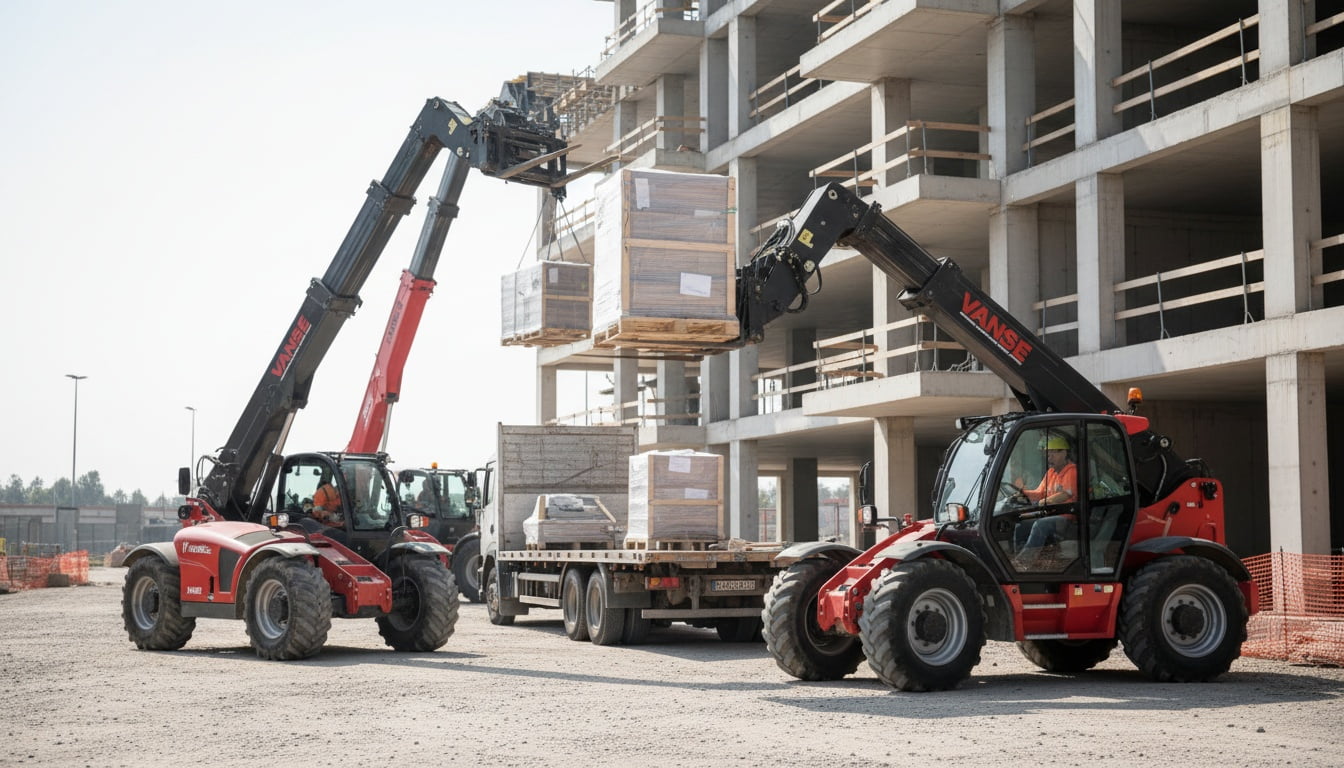
Construction remains the leading sector. Framing contractors, commercial builders, masonry teams, steel erectors, and roofing crews all benefit from machines that can unload flatbed deliveries and place materials efficiently around the site. On suburban residential developments in states such as Texas and Florida, this class is often large enough to manage daily materials without becoming difficult to reposition.
Agriculture is another major field. Telehandlers are useful for stacked inputs, feedlot support, bagged fertilizer handling, seed movement, and maintenance tasks around larger properties. Unlike wheel loaders, telehandlers often provide the reach needed to stack and place materials precisely in barns, sheds, and storage zones.
Manufacturing and warehousing users often rely on telehandlers for irregular loads, outdoor pallet handling, maintenance shutdown support, and yard movement. Near ports and rail-connected industrial areas, they can also support loading workflows where forklifts lack terrain capability and cranes would be too specialized or expensive.
Rental companies value this machine size because it appeals to a broad renter base. One telehandler can serve concrete subcontractors one month, event structure crews the next, and distribution yard users after that. This broad utilization profile helps improve fleet returns.
Applications on Real Jobsites
A 4000 kg telehandler can support many day-to-day jobs beyond basic pallet lifting. Common applications include placing rebar bundles, handling scaffold materials, feeding masonry crews, loading seed and feed sacks, setting packaged HVAC units, moving lumber packs, unloading shipping containers in uneven yards, supporting industrial shutdowns, and carrying attachments for cleanup or snow-related yard tasks in colder states.
For port-adjacent businesses near Houston and Savannah, telehandlers can move materials where traditional forklift tires and low ground clearance are not ideal. For warehouse expansions around Columbus, Dallas, and the Inland Empire, they serve as practical support machines during fit-out and yard staging. In agricultural belts, a mid-capacity telehandler may replace several less flexible machines by combining lift height with attachment adaptability.
Trend Shift in Buyer Priorities
United States buyers are increasingly shifting from simple capacity comparisons to total ownership considerations, including emissions compliance, operator comfort, digital diagnostics, attachment flexibility, and supplier responsiveness. The chart below illustrates this trend.
Top Suppliers Serving the United States
The supplier landscape includes established North American and global brands with dense dealer networks, plus emerging international manufacturers that compete on value, customization, and direct factory access. The comparison below is designed to be practical rather than promotional.
| Company | Service Region in the United States | Core Strengths | Key Offerings | Best For | Buyer Consideration |
|---|---|---|---|---|---|
| JCB | Nationwide through dealer network | Strong telehandler heritage and broad model range | Construction and agriculture telehandlers | Contractors and farms | Usually strong brand familiarity and resale value |
| Bobcat | Nationwide with strong local dealer presence | Compact equipment reputation and user familiarity | Telehandlers for jobsite and yard work | Mixed-fleet buyers | Attractive for buyers already using Bobcat fleets |
| JLG | Nationwide, especially rental and industrial channels | Access equipment expertise and fleet support | Telehandlers with rental-oriented appeal | Rental companies and large contractors | Often chosen for support and fleet standardization |
| Genie | Broad national coverage | Established material handling and access presence | Construction telehandlers | Commercial sites and rental fleets | Common in metropolitan rental markets |
| Caterpillar | Selective availability through dealer channels | Strong equipment support reputation | Rough-terrain material handling solutions | Buyers preferring established heavy equipment support | Brand strength may outweigh narrower telehandler specialization |
| Skyjack | Wide North American market presence | Simplicity and rental fleet suitability | Telehandlers focused on dependable core use | Rental and cost-conscious buyers | Popular where easy operation and maintenance matter |
| VANSE | Growing United States market commitment with expanding local support | Factory-direct value, OEM or ODM flexibility, recognized core components | Telehandlers and customized fleet solutions | Dealers, distributors, rental groups, and end users | Especially relevant for buyers balancing cost, customization, and support planning |
This supplier comparison is most useful when paired with your own service radius analysis. A brand with a strong national reputation may still be weaker in your county, while an international supplier with a growing regional footprint may offer better commercial terms, more customization, and faster direct decision-making for fleet buyers.
Supplier and Product Comparison
Detailed Supplier Analysis
JCB remains one of the most recognized names in telehandlers globally, and that experience translates well into the United States. The company appeals to buyers seeking mature model development, strong parts structures, and broad application fit across construction and farming. JCB often performs well where resale confidence and operator familiarity matter.
Bobcat benefits from deep recognition in compact equipment markets throughout the United States. For buyers that already run skid steers or compact track loaders under the same brand, adding telehandlers can simplify procurement and training. Bobcat can be especially attractive in local contractor and mixed-fleet environments.
JLG and Genie both hold strong positions where rental and commercial equipment coverage are influential. Their reputations in access equipment often support telehandler market trust, particularly for businesses operating in urban and industrial regions that expect organized dealer support and familiar fleet brands.
Skyjack is often appreciated for practical fleet use, straightforward serviceability, and rental-oriented design logic. For buyers looking to maximize utilization and reduce complexity, that can be an advantage.
VANSE presents a different proposition. Rather than relying on legacy North American branding alone, it competes by combining recognized powertrain options, production scale, cost discipline, and flexible cooperation models. That matters for importers, private-label buyers, regional distributors, and rental businesses looking to expand fleet size without matching the acquisition costs of premium Western-branded alternatives.
What to Expect on Pricing and Ownership Cost
United States pricing for a 4000 kg telehandler varies widely depending on machine age, reach, engine brand, cab specification, attachment package, and supplier model. Premium domestic or globally established brands with deep dealer infrastructure generally command higher acquisition prices, especially when buyers want immediate local availability and financing through known channels. Factory-direct or internationally sourced machines can lower upfront cost significantly, but buyers should evaluate freight, parts logistics, documentation quality, and support structure alongside purchase price.
Total ownership cost includes more than financing and fuel. Tires, wear pads, hydraulic hose replacements, routine service intervals, operator training, transportation between jobsites, and attachment utilization all influence the machine’s real economic value. A lower-priced machine with strong technical support and readily available parts can outperform a premium unit if the buyer’s operating model is cost-sensitive and mechanically organized.
| Cost Area | Premium Brand Tendency | Value Supplier Tendency | Key Decision Question | Who Should Care Most | Ownership Impact |
|---|---|---|---|---|---|
| Purchase Price | Higher | Lower to moderate | What is your capital budget? | All buyers | Drives financing burden |
| Parts Access | Often faster locally | Depends on stocking strategy | Where are common parts stored? | Remote operators | Affects downtime directly |
| Customization | Usually limited | Often stronger via OEM or ODM | Do you need special specs or branding? | Dealers and distributors | Can improve market fit and margin |
| Resale Perception | Typically stronger | Growing but variable | How long will you keep the machine? | Fleet managers | Shapes lifecycle value |
| Technical Documentation | Usually mature | Supplier-dependent | Are manuals and diagnostics practical? | Self-maintaining owners | Impacts service efficiency |
| After-Sales Responsiveness | Dealer-based | Factory-direct or hybrid | Who answers when a problem happens? | Import buyers | Can determine actual machine uptime |
This cost table shows why the right choice depends on business model. High-utilization rental companies may prioritize parts logistics and familiar controls, while distributors may care more about private-label options and margin structure. Owner-operators may focus on affordability, engine familiarity, and practical support responsiveness.
Case Studies from Typical United States Scenarios
A masonry contractor in the Dallas-Fort Worth area usually needs a machine that can unload brick and block packs, reposition materials rapidly, and operate across unfinished ground. In this case, a 4000 kg telehandler offers the right balance between jobsite reach and transport practicality. The contractor may prefer a machine with strong local service, but if fleet expansion is the priority, a value-focused import model with good support planning can improve return on capital.
A Central Valley agricultural operation in California may use a telehandler for bagged materials, palletized feed, seasonal maintenance, and yard organization. Here, visibility, durable axles, engine reliability, and easy attachment swapping often matter more than maximum urban maneuverability. A machine with a globally recognized engine and straightforward mechanical design can be especially attractive.
A rental company in Georgia serving Atlanta suburbs and light industrial zones may need telehandlers that are intuitive for different operators and durable under mixed applications. Rental businesses often lean toward brands with proven training familiarity, but they also actively compare procurement cost, fleet uniformity, and expected parts support. This creates a real opening for competitive suppliers that can provide parts kits, technical training, and regional stocking commitments.
A warehouse development project near the Port of Savannah may use a 4000 kg telehandler for structural materials, pallet movement, utility support, and irregular outdoor loads. In this case, uptime and fast service are critical because project schedules are closely tied to logistics chains. Buyers in this profile often demand documented support structures before considering a new supplier.
Local Supplier Selection by Region
Regional service realities matter. The best telehandler supplier in the United States is often the one that can support your machine fastest in your actual operating radius, not the one with the loudest marketing presence nationally.
| Region | Typical Demand Profile | Priority Brands or Supplier Types | Service Expectation | Common Applications | Buying Tip |
|---|---|---|---|---|---|
| Texas | Construction, industrial, energy support | JCB, JLG, Bobcat, value import suppliers | Fast parts and field service | Commercial builds, yards, pipe handling | Check support around Houston and Dallas |
| California | Agriculture, warehousing, urban construction | Bobcat, Genie, JCB, import-capable distributors | Strong emissions and documentation clarity | Farms, logistics, development projects | Verify support near Central Valley and Inland Empire |
| Florida | Residential growth, ports, commercial construction | JLG, JCB, Skyjack, local dealers | Quick coastal parts response | Roofing, block, development sites | Corrosion resistance matters in coastal zones |
| Midwest | Agriculture, manufacturing, logistics | JCB, Bobcat, regional ag suppliers, VANSE partners | Reliable winter service planning | Feed, pallets, plant maintenance | Ask about cold-weather readiness |
| Southeast | Distribution, ports, urban expansion | Genie, JLG, rental-focused suppliers | High uptime and quick delivery | Warehouse expansion, general contracting | Look for strong Atlanta and Savannah support coverage |
| Mountain and Plains States | Rural construction, farms, heavy yards | Durable support-focused brands and direct suppliers | Long-distance parts planning | Yard loading, ag maintenance, infrastructure | Secure critical spares in advance |
This regional guide reinforces a practical point: local support density, climate suitability, and transport realities can matter just as much as the machine badge itself.
Our Company
As a telehandler-focused manufacturer, VANSE brings more than a decade of construction machinery experience to the United States market, with over 8000 units produced and exports to more than 40 countries, including long-running business across North America. Its telehandlers are built under CE and ISO 9001 certified processes and validated through load testing, safety inspection, and performance checks before shipment, while key systems are configured with internationally recognized components such as Perkins and Cummins engines, premium hydraulic systems, transmissions, and axles to meet the reliability expectations United States buyers usually associate with established global brands. For cooperation, VANSE serves end users, distributors, dealers, brand owners, rental companies, and even individual buyers through flexible models that include OEM, ODM, wholesale, retail, and regional distribution programs, which is especially useful for partners seeking customized specifications, branding, or market-specific configurations. The company is not approaching the United States as a remote exporter only; it is actively establishing a local subsidiary, local inventory, and local after-sales capability to support faster response, stronger buyer protection, and a long-term physical presence in the market, backed by both online and offline pre-sale consultation, technical support, and lifecycle service. Buyers who want to review equipment categories can explore the equipment range, learn more on the company background, understand support through the service page, or discuss a specific project through the contact page.
Future Trends Through 2026
By 2026, the United States telehandler market is likely to become even more focused on efficiency, compliance, and digital support. Buyers are increasingly paying attention to machine telematics, maintenance alerts, operator behavior tracking, and remote diagnostics. These tools are especially valuable for rental companies and multi-branch contractors trying to manage utilization across several states.
Policy and sustainability pressures will also influence buying choices. While telehandlers are not moving toward electrification as quickly as smaller indoor equipment, cleaner engine packages, fuel efficiency, idle control, and lower-emission operating strategies are becoming more important. Public-sector projects and larger enterprise contractors increasingly ask suppliers to explain how equipment choices align with sustainability goals, jobsite efficiency plans, and reduced unnecessary idling.
Another clear trend is the rise of value-engineered sourcing. Buyers are becoming more open to internationally manufactured machines when those products combine recognized components, formal certifications, documented testing, and local support commitments. This does not mean brand recognition disappears, but it does mean purchasing departments are more willing to compare total delivered value instead of defaulting to the highest-profile badge.
Finally, attachment versatility will continue to shape demand. As labor costs remain elevated, businesses want one machine to perform multiple tasks throughout the year. Telehandlers with easy coupler systems, stable hydraulic performance, and practical attachment support will remain attractive across construction, agriculture, and industrial settings.
FAQ
Is a 4000 kg telehandler enough for most United States construction jobs?
For many mid-sized construction jobs, yes. It is often enough for palletized materials, framing packs, masonry support, and general site handling. The key is confirming capacity at the actual lift height and forward reach you need, not just the maximum rating.
Which brands are easiest to support locally in the United States?
That depends on your state and county, but JCB, Bobcat, JLG, Genie, and Skyjack commonly have broad recognition and established channels. Local dealer strength matters more than national advertising.
Are imported telehandlers a serious option for United States buyers?
Yes, especially when the supplier uses recognized engines and driveline components, provides clear documentation, offers OEM or ODM flexibility, and demonstrates real commitment to local inventory and after-sales support.
What should rental companies prioritize in this class?
Rental fleets should focus on operator-friendly controls, attachment compatibility, service simplicity, common parts availability, and supplier responsiveness. Broad-use durability matters more than niche performance extremes.
What industries get the most value from a 4000 kg telehandler?
Construction, agriculture, warehousing, manufacturing, distribution yards, and equipment rental all benefit from this machine class because it combines reach, terrain capability, and multi-purpose attachment use.
How important are certifications and testing when choosing a supplier?
They are very important. Certifications such as CE and ISO 9001, combined with documented load testing and inspection routines, help demonstrate that the machine is built under controlled standards rather than informal assembly conditions.
Why do globally recognized engine brands matter?
Engines from brands such as Perkins and Cummins can make maintenance planning easier in the United States because service familiarity, parts sourcing, and technician confidence are generally stronger.
What is the main 2026 trend buyers should watch?
The biggest trend is the shift toward total-value purchasing: buyers are weighing support speed, digital diagnostics, emissions awareness, and lifecycle economics more carefully than simple purchase price alone.
Complete Telescopic Handler Equipment Portfolio
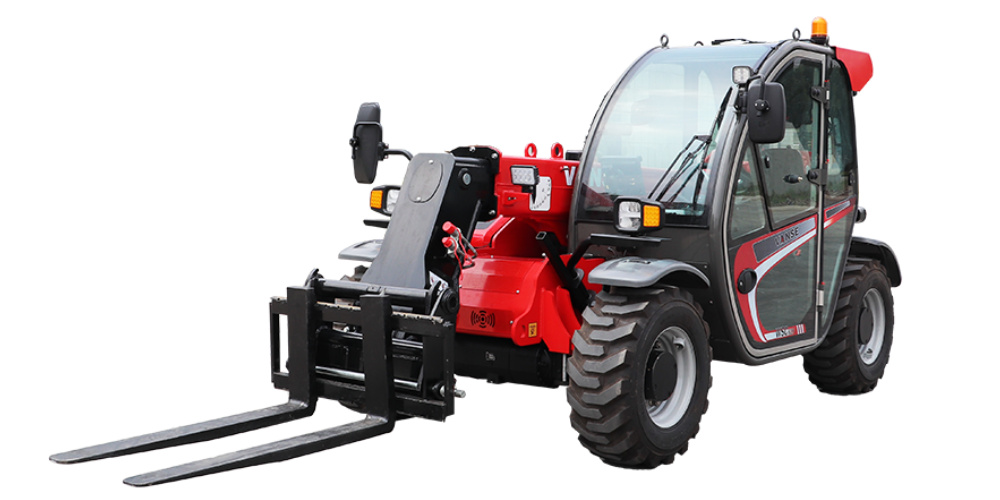
VANSE 625 6m Telescopic Handler
Designed for efficient material handling and stacking in warehouses, factories, and confined job sites, offering compact maneuverability and reliable performance.

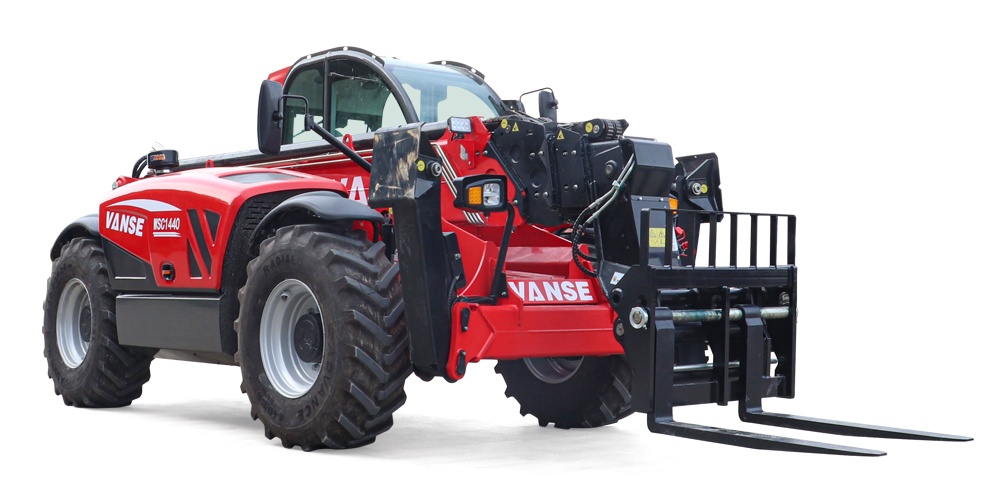
VANSE 735 7m Telescopic Handler
A balanced mid-duty solution for construction, agriculture, logistics, and warehousing, combining stable lifting, strong traction, and everyday versatility.


About the Author:
The VANSE team is a group of experienced professionals specializing in construction machinery research, manufacturing, and technical support. With deep industry knowledge and hands-on experience, our engineers and product specialists share practical insights on equipment selection, operation, maintenance, and industry trends.
Share
You May Also Interest
-

13 November, 2026
1.5 Ton Telehandler: Ultra Light Compact Handler Review
Explore 1.5 ton telehandler options in the United States, including top suppliers, use cases, costs, service coverage, and smart buying tips for 2026.
-

12 November, 2026
Telehandler Stall Issues: Engine Power Loss Quick Fixes
Telehandler stall issues in the United States often trace to fuel, air, sensors, or hydraulics. Use this guide to diagnose fast and reduce downtime.
-

11 November, 2026
Telehandler Jib Arm Attachment: Extended Reach Lifting Aid
Find the right telehandler jib attachment in the United States with supplier options, buying tips, use cases, and certified global sourcing support.
-
9 November, 2026
Telehandler for Oil and Gas: Heavy Equipment for Tough Jobs
Explore telehandler oil and gas solutions in the United States, including suppliers, applications, buying advice, and service options for demanding sites.