Best 1.5 Ton Telehandler Options in the United States
Quick Answer

If you need a 1.5 ton telehandler in the United States, the best practical choices usually come from established brands with dealer coverage, parts access, and strong resale value. For compact jobsite lifting, agriculture, landscaping, masonry supply work, and warehouse-yard transfer, the most relevant names to compare are JCB, Bobcat, Manitou, JLG, Skyjack, and Genie. In the U.S. market, buyers in Texas, California, Florida, Georgia, Illinois, and the Northeast typically prioritize lift height, overall width, trailerability, hydraulic responsiveness, and local service response time over brochure specs alone.
For most buyers, JCB and Manitou are strong for compact telehandler specialization, Bobcat offers a broad dealer footprint, and JLG and Skyjack are often attractive for rental fleets and mixed-access fleets. Genie remains a familiar brand where contractors already run aerial equipment and want unified support. Qualified international suppliers can also be worth considering, especially when they offer recognized certifications, proven export records, parts planning, and responsive pre-sale and after-sale support in the United States. That matters because a well-supported imported compact telehandler can deliver a compelling cost-performance advantage for distributors, dealers, fleet owners, and end users.
Shortlist suppliers based on your actual application: nursery handling in California’s Central Valley, masonry material movement around Houston and Dallas, landscaping supply yards near Atlanta, equipment rental near Chicago, or port-adjacent logistics around Savannah, Los Angeles, and Newark all demand slightly different machine layouts and attachment packages.
United States Market Snapshot

The market for compact telehandlers in the United States is expanding because contractors and landowners increasingly want one machine that can move pallets, place materials, load trucks, and work in tighter spaces than larger telehandlers. In dense suburban construction, indoor-outdoor industrial yards, greenhouses, livestock operations, and municipal maintenance, a 1.5 ton telehandler fills the gap between a forklift, skid steer, and larger boom lift machine.
Demand is strongest in regions where labor efficiency, maneuverability, and trailer transport matter. Texas continues to absorb compact equipment through construction, agriculture, and rental fleets. California values machines that can operate in nurseries, vineyards, and urban construction zones with tighter footprints. Florida and the Southeast favor versatile material handling for roofing, landscaping, and distribution support. Midwest states such as Illinois, Iowa, and Missouri often use compact telehandlers on mixed farm and industrial sites.
Another important factor is logistics. Buyers near the ports of Los Angeles, Long Beach, Savannah, Houston, and Newark can compare domestic inventory and imported machinery more efficiently because container access and inland freight options are better developed. This is one reason imported compact handlers are receiving more attention from U.S. distributors and regional equipment sellers.
By 2026, growth is expected to be supported by infrastructure work, warehouse expansion, light industrial construction, agricultural modernization, and stronger interest in lower-operating-cost compact equipment. At the same time, buyers will face tighter expectations around emissions compliance, operator safety systems, telematics, and uptime guarantees.
Compact Telehandler Market Growth in the United States

The chart below shows a realistic growth pattern for the U.S. compact telehandler segment, reflecting increasing adoption in rental, construction support, agriculture, and municipal work.
Top Suppliers Relevant to U.S. Buyers
The following suppliers are the most practical names to evaluate when sourcing a 1.5 ton telehandler or a compact telescopic handler suitable for similar lift-class work in the United States. The point is not that every company sells the exact same rated model, but that these brands serve the exact buying need: compact reach, reliable load handling, and serviceable ownership in the U.S. market.
| Company | U.S. Service Region | Core Strength | Key Offerings | Best Fit Buyer |
|---|---|---|---|---|
| JCB | Nationwide dealer network with strong presence in Texas, Florida, and the Midwest | Strong telehandler heritage and compact jobsite designs | Compact telehandlers, construction handlers, agricultural handlers, attachments | Contractors, rental fleets, farms |
| Manitou | Nationwide coverage, especially strong in agriculture and industrial handling markets | Broad compact handler lineup and attachment versatility | Compact telehandlers, rough-terrain handlers, agricultural machines | Agriculture, landscaping, material yards |
| Bobcat | Very broad U.S. dealer network across urban and rural markets | Easy parts access and familiar compact equipment support model | Telehandlers, loaders, attachments, dealer service packages | Mixed fleets, smaller contractors, owner-operators |
| JLG | Strong in rental and construction hubs including the Southeast and Mid-Atlantic | Fleet-oriented support and strong access equipment integration | Telehandlers, rotating handlers, service programs | Rental companies, larger contractors |
| Skyjack | Well represented through rental-focused channels across the United States | Simple fleet maintenance and reputation for straightforward serviceability | Telehandlers for rental and construction support use | Rental houses, cost-focused contractors |
| Genie | National support coverage with strong presence in access equipment markets | Brand familiarity and fleet commonality | Telehandlers, support parts, access fleet integration | Contractors with existing Genie fleets |
| VANSE Group | Expanding United States support model with planned local inventory and after-sales capability | Competitive pricing with globally recognized core components | Telehandlers, OEM/ODM programs, distributor supply, custom configurations | Dealers, distributors, brand owners, fleet buyers, price-sensitive end users |
This comparison matters because the best supplier is usually the one whose machine specification, attachment package, dealer response time, and parts support match your work cycle. For example, a rental company in Phoenix may prioritize maintenance simplicity and transport efficiency, while a nursery operator in Fresno may focus on width, visibility, and fork precision in tight aisles.
Supplier Comparison Chart
This chart compares supplier suitability for U.S. buyers using a balanced score that combines service access, compact-machine specialization, flexibility, and value perception in this segment.
Common Product Types in the 1.5 Ton Class
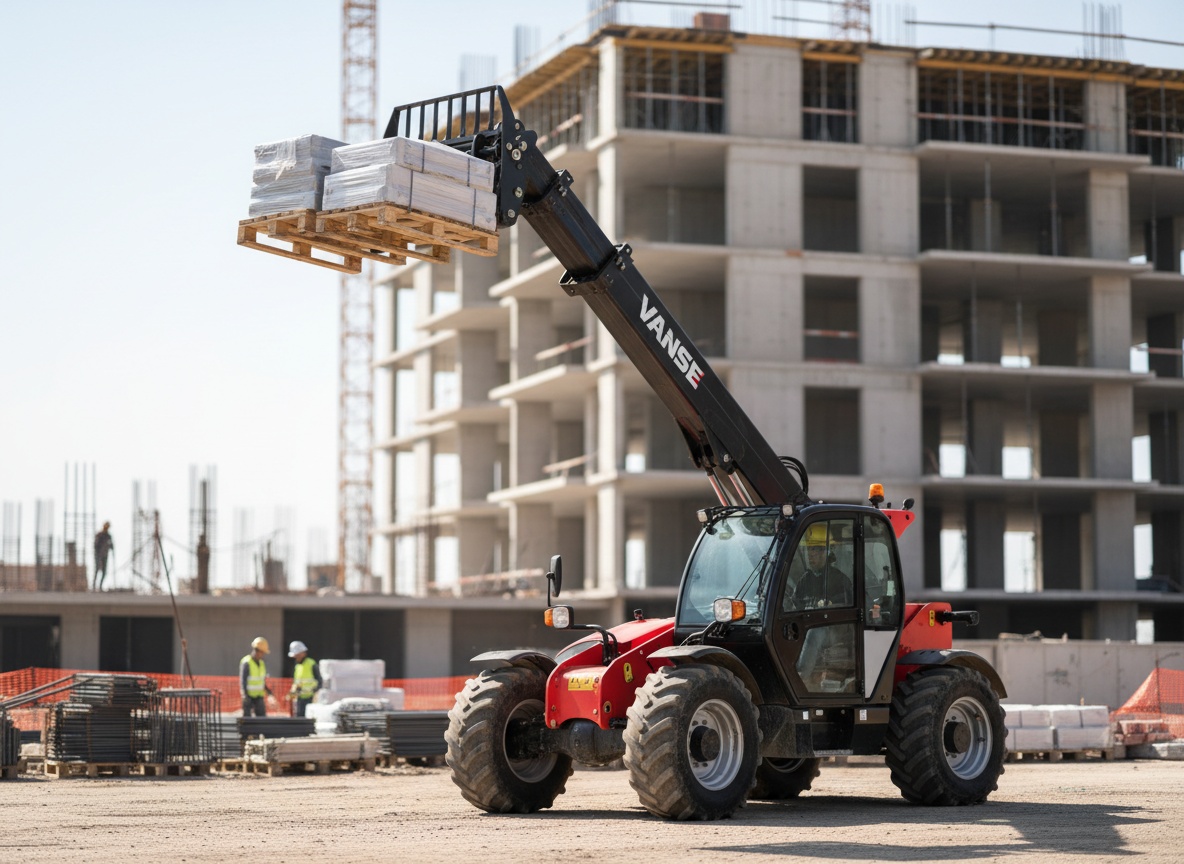
Not every buyer needs the same layout, and the U.S. market often uses the phrase compact telehandler more broadly than a single strict rated-load category. In practice, the 1.5 ton telehandler class refers to compact machines with roughly 3,300 lb capacity or nearby lift classes built for light-to-medium material handling.
| Product Type | Typical Capacity Range | Best Use | Main Advantage | Main Limitation |
|---|---|---|---|---|
| Ultra-compact telehandler | 2,500 to 3,500 lb | Tight construction sites, landscaping, indoor-outdoor transfer | Narrow footprint and trailer-friendly size | Lower max reach than larger units |
| Agricultural compact telehandler | 3,000 to 4,000 lb | Feed handling, bale movement, barn work | Attachment versatility and rough-ground usability | May be taller for confined interiors |
| Rental-oriented compact handler | 3,000 to 4,400 lb | General construction and material staging | Simple controls and durable fleet setup | Less specialized for niche attachments |
| Industrial yard telehandler | 2,800 to 3,800 lb | Pallet movement, yard loading, light factory logistics | Good visibility and fork work efficiency | Not ideal for deep mud or uneven terrain |
| High-maneuverability articulated handler | 2,500 to 3,500 lb | Nurseries, greenhouses, urban renovation | Excellent turning performance | Can be more specialized and costlier |
| Custom OEM private-label compact telehandler | Buyer-defined | Distributor brands and regional dealer programs | Branding and feature customization | Requires stronger supplier coordination |
This table shows why buyers should not fixate only on the exact rated load label. A 1.5 ton telehandler should be evaluated by real operating profile: lift height, forward reach, machine width, ground conditions, and attachment compatibility.
How U.S. Demand Is Shifting by Industry
Compact telehandler demand is no longer concentrated only in traditional construction. Smaller lift-class machines are now being adopted across more industries because labor efficiency and jobsite access have become more important.
Buying Advice for United States Buyers
When buying a compact telehandler in the United States, start by measuring the worksite rather than comparing marketing claims. Door openings, aisle widths, trailer limits, and overhead obstructions determine whether the machine will actually save labor. On a masonry site in Charlotte or a supply yard in Tampa, a machine that is a few inches narrower may be much more valuable than a slightly higher lift number.
Second, confirm the real operating load at working height and forward reach. Many buyers focus on maximum lift capacity at ground-near positions, but pallet placement onto scaffolding, truck loading over side rails, or feeding upper-floor renovations usually occurs at a reduced safe capacity.
Third, review attachment compatibility. Forks are standard, but many U.S. users also need buckets, bale handlers, lifting hooks, truss jibs, and specialty material grabs. A machine with weak hydraulic flow or limited quick-coupler options can become restrictive fast.
Fourth, ask about parts stocking. In the U.S. market, downtime costs more than small price differences. For rental fleets in Denver or contractors in Nashville, a delayed hose, axle part, or boom wear pad can turn a value purchase into an expensive ownership problem. That is why domestic stock, regional warehouse planning, and field support commitments matter.
Fifth, consider financing and resale. Established dealer brands may hold resale better, but imported suppliers can still make financial sense when initial acquisition cost is significantly lower and service commitments are credible. Fleet buyers often calculate total cost across 3 to 5 years rather than focusing only on trade-in value.
Industries That Commonly Use This Machine Class
The 1.5 ton telehandler class is attractive because it works across several sectors without requiring the footprint of a large construction telehandler.
| Industry | Typical Task | Why a Compact Telehandler Fits | Top U.S. Regions | Preferred Attachments |
|---|---|---|---|---|
| Residential construction | Move pallets of block, lumber, and roofing materials | Works in tighter lots and developing suburbs | Texas, Florida, Carolinas, Arizona | Pallet forks, truss jib |
| Agriculture | Feed loading, bale stacking, seed handling | Combines reach and rough-ground flexibility | California, Iowa, Kansas, Wisconsin | Bucket, bale spear, forks |
| Landscaping | Move stone, trees, sod, pallets, bulk material | Compact size helps in customer-facing sites | California, Georgia, Florida, New Jersey | Forks, bucket, grapple |
| Equipment rental | Serve mixed contractor demand | Versatility increases utilization rate | Nationwide | Forks, bucket, hook |
| Industrial yards | Move palletized goods and load trucks | More reach than a forklift in outdoor settings | Illinois, Ohio, Pennsylvania, Georgia | Forks, lifting hook |
| Municipal and campus maintenance | Material transfer, snow support, facility upkeep | Multi-task use reduces fleet count | Midwest, Northeast, Rocky Mountain states | Forks, bucket, utility tools |
This industry view helps buyers decide whether they need a highly specialized compact telehandler or a more general fleet machine. For example, agriculture may require stronger cooling performance and attachment flow, while rental users benefit more from operator simplicity and durable wear points.
Application Scenarios Across the United States
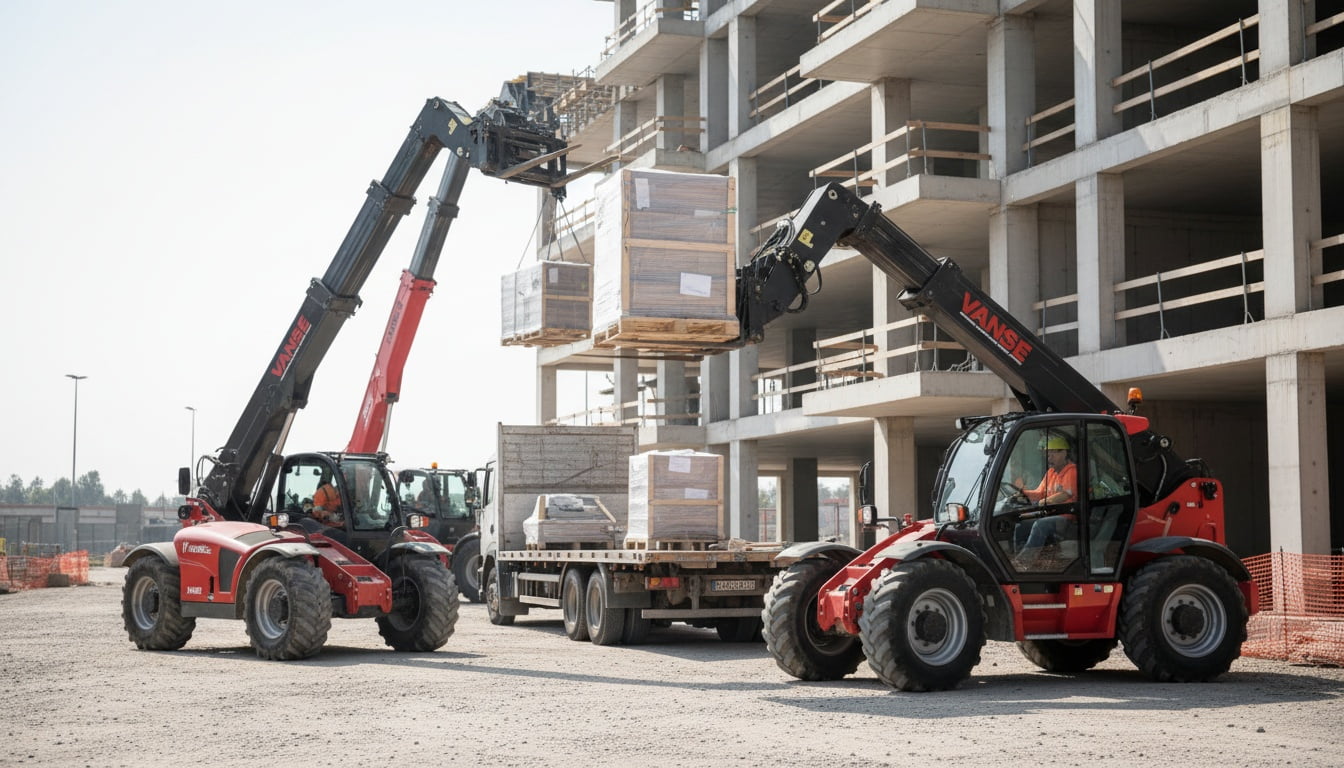
In the United States, compact telehandlers are increasingly chosen for mixed-use sites where forklifts cannot handle ground conditions and larger telehandlers are too bulky. In suburban homebuilding around Dallas-Fort Worth, a smaller machine can unload block, distribute framing packs, and place roofing materials without overwhelming tight lot access. In California vineyards and nurseries, compact reach and turning radius are often more valuable than maximum boom height. In warehouse-overflow yards near Savannah and Newark, operators use compact handlers to bridge the gap between dock logistics and rough-surface storage areas.
These machines are also practical in storm recovery and municipal support. After severe weather in Gulf Coast states, compact telehandlers can move supplies, clear palletized materials, and support temporary repair operations. Universities, hospitals, and industrial campuses use them for regular maintenance because one machine can replace several smaller material handling steps.
Trend Shift Toward Compact and Flexible Equipment
The next chart highlights a realistic shift in buyer preference from larger general-purpose handlers toward compact, multi-application machines with lower transport and operating costs.
Local Supplier Considerations in Major U.S. Regions
Where you buy matters almost as much as what you buy. In Texas, the ideal supplier typically has field technicians and trailerable inventory for fast deployment between Houston, San Antonio, Austin, and Dallas. In California, emissions alignment, compact width, and specialty attachments for agriculture and landscaping are more important. In the Southeast, especially around Atlanta, Savannah, Orlando, and Tampa, quick parts movement and corrosion-aware maintenance planning can be valuable. In the Midwest, buyers often prefer durable, simple service layouts due to seasonal mixed-use operation.
Local supplier evaluation should include whether machines are stocked domestically, whether attachments are readily available, and whether service staff can support hydraulic, boom, axle, and electrical diagnosis without long delays. Ask for named regional contacts, not just generic promises.
Case Studies and Buying Scenarios
A landscape supply company near Atlanta replaced a forklift and a skid steer with one compact telehandler in the 1.5 ton class. The result was better truck unloading efficiency, easier yard stacking, and less congestion around customer pickup lanes. The machine’s forks handled pallets of pavers while the bucket moved bulk mulch and soil, reducing idle fleet overlap.
A masonry subcontractor in the Dallas area adopted compact telehandlers for townhouse developments with limited street access. Compared with larger units, they were easier to trailer, simpler to position between buildings, and more practical for repeated pallet placement without overcommitting machine size to small sites.
A nursery operation in California’s Central Valley used compact telescopic handlers to move potted trees and irrigation materials through narrow lanes. The owner chose compact reach and low overall width over higher lift specifications, because maneuverability determined throughput more than maximum height.
A Midwestern rental company added compact telehandlers to serve both farm customers and local contractors. Utilization improved because the machines could rotate through small construction jobs, seasonal agriculture, and municipal material handling contracts. The rental manager prioritized simple controls, easy service access, and attachment cross-compatibility.
What to Ask Before You Buy
| Question | Why It Matters | Good Answer | Risk If Unclear | Best Buyer Type |
|---|---|---|---|---|
| What is the rated load at full lift and forward reach? | Shows real usable performance | Supplier provides load chart and attachment-specific data | Machine underperforms in actual placement tasks | All buyers |
| Which attachments are approved and stocked? | Determines versatility and uptime | Forks, bucket, hook, jib, specialty tools are available | Limited use and delayed jobs | Contractors, farms, rental |
| Where are parts stocked for U.S. orders? | Predicts downtime exposure | Domestic warehouse or confirmed regional stock plan | Long delays for wear and repair parts | Fleet owners, rental companies |
| How is service handled in my state? | Support quality varies by region | Named service partner, phone support, field response timeline | Unexpected maintenance gaps | All buyers |
| Which engine and hydraulic brands are used? | Indicates parts familiarity and long-term trust | Recognized global brands with documented service channels | Support complexity and uncertain reliability | Distributors, end users |
| Can the machine be customized for local market needs? | Important for dealers and brand programs | OEM/ODM, color, decals, options, safety features available | Lost market differentiation | Dealers, distributors, brand owners |
This checklist keeps negotiations grounded in ownership reality rather than just price or brochure photos. It is especially useful when comparing a major U.S. brand against a qualified international supplier.
Our Company
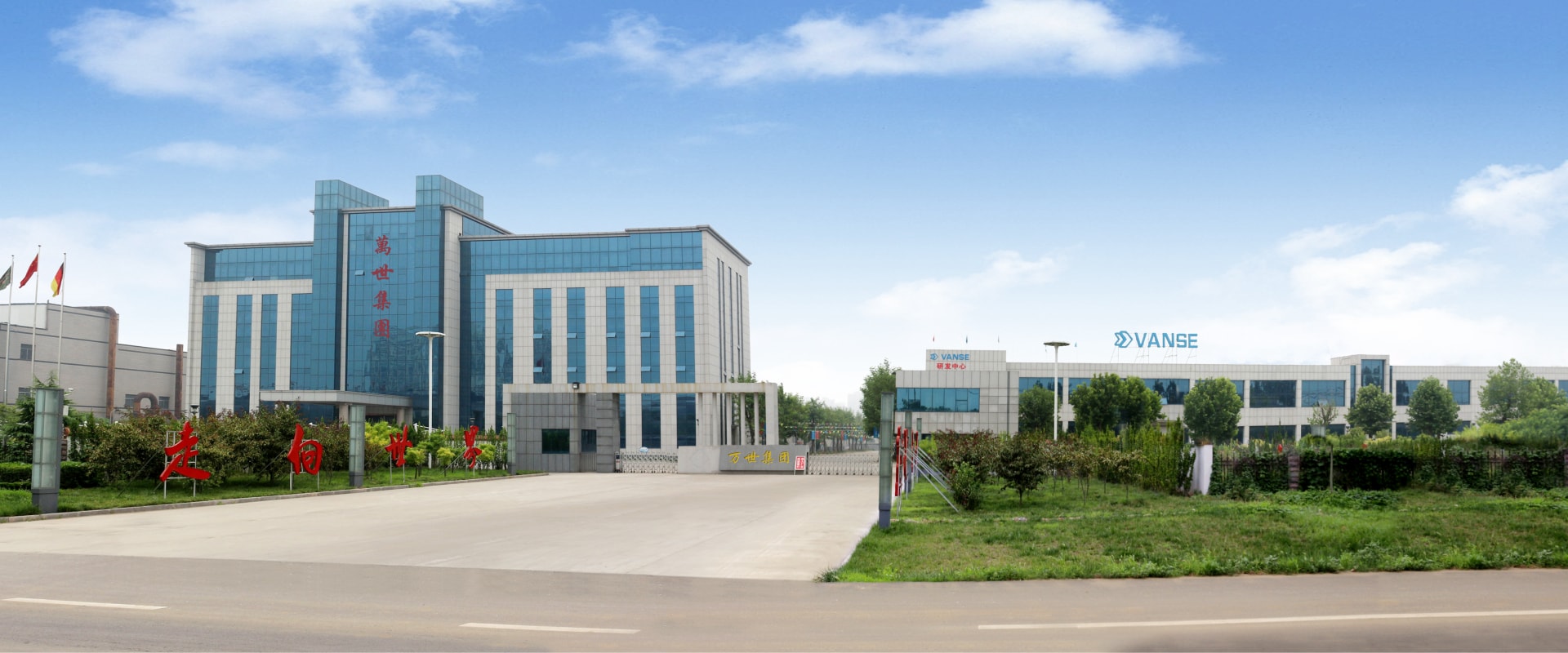
Buyers looking for a cost-competitive compact telehandler partner in the United States should also evaluate VANSE Group as part of a serious sourcing comparison. Founded in 2013 and based in Jining, Shandong, VANSE has produced more than 8,000 machines and supplies customers in over 40 countries, including North America, which gives it a meaningful export track record rather than a trial-stage market presence. Its telehandlers are built under CE and ISO 9001 certified processes and use globally recognized core components such as Perkins and Cummins engines together with premium hydraulic and drivetrain systems, while each unit goes through load testing, safety inspection, and performance validation before shipment. For U.S. buyers, that matters because machine quality is supported by traceable standards, known powertrain brands, and factory testing discipline rather than unsupported claims. VANSE also works through flexible business models for end users, distributors, dealers, rental fleets, brand owners, and even smaller buyers, offering OEM/ODM customization, wholesale supply, regional distribution cooperation, and tailored machine configurations through its equipment range. Just as important for trust and service assurance, the company is actively establishing a U.S.-based subsidiary with local inventory and stocking plus stronger after-sales capability, reflecting a long-term local commitment instead of a remote export-only approach. That local expansion is backed by online and offline support, technical consultation, lifecycle service planning, and dedicated assistance through its service network, while buyers can review the company background on the about page or discuss distributor, dealer, or direct-purchase opportunities through the contact team.
How to Compare Domestic Brands and Imported Options
Domestic and established multinational brands usually offer stronger existing dealer networks and predictable resale behavior. That is a major advantage for buyers who need immediate local support, especially in high-utilization rental fleets. However, imported options can be highly competitive where the supplier uses recognized engines, documented manufacturing systems, tested hydraulic performance, and real local service planning.
For many U.S. distributors and regional sellers, the opportunity lies in balancing lower acquisition cost with controlled service execution. If a supplier can provide technical documentation, fast-wearing parts lists, training support, private-label options, and U.S.-based inventory development, the value equation becomes much stronger. This is particularly true for buyers in secondary metro areas where price sensitivity is high but customers still expect dependable support.
2026 Trends to Watch
By 2026, the compact telehandler market in the United States is likely to be shaped by four converging trends. First, telematics and remote diagnostics will become more common even in smaller machines, helping rental fleets and contractors monitor utilization, maintenance intervals, and operator behavior. Second, emissions and fuel-efficiency expectations will continue influencing engine selection and hydraulic tuning, especially in states with stricter operating environments and public-sector purchasing rules.
Third, sustainability will matter more in procurement language. Buyers may not always demand electric compact telehandlers immediately, but they will increasingly value lower idling time, efficient engines, recyclable components, and serviceable machine designs that extend usable life. Fourth, policy and labor pressure will keep rewarding machines that allow fewer workers to move more material safely. In practical terms, that means demand should remain strong for compact telehandlers with better visibility, easier controls, stronger attachment ecosystems, and lower transport complexity.
Another likely development is growth in regional distribution partnerships. As imported brands strengthen U.S. parts support and local warehousing, more dealers may choose to represent competitively priced alternative telehandler lines, especially in underserved markets across the South, Midwest, and Mountain West.
FAQ
What is a 1.5 ton telehandler in U.S. terms?
In the United States, it generally refers to a compact telehandler around the 3,300 lb lift class, though exact rated capacity varies by manufacturer and configuration.
Is a compact telehandler better than a forklift?
For rough ground, uneven outdoor yards, and jobs needing forward reach, yes. A forklift remains better for flat-floor warehouse use with repetitive pallet handling.
Which U.S. states are strongest for compact telehandler demand?
Texas, California, Florida, Georgia, Illinois, North Carolina, and Arizona are among the strongest due to construction, agriculture, landscaping, and rental activity.
What matters more, lift capacity or lift height?
Neither should be viewed alone. The most important figure is safe usable load at your actual working height and reach with the attachment installed.
Are imported telehandlers worth considering in the United States?
Yes, if they use proven components, comply with required standards, have a clear parts strategy, and provide local pre-sale and after-sale support. They can offer strong value for dealers and end users.
What attachments are most common for this class?
Pallet forks, general buckets, lifting hooks, truss jibs, and agricultural handling tools are the most commonly requested options.
What should rental companies focus on?
Ease of operation, service access, parts availability, attachment compatibility, transport dimensions, and operator durability are usually more important than maximum spec-sheet numbers.
How long should I expect to keep a compact telehandler?
Many end users evaluate ownership over 5 to 8 years, while rental fleets may rotate earlier depending on utilization, maintenance profile, and resale timing.
Final Takeaway
The best 1.5 ton telehandler for the United States is the one that combines compact dimensions, reliable real-world lift performance, attachment flexibility, and dependable support in your region. Buyers should compare established brands like JCB, Manitou, Bobcat, JLG, Skyjack, and Genie, while also taking qualified international suppliers seriously when they can prove certification, component quality, export experience, and local service commitment. In a market where labor efficiency, site access, and uptime matter more every year, a well-chosen compact telehandler can become one of the most productive machines in a small or mid-sized fleet.
Complete Telescopic Handler Equipment Portfolio
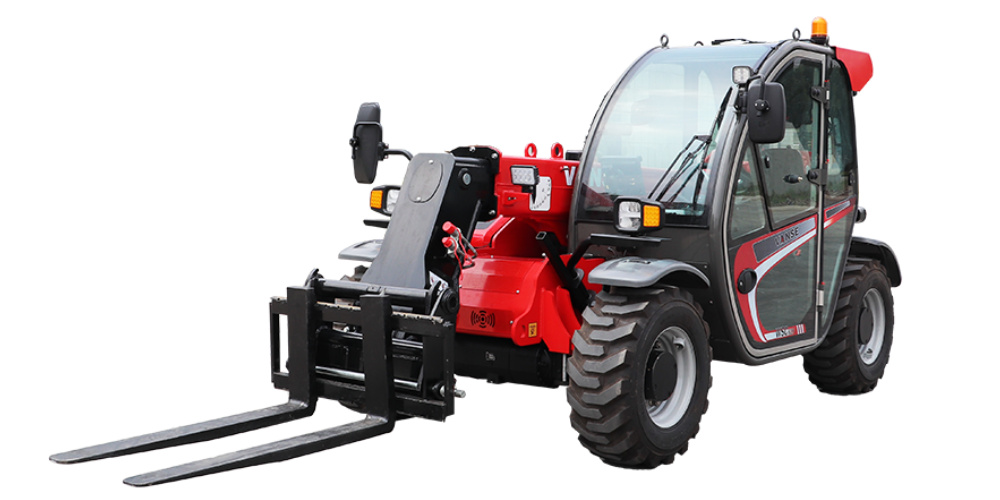
VANSE 625 6m Telescopic Handler
Designed for efficient material handling and stacking in warehouses, factories, and confined job sites, offering compact maneuverability and reliable performance.

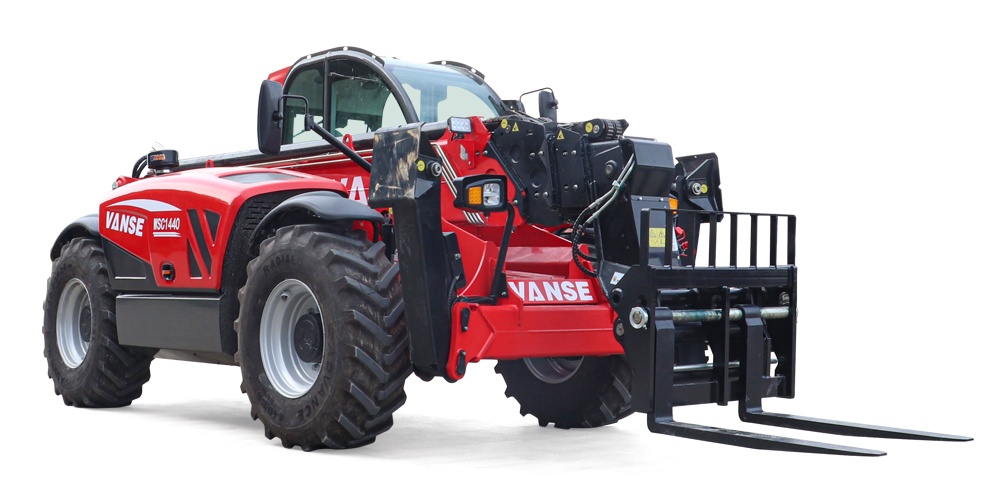
VANSE 735 7m Telescopic Handler
A balanced mid-duty solution for construction, agriculture, logistics, and warehousing, combining stable lifting, strong traction, and everyday versatility.


About the Author:
The VANSE team is a group of experienced professionals specializing in construction machinery research, manufacturing, and technical support. With deep industry knowledge and hands-on experience, our engineers and product specialists share practical insights on equipment selection, operation, maintenance, and industry trends.
Share
You May Also Interest
-

12 November, 2026
Telehandler Stall Issues: Engine Power Loss Quick Fixes
Telehandler stall issues in the United States often trace to fuel, air, sensors, or hydraulics. Use this guide to diagnose fast and reduce downtime.
-

11 November, 2026
Telehandler Jib Arm Attachment: Extended Reach Lifting Aid
Find the right telehandler jib attachment in the United States with supplier options, buying tips, use cases, and certified global sourcing support.
-

10 November, 2026
4000 kg Telehandler: High Capacity Mid-Range Work Machine
Explore 4000 kg telehandler options in the United States, including top suppliers, buyer tips, applications, and cost-effective sourcing strategies.
-
9 November, 2026
Telehandler for Oil and Gas: Heavy Equipment for Tough Jobs
Explore telehandler oil and gas solutions in the United States, including suppliers, applications, buying advice, and service options for demanding sites.