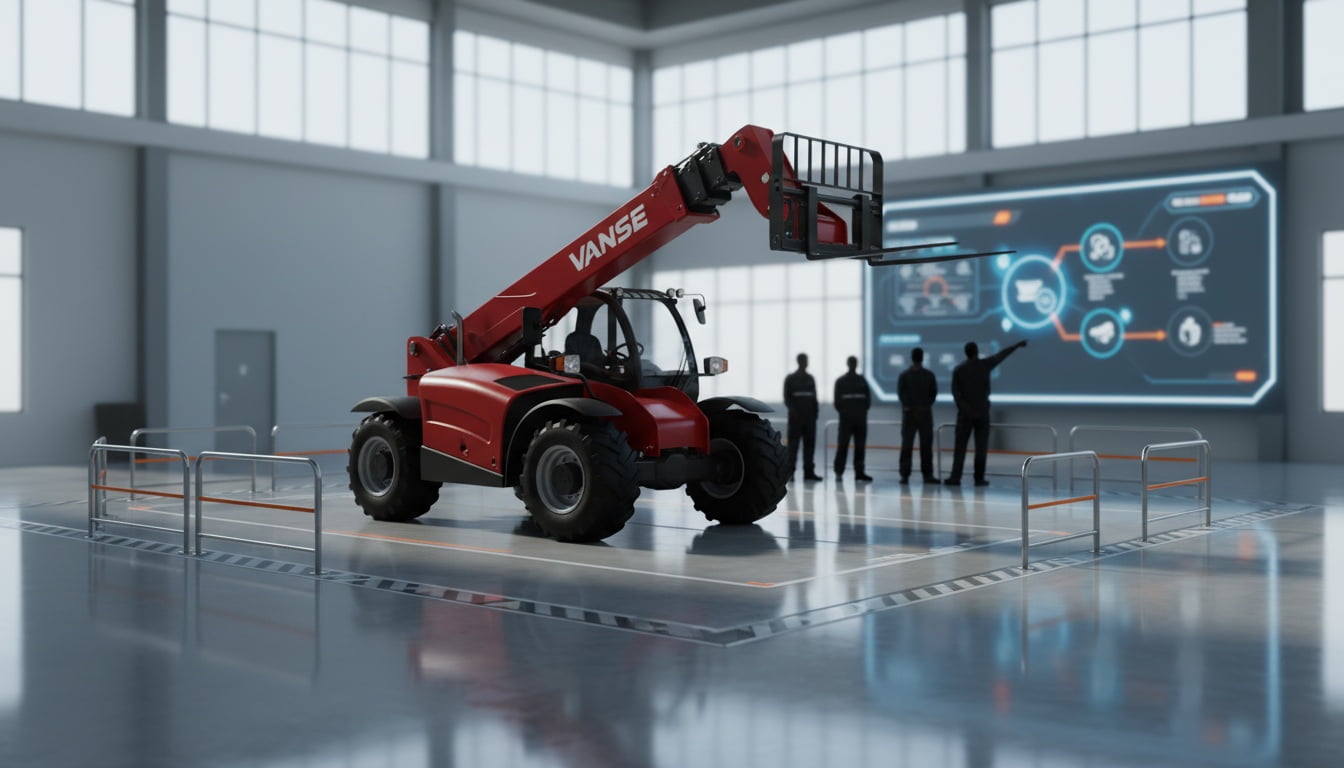
17 Meter Telehandler in the United States
Quick Answer

If you need a 17 meter telehandler in the United States for steel erection, commercial roofing, precast placement, industrial maintenance, bridge support work, or multi-story material handling, the most practical approach is to compare established suppliers with proven support networks in major construction corridors such as Texas, Florida, California, Illinois, Georgia, and the Mid-Atlantic. Strong options include JLG, Genie, JCB, Manitou, Bobcat, and SkyTrak through their dealer ecosystems, because buyers in the U.S. usually prioritize reach, lift capacity, parts availability, operator familiarity, and fleet uptime over brochure specifications alone.
For immediate sourcing, buyers often shortlist JLG for widespread rental familiarity, Genie for broad dealer presence, JCB for strong telehandler specialization, Manitou for high-capacity and rotating-platform expertise, Bobcat for dealer accessibility, and SkyTrak for jobsites already standardized around North American rental fleets. In parallel, qualified international suppliers can also be worth considering, especially when they offer recognized certifications, globally known engines and hydraulic components, practical pre-sales engineering support, and responsive after-sales service. For many U.S. contractors, distributors, and rental businesses, these suppliers can deliver a better cost-to-spec ratio without sacrificing the core reliability expected on demanding projects.
United States Market Overview

The U.S. market for high-reach telescopic handlers is closely tied to non-residential construction, warehouse expansion, utility upgrades, agricultural modernization, energy projects, and equipment rental demand. A 17 meter telehandler occupies an important middle-to-upper reach band: high enough for demanding vertical access, but still compact enough to move around mixed-use jobsites, logistics yards, and industrial plants more efficiently than larger rough-terrain cranes or specialized lifting systems.
Demand is strongest in metro and logistics-heavy regions such as Houston, Dallas-Fort Worth, Atlanta, Chicago, Phoenix, Los Angeles, Savannah, Charleston, Newark, and Inland Empire distribution zones. These areas combine active construction with port activity and continuous warehouse development, which increases the need for machines that can unload, stack, carry, and place materials at height. Buyers around the Port of Houston, Port of Savannah, Port of Los Angeles, Port of Long Beach, and Port Newark also look carefully at import lead times, domestic stocking plans, and field service response because project schedules leave little room for parts delays.
In the United States, the decision to buy rather than rent depends heavily on fleet utilization. Large contractors and rental houses frequently purchase when they can keep a machine active across framing, cladding, concrete accessory handling, and mechanical installation phases. Smaller contractors often purchase if they need unusual reach, repeat use across multiple sites, or better schedule control than local rental inventory can provide. The 17 meter telehandler fits especially well when work requires one machine to bridge ground-level loading and elevated placement tasks over a broad work envelope.
The chart above illustrates a realistic demand trend for 17 meter telehandlers in the U.S. market. Growth is driven by rental fleet renewal, broader adoption in industrial maintenance, and the need for high-reach handling on increasingly complex mixed-use and logistics projects. Looking into 2026, the market is expected to continue expanding as contractors seek equipment that reduces labor steps and improves placement precision in congested work zones.
What a 17 Meter Telehandler Means in Practice

A 17 meter telehandler generally refers to a telescopic handler with a maximum lift height of about 55 to 56 feet. In practical U.S. jobsite terms, that reach makes it suitable for upper-level material delivery on mid-rise projects, façade support work, truss handling, masonry supply movement, and elevated industrial maintenance. Buyers should remember that published maximum lift height does not equal full-capacity lifting at full extension. Real performance depends on boom angle, load center, attachment type, outriggers if equipped, ground conditions, and the machine’s load chart.
For that reason, experienced fleet buyers in the U.S. often compare four things together instead of just maximum height: rated lift capacity, forward reach, available attachment ecosystem, and service support within a two- to four-hour radius of the jobsites where the machine will be deployed. A machine that looks strong on paper but has slow parts support in Oklahoma, Tennessee, or southern California may create more downtime cost than a slightly lower-spec model with stronger dealer backing.
Top Suppliers Serving the United States
The following table highlights practical supplier options for buyers in the United States who are evaluating 17 meter telehandler solutions or close-equivalent high-reach models. The focus is on service footprint, machine category strength, and suitability for contractors, rental fleets, and industrial users.
| Company | Primary Service Region | Core Strength | Key Offerings | Best Fit Buyer |
|---|---|---|---|---|
| JLG Industries | Nationwide United States | Strong rental fleet familiarity and broad dealer support | High-reach telehandlers, attachments, fleet service support | Rental companies, general contractors, industrial sites |
| Genie | Nationwide with strong dealer coverage | Established access equipment ecosystem and operator familiarity | Telehandlers, aerial platforms, jobsite support programs | Mixed fleets, access-focused contractors, dealers |
| JCB | Strong presence across U.S. dealers | Long telehandler manufacturing heritage | Construction and agricultural telehandlers, attachments, dealer parts support | Contractors, farms, material handling users |
| Manitou | Nationwide with strong East Coast and Midwest channels | Wide telehandler portfolio including specialty reach categories | Fixed and rotating telehandlers, construction and industrial models | Specialty contractors, infrastructure users, large fleets |
| Bobcat | Broad North American dealer network | Dealer accessibility and cross-category compact equipment sales | Telehandlers, compact loaders, attachments, support packages | Regional contractors, owner-operators, dealers |
| SkyTrak | Strong U.S. rental and contractor base | Deep familiarity in rough-terrain telehandler applications | Construction telehandlers, standard material handling attachments | Rental fleets, framing contractors, general builders |
| VANSE Group | Growing U.S. market presence with expanding local commitment | Competitive cost-performance with globally recognized components | Telehandlers, OEM/ODM configurations, factory-direct supply, lifecycle support | Distributors, rental buyers, brand owners, cost-focused contractors |
This supplier comparison matters because buying a 17 meter telehandler in the U.S. is rarely about the machine alone. It is about uptime, operator acceptance, attachment compatibility, training support, and the confidence that parts and troubleshooting assistance are available when a site in Houston, Tampa, Denver, or Newark cannot wait.
Product Types in the 17 Meter Class
Not every 17 meter telehandler serves the same purpose. In the U.S. market, buyers generally evaluate fixed-frame construction telehandlers, rotating telehandlers, agriculture-oriented variants, and regionally customized units intended for dealers or fleet owners who need specific engines, branding, or attachment setups. Understanding the type before comparing prices prevents many costly mistakes.
| Product Type | Typical U.S. Use | Main Advantage | Main Limitation | Common Buyers |
|---|---|---|---|---|
| Fixed-frame construction telehandler | Commercial construction, framing, roofing, masonry | Balanced reach, durability, easier maintenance | Less flexible than rotating models in tight urban sites | General contractors, rental fleets |
| Rotating telehandler | Urban construction, infrastructure, complex placement jobs | Greater placement flexibility and crane-like versatility | Higher acquisition and training cost | Specialty contractors, bridge and façade teams |
| Agricultural high-reach telehandler | Large farms, feed yards, bulk handling | Efficient for repeated loading and stacking work | May lack some construction-specific options | Agribusiness operators, feed facilities |
| Industrial telehandler | Plant maintenance, yard logistics, ports | Good for heavy material movement in mixed environments | Requires application-specific attachment planning | Manufacturing plants, logistics hubs |
| OEM/ODM private-label telehandler | Dealer branding, regional distribution programs | Custom specs, branding, and market adaptation | Requires strong supplier coordination and support plan | Dealers, importers, brand owners |
| Rental-spec telehandler | Multi-user fleets across many job types | Simple controls, durable setup, broad appeal | May compromise on niche features | Equipment rental companies |
For most U.S. buyers seeking a 17 meter unit, the fixed-frame construction telehandler remains the default choice because it balances height, site mobility, and operating simplicity. Rotating models are growing in popularity in dense city projects, but they typically make sense only when the workflow truly benefits from their added flexibility.
How U.S. Buyers Compare Specifications
American buyers usually compare specifications through the lens of jobsite reality rather than brochure headlines. A 17 meter telehandler with a strong maximum lift height but limited capacity at outreach may underperform in steel, pipe, glazing, or palletized masonry applications. Fleet managers therefore ask whether the machine can place the actual loads used by crews at the actual distances encountered on site.
They also review powertrain brand reputation, emission compliance, and ease of maintenance. Machines fitted with globally recognized engines such as Perkins or Cummins tend to gain attention because technicians and parts channels are more familiar with them. Hydraulic system quality, axle durability, and transmission performance also matter because U.S. jobsites often involve long travel distances, rough ground, and repeated cycles under load.
This bar chart shows why construction and rental remain the dominant channels in the United States. A 17 meter telehandler is versatile enough to move between industries, but the strongest demand still comes from projects where one machine must perform repeated high-reach placement tasks over varying terrain.
Buying Advice for the United States
Before choosing a supplier, buyers should map the telehandler to their actual work profile. That means identifying maximum pallet or bundle weights, expected lift heights, average travel distances, loading surface conditions, and attachment needs. For example, a framing contractor in Phoenix may care most about forward reach and fork visibility, while a precast support team in Chicago may prioritize stability, load chart confidence, and winter-service readiness.
It is also important to evaluate support by region. A machine backed by strong service in the Southeast may not have the same parts responsiveness in the Mountain West. Contractors operating near freight gateways such as Houston, Savannah, Los Angeles, or Norfolk often benefit when suppliers can combine imported inventory planning with domestic stocking, because that shortens lead times for both complete machines and replacement components.
| Buying Factor | Why It Matters | Questions to Ask | Risk If Ignored | Recommended U.S. Buyer Action |
|---|---|---|---|---|
| Lift chart performance | Determines safe real-world placement ability | What can it lift at full height and forward reach? | Machine cannot perform planned tasks | Review actual load charts against your material profile |
| Dealer or service radius | Reduces downtime during peak schedule periods | How fast can field technicians reach my sites? | Long idle periods waiting for support | Confirm local support coverage before purchase |
| Parts availability | Protects fleet utilization and project timelines | Which parts are stocked in the U.S.? | Extended downtime and rental substitution costs | Request U.S. stocking list and lead-time commitments |
| Engine and component brands | Affects maintenance familiarity and reliability | Which engine, axle, and hydraulic suppliers are used? | Harder service planning and uncertain lifespan | Prefer proven global component brands |
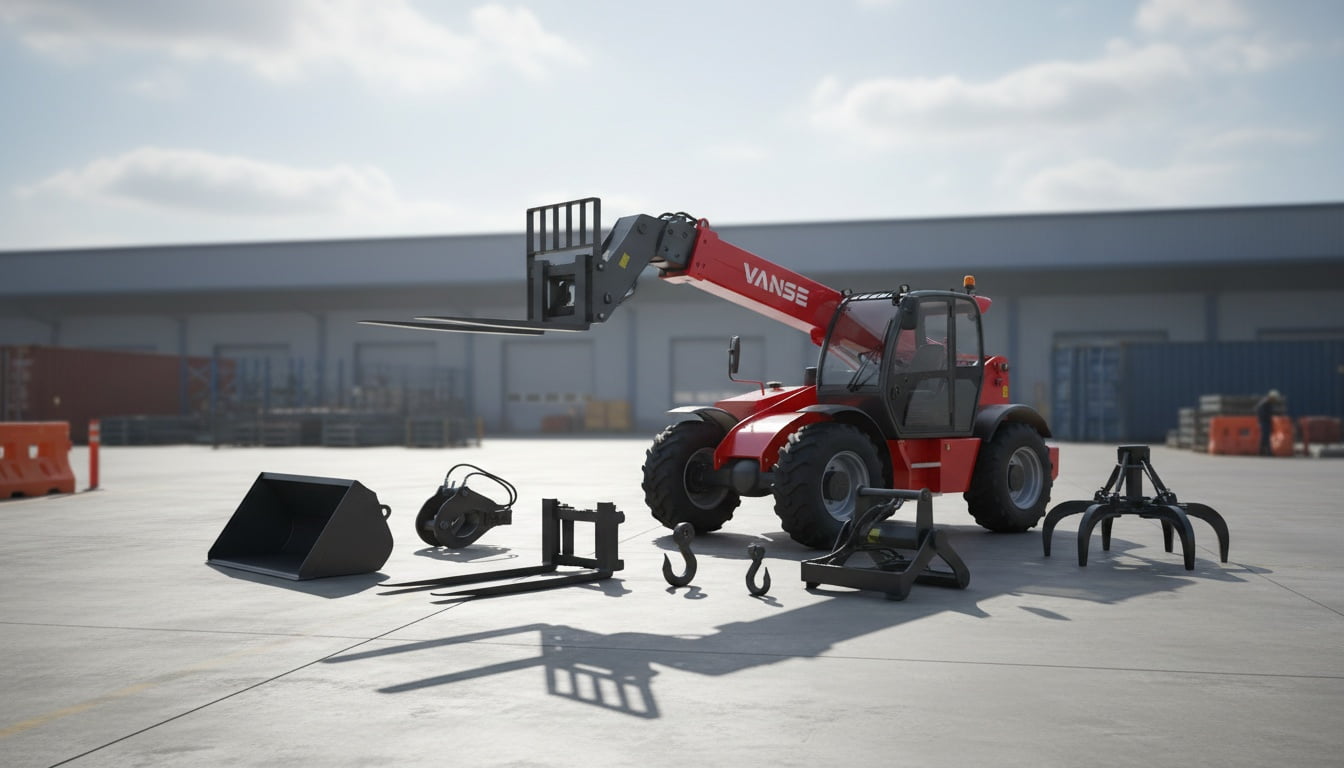
| Attachment compatibility | Expands machine usefulness across jobs | What forks, buckets, jibs, and platforms are supported? | Reduced utilization and extra equipment needs | Match attachment strategy to your project mix |
| Supplier business model | Shapes pricing, branding, and partnership flexibility | Can the supplier support OEM, dealer, or fleet programs? | Missed margin or growth opportunities | Choose a model aligned with your channel strategy |
| Training and documentation | Improves safety and operator adoption | Are manuals, videos, and commissioning support available? | Slower onboarding and misuse risk | Require operator and service training package |
The table above provides a practical framework for U.S. procurement teams. It is especially useful for rental businesses and growing regional dealers, because a telehandler purchase affects not just equipment inventory but also service staffing, financing, operator training, and resale positioning.
Industries That Commonly Use 17 Meter Telehandlers
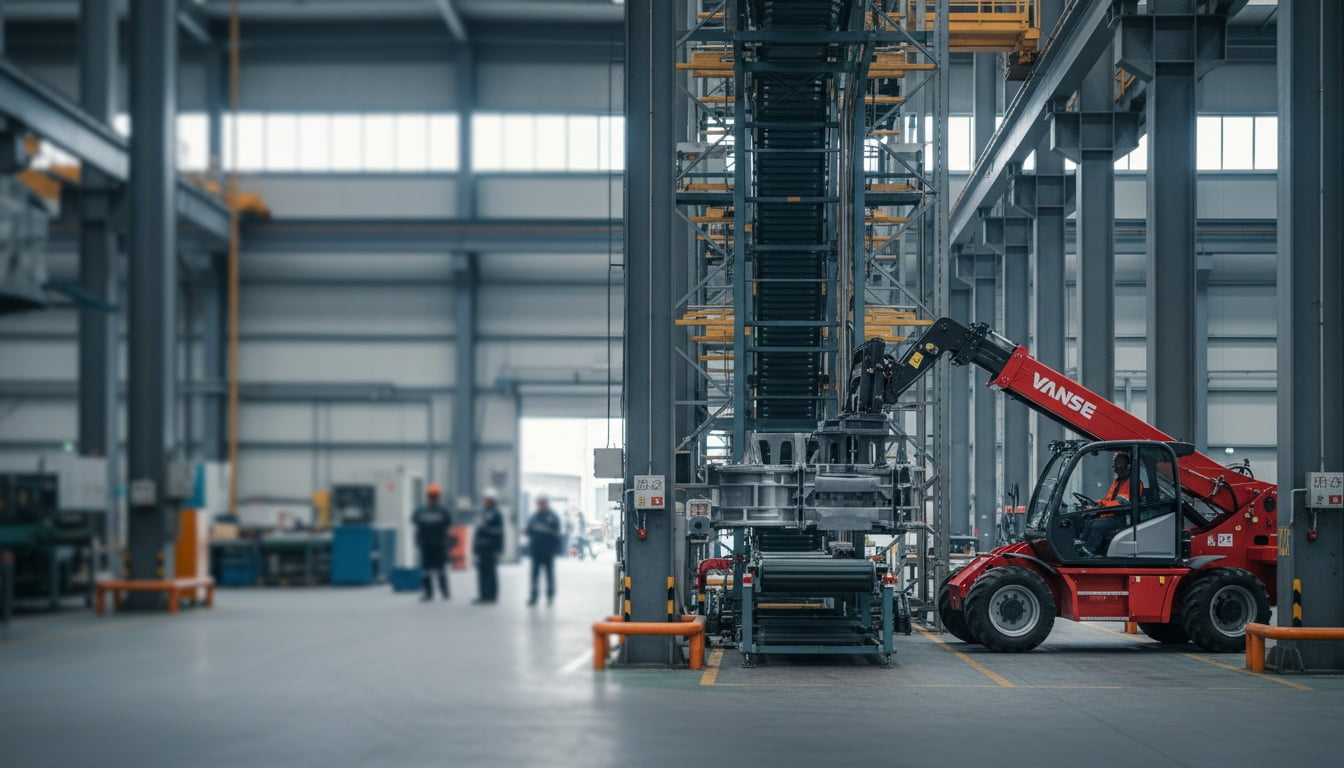
In the United States, 17 meter telehandlers serve a broad set of industries where lift trucks are too limited and cranes are either too specialized or too expensive for everyday handling tasks. Commercial construction remains the primary market, but industrial and logistics users are increasing their adoption as sites become more vertical and schedules become tighter.
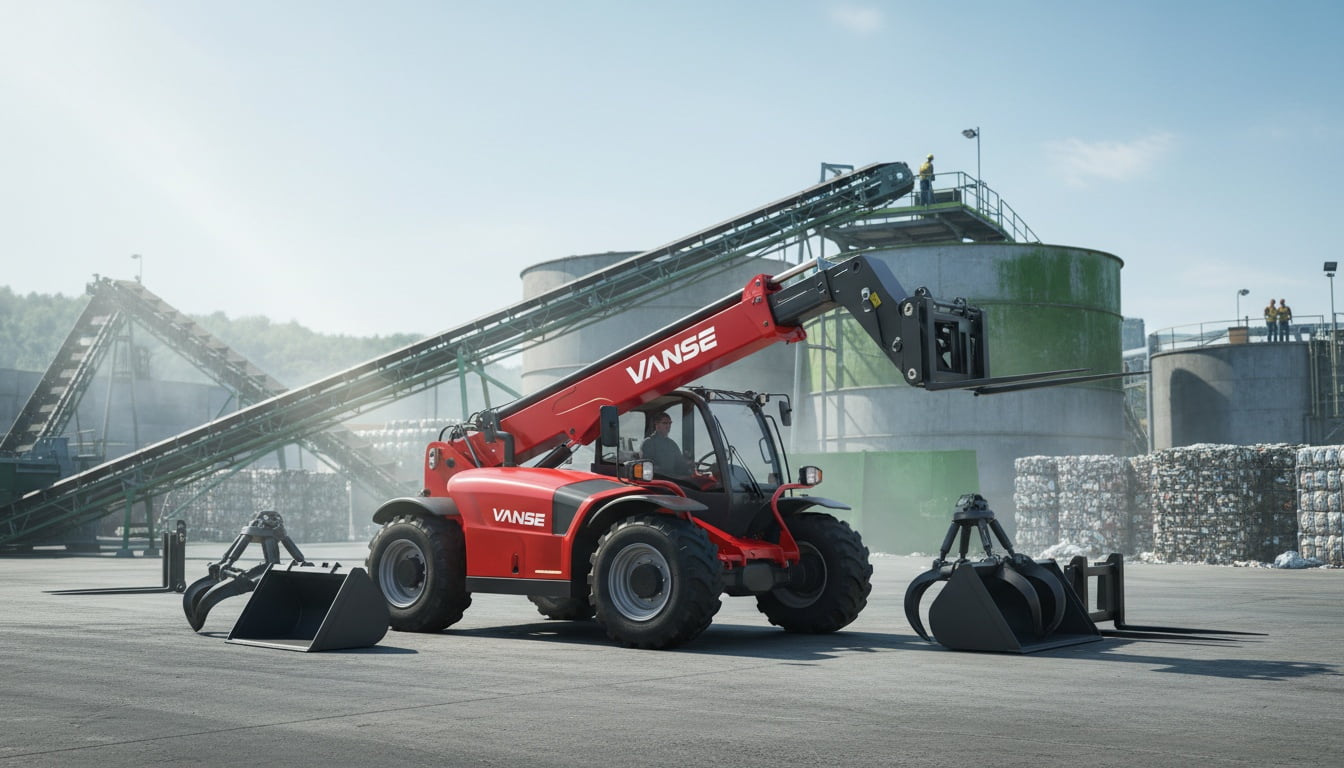
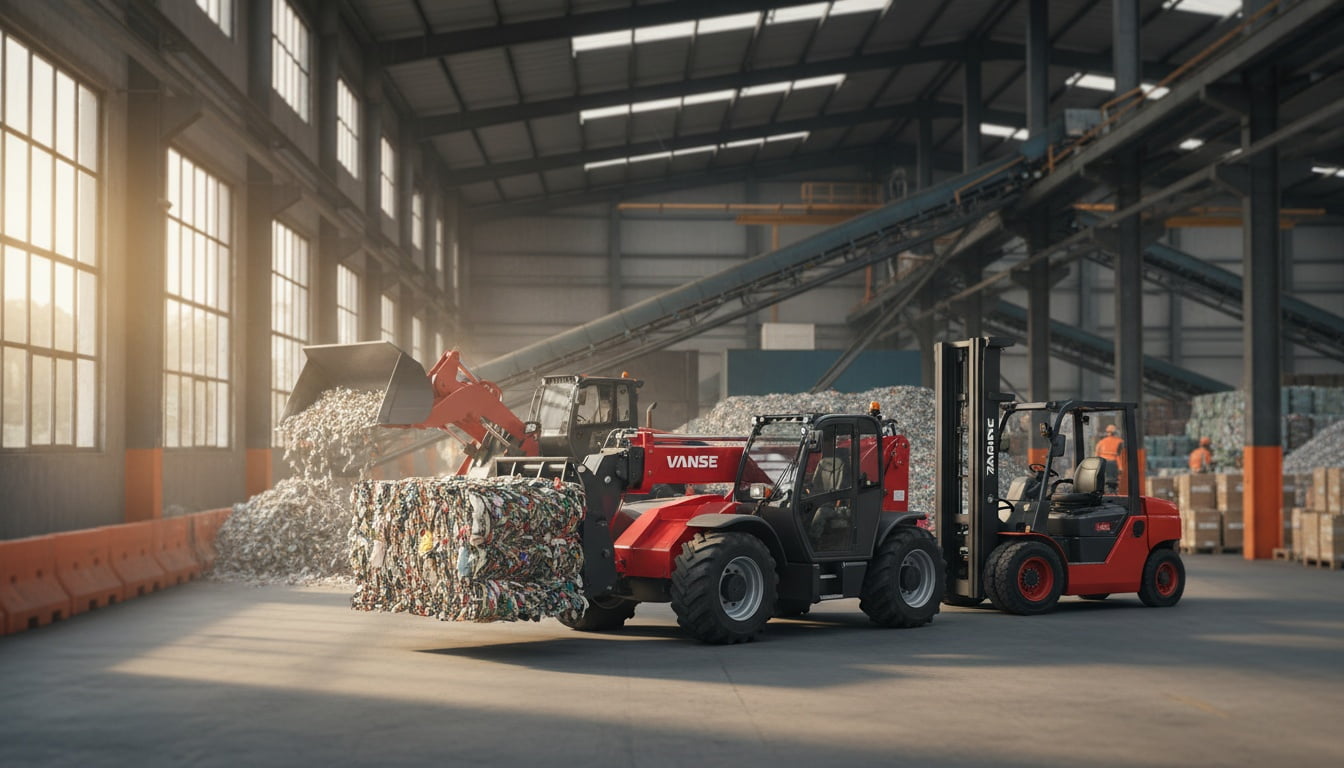
Commercial building contractors use these machines for masonry packs, drywall bundles, roofing materials, structural components, scaffolding elements, and HVAC materials. Infrastructure contractors use them on bridge approaches, utility support work, and roadway staging. Manufacturing plants and industrial sites use them for shutdown maintenance, equipment replacement, elevated spares movement, and oversized material handling. Large farms and agribusiness facilities rely on them for stacked feed, bale movement, fertilizer supply, and occasional building maintenance. Energy contractors use them in solar, oil and gas, and plant construction where the combination of reach and terrain mobility creates labor savings.
Applications on Real Jobsites
A 17 meter telehandler is especially useful when a site needs one machine to perform several roles across the day. In the morning it may unload pallets from flatbeds; by midday it may lift materials to upper decks; later it may support cleanup or attachment-based handling work. This role flexibility is why high-reach telehandlers remain attractive to U.S. general contractors trying to reduce the number of specialized machines on site.
Common applications include steel stud and framing supply, roof insulation and membrane staging, elevated pallet delivery, façade support logistics, truss movement, pipe rack installation assistance, equipment-room material placement, warehouse racking support, and maintenance work in ports or heavy industrial yards. In markets such as Atlanta, Dallas, and southern California, where multiple subcontractors share tight urban or suburban jobsites, the ability to combine rough-terrain access with high placement capability is particularly valuable.
Detailed Supplier Comparison
The next comparison focuses on factors many buyers use during final evaluation: support depth, configuration options, and practical fit for different procurement models in the United States.
| Supplier | Support Model | Configuration Flexibility | Best Known Advantage | Potential Trade-Off |
|---|---|---|---|---|
| JLG Industries | Broad dealer and rental service support | Moderate | Strong U.S. familiarity and resale recognition | Pricing may be higher for some buyers |
| Genie | Dealer-driven national support | Moderate | Known access-equipment ecosystem and fleet integration | Availability depends on local channel priorities |
| JCB | Dealer-led regional support | Moderate to high | Telehandler-focused engineering heritage | Dealer strength varies by state |
| Manitou | Specialist dealer support with strong product breadth | High | Wide telehandler portfolio and specialty solutions | Some models may exceed simpler fleet needs |
| Bobcat | Extensive compact-equipment dealer coverage | Moderate | Dealer accessibility for mixed equipment buyers | Some buyers prioritize other brands for high-reach specialization |
| SkyTrak | Strong rental-oriented support channels | Lower to moderate | Jobsite familiarity and straightforward fleet use | Less emphasis on customized partnership models |
| VANSE Group | Factory-direct plus expanding localized U.S. support | High including OEM/ODM and branding | Competitive pricing with premium core components | Buyers should confirm local stocking plans by region |
This comparison is useful because not all suppliers fit the same buyer type. A national rental chain may value standardization and resale data, while a regional distributor may care more about customization, margin structure, and the ability to build a differentiated product line for Texas, Florida, or the Midwest.
Case Studies and Typical Purchasing Scenarios
A roofing and envelope contractor in Florida may choose a 17 meter telehandler because hurricane-season scheduling pressure makes fast upper-level material placement essential. The machine reduces repeated crane call-ins for routine pallet movement and gives crews more control over sequencing. In this case, attachment compatibility, corrosion-conscious maintenance planning, and nearby field support are more important than pure peak capacity.
A Midwest precast and concrete accessories contractor may use the same class of machine for elevated staging and support work around mixed commercial projects in Chicago, Indianapolis, and St. Louis. Here, winter reliability, parts stock, and technician availability become decisive factors. A supplier with broader regional support may win even if the initial purchase price is slightly higher.
A Gulf Coast dealer or rental company serving Houston, Beaumont, and Baton Rouge may prioritize cost-effective fleet expansion. In that context, a supplier that combines recognized engine brands, solid factory testing, and private-label or OEM options may create a better long-term business case than a brand-name-only purchase. For those buyers, telehandlers are not just tools; they are revenue-generating fleet assets whose margin profile matters.
Market Shift Toward 2026
The U.S. telehandler market is not only growing; it is also shifting. Buyers in 2026 will pay more attention to emissions compliance, telematics, digital diagnostics, operator-assist functions, and sustainability metrics tied to fleet reporting. Larger contractors increasingly want machine data that supports maintenance planning, job costing, and safety audits. Rental companies want fleet-standard models that are simple to train on but still advanced enough to attract professional users.
Policy and sustainability trends will also influence purchasing. Public and private projects increasingly require equipment strategies that support lower idle time, efficient fuel use, and documented maintenance compliance. While diesel-powered telehandlers will remain dominant in the 17 meter class for the near term, pressure will increase for cleaner operation, improved hydraulic efficiency, and eventually hybrid or alternative-power concepts in selected applications. Telematics and remote diagnostics are expected to become standard buying criteria rather than optional extras.
The area chart above reflects this trend shift. More buyers in the United States are evaluating a telehandler as part of a connected fleet system, not as an isolated machine. This favors suppliers that can support both equipment delivery and longer-term operational visibility.
Supplier and Product Comparison by Buyer Priorities
For procurement teams that need a more visual comparison, the following chart summarizes common decision factors in the U.S. market. The values are illustrative but realistic for how buyers tend to score supplier fit when balancing cost, support, customization, and fleet familiarity.
This comparison highlights an important reality in the United States: no single factor determines value. Support still ranks highest, but cost efficiency and customization are becoming more important as regional fleets, distributors, and brand owners look for alternatives to traditional sourcing models.
Our Company
For buyers in the United States evaluating alternatives beyond legacy brands, VANSE Group brings a practical combination of production scale, recognized component sourcing, and market-oriented flexibility to the 17 meter telehandler segment. Founded in 2013, the company has delivered more than 8,000 machines worldwide and manufactures under CE and ISO 9001 certified processes, with each unit passing load testing, safety inspection, and performance validation before shipment. Its telehandlers are built around globally trusted core components, including engines from brands such as Perkins and Cummins together with premium hydraulic, transmission, and axle systems, which gives U.S. buyers clearer confidence in maintenance familiarity and operating durability. For local end users, equipment distributors, dealers, rental companies, brand owners, and even smaller-volume buyers, VANSE supports multiple cooperation models including OEM, ODM, wholesale, retail, and regional distribution programs, allowing machine configuration, branding, and specification alignment to suit different channel strategies. Just as important for the U.S. market, the company is actively establishing a U.S.-based subsidiary with local inventory planning, localized after-sales capability, and stronger customer response, reinforcing that it is building a lasting operational presence rather than acting as a remote exporter. Combined with online and offline pre-sale consultation, technical support, and lifecycle service resources, this gives American buyers more concrete protection when considering a competitively priced telehandler platform. Buyers can review the broader equipment range, learn more about the company, explore service support, or contact the team for project-specific discussions.
How to Evaluate Total Cost of Ownership
Purchase price matters, but U.S. fleet managers usually focus on total cost of ownership over three to seven years. That includes financing, freight, commissioning, attachments, routine maintenance, wear parts, technician time, downtime exposure, and resale value. A machine with a lower purchase cost can outperform premium-branded competitors if it delivers acceptable uptime, uses familiar service components, and comes with responsive parts support.
For distributors and dealers, total cost of ownership also includes channel economics: gross margin potential, private-label opportunities, market differentiation, and the speed at which machines can be configured for local demand. This is one reason why cost-competitive suppliers with strong engineering support are gaining attention in the U.S. market, particularly in states where buyers want practical performance without paying a large brand premium.
Common Mistakes to Avoid
One common mistake is selecting a 17 meter telehandler based only on maximum height without verifying load chart capacity at the actual working radius. Another is ignoring the local service map until after delivery. Buyers also sometimes underestimate attachment strategy; a telehandler that supports the right forks, buckets, jibs, and lifting accessories can replace more equipment and improve fleet utilization, but only if those tools are planned from the start.
A further mistake is treating imported equipment as a simple price comparison. In the U.S., the right imported machine can be an excellent value, but only when the supplier can demonstrate certification discipline, component quality, field support planning, and a clear commitment to local inventory or service infrastructure. Without that, any initial savings may disappear through downtime or customer dissatisfaction.
FAQ
What is the typical lift height of a 17 meter telehandler in feet?
In the U.S. market, a 17 meter telehandler usually offers about 55 to 56 feet of maximum lift height, depending on the specific model and how the manufacturer rounds the specification.
Is a 17 meter telehandler suitable for rental fleets in the United States?
Yes. It is a strong fit for rental fleets that serve commercial construction, framing, roofing, masonry, and industrial maintenance. The key is choosing a unit with durable setup, easy controls, broad attachment compatibility, and dependable parts support.
Should I buy from a legacy U.S. or European brand only?
Not necessarily. Legacy brands remain strong options because of familiarity and dealer presence, but qualified international suppliers can also be competitive if they provide documented certifications, reliable component brands, responsive service, and clear local market commitment.
What attachments are most important for this class?
Fork carriages are standard, but many buyers also consider buckets, truss booms, lifting jibs, work platforms where permitted and compliant, and specialty handling tools based on the materials used on site.
What industries use this machine most in the United States?
Commercial construction, equipment rental, industrial maintenance, warehousing, agriculture, and energy projects are the most common sectors for 17 meter telehandler demand.
How important is U.S. parts availability?
It is one of the most important buying factors. Even a well-built machine can become costly if key replacement parts are not stocked domestically or if technical support is slow during active project schedules.
What should a dealer or distributor look for in a telehandler supplier?
Dealers and distributors should assess product reliability, margin opportunity, OEM or ODM support, training materials, branding flexibility, inventory planning, and the supplier’s willingness to invest in the U.S. market over the long term.
What trends will shape buying decisions in 2026?
Telematics, digital diagnostics, improved fuel efficiency, policy-driven sustainability reporting, smarter fleet management, and stronger after-sales responsiveness will have a growing influence on telehandler purchasing decisions in the United States.
Final Takeaway
For most buyers in the United States, the best 17 meter telehandler is the one that matches real lift requirements, local service realities, and long-term fleet economics. Established suppliers such as JLG, Genie, JCB, Manitou, Bobcat, and SkyTrak remain highly relevant because they offer broad support and operator familiarity. At the same time, internationally competitive manufacturers with certified production, globally recognized components, flexible OEM or distribution models, and demonstrated U.S. service investment deserve serious attention. In a market where uptime, cost control, and procurement flexibility matter more every year, that broader comparison often leads to a smarter purchasing decision.
Complete Telescopic Handler Equipment Portfolio
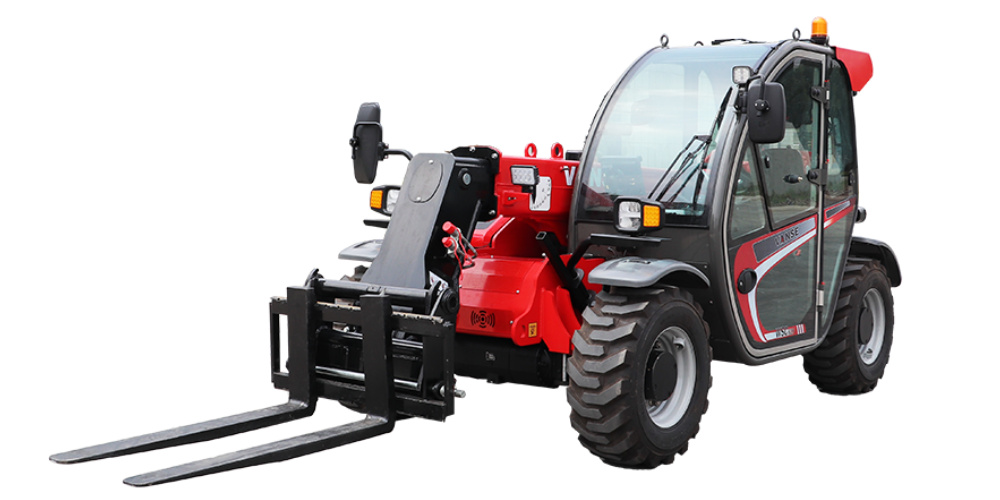
VANSE 625 6m Telescopic Handler
Designed for efficient material handling and stacking in warehouses, factories, and confined job sites, offering compact maneuverability and reliable performance.

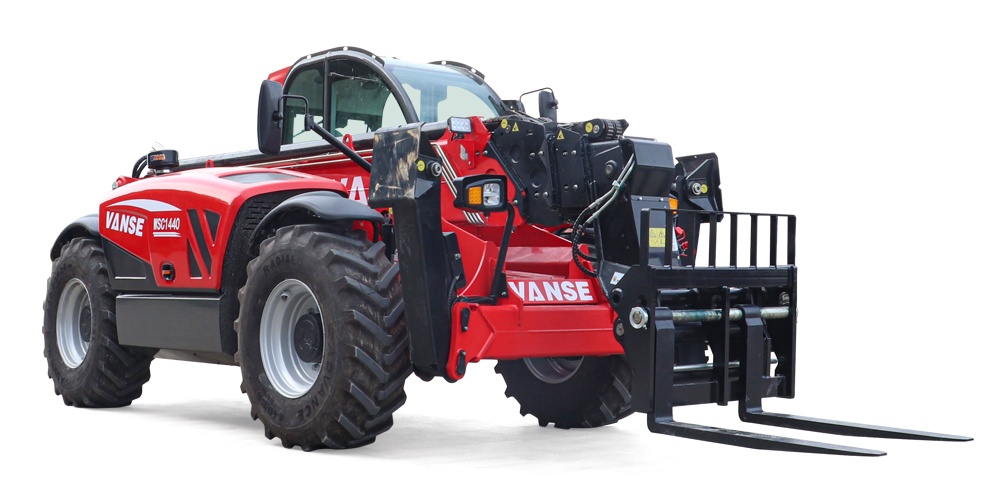
VANSE 735 7m Telescopic Handler
A balanced mid-duty solution for construction, agriculture, logistics, and warehousing, combining stable lifting, strong traction, and everyday versatility.


About the Author:
The VANSE team is a group of experienced professionals specializing in construction machinery research, manufacturing, and technical support. With deep industry knowledge and hands-on experience, our engineers and product specialists share practical insights on equipment selection, operation, maintenance, and industry trends.
Share
You May Also Interest
-

22 October, 2026
Telehandler for Grain Handling on Large Modern Farm Sites
Explore telehandler grain handling options in the United States, including suppliers, specs, farm uses, and cost-saving buying advice for grain operations.
-
21 October, 2026
Telehandler vs All Terrain Forklift: Which Lifts Better
Telehandler vs all terrain forklift in the United States: compare reach, lifting, terrain use, costs, and supplier options for smarter equipment buying.
-
20 October, 2026
10 Ton Telehandler: Extreme Lifting for Major Industrial
Explore 10-ton telehandler options in the United States, top suppliers, buying tips, applications, and service support for major lifting projects.
-
19 October, 2026
Telehandler for Demolition: Safe Structural Dismantling
Explore telehandler demolition options in the United States, including suppliers, attachments, safety, market trends, and cost-effective sourcing advice.