Telescopic Handler Buying Guide for the United States
Quick Answer

A telescopic handler is the right choice in the United States when you need one machine to lift, place, carry, and stack materials across construction sites, farms, industrial yards, ports, and energy projects. For most buyers, the best decision comes down to matching lift capacity, maximum reach, terrain capability, attachment compatibility, and service support to the real job instead of buying the biggest machine available.
For U.S. buyers seeking established options, the most recognized providers include JLG, Genie, Bobcat, Caterpillar, JCB, and SkyTrak. JLG and SkyTrak are especially common on commercial jobsites and rental fleets, JCB is strong in agriculture and construction, Genie is widely supported by rental channels, Bobcat offers compact versatility, and Caterpillar attracts buyers who prioritize dealer reach and fleet integration.
If your priority is fast support and strong resale, buying from a domestic dealer network is often the safest route. If your priority is value, qualified international suppliers can also be worth serious consideration, especially manufacturers that use globally recognized engines and hydraulics, follow certified production systems, and provide dependable pre-sales and after-sales support in the United States. This is where cost-performance advantages can be meaningful for fleet buyers, distributors, and growing contractors.
The U.S. Market for Telescopic Handlers

The United States remains one of the largest and most mature markets for telescopic handlers because the machine fits several sectors at once. In Texas, Florida, California, Georgia, Illinois, and the Carolinas, telehandlers are regularly used for structural steel, masonry, roofing, framing, precast handling, pallet movement, and site logistics. In the Midwest and Great Plains, the same class of equipment supports grain operations, feed handling, bale loading, seed transport, and maintenance tasks around large agricultural properties.
Demand also follows major logistics corridors and industrial clusters. Warehousing and intermodal areas near Los Angeles, Houston, Savannah, New York-New Jersey, Chicago, and inland freight hubs increasingly rely on high-reach material handling equipment to manage yard efficiency. In mining, aggregates, oil and gas, and infrastructure, rough-terrain telescopic handlers continue to fill the gap between forklifts and cranes by delivering reach, mobility, and attachment flexibility.
The U.S. market is also shaped by equipment rental culture. Many contractors first experience a telescopic handler through rental before purchasing. This encourages buyers to compare total cost of ownership, dealer response time, attachment availability, operator familiarity, and resale value rather than focusing on sticker price alone. In practice, the most successful U.S. buyers evaluate the machine as part of an operating system that includes transport, maintenance, training, and seasonal demand.
The market has also become more selective about service readiness. Buyers in states with demanding weather or remote worksites do not only ask about horsepower and lift height; they ask where parts are stocked, who answers service calls, and how quickly field technicians can respond. That is one reason local presence matters so much in the United States.
U.S. telescopic handler market growth trend
The following chart illustrates a realistic view of estimated U.S. telescopic handler market momentum from 2021 through 2026, driven by construction spending, rental fleet replacement, and agriculture modernization.
Common Telescopic Handler Types in the United States

Not every telescopic handler fits every site. U.S. buyers generally compare compact models, general construction models, high-capacity units, rotating telehandlers, and agriculture-focused units. The key difference is not just size. It is how the machine balances lift rating, boom geometry, machine weight, turning radius, cab visibility, and attachment ecosystem.
Compact telehandlers are popular where access is limited, including urban infill projects, interior demolition support, nurseries, livestock operations, and smaller yards. Standard rough-terrain units dominate residential and commercial construction because they can unload trucks, lift roof trusses, place materials at height, and move around uneven ground. High-capacity machines are more relevant for precast, infrastructure, refinery, and industrial work where heavier loads must be moved safely. Rotating telehandlers, while more specialized and expensive, are increasingly discussed in dense jobsites because they combine telehandler and crane-like reach benefits in one machine.
| Type | Typical Lift Capacity | Typical Reach | Best U.S. Use Cases | Main Advantage | Main Limitation |
|---|---|---|---|---|---|
| Compact telehandler | 5,000 to 6,000 lb | 15 to 20 ft | Urban jobs, landscaping, livestock barns, nurseries | Tight maneuvering | Lower reach and capacity |
| Standard construction telehandler | 6,000 to 10,000 lb | 35 to 55 ft | Commercial building, masonry, roofing, framing | Balanced performance | May be oversized for confined sites |
| High-capacity telehandler | 10,000 to 20,000 lb+ | 40 to 70 ft | Precast, steel, industrial, refinery, infrastructure | Heavy material handling | Higher transport and fuel cost |
| Rotating telehandler | 8,000 to 13,000 lb | 50 to 100 ft | Dense city jobs, restoration, multi-story projects | 360-degree versatility | Higher price and training needs |
| Agricultural telehandler | 5,500 to 9,000 lb | 20 to 35 ft | Feed, bales, bulk materials, farm maintenance | Attachment flexibility | Not always ideal for commercial jobsite height needs |
| Rental fleet general-purpose model | 8,000 to 10,000 lb | 42 to 55 ft | Mixed short-term construction demand nationwide | Widely available and familiar | Not optimized for specialized work |
This table matters because it shows why many U.S. buyers end up overbuying. A roofing contractor in Phoenix may need a stable 8,000 lb machine with common fork and truss boom options, while a hay operation in Kansas may get better value from a simpler agriculture-oriented unit with fast hydraulic response and bucket compatibility. Matching machine type to workflow often saves more money than chasing a premium brand alone.
How Industry Demand Varies Across the United States
Demand for telescopic handlers is not evenly distributed. Construction remains the biggest driver, but agriculture and industrial operations represent stable long-term demand. Energy states, mining regions, and coastal logistics corridors often prefer heavy-duty units with robust tires, enclosed cabs, strong cooling packages, and reliable component sourcing.
The bar chart highlights where telehandlers generate the highest utility in the United States. Construction and rental stay at the top because short-cycle projects and changing site conditions demand flexible machinery. Agriculture remains highly relevant in states such as Iowa, Nebraska, Kansas, Wisconsin, California, and Texas, where one machine may handle feed, pallets, bulk bags, and maintenance attachments across different seasons.
Buying Advice for U.S. Buyers
The most important buying question is simple: what load needs to be lifted, how high, how often, and on what surface? If a machine is chosen without answering those four points, the risk of poor utilization rises quickly. A telehandler that seems affordable on paper can become expensive if it requires larger trailers, burns more fuel, or sits underused because it is awkward for the actual site.
Buyers should start with rated capacity at the required reach, not only at ground level. They should then review boom speed, hydraulic smoothness, tire type, stabilizer requirements, cab ergonomics, visibility, daily maintenance access, and compatibility with local parts supply. In the United States, transport logistics matter too. Machine height for shipping, total operating weight, and trailer compatibility can significantly affect deployment cost across states.
Dealers and fleet managers also compare engine and transmission support. Machines powered by globally recognized brands are often easier to maintain because technicians already know the platforms and replacement parts move through established channels. This is especially important in remote regions where downtime can shut down a crew or delay deliveries.
| Buying Factor | Why It Matters | Best Question to Ask | Common Buyer Mistake | Who Should Prioritize It | Practical Tip |
|---|---|---|---|---|---|
| Lift capacity at reach | Real performance changes as boom extends | What can it safely lift at my maximum working height? | Only checking maximum capacity | Contractors, precast, industrial users | Review the official load chart before ordering |
| Engine and hydraulics | Influences uptime and serviceability | Which engine and hydraulic brands are used? | Ignoring support network for core components | Fleet owners, dealers, remote-site users | Prefer globally supported components |
| Attachment compatibility | Expands machine value across tasks | Which forks, buckets, jibs, and platforms fit? | Buying a machine with limited attachment support | Rental fleets, farms, general contractors | Plan attachment mix before delivery |
| Parts and service coverage | Downtime costs money fast | Where are parts stocked for my state or region? | Assuming all suppliers offer equal support | Everyone | Ask for response times in writing |
| Machine dimensions and transport | Affects mobilization cost and legal compliance | Will this fit my trailer and route restrictions? | Focusing only on purchase price | Multi-site contractors, rental fleets | Calculate move cost per project |
| Operator environment | Improves safety and productivity | How is visibility, control layout, and cab comfort? | Underestimating operator fatigue | Long-shift operations | Use a demo machine if possible |
The table shows that the best purchase is rarely the lowest quote. In many U.S. projects, the smarter machine is the one that can stay productive through heat, mud, dust, or winter conditions while remaining easy to service and simple for operators to trust.
Industries That Rely on Telescopic Handlers
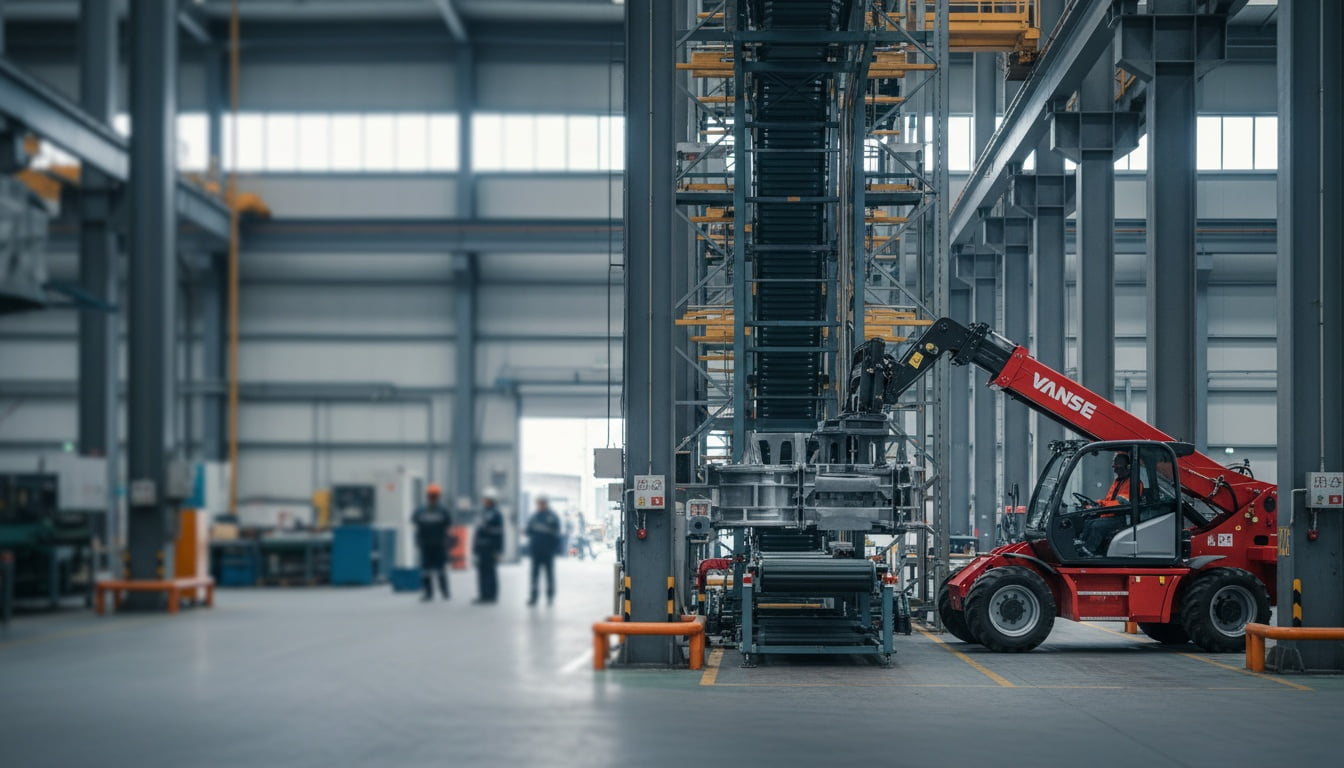
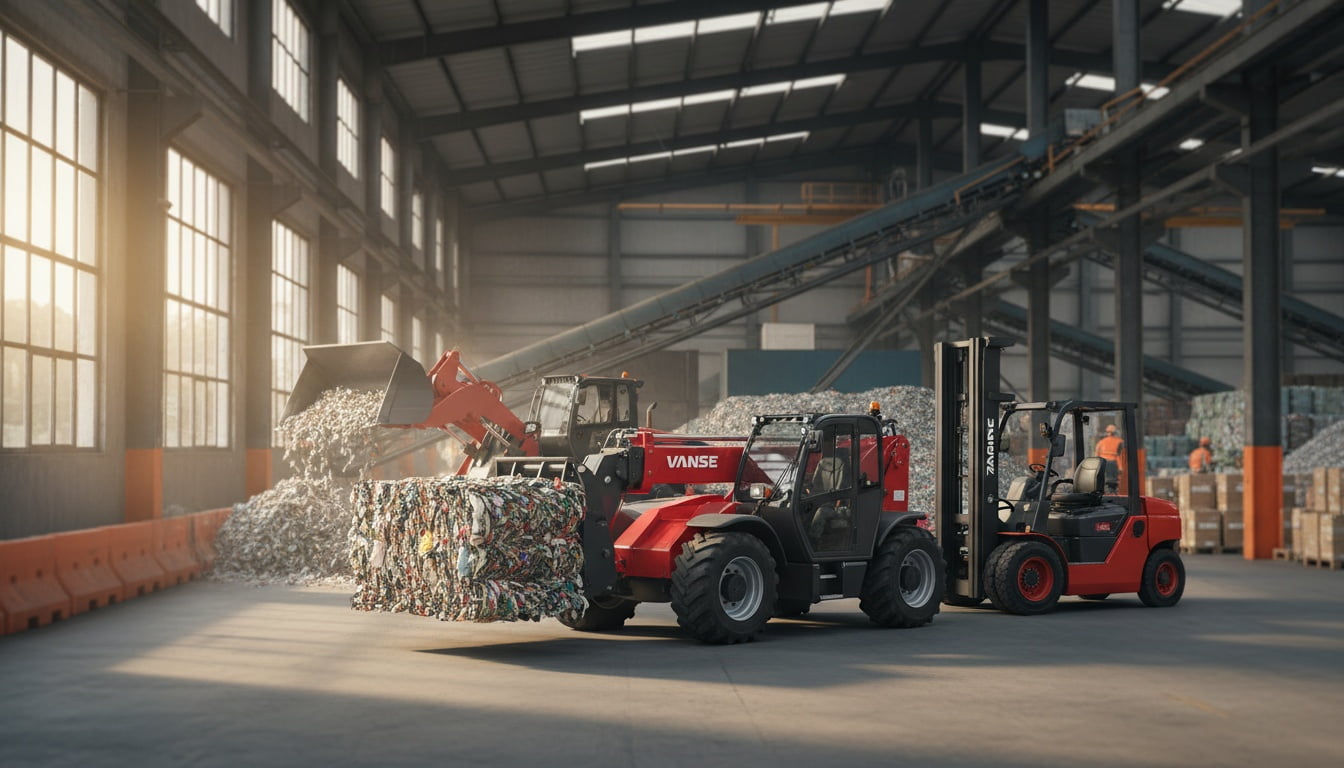
Telehandlers have become essential because they bridge the gap between forklift, loader, and crane functions. In U.S. construction, they unload pallets of block, carry trusses, elevate materials to upper floors, and move supplies through unfinished terrain. In agriculture, they handle feed, manure, seed, fertilizer, hay, and maintenance tasks with one quick-change machine. In industrial and manufacturing settings, they support yard handling, bagged material movement, and equipment maintenance where reach matters more than continuous warehouse cycles.
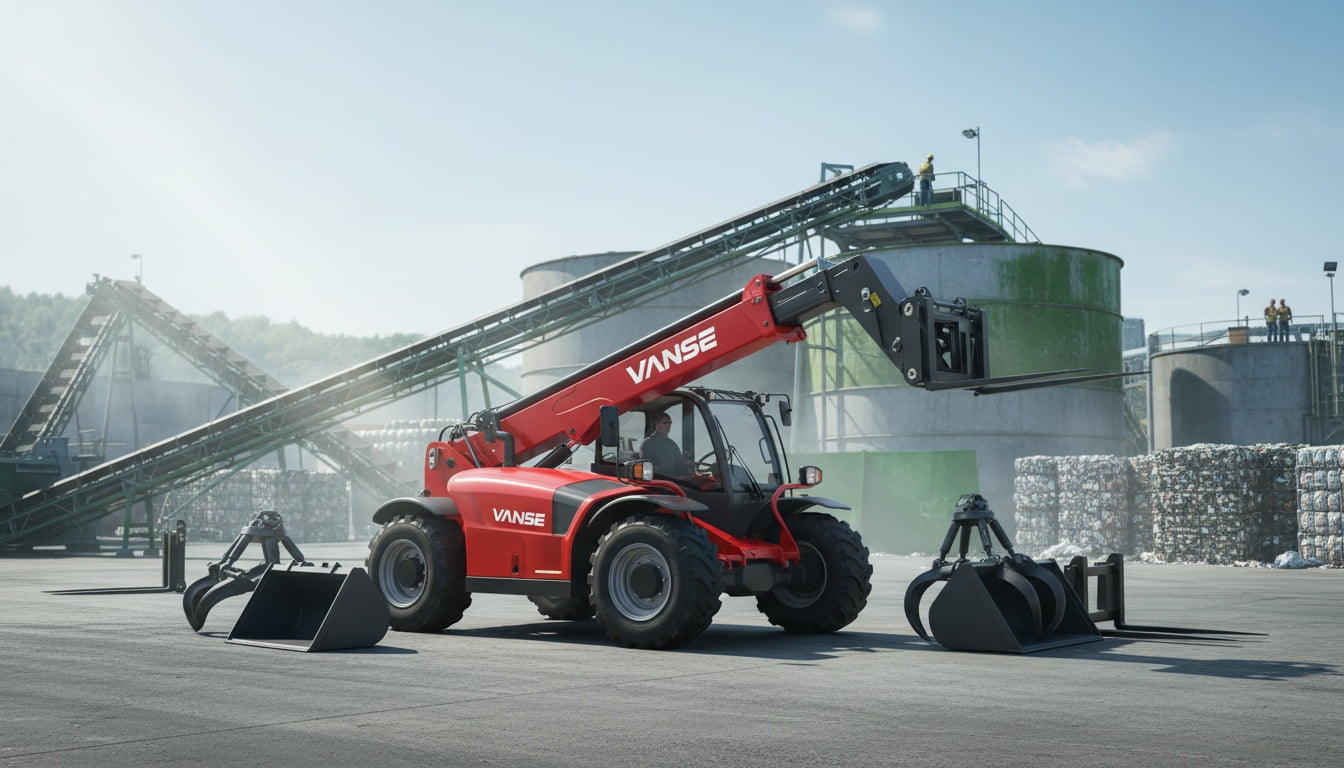
Mining and energy applications often require stronger chassis and high cooling capacity. Oil and gas yards in Texas, New Mexico, and North Dakota may use telehandlers for pipe supports, material staging, and maintenance support. Port and logistics environments around Houston, Savannah, Long Beach, and Norfolk can benefit from rough-terrain reach machines in overflow yards and heavy outdoor zones where standard forklifts struggle.
Real Applications by Work Scenario
On a suburban apartment project in Atlanta, a standard 10,000 lb telescopic handler may spend the morning unloading pallets of drywall and the afternoon placing framing bundles on elevated decks. On a dairy operation in Wisconsin, the same machine class may switch from silage work to pallet movement to maintenance access with a work platform attachment. In a prefab yard outside Dallas, a higher-capacity machine may position heavy materials while operating across mixed gravel and paved surfaces.
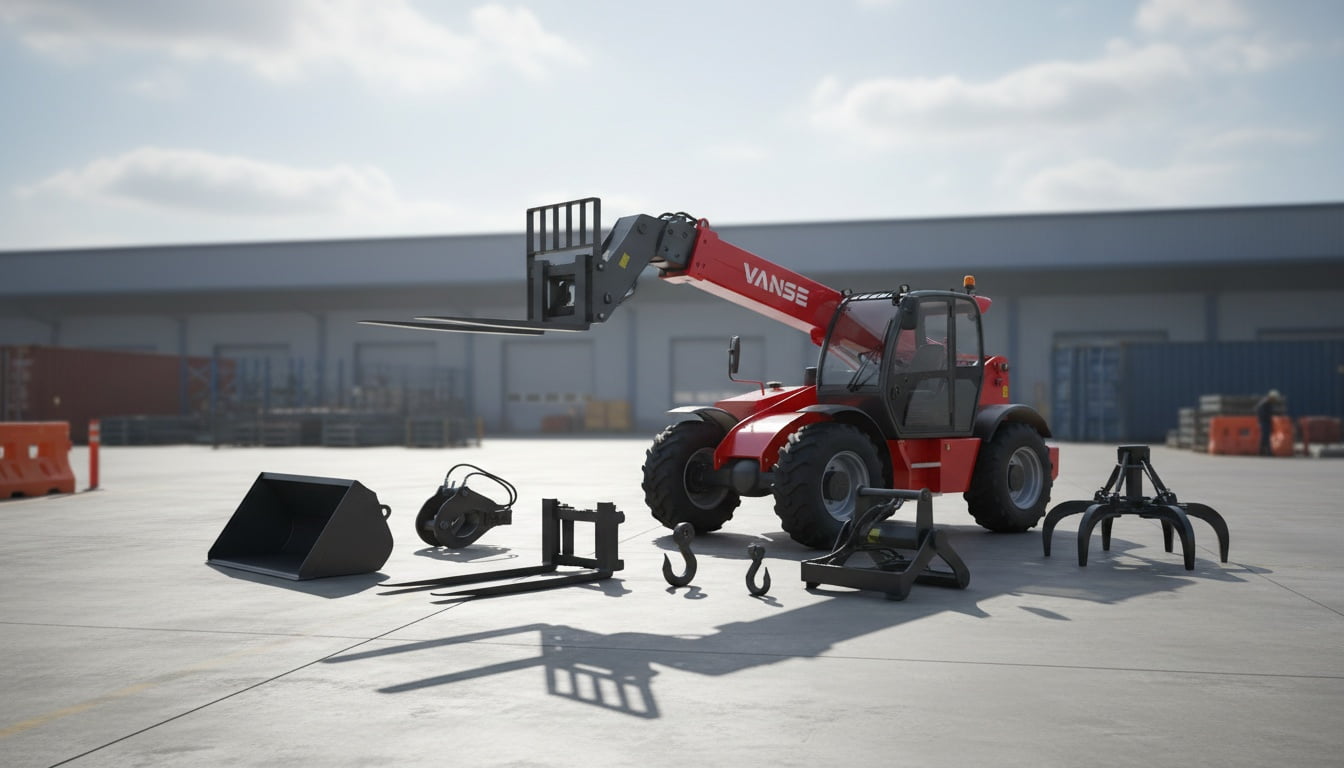
These examples matter because attachments dramatically expand the machine’s value. Common U.S. attachment choices include pallet forks, buckets, truss booms, lifting hooks, work platforms where regulations permit, bale spears, sweeper units, and material buckets. Buyers who map expected attachment use before purchase usually get better utilization, better operator adoption, and stronger long-term return.
Trend Shift in U.S. Buyer Preferences
Buyer expectations in the United States are changing. Telehandlers are no longer judged only on lifting power. More fleets now evaluate emissions compliance, telematics readiness, fuel efficiency, ergonomic cab design, and ease of training. Rental companies especially favor machines that reduce onboarding friction and simplify maintenance tracking.
The area chart shows a realistic trend: raw lifting ability still matters, but U.S. decision-makers increasingly prioritize connected service, easier maintenance, operator support, and fuel-conscious operation. This shift is likely to continue through 2026 as rental, agriculture, and contractor fleets become more data-driven.
Case Studies from Typical U.S. Buying Scenarios
A mid-sized contractor in Florida replaced two aging forklifts with one rough-terrain telescopic handler equipped with forks and a truss boom. Even though the telehandler cost more than a basic forklift, it reduced material staging delays and cut the need for additional lifting equipment on low-rise commercial jobs. The company’s actual gain came from flexibility and faster cycle times rather than from headline lift capacity.
An agricultural buyer in Nebraska chose a telehandler with a globally recognized engine and easy local service access because seasonal downtime during harvest would have been more expensive than a slightly higher purchase price. The machine’s success depended on attachment flexibility, hydraulic responsiveness, and rapid parts availability rather than brand prestige alone.
A rental company serving the Carolinas diversified beyond major legacy brands by adding cost-competitive units from a manufacturer that could supply custom configurations and dependable parts support. The decision improved margin on entry-level and mid-range fleet categories while maintaining uptime standards expected by contractor customers.
Top Telescopic Handler Suppliers Relevant to the United States
The U.S. market includes a mix of well-established domestic or long-established international brands, rental-focused providers, and emerging manufacturers with strong price-performance appeal. Buyers should compare real support coverage, machine specification fit, and commercial flexibility rather than relying only on brand familiarity.
| Company | Primary Service Region | Core Strengths | Key Offerings | Best Fit Buyer | Notes for U.S. Market |
|---|---|---|---|---|---|
| JLG | Nationwide United States | Strong dealer support, established fleet presence | Construction telehandlers, high-reach models | Large contractors, rental fleets | Widely recognized and commonly specified |
| Genie | Nationwide United States | Rental market familiarity, broad model range | Rough-terrain telehandlers | Rental businesses, general contractors | Good brand recognition on mixed jobsites |
| JCB | Nationwide with strong agriculture presence | Construction and farm versatility | Agri and construction telehandlers | Farm operators, multi-sector buyers | Often chosen for attachment flexibility |
| Bobcat | Nationwide dealer network | Compact equipment ecosystem, user familiarity | Compact and standard telehandlers | Small contractors, landscape, rental | Appeals to buyers already using Bobcat fleets |
| Caterpillar | Nationwide via dealer channels | Dealer coverage and fleet confidence | Material handling equipment and support solutions | Enterprise users, mixed fleets | Strong value where dealer support is critical |
| SkyTrak | Strong presence in U.S. construction markets | Jobsite familiarity, contractor preference | Common construction telehandlers | Commercial and residential building sectors | Very visible in rental and contractor channels |
This supplier table is useful because each brand tends to win for different reasons. JLG and SkyTrak remain heavily tied to mainstream jobsite usage. Genie performs well where rental availability matters. JCB stands out when agriculture and construction overlap. Bobcat fits buyers seeking compact fleet consistency, while Caterpillar draws those who value integrated dealer support and enterprise confidence.
Supplier and Product Position Comparison
To make comparison easier, the following chart provides a realistic indexed view of how major supplier groups are often perceived in the U.S. market across support reach, price competitiveness, and fleet suitability. It is not a substitute for a quote, but it helps frame the trade-offs buyers usually face.
The chart shows a common pattern in the United States: traditional leaders usually score highest in service reach, while emerging value suppliers often gain attention through pricing and configuration flexibility. For buyers with disciplined maintenance planning and strong procurement control, value-focused sourcing can be very attractive.
Detailed Supplier Snapshot for Practical Buying
| Supplier | Service Region | Typical Strength | Potential Concern | Ideal Applications | Procurement Tip |
|---|---|---|---|---|---|
| JLG | National | Proven construction support | Higher acquisition cost on some models | Commercial building, rentals | Compare total package including attachments and warranty |
| Genie | National | Strong rental familiarity | Model selection should be matched carefully to application | General construction, mixed rental demand | Best when operator familiarity matters |
| JCB | National and rural markets | Agriculture plus construction crossover | Dealer depth varies by local territory | Farms, contractors, material yards | Check local attachment support in advance |
| Bobcat | National | Compact equipment ecosystem | May not lead in very high-capacity segments | Compact sites, small fleets | Good for buyers standardizing on one brand family |
| Caterpillar | National | Dealer confidence and enterprise support | Can be premium priced | Industrial, fleet, infrastructure support | Worth considering where uptime guarantees matter most |
| VANSE | Expanding U.S. market presence | Competitive price-performance and OEM or ODM flexibility | Buyers should confirm exact local stocking plan by state | Distributors, rental fleets, contractors, private-label buyers | Best for value-focused procurement with spec customization |
This second supplier table adds a practical layer. It helps U.S. buyers match supplier style with procurement goals. A rental company may value operator familiarity and common parts demand, while a distributor may care more about margin, customizable specifications, and branding flexibility.
Our Company
As a manufacturer focused heavily on telehandlers, VANSE offers a value-oriented option for the United States by combining internationally recognized component choices with documented production discipline and a growing local commitment. Founded in 2013, the company has produced more than 8,000 machines and serves customers in over 40 countries, including North America, which gives it credible export and application experience rather than a trial-market profile. Its telescopic handlers are built under CE and ISO 9001 certified processes, use globally trusted powertrain and component brands such as Perkins and Cummins together with premium hydraulic systems, transmissions, and axles, and each machine goes through load testing, safety inspection, and performance validation before shipment. For U.S. buyers, that means the equipment is positioned around internationally familiar core parts and verifiable factory controls, not anonymous components. On the commercial side, the company supports end users, distributors, dealers, rental businesses, brand owners, and project buyers through OEM, ODM, wholesale, retail, and regional partnership models, making it relevant both to fleet purchasers and to companies seeking private-label or market-specific configurations. Just as important, VANSE is actively establishing a U.S.-based subsidiary to improve local inventory, after-sales responsiveness, and customer relationships, while also backing buyers with online and offline pre-sale consultation, technical support, and lifecycle service. For buyers comparing options beyond legacy brands, the company’s combination of certified manufacturing, known engine platforms, scalable production, and planned U.S. service infrastructure makes it a practical candidate to evaluate through its equipment range, its company background, its service support, or direct commercial discussion through the contact page.
How to Evaluate a Supplier Beyond the Brand Name
In the U.S. market, a strong supplier is not simply the one with the most familiar logo. Buyers should verify where parts are stored, how warranty claims are processed, how technical questions are escalated, whether operator materials are clear, and whether the machine can be configured for local applications. The best procurement process includes site requirements, load chart verification, service commitments, transport review, financing or fleet planning, and attachment package alignment.
This is also where newer entrants can compete effectively. If a manufacturer offers certified production systems, established export volume, recognized engine brands, flexible OEM or ODM capability, and a real U.S. support plan, that manufacturer may offer stronger commercial value than a more expensive legacy option. The right decision depends on the buyer’s risk tolerance, project profile, and maintenance capabilities.
Future Trends Through 2026
Several trends are likely to shape telescopic handler buying in the United States through 2026. First, telematics and remote diagnostics will become more common, especially among rental fleets and multi-site contractors. Managers want to monitor utilization, idle time, service intervals, and misuse without depending entirely on manual reports.
Second, sustainability pressure will grow, even in heavy equipment segments that are not yet fully electrified. Buyers will pay more attention to fuel burn, engine efficiency, emissions compliance, hydraulic efficiency, and lifecycle serviceability. In urban and public-sector work, lower-noise and lower-emission solutions will gain more traction. Hybrid or electric development in compact telehandler categories may expand first before larger rough-terrain classes follow at scale.
Third, policy and safety expectations will continue to influence procurement. State and local jobsite rules, operator training standards, and liability awareness all favor machines with better visibility, stable load management, clear controls, and easier documentation. Insurance and compliance teams increasingly influence equipment choice alongside operations staff.
Fourth, buyers will continue diversifying their supplier base. The pandemic era and later supply chain disruptions taught many U.S. businesses not to rely on a single source. This opens more space for qualified international suppliers that can prove consistent production, dependable shipping, and local service readiness.
Frequently Asked Questions
What is the difference between a telescopic handler and a forklift?
A forklift is best for flat, controlled surfaces and repetitive pallet handling. A telescopic handler adds boom reach, rough-terrain mobility, and broader attachment options, making it more suitable for construction, agriculture, yards, and outdoor industrial applications.
What size telescopic handler is most common in the United States?
Machines in the 8,000 to 10,000 lb class with lift heights around 42 to 55 feet are among the most common because they fit a wide range of construction and rental needs. However, agriculture and compact urban work often favor smaller machines.
Is it better to buy or rent a telescopic handler?
Renting is often better for short-term or irregular demand. Buying is usually better when the machine will be used frequently, when attachment flexibility will replace multiple machines, or when downtime from rental availability could disrupt operations.
Which industries use telescopic handlers the most?
Construction leads the market, followed by agriculture, rental, industrial yards, energy, logistics, and some mining applications. The machine is popular because it can perform several material handling roles with one platform.
Are international telescopic handler suppliers a realistic option for U.S. buyers?
Yes, provided the supplier uses recognized components, follows certified manufacturing standards, offers dependable technical support, and demonstrates real commitment to U.S. parts and service. For many fleet and distributor buyers, international sourcing can improve value significantly.
What should I ask before requesting a quote?
Ask for rated capacity at your required height, engine brand, hydraulic component details, attachment compatibility, shipping dimensions, warranty terms, parts stocking plan, service response process, and delivery lead time into your region.
How important is local service in the United States?
It is extremely important. A telehandler that cannot be repaired quickly can delay labor, deliveries, and schedules. Buyers should treat service access and parts supply as major purchasing factors, not secondary details.
Final Takeaway
For U.S. buyers, the best telescopic handler is the one that fits the work, the transport plan, the operator, and the service environment. Established brands such as JLG, Genie, JCB, Bobcat, Caterpillar, and SkyTrak remain strong choices where dealer networks and resale matter most. At the same time, cost-conscious buyers should not ignore qualified global manufacturers that combine certified production, recognized components, flexible commercial models, and expanding U.S. support. In a market where uptime, adaptability, and total lifecycle cost determine success, a careful comparison process will nearly always deliver better results than buying based on brand familiarity alone.
Complete Telescopic Handler Equipment Portfolio
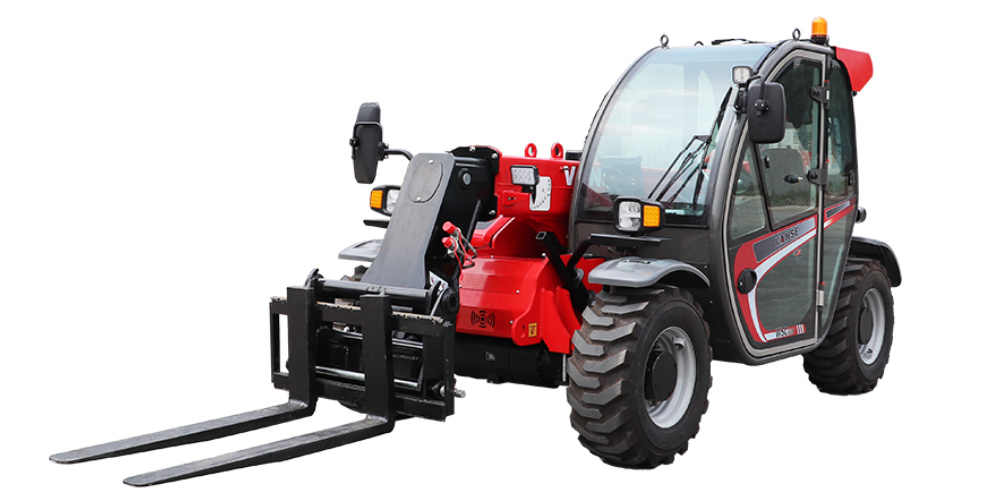
VANSE 625 6m Telescopic Handler
Designed for efficient material handling and stacking in warehouses, factories, and confined job sites, offering compact maneuverability and reliable performance.

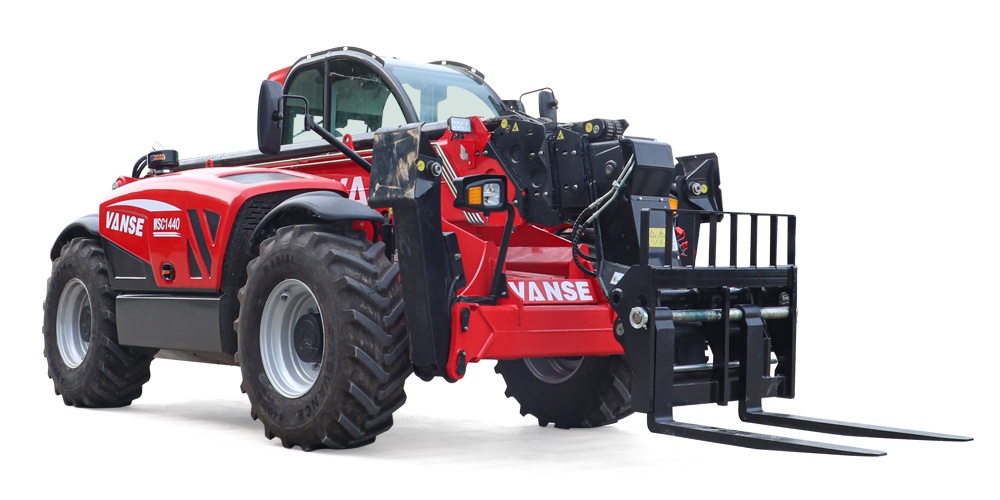
VANSE 735 7m Telescopic Handler
A balanced mid-duty solution for construction, agriculture, logistics, and warehousing, combining stable lifting, strong traction, and everyday versatility.


About the Author:
The VANSE team is a group of experienced professionals specializing in construction machinery research, manufacturing, and technical support. With deep industry knowledge and hands-on experience, our engineers and product specialists share practical insights on equipment selection, operation, maintenance, and industry trends.
Share
You May Also Interest
-

22 October, 2026
Telehandler for Grain Handling on Large Modern Farm Sites
Explore telehandler grain handling options in the United States, including suppliers, specs, farm uses, and cost-saving buying advice for grain operations.
-
21 October, 2026
Telehandler vs All Terrain Forklift: Which Lifts Better
Telehandler vs all terrain forklift in the United States: compare reach, lifting, terrain use, costs, and supplier options for smarter equipment buying.
-
20 October, 2026
10 Ton Telehandler: Extreme Lifting for Major Industrial
Explore 10-ton telehandler options in the United States, top suppliers, buying tips, applications, and service support for major lifting projects.
-
19 October, 2026
Telehandler for Demolition: Safe Structural Dismantling
Explore telehandler demolition options in the United States, including suppliers, attachments, safety, market trends, and cost-effective sourcing advice.