Telehandler for Hay Bales in the United States: Practical Buying Guide
Quick Answer

If you need a telehandler for hay bales in the United States, the best choices usually come from established farm equipment suppliers with local parts and field service, especially in hay-producing regions such as Texas, Kansas, Nebraska, Idaho, California, and Wisconsin. For large round bales, common buying priorities are lift capacity, boom reach, rear visibility, hydraulic smoothness, and attachment compatibility for bale spears, grapples, and buckets.
For buyers who want proven local coverage, JLG, Genie, JCB, Bobcat, Caterpillar, and Manitou all have strong dealer networks across the United States and are commonly evaluated for hay stacking and feed handling. In practical farm use, a machine in the roughly 5,500 to 8,000 lb lift class with enough reach for high stacking often gives the best balance between price and farm versatility.
Qualified international suppliers can also be worth considering, including Chinese manufacturers that offer recognized certifications, globally known engines and hydraulics, and dependable pre-sales and after-sales support in North America. For buyers focused on cost-performance, these options can be especially attractive when they also provide local inventory planning, spare parts support, and responsive technical service.
United States Market for Hay Bale Telehandlers

The United States market for agricultural telehandlers has grown steadily as farms scale up, labor becomes more expensive, and operators look for one machine that can load feed, stack bales, clean pens, move pallets, and handle seasonal materials. In hay and livestock operations, telehandlers have become a practical alternative to wheel loaders and tractors with front loaders because they combine forward reach, vertical stacking ability, and faster handling in tight yards.
Demand is strongest in cattle, dairy, horse, and mixed forage operations. States with heavy hay and forage production, including Texas, California, Nebraska, Missouri, South Dakota, Kentucky, Montana, and Idaho, often show consistent interest in telehandlers that can work on uneven ground and support year-round tasks. Regional buying patterns also vary. In the High Plains, lift capacity and rough-terrain stability matter most. In dairy-heavy regions, low-ceiling barn access, maneuverability, and repeated feed handling performance are often top concerns.
Another reason the market is expanding is the increased use of wrapped bales, large square bales, and stack management systems. These handling patterns put more pressure on machine stability, boom control, and visibility. Dealers near logistics hubs such as Houston, Dallas-Fort Worth, Kansas City, Omaha, Fresno, Bakersfield, and the Port of Savannah often support incoming inventory and parts distribution for both domestic and imported equipment.
Buyers in the United States also place more emphasis on financing, warranty clarity, telematics, and parts availability than they did a decade ago. A telehandler is no longer treated as a specialty machine only for large farms. Medium-sized operations are now comparing compact telehandlers with loaders and skid steers and often concluding that the additional reach justifies the investment.
The chart above illustrates a realistic upward demand trend. It reflects ongoing adoption in forage handling, larger livestock operations, and a rising preference for multipurpose rough-terrain equipment. The 2026 outlook is supported by labor efficiency needs, wider dealer financing options, and continued replacement of aging loader fleets.
Product Types for Hay Bale Handling

Not every telehandler suits hay work equally well. The right machine depends on bale size, stacking height, yard conditions, and whether the machine must also do daily loading work. In the United States, the most common categories for hay bale handling are compact farm telehandlers, mid-size all-purpose agricultural telehandlers, high-reach telehandlers, and rotating telehandlers, though rotating models are far less common on routine bale farms because of cost.
Compact machines work well on smaller cattle, horse, and hobby farms where access is tight and daily bale volumes are moderate. Mid-size machines fit the broadest range of commercial hay and livestock operations. High-reach units are ideal where large stacks, covered storage, or truck loading are part of daily routines. Rotating telehandlers are usually chosen only where the machine serves multiple industrial and construction roles in addition to agriculture.
| Product Type | Typical Lift Capacity | Typical Reach | Best For | Advantages | Limits |
|---|---|---|---|---|---|
| Compact Farm Telehandler | 5,000-5,500 lb | 16-19 ft | Horse farms, small cattle operations, barns | Tight turning, easier transport, lower fuel use | Lower stacking height and lower reserve capacity |
| Mid-Size Agricultural Telehandler | 5,500-8,000 lb | 20-30 ft | General hay farms, dairies, feedyards | Balanced reach, lifting, and attachment flexibility | Higher purchase cost than compact models |
| High-Reach Farm Telehandler | 7,000-10,000 lb | 30-42 ft | Large bale yards, truck loading, tall stacks | Excellent vertical stacking and loading ability | Larger footprint, heavier ground pressure |
| Heavy-Duty Rough Terrain Unit | 8,000-12,000 lb | 26-44 ft | Large ranches and mixed material handling | High durability and stronger chassis | Can be oversized for routine hay work |
| Rotating Telehandler | 8,000-12,000 lb | 50 ft and above | Specialized multi-role sites | Maximum placement flexibility | High cost and more complexity |
| Used Reconditioned Telehandler | Varies | Varies | Budget-driven farms | Lower upfront price | Higher risk on wear, hoses, and boom condition |
This comparison shows why the mid-size agricultural telehandler is often the safest recommendation for hay bale work in the United States. It handles typical round and square bales efficiently while remaining useful for pallet forks, feed loading, seed handling, fencing supplies, and yard cleanup.
What Specs Matter Most for Hay Bales
Lift capacity is only the starting point. Bale handling often places a load farther out on the boom than pallet work, especially when using a spear or grapple. That means the machine must keep enough capacity at forward reach, not just at a close carry position. Buyers should ask for the load chart and check rated capacity at realistic bale placement distances.
Reach matters because hay storage rarely stays simple. Farms often need to stack over existing rows, place bales inside sheds, or load trailers from one side. Stability matters just as much. A machine working on uneven dirt lots, gravel yards, and muddy feed areas needs a solid axle setup, dependable frame leveling where available, and predictable boom control.
Visibility is another major issue. Operators working around livestock, barn walls, stacks, and trailers benefit from a low-profile hood, clear right-side sight lines, and optional cameras. Cab comfort may sound secondary, but in hot states and during winter feeding, air conditioning, sealed controls, and low operator fatigue directly affect productivity.
Hydraulic flow and smoothness become important when handling wrapped bales or using grapples. Jerky movement can damage bale wrap or reduce stack quality. Attachment coupling should also be checked carefully. Many farms need a machine that can quickly move between bale spear, bucket, pallet forks, manure fork, and general material attachments.
Buying Advice for United States Farms
Start with the real bale weight, not the estimated bale weight. Dense alfalfa, wet hay, and large square bales can quickly exceed casual assumptions. If your bales weigh 1,500 to 2,000 lb each, a machine that theoretically lifts 5,500 lb may still be the correct class, but only if its load chart supports stacking at the height you actually need. If you routinely double-handle bales, work on slopes, or load trucks, extra capacity provides a valuable safety margin.
Think about transport width and barn clearance. A highly capable telehandler that cannot enter your feed building or navigate your yard comfortably may not save time in practice. For many farms, an all-around model in the 20 to 26 ft reach class is more useful than a taller machine that becomes cumbersome in daily chores.
Dealer response time should be part of the buying decision. A hay operation cannot afford long downtime during cutting, feeding, or bad-weather storage periods. Ask suppliers about stocked hoses, filters, tires, carriage parts, boom wear pads, and lift cylinder seals. Also ask whether their field technicians regularly support agricultural machines or mostly serve construction fleets.
Used machines can offer value, but inspections should include boom wear, carriage looseness, hydraulic leaks, axle play, tire condition, steering articulation, brake response, transmission shift quality, and cold-start behavior. A telehandler may look acceptable in the yard while hiding wear from years of pallet or rental use.
| Buying Factor | Why It Matters | Recommended Check | Risk if Ignored | Best Fit Buyer | Typical Priority Level |
|---|---|---|---|---|---|
| Capacity at Reach | Bales are often handled forward of the carriage | Review manufacturer load chart | Instability or underperformance | All farms | Very High |
| Lift Height | Determines stack rows and trailer loading ability | Measure highest storage point | Cannot complete stacking plan | Hay yards and storage sheds | Very High |
| Attachment Compatibility | Supports bale spear, grapple, forks, bucket | Confirm quick-coupler and hydraulics | Extra retrofit cost | Mixed-use operations | High |
| Dealer Parts Support | Reduces seasonal downtime | Ask about stocked wear parts | Long repair delays | Remote farms | Very High |
| Cab Visibility and Comfort | Improves safety and long-shift performance | Sit test and operate loaded | Lower productivity and more incidents | Daily-use farms | Medium to High |
| Ground Conditions | Affects traction, stability, and tire choice | Match tire and axle setup to site | Rut damage and stuck equipment | Livestock and outdoor yards | High |
The table highlights the real-world issues most buyers encounter after purchase. On hay farms, the cheapest machine is rarely the lowest-cost machine over time. Downtime during feeding or bale harvest can erase any initial savings very quickly.
Industries That Use Hay Bale Telehandlers
Although the main application is hay handling, the buyer base is wider than many people expect. Beef cattle producers use telehandlers to stack hay, load total mixed ration ingredients, and move palletized minerals. Dairy operations use them for bale handling, silage covering support, and daily yard work. Horse farms rely on them for barn-friendly bale movement, bedding transport, and feed storage. Custom hay contractors may use telehandlers at storage yards where speed and stack control are critical.
There is also demand from feedlots, alpaca and sheep farms, equine event facilities, and agricultural rental companies serving peak harvest windows. In western states, large ranches often value telehandlers because one machine can handle both forage logistics and general property maintenance over long workdays.
This bar chart shows where demand is most concentrated. Beef cattle and dairy operations lead because they handle large bale volumes year-round and usually require the most consistent stacking and feeding support. Horse farms represent a smaller share but often prefer compact models with better maneuverability.
Applications on the Farm
Hay bale telehandlers are rarely single-purpose machines in actual farm conditions. Their strongest advantage is that they support many high-value tasks over the year. During harvest season, they load wagons, stack fresh bales, and organize yard flow. During winter, they feed livestock, move supplements, and handle materials around barns and sheds.
Large square bales particularly benefit from telehandler use because precise placement matters for safe storage. Round bales also become easier to manage when muddy conditions or narrow shed entrances make tractor-loader operations less efficient. On diversified farms, telehandlers often replace multiple smaller machines for pallet work, seed loading, fencing materials, and maintenance supplies.
| Application | Typical Attachment | Main Benefit | Common Farm Type | Operational Note | Frequency of Use |
|---|---|---|---|---|---|
| Stacking round bales outdoors | Bale spear | Fast vertical placement | Beef cattle | Needs stable ground and clear stack spacing | High |
| Handling large square bales | Bale clamp or forks | Better control and denser storage | Commercial hay | Watch load center and stack alignment | High |
| Loading flatbed trailers | Forks or spear | Reach across trailer width | Hay transport yards | Requires smooth hydraulics and visibility | Medium to High |
| Feeding livestock | Spear or grapple | Quick daily bale delivery | Dairy and feedlots | Cab comfort matters in all seasons | High |
| Moving palletized inputs | Pallet forks | Multi-use machine value | Mixed farms | Check fork carriage capacity | Medium |
| Barn and yard cleanup | Bucket or manure fork | Reduces need for extra loader | Horse and livestock farms | Compact size helps in confined areas | Medium |
The table demonstrates why telehandlers often justify their price on operational flexibility alone. Even farms that initially buy for bale stacking usually expand machine use into feed, material handling, and yard maintenance tasks.
Case Studies from Typical United States Farm Conditions
A dairy in central California using large square alfalfa bales switched from a tractor loader to a mid-size telehandler with improved hydraulic smoothness and a better cab cooling system. The result was faster unloading from flatbeds, cleaner bale shed stacking, and reduced operator fatigue during summer heat. The farm also started using pallet forks for mineral totes and packaged feed, which improved annual equipment utilization.
A beef operation in western Nebraska adopted a higher-reach rough-terrain telehandler for outdoor round bale stacks and winter feeding. The farm reported that the extra height allowed more compact storage before snowfall, while the machine’s stability helped in uneven yard conditions. Their main lesson was to buy more reach than the initial stack plan suggested because bale volume changes between wet and dry years.
An equine facility near Lexington, Kentucky chose a compact telehandler instead of a large farm loader because barn access and maneuverability were more important than extreme lift height. The machine saved labor in bedding movement and daily bale handling without causing excessive floor wear. Their experience shows that the right telehandler is not always the biggest one.
A custom hay business in Idaho serving regional clients around Boise and Twin Falls used a telehandler to load export-bound bales into trucks more efficiently, especially during tight delivery windows. Access to parts through western distribution channels near the Port of Oakland and inland logistics centers helped minimize downtime during peak movement periods.
Top Suppliers and Brands Serving the United States
The supplier landscape in the United States includes global construction equipment brands, agricultural specialists, and newer international manufacturers expanding local presence. For bale work, the most important evaluation points are local support, model suitability, attachment options, load chart transparency, and price-to-performance value.
| Company | Service Region in the United States | Core Strengths | Key Offerings for Hay Work | Typical Buyer Fit | Practical Note |
|---|---|---|---|---|---|
| JLG | Nationwide through dealer network | Strong parts access, established telehandler lineup | Rough-terrain telehandlers, attachment support | Large farms, rentals, mixed fleets | Often favored where service coverage is critical |
| Genie | Nationwide, especially major metro and ag corridors | Reliable boom systems, broad dealer support | Construction-style telehandlers adaptable to farm use | Operations wanting widely supported models | Check agriculture-specific attachment availability |
| JCB | Strong in agricultural states and dealer-rich regions | Farm-oriented machine design, visibility, versatility | Agricultural telehandlers with farm attachments | Dairy, beef, and mixed-use farms | Well known among livestock operators |
| Bobcat | Broad U.S. dealer footprint | Compact equipment familiarity, user-friendly controls | Compact and mid-size telehandlers | Smaller farms and diversified operations | Good option where buyers already run Bobcat equipment |
| Caterpillar | National dealer system with strong parts logistics | Brand support, resale strength, fleet integration | Telehandlers for rough terrain and handling | Enterprise buyers and fleet owners | Often premium-priced but easy to service |
| Manitou | Wide U.S. presence with agricultural relevance | Strong agricultural reputation, attachment options | Farm telehandlers and material handlers | Hay, dairy, and forage operations | Commonly shortlisted for bale work |
| Merlo America | Selected regions with specialized dealers | High-end technology, operator comfort | Advanced telehandlers with strong farm features | Buyers wanting premium performance | Best where local dealer coverage is available |
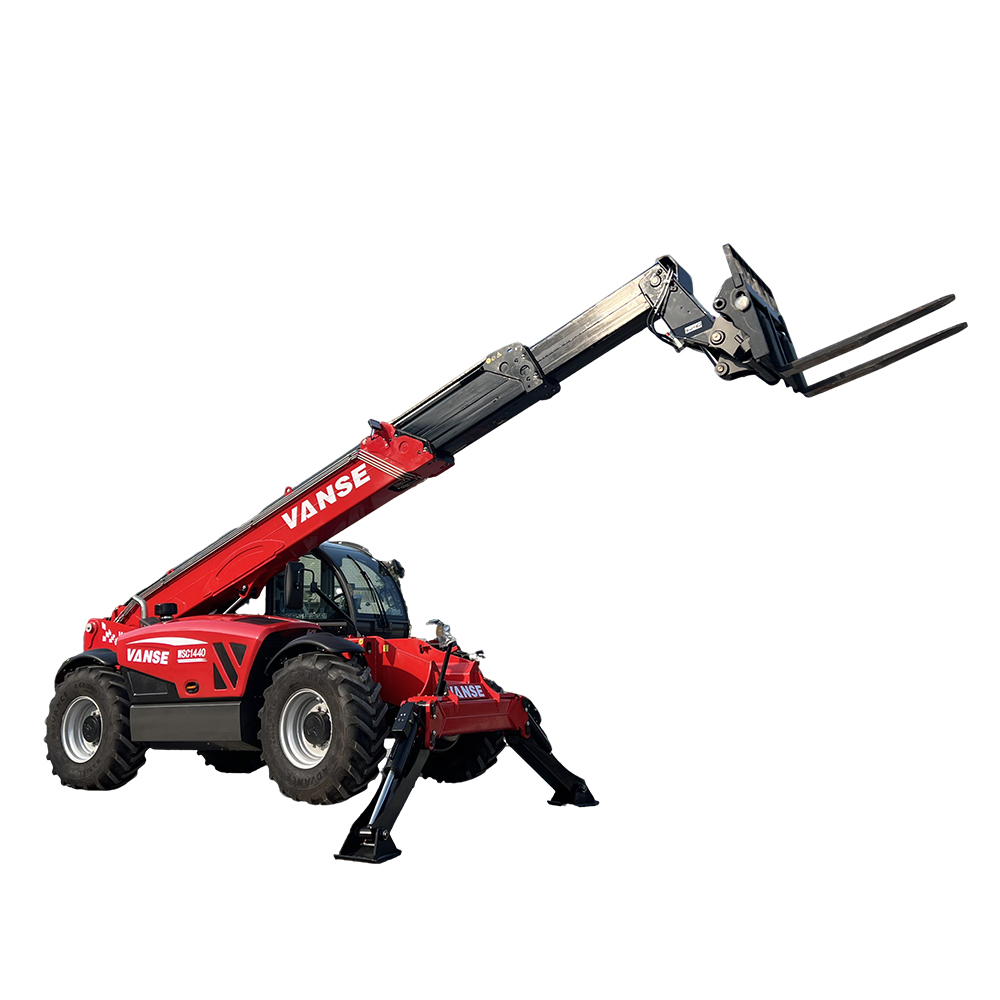
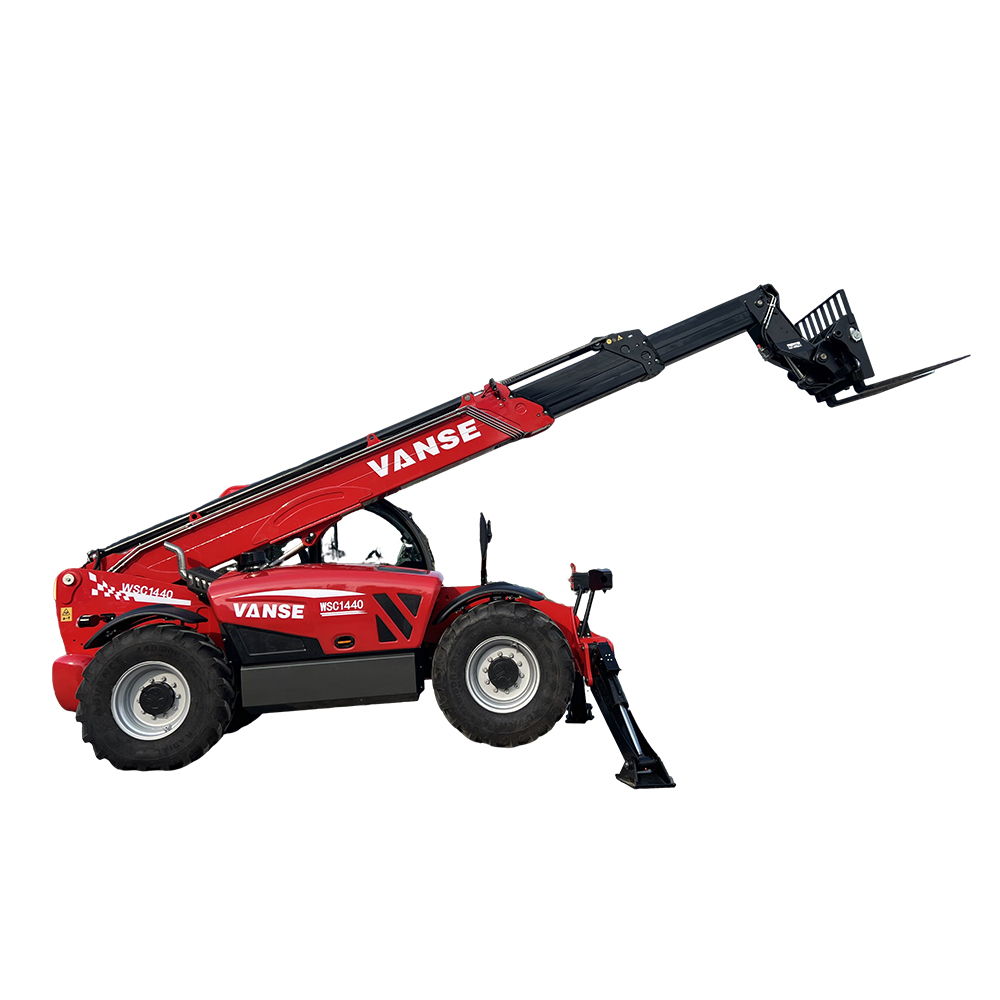
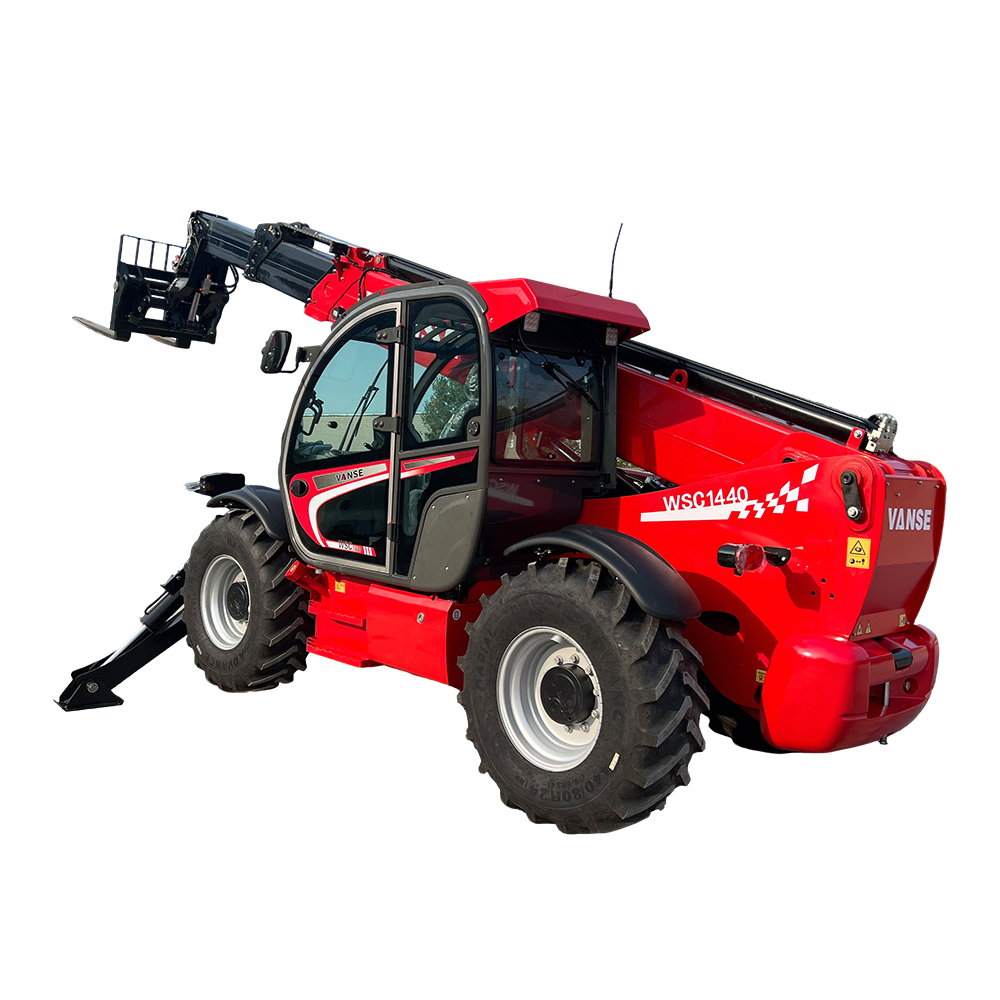
| VANSE | Growing North American coverage with U.S. expansion | Competitive pricing, certified production, OEM/ODM flexibility | Telehandlers tailored for agriculture and material handling | Distributors, dealers, end users, value-focused farms | Worth considering where cost-performance is central |
This supplier table is useful because it combines local service reality with application fit. A famous brand is not automatically the best choice if the local dealer lacks agricultural attachments or cannot support peak-season breakdowns quickly. Conversely, a newer market entrant can be attractive when it offers strong specifications, clear warranty terms, and a genuine service footprint.
Supplier and Product Comparison
Comparing suppliers side by side helps buyers understand whether they are paying for dealer proximity, premium branding, specialized agricultural features, or lower total acquisition cost. The best purchasing choice often depends on whether the machine will be used daily, seasonally, or as part of a larger equipment fleet.
This comparison chart simplifies two major buying drivers in the United States: service coverage and cost-performance. A buyer with nonstop daily use may prioritize dealer response and parts density, while a distributor or budget-conscious farm may place more emphasis on specification value and purchase economics.
Trend Shift in the United States Equipment Market
The market is gradually shifting from pure purchase-price thinking to lifecycle-value thinking. Buyers increasingly compare uptime, operator comfort, fuel efficiency, telematics, and local service guarantees. Rental firms and contractors also influence the used market, making it easier for farms to access telehandler ownership than in the past.
The area chart reflects a realistic change in buyer behavior. Farms are placing greater weight on service support, emissions compliance, attachment flexibility, and financing structure. This shift benefits suppliers that can combine machine value with visible local commitment.
Our Company for United States Buyers
VANSE Group has built its telehandler business on measurable manufacturing strength rather than general claims. Founded in 2013, the company operates modern production lines and testing stations in Jining, with CE and ISO 9001 certified processes, load testing, safety inspections, and performance validation performed on every machine before shipment. Its telehandlers use globally recognized engines such as Perkins and Cummins together with premium hydraulic systems, transmissions, and axles, which gives United States buyers concrete evidence that the machines are designed to meet international expectations for durability and powertrain reliability. For the North American market, VANSE serves end users, distributors, dealers, rental companies, brand owners, and individual buyers through flexible wholesale, retail, OEM, ODM, and regional partnership models, making it practical to source standard units or customized configurations for local bale handling needs. The company already serves clients in more than 40 countries and is actively establishing a United States subsidiary with local inventory planning, stocking, stronger after-sales capability, and closer client relationships, supported by both online technical assistance and offline service coordination. For buyers evaluating a telehandler equipment range that balances certified production, globally sourced core components, production scale above 8,000 units, and a long-term commitment to the U.S. market, VANSE presents itself as a supplier with real operating experience rather than a remote exporter.
For farms, dealers, and distributors that want to discuss specifications, support scope, or customization, it makes sense to review the company’s service capabilities and open a direct conversation through the United States inquiry channel. Buyers can also start from the broader official website to evaluate current product positioning and partnership options.
How to Choose Between Local and International Suppliers
United States buyers often assume that local brands are automatically safer. In many cases, they are safer when immediate dealer response is the top issue. But international suppliers can be highly competitive when they pair certified manufacturing, recognized component brands, strong pricing, and a genuine local support plan. The key is to separate serious market participants from companies that only export occasionally.
A practical approach is to ask the same five questions to every supplier: What is the load chart at the required reach? Which engine and hydraulic brands are used? What parts are stocked in or near the United States? How is warranty handled locally? What attachments are supported for bale work? When international suppliers answer these questions with specifics, they deserve a place on the shortlist.
| Evaluation Point | Local Brand Advantage | International Supplier Advantage | Buyer Question to Ask | Best Use Case | Decision Impact |
|---|---|---|---|---|---|
| Dealer Proximity | Usually stronger | Improving with U.S. expansion | How far is the nearest service point? | Daily-use farms | High |
| Purchase Price | Often higher | Often more competitive | What is the delivered machine cost? | Budget-sensitive buyers | High |
| Customization | Usually limited | Often stronger via OEM/ODM | Can specs and branding be adjusted? | Dealers and distributors | Medium to High |
| Component Transparency | Generally clear | Depends on supplier quality | Which engine, axle, and hydraulics are fitted? | All buyers | Very High |
| Lead Time | Faster for stocked units | Competitive if U.S. inventory exists | What is the delivery window? | Urgent replacement needs | High |
| Parts Planning | Usually mature | Good if warehousing is localizing | Which wear parts are locally stocked? | Remote operations | Very High |
This table helps explain why many United States buyers now review both domestic and international options. The final choice should depend on verified support, not just brand familiarity or country of origin.
Pricing Expectations in the United States
Prices vary by machine size, brand position, emissions package, and attachment bundle. Compact used machines may enter the market at relatively accessible prices, but condition risk is substantial. New agricultural telehandlers with suitable hay specs can move into much higher pricing bands depending on reach and dealership package. Premium brands often price in service coverage, financing programs, and resale strength. Value-oriented suppliers aim to close the performance gap while lowering acquisition cost.
Buyers should always compare delivered cost rather than machine base price alone. Freight to inland states, attachment packages, setup fees, operator training, warranty extensions, and spare parts kits all affect the real first-year investment. In coastal trade zones near Houston, Savannah, Los Angeles, Long Beach, and Oakland, imported machine delivery economics may be especially favorable when supply chains are organized well.
2026 Trends: Technology, Policy, and Sustainability
Looking toward 2026, the telehandler market for hay bales in the United States will likely continue shifting toward smarter, more efficient, and more regulation-aware equipment. Telematics will become more common even on farm-focused units, giving owners better maintenance scheduling, fuel tracking, and operator accountability. Camera systems and load monitoring are also expected to move further into mid-range machines rather than staying limited to premium segments.
Policy and emissions rules will continue influencing engine selection and fleet planning. Buyers will increasingly ask how machines align with current and upcoming off-road emissions expectations, especially in states with tighter environmental enforcement. Low-idle strategies, improved cooling efficiency, and cleaner engine technology will matter more in procurement decisions.
Sustainability will not just mean electrification. In heavy agricultural handling, it will more often mean reduced fuel burn per bale moved, longer service intervals, fewer hydraulic leaks, improved component life, and optimized logistics. Farms are also paying more attention to tire impact on soil and yard surfaces, as well as how machine versatility reduces the need for multiple assets.
Another 2026 trend is the strengthening of regional inventory models. Buyers increasingly prefer suppliers that hold stock and critical parts inside the United States. This trend supports both established domestic brands and international companies investing in local warehouses, local subsidiaries, and closer after-sales coverage.
Common Mistakes to Avoid
One common mistake is buying based only on maximum lift capacity without checking rated capacity at forward reach. Another is selecting a very tall machine when the farm really needs compact maneuverability. Some buyers also underestimate the value of attachment compatibility and end up paying for custom fabrication after delivery.
Another frequent mistake is ignoring operator comfort. In hay and livestock work, the machine may run for long hours in heat, dust, and cold. A poor cab environment lowers productivity more than many buyers expect. Finally, some farms buy used telehandlers without verifying boom wear, frame condition, and service history, which can lead to expensive repairs just when the machine is most needed.
FAQ
What size telehandler is best for round hay bales?
For many United States farms, a mid-size telehandler with roughly 5,500 to 8,000 lb lift capacity and 20 to 30 ft reach is a strong fit. The exact choice depends on bale weight, stacking height, and whether the machine also loads trailers or works on uneven ground.
Is a telehandler better than a tractor loader for hay?
In many stacking and loading situations, yes. A telehandler usually offers better forward reach, higher stacking ability, faster placement, and improved visibility for bale yards and sheds. A tractor loader may still be more cost-effective for lighter-duty farms with simpler needs.
Which attachments are most useful for hay bale handling?
The most common are bale spears, bale grapples, and pallet forks. Farms that want year-round versatility often also add a general-purpose bucket and a manure or material fork.
Can imported telehandlers work well in the United States?
Yes, if they are backed by recognized certifications, quality components, clear load charts, practical warranty support, and genuine local service planning. Buyers should confirm parts availability and technical support before purchase.
Are used telehandlers a good option for hay farms?
They can be, especially for seasonal or budget-limited operations, but only after careful inspection. Pay special attention to boom wear, hydraulics, axles, transmission behavior, and maintenance history.
What matters most when comparing suppliers?
Focus on capacity at reach, attachment fit, local service response, stocked parts, total delivered cost, and how well the machine matches your actual bale handling routine rather than idealized specifications.
Final Takeaway
For hay bale handling in the United States, the most practical telehandler is usually a mid-size agricultural model with enough reserve capacity, dependable local service, and the right bale attachments. Local brands remain strong options because of established dealer networks, but qualified international suppliers are increasingly relevant when they combine certified production, reliable global components, cost-performance advantages, and a visible U.S. support strategy. The best buying decision comes from matching the load chart, yard layout, service reality, and total ownership cost to the way your farm actually operates.
Complete Telescopic Handler Equipment Portfolio
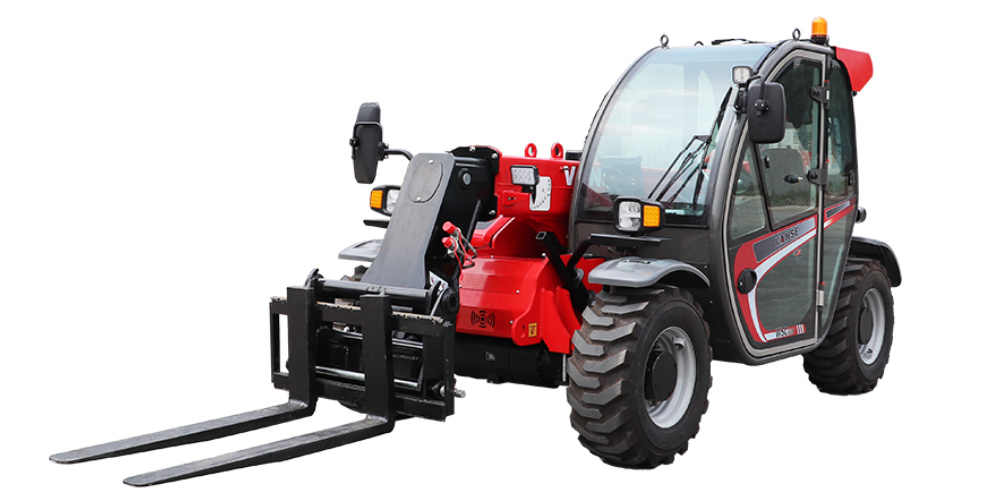
VANSE 625 6m Telescopic Handler
Designed for efficient material handling and stacking in warehouses, factories, and confined job sites, offering compact maneuverability and reliable performance.

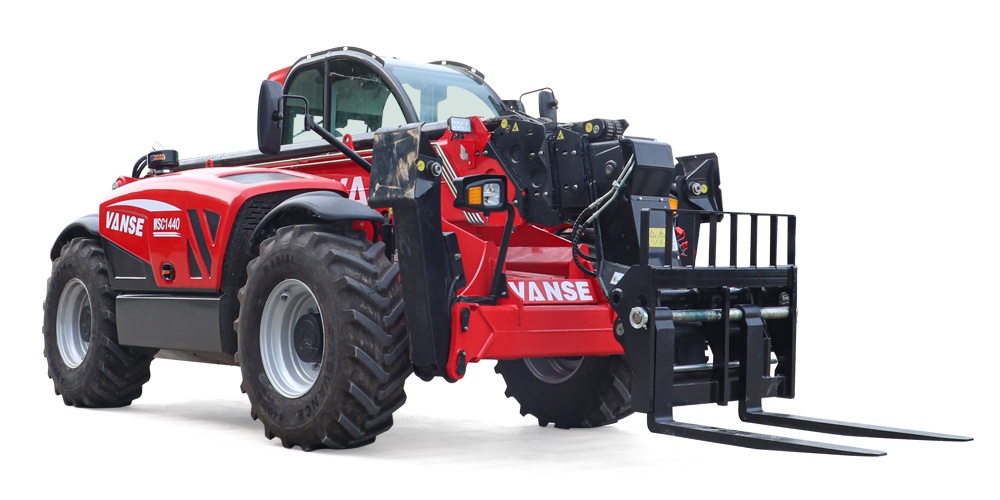
VANSE 735 7m Telescopic Handler
A balanced mid-duty solution for construction, agriculture, logistics, and warehousing, combining stable lifting, strong traction, and everyday versatility.


About the Author:
The VANSE team is a group of experienced professionals specializing in construction machinery research, manufacturing, and technical support. With deep industry knowledge and hands-on experience, our engineers and product specialists share practical insights on equipment selection, operation, maintenance, and industry trends.
Share
You May Also Interest
-

5 June, 2026
Telehandler vs Forklift: Full Comparison
Telehandler vs forklift in the United States: compare reach, cost, jobsites, safety, and top suppliers to choose the right machine for your needs.
-
4 June, 2026
Telehandler vs Crane: Which to Choose?
Compare telehandler vs crane in the United States with practical buying advice, local supplier insights, use cases, costs, and 2026 equipment trends.
-
3 June, 2026
Telehandler vs Boom Lift: Comparison
Compare telehandler vs boom lift for jobs in the United States, with use cases, suppliers, costs, and buying tips for safer, smarter equipment selection.
-
2 June, 2026
Telehandler vs Cherry Picker: Comparison
Compare telehandler vs cherry picker for United States jobsites, including costs, uses, suppliers, safety, and buying tips for contractors and fleets.