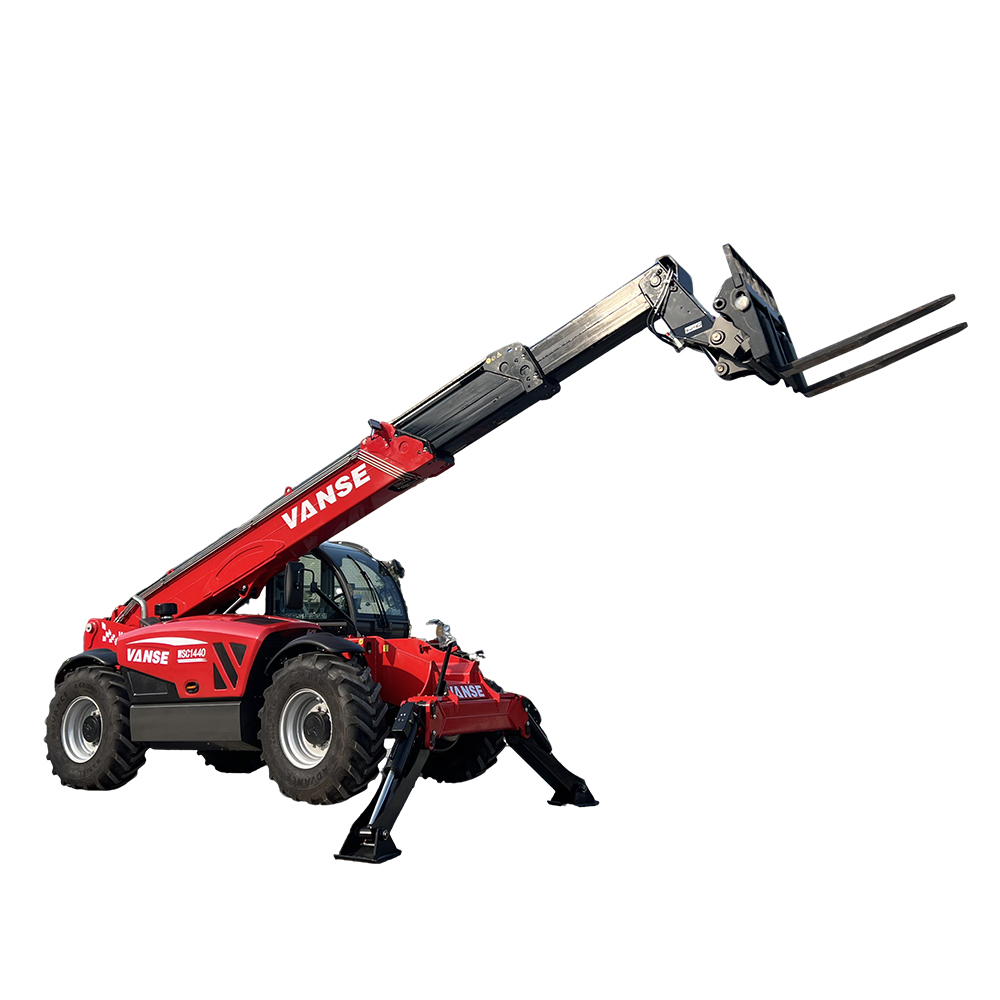
Telehandler vs Forklift in the United States
Quick Answer

If you need to lift pallets in a warehouse, loading dock, factory, or flat paved yard, a forklift is usually the better choice because it is simpler, lower in upfront cost, easier to maneuver indoors, and highly efficient for repeated short-range handling. If you need to place materials at height, work on uneven ground, reach over obstacles, or serve construction and agricultural sites, a telehandler is usually the better choice because its telescopic boom gives you far more reach, better terrain capability, and broader attachment flexibility.
In the United States, buyers commonly choose forklifts for distribution centers in cities such as Chicago, Dallas, Atlanta, and Los Angeles, while telehandlers are favored on construction sites, farm operations, industrial yards, and energy projects across Texas, Florida, California, the Midwest, and mountain regions where terrain and reach matter more than tight-aisle efficiency.
Well-known suppliers serving the U.S. market include JLG, JCB, Genie, Bobcat, Caterpillar, and Hyster-Yale dealer networks. Qualified international suppliers can also be worth evaluating, especially when they offer CE and ISO-backed production, globally recognized engines and hydraulics, OEM or ODM options, local stock plans, and strong pre-sales and after-sales support in North America. For many buyers, the real decision is simple: choose a forklift for fast, repeated pallet handling on smooth surfaces, and choose a telehandler for multi-purpose lifting where height, rough ground, and jobsite adaptability are essential.
Understanding the U.S. Market

The American material-handling market is diverse because operating conditions vary dramatically by region and industry. Ports such as Long Beach, Houston, Savannah, and Newark drive heavy logistics demand for forklifts, especially around warehousing, container support, and manufacturing. By contrast, telehandlers are especially visible in fast-growing construction corridors around Phoenix, Austin, Nashville, Orlando, and Denver, where contractors need to place framing packs, roofing materials, piping, HVAC equipment, and masonry units at elevation.
The choice between telehandlers and forklifts is therefore not only a technical question but also a business one. Labor costs in the United States remain high, so fleet managers often prefer machines that reduce handling steps, shorten loading cycles, and support multiple attachments. That explains why telehandlers continue to gain attention in mixed-use environments where one machine may perform lifting, placing, towing, bucket loading, and personnel-support tasks with the right approved attachment setup. Forklifts still dominate in stable indoor environments because they remain the benchmark for high-volume pallet movement, predictable service intervals, and operator familiarity.
Regional factors also influence buying behavior. In coastal logistics hubs, electric and LPG forklifts remain especially strong because emissions, indoor air quality, and warehouse charging infrastructure are increasingly manageable. In rural and peri-urban jobsite markets, diesel telehandlers continue to hold a strong position because rough-terrain mobility and long operating shifts often outweigh the benefits of electrification for now.
Core Differences Between a Telehandler and a Forklift

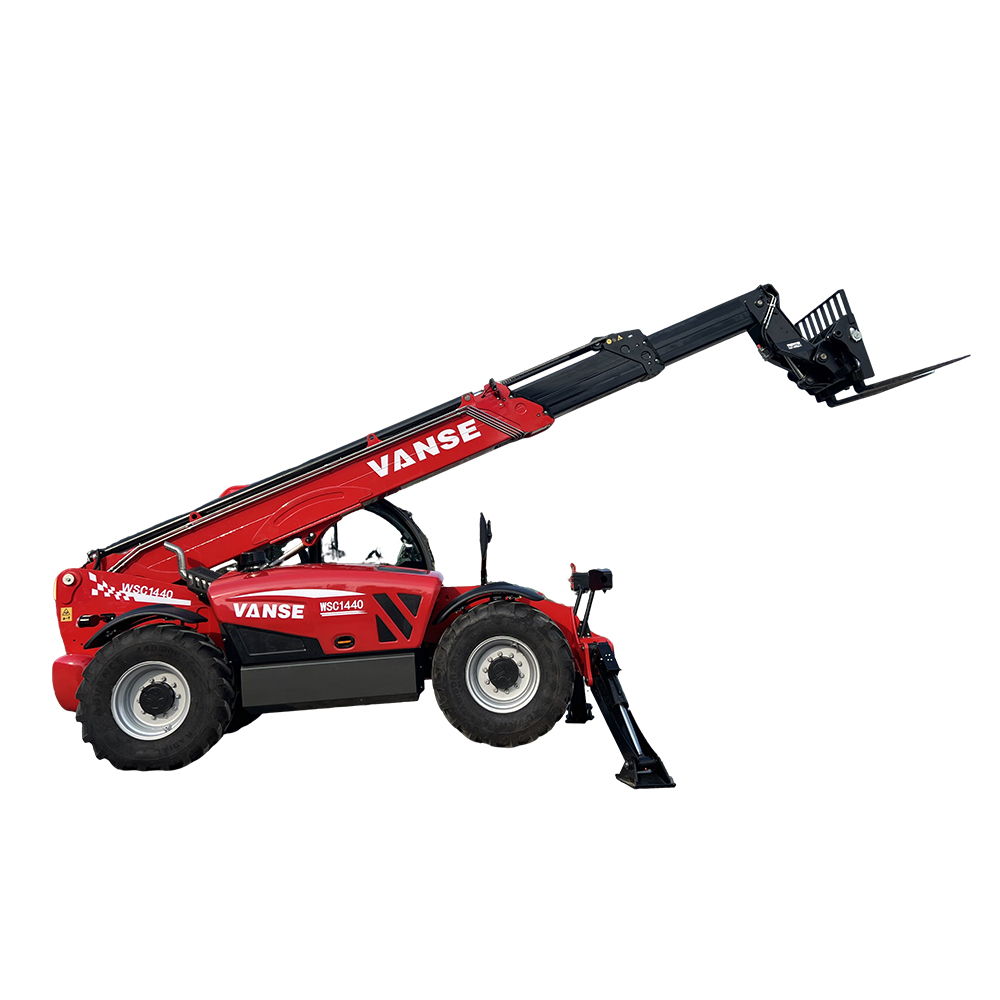
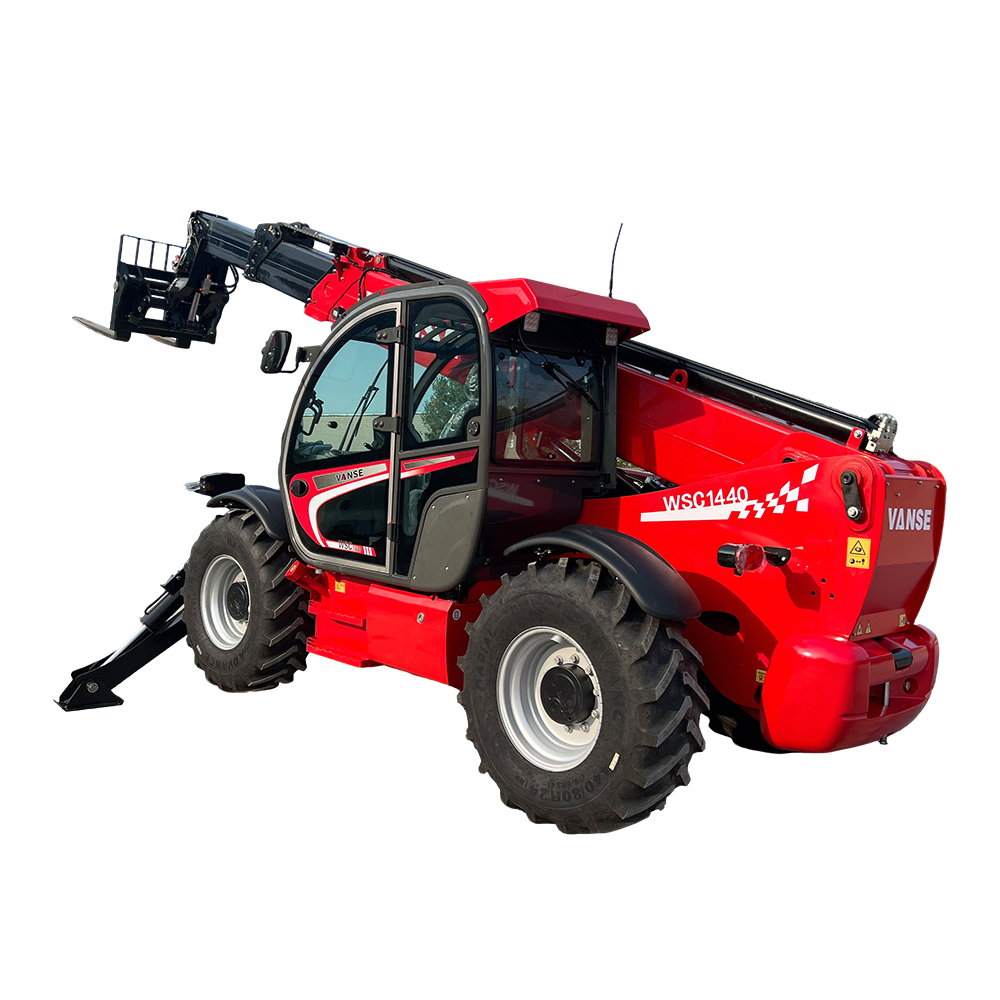
A forklift uses a vertical mast to raise and lower loads, making it ideal for level-surface operations where goods move from floor to rack, truck to dock, or pallet stack to storage aisle. A telehandler uses a telescopic boom that extends outward and upward, making it suitable for work where materials must be placed beyond the front of the machine or at significantly greater heights than a standard forklift can manage.
That design difference changes nearly everything else. Telehandlers are more versatile outdoors, but they are usually more expensive, physically larger, and more demanding in terms of load-chart awareness because safe capacity changes as the boom extends. Forklifts are easier for repetitive pallet movement, but they cannot match telehandlers when a site requires reach over trenches, debris piles, low walls, or partially completed structures.
| Factor | Telehandler | Forklift | Why it matters |
|---|---|---|---|
| Lift method | Telescopic boom | Vertical mast | Boom reach enables placement over obstacles; mast favors direct lifting |
| Best terrain | Rough ground and mixed jobsites | Smooth floors and paved yards | Site conditions strongly affect productivity and safety |
| Reach | High vertical and forward reach | Limited forward reach | Important for framing, roofing, and elevated placement |
| Indoor use | Limited in tight spaces | Excellent, especially electric models | Warehouse and rack systems favor forklifts |
| Attachment versatility | High | Moderate | Telehandlers can support forks, buckets, jibs, and more |
| Typical purchase cost | Higher | Lower to moderate | Affects fleet ROI and rental decisions |
| Operator complexity | Higher due to load charts and boom dynamics | Lower in routine applications | Training burden changes by machine type |
This table shows why the two machines should not be treated as direct substitutes in every case. They overlap in pallet handling, but their optimal use conditions are very different. A buyer that chooses only by sticker price often ends up with either reduced throughput or unnecessary machine cost.
Market Growth and Equipment Demand
Demand in the United States has remained resilient because nonresidential construction, infrastructure work, cold storage expansion, e-commerce logistics, and agricultural modernization continue to support equipment purchases and rentals. Telehandlers benefit from growth in commercial and infrastructure projects, while forklifts benefit from warehouse expansion around major interstate corridors and port distribution zones.
The line chart illustrates realistic relative growth trends rather than exact shipment totals. Telehandlers are growing from a smaller base but are gaining share in multi-purpose field applications. Forklifts continue growing steadily due to the persistent strength of warehousing, food logistics, retail distribution, and manufacturing.
This bar chart highlights where the strongest demand sits. Warehousing still leads overall, which supports forklifts, but construction demand remains extremely influential, especially for telehandlers used on commercial buildings, infrastructure upgrades, and mixed-use developments.
The area chart shows a broader trend affecting telehandler demand: many U.S. buyers want fewer machine types doing more tasks. This does not eliminate forklifts, but it does strengthen the case for telehandlers in fleets where uptime, reach, and attachment flexibility improve crew efficiency.
Product Types and Typical U.S. Use Cases
Not all telehandlers or forklifts are built for the same operating pattern. Compact telehandlers are useful on urban jobsites with limited access, while larger units serve masonry, steel erection support, industrial maintenance, and heavy agricultural handling. Forklifts range from electric warehouse trucks to pneumatic-tire units for outdoor yards. Buyers should compare machine class before comparing brand.
| Machine type | Typical capacity range | Typical environment | Best U.S. applications |
|---|---|---|---|
| Compact telehandler | 5,000 to 6,600 lb | Tight jobsites, landscaping, farms | Material placement in suburban construction and orchard work |
| Mid-size telehandler | 6,000 to 10,000 lb | Commercial construction | Drywall packs, roofing bundles, framing, palletized materials |
| High-capacity telehandler | 10,000 lb and above | Infrastructure, industrial yards | Pipe, steel, precast, heavy site logistics |
| Electric warehouse forklift | 3,000 to 8,000 lb | Distribution centers | Pallet movement in Chicago, New Jersey, Atlanta, Inland Empire |
| LPG forklift | 4,000 to 10,000 lb | Mixed indoor and outdoor use | Retail supply, beverage, food service, light manufacturing |
| Diesel pneumatic forklift | 6,000 lb and above | Yards, ports, lumber operations | Outdoor loading and durable yard handling |
| Rough-terrain forklift | 5,000 to 8,000 lb | Uneven surfaces | Sites needing more mobility than standard forklifts can provide |
The table makes clear that telehandlers and forklifts overlap only partially. A rough-terrain forklift can help on uneven surfaces, but it still cannot replicate the forward and upward reach of a telehandler. Likewise, an electric warehouse forklift can outperform a telehandler inside a fulfillment center where aisles, rack geometry, and floor loading are tightly controlled.
Buying Advice for United States Buyers
The smartest purchase starts with job analysis, not brand preference. Ask how often the machine will work indoors, what the maximum lift height is, whether loads must be placed over obstacles, what the ground conditions are, and whether one machine must support attachments beyond forks. In many U.S. fleets, that process quickly reveals whether the machine is a handling specialist or a multi-role site asset.
Total cost of ownership should include financing, planned maintenance, operator training, tire replacement, fuel or charging strategy, transport cost between jobsites, insurance, and resale value. In states with strong rental cultures such as Texas, Florida, California, and North Carolina, many contractors rent telehandlers first and later buy once machine utilization becomes predictable. Warehouse operators, by contrast, often buy forklifts earlier because use cycles are steady and charging or fuel routines are easy to standardize.
Buyers should also pay close attention to parts support. A lower-priced unit is not truly economical if seals, filters, boom wear pads, forks, tires, hydraulic components, or electronic controls are difficult to source in the United States. That is why dealer footprint, warehouse availability, service response time, and diagnostic support matter nearly as much as machine specification.
Industries That Commonly Choose Telehandlers
Construction is the leading telehandler market in the United States. General contractors and subcontractors use telehandlers to distribute materials across jobsites, feed upper floors, place trusses, support roofing crews, and keep labor from making repeated manual moves. Agriculture is another strong segment, especially for hay handling, feed loading, pallet movement, and general yard support on dairy, grain, and mixed farms.
Industrial plants, mining support sites, and oil and gas yards also value telehandlers because one machine can move pipe, tote tanks, palletized spares, maintenance equipment, and bulk materials with the proper attachment. In remote operating environments, rough-terrain access and high reach reduce the need for multiple support machines.
Industries That Commonly Choose Forklifts
Forklifts remain indispensable in warehousing, retail distribution, food and beverage operations, packaging, pharmaceuticals, and manufacturing. In places like Memphis, Columbus, Louisville, Dallas-Fort Worth, and the Inland Empire, a forklift is the default machine because loading docks, pallet racking, and repetitive trailer movement reward precision and speed more than reach.
Forklifts also excel when floor conditions are controlled, operators work in shifts, and inventory systems depend on exact rack placement. Electric models are increasingly preferred in enclosed spaces where emission control, lower noise, and low indoor operating cost are important. This makes forklifts the dominant choice for most pure logistics businesses.
Applications Side by Side
In practical terms, a telehandler is better at getting materials to where people need them on a dynamic site, while a forklift is better at moving goods through a repeatable process. For example, a multifamily project in Austin may use a telehandler to place drywall packs and palletized windows at upper-floor staging areas. A distribution facility in Joliet may use forklifts all day to unload trucks, replenish racks, and stage outbound orders with minimal wasted motion.
When work requires loading trucks from one side, moving pallets on concrete, and stacking at moderate heights, forklifts usually win. When work requires reaching across mud, curbs, ditches, uneven pads, or incomplete slabs, telehandlers usually win. Some fleets need both because the machines solve different bottlenecks.
Case Studies from Common U.S. Scenarios
A commercial framing contractor in Phoenix typically benefits more from a telehandler than a forklift. The machine can bring lumber packs close to active framing zones, move sheathing to elevated areas, and navigate rough ground before final paving is complete. Because it can extend the boom, the operator can place materials with fewer secondary moves, reducing crew time.
A beverage distributor near Atlanta typically benefits more from forklifts. Trailer loading cycles are constant, pallet sizes are standardized, and the work environment is mostly flat and organized. Electric or LPG forklifts offer faster cycle times in this scenario, and telehandler reach provides little extra value.
A dairy operation in Wisconsin may choose a telehandler because it can lift wrapped bales, load feed, stack pallets, and support daily yard tasks with attachments. A paper-products warehouse in New Jersey, however, usually needs forklifts because aisle density, pallet throughput, and dock flow matter more than rough-terrain mobility.
Leading Suppliers and Brands in the United States
The U.S. market is served by both domestic and international brands with established dealer networks. Buyers should compare not only machine performance but also branch density, field-service capability, rental support, and parts fill rates. The supplier table below is designed to be practical rather than generic, so it highlights actual companies and what they are known for in the American market.
| Company | Main service regions | Core strengths | Key offerings |
|---|---|---|---|
| JLG Industries | Nationwide through dealer and rental channels | Strong telehandler lineup, rental market recognition, service network | Construction telehandlers, access equipment, support parts |
| JCB | Nationwide with strong construction and agricultural presence | Broad telehandler expertise, brand recognition in rough-terrain applications | Telehandlers for jobsite and farm use, dealer support |
| Genie | United States and Canada dealer network | Reliable rental-oriented equipment, telehandler familiarity | Telehandlers and access equipment for contractors and fleets |
| Bobcat | Strong presence across Midwest, South, and nationwide dealers | Compact equipment synergy, support for farms and contractors | Telehandlers, compact machinery, attachments |
| Caterpillar dealer network | Nationwide regional dealer territories | Service strength, heavy equipment ecosystem, financing access | Forklifts through dealer channels, industrial handling support |
| Hyster-Yale dealers | Warehousing and industrial regions across the U.S. | Forklift specialization, warehouse fleet solutions, parts coverage | Electric, LPG, and diesel forklifts for logistics and industry |
| Toyota Material Handling | Nationwide, especially strong in logistics corridors | Forklift reliability, large service footprint, indoor fleet strength | Electric and internal-combustion forklifts, fleet management |
This table shows a key market reality: the telehandler field is strongly shaped by construction-focused brands, while the forklift field is dominated by material-handling specialists with deep warehouse support. Buyers should match supplier type to operating environment instead of assuming one dealer model works equally well for both product categories.
Supplier Comparison by Job Fit
Brand strength depends on use case. A contractor in Tampa may prioritize rough-terrain handling, while a logistics operator in Seattle may care more about battery systems, operator ergonomics, and same-day parts support. The comparison chart gives a simplified view of how common decision factors differ among major equipment paths.
The comparison chart is not a rating of one brand over another. It is a visual tool showing where telehandlers or forklifts tend to outperform each other. For mixed fleets, these differences often justify owning both types rather than trying to stretch one machine into every role.
Detailed Supplier Snapshot
For buyers comparing concrete procurement options, the next table focuses on how different suppliers align with typical needs in the United States. The goal is to help buyers separate warehouse-oriented support models from field-service-oriented support models.
| Company | Best fit applications | Service model | Typical buyer profile |
|---|---|---|---|
| JLG Industries | Commercial building, rental fleets, infrastructure sites | Dealer and rental channel backed service | Contractors, rental companies, industrial users |
| JCB | Construction, agriculture, mixed site handling | Dealer network with field service capability | Farms, contractors, equipment dealers |
| Genie | General construction and rental fleet telehandler use | Strong rental ecosystem support | Rental houses, contractors, project fleets |
| Bobcat | Compact site work, farm support, smaller contractors | Dealer-based localized support | Owner-operators, farms, local contractors |
| Hyster-Yale dealers | Warehouses, factories, mixed industrial sites | Planned maintenance and fleet support programs | 3PLs, manufacturers, regional distributors |
| Toyota Material Handling | High-throughput logistics and indoor material handling | Strong branch and parts support | Distribution centers, food service, retail logistics |
| Crown Equipment | Warehouse and narrow operational flow environments | Direct and dealer support in many regions | Retail distribution, e-commerce, manufacturing |
This supplier snapshot reinforces that telehandler buying is often dealer-and-territory driven, while forklift buying is often process-and-fleet driven. Buyers should ask for local response times, branch locations, and stocked consumables before choosing a supplier.
What to Ask Before You Buy
Ask each supplier for real U.S. references in environments similar to yours. Request load charts, maintenance intervals, transport dimensions, attachment compatibility, estimated lead time, and warranty terms. For forklifts, ask about battery support, charger requirements, and telematics options. For telehandlers, ask about boom wear areas, stability systems, axle service needs, and attachment certification. If your operation spans multiple states, ask how service is handled outside the selling branch’s home territory.
It is also wise to compare the cost of rental backup. A dealer that can keep you working during breakdowns may save more money than a supplier with a slightly lower invoice price. For contractors, uptime is often the real purchase criterion.
Our Company
VANSE Group brings a telehandler-focused manufacturing background to the United States market with more than a decade of industry experience, total production exceeding 8,000 units, and export service across more than 40 countries, including North America. For U.S. buyers, the practical advantage is not just price: VANSE machines are produced under CE and ISO 9001 certified systems, use internationally recognized core components such as Perkins and Cummins engines together with premium hydraulic and drivetrain systems, and each unit goes through load testing, safety inspection, and performance validation before shipment, which gives buyers objective proof that the equipment is built to meet demanding international benchmarks. The company supports multiple cooperation models for local end users, dealers, distributors, rental companies, brand owners, and private-label partners through wholesale supply, retail opportunities, OEM and ODM customization, branded distribution programs, and application-specific configuration support. Through its expanding U.S. market commitment, including plans for a U.S.-based subsidiary, local inventory, and stronger regional after-sales capability, VANSE is positioning itself as a long-term operating partner rather than a remote exporter, with online technical support, pre-sale consultation, offline service coordination, and lifecycle assistance designed to protect buyers across sourcing, commissioning, maintenance, and parts follow-up. Buyers comparing telehandlers can explore the broader equipment range here, learn about support through the service team, review the company overview on the main website, or discuss U.S.-market needs directly through the contact page.
How VANSE Fits into the U.S. Buying Landscape
For U.S. buyers, VANSE is most relevant when a telehandler is clearly the right machine but price pressure remains high. This is common among growing rental businesses, regional dealers seeking differentiated inventory, contractors building mixed fleets, and agricultural buyers that need durable reach capability without paying the premium associated with some legacy European or American brands. The company’s focus on telehandlers as a flagship product line matters because specialized manufacturing usually translates into better product consistency, stronger configuration logic, and more informed pre-sale guidance than a supplier that treats telehandlers as a side category.
In practical procurement terms, VANSE should be considered alongside established brands when buyers want globally recognized core components, documented manufacturing controls, customization capability, and a supplier willing to support brand, color, specification, or market-positioning requirements. That is especially useful for U.S. distributors and rental companies that want to shape a regional offering instead of accepting an inflexible catalog approach.
Future Trends Through 2026
By 2026, the telehandler-versus-forklift discussion in the United States will increasingly be shaped by technology, labor efficiency, emissions policy, and sustainability expectations. Forklifts are already moving deeper into electrification because warehouse operators can justify charging infrastructure with predictable indoor duty cycles. Telehandlers will electrify more slowly, but hybrid and low-emission development is likely to expand in urban construction, municipal operations, and enclosed industrial settings where noise and emissions rules are tightening.
Policy also matters. Federal infrastructure spending, state-level clean-air initiatives, and stricter safety enforcement are pushing buyers toward machines with better visibility, stability systems, telematics, and maintenance documentation. Equipment traceability, operator monitoring, and preventative maintenance alerts will become more important in both categories. Sustainability is not just about emissions; it also includes machine lifespan, parts availability, rebuild potential, and operating efficiency. A telehandler that replaces multiple single-task assets can improve total fleet efficiency, while an electric forklift can reduce operating emissions and indoor ventilation burden in large fulfillment centers.
Technology adoption will likely favor machines with integrated diagnostics and easier dealer connectivity. Buyers in major metros such as Los Angeles, Houston, Miami, and New York increasingly expect digital service responsiveness, not just mechanical durability. That trend benefits suppliers that combine physical support presence with fast remote technical assistance.
Frequently Asked Questions
Is a telehandler safer than a forklift?
Neither is automatically safer. Safety depends on using the right machine for the job, following load charts, matching site conditions, and training operators properly. Telehandlers require more attention to reach-related stability, while forklifts require careful control around racks, pedestrians, and dock edges.
Can a telehandler replace a forklift?
On some construction sites, yes. In a warehouse, usually no. A telehandler can move pallets, but it is not as efficient as a forklift for repeated indoor handling on smooth floors and in confined aisles.
Which is cheaper in the United States?
Forklifts are usually cheaper to buy for standard handling applications. Telehandlers normally cost more because of their boom design, rough-terrain chassis, and broader application range. However, the telehandler may be more economical if it replaces multiple handling steps or multiple machine types.
Do telehandlers need special operator training?
Yes. Operators should be trained on model-specific load charts, attachment use, site setup, and stability principles. This is especially important on U.S. jobsites where OSHA compliance and site liability are serious considerations.
Which machine has better resale value?
Both can retain value well when backed by strong brands and service history. Forklifts often have stable resale in warehouse markets, while telehandlers can hold value strongly in construction and agricultural regions if parts support remains reliable.
Should a small contractor buy or rent first?
Many small contractors in the United States rent telehandlers first because project demand can be seasonal. Forklifts are more often purchased earlier when daily use is consistent. The best choice depends on utilization rate, financing terms, and service availability.
Final Takeaway
For most U.S. buyers, the choice is straightforward once the work environment is defined. Choose a forklift if your operation depends on fast pallet handling, indoor efficiency, and smooth-surface productivity. Choose a telehandler if your operation depends on reach, rough-terrain mobility, multi-purpose attachments, and placing materials where a mast machine cannot safely or efficiently go. In the United States, the strongest buying decisions come from matching equipment type to actual workflow, then selecting a supplier with dependable local support, parts access, and clear application guidance.
Complete Telescopic Handler Equipment Portfolio
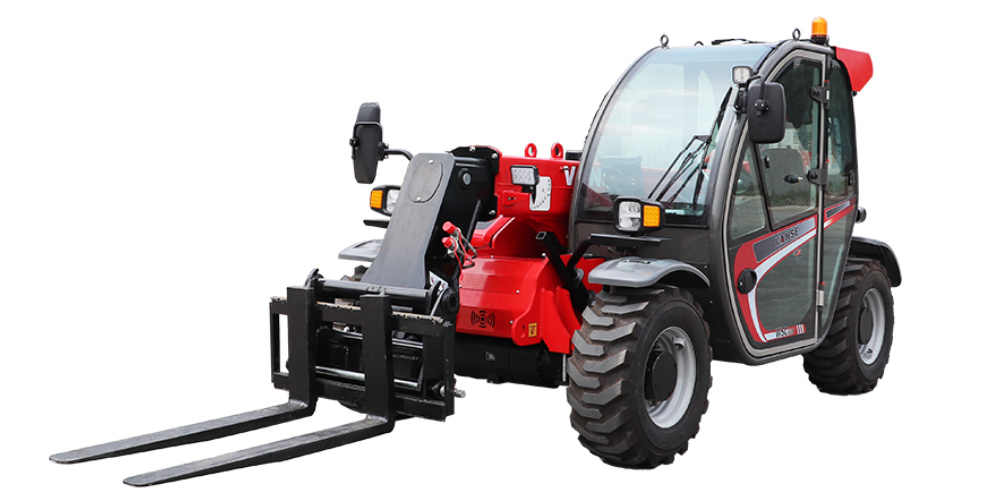
VANSE 625 6m Telescopic Handler
Designed for efficient material handling and stacking in warehouses, factories, and confined job sites, offering compact maneuverability and reliable performance.

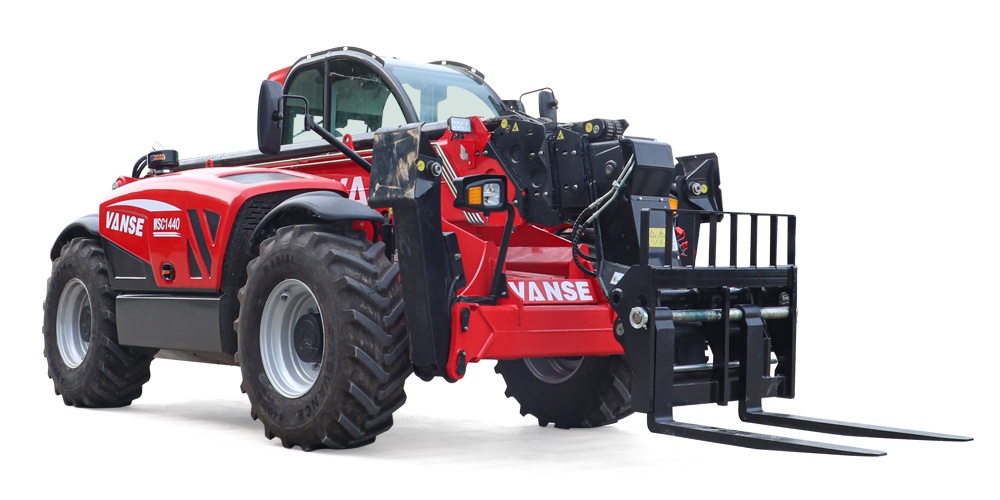
VANSE 735 7m Telescopic Handler
A balanced mid-duty solution for construction, agriculture, logistics, and warehousing, combining stable lifting, strong traction, and everyday versatility.


About the Author:
The VANSE team is a group of experienced professionals specializing in construction machinery research, manufacturing, and technical support. With deep industry knowledge and hands-on experience, our engineers and product specialists share practical insights on equipment selection, operation, maintenance, and industry trends.
Share
You May Also Interest
-

4 June, 2026
Telehandler vs Crane: Which to Choose?
Compare telehandler vs crane in the United States with practical buying advice, local supplier insights, use cases, costs, and 2026 equipment trends.
-
3 June, 2026
Telehandler vs Boom Lift: Comparison
Compare telehandler vs boom lift for jobs in the United States, with use cases, suppliers, costs, and buying tips for safer, smarter equipment selection.
-
2 June, 2026
Telehandler vs Cherry Picker: Comparison
Compare telehandler vs cherry picker for United States jobsites, including costs, uses, suppliers, safety, and buying tips for contractors and fleets.
-
1 June, 2026
Telehandler vs Excavator: Comparison
Telehandler vs excavator in the United States: learn key differences, costs, jobsite uses, buyer tips, and supplier options for faster equipment decisions.