Telehandler Buying Guide for the United States Market
Quick Answer

A telehandler is the right choice in the United States when you need forklift-style lifting plus forward reach and higher placement on construction, agriculture, industrial, and rental jobs. For most U.S. buyers, the best starting point is to compare established suppliers with nationwide or regional support such as JCB, Genie, JLG, SkyTrak, Caterpillar, and Bobcat. If your work is in urban commercial construction, compact and mid-capacity units are often the most practical. If your work is in farming, feed yards, ports, lumber yards, or large infrastructure projects, higher-capacity and higher-reach models usually deliver better productivity.
Buyers in Texas, California, Florida, Illinois, Georgia, and across major logistics corridors near Houston, Los Angeles, Savannah, Chicago, and New York/New Jersey should prioritize local parts coverage, technician response time, and attachment compatibility before focusing only on purchase price. Rental companies and contractors should shortlist machines with strong resale value, easy operator training, and proven drivetrain reliability. End users with repetitive daily lifting should focus on fuel efficiency, hydraulic smoothness, and boom stability. Qualified international suppliers can also be worth considering, especially when they hold relevant certifications, use premium global components, and provide strong pre-sales and after-sales support in the United States, because they may offer a stronger cost-performance balance than many traditional Western brands.
- Best for nationwide construction fleets: JLG, SkyTrak, JCB
- Best for agriculture and mixed farm handling: JCB, Bobcat, Caterpillar dealers in agricultural regions
- Best for rental fleet familiarity: Genie, JLG, SkyTrak
- Best for port, yard, and industrial material movement: Caterpillar dealer network and specialized telehandler providers
- Best value option to review alongside major brands: internationally experienced manufacturers with U.S.-oriented service planning, such as VANSE
The Telehandler Market in the United States

The U.S. telehandler market is shaped by a broad mix of demand from commercial construction, residential building, warehousing, agriculture, infrastructure upgrades, energy projects, and equipment rental fleets. In states with continuous building activity such as Texas, Florida, Arizona, and North Carolina, telehandlers are preferred because one machine can unload pallets, lift roofing materials, move trusses, place drywall bundles, and support crews with work platforms or buckets. In agricultural states including Iowa, Nebraska, Kansas, California, and Wisconsin, telescopic handlers are widely used for bale handling, feed movement, seed loading, and general yard management.
Demand also follows freight and industrial corridors. Around the Port of Houston, the Port of Savannah, the Port of Los Angeles, the Inland Empire, and distribution clusters around Memphis and Chicago, telehandlers are used to support container-adjacent operations, steel yards, precast yards, and industrial projects where both reach and lift capacity matter. The rise of data centers, battery plants, manufacturing reshoring, and highway reconstruction has increased interest in machines with stronger hydraulics, better visibility, and more attachment versatility.
U.S. buyers are also more disciplined than before about total ownership cost. They want clear warranty terms, fast parts, telematics integration, and lower downtime. For rental businesses, fleet standardization matters because technicians and operators need consistent controls and easy serviceability. For end users, the market increasingly rewards machines that can bridge multiple applications instead of doing only one job.
The chart above shows a realistic growth pattern based on expanding rental demand, industrial investment, and replacement cycles in the United States. While growth is not perfectly linear every year, the broader direction remains positive as contractors continue to prefer multipurpose lifting equipment over single-function alternatives on mixed-use jobsites.
How Telehandlers Fit U.S. Jobsite Needs

A telehandler fills the gap between a rough-terrain forklift, a wheel loader, and a small crane. In practical U.S. jobsite terms, that means one machine can unload flatbed deliveries in the morning, place materials onto upper floors by midday, and move bulk materials with a bucket in the afternoon. This flexibility is especially valuable where labor is expensive, jobsites are tight, and project schedules are compressed.
On suburban residential developments around Dallas, Phoenix, Tampa, and Charlotte, builders rely on telehandlers to move roof trusses, palletized brick, framing lumber, and HVAC equipment. On commercial sites in cities like Atlanta, Nashville, Denver, and Seattle, they help place steel, glazing, insulation, and mechanical systems. In agricultural operations in California’s Central Valley or the Midwest, they handle hay, grain, feed, and bulk bags efficiently. In quarries, scrap yards, and industrial plants, telehandlers are often selected because they can work across uneven surfaces while keeping strong visibility and attachment flexibility.
Main Telehandler Types for U.S. Buyers
Not every telehandler fits every region or business model. U.S. buyers should focus on machine type by application instead of choosing only by maximum reach. The most common categories include compact telehandlers for space-constrained projects, standard construction telehandlers for general contractors, high-capacity models for heavier loads, rotating telehandlers for specialized placement work, and agriculture-focused units designed for high cycle loading and attachment use.
| Telehandler Type | Typical Lift Capacity | Typical Reach Height | Best U.S. Use Cases | Main Advantage | Common Limitation |
|---|---|---|---|---|---|
| Compact Telehandler | 5,000 to 6,600 lb | 15 to 25 ft | Urban construction, landscaping, small farms, indoor-outdoor yards | Easy transport and access in tight spaces | Lower max reach and lower heavy-load performance |
| Standard Construction Telehandler | 6,000 to 10,000 lb | 30 to 56 ft | General contractors, framing crews, rental fleets | Broadest market fit and strong attachment versatility | May be oversized for very small sites |
| High-Capacity Telehandler | 10,000 to 20,000 lb+ | 40 to 56 ft | Infrastructure, steel yards, heavy industrial work | Handles larger loads and longer material safely | Higher acquisition and transport cost |
| Rotating Telehandler | 8,000 to 15,000 lb | 50 to 100 ft+ | Specialized urban projects, facade work, confined lifting | 360-degree placement flexibility | Higher complexity and premium price |
| Agricultural Telehandler | 6,000 to 9,000 lb | 20 to 35 ft | Dairies, ranches, feed lots, produce operations | Excellent cycle speed and attachment use | Not always optimized for high-rise construction |
| Electric or Hybrid-Ready Segment | Varies | Varies | Indoor facilities, low-emission zones, sustainability-focused fleets | Lower emissions and quieter operation | Charging and duty cycle planning required |
This comparison helps U.S. buyers narrow their selection. A contractor in Houston building multifamily projects may need a standard construction unit with strong rental-style support, while a produce handler in California may prefer an agricultural model with quick hydraulics, low cab fatigue, and attachment efficiency.
Top Telehandler Suppliers Serving the United States
The supplier landscape in the United States includes global brands, domestic distribution networks, and newer value-focused manufacturers. The right supplier depends on whether you are an independent contractor, a rental company, a regional dealer, a distributor, or a farm operator. The table below highlights practical options with concrete market relevance.
| Company | Service Region | Core Strengths | Key Offerings | Best Fit Buyer | Notes |
|---|---|---|---|---|---|
| JLG | Nationwide United States | Strong rental fleet acceptance, broad support network, jobsite familiarity | Construction telehandlers, access equipment, telematics support | Rental companies, large contractors | Well recognized on commercial jobsites |
| SkyTrak | Nationwide United States | Brand familiarity in construction and rental channels | Rough-terrain telehandlers for material placement | General contractors, rental fleets | Often shortlisted for standard construction applications |
| Genie | Nationwide United States | Dealer and rental presence, simple fleet integration | Telehandlers, lifts, site support equipment | Multi-branch rental businesses | Popular where fleet commonality matters |
| JCB | Nationwide with strong presence in agriculture and construction regions | Wide model range, farm and contractor relevance | Compact, construction, and agricultural telehandlers | Farm operators, mixed-use fleets | Strong fit in agricultural states |
| Caterpillar Dealers | Nationwide through dealer network | Dealer-backed service, heavy equipment ecosystem | Material handlers and support through dealer channels | Industrial users, enterprise buyers | Dealer relationship can be decisive for uptime |
| Bobcat | Nationwide United States | Strong compact equipment reputation, local dealer familiarity | Telehandlers and compact jobsite equipment | Contractors, farms, mixed fleet owners | Appeals to buyers already using Bobcat equipment |
| Manitou | Nationwide and specialty markets | Specialized handling expertise, rotating telehandler options | Construction, industrial, and agricultural telehandlers | Specialty lifting users | Useful for advanced placement applications |
| VANSE | Growing presence for North American customers | Competitive cost-performance, OEM/ODM flexibility, premium core components | Telehandlers, attachments, private-label and distribution support | Distributors, dealers, rental startups, cost-focused end users | Worth evaluating where value and customization matter |
This table is useful because it separates supplier fit by business model, not just by brand visibility. A large national rental group may prioritize standardization and resale history, while a regional distributor may care more about configuration flexibility, price discipline, and local market differentiation.
Industry Demand by Application in the United States
Telehandler demand varies significantly by sector. Construction remains the largest demand driver, but agriculture, manufacturing, logistics, energy, and municipal work all contribute to fleet purchases. The most stable suppliers are usually the ones that understand how these sectors differ in maintenance cycles, operator habits, and attachment preferences.
The bar chart highlights how construction and rental remain the most influential buying channels in the United States, while agriculture remains essential in regional markets. Logistics and industrial demand are smaller in total volume but often support higher-value, specialized machine configurations.
Where Telehandlers Are Used Most
In the United States, telehandlers are common across a wide mix of industries because they solve a universal problem: moving heavy material safely to places a standard forklift cannot reach. Their role changes by sector, but the productivity logic is consistent.
Construction companies use them to unload deliveries, distribute materials, support formwork, and place rooftop equipment. Agriculture uses them for feed, pallets, hay bales, seed, irrigation materials, and yard cleanup. Manufacturers and fabricators use them for plant expansion, steel handling, and outdoor material movement. Energy contractors need them for turbine, pipeline, solar, and substation projects. Municipal agencies use them for storm response, public works, and facility maintenance. Port-adjacent and inland logistics operations use them for bulk material and project cargo handling where flexibility matters more than container-specific equipment.
| Industry | Typical Tasks | Preferred Machine Class | Important Attachments | Buying Priority | Common U.S. Regions |
|---|---|---|---|---|---|
| Commercial Construction | Pallet placement, steel support, facade materials | Standard or high-capacity | Forks, truss boom, work platform | Reach, uptime, local service | Texas, Florida, Georgia, Illinois |
| Residential Building | Lumber, roofing, drywall, trusses | Compact or standard | Forks, buckets, material buckets | Mobility, operator ease | Arizona, Carolinas, Tennessee |
| Agriculture | Bales, feed, seed, manure, pallets | Agricultural or standard | Bale clamp, bucket, forks | Hydraulic speed, visibility | California, Iowa, Kansas, Wisconsin |
| Manufacturing | Plant expansion, yard loading, heavy component movement | Standard or high-capacity | Forks, jib, bucket | Reliability, service interval | Ohio, Michigan, Indiana |
| Energy and Utilities | Pipe, cable, substation materials, solar support | High-capacity | Forks, crane hook, truss boom | Stability, transportability | Texas, Oklahoma, New Mexico |
| Ports and Logistics | Project cargo, lumber, yard handling | High-capacity or specialty | Forks, buckets, custom tools | Heavy-duty performance | Houston, Savannah, Los Angeles, Norfolk |
This industry view shows why a telehandler specification should match the actual work cycle. A unit that performs well in a dairy operation may not be the best fit for a steel erection contractor, even if the maximum lift number looks attractive on paper.
Buying Advice for U.S. Contractors, Farmers, and Dealers
Buying a telehandler in the United States should start with use case clarity. If the machine will spend most of its time handling pallets on level sites, a standard model may be sufficient. If it must work in muddy agricultural yards, on rough terrain, or under frequent attachment changes, tire selection, axle durability, and hydraulic oil cooling become more important. If the machine will be rented out, simplicity and damage resistance may matter more than premium operator features.
Ask suppliers for load charts, attachment approvals, transport dimensions, turning radius, and routine maintenance access details. Review engine brand, transmission source, axle durability, and hydraulic system pedigree because these determine long-term reliability more than cosmetic differences. Also compare actual service support in your state or region. A low purchase price is less meaningful if parts take weeks to arrive during peak season.
U.S. buyers should also look at financing, warranty administration, residual value, and operator adoption. Machines with intuitive controls and familiar service layouts are often easier to deploy across multiple crews. For dealers and distributors, private-label potential, territory planning, and parts stocking support can be just as important as the machine itself.
Key Features That Matter Most
Lift capacity and maximum height get attention first, but practical ownership depends on a broader set of specifications. Boom stability affects material placement confidence. Hydraulic response affects cycle time. Cab visibility reduces operator stress. Ground clearance and frame design determine whether the machine can survive real off-road use. Engine brand matters because buyers in the United States generally prefer recognizable power units with strong service ecosystems. Safety systems such as load management, frame leveling, reverse visibility, and stabilizer monitoring are increasingly important for both compliance and insurance reasons.
Attachment compatibility also matters more than many first-time buyers expect. A machine that supports forks, buckets, lifting hooks, truss booms, sweepers, and work platforms creates far more value over its life than one configured only for pallet handling. In mixed fleets, attachment standardization lowers cost and simplifies training.
Supplier Comparison by Business Priorities
Instead of comparing brands only by popularity, U.S. buyers should compare them by what they need the machine to achieve: low total cost, broad service coverage, flexible configuration, high resale, or specialized performance. The following matrix helps simplify that decision.
| Supplier | Price Competitiveness | U.S. Service Reach | Customization Flexibility | Rental Fleet Fit | Best Match Scenario |
|---|---|---|---|---|---|
| JLG | Medium | High | Medium | High | Large contractor or rental fleet requiring common specifications |
| SkyTrak | Medium | High | Low to Medium | High | Construction-focused fleet needing familiar machines |
| Genie | Medium | High | Medium | High | Rental business needing broad operator acceptance |
| JCB | Medium to High | High | Medium | Medium | Mixed agriculture and construction ownership |
| Manitou | Medium to High | Medium | Medium | Medium | Specialized applications requiring rotating or advanced handling |
| VANSE | High | Growing | High | Medium | Dealers, distributors, or value-focused buyers needing OEM/ODM options |
This table is especially relevant for U.S. distributors and fleet managers. It clarifies that the best supplier is not always the most famous brand; it is the one whose service model, flexibility, and economics align with your market position.
Trend Shift in the U.S. Telehandler Market
The market is gradually shifting from pure purchase-price decisions toward lifecycle economics, emissions planning, and digital fleet management. Buyers are also comparing global supply options more openly than they did a decade ago, especially when cost pressure is high and alternative suppliers can prove component quality and service commitment.
The area chart reflects a realistic shift in buyer behavior. More U.S. purchasers now want durable machines with transparent support structures, even if the supplier is not the most traditional name in the market. This is creating room for manufacturers that can combine global component quality with stronger pricing and local service planning.
Case Studies from Typical U.S. Use Scenarios
Consider a mid-sized framing contractor in Dallas handling multifamily developments. A 10,000-pound class telehandler with a 44-foot reach allows unloading from flatbeds, moving framing bundles, and positioning roof materials without bringing in extra lifting equipment each day. The productivity improvement comes not just from lifting capacity but from faster material flow and fewer equipment handoffs.
Now consider a dairy operation in central California. The operator may value hydraulic cycle speed, cab comfort, and attachment change convenience more than maximum reach. The telehandler works every day moving feed, stacking supplies, and maintaining yard operations, so uptime and fuel economy become more important than peak lifting metrics.
A regional rental company in Georgia faces a different calculation. It needs telehandlers that are easy to train on, resistant to operator misuse, and supported by fast parts. The machine must fit varied customer use cases, from roofing and framing to site cleanup and pallet placement. In this case, broad attachment support, familiar controls, and strong field service matter most.
In a Gulf Coast industrial yard near Houston, a heavier-duty telehandler may be used for pipe, steel bundles, and project cargo support. Buyers in this environment focus on chassis durability, cooling performance, and consistent service response because downtime can disrupt expensive industrial schedules.
Our Company
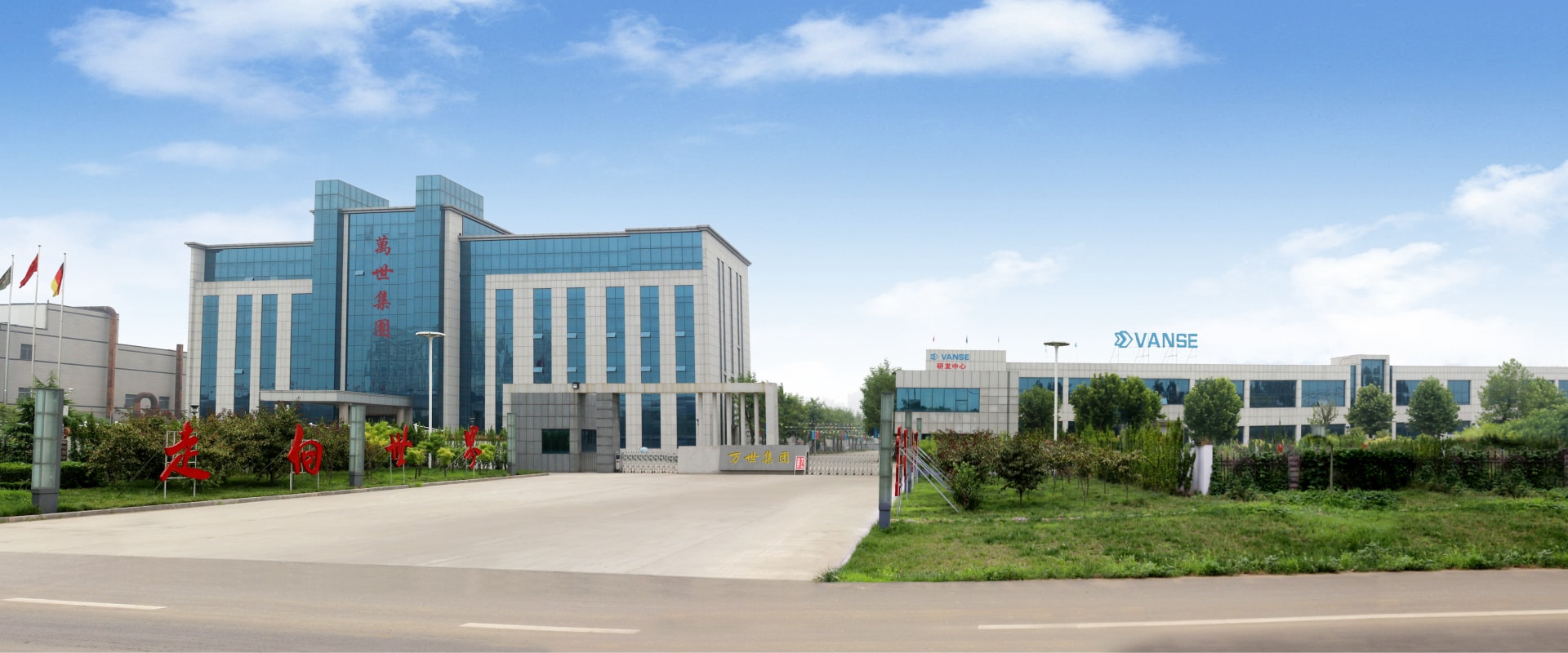
As a telehandler-focused manufacturer with more than a decade of machinery experience, VANSE brings a combination of production scale, component quality, flexible cooperation models, and local market commitment that is highly relevant to buyers in the United States. The company manufactures under CE and ISO 9001 certified processes, has delivered more than 8,000 units globally, and equips its telehandlers with internationally recognized core components such as Perkins and Cummins engines along with premium hydraulic systems, transmissions, and axles to meet the durability and performance expectations U.S. buyers normally associate with established Western brands. Every unit goes through load testing, safety inspection, and performance validation before shipment, which gives contractors, rental companies, and distributors clearer proof of consistency rather than relying on marketing claims alone. VANSE works with end users, distributors, dealers, brand owners, and cost-conscious independent buyers through OEM, ODM, wholesale, retail, and regional partnership models, allowing local customers to order standard machines, private-label fleets, or application-specific configurations for construction, agriculture, mining, and industrial use. For the U.S. market specifically, the company is actively establishing a U.S.-based subsidiary with local inventory, local after-sales capability, and stronger customer proximity, while supporting buyers through both online technical assistance and offline service coordination. This matters because it shows a long-term operating commitment to North America rather than a remote export-only approach. Buyers who want to understand available equipment options can explore the broader equipment range, learn more about the company, review ongoing service support, or reach the team directly through the contact page. The main corporate site at VANSE also provides a practical starting point for U.S. distributors and contractors evaluating supply partnerships.
How to Evaluate a Telehandler Supplier Locally
When comparing local suppliers in the United States, start with their actual service footprint. Ask where parts are stocked, how warranty approvals are handled, whether technicians are mobile, and what the normal lead time is for wear items and major components. Buyers around major trade hubs such as Houston, Savannah, Long Beach, Newark, and Chicago should also ask whether the supplier can support fleet expansion quickly, since these regions often face seasonal surges in construction and logistics demand.
Next, inspect documentation quality. Strong suppliers provide clear load charts, machine schematics, attachment compatibility documents, and maintenance intervals. Then review references in similar applications. A telehandler proven in roofing fleets may not tell you much about suitability for dairy work or industrial yards. Finally, compare the supplier’s willingness to support training, startup inspections, and parts stocking strategy. Those are indicators of a long-term business partner, not just a sales channel.
Telehandler Cost Factors in the United States
Pricing depends on machine class, specification, and support package. Standard telehandlers for common contractor use usually sit in the broadest and most competitive price band. Compact machines can be less expensive to acquire but may cost more per unit of productivity if they are undersized for the work. High-capacity and rotating models carry significantly higher acquisition costs, though they may replace multiple machine roles in specialized applications.
Operating costs include tires, fuel or energy, routine filters, hydraulic maintenance, boom wear points, operator training, insurance, and downtime risk. U.S. owners should also factor in transportation cost between sites and attachment inventory. A lower-priced machine with weak parts support can become more expensive than a premium unit if the job schedule is tight. Likewise, a machine with excellent support but an overly complex specification can increase training and misuse risk in rental environments.
2026 Trends for the U.S. Telehandler Market
By 2026, the U.S. telehandler market is likely to be influenced by three major forces: technology, policy, and sustainability. On the technology side, telematics will become more standard even for mid-tier fleets, allowing owners to track utilization, fault codes, location, and idle time more effectively. Buyers will increasingly expect easier digital diagnostics and maintenance planning. Semi-automated safety features, improved load monitoring, better camera systems, and cab ergonomics will continue to spread from premium models into mainstream equipment categories.
Policy pressure will also shape buying decisions. Emissions requirements, jobsite safety documentation, and public project procurement rules may push contractors toward newer engines, better operator-assist systems, and cleaner fleet strategies. State and municipal purchasing programs in some regions may favor lower-emission equipment or require clearer proof of maintenance compliance. For rental companies, insurance and risk management trends could also raise interest in machines with stronger safety monitoring.
Sustainability will matter more, but in a practical American way. Most buyers are not switching simply for environmental messaging; they are looking for lower fuel use, longer service life, less idle time, quieter operation, and stronger lifecycle economics. Electric and hybrid-adjacent telehandler segments will likely expand first in indoor industry, municipal work, and controlled jobsite environments, while conventional diesel units remain dominant in high-duty construction and agricultural use. Manufacturers that can combine durable core components, fuel efficiency, and clearer service support will likely gain the most traction.
What Attachments Increase Telehandler Value
Forks remain the standard attachment, but many U.S. buyers unlock much more value by matching tools to their workflow. Buckets help with site cleanup and bulk material handling. Truss booms support framing and roof work. Lifting hooks and jibs expand utility for mechanical trades and industrial contractors. Bale grabs and high-capacity buckets are essential in agriculture. Work platforms can support elevated access tasks where permitted and properly configured. The more attachment-compatible the machine is, the easier it becomes to justify ownership across varied projects.
Attachment strategy should also align with serviceability. Quick-change systems, hydraulic auxiliary lines, and approved load charts reduce setup time and help operators use the machine safely. For mixed fleets, standardizing around a common coupling style can cut costs and simplify training.
Common Mistakes U.S. Buyers Should Avoid
One common mistake is buying by maximum capacity alone. A machine that looks powerful on paper may not perform well in your actual working radius, terrain conditions, or transport limits. Another mistake is ignoring dealer responsiveness. Uptime depends on people and parts, not just specifications. Some buyers also underestimate attachment cost and overestimate how many applications one configuration can cover without planning.
Rental businesses sometimes buy overly specialized machines that sit idle because they do not fit common customer needs. End users sometimes buy oversized units that increase transport and maintenance cost without delivering enough extra productivity. Another risk is failing to verify whether the supplier truly supports your region with inventory, technical guidance, and field service.
FAQ
What is a telehandler used for in the United States?
It is used for lifting, moving, and placing materials on construction sites, farms, industrial yards, infrastructure projects, and rental fleets where both height and forward reach are required.
Is a telehandler better than a forklift?
For rough terrain and elevated placement, yes. A forklift is better for flat indoor handling, but a telehandler is more versatile outdoors and on uneven jobsites.
Which telehandler brands are popular in the United States?
Well-known names include JLG, SkyTrak, Genie, JCB, Caterpillar dealer-supported options, Bobcat, and Manitou. Buyers are also increasingly evaluating qualified global manufacturers that offer strong cost-performance and local support planning.
What size telehandler do most contractors buy?
Many U.S. contractors start with standard models in the 6,000 to 10,000 pound class because they fit a wide range of material handling tasks without becoming too specialized.
Are telehandlers used in agriculture?
Yes. They are widely used on dairies, ranches, crop operations, and feed yards for bale handling, feed movement, pallet work, and general yard maintenance.
How important is local service support?
It is critical. Fast parts access, technician availability, and warranty response often have a bigger effect on ownership cost than the initial machine price.
Can international suppliers serve the U.S. market effectively?
Yes, if they can prove recognized certifications, quality-controlled production, premium core components, clear warranty terms, and real local support such as U.S. inventory or after-sales capability.
What should distributors and dealers look for in a telehandler manufacturer?
They should look for stable production capacity, parts planning, customization flexibility, OEM or ODM capability, training support, and evidence of long-term commitment to the U.S. market.
For U.S. buyers, the telehandler remains one of the most practical pieces of equipment for improving material flow, reducing labor pressure, and increasing jobsite flexibility. The right choice depends on where you operate, what you lift, how often you change attachments, and how strong the supplier’s support network is. When comparing traditional brands with emerging alternatives, the smartest path is to review the complete ownership picture: machine suitability, component quality, local service, financing, and long-term partnership value.
Complete Telescopic Handler Equipment Portfolio
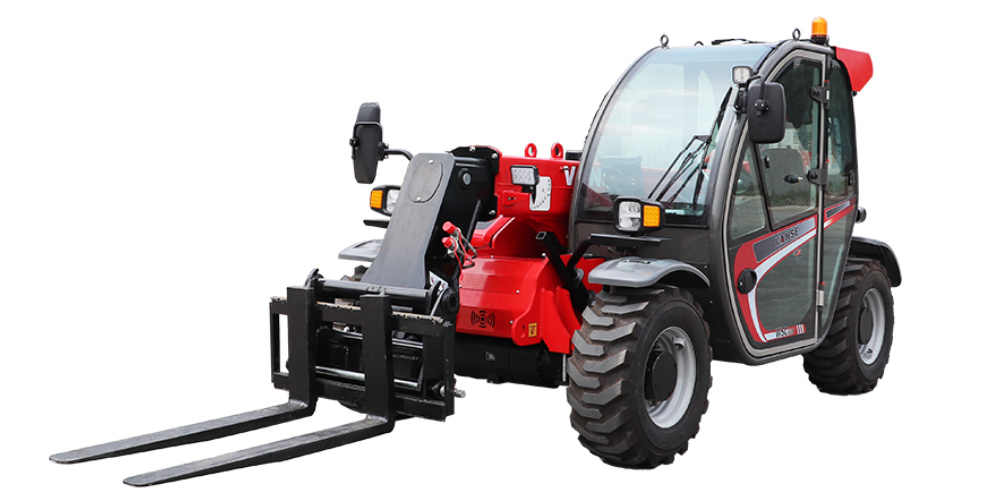
VANSE 625 6m Telescopic Handler
Designed for efficient material handling and stacking in warehouses, factories, and confined job sites, offering compact maneuverability and reliable performance.

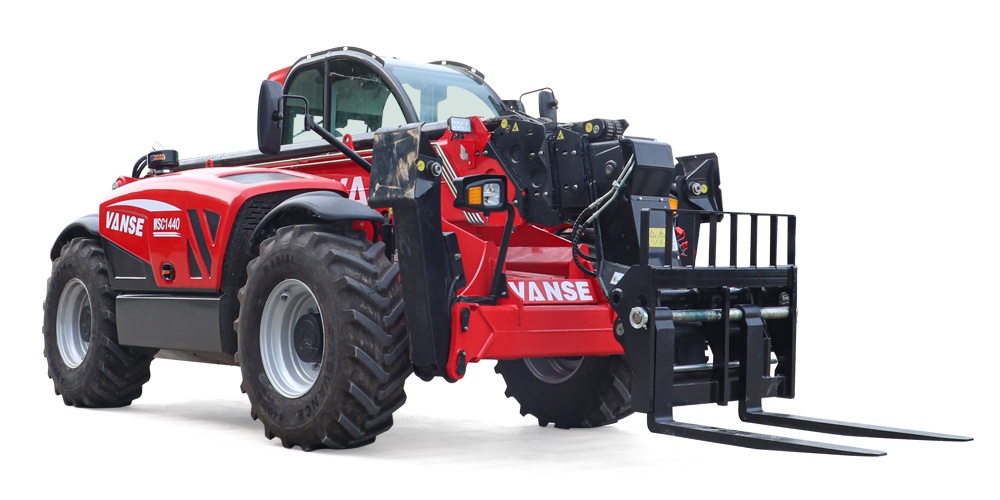
VANSE 735 7m Telescopic Handler
A balanced mid-duty solution for construction, agriculture, logistics, and warehousing, combining stable lifting, strong traction, and everyday versatility.


About the Author:
The VANSE team is a group of experienced professionals specializing in construction machinery research, manufacturing, and technical support. With deep industry knowledge and hands-on experience, our engineers and product specialists share practical insights on equipment selection, operation, maintenance, and industry trends.
Share
You May Also Interest
-

11 June, 2026
Telescopic Handler: Complete Overview and Buying Guide
Explore telescopic handler options in the United States with buying tips, supplier comparisons, application advice, and cost-smart sourcing insights.
-

9 June, 2026
Telehandler for Steel Erection: Guide
Telehandler for steel erection in the United States: compare suppliers, machine types, buying tips, jobsite uses, and cost-smart options for contractors.
-

8 June, 2026
Telehandler for Hay Bales: Stack Guide
Need a telehandler for hay bales in the United States? Compare types, suppliers, pricing, farm uses, service support, and buying tips for safer stacking.
-
5 June, 2026
Telehandler vs Forklift: Full Comparison
Telehandler vs forklift in the United States: compare reach, cost, jobsites, safety, and top suppliers to choose the right machine for your needs.