Telehandler vs Skid Steer in the United States
Quick Answer

If you need vertical and forward reach, higher lift height, and safer pallet handling on rough terrain, a telehandler is usually the better choice in the United States. If you need a compact machine for grading, loading loose material, trench cleanup, snow removal, and fast attachment changes in tight spaces, a skid steer is usually the better fit. For many U.S. buyers, the decision comes down to jobsite geometry: telehandlers dominate when stacking, placing, and lifting to elevation matter, while skid steers win when maneuverability, lower entry cost, and all-around site cleanup matter more.
In practice, contractors in Texas, California, Florida, Illinois, and the Carolinas often choose telehandlers for framing, roofing supply placement, masonry support, and farm material handling, while skid steers remain common for landscape contractors, municipal fleets, demolition support, and compact construction crews. Leading local names commonly considered in this market include JLG, Genie, Bobcat, Caterpillar, John Deere, and CASE. Qualified international suppliers can also be worth evaluating, especially when they offer CE or ISO-based manufacturing controls, globally recognized engine and hydraulic components, and dependable pre-sales and after-sales support in North America. That matters because cost-performance has become a larger factor for rental fleets, dealers, and owner-operators trying to control equipment payback periods.
Direct Comparison: Which Machine Should You Buy?

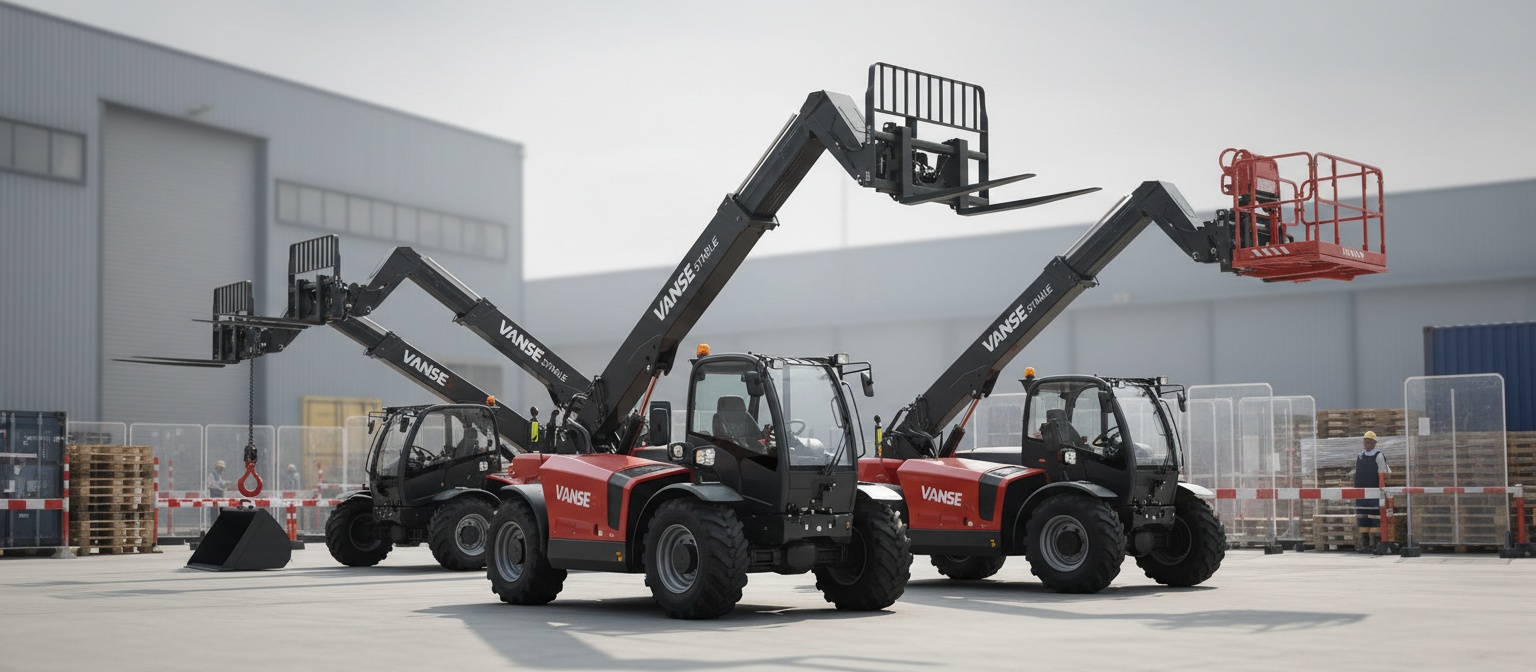
A telehandler and a skid steer can both move material, but they solve very different problems. The telehandler is built around reach, lift height, and load placement. It uses a telescopic boom, making it useful for unloading trucks from one side, placing pallets of block onto upper floors, feeding rooftop work, handling hay or bulk bags in agriculture, and moving loads over obstacles. In contrast, a skid steer is built around compactness, quick turns, and attachment flexibility. It works well where the machine must repeatedly drive in and out of confined spaces, scrape, backfill, level, sweep, auger, and handle low-height loading tasks.
For U.S. buyers, the most important question is not which machine is more popular, but which machine reduces labor, cycle time, and risk on your specific jobs. If your crew routinely rents lull-type equipment from Houston, Dallas, Atlanta, Chicago, or Inland Empire yards because materials must be lifted higher than a loader can safely reach, then ownership of a telehandler may be justified. If your work happens on urban infill sites, narrow residential lots, municipal streets, or landscape projects where maneuverability decides productivity, then a skid steer will often produce better utilization.
United States Market Overview

The United States remains one of the most developed and competitive markets for both telehandlers and skid steers. Demand is driven by nonresidential construction, warehouse expansion, agriculture, infrastructure renewal, municipal maintenance, and the equipment rental industry. Telehandlers are especially visible around logistics corridors near Los Angeles and Long Beach, Savannah, Houston, Newark, and inland distribution hubs such as Dallas-Fort Worth, Columbus, and Kansas City. Skid steers are more broadly distributed across urban and rural markets because they fit a wider mix of daily tasks and smaller contractors.
Rental companies have a major influence on buying patterns. In the U.S., many first-time telehandler users enter through rental, then purchase once they understand annual utilization, transport needs, and attachment demand. Skid steers, by contrast, are often purchased earlier because they are easier to deploy across multiple low-height jobs. The result is a market where telehandlers usually represent a more specialized but high-value category, while skid steers function as a versatile fleet staple.
Another major trend is buyer focus on total cost of ownership rather than only sticker price. Financing rates, dealer support, turnaround time for parts, operator familiarity, and machine downtime all directly affect return on investment. That is why U.S. buyers increasingly compare established domestic brands with newer global suppliers that can deliver reliable powertrain components, acceptable lead times, local stock plans, and stronger price competitiveness.
The line chart shows realistic demand growth patterns in the United States. Skid steers maintain a larger installed base, but telehandlers show strong upward momentum because labor shortages, safety expectations, and multi-story material placement continue to favor machines with greater reach. Heading into 2026, telehandler adoption is likely to increase further in rental fleets, precast work, agriculture, and industrial yards.
Key Differences by Function
| Category | Telehandler | Skid Steer | Why It Matters in the United States |
|---|---|---|---|
| Primary strength | Reach and lift height | Compact loading and attachment versatility | Determines whether you can place loads on upper levels or work in confined sites |
| Typical lift application | Pallets, trusses, roofing materials, hay, pipe | Soil, gravel, debris, snow, lower-height pallet tasks | Impacts job cycle time and crew size |
| Jobsite footprint | Larger machine with turning radius considerations | Small footprint and sharp maneuvering | Important on city lots, suburban builds, and indoor-adjacent work |
| Attachment ecosystem | Forks, buckets, jibs, work platforms, bale tools | Buckets, augers, trenchers, sweepers, breakers, forks, snow tools | Skid steers usually support a wider daily attachment rotation |
| Transport and access | Requires more transport planning | Easier to trailer behind medium-duty trucks | Affects mobilization cost for small contractors |
| Best buyer profile | Framing, masonry, agriculture, rental fleets, industrial yards | Landscape, general construction, municipal, demolition support | Helps define utilization and ROI |
| Typical purchase logic | Chosen for specific reach-driven tasks | Chosen for broad multi-task site use | Explains why many firms own skid steers and rent telehandlers first |
This comparison table matters because many U.S. purchases fail not due to machine quality, but due to a mismatch between application and machine geometry. A telehandler can replace ladders, reduce hand-carrying, and improve high-placement safety, but it may be underused on flat, low-height tasks. A skid steer can do dozens of daily tasks efficiently, but it cannot safely replace the reach of a telescopic handler on multi-level material placement.
Product Types in the U.S. Market
Telehandlers in the United States are commonly divided into compact models for farm or smaller construction sites, mid-size units for mainstream contractor use, and heavy or high-reach models for industrial yards, large framing crews, and major projects. Rotating telehandlers exist too, but standard fixed-boom models still dominate most fleet purchases because they are less expensive and easier to support.
Skid steers are generally split between wheeled skid steers and compact track loaders, though buyers often compare both under the same operating category. On softer ground, landscaping sites, and uneven terrain, compact track loaders can outperform wheeled skid steers in traction and lower ground pressure. However, many contractors still use wheeled skid steers on hard surfaces because they are simpler and can cost less to own and maintain.
| Machine Type | Common U.S. Capacity Range | Typical Reach or Lift Profile | Best Fit | Main Limitation |
|---|---|---|---|---|
| Compact telehandler | 5,000 to 6,000 lb | 18 to 25 ft | Small farms, building supply yards, tighter jobsites | Less capacity for large structural loads |
| Mid-size telehandler | 6,000 to 10,000 lb | 30 to 44 ft | Commercial construction, masonry, roofing, rental fleets | Larger transport footprint |
| High-capacity telehandler | 10,000 lb and above | 44 ft and above | Industrial handling, precast, heavy construction | Higher ownership and support cost |
| Standard wheeled skid steer | 1,700 to 3,500 lb rated operating capacity | Low-to-mid lift path | General construction, snow, cleanup, grading | Limited flotation on soft ground |
| Vertical-lift skid steer | 2,000 to 3,800 lb rated operating capacity | Better lift for truck loading | Material loading, pallets, contractor fleets | Still limited compared with telehandler reach |
| Compact track loader | 2,000 to 4,300 lb rated operating capacity | Similar task profile to skid steer with better traction | Landscaping, utility work, rough conditions | Higher undercarriage wear cost |
This table helps buyers compare not only telehandler versus skid steer, but also where overlap ends. Some vertical-lift skid steers can load trucks efficiently, yet they still do not replace a telehandler on elevated placement. Likewise, a compact telehandler may move pallets well, but it will not match a skid steer with a planer, trencher, sweeper, or snow pusher in dense utility or municipal work.
Buying Advice for U.S. Contractors and Fleet Managers
Before buying either machine, start with your revenue-producing tasks, not the brochure specifications. Ask how many hours per year the machine will spend lifting pallets, loading aggregate, grading pads, cleaning jobsites, or running powered attachments. Estimate how often the operator needs high reach versus close-in maneuverability. In many cases, the correct answer is to own one category and rent the other during seasonal peaks.
Transport is another major issue in the United States. A skid steer is often easier for a smaller contractor to move from site to site using a trailer and medium-duty truck. Telehandlers require more care with permits, trailer capacity, and route planning depending on machine size. Buyers also need to consider operator training, especially on load charts, boom positioning, and site stability for telehandlers.
For agriculture, telehandlers increasingly replace tractors with loaders for stacking bales, moving feed, loading seed, and handling pallets in confined barn or yard layouts. On construction sites, telehandlers reduce dependence on manual handling and forklifts that cannot operate effectively on rough terrain. Skid steers remain one of the best all-purpose machines for small and mid-sized contractors because attachments can turn one chassis into a daily multi-role asset.
Industry Demand by Sector
The bar chart shows how demand differs by sector in the United States. Telehandlers score especially high in commercial construction, agriculture, rental fleets, and industrial yards because reach and rough-terrain pallet movement directly improve productivity. Skid steers lead in residential construction and municipal services because they are compact, versatile, and efficient in repetitive ground-level work.
Industries Where Telehandlers Win
Telehandlers are often the stronger choice in steel erection support, framing, roofing supply staging, masonry distribution, precast handling, farm feed movement, nursery operations, and port-adjacent storage yards. Around fast-growing logistics corridors such as Dallas-Fort Worth, Savannah, and Inland Empire, telehandlers are used to move palletized materials where rough terrain forklifts may not offer the same reach or site flexibility.
They also deliver value in energy and industrial settings, where operators need to place pipe, tools, or equipment around obstacles. In these environments, a telehandler can reduce the need for multiple machine types. This is one reason rental fleets continue to expand telehandler offerings near large construction zones and industrial redevelopment hubs.
Industries Where Skid Steers Win
Skid steers are hard to beat in landscaping, demolition cleanup, municipal maintenance, utility support, snow management, residential construction, and small commercial sites. In cities such as Chicago, Denver, Minneapolis, and Boston, winter service contractors rely heavily on skid steers for snow and ice operations with pushers, blades, and spreader-related support tools. In Sun Belt markets, landscape contractors use them for grading, trenching, soil prep, and hardscape staging.
Because attachments are widely available across the U.S., skid steers often serve as the first machine purchased by growing contractors. They can switch from bucket work to augering, trenching, sweeping, pallet handling, or breaker use in a single day. That operating flexibility often produces high annual utilization, which supports ownership even for smaller firms.
Common Applications and Real Jobsite Logic
| Application | Better Choice | Reason | Typical U.S. Buyer |
|---|---|---|---|
| Placing roofing materials on upper floors | Telehandler | Height and forward reach reduce manual handling | Commercial roofing contractor |
| Loading mulch, soil, or gravel in tight lots | Skid Steer | Small footprint and fast cycling | Landscape contractor |
| Stacking hay bales in barns or yards | Telehandler | Safer stacking and longer reach | Dairy or cattle operation |
| Backfilling trenches and site cleanup | Skid Steer | Highly maneuverable and attachment-friendly | Utility subcontractor |
| Unloading pallets from flatbeds on uneven ground | Telehandler | Fork handling stability and boom access | Masonry supplier or jobsite contractor |
| Snow pushing and lot clearing | Skid Steer | Excellent maneuverability and snow attachment options | Municipal or private snow contractor |
| Handling pipe, block, or bagged material in yards | Telehandler | Reach over obstacles and stack efficiently | Industrial yard or supply company |
The key lesson from these applications is simple: if the job frequently requires elevation, the telehandler pays for itself through safer and faster placement. If the job revolves around repeated short-cycle material movement and ground-level attachment work, the skid steer often gives more hours of use per year.
Case Studies from the U.S. Market
A framing contractor in the Dallas-Fort Worth area that previously rented telehandlers for every multifamily project found that annual rental spend had exceeded the financing cost of ownership. After purchasing a mid-size telehandler, the company reduced delivery delays, improved material staging on second and third levels, and cut labor tied to hand-moving bundled lumber and sheathing. In this case, the telehandler did not replace the skid steer; it complemented it. The skid steer still handled site cleanup and bulk material movement, but the telehandler became the revenue-critical machine.
A landscaping and outdoor living contractor near Charlotte chose the opposite path. The owner considered a small telehandler for palletized pavers and retaining wall block, but after reviewing utilization, he found that more than 70 percent of machine hours came from grading, trenching for drainage, moving loose aggregates, and daily cleanup. A high-flow skid steer with forks, bucket, auger, and trencher delivered better fleet efficiency. For occasional elevated handling, the company continued renting a telehandler.
An agricultural operation in central California shifted from loader tractors to telehandlers for feed, seed pallets, and bale stacking. The operator reported better visibility, faster loading, and more controlled placement in confined yard conditions. This kind of telehandler adoption is increasingly common on larger farms where time savings and repetitive material handling directly affect labor costs.
Supplier Comparison in the United States
| Company | Main Product Focus | Service Region | Core Strengths | Key Offerings |
|---|---|---|---|---|
| JLG | Telehandlers and access equipment | Nationwide U.S. | Strong dealer coverage, large installed base, rental fleet familiarity | Construction telehandlers, parts support, training resources |
| Genie | Telehandlers and aerial equipment | Nationwide U.S. | Recognized brand in rental and commercial construction | Rough-terrain telehandlers, fleet support, dealer network |
| Bobcat | Skid steers and compact equipment | Nationwide U.S. | Strong attachment ecosystem and contractor loyalty | Skid steers, compact track loaders, forks, augers, buckets |
| Caterpillar | Skid steers and compact track loaders | Nationwide U.S. | Extensive dealer footprint and strong residual value | Construction-grade loaders, financing, service contracts |
| John Deere | Skid steers and compact track loaders | Nationwide U.S. | Agriculture and construction crossover appeal | Loader platforms, telematics, dealer support |
| CASE Construction Equipment | Skid steers and compact loaders | Nationwide U.S. | Operator comfort and contractor-focused machine range | Radial and vertical-lift skid steers, compact track loaders |
| JCB | Telehandlers and skid steer alternatives | Nationwide U.S. | Strong telehandler identity and diverse equipment portfolio | Agricultural and construction telehandlers, compact machines |
| Manitou | Telehandlers | Strong presence in agriculture and construction regions | Material handling specialization and varied lift ranges | Fixed-boom telehandlers, farm handling solutions |
This supplier table is useful because U.S. buyers often separate telehandler brands from skid steer brands rather than shopping the categories together. JLG, Genie, JCB, and Manitou are frequently associated with telehandler applications, while Bobcat, Caterpillar, John Deere, and CASE are often leading considerations for skid steer fleets. Service region and dealer density remain major deciding factors because downtime support affects real ownership value more than headline specifications.
Local Supplier Strategy and Dealer Evaluation
When comparing suppliers in the United States, ask not only who sells the machine, but who stocks wear parts, who can dispatch field service, and who understands your application. A telehandler used for masonry in New Jersey has different support needs from a telehandler used on a hay operation in Nebraska. Likewise, a skid steer in a Florida landscape fleet may need different tire, cooling, and attachment support than one used in a Minnesota snow operation.
Buyers should assess dealer response time, parts fill rate, technician coverage, machine training, financing flexibility, and attachment compatibility. Port proximity can also matter for import-based suppliers. Companies landing units through Long Beach, Houston, Savannah, or Newark can often improve lead time planning if they also build regional stock in the U.S. interior.
Trend Shift in Buyer Preferences
The area chart highlights a realistic shift in the U.S. market. Compact utility remains essential, but more buyers are prioritizing reach and placement as labor gets more expensive and safety enforcement becomes stricter. This does not mean skid steers are declining. It means telehandlers are gaining share in the tasks where elevation, access, and palletized material movement create measurable advantages.
Comparison of Ownership Priorities
This comparison chart simplifies the buying decision. Telehandlers dominate where lift height and pallet handling define project success. Skid steers dominate where transport simplicity, tight-site maneuvering, and frequent attachment changes drive utilization. Contractors that understand this split usually make better fleet investments and avoid paying for capabilities they rarely use.
Cost, Financing, and ROI Considerations
Skid steers usually offer a lower entry point and can generate hours quickly across a broad set of jobs. That makes them easier to justify for smaller businesses. Telehandlers generally require a clearer workload case because purchase cost, transport planning, and operator training can be higher. However, when telehandlers replace repeated rentals, cut labor time, and reduce unsafe manual handling, ROI can improve quickly.
In the U.S., financing packages, lease structures, and dealer promotional rates matter as much as list price. Buyers should compare monthly ownership cost, expected maintenance, attachment investment, resale value, and the cost of downtime. For fleets serving commercial contractors, telehandler ROI often rises when utilization is tied to repeat framing, roofing, masonry, or agricultural material handling work. For owner-operators and smaller site contractors, skid steer ROI often wins through year-round flexibility.
Our Company
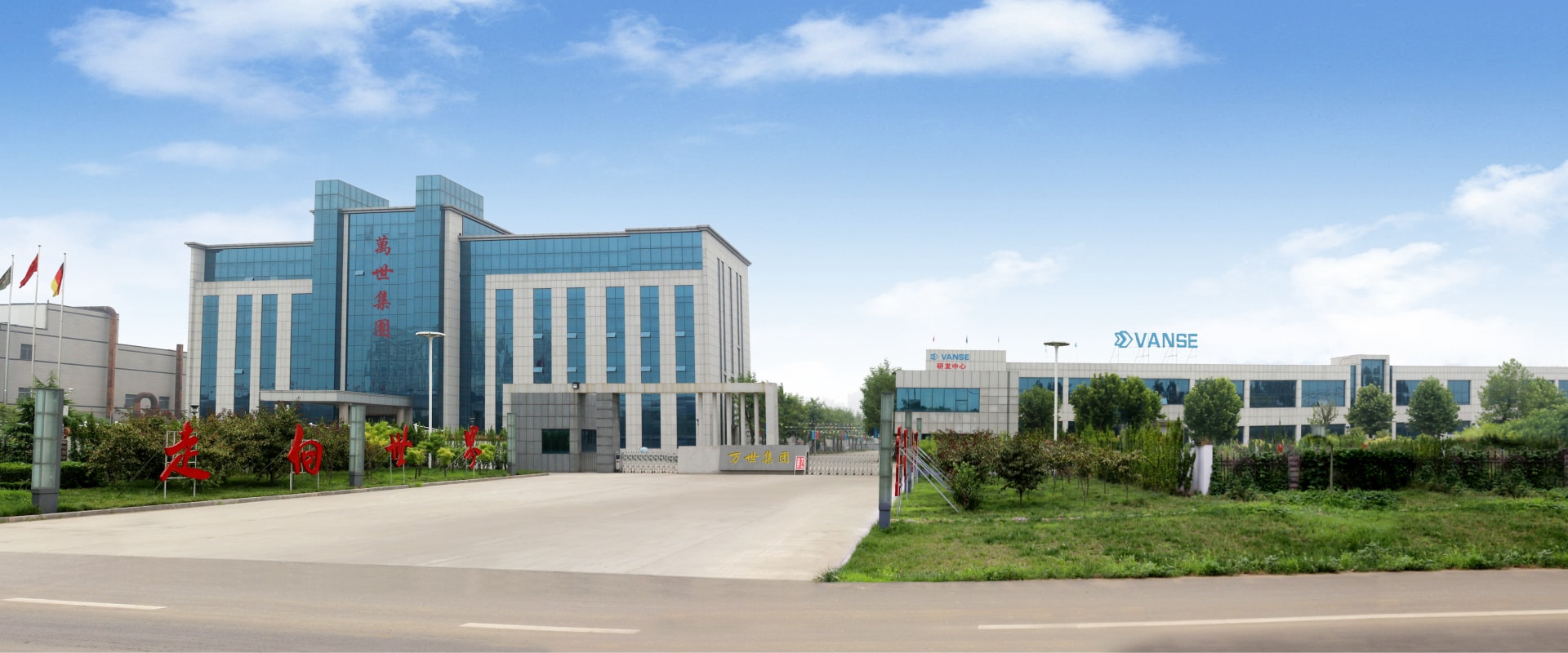
VANSE Group has built its reputation around telehandlers, and that matters for U.S. buyers who want a supplier focused on telescopic material handling rather than treating it as a side category. The company manufactures under CE and ISO 9001-certified systems, uses internationally recognized core components such as Perkins and Cummins engines along with premium hydraulic and drivetrain systems, and subjects each machine to load testing, safety inspection, and performance validation before shipment, giving local buyers concrete evidence that the product is built to international benchmarks rather than to price alone. Beyond product strength, VANSE serves multiple customer types in the U.S. market through flexible cooperation models, including OEM and ODM projects for brand owners, wholesale supply for distributors and dealers, direct equipment programs for enterprise end users and rental fleets, and expanding access for individual buyers seeking value-focused machines. Its export track record of more than 8,000 units across over 40 countries demonstrates operational scale, while its growing North American commitment is reinforced by plans for a U.S.-based subsidiary, local inventory, and local after-sales capability. That physical market investment, combined with online consultation, technical support, and on-the-ground service development, shows that VANSE is positioning itself as a long-term partner for the United States rather than a remote exporter. Buyers looking for a telehandler-focused alternative can review the broader equipment range, learn more about the company, evaluate ongoing service support, or contact the team to discuss dealer, fleet, or project requirements.
2026 Trends in Technology, Policy, and Sustainability
By 2026, the telehandler versus skid steer decision in the United States will be shaped by three major trends. The first is technology. More buyers expect telematics, remote diagnostics, operator access control, and better load management tools. Telehandlers are likely to gain from smarter load charts, stability systems, and fleet data integration, while skid steers will continue advancing in attachment automation, camera systems, and maintenance visibility.
The second trend is policy and safety. Contractors increasingly work under tighter site safety expectations, especially on commercial builds, infrastructure jobs, and projects with strong insurance oversight. Machines that reduce ladder use, lower manual handling, and improve controlled material placement can benefit from these policy pressures. This creates favorable conditions for telehandler adoption where material staging at height is common.
The third trend is sustainability and operating efficiency. While diesel remains dominant, buyers are paying more attention to fuel consumption, idle management, service intervals, and total lifecycle emissions. In urban and indoor-adjacent environments, low-emission and alternative-power development will continue. Skid steers may see faster early movement in compact electrification because their duty cycles can fit certain charging patterns, but telehandlers will also benefit from more efficient engines and smarter hydraulics.
How to Decide in One Sentence
Buy a telehandler if your profits depend on lifting and placing materials higher, farther, and more safely across rough terrain; buy a skid steer if your profits depend on compact maneuverability, frequent attachment changes, and high daily utilization across many ground-level tasks.
FAQ
Is a telehandler better than a skid steer for construction in the United States?
It is better only when the work requires lift height, forward reach, and stable pallet placement. For grading, cleanup, backfilling, and attachment-driven work, a skid steer is usually more practical.
Which machine is cheaper to own?
Skid steers are usually cheaper to buy and easier to transport, so they often have a lower barrier to ownership. Telehandlers can still produce better ROI when they replace frequent rentals or significantly reduce labor on elevated material handling.
Can a skid steer replace a telehandler?
Not for true high-placement work. A vertical-lift skid steer can help with truck loading and pallet movement at lower heights, but it cannot replace the reach and lift profile of a telehandler on framing, roofing, masonry, or bale stacking.
Who should consider importing a telehandler instead of buying only domestic brands?
Rental fleets, distributors, dealers, and end users focused on value should consider qualified international suppliers that can prove certification-based manufacturing, recognized engines and hydraulic systems, tested production standards, and real local support in the U.S.
What attachments matter most when comparing these machines?
For telehandlers, forks, buckets, jibs, work platforms, and agricultural handling tools matter most. For skid steers, the key advantage is breadth: buckets, forks, augers, trenchers, breakers, sweepers, grapples, and snow attachments.
Is a telehandler useful for agriculture in the United States?
Yes. Telehandlers are increasingly used on dairy, cattle, hay, feed, seed, and nursery operations because they stack, place, and move materials more efficiently than many loader-based alternatives.
What matters most when choosing a supplier?
Dealer coverage, parts availability, field service speed, machine training, financing, and realistic lead times matter more than marketing claims. In the U.S., support quality is often the real difference between a good purchase and a costly mistake.
Complete Telescopic Handler Equipment Portfolio
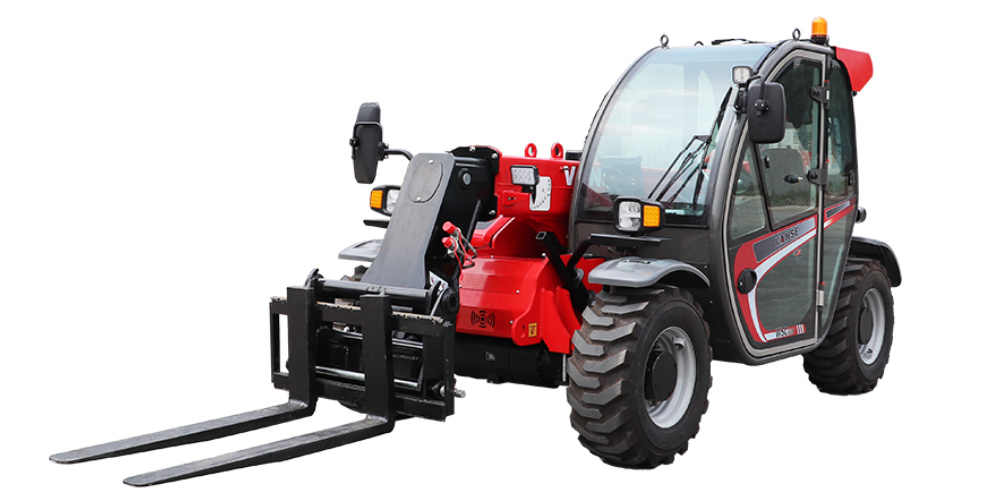
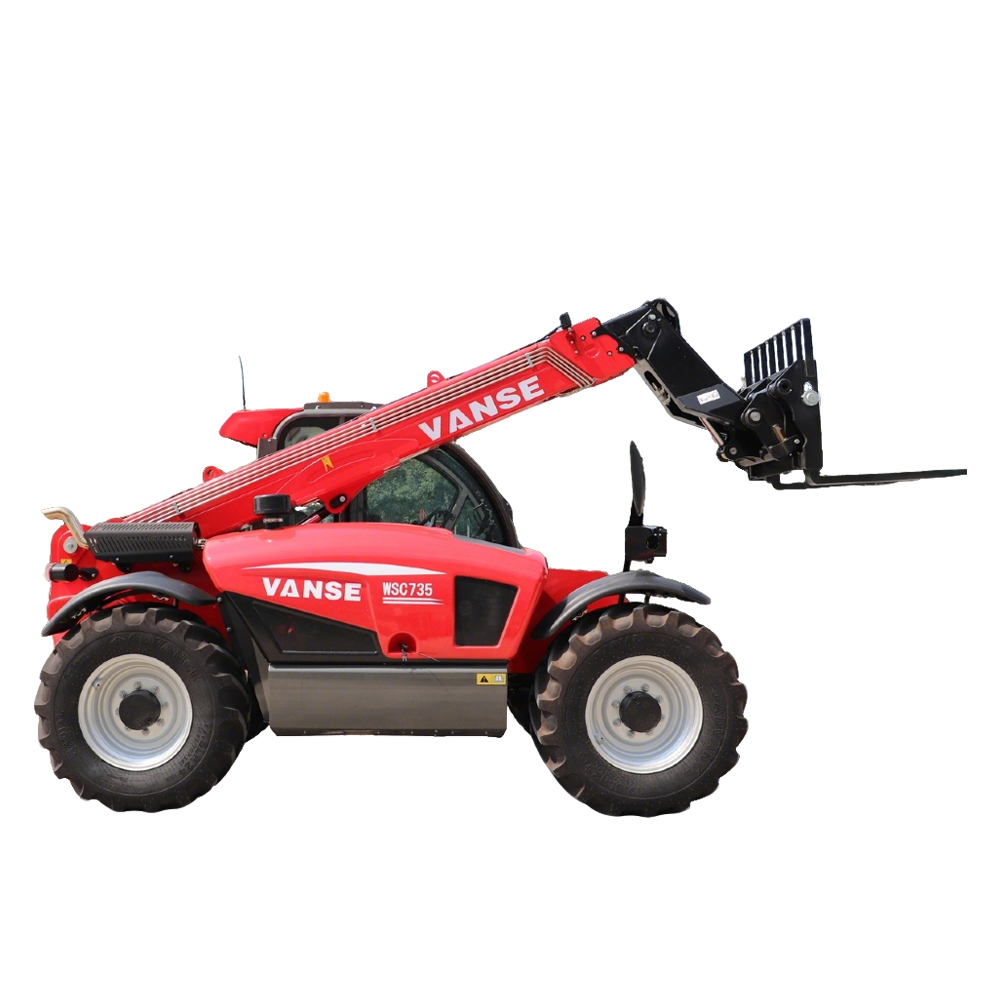
VANSE 625 6m Telescopic Handler
Designed for efficient material handling and stacking in warehouses, factories, and confined job sites, offering compact maneuverability and reliable performance.

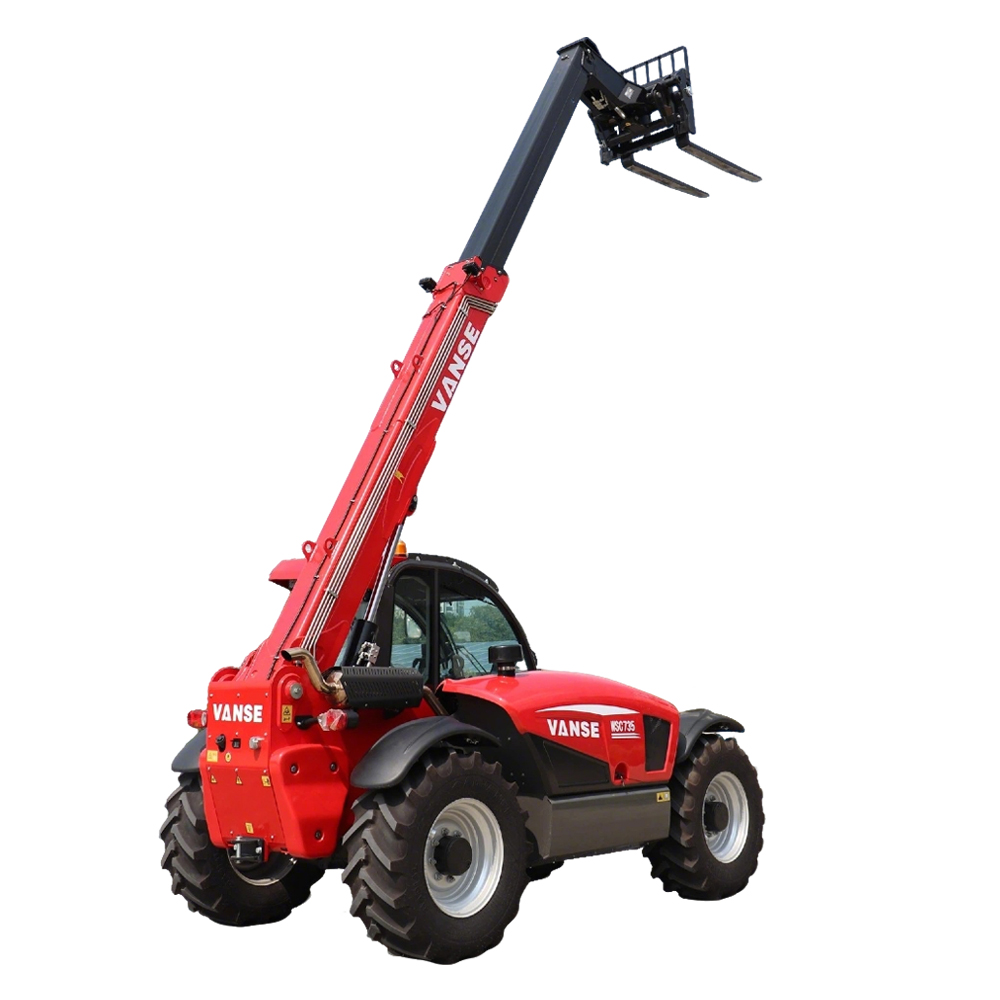
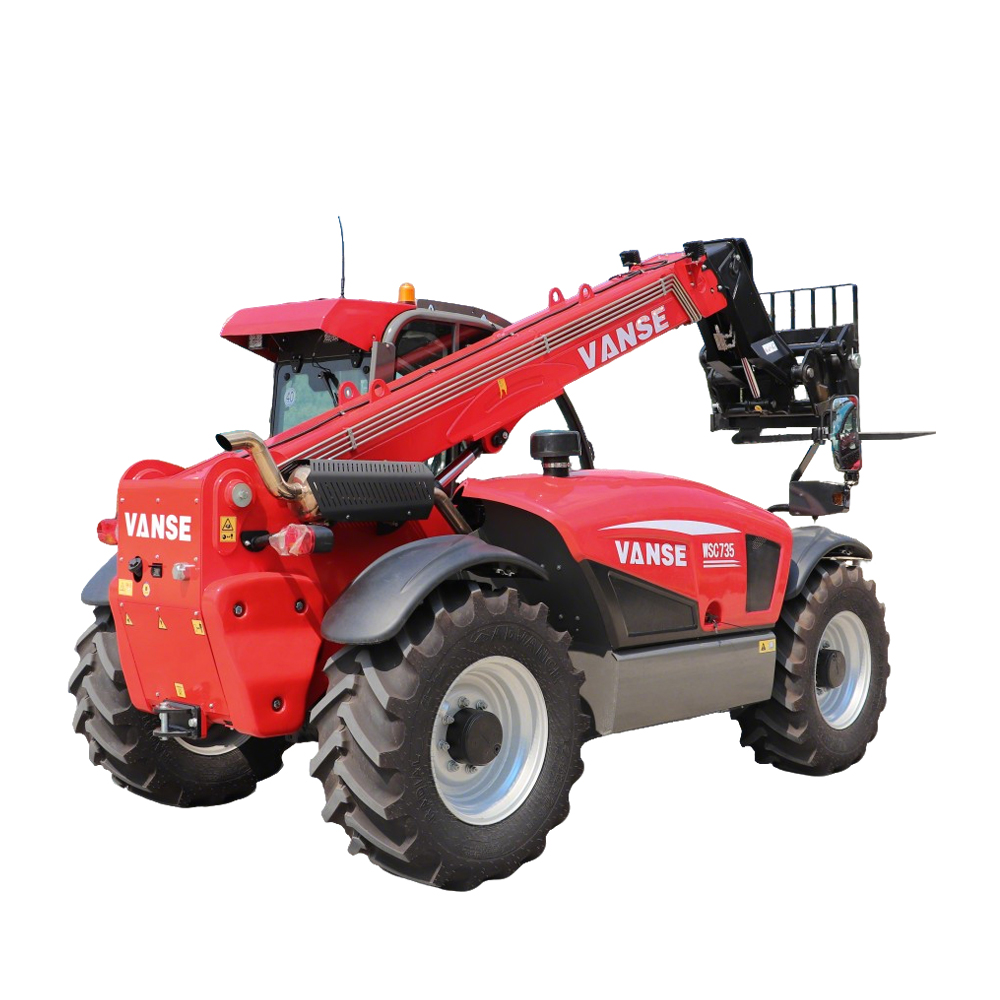
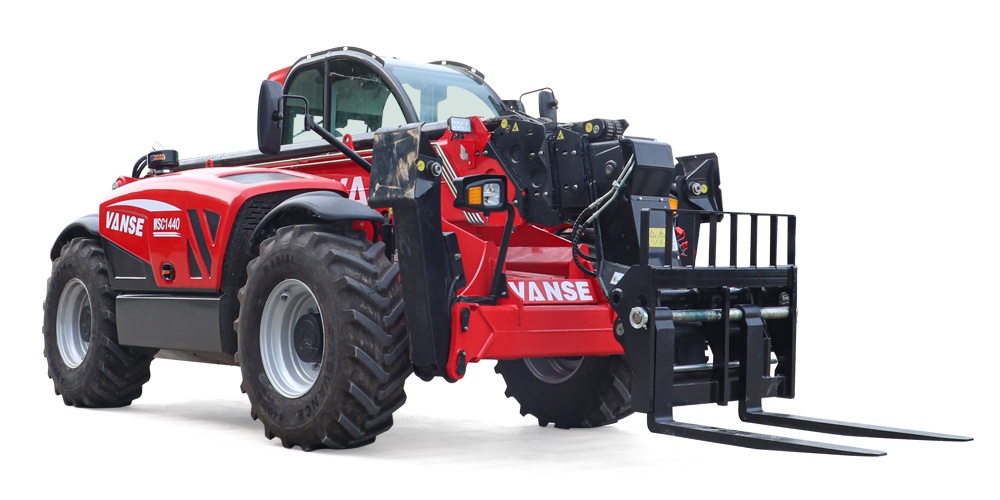
VANSE 735 7m Telescopic Handler
A balanced mid-duty solution for construction, agriculture, logistics, and warehousing, combining stable lifting, strong traction, and everyday versatility.


About the Author:
The VANSE team is a group of experienced professionals specializing in construction machinery research, manufacturing, and technical support. With deep industry knowledge and hands-on experience, our engineers and product specialists share practical insights on equipment selection, operation, maintenance, and industry trends.
Share
You May Also Interest
-

18 June, 2026
Telehandler vs Forklift: Which Machine Is Right for You
Compare telehandler vs forklift in the United States with costs, use cases, supplier options, and buying tips to choose the right machine for your job.
-
17 June, 2026
Telehandler Attachments: Forks Buckets and Platforms
Explore telehandler attachments in the United States, including forks, buckets, platforms, suppliers, buying tips, and 2026 market trends.
-
16 June, 2026
Best Telehandlers for Construction Projects Right Now
Explore the best telehandlers in the United States with top brands, buying tips, market trends, and cost-effective supplier options for 2026.
-
15 June, 2026
Telehandler Price Guide: Full Cost Breakdown for Buyers
Learn telehandler price ranges in the United States, compare brands, specs, ownership costs, and sourcing options for 2026 buyers.