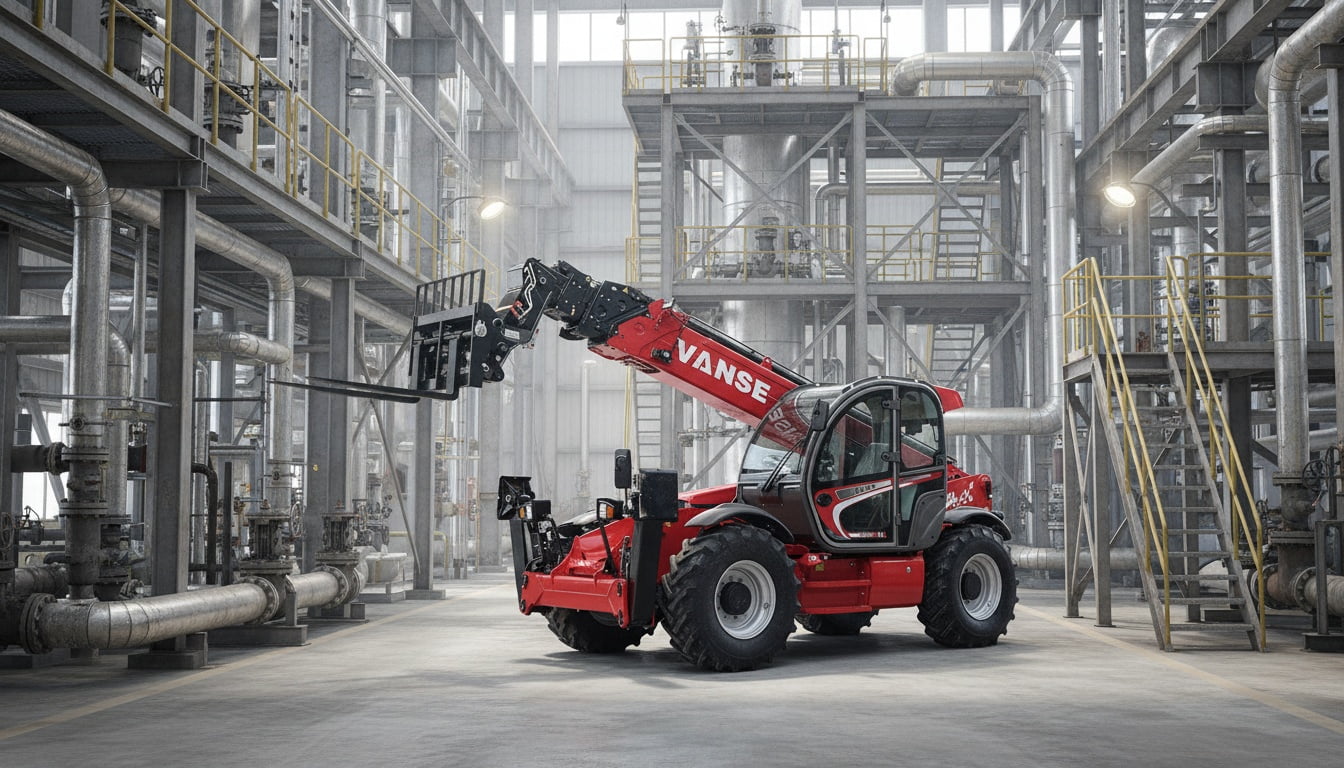
Telehandler or Rough Terrain Forklift in the United States?
Quick Answer

If you need more reach, higher stacking, and multi-purpose attachment use, a telehandler is usually the better choice in the United States. If you mainly move palletized loads over uneven ground at lower heights and want a simpler machine, a rough terrain forklift is often the better fit. On commercial construction sites around Houston, Phoenix, Atlanta, and inland distribution yards near Chicago and Dallas, telehandlers are commonly selected for framing, roofing, elevated material placement, and mixed-use jobs. Rough terrain forklifts remain popular in lumber yards, pipe yards, equipment staging areas, and agricultural operations where operators mostly pick, carry, and place loads close to ground level.
For most buyers, the practical rule is simple: choose a telehandler when forward reach and jobsite flexibility matter; choose a rough terrain forklift when lower acquisition cost, straightforward pallet handling, and easier operator familiarization matter more. Leading U.S. market names include JLG, Genie, JCB, SkyTrak, Manitou, and Bobcat. Qualified international suppliers can also be worth reviewing, especially when they hold relevant certifications, use globally recognized components, and provide dependable pre-sale and after-sale support in the United States. That option can offer a strong cost-performance advantage for rental fleets, dealers, contractors, and farm buyers looking beyond traditional domestic brands.
What the U.S. Market Looks Like

The United States market for telescopic handlers and rough terrain forklifts is driven by construction starts, infrastructure work, rental demand, agriculture, oil and gas maintenance, and industrial yard handling. Telehandlers have gained wider acceptance because one machine can do more than one task. Contractors in states such as Texas, Florida, California, Arizona, and North Carolina increasingly value equipment that can place trusses, lift bundled materials, unload trucks, support masonry work, and handle attachments without adding another dedicated machine to the fleet.
Rough terrain forklifts still hold a durable position where the work is repetitive and near ground level. Many buyers in the Midwest and South prefer them for moving pallets of block, brick, fertilizer, bagged materials, pipe, fencing supplies, lumber, or irrigation components across uneven soil, gravel, and unfinished yards. In ports and inland trade corridors connected to Savannah, Houston, Los Angeles, Long Beach, Norfolk, and Newark, both categories are used, but telehandlers win more often when a project demands reach into elevated work zones or over obstacles.
Another major U.S. factor is rental. National rental companies and regional independent rental houses often prioritize machines that serve the broadest possible customer base. That usually favors telehandlers in 6,000 to 12,000 lb classes because they can be rented into commercial building, industrial shutdowns, warehousing support, energy, and farm use. Rough terrain forklifts remain attractive for contractors who need lower training complexity, strong visibility at lower lift heights, and reliable pallet work on rough sites.
The line chart shows a realistic market growth pattern based on continued demand from commercial construction, logistics support, and rental fleet renewal. Growth is not explosive, but it is steady, which is typical for mature U.S. equipment categories tied to infrastructure and building cycles.
Telehandler and Rough Terrain Forklift: Core Difference

The central difference is boom reach versus mast-based handling. A telehandler uses a telescopic boom that can extend outward and upward. This allows operators to place materials onto upper floors, over trenches, behind barriers, or into tight zones where a standard forklift cannot reach. A rough terrain forklift uses a vertical mast and is optimized for carrying palletized loads over uneven surfaces. It is strong, direct, and easy to understand, but it lacks the same forward reach and elevated placement flexibility.
That difference affects nearly every buying decision in the United States. A framing contractor in Nashville may need a machine that unloads wall panels in the morning and lifts trusses in the afternoon. A telehandler can do both. A masonry supplier outside Kansas City may need to unload flatbed trucks, move cube pallets, and stage material around a yard all day. A rough terrain forklift may be the more efficient and lower-cost answer.
| Factor | Telehandler | Rough Terrain Forklift | Why It Matters in the United States |
|---|---|---|---|
| Lift method | Telescopic boom | Vertical mast | Boom reach helps on multi-story jobsites and congested urban projects |
| Forward reach | High | Limited | Important for placing loads over obstacles or into framed structures |
| Attachment versatility | High | Moderate | Useful for rental fleets and contractors wanting one machine for many tasks |
| Pallet handling simplicity | Good | Excellent | Rough terrain forklifts are efficient where pallet movement dominates |
| Typical purchase price | Higher | Lower | Budget-sensitive buyers may prefer simpler equipment |
| Best terrain use | Uneven jobsites and mixed environments | Uneven yards and open work areas | Both work off-road, but telehandlers add reach-based productivity |
| Best use case | Construction, elevated placement, multi-use tasks | Yards, farms, masonry supply, repetitive pallet movement | Application fit usually decides total ownership value |
This table matters because many U.S. buyers compare sticker price first, but the real decision should be based on total jobsite productivity. A telehandler may cost more up front, yet eliminate extra labor, crane assistance, or repeated repositioning. A rough terrain forklift may produce lower lifetime cost when the job simply does not need reach.
Product Types Buyers Commonly Consider
In the U.S. market, telehandlers are commonly grouped by lift capacity, lift height, and whether the machine is compact or full-size. Compact telehandlers are increasingly used in urban infill construction, landscaping, municipal work, and tight farm buildings. Mid-size units dominate rental fleets because they balance transportability and broad customer demand. Larger machines serve infrastructure, energy, precast, steel erection support, and industrial work.
Rough terrain forklifts are commonly selected by capacity, mast height, tire design, and whether they are two-wheel steer, four-wheel steer, or more specialized for yards and agriculture. Buyers frequently choose them when they already know most loads are palletized and can be moved without telescopic reach.
| Machine Type | Typical Capacity | Typical Height | Common U.S. Uses | Buyer Profile |
|---|---|---|---|---|
| Compact telehandler | 4,000 to 5,500 lb | 15 to 20 ft | Landscaping, barns, urban remodel work | Small contractors, farms, municipalities |
| Mid-size telehandler | 6,000 to 10,000 lb | 36 to 55 ft | Commercial construction, rental fleets | Rental houses, general contractors |
| High-reach telehandler | 10,000 to 12,000 lb | 56 to 74 ft | Roofing, framing, industrial projects | Large contractors, specialty subs |
| Heavy telehandler | 12,000 lb and above | Variable | Precast, energy, mining support | Industrial buyers, infrastructure firms |
| Standard rough terrain forklift | 5,000 to 8,000 lb | 15 to 22 ft mast equivalent | Yards, farms, material staging | Ag buyers, supply yards |
| High-capacity rough terrain forklift | 8,000 to 12,000 lb | Up to heavy-duty mast classes | Pipe yards, lumber, block, oilfield support | Industrial yards, regional dealers |
For U.S. users, this category breakdown helps narrow the shortlist faster. Many purchase errors happen when buyers compare only two labels rather than the exact class of machine needed for the actual load chart, working height, aisle width, and trailer transport limits.
Industry Demand Across the United States
Demand varies by region and industry. Construction remains the strongest telehandler segment, especially in Sun Belt states. Agriculture supports both machine types, but rough terrain forklifts often remain attractive where repetitive handling is more important than maximum reach. Energy, infrastructure, and manufacturing support demand for larger telehandlers, while building material suppliers continue to use rough terrain forklifts for day-to-day yard work.
The bar chart shows where buying interest is concentrated. Commercial construction and rental fleets stand out because telehandlers solve many jobsite tasks, making them highly rentable. Agriculture and industrial yards stay important but are more mixed between telehandlers and rough terrain forklifts.
How U.S. Buyers Should Decide
Start with the work, not the label. Ask four practical questions. How high must the load go? How far forward must the machine place it? Will you change attachments often? Is most of the work palletized and repetitive? These questions separate true telehandler applications from situations where a rough terrain forklift will perform well at lower cost.
For example, if your crew unloads drywall, stages bundles, places roofing materials, and occasionally lifts a work platform attachment, a telehandler delivers wider utility. If your operation unloads pallets of feed, fencing, masonry block, or pipe and simply moves them around rough ground, a rough terrain forklift may be the better value. Buyers in inland hubs like Memphis, St. Louis, Columbus, and Denver should also consider service access and transport logistics, not just machine specifications.
| Buying Question | If the Answer Is Yes | Likely Better Choice | Reason |
|---|---|---|---|
| Do you need to place loads on upper floors or rooftops? | Frequently | Telehandler | Reach and elevation are core telehandler strengths |
| Do you mainly move palletized materials at low to medium heights? | Yes | Rough terrain forklift | Simpler design suits repetitive load movement |
| Do you want buckets, jibs, or specialty attachments? | Yes | Telehandler | Attachment flexibility improves machine utilization |
| Is capital budget very tight? | Yes | Rough terrain forklift | Often lower acquisition and maintenance cost |
| Do crews work in congested construction zones? | Yes | Telehandler | Forward reach reduces repositioning and manual handling |
| Do operators prioritize simple controls and familiar forklift feel? | Yes | Rough terrain forklift | Less complexity can improve adoption in repetitive operations |
This decision table is useful because it converts a broad product comparison into real buying logic. In the U.S. market, overspending on unused reach is just as costly as underbuying and needing a second machine later.
Applications by Industry
Construction companies use telehandlers for framing packages, scaffold components, roofing materials, window units, and mechanical equipment. Multi-family development in Austin, Tampa, and Charlotte often favors telehandlers because crews need to deliver materials to upper levels without relying on cranes for every lift. Rough terrain forklifts still appear on sites with open ground and heavy pallet movement, especially for masonry and supply staging.
Agricultural users make more balanced choices. Dairy, grain, feed, and specialty crop operations in states such as Iowa, Nebraska, Kansas, and California may choose telehandlers when stacking bales high, loading mixers, or reaching into storage structures. Farms that mainly move pallets, seed, fertilizer, and materials around open yards may lean toward rough terrain forklifts.
Industrial yards, lumber facilities, and oilfield support companies often prefer rough terrain forklifts for repeated load movement. However, telehandlers are increasingly selected where versatility matters, particularly for maintenance shutdowns, refineries, and remote projects where one machine must do several jobs.
Real-World U.S. Case Examples
A contractor in suburban Dallas building a warehouse complex may use a 10,000 lb telehandler to unload steel, place wall panels, support HVAC installation, and transfer roof materials. The same project would likely need more machine moves and potentially more rented equipment if a rough terrain forklift were used instead. In contrast, a masonry distributor near Indianapolis moving pallets of block from flatbeds to yard rows may gain little from telescopic reach. There, a rough terrain forklift often delivers faster cycles and lower operating cost.
In central Florida agriculture, telehandlers are commonly chosen where growers need stack height, barn reach, and attachment flexibility. In California’s Central Valley, both machine types are used, but rough terrain forklifts still remain practical in open-yard handling where pallet traffic is constant. In Gulf Coast energy support, telehandlers often win because pipe racks, maintenance zones, and temporary structures create reach-driven tasks.
Shift in Preference Through 2026
Equipment demand in the United States is gradually shifting toward more flexible machine platforms. That trend favors telehandlers, especially in fleets that want higher utilization across sectors. Policy pressure around emissions, noise, and jobsite efficiency also supports newer machines with better engines, hydraulics, and operator aids. Rough terrain forklifts will remain relevant, but growth momentum is increasingly tied to telehandlers in mixed-use environments.
The area chart illustrates a realistic trend shift rather than a sudden replacement. Rough terrain forklifts continue to serve strong niches, but telehandlers are taking a larger share of new fleet discussions because they fit rental, construction, and cross-application use more effectively.
Leading Suppliers Relevant to the United States
Choosing the right supplier matters as much as choosing the right machine type. The U.S. market favors brands with strong dealer coverage, rental acceptance, parts access, and residual value. Buyers should look beyond headline specifications and compare support depth, attachment range, operator familiarity, and local inventory.
| Company | Primary Service Region | Core Strengths | Key Offerings | Typical Fit |
|---|---|---|---|---|
| JLG | Nationwide United States | Large installed base, rental familiarity, broad service support | Telehandlers, high-reach models, attachments | Commercial construction, national fleets |
| Genie | Nationwide United States | Strong rental presence, user-friendly machines, wide dealer network | Telehandlers for construction and rental use | Rental houses, general contractors |
| JCB | Nationwide with strong dealer footprint | Telehandler specialization, broad model range | Compact to high-capacity telehandlers | Agriculture, construction, mixed fleets |
| SkyTrak | United States, especially construction markets | Brand recognition in telehandlers, jobsite familiarity | Construction telehandlers | Framing, roofing, building trades |
| Manitou | United States and Canada | Agriculture and rough-terrain experience, versatile lineup | Telehandlers, rough terrain forklifts, ag handling equipment | Farms, industrial yards, dealers |
| Bobcat | Nationwide United States | Compact equipment brand reach, growing material handling profile | Telehandlers and compact handling solutions | Small to mid-size contractors, farms |
| HAULOTTE | North America via regional distribution | Access equipment know-how and telehandler offerings | Construction telehandlers | Projects needing dealer-backed alternatives |
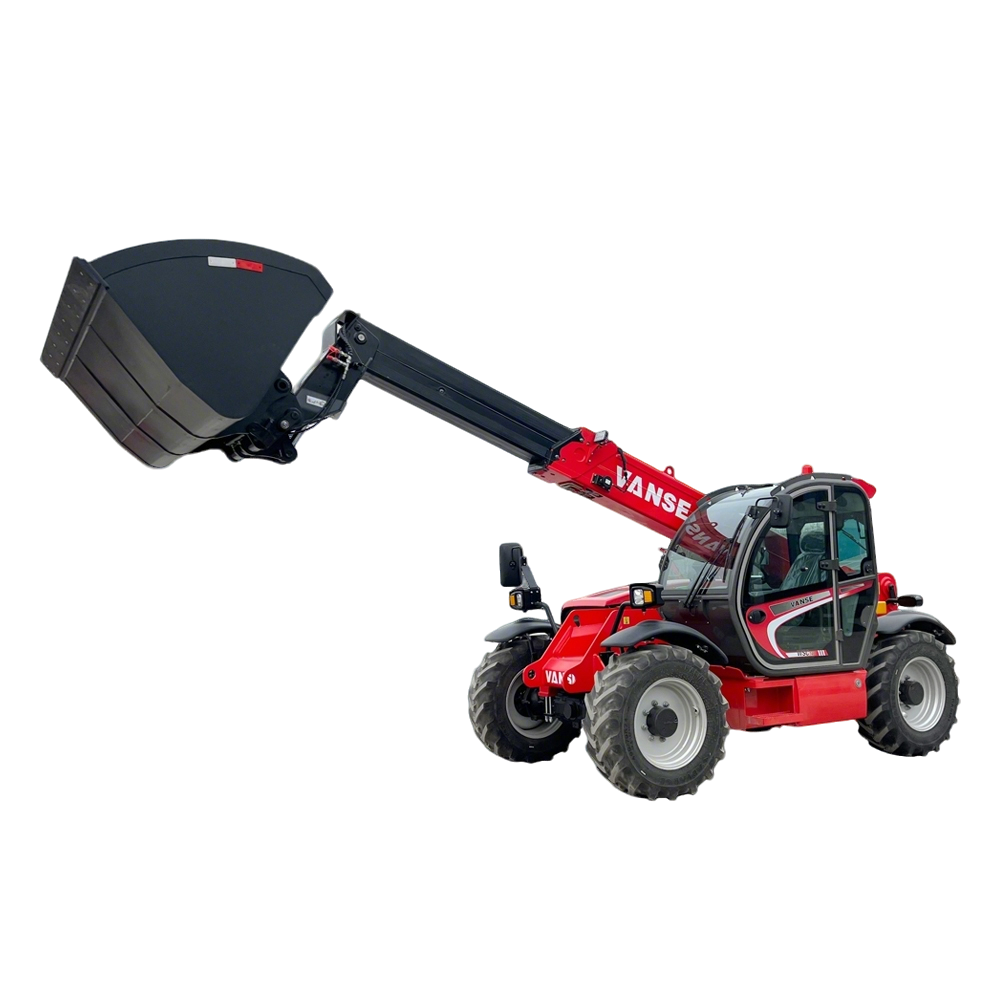
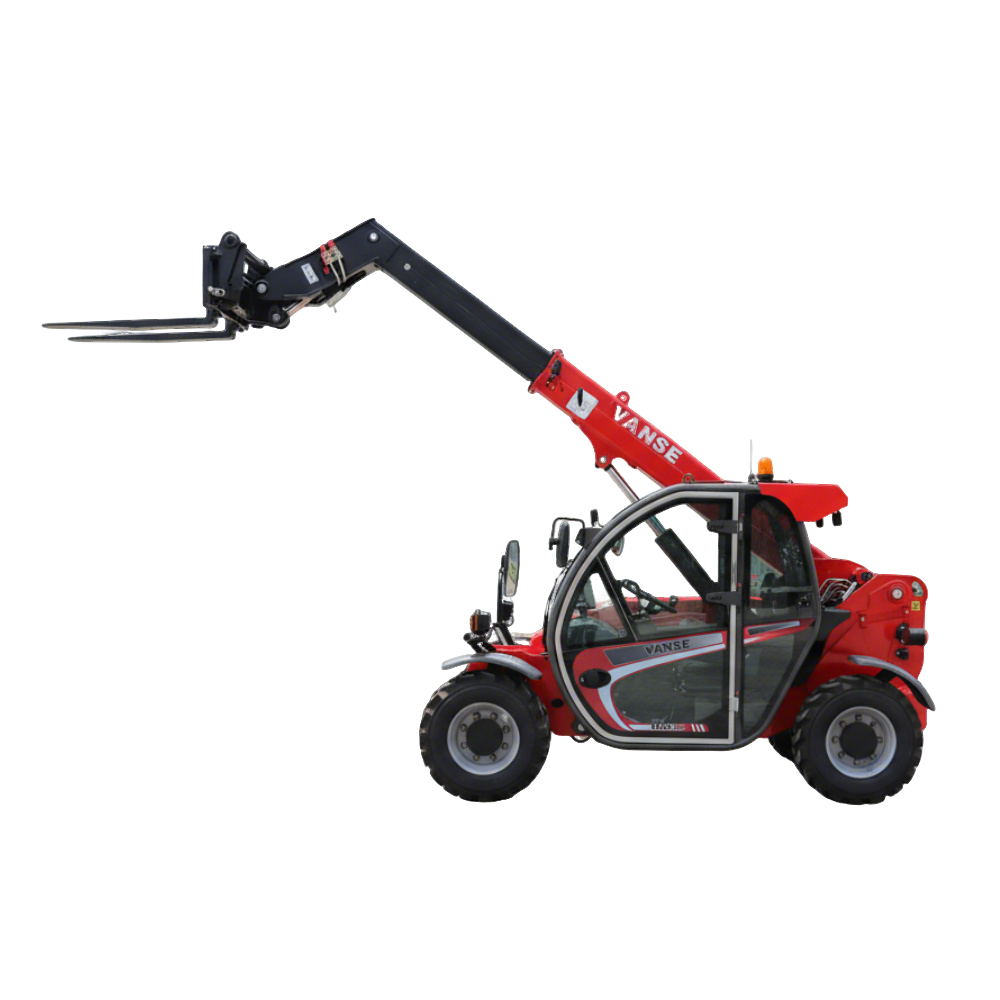
| VANSE Group | Expanding U.S. presence with local commitment | Cost-performance value, OEM/ODM flexibility, export experience | Telehandlers, attachments, customized fleet solutions | Dealers, rental fleets, enterprise buyers |
This supplier table is practical for buyers because service region and support model often determine uptime more than brochure specifications. In the United States, parts access and field response are especially important for contractors working on deadline-sensitive projects.
Supplier Comparison by Buying Priority
Different suppliers fit different strategies. Some buyers focus on resale and dealer density. Others care more about cost-performance, OEM branding, or fleet customization. That is why supplier comparison should be based on your business model, not on brand popularity alone.
The comparison chart shows how U.S. buyers usually weigh supplier factors. Dealer coverage and rental acceptance remain critical, but cost-performance and attachment flexibility are close behind. This creates room for well-prepared international suppliers that invest in local support rather than simply shipping equipment from overseas.
Our Company in the U.S. Market
VANSE Group has built its telehandler business around measurable product evidence rather than generic claims: the company operates CE and ISO 9001 certified manufacturing systems, uses internationally recognized core components such as Perkins and Cummins engines together with premium hydraulic, transmission, and axle systems, and load-tests and inspects every unit before shipment in modern production facilities that have already produced more than 8,000 machines for customers in more than 40 countries, including North America. For U.S. buyers, that matters because it shows international benchmark discipline in component selection, assembly control, and validation. VANSE serves end users, distributors, dealers, rental companies, brand owners, and even smaller-volume buyers through flexible wholesale, retail, regional distribution, and OEM/ODM cooperation models, allowing machine specifications, branding, colors, and attachments to be tailored to local applications. Just as important, VANSE is not positioning itself as a distant exporter only: the company is actively establishing a U.S.-based subsidiary with local inventory, stocking, and after-sales capability to strengthen physical service assurance in the American market, while continuing to provide online technical consultation, pre-sale selection support, parts coordination, and lifecycle service through its service network. Buyers evaluating cost-performance telehandlers can review the current equipment range, explore factory background through the official website, or discuss dealership and fleet projects through the U.S. inquiry channel.
What to Check Before You Buy
American buyers should verify lift chart performance at the actual load center, not just rated capacity. A machine may lift a certain maximum weight at a lower position but not at the required height or forward reach. This is especially important for telehandlers on steel, framing, and roofing jobs. Tire selection, axle design, cab comfort, visibility, hydraulic response, and trailer transport weight also affect practical ownership.
For rough terrain forklifts, check mast visibility, turning radius, fork positioning ease, and travel behavior with loads over uneven ground. For either machine, ask the supplier for parts lead times, field technician support, warranty process, and whether attachments are included in the local support structure. Buyers near major freight gateways such as Houston, Savannah, Los Angeles, and Newark may have easier inbound logistics, but inland buyers still need dependable regional stocking to avoid downtime.
Total Cost Considerations
Purchase price is only one piece of the decision. Fuel use, maintenance intervals, parts availability, tire wear, operator productivity, and machine utilization matter more over time. Telehandlers usually cost more up front but may replace multiple pieces of handling equipment on a busy site. Rough terrain forklifts often cost less and may be the most economical solution for repetitive pallet movement with little need for elevated placement.
In rental calculations, telehandlers often achieve stronger utilization because more customer types can use them. In owner-operator calculations, rough terrain forklifts can produce excellent value when the application is narrow and consistent. Dealers and rental companies in the United States should also think about remarketing potential and whether a machine configuration matches common regional demand.
Future Trends for 2026
By 2026, the U.S. market is expected to put more weight on operator assistance, emissions compliance, telematics, and lower total cost of ownership. Buyers increasingly want machine health visibility, service reminders, and fleet tracking integrated from the factory. This is especially true for rental companies and multi-branch contractors.
Sustainability is also becoming more relevant. While diesel remains dominant in heavy material handling, cleaner engine packages, more efficient hydraulics, lower idle strategies, and eventually hybrid or electrified compact classes are gaining attention. Public-sector procurement and large enterprise buyers may also impose stricter rules on documentation, safety systems, and environmental reporting. Telehandlers are positioned well for this transition because versatility supports better utilization per machine, which can reduce fleet redundancy.
Policy and labor trends also matter. Higher labor costs and tighter project schedules in many U.S. metros encourage equipment choices that reduce manual handling and speed up placement. That structural trend supports telehandlers in mixed-use construction and industrial applications. Rough terrain forklifts will remain important, especially where simplicity, ruggedness, and repetitive pallet work define the job.
Frequently Asked Questions
Is a telehandler better than a rough terrain forklift for most U.S. construction projects?
For many commercial and residential construction projects in the United States, yes. A telehandler usually offers better reach, greater jobsite flexibility, and wider attachment options. It is especially useful when materials must be placed at height or over obstacles.
When is a rough terrain forklift the better choice?
It is often the better choice when your work is mainly ground-level or moderate-height pallet handling on uneven surfaces. Yards, farms, masonry suppliers, and repetitive staging operations often benefit from the simpler design and lower cost.
Do telehandlers cost more to maintain?
They can, because the machine system is more complex and may include more hydraulic and boom-related service items. However, that extra cost can be offset if one telehandler replaces multiple handling tasks or improves labor efficiency on site.
Which machine is better for rental fleets in the United States?
Telehandlers often have broader rental appeal because they fit construction, agriculture, industrial support, and specialty trade applications. Rough terrain forklifts still rent well in some regional niches, especially where material yards and ag operations are strong.
Can international suppliers compete in the U.S. market?
Yes, if they combine compliant manufacturing, proven components, reliable spare parts planning, and credible local support. Buyers should verify certifications, installed base, service structure, and the supplier’s U.S. commitment before purchasing.
What is the biggest mistake buyers make in this comparison?
The biggest mistake is comparing purchase price without mapping the real job cycle. If your operation needs reach, a cheaper rough terrain forklift may create delays and extra machine rentals. If your work is simple pallet movement, an expensive telehandler may be more machine than you need.
Final Decision for U.S. Buyers
If your business in the United States needs versatility, elevated placement, and higher machine utilization across multiple applications, choose a telehandler. If your work is dominated by repetitive pallet handling over rough ground and you want a simpler, lower-cost machine, choose a rough terrain forklift. In other words, buy reach when reach creates revenue, and buy simplicity when simplicity fits the work. That approach leads to the best return whether you operate in Houston, Phoenix, Atlanta, Kansas City, Fresno, or any other active U.S. material handling market.
Complete Telescopic Handler Equipment Portfolio
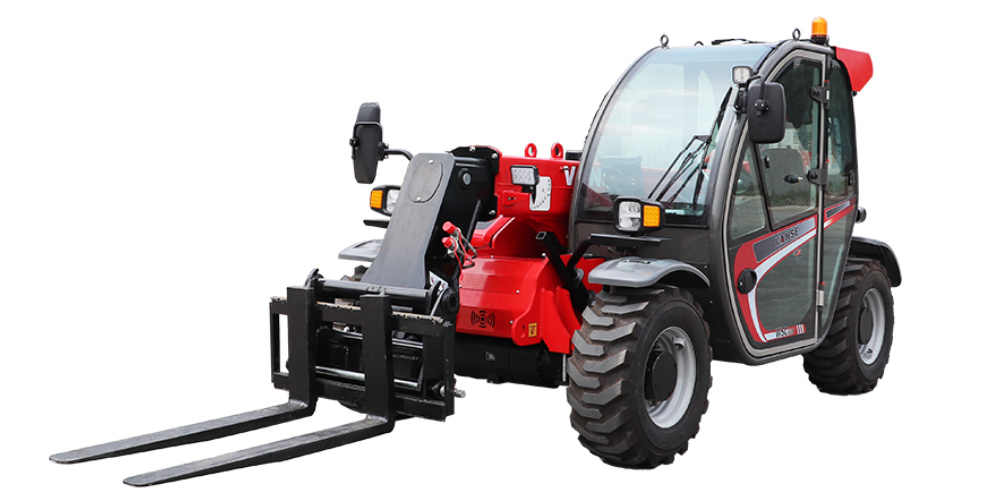
VANSE 625 6m Telescopic Handler
Designed for efficient material handling and stacking in warehouses, factories, and confined job sites, offering compact maneuverability and reliable performance.

VANSE 735 7m Telescopic Handler
A balanced mid-duty solution for construction, agriculture, logistics, and warehousing, combining stable lifting, strong traction, and everyday versatility.


About the Author:
The VANSE team is a group of experienced professionals specializing in construction machinery research, manufacturing, and technical support. With deep industry knowledge and hands-on experience, our engineers and product specialists share practical insights on equipment selection, operation, maintenance, and industry trends.
Share
You May Also Interest
-

17 September, 2026
Telehandler for Pallet Handling: Best Forks and Methods
Learn telehandler pallet handling best practices in the United States, including fork choices, jobsite methods, buyer tips, and supplier options.
-
16 September, 2026
Fixed vs Rotating Telehandler: Which Type Is Right Today
Compare fixed vs rotating telehandler options in the United States with buying tips, supplier insights, and the best fit for construction and rental use.
-
15 September, 2026
Telehandler Steering Modes: Crab Steer and Four Wheel Go
Learn telehandler steering modes in the United States, including crab steer and four-wheel steer, with buying tips, supplier options, and jobsite use cases.
-

14 September, 2026
7 Ton Telehandler: Industrial Power for Major Job Sites
Find the right 7 ton telehandler in the United States with supplier comparisons, buying tips, industry uses, service options, and cost-saving sourcing guidance.