Telehandler vs Wheel Loader in the United States
Quick Answer

If your job in the United States requires lift height, forward reach, pallet handling, or work around scaffolding, trusses, pipe racks, and stacked materials, a telehandler is usually the better choice. If your operation focuses on repeated bucket loading, stockpile movement, truck loading, road base handling, aggregate yards, or fast cycle times on open ground, a wheel loader is usually the better fit. In practical terms, contractors in Houston, Dallas, Phoenix, Chicago, Atlanta, Los Angeles, and major logistics corridors near the Port of Houston, Port of Savannah, and Port of Los Angeles often choose telehandlers for vertical material placement and wheel loaders for bulk earthmoving and yard loading.
For most buyers, the decision comes down to three direct rules. Choose a telehandler when reach, lift height, attachment versatility, and access in tighter work zones matter most. Choose a wheel loader when breakout force, bucket productivity, loading speed, and operator familiarity drive the return on investment. If your fleet serves mixed jobsites, rental demand, agriculture, or industrial yards, it can be smart to operate both.
Well-known suppliers active in the United States include JLG, Genie, JCB, Caterpillar, Volvo Construction Equipment, and CASE Construction Equipment. Qualified international suppliers can also be worth evaluating, especially when they provide recognized certifications, premium powertrain and hydraulic components, strong pre-sale engineering support, local parts planning, and responsive after-sales service. For buyers prioritizing cost-performance, that combination can deliver strong value without giving up reliability.
Direct Comparison: Which Machine Fits Which Job

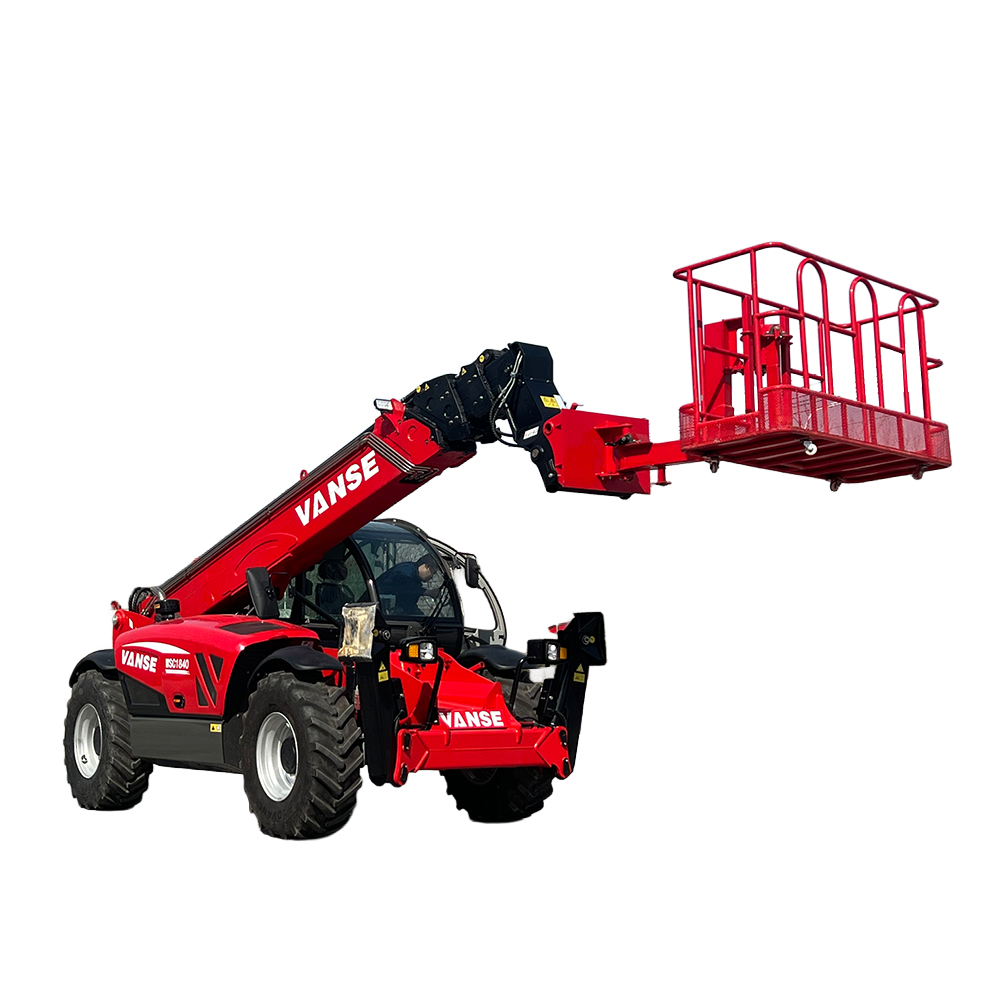
A telehandler and a wheel loader can both move material, but they are designed around different motions and different work patterns. A telehandler lifts upward and outward through a telescopic boom, making it useful for placing loads onto roofs, elevated decks, mezzanines, feed bays, or upper storage racks. A wheel loader is optimized around loading and carrying loose or bulk materials over short distances with a front bucket. On many United States jobsites, the telehandler acts like a reach-and-lift machine, while the wheel loader acts like a dig-and-load machine.
For example, on a commercial building site in Nashville or Charlotte, a telehandler may deliver pallets of block, framing materials, and HVAC units to elevated work zones that a wheel loader cannot reach. In a quarry support yard outside Denver or a municipal works depot in Ohio, a wheel loader is better at handling gravel, salt, topsoil, and recycled asphalt because it can load quickly, push into stockpiles, and repeat cycles with less repositioning. The decision therefore should start not with brand preference, but with the exact material flow on the site.
Another important factor is attachments. Telehandlers in the United States are commonly configured with pallet forks, buckets, truss booms, jibs, work platforms where regulations allow, bale handlers, and specialty industrial tools. Wheel loaders also support attachments, including buckets, forks, grapples, brooms, snow pushers, and couplers, but they remain strongest in scoop-carry-load applications. If your operation changes from lifting pallets one day to handling bulk material the next, you must compare not just machine price, but the cost and practicality of attachments, changeover time, and operator training.
Market Overview in the United States

The United States market for both telehandlers and wheel loaders remains active because the country has a broad mix of construction, agriculture, warehousing, port logistics, infrastructure maintenance, energy, and rental demand. Telehandlers are particularly visible in commercial construction, farm operations, equipment rental fleets, industrial maintenance, and large distribution projects. Wheel loaders remain deeply established in aggregates, roadbuilding, landfill work, municipal yards, material recycling, feedlots, and heavy site preparation.
Regional patterns matter. In the Midwest, telehandlers are common on farms and mixed-use construction sites, while wheel loaders remain important in grain operations, feed handling, and snow-heavy municipal fleets. In Texas and the Gulf Coast, telehandlers are popular on large industrial projects, refinery support, steel erection, and commercial development. Wheel loaders remain strong in aggregate handling, roadwork, and heavy material yards. In California, telehandlers serve construction, vineyards, and industrial sites, while wheel loaders are favored in recycling, ports, and civil work. In the Southeast, rapid warehouse and logistics development around Savannah, Jacksonville, and inland distribution hubs supports telehandler demand, while wheel loaders remain essential for site development and yard applications.
The line chart shows a realistic demand trend in the United States. Telehandlers have been growing slightly faster because more projects require vertical material movement, and rental houses increasingly want versatile machines that can serve construction, agriculture, and industrial customers. Wheel loaders continue to grow as infrastructure, aggregate, and municipal spending remain stable, but their demand curve is often more tied to earthmoving and bulk material cycles.
Product Types and Core Specifications
Not all telehandlers or wheel loaders serve the same buyer. Compact telehandlers may suit nurseries, feed yards, small contractors, and indoor-outdoor industrial sites, while larger construction telehandlers handle steel, precast, masonry, and roofing supply placement. Wheel loaders range from compact yard machines used in landscaping and snow removal to larger units used in quarries, transfer stations, and public works fleets.
| Machine Type | Typical Operating Focus | Common Capacity Range | Main Strength | Main Limitation | Best US Use Cases |
|---|---|---|---|---|---|
| Compact Telehandler | Tight access lifting | 5,000 to 6,600 lb | Reach in confined spaces | Less bucket productivity | Urban builds, farms, warehouses |
| Construction Telehandler | High reach lifting | 6,000 to 12,000 lb | Height and forward reach | Slower for stockpile loading | Commercial jobs, roofing, steel, masonry |
| Rotating Telehandler | Complex elevated placement | 8,000 to 13,000 lb | 360-degree positioning | Higher acquisition cost | Dense urban work, specialty lifts |
| Compact Wheel Loader | Yard loading and carry | 1.0 to 2.5 cu yd bucket | Fast cycles in small yards | Limited lift height | Landscaping, snow, municipal yards |
| Mid-Size Wheel Loader | General construction loading | 2.5 to 4.5 cu yd bucket | Versatile bulk material handling | No telescopic reach | Site prep, aggregate, public works |
| Heavy Wheel Loader | High-volume loading | 4.5 cu yd and up | Productivity and breakout force | Less suitable for compact sites | Quarries, ports, recycling, mining support |
This table matters because buyers often compare the wrong size classes. A telehandler should be compared against the lifting requirement at maximum height and outreach, not only against ground-level capacity. A wheel loader should be compared against bucket volume, breakout force, loading cycle time, and loading tool match. A machine that looks cheaper on paper can become more expensive if it requires extra labor, rehandling, or another support machine.
Telehandler Advantages
Telehandlers offer one big advantage that changes the entire material flow on a jobsite: they can place loads where the work is happening. That reduces crane dependence for many day-to-day tasks and saves time on repeated pallet delivery. On a multi-story construction site in Miami or Austin, a telehandler can stage block, insulation, or pipe near the exact point of use. On a dairy or feed operation in Wisconsin or Idaho, it can stack bales, load feed, and reach into higher storage areas. For rental fleets, this versatility often improves utilization because one machine can serve several customer segments.
Telehandlers also support a broader set of height-sensitive applications. Fork handling, suspended loads with approved attachments, framing support, equipment placement, and elevated maintenance support all fall into their working envelope. As jobsite labor costs in the United States continue to rise, the ability to reduce manual repositioning becomes financially meaningful.
Wheel Loader Advantages
Wheel loaders dominate where repetitive bucket work and heavy loose material handling determine productivity. Their loading geometry, front-end strength, travel speed across open yards, and operator familiarity make them highly efficient in aggregate yards, soil operations, municipal stockpiles, and transfer stations. If your crew needs to load dump trucks all day in St. Louis, move road salt in Minneapolis, or manage recycled concrete in Southern California, the wheel loader remains one of the most efficient machine choices.
Wheel loaders also tend to offer straightforward operation and maintenance routines for fleets that already manage earthmoving equipment. Fuel burn per productive bucket cycle can be attractive when compared to forcing a telehandler to do a job outside its core design. That is why many buyers who ask whether a telehandler can replace a wheel loader discover that the answer is only partial. It may replace one for light bucket work, but it rarely matches the production speed of a purpose-built loader in a bulk material environment.
Industry Demand by Sector
The bar chart highlights a basic United States reality. Telehandlers are strongest in commercial construction and rental because reach and attachment flexibility support many daily tasks. Wheel loaders dominate aggregates and municipal work because loose material handling requires fast cycles and high pushing force. Agriculture and industrial yards sit in the middle, where the better machine depends on whether the operation handles stacked goods, palletized inputs, silage, feed, dirt, or gravel.
Buying Advice for US Buyers
When choosing between a telehandler and a wheel loader, US buyers should calculate total job cost rather than only machine price. Start with the material type. If it is palletized, bundled, or must be placed at height, a telehandler often wins. If it is loose, abrasive, or moved in repeated bucket cycles, a wheel loader usually wins. Next, look at the site layout. Tight urban jobsites and structured industrial plants favor telehandlers; wide-open yards and stockpiles favor wheel loaders.
Third, review operator availability and safety processes. A telehandler may require more careful load chart awareness, especially when lifting at reach. A wheel loader may be easier to assign across crews already experienced with loading equipment. Fourth, examine parts and support. In the United States, downtime costs can outweigh purchase savings quickly, so local dealer coverage, parts stocking, remote diagnostics, and technician response time matter. Finally, consider residual value and rental demand. Telehandlers often show strong demand in contractor and rental channels, while wheel loaders hold value well in municipal, aggregate, and heavy fleet markets.
| Buying Factor | Telehandler Priority | Wheel Loader Priority | What US Buyers Should Check | Risk if Ignored | Typical Best Fit |
|---|---|---|---|---|---|
| Lift Height | Very high | Low | Maximum lift and outreach at rated load | Machine cannot place materials | Building construction |
| Bucket Productivity | Moderate | Very high | Cycle time, bucket size, breakout force | Low throughput in bulk material jobs | Aggregate yards |
| Attachment Versatility | Very high | High | Forks, buckets, grapples, couplers, auxiliary flow | Extra machines needed | Rental and mixed fleets |
| Site Access | High | Moderate | Turning radius, boom clearance, ground conditions | Poor maneuverability | Urban sites and farms |
| Operator Familiarity | Moderate | High | Training requirements and crew experience | Safety and productivity loss | Municipal and earthmoving fleets |
| Support Network | Critical | Critical | Dealer response, parts stock, local technicians | Extended downtime | All sectors |
This table helps purchasing teams move beyond brochure features. The most expensive mistake is buying a machine that handles the occasional task but slows the core task every day. Fleet managers in the United States should map at least a month of actual job cycles before making a final choice.
Applications Across Major Industries
Construction companies use telehandlers heavily for framing support, block placement, roofing materials, glazing support, and site logistics. Wheel loaders on construction sites are more common in grading support, truck loading, debris handling, and aggregate movement. Agricultural businesses often use telehandlers for bale stacking, seed and feed handling, and loading into confined barns or storage spaces. Wheel loaders on farms and feedlots are preferred for high-volume silage, manure, and loose feed movement.
In industrial manufacturing and warehouse yards, telehandlers can support maintenance shutdowns, equipment installation, and pallet movement where reach is needed. Wheel loaders are more common in scrap yards, foundry raw material yards, bulk recyclables, and heavy outdoor handling. Municipal agencies often maintain wheel loaders for snow, salt, compost, and public works stockpiles, but telehandlers are increasingly used for parks departments, facilities maintenance, and event logistics where vertical handling matters.
Common Jobsite Applications
| Application | Preferred Machine | Reason | Typical Attachment | Common US Locations | Operational Note |
|---|---|---|---|---|---|
| Roof truss delivery | Telehandler | Needs height and forward reach | Forks or truss boom | Dallas, Atlanta, Orlando | Load chart discipline is essential |
| Aggregate stockpile loading | Wheel Loader | Fast repetitive bucket cycles | General purpose bucket | Phoenix, Denver, St. Louis | Focus on cycle efficiency |
| Bale stacking | Telehandler | High stack placement | Bale handler | Kansas, Iowa, Idaho | Visibility and stability matter |
| Road salt handling | Wheel Loader | Bulk material movement | Corrosion-resistant bucket | Chicago, Minneapolis, Buffalo | Winter maintenance support is key |
| Palletized brick placement | Telehandler | Delivers directly to work zone | Forks | Charlotte, Tampa, Nashville | Reduces manual rehandling |
| Recycling yard loading | Wheel Loader | Handles loose and mixed materials | Grapple or bucket | Los Angeles, Newark, Houston | Attachment choice affects throughput |
The table shows why many buyers in the United States end up owning both machine types. The machines overlap only partially. A telehandler can use a bucket, and a wheel loader can use forks, but their best economic use remains different. When utilization is high and tasks are specialized, choosing the right machine class creates a clear productivity gain.
Trend Shift in the United States
The area chart reflects a realistic shift rather than a full replacement story. More mixed-use fleets in the United States are adding telehandlers because one machine can cover construction handling, limited loading, pallet work, and specialty tasks. But wheel loaders are not disappearing. Fleets centered on aggregates, municipal stockpiles, and continuous bulk handling still prefer wheel loaders because those tasks reward dedicated loading performance.
Case Studies from Real-World US Use Patterns
A commercial contractor working between Austin and San Antonio may compare a 10,000 lb telehandler with a mid-size wheel loader during a logistics redesign. The contractor finds that pallets of block, lumber packs, HVAC units, and scaffolding accessories are being unloaded at ground level and rehandled multiple times. By shifting to a telehandler, materials can be delivered closer to active crews, reducing idle time and labor movement. The wheel loader still has value for site cleanup and aggregate, but it does not solve the core bottleneck.
In contrast, a county public works department in the Upper Midwest may compare the same machine classes and decide the opposite. Its main tasks include road salt loading, gravel yard management, storm cleanup, and snow support. Lift height is less important than traction, loader geometry, and fast repeated bucket cycles. Here, the wheel loader remains the obvious primary asset. A telehandler may still help with facilities maintenance or palletized seasonal supplies, but it would not be the fleet anchor.
A dairy operation in California’s Central Valley may choose a telehandler because stacked feed materials, bale handling, maintenance support, and barn access require both reach and compact positioning. A feedlot in Texas handling large volumes of loose silage and manure may prefer a wheel loader because pushing power and bucket throughput drive daily productivity. These examples show that the right answer comes from workflow, not from a general assumption that one machine class is newer or more advanced than the other.
Local Suppliers and Brands in the United States
The United States market offers strong coverage from established OEMs and dealer groups. Buyers usually focus on availability of service technicians, parts fill rates, financing options, telematics, and trade-in support. The supplier landscape also differs by machine type. Telehandlers are often sold through access equipment and mixed construction dealers, while wheel loaders are commonly sold through heavy equipment and earthmoving dealer channels.
| Company | Primary Focus | Service Regions | Core Strengths | Key Offerings | Best For |
|---|---|---|---|---|---|
| JLG | Telehandlers | Nationwide across major dealer networks | Large installed base, rental familiarity, construction focus | Construction telehandlers, support parts, fleet options | Contractors and rental companies |
| Genie | Telehandlers | Nationwide with strong rental presence | Recognized access equipment brand, attachment support | Telehandlers for construction and material placement | General contractors and rental fleets |
| JCB | Telehandlers and wheel loaders | Nationwide with strong agriculture and construction footprint | Broad product line, loader and telehandler crossover | Ag telehandlers, construction telehandlers, loaders | Mixed-use fleets |
| Caterpillar | Wheel loaders | Nationwide dealer coverage | Deep parts network, resale strength, municipal credibility | Compact and heavy wheel loaders, financing, telematics | Earthmoving and public works fleets |
| Volvo Construction Equipment | Wheel loaders | Nationwide through dealer network | Fuel efficiency, operator comfort, productive loading tools | Compact to large wheel loaders | Aggregates, recycling, municipalities |
| CASE Construction Equipment | Wheel loaders | Nationwide with strong regional dealers | Value positioning, construction support | Compact and mid-size wheel loaders | Contractors and local fleets |
This table is useful because supplier choice in the United States is often as important as product choice. A buyer in Georgia may get faster support from one brand than another simply because the local dealer is stronger. In Chicago, Kansas City, or Salt Lake City, regional stocking levels and field technician availability can heavily influence uptime. That is why practical buyers compare dealer execution, not just machine specifications.
Supplier and Product Comparison
The comparison chart does not say one brand is universally best. Instead, it helps show the tradeoff between support breadth and application versatility. Buyers seeking telehandlers often prioritize versatility, while those seeking wheel loaders may weight support coverage and fleet standardization more heavily. In the United States, that balance often decides the short list.
How to Evaluate Total Cost of Ownership
Total cost of ownership should include purchase price, financing, attachment investment, maintenance intervals, tire wear, fuel consumption, operator productivity, residual value, and downtime risk. Telehandlers can reduce labor and rehandling costs in high-placement applications, which can outweigh a higher attachment budget. Wheel loaders can deliver very low cost per ton moved in bulk material environments, which makes them hard to beat in stockpile and loading work.
Parts access is especially important. If your operation is near inland logistics centers such as Memphis, Kansas City, Columbus, or Dallas-Fort Worth, machine support may be easier because distributors can move parts quickly. If your projects are spread across rural regions, you should ask suppliers about mobile service coverage and planned maintenance programs. For imported equipment, confirm local parts warehousing, technical documentation, and service escalation procedures before purchase.
Our Company
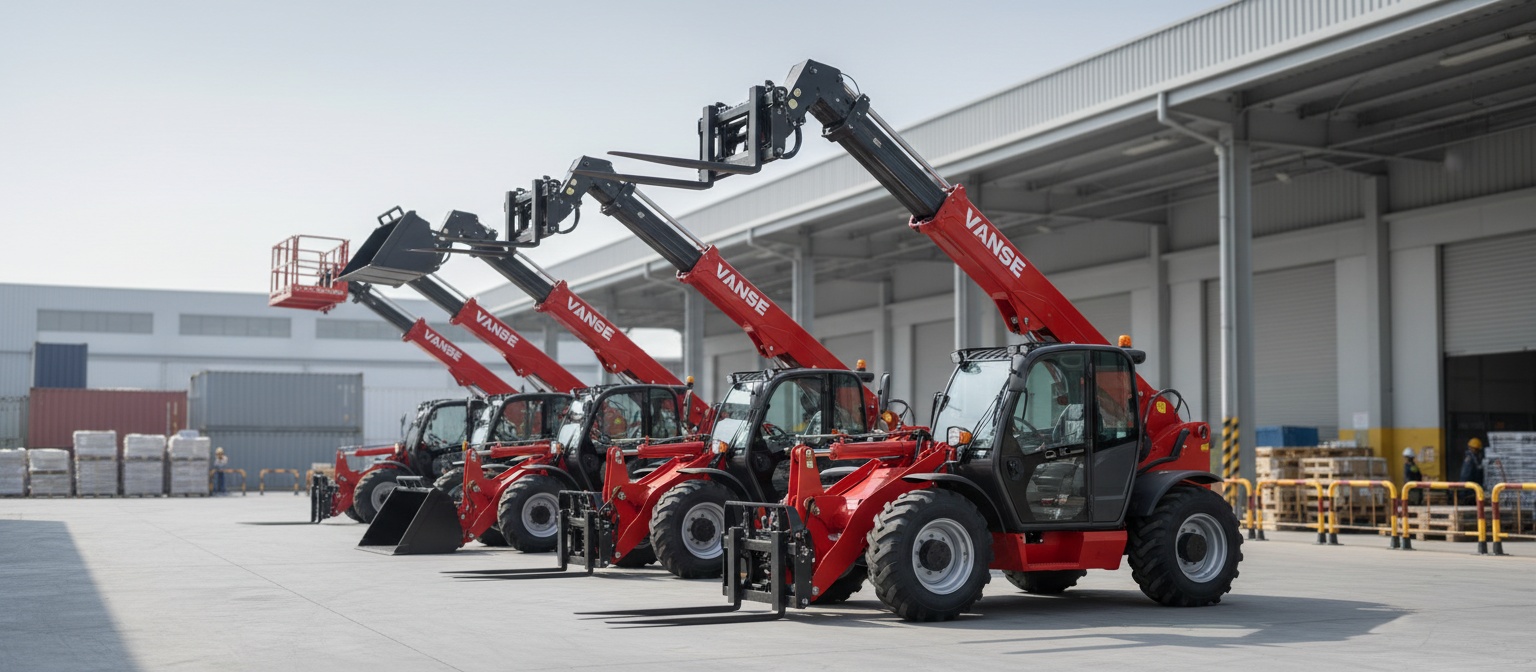
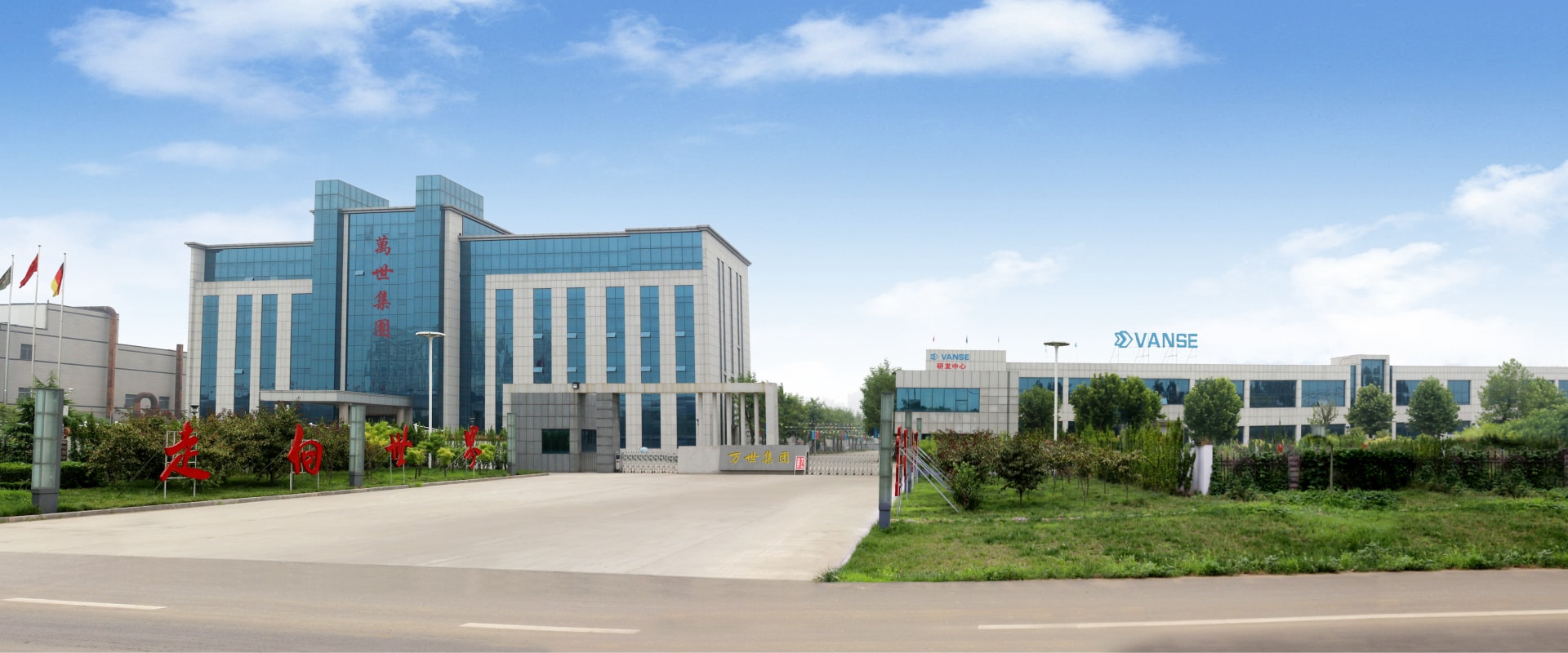
VANSE Group has built its position around telehandlers and serves United States buyers with a practical value proposition grounded in evidence rather than generic claims. Founded in 2013, the company has produced more than 8,000 machines and exports to over 40 countries, including long-standing business across North America. Its telehandlers are manufactured under CE and ISO 9001 certified systems, use globally recognized core components such as Perkins and Cummins engines together with premium hydraulic, transmission, and axle systems, and undergo comprehensive load testing, safety inspection, and performance validation before shipment, giving US buyers clear proof that the machines are built to international benchmarks. The company supports multiple cooperation models for local end users, distributors, dealers, rental companies, brand owners, and individual buyers through OEM, ODM, wholesale, retail, and regional partnership programs, allowing equipment specifications, branding, colors, and configurations to be adapted to market needs. Just as important for trust and continuity, VANSE is actively establishing a US-based subsidiary with local inventory planning, stocking capability, and stronger after-sales response, while also providing online technical coordination and offline lifecycle support through pre-sale consultation, parts planning, maintenance guidance, and service follow-up. That combination shows the company is operating with a long-term US market commitment rather than acting as a distant exporter. Buyers who want to compare telehandler solutions can explore the broader equipment range, learn more about the company, review available support services, or contact the team for application matching.
What to Ask Before You Buy
Before signing a purchase order, ask suppliers for real rated capacity data at the exact lift height or bucket configuration you expect to use. Ask for attachment hydraulic requirements, tire options for your ground conditions, maintenance interval schedules, operator visibility details, and delivery lead times into your state. If your projects are around ports such as Houston, Long Beach, or Savannah, ask about corrosion protection and shipping coordination. If you operate in cold states, ask about winter package options, cab heating performance, and cold-start support.
You should also ask who stocks the most frequently replaced service parts in the United States and what the normal delivery time is. For telehandlers, ask about boom wear pad service, load management systems, and frame-leveling support. For wheel loaders, ask about bucket edge wear, axle service intervals, and loader arm durability under high-cycle duty. These questions help separate fleet-ready support from sales-driven promises.
2026 Trends: Technology, Policy, and Sustainability
Looking toward 2026, the United States market is likely to see stronger demand for connected machines, lower-emission powertrains, and more data-driven fleet purchasing. Telematics and remote diagnostics are becoming standard decision points because contractors and municipalities want to reduce unplanned downtime. For telehandlers, expect more interest in smart load management, camera integration, and jobsite utilization tracking. For wheel loaders, expect continued progress in payload weighing systems, fuel optimization, and operator assist technologies.
Policy and sustainability pressures will also matter more. Public agencies and large contractors are paying closer attention to fleet emissions, idle reduction, and noise in urban areas. That does not mean diesel machines disappear, but it does mean buyers will increasingly compare engine compliance, fuel burn, idle controls, and electrification roadmaps. Compact wheel loaders and smaller material handling machines may see more electrified options first, especially in municipal and industrial settings. Telehandlers with improved hydraulic efficiency and lower total cost per handled load will gain attention where labor constraints remain tight.
Another 2026 trend is the rise of hybrid procurement logic. Instead of asking which single machine can do everything, more US fleets are building mixed equipment strategies around specific workflows. Rental companies, for example, may stock telehandlers for construction handling, compact wheel loaders for landscaping and snow, and heavier wheel loaders for municipal or aggregate accounts. Buyers who track utilization data carefully will have the advantage.
FAQ
Is a telehandler better than a wheel loader for construction in the United States?
It depends on the construction task. For vertical placement of palletized materials, a telehandler is usually better. For moving loose aggregate, dirt, or demolition debris in high volume, a wheel loader is usually better.
Can a telehandler replace a wheel loader?
Only in some light or mixed-duty situations. A telehandler can handle limited bucket work, but it generally does not match the bucket productivity, breakout force, or stockpile efficiency of a true wheel loader.
Which machine is better for agriculture?
For bale stacking, feed bags, palletized inputs, and high reach tasks, telehandlers are often preferred. For silage, manure, and heavy loose material movement, wheel loaders are often stronger.
Which machine costs less to own?
There is no universal answer. A telehandler may cost less overall if it replaces extra labor and rehandling. A wheel loader may cost less per ton moved in bulk material work. Total cost depends on application, support, and utilization.
What matters most when choosing a supplier in the United States?
Dealer support, parts availability, technician response time, financing options, attachment support, and proven experience in your region matter more than brochure claims alone.
Are international suppliers worth considering for the US market?
Yes, if they can show recognized certifications, reliable component sourcing, documented testing standards, flexible cooperation models, and credible local service planning such as US inventory, support teams, or regional partnerships.
Which machine has better resale value?
Both can retain value well when matched to the right market segment. Telehandlers often perform strongly in rental and contractor channels, while wheel loaders retain value well in municipalities, aggregates, and established earthmoving fleets.
What is the smartest fleet strategy for mixed operations?
For mixed construction, agriculture, rental, or industrial yards, many fleets do best with both machine types. Use telehandlers for reach and placement, and use wheel loaders for high-cycle bulk loading.
For buyers in the United States, the clearest answer is simple: choose a telehandler when the job is about reaching, lifting, and placing material where crews need it, and choose a wheel loader when the job is about loading, carrying, and cycling bulk material fast. The best purchase is the one that matches the real work pattern, the local support structure, and the long-term economics of your operation.
Complete Telescopic Handler Equipment Portfolio
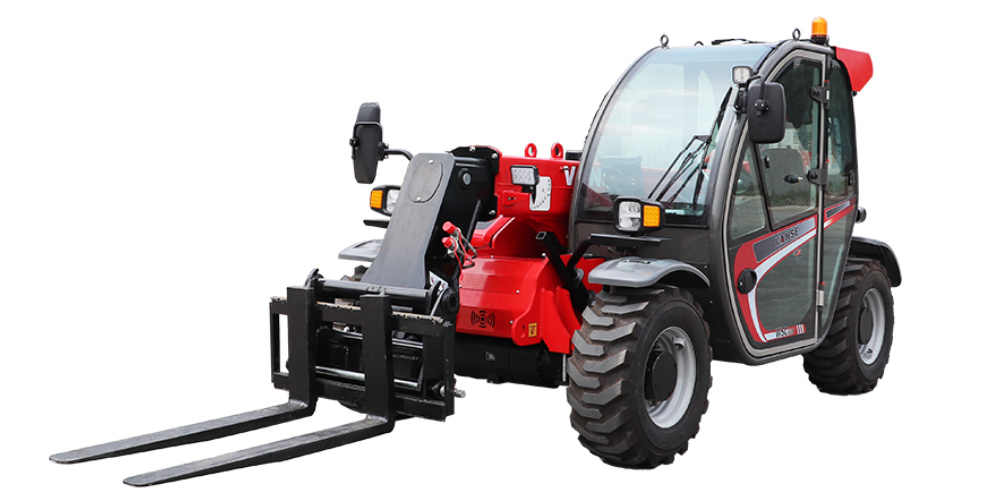
VANSE 625 6m Telescopic Handler
Designed for efficient material handling and stacking in warehouses, factories, and confined job sites, offering compact maneuverability and reliable performance.

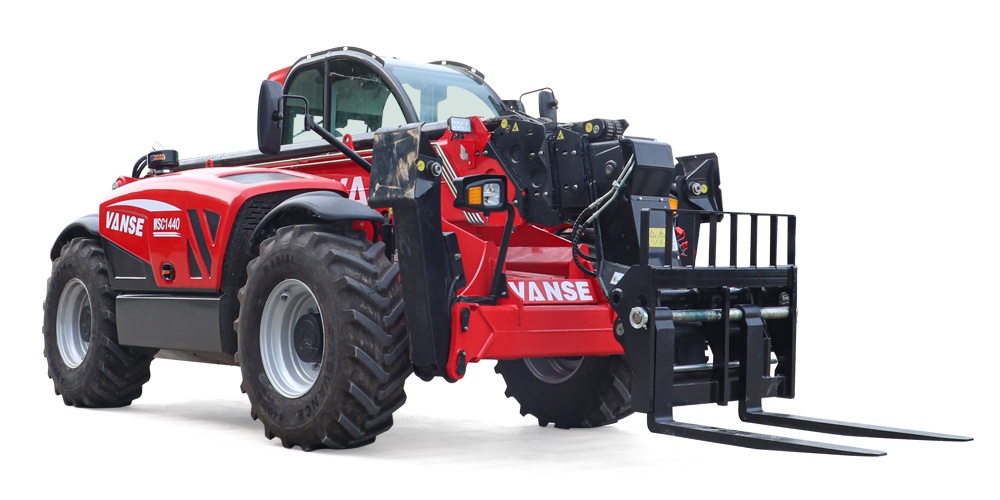
VANSE 735 7m Telescopic Handler
A balanced mid-duty solution for construction, agriculture, logistics, and warehousing, combining stable lifting, strong traction, and everyday versatility.


About the Author:
The VANSE team is a group of experienced professionals specializing in construction machinery research, manufacturing, and technical support. With deep industry knowledge and hands-on experience, our engineers and product specialists share practical insights on equipment selection, operation, maintenance, and industry trends.
Share
You May Also Interest
-

1 October, 2026
Diesel vs Electric Telehandler: Power Source Comparison
Compare diesel vs electric telehandler options in the United States with costs, jobsite fit, suppliers, market trends, and practical buying advice.
-

30 September, 2026
How to Inspect a Telehandler Before Daily Operation Work
Use this telehandler daily inspection guide for the United States to check tires, forks, hydraulics, safety systems, and documents before each shift.
-

29 September, 2026
Telehandler for Solar Panel Installation on Large Sites
Explore telehandler solar installation solutions in the United States, including suppliers, machine types, buying tips, and service options for large solar sites.
-

28 September, 2026
8 Ton Telehandler: Maximum Power for Demanding Projects
Explore 8 ton telehandler options for United States buyers, including suppliers, specs, use cases, service factors, and smart purchasing guidance.