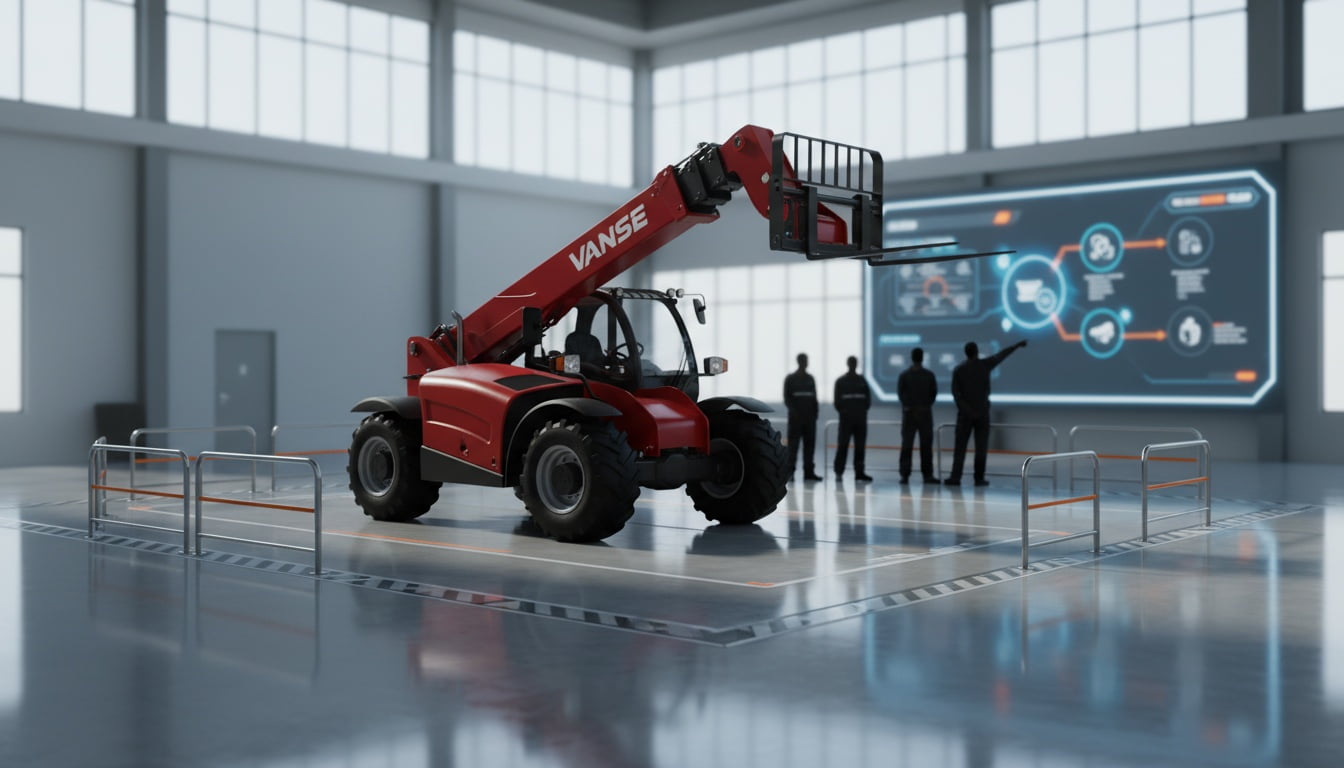
Telehandler vs Scissor Lift in the United States
Quick Answer

If you need forward reach, rough-terrain performance, and the ability to place palletized materials at height, a telehandler is usually the better choice. If you need a stable vertical work platform for technicians, installers, or maintenance crews operating mostly on firm and level surfaces, a scissor lift is usually the better choice. In the United States, contractors in Houston, Dallas, Atlanta, Phoenix, Chicago, and inland logistics corridors near ports such as Los Angeles/Long Beach, Savannah, and New York/New Jersey often use telehandlers on mixed outdoor jobsites, while scissor lifts are more common for warehouses, commercial interiors, data centers, schools, hospitals, and facility maintenance.
For immediate buying decisions, JLG, Genie, Skyjack, MEC, JCB, and Bobcat are among the most visible equipment brands in the U.S. market through dealer and rental networks. Buyers should also consider qualified international suppliers with relevant certifications, proven export records, and dependable pre-sales and after-sales support. Cost-competitive manufacturers from China can be worth evaluating when they offer documented quality control, globally recognized engines or hydraulic components, local parts planning, and responsive support for the United States.
Direct Comparison: What Changes the Buying Decision

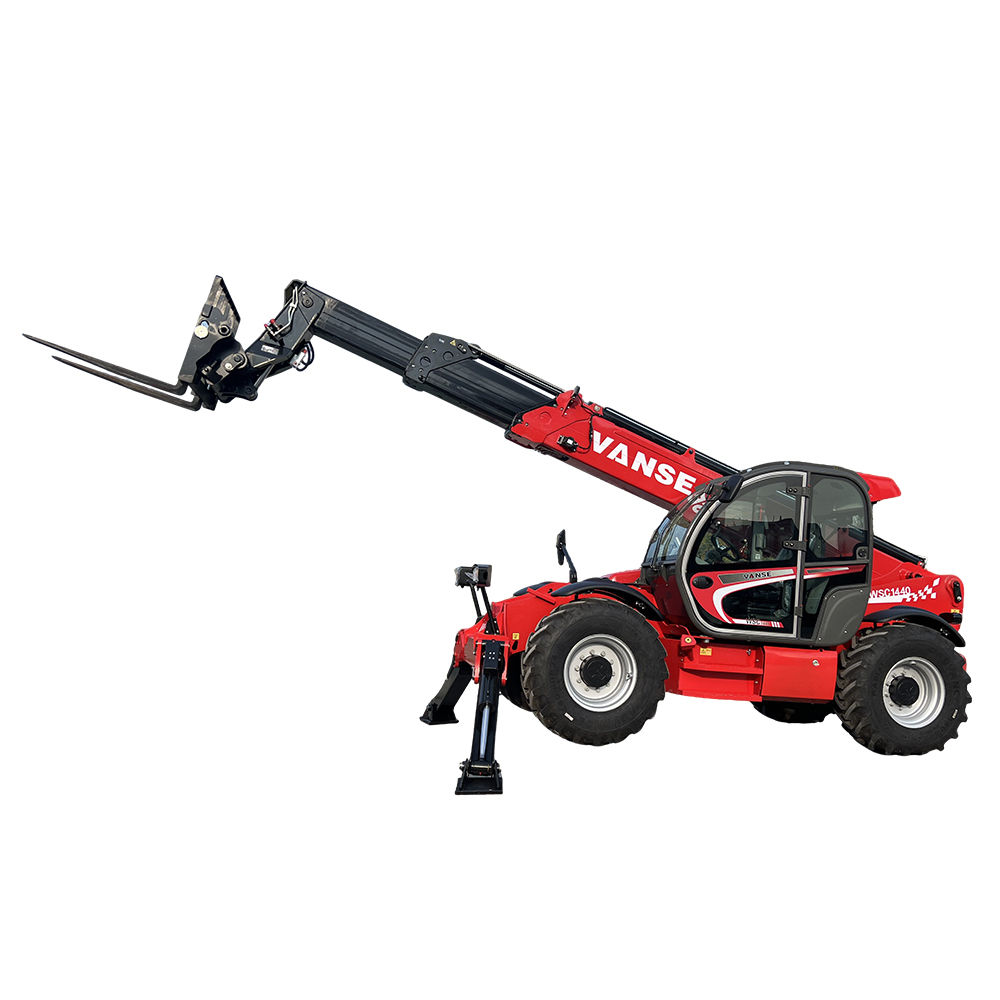
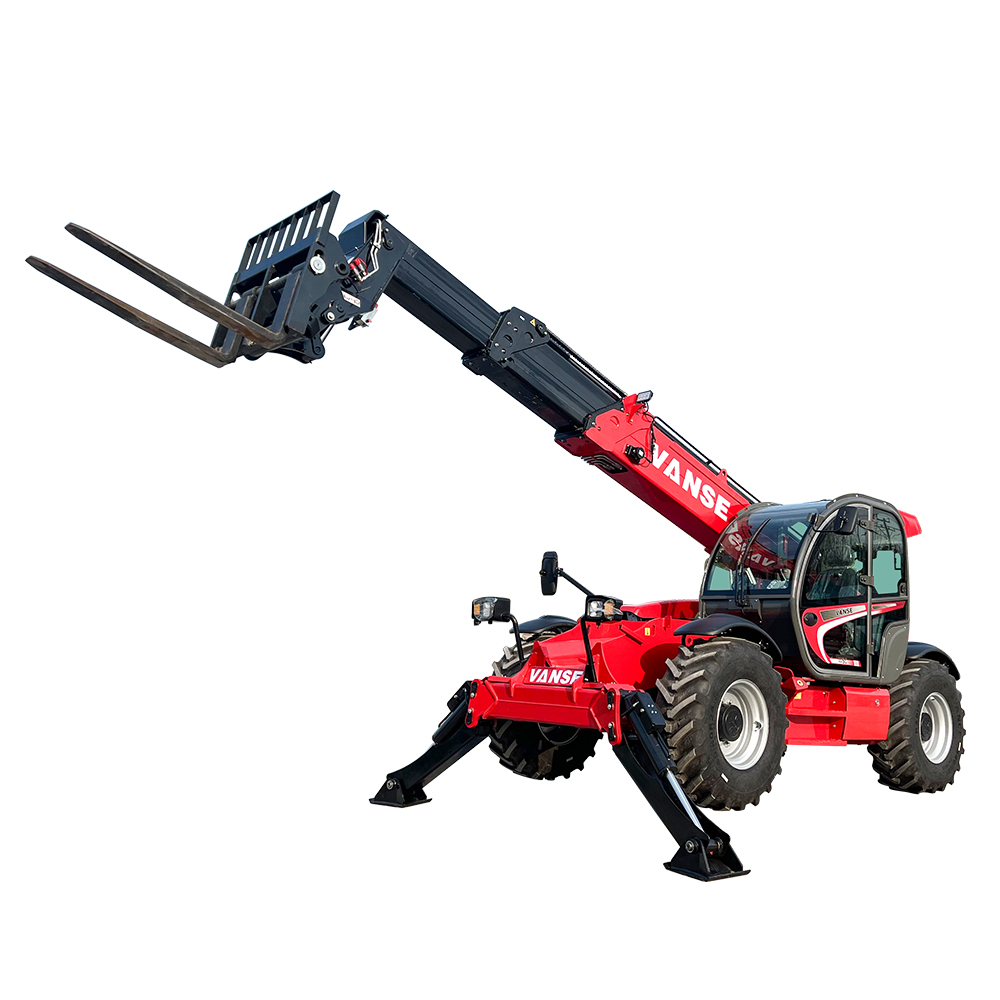
The practical difference between a telehandler and a scissor lift is not just machine design; it is the type of work each machine makes easier, safer, and more profitable. A telehandler, sometimes called a telescopic handler, combines forklift-style lifting with extended boom reach. It can move loads horizontally and vertically, which matters when operators must place trusses, brick packs, roofing bundles, pipe, or palletized materials beyond obstacles. A scissor lift raises a platform vertically and is designed primarily to elevate people and tools, not to place heavy suspended loads across a reach envelope.
In the United States, this distinction affects project planning, crew selection, and rental utilization. On multifamily construction in Texas, telehandlers are often the machine that keeps framing and masonry moving because they can unload trucks, travel across uneven ground, and reach upper stories. On distribution center fit-outs in the Midwest, scissor lifts are often the preferred access equipment because they provide a stable working platform for electricians, fire suppression installers, and HVAC technicians. Choosing the wrong machine can slow workflow, increase material handling steps, and raise operating risk.
A telehandler also tends to be the more versatile machine when a site needs multiple attachment options. Forks, buckets, work platforms, jibs, and specialized handling attachments expand jobsite utility. By contrast, a scissor lift is more specialized. Its strength is safe and efficient personnel access in repeated vertical tasks. For buyers, that means a telehandler often supports broader fleet utilization across agriculture, construction, industrial yards, and loading applications, while a scissor lift often delivers better cost efficiency for recurring indoor access work.
United States Market Context

The U.S. access and material handling market remains one of the most mature and competitive in the world. Demand patterns differ by region. In the Sun Belt, strong residential and light commercial growth supports telehandler demand for framing, masonry, roofing, and site logistics. In the Midwest and Southeast, distribution center construction and industrial retrofits sustain both telehandler and scissor lift demand. In coastal trade hubs connected to import flows through Los Angeles/Long Beach, Savannah, Houston, and Norfolk, equipment decisions are increasingly influenced by delivery lead times, parts availability, and dealer responsiveness.
Rental companies remain central to market access. Many first-time users compare telehandler vs scissor lift during a rental decision before moving into fleet ownership. Large national rental groups and regional specialists educate customers based on terrain, lift height, duty cycle, and operator requirements. This matters because the rental channel often shapes brand visibility and residual value. In the U.S., machines with strong dealer networks tend to keep better resale performance because buyers trust parts access and service coverage.
Another market trend is jobsite specialization. Electric slab scissor lifts are expanding in indoor and low-emission environments such as hospitals, clean manufacturing, airports, and schools. At the same time, rough-terrain telehandlers continue to perform strongly where one machine must handle unloading, placement, and attachment-driven versatility. Labor shortages also play a role. Contractors increasingly favor equipment that reduces manual handling and shortens cycle times, which often strengthens the telehandler case on complex sites.
Market Growth Trend in the United States
The market below illustrates a realistic directional trend for U.S. demand across telehandlers and scissor lifts as construction activity, warehouse retrofits, and infrastructure work continue to support fleet expansion.
Product Types and Functional Differences
Not all telehandlers and scissor lifts are alike. The comparison becomes more useful when separated by subtype. Telehandlers in the U.S. market generally include compact models for tight residential jobs, mid-capacity rough-terrain models for mainstream commercial construction, and heavy-duty units for industrial yards, energy, and infrastructure projects. Scissor lifts divide more clearly into electric slab models for indoor use and rough-terrain diesel models for outdoor elevated access. The buyer should match the machine to surface conditions, work height, loading needs, and daily cycle intensity.
Compact telehandlers make sense where access is restricted, such as infill housing, narrow staging areas, or agricultural buildings. Mid-size telehandlers dominate general construction because they balance lift height, load capacity, transportability, and availability. Heavy telehandlers enter the decision when large prefabricated components, pipe, or dense palletized loads are involved. Scissor lifts, on the other hand, are selected by platform height, deck extension, indoor or outdoor use, and occupancy rules. Electric slab units are usually preferred in finished floors and enclosed spaces because of emissions, lower noise, and maneuverability.
| Equipment Type | Typical U.S. Use | Main Strength | Limitation | Best Surface | Typical Buyer |
|---|---|---|---|---|---|
| Compact Telehandler | Residential framing, landscaping supply yards | Reach and lifting in tight sites | Less capacity than large units | Mixed terrain | Small contractors, farms, local rental houses |
| Mid-Size Telehandler | Commercial construction, masonry, roofing | Balanced reach, lift, and versatility | Higher purchase cost than scissor lift | Rough outdoor ground | General contractors, equipment rental fleets |
| Heavy Telehandler | Industrial, infrastructure, oil and gas support | High capacity and long boom range | Larger footprint and transport needs | Prepared outdoor sites | Industrial contractors, large fleet owners |
| Electric Slab Scissor Lift | Warehouses, retail fit-outs, schools, hospitals | Quiet indoor access for personnel | Not suited for rough terrain or heavy material placement | Smooth level floors | Facility managers, MEP contractors, rental companies |
| Rough-Terrain Scissor Lift | Exterior finishing, steel erection support | Large elevated platform outdoors | Mostly vertical movement only | Outdoor uneven sites | Commercial contractors, plant maintenance teams |
| Narrow Electric Scissor Lift | Aisle work, low-load indoor maintenance | Fits confined interior spaces | Limited platform size and capacity | Indoor hard surface | Warehouses, schools, service providers |
This table matters because many buying errors come from comparing only headline lift height. Real productivity depends on what must be lifted, where it must go, how often the machine moves, and whether personnel or palletized materials are the main payload. Telehandlers outperform when one machine needs to unload, carry, and place. Scissor lifts outperform when crews need repetitive vertical access with tools and parts close at hand.
Industry Demand by Sector
Demand by sector often clarifies whether telehandler or scissor lift ownership is more rational. In U.S. commercial construction, both can be valuable, but the telehandler usually starts earlier in the project and handles more material logistics. In warehousing and facility maintenance, the scissor lift often wins because the application is personnel access rather than heavy load placement.
Buying Advice for United States Buyers
For U.S. buyers, the first question should be whether the machine is primarily for lifting materials or elevating people. That single distinction usually narrows the field faster than comparing price lists. If your operation frequently unloads trucks, handles pallets, feeds upper floors, or moves bulk materials across uneven sites, a telehandler generally delivers greater return. If your teams need safe elevated working space for installation, inspection, or service work, a scissor lift is usually more efficient and easier to assign across crews.
The second question is terrain. Telehandlers are built for rough jobsites, while most scissor lifts are not. Even rough-terrain scissor lifts remain access platforms first. They do not replace telehandlers for forward material reach. The third question is utilization rate. A telehandler with multiple attachments can serve more departments and longer job phases, which helps justify purchase cost. A scissor lift may still have better economics where indoor service work is constant and predictable.
United States buyers should also pay attention to dealer footprint, telematics availability, training support, and parts stocking. In states with long travel distances such as Texas, Arizona, Colorado, and California, a machine that looks inexpensive on paper can become expensive if downtime support is slow. Buyers near major inland freight corridors often prioritize replacement parts lead time just as much as machine price. This is especially true for rental businesses that must keep utilization high.
| Buying Factor | Telehandler Advantage | Scissor Lift Advantage | Why It Matters in the U.S. | Best Fit | Buyer Checkpoint |
|---|---|---|---|---|---|
| Material Placement | Can place palletized loads with reach | Limited; personnel platform focus | Framing and masonry jobs depend on reach | Telehandler | Confirm load chart and boom range |
| Personnel Access | Possible with approved platform setups in some cases | Primary design purpose | MEP and maintenance crews need stable access | Scissor Lift | Check platform capacity and occupancy rating |
| Surface Conditions | Handles rough terrain better | Best on level floors; rough-terrain versions available | Weather and unfinished sites vary by state | Telehandler for rough sites | Review tire type and gradeability |
| Attachment Flexibility | Forks, bucket, jib, work platform | Very limited attachment flexibility | One machine doing multiple tasks cuts fleet cost | Telehandler | Verify auxiliary hydraulics and approved tools |
| Indoor Emissions | Less ideal unless specialized configuration | Electric slab models excel indoors | Hospitals, schools, and warehouses need low-emission equipment | Scissor Lift | Confirm battery runtime and charger access |
| Acquisition Budget | Higher upfront but broader use case | Lower entry cost for basic indoor access | Budget constraints shape first purchase decisions | Depends on utilization | Calculate ownership cost by billable hours |
This table helps translate equipment features into buyer decisions. The key point is that the cheaper machine is not always the lower-cost solution. If a telehandler removes the need for multiple handling steps, shortens unloading time, and supports several attachments, total operating cost can be lower despite a higher purchase price. If the work is primarily indoor access, a scissor lift may deliver lower cost per productive hour.
Applications Across Key Industries
Construction remains the clearest domain where telehandlers outperform scissor lifts for material logistics. Masonry crews use telehandlers to stage block and mortar at height. Roofing contractors rely on them for shingle bundles and membrane rolls. Framing crews use them to feed upper levels and move packaged materials around evolving jobsites. In agriculture, telehandlers have an additional advantage because attachments can support feed handling, barn maintenance, and seasonal loading.
Scissor lifts dominate where the payload is workers, tools, and compact materials. In warehouses, they support rack maintenance, sprinkler work, lighting upgrades, and signage installation. In manufacturing plants, they reduce ladder use and improve safety for repetitive elevated tasks. In schools, hospitals, airports, and municipal buildings, electric scissor lifts remain the go-to choice for low-noise indoor access. For these sectors, the value is not reach across obstacles but platform stability and safe repeated ascent.
Infrastructure projects can require both. A telehandler may handle pipe, pallets, barriers, and site logistics, while rough-terrain scissor lifts support installation crews working at elevation. On larger projects, mixed fleets are common, but buyers still need to know which machine type carries the larger utilization burden. That answer should drive ownership decisions, with secondary tasks covered by rental.
Trend Shift in Equipment Selection
The chart below shows a realistic shift in buyer preference as U.S. projects become more specialized. Telehandlers remain strong where material handling complexity rises, while scissor lifts gain share in electrified indoor environments and maintenance-heavy facilities.
Real-World Case Studies
On a mid-rise apartment project in Dallas, a contractor compared adding more rough-terrain scissor lifts versus increasing telehandler capacity. The project team found that the material bottleneck, not the crew access bottleneck, was delaying productivity. By assigning a telehandler to unload and feed upper levels on a defined cycle, the site reduced manual repositioning and improved schedule flow. Scissor lifts still remained on site, but they were supporting trades rather than solving the main logistics problem.
In a Chicago distribution center retrofit, the opposite happened. The facility was climate-controlled, had polished floors, and required repetitive overhead work for lighting, cable trays, and fire system upgrades. A fleet of electric slab scissor lifts gave the contractor better maneuverability, lower noise, and strong personnel efficiency. A telehandler would have added little value because the job did not require horizontal reach for material placement.
At an agricultural operation in California’s Central Valley, a telehandler proved more versatile than a scissor lift because one machine handled feed, pallets, building maintenance support, and seasonal yard logistics. The owner valued attachment flexibility and rough-terrain mobility over a dedicated work platform. In contrast, a pharmaceutical plant in New Jersey selected electric scissor lifts for maintenance because emissions, floor conditions, and indoor safety standards made them the obvious fit.
| Location | Project Type | Primary Need | Winning Machine | Main Reason | Operational Result |
|---|---|---|---|---|---|
| Dallas, Texas | Mid-rise residential construction | Material delivery to upper floors | Telehandler | Forward reach and truck unloading efficiency | Faster framing and masonry staging |
| Chicago, Illinois | Warehouse retrofit | Indoor elevated crew access | Scissor Lift | Stable platform and aisle maneuverability | Improved technician productivity |
| Fresno, California | Agricultural facility | Multi-task material handling | Telehandler | Attachment versatility and rough-ground mobility | One machine used across seasons |
| Atlanta, Georgia | School renovation | Indoor maintenance and installation | Scissor Lift | Quiet electric operation | Safer overhead work in occupied zones |
| Houston, Texas | Commercial shell construction | Exterior material movement | Telehandler | Terrain handling and load placement | Lower crane dependency for small loads |
| Newark, New Jersey | Pharma plant maintenance | Low-emission personnel access | Scissor Lift | Indoor compliance and platform stability | Reduced disruption to operations |
These examples show why the telehandler vs scissor lift question should be answered through workflow mapping, not just spec-sheet comparison. Each machine excels when aligned with the job’s true bottleneck.
Leading Suppliers and Brands in the United States
The U.S. market includes strong domestic and international brands supported by dealers, rental fleets, and regional service organizations. The brands below are relevant because they are visible in American jobsite conditions and have recognizable support structures. Service coverage still varies by state, so buyers should verify the nearest dealer branch, field technician capacity, and parts stocking before purchase.
| Company | Main Equipment Focus | Service Region in the U.S. | Core Strength | Key Offerings | Best Buyer Profile |
|---|---|---|---|---|---|
| JLG Industries | Access equipment and telehandlers | Nationwide through dealers and rental channels | Broad support network and strong fleet presence | Telehandlers, scissor lifts, boom lifts | Rental fleets, contractors, industrial users |
| Genie | Scissor lifts and telehandlers | Nationwide | High visibility in access equipment market | Electric slab scissors, rough-terrain scissors, telehandlers | Facilities, general contractors, rental houses |
| Skyjack | Scissor lifts | Nationwide with strong rental penetration | Simple design and fleet familiarity | Electric and rough-terrain scissor lifts | Rental-focused buyers, maintenance contractors |
| MEC | Scissor lifts and access platforms | Strong in major metro markets | Specialization in access equipment | Scissor lifts, slab and rough-terrain models | Indoor service providers, specialty access buyers |
| JCB | Telehandlers | Broad U.S. dealer network | Strong telehandler identity and construction focus | Construction and agricultural telehandlers | Contractors, farms, material handlers |
| Bobcat | Telehandlers and compact equipment | Nationwide dealer coverage | Dealer familiarity and compact equipment crossover | Telehandlers and jobsite support equipment | General contractors, local fleet owners |
This supplier table is useful because brand choice in the United States is not only about machine specifications. Dealer reach, fleet familiarity, rental resale value, and service responsiveness often determine whether ownership is profitable. JLG, Genie, and Skyjack are frequently seen in the access segment. JCB and Bobcat are often shortlisted where telehandler capability is central to material handling operations.
Supplier and Product Comparison Snapshot
The comparison chart below gives a directional view of how major suppliers are often perceived across support breadth, versatility, and fit for telehandler or scissor lift procurement in the U.S. market.
Our Company
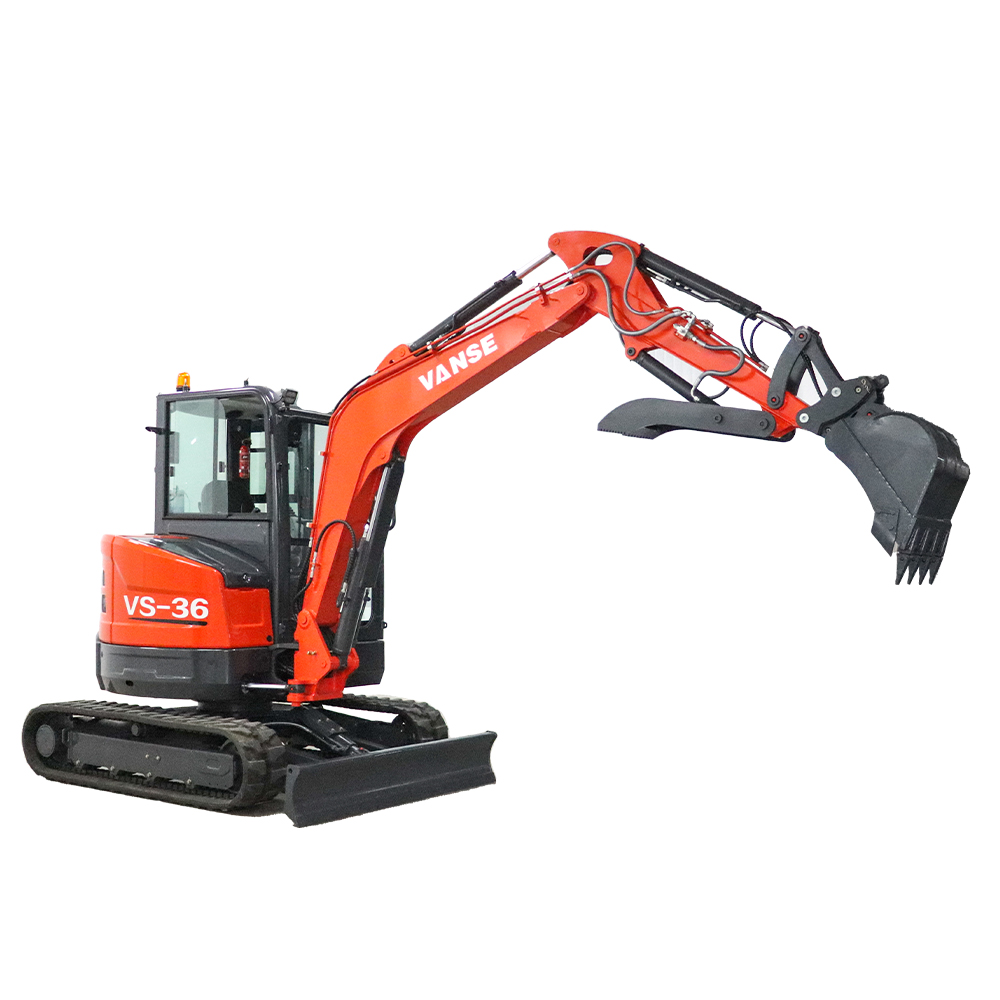
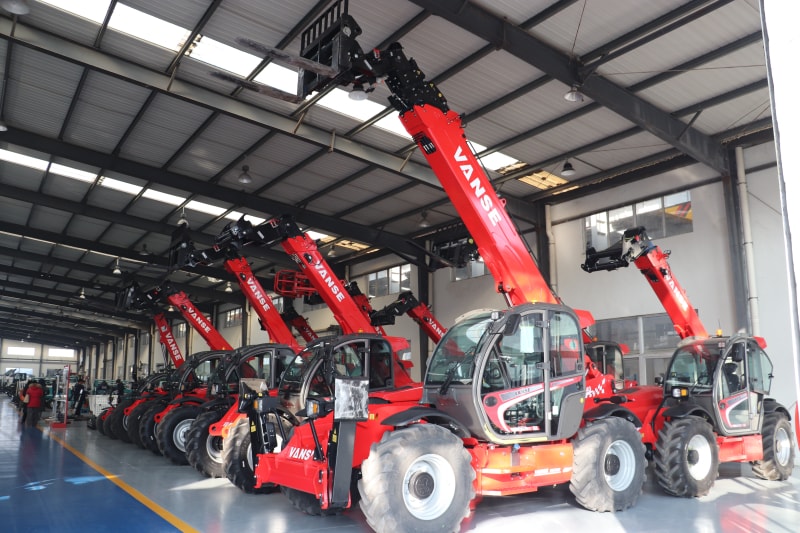
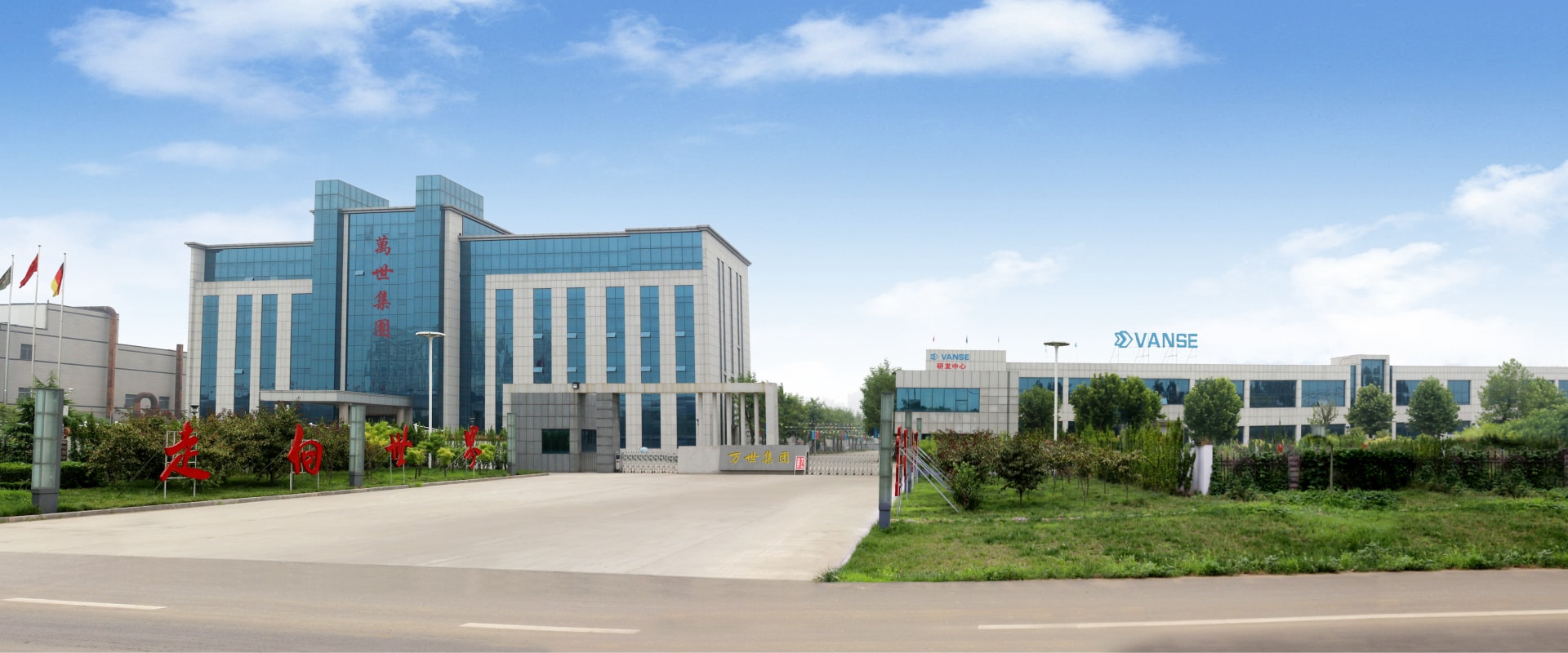
For buyers in the United States who are comparing established brands with value-focused alternatives, VANSE is positioned as a telehandler-centered manufacturer with practical strengths that matter in real procurement reviews. Founded in 2013, the company has produced more than 8000 machines and serves customers in over 40 countries, including North America, which provides a measurable export and operating track record rather than a new-market claim. Its telehandlers are manufactured under CE and ISO 9001 certified processes, and each unit goes through load testing, safety inspection, and performance validation before shipment. That product discipline is reinforced by the use of internationally recognized core components such as Perkins and Cummins engines together with premium hydraulic and drivetrain systems, giving U.S. buyers evidence of serviceable and benchmark-aligned specification choices. Beyond direct equipment sales from its equipment range, VANSE supports multiple cooperation models for end users, distributors, dealers, brand owners, and individual buyers through OEM, ODM, wholesale, retail, and regional partnership structures, which is useful for rental fleets, local dealers, and private-label programs alike. Just as important for trust and continuity, the company is actively establishing a U.S.-based subsidiary with local inventory planning and localized after-sales capability, complementing its online and offline support, technical consultation, and lifecycle service approach described on its service page. For American customers, that means it is not positioning itself as a distant exporter only; it is building a local-market presence backed by production scale, documented quality systems, and long-term channel support. Buyers who want more detail can review the company background on the about page or discuss specifications and partnership needs through the contact page.
How to Decide Between Buying, Renting, or Using a Mixed Fleet
Many U.S. companies do not need a simple either-or answer. A mixed strategy is often better. If telehandler use is consistent across unloading, staging, and placement tasks, ownership usually makes sense. If scissor lift demand fluctuates with fit-out phases or maintenance shutdowns, rental may be more economical. Rental also helps businesses avoid storing underused access equipment during off-peak periods.
For dealers and fleet managers, telehandlers often justify ownership when they can be cross-assigned to construction, agriculture, and industrial customers. Scissor lifts often justify scale ownership when a fleet serves warehouses, facility maintenance clients, or recurring interior trades. Mixed fleets are especially common near logistics-intensive regions such as Dallas-Fort Worth, Southern California, Savannah, and Chicago where project types rotate rapidly and customers expect same-week delivery.
Used equipment can also be attractive, but used telehandlers require especially careful inspection of boom wear, hydraulics, frame integrity, and service records. Used scissor lifts should be checked for battery health, platform controls, pothole protection systems, and maintenance history. Residual value is tied closely to service support and fleet reputation in the local market.
Safety, Compliance, and Operator Considerations
Safety should be central to any telehandler vs scissor lift decision. A telehandler introduces load chart management, boom stability considerations, attachment compatibility issues, and visibility concerns during material placement. A scissor lift introduces fall protection policies, platform loading limits, surface condition requirements, and elevated travel restrictions. In both cases, training, supervision, and site planning matter more than brochure claims.
For U.S. employers, practical compliance includes operator familiarization, daily inspection routines, maintenance logging, and clear jobsite rules about machine purpose. Telehandlers should not be treated like ordinary forklifts, especially when operators extend the boom or use specialized attachments. Scissor lifts should not be overloaded with materials simply because the platform looks spacious. On mixed crews, the most common mistake is asking one machine type to perform a task better suited to the other.
Insurance and risk management teams also influence procurement. Some buyers select scissor lifts for interior work because elevated personnel access is more straightforward to supervise than improvised alternatives. Others prioritize telehandlers because they eliminate excessive manual lifting and reduce material congestion. In either case, uptime depends on disciplined preventive maintenance and operator consistency.
2026 Trends: Technology, Policy, and Sustainability
Looking toward 2026, the U.S. market will likely continue separating into two clear paths: smarter rough-terrain material handling and cleaner indoor access equipment. Telehandlers are expected to see more telematics integration, better load management displays, improved operator assist features, and stronger attachment ecosystems. Buyers increasingly want machine data that helps monitor idle time, service intervals, utilization rates, and abusive operating patterns. This is especially relevant for rental fleets and multi-branch contractors.
Scissor lifts are expected to continue moving toward electric dominance in indoor applications. Battery technology, charging efficiency, and maintenance simplicity are improving, which strengthens lifecycle economics in warehouses, campuses, and facility service fleets. At the policy level, public and private buyers are paying closer attention to emissions, jobsite noise, and energy use. In cities with stricter environmental expectations or green building targets, electric access equipment gains an advantage.
Sustainability is also reshaping procurement language. Buyers now ask not only whether a machine performs, but whether it reduces wasteful idle time, supports longer service intervals, and aligns with company ESG reporting. Telehandlers may respond through more efficient engines, smarter hydraulics, and optimized maintenance planning. Scissor lifts will benefit from low-emission operation and quieter use in occupied buildings. Another 2026 trend is localized support. U.S. buyers are increasingly skeptical of low-price offers that do not include real parts planning or regional service commitments. Suppliers that combine competitive pricing with visible local infrastructure will be more credible than remote-only exporters.
Frequently Asked Questions
Is a telehandler safer than a scissor lift?
They are designed for different tasks, so safety depends on using the correct machine for the correct application. A telehandler is safer for material placement on rough jobsites when operated within its load chart. A scissor lift is safer for personnel working at height on stable surfaces when used within platform limits.
Can a scissor lift replace a telehandler on a construction site?
Usually no. A scissor lift can support workers, tools, and light materials on a platform, but it cannot replace the forward reach and load placement capability of a telehandler for unloading or staging palletized materials.
Which is cheaper to buy in the United States?
Basic scissor lifts usually have a lower entry price than telehandlers. However, the better value depends on utilization. If your work requires unloading, carrying, and placing materials daily, a telehandler may produce a better return despite higher upfront cost.
Which machine is better for warehouses?
For personnel access and maintenance inside warehouses, an electric scissor lift is usually the better choice. For outdoor yards or loading support that involves material handling, a telehandler may still be useful.
Are telehandlers common in U.S. rental fleets?
Yes. Telehandlers are widely available in U.S. rental fleets, especially in regions with active construction, agriculture, and infrastructure work. They are common in Texas, Florida, California, Georgia, and other high-growth states.
What should U.S. buyers verify before choosing an international supplier?
Check certifications, component brands, testing standards, export experience, local parts planning, warranty terms, service responsiveness, and whether the supplier has real U.S. operations or committed regional support. These factors matter as much as price.
Final Takeaway
In the United States, the clearest answer to telehandler vs scissor lift is this: choose a telehandler when the work is fundamentally about moving and placing materials across distance and uneven terrain; choose a scissor lift when the work is fundamentally about elevating people safely for vertical access. The right decision depends on workload, site conditions, crew needs, and support availability. Buyers who map their actual bottlenecks, compare local supplier strength, and evaluate long-term service coverage will make better equipment decisions than those who shop on headline price alone.
Complete Telescopic Handler Equipment Portfolio
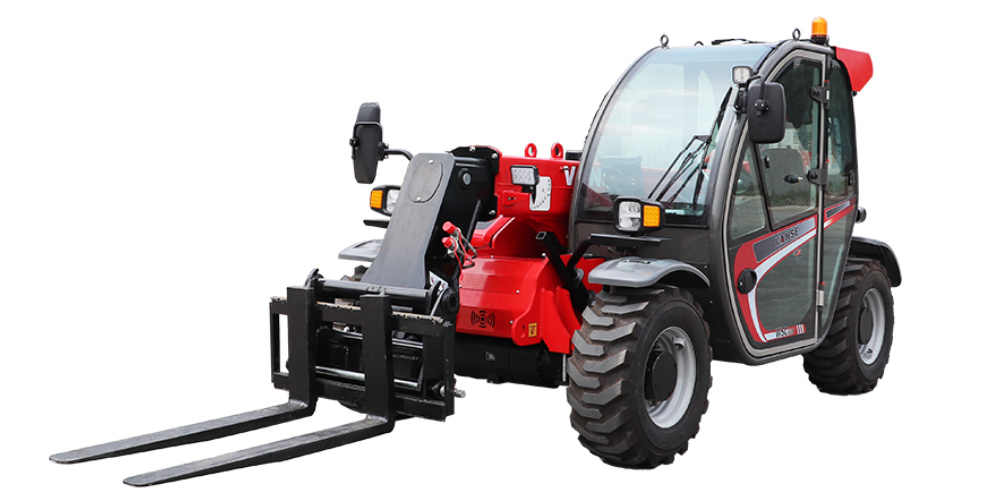
VANSE 625 6m Telescopic Handler
Designed for efficient material handling and stacking in warehouses, factories, and confined job sites, offering compact maneuverability and reliable performance.

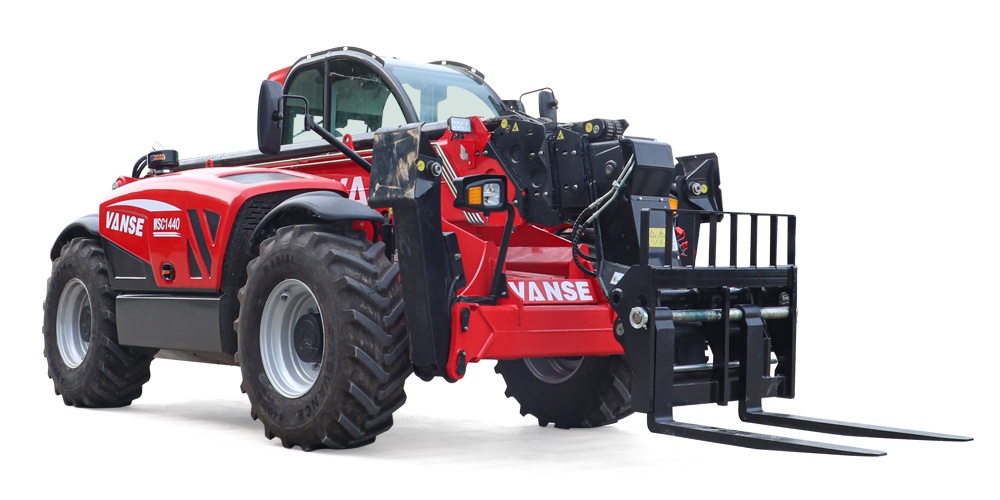
VANSE 735 7m Telescopic Handler
A balanced mid-duty solution for construction, agriculture, logistics, and warehousing, combining stable lifting, strong traction, and everyday versatility.


About the Author:
The VANSE team is a group of experienced professionals specializing in construction machinery research, manufacturing, and technical support. With deep industry knowledge and hands-on experience, our engineers and product specialists share practical insights on equipment selection, operation, maintenance, and industry trends.
Share
You May Also Interest
-

12 June, 2026
Telehandler Forklift: Versatile Rough Terrain Lifting
Find the best telehandler forklift options in the United States, compare suppliers, models, applications, and service support for smart buying decisions.
-
11 June, 2026
Telescopic Handler: Complete Overview and Buying Guide
Explore telescopic handler options in the United States with buying tips, supplier comparisons, application advice, and cost-smart sourcing insights.
-
10 June, 2026
Telehandler: The Essential Guide to Telescopic Machines
Discover how to choose the right telehandler in the United States, compare suppliers, machine types, costs, service, and 2026 buying trends.
-

9 June, 2026
Telehandler for Steel Erection: Guide
Telehandler for steel erection in the United States: compare suppliers, machine types, buying tips, jobsite uses, and cost-smart options for contractors.