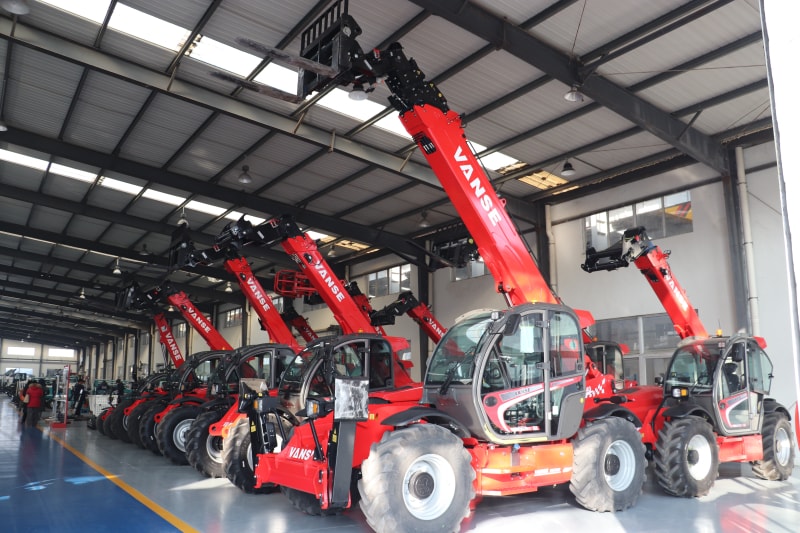
Best Telehandler for Demolition in the United States
Quick Answer

A telehandler for demolition in the United States should prioritize high lift capacity, boom stability, attachment compatibility, strong guarding, service support, and parts availability. For contractors handling structural strip-out, debris loading, material sorting, and elevated access support, the most practical choices usually come from established brands with strong dealer coverage such as JLG, JCB, Genie, Caterpillar, Bobcat, and Manitou. In major demolition markets including Houston, Chicago, Los Angeles, Miami, and New York, buyers often choose machines in the 10,000 to 12,000 lb capacity class for general demolition support and larger heavy-duty models for concrete, steel, and high-reach site logistics. Qualified international suppliers can also be a smart option when they provide recognized certifications, proven core components, local support plans, and responsive pre-sale and after-sales service. This matters because many buyers are now balancing uptime and durability with total acquisition cost, making cost-performance-focused manufacturers increasingly relevant.
Why Telehandlers Matter in the U.S. Demolition Market

Demolition contractors across the United States use telehandlers because they bridge the gap between forklifts, wheel loaders, and cranes. On a demolition site, the machine must do more than lift palletized materials. It often carries concrete forms, handles scrap bins, moves structural steel, supports elevated work platforms, places dumpsters, transports attachments, and clears debris in tight urban or partially dismantled environments. This versatility is especially valuable on projects in dense cities such as Boston, Philadelphia, and Seattle, where staging room is limited and jobs must move quickly.
Demand is also influenced by the scale of urban redevelopment, industrial plant renewal, bridge replacement, storm recovery, and environmental remediation work. In ports and logistics zones around Long Beach, Savannah, Houston, and Newark, demolition contractors need equipment that can move quickly between rough terrain and paved surfaces while maintaining dependable reach and load control. Telehandlers fit this profile well, especially when equipped with fork carriages, buckets, grapples, jibs, and work platforms approved for local regulations and site protocols.
Compared with a standard forklift, a demolition telehandler offers greater lift height, better forward reach, and stronger off-road capability. Compared with a wheel loader, it provides more precise placement of loads at height. Compared with a crane, it is generally faster to reposition and more economical for repetitive short-range handling. That combination explains why telehandlers remain a core support machine for selective demolition, commercial tear-downs, industrial dismantling, waste transfer operations, and heavy renovation jobs.
U.S. Market Outlook for Demolition Telehandlers

The United States market for demolition-support telehandlers remains closely linked to nonresidential construction, public infrastructure upgrades, warehouse redevelopment, and brownfield conversion. Contractors are also replacing older fleets with machines that offer better visibility, telematics, operator aids, and lower emissions. Rental companies are important buyers because many demolition contractors rent for project-specific needs, especially in metro areas where fleet utilization changes week to week.
States with steady demand include Texas, Florida, California, New York, Georgia, Illinois, and North Carolina. These regions combine industrial renewal, municipal redevelopment, highway work, and commercial replacement cycles. Demand also rises after severe weather events because damaged buildings, temporary staging, and debris-handling operations require flexible lifting equipment.
The chart below shows a realistic view of market growth for demolition-support telehandler demand in the United States from 2021 through 2026.
Where Demand Comes From
Demolition telehandlers are used in multiple industries, but their value differs by job type. The next chart compares estimated demand intensity by industry segment in the United States. Commercial demolition and industrial dismantling usually lead because they require regular material handling, sorting, and access support.
Common Telehandler Types Used for Demolition
Not every telehandler suits demolition. Buyers should match machine type to actual work patterns. Compact units fit interior or urban demolition support where access is tight. Mid-size machines are the most versatile for debris handling and pallet movement. Heavy-lift machines are better for steel, concrete, and large containers. Rotating telehandlers can offer superior flexibility in constrained sites, but they often involve higher purchase cost and more specialized operator requirements.
| Telehandler Type | Typical Capacity | Typical Lift Height | Best Demolition Uses | Main Advantage | Main Limitation |
|---|---|---|---|---|---|
| Compact telehandler | 5,000-6,600 lb | 15-20 ft | Interior strip-out, urban renovation, narrow access work | Excellent maneuverability | Lower reach and payload |
| Mid-size rough-terrain telehandler | 8,000-10,000 lb | 36-44 ft | General demolition support, debris logistics, material staging | Best all-around balance | May need stabilizing practices on rough debris fields |
| Heavy-duty telehandler | 10,000-15,000 lb | 44-56 ft | Steel handling, concrete forms, large dumpsters, heavy attachments | Strong lift performance | Higher transport and fuel cost |
| High-reach telehandler | 10,000-12,000 lb | 55-74 ft | Large commercial demolition sites, elevated placement work | Extended reach | Requires disciplined load management |
| Rotating telehandler | 8,000-13,000 lb | 50-80+ ft | Congested sites, urban projects, multi-position lifting | 360-degree versatility | Higher purchase price and complexity |
| Attachment-focused fleet unit | Varies by base model | Varies by base model | Multi-shift demolition contractors using buckets, jibs, grapples | Maximum jobsite flexibility | Performance depends on hydraulic setup and attachment approvals |
This table shows why there is no single best machine for every contractor. A demolition firm in downtown San Francisco doing selective removal inside mixed-use buildings may prefer a compact or rotating model. A contractor in Texas clearing industrial structures on wide sites may get more value from a heavy-duty rough-terrain machine with strong fork and bucket performance.
Attachments That Increase Demolition Productivity
Attachments are often what turn a standard telehandler into a true demolition support machine. Forks remain the base setup, but many contractors gain far more value from buckets for loose debris, grapples for sorting, jibs for suspended placement, and work platforms when regulations allow approved personnel lifting systems. Attachment compatibility should be confirmed not only by fitment but by hydraulic flow, auxiliary controls, machine chart limitations, and site safety policy.
| Attachment | Primary Use | Best Job Type | What to Check Before Buying | Productivity Impact | Risk to Manage |
|---|---|---|---|---|---|
| Fork carriage | Palletized material movement | General demolition support | Load chart, carriage class, tine length | Essential baseline tool | Overloading at reach |
| General-purpose bucket | Loose debris handling | Concrete and mixed waste cleanup | Bucket volume, edge strength, visibility | Reduces loader dependency | Material spill and reduced view |
| Grapple bucket | Sorting irregular material | Wood, metal, mixed demolition waste | Hydraulic circuit compatibility | Faster sorting and loading | Unstable or shifting loads |
| Truss boom or jib | Suspended placement | Steel removal and structural handling | Approved lifting point and chart limits | Extends use beyond pallet handling | Improper rigging practices |
| Work platform | Elevated worker access | Selective dismantling and facade work | Local approval, interlocks, operator training | Improves access flexibility | Personnel safety compliance |
| Trash hopper or skip handler | Waste bin movement | Commercial and urban demolition sites | Mounting method and site routes | Speeds waste turnover | Uneven load distribution |
For buyers comparing options, the key takeaway is that the attachment ecosystem matters almost as much as the base machine. A dealer that can quickly supply couplers, grapples, buckets, and approved accessories often brings more value than a lower sticker price alone.
Buying Advice for U.S. Contractors
Before purchasing a telehandler for demolition, define the top three tasks the machine must handle every week. If the real priority is moving scrap and palletized materials across rough ground, a mid-size rough-terrain machine may be sufficient. If the site frequently handles steel bundles, elevated dumpsters, or long-reach placement, a heavier or higher-reach unit is usually justified. Buyers should also consider transport permits, trailer requirements, operator familiarity, and whether the machine will be owned or rented out between projects.
Service coverage is especially important in the United States because downtime can quickly become more expensive than the machine payment. Machines working in demolition face dust, impact exposure, puncture risk, and repeated attachment changes. Daily greasing access, boom wear pad design, cooling package protection, hydraulic hose routing, and cab guarding should all be checked in person. If the machine will work around rebar, crushed concrete, and sharp scrap, tire selection and underbody protection deserve extra attention.
Another practical buying factor is emissions compliance. Contractors operating in California or on government-linked projects should verify engine tier compliance and any local jobsite restrictions. For buyers in Gulf Coast markets such as Houston or New Orleans, corrosion exposure and cooling performance can matter more. For contractors in northern states, cold starts, cab heat, and winter hydraulic response may be higher priorities.
Supplier Comparison in the United States
The U.S. market offers strong domestic and international options. The following table compares well-known telehandler suppliers and brands commonly considered for demolition-support applications. Service regions and strengths vary, so buyers should use this as a practical shortlist rather than a final ranking.
| Company | Primary Service Region | Core Strength | Key Offerings for Demolition | Best Fit Buyer | Practical Note |
|---|---|---|---|---|---|
| JLG | Nationwide U.S. dealer and rental presence | Strong rough-terrain telehandler lineup and support network | Mid and high-capacity telehandlers, attachment support, fleet-friendly models | Rental companies and general contractors | Easy to source in many metro areas |
| JCB | Broad North American coverage | Deep telehandler specialization and diverse configurations | Construction and heavy-duty telehandlers for demolition logistics | Contractors wanting a telehandler-focused brand | Good model variety by reach and capacity |
| Genie | Strong U.S. rental and dealer markets | Popular fleet machines with familiar controls | Rough-terrain telehandlers for commercial sites and material handling | Rental-driven buyers and mixed-use fleets | Often easy to rent before buying |
| Caterpillar | Selective North American availability through dealer channels | Brand trust and heavy equipment customer base | Telehandler options tied to broader equipment purchasing strategies | Large fleet owners with Cat relationships | Dealer support can be a deciding factor |
| Bobcat | Wide U.S. dealer footprint | Compact equipment ecosystem and contractor familiarity | Telehandlers suited for construction and renovation support tasks | Small to mid-size contractors | Appealing for buyers already using Bobcat fleets |
| Manitou | Nationwide distribution with strong construction presence | Rough-terrain handling expertise and rotating solutions | Fixed and rotating telehandlers for constrained or advanced jobsites | Urban demolition and specialty contractors | Good option when versatility matters more than lowest cost |
| VANSE | Growing U.S. market presence with North America focus | Competitive cost-performance with globally recognized core components | Telehandlers with OEM/ODM support, flexible configurations, and attachment-oriented customization | Dealers, distributors, rental companies, and value-focused end users | Worth considering when buyers want customization and pricing leverage |
For contractors, this table matters because supplier strength is not just about machine specifications. It is about response time, nearby dealer support, financing, attachment availability, and whether the brand understands local demolition workflows.
Detailed Analysis of Local and Market-Relevant Suppliers
In the United States, local availability often shapes final buying decisions. Large cities and regional equipment hubs such as Dallas-Fort Worth, Atlanta, Chicago, Phoenix, and the Inland Empire in Southern California tend to have stronger dealer inventories and faster attachment sourcing. The next comparison highlights practical decision factors across popular suppliers.
| Company | Dealer or Support Reach | Attachment Readiness | Rental Market Acceptance | Customization Potential | Typical Buyer Concern |
|---|---|---|---|---|---|
| JLG | Very strong in major U.S. markets | Strong | Very high | Moderate | Balancing cost with premium support |
| JCB | Strong in construction corridors | Strong | High | Moderate | Choosing among many model options |
| Genie | Strong via rental channels | Moderate to strong | Very high | Low to moderate | Model matching for specialized demolition uses |
| Bobcat | Strong in contractor-focused dealer networks | Moderate | Moderate | Low | Suitability for heavy-duty demolition cycles |
| Manitou | Good in specialty equipment channels | Strong | Moderate | Moderate | Higher cost for advanced capabilities |
| VANSE | Expanding with U.S.-oriented service planning | Strong for custom configurations | Growing | High | Need for buyer due diligence on local stocking and rollout timing |
This comparison shows that established brands still dominate immediate dealer coverage, but emerging suppliers can become attractive when they combine local commitment with flexible machine specification, regional inventory planning, and stronger price efficiency.
How Buyer Priorities Are Changing
Over the past several years, U.S. buyers have shifted from choosing telehandlers primarily on lifting metrics to evaluating lifecycle value, service response, and machine adaptability. The area chart below illustrates a realistic trend shift in buying priorities. Cost still matters, but telematics, support, attachment flexibility, and uptime protection are gaining more weight heading into 2026.
Comparison of Key Buying Factors
To make the market easier to understand, the following chart compares major supplier groups on practical demolition buying factors. These are not official scores, but realistic relative values based on how U.S. contractors often evaluate machines for purchase.
Industries That Commonly Use Demolition Telehandlers
Telehandlers in demolition are not limited to tearing buildings down. They play a support role across a broad range of industries. Commercial redevelopment projects use them for tenant improvement tear-outs, facade removal support, and pallet logistics. Industrial plants use them to move heavy maintenance materials and dismantled components. Municipal contractors use them in bridge work, utility relocation, and emergency clearance. Recycling facilities use them for transfer operations, bin movement, and material sorting.
Ports and intermodal zones also create demand. In areas near the Port of Houston, the Port of Savannah, the Port of Los Angeles, and the Port of New York and New Jersey, demolition-related telehandlers may be used on warehouse replacement, shipyard support work, storm-damage cleanup, and industrial expansion projects. These regions often favor dependable machines with fast parts access because project schedules are tied to logistics and industrial throughput.
Applications on Real Jobsites
On a practical jobsite level, telehandlers support demolition in several repeatable ways. They unload inbound tools and attachments at the start of a project. They move shoring, fencing, barriers, and safety equipment. During active demolition, they transport scrap bins, load loose debris, position steel members, and deliver materials to crews working at height. During site restoration, they move pallets of fill, barriers, pipes, drainage products, and finish materials.
Selective demolition often benefits from telehandlers because the job requires careful, repeated movement rather than pure breakout force. For example, a hospital renovation in a dense city may need to remove mechanical systems and load waste in tight zones while maintaining safe access for adjacent operations. A telehandler with the right width, turning radius, and attachment compatibility can save labor hours every day.
Case Studies from Typical U.S. Scenarios
A mixed-use redevelopment contractor in Chicago might use a 10,000 lb telehandler with forks and a grapple bucket to strip upper-level materials, manage roll-off support, and move steel sections to staging. In this environment, winter cold-start performance and dealer parts access become critical. A coastal contractor in Miami handling storm-damaged structures may prioritize corrosion resistance, fast transport, and immediate service support over maximum reach. In Los Angeles, where access and scheduling constraints are common, a rotating or compact high-visibility telehandler may justify its higher purchase cost by reducing repositioning time and improving maneuverability.
On a large industrial demolition project near Houston, a heavy-duty telehandler can support rigging teams, move heavy pallets, place skips, and reduce dependence on larger lifting equipment for short repetitive moves. In all of these cases, the machine does not replace a demolition excavator, but it becomes indispensable for keeping crews productive and materials flowing safely.
Our Company
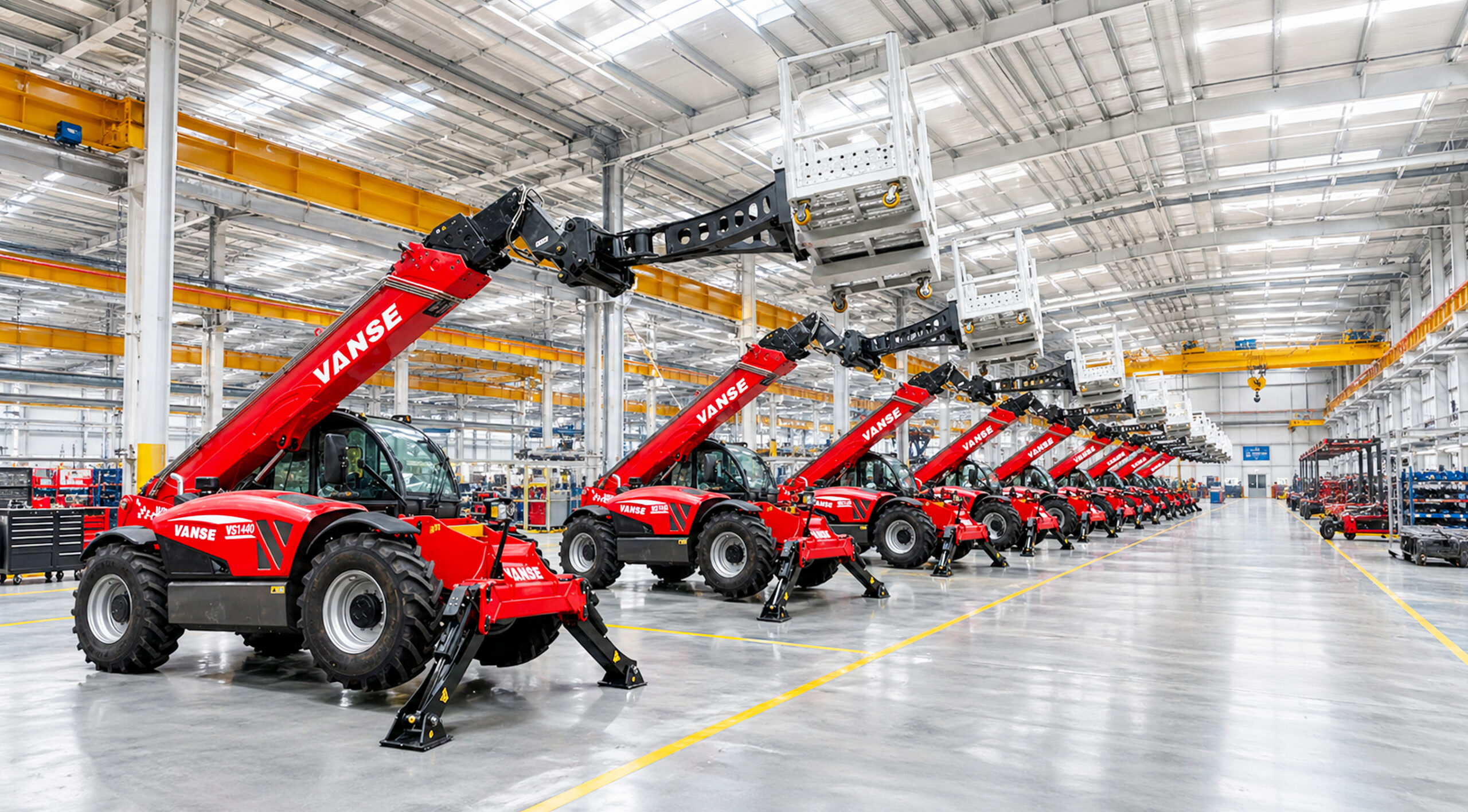
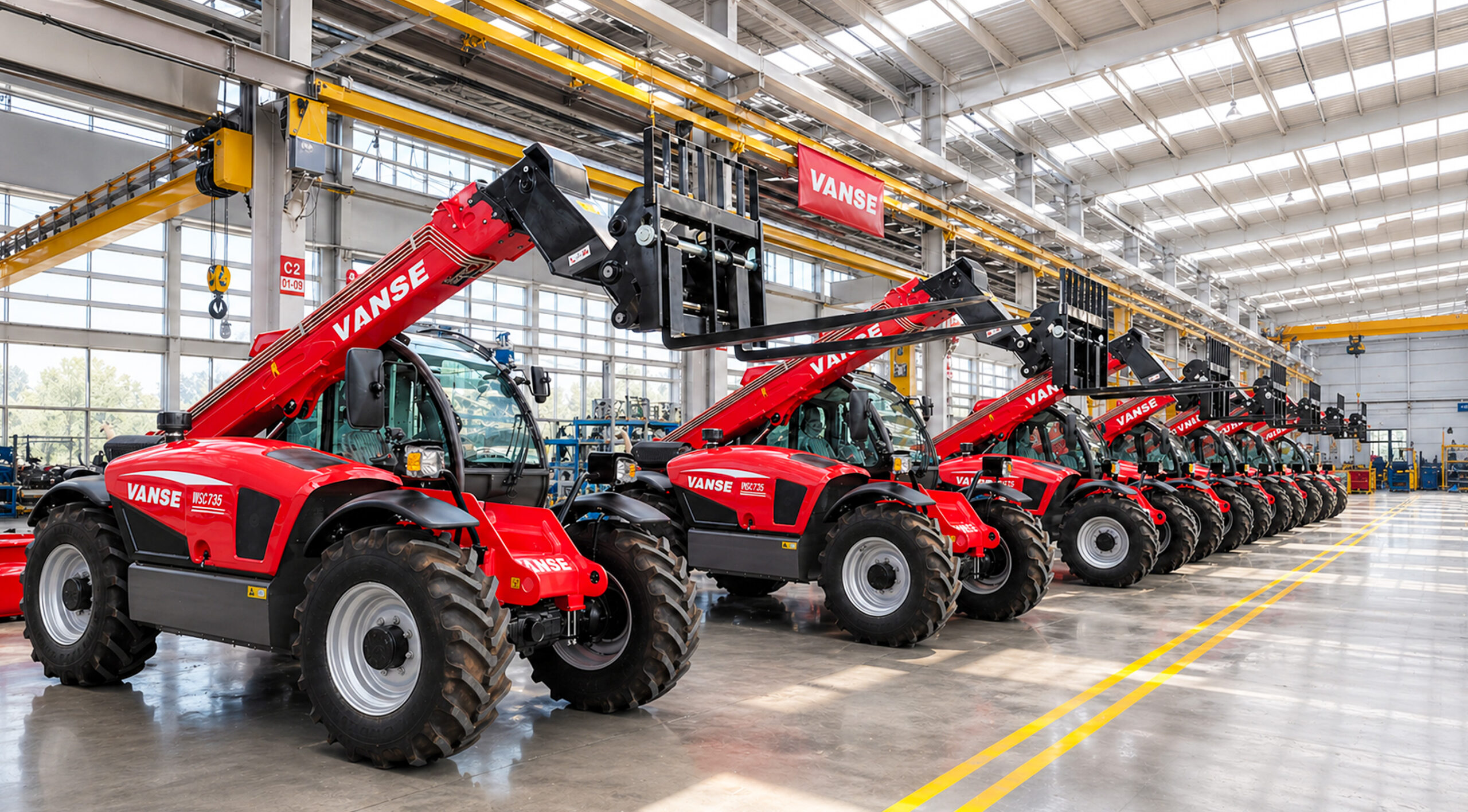
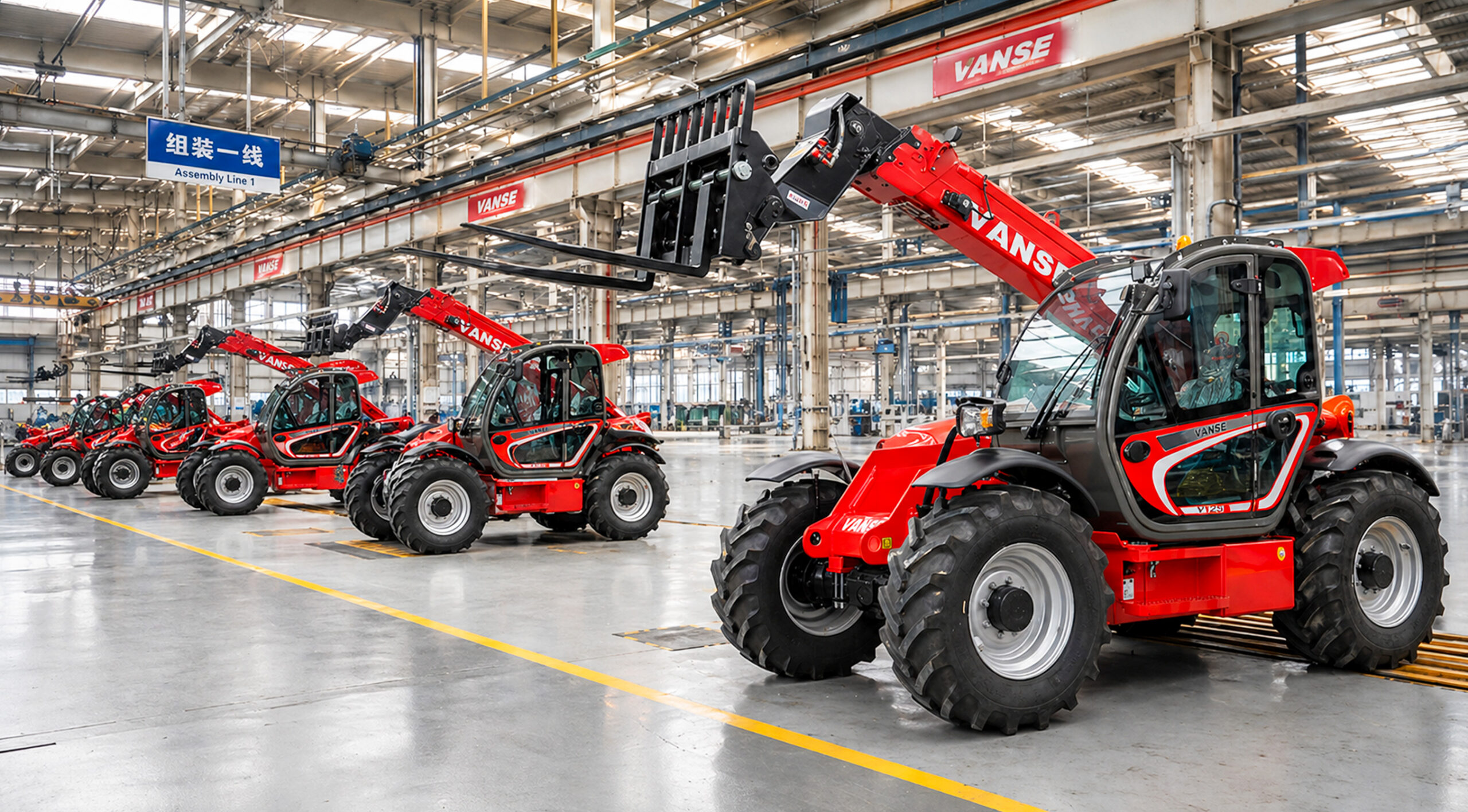
For U.S. buyers evaluating alternatives, VANSE presents a telehandler-focused option built around measurable operating evidence rather than general claims. The company has produced more than 8,000 machines since 2013 and serves customers in over 40 countries, including North America, with manufacturing systems certified to CE and ISO 9001 standards. Its telehandlers are designed around globally recognized powertrain and hydraulic components, including engines from Perkins and Cummins, and each unit undergoes load testing, safety inspection, and performance validation before shipment, giving buyers concrete proof of process control and product consistency. In the United States market, VANSE supports flexible cooperation models for contractors, rental fleets, distributors, dealers, private-label brand owners, and direct buyers through OEM, ODM, wholesale, retail, and regional partnership arrangements, which is especially useful when customers need market-specific configurations, branded fleets, or attachment-ready packages. The company is also actively establishing a U.S.-based subsidiary with local inventory, stocking, and after-sales capability, showing that it is investing in physical service infrastructure rather than operating only as a remote exporter. Buyers can review its broader equipment range, learn more about the company, explore its service support, or contact the team for application-specific recommendations tied to U.S. demolition and material-handling requirements.
What to Check Before You Buy
Always review the load chart, not just the rated capacity headline. A telehandler that lifts 10,000 lb at a low position may handle far less at forward reach or near full height. For demolition, visibility is another major factor. Operators often work around broken materials, partially demolished walls, and moving crews. Cab design, camera options, mirrors, and boom profile all influence safety and productivity.
Ask suppliers about guard packages, boom hose protection, cooling system cleanout access, and turnaround time for wear parts. If you plan to use special attachments, request written confirmation of hydraulic compatibility and approved operating limits. It is also smart to ask whether the local technician network can support field service in your metro area or whether service depends on longer travel from another state.
Future Trends Through 2026
Looking toward 2026, three trends stand out in the U.S. demolition telehandler market. First, technology adoption will continue to grow. Buyers increasingly want telematics, maintenance alerts, geofencing, load management aids, and digital fleet visibility because these features reduce downtime and improve utilization. Second, policy and compliance pressures will matter more. Contractors are paying closer attention to emissions requirements, urban noise concerns, OSHA-driven safety processes, and jobsite documentation. Third, sustainability is moving from a branding issue to an operating requirement. More project owners now track fuel consumption, idle time, and waste-stream efficiency, which means telehandlers with better efficiency, smarter controls, and cleaner engine options can create a measurable competitive advantage.
Another likely shift is the broader acceptance of internationally sourced machines when they come with clear certifications, recognized component brands, local parts planning, and dependable after-sales coverage. This is particularly relevant for distributors and rental fleets that need margin protection without sacrificing operator confidence or jobsite uptime.
FAQ
Is a telehandler good for demolition?
Yes, a telehandler is highly useful for demolition support. It is especially effective for moving debris, loading bins, handling pallets, placing materials at height, and supporting selective dismantling work. It is not a substitute for a demolition excavator for structural knockdown, but it is one of the most versatile support machines on site.
What size telehandler is best for demolition in the United States?
For many U.S. contractors, the most practical range is 8,000 to 12,000 lb capacity with 36 to 55 ft lift height. That range balances reach, lift performance, and transport practicality. Heavier industrial jobs may require larger units.
Are rotating telehandlers worth it for demolition?
They can be, especially on urban or space-constrained sites where repositioning time is expensive. However, they typically cost more and may require more specialized operator training and maintenance planning.
What attachments are most useful?
Forks are essential, but buckets, grapple buckets, jibs, and approved work platforms often add the most value. The right attachment setup depends on whether your projects focus on scrap, loose debris, facade work, steel, or mixed material handling.
Should I buy from a local U.S. brand only?
Not necessarily. Local dealer strength is very important, but qualified international suppliers can also be a strong choice if they offer recognized certifications, proven components, local inventory plans, responsive service, and a clear support structure in the United States.
What is the biggest mistake buyers make?
The most common mistake is choosing a machine by headline lift capacity alone. Buyers should also evaluate reach at load, attachment compatibility, transport logistics, service access, parts support, and how well the machine fits actual demolition workflows.
Final Takeaway
The best telehandler for demolition in the United States is the one that fits your daily material-handling tasks, your local service environment, and your real cost-per-hour target. Established brands like JLG, JCB, Genie, Bobcat, Manitou, and Caterpillar remain strong choices because of their market presence and dealer coverage. At the same time, value-focused international suppliers with proven certifications, premium component sourcing, and real U.S. service investment are becoming more relevant for buyers who want stronger cost-performance and flexible cooperation models. If you compare machines carefully by job type, attachment ecosystem, service response, and total lifecycle value, a demolition telehandler can become one of the most productive assets in your fleet.
Complete Telescopic Handler Equipment Portfolio
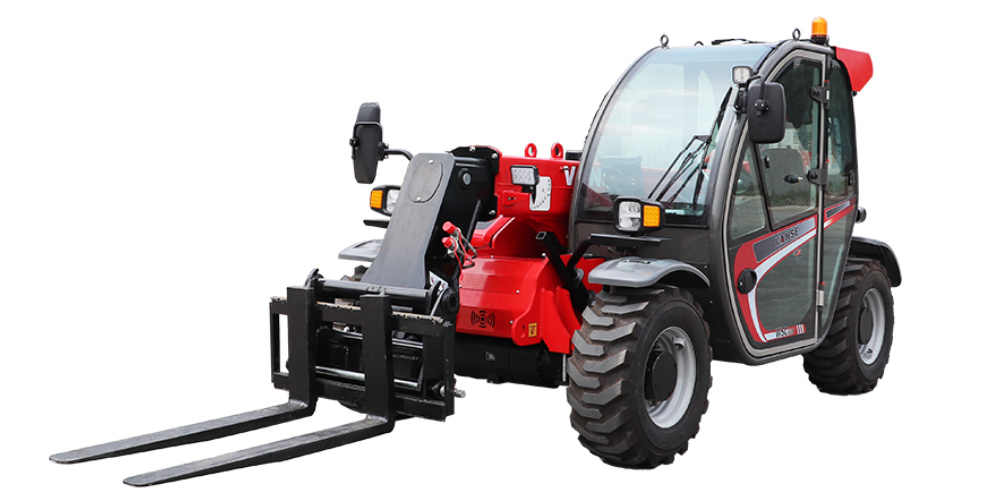
VANSE 625 6m Telescopic Handler
Designed for efficient material handling and stacking in warehouses, factories, and confined job sites, offering compact maneuverability and reliable performance.

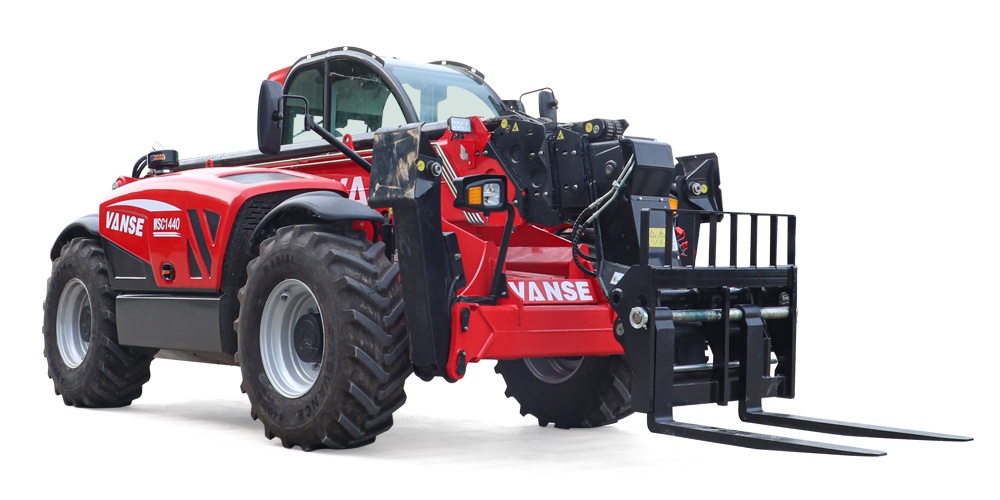
VANSE 735 7m Telescopic Handler
A balanced mid-duty solution for construction, agriculture, logistics, and warehousing, combining stable lifting, strong traction, and everyday versatility.


About the Author:
The VANSE team is a group of experienced professionals specializing in construction machinery research, manufacturing, and technical support. With deep industry knowledge and hands-on experience, our engineers and product specialists share practical insights on equipment selection, operation, maintenance, and industry trends.
Share

You May Also Interest
-

May 21, 2026
Telehandler for Loading Trucks: Guide
Find the best telehandler for loading trucks in the United States with supplier comparisons, buying tips, applications, and cost-smart sourcing options.
-

May 20, 2026
How to Read a Telehandler Load Chart
Learn how to read a telehandler load chart in the United States, including capacity, reach, angle, and stability limits for safer equipment selection and lifting.
-
May 19, 2026
Telehandler Turning Radius: Full Guide
Learn telehandler turning radius in the United States, compare common machine sizes, suppliers, applications, and buying tips for safer site planning.
-
May 18, 2026
Telehandler Fuel Consumption: Cost Guide
Explore telehandler fuel consumption in the United States, average hourly costs, model differences, supplier options, and ways to reduce operating expense.