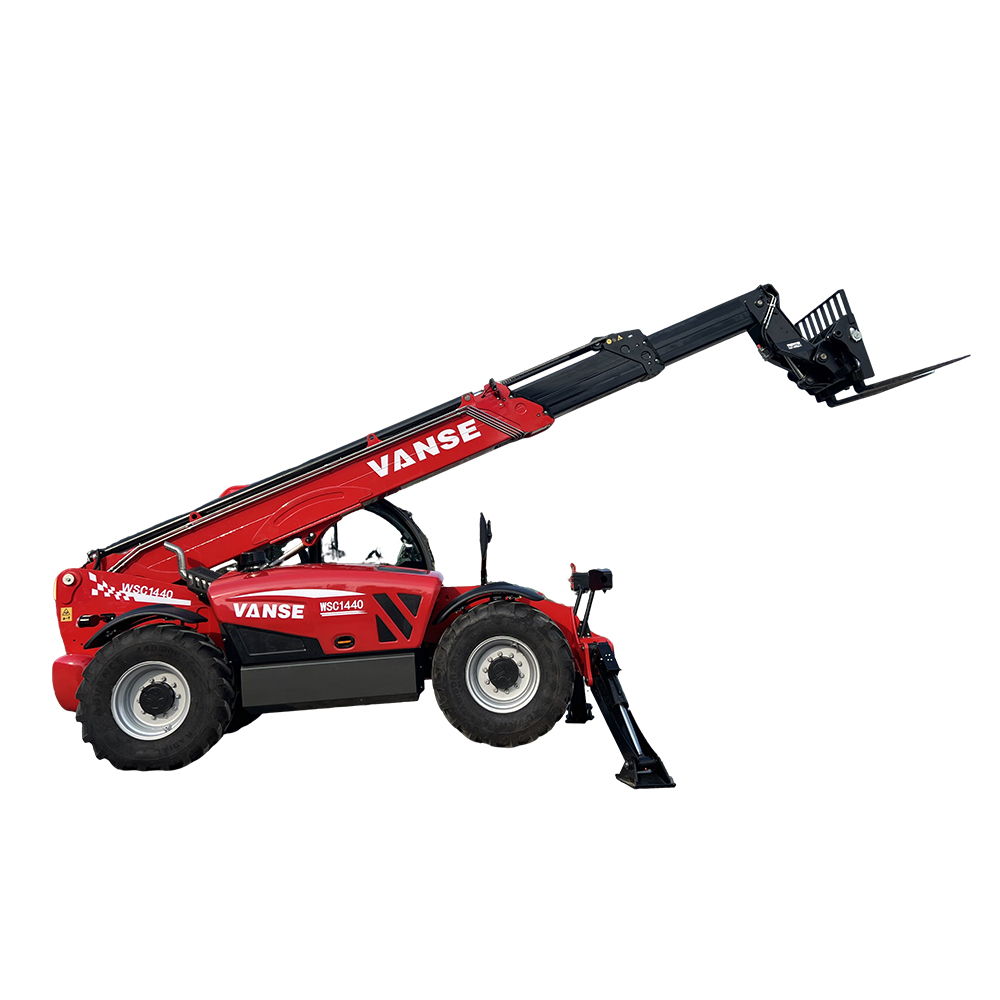
Telehandler vs Crane in the United States
Quick Answer

If your job in the United States involves moving palletized materials, loading trucks, placing bundled supplies on roofs, feeding work platforms, or handling mixed duties on crowded sites, a telehandler is usually the better choice. If your project requires heavy vertical lifting, long suspended loads, high-radius picks, or engineered lift plans on bridge, plant, port, or high-rise work, a crane is usually the right machine. In simple terms: choose a telehandler for flexibility and daily material handling; choose a crane for maximum lifting capacity, lift height, and controlled suspended-load work.
For most contractors in cities such as Houston, Dallas, Phoenix, Atlanta, Chicago, Los Angeles, Miami, and inland logistics hubs near Kansas City or Memphis, telehandlers deliver better utilization because one machine can unload, carry, and place material across multiple stages of a project. Cranes become the stronger option when the lift itself is the critical operation and the entire job schedule depends on safe, repeatable heavy picks.
Well-known suppliers active in the U.S. market include JLG, Genie, JCB, Skyjack, Liebherr, Manitowoc, Link-Belt, and Tadano. Buyers should also consider qualified international suppliers with proven certifications and strong pre-sales and after-sales support. In many cases, competitively priced Chinese manufacturers with CE and ISO-based production systems, recognized components, and growing U.S. support capacity can provide strong cost-performance value, especially for rental fleets, dealers, and price-sensitive contractors.
Direct Decision Criteria for U.S. Buyers

The best machine depends on the lift profile, site access, operator workflow, and local job requirements. A telehandler shines when crews need to move drywall packs, rebar bundles, trusses, pipe, block, feed hoppers, or pallets over rough ground and into partially built structures. On a residential subdivision outside Dallas, a commercial warehouse near Columbus, or an agricultural property in California’s Central Valley, a telehandler often replaces several smaller machines by combining lift, reach, and travel mobility.
A crane excels when the load is too heavy, too high, or too far from the machine for a telehandler. In port-adjacent industrial zones near Savannah, petrochemical corridors along the Gulf Coast, or urban steel erection projects in New York and Chicago, cranes are used because suspended loads must be controlled precisely within engineered limits. A telehandler may assist around the site, but it will not replace the core crane lift in those environments.
Another factor is utilization rate. A crane often works in defined lift windows and may sit idle between picks unless the project is lift-intensive. A telehandler usually stays productive all day, unloading, staging, and placing materials. That difference matters for rental ROI and ownership costs in the United States, where labor, financing, and transport are significant budget lines.
United States Market Snapshot

The U.S. equipment market remains one of the largest and most diverse in the world, driven by commercial construction, warehousing, infrastructure renewal, agriculture, energy, and manufacturing investment. Telehandlers have gained wider adoption because labor efficiency is under pressure, jobsites are denser, and contractors increasingly prefer multi-use machines. Cranes remain indispensable in infrastructure, industrial shutdowns, bridge work, utility-scale energy projects, and major steel or precast erection.
Regional demand differs. The Sun Belt, especially Texas, Florida, Arizona, Georgia, Tennessee, and the Carolinas, continues to favor telehandlers due to rapid warehouse, multifamily, and mixed commercial development. The Midwest supports both machine classes through industrial construction and agriculture. Coastal states and port regions drive crane demand for marine, industrial, and high-capacity lifting applications. Inland freight corridors linked to ports such as Los Angeles/Long Beach, Houston, Savannah, and New York/New Jersey create demand for both machines, but often for very different tasks.
The rental channel strongly influences buying patterns. Many U.S. contractors first choose equipment by asking what their preferred rental yard carries nearby. This is one reason major domestic and global brands with established dealer and parts networks maintain an advantage. At the same time, importers and new market entrants are gaining attention when they can prove parts availability, warranty response, and technical support within the United States.
The line chart shows a realistic trend: telehandler demand in the United States is growing faster than crane demand because more projects need versatile material handling, while cranes remain essential but more specialized. This does not mean cranes are being replaced. It means telehandlers are being added to a broader range of jobsites and are seeing stronger fleet utilization.
How the Machines Differ
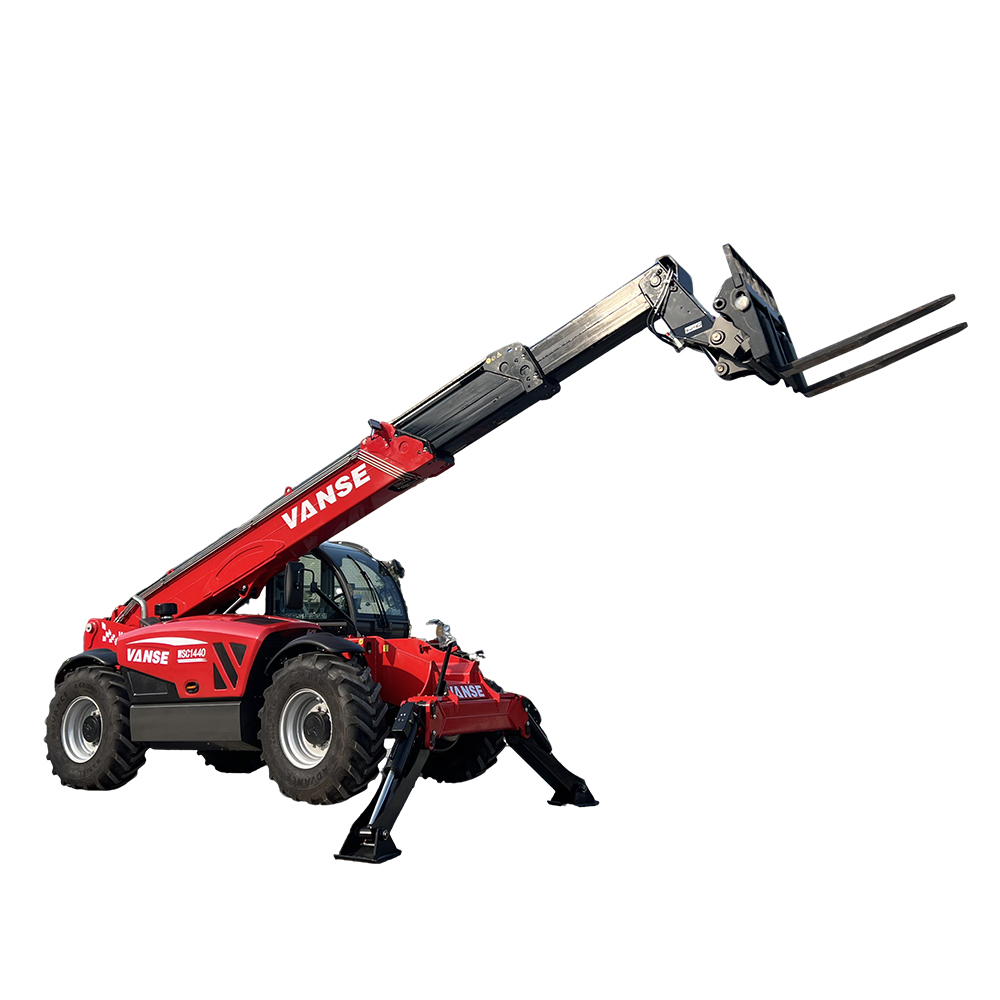
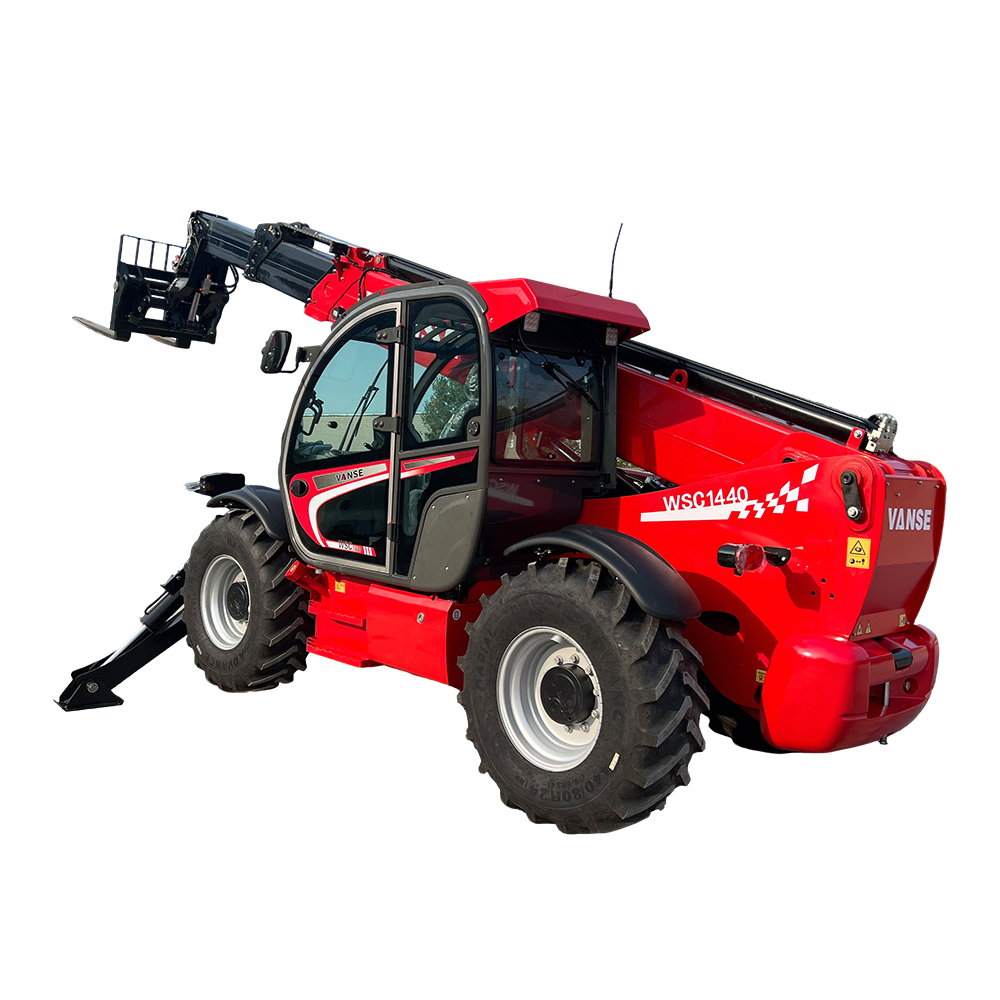
A telehandler is a rough-terrain machine with a telescopic boom, forks or attachments, and strong maneuverability on uneven sites. It can drive with loads, reposition quickly, and switch tools such as buckets, lifting jibs, truss booms, work platforms, or clamps depending on local regulations and manufacturer approvals. This makes it highly useful for general contractors, framers, roofing crews, masons, agriculture operators, and rental fleets.
A crane is a dedicated lifting machine designed for heavier, more controlled, and often more technical picks. Mobile cranes, carry deck cranes, rough-terrain cranes, all-terrain cranes, truck cranes, crawler cranes, and tower cranes each have their own ideal use cases. Cranes can operate at much greater capacities and lift heights than telehandlers, but they require more planning, more space in many cases, and more specialized operating conditions.
From a compliance perspective, U.S. buyers also need to think about operator training, OSHA expectations, site lift plans, rigging practices, and transport permits. The decision is not just about machine price. It is about whether the machine supports safe, legal, and efficient operation on the actual project mix.
Product Types and Best-Fit Uses
| Machine Type | Typical Capacity Range | Best U.S. Applications | Main Strength | Key Limitation |
|---|---|---|---|---|
| Standard Telehandler | 5,500 to 12,000 lb | Commercial building, roofing, framing, material staging | Flexible daily handling | Lower capacity than cranes |
| High-Reach Telehandler | 8,000 to 15,000 lb | Warehouse shells, stadium work, industrial maintenance | Long forward reach | Needs careful load-chart use |
| Rotating Telehandler | 10,000 to 15,000 lb | Tight urban sites, facade work, confined access projects | 360-degree placement versatility | Higher cost and complexity |
| Rough-Terrain Crane | 30 to 160 ton | Energy, industrial, bridge, heavy civil | Strong site lifting power | Less useful for general handling |
| Truck Crane | 30 to 80 ton | Roadside utility, short-duration urban picks | Fast road mobility | Site limitations on rough ground |
| All-Terrain Crane | 100 to 500+ ton | Large infrastructure, refinery, wind and industrial jobs | High capacity and roadability | Very high capital and operating cost |
This table helps clarify that the real comparison is not one machine replacing the other in every case. Instead, U.S. buyers should match machine architecture to the work. A standard telehandler and an all-terrain crane serve completely different purposes, even if both involve lifting.
Cost, Productivity, and Ownership Considerations
Telehandlers often win on total utilization. A contractor may use one machine to unload at 7:00 a.m., feed framing crews at 10:00 a.m., place materials on elevated slabs after lunch, and support cleanup or transfer tasks before shutdown. That productivity density matters in the United States, where wages, subcontractor coordination, and schedule delays carry real cost.
Cranes have higher lift authority and often justify their cost by enabling lifts that no other machine can do safely. If a project involves precast wall panels, rooftop HVAC units, structural steel, bridge beams, heavy generators, or industrial vessels, a crane is not a luxury. It is the required tool. The financial logic comes from reduced risk, reduced failed-lift exposure, and schedule certainty.
Transport and setup also matter. Telehandlers are usually easier to mobilize between smaller projects. Cranes may require more trucking, more counterweight logistics, more permit planning, and more setup area. In tight downtown corridors or congested suburban jobsite access roads, this can affect not only cost but whether the machine can practically be used at all.
Industry Demand Across the United States
The bar chart reflects a practical pattern seen across U.S. sectors. Telehandlers dominate residential, warehousing, and day-to-day commercial material flow. Cranes dominate infrastructure and industrial heavy lifting. In commercial construction, both can be important on the same project, with the telehandler handling the flow of material and the crane performing critical erection or placement events.
Where Telehandlers Perform Best
Telehandlers are especially effective in U.S. projects where access is uneven, tasks change constantly, and materials need to be moved rather than simply hoisted. Typical examples include suburban apartment projects in Florida, tilt-wall warehouse construction near Indianapolis, distribution centers around Reno, poultry and grain operations in the Midwest, and municipal maintenance yards that need one multipurpose lifting machine.
On these sites, the telehandler often acts as the logistical backbone. It reduces hand carrying, shortens material travel time, and lets crews work from higher elevations with attachments approved by the manufacturer. High-reach and heavy-lift telehandlers also support projects where scaffolding, MEP packages, glazing supplies, and cladding materials need to be placed at controlled points quickly.
Rotating telehandlers deserve special mention. Although still less common than standard models in many U.S. fleets, they can be a smart solution for urban jobs with restricted ground space. In dense downtown sites where swing space is limited, a rotating telehandler may bridge part of the gap between a standard telehandler and a small crane.
Where Cranes Perform Best
Cranes are the preferred choice for heavy suspended-load work. This includes steel erection in major metro areas, bridge and highway construction funded through federal and state programs, refinery turnarounds along the Gulf Coast, utility projects, marine terminal operations, and data center construction involving major rooftop or structural assemblies.
For jobs in places such as Baton Rouge, Corpus Christi, Newark, Charleston, and Tacoma, crane selection is often shaped by local transport routes, access to ports, lift engineering requirements, union or project labor conditions, and weather windows. Cranes also matter where long radii or high hook heights are non-negotiable. A telehandler may get materials close, but the crane completes the mission-critical lift.
Because the crane is usually part of a more formal lift plan, buyers need to consider rigging support, certified operator availability, load chart interpretation, outrigger setup conditions, and site supervision practices. This makes cranes more specialized assets, but also more defensible in high-risk applications.
Buying Advice for Contractors, Rental Fleets, and Dealers
| Buyer Type | Best Starting Question | Likely Better Choice | Why | Watch-Out Issue |
|---|---|---|---|---|
| General Contractor | Do crews need daily material movement? | Telehandler | High utilization across trades | Overestimating needed capacity |
| Steel Erector | Are heavy suspended picks core to the job? | Crane | Lift precision and load authority | Ignoring setup and permit needs |
| Rental Company | What machine rents most often year-round? | Telehandler | Broad market appeal | Parts support across branches |
| Agricultural Operator | Will the machine load, stack, and carry daily? | Telehandler | Versatility and attachment use | Choosing a construction-only spec |
| Industrial Contractor | Are shutdown lifts engineered and heavy? | Crane | Meets strict lifting requirements | Underestimating operator specialization |
| Dealer or Distributor | What local service mix can be supported? | Depends on region | Fleet fit and technician readiness | Weak local parts coverage |
The right buying decision starts with utilization, not just specs. A telehandler with the wrong capacity chart or limited dealer support can become a bottleneck. A crane bought for occasional jobs may become underutilized unless your market consistently supports lift-intensive work. Dealers and distributors in the United States should also assess which machine class aligns with local labor, customer profiles, and service depth.
Application Scenarios by Industry
In construction, telehandlers are highly effective for framing packages, masonry supplies, wall panels below crane thresholds, pipe staging, and roof loading. Cranes remain central for structural steel, precast, and rooftop mechanical packages. In agriculture, telehandlers clearly lead because they can stack bales, load feed, handle pallets, and work in yard conditions where a crane has little value. In manufacturing and warehousing, telehandlers support expansion projects, dock areas, and facility maintenance, while cranes are more likely to be used for plant installation or heavy equipment replacement.
In mining and oil and gas support yards, both machines appear, but for different purposes. Telehandlers move tools, pipe, consumables, and palletized loads. Cranes handle equipment modules, pumps, tanks, and heavy maintenance assemblies. In municipal and infrastructure work, cranes dominate bridge and utility installations, while telehandlers assist with daily material handling and support tasks.
Trend Shift Through 2026
This area chart illustrates a broader market shift in the United States: buyers increasingly value equipment that can perform multiple roles, especially as labor remains tight and project schedules compress. That supports telehandler growth. At the same time, specialized heavy lifting remains non-negotiable in infrastructure and industrial markets, so cranes stay critical even if their share of total site equipment decisions grows more slowly.
Case Studies from Typical U.S. Job Environments
Consider a warehouse shell project outside Phoenix. The site needs drywall packs, piping, ductwork, and palletized materials moved throughout the day. A 10,000 lb telehandler creates more value than a crane because the job depends on repetitive handling, not occasional extreme picks. The telehandler can unload trailers, move materials between buildings, and place loads near active crews.
Now consider a refinery maintenance shutdown near Houston Ship Channel. Heavy pumps, exchangers, and steel components must be lifted at specific radii under strict safety protocols. Here a crane is the only logical core machine. A telehandler may still support the shutdown by moving rigging gear, palletized components, and support material around the site, but the crane performs the controlled heavy lifts that determine outage success.
For a multifamily development near Atlanta, the choice may be both. A telehandler supports nearly every day of material movement. A mobile crane is then brought in for truss sets, modular sections, or rooftop unit placement. This blended fleet strategy is common in the United States and often delivers the best schedule performance.
Leading Suppliers Serving the United States
| Company | Primary Equipment Focus | Service Region in the U.S. | Core Strength | Key Offerings |
|---|---|---|---|---|
| JLG Industries | Telehandlers and access equipment | Nationwide dealer network | Strong rental presence and parts access | Standard and high-capacity telehandlers |
| Genie | Telehandlers and aerial platforms | Nationwide with strong rental channel | Popular fleet choice for construction | Rough-terrain telehandlers |
| JCB | Telehandlers and construction equipment | Broad U.S. distribution, strong South and Midwest presence | Deep telehandler specialization | Construction and agricultural handlers |
| Skyjack | Telehandlers and lifts | Nationwide through dealers and rental fleets | Simple service-friendly design | Jobsite telehandlers |
| Liebherr USA | Cranes and heavy equipment | Nationwide, especially infrastructure and industrial sectors | High-capacity crane engineering | Mobile, crawler, and tower cranes |
| Manitowoc | Cranes | Nationwide with strong contractor penetration | Recognized crane brands and support | Rough-terrain, crawler, and tower cranes |
| Link-Belt Cranes | Cranes | Nationwide, especially Midwest and Southeast | Strong domestic reputation | Truck, all-terrain, and crawler cranes |
| Tadano America | Cranes | Nationwide with major project support | Reliable mobile lifting solutions | Rough-terrain and all-terrain cranes |
This supplier table is practical because it shows who actually matters in the U.S. market and where their strengths lie. Telehandler buyers often prioritize dealer density, rental compatibility, and service speed. Crane buyers prioritize application engineering, heavy-lift support, and uptime during critical lift windows.
How to Compare Suppliers and Products
The comparison chart highlights a common purchasing reality. Telehandlers usually score better on attachment flexibility, branch rental demand, and all-day utilization. Cranes dominate heavy lift capability. Buyers should avoid judging the machines by one criterion alone. The right decision combines support network, job mix, safety requirements, and total economic return.
Detailed Supplier Analysis for U.S. Buyers
| Company | Best For | Notable U.S. Strength | Service Consideration | Buyer Fit |
|---|---|---|---|---|
| JLG Industries | Rental fleets and general contractors | Broad brand recognition and support access | Best value when local dealer response is strong | Large fleets, commercial construction |
| Genie | Mixed fleet owners | Strong acceptance in access-oriented fleets | Evaluate local telehandler inventory depth | Regional rental chains, contractors |
| JCB | Telehandler-focused operations | Well-known handler range for construction and agriculture | Check branch coverage by state | Farm operations, builders, dealers |
| Skyjack | Simple maintenance environments | Easy-to-service reputation | Model range may be narrower than some rivals | Rental houses, mid-size contractors |
| Liebherr USA | Complex heavy lifting | Strong engineering credibility | Higher acquisition thresholds | Industrial and infrastructure contractors |
| Manitowoc | Established crane users | Deep lifting product lineup | Support quality varies by local branch and dealer structure | Crane fleets, steel and civil contractors |
| Link-Belt Cranes | Domestic-project crane buyers | Trusted U.S. market reputation | Best when dealer coverage matches territory | Regional heavy contractors |
| Tadano America | Mobile crane applications | Reliable roadable crane options | Assess parts lead times by region | Utility, industrial, and lift specialists |
This second supplier table helps buyers go beyond brand recognition. A machine that looks ideal on paper may still be a weak purchase if local parts lead times, technician access, or training support do not match the territory. In the U.S., support geography matters almost as much as the base machine specification.
Our Company in the United States Market
VANSE Group has built its market position around telehandlers and now serves buyers across North America with a production base that has delivered more than 8,000 machines worldwide under CE and ISO 9001 controlled systems. For U.S. customers, the practical value lies in evidence-based product strength: VANSE telehandlers are built with globally recognized core components such as Perkins and Cummins engines together with premium hydraulic, transmission, and axle systems, and each unit passes load testing, safety inspection, and performance validation before shipment. The company supports multiple cooperation models for end users, distributors, dealers, rental fleets, brand owners, and even emerging retail channels through wholesale supply, OEM/ODM customization, regional distribution, and branded configuration options. Just as important for trust and long-term ownership, VANSE is actively establishing a U.S. subsidiary with local inventory, stocking, and after-sales capability, backed by both online technical support and offline service coordination. That physical commitment matters because it shows the company is not approaching the United States as a remote export market; it already has export experience in North America and is investing in local response capacity, relationship continuity, and lifecycle support for American buyers. Contractors and partners exploring telehandlers can review the broader equipment range, learn about support through the company’s service resources, or reach the team directly through the U.S. inquiry channel or the main company site.
What to Check Before You Buy
| Checklist Item | Why It Matters | Telehandler Priority | Crane Priority | U.S. Buyer Tip |
|---|---|---|---|---|
| Load Chart Fit | Prevents under-spec or unsafe selection | High | Critical | Match actual radius and attachment use |
| Dealer and Parts Coverage | Reduces downtime | High | High | Ask for branch map and stock list |
| Operator Training | Supports compliance and safety | High | Critical | Confirm local training support |
| Transport Logistics | Affects mobilization cost and timing | Medium | Critical | Review permits, trailers, route limits |
| Attachment or Rigging Support | Expands application fit | High | High | Buy approved accessories only |
| Residual Value | Improves fleet economics | High | Medium | Check regional used-equipment demand |
This table works as a real procurement checklist. In the United States, the wrong machine often fails not because of horsepower or advertised capacity, but because service support, transport planning, or training was underestimated during the buying process.
2026 Outlook: Technology, Policy, and Sustainability
By 2026, U.S. equipment buyers will see three major forces shaping the telehandler versus crane decision. First is technology integration. Telematics, remote diagnostics, load monitoring, geofencing, and maintenance alerts are becoming standard expectations. Telehandlers are benefiting quickly because fleets want better utilization data across many branches and jobsites. Cranes are also advancing, especially in lift planning software, load moment systems, and operator-assist controls.
Second is policy and infrastructure spending. Federal and state investment in roads, bridges, utilities, ports, and energy transition projects will continue to support crane demand in heavy civil and industrial environments. At the same time, reshoring, data centers, logistics hubs, and warehouse expansion will keep telehandler demand strong across inland construction corridors. Cities tied to major distribution routes and ports, from Houston and Savannah to Inland Empire logistics hubs, will remain especially important.
Third is sustainability and operating efficiency. Contractors and fleet owners increasingly care about fuel use, idle reduction, maintenance intervals, and the total carbon profile of operations. While diesel remains dominant in these classes, cleaner engines, smarter hydraulic systems, and eventually more electrified niche configurations will influence procurement. Buyers will not abandon performance, but they will increasingly favor machines that deliver more output per gallon and more uptime per service event.
Final Recommendation
For most day-to-day material handling jobs in the United States, a telehandler is the more practical and economical choice. It supports multiple trades, improves site flow, and usually delivers higher utilization. For heavy engineered lifting, long-radius picks, high hook heights, and loads where suspended control is the core requirement, a crane is the right choice and often the only safe one. If your project mix includes both routine material movement and periodic critical picks, the most efficient strategy is often a telehandler as the daily site machine with crane support brought in for defined lift events.
That is why many U.S. contractors, rental firms, and dealers do not treat telehandlers and cranes as direct substitutes in every situation. They treat them as complementary tools. The better question is not simply telehandler vs crane. The better question is which machine creates the safest, most productive, and most profitable workflow for your actual jobs in the United States.
FAQ
Is a telehandler cheaper to own than a crane in the United States?
In most cases, yes. Telehandlers usually cost less to acquire, transport, and operate than cranes, and they often achieve higher daily utilization. However, if your work depends on heavy or complex lifts, the lower price of a telehandler does not make it the better investment.
Can a telehandler replace a crane on a commercial building project?
Sometimes for material placement, but not for all lifting tasks. A telehandler can handle many daily construction duties, yet structural steel, precast, large rooftop units, and heavy suspended loads usually still require a crane.
Which machine is better for rental companies?
Telehandlers are often the stronger all-around rental asset because they serve more customer types across construction, agriculture, and industrial support. Cranes can be very profitable too, but demand is more specialized and support requirements are heavier.
Are rotating telehandlers a good alternative in U.S. urban sites?
Yes, especially where access is limited and crews need more placement flexibility than a standard telehandler can provide. They can be very useful in dense cities, but buyers should verify training, service support, and attachment compatibility.
Should U.S. buyers consider international telehandler suppliers?
Yes, if those suppliers can prove recognized component sourcing, certified manufacturing systems, tested product quality, and strong U.S. support plans. Cost-performance can be compelling when local inventory, spare parts, warranty handling, and technical support are in place.
What matters more: machine price or local support?
For most American buyers, local support matters more over the life of the machine. A lower purchase price can quickly lose its value if parts are delayed, technicians are unavailable, or the machine is not properly matched to the application.
Complete Telescopic Handler Equipment Portfolio
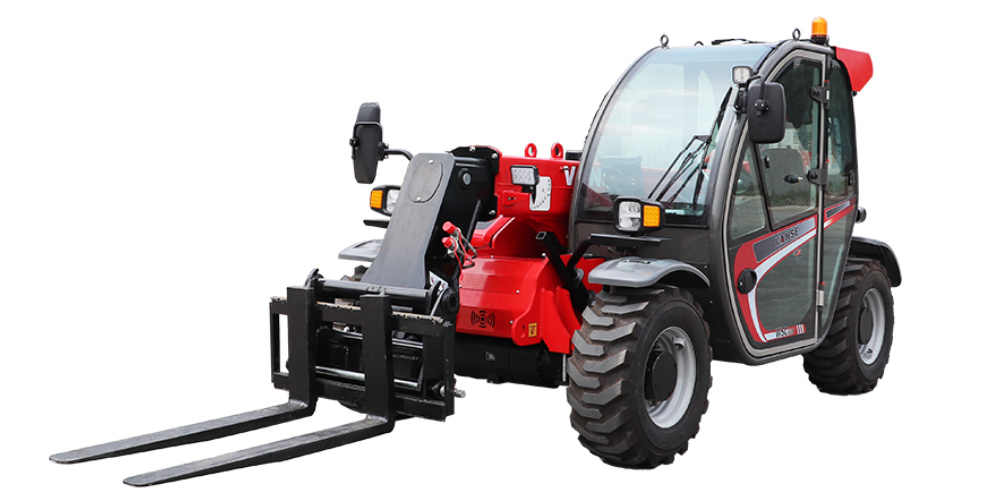
VANSE 625 6m Telescopic Handler
Designed for efficient material handling and stacking in warehouses, factories, and confined job sites, offering compact maneuverability and reliable performance.

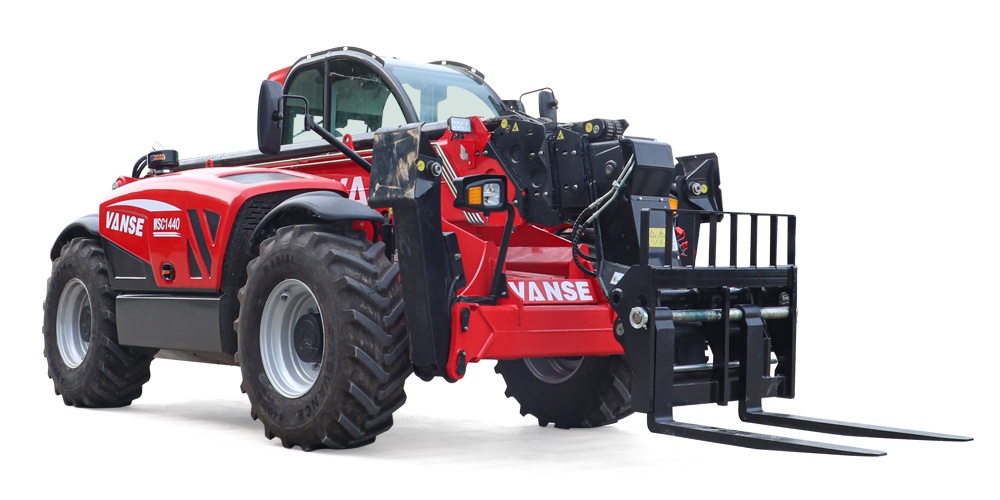
VANSE 735 7m Telescopic Handler
A balanced mid-duty solution for construction, agriculture, logistics, and warehousing, combining stable lifting, strong traction, and everyday versatility.


About the Author:
The VANSE team is a group of experienced professionals specializing in construction machinery research, manufacturing, and technical support. With deep industry knowledge and hands-on experience, our engineers and product specialists share practical insights on equipment selection, operation, maintenance, and industry trends.
Share
You May Also Interest
-

5 June, 2026
Telehandler vs Forklift: Full Comparison
Telehandler vs forklift in the United States: compare reach, cost, jobsites, safety, and top suppliers to choose the right machine for your needs.
-
3 June, 2026
Telehandler vs Boom Lift: Comparison
Compare telehandler vs boom lift for jobs in the United States, with use cases, suppliers, costs, and buying tips for safer, smarter equipment selection.
-
2 June, 2026
Telehandler vs Cherry Picker: Comparison
Compare telehandler vs cherry picker for United States jobsites, including costs, uses, suppliers, safety, and buying tips for contractors and fleets.
-
1 June, 2026
Telehandler vs Excavator: Comparison
Telehandler vs excavator in the United States: learn key differences, costs, jobsite uses, buyer tips, and supplier options for faster equipment decisions.