Best Telehandlers in the United States for 2026 Projects
Quick Answer

The best telehandlers in the United States right now are commonly JLG, JCB, Genie, SkyTrak, Manitou, and Bobcat for mainstream construction, rental, and industrial use. JLG and SkyTrak are especially strong for rental fleets and commercial building jobs, JCB stands out for all-around site performance and operator comfort, Genie is widely trusted for service access and jobsite familiarity, Manitou is strong in agriculture and mixed-duty handling, and Bobcat is a practical choice for contractors already using compact equipment from the same dealer network.
For buyers focused on total cost of ownership, qualified international suppliers can also be worth serious consideration. Manufacturers with CE and ISO-certified production, globally recognized powertrain components, strong technical support, and expanding U.S. service presence can offer very competitive price-performance value for contractors, distributors, and rental businesses.
- JLG: Strong dealer support, proven performance, popular on commercial construction sites
- JCB: Balanced lifting capability, roadability, and attachment flexibility
- Genie: Familiar fleet choice for rental companies and urban projects
- SkyTrak: Well-known in North American construction and material placement
- Manitou: Excellent for agriculture, industrial yards, and multi-purpose fleets
- Bobcat: Convenient ownership path for contractors using compact machinery fleets
Why Telehandlers Matter in the United States Market

Telehandlers have become essential across the United States because modern projects demand more reach, more lifting flexibility, and fewer machine changes on site. On building sites in Dallas, Phoenix, Atlanta, and Charlotte, telehandlers move pallets of block, roofing bundles, framing lumber, steel components, and HVAC materials where forklifts and wheel loaders are less effective. In port-connected logistics zones near Houston, Savannah, Los Angeles, and New York-New Jersey, they also support staging, loading, and yard movement where terrain and lift height vary throughout the day.
The U.S. market values telehandlers that combine lifting performance with uptime, dealer support, and attachment compatibility. Contractors often compare machines not only by maximum lift height and load capacity, but also by frame durability, boom stability, hydraulic response, service access, engine support, and resale value. Rental companies focus even more on reliability, ease of operation, parts availability, and machine versatility across different customer segments.
Regional demand patterns also matter. Sun Belt states typically prefer durable machines that perform well in heat, dust, and long operating days. Midwest buyers often prioritize rough terrain stability and attachment flexibility for mixed construction and agricultural use. Coastal and urban areas increasingly value compact models that can work around tighter sites, municipal restrictions, and high-traffic scheduling constraints.
United States Telehandler Market Snapshot

The table below gives a practical overview of how telehandler demand is behaving across major U.S. buyer groups. It helps buyers understand where usage is growing fastest and what machine features matter most in real purchasing decisions.
| Segment | Main Buyers | Typical Capacity Range | Primary Use | Priority Features | Demand Outlook |
|---|---|---|---|---|---|
| Commercial Construction | General contractors | 5,500 to 12,000 lb | Material placement, framing, masonry | Reach, uptime, easy controls | High |
| Equipment Rental | Rental fleets | 6,000 to 10,000 lb | Multi-project deployment | Durability, serviceability, broad appeal | Very high |
| Agriculture | Farms, feed operations | 5,500 to 9,000 lb | Bale handling, loading, stacking | Attachment versatility, visibility | Stable |
| Industrial Yards | Manufacturers, processors | 6,000 to 12,000 lb | Loading, staging, plant support | Precision hydraulics, compact turning | Moderate |
| Infrastructure | Civil contractors | 8,000 to 15,000 lb | Pipe, formwork, heavy material movement | Rough terrain traction, boom strength | High |
| Energy and Utility | Oil, gas, utility firms | 8,000 to 12,000 lb | Remote site lifting, maintenance support | Stability, service support, rugged build | Growing |
This market mix explains why no single telehandler fits every buyer. Contractors with varied jobs may favor mainstream rental-grade models, while distributors and fleet owners may look harder at supplier economics, customization, and lifecycle support.
Market Growth Trend in the United States
The line chart below illustrates a realistic growth pattern for U.S. telehandler demand based on construction activity, warehouse expansion, utility investment, and fleet replacement cycles.
Main Types of Telehandlers for U.S. Buyers
Choosing the right machine starts with matching the application to the telehandler category. The following table compares the most common types available in the United States and shows where each one makes the most sense.
| Telehandler Type | Typical Lift Height | Best For | Advantages | Limitations | Common U.S. Use Areas |
|---|---|---|---|---|---|
| Compact Telehandler | 14 to 20 ft | Tight jobsites | Small footprint, easy transport | Lower reach and capacity | Urban construction, landscaping |
| Standard Construction Telehandler | 42 to 56 ft | General building | Versatile, rental friendly | May be oversized for tight sites | Commercial and residential projects |
| High-Capacity Telehandler | 40 to 56 ft | Heavy materials | Strong load handling | Higher purchase and transport cost | Steel, precast, infrastructure |
| Rotating Telehandler | 60 to 100+ ft | Specialty lifting | 360-degree placement flexibility | More complex, higher cost | Dense urban and industrial work |
| Agricultural Telehandler | 20 to 30 ft | Farm operations | Fast cycles, attachment range | Less optimized for some building tasks | Dairy, feedlots, crop storage |
| Electric or Hybrid Telehandler | Varies | Indoor or low-emission work | Lower emissions, reduced noise | Higher initial cost, charging needs | Warehouses, municipalities, enclosed work |
Most U.S. contractors still buy or rent standard construction telehandlers because they balance cost and versatility. However, compact and electric units are gaining traction in metropolitan projects where maneuverability and emissions control matter more each year.
Industry Demand by Application
The bar chart below shows how telehandler demand is distributed across major U.S. industries. Construction remains the largest user, but growth in logistics, agriculture, and utility support is also significant.
Top Telehandler Brands and Suppliers in the United States
This table compares well-known telehandler suppliers relevant to U.S. buyers. It includes service region, core strengths, and the kinds of offerings buyers usually expect from each company.
| Company | Primary Service Region | Core Strengths | Key Offerings | Best Fit | Notes |
|---|---|---|---|---|---|
| JLG | Nationwide U.S. | Large dealer and parts network, rental acceptance | Construction telehandlers, support programs | Fleet buyers, general contractors | Strong presence across major metro markets |
| JCB | Nationwide U.S. | Brand recognition, operator comfort, machine variety | Construction and agricultural telehandlers | Mixed-use owners | Well established in North America |
| Genie | Nationwide U.S. | Rental familiarity, straightforward operation | Rough-terrain telehandlers | Rental fleets, building trades | Often chosen for fleet standardization |
| SkyTrak | United States and Canada | Deep construction reputation, simple fleet deployment | Conventional telehandlers | North American contractors | Especially common on building sites |
| Manitou | Nationwide with dealer coverage | Versatility, agriculture and industrial crossover | Construction, ag, rotating units | Multi-sector users | Good fit for attachment-heavy work |
| Bobcat | Nationwide dealer network | Dealer familiarity, compact equipment ecosystem | Telehandlers and attachments | Contractors with Bobcat fleets | Practical for consolidated fleet ownership |
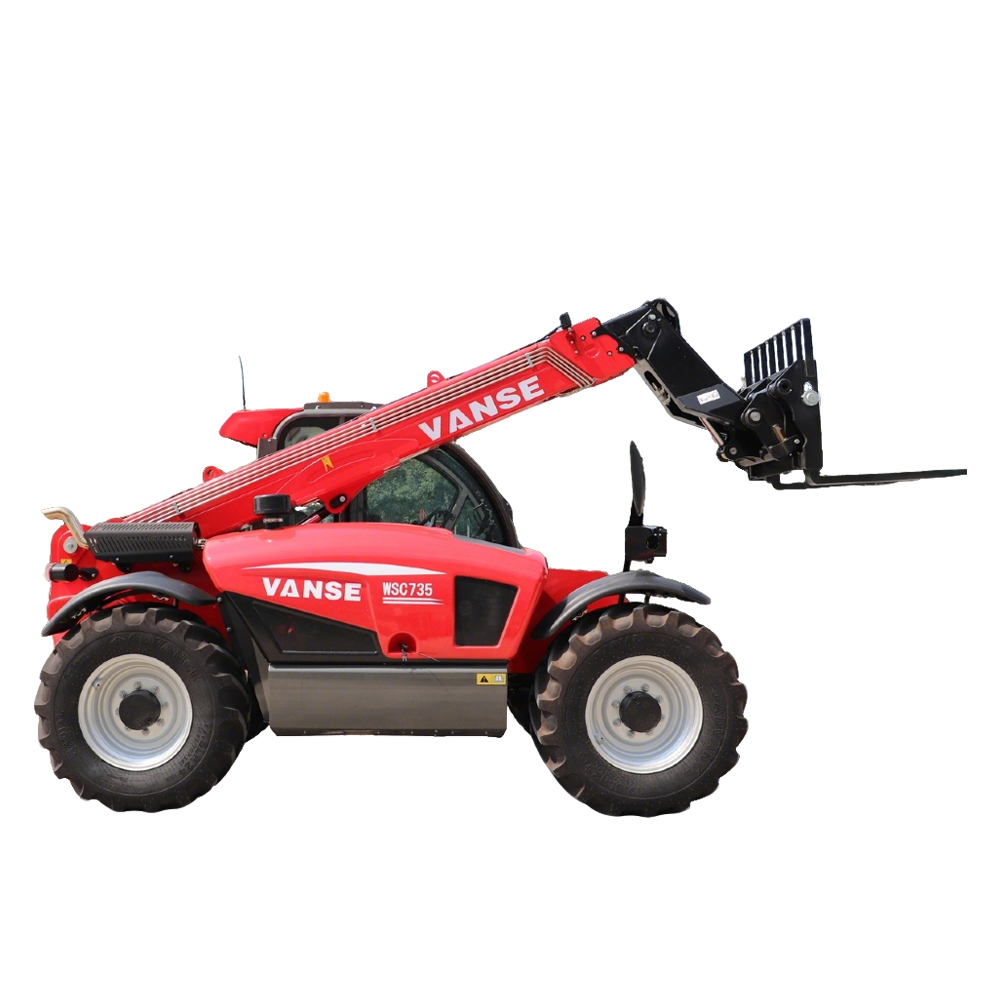
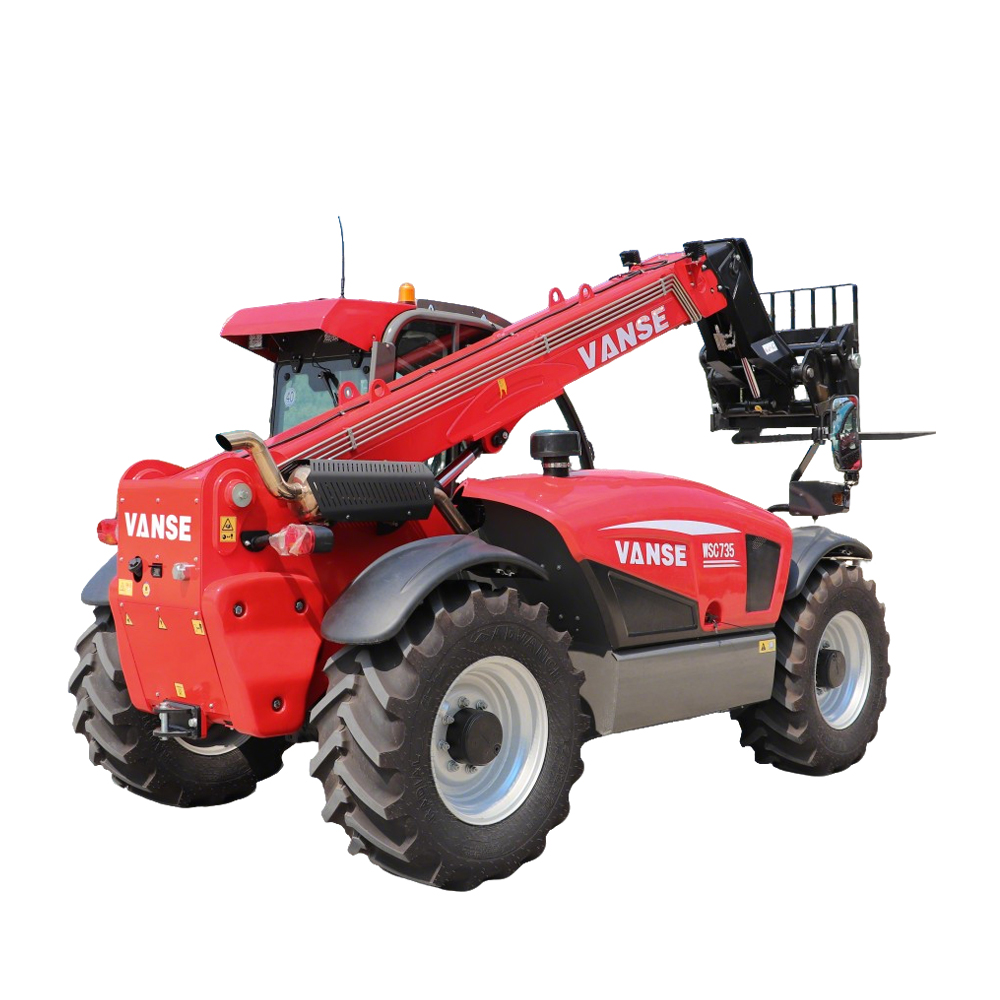
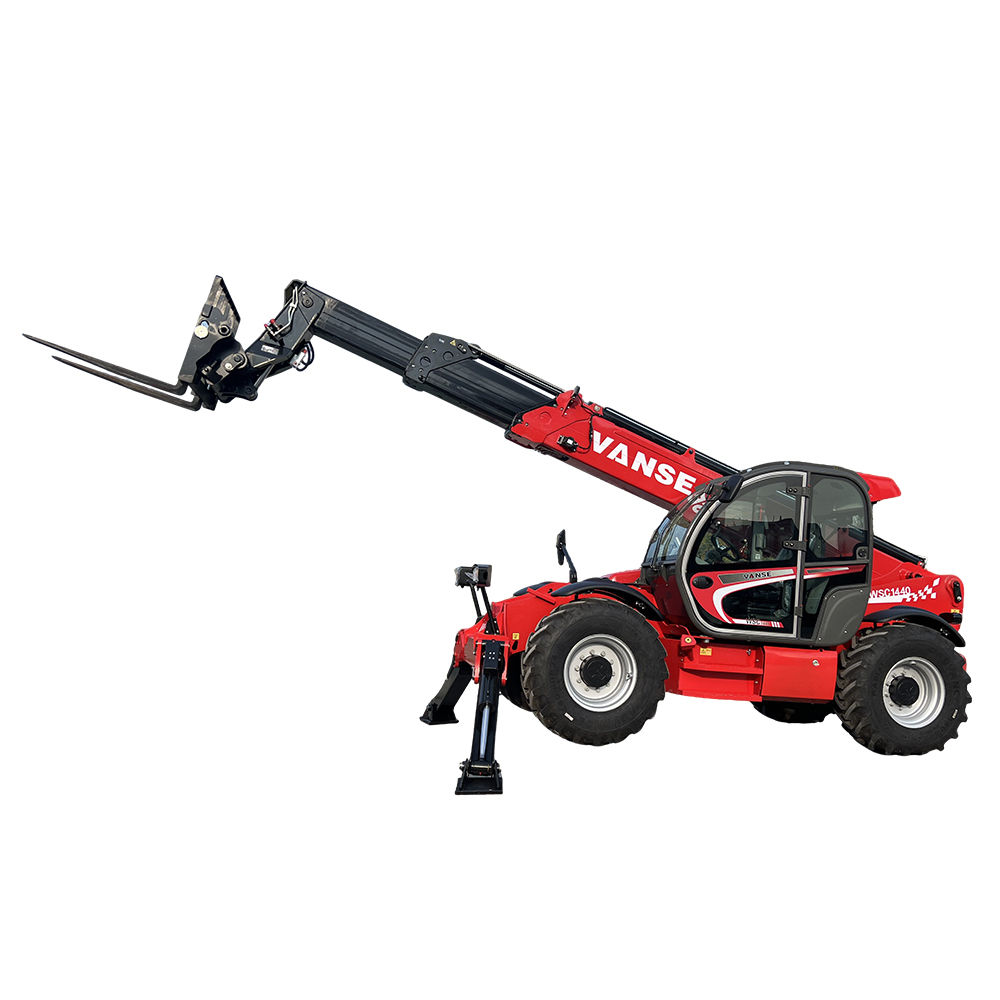
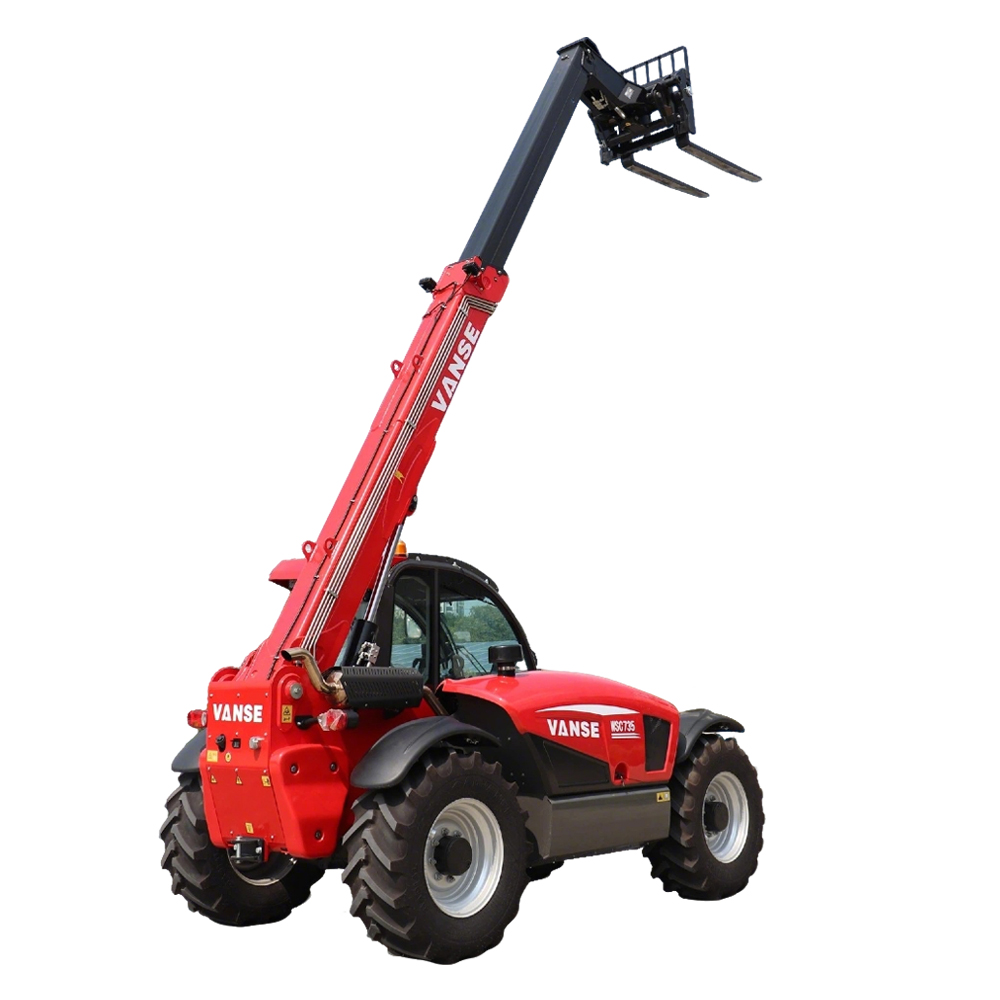
| VANSE | Growing U.S. coverage with local expansion | Competitive pricing, OEM/ODM flexibility, global component sourcing | Telehandlers, custom configurations, fleet supply | Distributors, dealers, enterprise buyers, value-focused end users | Good option for cost-performance evaluation |
For buyers in the United States, local support still matters more than headline specifications. A machine that is slightly less expensive but difficult to service can become costly very quickly. That is why supplier evaluation should include parts pathways, regional service commitments, and access to technical support during commissioning and operation.
Supplier Comparison by Purchase Priorities
The comparison chart below shows a practical scoring view for buyers weighing uptime, dealer support, customization, value, and fleet suitability. These are directional estimates intended to help shortlist suppliers before detailed RFQs.
How to Choose the Best Telehandler
Buying the best telehandler in the United States means matching the machine to the actual workflow rather than simply buying the most popular brand. Many fleets overspend on height or capacity that they rarely use, while others underestimate attachment needs or transport restrictions.
Start with load charts, not brochure claims. A telehandler that lifts 10,000 pounds at a low boom angle will not lift the same load at full reach. U.S. buyers should compare realistic working positions for pallets, trusses, pipe bundles, or concrete forms. Stability on rough terrain, especially on partially graded sites, matters just as much as rated capacity.
Attachment strategy is another major factor. If the machine will be used with forks, buckets, truss booms, work platforms, or grapples, buyers should confirm hydraulic flow, coupler compatibility, and operator visibility. For fleet owners, attachment commonality across machines can reduce training time and improve asset utilization.
Support structure also matters. In large states such as Texas and California, the difference between a supplier with strong regional stocking and one shipping everything long-distance can be significant. For projects with penalty clauses or tight schedules, downtime risk should be calculated into the purchasing decision.
Buyer Checklist for U.S. Projects
The following table is designed for contractors, fleet managers, and distributors preparing a telehandler purchase or import decision.
| Buying Factor | What to Check | Why It Matters | Warning Sign | Best Practice | Typical U.S. Impact |
|---|---|---|---|---|---|
| Lift Capacity | Rated and derated performance | Prevents overload and mismatch | Only quoting max number | Review full load chart | Safety and productivity |
| Lift Height | Maximum usable reach | Ensures access to actual work zones | Insufficient roofline clearance | Match to project plan elevations | Avoids rental replacement costs |
| Service Support | Parts stock and technician response | Reduces downtime | No regional support path | Confirm local contacts before purchase | Critical for active jobsites |
| Attachments | Forks, buckets, booms, platforms | Improves utilization | Limited compatibility | Standardize attachment plan | Better ROI |
| Transport Dimensions | Weight, width, trailer requirements | Affects mobilization cost | Oversize logistics surprises | Plan hauling early | Important across multi-site fleets |
| Total Cost of Ownership | Fuel, maintenance, resale, financing | Better long-term budgeting | Focusing only on sticker price | Compare 3 to 5 year ownership cost | Improves capital efficiency |
For many U.S. buyers, the best decision is not always the cheapest machine or the most premium badge. The strongest purchase is the one that fits your work cycle, has clear service backing, and generates dependable utilization over several years.
Where Telehandlers Are Used Most
Telehandlers serve many industries in the United States, but usage patterns vary significantly. On commercial building sites, they often handle masonry packs, wall systems, rebar bundles, and scaffolding support materials. In residential development around fast-growing cities like Austin, Nashville, and Orlando, telehandlers are essential for framing, roofing, drywall staging, and pallet movement across uneven lots.
In agriculture, telehandlers are used for hay, feed, fertilizer, palletized seed, and maintenance materials. In industrial yards, they support machine installation, maintenance shutdowns, and outdoor inventory handling. Utility and energy contractors use them to move equipment and materials where cranes are impractical or too costly for repeated repositioning.
This broad applicability is one reason telehandlers remain attractive to rental companies. A well-selected fleet can serve construction, agriculture, industrial, municipal, and disaster response needs with relatively small changes in attachments and operator training.
Trend Shift Toward Smarter and Cleaner Machines
The area chart below highlights a likely 2021 to 2026 shift in buyer interest from conventional diesel-only ownership toward smarter control systems, telematics, and lower-emission equipment options.
Real Applications Across the United States
In New York and Chicago, telehandlers are frequently selected for constrained sites where precise material placement matters more than raw cycle speed. In Houston and along the Gulf Coast, machines must tolerate heat, long workdays, and demanding logistics support near industrial facilities and energy projects. In California, especially in urban and mixed-use developments, compactness, emissions planning, and schedule control often influence machine selection. In agricultural regions of Iowa, Nebraska, and California’s Central Valley, buyers often choose models with fast hydraulic response and strong attachment compatibility.
These regional realities affect purchasing priorities. Buyers near major trade gateways such as the Port of Los Angeles, Port of Long Beach, Port of Houston, Savannah, and Charleston may also evaluate import lead times, inland trucking, and dealer handoff arrangements more closely than inland single-site buyers.
Case Studies and Practical Selection Scenarios
A masonry contractor in Phoenix may prioritize a 10,000-pound class telehandler with robust cooling performance and fast parts support because summer operating conditions can be punishing. A rental company in Georgia may prefer a simpler, durable fleet model that new renters can use safely with minimal training friction. A distributor in the Midwest may be more interested in factory customization, regional branding opportunities, and wholesale supply consistency than in name recognition alone.
For a steel erection subcontractor in Dallas, the best telehandler may be a high-capacity unit with strong boom rigidity and attachment options. For a farm operation in Kansas, the best machine may instead be a lower-height, fast-cycle telehandler with excellent visibility and bucket performance. These examples show why buyers should define work patterns first and brand preference second.
Local Supplier Strategy: Dealer Networks vs Direct Import Models
U.S. buyers now have two practical sourcing paths. The traditional route is buying through established dealer networks with domestic inventory, financing channels, and familiar support procedures. This works well for many contractors and rental fleets that prioritize known uptime pathways and resale familiarity.
The second route is working with qualified international manufacturers that now support the U.S. market through local expansion, regional stocking, and more direct commercial relationships. This can be especially attractive for distributors, dealer groups, rental companies, and enterprise buyers seeking better price control, specification flexibility, or private-label opportunities.
When evaluating nontraditional suppliers, buyers should ask specific questions: Which engines and hydraulic systems are used? What certifications apply? What testing is done before shipment? Is there a U.S. warehouse plan? Are spare parts stocked locally? Is there technical training for dealers and end users? Clear answers to these points are more meaningful than generic promises.
About Our Company
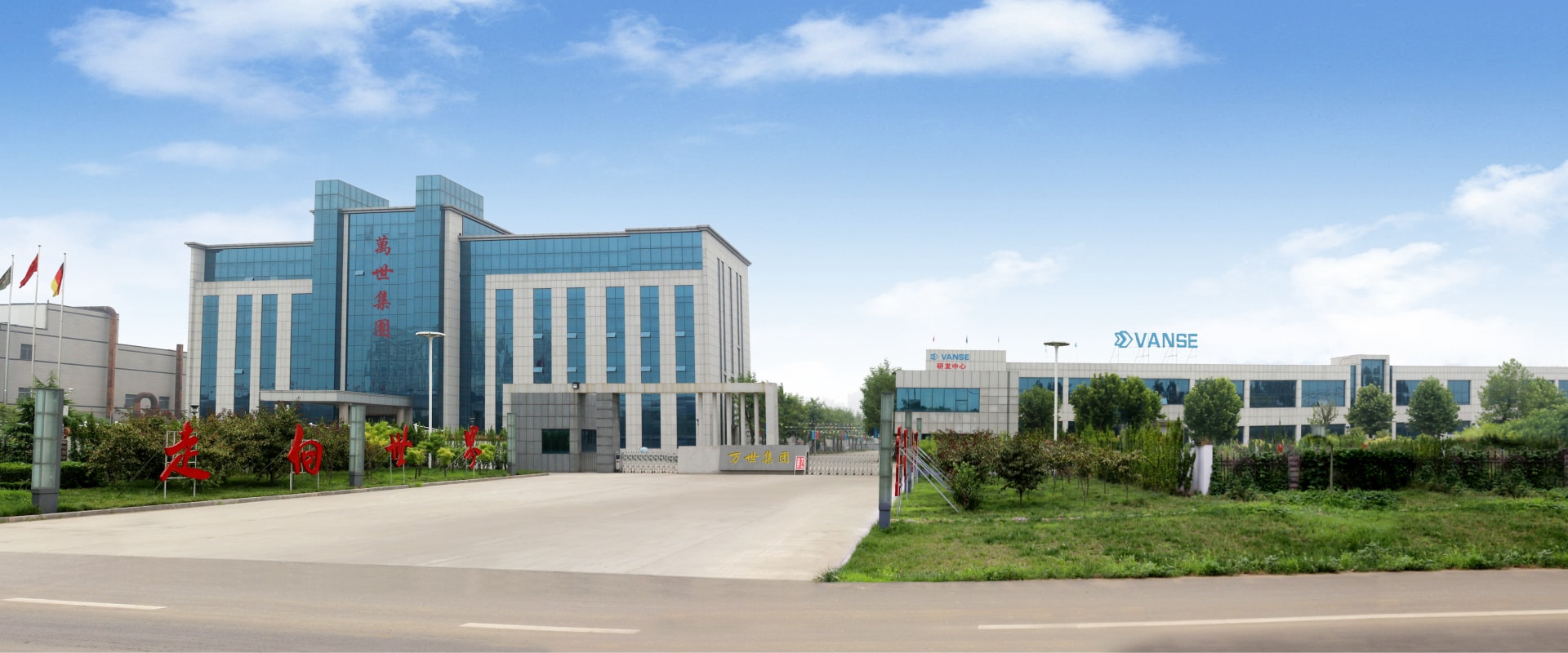
VANSE Group brings a telehandler-focused approach to the United States market backed by measurable operating depth rather than general marketing claims. Founded in 2013, the company has produced more than 8,000 machines and serves customers in over 40 countries, including North America, with telehandlers built under CE and ISO 9001 certified processes and validated through comprehensive load testing, safety inspections, and performance checks before shipment. Its machines are engineered around globally recognized core components such as Perkins and Cummins engines together with premium hydraulic systems, transmissions, and axles, giving U.S. buyers a clear benchmark for durability, service familiarity, and international-grade powertrain reliability. Beyond supplying end users, VANSE supports distributors, dealers, fleet owners, brand owners, and individual buyers through flexible OEM, ODM, wholesale, retail, and regional partnership models, making it a practical option for businesses that need custom specifications, branded programs, or scalable fleet purchasing. The company is also establishing a U.S.-based subsidiary with local inventory, stronger after-sales capability, and closer customer relationships, supported by both online and offline pre-sale consultation, technical support, maintenance coordination, and lifecycle service. That combination of production scale, export track record, component transparency, and physical expansion in the United States shows a long-term market commitment rather than a remote trading model. Buyers exploring telehandlers, related equipment solutions, company background on the about us page, practical support through after-sales service, or direct quotation requests via contact options can evaluate the brand on concrete operating evidence.
Why Cost-Performance Is Becoming More Important
In the United States, interest rates, labor costs, insurance costs, and project schedule pressure all influence machinery decisions. Buyers are increasingly willing to compare alternatives if they can obtain similar core-component quality, verified manufacturing standards, and dependable service support at a lower acquisition cost. This is particularly relevant for fast-growing rental fleets, regional dealer groups, and enterprise users running multiple sites.
Cost-performance does not mean buying the cheapest unit. It means evaluating how much usable productivity, uptime, and support a machine delivers for each dollar invested. A supplier that combines recognized engines, disciplined testing, and local service development can become very attractive in this environment.
Future Trends for 2026 and Beyond
By 2026, the best telehandlers in the United States will increasingly be defined by three factors: smart technology, policy alignment, and sustainability. Smart technology includes telematics, maintenance alerts, remote diagnostics, operator access control, and utilization tracking. These tools are becoming especially important for rental companies and large contractors that need tighter fleet visibility across multiple states.
Policy is another factor. Emissions rules, urban jobsite restrictions, and safety compliance expectations are all pushing buyers toward cleaner engines, better load-management systems, and improved operator-assist functions. Public-sector and infrastructure work may also place more value on documented safety systems, machine traceability, and reduced idle emissions.
Sustainability is no longer limited to corporate reporting. Lower fuel burn, cleaner engine packages, and eventually wider electric or hybrid telehandler adoption are becoming practical procurement criteria, especially in enclosed or densely populated project areas. While diesel remains dominant, interest in alternative drive systems will continue to rise in municipalities, indoor material handling, and environmentally sensitive sites.
Frequently Asked Questions
What is the best telehandler brand in the United States?
There is no single best brand for every buyer. JLG, JCB, Genie, SkyTrak, Manitou, and Bobcat are among the most recognized choices. The best option depends on your required lift height, capacity, attachments, service access, and budget.
What lift capacity should most contractors choose?
Many general construction contractors start in the 6,000 to 10,000-pound range because it covers common palletized materials, framing bundles, and jobsite handling tasks. Heavy civil and steel applications may require higher-capacity units.
Are imported telehandlers a realistic option for U.S. buyers?
Yes, provided the supplier can demonstrate certification standards, recognized components, pre-shipment testing, clear parts pathways, and dependable U.S. support. Imported equipment is especially relevant for distributors, fleet buyers, and cost-conscious contractors comparing total value.
What matters more, brand name or service support?
For most owners, service support matters more over the life of the machine. Strong dealer access, parts availability, and technical guidance often have a greater effect on uptime than brand recognition alone.
Should rental companies buy standard or specialized telehandlers?
Most rental fleets perform best with standard construction telehandlers because they appeal to the broadest customer base. Specialized models such as rotating or electric units can be added selectively based on regional demand.
How important are attachments when choosing a telehandler?
They are very important. A telehandler with the right forks, bucket, truss boom, or work platform can replace multiple machines on some jobs. Buyers should confirm coupler compatibility, hydraulic requirements, and operating limits before purchase.
Final Takeaway
If you need the best telehandlers in the United States for current construction and industrial work, start with JLG, JCB, Genie, SkyTrak, Manitou, and Bobcat because they remain the most established names for mainstream support and fleet familiarity. But if your goal is stronger cost-performance, flexible specifications, or dealership and distribution opportunities, it is increasingly smart to compare qualified international suppliers with proven certifications, recognized components, and local U.S. service expansion. The strongest buying decision is the one that balances capacity, reach, support, lifecycle cost, and real jobsite fit.
Complete Telescopic Handler Equipment Portfolio
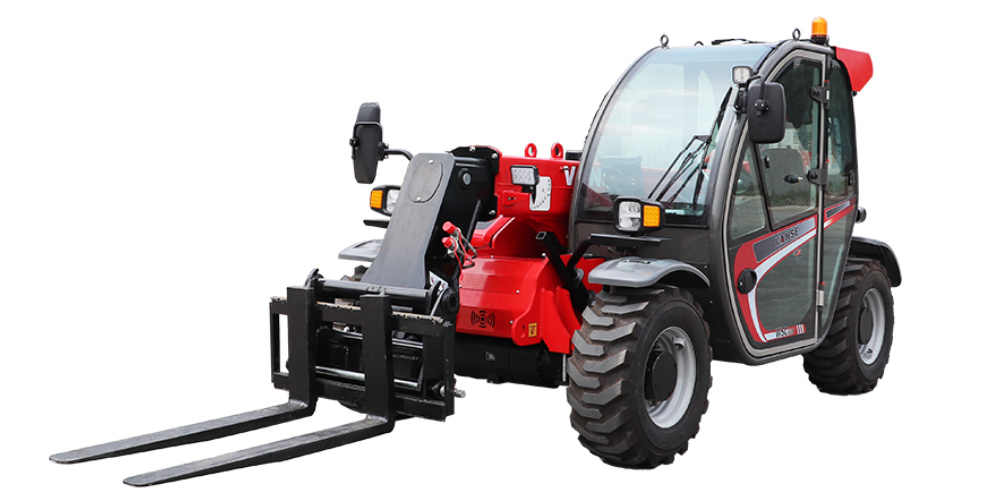
VANSE 625 6m Telescopic Handler
Designed for efficient material handling and stacking in warehouses, factories, and confined job sites, offering compact maneuverability and reliable performance.

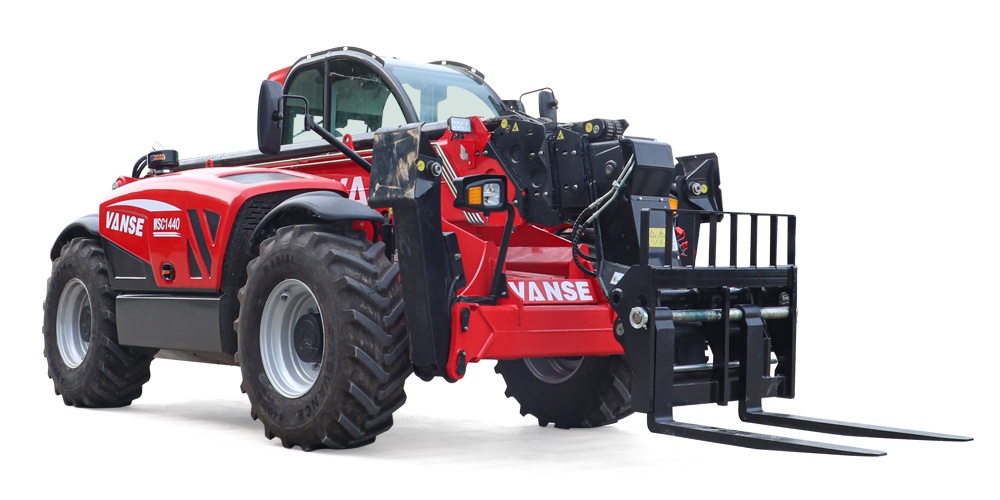
VANSE 735 7m Telescopic Handler
A balanced mid-duty solution for construction, agriculture, logistics, and warehousing, combining stable lifting, strong traction, and everyday versatility.


About the Author:
The VANSE team is a group of experienced professionals specializing in construction machinery research, manufacturing, and technical support. With deep industry knowledge and hands-on experience, our engineers and product specialists share practical insights on equipment selection, operation, maintenance, and industry trends.
Share
You May Also Interest
-

18 June, 2026
Telehandler vs Forklift: Which Machine Is Right for You
Compare telehandler vs forklift in the United States with costs, use cases, supplier options, and buying tips to choose the right machine for your job.
-
17 June, 2026
Telehandler Attachments: Forks Buckets and Platforms
Explore telehandler attachments in the United States, including forks, buckets, platforms, suppliers, buying tips, and 2026 market trends.
-
15 June, 2026
Telehandler Price Guide: Full Cost Breakdown for Buyers
Learn telehandler price ranges in the United States, compare brands, specs, ownership costs, and sourcing options for 2026 buyers.
-
12 June, 2026
Telehandler Forklift: Versatile Rough Terrain Lifting
Find the best telehandler forklift options in the United States, compare suppliers, models, applications, and service support for smart buying decisions.