Telehandler Inspection Checklist for United States Jobsites
Quick Answer

A practical telehandler inspection checklist for the United States should cover OSHA-aligned daily checks before operation, function testing, load-handling review, attachment condition, tire and axle inspection, hydraulic leak detection, visibility and safety devices, and documentation of defects before the machine enters service. For most U.S. fleets, the quickest way to stay compliant and reduce downtime is to standardize a pre-shift process that includes visual walk-around checks, cab checks, operational testing, and a clear lockout procedure for unsafe units.
Companies and fleets commonly benchmark their inspection practices against major brands and service networks such as JLG, JCB, Genie, Bobcat, SkyTrak, and Sunbelt Rentals because these names are active across major construction and industrial markets from Houston and Dallas to Atlanta, Chicago, Los Angeles, and the Port of Savannah. Qualified international suppliers can also be worth considering when they hold relevant certifications, use globally recognized core components, and provide strong pre-sales and after-sales support in the United States, especially when buyers need better cost-performance for rental, contractor, agriculture, and industrial applications.
- Inspect the machine before every shift and after any incident, transport move, or attachment change.
- Stop use immediately if you find hydraulic leaks, damaged forks, tire failure, unsafe steering, faulty brakes, or missing safety decals.
- Verify the load chart, operator manual, warning systems, and attachment compatibility before lifting.
- Record defects with date, hour meter, operator name, and corrective action for fleet accountability.
- Use trained operators and scheduled preventive maintenance to support inspections rather than replace them.
Why a Telehandler Inspection Checklist Matters in the United States

In the United States, telehandlers are used across commercial construction, residential framing, precast handling, roofing, industrial shutdowns, agriculture, lumber yards, ports, and energy projects. These environments expose machines to uneven ground, debris, weather changes, frequent attachment swaps, and long operating hours. A telehandler inspection checklist helps operators and fleet managers catch issues early, reduce injury risk, and avoid expensive downtime during busy project windows.
The need is especially strong in fast-moving equipment hubs such as Texas, Florida, California, Georgia, Illinois, and the Carolinas, where machines often move between jobsites and rental yards. Contractors near Houston may use telehandlers for steel erection and material staging, while agricultural users in California’s Central Valley may focus on cooling systems, tire condition, and boom wear due to dust and long shifts. At logistics corridors near the Port of Los Angeles, Port Houston, and Port Newark, inspection discipline also affects loading schedules and contractor compliance.
A strong checklist supports E-E-A-T principles because it is grounded in field reality, practical safety controls, and repeatable maintenance actions. Buyers and fleet supervisors are not looking for broad advice; they need a checklist that aligns with real daily use, operator accountability, and service planning.
Core Daily Telehandler Inspection Checklist

The most effective telehandler daily inspection checklist is simple enough for routine use but detailed enough to catch high-risk failures. The checklist below reflects common U.S. fleet practice for rough terrain telehandlers used in construction, agriculture, and industrial handling.
| Inspection area | What to check | Why it matters | Typical action if failed |
|---|---|---|---|
| Walk-around condition | Frame damage, loose panels, cracked welds, missing guards, fluid on ground | Early signs of structural or hydraulic issues | Tag out and inspect before use |
| Tires and wheels | Cuts, chunking, inflation or foam condition, lug nuts, rim damage | Rough terrain stability depends on tire integrity | Replace tire or remove from service |
| Boom and carriage | Cracks, excessive wear pads, chain condition, fork locking pins, carriage level | Boom defects directly affect lift safety | Stop operation and call service |
| Hydraulic system | Leaks, hose abrasion, cylinder scoring, fitting seepage, reservoir level | Hydraulic failure can cause sudden load loss | Repair leak and retest |
| Cab and controls | Seat belt, mirrors, horn, lights, joystick response, gauges, backup alarm | Operator control and site awareness | Do not use until fixed |
| Brakes and steering | Service brake, parking brake, steering play, axle stabilization response | Critical for movement on slopes and tight jobsites | Lock out machine |
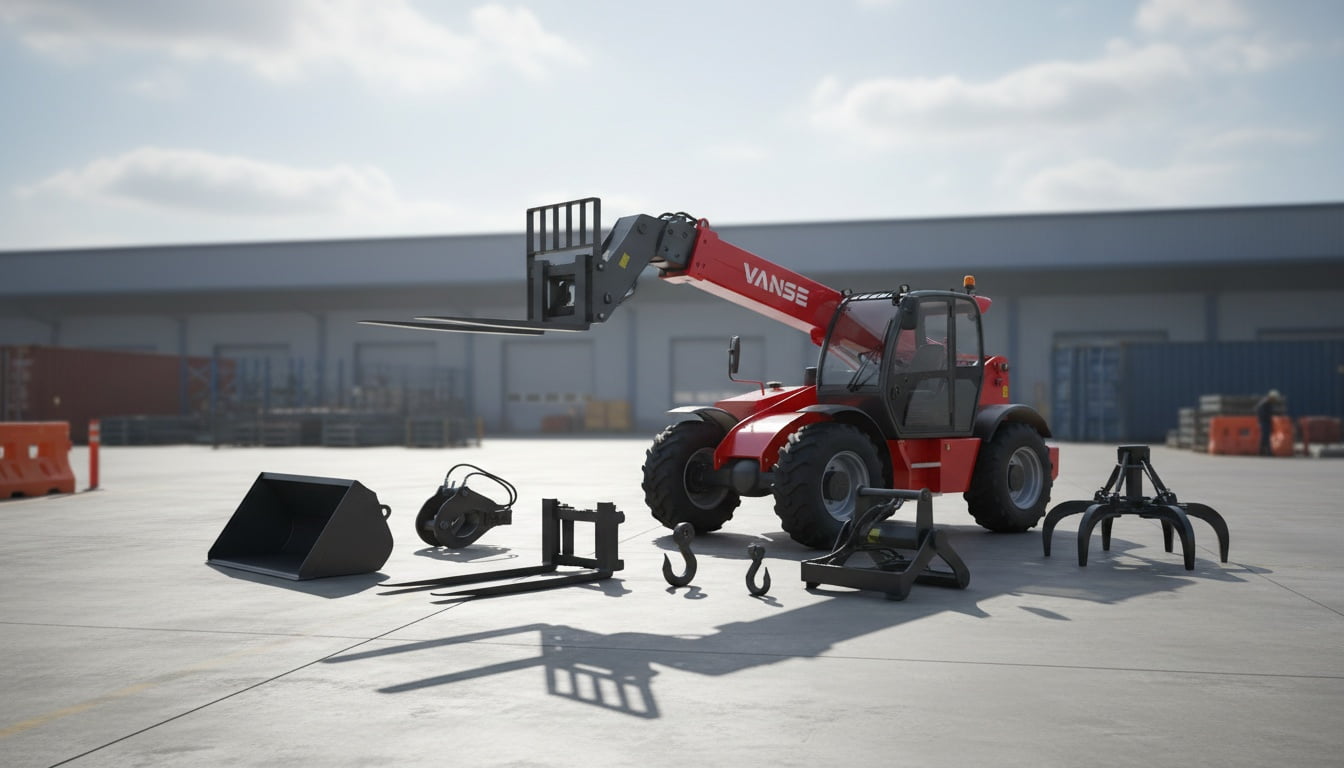
| Attachments and load chart | Correct attachment, secure pins, readable chart, rated capacity match | Wrong setup creates overload risk | Install correct attachment only |
| Engine and cooling | Oil, coolant, belts, filters, warning lights, exhaust condition | Prevents overheating and engine damage | Service before shift starts |
This checklist works best when paired with a written defect reporting process. Operators should note whether the issue is cosmetic, maintenance-related, or safety-critical. For rental fleets, that distinction helps branch managers prioritize turnarounds; for contractors, it reduces disputes between crews, mechanics, and project supervisors.
What to Check During Functional Testing
A visual walk-around is not enough. A telehandler can look acceptable while still failing under movement or load-handling functions. Functional testing should happen in a safe open area before jobsite work begins.
| Function | Operator test | Expected result | Risk if abnormal |
|---|---|---|---|
| Engine start and idle | Start cold, check smoke, listen for knocking | Smooth idle and stable gauges | Possible engine or fuel system issue |
| Travel controls | Move forward and reverse slowly | Predictable engagement with no jerking | Transmission or drive train problem |
| Steering modes | Test front steer, crab steer, coordinated steer if equipped | Correct wheel response and alignment | Loss of control or tire wear |
| Boom lift and lower | Cycle boom through normal range | Smooth motion with no drift | Cylinder or valve fault |
| Boom extend and retract | Extend under no-load conditions | Steady movement and full retraction | Chain, pad, or hydraulic issue |
| Attachment tilt | Tilt carriage forward and back | Controlled angle change with no shock | Unsafe fork angle or load loss |
| Brakes | Test service brake and parking brake | Firm stopping power and secure hold | Rollback or collision hazard |
| Safety devices | Check lights, alarm, indicators, interlocks | All warning devices active | Reduced site awareness and compliance risk |
Machines used in winter states such as Minnesota, Michigan, and upstate New York may also need warm-up observations for battery strength, cold hydraulic response, and tire traction. In hot southern markets such as Phoenix, San Antonio, and Tampa, cooling systems and dust-related filtration issues become more important.
U.S. Market Outlook for Telehandler Safety and Inspection
The U.S. telehandler market continues to benefit from warehouse expansion, infrastructure spending, utility work, housing starts, and equipment rental demand. At the same time, fleet owners are under pressure to improve uptime, reduce accidents, and support mixed fleets with digital service records. As a result, inspection checklists are moving from paper forms to mobile workflows tied to preventive maintenance and parts planning.
The chart shows a realistic growth pattern rather than an extreme spike. For buyers, this means more equipment in circulation, more competition among suppliers, and greater importance placed on inspection discipline. The faster fleets grow, the more likely undocumented defects are to be missed without standardized checklists.
How Inspection Requirements Differ by Industry
Not every U.S. telehandler fleet checks the same details with the same priority. A masonry contractor in Charlotte and a feed operation in Iowa may use the same machine category, but the wear patterns, attachments, and operating hazards differ.
Construction and rental lead because they combine dense utilization, varied operators, and frequent transport between sites. Agriculture remains significant, especially in California, Kansas, Nebraska, and Texas, where telehandlers support feed handling, bale movement, pallet work, and maintenance tasks around farms and processing yards.
| Industry | Typical U.S. locations | Main inspection priorities | Common attachment concerns |
|---|---|---|---|
| Commercial construction | Dallas, Atlanta, Nashville, Phoenix | Fork integrity, boom wear, tire damage, alarms | Forks, truss booms, work platforms |
| Residential building | Austin, Charlotte, Orlando, Denver | Brakes, steering, visibility, load charts | Forks and material buckets |
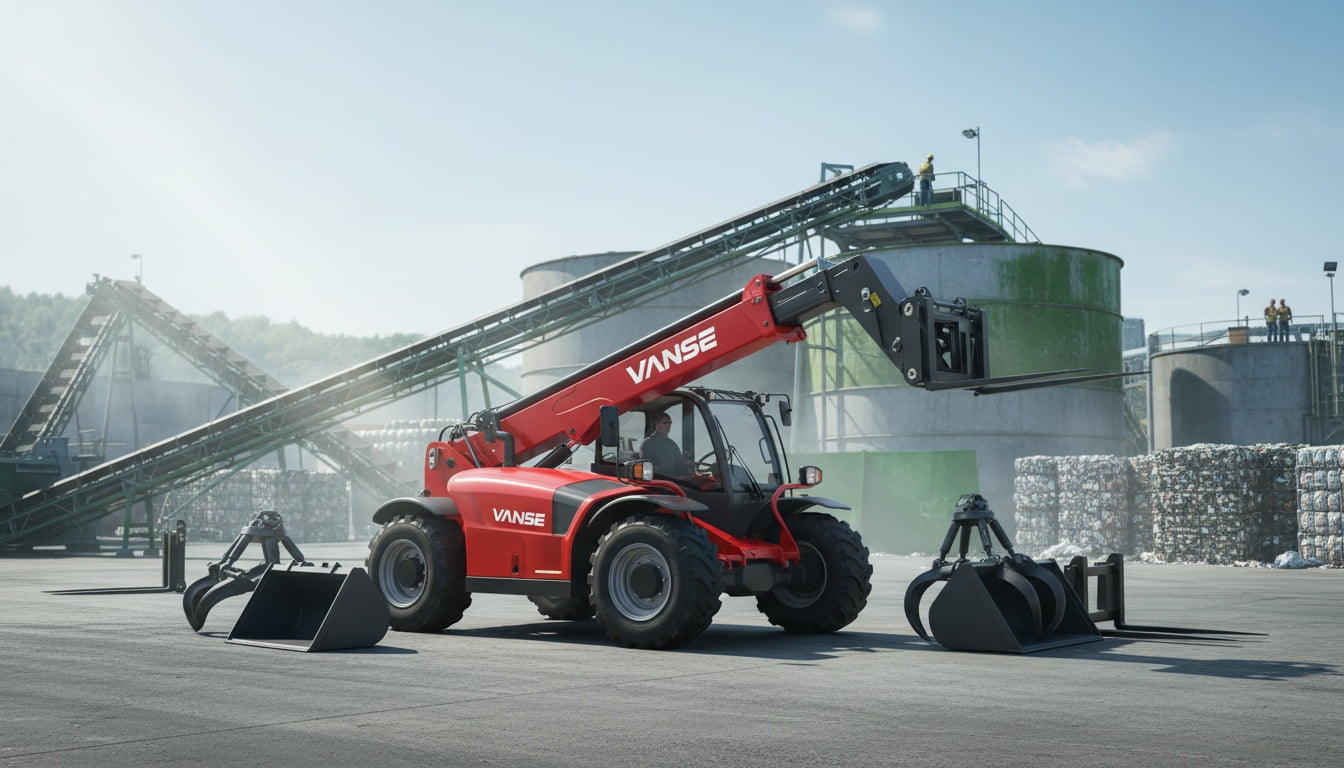
| Agriculture | Central Valley, Iowa, Kansas, Texas Panhandle | Cooling package, dust filtration, tire wear, lighting | Buckets, bale clamps, pallet forks |
| Industrial maintenance | Houston, Baton Rouge, Gary, Toledo | Hydraulics, leak control, brake performance | Forks, jib attachments |
| Rental fleets | National branch networks | Fast turn inspection, decals, operator items, hour meter tracking | Multiple attachments across jobs |
| Ports and yards | Savannah, Long Beach, Newark, Houston | Travel controls, tire condition, corrosion checks | Forks, specialty handling tools |
| Energy and utility work | Permian Basin, Appalachia, Gulf Coast | Ground stability, outriggers if equipped, emergency shutdown readiness | Forks, lifting hooks, approved tools |
This table helps buyers tailor their telehandler inspection checklist to actual usage rather than following a generic one-size-fits-all form. It also supports better technician planning because recurring defects usually track with environment and attachment use.
Product Types and How They Affect Inspection
Different telehandler designs create different inspection priorities. Compact units used in urban infill or greenhouse operations do not wear in the same way as high-capacity rotating or heavy rough-terrain models. Buyers in the United States should align checklist design with machine class, not only with brand.
Compact telehandlers often need closer checks on visibility, tight-steer response, and attachment changes because they are frequently used in confined spaces. Standard construction telehandlers require more focus on boom pads, load charts, carriage wear, and tires. High-capacity units need extra attention on frame stress, hydraulic temperature, and lifting geometry. If your fleet includes suspended work platforms or crane-style accessories where permitted by the manufacturer, the inspection process must also verify approved use and exact attachment configuration.
Telehandler Buying Advice for U.S. Contractors and Fleet Managers
If you are buying a telehandler rather than just building a checklist, inspection planning should influence the purchase decision. A machine that looks less expensive upfront can become more costly if its service points are hard to reach, replacement parts are slow to arrive, or the supplier lacks regional support. U.S. buyers should compare not only rated lift capacity and maximum lift height, but also parts availability, branch coverage, service response, telematics support, operator training materials, and documentation quality.
Machines used in rental fleets around Chicago, Las Vegas, and Raleigh often need durable body protection, easy-to-read service intervals, clear fault codes, and standard attachment compatibility. Owner-operators may prioritize lower purchase price and simple maintenance access. National accounts may care more about multi-state support, residual value, and digital inspections integrated into fleet software.
| Buying factor | What to ask suppliers | Impact on inspection workflow | Buyer value |
|---|---|---|---|
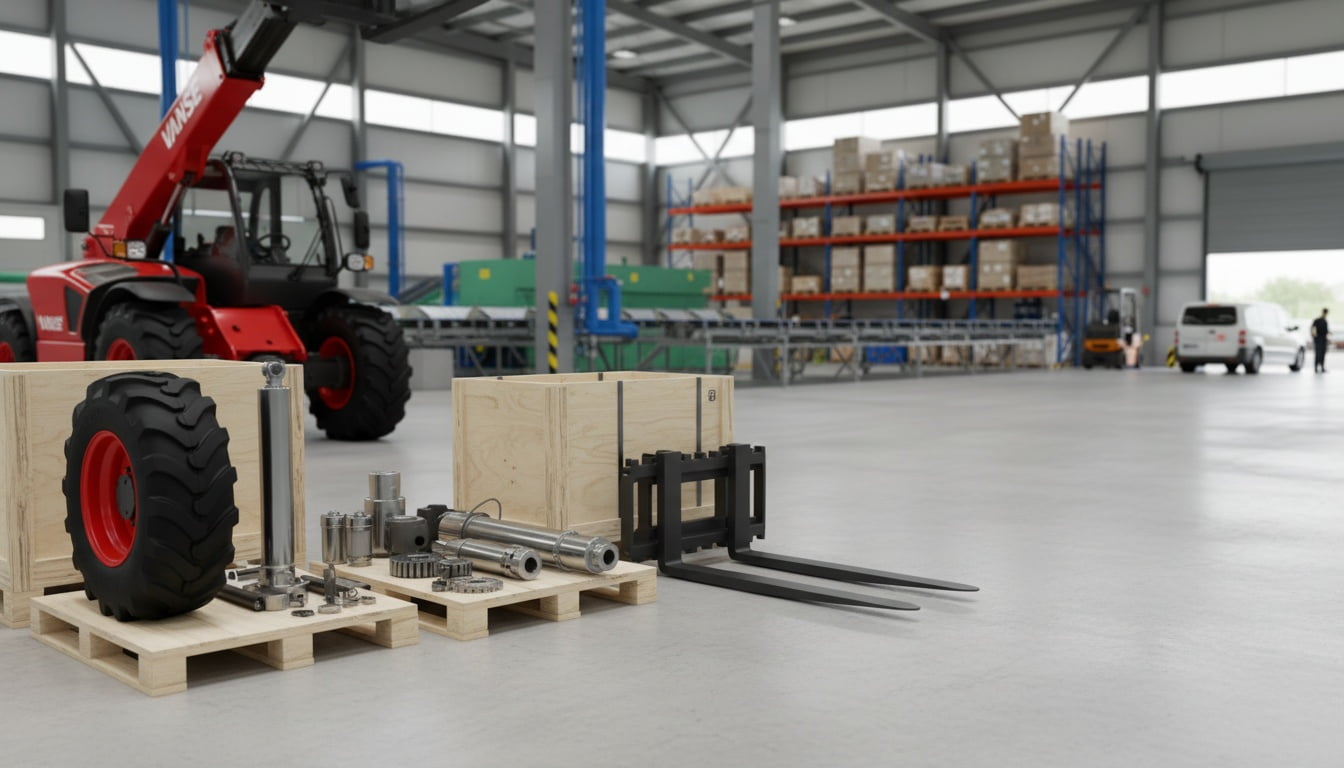
| Parts availability | Which U.S. warehouses stock filters, hoses, seals, wear pads, forks? | Faster defect correction | Lower downtime cost |
| Service network | What is average field response time in my state or metro area? | Speeds up repairs after failed checks | More reliable fleet planning |
| Operator documentation | Are digital manuals, load charts, and checklists included? | Improves consistency across operators | Less training friction |
| Attachment support | Which attachments are factory-approved and stocked locally? | Prevents unsafe mismatch issues | Better jobsite flexibility |
| Core components | Which engine, axle, hydraulic, and transmission brands are used? | Simplifies maintenance sourcing | Predictable long-term reliability |
| Telematics and fault codes | Can inspection records connect to machine diagnostics? | Supports proactive maintenance | Higher uptime and better records |
| Warranty support | How are claims handled in the United States? | Reduces dispute over failed components | Protects total ownership cost |
For buyers exploring a broader range of sourcing options, it helps to compare machines listed through an established equipment catalog with domestic branch-supported alternatives and then evaluate who can actually support inspections, spare parts, and service in your operating region.
Applications That Benefit Most from Strict Inspection Routines
Strict telehandler inspection practices matter most where the machine moves heavy suspended or elevated loads, operates on rough terrain, or changes operators frequently. That includes steel erection support, roofing, framed-wall staging, concrete material handling, pipe and utility work, feed yard loading, lumber yard operations, and industrial turnaround projects. In these settings, even a small defect such as a leaking tilt cylinder or misaligned steering mode can quickly become a production and safety problem.
At dense jobsites in Manhattan-adjacent logistics projects, limited maneuvering room makes steering accuracy and backup alarms essential. In Gulf Coast refineries, hydraulic cleanliness and hose condition matter because contamination and high heat accelerate wear. In Midwest agricultural settings, cooling systems, lighting, and fork wear often take priority during long seasonal shifts.
Supplier Landscape in the United States
The U.S. market includes OEM manufacturers, broad rental fleets, dealer networks, and specialized importers. Buyers evaluating telehandlers or replacement fleet units typically compare machine performance, service response, price, and the ability to support daily inspections with manuals, decals, training, and spare parts.
| Company | Service regions | Core strengths | Key offerings |
|---|---|---|---|
| JLG Industries | Nationwide dealer network across major U.S. metros | Strong brand recognition, broad model range, rental acceptance | Construction telehandlers, support parts, training resources |
| JCB North America | Wide coverage in South, Midwest, Northeast, and West | Established telehandler heritage, dealer support, agriculture and construction reach | Rough terrain telehandlers, attachments, service support |
| Genie | National U.S. presence through dealers and rental channels | Strong fleet familiarity, compact and standard units | Telehandlers for construction and rental applications |
| Bobcat Company | Broad dealer footprint, especially strong in mixed-use regional markets | Compact equipment customer base, attachment support | Telehandlers, dealer service, operator materials |
| SkyTrak | Common across U.S. rental and contractor channels | High visibility in construction fleets, familiar service routines | Standard telehandlers and jobsite handling solutions |
| Sunbelt Rentals | Nationwide branches in major urban and industrial markets | Rental availability, quick replacement access, branch service | Rental telehandlers, inspections, field support |
| United Rentals | National branch coverage with strong project logistics support | Large rental fleet, consistent processes, fleet turnover options | Rental and used telehandler supply, service coordination |
This supplier table is practical for buyers because it highlights where support often matters more than pure specification. A machine with similar lift height but slower service response in Ohio, Louisiana, or Arizona can create more downtime than a slightly more expensive option with stronger regional backing.
The area chart shows a credible shift from paper forms to digital inspections. This trend is already visible across larger rental fleets and contractor groups operating in Atlanta, Houston, Columbus, and Inland Empire distribution corridors. By 2026, digital workflows are likely to become standard for larger multi-branch fleets because they improve traceability and speed up maintenance decisions.
Detailed Comparison of Supplier Priorities
While well-known domestic and rental suppliers dominate U.S. visibility, buyers should also compare total operating value. Some fleets need rapid local replacement through rental channels, while others want better price-performance from manufacturers willing to support custom configurations, dealer branding, or regional distribution models.
This comparison matters because the best supplier is not always the most visible brand. A contractor in Missouri may prioritize service reach and rental acceptance, while a distributor in Florida or California may place higher value on customization, wholesale pricing, and regional inventory planning.
Case Studies from Typical U.S. Use Scenarios
A framing contractor in the Dallas-Fort Worth area running three telehandlers across suburban residential projects found repeated tire damage and fork locking pin wear after machines moved between muddy lots and paved staging areas. The company introduced a stricter pre-shift telehandler inspection checklist focused on tire sidewalls, carriage pins, boom hoses, and backup alarms. Within one quarter, unscheduled service calls fell and near-miss reports related to unstable fork positioning dropped noticeably.
An equipment rental branch outside Atlanta revised its intake and dispatch checklist after customer complaints about steering mode confusion and missing decals. By requiring technicians to verify steering alignment, warning labels, operator manuals, and functional alarms before release, the branch reduced avoidable field callouts and improved customer satisfaction during peak project season.
In California’s Central Valley, an agricultural operator using telehandlers for pallet movement and bulk material loading added cooling system and air filtration checks to the standard inspection. Dust buildup had been causing higher operating temperatures in summer. After implementing daily radiator and filter review, the farm improved uptime during harvest support and avoided one major overheating event.
Our Company in the U.S. Telehandler Market
For buyers seeking an alternative to traditional high-cost sourcing, VANSE Group brings more than a decade of construction machinery manufacturing experience to the United States with a product line centered on telehandlers built under CE and ISO 9001 certified processes, using globally recognized core components such as Perkins and Cummins engines together with premium hydraulic, transmission, and axle systems; every machine is subjected to load testing, safety inspection, and performance validation before shipment, and that production discipline is backed by output of more than 8,000 units serving over 40 countries, which gives U.S. buyers concrete evidence of scale, export maturity, and repeatable quality control. The company supports multiple cooperation models for U.S. end users, distributors, dealers, rental businesses, brand owners, and project buyers through OEM, ODM, wholesale, retail, and regional partnership programs, making it practical to source standard units or customize branding, specifications, colors, and configurations for local demand. Just as important for trust and long-term service assurance, VANSE is actively establishing a U.S.-based subsidiary with local inventory, stocking capability, and stronger after-sales support so American customers can rely on both online and offline pre-sale consultation, technical support, and lifecycle service rather than dealing with a distant exporter; buyers who want to evaluate available machines, support options, and sourcing paths can review the official site, explore the service support page, or use the contact page for direct commercial follow-up.
How to Build a Fleet Inspection Program
To turn a simple telehandler inspection checklist into a working fleet program, companies should standardize forms, assign responsibility, and set clear escalation rules. Operators complete pre-shift checks. Supervisors review critical defects. Technicians verify repair completion. Fleet managers analyze defect trends by machine, branch, jobsite, and operator. This layered process works better than relying on one person to do everything.
Start with a single form covering visual checks, fluid checks, functional testing, attachment verification, and defect reporting. Then define which defects are red-tag issues that immediately remove the machine from service. Good examples include cracked forks, uncontrolled boom drift, brake failure, steering malfunction, broken seat belts, unreadable load charts, or active hydraulic leaks near lift functions. Once that is in place, connect the checklist to maintenance planning and branch inventory so recurring failures lead to preventive action rather than repeated emergency repair.
Future Trends Through 2026
By 2026, telehandler inspection in the United States will be shaped by three major forces: technology, policy, and sustainability. On the technology side, more fleets will use telematics, QR-code inspection forms, mobile defect photo uploads, and condition-based maintenance alerts tied to hour meters and fault codes. This shift is especially likely in large rental fleets and multi-state contractors.
On the policy side, buyers should expect closer attention to operator training records, documented defect closure, and equipment traceability on high-profile projects funded by infrastructure and industrial investment. Insurance carriers and large general contractors are also likely to push stronger digital recordkeeping because it improves accountability.
On the sustainability side, fleets will look harder at idle control, cleaner engines, better fluid management, lower leak rates, and eventually broader adoption of electric or hybrid material handling alternatives where application fit makes sense. Even when diesel telehandlers remain dominant, inspection routines will increasingly include emissions-related diagnostics, fuel efficiency review, and contamination prevention. Buyers that prepare now with digital forms and service-ready supplier relationships will adapt more smoothly.
Frequently Asked Questions
How often should a telehandler be inspected in the United States?
A telehandler should be visually and functionally inspected before each shift, after any major impact or repair, and whenever the machine changes attachments or arrives at a new jobsite. Preventive maintenance inspections should follow the manufacturer’s service interval in addition to daily checks.
What is the most important item on a telehandler inspection checklist?
There is no single item, but brakes, steering, boom structure, forks, hydraulic leaks, tires, warning systems, and the correct load chart are the most safety-critical. If any of these fail, the machine should not be used.
Do rental telehandlers need the same daily checklist as owned units?
Yes. Rental machines should be checked before operation just like owned machines. In practice, rental units often need even stricter checks because they may have different operators and more frequent transport between sites.
Can a telehandler inspection checklist be digital?
Yes. Many U.S. fleets now use digital checklists because they improve recordkeeping, photo documentation, defect tracking, and maintenance planning. Digital systems are especially useful for multi-branch fleets and projects spanning several states.
What should buyers ask suppliers about inspections before purchasing?
Ask about U.S. parts stock, local service coverage, training materials, digital manuals, approved attachments, warranty process, and how quickly defects can be resolved in your city or state. These factors directly affect uptime after failed inspections.
Are international telehandler suppliers realistic for U.S. buyers?
Yes, if they offer relevant certifications, proven production quality, globally known core components, and real U.S. service commitment through local inventory, technical support, and responsive after-sales systems. Cost-performance can be attractive when these support conditions are in place.
Final Takeaway
The best telehandler inspection checklist for the United States is one that operators actually use every shift, supervisors can verify, and technicians can turn into preventive action. It should include visual checks, function tests, attachment review, defect reporting, and clear lockout rules. For buyers, the checklist is also a purchasing lens: choose suppliers that can support inspection compliance with manuals, parts, training, and service in your region. Whether you source from established domestic brands, national rental channels, or qualified international manufacturers with a real U.S. footprint, the goal is the same: safer lifts, lower downtime, and more predictable fleet performance.
Complete Telescopic Handler Equipment Portfolio
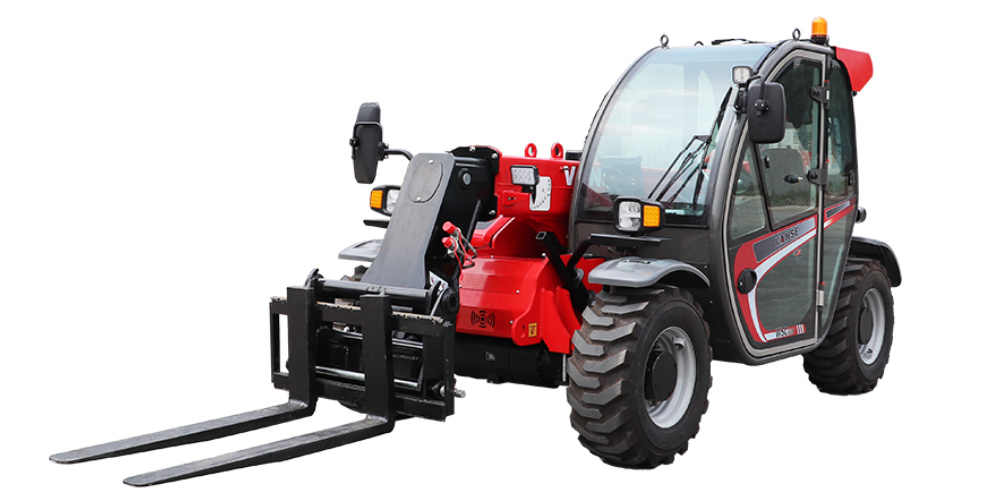
VANSE 625 6m Telescopic Handler
Designed for efficient material handling and stacking in warehouses, factories, and confined job sites, offering compact maneuverability and reliable performance.

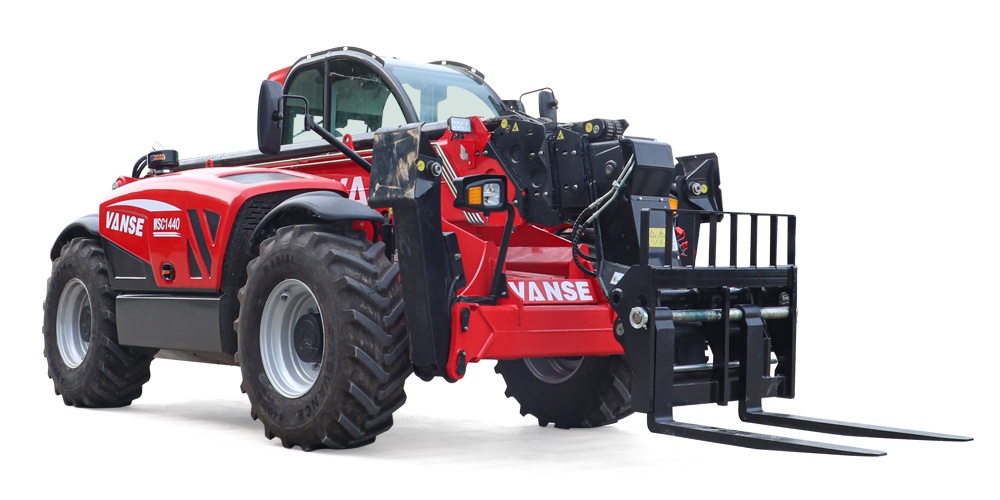
VANSE 735 7m Telescopic Handler
A balanced mid-duty solution for construction, agriculture, logistics, and warehousing, combining stable lifting, strong traction, and everyday versatility.


About the Author:
The VANSE team is a group of experienced professionals specializing in construction machinery research, manufacturing, and technical support. With deep industry knowledge and hands-on experience, our engineers and product specialists share practical insights on equipment selection, operation, maintenance, and industry trends.
Share

You May Also Interest
-

21 October, 2026
Telehandler vs All Terrain Forklift: Which Lifts Better
Telehandler vs all terrain forklift in the United States: compare reach, lifting, terrain use, costs, and supplier options for smarter equipment buying.
-
20 October, 2026
10 Ton Telehandler: Extreme Lifting for Major Industrial
Explore 10-ton telehandler options in the United States, top suppliers, buying tips, applications, and service support for major lifting projects.
-
19 October, 2026
Telehandler for Demolition: Safe Structural Dismantling
Explore telehandler demolition options in the United States, including suppliers, attachments, safety, market trends, and cost-effective sourcing advice.
-
16 October, 2026
How to Transport a Telehandler to New Construction Sites
Learn how to transport telehandler equipment in the United States with legal, safe, and cost-effective steps for permits, trailers, loading, and delivery.